Review

Cellular Senescence: Mechanisms and Therapeutic Potential
1
School of Biological Sciences, Nanyang Technological University, 60 Nanyang Drive, Singapore 637551, Singapore
2
Department of Microbiology, Tumor and Cell Biology (MTC), Karolinska Institutet, Biomedicum, Solnavägen 9, SE-17177 Stockholm, Sweden
3
School of Chemical and Biomedical Engineering, Nanyang Technological University, 62 Nanyang Drive, Singapore 637459, Singapore
*
Authors to whom correspondence should be addressed.
Biomedicines 2021, 9(12), 1769; https://doi.org/10.3390/biomedicines9121769

Submission received: 28 September 2021 / Revised: 15 November 2021 / Accepted: 17 November 2021 / Published: 25 November 2021
(This article belongs to the Section Cell Biology and Pathology)

Abstract

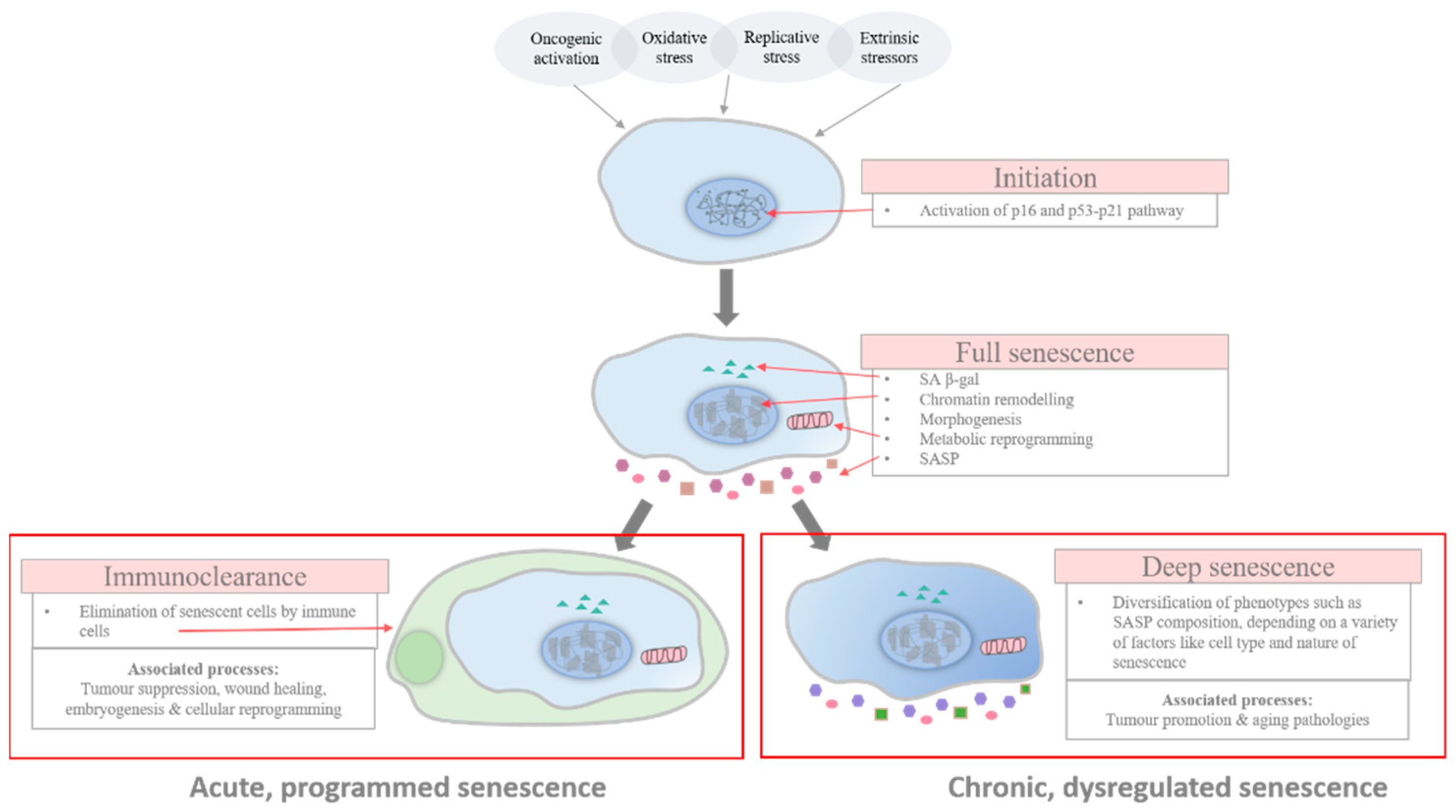
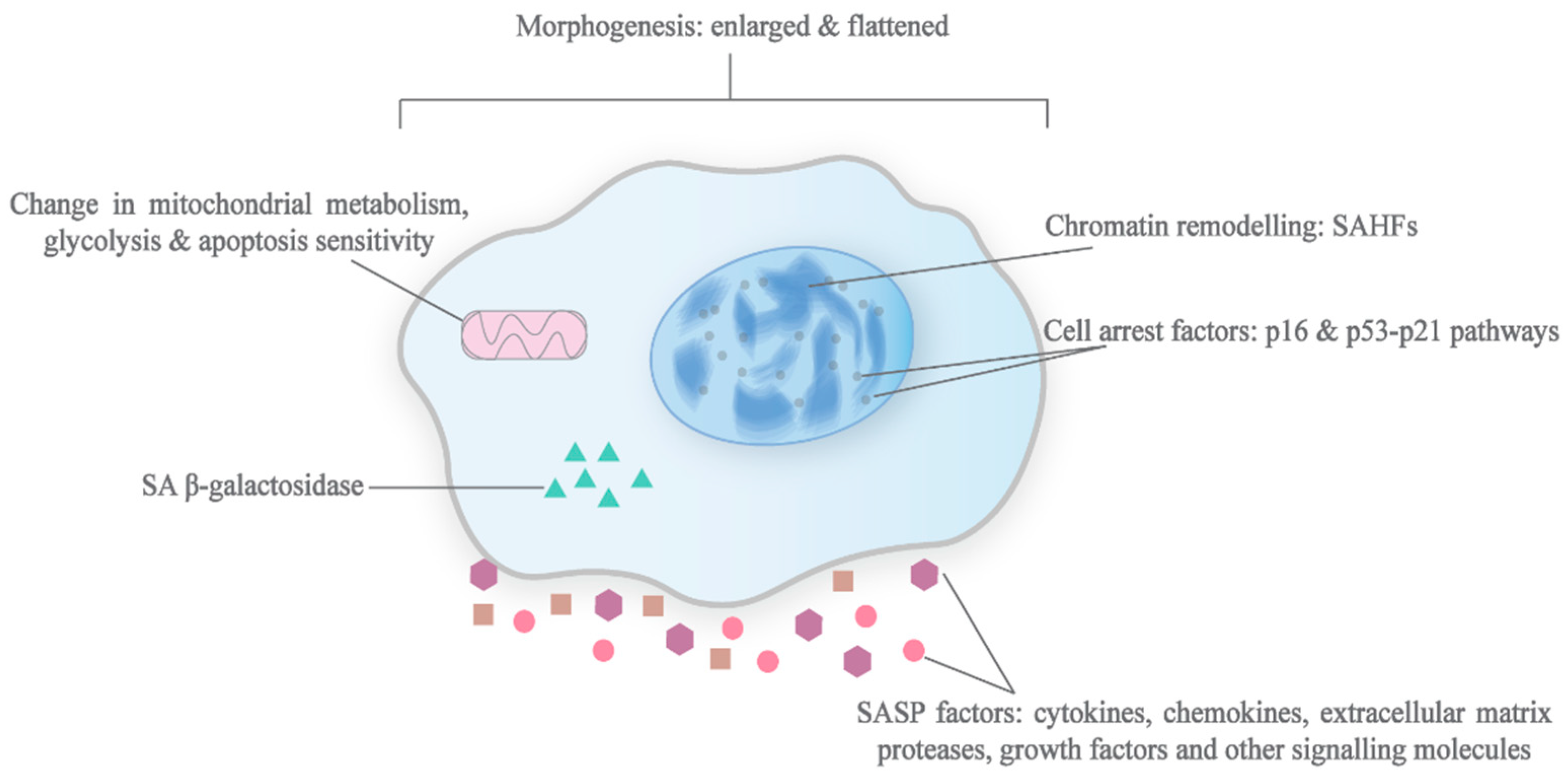
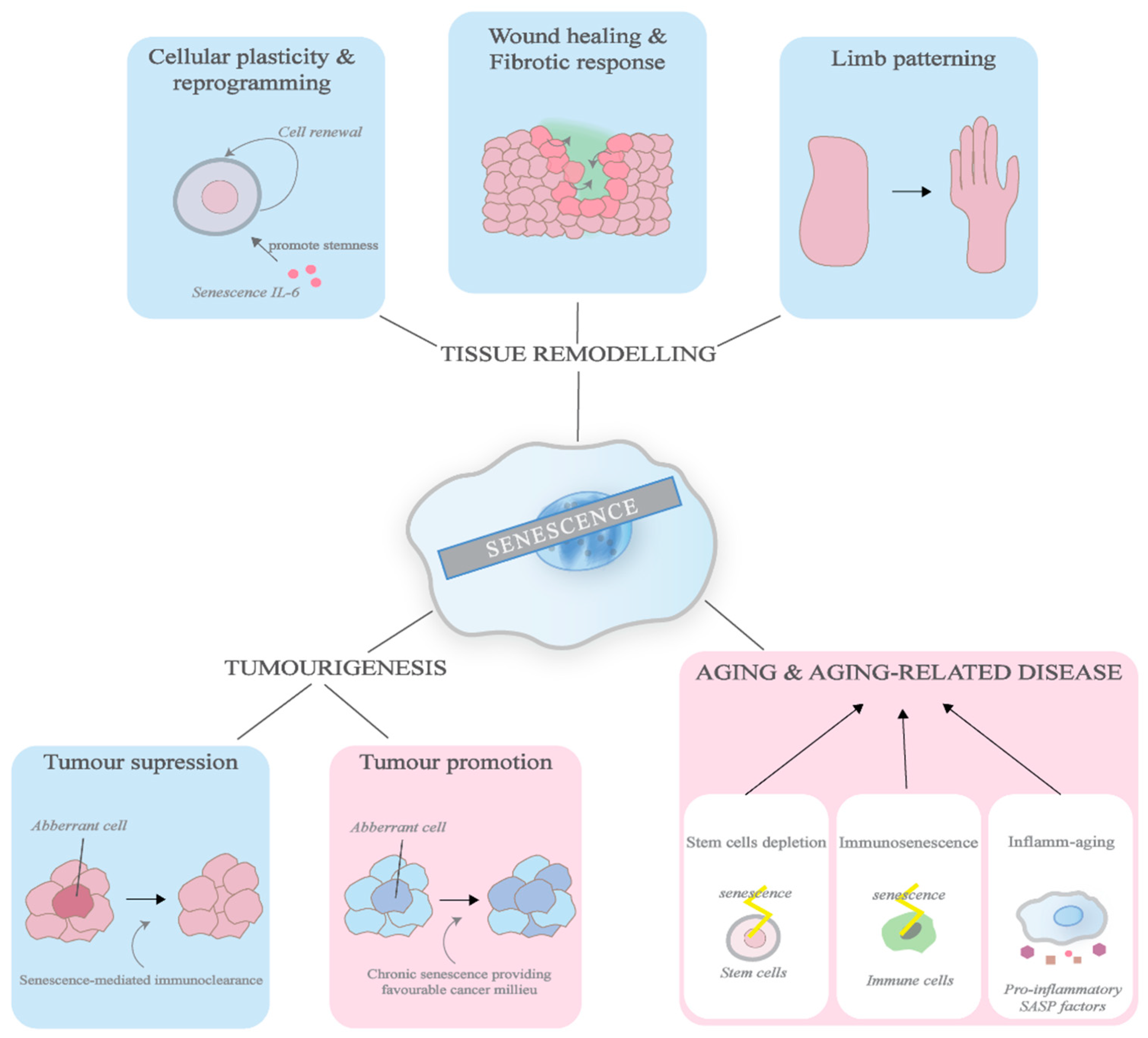
Cellular senescence is a complex and multistep biological process which cells can undergo in response to different stresses. Referring to a highly stable cell cycle arrest, cellular senescence can influence a multitude of biological processes—both physiologically and pathologically. While phenotypically diverse, characteristics of senescence include the expression of the senescence-associated secretory phenotype, cell cycle arrest factors, senescence-associated β-galactosidase, morphogenesis, and chromatin remodelling. Persistent senescence is associated with pathologies such as aging, while transient senescence is associated with beneficial programmes, such as limb patterning. With these implications, senescence-based translational studies, namely senotherapy and pro-senescence therapy, are well underway to find the cure to complicated diseases such as cancer and atherosclerosis. Being a subject of major interest only in the recent decades, much remains to be studied, such as regarding the identification of unique biomarkers of senescent cells. This review attempts to provide a comprehensive understanding of the diverse literature on senescence, and discuss the knowledge we have on senescence thus far.
Keywords: senescence; cancer; aging; senotherapy senescence; cancer; aging; senotherapy