Article

Reduced Granulosa Cell AKT2 mRNA Expression in Women with Unexplained Infertility: A Prospective Case–Control Study of ICSI Cycles


1
Department of Histology and Embryology, Cerrahpaşa Faculty of Medicine, Istanbul University-Cerrahpaşa, Istanbul 34098, Türkiye
2
Assisted Reproductive Technology Unit, Department of Obstetrics and Gynecology, Zeynep Kâmil Women and Children’s Diseases Training and Research Hospital, University of Health Sciences, Istanbul 34668, Türkiye
3
Department of Medical Biochemistry, Faculty of Medicine, Biruni University, Istanbul 34010, Türkiye
*
Author to whom correspondence should be addressed.
Current address: IVF Centre, Bahçeşehir University Medical Park Göztepe Hospital, Istanbul 34732, Türkiye.
Biomedicines 2026, 14(9), 2108; https://doi.org/10.3390/biomedicines14092108 (registering DOI)

Submission received: 1 September 2026 / Revised: 14 September 2026 / Accepted: 16 September 2026 / Published: 18 September 2026
(This article belongs to the Special Issue Female Fertility: Insights from Molecular Perspective)

Abstract

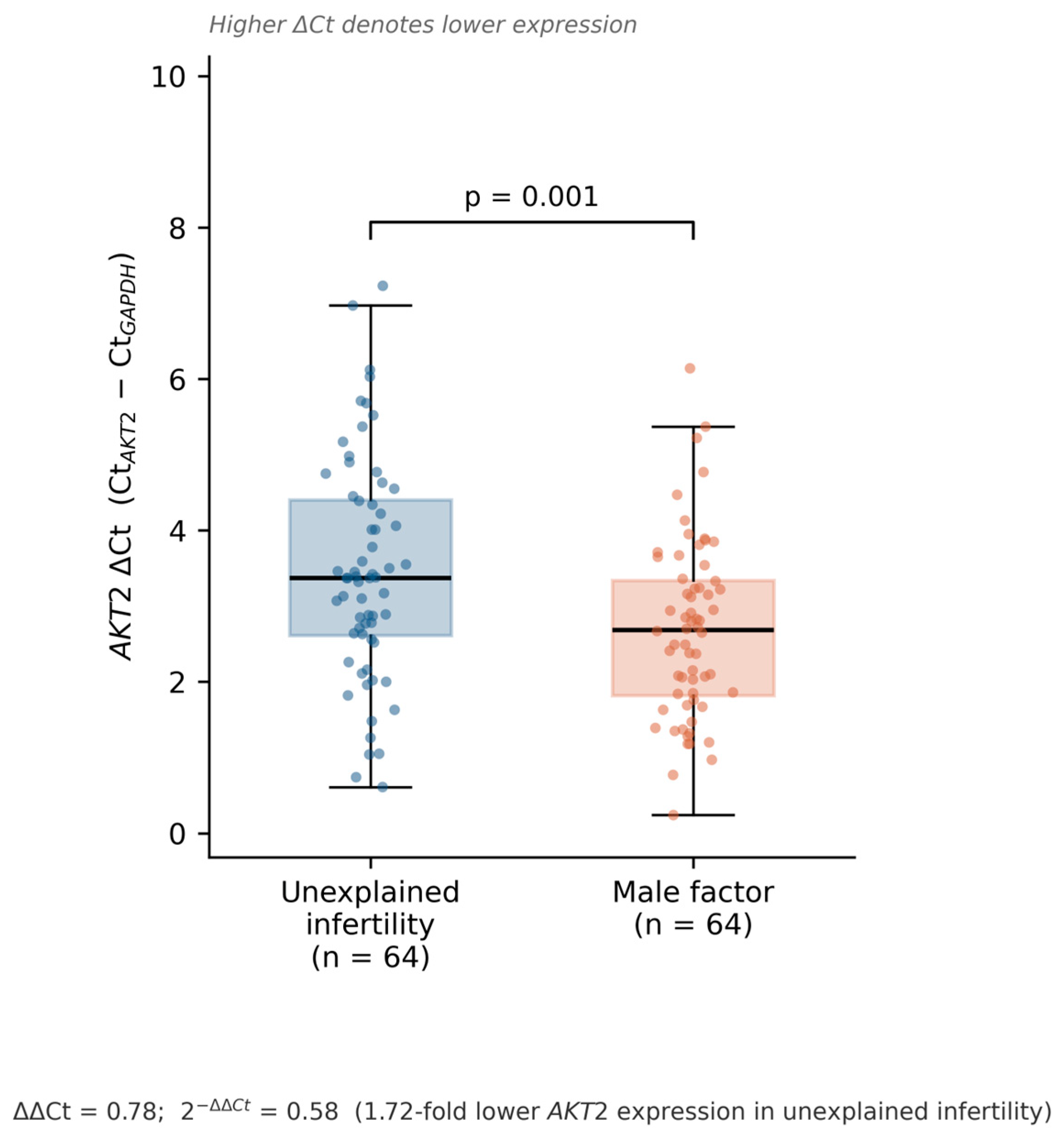
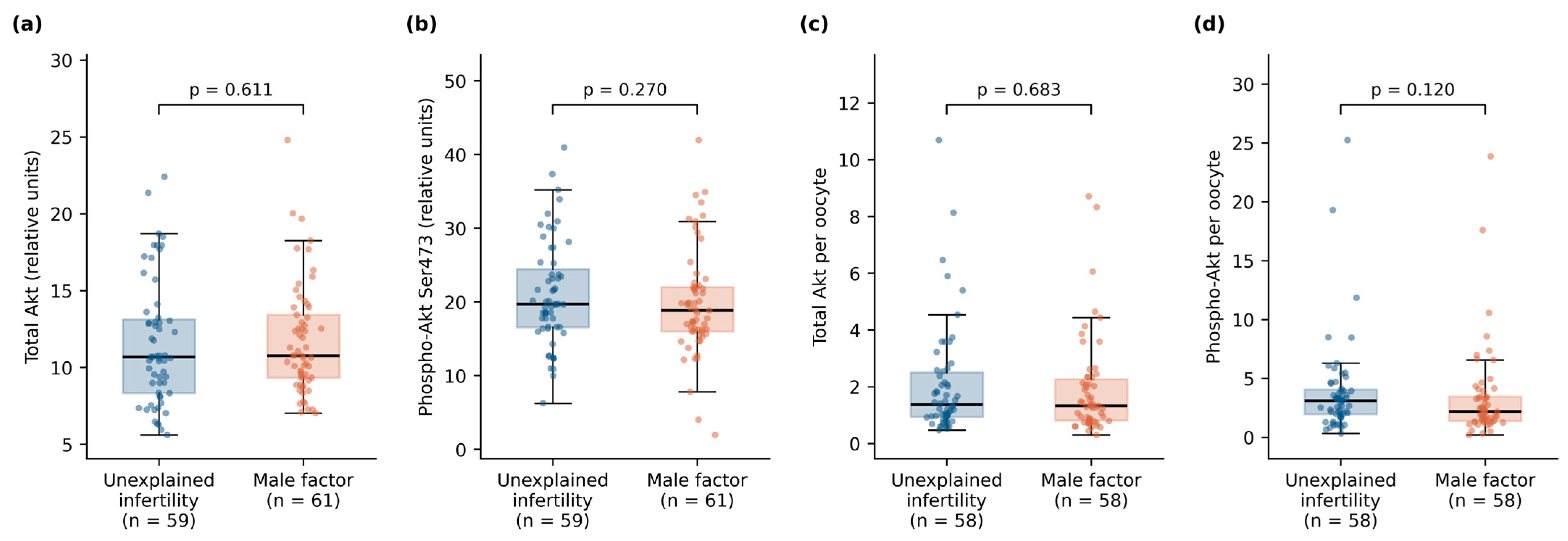
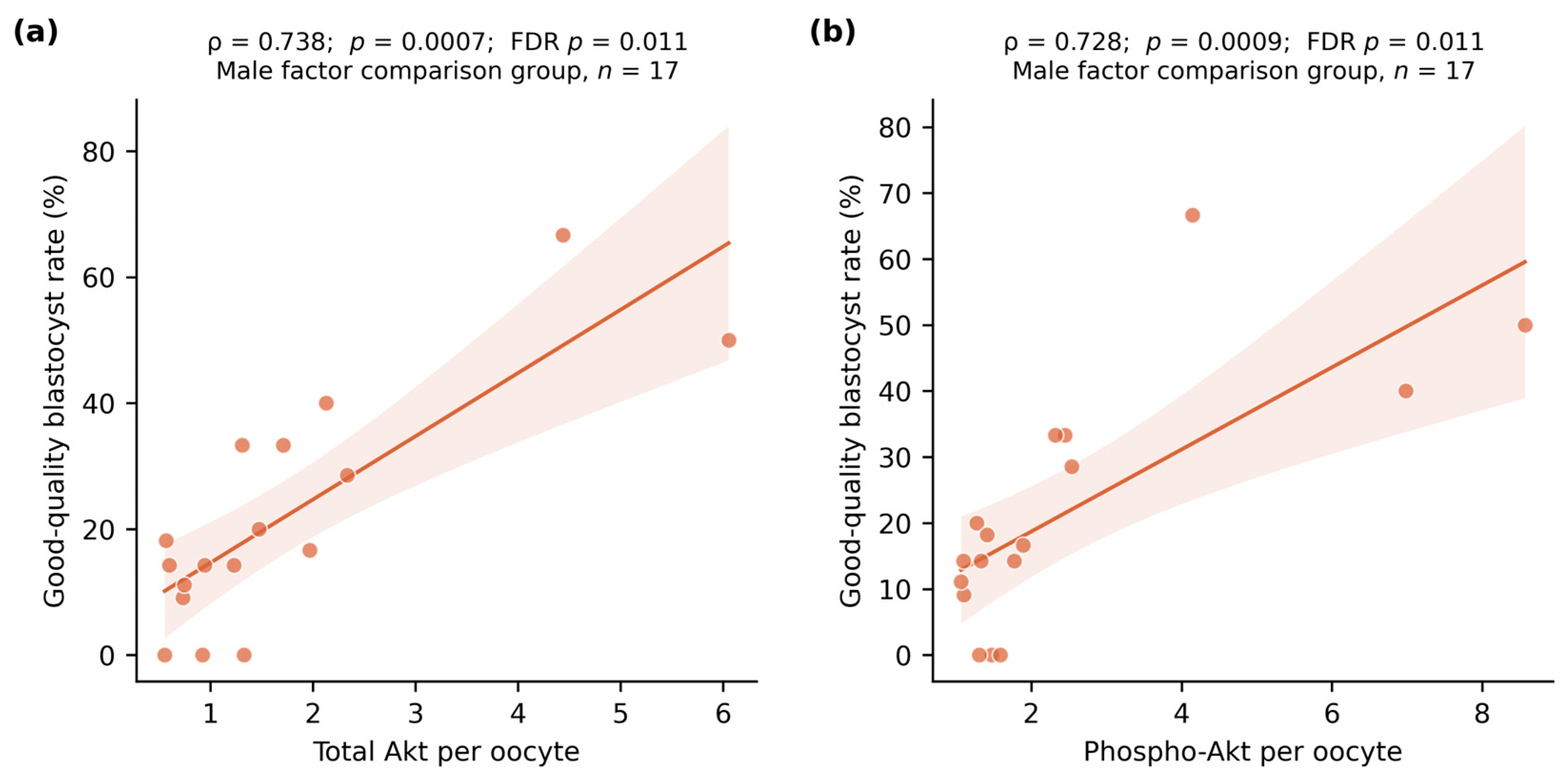
Background/Objectives: Unexplained infertility (UI) is defined by the absence of detectable abnormality on standard evaluation, which raises the possibility that the causative defect lies at the level of intracellular signaling rather than at the level of gamete number or hormone concentration. The PI3K/Akt pathway governs primordial follicle activation, granulosa cell survival, and the acquisition of oocyte competence, but AKT2 transcript abundance in the somatic follicular compartment has not been characterized clinically in UI. We compared cumulus/granulosa cell AKT2 transcript levels and follicular fluid Akt and phospho-Akt (Ser473) protein levels between women with UI and women undergoing intracytoplasmic sperm injection (ICSI) for isolated male factor infertility.  Methods: This was a prospective case–control study of 128 women (64 UI, 64 male factor) aged 23–35 years, all stimulated with a GnRH antagonist protocol and recruited December 2020–May 2021. AKT2 expression in cumulus/granulosa cells recovered at denudation was quantified using RT-qPCR (ΔΔCt, GAPDH reference). Total Akt and phospho-Akt (Ser473) were measured in follicular fluid using ELISA and normalized to the number of oocytes retrieved. Oocyte maturation, fertilization, day 3 embryo quality, and day 5 blastocyst quality were assessed using Alpha/ESHRE Istanbul consensus criteria. Correlation analyses were exploratory and reported with Benjamini–Hochberg false discovery rate (FDR) adjustment. Results: Baseline characteristics, including age, body mass index, antral follicle count, AMH, FSH, LH, oocytes retrieved, and duration of infertility, were comparable between groups. Granulosa cell AKT2 ΔCt was higher in the UI group (3.46 ± 1.47 versus 2.68 ± 1.18; p = 0.001), corresponding to a 1.72-fold lower AKT2 transcript level (ΔΔCt 0.78; Cohen’s d = 0.59); the difference persisted after adjustment for age, body mass index, AMH, basal estradiol levels, and previous IVF attempts (adjusted ΔCt difference 0.74, 95% CI 0.25–1.24; p = 0.004). Follicular fluid total Akt (11.55 ± 4.08 versus 11.75 ± 3.60 relative units; p = 0.78) and phospho-Akt (21.05 ± 7.14 versus 19.81 ± 7.24; p = 0.34) did not differ, nor did values normalized per oocyte. Oocyte maturation rate (0.72 ± 0.25 versus 0.76 ± 0.18), fertilization rate (44.6 ± 29.5% versus 42.2 ± 25.6%), day 3 good-quality embryo rate (25.0 ± 25.8% versus 26.6 ± 23.8%), and good-quality blastocyst rate (30.2 ± 25.8% versus 20.5 ± 18.5%) were all comparable. Of 24 exploratory correlations, only two survived FDR adjustment. Both correlations were in the male factor comparison group and both involved the small blastocyst subgroup: total Akt per oocyte (ρ = 0.738) and phospho-Akt per oocyte (ρ = 0.728) versus good-quality blastocyst rate (n = 17; FDR p = 0.011). AKT2 ΔCt did not correlate with any embryological endpoint in either group. Conclusions: Cumulus and granulosa cell AKT2 mRNA was reduced approximately 1.7-fold in women with unexplained infertility, despite indistinguishable ovarian reserve, ovarian response, and embryological performance and despite unchanged follicular fluid Akt protein. Because the comparison group consisted of women from couples undergoing ICSI for male factor infertility rather than women of proven fertility, the difference cannot be attributed specifically to unexplained infertility, and the findings describe transcript abundance rather than pathway activity. Confirmation against a fertile comparison group, with protein-level assessment in the same cells and clinical pregnancy endpoints, is required.
Keywords: unexplained infertility; AKT2; PI3K/Akt signaling; granulosa cells; cumulus cells; follicular fluid; oocyte competence; ICSI unexplained infertility; AKT2; PI3K/Akt signaling; granulosa cells; cumulus cells; follicular fluid; oocyte competence; ICSI