The Molecular Basis and Biomarker Potential of the HIF-1α–VEGF–GLUT1 Hypoxia Axis in Laryngeal Squamous Cell Carcinoma

 ,
,  , and
, and 
Abstract
1. Introduction
2. Materials and Methods
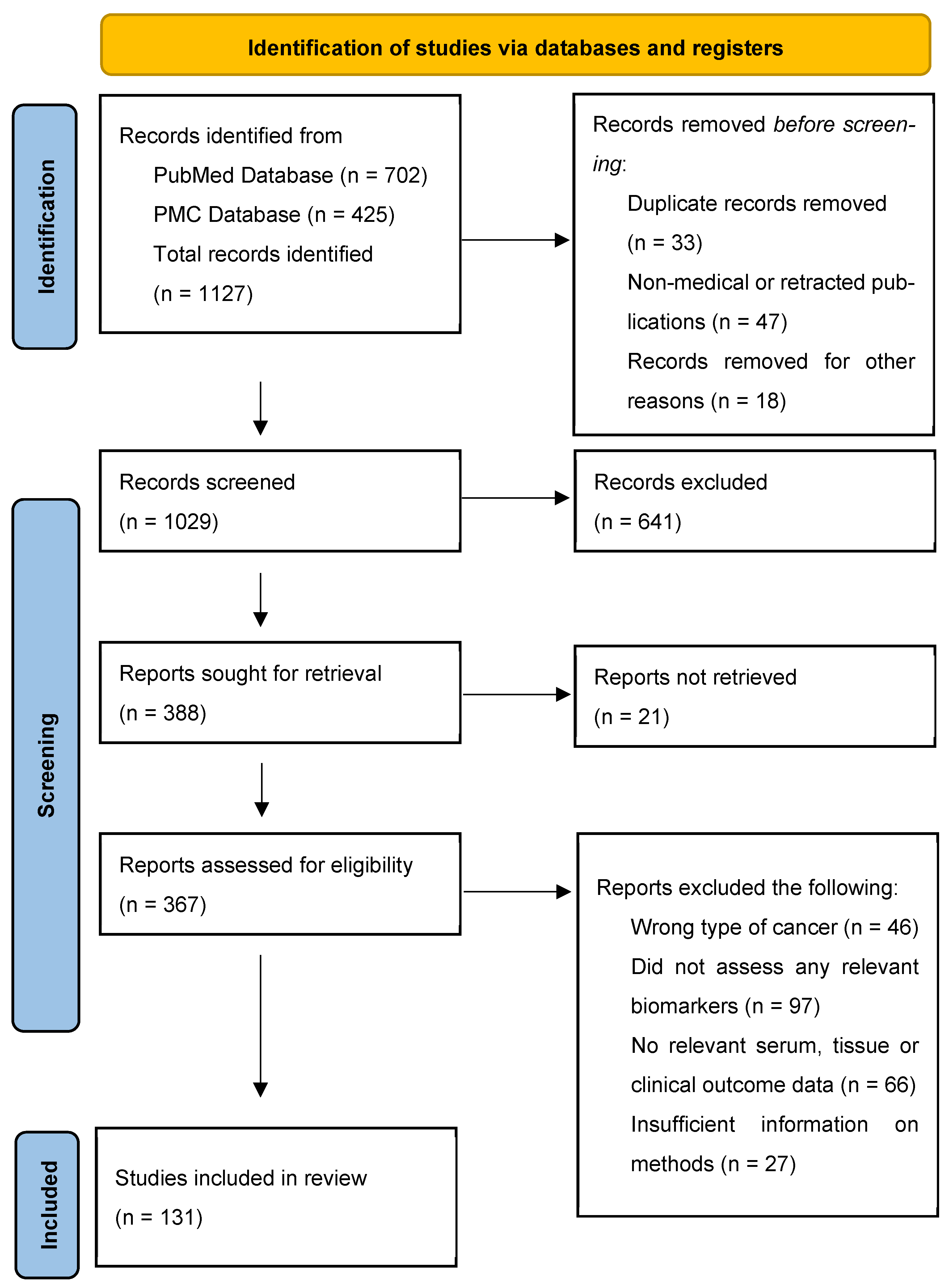
2.1. Literature Search Strategy
2.2. Eligibility Criteria and Study Selection
3. Biochemical Basis of Hypoxia Signalling
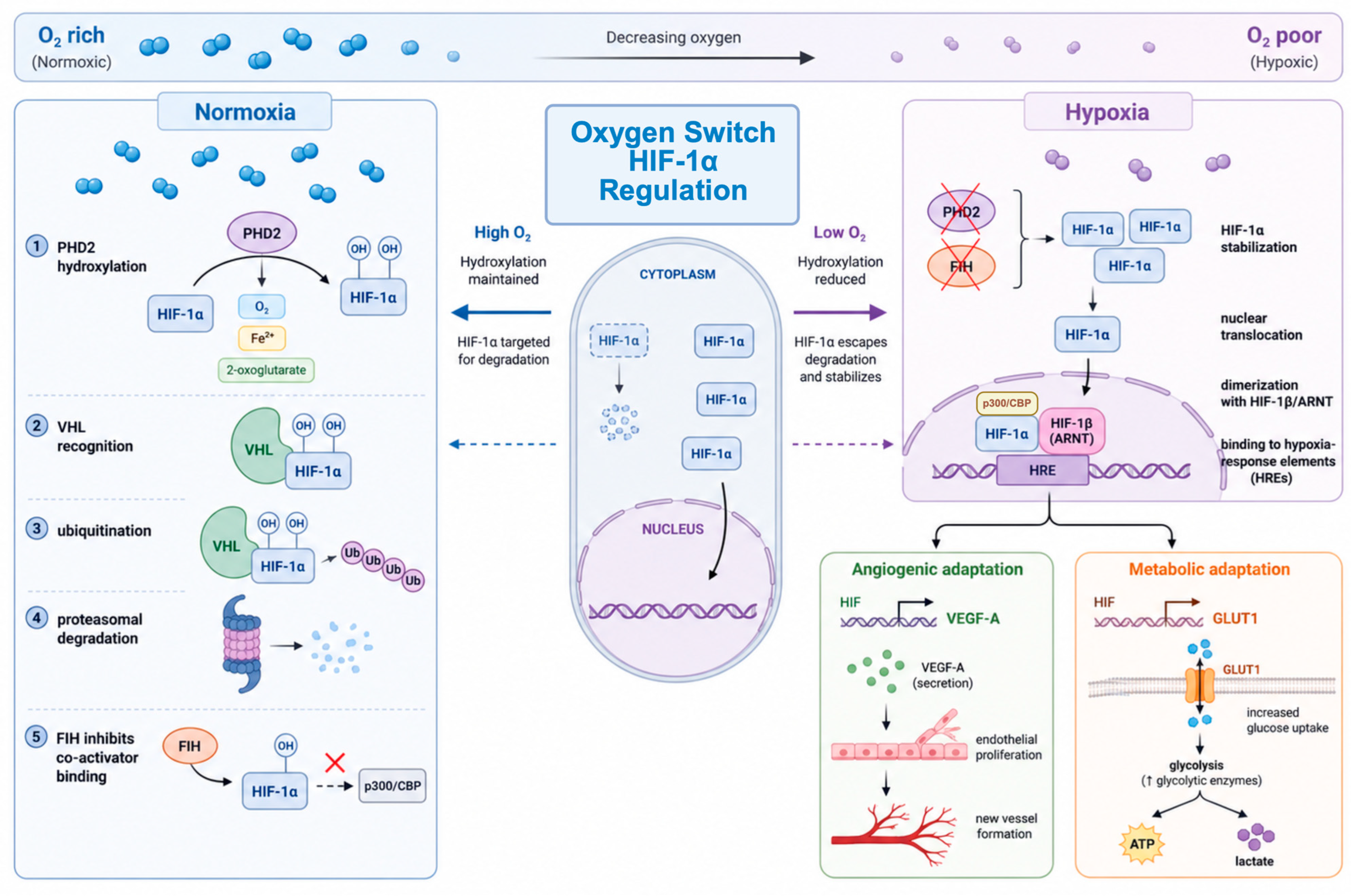
3.1. Oxygen Sensing and HIF-1α Regulation
3.2. Transcriptional Responses Caused by Hypoxia
3.3. Hypoxia, Angiogenesis and Metabolic Reprogramming
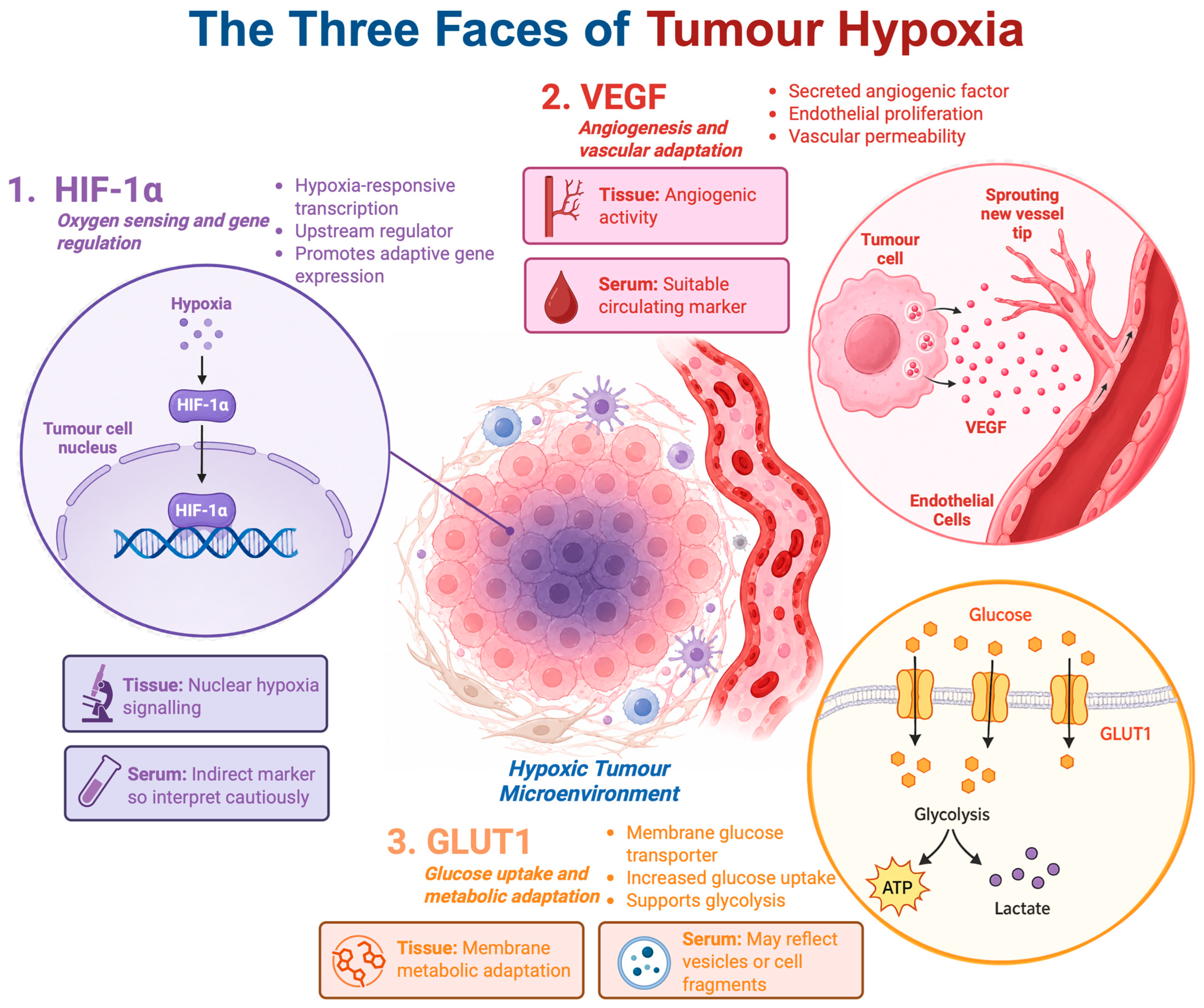
4. The Molecular Functions and Biomarker Roles of HIF-1α, VEGF, and GLUT1
4.1. HIF-1α: The Oxygen-Sensitive Master Regulator
4.2. VEGF: The Angiogenic Hypoxia Marker
4.3. GLUT1: The Metabolic Hypoxia Marker
5. The Integrated HIF-1α–VEGF–GLUT1 Axis in Laryngeal Carcinoma
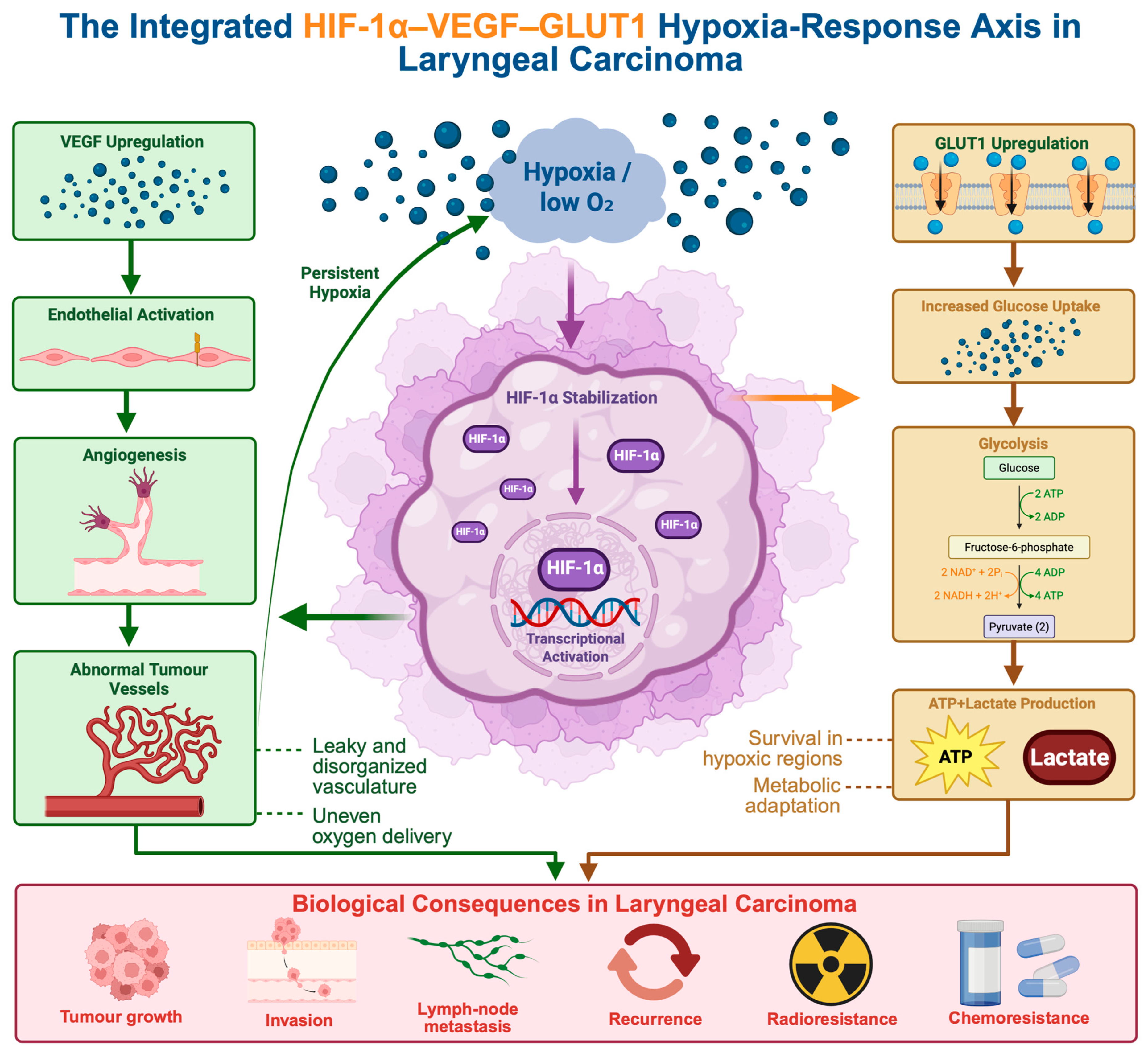
5.1. The Integrated HIF-1α–VEGF–GLUT1 Response to Hypoxia
5.2. Biological and Biomarker Relevance in Laryngeal Carcinoma
5.3. Cross-Cancer Relevance of the HIF-1α–VEGF–GLUT1 Hypoxia Axis
6. The Clinical Application of the HIF-1α–VEGF–GLUT1 Axis in Laryngeal Carcinoma
6.1. Diagnostic and Prognostic Relevance
6.1.1. Diagnostic Relevance
6.1.2. Prognostic Significance
6.2. Treatment-Modality-Specific Response and Combined Biomarker Assessment
6.2.1. Radiotherapy Response
6.2.2. Chemotherapy Response
6.2.3. Experimental Pathway-Targeted Approaches
6.2.4. Combined Biomarker Assessment
7. Analytical Challenges and Current Limitations
7.1. Sample Types and Detection Methods
7.2. Sources of Variability and Gaps in Evidence
8. Future Perspectives and Conclusions
Supplementary Materials
Author Contributions
Funding
Institutional Review Board Statement
Informed Consent Statement
Data Availability Statement
Conflicts of Interest
References
- Verro, B.; Saraniti, C.; Carlisi, D.; Chiesa-Estomba, C.; Maniaci, A.; Lechien, J.R.; Mayo, M.; Fakhry, N.; Lauricella, M. Biomarkers in Laryngeal Squamous Cell Carcinoma: The Literature Review. Cancers 2023, 15, 5096. [Google Scholar] [CrossRef] [Scilit] [PubMed] [PubMed Central]
- Falco, M.; Tammaro, C.; Takeuchi, T.; Cossu, A.M.; Scafuro, G.; Zappavigna, S.; Itro, A.; Addeo, R.; Scrima, M.; Lombardi, A.; et al. Overview on Molecular Biomarkers for Laryngeal Cancer: Looking for New Answers to an Old Problem. Cancers 2022, 14, 1716. [Google Scholar] [CrossRef] [Scilit] [PubMed] [PubMed Central]
- Bronikowska, I.; Swietochowska, E.; Morawski, R.; Sowa, P.; Czecior, E. Concentration of hypoxia-inducible factor-1, glucose transporter 1 and vascular endothelial growth factor in tissue samples and serum in patients with primary laryngeal carcinoma. Acta Otolaryngol. 2022, 142, 532–536. [Google Scholar] [CrossRef] [Scilit] [PubMed]
- Qannita, R.A.; Alalami, A.I.; Harb, A.A.; Aleidi, S.M.; Taneera, J.; Abu-Gharbieh, E.; El-Huneidi, W.; Saleh, M.A.; Alzoubi, K.H.; Semreen, M.H.; et al. Targeting Hypoxia-Inducible Factor-1 (HIF-1) in Cancer: Emerging Therapeutic Strategies and Pathway Regulation. Pharmaceuticals 2024, 17, 195. [Google Scholar] [CrossRef] [Scilit] [PubMed] [PubMed Central]
- Wu, X.H.; Chen, S.P.; Mao, J.Y.; Ji, X.X.; Yao, H.T.; Zhou, S.H. Expression and significance of hypoxia-inducible factor-1α and glucose transporter-1 in laryngeal carcinoma. Oncol. Lett. 2013, 5, 261–266, Erratum in Oncol Lett. 2013, 6, 287. https://doi.org/10.3892/ol.2013.1360. [Google Scholar] [CrossRef] [Scilit] [PubMed] [PubMed Central]
- Xu, O.; Li, X.M.; Wang, M.X.; Qu, Y.T.; Lu, X.Y.; Shan, C.G.; Sun, Q.J. Expression of hypoxia inducible factor-1α and correlated target genes in human laryngeal carcinoma. Zhonghua Er Bi Yan Hou Tou Jing Wai Ke Za Zhi 2012, 47, 330–333. (In Chinese) [Google Scholar] [PubMed]
- Adachi, M.; Thomas, L. Molecular-targeted therapy hypoxia in head and neck squamous cell carcinoma patients. Mol. Clin. Oncol. 2013, 1, 12–14. [Google Scholar] [CrossRef] [Scilit] [PubMed] [PubMed Central]
- Li, J.Z.; Gao, W.; Chan, J.Y.; Ho, W.K.; Wong, T.S. Hypoxia in head and neck squamous cell carcinoma. ISRN Otolaryngol. 2012, 2012, 708974. [Google Scholar] [CrossRef] [Scilit] [PubMed] [PubMed Central]
- Semenza, G.L.; Wang, G.L. A nuclear factor induced by hypoxia via de novo protein synthesis binds to the human erythropoietin gene enhancer at a site required for transcriptional activation. Mol. Cell Biol. 1992, 12, 5447–5454. [Google Scholar] [CrossRef] [Scilit] [PubMed] [PubMed Central]
- Wang, G.L.; Semenza, G.L. Characterization of hypoxia-inducible factor 1 and regulation of DNA binding activity by hypoxia. J. Biol. Chem. 1993, 268, 21513–21518. [Google Scholar] [CrossRef] [Scilit] [PubMed]
- Wang, G.L.; Jiang, B.H.; Rue, E.A.; Semenza, G.L. Hypoxia-inducible factor 1 is a basic-helix-loop-helix-PAS heterodimer regulated by cellular O2 tension. Proc. Natl. Acad. Sci. USA 1995, 92, 5510–5514. [Google Scholar] [CrossRef] [Scilit] [PubMed] [PubMed Central]
- Huang, L.E.; Gu, J.; Schau, M.; Bunn, H.F. Regulation of hypoxia-inducible factor 1alpha is mediated by an O2-dependent degradation domain via the ubiquitin-proteasome pathway. Proc. Natl. Acad. Sci. USA 1998, 95, 7987–7992. [Google Scholar] [CrossRef] [Scilit] [PubMed] [PubMed Central]
- Bruick, R.K.; McKnight, S.L. A conserved family of prolyl-4-hydroxylases that modify HIF. Science 2001, 294, 1337–1340. [Google Scholar] [CrossRef] [Scilit] [PubMed]
- Epstein, A.C.; Gleadle, J.M.; McNeill, L.A.; Hewitson, K.S.; O’Rourke, J.; Mole, D.R.; Mukherji, M.; Metzen, E.; Wilson, M.I.; Dhanda, A.; et al. C. elegans EGL-9 and mammalian homologs define a family of dioxygenases that regulate HIF by prolyl hydroxylation. Cell 2001, 107, 43–54. [Google Scholar] [CrossRef] [Scilit] [PubMed]
- Berra, E.; Benizri, E.; Ginouvès, A.; Volmat, V.; Roux, D.; Pouysségur, J. HIF prolyl-hydroxylase 2 is the key oxygen sensor setting low steady-state levels of HIF-1alpha in normoxia. EMBO J. 2003, 22, 4082–4090. [Google Scholar] [CrossRef] [Scilit] [PubMed] [PubMed Central]
- Maxwell, P.H.; Wiesener, M.S.; Chang, G.W.; Clifford, S.C.; Vaux, E.C.; Cockman, M.E.; Wykoff, C.C.; Pugh, C.W.; Maher, E.R.; Ratcliffe, P.J. The tumour suppressor protein VHL targets hypoxia-inducible factors for oxygen-dependent proteolysis. Nature 1999, 399, 271–275. [Google Scholar] [CrossRef] [Scilit] [PubMed]
- Ivan, M.; Kondo, K.; Yang, H.; Kim, W.; Valiando, J.; Ohh, M.; Salic, A.; Asara, J.M.; Lane, W.S.; Kaelin, W.G., Jr. HIFalpha targeted for VHL-mediated destruction by proline hydroxylation: Implications for O2 sensing. Science 2001, 292, 464–468. [Google Scholar] [CrossRef] [Scilit] [PubMed]
- Jaakkola, P.; Mole, D.R.; Tian, Y.M.; Wilson, M.I.; Gielbert, J.; Gaskell, S.J.; von Kriegsheim, A.; Hebestreit, H.F.; Mukherji, M.; Schofield, C.J.; et al. Targeting of HIF-alpha to the von Hippel-Lindau ubiquitylation complex by O2-regulated prolyl hydroxylation. Science 2001, 292, 468–472. [Google Scholar] [CrossRef] [Scilit] [PubMed]
- Lando, D.; Peet, D.J.; Gorman, J.J.; Whelan, D.A.; Whitelaw, M.L.; Bruick, R.K. FIH-1 is an asparaginyl hydroxylase enzyme that regulates the transcriptional activity of hypoxia-inducible factor. Genes Dev. 2002, 16, 1466–1471. [Google Scholar] [CrossRef] [Scilit] [PubMed] [PubMed Central]
- McNeill, L.A.; Hewitson, K.S.; Claridge, T.D.; Seibel, J.F.; Horsfall, L.E.; Schofield, C.J. Hypoxia-inducible factor asparaginyl hydroxylase (FIH-1) catalyses hydroxylation at the beta-carbon of asparagine-803. Biochem J. 2002, 367, 571–575. [Google Scholar] [CrossRef] [Scilit] [PubMed] [PubMed Central]
- Gleadle, J.M.; Ratcliffe, P.J. Induction of hypoxia-inducible factor-1, erythropoietin, vascular endothelial growth factor, and glucose transporter-1 by hypoxia: Evidence against a regulatory role for Src kinase. Blood 1997, 89, 503–509. [Google Scholar] [CrossRef] [Scilit] [PubMed]
- Iyer, N.V.; Kotch, L.E.; Agani, F.; Leung, S.W.; Laughner, E.; Wenger, R.H.; Gassmann, M.; Gearhart, J.D.; Lawler, A.M.; Yu, A.Y.; et al. Cellular and developmental control of O2 homeostasis by hypoxia-inducible factor 1 alpha. Genes Dev. 1998, 12, 149–162. [Google Scholar] [CrossRef] [Scilit] [PubMed] [PubMed Central]
- Forsythe, J.A.; Jiang, B.H.; Iyer, N.V.; Agani, F.; Leung, S.W.; Koos, R.D.; Semenza, G.L. Activation of vascular endothelial growth factor gene transcription by hypoxia-inducible factor 1. Mol. Cell Biol. 1996, 16, 4604–4613. [Google Scholar] [CrossRef] [Scilit] [PubMed] [PubMed Central]
- Shi, Y.H.; Fang, W.G. Hypoxia-inducible factor-1 in tumour angiogenesis. World J. Gastroenterol. 2004, 10, 1082–1087. [Google Scholar] [CrossRef] [Scilit] [PubMed] [PubMed Central]
- Semenza, G.L.; Roth, P.H.; Fang, H.M.; Wang, G.L. Transcriptional regulation of genes encoding glycolytic enzymes by hypoxia-inducible factor 1. J. Biol. Chem. 1994, 269, 23757–23763. [Google Scholar] [CrossRef] [Scilit] [PubMed]
- Semenza, G.L. HIF-1: Upstream and downstream of cancer metabolism. Curr. Opin. Genet Dev. 2010, 20, 51–56. [Google Scholar] [CrossRef] [Scilit] [PubMed] [PubMed Central]
- Kim, J.W.; Tchernyshyov, I.; Semenza, G.L.; Dang, C.V. HIF-1-mediated expression of pyruvate dehydrogenase kinase: A metabolic switch required for cellular adaptation to hypoxia. Cell Metab. 2006, 3, 177–185. [Google Scholar] [CrossRef] [Scilit] [PubMed]
- Semenza, G.L. HIF-1 mediates metabolic responses to intratumoral hypoxia and oncogenic mutations. J. Clin. Investig. 2013, 123, 3664–3671. [Google Scholar] [CrossRef] [Scilit] [PubMed] [PubMed Central]
- Sowter, H.M.; Ratcliffe, P.J.; Watson, P.; Greenberg, A.H.; Harris, A.L. HIF-1-dependent regulation of hypoxic induction of the cell death factors BNIP3 and NIX in human tumors. Cancer Res. 2001, 61, 6669–6673. [Google Scholar] [PubMed]
- Bellot, G.; Garcia-Medina, R.; Gounon, P.; Chiche, J.; Roux, D.; Pouysségur, J.; Mazure, N.M. Hypoxia-induced autophagy is mediated through hypoxia-inducible factor induction of BNIP3 and BNIP3L via their BH3 domains. Mol. Cell Biol. 2009, 29, 2570–2581. [Google Scholar] [CrossRef] [Scilit] [PubMed] [PubMed Central]
- Wong, C.C.; Gilkes, D.M.; Zhang, H.; Chen, J.; Wei, H.; Chaturvedi, P.; Fraley, S.I.; Wong, C.M.; Khoo, U.S.; Ng, I.O.; et al. Hypoxia-inducible factor 1 is a master regulator of breast cancer metastatic niche formation. Proc. Natl. Acad. Sci. USA 2011, 108, 16369–16374. [Google Scholar] [CrossRef] [Scilit] [PubMed] [PubMed Central]
- Ishikawa, T.; Nakashiro, K.; Klosek, S.K.; Goda, H.; Hara, S.; Uchida, D.; Hamakawa, H. Hypoxia enhances CXCR4 expression by activating HIF-1 in oral squamous cell carcinoma. Oncol. Rep. 2009, 21, 707–712. [Google Scholar] [CrossRef] [Scilit] [PubMed]
- Gilkes, D.M.; Semenza, G.L.; Wirtz, D. Hypoxia and the extracellular matrix: Drivers of tumour metastasis. Nat. Rev. Cancer 2014, 14, 430–439. [Google Scholar] [CrossRef] [Scilit] [PubMed] [PubMed Central]
- Zimna, A.; Kurpisz, M. Hypoxia-Inducible Factor-1 in Physiological and Pathophysiological Angiogenesis: Applications and Therapies. BioMed Res. Int. 2015, 2015, 549412. [Google Scholar] [CrossRef] [Scilit] [PubMed] [PubMed Central]
- Krock, B.L.; Skuli, N.; Simon, M.C. Hypoxia-induced angiogenesis: Good and evil. Genes Cancer 2011, 2, 1117–1133. [Google Scholar] [CrossRef] [Scilit] [PubMed] [PubMed Central]
- Masoud, G.N.; Li, W. HIF-1α pathway: Role, regulation and intervention for cancer therapy. Acta Pharm. Sin. B 2015, 5, 378–389. [Google Scholar] [CrossRef] [Scilit] [PubMed] [PubMed Central]
- Semenza, G.L. Regulation of metabolism by hypoxia-inducible factor 1. Cold Spring Harb. Symp. Quant. Biol. 2011, 76, 347–353. [Google Scholar] [CrossRef] [Scilit] [PubMed]
- Chen, C.; Pore, N.; Behrooz, A.; Ismail-Beigi, F.; Maity, A. Regulation of glut1 mRNA by hypoxia-inducible factor-1. Interaction between H-ras and hypoxia. J. Biol. Chem. 2001, 276, 9519–9525. [Google Scholar] [CrossRef] [Scilit] [PubMed]
- Hayashi, M.; Sakata, M.; Takeda, T.; Yamamoto, T.; Okamoto, Y.; Sawada, K.; Kimura, A.; Minekawa, R.; Tahara, M.; Tasaka, K.; et al. Induction of glucose transporter 1 expression through hypoxia-inducible factor 1alpha under hypoxic conditions in trophoblast-derived cells. J. Endocrinol. 2004, 183, 145–154. [Google Scholar] [CrossRef] [Scilit] [PubMed]
- Ouiddir, A.; Planès, C.; Fernandes, I.; VanHesse, A.; Clerici, C. Hypoxia upregulates activity and expression of the glucose transporter GLUT1 in alveolar epithelial cells. Am. J. Respir. Cell Mol. Biol. 1999, 21, 710–718. [Google Scholar] [CrossRef] [Scilit] [PubMed]
- Lum, J.J.; Bui, T.; Gruber, M.; Gordan, J.D.; DeBerardinis, R.J.; Covello, K.L.; Simon, M.C.; Thompson, C.B. The transcription factor HIF-1alpha plays a critical role in the growth factor-dependent regulation of both aerobic and anaerobic glycolysis. Genes Dev. 2007, 21, 1037–1049. [Google Scholar] [CrossRef] [Scilit] [PubMed] [PubMed Central]
- Nagao, A.; Kobayashi, M.; Koyasu, S.; Chow, C.C.T.; Harada, H. HIF-1-Dependent Reprogramming of Glucose Metabolic Pathway of Cancer Cells and Its Therapeutic Significance. Int. J. Mol. Sci. 2019, 20, 238. [Google Scholar] [CrossRef] [Scilit] [PubMed] [PubMed Central]
- Jiang, B.H.; Zheng, J.Z.; Leung, S.W.; Roe, R.; Semenza, G.L. Transactivation and inhibitory domains of hypoxia-inducible factor 1alpha. Modulation of transcriptional activity by oxygen tension. J. Biol. Chem. 1997, 272, 19253–19260. [Google Scholar] [CrossRef] [Scilit] [PubMed]
- Freedman, S.J.; Sun, Z.Y.; Poy, F.; Kung, A.L.; Livingston, D.M.; Wagner, G.; Eck, M.J. Structural basis for recruitment of CBP/p300 by hypoxia-inducible factor-1 alpha. Proc. Natl. Acad. Sci. USA 2002, 99, 5367–5372. [Google Scholar] [CrossRef] [Scilit] [PubMed] [PubMed Central]
- Yu, F.; White, S.B.; Zhao, Q.; Lee, F.S. HIF-1alpha binding to VHL is regulated by stimulus-sensitive proline hydroxylation. Proc. Natl. Acad. Sci. USA 2001, 98, 9630–9635, Erratum in Proc. Natl. Acad. Sci. USA 2001, 98, 14744. [Google Scholar] [CrossRef] [Scilit] [PubMed] [PubMed Central]
- Chan, D.A.; Sutphin, P.D.; Yen, S.E.; Giaccia, A.J. Coordinate regulation of the oxygen-dependent degradation domains of hypoxia-inducible factor 1 alpha. Mol. Cell Biol. 2005, 25, 6415–6426. [Google Scholar] [CrossRef] [Scilit] [PubMed] [PubMed Central]
- Maxwell, P.H.; Dachs, G.U.; Gleadle, J.M.; Nicholls, L.G.; Harris, A.L.; Stratford, I.J.; Hankinson, O.; Pugh, C.W.; Ratcliffe, P.J. Hypoxia-inducible factor-1 modulates gene expression in solid tumors and influences both angiogenesis and tumor growth. Proc. Natl. Acad. Sci. USA 1997, 94, 8104–8109. [Google Scholar] [CrossRef] [Scilit] [PubMed] [PubMed Central]
- Semenza, G.L.; Jiang, B.H.; Leung, S.W.; Passantino, R.; Concordet, J.P.; Maire, P.; Giallongo, A. Hypoxia response elements in the aldolase A, enolase 1, and lactate dehydrogenase A gene promoters contain essential binding sites for hypoxia-inducible factor 1. J. Biol. Chem. 1996, 271, 32529–32537. [Google Scholar] [CrossRef] [Scilit] [PubMed]
- Xie, J.; Li, D.W.; Chen, X.W.; Wang, F.; Dong, P. Expression and significance of hypoxia-inducible factor-1α and MDR1/P-glycoprotein in laryngeal carcinoma tissue and hypoxic Hep-2 cells. Oncol. Lett. 2013, 6, 232–238. [Google Scholar] [CrossRef] [Scilit] [PubMed] [PubMed Central]
- Lin, W.; Yin, C.Y.; Yu, Q.; Zhou, S.H.; Chai, L.; Fan, J.; Wang, W.D. Expression of glucose transporter-1, hypoxia inducible factor-1α and beclin-1 in head and neck cancer and their implication. Int. J. Clin. Exp. Pathol. 2018, 11, 3708–3717. [Google Scholar] [PubMed] [PubMed Central]
- Eskiizmir, G.; Çalıbaşı Koçal, G.; Uysal, T.; Ellidokuz, H.; Başpınar, Y. Serum hypoxia-inducible factor-2: A candidate prognostic biomarker for laryngeal cancer. Clin. Otolaryngol. 2021, 46, 1172–1183. [Google Scholar] [CrossRef] [Scilit] [PubMed]
- Senger, D.R.; Galli, S.J.; Dvorak, A.M.; Perruzzi, C.A.; Harvey, V.S.; Dvorak, H.F. Tumor cells secrete a vascular permeability factor that promotes accumulation of ascites fluid. Science 1983, 219, 983–985. [Google Scholar] [CrossRef] [Scilit] [PubMed]
- Leung, D.W.; Cachianes, G.; Kuang, W.J.; Goeddel, D.V.; Ferrara, N. Vascular endothelial growth factor is a secreted angiogenic mitogen. Science 1989, 246, 1306–1309. [Google Scholar] [CrossRef] [Scilit] [PubMed]
- Shweiki, D.; Itin, A.; Soffer, D.; Keshet, E. Vascular endothelial growth factor induced by hypoxia may mediate hypoxia-initiated angiogenesis. Nature 1992, 359, 843–845. [Google Scholar] [CrossRef] [Scilit] [PubMed]
- Zachary, I. VEGF signalling: Integration and multi-tasking in endothelial cell biology. Biochem. Soc. Trans. 2003, 31, 1171–1177. [Google Scholar] [CrossRef] [Scilit] [PubMed]
- Holmes, K.; Roberts, O.L.; Thomas, A.M.; Cross, M.J. Vascular endothelial growth factor receptor-2: Structure, function, intracellular signalling and therapeutic inhibition. Cell Signal 2007, 19, 2003–2012. [Google Scholar] [CrossRef] [Scilit] [PubMed]
- Dvorak, H.F. Vascular permeability factor/vascular endothelial growth factor: A critical cytokine in tumor angiogenesis and a potential target for diagnosis and therapy. J. Clin. Oncol. 2002, 20, 4368–4380. [Google Scholar] [CrossRef] [Scilit] [PubMed]
- Carmeliet, P.; Jain, R.K. Angiogenesis in cancer and other diseases. Nature 2000, 407, 249–257. [Google Scholar] [CrossRef] [Scilit] [PubMed]
- Hicklin, D.J.; Ellis, L.M. Role of the vascular endothelial growth factor pathway in tumor growth and angiogenesis. J. Clin. Oncol. 2005, 23, 1011–1027. [Google Scholar] [CrossRef] [Scilit] [PubMed]
- Neuchrist, C.; Quint, C.; Pammer, A.; Burian, M. Vascular endothelial growth factor (VEGF) and microvessel density in squamous cell carcinomas of the larynx: An immunohistochemical study. Acta Otolaryngol. 1999, 119, 732–738. [Google Scholar] [CrossRef] [Scilit] [PubMed]
- Sawatsubashi, M.; Yamada, T.; Fukushima, N.; Mizokami, H.; Tokunaga, O.; Shin, T. Association of vascular endothelial growth factor and mast cells with angiogenesis in laryngeal squamous cell carcinoma. Virchows Arch. 2000, 436, 243–248. [Google Scholar] [CrossRef] [Scilit] [PubMed]
- Parikh, R.R.; Yang, Q.; Haffty, B.G. Prognostic significance of vascular endothelial growth factor protein levels in T1-2 N0 laryngeal cancer treated with primary radiation therapy. Cancer 2007, 109, 566–573. [Google Scholar] [CrossRef] [Scilit] [PubMed]
- Riedel, F.; Götte, K.; Schwalb, J.; Wirtz, H.; Bergler, W.; Hörmann, K. Serum levels of vascular endothelial growth factor in patients with head and neck cancer. Eur. Arch. Otorhinolaryngol. 2000, 257, 332–336. [Google Scholar] [CrossRef] [Scilit] [PubMed]
- Teknos, T.N.; Cox, C.; Yoo, S.; Chepeha, D.B.; Wolf, G.T.; Bradford, C.R.; Carey, T.E.; Fisher, S.G. Elevated serum vascular endothelial growth factor and decreased survival in advanced laryngeal carcinoma. Head Neck 2002, 24, 1004–1011. [Google Scholar] [CrossRef] [Scilit] [PubMed]
- Gisterek, I.; Sedlaczek, P.; Kornafel, J.; Harłoziñska-Szmyrka, A.; Lacko, A. Serum vascular endothelial growth factor in patients with pharyngeal and laryngeal squamous cell carcinoma treated with radiotherapy. Am. J. Otolaryngol. 2007, 28, 73–77. [Google Scholar] [CrossRef] [Scilit] [PubMed]
- Mueckler, M. Facilitative glucose transporters. Eur. J. Biochem. 1994, 219, 713–725. [Google Scholar] [CrossRef] [Scilit] [PubMed]
- Olson, A.L.; Pessin, J.E. Structure, function, and regulation of the mammalian facilitative glucose transporter gene family. Annu. Rev. Nutr. 1996, 16, 235–256. [Google Scholar] [CrossRef] [PubMed]
- Marchiq, I.; Pouysségur, J. Hypoxia, cancer metabolism and the therapeutic benefit of targeting lactate/H(+) symporters. J. Mol. Med. 2016, 94, 155–171. [Google Scholar] [CrossRef] [Scilit] [PubMed] [PubMed Central]
- Tran, Q.; Lee, H.; Park, J.; Kim, S.H.; Park, J. Targeting Cancer Metabolism—Revisiting the Warburg Effects. Toxicol. Res. 2016, 32, 177–193. [Google Scholar] [CrossRef] [Scilit] [PubMed] [PubMed Central]
- Kozal, K.; Jóźwiak, P.; Krześlak, A. Contemporary Perspectives on the Warburg Effect Inhibition in Cancer Therapy. Cancer Control 2021, 28, 10732748211041243. [Google Scholar] [CrossRef] [Scilit] [PubMed] [PubMed Central]
- Airley, R.; Loncaster, J.; Davidson, S.; Bromley, M.; Roberts, S.; Patterson, A.; Hunter, R.; Stratford, I.; West, C. Glucose transporter glut-1 expression correlates with tumor hypoxia and predicts metastasis-free survival in advanced carcinoma of the cervix. Clin. Cancer Res. 2001, 7, 928–934. [Google Scholar] [PubMed]
- Starska, K.; Forma, E.; Jóźwiak, P.; Bryś, M.; Lewy-Trenda, I.; Brzezińska-Błaszczyk, E.; Krześlak, A. Gene and protein expression of glucose transporter 1 and glucose transporter 3 in human laryngeal cancer-the relationship with regulatory hypoxia-inducible factor-1α expression, tumor invasiveness, and patient prognosis. Tumour Biol. 2015, 36, 2309–2321. [Google Scholar] [CrossRef] [Scilit] [PubMed] [PubMed Central]
- Wan, L.; Xia, T.; Du, Y.; Liu, J.; Xie, Y.; Zhang, Y.; Guan, F.; Wu, J.; Wang, X.; Shi, C. Exosomes from activated hepatic stellate cells contain GLUT1 and PKM2: A role for exosomes in metabolic switch of liver nonparenchymal cells. FASEB J. 2019, 33, 8530–8542. [Google Scholar] [CrossRef] [Scilit] [PubMed]
- Semenza, G.L. Hypoxia-inducible factor 1 (HIF-1) pathway. Sci. STKE 2007, 2007, cm8. [Google Scholar] [CrossRef] [Scilit] [PubMed]
- Breen, E.C. VEGF in biological control. J. Cell Biochem. 2007, 102, 1358–1367. [Google Scholar] [CrossRef] [Scilit] [PubMed]
- Pugh, C.W.; Ratcliffe, P.J. The von Hippel-Lindau tumor suppressor, hypoxia-inducible factor-1 (HIF-1) degradation, and cancer pathogenesis. Semin Cancer Biol. 2003, 13, 83–89. [Google Scholar] [CrossRef] [Scilit] [PubMed]
- Lv, X.; Li, J.; Zhang, C.; Hu, T.; Li, S.; He, S.; Yan, H.; Tan, Y.; Lei, M.; Wen, M.; et al. The role of hypoxia-inducible factors in tumor angiogenesis and cell metabolism. Genes Dis. 2016, 4, 19–24. [Google Scholar] [CrossRef] [Scilit] [PubMed] [PubMed Central]
- Xu, O.; Li, X.; Qu, Y.; Liu, S.; An, J.; Wang, M.; Sun, Q.; Zhang, W.; Lu, X.; Pi, L.; et al. Regulation of glucose transporter protein-1 and vascular endothelial growth factor by hypoxia inducible factor 1α under hypoxic conditions in Hep-2 human cells. Mol. Med. Rep. 2012, 6, 1418–1422. [Google Scholar] [CrossRef] [Scilit] [PubMed]
- Qiu, Y.; Zhou, H. Expression of HIF-1alpha and VEGF in human laryngeal carcinoma and its relationship with angiogenes. Lin Chuang Er Bi Yan Hou Tou Jing Wai Ke Za Zhi 2014, 28, 389–393. (In Chinese) [Google Scholar] [PubMed]
- Yeh, W.L.; Lin, C.J.; Fu, W.M. Enhancement of glucose transporter expression of brain endothelial cells by vascular endothelial growth factor derived from glioma exposed to hypoxia. Mol. Pharmacol. 2008, 73, 170–177. [Google Scholar] [CrossRef] [Scilit] [PubMed]
- Du, W.; Ren, L.; Hamblin, M.H.; Fan, Y. Endothelial Cell Glucose Metabolism and Angiogenesis. Biomedicines 2021, 9, 147. [Google Scholar] [CrossRef] [Scilit] [PubMed] [PubMed Central]
- Kumar, D. Regulation of glycolysis in head and neck squamous cell carcinoma. Postdoc J. 2017, 5, 14–28. [Google Scholar] [CrossRef] [Scilit] [PubMed] [PubMed Central]
- Chen, X.H.; Liu, J.; Zhong, J.T.; Zhou, S.H.; Fan, J. Effect of GLUT1 Inhibition and Autophagy Modulation on the Growth and Migration of Laryngeal Carcinoma Stem Cells Under Hypoxic and Low-Glucose Conditions. Onco Targets Ther. 2021, 14, 3069–3081. [Google Scholar] [CrossRef] [Scilit] [PubMed] [PubMed Central]
- Shen, L.F.; Zhao, X.; Zhou, S.H.; Lu, Z.J.; Zhao, K.; Fan, J.; Zhou, M.L. In vivo evaluation of the effects of simultaneous inhibition of GLUT-1 and HIF-1α by antisense oligodeoxynucleotides on the radiosensitivity of laryngeal carcinoma using micro 18F-FDG PET/CT. Oncotarget 2017, 8, 34709–34726. [Google Scholar] [CrossRef] [Scilit] [PubMed] [PubMed Central]
- Bao, Y.Y.; Zhong, J.T.; Shen, L.F.; Dai, L.B.; Zhou, S.H.; Fan, J.; Yao, H.T.; Lu, Z.J. Effect of Glut-1 and HIF-1α double knockout by CRISPR/CAS9 on radiosensitivity in laryngeal carcinoma via the PI3K/Akt/mTOR pathway. J. Cell Mol. Med. 2022, 26, 2881–2894. [Google Scholar] [CrossRef] [Scilit] [PubMed] [PubMed Central]
- Li, Q.; Zhang, B.; Peng, P. Relevance of Endoglin (CD105) VEGF and p53 with invasion metastasis and prognosis of laryngeal carcinoma. Lin Chuang Er Bi Yan Hou Tou Jing Wai Ke Za Zhi 2007, 21, 1114–1117. (In Chinese) [Google Scholar] [PubMed]
- Zuo, J.; Wen, J.; Lei, M.; Wen, M.; Li, S.; Lv, X.; Luo, Z.; Wen, G. Hypoxia promotes the invasion and metastasis of laryngeal cancer cells via EMT. Med. Oncol. 2016, 33, 15. [Google Scholar] [CrossRef] [Scilit] [PubMed]
- Xu, Y.Y.; Wu, T.T.; Zhou, S.H.; Bao, Y.Y.; Wang, Q.Y.; Fan, J.; Huang, Y.P. Apigenin suppresses GLUT-1 and p-AKT expression to enhance the chemosensitivity to cisplatin of laryngeal carcinoma Hep-2 cells: An in vitro study. Int. J. Clin. Exp. Pathol. 2014, 7, 3938–3947. [Google Scholar] [PubMed] [PubMed Central]
- Walz, J.M.; Boehringer, D.; Deissler, H.L.; Faerber, L.; Goepfert, J.C.; Heiduschka, P.; Kleeberger, S.M.; Klettner, A.; Krohne, T.U.; Schneiderhan-Marra, N.; et al. Pre-Analytical Parameters Affecting Vascular Endothelial Growth Factor Measurement in Plasma: Identifying Confounders. PLoS ONE 2016, 11, e0145375. [Google Scholar] [CrossRef] [Scilit] [PubMed] [PubMed Central]
- Kong, F.S.; Zhao, L.; Wang, L.; Chen, Y.; Hu, J.; Fu, X.; Bai, C.; Wang, L.; Lawrence, T.S.; Anscher, M.S.; et al. Ensuring sample quality for blood biomarker studies in clinical trials: A multicenter international study for plasma and serum sample preparation. Transl. Lung Cancer Res. 2017, 6, 625–634. [Google Scholar] [CrossRef] [Scilit] [PubMed] [PubMed Central]
- Folic, M.M.; Banko, A.V.; Todorovic, V.N.; Puskas, N.S.; Milovanovic, J.P.; Krejovic, S.B.; Dragicevic-Babic, N.Z.; Bukumiric, Z.M.; Milicic, B.R.; Jotic, A.D.; et al. The Expression of Hypoxia-Related Biomarkers: A Significance of HIF-1α C1772T Polymorphism as Predictor of Laryngeal Carcinoma Relapse. Cancer Control 2022, 29, 10732748221144457. [Google Scholar] [CrossRef] [Scilit] [PubMed] [PubMed Central]
- Song, I.S.; Wang, A.G.; Yoon, S.Y.; Kim, J.M.; Kim, J.H.; Lee, D.S.; Kim, N.S. Regulation of glucose metabolism-related genes and VEGF by HIF-1alpha and HIF-1beta, but not HIF-2alpha, in gastric cancer. Exp. Mol. Med. 2009, 41, 51–58. [Google Scholar] [CrossRef] [Scilit] [PubMed] [PubMed Central]
- Kuwai, T.; Kitadai, Y.; Tanaka, S.; Onogawa, S.; Matsutani, N.; Kaio, E.; Ito, M.; Chayama, K. Expression of hypoxia-inducible factor-1alpha is associated with tumor vascularization in human colorectal carcinoma. Int. J. Cancer 2003, 105, 176–181. [Google Scholar] [CrossRef] [Scilit] [PubMed]
- Wincewicz, A.; Sulkowska, M.; Koda, M.; Sulkowski, S. Clinicopathological significance and linkage of the distribution of HIF-1alpha and GLUT-1 in human primary colorectal cancer. Pathol. Oncol. Res. 2007, 13, 15–20. [Google Scholar] [CrossRef] [Scilit] [PubMed]
- Sun, H.C.; Qiu, Z.J.; Liu, J.; Sun, J.; Jiang, T.; Huang, K.J.; Yao, M.; Huang, C. Expression of hypoxia-inducible factor-1 alpha and associated proteins in pancreatic ductal adenocarcinoma and their impact on prognosis. Int. J. Oncol. 2007, 30, 1359–1367. [Google Scholar] [CrossRef] [Scilit] [PubMed]
- Markowska, J.; Grabowski, J.P.; Tomaszewska, K.; Kojs, Z.; Pudelek, J.; Skrzypczak, M.; Sobotkowski, J.; Emerich, J.; Olejek, A.; Filas, V. Significance of hypoxia in uterine cervical cancer. Multicentre study. Eur. J. Gynaecol. Oncol. 2007, 28, 386–388. [Google Scholar] [PubMed]
- Huang, G.W.; Yang, L.Y.; Lu, W.Q. Expression of hypoxia-inducible factor 1alpha and vascular endothelial growth factor in hepatocellular carcinoma: Impact on neovascularization and survival. World J. Gastroenterol. 2005, 11, 1705–1708. [Google Scholar] [CrossRef] [Scilit] [PubMed] [PubMed Central]
- Amann, T.; Maegdefrau, U.; Hartmann, A.; Agaimy, A.; Marienhagen, J.; Weiss, T.S.; Stoeltzing, O.; Warnecke, C.; Schölmerich, J.; Oefner, P.J.; et al. GLUT1 expression is increased in hepatocellular carcinoma and promotes tumorigenesis. Am. J. Pathol. 2009, 174, 1544–1552. [Google Scholar] [CrossRef] [Scilit] [PubMed] [PubMed Central]
- Zhao, Y.; Jin, X.; Li, N.; Qin, Y.Z.; Qian, J. Expressions and Significance of ALDH1, HIF-1α and VEGF in Laryngeal Squamous Cell Carcinoma. Sichuan Da Xue Xue Bao Yi Xue Ban 2017, 48, 399–404. (In Chinese) [Google Scholar] [PubMed]
- Liu, Y.; Qiu, Y.; Zhang, X.; Tian, Y.; Huang, D.; Zhou, X.; Tan, P.; Yu, C.; Qi, L.; Xiao, J. The expression and correlation of HMGB1 and VEGF protein in laryngeal squamous cell carcinoma. Lin Chuang Er Bi Yan Hou Tou Jing Wai Ke Za Zhi 2011, 25, 265–269. (In Chinese) [Google Scholar] [PubMed]
- Burian, M.; Quint, C.; Neuchrist, C. Angiogenic factors in laryngeal carcinomas: Do they have prognostic relevance? Acta Otolaryngol. 1999, 119, 289–292. [Google Scholar] [CrossRef] [Scilit] [PubMed]
- Schlüter, A.; Weller, P.; Kanaan, O.; Nel, I.; Heusgen, L.; Höing, B.; Haßkamp, P.; Zander, S.; Mandapathil, M.; Dominas, N.; et al. CD31 and VEGF are prognostic biomarkers in early-stage, but not in late-stage, laryngeal squamous cell carcinoma. BMC Cancer 2018, 18, 272. [Google Scholar] [CrossRef] [Scilit] [PubMed] [PubMed Central]
- Baek, S.K.; Jung, K.Y.; Lee, S.H.; Woo, J.S.; Kwon, S.Y.; Chung, E.J.; Kim, T.H.; Chae, Y.S. Prognostic significance of vascular endothelial growth factor-C expression and lymphatic vessel density in supraglottic squamous cell carcinoma. Laryngoscope 2009, 119, 1325–1330. [Google Scholar] [CrossRef] [Scilit] [PubMed]
- Marioni, G.; Franz, L.; Ottaviano, G.; Contro, G.; Tealdo, G.; Carli, A.; Frigo, A.C.; Nicolai, P.; Alessandrini, L. Prognostic Significance of CD105- and CD31-Assessed Microvessel Density in Paired Biopsies and Surgical Samples of Laryngeal Carcinoma. Cancers 2020, 12, 2059. [Google Scholar] [CrossRef] [Scilit] [PubMed] [PubMed Central]
- Popov, T.M.; Dikov, T.; Goranova, T.E.; Stancheva, G.; Kaneva, R.P.; Todorov, S.; Stoyanov, O.; Rangachev, J.; Marinov, T.; Popova, D.P.; et al. Macrophageal infiltration and microvessel density in laryngeal carcinoma: Study of 52 cases. Acta Otorhinolaryngol. Ital. 2015, 35, 321–324. [Google Scholar] [CrossRef] [Scilit] [PubMed] [PubMed Central]
- Jiang, B.H.; Semenza, G.L.; Bauer, C.; Marti, H.H. Hypoxia-inducible factor 1 levels vary exponentially over a physiologically relevant range of O2 tension. Am. J. Physiol. 1996, 271, C1172–C1180. [Google Scholar] [CrossRef] [Scilit] [PubMed]
- Sørensen, B.S.; Hao, J.; Overgaard, J.; Vorum, H.; Honoré, B.; Alsner, J.; Horsman, M.R. Influence of oxygen concentration and pH on expression of hypoxia induced genes. Radiother. Oncol. 2005, 76, 187–193. [Google Scholar] [CrossRef] [Scilit] [PubMed]
- Sørensen, B.S.; Alsner, J.; Overgaard, J.; Horsman, M.R. Hypoxia induced expression of endogenous markers in vitro is highly influenced by pH. Radiother. Oncol. 2007, 83, 362–366. [Google Scholar] [CrossRef] [Scilit] [PubMed]
- Kwon, O.J.; Park, J.J.; Ko, G.H.; Seo, J.H.; Jeong, B.K.; Kang, K.M.; Woo, S.H.; Kim, J.P.; Hwa, J.S.; Carey, T.E. HIF-1α and CA-IX as predictors of locoregional control for determining the optimal treatment modality for early-stage laryngeal carcinoma. Head Neck 2015, 37, 505–510. [Google Scholar] [CrossRef] [Scilit] [PubMed]
- Noordhuis, M.G.; Kop, E.A.; van der Vegt, B.; Langendijk, J.A.; van der Laan, B.F.A.M.; Schuuring, E.; de Bock, G.H. Biological tumor markers associated with local control after primary radiotherapy in laryngeal cancer: A systematic review. Clin. Otolaryngol. 2020, 45, 486–494. [Google Scholar] [CrossRef] [Scilit] [PubMed] [PubMed Central]
- Yan, S.X.; Luo, X.M.; Zhou, S.H.; Bao, Y.Y.; Fan, J.; Lu, Z.J.; Liao, X.B.; Huang, Y.P.; Wu, T.T.; Wang, Q.Y. Effect of antisense oligodeoxynucleotides glucose transporter-1 on enhancement of radiosensitivity of laryngeal carcinoma. Int. J. Med. Sci. 2013, 10, 1375–1386. [Google Scholar] [CrossRef] [Scilit] [PubMed] [PubMed Central]
- Homer, J.J.; Greenman, J.; Stafford, N.D. The expression of vascular endothelial growth factor (VEGF) and VEGF-C in early laryngeal cancer: Relationship with radioresistance. Clin. Otolaryngol. Allied Sci. 2001, 26, 498–504. [Google Scholar] [CrossRef] [Scilit] [PubMed]
- Jiang, T.; Zhou, M.L.; Fan, J. Inhibition of GLUT-1 expression and the PI3K/Akt pathway to enhance the chemosensitivity of laryngeal carcinoma cells in vitro. Onco Targets Ther. 2018, 11, 7865–7872. [Google Scholar] [CrossRef] [Scilit] [PubMed] [PubMed Central]
- An, R.; Yang, F.; Teng, Y.; Guo, Y.; Zhao, R.; Cao, J.; Liu, Y.; Wang, Y.; Liu, P.; Liu, M.; et al. Mitochondrial apoptosis induced by MNAT1 in laryngeal squamous cell carcinoma cells reverses drug resistance. Transl. Oncol. 2025, 59, 102460. [Google Scholar] [CrossRef] [Scilit] [PubMed] [PubMed Central]
- Wang, L.; Sun, J.; Gao, P.; Su, K.; Wu, H.; Li, J.; Lou, W. Wnt1-inducible signaling protein 1 regulates laryngeal squamous cell carcinoma glycolysis and chemoresistance via the YAP1/TEAD1/GLUT1 pathway. J. Cell Physiol. 2019, 234, 15941–15950. [Google Scholar] [CrossRef] [Scilit] [PubMed]
- Chen, H.; Chen, W.; Xie, S.; Wang, B.; Zhu, S.; Papavassiliou, A.G.; Yu, Z.; Xia, J. LARS promotes hepatocellular carcinoma progression via the PI3K/AKT/mTOR pathway and interaction with RPS5, and serves as a prognostic biomarker. Mol. Med. 2026, 32, 92. [Google Scholar] [CrossRef] [Scilit] [PubMed] [PubMed Central]
- Lee, J.K.; Hong, Y.J.; Han, C.J.; Hwang, D.Y.; Hong, S.I. Clinical usefulness of serum and plasma vascular endothelial growth factor in cancer patients: Which is the optimal specimen? Int. J. Oncol. 2000, 17, 149–152. [Google Scholar] [CrossRef] [Scilit] [PubMed]
- Niers, T.M.; Richel, D.J.; Meijers, J.C.; Schlingemann, R.O. Vascular endothelial growth factor in the circulation in cancer patients may not be a relevant biomarker. PLoS ONE 2011, 6, e19873. [Google Scholar] [CrossRef] [Scilit] [PubMed] [PubMed Central]
- Hayrapetyan, H.; Tran, T.; Tellez-Corrales, E.; Madiraju, C. Enzyme-Linked Immunosorbent Assay: Types and Applications. Methods Mol. Biol. 2023, 2612, 1–17. [Google Scholar] [CrossRef] [Scilit] [PubMed]
- Howat, W.J.; Lewis, A.; Jones, P.; Kampf, C.; Pontén, F.; van der Loos, C.M.; Gray, N.; Womack, C.; Warford, A. Antibody validation of immunohistochemistry for biomarker discovery: Recommendations of a consortium of academic and pharmaceutical based histopathology researchers. Methods 2014, 70, 34–38. [Google Scholar] [CrossRef] [Scilit] [PubMed] [PubMed Central]
- Tighe, P.J.; Ryder, R.R.; Todd, I.; Fairclough, L.C. ELISA in the multiplex era: Potentials and pitfalls. Proteom. Clin. Appl. 2015, 9, 406–422. [Google Scholar] [CrossRef] [Scilit] [PubMed] [PubMed Central]
- Sjöbom, U.; Nilsson, A.K.; Gyllensten, H.; Hellström, A.; Löfqvist, C. A systematic review and meta-analysis of preanalytical factors and methodological differences influencing the measurement of circulating vascular endothelial growth factor. PLoS ONE 2022, 17, e0270232. [Google Scholar] [CrossRef] [Scilit] [PubMed] [PubMed Central]
- Banks, R.E.; Forbes, M.A.; Kinsey, S.E.; Stanley, A.; Ingham, E.; Walters, C.; Selby, P.J. Release of the angiogenic cytokine vascular endothelial growth factor (VEGF) from platelets: Significance for VEGF measurements and cancer biology. Br. J. Cancer 1998, 77, 956–964. [Google Scholar] [CrossRef] [Scilit] [PubMed] [PubMed Central]
- McColley, S.A.; Stellmach, V.; Boas, S.R.; Jain, M.; Crawford, S.E. Serum vascular endothelial growth factor is elevated in cystic fibrosis and decreases with treatment of acute pulmonary exacerbation. Am. J. Respir. Crit. Care Med. 2000, 161, 1877–1880. [Google Scholar] [CrossRef] [Scilit] [PubMed]
- Cajal, R.Y.; Sesé, S.; Capdevila, M.; Aasen, C.; De Mattos-Arruda, T.; Diaz-Cano, L.; Hernández-Losa, S.J.; Castellví, J. Clinical implications of intratumor heterogeneity: Challenges and opportunities. J. Mol. Med. 2020, 98, 161–177. [Google Scholar] [CrossRef] [Scilit] [PubMed] [PubMed Central]
- McShane, L.M.; Altman, D.G.; Sauerbrei, W.; Taube, S.E.; Gion, M.; Clark, G.M. Statistics Subcommittee of the NCI-EORTC Working Group on Cancer Diagnostics. REporting recommendations for tumour MARKer prognostic studies (REMARK). Br. J. Cancer 2005, 93, 387–391. [Google Scholar] [CrossRef] [Scilit] [PubMed] [PubMed Central]
- Mandrekar, S.J.; Sargent, D.J. Design of clinical trials for biomarker research in oncology. Clin. Investig. 2011, 1, 1629–1636. [Google Scholar] [CrossRef] [PubMed] [PubMed Central]
- Cabezas-Camarero, S.; Pérez-Segura, P. Liquid Biopsy in Head and Neck Cancer: Current Evidence and Future Perspective on Squamous Cell, Salivary Gland, Paranasal Sinus and Nasopharyngeal Cancers. Cancers 2022, 14, 2858. [Google Scholar] [CrossRef] [Scilit] [PubMed] [PubMed Central]
- Chen, B.; Leung, L.L.; Qu, X.; Chan, J.Y. Extracellular Vesicles as Biomarkers in Head and Neck Squamous Cell Carcinoma: From Diagnosis to Disease-Free Survival. Cancers 2023, 15, 1826. [Google Scholar] [CrossRef] [Scilit] [PubMed] [PubMed Central]
- Rühle, A.; Grosu, A.L.; Wiedenmann, N.; Ruf, J.; Bieber, B.; Stoian, R.; Thomsen, A.R.; Gkika, E.; Vaupel, P.; Baltas, D.; et al. The value of plasma hypoxia markers for predicting imaging-based hypoxia in patients with head-and-neck cancers undergoing definitive chemoradiation. Clin. Transl. Radiat. Oncol. 2022, 33, 120–127. [Google Scholar] [CrossRef] [Scilit] [PubMed] [PubMed Central]
- Zegers, C.M.; Hoebers, F.J.; van Elmpt, W.; Bons, J.A.; Öllers, M.C.; Troost, E.G.; Eekers, D.; Balmaekers, L.; Arts-Pechtold, M.; Mottaghy, F.M.; et al. Evaluation of tumour hypoxia during radiotherapy using [18F]HX4 PET imaging and blood biomarkers in patients with head and neck cancer. Eur. J. Nucl. Med. Mol. Imaging 2016, 43, 2139–2146. [Google Scholar] [CrossRef] [Scilit] [PubMed] [PubMed Central]



| Biomarker and Focus | Main Function | Relevance to Laryngeal Cancer | Biomarker Interpretation |
|---|---|---|---|
| Function of HIF-1α [74] | Activates the genes that are involved in hypoxia adaptation. | Regulates VEGF and GLUT1 expression. | Indicates the activation of hypoxia signalling. |
| HIF-1α as a biomarker [72] | Supports the survival of tumours and their progression. | Higher expression may be connected with aggressive disease. | Tissue measurement is preferred; serum results require caution. |
| Function of VEGF [75] | Promotes angiogenesis and vascular permeability. | Supports tumour blood-vessel formation. | Shows the angiogenic response to hypoxia. |
| VEGF as a biomarker [64] | Secreted into the tumour environment and blood. | Increased tissue or serum levels may indicate advanced disease. | Good for tissue and circulating measurement. |
| Function of GLUT1 [40] | Increases overall glucose uptake and glycolysis. | It helps tumour cells survive under hypoxia. | Depicts metabolic adaptation. |
| GLUT1 as a biomarker [72] | Shows increased tumour glucose use. | Associated with tumour invasion and progression. | Tissue measurement is more reliable than serum measurement. |
| Process | Main Molecules Involved | Biological Effect | Relevance to Laryngeal Carcinoma |
|---|---|---|---|
| Hypoxic activation [6] | HIF-1α, VEGF, GLUT1 | Hypoxia is associated with increased HIF-1α, VEGF, and GLUT1 expression. | Shows co-occurring hypoxia-associated responses but does not establish causal regulation. |
| Angiogenesis [79] | HIF-1α and VEGF | Stimulates the formation of new blood vessels. | Associated with advanced stage and lymph-node involvement. |
| Metabolic adaptation [5] | HIF-1α and GLUT1 | Increases glucose uptake and glycolysis. | Supports tumour survival in hypoxic regions. |
| Recurrence and prognosis [91] | HIF-1α | Increased hypoxia-related signalling. | May indicate a greater risk of recurrence. |
| Treatment resistance [85] | HIF-1α and GLUT1 | Supports tumour growth and radioresistance. | Their suppression increases radiosensitivity. |
| Biomarker assessment [3] | HIF-1α, VEGF, GLUT1 | Can be measured in tissue and in serum. | Higher concentrations may help distinguish carcinoma. |
| Cancer Type | Evidence Involving the Pathway | Tumour-Promoting Advantage | Biological/Clinical Relevance |
|---|---|---|---|
| Gastric cancer | HIF-1α/HIF-1β signalling increased VEGF and hypoxia-responsive glucose-metabolism genes, including GLUT1, under hypoxic conditions [92]. | Couples angiogenic adaptation with increased glucose utilization during hypoxia. | Supports survival and metabolic adaptation of gastric tumour cells in a hypoxic microenvironment. |
| Colorectal cancer | HIF-1α expression was associated with VEGF expression and microvessel density, while HIF-1α and GLUT1 showed linked expression in colorectal tumours [93,94]. | Provides complementary vascular and glycolytic adaptation that can support tumour growth and invasion. | HIF-1α/VEGF signalling was associated with invasion and metastatic characteristics, while GLUT1 expression was greater in node-positive tumours in one study. |
| Pancreatic ductal adenocarcinoma | HIF-1α expression correlated positively with both VEGF and GLUT1, and increased expression of all three proteins was associated with advanced tumour stage and lymph-node metastasis [95]. | Supports angiogenesis, glucose uptake, and survival within the markedly hypoxic pancreatic tumour microenvironment. | High HIF-1α, VEGF, and GLUT1 expression was associated with poorer overall survival. |
| Cervical cancer | HIF-1α, VEGF, and GLUT1 were concurrently evaluated as hypoxia-associated markers in cervical carcinoma [96]. | Facilitates adaptation to tumour hypoxia and may contribute to resistance to radiation-induced damage. | Higher expression of hypoxia-associated markers was associated with poorer survival in stage III disease and greater radiotherapy-related resistance. |
| Hepatocellular carcinoma | HIF-1α expression was associated with VEGF and tumour microvessel density, while complementary experiments demonstrated HIF-1α-dependent induction of GLUT1 by hypoxia [97,98]. | Combines increased tumour vascularisation with glycolytic adaptation and enhanced glucose uptake. | HIF-1α/VEGF signalling was linked with neovascularisation, while GLUT1 promoted HCC growth and migration. |
| Clinical Application | Biomarker | Main Finding | Clinical Interpretation |
|---|---|---|---|
| Diagnostic differentiation [3] | HIF-1α, VEGF and GLUT1 | Tissue and serum concentrations were higher in laryngeal carcinoma than in benign lesions and healthy samples. | Higher concentrations were observed in malignant samples than in pooled benign or healthy samples; subtype-specific diagnostic performance and overall sensitivity and specificity remain unvalidated. |
| Tumour staging [99] | HIF-1α and VEGF | Higher expression was seen with advanced TNM stage and lymph-node metastasis. | Association with aggressive disease has been reported, but clinical staging utility remains unvalidated. |
| Prognostic assessment [5] | HIF-1α and GLUT1 | Increased expression was connected with invasion, metastasis, and lower survival. | Associations with recurrence and survival have been reported, but prognostic utility remains exploratory and requires independent validation. |
| Radiotherapy response [84] | HIF-1α and GLUT1 | Their simultaneous inhibition reduced tumour growth and increased radiosensitivity in experimental models. | Preclinical evidence links HIF-1α and GLUT1 with radioresistance; clinical predictive utility remains unvalidated. |
| Chemotherapy response [88,113,114,115] | GLUT1, PI3K/Akt and AMPK-related signalling | GLUT1 and PI3K/Akt inhibition increased cisplatin sensitivity, while WISP1–GLUT1 and MNAT1/GDF15–AMPK signalling were associated with resistance. | Chemoresistance reflects interacting metabolic and pro-survival pathways rather than GLUT1 alone. |
| Experimental pathway-targeted sensitisation [84,85,88,115] | HIF-1α, GLUT1 and PI3K/Akt/mTOR-related signalling | Pathway inhibition increased radio- or cisplatin sensitivity in experimental laryngeal carcinoma models. | Supports preclinical treatment-sensitizing strategies rather than a clinically validated targeted-therapy response biomarker. |
| Combined biomarker assessment [78] | HIF-1α, VEGF and GLUT1 | All three proteins increased together under hypoxic conditions. | A combined panel may reflect hypoxic, angiogenic and metabolic changes, but requires clinical validation. |
Disclaimer/Publisher’s Note: The statements, opinions and data contained in all publications are solely those of the individual author(s) and contributor(s) and not of MDPI and/or the editor(s). MDPI and/or the editor(s) disclaim responsibility for any injury to people or property resulting from any ideas, methods, instructions or products referred to in the content. |
© 2026 by the authors. Licensee MDPI, Basel, Switzerland. This article is an open access article distributed under the terms and conditions of the Creative Commons Attribution (CC BY) license.
Share and Cite
Domka, W.; Misiołek, M.; Justin Raj, D.R.; Bartusik-Aebisher, D.; Myśliwiec, A.; Aebisher, D. The Molecular Basis and Biomarker Potential of the HIF-1α–VEGF–GLUT1 Hypoxia Axis in Laryngeal Squamous Cell Carcinoma. Biomedicines 2026, 14, 2103. https://doi.org/10.3390/biomedicines14092103
Domka W, Misiołek M, Justin Raj DR, Bartusik-Aebisher D, Myśliwiec A, Aebisher D. The Molecular Basis and Biomarker Potential of the HIF-1α–VEGF–GLUT1 Hypoxia Axis in Laryngeal Squamous Cell Carcinoma. Biomedicines. 2026; 14(9):2103. https://doi.org/10.3390/biomedicines14092103
Chicago/Turabian StyleDomka, Wojciech, Maciej Misiołek, Daniel Roshan Justin Raj, Dorota Bartusik-Aebisher, Angelika Myśliwiec, and David Aebisher. 2026. "The Molecular Basis and Biomarker Potential of the HIF-1α–VEGF–GLUT1 Hypoxia Axis in Laryngeal Squamous Cell Carcinoma" Biomedicines 14, no. 9: 2103. https://doi.org/10.3390/biomedicines14092103
APA StyleDomka, W., Misiołek, M., Justin Raj, D. R., Bartusik-Aebisher, D., Myśliwiec, A., & Aebisher, D. (2026). The Molecular Basis and Biomarker Potential of the HIF-1α–VEGF–GLUT1 Hypoxia Axis in Laryngeal Squamous Cell Carcinoma. Biomedicines, 14(9), 2103. https://doi.org/10.3390/biomedicines14092103