Epigenetic Plasticity in Triple-Negative Breast Cancer: Mechanisms of Therapy Resistance, Biomarkers, and Therapeutic Vulnerabilities
 , ,
, ,  and
and 
Abstract
1. Introduction
Literature-Search Approach
2. Molecular Mechanisms of Epigenetic Plasticity
2.1. DNA Methylation Dynamics
2.2. Histone Modifications
2.3. Chromatin Remodeling and Accessibility
2.4. Non-Coding RNAs and Epigenetic Regulation
2.5. 3D Genome Architecture
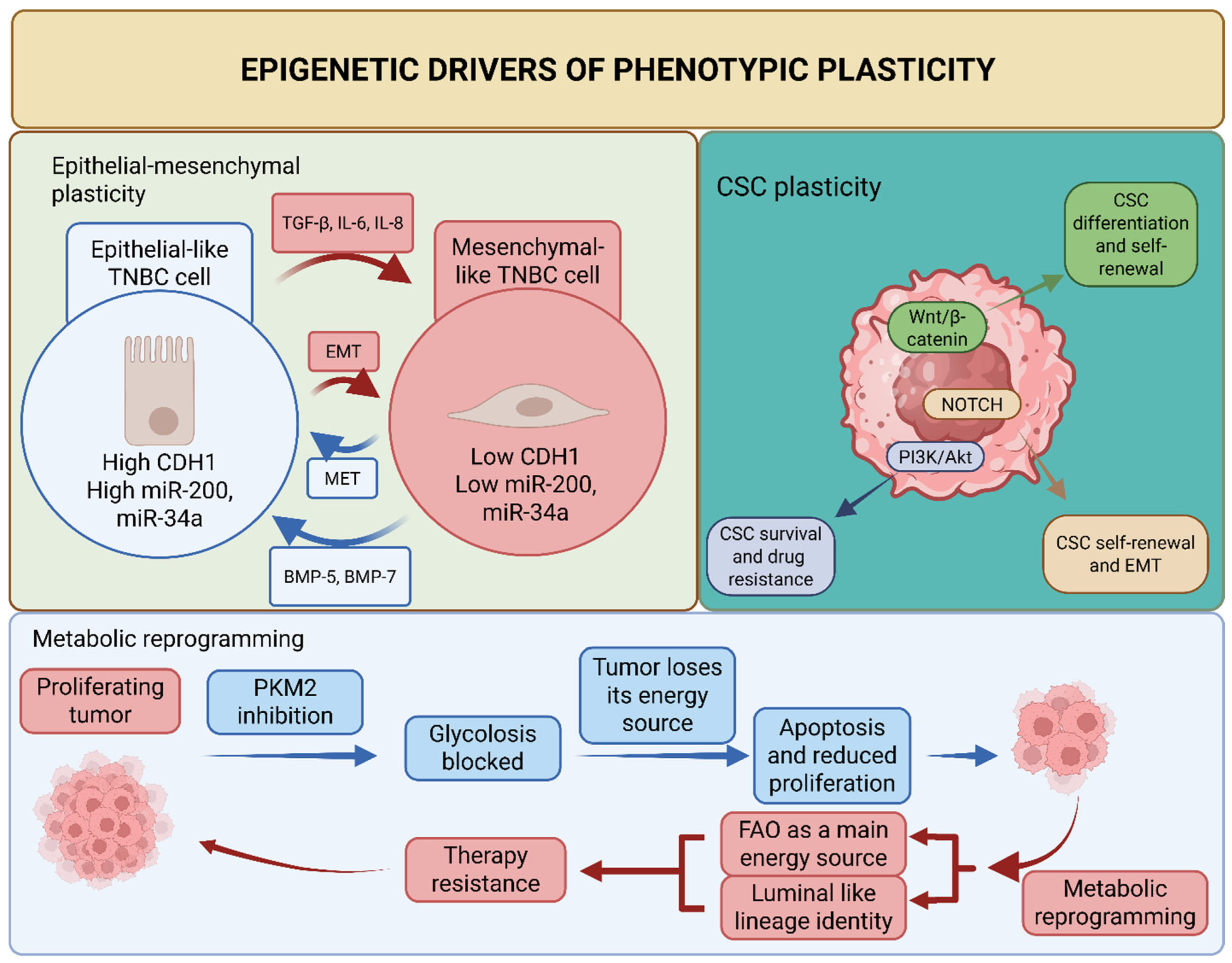
2.6. Epigenetic Drivers of Phenotypic Plasticity
3. Adaptive States and Therapy Resistance
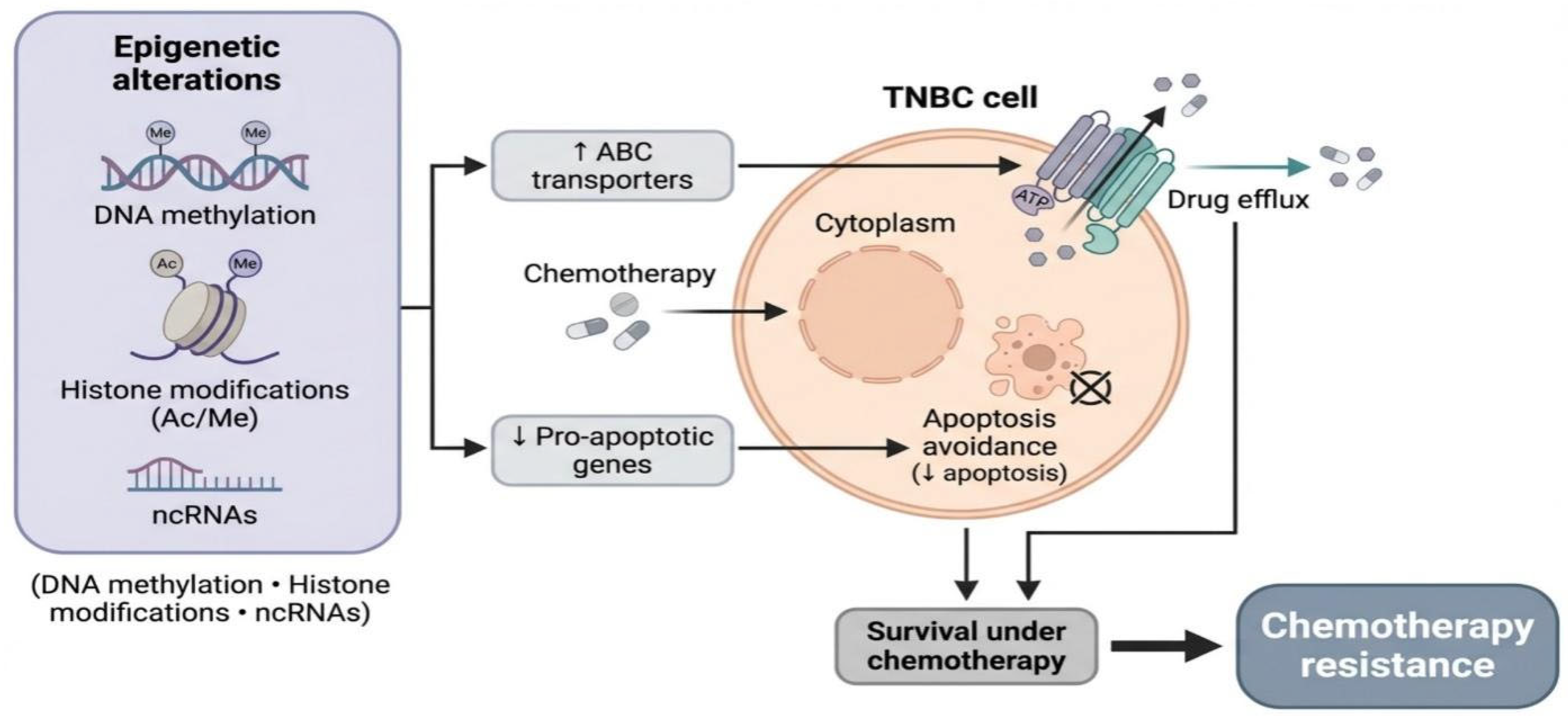
3.1. Chemotherapy Resistance
3.2. Resistance to Targeted Agents
3.3. Immune Evasion and Checkpoint-Blockade Resistance
3.4. Metabolic Reprogramming
3.5. Microenvironment-Driven Epigenetic Resistance
4. Resistance-Focused Biomarkers
4.1. Biomarkers of Epigenetic Adaptation and Treatment Resistance
4.2. Predictive Biomarkers for Therapy Response
4.3. Prognostic Biomarkers
4.4. Single-Cell Epigenomics and Heterogeneity

| Biomarker Category | Representative Biomarkers or Approaches | Potential Clinical Relevance in TNBC | Citations |
|---|---|---|---|
| General epigenetic biomarkers | DNA methylation profiles, chromatin-remodeling alterations, histone modifications and non-coding-RNA expression | May support molecular stratification, outcome estimation and treatment-response assessment in heterogeneous TNBC populations | [93] |
| Tissue-based methylation biomarkers | CpG-island methylation involving tumor suppressor genes such as BRCA1, CDH1, PTEN and RASSF1 | May support baseline molecular stratification and comparison of treatment-naive versus treatment-exposed states; not established as a population-screening test | [91,92,94,95] |
| Circulating epigenetic biomarkers | Methylated circulating tumor DNA, circulating miRNAs and lncRNAs, and methylation changes detected in circulating tumor cells | Under investigation for longitudinal assessment of treatment response, residual disease, and resistance evolution | [10,84,85,96] |
| Chemotherapy-response biomarkers | Methylation signatures involving apoptosis, DNA-repair and drug-metabolism pathways | May help identify patients more or less likely to respond to neoadjuvant chemotherapy, although prospective clinical validation remains limited | [82,83,113] |
| Immunotherapy-response biomarkers | Epigenetic alterations affecting antigen-presentation and interferon-response pathways | May complement established immune biomarkers when evaluating response or resistance to immune-checkpoint inhibitors | [97,98] |
| Multimodal predictive biomarkers | Histone-acetylation or methylation patterns and non-coding RNAs, including miR-21, miR-34a, MALAT1 and HOTAIR | Associations with treatment response and resistance have been reported, primarily in retrospective cohorts and preclinical models | [97,99] |
| Prognostic DNA methylation biomarkers | Promoter hypermethylation involving BRCA1, PTEN, GSTP1 and other tumor-suppressive genes | Certain alterations have been associated with aggressive clinicopathological features or survival outcomes, but findings are not consistent across cohorts | [91,100] |
| Prognostic pathway signatures | Methylation profiles involving immune and inflammatory pathways and altered methylation of proliferation-associated genes such as KIF11, CCNB1 and PLK1 | May define prognostically distinct biological states; the direction of the association depends on the gene, cellular compartment and patient population | [101,102,103] |
| Longitudinal circulating biomarkers | Treatment-associated changes in circulating DNA methylation, chromatin-derived signals or non-coding-RNA abundance | Potentially useful for monitoring residual disease, emerging resistance and recurrence, but clinical utility has not been established | [104,105] |
| Single-cell chromatin profiling | Single-cell assay for transposase-accessible chromatin sequencing, alone or integrated with single-cell RNA sequencing | Resolves cell-specific chromatin accessibility and may identify stem-like, immune-evasive or treatment-persistent cellular populations | [106,107] |
| Spatial and longitudinal profiling | Cell-resolved spatial and single-cell maps across malignant, immune, and stromal compartments, with chromatin-level interpretation restricted to assays that directly measure epigenetic state | Can generate mechanistic hypotheses concerning resistance-associated cellular interactions and candidate combination strategies | [106,110,111,112] |
5. Therapeutic Vulnerabilities and Clinical Evidence
5.1. Epigenetic Drug Therapies in TNBC
5.2. Preclinical Evidence
5.3. Clinical Trial Landscape
5.4. Rational Combination Strategies
5.4.1. Combination with Immunotherapy
5.4.2. Combination with Chemotherapy
5.4.3. Combination with Targeted Agents
5.4.4. Timing, Sequencing, and Treatment Optimization
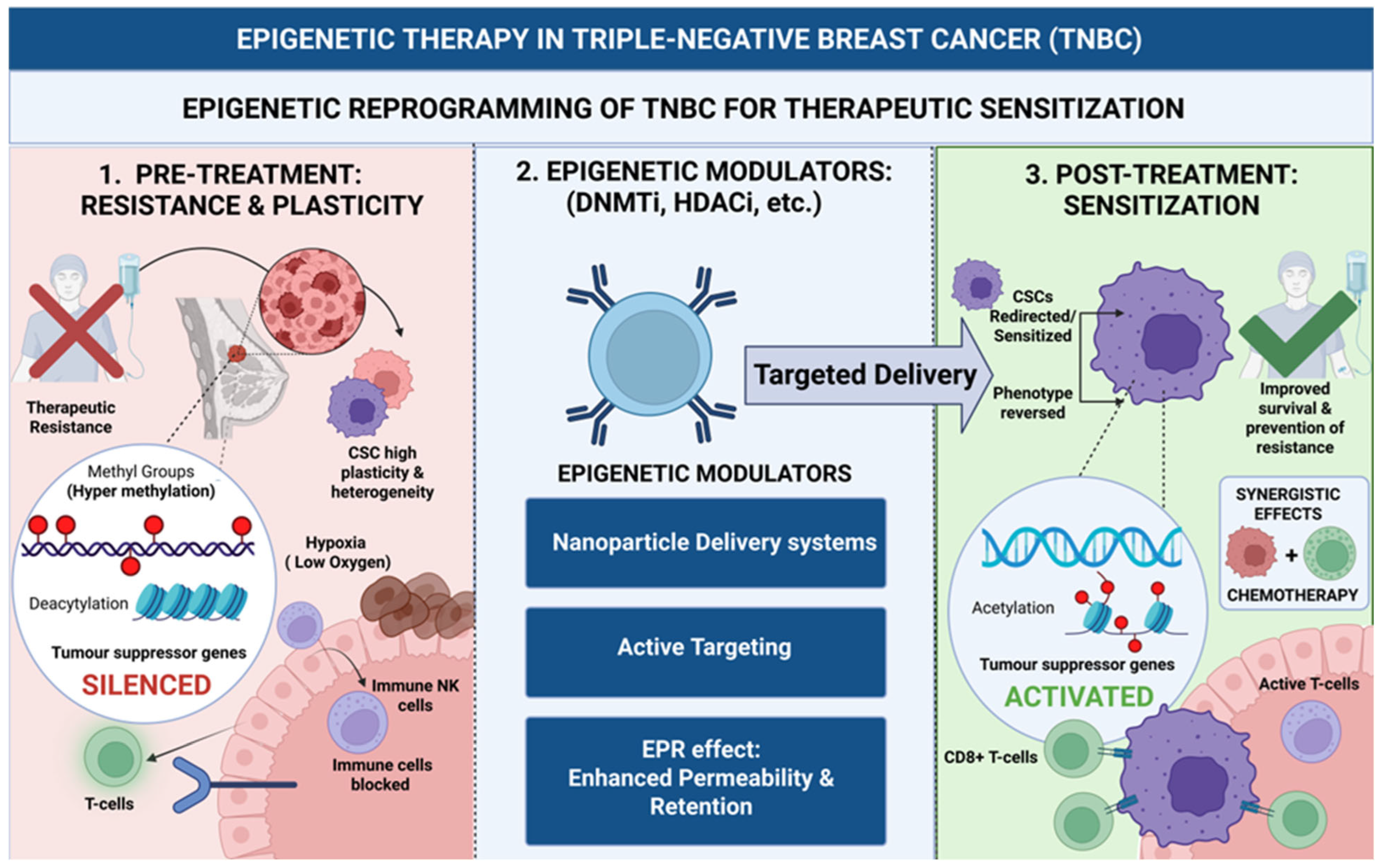
5.5. Delivery and Toxicity Issues
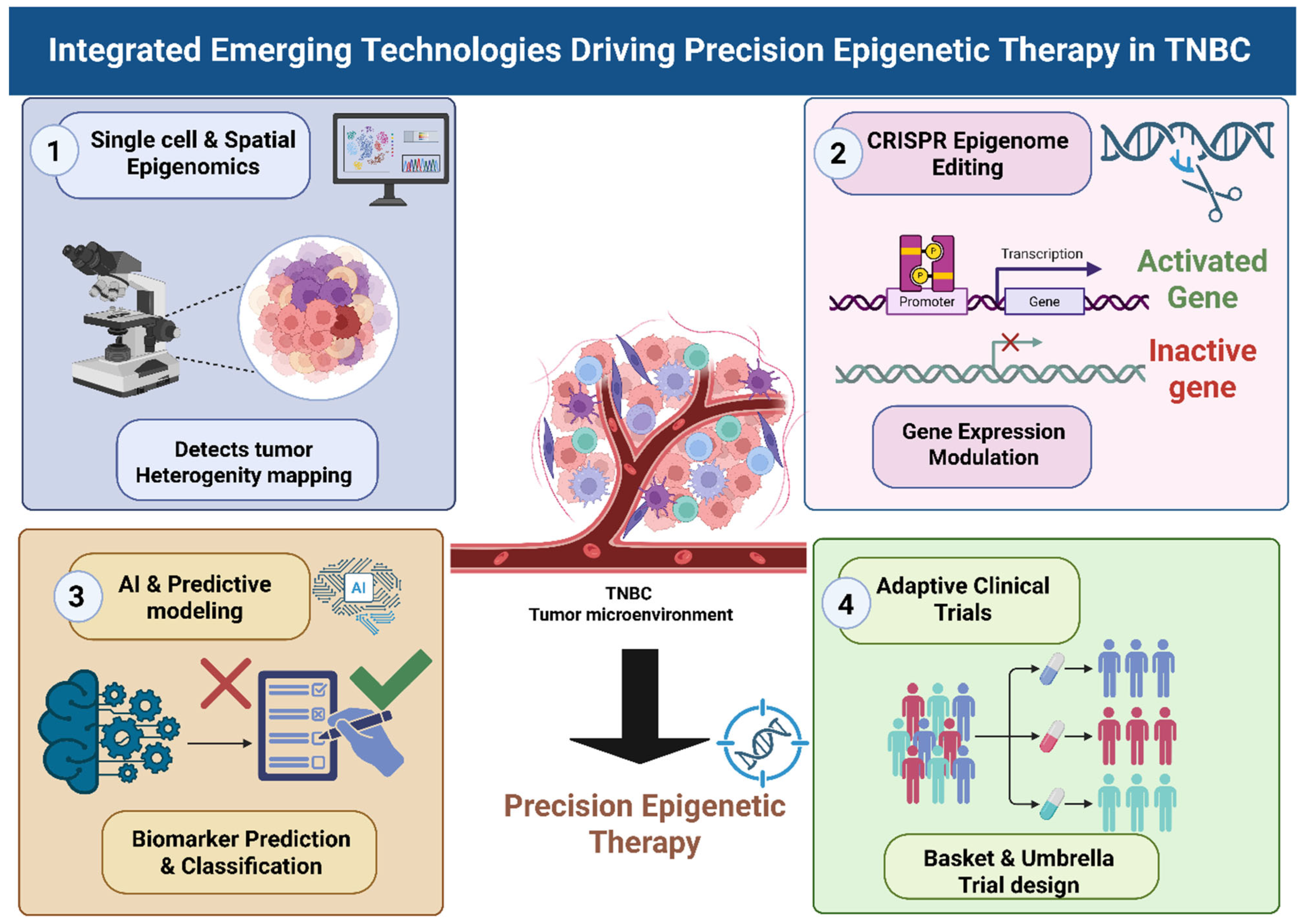
6. Enabling Technologies and Evidence Gaps
6.1. CRISPR Epigenome Editing
6.2. Artificial Intelligence and Predictive Modeling
6.3. Clinical Translation Roadmap
7. Critical Synthesis and Conclusions
Author Contributions
Funding
Data Availability Statement
Conflicts of Interest
References
- Michaels, E.; Chen, N.; Nanda, R. The Role of Immunotherapy in Triple-Negative Breast Cancer (TNBC). Clin. Breast Cancer 2024, 24, 263–270. [Google Scholar] [CrossRef] [Scilit] [PubMed]
- So, J.Y.; Ohm, J.; Lipkowitz, S.; Yang, L. Triple negative breast cancer (TNBC): Non-genetic tumor heterogeneity and immune microenvironment: Emerging treatment options. Pharmacol. Ther. 2022, 237, 108253. [Google Scholar] [CrossRef] [Scilit] [PubMed]
- Yu, L.; Liebenberg, K.; Shen, Y.; Liu, F.; Xu, Z.; Hao, X.; Wu, L.; Zhang, W.; Chan, H.L.; Wei, B.; et al. Tumor-derived arachidonic acid reprograms neutrophils to promote immune suppression and therapy resistance in triple-negative breast cancer. Immunity 2025, 58, 909–925.e7. [Google Scholar] [CrossRef] [Scilit] [PubMed]
- Cai, W.-Y.; Cai, X.-X.; Fei, Y.-R.; Ye, R.; Song, D.-M.; Hu, D.; Zhang, W.-W.; Xia, M.-F.; Yang, X.-X. DNA methylation and immune evasion in triple-negative breast cancer: Challenges and therapeutic opportunities. Front. Oncol. 2025, 15, 1534055. [Google Scholar] [CrossRef] [Scilit] [PubMed]
- Zhou, L.; Yu, C.-W. Epigenetic modulations in triple-negative breast cancer: Therapeutic implications for tumor microenvironment. Pharmacol. Res. 2024, 204, 107205. [Google Scholar] [CrossRef] [Scilit] [PubMed]
- Lehmann, U. Epigenetic Therapies in Triple-Negative Breast Cancer: Concepts, Visions, and Challenges. Cancers 2024, 16, 2164. [Google Scholar] [CrossRef] [Scilit] [PubMed]
- Younesian, S.; Mohammadi, M.H.; Younesian, O.; Momeny, M.; Ghaffari, S.H.; Bashash, D. DNA methylation in human diseases. Heliyon 2024, 10, e32366. [Google Scholar] [CrossRef] [Scilit] [PubMed]
- Wu, C.; Mou, X.; Zhang, H. Gbdmr: Identifying differentially methylated CpG regions in the human genome via generalized beta regressions. BMC Bioinform. 2024, 25, 97. [Google Scholar] [CrossRef] [Scilit] [PubMed]
- Tarhonska, K.; Wichtowski, M.; Wow, T.; Kołacińska-Wow, A.; Płoszka, K.; Fendler, W.; Zawlik, I.; Paszek, S.; Zuchowska, A.; Jabłońska, E. DNA Methylation and Demethylation in Triple-Negative Breast Cancer: Associations with Clinicopathological Characteristics and the Chemotherapy Response. Biomedicines 2025, 13, 585. [Google Scholar] [CrossRef] [Scilit] [PubMed]
- Manoochehri, M.; Borhani, N.; Gerhäuser, C.; Assenov, Y.; Schönung, M.; Hielscher, T.; Christensen, B.C.; Lee, M.K.; Gröne, H.; Lipka, D.B.; et al. DNA methylation biomarkers for noninvasive detection of triple-negative breast cancer using liquid biopsy. Int. J. Cancer 2022, 152, 1025–1035. [Google Scholar] [CrossRef] [Scilit] [PubMed]
- Kim, Y.; Ko, J.Y.; Kong, H.K.; Lee, M.; Chung, W.; Lim, S.; Son, D.; Oh, S.; Park, J.W.; Kim, D.Y.; et al. Hypomethylation of ATP1A1 Is Associated with Poor Prognosis and Cancer Progression in Triple-Negative Breast Cancer. Cancers 2024, 16, 1666. [Google Scholar] [CrossRef] [Scilit] [PubMed]
- Qu, S.; Li, K.; Fan, L.; Miao, C.; Wang, W.; Wang, X.; Song, G. Epigenetic activation of CHST2 by promoter hypomethylation promotes progression of triple-negative breast cancer. bioRxiv 2026. [Google Scholar] [CrossRef] [Scilit]
- Pedersen, C.A.; Cao, M.D.; Fleischer, T.; Rye, M.B.; Knappskog, S.; Eikesdal, H.P.; Lønning, P.E.; Tost, J.; Kristensen, V.N.; Tessem, M.-B.; et al. DNA methylation changes in response to neoadjuvant chemotherapy are associated with breast cancer survival. Breast Cancer Res. 2022, 24, 43. [Google Scholar] [CrossRef] [Scilit] [PubMed]
- Sasiain, I.; Nacer, D.F.; Jönsson, M.; Vallon-Christersson, J.; Grigoriadis, A.; Aine, M.; Staaf, J. Genome-wide DNA methylation profiling of triple-negative breast cancer uncovers epigenetic biomarkers of tumor identity and the immune microenvironment. npj Breast Cancer 2026, 12, 105. [Google Scholar] [CrossRef] [Scilit] [PubMed]
- Yuan, X.; Rosen, J.M. Histone acetylation modulators in breast cancer. Breast Cancer Res. 2025, 27, 49. [Google Scholar] [CrossRef] [Scilit] [PubMed]
- Mahendran, G.; Shangaradas, A.D.; Romero-Moreno, R.; Dona, N.W.; Sarasija, S.H.G.S.; Perera, S.; Silva, G.N. Unlocking the epigenetic code: New insights into triple-negative breast cancer. Front. Oncol. 2024, 14, 1499950. [Google Scholar] [CrossRef] [Scilit] [PubMed]
- Zhu, M.; Liu, N.; Lin, J.; Wang, J.; Lai, H.; Liu, Y. HDAC7 inhibits cell proliferation via NudCD1/GGH axis in triple-negative breast cancer. Oncol. Lett. 2022, 25, 33. [Google Scholar] [CrossRef] [Scilit] [PubMed]
- Alseksek, R.K.; Ramadan, W.S.; Saleh, E.; El-Awady, R. The Role of HDACs in the Response of Cancer Cells to Cellular Stress and the Potential for Therapeutic Intervention. Int. J. Mol. Sci. 2022, 23, 8141. [Google Scholar] [CrossRef] [Scilit] [PubMed]
- Zhang, Y.; Wang, H.; Zhan, Z.; Gan, L.; Bai, O. Mechanisms of HDACs in cancer development. Front. Immunol. 2025, 16, 1529239. [Google Scholar] [CrossRef] [Scilit] [PubMed]
- Zhou, J.X.; Agborbesong, E.; Li, L.X.; Li, X. Bromodomain Protein BRD4-Mediated Mutant p53 Transcription Promotes TNBC Progression. Int. J. Mol. Sci. 2022, 23, 15163. [Google Scholar] [CrossRef] [Scilit] [PubMed]
- Sun, H.; Wang, Y.; Ji, F.; Wang, A.; Yang, M.; He, X.; Li, L. Bivalent Regulation and Related Mechanisms of H3K4/27/9me3 in Stem Cells. Stem Cell Rev. Rep. 2021, 18, 165–178. [Google Scholar] [CrossRef] [Scilit] [PubMed]
- Verma, S.; Goyal, N.; Goyal, S.; Kaur, P.; Gupta, S. EZH2 Dysregulation and Its Oncogenic Role in Human Cancers. Cancers 2025, 17, 3111. [Google Scholar] [CrossRef] [Scilit] [PubMed]
- Melino, M.; Tu, W.J.; Bielefeldt-Ohmann, H.; Proctor, M.; Ahuja, T.; Vandermeide, J.; Bain, A.L.; Nallan, G.; Goh, S.L.; Prasanna, T.; et al. Depleting the Action of EZH2 through PI3K–mTOR Inhibition to Overcome Metastasis and Immunotherapy Resistance in Triple-Negative Breast Cancer. Mol. Cancer Ther. 2025, 24, 1511–1526. [Google Scholar] [CrossRef] [Scilit] [PubMed]
- Schade, A.E.; Perurena, N.; Yang, Y.; Rodriguez, C.L.; Krishnan, A.; Gardner, A.; Loi, P.; Xu, Y.; Nguyen, V.T.M.; Mastellone, G.M.; et al. AKT and EZH2 inhibitors kill TNBCs by hijacking mechanisms of involution. Nature 2024, 635, 755–763. [Google Scholar] [CrossRef] [Scilit] [PubMed]
- Hao, F.; Zhang, Y.; Hou, J.; Zhao, B. Chromatin remodeling and cancer: The critical influence of the SWI/SNF complex. Epigenet. Chromatin 2025, 18, 22. [Google Scholar] [CrossRef] [Scilit] [PubMed]
- Møldrup, R.I.J.; Terp, M.G.; Jakobsen, S.T.; Ravnsborg, T.; Madsen, M.S.; Brown, D.D.; Sloth, L.R.; Gorry, M.C.; Oesterreich, S.; Lee, A.V.; et al. SWI/SNF Functions as a Gatekeeper of Enhancer Chromatin Access to Control Progression of Mesenchymal Triple-Negative Breast Cancer. Cancer Res. 2025, 85, 4648–4663. [Google Scholar] [CrossRef] [Scilit] [PubMed]
- Sheng, W.-Y.; Zhu, Y.; Liu, S.-Q.; Huang, Q.-Y.; Qian, W.-F.; Cheng, J.-L.; Huang, H.-H.; Wang, W.-J.; Meng, Y. A novel SWI/SNF complex promotes triple-negative breast cancer progression. Cell. Mol. Biol. Lett. 2025, 30, 105. [Google Scholar] [CrossRef] [Scilit] [PubMed]
- Błaszczak, E.; Miziak, P.; Odrzywolski, A.; Baran, M.; Gumbarewicz, E.; Stepulak, A. Triple-Negative Breast Cancer Progression and Drug Resistance in the Context of Epithelial–Mesenchymal Transition. Cancers 2025, 17, 228. [Google Scholar] [CrossRef] [Scilit] [PubMed]
- Raman, R.; Debata, S.; Govindarajan, T.; Kumar, P. Targeting Triple-Negative Breast Cancer: Resistance Mechanisms and Therapeutic Advancements. Cancer Med. 2025, 14, e70803. [Google Scholar] [CrossRef] [Scilit] [PubMed]
- Marsolier, J.; Prompsy, P.; Durand, A.; Lyne, A.-M.; Landragin, C.; Trouchet, A.; Bento, S.T.; Eisele, A.; Foulon, S.; Baudre, L.; et al. H3K27me3 conditions chemotolerance in triple-negative breast cancer. Nat. Genet. 2022, 54, 459–468. [Google Scholar] [CrossRef] [Scilit] [PubMed]
- Bagheri, A.; Zargar, M.; Safari, D.; Aminzade, Z.; Loghman, A.H.; Rezaei, N. Role of miRNAs in Triple-Negative Breast Cancer: Diagnosis, Prognosis, and Treatment. In Breast Cancer Genetics, Immunology, and Immunotherapy: An Interdisciplinary Approach; Rezaei, N., Ed.; Springer Nature: Cham, Switzerland, 2024; pp. 1–29. [Google Scholar]
- Mekky, R.Y.; Ragab, M.F.; Manie, T.; Attia, A.A.; Youness, R.A. MALAT-1: Immunomodulatory lncRNA hampering the innate and the adaptive immune arms in triple negative breast cancer. Transl. Oncol. 2023, 31, 101653. [Google Scholar] [CrossRef] [Scilit] [PubMed]
- Martini, S.; Zuco, V.; Tortoreto, M.; Percio, S.; Campi, E.; El Bezawy, R.; Doldi, V.; Landesman, Y.; Pennati, M.; Zaffaroni, N. miR-34a-Mediated Survivin Inhibition Improves the Antitumor Activity of Selinexor in Triple-Negative Breast Cancer. Pharmaceuticals 2021, 14, 523. [Google Scholar] [CrossRef] [Scilit] [PubMed]
- Elango, R.; Radhakrishnan, V.; Rashid, S.; Al-Sarraf, R.; Akhtar, M.; Ouararhni, K.; Alajez, N.M. Long noncoding RNA profiling unveils LINC00960 as unfavorable prognostic biomarker promoting triple negative breast cancer progression. Cell Death Discov. 2024, 10, 333. [Google Scholar] [CrossRef] [Scilit] [PubMed]
- Raju, G.S.R.; Pavitra, E.; Bandaru, S.S.; Varaprasad, G.L.; Nagaraju, G.P.; Malla, R.R.; Huh, Y.S.; Han, Y.-K. HOTAIR: A potential metastatic, drug-resistant and prognostic regulator of breast cancer. Mol. Cancer 2023, 22, 65. [Google Scholar] [CrossRef] [Scilit] [PubMed]
- Bitaraf, A.; Zafarani, A.; Jahandideh, P.; Hakak-Zargar, B.; Haghi, A.; Asgaritarghi, G.; Babashah, S. MALAT1 as a molecular driver of tumor progression, immune evasion, and resistance to therapy. Mol. Cancer 2025, 24, 245. [Google Scholar] [CrossRef] [Scilit] [PubMed]
- Ma, Y.; Liang, L.; Zhang, Y.; Wang, M.; Jiang, W.; Zhao, F.; Zhang, S. Upregulated IncRNA WTAPP1 in Triple Negative Breast Cancer Predicts Survival. Crit. Rev. Eukaryot. Gene Expr. 2022, 32, 67–78. [Google Scholar] [CrossRef] [Scilit] [PubMed]
- Wang, X.; Yan, J.; Ye, Z.; Zhang, Z.; Wang, S.; Hao, S.; Shen, B.; Wei, G. Reorganization of 3D chromatin architecture in doxorubicin-resistant breast cancer cells. Front. Cell Dev. Biol. 2022, 10, 974750. [Google Scholar] [CrossRef] [Scilit] [PubMed]
- Sherafat, N.S.; Mardi, A.; Absalan, F.; Mehmandar-Oskuie, A. Circular RNAs as central regulators of metabolic reprogramming and immune responses in the breast cancer microenvironment: A comprehensive review. Biomed. Pharmacother. 2025, 193, 118682. [Google Scholar] [CrossRef] [Scilit] [PubMed]
- Zhu, J.; Li, Q.; Wu, Z.; Xu, W.; Jiang, R. Circular RNA-mediated miRNA sponge & RNA binding protein in biological modulation of breast cancer. Non-Coding RNA Res. 2024, 9, 262–276. [Google Scholar] [CrossRef] [Scilit] [PubMed]
- De Palma, F.D.E.; Salvatore, F.; Pol, J.G.; Kroemer, G.; Maiuri, M.C. Circular RNAs as Potential Biomarkers in Breast Cancer. Biomedicines 2022, 10, 725. [Google Scholar] [CrossRef] [Scilit] [PubMed]
- Dou, D.; Ren, X.; Han, M.; Xu, X.; Ge, X.; Gu, Y.; Wang, X.; Zhao, S. CircUBE2D2 (hsa_circ_0005728) promotes cell proliferation, metastasis and chemoresistance in triple-negative breast cancer by regulating miR-512-3p/CDCA3 axis. Cancer Cell Int. 2020, 20, 45. [Google Scholar] [CrossRef] [Scilit] [PubMed]
- Misir, S.; Yaman, S.O.; Petrović, N.; Sumer, C.; Hepokur, C.; Aliyazicioglu, Y. circRNAs in drug resistance of breast cancer. Oncol. Res. Featur. Preclin. Clin. Cancer Ther. 2022, 30, 157–172. [Google Scholar] [CrossRef] [Scilit] [PubMed]
- Lu, X.; Liu, R.; Wang, M.; Kumar, A.K.; Pan, F.; He, L.; Hu, Z.; Guo, Z. MicroRNA-140 impedes DNA repair by targeting FEN1 and enhances chemotherapeutic response in breast cancer. Oncogene 2019, 39, 234–247. [Google Scholar] [CrossRef] [Scilit] [PubMed]
- Kim, T.; Han, S.; Chun, Y.; Yang, H.; Min, H.; Jeon, S.Y.; Kim, J.-I.; Moon, H.-G.; Lee, D. Comparative characterization of 3D chromatin organization in triple-negative breast cancers. Exp. Mol. Med. 2022, 54, 585–600. [Google Scholar] [CrossRef] [Scilit] [PubMed]
- Zhao, J.; Zhou, Y.; Tzelepis, I.; Burget, N.G.; Shi, J.; Faryabi, R.B. Oncogenic transcription factors instruct promoter-enhancer hubs in individual triple negative breast cancer cells. Sci. Adv. 2024, 10, eadl4043. [Google Scholar] [CrossRef] [Scilit] [PubMed]
- Dozmorov, M.G.; Marshall, M.A.; Rashid, N.S.; Grible, J.M.; Valentine, A.; Olex, A.L.; Murthy, K.; Chakraborty, A.; Reyna, J.; Figueroa, D.S.; et al. Rewiring of the 3D genome during acquisition of carboplatin resistance in a triple-negative breast cancer patient-derived xenograft. Sci. Rep. 2023, 13, 5420, Erratum in Sci. Rep. 2024, 14, 30519. [Google Scholar] [CrossRef] [Scilit] [PubMed]
- Huang, Y.; Hong, W.; Wei, X. The molecular mechanisms and therapeutic strategies of EMT in tumor progression and metastasis. J. Hematol. Oncol. 2022, 15, 129. [Google Scholar] [CrossRef] [Scilit] [PubMed]
- Bhat, G.R.; Sethi, I.; Sadida, H.Q.; Rah, B.; Mir, R.; Algehainy, N.; Albalawi, I.A.; Masoodi, T.; Subbaraj, G.K.; Jamal, F.; et al. Cancer cell plasticity: From cellular, molecular, and genetic mechanisms to tumor heterogeneity and drug resistance. Cancer Metastasis Rev. 2024, 43, 197–228. [Google Scholar] [CrossRef] [Scilit] [PubMed]
- Kvokačková, B.; Remšík, J.; Jolly, M.K.; Souček, K. Phenotypic Heterogeneity of Triple-Negative Breast Cancer Mediated by Epithelial–Mesenchymal Plasticity. Cancers 2021, 13, 2188. [Google Scholar] [CrossRef] [Scilit] [PubMed]
- Wang, X.; Xue, X.; Pang, M.; Yu, L.; Qian, J.; Li, X.; Tian, M.; Lyu, A.; Lu, C.; Liu, Y. Epithelial–mesenchymal plasticity in cancer: Signaling pathways and therapeutic targets. MedComm 2024, 5, e659. [Google Scholar] [CrossRef] [Scilit] [PubMed]
- Wu, H.-J.; Chu, P.-Y. Epigenetic Regulation of Breast Cancer Stem Cells Contributing to Carcinogenesis and Therapeutic Implications. Int. J. Mol. Sci. 2021, 22, 8113. [Google Scholar] [CrossRef] [Scilit] [PubMed]
- Fultang, N.; Chakraborty, M.; Peethambaran, B. Regulation of cancer stem cells in triple negative breast cancer. Cancer Drug Resist. 2021, 4, 321–342. [Google Scholar] [CrossRef] [Scilit] [PubMed]
- Hu, Y.; He, Y.; Luo, N.; Li, X.; Guo, L.; Zhang, K. A feedback loop between lncRNA MALAT1 and DNMT1 promotes triple-negative breast cancer stemness and tumorigenesis. Cancer Biol. Ther. 2023, 24, 2235768. [Google Scholar] [CrossRef] [Scilit] [PubMed]
- Guo, Z.; Han, S. Targeting cancer stem cell plasticity in triple-negative breast cancer. Explor. Target. Anti-Tumor Ther. 2023, 4, 1165–1181. [Google Scholar] [CrossRef] [Scilit] [PubMed]
- Quintanal-Villalonga, Á.; Chan, J.M.; Yu, H.A.; Pe’er, D.; Sawyers, C.L.; Sen, T.; Rudin, C.M. Lineage plasticity in cancer: A shared pathway of therapeutic resistance. Nat. Rev. Clin. Oncol. 2020, 17, 360–371, Erratum in Nat. Rev. Clin. Oncol. 2020, 17, 382. [Google Scholar] [CrossRef] [Scilit] [PubMed]
- Ramadan, W.S.; Al-Azawi, A.M.; Lozon, L.; Kawaf, R.R.; Zein, R.A.; El-Gharib, Y.; El-Awady, R. Epigenetic therapeutics: Reprogramming triple-negative breast cancer into responsive subtypes. Endocr.-Relat. Cancer 2025, 32, e250125. [Google Scholar] [CrossRef] [Scilit] [PubMed]
- Saha, S.; Mahapatra, S.; Khanra, S.; Mishra, B.; Swain, B.; Malhotra, D.; Saha, S.; Panda, V.K.; Kumari, K.; Jena, S.; et al. Decoding breast cancer treatment resistance through genetic, epigenetic, and immune-regulatory mechanisms: From molecular insights to translational perspectives. Cancer Drug Resist. 2025, 8, 36. [Google Scholar] [CrossRef] [Scilit] [PubMed]
- Menghi, F.; Banda, K.; Kumar, P.; Straub, R.; Dobrolecki, L.; Rodriguez, I.V.; Yost, S.E.; Chandok, H.; Radke, M.R.; Somlo, G.; et al. Genomic and epigenomic BRCA alterations predict adaptive resistance and response to platinum-based therapy in patients with triple-negative breast and ovarian carcinomas. Sci. Transl. Med. 2022, 14, eabn1926. [Google Scholar] [CrossRef] [Scilit] [PubMed]
- Bai, X.; Ni, J.; Beretov, J.; Graham, P.; Li, Y. Triple-negative breast cancer therapeutic resistance: Where is the Achilles’ heel? Cancer Lett. 2021, 497, 100–111. [Google Scholar] [CrossRef] [Scilit] [PubMed]
- Ghorbani, M.; Pourjafar, F.; Saffari, M.; Asgari, Y. Paclitaxel resistance resulted in a stem-like state in triple-negative breast cancer: A systems biology approach. Meta Gene 2020, 26, 100800. [Google Scholar] [CrossRef] [Scilit]
- Bedoya-López, A.F.; Ahn, S.; Ensenyat-Mendez, M.; Orozco, J.I.J.; Iñiguez-Muñoz, S.; Llinàs-Arias, P.; Thomas, S.M.; Baker, J.L.; Sullivan, P.S.; Makker, J.; et al. Epigenetic determinants of an immune-evasive phenotype in HER2-low triple-negative breast cancer. npj Precis. Oncol. 2025, 9, 287, Erratum in npj Precis. Oncol. 2026, 10, 138. [Google Scholar] [CrossRef] [Scilit] [PubMed]
- Han, Y.; Yu, X.; Li, S.; Tian, Y.; Liu, C. New Perspectives for Resistance to PARP Inhibitors in Triple-Negative Breast Cancer. Front. Oncol. 2020, 10, 578095. [Google Scholar] [CrossRef] [Scilit] [PubMed]
- Zou, Y.; Zhang, H.; Chen, P.; Tang, J.; Yang, S.; Nicot, C.; Guan, Z.; Li, X.; Tang, H. Clinical approaches to overcome PARP inhibitor resistance. Mol. Cancer 2025, 24, 156. [Google Scholar] [CrossRef] [Scilit] [PubMed]
- Jain, A.; Barge, A.; Parris, C.N. Combination strategies with PARP inhibitors in BRCA-mutated triple-negative breast cancer: Overcoming resistance mechanisms. Oncogene 2024, 44, 193–207, Erratum in Oncogene 2025, 44, 1063. [Google Scholar] [CrossRef] [Scilit] [PubMed]
- Li, H.; Liu, Z.-Y.; Wu, N.; Chen, Y.-C.; Cheng, Q.; Wang, J. PARP inhibitor resistance: The underlying mechanisms and clinical implications. Mol. Cancer 2020, 19, 107. [Google Scholar] [CrossRef] [Scilit] [PubMed]
- Andronikou, C.; Burdova, K.; Dibitetto, D.; Lieftink, C.; Malzer, E.; Kuiken, H.J.; Gogola, E.; Chaudhuri, A.R.; Beijersbergen, R.L.; Hanzlikova, H.; et al. PARG-deficient tumor cells have an increased dependence on EXO1/FEN1-mediated DNA repair. EMBO J. 2024, 43, 1015–1042. [Google Scholar] [CrossRef] [Scilit] [PubMed]
- Bhamidipati, D.; Haro-Silerio, J.I.; Yap, T.A.; Ngoi, N. PARP inhibitors: Enhancing efficacy through rational combinations. Br. J. Cancer 2023, 129, 904–916. [Google Scholar] [CrossRef] [Scilit] [PubMed]
- Ding, W.; Ding, Z.; Zeng, Q.; Qiu, Y.; Donnelly, C.R.; Wu, Y.; Jiang, Y.; Han, Q.; Xu, H.; Cui, H.; et al. Prevention of cancer initiation by augmenting MHC-I antigen presentation via EZH2 inhibition. Oncogene 2025, 44, 4878–4894. [Google Scholar] [CrossRef] [Scilit] [PubMed]
- Llinàs-Arias, P.; Íñiguez-Muñoz, S.; McCann, K.; Voorwerk, L.; Orozco, J.I.J.; Ensenyat-Mendez, M.; Sesé, B.; DiNome, M.L.; Marzese, D.M. Epigenetic Regulation of Immunotherapy Response in Triple-Negative Breast Cancer. Cancers 2021, 13, 4139. [Google Scholar] [CrossRef] [Scilit] [PubMed]
- Hogg, S.J.; Beavis, P.A.; Dawson, M.A.; Johnstone, R.W. Targeting the epigenetic regulation of antitumour immunity. Nat. Rev. Drug Discov. 2020, 19, 776–800. [Google Scholar] [CrossRef] [Scilit] [PubMed]
- Dai, E.; Zhu, Z.; Wahed, S.; Qu, Z.; Storkus, W.J.; Guo, Z.S. Epigenetic modulation of antitumor immunity for improved cancer immunotherapy. Mol. Cancer 2021, 20, 171. [Google Scholar] [CrossRef] [Scilit] [PubMed]
- Kang, Z.; Wang, J.; Liu, J.; Du, L.; Liu, X. Epigenetic modifications in breast cancer: From immune escape mechanisms to therapeutic target discovery. Front. Immunol. 2025, 16, 1584087, Erratum in Front. Immunol. 2025, 16, 1643911. [Google Scholar] [CrossRef] [Scilit] [PubMed]
- Shen, Y.; Liu, L.; Wang, M.; Xu, B.; Lyu, R.; Shi, Y.G.; Tan, L. TET2 Inhibits PD-L1 Gene Expression in Breast Cancer Cells through Histone Deacetylation. Cancers 2021, 13, 2207. [Google Scholar] [CrossRef] [Scilit] [PubMed]
- Taylor, B.C.; Balko, J.M. Mechanisms of MHC-I Downregulation and Role in Immunotherapy Response. Front. Immunol. 2022, 13, 844866. [Google Scholar] [CrossRef] [Scilit] [PubMed]
- Pang, L.; Zhou, F.; Liu, Y.; Ali, H.; Khan, F.; Heimberger, A.B.; Chen, P. Epigenetic regulation of tumor immunity. J. Clin. Investig. 2024, 134, e178540. [Google Scholar] [CrossRef] [Scilit] [PubMed]
- Sun, X.; Wang, M.; Wang, M.; Yu, X.; Guo, J.; Sun, T.; Li, X.; Yao, L.; Dong, H.; Xu, Y. Metabolic Reprogramming in Triple-Negative Breast Cancer. Front. Oncol. 2020, 10, 428. [Google Scholar] [CrossRef] [Scilit] [PubMed]
- Garg, P.; Singhal, G.; Horne, D.; Salgia, R.; Singhal, S.S. Metabolic reprogramming in breast cancer: Pathways driving progression, drug resistance, and emerging therapeutics. Biochim. Biophys. Acta (BBA) Rev. Cancer 2025, 1880, 189396. [Google Scholar] [CrossRef] [Scilit] [PubMed]
- Bernard, M.J.; Goldstein, A.S. A Metabolic–Epigenetic Mechanism Directs Cell Fate and Therapeutic Sensitivity in Breast Cancer. Cancer Res. 2024, 84, 1382–1383. [Google Scholar] [CrossRef] [Scilit] [PubMed]
- Wang, Z.; Jiang, Q.; Dong, C. Metabolic reprogramming in triple-negative breast cancer. Cancer Biol. Med. 2020, 17, 44–59. [Google Scholar] [CrossRef] [Scilit] [PubMed]
- Wang, X.; Luo, X.; Xiao, R.; Liu, X.; Zhou, F.; Jiang, D.; Bai, J.; Cui, M.; You, L.; Zhao, Y. Targeting metabolic-epigenetic-immune axis in cancer: Molecular mechanisms and therapeutic implications. Signal Transduct. Target. Ther. 2026, 11, 28. [Google Scholar] [CrossRef] [Scilit] [PubMed]
- Meyer, B.; Clifton, S.; Locke, W.; Luu, P.-L.; Du, Q.; Lam, D.; Armstrong, N.J.; Kumar, B.; Deng, N.; Harvey, K.; et al. Identification of DNA methylation biomarkers with potential to predict response to neoadjuvant chemotherapy in triple-negative breast cancer. Clin. Epigenet. 2021, 13, 226. [Google Scholar] [CrossRef] [Scilit] [PubMed]
- Aine, M.; Nacer, D.F.; Arbajian, E.; Veerla, S.; Karlsson, A.; Häkkinen, J.; Johansson, H.J.; Rosengren, F.; Vallon-Christersson, J.; Borg, Å.; et al. The DNA methylation landscape of primary triple-negative breast cancer. Nat. Commun. 2025, 16, 3041. [Google Scholar] [CrossRef] [Scilit] [PubMed]
- Ntzifa, A.; Lianidou, E. Epigenetics and CTCs: New biomarkers and impact on tumor biology. Int. Rev. Cell Mol. Biol. 2025, 392, 177–198. [Google Scholar] [CrossRef] [Scilit] [PubMed]
- Navarrete-Fernández, O.; Mora, E.; Rivadeneira, J.; Herrera, V.; Riffo-Campos, Á.L. Liquid Biopsy-Based Biomolecular Alterations for the Diagnosis of Triple-Negative Breast Cancer in Adults: A Scoping Review. Diagnostics 2026, 16, 360. [Google Scholar] [CrossRef] [Scilit] [PubMed]
- Ma, S.; Zhao, Y.; Lee, W.C.; Ong, L.-T.; Lee, P.L.; Jiang, Z.; Oguz, G.; Niu, Z.; Liu, M.; Goh, J.Y.; et al. Hypoxia induces HIF1α-dependent epigenetic vulnerability in triple negative breast cancer to confer immune effector dysfunction and resistance to anti-PD-1 immunotherapy. Nat. Commun. 2022, 13, 4118. [Google Scholar] [CrossRef] [Scilit] [PubMed]
- Pan, X.; Zheng, L. Epigenetics in modulating immune functions of stromal and immune cells in the tumor microenvironment. Cell. Mol. Immunol. 2020, 17, 940–953. [Google Scholar] [CrossRef] [Scilit] [PubMed]
- Li, T.; Mao, C.; Wang, X.; Shi, Y.; Tao, Y. Epigenetic crosstalk between hypoxia and tumor driven by HIF regulation. J. Exp. Clin. Cancer Res. 2020, 39, 224. [Google Scholar] [CrossRef] [Scilit] [PubMed]
- Grauel, A.L.; Nguyen, B.; Ruddy, D.; Laszewski, T.; Schwartz, S.; Chang, J.; Chen, J.; Piquet, M.; Pelletier, M.; Yan, Z.; et al. TGFβ-blockade uncovers stromal plasticity in tumors by revealing the existence of a subset of interferon-licensed fibroblasts. Nat. Commun. 2020, 11, 6315. [Google Scholar] [CrossRef] [Scilit] [PubMed]
- Hou, W. Role of TGFβ-activated cancer-associated fibroblasts in the resistance to checkpoint blockade immunotherapy. Front. Oncol. 2025, 15, 1602452. [Google Scholar] [CrossRef] [Scilit] [PubMed]
- Mohanad, M.; Hamza, H.M.; Bahnassy, A.A.; Shaarawy, S.; Ahmed, O.; El-Mezayen, H.A.; Ayad, E.G.; Tahoun, N.; Abdellateif, M.S. Molecular profiling of breast cancer methylation pattern in triple negative versus non-triple negative breast cancer. Sci. Rep. 2025, 15, 6894. [Google Scholar] [CrossRef] [Scilit] [PubMed]
- Xie, W.; Wen, Y.; Gong, S.; Long, Q.; Zou, Q. The Great Potential of DNA Methylation in Triple-Negative Breast Cancer: From Biological Basics to Clinical Application. Biomedicines 2026, 14, 241. [Google Scholar] [CrossRef] [Scilit] [PubMed]
- Brown, L.J.; Achinger-Kawecka, J.; Portman, N.; Clark, S.; Stirzaker, C.; Lim, E. Epigenetic Therapies and Biomarkers in Breast Cancer. Cancers 2022, 14, 474. [Google Scholar] [CrossRef] [Scilit] [PubMed]
- Lin, L.H.; Tran, I.; Yang, Y.; Shen, G.; Miah, P.; Cotzia, P.; Roses, D.; Schnabel, F.; Darvishian, F.; Snuderl, M. DNA Methylation Identifies Epigenetic Subtypes of Triple-Negative Breast Cancers with Distinct Clinicopathologic and Molecular Features. Mod. Pathol. 2023, 36, 100306. [Google Scholar] [CrossRef] [Scilit] [PubMed]
- Go, E.-J.; Oh, J.H. Epigenetic alterations in triple-negative breast cancer and their clinical implications for diagnosis and therapy. J. Cancer 2025, 16, 4029–4036. [Google Scholar] [CrossRef] [Scilit] [PubMed]
- Cristall, K.; Bidard, F.-C.; Pierga, J.-Y.; Rauh, M.J.; Popova, T.; Sebbag, C.; Lantz, O.; Stern, M.-H.; Mueller, C.R. A DNA methylation-based liquid biopsy for triple-negative breast cancer. npj Precis. Oncol. 2021, 5, 53. [Google Scholar] [CrossRef] [Scilit] [PubMed]
- Saha, D.; Kanjilal, P.; Kaur, M.; Menon, S.V.; Ashraf, A.; Kumar, M.R.; Alqahtani, T.; Atteri, S.; Uti, D.E.; Dhara, B. Transforming Cancer Diagnostics: The Emergence of Liquid Biopsy and Epigenetic Markers. MedComm 2025, 6, e70388. [Google Scholar] [CrossRef] [Scilit] [PubMed]
- Okwor, V.C.; Okwor, C.J.; Musayayi, S.A.; Gbayisomore, T.J.; Joseph, I.; Babalola, I.O.; Ayeni, L.A.; Inusah, A.-H.S.; Ajayi, R.O.; Obe, F.E.; et al. Immune modulation and epigenetic therapies for enhanced outcome of treatment in triple-negative breast cancer. Tumor Discov. 2024, 3, 3383. [Google Scholar] [CrossRef] [Scilit]
- Banerjee, R.; Maitra, I.; Bhattacharya, T.; Banerjee, M.; Ramanathan, G.; Rayala, S.K.; Venkatraman, G.; Rajeswari, D. Next-generation biomarkers for prognostic and potential therapeutic enhancement in Triple negative breast cancer. Crit. Rev. Oncol. 2024, 201, 104417. [Google Scholar] [CrossRef] [Scilit] [PubMed]
- Demirbas, B.C.; Erciyas, S.K.; Erdogan, O.S.; Kayim, Z.Y.; Pasin, O.; Ozgel, M.C.; Tuncer, S.B. Genetic risk and clinical implications of BRCA1 and BRCA2 mutations in Turkish triple-negative breast cancer patients. Discov. Oncol. 2025, 16, 1778. [Google Scholar] [CrossRef] [Scilit] [PubMed]
- Ensenyat-Mendez, M.; Solivellas-Pieras, M.; Llinàs-Arias, P.; Íñiguez-Muñoz, S.; Baker, J.L.; Marzese, D.M.; DiNome, M.L. Epigenetic Profiles of Triple-Negative Breast Cancers of African American and White Females. JAMA Netw. Open 2023, 6, e2335821. [Google Scholar] [CrossRef] [Scilit] [PubMed]
- Trnkova, L.; Burikova, M.; Soltysova, A.; Ficek, A.; Plava, J.; Cumova, A.; Rojikova, L.; Jakic, K.; Sedlackova, E.; Tichy, B.; et al. Molecular profiling of chemotherapy-resistant breast cancer reveals DNA methylation remodeling associated with the acquisition of paclitaxel resistance. Drug Resist. Updat. 2026, 85, 101350. [Google Scholar] [CrossRef] [Scilit] [PubMed]
- Liu, B.; Yang, X.; Wang, H.; Liu, P.; Feng, Q.; Xu, C.; Song, Z. Identification of hub genes for the diagnosis and prognosis in triple negative breast cancer using transcriptome and differential methylation integration analysis. J. Cancer 2025, 16, 2026–2040. [Google Scholar] [CrossRef] [Scilit] [PubMed]
- Brogna, M.R.; Ferrara, G.; Varone, V.; Montone, A.; Fava, A.; Schiano, M.R.; Del Sesto, M.; Pizza, N.; Prota, A.; Barra, C.; et al. Liquid biopsy in triple-negative breast cancer: A promising tool for diagnosis, prognosis, and treatment monitoring. Front. Oncol. 2026, 15, 1642521. [Google Scholar] [CrossRef] [Scilit] [PubMed]
- Sheng, J.; Zong, X. Liquid biopsy in TNBC: Significance in diagnostics, prediction, and treatment monitoring. Front. Oncol. 2025, 15, 1607960. [Google Scholar] [CrossRef] [Scilit] [PubMed]
- Regner, M.J.; Garcia-Recio, S.; Thennavan, A.; Wisniewska, K.; Mendez-Giraldez, R.; Felsheim, B.; Spanheimer, P.M.; Parker, J.S.; Perou, C.M.; Franco, H.L. Defining the regulatory logic of breast cancer using single-cell epigenetic and transcriptome profiling. Cell Genom. 2025, 5, 100765. [Google Scholar] [CrossRef] [Scilit] [PubMed]
- Tang, X.; Zhang, Q.; Shen, Z.; Xiao, J.; Li, M.; Meng, X.; Wang, C.; Zhang, G.; Liu, A.; Yin, Y. Single-cell multi-omics analysis reveals cancer regulatory elements of transcriptional programs and clinical implications. Cell Death Dis. 2025, 16, 746. [Google Scholar] [CrossRef] [Scilit] [PubMed]
- Han, X.; Li, X.; Bai, L.; Zhang, G. Single-cell transcriptomics in metastatic breast cancer: Mapping tumor evolution and therapeutic resistance. Front. Genet. 2025, 16, 1669741. [Google Scholar] [CrossRef] [Scilit] [PubMed]
- Zhang, Y.; Chen, H.; Mo, H.; Hu, X.; Gao, R.; Zhao, Y.; Liu, B.; Niu, L.; Sun, X.; Yu, X.; et al. Single-cell analyses reveal key immune cell subsets associated with response to PD-L1 blockade in triple-negative breast cancer. Cancer Cell 2021, 39, 1578–1593.e8. [Google Scholar] [CrossRef] [Scilit] [PubMed]
- Xin, Y.; Ma, Q.; Deng, Q.; Wang, T.; Wang, D.; Wang, G. Analysis of single-cell and spatial transcriptomics in TNBC cell-cell interactions. Front. Immunol. 2025, 16, 1521388. [Google Scholar] [CrossRef] [Scilit] [PubMed]
- Zhu, Q.; Balasubramanian, A.; Asirvatham, J.R.; Chatterjee, M.; Piyarathna, B.; Kaur, J.; Mohamed, N.; Wu, L.; Wang, S.; Pourfarrokh, N.; et al. Integrative spatial omics reveals distinct tumor-promoting multicellular niches and immunosuppressive mechanisms in Black American and White American patients with TNBC. Nat. Commun. 2025, 16, 6584. [Google Scholar] [CrossRef] [Scilit] [PubMed]
- Al-Mansour, F.S.H.; Almasoudi, H.H.; Albarrati, A. Mapping molecular landscapes in triple-negative breast cancer: Insights from spatial transcriptomics. Naunyn-Schmiedeberg’s Arch. Pharmacol. 2025, 398, 11125–11143. [Google Scholar] [CrossRef] [Scilit] [PubMed]
- Sigin, V.O.; Kalinkin, A.I.; Nikolaeva, A.F.; Ignatova, E.O.; Kuznetsova, E.B.; Chesnokova, G.G.; Litviakov, N.V.; Tsyganov, M.M.; Ibragimova, M.K.; Vinogradov, I.I.; et al. DNA Methylation and Prospects for Predicting the Therapeutic Effect of Neoadjuvant Chemotherapy for Triple-Negative and Luminal B Breast Cancer. Cancers 2023, 15, 1630. [Google Scholar] [CrossRef] [Scilit] [PubMed]
- Alotaibi, G. A systematic review of progress toward unlocking the power of epigenetics in breast cancer: Latest updates and perspectives. Front. Pharmacol. 2025, 16, 1628165. [Google Scholar] [CrossRef] [Scilit] [PubMed]
- Suraweera, A.; O’bYrne, K.J.; Richard, D.J. Epigenetic drugs in cancer therapy. Cancer Metastasis Rev. 2025, 44, 37. [Google Scholar] [CrossRef] [Scilit] [PubMed]
- Mohamed, F.R.R.; Aldubaisi, S.; Akbar, A.; Khan, M.I.; Yaqinuddin, A. Epigenetic Reprogramming by Decitabine in Triple-Negative Breast Cancer: Mechanisms, Immune Modulation, and Therapeutic Synergy. Cancers 2025, 17, 2953. [Google Scholar] [CrossRef] [Scilit] [PubMed]
- Loo, S.Y.; Syn, N.L.; Koh, A.P.-F.; Teng, J.C.-F.; Deivasigamani, A.; Tan, T.Z.; Thike, A.A.; Vali, S.; Kapoor, S.; Wang, X.; et al. Epigenetic derepression converts PPARγ into a druggable target in triple-negative and endocrine-resistant breast cancers. Cell Death Discov. 2021, 7, 265. [Google Scholar] [CrossRef] [Scilit] [PubMed]
- O’SHaughnessy, J.; Moroose, R.L.; Babu, S.; Baramidze, K.; Chan, D.; Leitner, S.P.; Nemsadze, G.; Ordentlich, P.; Quaranto, C.; Meyers, M.L.; et al. Results of ENCORE 602 (TRIO025), a phase II, randomized, placebo-controlled, double-blinded, multicenter study of atezolizumab with or without entinostat in patients with advanced triple-negative breast cancer (aTNBC). J. Clin. Oncol. 2020, 38, 1014. [Google Scholar] [CrossRef] [Scilit]
- Bear, H.D.; Deng, X.; Bandyopadhyay, D.; Idowu, M.; Jenkins, T.M.; Kmieciak, M.; Williams, M.; Archer, G.; Gwaltney, L.; Dillon, P.; et al. T-cell immune checkpoint inhibition plus hypomethylation for locally advanced HER2-negative breast cancer: A phase 2 neoadjuvant window trial of decitabine and pembrolizumab followed by standard neoadjuvant chemotherapy. J. Immunother. Cancer 2025, 13, e010294. [Google Scholar] [CrossRef] [Scilit] [PubMed]
- ClinicalTrials.gov. Testing the Addition of an Anti-Cancer Drug, ASTX727 (Cedazuridine, Decitabine), to Chemotherapy (Paclitaxel) and Immunotherapy (Pembrolizumab) for Metastatic Triple-Negative Breast Cancer; National Library of Medicine: Bethesda, MD, USA, 2026.
- Xiong, N.; Wu, H.; Yu, Z. Advancements and challenges in triple-negative breast cancer: A comprehensive review of therapeutic and diagnostic strategies. Front. Oncol. 2024, 14, 1405491. [Google Scholar] [CrossRef] [Scilit] [PubMed]
- Li, L.; Zhang, F.; Liu, Z.; Fan, Z. Immunotherapy for Triple-Negative Breast Cancer: Combination Strategies to Improve Outcome. Cancers 2023, 15, 321. [Google Scholar] [CrossRef] [Scilit] [PubMed]
- Wang, Y.; Minden, A. Current Molecular Combination Therapies Used for the Treatment of Breast Cancer. Int. J. Mol. Sci. 2022, 23, 11046. [Google Scholar] [CrossRef] [Scilit] [PubMed]
- Kumari, L.; Mishra, L.; Patel, P.; Sharma, N.; Gupta, G.D.; Kurmi, B.D. Emerging targeted therapeutic strategies for the treatment of triple-negative breast cancer. J. Drug Target. 2023, 31, 889–907. [Google Scholar] [CrossRef] [PubMed]
- Abuhadra, N.; Stecklein, S.; Sharma, P.; Moulder, S. Early-stage Triple-negative Breast Cancer: Time to Optimize Personalized Strategies. Oncologist 2022, 27, 30–39. [Google Scholar] [CrossRef] [Scilit] [PubMed]
- Lee, J. Current Treatment Landscape for Early Triple-Negative Breast Cancer (TNBC). J. Clin. Med. 2023, 12, 1524. [Google Scholar] [CrossRef] [Scilit] [PubMed]
- Kanugo, A.; Gautam, R.K.; Kamal, M.A. Recent Advances of Nanotechnology in the Diagnosis and Therapy of Triple-Negative Breast Cancer (TNBC). Curr. Pharm. Biotechnol. 2022, 23, 1581–1595. [Google Scholar] [CrossRef] [Scilit] [PubMed]
- Obidiro, O.; Battogtokh, G.; Akala, E.O. Triple Negative Breast Cancer Treatment Options and Limitations: Future Outlook. Pharmaceutics 2023, 15, 1796. [Google Scholar] [CrossRef] [Scilit] [PubMed]
- Hajimolaali, M.; Dorkoosh, F.A.; Antimisiaris, S.G. Review of recent preclinical and clinical research on ligand-targeted liposomes as delivery systems in triple negative breast cancer therapy. J. Liposome Res. 2024, 34, 671–696. [Google Scholar] [CrossRef] [Scilit] [PubMed]
- He, Y.; Hu, Q.; Wang, L.; Chen, C. Decitabine/paclitaxel co-delivery systems modified with anti-PD-L1 antibodies mediate chemoimmunotherapy for Triple negative breast cancer. Mater. Des. 2023, 237, 112562. [Google Scholar] [CrossRef] [Scilit]
- Kumar, S.; Rathaur, S.; Maity, D.; Varshney, P.; Gayen, J.R. Nanotechnology based targeted drug delivery systems for breast cancer: Challenges, recent advancement and future perspectives. Nanomedicine 2026, 21, 1027–1048. [Google Scholar] [CrossRef] [Scilit] [PubMed]
- Zeng, W.; Luo, Y.; Gan, D.; Zhang, Y.; Deng, H.; Liu, G. Advances in Doxorubicin-based nano-drug delivery system in triple negative breast cancer. Front. Bioeng. Biotechnol. 2023, 11, 1271420, Erratum in Front. Bioeng. Biotechnol. 2025, 13, 1623425. [Google Scholar] [CrossRef] [Scilit] [PubMed]
- Gao, T.; Fu, S.; Quan, X.; Sun, J.; Jiang, M.; Li, J. Advancing Epigenetic Combination Therapy in Oncology: Multifunctional Nano-Drug Delivery Systems for Synergistic Efficacy and Precision Modulation. Int. J. Nanomed. 2025, 20, 14853–14883. [Google Scholar] [CrossRef] [Scilit] [PubMed]
- Chakravarty, L.; Ahmad, S.I.; Khatun, A.; Khan, S.A. Exploring the potential of CRISPR in triple-negative breast cancer treatment. Innov. Pract. Breast Health 2024, 7, 100028. [Google Scholar] [CrossRef] [Scilit]
- Parvatikar, P.; Hatterkihal, I.F.; Singh, P.K.; Patil, V.; Patil, S.; Vinchurkar, K.; Rana, H.; Kothawade, S.N. AI-driven prognostic and predictive modeling in triple-negative breast cancer (TNBC). In Artificial Intelligence-Driven Precision Medicine for Triple Negative Breast Cancer; Elsevier: Amsterdam, The Netherlands, 2026; pp. 353–363. [Google Scholar]
- Rajanathadurai, J.; Perumal, E.; Sindya, J. Advances in targeting cancer epigenetics using CRISPR-dCas9 technology: A comprehensive review and future prospects. Funct. Integr. Genom. 2024, 24, 164. [Google Scholar] [CrossRef] [Scilit] [PubMed]
- Tiwari, P.K.; Ko, T.-H.; Dubey, R.; Chouhan, M.; Tsai, L.-W.; Singh, H.N.; Chaubey, K.K.; Dayal, D.; Chiang, C.-W.; Kumar, S. CRISPR/Cas9 as a therapeutic tool for triple negative breast cancer: From bench to clinics. Front. Mol. Biosci. 2023, 10, 1214489. [Google Scholar] [CrossRef] [Scilit] [PubMed]
- Vidal, J.M.; Tsiknakis, N.; Staaf, J.; Bosch, A.; Ehinger, A.; Nimeus, E.; Salgado, R.; Bai, Y.; Rimm, D.L.; Hartman, J.; et al. The analytical and clinical validity of AI algorithms to score TILs in TNBC: Can we use different machine learning models interchangeably? eClinicalMedicine 2024, 78, 102928. [Google Scholar] [CrossRef] [Scilit] [PubMed]
- Yasmin, A.; Jha, R.; Passi, A.; Saha, P.; Goyal, J.; Jindal, S.; Goyal, K. Emerging biomarkers in breast cancer: Translational and multi-omics perspectives in precision oncology. Biomarkers 2025, 30, 516–540. [Google Scholar] [CrossRef] [Scilit] [PubMed]
- Zhou, T.; Zhang, J. Types and progress of clinical trial design for breast cancer: A narrative review. Transl. Breast Cancer Res. 2023, 4, 20. [Google Scholar] [CrossRef] [Scilit] [PubMed]


| Category | Representative Epigenetic Mechanism | Evidence Source | TNBC Specificity | Resistance Context | Clinical Maturity | Major Limitation | Ref. |
|---|---|---|---|---|---|---|---|
| General epigenetic plasticity | Reversible chromatin and DNA methylation states; non-coding-RNA regulation; drug-tolerant persister, EMT and metabolic-state transitions | TNBC cell lines, organoids and xenografts; broader cancer-plasticity studies | Moderate; not exclusive to TNBC | Multidrug tolerance and residual disease | Preclinical | Persister states lack standardized definitions and validated clinical markers | [5] |
| Chemotherapy resistance (drug efflux and apoptosis) | DNA methylation and histone modifications regulating ABCB1/MDR1 and pro-apoptotic proteins such as BIM and PUMA | Treatment-selected cell lines and xenograft models | Moderate; mechanisms also occur in other cancers | Anthracyclines, taxanes and platinum agents | Preclinical | Limited validation in paired pretreatment and post-resistance TNBC samples | [16,58] |
| Chemotherapy resistance (DNA-damage response) | Dynamic methylation of BRCA1 and other DNA-damage-response genes; compensatory repair-pathway activation | Tumor cohorts and mechanistic breast cancer models | Moderate–high for BRCA1; lower for MGMT | Platinum sensitivity and acquired resistance | Exploratory translational evidence | Methylation prevalence and functional consequences vary across assays and cohorts | [91,92] |
| Chemotherapy resistance (stemness and genomic instability) | ABCB1 activation, SOX2-associated H3K4me3 enrichment and LINE-1 hypomethylation | Resistant cell lines and observational tumor analyses | Moderate for SOX2 and ABCB1; low for LINE-1 as a resistance-specific marker | Doxorubicin and taxane resistance | Preclinical or exploratory biomarker stage | Associations do not consistently demonstrate epigenetic causality | [60,61,62] |
| PARP-inhibitor resistance (BRCA1 and homologous recombination) | Loss or reversal of BRCA1 promoter methylation, restoring BRCA1 expression and homologous recombination | PARP-inhibitor- or platinum-resistant models and patient-derived samples | High in BRCA1-methylated TNBC | Olaparib, talazoparib and platinum cross-resistance | Translational but not prospectively validated | Applicable only to tumors initially dependent on functionally significant BRCA1 methylation | [63,64,91,92] |
| PARP-inhibitor resistance (EZH2 and homologous recombination) | EZH2- and H3K27me3-associated regulation of homologous-recombination pathways, including RAD51-associated activity | Breast cancer and TNBC cell-line and xenograft studies | Moderate | PARP-inhibitor adaptation | Preclinical | Effects may differ according to BRCA status, treatment exposure and cellular context | [63,64,65] |
| PARP-inhibitor resistance (HDAC/PARG and chromatin regulation) | HDAC-dependent chromatin regulation, PARG silencing and HOTAIR-associated transcriptional remodeling | Mechanistic resistant-cell and xenograft studies | Low–moderate | Homologous-recombination restoration, replication-fork protection and reduced PARP trapping | Preclinical | Mechanisms are heterogeneous and rarely evaluated together in patient samples | [63,66] |
| PARP-inhibitor resistance (SWI/SNF and enhancer remodeling) | SWI/SNF disruption, H3K27ac remodeling, BET-protein activity and MYC-associated enhancer reprogramming | Genomic and functional studies in TNBC and other cancers | Moderate; dependent on the affected SWI/SNF component | Adaptive transcriptional persistence during targeted therapy | Preclinical | Limited validation prevents generalization to all SWI/SNF-deficient or ARID1A-altered tumors | [25,68] |
| Immune evasion and checkpoint resistance (MHC-I and interferon signaling) | Epigenetic repression of MHC-I components and interferon/JAK–STAT signaling | TNBC cell lines, mouse models and tumor-expression or methylation datasets | Moderate | Primary or adaptive resistance to PD-1/PD-L1 blockade | Preclinical and exploratory biomarker stage | Direct evidence from longitudinal immunotherapy-treated TNBC cohorts is limited | [62,69,70] |
| Immune evasion and checkpoint resistance (PD-L1 and antigen processing) | Context-dependent PD-L1 regulation; methylation of TAP1/LMP2; repressive chromatin states in tumor-associated macrophages | Breast cancer cell studies and immune–tumor preclinical models | Low–moderate; several findings are not TNBC-specific | Impaired antigen processing and checkpoint-inhibitor resistance | Preclinical | Direction of PD-L1 regulation varies by regulator, cell type and experimental model | [67,73,74] |
| Immune evasion and checkpoint resistance (STING/interferon and enhancer regulation) | BRD4-associated regulation of STING/interferon signaling, NEAT1 activity and PD-L1-associated enhancer remodeling | Primarily mechanistic cell-line and animal studies | Low–moderate | Immune escape and reduced checkpoint-inhibitor responsiveness | Preclinical | Sparse validation in paired human TNBC samples collected during immunotherapy | [76] |
| Metabolic reprogramming (glycolysis and lipid metabolism) | Epigenetic regulation of HK2, PKM2, CD36, LPL and ACC | TNBC metabolic experiments and resistant-cell models | Moderate | Chemotherapy tolerance and adaptation to nutrient stress | Preclinical | Metabolic remodeling may be a consequence rather than a cause of resistance | [77,78] |
| Metabolic reprogramming (metabolic-state switching and nutrient metabolism) | Switching between glycolysis and fatty-acid oxidation; histone lactylation; epigenetic regulation of glutamine and serine metabolism | TNBC models supplemented by broader cancer-metabolism evidence | Moderate overall; variable for individual pathways | Chemotherapy tolerance and possible immune resistance | Emerging preclinical evidence | Histone-lactylation and amino-acid-metabolism findings require further functional validation in TNBC | [77,78] |
| Microenvironment-driven resistance (hypoxia and CAF-associated remodeling) | Hypoxia/HIF-1α-associated HDAC and PRC2 activity; CAF-associated TET-dependent remodeling | Co-culture systems, animal models and tumor–microenvironment profiling | Moderate; pathways are shared across solid tumors | Immune exclusion and reduced treatment responsiveness | Preclinical | Bulk-tissue and co-culture studies provide limited cell-type-specific causal resolution | [86] |
| Microenvironment-driven resistance (macrophage and fibroblast signaling) | Macrophage and fibroblast chromatin remodeling involving EZH2, HDACs, TGF-β, HIF-1α and lactate signaling | Co-culture, murine and limited single-cell or spatial studies | Low–moderate | T-cell dysfunction and microenvironment-mediated therapeutic resistance | Preclinical | Predominant use of simplified M1-like/M2-like macrophage classifications, with limited validation in human TNBC | [70,89,90] |
| Drug Class | Representative Agents | Mechanism of Action | Potential Therapeutic Relevance in TNBC | Clinical Maturity | Implementation Challenges | Citations |
|---|---|---|---|---|---|---|
| DNA methyltransferase inhibitors (DNMTi) | Azacitidine, decitabine | Reduce DNA methylation through inhibition of DNA methyltransferases, potentially restoring the transcription of epigenetically silenced genes | May reactivate tumor-suppressive and immune-related programs and increase responsiveness to chemotherapy or immunotherapy | Early clinical; combination strategies have reached clinical testing, but TNBC-specific efficacy remains unestablished | Limited single-agent activity; optimal combinations, dosing schedules and predictive biomarkers remain uncertain | [101,102] |
| Histone deacetylase inhibitors (HDACi) | Vorinostat, panobinostat | Prevent histone deacetylation, increasing histone acetylation and altering chromatin accessibility and transcription | May promote apoptosis and enhance sensitivity to cytotoxic or targeted therapies in selected preclinical TNBC models | Clinical; HDAC inhibition has reached phase Ib/II testing in TNBC, with limited efficacy signals | Broad target activity, dose-limiting toxicity and the absence of validated patient-selection biomarkers | [101,102] |
| BET inhibitors | JQ1, OTX015 | Disrupt the binding of BET proteins to acetylated chromatin, thereby modifying enhancer-dependent oncogenic transcription | Can suppress MYC-associated and other pro-survival transcriptional programs in experimental TNBC models | Preclinical in TNBC; TNBC-specific clinical validation remains limited | Adaptive resistance, toxicity and limited TNBC-specific clinical evidence | [6,115] |
| EZH2 inhibitors | Tazemetostat | Inhibit EZH2 methyltransferase activity and reduce H3K27 trimethylation, potentially reversing PRC2-mediated transcriptional repression | May restrict tumor growth or enhance treatment responsiveness in biologically selected TNBC models | Preclinical in TNBC; therapeutic activity remains dependent on molecular context and requires clinical validation | Effects vary according to molecular subtype, EZH2 function and the broader chromatin context | [5] |
| Agent | Trial | Population | Main Result | Toxicity | Biomarker Strategy | Ref. |
|---|---|---|---|---|---|---|
| Entinostat with atezolizumab compared with placebo with atezolizumab | NCT02708680 (ENCORE 602), phase Ib/II | Previously treated advanced TNBC; n = 81 | No significant PFS improvement; median PFS was 1.68 months compared with 1.51 months, and ORR was 10.0% compared with 2.4% | Greater treatment-related toxicity with entinostat; no improvement sufficient to offset the added toxicity | PD-L1 and immune-response correlatives | [118] |
| Decitabine followed by pembrolizumab and standard neoadjuvant therapy | NCT02957968, phase II window study | HER2-negative breast cancer; n = 46, including 28 TNBC and 18 HR-positive patients | Increased stromal TILs and PD-L1; 11 of 27 TNBC patients proceeding to surgery achieved pCR; the independent contribution of decitabine could not be determined | Adrenal insufficiency occurred in 13.0%, while rash and hypothyroidism occurred in 6.5% each | Paired biopsies, stromal TILs, PD-L1, and circulating monocytic MDSCs | [119] |
| Oral decitabine/cedazuridine (ASTX727) + paclitaxel + pembrolizumab | NCT05673200, phase I | Metastatic or unresectable TNBC; dose-finding and dose-expansion cohorts | Temporarily closed to accrual; safety/RP2D evaluation; efficacy not established | Adverse-event profile and dose-limiting toxicity are primary safety concerns | Serial blood sampling; baseline and on-treatment tumor biopsies in the dose-expansion cohort | [120] |
Disclaimer/Publisher’s Note: The statements, opinions and data contained in all publications are solely those of the individual author(s) and contributor(s) and not of MDPI and/or the editor(s). MDPI and/or the editor(s) disclaim responsibility for any injury to people or property resulting from any ideas, methods, instructions or products referred to in the content. |
© 2026 by the authors. Licensee MDPI, Basel, Switzerland. This article is an open access article distributed under the terms and conditions of the Creative Commons Attribution (CC BY) license.
Share and Cite
Alaa, A.R.; El-Din, S.A.B.; Farrag, M.A.; Ahmed, Y.; Abdel Aziz, M.E.; Abdel-Ghany, S.; Arneth, B.; Sabit, H. Epigenetic Plasticity in Triple-Negative Breast Cancer: Mechanisms of Therapy Resistance, Biomarkers, and Therapeutic Vulnerabilities. Biomedicines 2026, 14, 2013. https://doi.org/10.3390/biomedicines14092013
Alaa AR, El-Din SAB, Farrag MA, Ahmed Y, Abdel Aziz ME, Abdel-Ghany S, Arneth B, Sabit H. Epigenetic Plasticity in Triple-Negative Breast Cancer: Mechanisms of Therapy Resistance, Biomarkers, and Therapeutic Vulnerabilities. Biomedicines. 2026; 14(9):2013. https://doi.org/10.3390/biomedicines14092013
Chicago/Turabian StyleAlaa, Abdel Raman, Salma A. B. El-Din, Mohannad A. Farrag, Youssef Ahmed, Mohamed E. Abdel Aziz, Shaimaa Abdel-Ghany, Borros Arneth, and Hussein Sabit. 2026. "Epigenetic Plasticity in Triple-Negative Breast Cancer: Mechanisms of Therapy Resistance, Biomarkers, and Therapeutic Vulnerabilities" Biomedicines 14, no. 9: 2013. https://doi.org/10.3390/biomedicines14092013
APA StyleAlaa, A. R., El-Din, S. A. B., Farrag, M. A., Ahmed, Y., Abdel Aziz, M. E., Abdel-Ghany, S., Arneth, B., & Sabit, H. (2026). Epigenetic Plasticity in Triple-Negative Breast Cancer: Mechanisms of Therapy Resistance, Biomarkers, and Therapeutic Vulnerabilities. Biomedicines, 14(9), 2013. https://doi.org/10.3390/biomedicines14092013