Oxford Nanopore Sequencing, a Promising Technology for Precision Diagnostics in Intensive Care Units: A Narrative Review

 , ,
, ,
Abstract
1. Introduction
2. Materials and Methods
3. Nanopore Sequencing Technology
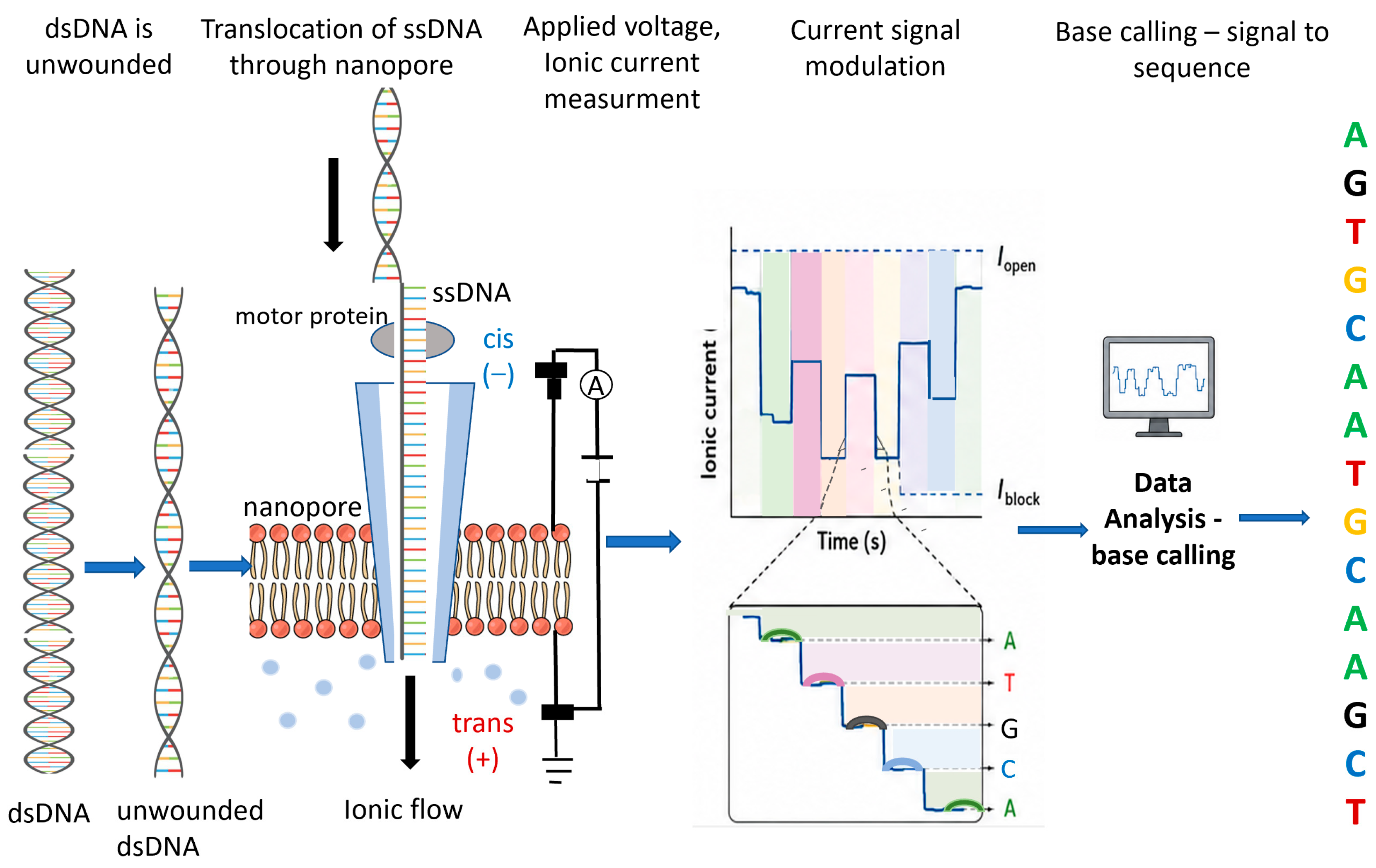
3.1. Nanopore Principles
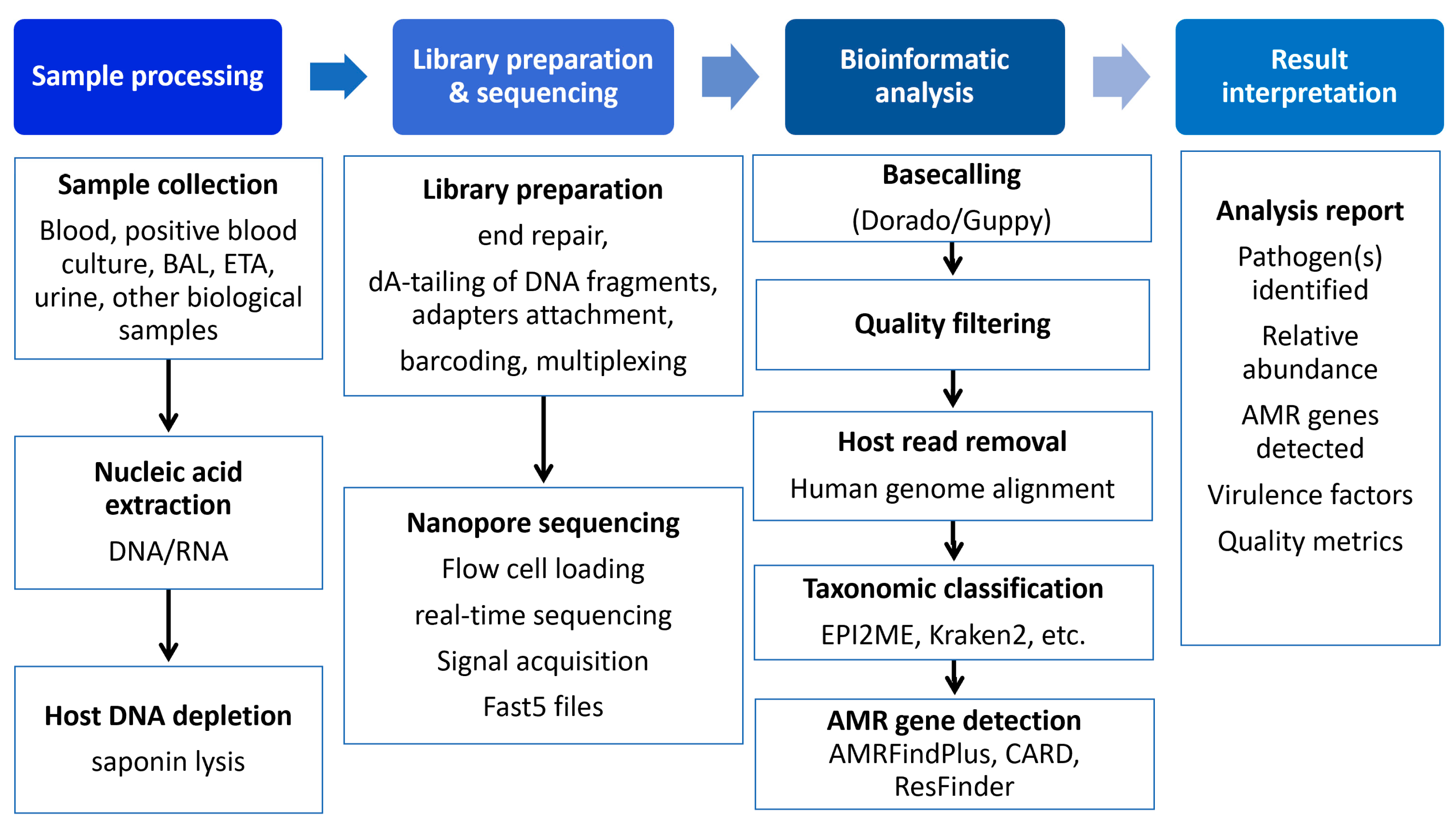
3.2. Library Preparation
3.3. Bioinformatics Analysis
3.3.1. Signal Acquisition
3.3.2. Basecalling
3.3.3. Demultiplexing
3.3.4. Adapter Trimming and Quality Filtering
3.3.5. Host Read Depletion
3.3.6. Taxonomic Classification and Database Alignment
3.3.7. Antimicrobial Resistance Gene Detection
3.4. Nanopore Sequencing Platforms
3.5. Sample Types Relevant to the Intensive Care Unit
3.6. Host DNA Background and Depletion Strategies
4. Clinical Applications of Nanopore Sequencing in the ICU
4.1. Bloodstream Infections and Sepsis
4.2. Hospital-Acquired Pneumonia and Ventilator-Associated Pneumonia
4.3. Fungal and Viral Infections in ICU Patients
4.4. Antimicrobial Stewardship and Resistance Detection
5. Current and Emerging Diagnostic Technologies in Critical Care Medicine
5.1. Comparison of Sequencing Platforms Relevant for ICU Diagnostics
5.2. Advantages of Nanopore Sequencing
5.3. Challenges, Limitations, and Implementation
5.4. Emerging Nanopore Technologies and Complementary Rapid Diagnostic Platforms
6. Future Directions
7. Conclusions
Author Contributions
Funding
Institutional Review Board Statement
Informed Consent Statement
Data Availability Statement
Acknowledgments
Conflicts of Interest
Abbreviations
| ICU | Intensive Care Unit |
| NGS | Next-Generation Sequencing |
| tNGS | Targeted Next-Generation Sequencing |
| mNGS | Metagenomic Next-Generation Sequencing |
| WGS | Whole-genome sequencing |
| TAT | Turnaround Time |
| AMR | Antimicrobial resistance |
| SMS | Single-Molecule Sequencing |
| HAP | Hospital-Acquired Pneumonia |
| VAP | Ventilator-Associated Pneumonia |
| BAL | Bronchoalveolar lavage |
| ETA | Endotracheal aspirate |
References
- Liang, Y.; Feng, Q.; Wei, K.; Hou, X.; Song, X.; Li, Y. Potential of metagenomic next-generation sequencing in detecting infections of ICU patients. Mol. Cell Probes 2023, 68, 101898. [Google Scholar] [CrossRef] [Scilit] [PubMed]
- Jin, X.; Shen, H.; Zhou, P.; Yang, J.; Yang, S.; Ni, H.; Yu, Y.; Zhang, Z. Research Progress on Sepsis Diagnosis and Monitoring Based on Omics Technologies: A Review. Diagnostics 2025, 15, 2887. [Google Scholar] [CrossRef] [Scilit] [PubMed]
- Văsiesiu, A.M.; Coman, O.; Fodor, R.S.; Bacârea, A.; Grigorescu, B.L. Insights into sepsis-induced apoptosis: Interplay between programmed cell death and interleukin-7. J. Crit. Care Med. 2025, 11, 132–139. [Google Scholar] [CrossRef] [Scilit] [PubMed]
- Harris, P.N.A.; Bauer, M.J.; Lüftinger, L.; Beisken, S.; Forde, B.M.; Balch, R.; Cotta, M.; Schlapbach, L.; Raman, S.; Shekar, K.; et al. Rapid nanopore sequencing and predictive susceptibility testing of positive blood cultures from intensive care patients with sepsis. Microbiol. Spectr. 2024, 12, e0306523. [Google Scholar] [CrossRef] [Scilit] [PubMed]
- GBD 2021 Antimicrobial Resistance Collaborators. Global burden of bacterial antimicrobial resistance 1990–2021: A systematic analysis with forecasts to 2050. Lancet 2024, 404, 1199–1226. [Google Scholar] [CrossRef] [Scilit] [PubMed]
- Pipitò, L.; Rubino, R.; D’Agati, G.; Bono, E.; Mazzola, C.V.; Urso, S.; Zinna, G.; Distefano, S.A.; Firenze, A.; Bonura, C.; et al. Antimicrobial Resistance in ESKAPE Pathogens: A Retrospective Epidemiological Study at the University Hospital of Palermo, Italy. Antibiotics 2025, 14, 186. [Google Scholar] [CrossRef] [Scilit] [PubMed]
- Bay, P.; Cappy, P.; Rodriguez, C.; Mongardon, N.; Petit, M.; Voiriot, G.; Sonneville, R.; Pineton de Chambrun, M.; Urbina, T.; Pham, T.; et al. Real-life impact of clinical metagenomics in the intensive care unit: A multicenter retrospective study in greater paris area hospitals. Crit. Care 2026, 30, 18. [Google Scholar] [CrossRef] [Scilit] [PubMed]
- Luka, S.; Golea, A.; Tat, R.M.; Lupan Mureșan, E.M.; Voicescu, G.T.; Vesa, Ș.C.; Albu, M.A.; Ionescu, D. The use of biomarkers testing in Emergency Department. J. Crit. Care Med. 2025, 11, 164–172. [Google Scholar] [CrossRef] [Scilit] [PubMed]
- Kollef, M.H.; Shorr, A.F.; Bassetti, M.; Timsit, J.F.; Micek, S.T.; Michelson, A.P.; Garnacho-Montero, J. Timing of antibiotic therapy in the ICU. Crit. Care 2021, 25, 360. [Google Scholar] [CrossRef] [Scilit] [PubMed]
- Liang, A.; Wu, X.; Zhu, Y.; Pan, L.; Wang, A.; Wu, C.; Xia, J. Targeted next-generation sequencing (tNGS): An upcoming application for pathogen identification in clinical diagnosis. J. Infect. Public Health 2025, 18, 102936. [Google Scholar] [CrossRef] [Scilit] [PubMed]
- Tseng, H.Y.; Fu, Y.C.; Su, Y.H.; Kuo, Y.C.; Liang, S.J.; Shen, Y.C.; Chen, W.C.; Chen, C.L.; Lin, Y.C.; Cheng, M.Y.; et al. Broad-spectrum targeted next-generation sequencing: Is it ready for routine deployment in intensive care units for severe pneumonia? Crit. Care 2026, 30, 146. [Google Scholar] [CrossRef] [Scilit] [PubMed]
- Wilson, H.J.; Polgarova, P.; Khokhar, F.A.; Warne, B.; Carpenter, R.; Blane, B.; Enoch, D.A.; Brown, N.M.; Preller, J.; Summers, C.; et al. Whole-genome sequencing to investigate the prevalence and transmission of multidrug-resistant Gram-negative pathogens in an adult intensive care unit in the UK. Microb. Genom. 2026, 12, 001654. [Google Scholar] [CrossRef] [Scilit] [PubMed] [PubMed Central]
- Liao, Y.; Gong, J.; Wang, X.; Chen, P.; Chi, Q.; Chen, X. Applying nanopore sequencing in the etiological diagnosis of bloodstream infection. Front. Microbiol. 2025, 16, 1554965. [Google Scholar] [CrossRef] [Scilit] [PubMed]
- Smits, D.J.; Ferraro, F.; Drost, M.; van der Linde, H.C.; de Graaf, B.M.; van Bever, Y.; Brooks, A.S.; Bardina, L.; Brüggenwirth, H.T.; Debuy, C.; et al. Nanopore long-read sequencing for the critically ill facilitates ultrarapid diagnostics and urgent clinical decision making. Eur. J. Hum. Genet. 2026, 34, 108–118. [Google Scholar] [CrossRef] [Scilit] [PubMed]
- Alcolea-Medina, A.; Snell, L.B.; Humayun, G.; Al-Yaakoubi, N.; Ward, D.; Alder, C.; Patel, V.; Vivian, F.; Meadows, C.I.S.; Wyncoll, D.; et al. Rapid pan-microbial metagenomics for pathogen detection and personalised therapy in the intensive care unit: A single-centre prospective observational study. Lancet Microbe 2025, 6, 101174. [Google Scholar] [CrossRef] [Scilit] [PubMed]
- Willemart, C.; Strazisar, M.; De Pooter, T.; Stroobants, T.; Demuyser, T.; Jorens, P.; Hoste, E.; Menschaert, G.; Vanden Berghe, T. Nanopore sequencing enables tissue-of-origin and pathogen detection in plasma cell-free DNA from critically ill patients. Cell Death Discov. 2025, 11, 484. [Google Scholar] [CrossRef] [Scilit] [PubMed]
- Kawang, K.; Thongsuk, P.; Cholsaktrakool, P.; Anuntakarun, S.; Kunadirek, P.; Chuaypen, N.; Nilgate, S.; Chatsuwan, T.; Nookaew, I.; Sangpiromapichai, N.; et al. Sensitivity and specificity of Nanopore sequencing for detecting carbapenem and 3rd-generation cephalosporin-resistant Enterobacteriaceae in urine samples: Real-time simulation with public antimicrobial resistance gene database. Heliyon 2024, 10, e35816. [Google Scholar] [CrossRef] [Scilit] [PubMed]
- Moller, A.G.; Petit, R.A., 3rd; Davis, M.H.; Read, T.D. Development of an Amplicon Nanopore Sequencing Strategy for Detection of Mutations Conferring Intermediate Resistance to Vancomycin in Staphylococcus aureus Strains. Microbiol. Spectr. 2023, 11, e0272822. [Google Scholar] [CrossRef] [Scilit] [PubMed]
- do Couto, M.S.B.; Helmersen, K.; Deola, A.V.; Wagner, G.; Aamot, H.V.; Ferreira, F.A. Comparison of Oxford Nanopore Technologies sequencing protocols using R9.4.1 and R10.4.1 flow cells under 20-hour and 48-hour conditions for genotyping methicillin methicillin-resistant Staphylococcus aureus (MRSA). Mol. Biol. Rep. 2026, 53, 775. [Google Scholar] [CrossRef] [Scilit] [PubMed]
- Sawale, M.; Raj, R.; Bhide, M.; Chanchalani, G. Cross-sectional Study: Diagnostic Accuracy of Next-generation Sequencing in a Tertiary Care Intensive Care Unit. Indian J. Crit. Care Med. 2025, 29, 498–503. [Google Scholar] [CrossRef] [Scilit] [PubMed]
- Grigorescu, B.L.; Fodor, R.Ș. Endocrine Disorders in Critically Ill Patients—The Smooth Criminal? J. Crit. Care Med. 2024, 10, 195–197. [Google Scholar] [CrossRef] [Scilit] [PubMed]
- Charalampous, T.; Alcolea-Medina, A.; Snell, L.B.; Alder, C.; Tan, M.; Williams, T.G.S.; Al-Yaakoubi, N.; Humayun, G.; Meadows, C.I.S.; Wyncoll, D.L.A.; et al. Routine Metagenomics Service for ICU Patients with Respiratory Infection. Am. J. Respir. Crit. Care Med. 2024, 209, 164–174. [Google Scholar] [CrossRef] [Scilit] [PubMed]
- Clarke, J.; Wu, H.C.; Jayasinghe, L.; Patel, A.; Reid, S.; Bayley, H. Continuous base identification for single-molecule nanopore DNA sequencing. Nat. Nanotechnol. 2009, 4, 265–270. [Google Scholar] [CrossRef] [Scilit] [PubMed]
- Cui, Y.; Zhai, Y.; Zhao, Y.; Ma, X. Nanopore-Based Label-Free and Single-Molecule Sequencing toward Precision Diagnosis. Adv. Mater. 2026, 38, e13613. [Google Scholar] [CrossRef] [Scilit] [PubMed]
- Wang, Y.; Zhao, Y.; Bollas, A.; Wang, Y.; Au, K.F. Nanopore sequencing technology, bioinformatics and applications. Nat. Biotechnol. 2021, 39, 1348–1365. [Google Scholar] [CrossRef] [Scilit] [PubMed]
- Loman, N.J.; Watson, M. Successful test launch for nanopore sequencing. Nat. Methods 2015, 12, 303–304. [Google Scholar] [CrossRef] [Scilit] [PubMed]
- Bayley, H. Nanopore sequencing: From imagination to reality. Clin. Chem. 2015, 61, 25–31. [Google Scholar] [CrossRef] [Scilit] [PubMed]
- Dongare, D.B.; Nishad, S.S.; Mastoli, S.Y.; Saraf, S.A.; Srivastava, N.; Dey, A. High-throughput sequencing: A breakthrough in molecular diagnosis for precision medicine. Funct. Integr. Genom. 2025, 25, 22. [Google Scholar] [CrossRef] [Scilit] [PubMed]
- Comer, J.; Aksimentiev, A. Predicting the DNA sequence dependence of nanopore ion current using atomic-resolution Brownian dynamics. J. Phys. Chem. C Nanomater. Interfaces 2012, 116, 3376–3393. [Google Scholar] [CrossRef] [Scilit] [PubMed]
- Wick, R.R.; Judd, L.M.; Holt, K.E. Performance of neural network basecalling tools for Oxford Nanopore sequencing. Genome Biol. 2019, 20, 129. [Google Scholar] [CrossRef] [Scilit] [PubMed]
- Grumaz, C.; Hoffmann, A.; Vainshtein, Y.; Kopp, M.; Grumaz, S.; Stevens, P.; Decker, S.O.; Weigand, M.A.; Hofer, S.; Brenner, T.; et al. Rapid Next-Generation Sequencing-Based Diagnostics of Bacteremia in Septic Patients. J. Mol. Diagn. 2020, 22, 405–418. [Google Scholar] [CrossRef] [Scilit] [PubMed]
- Oxford Nanopore Technologies. Available online: https://nanoporetech.com/ (accessed on 2 July 2026).
- van der Toorn, W.; Bohn, P.; Liu-Wei, W.; Olguin-Nava, M.; Gribling-Burrer, A.S.; Smyth, R.P.; von Kleist, M. Demultiplexing and barcode-specific adaptive sampling for nanopore direct RNA sequencing. Nat. Commun. 2025, 16, 3742. [Google Scholar] [CrossRef] [Scilit] [PubMed]
- Oxford Nanopore Technologies. Data analysis (DATD_5000_v1_revZ). Nanopore Community. Available online: https://community.nanoporetech.com/technical_documents/data-analysis/ (accessed on 1 April 2026).
- Zhao, C.Y.; Song, C.; Lin, Y.R.; Nong, Y.X.; Huang, A.C.; Xi, S.Y.; Wei, X.Y.; Zeng, C.M.; Xie, Z.H.; Zhu, Q.D. The diagnostic value of third-generation nanopore sequencing in non-tuberculous mycobacterial infections. Front. Cell. Infect. Microbiol. 2025, 15, 1557079. [Google Scholar] [CrossRef] [Scilit] [PubMed]
- Zhang, T.; Li, H.; Ma, S.; Cao, J.; Liao, H.; Huang, Q.; Chen, W. The newest Oxford Nanopore R10.4.1 full-length 16S rRNA sequencing enables the accurate resolution of species-level microbial community profiling. Appl. Environ. Microbiol. 2023, 89, e0060523. [Google Scholar] [CrossRef] [Scilit] [PubMed]
- Pagès-Gallego, M.; de Ridder, J. Comprehensive benchmark and architectural analysis of deep learning models for nanopore sequencing basecalling. Genome Biol. 2023, 24, 71. [Google Scholar] [CrossRef] [Scilit] [PubMed]
- Zhang, Y.Z.; Akdemir, A.; Tremmel, G.; Imoto, S.; Miyano, S.; Shibuya, T.; Yamaguchi, R. Nanopore basecalling from a perspective of instance segmentation. BMC Bioinform. 2020, 21, 136. [Google Scholar] [CrossRef] [Scilit] [PubMed]
- Wang, Z.; Fang, Y.; Liu, Z.; Hao, N.; Zhang, H.H.; Sun, X.; Que, J.; Ding, H. Adapting nanopore sequencing basecalling models for modification detection via incremental learning and anomaly detection. Nat. Commun. 2024, 15, 7148. [Google Scholar] [CrossRef] [Scilit] [PubMed]
- Gao, Z.; Sun, M.; Sui, X.; Li, N.; Xia, F.; Huang, Y.; Jiang, L. Artificial intelligence approaches in nanopore sensing for single-molecule analysis: From machine learning to deep learning. Nano Mater. Sci. 2026, in press. [Google Scholar] [CrossRef] [Scilit]
- Liu, Y.; Xu, Y.; Xu, X.; Chen, X.; Chen, H.; Zhang, J.; Ma, J.; Zhang, W.; Zhang, R.; Chen, J. Metagenomic identification of pathogens and antimicrobial-resistant genes in bacterial positive blood cultures by nanopore sequencing. Front. Cell. Infect. Microbiol. 2023, 13, 1283094. [Google Scholar] [CrossRef] [Scilit] [PubMed]
- Xu, W.; Top, J.; Viveen, M.C.; Slyzkyi, A.; Hermans, N.; van Erp, S.; Eiloz, D.; Anthony, R.; Kremer, K.; Schürch, A.C. Limited value of Nanopore adaptive sampling in a long-read metagenomic profiling workflow of clinical sputum samples. BMC Med. Genom. 2025, 19, 8. [Google Scholar] [CrossRef] [Scilit] [PubMed]
- Moragues-Solanas, L.; Le-Viet, T.; McSorley, E.; Halford, C.; Lockhart, D.S.; Aydin, A.; Kay, G.L.; Elumogo, N.; Mullen, W.; O’Grady, J.; et al. Development and proof-of-concept demonstration of a clinical metagenomics method for the rapid detection of bloodstream infection. BMC Med. Genom. 2024, 17, 71. [Google Scholar] [CrossRef] [Scilit] [PubMed]
- Wang, C.; Zhang, L.; Kan, C.; He, J.; Liang, W.; Xia, R.; Zhu, L.; Yang, J.; Jiang, X.; Ma, W.; et al. Benefits and challenges of host depletion methods in profiling the upper and lower respiratory microbiome. npj Biofilms Microbiomes 2025, 11, 130. [Google Scholar] [CrossRef] [Scilit] [PubMed]
- Constantinides, B.; Hunt, M.; Crook, D.W. Hostile: Accurate decontamination of microbial host sequences. Bioinformatics 2023, 39, btad728. [Google Scholar] [CrossRef] [Scilit] [PubMed]
- Peel, N.; Martin, S.; Heavens, D.; Yu, D.W.; Clark, M.D.; Leggett, R.M. Real-time analysis and visualization of nanopore metagenomic samples with MARTi. Genome Res. 2025, 35, 2488–2500. [Google Scholar] [CrossRef] [Scilit] [PubMed]
- Jain, M.; Olsen, H.E.; Paten, B.; Akeson, M. The Oxford Nanopore MinION: Delivery of nanopore sequencing to the genomics community. Genome Biol. 2016, 17, 239, Erratum in Genome Biol. 2016, 17, 256. https://doi.org/10.1186/s13059-016-1122-x. [Google Scholar] [CrossRef] [Scilit] [PubMed]
- Chapman, R.; Jones, L.; D’Angelo, A.; Suliman, A.; Anwar, M.; Bagby, S. Nanopore-Based Metagenomic Sequencing in Respiratory Tract Infection: A Developing Diagnostic Platform. Lung 2023, 201, 171–179. [Google Scholar] [CrossRef] [Scilit] [PubMed]
- Michel, C.; Imamura, H.; Yin, N.; Etienne, I.; Nobile, L.; Chu, M.; Demuyser, T.; Bogaert, D.; Hites, M.; Vandenberg, O.; et al. Amplicon-based sequencing as a diagnostic tool for severe pneumonia in the ICU. Sci. Rep. 2026, 16, 2845. [Google Scholar] [CrossRef] [Scilit] [PubMed]
- Lin, Q.; Yao, Y.; Li, X.; Zhang, S.; Guo, H.; Ma, X.; Chen, W.; Ru, C.; Wang, L.; Wang, B.; et al. The application of nanopore targeted sequencing for pathogen diagnosis in bronchoalveolar lavage fluid of patients with pneumonia: A prospective multicenter study. Infect. Dis. 2024, 56, 128–137. [Google Scholar] [CrossRef] [Scilit] [PubMed]
- Sung, Y.H.; Ju, Y.K.; Lee, H.J.; Park, S.M.; Suh, J.W.; Kim, J.Y.; Sohn, J.W.; Yoon, Y.K. Clinical performance of real-time nanopore metagenomic sequencing for rapid identification of bacterial pathogens in cerebrospinal fluid: A pilot study. Sci. Rep. 2025, 15, 3493. [Google Scholar] [CrossRef] [Scilit] [PubMed]
- Zhang, L.; Huang, W.; Zhang, S.; Li, Q.; Wang, Y.; Chen, T.; Jiang, H.; Kong, D.; Lv, Q.; Zheng, Y.; et al. Rapid Detection of Bacterial Pathogens and Antimicrobial Resistance Genes in Clinical Urine Samples With Urinary Tract Infection by Metagenomic Nanopore Sequencing. Front. Microbiol. 2022, 13, 858777. [Google Scholar] [CrossRef] [Scilit] [PubMed]
- Ali, J.; Bellankimath, A.B.; Hira, J.; Chapagain, C.; Opgård, S.T.; Simonsen, G.S.; Ahmad, R. Development and optimization of host DNA depletion in blood cultures using a saponin and salt-activated nuclease-based method. Front. Microbiol. 2026, 17, 1784408. [Google Scholar] [CrossRef] [Scilit] [PubMed]
- Wu, N.; Ranjan, P.; Tao, C.; Liu, C.; Yang, E.; He, B.; Erb-Downward, J.R.; Bo, S.; Zheng, J.; Guo, C.; et al. Rapid identification of pathogens associated with ventilator-associated pneumonia by Nanopore sequencing. Respir. Res. 2021, 22, 310. [Google Scholar] [CrossRef] [Scilit] [PubMed]
- Chen, Y.C.; Liao, P.H.; Chen, Y.W.; Yen, D.H.; How, C.K.; Chang, C.M. Optimization of Metagenomic Next-Generation Sequencing Workflow with a Novel Host Depletion Method for Enhanced Pathogen Detection. Mol. Diagn. Ther. 2025, 29, 689–699. [Google Scholar] [CrossRef] [Scilit] [PubMed]
- De Meulenaere, K.; Cuypers, W.L.; Gauglitz, J.M.; Guetens, P.; Rosanas-Urgell, A.; Laukens, K.; Cuypers, B. Selective whole-genome sequencing of Plasmodium parasites directly from blood samples by nanopore adaptive sampling. mBio 2024, 15, e0196723. [Google Scholar] [CrossRef] [Scilit] [PubMed]
- Guo, Y.; Cheng, A.; Huang, Y. Oxford Nanopore Sequencing in pediatric emergency infectious diseases: From rapid diagnosis to precision medicine. Front. Cell. Infect. Microbiol. 2026, 16, 1793808. [Google Scholar] [CrossRef] [Scilit] [PubMed]
- Tai, C.S.; Chung, H.Y.; Lin, T.H.; Chang, C.K.; Perng, C.L.; Hsieh, P.S.; Shang, H.S.; Jian, M.J. Rapid Nanopore Sequencing of Positive Blood Cultures Using Automated Benzyl-Alcohol Extraction Improves Time-Critical Sepsis Management. Antibiotics 2025, 14, 1001. [Google Scholar] [CrossRef] [Scilit] [PubMed]
- Nielsen, M.E.; Søgaard, K.K.; Karst, S.M.; Krarup, A.L.; Albertsen, M.; Nielsen, H.L. Application of rapid Nanopore metagenomic cell-free DNA sequencing to diagnose bloodstream infections: A prospective observational study. Microbiol. Spectr. 2025, 13, e0329524. [Google Scholar] [CrossRef] [Scilit] [PubMed]
- Han, D.; Yu, F.; Zhang, D.; Hu, J.; Zhang, X.; Xiang, D.; Lou, B.; Chen, Y.; Zheng, S. Molecular rapid diagnostic testing for bloodstream infections: Nanopore targeted sequencing with pathogen-specific primers. J. Infect. 2024, 88, 106166. [Google Scholar] [CrossRef] [Scilit] [PubMed]
- Heitz, M.; Levrat, A.; Lazarevic, V.; Barraud, O.; Bland, S.; Santiago-Allexant, E.; Louis, K.; Schrenzel, J.; Hauser, S. Metagenomics for the microbiological diagnosis of hospital-acquired pneumonia and ventilator-associated pneumonia (HAP/VAP) in intensive care unit (ICU): A proof-of-concept study. Respir. Res. 2023, 24, 285. [Google Scholar] [CrossRef] [Scilit] [PubMed]
- Liu, P.Y.; Wu, H.C.; Li, Y.L.; Cheng, H.W.; Liou, C.H.; Chen, F.J.; Liao, Y.C. Comprehensive pathogen identification and antimicrobial resistance prediction from positive blood cultures using nanopore sequencing technology. Genome Med. 2024, 16, 141. [Google Scholar] [CrossRef] [Scilit] [PubMed]
- Rao, J.; Stornelli, N.K.; McDaniel, L.F.; Zhao, Y.; Gomez De La Espriella, M.; Faulhaber, J.R.; Todd, S.M.; Lahmers, K.K.; Jensen, R.V. Clinical Utility of Nanopore Sequencing in the Rapid Diagnosis of a Difficult-to-Treat Providencia stuartii Strain Harboring a Multicopy β-Lactamase Resistance Island. Appl. Sci. 2026, 16, 3803. [Google Scholar] [CrossRef] [Scilit]
- Wang, R.; Yang, H.; Zhang, C.; Zi Neng, X. The complexity of invasive fungal diseases in the intensive care unit: Evaluation of metagenomic next-generation sequencing. Front. Cell. Infect. Microbiol. 2026, 16, 1820501. [Google Scholar] [CrossRef] [Scilit] [PubMed]
- Macip, G.; Soler-Comas, A.; Palomeque, A.; Motos, A.; Llonch, B.; Canseco-Ribas, J.; Bueno-Freire, L.; Calabretta, D.; Kiarostami, K.; Cabrera, R.; et al. Comparative analysis of illumina and oxford nanopore sequencing platforms for 16S rRNA profiling of respiratory microbial communities. Sci. Rep. 2025, 15, 33688. [Google Scholar] [CrossRef] [Scilit] [PubMed]
- Piscitelli, P.; Costigliola, V.; Azamfirei, L. The challenge of antimicrobial resistance in intensive care setting. J. Crit. Care Med. 2025, 11, 109–111. [Google Scholar] [CrossRef] [Scilit] [PubMed]
- Vintila, C.; Coseriu, R.L.; Ujlaki Nagi, A.A.; Man, A. Epidemiological insights into carbapenem resistant infections in critical care settings: A molecular and clinical investigation. J. Crit. Care Med. 2025, 11, 347–356. [Google Scholar] [CrossRef] [Scilit] [PubMed]
- Singh, S.L.; Chauhan, K.; Bharadwaj, A.S.; Kishore, V.; Laux, P.; Luch, A.; Singh, A.V. Polymer Translocation and Nanopore Sequencing: A Review of Advances and Challenges. Int. J. Mol. Sci. 2023, 24, 6153. [Google Scholar] [CrossRef] [Scilit] [PubMed]
- Elbehiry, A.; Marzouk, E.; Edrees, H.M.; Abdelsalam, M.H.; Aljizani, F.; Alqarni, S.; Khateeb, E.; Alzaben, F.; Ibrahem, M.; Mousa, A.M.; et al. Next-Generation Sequencing for Bloodstream Infections: Shaping the Future of Rapid Diagnostics and Precision Medicine. Diagnostics 2025, 15, 2944. [Google Scholar] [CrossRef] [Scilit] [PubMed]
- Zi, G.R.; Zhang, D.J.; He, D.L.; Shu, F.; Ou, Y.; Ke, C.X. Current status and prospects of nanopore sequencing technology in the detection of pathogenic microorganisms. Front. Microbiol. 2026, 17, 1843102. [Google Scholar] [CrossRef] [Scilit] [PubMed]
- Papamentzelopoulou, M.; Vrioni, G.; Pitiriga, V. Comparative Evaluation of Sequencing Technologies for Detecting Antimicrobial Resistance in Bloodstream Infections. Antibiotics 2025, 14, 1257. [Google Scholar] [CrossRef] [Scilit] [PubMed]
- Lorenzin, G.; Carlin, M. Comparative Meta-Analysis of Long-Read and Short-Read Sequencing for Metagenomic Profiling of the Lower Respiratory Tract Infections. Microorganisms 2025, 13, 2366. [Google Scholar] [CrossRef] [Scilit] [PubMed]
- Arikan, A.; Uzun, B.; Sayan, M. Implementation of Multi-Criteria Decision-Making for Selecting Most Effective Genome Sequencing Technology. Diagnostics 2025, 15, 665. [Google Scholar] [CrossRef] [Scilit] [PubMed]
- Prior, K.; Becker, K.; Brandt, C.; Cabal Rosel, A.; Dabernig-Heinz, J.; Kohler, C.; Lohde, M.; Ruppitsch, W.; Schuler, F.; Wagner, G.E.; et al. Accurate and reproducible whole-genome genotyping for bacterial genomic surveillance with Nanopore sequencing data. J. Clin. Microbiol. 2025, 63, e0036925. [Google Scholar] [CrossRef] [Scilit] [PubMed]
- Petersen, L.M.; Martin, I.W.; Moschetti, W.E.; Kershaw, C.M.; Tsongalis, G.J. Third-Generation Sequencing in the Clinical Laboratory: Exploring the Advantages and Challenges of Nanopore Sequencing. J. Clin. Microbiol. 2019, 58, e01315-19. [Google Scholar] [CrossRef] [Scilit] [PubMed]
- Delahaye, C.; Nicolas, J. Sequencing DNA with nanopores: Troubles and biases. PLoS ONE 2021, 16, e0257521. [Google Scholar] [CrossRef] [Scilit] [PubMed]
- MacKenzie, M.; Argyropoulos, C. An Introduction to Nanopore Sequencing: Past, Present, and Future Considerations. Micromachines 2023, 14, 459. [Google Scholar] [CrossRef] [Scilit] [PubMed]
- Chen, X.; Liu, J.; Xiao, Z.; Wang, G.; Li, Y.; Wu, H.; Xu, D. Addressing the Challenges of Solid-State Nanopores: Strategies for Performance Enhancement. Int. J. Mol. Sci. 2026, 27, 2536. [Google Scholar] [CrossRef] [Scilit] [PubMed]
- Abdel-Glil, M.Y.; Brandt, C.; Pletz, M.W.; Neubauer, H.; Sprague, L.D. High intra-laboratory reproducibility of nanopore sequencing in bacterial species underscores advances in its accuracy. Microb. Genom. 2025, 11, 001372. [Google Scholar] [CrossRef] [Scilit] [PubMed]
- Dabernig-Heinz, J.; Lohde, M.; Hölzer, M.; Cabal, A.; Conzemius, R.; Brandt, C.; Kohl, M.; Halbedel, S.; Hyden, P.; Fischer, M.A.; et al. A multicenter study on accuracy and reproducibility of nanopore sequencing-based genotyping of bacterial pathogens. J. Clin. Microbiol. 2024, 62, e0062824. [Google Scholar] [CrossRef] [Scilit] [PubMed]
- Balan, C.; Bubenek-Turconi, S.I.; Al-Haddad, M. Intensive Care Fundamentals in Romania. A Critical Step in Romanian Intensive Care Education. J. Crit. Care Med. 2024, 10, 279–281. [Google Scholar] [CrossRef] [Scilit] [PubMed]
- Dorey, A.; Howorka, S. Nanopore DNA sequencing technologies and their applications towards single-molecule proteomics. Nat. Chem. 2024, 16, 314–334. [Google Scholar] [CrossRef] [Scilit] [PubMed]
- He, S.; Liu, Y.; Fang, S.; Li, Y.; Weng, T.; Tian, R.; Yin, Y.; Zhou, D.; Yin, B.; Wang, Y.; et al. Solid-State nanopore DNA Sequencing: Advances, challenges and prospects. Coord. Chem. Rev. 2024, 510, 215816. [Google Scholar] [CrossRef] [Scilit]
- Tayo, B.O. DNA Base Detection Using Two-Dimensional Materials Beyond Graphene. arXiv 2022, arXiv:2201.07192. [Google Scholar]
- Dyshlovoy, S.A.; Paigin, S.; Afflerbach, A.K.; Lobermeyer, A.; Werner, S.; Schüller, U.; Bokemeyer, C.; Schuh, A.H.; Bergmann, L.; von Amsberg, G.; et al. Applications of Nanopore sequencing in precision cancer medicine. Int. J. Cancer 2024, 155, 2129–2140. [Google Scholar] [CrossRef] [Scilit] [PubMed]
- Reitemeier, J.; Metro, J.; Fu, K.X. Nanopore sensing and beyond: Electrochemical systems for optically-coupled single-entity studies, stimulus-responsive gating applications, and point-of-care sensors. Sens. Actuators Rep. 2024, 8, 100225. [Google Scholar] [CrossRef] [Scilit]



| Study Design | Sample Size | Specimen | Main Findings | Limitation | Year | Author (Reference) |
|---|---|---|---|---|---|---|
| Prospective, single center | 201 patients (52 sequenced) | + blood cultures | 94.2% species concordance (100% monomicrobial) | Single center | 2024 | Harris PNA et al. [4] |
| Prospective observational | 40 patients | Plasma (cfDNA) | Confirmed all 11 culture + cases; 11 culture negative pathogens | Small cohort | 2025 | Nielsen ME et al. [59] |
| Prospective, single center | 387 blood samples | Whole blood | Positivity 69.5% vs. 33.9% (culture); AMR concordance 80.6% | Predefined primer panel; single center | 2024 | Han D et al. [60] |
| Prospective observational, single center | 114 samples/74 patients | Respiratory samples | Sensitivity 97% bacteria, 89% fungi, 89% viruses; therapy changed in 28% | Single center; needs multicenter validation | 2025 | Alcolea-Medina A et al. [15] |
| Prospective proof-of-concept | 7 target pathogens | Endotracheal aspirates | Sensitivity 89.2% vs. 37.8% (culture); specificity 98.8%; ~6 h | Restricted 7-pathogen panel | 2021 | Wu N et al. [54] |
| Proof-of-concept | Small group | Bronchoalveolar lavage | Additional pathogens in culture-negative HAP/VAP | Proof-of-concept; small N | 2023 | Heitz M et al. [61] |
| Comparative diagnostic | 128 samples/87 patients | Mixed samples | 93% sensitivity, 81% specificity vs. routine | Heterogeneous samples | 2024 | Charalampous T et al. [22] |
| Cross-sectional, single center | 458 positive blood cultures | Positive blood cultures | High concordance with phenotypic AST (Gram±) | Single center | 2024 | Liu PY et al. [52] |
| Retrospective, multicenter (10 ICUs) | 144 analyses/132 patients | Mixed (mostly CSF, pleural) | Additional pathogen in 25.8%; therapeutic impact 5.3% | Retrospective; long turnaround | 2026 | Bay et al. [7] |
| Application | Biological Sample Culture | PCR | Illumina | Oxford Nanopore | References |
|---|---|---|---|---|---|
| Sepsis | Moderate | Good | Excellent | Excellent | Elbehiry A et al. [69]. Zi GR et al. [70]. |
| Bloodstream infection | Moderate | Good | Excellent | Excellent | Liu PY et al. [62]. Elbehiry A et al. [69]. Zi GR et al. [70]. Papamentzelopoulou M et al. [71]. |
| Ventilator-associated pneumonia (VAP) | Moderate | Good | Excellent | Excellent | Charalampous T et al. [22]. Macip G et al. [65]. Wu N et al. [54]. Lorenzin G, et al. [72]. |
| Fungal infections | Poor | Moderate | Good | Excellent | Charalampous T et al. [22]. Zi GR et al. [70]. |
| Antimicrobial resistance gene detection | Poor | Moderate | Good | Good | Liu PY et al. [62]. Zi GR et al. [70]. Lorenzin G, et al. [72]. |
| Pathogen detection in culture-negative sepsis | No | Limited | High | Very high | Sawale M et al. [20]. Nielsen ME et al. [59]. Zi GR et al. [70]. |
| Time-critical clinical decision support | Slow (Long time) | Moderate | Moderate | Fast/short time (3.63 h) | Wu N et al. [54]. Elbehiry A et al. [69]. Zi GR et al. [70]. Lorenzin G et al. [72]. |
| Characteristics | Oxford Nanopore | PacBio | Illumina | Ion Torrent (Thermo Fisher) | References |
|---|---|---|---|---|---|
| Principle | Nanopore-based ionic current detection | Single-molecule real-time sequencing SMRT | Sequencing by synthesis SBS | Semiconductor sequencing/pH-based detection | Cui Y et al. [24]. Dongare DB et al. [28]. Zi GR et al. [70]. Arikan A et al. [73]. |
| Read length | Ultra long reads 10 kb–1 Mb | Long reads 10–25 kb | Short reads (150–300 bp) | Short reads (200–600 bp) | Cui Y et al. [24]. Dongare DB et al. [28]. Papamentzelopoulou M et al. [71]. |
| Key features | Third generation, real-time analysis | Real-time single molecule detection | High-throughput | Fast runs, high-throughput | Cui Y et al. [24]. Papamentzelopoulou M et al. [71]. |
| TAT | <1 d (4–8 h) | 1–2 d (24–48 h) | 1–2 d (24–48 h) | 1 d (8–24 h) | Charalampous T et al. [22]. Dongare DB et al. [28]. |
| Real-time sequencing | Yes | No | Partial | No | Cui Y et al. [24]. Zi GR et al. [70]. |
| Sequencing accuracy (quality score) | Improving 99.0% (Q20)/read * | High (99.9%) (Q40) | High (99.9%) (Q40) | High 98.0–99.0% (Q20–Q30) | Cui Y et al. [24]. Dongare DB et al. [28]. Papamentzelopoulou M et al. [71]. |
| Portable device | Yes | No | No | No | Cui Y et al. [24]. Dongare DB et al. [28]. Zi GR et al. [70]. |
| Antimicrobial resistance gene detection | Excellent (database- and depth-dependent) | Excellent | Good | Good | Liu PY et al. [62]. Papamentzelopoulou M et al. [71]. |
| Metagenomic pathogen detection | Excellent | Good | Excellent | Moderate | Charalampous T et al. [22]. Zi GR et al. [70]. Lorenzin G et al. [72]. |
| Hospital workflow integration | Moderate | Low | Moderate | Moderate | Charalampous T et al. [22]. |
| Point-of-care potential | Yes | No | No | No | Cui Y et al. [24]. Zi GR et al. [70]. |
| Critical care applicability | Very high | Moderate | Moderate | Moderate | Charalampous T et al. [22]. |
| Direct RNA sequencing | Yes | Limited | No | No | Cui Y et al. [24]. Zi GR et al. [70]. |
| AI integration potential | Very high | High | High | Moderate | Cui Y et al. [24]. Zi GR et al. [70]. |
| Cost comparison | Moderate (host-depletion kits add cost, higher per Gb, low instrument costs) | High (moderate per Gb, high instrument cost) | Moderate (low per sample at scale, high instrument costs) | Moderate-high (high instrument costs) | Dongare DB et al. [28]. Arikan A et al. [73]. |
Disclaimer/Publisher’s Note: The statements, opinions and data contained in all publications are solely those of the individual author(s) and contributor(s) and not of MDPI and/or the editor(s). MDPI and/or the editor(s) disclaim responsibility for any injury to people or property resulting from any ideas, methods, instructions or products referred to in the content. |
© 2026 by the authors. Licensee MDPI, Basel, Switzerland. This article is an open access article distributed under the terms and conditions of the Creative Commons Attribution (CC BY) license.
Share and Cite
Azamfirei, L.; Bica, D.; Mihai, M.A.; Beata, B.; Banescu, C. Oxford Nanopore Sequencing, a Promising Technology for Precision Diagnostics in Intensive Care Units: A Narrative Review. Biomedicines 2026, 14, 1910. https://doi.org/10.3390/biomedicines14091910
Azamfirei L, Bica D, Mihai MA, Beata B, Banescu C. Oxford Nanopore Sequencing, a Promising Technology for Precision Diagnostics in Intensive Care Units: A Narrative Review. Biomedicines. 2026; 14(9):1910. https://doi.org/10.3390/biomedicines14091910
Chicago/Turabian StyleAzamfirei, Leonard, Dorin Bica, Maier Alexandru Mihai, Balla Beata, and Claudia Banescu. 2026. "Oxford Nanopore Sequencing, a Promising Technology for Precision Diagnostics in Intensive Care Units: A Narrative Review" Biomedicines 14, no. 9: 1910. https://doi.org/10.3390/biomedicines14091910
APA StyleAzamfirei, L., Bica, D., Mihai, M. A., Beata, B., & Banescu, C. (2026). Oxford Nanopore Sequencing, a Promising Technology for Precision Diagnostics in Intensive Care Units: A Narrative Review. Biomedicines, 14(9), 1910. https://doi.org/10.3390/biomedicines14091910