Review

Advancing Human Placental Modeling Through Stem-Cell-Derived Trophoblast Organoids and Reprogramming Innovations

Center on the Biology of Aging, Department of Molecular Biology, Cell Biology, and Biochemistry, Brown University, 225 Dyer Street, Providence, RI 02903, USA
*
Author to whom correspondence should be addressed.
Biomedicines 2026, 14(8), 1729; https://doi.org/10.3390/biomedicines14081729

Submission received: 21 May 2026 / Revised: 19 July 2026 / Accepted: 21 July 2026 / Published: 31 July 2026

Abstract

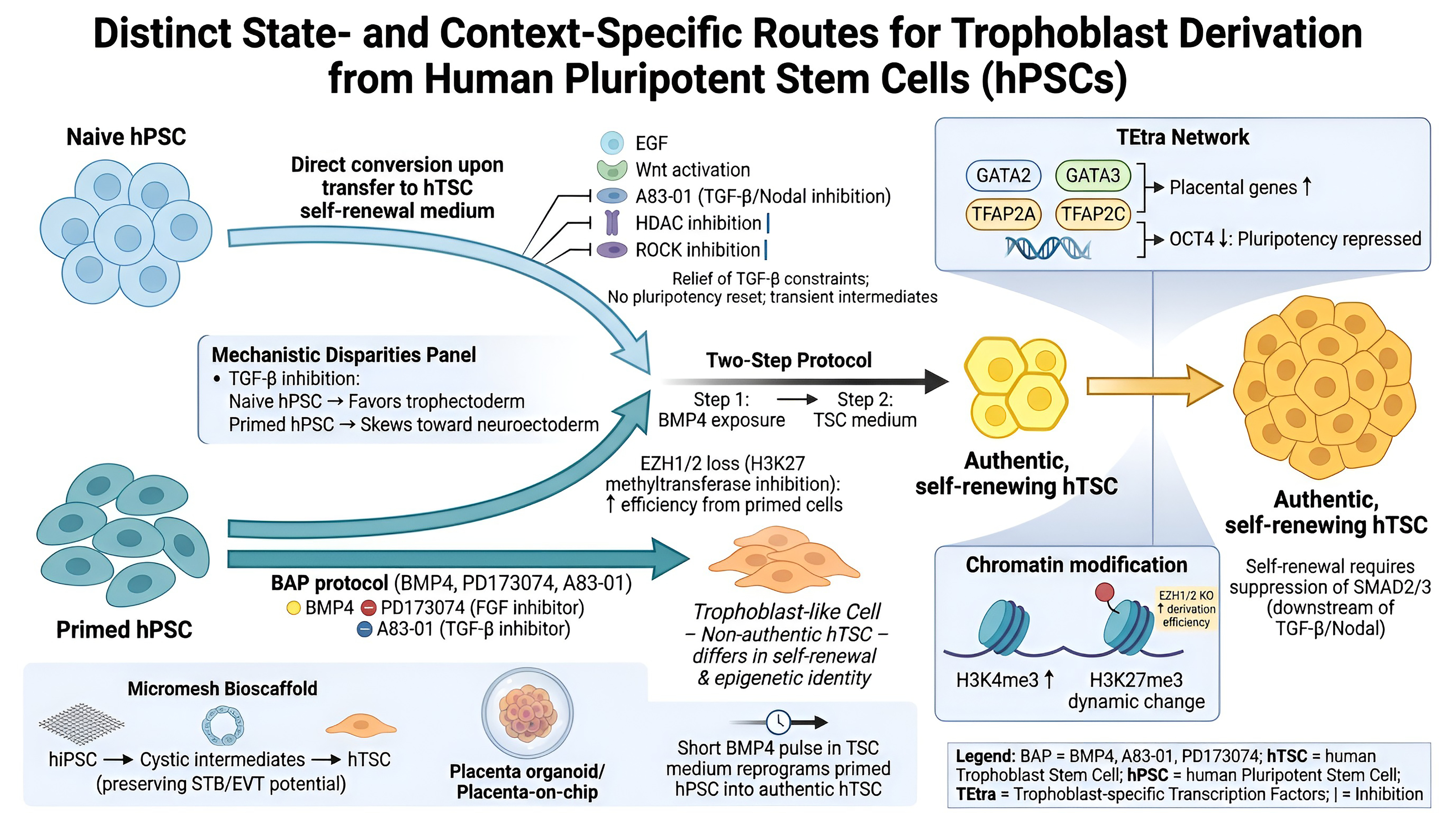
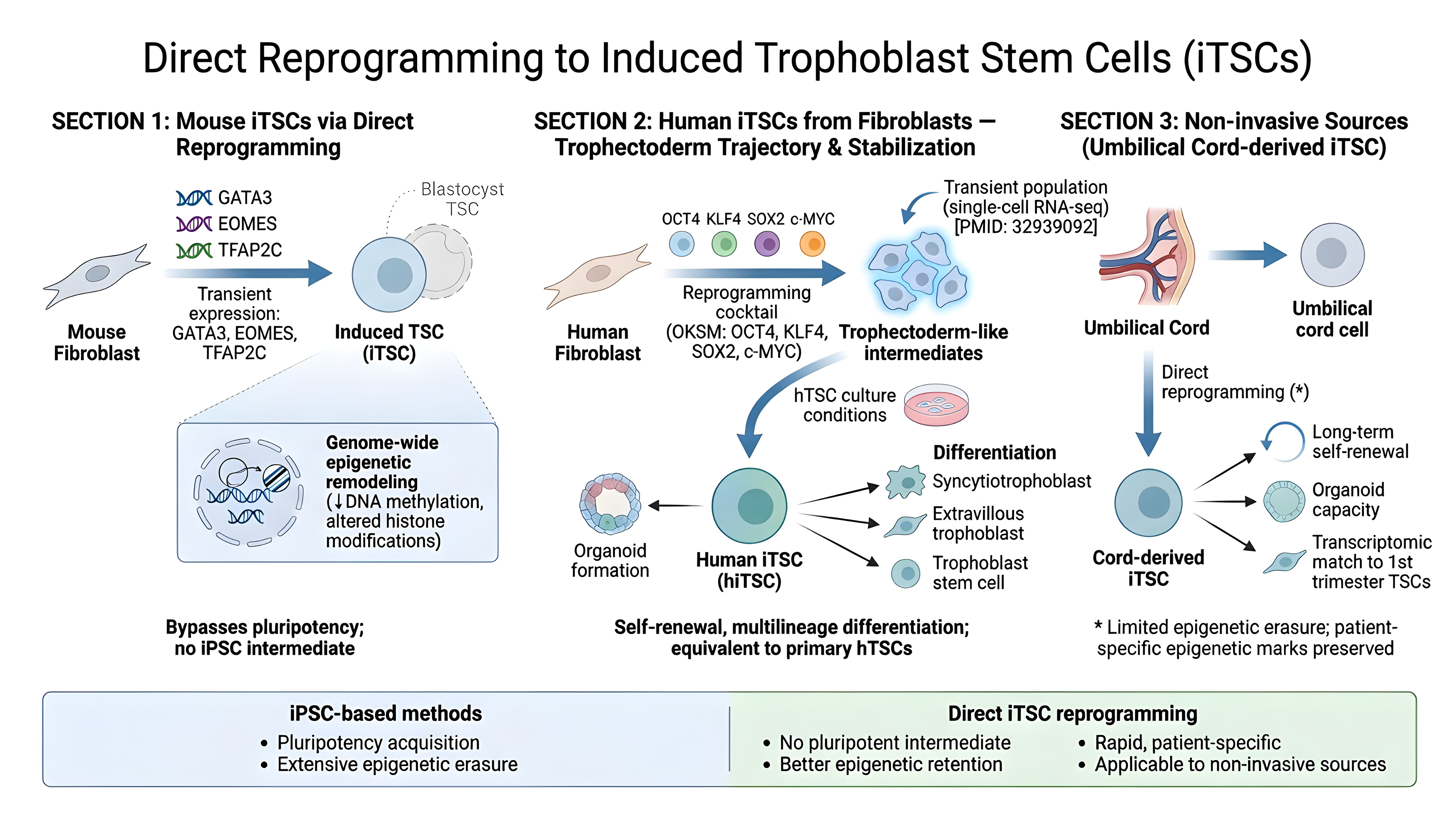
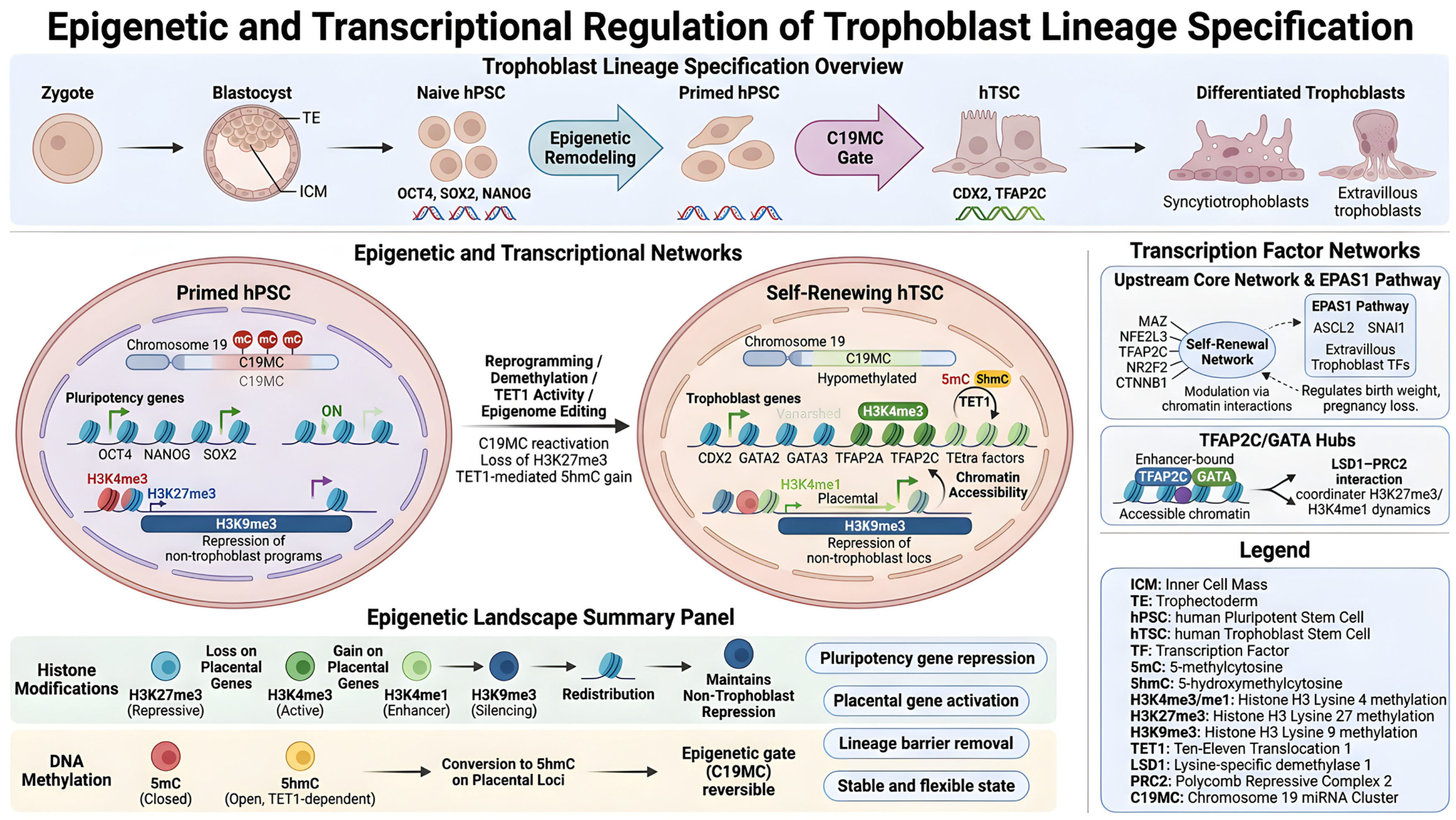
The human placenta is a temporary organ structured to optimize exchange between the maternal and fetal circulatory systems. Its fetal component consists of highly branched chorionic villi, which are anchored to the maternal uterine wall and project into the intervillous space. The outer surface of these villi is lined by a multinucleated, continuous layer called the syncytiotrophoblast, which is supported by an underlying layer of proliferative cytotrophoblast cells and the invasive extravillous trophoblast (EVT). This cellular bilayer forms a selective barrier that directly bathes in maternal blood, allowing for the efficient transfer of oxygen and nutrients while structurally preventing the direct mixing of maternal and fetal blood cells. Human placental studies have been stymied by ethical and accessibility constraints. Stem cell biology has now revolutionized the capacity to model human placental development, in particular with the derivation of human trophoblast stem cells (hTSCs) and organoids. Authentic, self-renewing human trophoblast stem cells (hTSCs) were first derived not from pluripotent stem cells but from primary tissue—first-trimester villous cytotrophoblasts and blastocysts. Derivation from human pluripotent stem cells (PSCs) followed only subsequently, along two principal routes: conversion of naive PSCs, which retain extraembryonic competence, and induction from primed PSCs, as well as by direct reprogramming of somatic cells to induced hTSCs. An important advance underlying these improvements is the mapping of a global reprogramming roadmap. Multi-omic and lineage-tracing experiments have mapped the stepwise transcriptional and epigenetic conversions of fibroblasts to hTSCs, including sequential chromatin reconfiguration, trophoblast gene network activation, and repression of somatic signatures. These results identify major regulatory bottlenecks and intermediate states, improving reprogramming fidelity. The derivation of stem-cell-based trophoblast organoids now enables complex modeling of placental architecture, function, and disease susceptibility in vitro. These organoids accurately recapitulate placental barrier functions and immunological features, allowing for examinations of maternal–fetal health, pregnancy disorders, and placental infection response to viruses like cytomegalovirus and SARS-CoV-2. Looking ahead, the integration of reprogramming and organoid technologies will propel patient-specific and tailor-made models for personalized diagnostics, drug screening, and mechanism studies. As we unravel the molecular ballet of trophoblast induction, such discoveries have the potential to bridge basic translational gaps in reproductive biology and maternal–fetal medicine.
Keywords: human trophoblast stem cells (hTSCs); induced trophoblast stem cells (iTSCs); pluripotency-independent reprogramming; human pluripotent stem cells (hPSCs); trophoblast lineage specification; trophoblast organoids; placenta-on-a-chip/organ-on-chip models; syncytiotrophoblast and extravillous trophoblast; BMP4–GATA3–TFAP2C signaling axis; maternal–fetal interface and pregnancy disorders human trophoblast stem cells (hTSCs); induced trophoblast stem cells (iTSCs); pluripotency-independent reprogramming; human pluripotent stem cells (hPSCs); trophoblast lineage specification; trophoblast organoids; placenta-on-a-chip/organ-on-chip models; syncytiotrophoblast and extravillous trophoblast; BMP4–GATA3–TFAP2C signaling axis; maternal–fetal interface and pregnancy disorders