Multifunctional Nano-Contrast Agent Carriers: From Traditional Platforms to Next-Generation Theranostic Applications in Molecular Imaging

 , , , ,
  , , , , , , and
Abstract
1. Introduction
2. Traditional Nano-Carrier Platforms for Molecular Imaging
2.1. Dendrimer-Based Carriers
2.2. Liposome-Based Contrast Agents
2.3. Chitosan-Based Contrast Agents
2.4. Silica-Based Contrast Agents
3. Engineering Multifunctional and Targeted Nano-Contrast Carriers
3.1. Advanced Surface Chemistries and Ligand Engineering
3.2. Stimuli-Responsive and Smart Carrier Designs
3.3. Multimodal and Multi-Responsive Platform Design
3.4. Targeting Strategies and Personalization by Design
4. Theranostic and Biological Applications
4.1. Theranostic Applications
4.2. Multimodal and Multi-Parametric Imaging
4.3. Immune System Interactions and Monitoring
5. Biodistribution, Pharmacokinetics, and Safety Considerations
5.1. Classical Determinants of Biodistribution
5.2. Advanced Pharmacokinetic Modeling
5.3. Enhanced Safety Profiling
6. Clinical Translation
6.1. Current Clinical Status
6.2. Regulatory Pathway Evolution
6.3. Market Translation and Adoption
7. Emerging Trends and Future Innovations
7.1. Next-Generation Carrier Development
7.2. Technology Integration and Digitalization
7.3. Precision Medicine Applications
8. Conclusions
Author Contributions
Funding
Data Availability Statement
Acknowledgments
Conflicts of Interest
Abbreviations
| 124I | Iodine-124 (radionuclide used for PET labeling) |
| ADME | Absorption, distribution, metabolism, and excretion |
| AGuIX® | Ultrasmall polysiloxane gadolinium-based nanoparticle platform used as an MRI-visible radiosensitizer/contrast agent |
| AI | Artificial intelligence |
| C dots | Cornell dots: ultrasmall silica-based optical/PET imaging nanoparticle probe |
| cRGDY | Cyclic Arg–Gly–Asp–Tyr peptide (integrin-targeting RGD variant) |
| CT | Computed tomography |
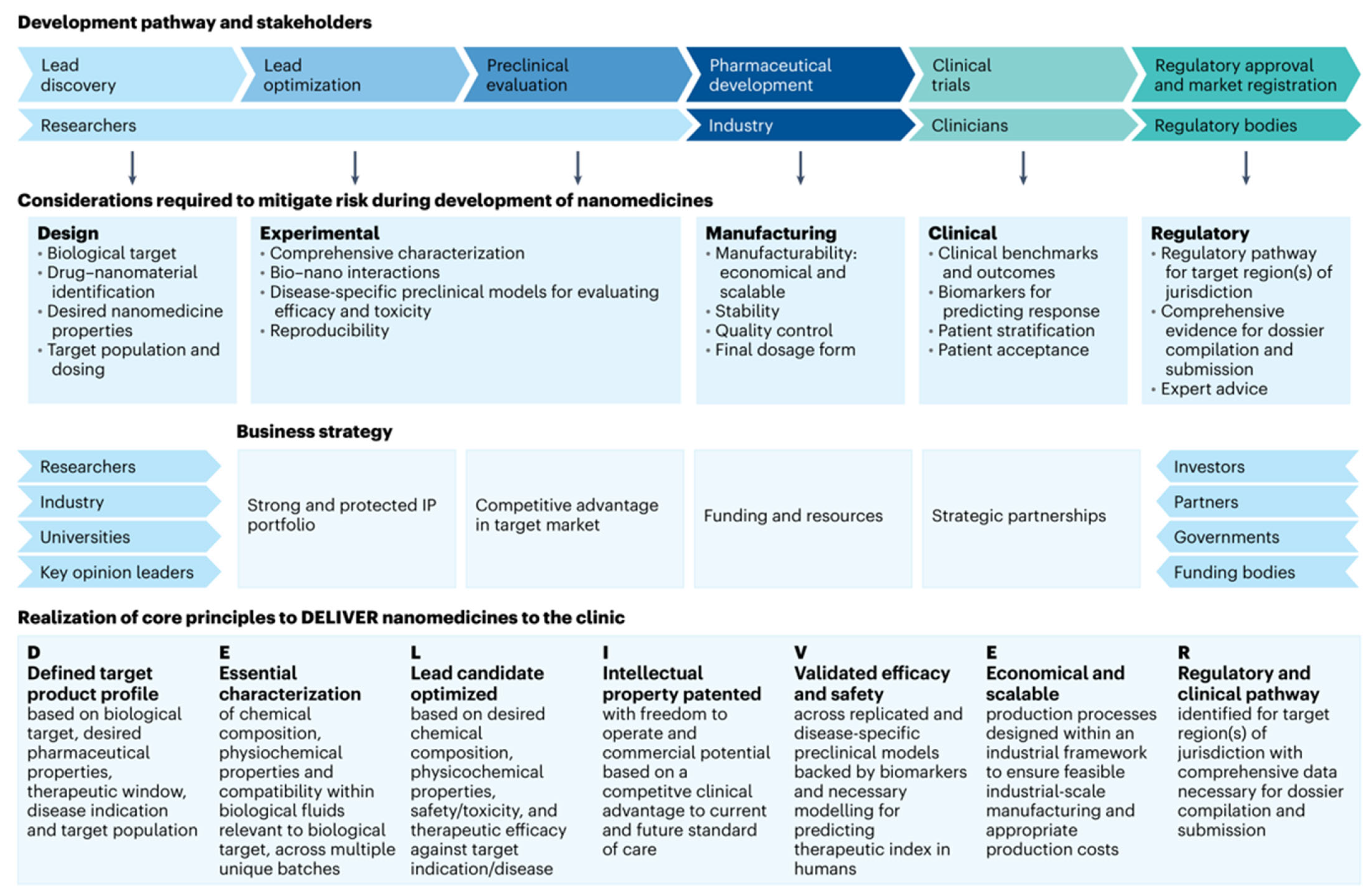
| DELIVER | A translational framework/guideline for bringing nanomedicines to the clinic |
| DNA | Deoxyribonucleic acid |
| DTPA | Diethylenetriaminepentaacetic acid (metal chelator) |
| EPR | Enhanced permeability and retention (effect) |
| Fe3+ | Iron(III) ion |
| FDA | US Food and Drug Administration |
| FE-MRI | Ferumoxytol-enhanced MRI |
| GBCA(s) | Gadolinium-based contrast agent(s) |
| GBM | Glioblastoma (often glioblastoma multiforme) |
| Gd | Gadolinium |
| Gd(III) | Gadolinium(III) ion |
| HMSN(s) | Hollow mesoporous silica nanoparticle(s) |
| M1 | Pro-inflammatory (classically activated) macrophage phenotype |
| M2 | Immunosuppressive/tissue-repair (alternatively activated) macrophage phenotype |
| Mn2+ | Manganese(II) ion |
| MOF(s) | Metal–organic framework(s) |
| MR | Magnetic resonance |
| MR/US | Magnetic resonance/ultrasound (combined imaging) |
| MRI | Magnetic resonance imaging |
| MPS | Mononuclear phagocyte system |
| MSN(s) | Mesoporous silica nanoparticle(s) |
| MSNs–Pt | Platinum-embedded/decorated mesoporous silica nanoparticles |
| NANO-GBM | Clinical trial of AGuIX nanoparticles with chemoradiation in glioblastoma |
| NANORAD | Phase I study protocol using gadolinium nanoparticles with radiotherapy (brain metastases) |
| PAMAM | Poly(amidoamine) (dendrimer) |
| PBPK | Physiologically based pharmacokinetic (modeling/framework) |
| PEG | Polyethylene glycol |
| PE-DTPA | Phosphoethanolamine–DTPA (a Gd-chelating lipid conjugate) |
| PET | Positron emission tomography |
| PET/CT | Hybrid positron emission tomography/computed tomography |
| PET/MR (PET/MRI) | Hybrid positron emission tomography/magnetic resonance (imaging) |
| RGD | Arg–Gly–Asp peptide motif (integrin-binding) |
| ROS | Reactive oxygen species |
| r1 | Longitudinal relaxivity (T1 relaxivity) |
| SPECT | Single-photon emission computed tomography |
| SPECT/CT | Hybrid single-photon emission CT/computed tomography |
| SPECT/MR (SPECT/MRI) | Hybrid single-photon emission CT/magnetic resonance (imaging) |
| T1 | Longitudinal relaxation time (T1)/T1-weighted contrast |
| T2 | Transverse relaxation time (T2)/T2-weighted contrast |
| US | Ultrasound |
References
- Hsu, J.C.; Tang, Z.; Eremina, O.E.; Sofias, A.M.; Lammers, T.; Lovell, J.F.; Zavaleta, C.; Cai, W.; Cormode, D.P. Nanomaterial-based contrast agents. Nat. Rev. Methods Prim. 2023, 3, 30. [Google Scholar] [CrossRef] [PubMed]
- Habeeb, M.; Vengateswaran, H.T.; Tripathi, A.K.; Kumbhar, S.T.; You, H.W.; Hariyadi. Enhancing biomedical imaging: The role of nanoparticle-based contrast agents. Biomed. Microdevices 2024, 26, 42. [Google Scholar] [CrossRef] [PubMed]
- He, H.; Zhang, X.; Du, L.; Ye, M.; Lu, Y.; Xue, J.; Wu, J.; Shuai, X. Molecular imaging nanoprobes for theranostic applications. Adv. Drug Deliv. Rev. 2022, 186, 114320. [Google Scholar] [CrossRef] [PubMed]
- Mhlanga, N.; Mphuthi, N.; Van der Walt, H.; Nyembe, S.; Mokhena, T.; Sikhwivhilu, L. Nanostructures and nanoparticles as medical diagnostic imaging contrast agents: A review. Mater. Today Chem. 2024, 40, 102233. [Google Scholar] [CrossRef]
- Siddique, S.; Chow, J.C. Application of nanomaterials in biomedical imaging and cancer therapy. Nanomaterials 2020, 10, 1700. [Google Scholar] [CrossRef] [PubMed]
- Rosado-de-Castro, P.H.; del Puerto Morales, M.; Pimentel-Coelho, P.M.; Mendez-Otero, R.; Herranz, F. Development and application of nanoparticles in biomedical imaging. Contrast Media Mol. Imaging 2018, 2018, 1403826. [Google Scholar] [CrossRef] [PubMed]
- Qiao, Z.; Shi, X. Dendrimer-based molecular imaging contrast agents. Prog. Polym. Sci. 2015, 44, 1–27. [Google Scholar] [CrossRef]
- Kumar, V. Diagnostic and therapeutic applications of smart nanocomposite dendrimers. Front. Biosci. 2021, 26, 518–536. [Google Scholar] [CrossRef] [PubMed]
- Jha, R.; Mayanovic, R.A. A review of the preparation, characterization, and applications of chitosan nanoparticles in nanomedicine. Nanomaterials 2023, 13, 1302. [Google Scholar] [CrossRef] [PubMed]
- Chen, F.; Hableel, G.; Zhao, E.R.; Jokerst, J.V. Multifunctional nanomedicine with silica: Role of silica in nanoparticles for theranostic, imaging, and drug monitoring. J. Colloid Interface Sci. 2018, 521, 261–279. [Google Scholar] [CrossRef] [PubMed]
- Tallury, P.; Payton, K.; Santra, S. Silica-based multimodal/multifunctional nanoparticles for bioimaging and biosensing applications. Nanomedicine 2008, 3, 579–592. [Google Scholar] [CrossRef] [PubMed]
- Salgueiro, M.J.; Zubillaga, M. Theranostic nanoplatforms in nuclear medicine: Current advances, emerging trends, and perspectives for personalized oncology. J. Nanotheranostics 2025, 6, 27. [Google Scholar] [CrossRef]
- Liu, Y.; Bhattarai, P.; Dai, Z.; Chen, X. Photothermal therapy and photoacoustic imaging via nanotheranostics in fighting cancer. Chem. Soc. Rev. 2019, 48, 2053–2108. [Google Scholar] [CrossRef] [PubMed]
- Gambhir, R.P.; Rohiwal, S.S.; Tiwari, A.P. Multifunctional surface functionalized magnetic iron oxide nanoparticles for biomedical applications: A review. Appl. Surf. Sci. Adv. 2022, 11, 100303. [Google Scholar] [CrossRef]
- Kostevšek, N. A review on the optimal design of magnetic nanoparticle-based T 2 MRI contrast agents. Magnetochemistry 2020, 6, 11. [Google Scholar] [CrossRef]
- Phillips, E.; Penate-Medina, O.; Zanzonico, P.B.; Carvajal, R.D.; Mohan, P.; Ye, Y.; Humm, J.; Gönen, M.; Kalaigian, H.; Schöder, H.; et al. Clinical translation of an ultrasmall inorganic optical-PET imaging nanoparticle probe. Sci. Transl. Med. 2014, 6, 260ra149. [Google Scholar] [CrossRef] [PubMed]
- Lux, F.; Tran, V.L.; Thomas, E.; Dufort, S.; Rossetti, F.; Martini, M.; Truillet, C.; Doussineau, T.; Bort, G.; Denat, F.; et al. AGuIX® from bench to bedside—Transfer of an ultrasmall theranostic gadolinium-based nanoparticle to clinical medicine. Br. J. Radiol. 2019, 92, 20180365. [Google Scholar] [CrossRef] [PubMed]
- Ahmad, F.; Treanor, L.; McGrath, T.A.; Walker, D.; McInnes, M.D.; Schieda, N. Safety of off-label use of ferumoxtyol as a contrast agent for MRI: A systematic review and meta-analysis of adverse events. J. Magn. Reson. Imaging 2021, 53, 840–858. [Google Scholar] [CrossRef] [PubMed]
- Si, G.; Du, Y.; Tang, P.; Ma, G.; Jia, Z.; Zhou, X.; Mu, D.; Shen, Y.; Lu, Y.; Mao, Y.; et al. Unveiling the next generation of MRI contrast agents: Current insights and perspectives on ferumoxytol-enhanced MRI. Natl. Sci. Rev. 2024, 11, nwae057. [Google Scholar] [CrossRef] [PubMed]
- Biau, J.; Durando, X.; Boux, F.; Molnar, I.; Moreau, J.; Leyrat, B.; Guillemin, F.; Lavielle, A.; Cremillieux, Y.; Seddik, K.; et al. NANO-GBM trial of AGuIX nanoparticles with radiotherapy and temozolomide in the treatment of newly diagnosed Glioblastoma: Phase 1b outcomes and MRI-based biodistribution. Clin. Transl. Radiat. Oncol. 2024, 48, 100833. [Google Scholar] [CrossRef] [PubMed]
- Joyce, P.; Allen, C.J.; Alonso, M.J.; Ashford, M.; Bradbury, M.S.; Germain, M.; Kavallaris, M.; Langer, R.; Lammers, T.; Peracchia, M.T. A translational framework to DELIVER nanomedicines to the clinic. Nat. Nanotechnol. 2024, 19, 1597–1611. [Google Scholar] [CrossRef] [PubMed]
- Gries, H. Extracellular MRI contrast agents based on gadolinium. In Contrast Agents I: Magnetic Resonance Imaging; Springer: Berlin/Heidelberg, Germany, 2002; pp. 1–24. [Google Scholar] [CrossRef] [PubMed]
- Jiang, Z.; Zhang, M.; Li, P.; Wang, Y.; Fu, Q. Nanomaterial-based CT contrast agents and their applications in image-guided therapy. Theranostics 2023, 13, 483. [Google Scholar] [CrossRef] [PubMed]
- Longmire, M.; Choyke, P.L.; Kobayashi, H. Dendrimer-based contrast agents for molecular imaging. Curr. Top. Med. Chem. 2008, 8, 1180–1186. [Google Scholar] [CrossRef] [PubMed]
- Michna, A.; Pomorska, A.; Nattich-Rak, M.; Wasilewska, M.; Adamczyk, Z. Hydrodynamic solvation of poly (amido amine) dendrimer monolayers on silica. J. Phys. Chem. C 2020, 124, 17684–17695. [Google Scholar] [CrossRef]
- Torchia, M.G.; Misselwitz, B. Combined MR Lymphangiography and MR Imaging—Guided Needle Localization of Sentinel Lymph Nodes Using Gadomer-17. Am. J. Roentgenol. 2002, 179, 1561–1565. [Google Scholar] [CrossRef] [PubMed]
- Huang, T.; Li, G.; Guo, Y.; Zhang, G.; Shchabin, D.; Shi, X.; Shen, M. Recent advances in PAMAM dendrimer-based CT contrast agents for molecular imaging and theranostics of cancer. Sens. Diagn. 2023, 2, 1145–1157. [Google Scholar] [CrossRef]
- Xia, Y.; Xu, C.; Zhang, X.; Ning, P.; Wang, Z.; Tian, J.; Chen, X. Liposome-based probes for molecular imaging: From basic research to the bedside. Nanoscale 2019, 11, 5822–5838. [Google Scholar] [CrossRef] [PubMed]
- Šimečková, P.; Hubatka, F.; Kotouček, J.; Turánek Knötigová, P.; Mašek, J.; Slavík, J.; Kováč, O.; Neča, J.; Kulich, P.; Hrebík, D. Gadolinium labelled nanoliposomes as the platform for MRI theranostics: In vitro safety study in liver cells and macrophages. Sci. Rep. 2020, 10, 4780. [Google Scholar] [CrossRef] [PubMed]
- Gabizon, A.A.; Gabizon-Peretz, S.; Modaresahmadi, S.; La-Beck, N.M. Thirty years from FDA approval of pegylated liposomal doxorubicin (Doxil/Caelyx): An updated analysis and future perspective. BMJ Oncol. 2025, 4, e000573. [Google Scholar] [CrossRef] [PubMed]
- Bertrand, N.; Simard, P.; Leroux, J.-C. Serum-stable, long-circulating, pH-sensitive PEGylated liposomes. In Liposomes: Methods and Protocols, Volume 1: Pharmaceutical Nanocarriers; Humana Press: Totowa, NJ, USA, 2010; pp. 545–558. [Google Scholar] [CrossRef] [PubMed]
- Moghaddam, F.D.; Zare, E.N.; Hassanpour, M.; Bertani, F.R.; Serajian, A.; Ziaei, S.F.; Paiva-Santos, A.C.; Neisiany, R.E.; Makvandi, P.; Iravani, S.; et al. Chitosan-based nanosystems for cancer diagnosis and therapy: Stimuli-responsive, immune response, and clinical studies. Carbohydr. Polym. 2024, 330, 121839. [Google Scholar] [CrossRef] [PubMed]
- Zia, K.M. Chitosan as Tools to Combat COVID-19. In Chitosan: Green Derivatization and Applications; Springer: Singapore, 2025; pp. 259–296. [Google Scholar] [CrossRef]
- Algharib, S.A.; Dawood, A.; Zhou, K.; Chen, D.; Li, C.; Meng, K.; Zhang, A.; Luo, W.; Ahmed, S.; Huang, L.; et al. Preparation of chitosan nanoparticles by ionotropic gelation technique: Effects of formulation parameters and in vitro characterization. J. Mol. Struct. 2022, 1252, 132129. [Google Scholar] [CrossRef]
- Xu, B.; Li, S.; Shi, R.; Liu, H. Multifunctional mesoporous silica nanoparticles for biomedical applications. Signal Transduct. Target. Ther. 2023, 8, 435. [Google Scholar] [CrossRef] [PubMed]
- Liu, Y.; Zhao, M.; Zhang, M.; Yang, B.; Qi, Y.-K.; Fu, Q. Mesoporous silica nanoparticle-based nanomedicine: Preparation, functional modification, and theranostic applications. Mater. Today Bio 2025, 34, 102223. [Google Scholar] [CrossRef] [PubMed]
- Janjua, T.I.; Cao, Y.; Yu, C.; Popat, A. Clinical translation of silica nanoparticles. Nat. Rev. Mater. 2021, 6, 1072–1074. [Google Scholar] [CrossRef] [PubMed]
- Fortin, A.G.; Naguib, N.; Secor, E.J.; Reesink, H.L.; Wiesner, U.B.; Bonassar, L.J. Multiscale characterization of ultrasmall fluorescent core-shell silica nanoparticles in cartilage and synovial joints reveals rapid cartilage penetration and sustained joint residence. Acta Biomater. 2025, 200, 313–325. [Google Scholar] [CrossRef] [PubMed]
- Kojima, C.; Turkbey, B.; Ogawa, M.; Bernardo, M.; Regino, C.A.S.; Bryant, L.H.; Choyke, P.L.; Kono, K.; Kobayashi, H. Dendrimer-based MRI contrast agents: The effects of PEGylation on relaxivity and pharmacokinetics. Nanomed. Nanotechnol. Biol. Med. 2011, 7, 1001–1008. [Google Scholar] [CrossRef] [PubMed]
- Yan, G.P.; Hu, B.; Liu, M.L.; Li, L.Y. Synthesis and evaluation of gadolinium complexes based on PAMAM as MRI contrast agents. J. Pharm. Pharmacol. 2005, 57, 351–357. [Google Scholar] [CrossRef] [PubMed]
- Sun, W.; Li, J.; Shen, M.; Shi, X. Dendrimer-based nanodevices as contrast agents for MR imaging applications. In Advances in Nanotheranostics I: Design and Fabrication of Theranosic Nanoparticles; Springer: Berlin/Heidelberg, Germany, 2015; pp. 249–270. [Google Scholar] [CrossRef]
- Davies, J.; Siebenhandl-Wolff, P.; Tranquart, F.; Jones, P.; Evans, P. Gadolinium: Pharmacokinetics and toxicity in humans and laboratory animals following contrast agent administration. Arch. Toxicol. 2022, 96, 403–429. [Google Scholar] [CrossRef] [PubMed]
- Bryant, L.H., Jr.; Brechbiel, M.W.; Wu, C.; Bulte, J.W.; Herynek, V.; Frank, J.A. Synthesis and relaxometry of high-generation (G = 5, 7, 9, and 10) PAMAM dendrimer-DOTA-gadolinium chelates. J. Magn. Reson. Imaging 1999, 9, 348–352. [Google Scholar] [CrossRef]
- Laus, S.; Sour, A.; Ruloff, R.; Tóth, E.; Merbach, A.E. Rotational dynamics account for pH-dependent relaxivities of PAMAM dendrimeric, Gd-based potential MRI contrast agents. Chemistry 2005, 11, 3064–3076. [Google Scholar] [CrossRef] [PubMed]
- Wang, H.; Zheng, L.; Guo, R.; Peng, C.; Shen, M.; Shi, X.; Zhang, G. Dendrimer-entrapped gold nanoparticles as potential CT contrast agents for blood pool imaging. Nanoscale Res. Lett. 2012, 7, 190. [Google Scholar] [CrossRef] [PubMed]
- McMahon, M.T.; Bulte, J.W.M. Two decades of dendrimers as versatile MRI agents: A tale with and without metals. Wiley Interdiscip. Rev. Nanomed. Nanobiotechnol. 2018, 10, e1496. [Google Scholar] [CrossRef] [PubMed]
- Wu, L.P.; Ficker, M.; Christensen, J.B.; Simberg, D.; Trohopoulos, P.N.; Moghimi, S.M. Dendrimer end-terminal motif-dependent evasion of human complement and complement activation through IgM hitchhiking. Nat. Commun. 2021, 12, 4858. [Google Scholar] [CrossRef] [PubMed]
- Fant, K.; Esbjörner, E.K.; Jenkins, A.; Grossel, M.C.; Lincoln, P.; Nordén, B. Effects of PEGylation and acetylation of PAMAM dendrimers on DNA binding, cytotoxicity and in vitro transfection efficiency. Mol. Pharm. 2010, 7, 1734–1746. [Google Scholar] [CrossRef] [PubMed]
- Janaszewska, A.; Lazniewska, J.; Trzepiński, P.; Marcinkowska, M.; Klajnert-Maculewicz, B. Cytotoxicity of Dendrimers. Biomolecules 2019, 9, 330. [Google Scholar] [CrossRef] [PubMed]
- Kharwade, R.; Badole, P.; Mahajan, N.; More, S. Toxicity and Surface Modification of Dendrimers: A Critical Review. Curr. Drug Deliv. 2022, 19, 451–465. [Google Scholar] [CrossRef] [PubMed]
- Gløgård, C.; Stensrud, G.; Hovland, R.; Fossheim, S.L.; Klaveness, J. Liposomes as carriers of amphiphilic gadolinium chelates: The effect of membrane composition on incorporation efficacy and in vitro relaxivity. Int. J. Pharm. 2002, 233, 131–140. [Google Scholar] [CrossRef] [PubMed]
- Kok, M.B.; Hak, S.; Mulder, W.J.; van der Schaft, D.W.; Strijkers, G.J.; Nicolay, K. Cellular compartmentalization of internalized paramagnetic liposomes strongly influences both T1 and T2 relaxivity. Magn. Reson. Med. 2009, 61, 1022–1032. [Google Scholar] [CrossRef] [PubMed]
- Shahsavari, S.; Rad, M.B.; Hajiaghajani, A.; Rostami, M.; Hakimian, F.; Jafarzadeh, S.; Hasany, M.; Collingwood, J.F.; Aliakbari, F.; Fouladiha, H.; et al. Magnetoresponsive liposomes applications in nanomedicine: A comprehensive review. Biomed. Pharmacother. 2024, 181, 117665. [Google Scholar] [CrossRef] [PubMed]
- Zhang, L.-X.; Li, K.-F.; Wang, H.; Gu, M.-J.; Liu, L.-S.; Zheng, Z.-Z.; Han, N.-Y.; Yang, Z.-J.; Fan, T.-Y. Preparation and in vitro evaluation of a MRI contrast agent based on aptamer-modified gadolinium-loaded liposomes for tumor targeting. AAPS PharmSciTech 2017, 18, 1564–1571. [Google Scholar] [CrossRef] [PubMed]
- Wilczyńska, A.; Ruchomski, L.; Łakomski, M.; Góral-Kowalczyk, M.; Surowiec, Z.; Miaskowski, A. Chitosan-Coated Fe3O4 Nanoparticles for Magnetic Hyperthermia. Materials 2025, 18, 5629. [Google Scholar] [CrossRef] [PubMed]
- Arami, H.; Khandhar, A.; Liggitt, D.; Krishnan, K.M. In vivo delivery, pharmacokinetics, biodistribution and toxicity of iron oxide nanoparticles. Chem. Soc. Rev. 2015, 44, 8576–8607. [Google Scholar] [CrossRef] [PubMed]
- Sun, I.C.; Na, J.H.; Jeong, S.Y.; Kim, D.E.; Kwon, I.C.; Choi, K.; Ahn, C.H.; Kim, K. Biocompatible glycol chitosan-coated gold nanoparticles for tumor-targeting CT imaging. Pharm. Res. 2014, 31, 1418–1425. [Google Scholar] [CrossRef] [PubMed]
- Worawong, A.; Onreabroy, W. Synthesis of Chitosan-Coated Co0.5Zn0.5Fe2O4 Nanoparticles for Contrast Enhancement in Magnetic Resonance Imaging. Coatings 2023, 13, 276. [Google Scholar] [CrossRef]
- Chu, C.-H.; Cheng, S.-H.; Chen, N.-T.; Liao, W.-N.; Lo, L.-W. Microwave-synthesized platinum-embedded mesoporous silica nanoparticles as dual-modality contrast agents: Computed tomography and optical imaging. Int. J. Mol. Sci. 2019, 20, 1560. [Google Scholar] [CrossRef] [PubMed]
- Chen, Y.; Ma, M.; Chen, H.; Shi, J. Multifunctional hollow mesoporous silica nanoparticles for MR/US imaging-guided tumor therapy. In Advances in Nanotheranostics II: Cancer Theranostic Nanomedicine; Springer: Singapore, 2016; pp. 189–222. [Google Scholar] [CrossRef]
- Vivero-Escoto, J.L.; Huxford-Phillips, R.C.; Lin, W. Silica-based nanoprobes for biomedical imaging and theranostic applications. Chem. Soc. Rev. 2012, 41, 2673–2685. [Google Scholar] [CrossRef] [PubMed]
- Tarn, D.; Ashley, C.E.; Xue, M.; Carnes, E.C.; Zink, J.I.; Brinker, C.J. Mesoporous silica nanoparticle nanocarriers: Biofunctionality and biocompatibility. Acc. Chem. Res. 2013, 46, 792–801. [Google Scholar] [CrossRef] [PubMed]
- Liberman, A.; Mendez, N.; Trogler, W.C.; Kummel, A.C. Synthesis and surface functionalization of silica nanoparticles for nanomedicine. Surf. Sci. Rep. 2014, 69, 132–158. [Google Scholar] [CrossRef] [PubMed]
- Garifo, S.; Stanicki, D.; Boutry, S.; Larbanoix, L.; Ternad, I.; Muller, R.N.; Laurent, S. Functionalized silica nanoplatform as a bimodal contrast agent for MRI and optical imaging. Nanoscale 2021, 13, 16509–16524. [Google Scholar] [CrossRef] [PubMed]
- Prasad, R.; Selvaraj, K. Choice of nanoparticles for theranostics engineering: Surface coating to nanovalves approach. Nanotheranostics 2024, 8, 12–32. [Google Scholar] [CrossRef] [PubMed]
- Cruz, A.; Barbosa, J.; Antunes, P.; Bonifácio, V.D.; Pinto, S.N. A glimpse into dendrimers integration in cancer imaging and theranostics. Int. J. Mol. Sci. 2023, 24, 5430. [Google Scholar] [CrossRef] [PubMed]
- Azimizonuzi, H.; Ghayourvahdat, A.; Ahmed, M.H.; Kareem, R.A.; Zrzor, A.J.; Mansoor, A.S.; Athab, Z.H.; Kalavi, S. A state-of-the-art review of the recent advances of theranostic liposome hybrid nanoparticles in cancer treatment and diagnosis. Cancer Cell Int. 2025, 25, 26. [Google Scholar] [CrossRef] [PubMed]
- Singh, R.; Srinivas, S.P.; Kumawat, M.; Daima, H.K. Ligand-based surface engineering of nanomaterials: Trends, challenges, and biomedical perspectives. OpenNano 2024, 15, 100194. [Google Scholar] [CrossRef]
- Li, Y.; Chen, C.; Liu, F.; Liu, J. Engineered lanthanide-doped upconversion nanoparticles for biosensing and bioimaging application. Microchim. Acta 2022, 189, 109. [Google Scholar] [CrossRef] [PubMed]
- Ou, Y.-C.; Wen, X.; Bardhan, R. Cancer immunoimaging with smart nanoparticles. Trends Biotechnol. 2020, 38, 388–403. [Google Scholar] [CrossRef] [PubMed]
- Monopoli, M.P.; Aberg, C.; Salvati, A.; Dawson, K.A. Biomolecular coronas provide the biological identity of nanosized materials. In Nano-Enabled Medical Applications; Balogh, L.P., Ed.; Jenny Stanford Publishing: New York, NY, USA, 2020; pp. 205–229. [Google Scholar] [CrossRef]
- Caracciolo, G. Artificial protein coronas: Directing nanoparticles to targets. Trends Pharmacol. Sci. 2024, 45, 602–613. [Google Scholar] [CrossRef] [PubMed]
- Yallapu, M.M.; Chauhan, N.; Othman, S.F.; Khalilzad-Sharghi, V.; Ebeling, M.C.; Khan, S.; Jaggi, M.; Chauhan, S.C. Implications of protein corona on physico-chemical and biological properties of magnetic nanoparticles. Biomaterials 2015, 46, 1–12. [Google Scholar] [CrossRef] [PubMed]
- Capriotti, A.L.; Caracciolo, G.; Cavaliere, C.; Colapicchioni, V.; Piovesana, S.; Pozzi, D.; Laganà, A. Analytical methods for characterizing the nanoparticle–protein corona. Chromatographia 2014, 77, 755–769. [Google Scholar] [CrossRef]
- Hajipour, M.J.; Safavi-Sohi, R.; Sharifi, S.; Mahmoud, N.; Ashkarran, A.A.; Voke, E.; Serpooshan, V.; Ramezankhani, M.; Milani, A.S.; Landry, M.P.; et al. An overview of nanoparticle protein corona literature. Small 2023, 19, 2301838. [Google Scholar] [CrossRef] [PubMed]
- Guo, C.; Yuan, H.; Wang, Y.; Feng, Y.; Zhang, Y.; Yin, T.; He, H.; Gou, J.; Tang, X. The interplay between PEGylated nanoparticles and blood immune system. Adv. Drug Deliv. Rev. 2023, 200, 115044. [Google Scholar] [CrossRef] [PubMed]
- Kozma, G.T.; Shimizu, T.; Ishida, T.; Szebeni, J. Anti-PEG antibodies: Properties, formation, testing and role in adverse immune reactions to PEGylated nano-biopharmaceuticals. Adv. Drug Deliv. Rev. 2020, 154–155, 163–175. [Google Scholar] [CrossRef] [PubMed]
- Jokerst, J.V.; Lobovkina, T.; Zare, R.N.; Gambhir, S.S. Nanoparticle PEGylation for imaging and therapy. Nanomedicine 2011, 6, 715–728. [Google Scholar] [CrossRef] [PubMed]
- Liu, D.; Wu, W.; Ling, J.; Wen, S.; Gu, N.; Zhang, X. Effective PEGylation of iron oxide nanoparticles for high performance in vivo cancer imaging. Adv. Funct. Mater. 2011, 21, 1498–1504. [Google Scholar] [CrossRef]
- Wen, J.; Huang, S.; Hu, Q.; He, W.; Wei, Z.; Wang, L.; Lu, J.; Yue, X.; Men, S.; Miao, C.; et al. Recent advances in zwitterionic polymers-based non-fouling coating strategies for biomedical applications. Mater. Today Chem. 2024, 40, 102232. [Google Scholar] [CrossRef]
- Amoako, K.; Ukita, R.; Cook, K.E. Antifouling zwitterionic polymer coatings for blood-bearing medical devices. Langmuir 2025, 41, 2994–3006. [Google Scholar] [CrossRef] [PubMed]
- García, K.P.; Zarschler, K.; Barbaro, L.; Barreto, J.A.; O’Malley, W.; Spiccia, L.; Stephan, H.; Graham, B. Zwitterionic-coated “stealth” nanoparticles for biomedical applications: Recent advances in countering biomolecular corona formation and uptake by the mononuclear phagocyte system. Small 2014, 10, 2516–2529. [Google Scholar] [CrossRef] [PubMed]
- Xuan, M.; Shao, J.; Li, J. Cell membrane-covered nanoparticles as biomaterials. Natl. Sci. Rev. 2019, 6, 551–561. [Google Scholar] [CrossRef] [PubMed]
- Li, R.; He, Y.; Zhang, S.; Qin, J.; Wang, J. Cell membrane-based nanoparticles: A new biomimetic platform for tumor diagnosis and treatment. Acta Pharm. Sin. B 2018, 8, 14–22. [Google Scholar] [CrossRef] [PubMed]
- Kunde, S.S.; Wairkar, S. Platelet membrane camouflaged nanoparticles: Biomimetic architecture for targeted therapy. Int. J. Pharm. 2021, 598, 120395. [Google Scholar] [CrossRef] [PubMed]
- Soo Choi, H.; Liu, W.; Misra, P.; Tanaka, E.; Zimmer, J.P.; Itty Ipe, B.; Bawendi, M.G.; Frangioni, J.V. Renal clearance of quantum dots. Nat. Biotechnol. 2007, 25, 1165–1170. [Google Scholar] [CrossRef] [PubMed]
- Liu, J.; Yu, M.; Zhou, C.; Zheng, J. Renal clearable inorganic nanoparticles: A new frontier of bionanotechnology. Mater. Today 2013, 16, 477–486. [Google Scholar] [CrossRef]
- Yu, M.; Zheng, J. Clearance pathways and tumor targeting of imaging nanoparticles. ACS Nano 2015, 9, 6655–6674. [Google Scholar] [CrossRef] [PubMed]
- Lu, B.; Wang, J.; Hendriks, A.J.; Nolte, T.M. Clearance of nanoparticles from blood: Effects of hydrodynamic size and surface coatings. Environ. Sci. Nano 2024, 11, 406–417. [Google Scholar] [CrossRef]
- Goddard, Z.R.; Marín, M.J.; Russell, D.A.; Searcey, M. Active targeting of gold nanoparticles as cancer therapeutics. Chem. Soc. Rev. 2020, 49, 8774–8789. [Google Scholar] [CrossRef] [PubMed]
- Harrison, C. Of mice and humans. Nat. Rev. Drug Discov. 2013, 12, 264. [Google Scholar] [CrossRef]
- Wilhelm, S.; Tavares, A.J.; Dai, Q.; Ohta, S.; Audet, J.; Dvorak, H.F.; Chan, W.C.W. Analysis of nanoparticle delivery to tumours. Nat. Rev. Mater. 2016, 1, 16014. [Google Scholar] [CrossRef]
- Makhani, E.Y.; Zhang, A.; Haun, J.B. Quantifying and controlling bond multivalency for advanced nanoparticle targeting to cells. Nano Converg. 2021, 8, 38. [Google Scholar] [CrossRef] [PubMed]
- Bila, H.; Paloja, K.; Caroprese, V.; Kononenko, A.; Bastings, M.M. Multivalent pattern recognition through control of nano-spacing in low-valency super-selective materials. J. Am. Chem. Soc. 2022, 144, 21576–21586. [Google Scholar] [CrossRef] [PubMed]
- Chu, S.; Shi, X.; Tian, Y.; Gao, F. pH-responsive polymer nanomaterials for tumor therapy. Front. Oncol. 2022, 12, 855019. [Google Scholar] [CrossRef] [PubMed]
- Mi, P. Stimuli-responsive nanocarriers for drug delivery, tumor imaging, therapy and theranostics. Theranostics 2020, 10, 4557. [Google Scholar] [CrossRef] [PubMed]
- Das, S.S.; Bharadwaj, P.; Bilal, M.; Barani, M.; Rahdar, A.; Taboada, P.; Bungau, S.; Kyzas, G.Z. Stimuli-responsive polymeric nanocarriers for drug delivery, imaging, and theragnosis. Polymers 2020, 12, 1397. [Google Scholar] [CrossRef] [PubMed]
- Wu, X.; Wang, R.; Kwon, N.; Ma, H.; Yoon, J. Activatable fluorescent probes for in situ imaging of enzymes. Chem. Soc. Rev. 2022, 51, 450–463. [Google Scholar] [CrossRef] [PubMed]
- Zmudzinski, M.; Malon, O.; Poręba, M.; Drąg, M. Imaging of proteases using activity-based probes. Curr. Opin. Chem. Biol. 2023, 74, 102299. [Google Scholar] [CrossRef] [PubMed]
- Pellico, J.; Gawne, P.J.; de Rosales, R.T. Radiolabelling of nanomaterials for medical imaging and therapy. Chem. Soc. Rev. 2021, 50, 3355–3423. [Google Scholar] [CrossRef] [PubMed]
- Shin, T.-H.; Choi, Y.; Kim, S.; Cheon, J. Recent advances in magnetic nanoparticle-based multi-modal imaging. Chem. Soc. Rev. 2015, 44, 4501–4516. [Google Scholar] [CrossRef] [PubMed]
- Sabbaghan, M.; Nigam, S.; Kasabasic, I.; Manepalli, M.; Wang, P.; Fan, J. The Development and Challenges of PET/MRI Dual-Modality Imaging Probes—An Update. J. Magn. Reson. Imaging 2025, 62, 1245–1259. [Google Scholar] [CrossRef] [PubMed]
- Bhattacharjee, K.; Prasad, B.L. Surface functionalization of inorganic nanoparticles with ligands: A necessary step for their utility. Chem. Soc. Rev. 2023, 52, 2573–2595. [Google Scholar] [CrossRef] [PubMed]
- Ahmad, F.; Salem-Bekhit, M.M.; Khan, F.; Alshehri, S.; Khan, A.; Ghoneim, M.M.; Wu, H.-F.; Taha, E.I.; Elbagory, I. Unique properties of surface-functionalized nanoparticles for bio-application: Functionalization mechanisms and importance in application. Nanomaterials 2022, 12, 1333. [Google Scholar] [CrossRef] [PubMed]
- Sanità, G.; Carrese, B.; Lamberti, A. Nanoparticle surface functionalization: How to improve biocompatibility and cellular internalization. Front. Mol. Biosci. 2020, 7, 587012. [Google Scholar] [CrossRef] [PubMed]
- Hu, C.-M.J.; Zhang, L.; Aryal, S.; Cheung, C.; Fang, R.H.; Zhang, L. Erythrocyte membrane-camouflaged polymeric nanoparticles as a biomimetic delivery platform. Proc. Natl. Acad. Sci. USA 2011, 108, 10980–10985. [Google Scholar] [CrossRef] [PubMed]
- Samadzadeh, M.; Khosravi, A.; Zarepour, A.; Soufi, G.J.; Hekmatnia, A.; Zarrabi, A.; Iravani, S. Molecular imaging using (nano) probes: Cutting-edge developments and clinical challenges in diagnostics. RSC Adv. 2025, 15, 24696–24725. [Google Scholar] [CrossRef] [PubMed]
- Yang, Y.; Yue, S.; Qiao, Y.; Zhang, P.; Jiang, N.; Ning, Z.; Liu, C.; Hou, Y. Activable multi-modal nanoprobes for imaging diagnosis and therapy of tumors. Front. Chem. 2021, 8, 572471. [Google Scholar] [CrossRef] [PubMed]
- Onzi, G.; Guterres, S.S.; Pohlmann, A.R.; Frank, L.A. Stimuli-responsive nanocarriers for drug delivery. In The ADME Encyclopedia: A Comprehensive Guide on Biopharmacy and Pharmacokinetics; Talevi, A., Ed.; Springer International Publishing: Cham, Switzerland, 2022; pp. 1095–1107. [Google Scholar] [CrossRef]
- Minh Hoang, C.N.; Nguyen, S.H.; Tran, M.T. Nanoparticles in cancer therapy: Strategies to penetrate and modulate the tumor microenvironment—A review. Smart Mater. Med. 2025, 6, 270–284. [Google Scholar] [CrossRef]
- Geraldes, C.F. Manganese oxide nanoparticles for MRI-based multimodal imaging and theranostics. Molecules 2024, 29, 5591. [Google Scholar] [CrossRef] [PubMed]
- Shahbazi-Gahrouei, D.; Khaniabadi, P.M.; Shahbazi-Gahrouei, S.; Khorasani, A.; Mahmoudi, F. A literature review on multimodality molecular imaging nanoprobes for cancer detection. Pol. J. Med. Phys. Eng. 2019, 25, 57–68. [Google Scholar] [CrossRef]
- Brito, B.; Price, T.W.; Gallo, J.; Bañobre-López, M.; Stasiuk, G.J. Smart magnetic resonance imaging-based theranostics for cancer. Theranostics 2021, 11, 8706. [Google Scholar] [CrossRef] [PubMed]
- Wang, M.; Wang, Y.; Fu, Q. Magneto-optical nanosystems for tumor multimodal imaging and therapy in-vivo. Mater. Today Bio 2024, 26, 101027. [Google Scholar] [CrossRef] [PubMed]
- Jung, H.; Park, B.; Lee, C.; Cho, J.; Suh, J.; Park, J.; Kim, Y.; Kim, J.; Cho, G.; Cho, H. Dual MRI T1 and T2(*) contrast with size-controlled iron oxide nanoparticles. Nanomedicine 2014, 10, 1679–1689. [Google Scholar] [CrossRef] [PubMed]
- Jeon, M.; Halbert, M.V.; Stephen, Z.R.; Zhang, M. Iron Oxide Nanoparticles as T1 Contrast Agents for Magnetic Resonance Imaging: Fundamentals, Challenges, Applications, and Prospectives. Adv. Mater. 2021, 33, e1906539. [Google Scholar] [CrossRef] [PubMed]
- Huang, G.; Li, H.; Chen, J.; Zhao, Z.; Yang, L.; Chi, X.; Chen, Z.; Wang, X.; Gao, J. Tunable T1 and T2 contrast abilities of manganese-engineered iron oxide nanoparticles through size control. Nanoscale 2014, 6, 10404–10412. [Google Scholar] [CrossRef] [PubMed]
- Li, H.; Liu, H.; Wong, K.-L.; All, A.H. Lanthanide-doped upconversion nanoparticles as nanoprobes for bioimaging. Biomater. Sci. 2024, 12, 4650–4663. [Google Scholar] [CrossRef] [PubMed]
- Yang, D.; Li, C.; Lin, J. Multimodal cancer imaging using lanthanide-based upconversion nanoparticles. Nanomedicine 2015, 10, 2573–2591. [Google Scholar] [CrossRef] [PubMed]
- Li, W.; Chen, X. Gold nanoparticles for photoacoustic imaging. Nanomedicine 2015, 10, 299–320. [Google Scholar] [CrossRef] [PubMed]
- Bouché, M.; Hsu, J.C.; Dong, Y.C.; Kim, J.; Taing, K.; Cormode, D.P. Recent Advances in Molecular Imaging with Gold Nanoparticles. Bioconjugate Chem. 2020, 31, 303–314. [Google Scholar] [CrossRef] [PubMed]
- Yu, H.; Guo, H.; Wang, Y.; Wang, Y.; Zhang, L. Bismuth nanomaterials as contrast agents for radiography and computed tomography imaging and their quality/safety considerations. Wiley Interdiscip. Rev. Nanomed. Nanobiotechnol. 2022, 14, e1801. [Google Scholar] [CrossRef] [PubMed]
- McGinnity, T.L.; Dominguez, O.; Curtis, T.E.; Nallathamby, P.D.; Hoffman, A.J.; Roeder, R.K. Hafnia (HfO2) nanoparticles as an X-ray contrast agent and mid-infrared biosensor. Nanoscale 2016, 8, 13627–13637. [Google Scholar] [CrossRef] [PubMed]
- Geraldes, C. Rational Design of Magnetic Nanoparticles as T1-T2 Dual-Mode MRI Contrast Agents. Molecules 2024, 29, 1352. [Google Scholar] [CrossRef] [PubMed]
- Islam, S.; Ahmed, M.M.S.; Islam, M.A.; Hossain, N.; Chowdhury, M.A. Advances in nanoparticles in targeted drug delivery—A review. Results Surf. Interfaces 2025, 19, 100529. [Google Scholar] [CrossRef]
- Bandyopadhyay, A.; Das, T.; Nandy, S.; Sahib, S.; Preetam, S.; Gopalakrishnan, A.V.; Dey, A. Ligand-based active targeting strategies for cancer theranostics. Naunyn-Schmiedeberg’s Arch. Pharmacol. 2023, 396, 3417–3441. [Google Scholar] [CrossRef] [PubMed]
- Attia, M.F.; Anton, N.; Wallyn, J.; Omran, Z.; Vandamme, T.F. An overview of active and passive targeting strategies to improve the nanocarriers efficiency to tumour sites. J. Pharm. Pharmacol. 2019, 71, 1185–1198. [Google Scholar] [CrossRef] [PubMed]
- Mishra, S.; Bhatt, T.; Kumar, H.; Jain, R.; Shilpi, S.; Jain, V. Nanoconstructs for theranostic application in cancer: Challenges and strategies to enhance the delivery. Front. Pharmacol. 2023, 14, 1101320. [Google Scholar] [CrossRef] [PubMed]
- Yasir, M.; Mishra, R.; Tripathi, A.S.; Maurya, R.K.; Shahi, A.; Zaki, M.E.A.; Al Hussain, S.A.; Masand, V.H. Theranostics: A multifaceted approach utilizing nano-biomaterials. Discov. Nano 2024, 19, 35. [Google Scholar] [CrossRef] [PubMed]
- Karthikeyan, L.; Sobhana, S.; Yasothamani, V.; Gowsalya, K.; Vivek, R. Multifunctional theranostic nanomedicines for cancer treatment: Recent progress and challenges. Biomed. Eng. Adv. 2023, 5, 100082. [Google Scholar] [CrossRef]
- Omidian, H.; Gill, E.J.; Cubeddu, L.X. Conjugate nanoparticles in cancer theranostics. J. Nanotheranostics 2025, 6, 24. [Google Scholar] [CrossRef]
- Wang, C.; Huang, Y.; Chen, Y.; Wang, D.; Yao, D. Tumor-specific theranostics with stimulus-responsive MRI nanoprobes: Current advances and future perspectives. Coord. Chem. Rev. 2025, 527, 216402. [Google Scholar] [CrossRef]
- Xue, Y.; Gao, Y.; Meng, F.; Luo, L. Recent progress of nanotechnology-based theranostic systems in cancer treatments. Cancer Biol. Med. 2021, 18, 336–351. [Google Scholar] [CrossRef] [PubMed]
- Chen, J.; Hu, S.; Sun, M.; Shi, J.; Zhang, H.; Yu, H.; Yang, Z. Recent advances and clinical translation of liposomal delivery systems in cancer therapy. Eur. J. Pharm. Sci. 2024, 193, 106688. [Google Scholar] [CrossRef] [PubMed]
- Wang, W.; Shang, S.; Wang, Y.; Xu, B. Utilization of nanomaterials in MRI contrast agents and their role in therapy guided by imaging. Front. Bioeng. Biotechnol. 2024, 12, 1484577. [Google Scholar] [CrossRef] [PubMed]
- Rahman, M. Magnetic resonance imaging and iron-oxide nanoparticles in the era of personalized medicine. Nanotheranostics 2023, 7, 424. [Google Scholar] [CrossRef] [PubMed]
- Najdian, A.; Beiki, D.; Abbasi, M.; Gholamrezanezhad, A.; Ahmadzadehfar, H.; Amani, A.M.; Ardestani, M.S.; Assadi, M. Exploring innovative strides in radiolabeled nanoparticle progress for multimodality cancer imaging and theranostic applications. Cancer Imaging 2024, 24, 127. [Google Scholar] [CrossRef] [PubMed]
- Ghosh, S.; Cai, W.; Chakravarty, R. Radiolabeled nanogels: From multimodality imaging to combination therapy of cancer. Small Sci. 2025, 5, 2400298. [Google Scholar] [CrossRef] [PubMed]
- Sun, L.; Liu, H.; Ye, Y.; Lei, Y.; Islam, R.; Tan, S.; Tong, R.; Miao, Y.-B.; Cai, L. Smart nanoparticles for cancer therapy. Signal Transduct. Target. Ther. 2023, 8, 418. [Google Scholar] [CrossRef] [PubMed]
- Xing, Y.; Zhao, J.; Conti, P.S.; Chen, K. Radiolabeled nanoparticles for multimodality tumor imaging. Theranostics 2014, 4, 290. [Google Scholar] [CrossRef] [PubMed]
- Al-Thani, A.N.; Jan, A.G.; Abbas, M.; Geetha, M.; Sadasivuni, K.K. Nanoparticles in cancer theragnostic and drug delivery: A comprehensive review. Life Sci. 2024, 352, 122899. [Google Scholar] [CrossRef] [PubMed]
- Luengo Morato, Y.; Ovejero Paredes, K.; Lozano Chamizo, L.; Marciello, M.; Filice, M. Recent advances in multimodal molecular imaging of cancer mediated by hybrid magnetic nanoparticles. Polymers 2021, 13, 2989. [Google Scholar] [CrossRef] [PubMed]
- Han, X.; Wang, X.; Yan, J.; Song, P.; Wang, Y.; Kang, Y.; Rauf, A.; Zhang, H. Multifunctional biosynthesized magnetosome for multimodal imaging and combined therapy of tumor. Mater. Today Bio 2025, 30, 101429. [Google Scholar] [CrossRef] [PubMed]
- Rajamanickam, K. Multimodal molecular imaging strategies using functionalized nano probes. J. Nanotechnol. Res. 2019, 1, 119–135. [Google Scholar] [CrossRef]
- Chow, J.C.L. Nanomaterial-based molecular imaging in cancer: Advances in simulation and AI integration. Biomolecules 2025, 15, 444. [Google Scholar] [CrossRef] [PubMed]
- Swierczewska, M.; Lee, S.; Chen, X. Inorganic nanoparticles for multimodal molecular imaging. Mol. Imaging 2011, 10, 3–16. [Google Scholar] [CrossRef]
- Julius, A.; Renuka, R.R.; Malakondaiah, S.; Ramalingam, S.; Dharmalingam Jothinathan, M.K.; Srinivasan, G.P.; Murugan, R. Radiolabeled nanoparticles in multimodal nuclear imaging, diagnostics and therapy. J. Radioanal. Nucl. Chem. 2025, 334, 4403–4418. [Google Scholar] [CrossRef]
- Forte, E.; Fiorenza, D.; Torino, E.; Costagliola di Polidoro, A.; Cavaliere, C.; Netti, P.A.; Salvatore, M.; Aiello, M. Radiolabeled PET/MRI nanoparticles for tumor imaging. J. Clin. Med. 2020, 9, 89. [Google Scholar] [CrossRef] [PubMed]
- Aboushoushah, S.F.O. Iron oxide nanoparticles enhancing magnetic resonance imaging: A review of the latest advancements. J. Sci. Adv. Mater. Devices 2025, 10, 100875. [Google Scholar] [CrossRef]
- Bruno, F.; Granata, V.; Cobianchi Bellisari, F.; Sgalambro, F.; Tommasino, E.; Palumbo, P.; Arrigoni, F.; Cozzi, D.; Grassi, F.; Brunese, M.C.; et al. Advanced magnetic resonance imaging (MRI) techniques: Technical principles and applications in nanomedicine. Cancers 2022, 14, 1626. [Google Scholar] [CrossRef] [PubMed]
- Li, H.; Gong, Q.; Luo, K. Biomarker-driven molecular imaging probes in radiotherapy. Theranostics 2024, 14, 4127–4146. [Google Scholar] [CrossRef] [PubMed]
- Watabe, T.; Hirata, K.; Iima, M.; Yanagawa, M.; Saida, T.; Sakata, A.; Ide, S.; Honda, M.; Kurokawa, R.; Nishioka, K.; et al. Recent advances in theranostics and oncology PET: Emerging radionuclides and targets. Ann. Nucl. Med. 2025, 39, 909–921. [Google Scholar] [CrossRef] [PubMed]
- Hussain, D.; Abbas, N.; Khan, J. Recent breakthroughs in PET-CT multimodality imaging: Innovations and clinical impact. Bioengineering 2024, 11, 1213. [Google Scholar] [CrossRef] [PubMed]
- Yang, C.-T.; Ghosh, K.K.; Padmanabhan, P.; Langer, O.; Liu, J.; Eng, D.N.C.; Halldin, C.; Gulyás, B. PET-MR and SPECT-MR multimodality probes: Development and challenges. Theranostics 2018, 8, 6210–6232. [Google Scholar] [CrossRef] [PubMed]
- Jang, H.M.; Jung, M.H.; Lee, J.S.; Lee, J.S.; Lim, I.-C.; Im, H.; Kim, S.W.; Kang, S.-A.; Cho, W.-J.; Park, J.K. Chelator-free copper-64-incorporated iron oxide nanoparticles for PET/MR imaging: Improved radiocopper stability and cell viability. Nanomaterials 2022, 12, 2791. [Google Scholar] [CrossRef] [PubMed]
- Karageorgou, M.-A.; Bouziotis, P.; Stiliaris, E.; Stamopoulos, D. Radiolabeled iron oxide nanoparticles as dual modality contrast agents in SPECT/MRI and PET/MRI. Nanomaterials 2023, 13, 503. [Google Scholar] [CrossRef] [PubMed]
- Xi, W.; Zhang, G.; Xue, J.; Li, J.; Liu, Y.; Wang, J.; Yang, W. A novel superparamagnetic iron oxide nanoparticles-based SPECT/MRI dual-modality probe for tumor imaging. J. Radioanal. Nucl. Chem. 2023, 332, 1237–1244. [Google Scholar] [CrossRef]
- Li, C.; Zhao, L.; Jia, L.; Ouyang, Z.; Gao, Y.; Guo, R.; Song, S.; Shi, X.; Cao, X. 68Ga-labeled dendrimer-entrapped gold nanoparticles for PET/CT dual-modality imaging and immunotherapy of tumors. J. Mater. Chem. B 2022, 10, 3648–3656. [Google Scholar] [CrossRef] [PubMed]
- Naha, P.C.; Al Zaki, A.; Hecht, E.; Chorny, M.; Chhour, P.; Blankemeyer, E.; Yates, D.M.; Witschey, W.R.T.; Litt, H.I.; Tsourkas, A.; et al. Dextran coated bismuth–iron oxide nanohybrid contrast agents for computed tomography and magnetic resonance imaging. J. Mater. Chem. B 2014, 2, 8239–8248. [Google Scholar] [CrossRef] [PubMed]
- Lartigue, L.; Coupeau, M.; Lesault, M. Luminophore and magnetic multicore nanoassemblies for dual-mode MRI and fluorescence imaging. Nanomaterials 2020, 10, 28. [Google Scholar] [CrossRef] [PubMed]
- Chen, J.; Nguyen, V.P.; Jaiswal, S.; Kang, X.; Lee, M.; Paulus, Y.M.; Wang, T.D. Thin layer-protected gold nanoparticles for targeted multimodal imaging with photoacoustic and CT. Pharmaceuticals 2021, 14, 1075. [Google Scholar] [CrossRef] [PubMed]
- Tao, Q.; He, G.; Ye, S.; Zhang, D.; Zhang, Z.; Qi, L.; Liu, R. Mn doped Prussian blue nanoparticles for T1/T2 MR imaging, PA imaging and Fenton reaction enhanced mild temperature photothermal therapy of tumor. J. Nanobiotechnol. 2022, 20, 18. [Google Scholar] [CrossRef] [PubMed]
- Aljabali, A.A.; Obeid, M.A.; Bashatwah, R.M.; Serrano-Aroca, Á.; Mishra, V.; Mishra, Y.; El-Tanani, M.; Hromić-Jahjefendić, A.; Kapoor, D.N.; Goyal, R.; et al. Nanomaterials and their impact on the immune system. Int. J. Mol. Sci. 2023, 24, 2008. [Google Scholar] [CrossRef] [PubMed]
- Croitoru, G.-A.; Pîrvulescu, D.-C.; Niculescu, A.-G.; Epistatu, D.; Rădulescu, M.; Grumezescu, A.M.; Nicolae, C.-L. Nanomaterials in immunology: Bridging innovative approaches in immune modulation, diagnostics, and therapy. J. Funct. Biomater. 2024, 15, 225. [Google Scholar] [CrossRef] [PubMed]
- Tran, T.T.M.; Roffler, S.R. Interactions between nanoparticle corona proteins and the immune system. Curr. Opin. Biotechnol. 2023, 84, 103010. [Google Scholar] [CrossRef] [PubMed]
- Elsafy, S.; Metselaar, J.; Lammers, T. Nanomedicine—Immune System Interactions: Limitations and Opportunities for the Treatment of Cancer. In Drug Delivery and Targeting; Schäfer-Korting, M., Schubert, U.S., Eds.; Springer International Publishing: Cham, Switzerland, 2024; pp. 231–265. [Google Scholar] [CrossRef] [PubMed]
- Cao, T.; Yuan, W.; Gao, Y.; Zou, X.; Tian, B.; Shi, M.; Feng, W.; Li, F. Stealth nanoparticles with a “Self-Consuming” shell for long-term blood vessel imaging. ACS Appl. Mater. Interfaces 2025, 17, 11811–11819. [Google Scholar] [CrossRef] [PubMed]
- Kulkarni, A.D.; Mukarrama, T.; Barlow, B.R.; Kim, J. Recent advances in non-invasive in vivo tracking of cell-based cancer immunotherapies. Biomater. Sci. 2025, 13, 1939–1959. [Google Scholar] [CrossRef] [PubMed]
- Lee, N.K.; Kim, S.-N.; Park, C.G. Immune cell targeting nanoparticles: A review. Biomater. Res. 2021, 25, 44. [Google Scholar] [CrossRef] [PubMed]
- Wang, X.; Shen, W.; Yao, L.; Li, C.; You, H.; Guo, D. Current status and future prospects of molecular imaging in targeting the tumor immune microenvironment. Front. Immunol. 2025, 16, 1518555. [Google Scholar] [CrossRef] [PubMed]
- Meng, T.; He, D.; Han, Z.; Shi, R.; Wang, Y.; Ren, B.; Zhang, C.; Mao, Z.; Luo, G.; Deng, J. Nanomaterial-based repurposing of macrophage metabolism and its applications. Nanomicro Lett. 2024, 16, 246. [Google Scholar] [CrossRef] [PubMed]
- Dahri, M.; Rezaeian, M.; Sadeghzadeh, H.; Beheshtizadeh, N.; Sadeghi, M.M.; Zakerhamidi, D.; Faraji, S.N.; Pakdel, H.; Dahri, B.; Maleki, R.; et al. Nanomaterial-driven macrophage polarization: Emerging strategies for immunomodulation and regenerative medicine. Biomed. Pharmacother. 2025, 190, 118360. [Google Scholar] [CrossRef] [PubMed]
- Alipour Eskandani, N.; Ghasemzaei, M.; Ramezani Farani, M.; Mirzaee, D.; Hatami, A.; Khosravi, A.M.; Ghoreishian, S.M.; Huh, Y.S. Engineering ER-stress–driven immunogenic cell death with nanomedicine: UPR-axis control, DAMP signaling, and clinical translation. Nano Today 2026, 69, 103065. [Google Scholar] [CrossRef]
- Wang, B.; He, X.; Zhang, Z.; Zhao, Y.; Feng, W. Metabolism of Nanomaterials In Vivo: Blood Circulation and Organ Clearance. Acc. Chem. Res. 2013, 46, 761–769. [Google Scholar] [CrossRef] [PubMed]
- Choi, Y.H.; Han, H.-K. Nanomedicines: Current status and future perspectives in aspect of drug delivery and pharmacokinetics. J. Pharm. Investig. 2018, 48, 43–60. [Google Scholar] [CrossRef] [PubMed]
- Li, J.; Chang, X.; Chen, X.; Gu, Z.; Zhao, F.; Chai, Z.; Zhao, Y. Toxicity of inorganic nanomaterials in biomedical imaging. Biotechnol. Adv. 2014, 32, 727–743. [Google Scholar] [CrossRef] [PubMed]
- Khlebtsov, N.; Dykman, L. Biodistribution and toxicity of engineered gold nanoparticles: A review of in vitro and in vivo studies. Chem. Soc. Rev. 2011, 40, 1647–1671. [Google Scholar] [CrossRef] [PubMed]
- Du, B.; Yu, M.; Zheng, J. Transport and interactions of nanoparticles in the kidneys. Nat. Rev. Mater. 2018, 3, 358–374. [Google Scholar] [CrossRef]
- Fang, J.; Nakamura, H.; Maeda, H. The EPR effect: Unique features of tumor blood vessels for drug delivery, factors involved, and limitations and augmentation of the effect. Adv. Drug Deliv. Rev. 2011, 63, 136–151. [Google Scholar] [CrossRef] [PubMed]
- Bae, Y.H.; Park, K. Targeted drug delivery to tumors: Myths, reality and possibility. J. Control. Release 2011, 153, 198–205. [Google Scholar] [CrossRef] [PubMed]
- Zhao, T.; Ren, M.; Shi, J.; Wang, H.; Bai, J.; Du, W.; Xiang, B. Engineering the protein corona: Strategies, effects, and future directions in nanoparticle therapeutics. Biomed. Pharmacother. 2024, 175, 116627. [Google Scholar] [CrossRef] [PubMed]
- Bashiri, G.; Padilla, M.S.; Swingle, K.L.; Shepherd, S.J.; Mitchell, M.J.; Wang, K. Nanoparticle protein corona: From structure and function to therapeutic targeting. Lab A Chip 2023, 23, 1432–1466. [Google Scholar] [CrossRef] [PubMed]
- Fu, C.; Liu, T.; Li, L.; Liu, H.; Chen, D.; Tang, F. The absorption, distribution, excretion and toxicity of mesoporous silica nanoparticles in mice following different exposure routes. Biomaterials 2013, 34, 2565–2575. [Google Scholar] [CrossRef] [PubMed]
- Tang, F.; Li, L.; Chen, D. Mesoporous silica nanoparticles: Synthesis, biocompatibility and drug delivery. Adv. Mater. 2012, 24, 1504–1534. [Google Scholar] [CrossRef] [PubMed]
- Dadfar, S.M.; Roemhild, K.; Drude, N.I.; von Stillfried, S.; Knüchel, R.; Kiessling, F.; Lammers, T. Iron oxide nanoparticles: Diagnostic, therapeutic and theranostic applications. Adv. Drug Deliv. Rev. 2019, 138, 302–325. [Google Scholar] [CrossRef] [PubMed]
- Tate, J.A.; Petryk, A.A.; Giustini, A.J.; Hoopes, P.J. In vivo biodistribution of iron oxide nanoparticles: An overview. Proc. SPIE Int. Soc. Opt. Eng. 2011, 7901, 790117. [Google Scholar] [CrossRef] [PubMed]
- Rojas, J.M.; Sanz-Ortega, L.; Mulens-Arias, V.; Gutiérrez, L.; Pérez-Yagüe, S.; Barber, D.F. Superparamagnetic iron oxide nanoparticle uptake alters M2 macrophage phenotype, iron metabolism, migration and invasion. Nanomedicine 2016, 12, 1127–1138. [Google Scholar] [CrossRef] [PubMed]
- Jakic, K.; Selc, M.; Razga, F.; Nemethova, V.; Mazancova, P.; Havel, F.; Sramek, M.; Zarska, M.; Proska, J.; Masanova, V.; et al. Long-Term Accumulation, Biological Effects and Toxicity of BSA-Coated Gold Nanoparticles in the Mouse Liver, Spleen, and Kidneys. Int. J. Nanomed. 2024, 19, 4103–4120. [Google Scholar] [CrossRef] [PubMed]
- Xiong, G.; Vaideanu, A.; Mellor, R.D.; Jiang, C.; Gardner, B.; Stone, N.; Schätzlein, A.G.; Uchegbu, I.F. A Renally Excretable Gold Nanoparticle Oncology Platform Enabling Effective Photothermal Therapy and Chemotherapy Combination. ACS Nano Med. 2026, 1, 466–481. [Google Scholar] [CrossRef] [PubMed]
- Domingo, J.L.; Semelka, R.C. Gadolinium toxicity: Mechanisms, clinical manifestations, and nanoparticle role. Arch. Toxicol. 2025, 99, 3897–3916. [Google Scholar] [CrossRef] [PubMed]
- Zhang, Y.; Lin, X.; Chen, X.; Fang, W.; Yu, K.; Gu, W.; Wei, Y.; Zheng, H.; Piao, J.; Li, F. Strategies to Regulate the Degradation and Clearance of Mesoporous Silica Nanoparticles: A Review. Int. J. Nanomed. 2024, 19, 5859–5878. [Google Scholar] [CrossRef] [PubMed]
- Kutumova, E.O.; Akberdin, I.R.; Kiselev, I.N.; Sharipov, R.N.; Egorova, V.S.; Syrocheva, A.O.; Parodi, A.; Zamyatnin, A.A.; Kolpakov, F.A. Physiologically based pharmacokinetic modeling of nanoparticle biodistribution: A review of existing models, simulation software, and data analysis tools. Int. J. Mol. Sci. 2022, 23, 12560. [Google Scholar] [CrossRef] [PubMed]
- Byun, J.H.; Han, D.-G.; Cho, H.-J.; Yoon, I.-S.; Jung, I.H. Recent advances in physiologically based pharmacokinetic and pharmacodynamic models for anticancer nanomedicines. Arch. Pharmacal Res. 2020, 43, 80–99. [Google Scholar] [CrossRef] [PubMed]
- Le, A.-D.; Wearing, H.J.; Li, D. Streamlining physiologically-based pharmacokinetic model design for intravenous delivery of nanoparticle drugs. CPT Pharmacomet. Syst. Pharmacol. 2022, 11, 409–424. [Google Scholar] [CrossRef] [PubMed]
- Dong, D.; Wang, X.; Wang, H.; Zhang, X.; Wang, Y.; Wu, B. Elucidating the in vivo fate of nanocrystals using a physiologically based pharmacokinetic model: A case study with the anticancer agent SNX-2112. Int. J. Nanomed. 2015, 10, 2521–2535. [Google Scholar] [CrossRef] [PubMed]
- Coimbra, S.; Rocha, S.; Sousa, N.R.; Catarino, C.; Belo, L.; Bronze-da-Rocha, E.; Valente, M.J.; Santos-Silva, A. Toxicity mechanisms of gadolinium and gadolinium-based contrast agents—A review. Int. J. Mol. Sci. 2024, 25, 4071. [Google Scholar] [CrossRef] [PubMed]
- Malhotra, N.; Lee, J.-S.; Liman, R.A.D.; Ruallo, J.M.S.; Villaflores, O.B.; Ger, T.-R.; Hsiao, C.-D. Potential toxicity of iron oxide magnetic nanoparticles: A review. Molecules 2020, 25, 3159. [Google Scholar] [CrossRef] [PubMed]
- Janjua, T.I.; Cao, Y.; Kleitz, F.; Linden, M.; Yu, C.; Popat, A. Silica nanoparticles: A review of their safety and current strategies to overcome biological barriers. Adv. Drug Deliv. Rev. 2023, 203, 115115. [Google Scholar] [CrossRef] [PubMed]
- Tan, Y.; Yu, D.; Feng, J.; You, H.; Bai, Y.; He, J.; Cao, H.; Che, Q.; Guo, J.; Su, Z. Toxicity evaluation of silica nanoparticles for delivery applications. Drug Deliv. Transl. Res. 2023, 13, 2213–2238. [Google Scholar] [CrossRef] [PubMed]
- Ramezani Farani, M.; Mirzaee, D.; Hassanpour, M.; Nayebizadeh, B.; Mohades, F.; Azarian, M.; Chamani, S.; Simchi, A.; Huh, Y.S. Advancements in Nanomedicine for Allergic Diseases: Diagnosis, Toxicity, and Therapeutic Strategies. Chem. Res. Toxicol. 2025, 38, 1818–1843. [Google Scholar] [CrossRef] [PubMed]
- Gawne, P.J.; Ferreira, M.; Papaluca, M.; Grimm, J.; Decuzzi, P. New opportunities and old challenges in the clinical translation of nanotheranostics. Nat. Rev. Mater. 2023, 8, 783–798. [Google Scholar] [CrossRef] [PubMed]
- Shan, X.; Gong, X.; Li, J.; Wen, J.; Li, Y.; Zhang, Z. Current approaches of nanomedicines in the market and various stage of clinical translation. Acta Pharm. Sin. B 2022, 12, 3028–3048. [Google Scholar] [CrossRef] [PubMed]
- Younis, M.A.; Tawfeek, H.M.; Abdellatif, A.A.H.; Abdel-Aleem, J.A.; Harashima, H. Clinical translation of nanomedicines: Challenges, opportunities, and keys. Adv. Drug Deliv. Rev. 2022, 181, 114083. [Google Scholar] [CrossRef] [PubMed]
- Đorđević, S.; Gonzalez, M.M.; Conejos-Sánchez, I.; Carreira, B.; Pozzi, S.; Acúrcio, R.C.; Satchi-Fainaro, R.; Florindo, H.F.; Vicent, M.J. Current hurdles to the translation of nanomedicines from bench to the clinic. Drug Deliv. Transl. Res. 2022, 12, 500–525. [Google Scholar] [CrossRef] [PubMed]
- Verry, C.; Sancey, L.; Dufort, S.; Le Duc, G.; Mendoza, C.; Lux, F.; Grand, S.; Arnaud, J.; Quesada, J.L.; Villa, J.; et al. Treatment of multiple brain metastases using gadolinium nanoparticles and radiotherapy: NANO-RAD, a phase I study protocol. BMJ Open 2019, 9, e023591. [Google Scholar] [CrossRef] [PubMed]
- Nguyen, K.-L.; Yoshida, T.; Han, F.; Ayad, I.; Reemtsen, B.L.; Salusky, I.B.; Satou, G.M.; Hu, P.; Finn, J.P. MRI with ferumoxytol: A single center experience of safety across the age spectrum. J. Magn. Reson. Imaging 2017, 45, 804–812. [Google Scholar] [CrossRef] [PubMed]
- Rahmati, S.; David, A.E. A review of design criteria for cancer-targeted, nanoparticle-based MRI contrast agents. Appl. Mater. Today 2024, 37, 102087. [Google Scholar] [CrossRef]
- Rodríguez-Gómez, F.D.; Monferrer, D.; Penon, O.; Rivera-Gil, P. Regulatory pathways and guidelines for nanotechnology-enabled health products: A comparative review of EU and US frameworks. Front. Med. 2025, 12, 1544393. [Google Scholar] [CrossRef] [PubMed]
- Gurumukhi, V. Nanoemulsions in Drug Delivery: Advances, Applications, and Future Prospects in Therapeutic Nanomedicine. J. Drug Deliv. Biother. 2025, 2, 25–32. [Google Scholar]
- Damasco, J.A.; Ravi, S.; Perez, J.D.; Hagaman, D.E.; Melancon, M.P. Understanding nanoparticle toxicity to direct a safe-by-design approach in cancer nanomedicine. Nanomaterials 2020, 10, 2186. [Google Scholar] [CrossRef] [PubMed]
- Hemmrich, E.; McNeil, S. Strategic aspects for the commercialization of nanomedicines. J. Control. Release 2024, 369, 617–621. [Google Scholar] [CrossRef] [PubMed]
- Agrahari, V.; Agrahari, V. Facilitating the translation of nanomedicines to a clinical product: Challenges and opportunities. Drug Discov. Today 2018, 23, 974–991. [Google Scholar] [CrossRef] [PubMed]
- Najjar, R. Clinical applications, safety profiles, and future developments of contrast agents in modern radiology: A comprehensive review. iRADIOLOGY 2024, 2, 430–468. [Google Scholar] [CrossRef]
- Gidwani, B.; Sahu, V.; Shah, K.; Chauhan, N.S.; Alomary, M.N.; Ansari, M.A.; Anand, S. Nanotheranostics: Emerging nanomachines as pharmacotherapeutics. 3 Biotech. 2025, 15, 442. [Google Scholar] [CrossRef] [PubMed]
- Omidian, H.; Gill, E.J. Multifunctional nanoplatforms bridging diagnostics and therapeutics in cancer. Micromachines 2025, 16, 1323. [Google Scholar] [CrossRef] [PubMed]
- Mao, Y.; Xie, J.; Yang, F.; Luo, Y.; Du, J.; Xiang, H. Advances and prospects of precision nanomedicine in personalized tumor theranostics. Front. Cell Dev. Biol. 2024, 12, 1514399. [Google Scholar] [CrossRef] [PubMed]
- Aziz, M.A. (Ed.) Personalized and Precision Nanomedicine for Cancer Treatment; Springer: Singapore, 2024. [Google Scholar]
- Chou, W.-C.; Canchola, A.; Zhang, F.; Lin, Z. Machine learning and artificial intelligence in nanomedicine. WIREs Nanomed. Nanobiotechnol. 2025, 17, e70027. [Google Scholar] [CrossRef] [PubMed]
- Tortora, M.; Pacchiano, F.; Ferraciolli, S.F.; Criscuolo, S.; Gagliardo, C.; Jaber, K.; Angelicchio, M.; Briganti, F.; Caranci, F.; Tortora, F.; et al. Medical digital twin: A review on technical principles and clinical applications. J. Clin. Med. 2025, 14, 324. [Google Scholar] [CrossRef] [PubMed]
- Fernández-Borbolla, A.; García-Hevia, L.; Fanarraga, M.L. Cell membrane-coated nanoparticles for precision medicine: A comprehensive review of coating techniques for tissue-specific therapeutics. Int. J. Mol. Sci. 2024, 25, 2071. [Google Scholar] [CrossRef] [PubMed]
- Ijaz, M.; Aslam, B.; Hasan, I.; Ullah, Z.; Roy, S.; Guo, B. Cell membrane-coated biomimetic nanomedicines: Productive cancer theranostic tools. Biomater. Sci. 2024, 12, 863–895. [Google Scholar] [CrossRef] [PubMed]
- Huang, X.; Guo, H.; Wang, L.; Zhang, Z.; Zhang, W. Biomimetic cell membrane-coated nanocarriers for targeted siRNA delivery in cancer therapy. Drug Discov. Today 2023, 28, 103514. [Google Scholar] [CrossRef] [PubMed]
- Liu, H.; Su, Y.-Y.; Jiang, X.-C.; Gao, J.-Q. Cell membrane-coated nanoparticles: A novel multifunctional biomimetic drug delivery system. Drug Deliv. Transl. Res. 2023, 13, 716–737. [Google Scholar] [CrossRef] [PubMed]
- Shao, M.; Lopes, D.; Lopes, J.; Yousefiasl, S.; Macário-Soares, A.; Peixoto, D.; Ferreira-Faria, I.; Veiga, F.; Conde, J.; Huang, Y.; et al. Exosome membrane-coated nanosystems: Exploring biomedical applications in cancer diagnosis and therapy. Matter 2023, 6, 761–799. [Google Scholar] [CrossRef]
- Yang, J.; Dai, D.; Zhang, X.; Teng, L.; Ma, L.; Yang, Y.-W. Multifunctional metal-organic framework (MOF)-based nanoplatforms for cancer therapy: From single to combination therapy. Theranostics 2023, 13, 295–323. [Google Scholar] [CrossRef] [PubMed]
- Lai, X.; Jiang, H.; Wang, X. Biodegradable metal organic frameworks for multimodal imaging and targeting theranostics. Biosensors 2021, 11, 299. [Google Scholar] [CrossRef] [PubMed]
- Soman, S.; Kulkarni, S.; Kulkarni, J.; Dhas, N.; Roy, A.A.; Pokale, R.; Mukharya, A.; Mutalik, S. Metal–organic frameworks: A biomimetic odyssey in cancer theranostics. Nanoscale 2025, 17, 12620–12647. [Google Scholar] [CrossRef] [PubMed]
- Ramezani Farani, M.; Mirzaee, D.; Hatami, A.; Kumar, K.; Ghoreishian, S.M.; Huh, Y.S. Biocompatibility and immunomodulation of MXenes for targeted delivery of bioactive agents and drugs. Bioact. Mater. 2026, 55, 546–567. [Google Scholar] [CrossRef] [PubMed]
- Parashar, A.K.; Saraogi, G.K.; Jain, P.K.; Kurmi, B.; Shrivastava, V.; Arora, V. Polymer-drug conjugates: Revolutionizing nanotheranostic agents for diagnosis and therapy. Discov. Oncol. 2024, 15, 641. [Google Scholar] [CrossRef] [PubMed]
- Chakraborty, K.; Tripathi, A.; Mishra, S.; Mallick, A.M.; Roy, R.S. Emerging concepts in designing next-generation multifunctional nanomedicine for cancer treatment. Biosci. Rep. 2022, 42, BSR20212051. [Google Scholar] [CrossRef] [PubMed]
- Yang, E.; Liu, Q.; Huang, G.; Liu, J.; Wei, W. Engineering nanobodies for next-generation molecular imaging. Drug Discov. Today 2022, 27, 1622–1638. [Google Scholar] [CrossRef] [PubMed]
- Noury, H.; Rahdar, A.; Romanholo Ferreira, L.F.; Jamalpoor, Z. AI-driven innovations in smart multifunctional nanocarriers for drug and gene delivery: A mini-review. Crit. Rev. Oncol. Hematol. 2025, 210, 104701. [Google Scholar] [CrossRef] [PubMed]
- Agrahari, V.; Choonara, Y.E.; Mosharraf, M.; Patel, S.K.; Zhang, F. The role of artificial intelligence and machine learning in accelerating the discovery and development of nanomedicine. Pharm. Res. 2024, 41, 2289–2297. [Google Scholar] [CrossRef] [PubMed]
- Haubold, J.; Hosch, R.; Jost, G.; Kreis, F.; Forsting, M.; Pietsch, H.; Nensa, F. AI as a new frontier in contrast media research: Bridging the gap between contrast media reduction, the contrast-free question and new application discoveries. Invest. Radiol. 2024, 59, 206–213. [Google Scholar] [CrossRef] [PubMed]
- Solak, M.; Tören, M.; Asan, B.; Kaba, E.; Beyazal, M.; Çeliker, F.B. Generative adversarial network based contrast enhancement: Synthetic contrast brain magnetic resonance imaging. Acad. Radiol. 2025, 32, 2220–2232. [Google Scholar] [CrossRef] [PubMed]
- Vrettos, K.; Triantafyllou, M.; Marias, K.; Karantanas, A.H.; Klontzas, M.E. Artificial intelligence-driven radiomics: Developing valuable radiomics signatures with the use of artificial intelligence. BJR Artif. Intell. 2024, 1, ubae011. [Google Scholar] [CrossRef] [PubMed]
- Huang, J.; Zhang, J. The Emerging role of Radiomics in Molecular Imaging. J. Nucl. Med. 2024, 65, 241243. [Google Scholar]
- Camps, J.; Jiménez-Franco, A.; García-Pablo, R.; Joven, J.; Arenas, M. Artificial intelligence-driven integration of multi-omics and radiomics: A new hope for precision cancer diagnosis and prognosis. Biochim. Biophys. Acta Mol. Basis Dis. 2025, 1871, 167841. [Google Scholar] [CrossRef] [PubMed]
- Zhao, F.; Wu, Y.; Hu, M.; Chang, C.-W.; Liu, R.; Qiu, R.; Yang, X. Current progress of digital twin construction using medical imaging. J. Appl. Clin. Med. Phys. 2025, 26, e70226. [Google Scholar] [CrossRef] [PubMed]
- Khalid, Q.; Rehman, M.; Wang, Y.-F.; Liang, X.-J. Recent advances in nanopharmaceutical strategies for cancer treatment. Biochem. Biophys. Res. Commun. 2025, 777, 152249. [Google Scholar] [CrossRef] [PubMed]
- Fan, Z.; Fu, P.P.; Yu, H.; Ray, P.C. Theranostic nanomedicine for cancer detection and treatment. J. Food Drug Anal. 2014, 22, 3–17. [Google Scholar] [CrossRef] [PubMed]
- Belge Bilgin, G.; Bilgin, C.; Burkett, B.J.; Orme, J.J.; Childs, D.S.; Thorpe, M.P.; Halfdanarson, T.R.; Johnson, G.B.; Kendi, A.T.; Sartor, O. Theranostics and artificial intelligence: New frontiers in personalized medicine. Theranostics 2024, 14, 2367–2378. [Google Scholar] [CrossRef] [PubMed]
- Brosch-Lenz, J.; Yousefirizi, F.; Zukotynski, K.; Beauregard, J.-M.; Gaudet, V.; Saboury, B.; Rahmim, A.; Uribe, C. Role of artificial intelligence in theranostics: Toward routine personalized radiopharmaceutical therapies. PET Clin. 2021, 16, 627–641. [Google Scholar] [CrossRef] [PubMed]
- Sahoo, S.; Mohapatra, P.; Sahoo, S.K. Personalized nanoparticles for cancer therapy. In Personalized and Precision Nanomedicine for Cancer Treatment; Aziz, M.A., Ed.; Springer Nature: Singapore, 2024; pp. 129–149. [Google Scholar]
- Ladju, R.B.; Ulhaq, Z.S.; Soraya, G.V. Nanotheranostics: A powerful next-generation solution to tackle hepatocellular carcinoma. World J. Gastroenterol. 2022, 28, 176. [Google Scholar] [CrossRef] [PubMed]
- Omidian, H.; Dey Chowdhury, S. Advances in photothermal and photodynamic nanotheranostics for precision cancer treatment. J. Nanotheranostics 2024, 5, 228–252. [Google Scholar] [CrossRef]
- Sadée, C.; Testa, S.; Barba, T.; Hartmann, K.; Schuessler, M.; Thieme, A.; Church, G.M.; Okoye, I.; Hernandez-Boussard, T.; Hood, L.; et al. Medical digital twins: Enabling precision medicine and medical artificial intelligence. Lancet Digit. Health 2025, 7, 100864. [Google Scholar] [CrossRef] [PubMed]
- Wei, Z.; Zhuo, S.; Zhang, Y.; Wu, L.; Gao, X.; He, S.; Bo, X.; Zhou, W. Machine learning reshapes the paradigm of nanomedicine research. Acta Pharm. Sin. B 2025. [Google Scholar] [CrossRef]



Platform | Typical Particle Size (nm) | Payload Incorporation Strategies | Modalities Commonly Supported | Advantages | Limitations | Representative Exemplar(s) | Refs. |
|---|---|---|---|---|---|---|---|
| Dendrimers (e.g., PAMAM) | ~2–15 (generation-dependent) |
| MRI; optical; PET/SPECT; CT (via high-Z loading) |
|
|
| [24,25,26,27] |
| Liposomes (phospholipid vesicles; often PEGylated) | ~80–200 (commonly ~100) |
| MRI; CT; optical; PET/SPECT |
|
|
| [28,29,30,31] |
| Chitosan-based nanoparticles (polymeric matrix or coating) | ~50–300 (often sub-micron, formulation-dependent) |
| MRI (often via magnetic cores); optical/fluorescence; CT (via hybrid designs) |
|
|
| [9,32,33,34] |
| Silica nanoparticles (MSNs/HMSNs; ultrasmall silica variants) | MSNs typically ~50–200; ultrasmall silica ~6–10 |
| MRI; CT; optical; PET/SPECT; (optionally) US in hybrid designs |
|
|
| [35,36,37,38] |
| Design Strategy | Example Implementations | Biological Consequences | Imaging Effects | Trade-Off/Failure Mode | Refs. |
|---|---|---|---|---|---|
| Corona control/biological identity engineering |
|
|
|
| [71,72,73,74,75] |
| PEGylation (stealth polymer) |
|
|
|
| [76,77,78,79] |
| Zwitterionic/ultra-hydrophilic antifouling coatings |
|
|
|
| [80,81,82] |
| Biomimetic cloaking |
|
|
|
| [83,84,85] |
| Size regime/clearance pathway design |
|
|
|
| [86,87,88,89] |
| Targeting ligand class & presentation |
|
|
|
| [90,91,92] |
| Ligand density/multivalency/spatial organization |
|
|
|
| [93,94] |
| Stimuli-responsive surface transformations |
|
|
|
| [95,96,97] |
| Enzyme-activatable reporting (activity-based imaging) |
|
|
|
| [98,99] |
| Multimodal + nuclear-labeling for quantitation |
|
|
|
| [100,101,102] |
| Modality Combination | Typical Integration Approach | Complementary Value | Representative System(s) | Key Limitations/Translation Considerations | Refs. |
|---|---|---|---|---|---|
| PET/MRI |
|
| 64Cu-integrated iron oxide core–shell NPs; radiolabeled SPION constructs |
| [154,155,156] |
| SPECT/MRI |
|
| SPION-based SPECT/MRI tumor probes |
| [154,156,157] |
| PET/CT |
|
| 68Ga-labeled dendrimer-entrapped AuNPs (PET/CT theranostic platform) |
| [158] |
| CT/MRI |
|
| Dextran-coated bismuth–iron oxide nanohybrids (CT + T2 MRI) |
| [159] |
| PET/Optical (fluorescence/NIRF) |
|
| Ultrasmall silica C-dot PET–optical probe translated clinically |
| [16,154] |
| MRI/Fluorescence |
|
| Multicore magneto-fluorescent nanoassemblies (reviewed design archetypes) |
| [160] |
| CT/Photoacoustic (PA) |
|
| Thin-layer–protected AuNPs for PA/CT imaging |
| [161] |
| MRI/Photoacoustic (PA) |
|
| Mn-doped Prussian blue nanoparticles for MRI/PA (and often photothermal capability) |
| [162] |
| Tri-modal (e.g., PET/MRI/Optical) |
|
| Tri-modal probe archetypes summarized across PET/SPECT–MR–optical designs |
| [154] |
| Platform (Exemplar) | Nanomaterial Class/Active Component | Primary Clinical Role | Imaging Modality(ies) Used Clinically | Most Advanced Translation Status | NCT Identifier(s) (Representative) | Key Translational Constraints |
|---|---|---|---|---|---|---|
| Ferumoxytol (Ferabright™; related ferumoxytol products) | USPIO iron oxide suspension | Brain tumor MRI (lesions with disrupted BBB); broader FE-MRI applications in vasculature/inflammation (off-label literature) | MRI (T1/T2*/susceptibility-based) | FDA-approved for brain MRI indication (October 2025) | NCT00659126; NCT02452216 |
|
| Ferumoxides (Feridex®/Endorem®) | SPIO iron oxide formulation | Liver lesion detection via RES/Kupffer uptake | MRI (predominantly T2/T2*) | Historically approved; discontinued/withdrawn in many markets | -(legacy approvals; trials often pre-registry era) |
|
| Ferucarbotran (Resovist®/Cliavist®) | SPIO iron oxide formulation | Liver MRI (RES imaging) | MRI (T2/T2*) | Historically approved; reduced availability/withdrawn | -(legacy approvals; trials often pre-registry era) |
|
| Ferumoxtran-10 (Combidex®/Sinerem®; “Ferrotran®”) | USPIO iron oxide nanoparticle (lymphotropic) | Nodal staging (e.g., pelvic/prostate lymph nodes) | MRI | EMA withdrawn (2007); renewed development (Ferrotran) in late-stage trials | NCT04261777; NCT02751606 |
|
| AGuIX® | Ultrasmall polysiloxane matrix bearing Gd chelates | MRI-visible radiosensitizer used with RT (brain metastases; GBM) | MRI (alongside RT workflows) | Early clinical evaluation (NANORAD, NANO-GBM trials) | NCT02820454; NCT04881032 |
|
| Cornell dots (124I-cRGDY–PEG–C dots) | Ultrasmall silica-based, renal-clearable nanoparticle; radiolabeled + fluorescent | Targeted PET–optical imaging (e.g., melanoma) | PET/CT + NIR fluorescence | First-in-human/microdosing studies (tumor targeting, dosimetry) | NCT01266096 |
|
| NBTXR3 (Hensify®) | High-Z hafnium oxide nanoparticles | Intratumoral radioenhancer (theranostic-by-design via imageable high-Z depot + RT enhancement) | CT (procedure-dependent) + RT | CE marking (Act.In.Sarc); ongoing global trials | NCT02379845 |
|
Disclaimer/Publisher’s Note: The statements, opinions and data contained in all publications are solely those of the individual author(s) and contributor(s) and not of MDPI and/or the editor(s). MDPI and/or the editor(s) disclaim responsibility for any injury to people or property resulting from any ideas, methods, instructions or products referred to in the content. |
© 2026 by the authors. Licensee MDPI, Basel, Switzerland. This article is an open access article distributed under the terms and conditions of the Creative Commons Attribution (CC BY) license.
Share and Cite
Mirzaee, D.; Ramezani Farani, M.; Ghasemzaei, M.; Gholami, A.; Seyedhamzeh, M.; Alipourfard, I.; Farsadrooh, M.; Saffari, M.; Mirzaei, M.; Akhavan, O.; et al. Multifunctional Nano-Contrast Agent Carriers: From Traditional Platforms to Next-Generation Theranostic Applications in Molecular Imaging. Biomedicines 2026, 14, 1552. https://doi.org/10.3390/biomedicines14071552
Mirzaee D, Ramezani Farani M, Ghasemzaei M, Gholami A, Seyedhamzeh M, Alipourfard I, Farsadrooh M, Saffari M, Mirzaei M, Akhavan O, et al. Multifunctional Nano-Contrast Agent Carriers: From Traditional Platforms to Next-Generation Theranostic Applications in Molecular Imaging. Biomedicines. 2026; 14(7):1552. https://doi.org/10.3390/biomedicines14071552
Chicago/Turabian StyleMirzaee, Danial, Marzieh Ramezani Farani, Maryam Ghasemzaei, Amir Gholami, Mohammad Seyedhamzeh, Iraj Alipourfard, Majid Farsadrooh, Mostafa Saffari, Mehdi Mirzaei, Omid Akhavan, and et al. 2026. "Multifunctional Nano-Contrast Agent Carriers: From Traditional Platforms to Next-Generation Theranostic Applications in Molecular Imaging" Biomedicines 14, no. 7: 1552. https://doi.org/10.3390/biomedicines14071552
APA StyleMirzaee, D., Ramezani Farani, M., Ghasemzaei, M., Gholami, A., Seyedhamzeh, M., Alipourfard, I., Farsadrooh, M., Saffari, M., Mirzaei, M., Akhavan, O., Ghoreishian, S. M., Huh, Y. S., Riley, H. B., & Ardestani, M. S. (2026). Multifunctional Nano-Contrast Agent Carriers: From Traditional Platforms to Next-Generation Theranostic Applications in Molecular Imaging. Biomedicines, 14(7), 1552. https://doi.org/10.3390/biomedicines14071552