High TRIM28 Expression Defines an Aggressive, Immune-Cold Phenotype with Worse Survival Outcomes in ERα-Positive Breast Cancer

Simple Summary
Abstract
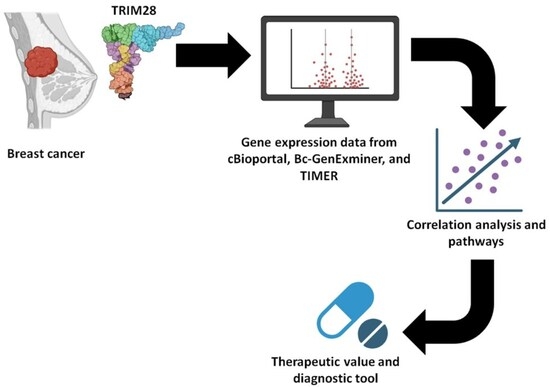
1. Introduction
2. Materials and Methods
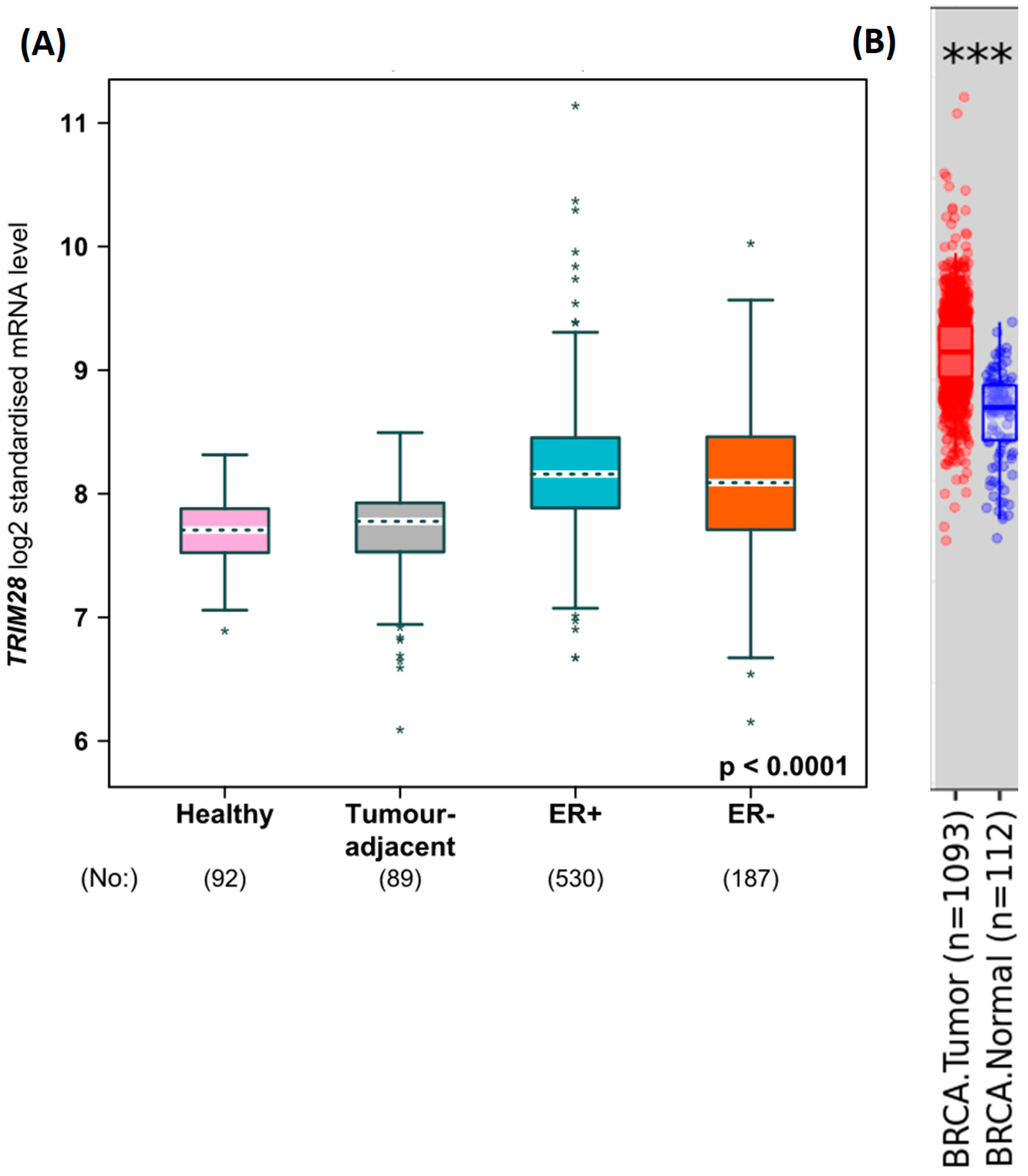
2.1. Exploring TRIM28 mRNA Expression in Breast Cancer, Normal Tissue, and Tumour-Adjacent Tissue
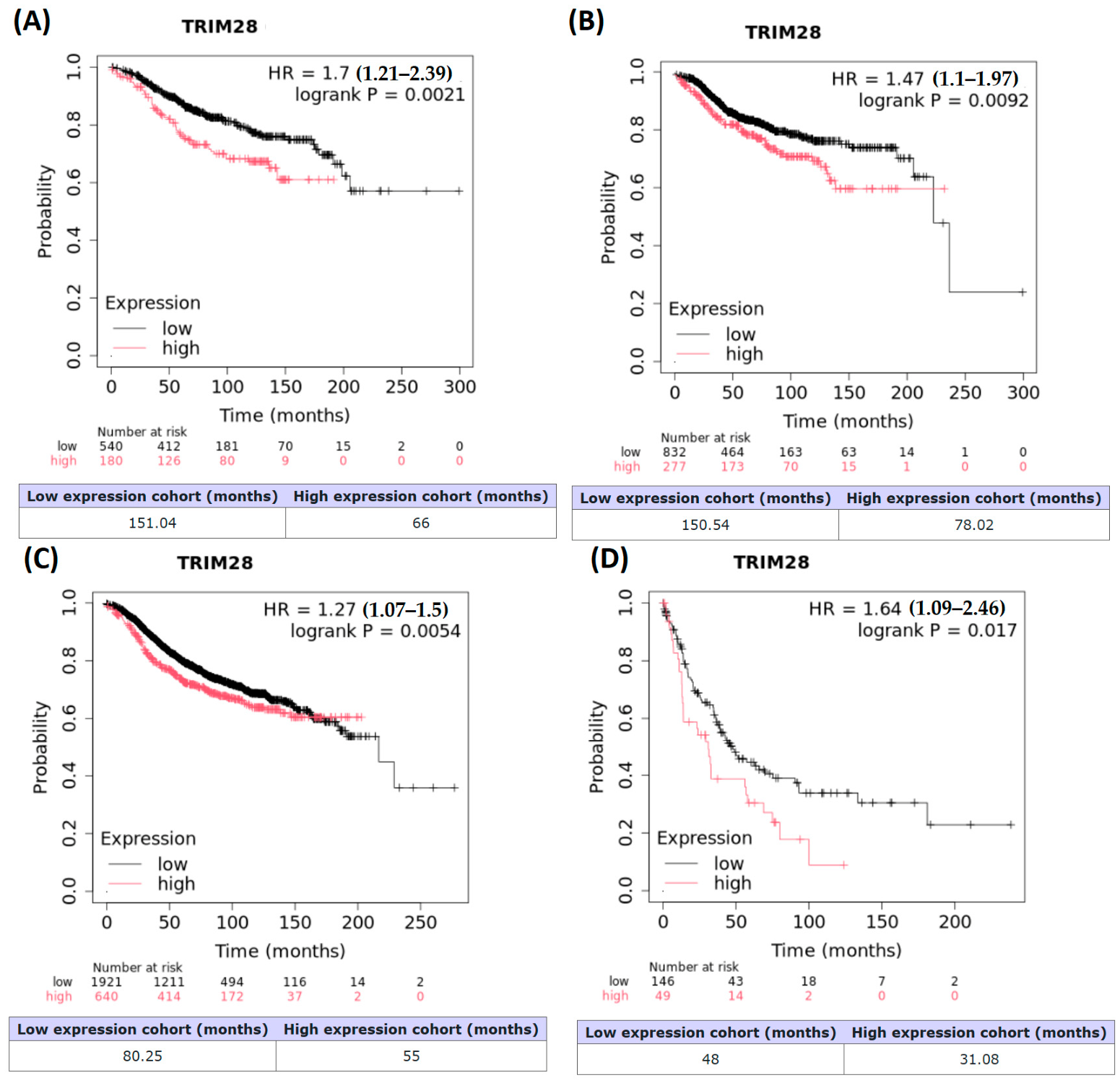
2.2. Kaplan–Meier Survival Curve Analysis
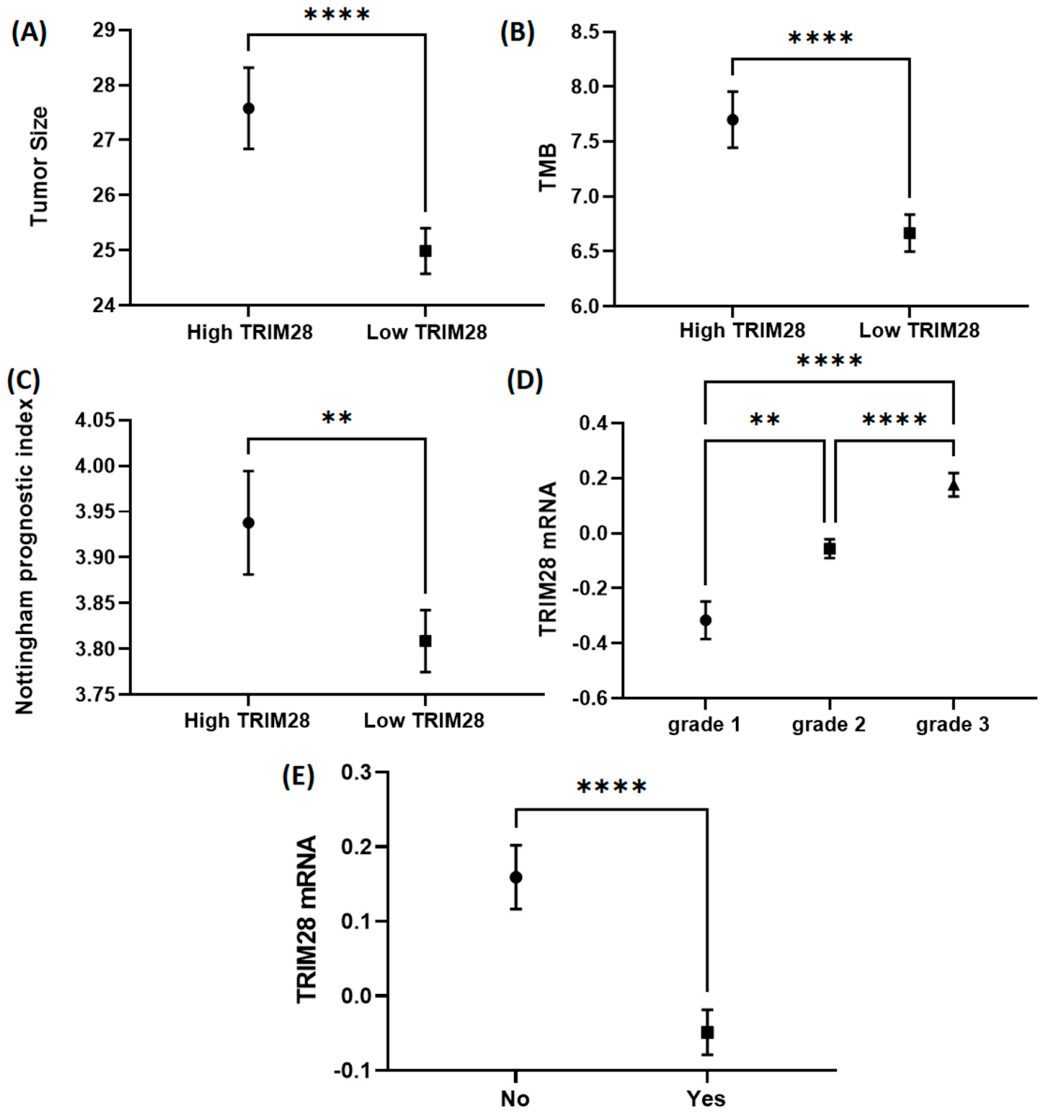
2.3. The Correlation Between TRIM28 mRNA Expression with Tumour Size, Neoplasm Histologic Grade, Nottingham Prognostic Index, Hormone Therapy, and Tumour Mutational Burden (TMB) in ERα-Positive Breast Cancer Patients
2.4. The Correlation Between TRIM28 mRNA and the Infiltration of Immune Cells in ERα-Positive Breast Cancer
2.5. Identifying the Top Genes That Correlate Significantly with TRIM28 in ERα-Positive Breast Cancer
2.6. The Association of Genes That Correlate with TRIM28 in ERα-Positive Breast Cancer with Signalling Pathways
2.7. Identifying the Correlation Between TRIM28 and the IC50 of Different Cancer Drugs
2.8. Statistical Analysis
2.9. Multivariate Cox Proportional Hazards Regression Analysis
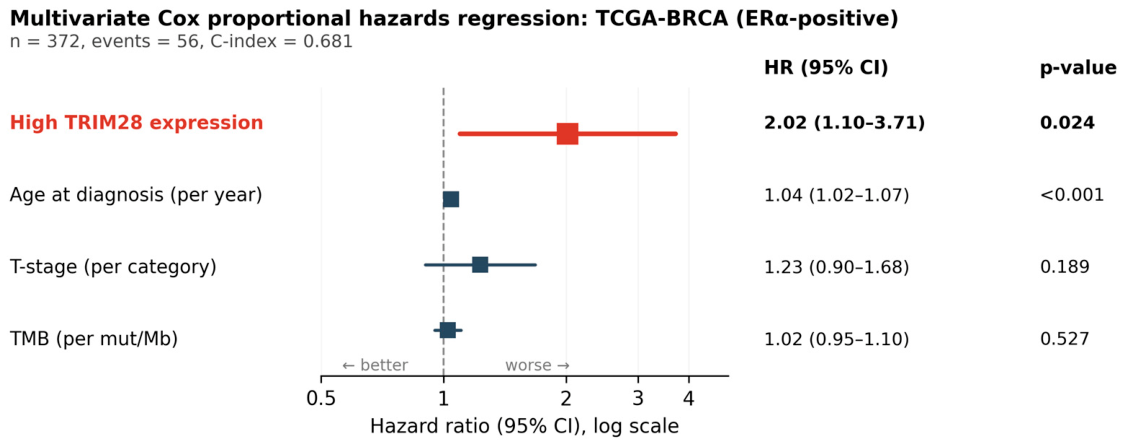
2.10. Independent Validation Using Multivariate Cox Regression in TCGA-BRCA Firehose Legacy
3. Results
3.1. Higher TRIM28 mRNA Was Observed in ERα-Positive Breast Cancer Patients Compared to ERα-Negative Breast Cancer Patients, Tumour-Adjacent Tissue, and Normal Breast Tissue
3.2. TRIM28 mRNA Positively Correlates with Poor Prognosis in ERα-Positive Breast Cancer Patients
3.3. TRIM28 mRNA Correlates Positively with Tumour Size, Neoplasm Histologic Grade, Nottingham Prognostic Index, and TMB in ERα-Positive Breast Cancer Patients and Negatively with Hormone Therapy in ERα-Positive Breast Cancer
3.4. TRIM28 Expression Is an Independent Predictor of OS in ERα-Positive Breast Cancer

| Characteristic | Bc-GenExMiner | METABRIC (ERα-Positive) | TCGA-BRCA (ERα-Positive) |
|---|---|---|---|
| Total patients (n) | 530 (ERα+) | 1535 | 372 |
| ERα-negative (n) | 187 | 0 (excluded) | 0 (excluded) |
| Tumour-adjacent tissue (n) | 89 | — | — |
| Normal breast tissue (n) | 92 | — | — |
| Histologic Grade 1 (n) | — | 162 (10.6%) | Not available |
| Histologic Grade 2 (n) | — | 721 (47.0%) | Not available |
| Histologic Grade 3 (n) | — | 582 (37.9%) | Not available |
| Grade missing (n) | — | 70 (4.6%) | Not available |
| Tumour Stage/T-stage 1 (n) | — | 391 (25.5%) | 104 (28.0%) |
| Tumour Stage/T-stage 2 (n) | — | 617 (40.2%) | 209 (56.2%) |
| Tumour Stage/T-stage 3 (n) | — | 68 (4.4%) | 43 (11.6%) |
| Tumour Stage/T-stage 4 (n) | — | 8 (0.5%) | 16 (4.3%) |
| Stage missing/0 (n) | — | 451 (29.4%) | 0 |
| Median tumour size (mm) | — | 22 | — |
| Median NPI | — | 4.04 | — |
| Median age (years) | — | — | 60 |
| Median TMB (mut/Mb) | — | 6.54 | 1.00 |
| Hormone therapy: Yes (n) | — | 1019 (66.4%) | — |
| Hormone therapy: No (n) | — | 412 (26.8%) | — |
| Hormone therapy: missing (n) | — | 104 (6.8%) | — |
| Median follow-up (months) | — | — | 33.1 |
| Deaths/events (n) | — | 846 | 56 |
| Database | Bc-GenExMiner v4.1 | cBioPortal | cBioPortal (Firehose Legacy) |
| Platform | Microarray | Microarray | RNA-seq |
| Variable | HR | 95% CI | p-Value |
|---|---|---|---|
| TRIM28 (high vs. low) | 1.21 | 1.031–1.409 | 0.0194 |
| Tumour size | 1.014 | 1.010–1.018 | <0.0001 |
| TMB | 1.000 | 0.986–1.015 | 0.981 |
| Hormone therapy | 1.153 | 0.975–1.363 | 0.0958 |
| Age at diagnosis (per year) | 1.045 | 1.038–1.053 | <0.0001 |
3.5. Independent Validation of TRIM28 Prognostic Significance in TCGA-BRCA
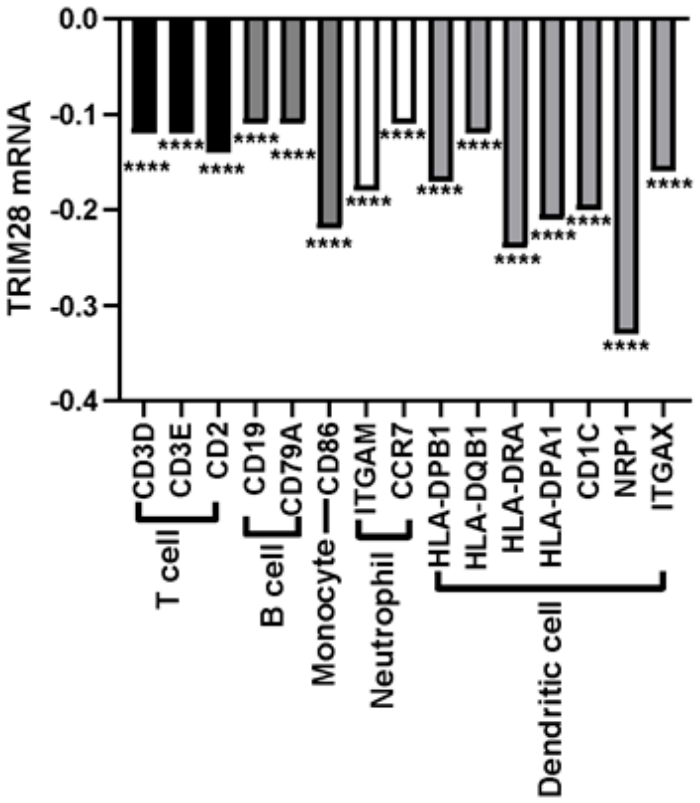
3.6. TRIM28 mRNA Correlates Negatively with Numerous Gene Markers of Immune Cells in ERα-Positive Breast Cancer
3.7. Identifying the Top 20 Genes That Correlate Positively with TRIM28 in ERα-Positive Breast Cancer
| Symbol | Pearson’s Correlation Coefficient | p-Value | No. Patients |
|---|---|---|---|
| ZBTB45 | 0.7493 | <0.0001 | 3685 |
| UBE2M | 0.6966 | <0.0001 | 3685 |
| HSPBP1 | 0.6746 | <0.0001 | 3685 |
| RUVBL2 | 0.6648 | <0.0001 | 3685 |
| PRPF31 | 0.6337 | <0.0001 | 3685 |
| U2AF2 | 0.6326 | <0.0001 | 3685 |
| EPN1 | 0.6126 | <0.0001 | 3685 |
| MED25 | 0.6116 | <0.0001 | 3685 |
| CNOT3 | 0.6075 | <0.0001 | 3685 |
| PPP2R1A | 0.6002 | <0.0001 | 3685 |
| ZNF444 | 0.5999 | <0.0001 | 3685 |
| ZNF787 | 0.5993 | <0.0001 | 3685 |
| ZNF446 | 0.5968 | <0.0001 | 3685 |
| TSEN34 | 0.5957 | <0.0001 | 3685 |
| ZNF579 | 0.5952 | <0.0001 | 3685 |
| SCAF1 | 0.5925 | <0.0001 | 3685 |
| ZNF324 | 0.5909 | <0.0001 | 3685 |
| SLC27A5 | 0.5847 | <0.0001 | 3685 |
| PTOV1 | 0.5832 | <0.0001 | 3685 |
| ZNF324B | 0.5719 | <0.0001 | 3685 |
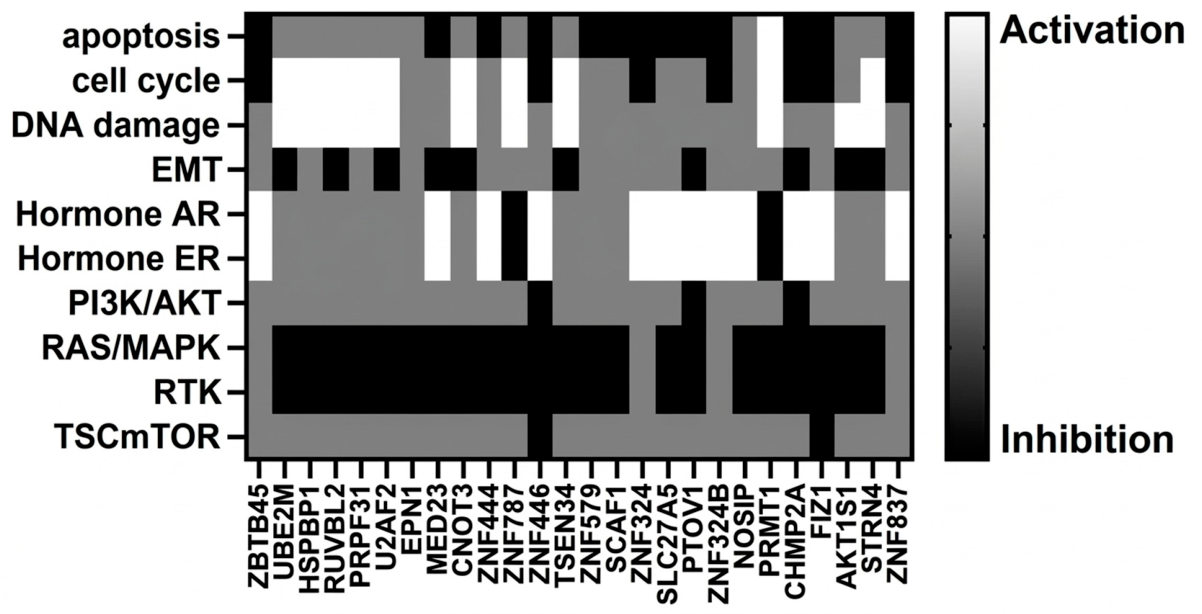
3.8. Genes Co-Expressed with TRIM28 in ERα-Positive Breast Cancer Are Enriched in Cell Cycle and DNA Damage Response Activation Signatures and RAS/MAPK and RTK Pathway Inhibition Signatures
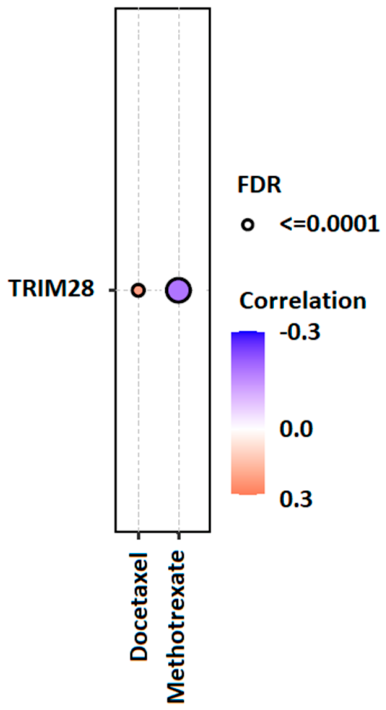
3.9. TRIM28 Positively Correlates with Docetaxel Resistance and Methotrexate Sensitivity in Cancer Cell Lines
4. Discussion
5. Conclusions
Supplementary Materials
Author Contributions
Funding
Institutional Review Board Statement
Informed Consent Statement
Data Availability Statement
Acknowledgments
Conflicts of Interest
Abbreviations
| TRIM28 | Tripartite motif-containing 28 |
| GSCA | Gene Set Cancer Analysis |
| Bc-GenExMiner | Breast Cancer Gene-Expression Miner |
| RTK | Receptor tyrosine kinase |
| KRAB | Krüppel-associated box |
| KAP1 | KRAB-associated protein 1 |
| TIF1β | Transcriptional intermediary factor 1β |
| EMT | Epithelial-to-mesenchymal transition |
| PPS | Post-progression survival |
| OS | Overall survival |
| DMFS | Distant metastases-free survival |
| RFS | Relapse-free survival |
| TMB | Tumour mutational burden |
| HR | Hazard ratio |
| CI | Confidence interval |
| NPI | Nottingham Prognostic Index |
| PH | Proportional hazards |
| GDSC | Genome of Drug Sensitivity in Cancer |
| METABRIC | Molecular Taxonomy of Breast Cancer International Consortium |
| TCGA | The Cancer Genome Atlas |
| TCGA-BRCA | The Cancer Genome Atlas Breast Cancer dataset |
| TIMER2.0 | Tumor IMmune Estimation Resource version 2.0 |
| LumA | Luminal A |
| LumB | Luminal B |
| FDR | False discovery rate |
References
- Bray, F.; Laversanne, M.; Sung, H.; Ferlay, J.; Siegel, R.; Soerjomataram, I.; Jemal, A. Global cancer statistics 2022: GLOBOCAN estimates of incidence and mortality worldwide for 36 cancers in 185 countries. CA Cancer J. Clin. 2024, 74, 229–263. [Google Scholar] [CrossRef] [Scilit] [PubMed]
- Harbeck, N.; Penault-Llorca, F.; Cortes, J.; Gnant, M.; Houssami, N.; Poortmans, P.; Ruddy, K.; Tsang, J.; Cardoso, F. Breast cancer, Nature reviews. Dis. Prim. 2019, 5, 66. [Google Scholar] [CrossRef] [Scilit] [PubMed]
- Hanker, A.B.; Sudhan, D.R.; Arteaga, C.L. Overcoming Endocrine Resistance in Breast Cancer. Cancer Cell 2020, 37, 496. [Google Scholar] [CrossRef] [Scilit] [PubMed]
- Randolph, K.; Hyder, U.; D’Orso, I. KAP1/TRIM28: Transcriptional Activator and/or Repressor of Viral and Cellular Programs? Front. Cell Infect. Microbiol. 2022, 12, 834636. [Google Scholar] [CrossRef] [Scilit] [PubMed]
- Zhou, X.; Yu, J.; Chang, M.; Zhang, M.; Zhou, D.; Cammas, F.; Sun, S. TRIM28 mediates chromatin modifications at the TCRα enhancer and regulates the development of T and natural killer T cells. Proc. Natl. Acad. Sci. USA 2012, 109, 20083–20088. [Google Scholar] [CrossRef] [Scilit] [PubMed]
- Ozato, K.; Shin, D.-M.; Chang, T.-H.; Morse, H.C. TRIM family proteins and their emerging roles in innate immunity. Nat. Rev. Immunol. 2008, 8, 849–860. [Google Scholar] [CrossRef] [Scilit] [PubMed]
- Maghsoudloo, M.; Mokhtari, K.; Jamali, B.; Gholamzad, A.; Entezari, M.; Hashemi, M.; Fu, J. Multifaceted role of TRIM28 in health and disease. MedComm 2024, 5, e790. [Google Scholar] [CrossRef] [Scilit] [PubMed]
- Li, K.; Wang, H.; Jiang, B.; Jin, X. TRIM28 in cancer and cancer therapy. Front. Genet. 2024, 15, 1431564. [Google Scholar] [CrossRef] [Scilit] [PubMed]
- Jin, J.-O.; Lee, G.D.; Nam, S.H.; Lee, T.H.; Kang, D.H.; Yun, J.K.; Lee, P.C.-W. Sequential ubiquitination of p53 by TRIM28, RLIM, and MDM2 in lung tumorigenesis. Cell Death Differ. 2021, 28, 1790–1803. [Google Scholar] [CrossRef] [Scilit] [PubMed]
- Liang, M.; Sun, Z.; Chen, X.; Wang, L.; Wang, H.; Qin, L.; Zhao, W.; Geng, B. E3 ligase TRIM28 promotes anti-PD-1 resistance in non-small cell lung cancer by enhancing the recruitment of myeloid-derived suppressor cells. J. Exp. Clin. Cancer Res. 2023, 42, 275. [Google Scholar] [CrossRef] [Scilit] [PubMed]
- Chen, L.; Muñoz-Antonia, T.; Cress, W.D. Trim28 Contributes to EMT via Regulation of E-Cadherin and N-Cadherin in Lung Cancer Cell Lines. PLoS ONE 2014, 9, e101040. [Google Scholar] [CrossRef] [Scilit] [PubMed]
- Fong, K.-W.; Zhao, J.C.; Song, B.; Zheng, B.; Yu, J. TRIM28 protects TRIM24 from SPOP-mediated degradation and promotes prostate cancer progression. Nat. Commun. 2018, 9, 5007. [Google Scholar] [CrossRef] [Scilit] [PubMed]
- Ma, X.; Jia, S.; Wang, G.; Ling, M.; Guo, T.; Du, H.; Li, S.; Li, X.; Huangfu, L.; Gou, J.; et al. TRIM28 promotes the escape of gastric cancer cells from immune surveillance by increasing PD-L1 abundance. Sig. Transduct. Target Ther. 2023, 8, 246. [Google Scholar] [CrossRef] [Scilit] [PubMed]
- Fu, L.; Ma, B.; Zhang, L.; Xu, H.; Chen, W.; Wu, D.; Gao, F.; Huo, Y. ERα Coregulator TRIM28 Promotes Breast Cancer Progression by Activating the AKT/GSK3β Pathway. Env. Toxicol. 2024, 39, 5162–5172. [Google Scholar] [CrossRef] [Scilit] [PubMed]
- Wei, C.; Chemg, J.; Zhou, B.; Zhu, L.; Khan, A.; He, T.; Zhou, S.; He, J.; Lu, X.; Chen, H.; et al. Tripartite motif containing 28 (TRIM28) promotes breast cancer metastasis by stabilizing TWIST1 protein. Sci. Rep. 2016, 6, 29822. [Google Scholar] [CrossRef] [Scilit] [PubMed]
- Xue, C.; Meng, H.; Niu, W.; Li, M.; Wei, J.; Chen, S.; Zheng, L.; Duan, Y.; Deng, H.; Tang, F.; et al. TRIM28 promotes tumor growth and metastasis in breast cancer by targeting the BRD7 protein for ubiquitination and degradation. Cell Oncol. 2024, 47, 1973–1993. [Google Scholar] [CrossRef] [Scilit] [PubMed]
- Jézéquel, P.; Gouraud, W.; Ben Azzouz, F.; Guérin-Charbonnel, C.; Juin, P.P.; Lasla, H.; Campone, M. bc-GenExMiner 4.5: New mining module computes breast cancer differential gene expression analyses. Database 2021, 2021, baab007. [Google Scholar] [CrossRef] [Scilit] [PubMed]
- Li, T.; Fu, J.; Zeng, Z.; Cohen, D.; Li, J.; Chen, Q.; Li, B.; Liu, X.S. TIMER2.0 for analysis of tumor-infiltrating immune cells. Nucleic Acids Res. 2020, 48, W509–W514. [Google Scholar] [CrossRef] [Scilit] [PubMed]
- Győrffy, B. Survival analysis across the entire transcriptome identifies biomarkers with the highest prognostic power in breast cancer. Comput. Struct. Biotechnol. J. 2021, 19, 4101–4109. [Google Scholar] [CrossRef] [Scilit] [PubMed]
- Li, Q.; Birkbak, N.J.; Gyorffy, B.; Szallasi, Z.; Eklund, A.C. Jetset: Selecting the optimal microarray probe set to represent a gene. BMC Bioinform. 2011, 12, 474. [Google Scholar] [CrossRef] [Scilit] [PubMed]
- Bakker, E.Y.; Fujii, M.; Krstic-Demonacos, M.; Demonacos, C.; Alhammad, R. Protein disulfide isomerase A1-associated pathways in the development of stratified breast cancer therapies. Int. J. Oncol. 2022, 60, 16. [Google Scholar] [CrossRef] [Scilit] [PubMed]
- Alhammad, R. Bioinformatics Analysis of the Prognostic Significance of CAND1 in ERα-Positive Breast Cancer. Diagnostics 2022, 12, 2327. [Google Scholar] [CrossRef] [Scilit] [PubMed]
- Alhammad, R. Bioinformatics Identification of TUBB as Potential Prognostic Biomarker for Worse Prognosis in ERα-Positive and Better Prognosis in ERα-Negative Breast Cancer. Diagnostics 2022, 12, 2067. [Google Scholar] [CrossRef] [Scilit] [PubMed]
- Cerami, E.; Gao, J.; Dogrusoz, U.; Gross, B.; Sumer, S.; Aksoy, B.; Jacobsen, A.; Byrne, C.; Heuer, M.; Larsson, E.; et al. The cBio cancer genomics portal: An open platform for exploring multidimensional cancer genomics data. Cancer Discov. 2012, 2, 401–404. [Google Scholar] [CrossRef] [Scilit] [PubMed]
- Alhammad, R.; Khunchai, S.; Tongmuang, N.; Limjindaporn, T.; Yenchitsomanus, P.; Mutti, L.; Krstic-Demonacos, M.; Demonacos, C. Protein disulfide isomerase A1 regulates breast cancer cell immunorecognition in a manner dependent on redox state. Oncol. Rep. 2020, 44, 2406–2418. [Google Scholar] [CrossRef] [Scilit] [PubMed]
- Liu, C.-J.; Hu, F.-F.; Xia, M.-X.; Han, L.; Zhang, Q.; Guo, A.-Y. GSCALite: A web server for gene set cancer analysis. Bioinformatics 2018, 34, 3771–3772. [Google Scholar] [CrossRef] [Scilit] [PubMed]
- Manuel, M.; Tredan, O.; Bachelot, T.; Clapisson, G.; Courtier, A.; Parmentier, G.; Rabeony, T.; Grives, A.; Perez, S.; Mouret, J.-F.; et al. Lymphopenia combined with low TCR diversity (divpenia) predicts poor overall survival in metastatic breast cancer patients. Oncoimmunology 2012, 1, 432–440. [Google Scholar] [CrossRef] [Scilit] [PubMed]
- Adams, S.; Gray, R.J.; Demaria, S.; Goldstein, L.; Perez, E.A.; Shulman, L.N.; Martino, S.; Wang, M.; Jones, V.E.; Saphner, T.J.; et al. Prognostic value of tumor-infiltrating lymphocytes in triple-negative breast cancers from two phase III randomized adjuvant breast cancer trials: ECOG 2197 and ECOG 1199. J. Clin. Oncol. 2014, 32, 2959–2966. [Google Scholar] [CrossRef] [Scilit] [PubMed]
- Ali, H.R.; Chlon, L.; Pharoah, P.; Caldas, C. Patterns of Immune Infiltration in Breast Cancer and Their Clinical Implications: A Gene-Expression-Based Retrospective Study. PLoS Med. 2016, 13, e1002194. [Google Scholar] [CrossRef] [Scilit] [PubMed]
- Yang, Y.; Tan, S.; Han, Y.; Huang, L.; Yang, R.; Hu, Z.; Tao, Y.; Oyang, L.; Lin, J.; Peng, Q.; et al. The role of tripartite motif-containing 28 in cancer progression and its therapeutic potentials. Front Oncol. 2023, 13, 1100134. [Google Scholar] [CrossRef] [Scilit] [PubMed]
- Wang, Y.-Y.; Li, L.; Zhao, Z.-S.; Wang, H.-J. Clinical utility of measuring expression levels of KAP1, TIMP1 and STC2 in peripheral blood of patients with gastric cancer. World J. Surg. Oncol. 2013, 11, 81. [Google Scholar] [CrossRef] [Scilit] [PubMed]
- Su, C.; Li, H.; Gao, W. TRIM28 is overexpressed in glioma and associated with tumor progression. OncoTargets Ther. 2018, 11, 6447–6458. [Google Scholar] [CrossRef] [Scilit] [PubMed]
- Shang, Z.; Wu, X.; Zheng, S.; Wei, Y.; Hong, Z.; Ye, D. A systematic pan-cancer analysis identifies TRIM28 as an immunological and prognostic predictor and involved in immunotherapy resistance. J. Cancer 2023, 14, 2798–2810. [Google Scholar] [CrossRef] [Scilit] [PubMed]
- Wang, Y.; Jiang, J.; Li, Q.; Ma, H.; Xu, Z.; Gao, Y. KAP1 is overexpressed in hepatocellular carcinoma and its clinical significance. Int. J. Clin. Oncol. 2016, 21, 927–933. [Google Scholar] [CrossRef] [Scilit] [PubMed]
- Czerwińska, P.; Shah, P.K.; Tomczak, K.; Klimczak, M.; Mazurek, S.; Sozańska, B.; Biecek, P.; Korskis, K.; Filas, V.; Mackiewicz, A.; et al. TRIM28 multi-domain protein regulates cancer stem cell population in breast tumor development. Oncotarget 2016, 8, 863–882. [Google Scholar] [CrossRef] [Scilit] [PubMed]
- Liu, J.; Han, X.; Chen, L.; Han, D.; Mu, X.; Hu, X.; Wu, H.; Wu, H.; Liu, W.; Zhao, Y. TRIM28 is a distinct prognostic biomarker that worsens the tumor immune microenvironment in lung adenocarcinoma. Aging 2020, 12, 20308. [Google Scholar] [CrossRef] [Scilit] [PubMed]
- Xue, D.; Zuo, Q.; Chang, J.; Wu, X. The correlation between TRIM28 expression and immune checkpoints in CRPC. FASEB J. 2024, 38, e23663. [Google Scholar] [CrossRef] [Scilit] [PubMed]
- Wei, F.; Yan, J.; Tang, D. Extracellular Signal-Regulated Kinases Modulate DNA Damage Response—A Contributing Factor to Using MEK Inhibitors in Cancer Therapy. Curr. Med. Chem. 2011, 18, 5476–5482. [Google Scholar] [CrossRef] [Scilit] [PubMed]
- Azuaje, F.; Tiemann, K.; Niclou, S.P. Therapeutic control and resistance of the EGFR-driven signaling network in glioblastoma. Cell Commun. Signal. CCS 2015, 13, 23. [Google Scholar] [CrossRef] [Scilit] [PubMed]
- Papalouka, C.; Adamaki, M.; Batsaki, P.; Zoumpourlis, P.; Tsintarakis, A.; Goulielmaki, M.; Fortis, S.P.; Baxevanis, C.N.; Zoumpourlis, V. DNA Damage Response Mechanisms in Head and Neck Cancer: Significant Implications for Therapy and Survival. Int. J. Mol. Sci. 2023, 24, 2760. [Google Scholar] [CrossRef] [Scilit] [PubMed]
- Linklater, E.S.; Tovar, E.A.; Essenburg, C.J.; Turner, L.; Madaj, Z.; Winn, M.E.; Melnik, M.K.; Korkaya, H.; Maroun, C.R.; Christensen, J.G.; et al. Targeting MET and EGFR crosstalk signaling in triple-negative breast cancers. Oncotarget 2016, 7, 69903–69915. [Google Scholar] [CrossRef] [Scilit] [PubMed]
- Czerwińska, P.; Mazurek, S.; Wiznerowicz, M. The complexity of TRIM28 contribution to cancer. J. BioMed Sci. 2017, 24, 63. [Google Scholar] [CrossRef] [Scilit] [PubMed]
- Schultz, D.C.; Friedman, J.R.; Rauscher, F.J. Targeting histone deacetylase complexes via KRAB-zinc finger proteins: The PHD and bromodomains of KAP-1 form a cooperative unit that recruits a novel isoform of the Mi-2α subunit of NuRD. Genes Dev. 2001, 15, 428–443. [Google Scholar] [CrossRef] [Scilit] [PubMed]
- Ziv, Y.; Bielopolski, D.; Galanty, Y.; Lukas, C.; Taya, Y.; Schultz, D.C.; Lukas, J.; Bekker-Jensen, S.; Bartek, J.; Shiloh, Y. Chromatin relaxation in response to DNA double-strand breaks is modulated by a novel ATM- and KAP-1 dependent pathway. Nat. Cell Biol. 2006, 8, 870–876. [Google Scholar] [CrossRef] [Scilit] [PubMed]
- Jung, J.; Heo, Y.J.; Park, S. High tumor mutational burden predicts favorable response to anti-PD-(L)1 therapy in patients with solid tumor: A real-world pan-tumor analysis. J. Immunother. Cancer 2023, 11, e006454. [Google Scholar] [CrossRef] [Scilit] [PubMed]


Disclaimer/Publisher’s Note: The statements, opinions and data contained in all publications are solely those of the individual author(s) and contributor(s) and not of MDPI and/or the editor(s). MDPI and/or the editor(s) disclaim responsibility for any injury to people or property resulting from any ideas, methods, instructions or products referred to in the content. |
© 2026 by the authors. Licensee MDPI, Basel, Switzerland. This article is an open access article distributed under the terms and conditions of the Creative Commons Attribution (CC BY) license.
Share and Cite
Alhammad, R.; Salama, N.; Alhammad, L. High TRIM28 Expression Defines an Aggressive, Immune-Cold Phenotype with Worse Survival Outcomes in ERα-Positive Breast Cancer. Biomedicines 2026, 14, 1523. https://doi.org/10.3390/biomedicines14071523
Alhammad R, Salama N, Alhammad L. High TRIM28 Expression Defines an Aggressive, Immune-Cold Phenotype with Worse Survival Outcomes in ERα-Positive Breast Cancer. Biomedicines. 2026; 14(7):1523. https://doi.org/10.3390/biomedicines14071523
Chicago/Turabian StyleAlhammad, Rashed, Najla Salama, and Lujain Alhammad. 2026. "High TRIM28 Expression Defines an Aggressive, Immune-Cold Phenotype with Worse Survival Outcomes in ERα-Positive Breast Cancer" Biomedicines 14, no. 7: 1523. https://doi.org/10.3390/biomedicines14071523
APA StyleAlhammad, R., Salama, N., & Alhammad, L. (2026). High TRIM28 Expression Defines an Aggressive, Immune-Cold Phenotype with Worse Survival Outcomes in ERα-Positive Breast Cancer. Biomedicines, 14(7), 1523. https://doi.org/10.3390/biomedicines14071523