1. Introduction
Inflammatory bowel disease (IBD), comprising Crohn’s disease and ulcerative colitis, is a chronic, relapsing, immune-mediated disorder of the gastrointestinal tract with a substantial and increasing global burden. The Global Burden of Disease 2017 analysis estimated approximately 6.8 million prevalent cases of IBD worldwide, and contemporary epidemiologic data indicate that IBD is no longer confined to historically high-incidence regions in North America, Europe, and Oceania [
1]. Rather, IBD has become a global disease, with increasing incidence in newly industrialized and emerging regions and accumulating prevalence in regions where incidence has plateaued or declined [
2]. This evolving epidemiologic burden is clinically important because IBD is associated not only with intestinal inflammation, hospitalization, surgery, and advanced medical therapy but also with chronic symptoms that may persist despite control of inflammatory activity.
The pathophysiology of IBD is multifactorial and incompletely understood. Current models emphasize interactions among genetic susceptibility, epithelial barrier dysfunction, intestinal microbial dysbiosis, environmental exposures, and dysregulated mucosal immune responses [
3,
4]. Crohn’s disease may affect any segment of the gastrointestinal tract and can be complicated by stricturing, penetrating, fistulizing, perianal, and postoperative disease, whereas ulcerative colitis is characterized by continuous mucosal inflammation of the colon extending proximally from the rectum [
3,
4]. Although intestinal inflammation defines IBD, the clinical manifestations of the disease frequently extend beyond the bowel. Extraintestinal manifestations are common and may involve the musculoskeletal, dermatologic, ocular, hepatobiliary, vascular, and hematologic systems; contemporary European Crohn’s and Colitis Organisation guidance notes that up to 50% of patients with IBD may develop at least one extraintestinal manifestation [
5]. Musculoskeletal manifestations, including peripheral arthropathy, enthesitis, sacroiliitis, and axial spondyloarthritis, are particularly relevant to pain medicine because they may produce limb, joint, buttock, neck, and back pain [
5,
6].
Modern IBD management has shifted toward objective treat-to-target strategies that integrate symptom assessment with biomarkers, endoscopy, cross-sectional imaging, and individualized therapeutic selection. Current treatment options include 5-aminosalicylates for selected ulcerative colitis patients, corticosteroids for induction of remission but not long-term maintenance, immunomodulators, biologic therapies targeting tumor necrosis factor, integrins, interleukin-12/23 or interleukin-23 pathways, and small molecules such as Janus kinase inhibitors and sphingosine-1-phosphate receptor modulators [
7,
8,
9,
10]. Surgery remains an important component of care for medically refractory disease, stricturing or penetrating complications, dysplasia, cancer prevention, and selected disease phenotypes [
7,
8,
9,
10]. However, successful control of luminal inflammation does not necessarily eliminate pain, and persistent pain may reflect mechanisms that extend beyond active bowel inflammation alone.
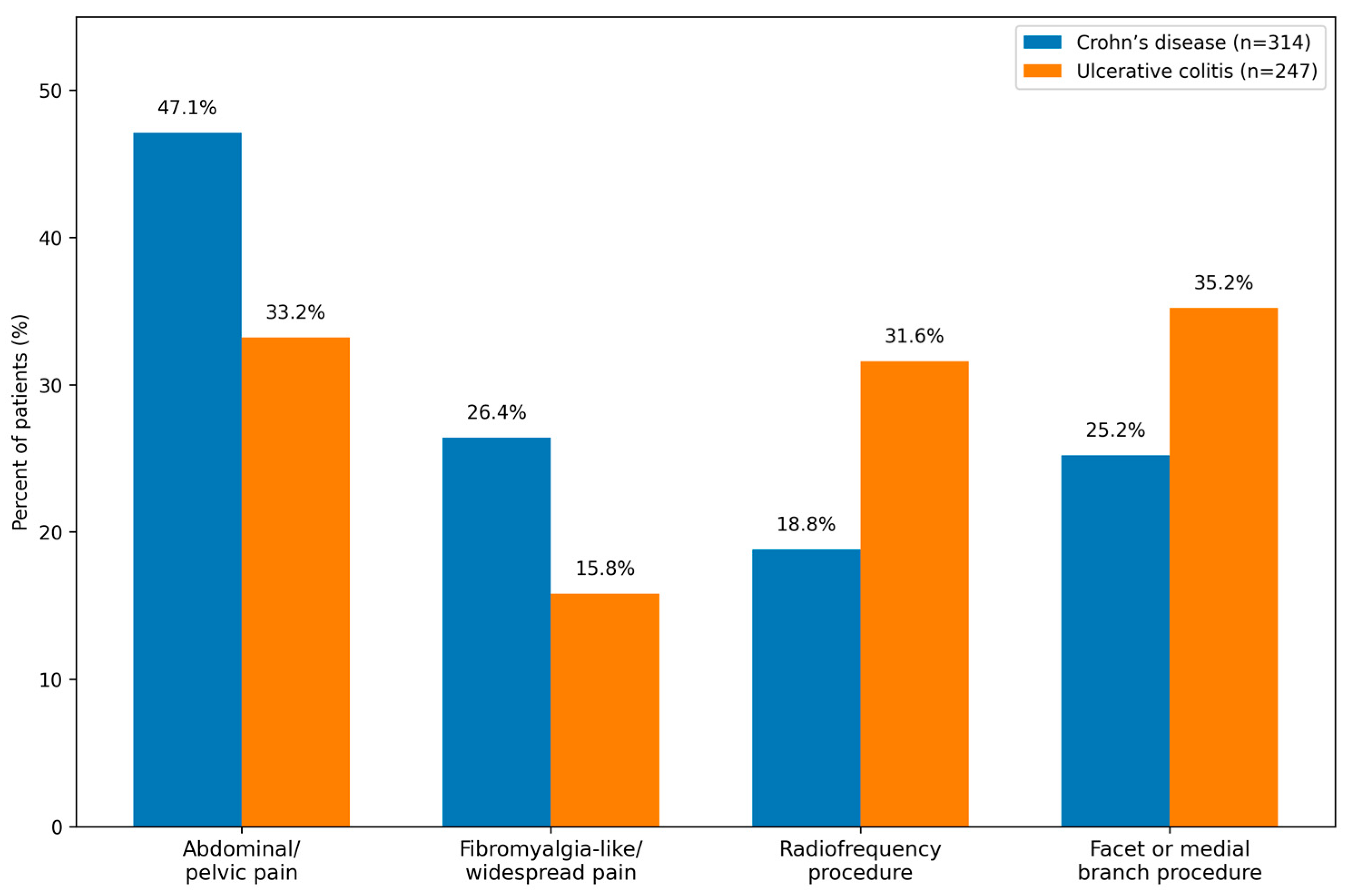
Crohn’s disease patients had higher documentation of abdominal or pelvic pain and fibromyalgia-like or widespread pain. This pattern is consistent with the transmural, segmental, stricturing, fistulizing, perianal, and postoperative complexity of Crohn’s disease, but it should not be interpreted as proof of a single disease-specific pain mechanism. Recent mechanistic studies emphasize the heterogeneity of IBD biology, including immune-signaling pathways such as TLR4/NF-κB activation and microbiome-related susceptibility to complications such as Clostridioides difficile infection in Crohn’s disease [
10,
11,
12,
13,
14,
15]. These data support the broader concept that Crohn’s disease may involve inflammatory, microbial, metabolic, structural, and postoperative contributors to symptom burden. However, they do not directly establish the mechanism of chronic pain in our cohort. Conversely, the higher documentation of radiofrequency and facet or medial branch procedures among ulcerative colitis patients may reflect referral patterns, age, degenerative spine disease, local practice patterns, or unmeasured rheumatologic comorbidity rather than a true ulcerative-colitis-specific axial pain phenotype. These discrepancies highlight the need for prospective phenotyping that integrates gastroenterologic activity, rheumatologic assessment, spine imaging, pain-mechanism classification, and longitudinal treatment response.
Pain is among the most common and disabling symptoms experienced by patients with IBD and is associated with impaired quality of life, psychological distress, sleep disturbance, functional limitation, and increased healthcare use [
11,
12,
13]. Abdominal or pelvic pain may arise from active inflammation, strictures, fistulas, abscesses, adhesions, postoperative changes, visceral hypersensitivity, irritable bowel syndrome-like overlap, pelvic floor dysfunction, or centrally mediated pain mechanisms [
11,
16,
17,
18]. Importantly, pain may persist even during biochemical, endoscopic, or radiologic remission. Systematic reviews have shown that irritable bowel syndrome-type symptoms are frequent among patients with IBD, including those in remission, supporting the concept that persistent symptoms may reflect brain–gut axis dysfunction, visceral hypersensitivity, and non-inflammatory mechanisms rather than ongoing mucosal inflammation alone [
16,
17]. Recent guidance from the American Gastroenterological Association emphasizes that chronic abdominal pain in IBD should be evaluated using a multidimensional framework and that multidisciplinary care, including behavioral therapies and neuromodulators when appropriate, may be required when central mechanisms contribute to pain persistence [
18].
In addition to visceral and functional pain, patients with IBD may experience musculoskeletal, neuropathic, postsurgical, myofascial, pelvic, and nociplastic pain phenotypes. Neuropathic and centrally amplified pain states are clinically important because they are not expected to respond adequately to escalation of anti-inflammatory therapy alone. Conversely, attributing all persistent pain in IBD to functional or centralized mechanisms may delay recognition of active inflammation, structural complications, or inflammatory musculoskeletal disease. Therefore, distinguishing inflammatory visceral pain from axial spine pain, peripheral joint pain, neuropathic pain, postsurgical pain, medication-related pain, opioid-related complications, and nociplastic or widespread pain is a major clinical challenge [
18,
19,
20].
Most previous studies of pain in IBD have been conducted in gastroenterology clinics, population-based cohorts, or disease-specific registries. These studies are essential for estimating symptom prevalence and identifying disease-related correlates, but they do not characterize the selected subgroup of patients with IBD who are referred to tertiary pain services. Referral to a pain clinic implies a distinct clinical population: patients are typically referred because pain is persistent, functionally limiting, refractory to first-line treatment, diagnostically complex, or suggestive of non-visceral pain generators. As a result, the pain-clinic IBD population may differ substantially from the general IBD population in pain mechanisms, treatment exposure, interventional procedure use, and healthcare utilization. This subgroup remains insufficiently described in the literature.
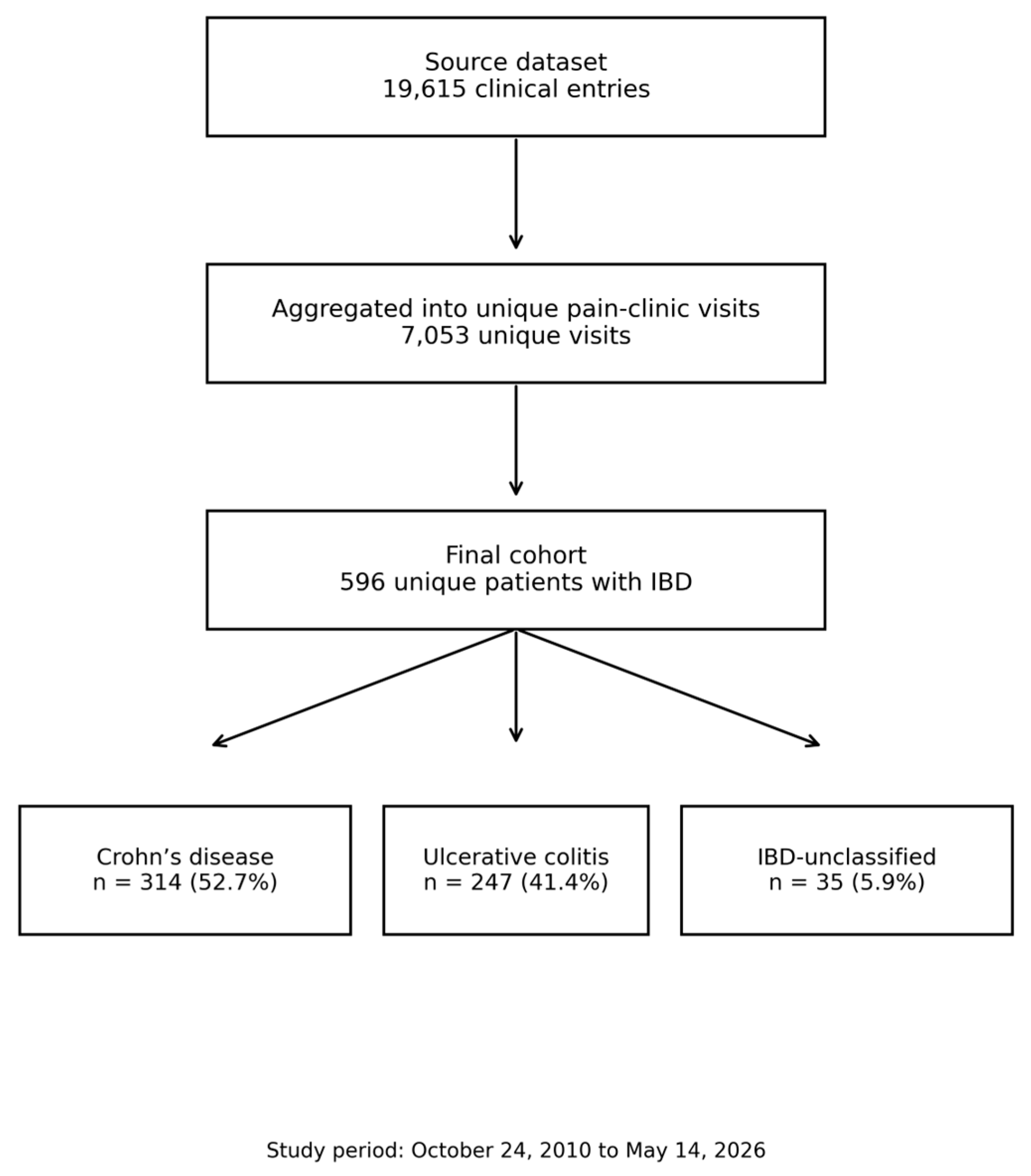
The present study evaluated a large retrospective cohort of patients with IBD referred to tertiary pain-clinic settings over more than 15 years. The primary objective was to characterize patient-level pain phenotypes, medication and treatment documentation, interventional pain-care exposure, and pain-clinic utilization burden. A secondary objective was to explore differences between Crohn’s disease and ulcerative colitis in pain phenotypes and selected interventional procedure patterns. We hypothesized that patients with IBD referred to tertiary pain care would demonstrate a heterogeneous, mechanism-spanning pain phenotype rather than a predominantly visceral abdominal-pain phenotype alone.
4. Discussion
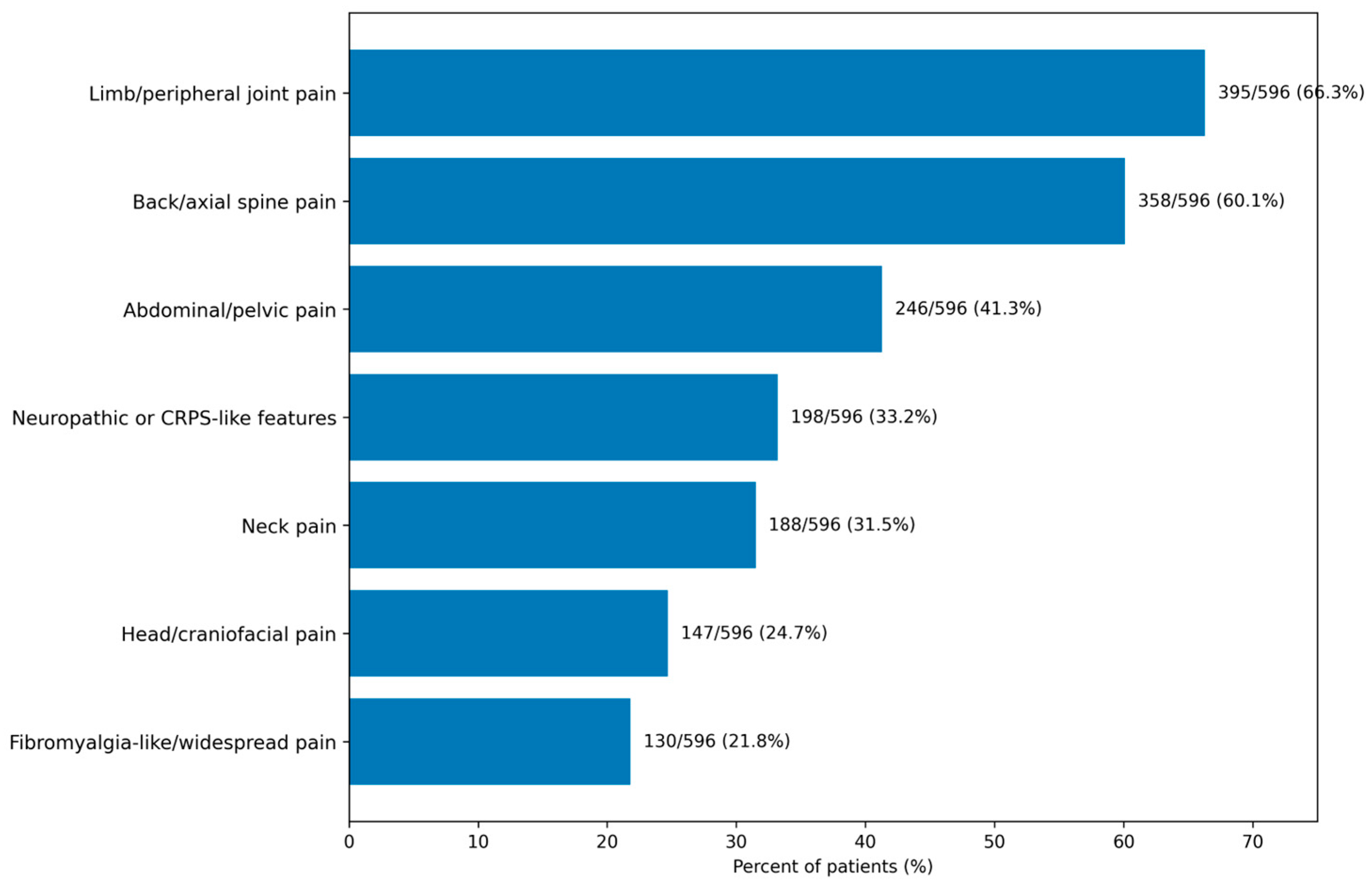
This retrospective cohort study describes a large specialty referral population of patients with IBD evaluated in tertiary pain-clinic settings. The principal finding is that the pain phenotype of referred IBD patients is heterogeneous and heavily enriched for musculoskeletal, axial, and neuropathic pain. Although abdominal or pelvic pain was common, it was not the dominant clinical category. Limb or peripheral joint pain and back or axial spine pain were more frequently documented. These results should not be interpreted as prevalence estimates for pain among all patients with IBD. Rather, they define the phenotype of patients with IBD whose pain was severe, persistent, refractory, complex, or focal enough to generate pain-clinic referral.
The predominance of limb, joint, axial spine, and neck pain is clinically plausible and consistent with the recognized musculoskeletal spectrum of IBD. Extraintestinal manifestations of IBD include peripheral arthropathy, enthesitis, and axial spondyloarthritis, and these conditions may produce limb, joint, back, buttock, and neck pain. In addition, patients with chronic inflammatory disease may have coexisting degenerative spine disease, myofascial pain, postoperative pain, deconditioning-related pain, and overlapping neuropathic or nociplastic syndromes. These mechanisms cannot be distinguished definitively in the present dataset. Therefore, the high frequency of axial and peripheral pain in this cohort should be interpreted as a signal that such patients require structured musculoskeletal and rheumatologic evaluation rather than as proof that all axial pain was directly caused by IBD [
17,
18,
19,
20,
21,
22].
Nearly three-quarters of patients had documentation of at least one interventional pain procedure, and the most common procedures were epidural or nerve-root blocks, facet or medial branch procedures, and radiofrequency procedures. These patterns suggest that many patients were treated according to axial spine, radicular, facet-mediated, myofascial, or peripheral nerve pain paradigms. This does not demonstrate procedural effectiveness, nor does it prove that pain was unrelated to IBD. It does, however, show that the clinical pathway for many referred patients extended well beyond gastroenterologic disease control.
Importantly, procedure documentation should not be interpreted as evidence of treatment response, procedural appropriateness, or causal pain mechanism, because standardized pre- and post-procedure pain outcomes were not available.
The relatively frequent documentation of gabapentinoids and serotonin-norepinephrine reuptake inhibitor or tricyclic antidepressant therapy is consistent with clinical recognition of neuropathic or centrally amplified pain features in a meaningful subset of patients. These medication classes are commonly used in neuropathic and centralized pain states, although the present dataset cannot confirm indication, dose, adherence, or response. One-third of the cohort had documented neuropathic or complex regional pain syndrome-like features, and more than one-fifth had fibromyalgia-like or widespread pain. These features are important because chronic pain in IBD may persist after control of inflammatory activity and may require multimodal treatment strategies. A practical clinical framework should, therefore, distinguish inflammatory visceral pain from structural axial pain, peripheral joint pain, neuropathic pain, postsurgical pain, pelvic pain, opioid-related complications, and nociplastic or centralized pain [
22,
23,
24,
25].
Crohn’s disease patients had higher documentation of abdominal or pelvic pain and fibromyalgia-like or widespread pain. This may reflect the transmural, segmental, and often surgically complex nature of Crohn’s disease, including stricturing, fistulizing, postoperative, or adhesion-related pain pathways. It may also reflect longer disease burden or centrally amplified pain in some patients. In contrast, ulcerative colitis patients more frequently had documentation of radiofrequency and facet or medial branch procedures. This should be interpreted cautiously as a procedural association rather than a definitive disease-specific pain mechanism [
25,
26,
27,
28,
29].
A major limitation of this comparison is the absence of adjustment for age, sex, disease duration, rheumatologic diagnoses, degenerative spine disease, imaging findings, prior surgery, inflammatory activity, and medication exposure. These variables may differ between Crohn’s disease and ulcerative colitis and may partly explain the observed procedural differences. In particular, axial spondyloarthritis and other rheumatologic comorbidities are clinically relevant potential confounders in any analysis of back pain, facet procedures, and radiofrequency procedures among patients with IBD. Therefore, the Crohn’s disease versus ulcerative colitis comparisons should be viewed as exploratory and hypothesis-generating [
28,
29,
30,
31,
32,
33].
The pattern of pain-clinic follow-up demonstrated frequent recurrent utilization. The median patient had four unique pain-clinic visit dates, but the distribution was strongly skewed, and approximately 28% of patients had at least ten unique pain-clinic visit dates. Each unique pain-clinic date was counted as a visit, including both evaluation visits and procedural encounters. Therefore, visit burden reflects overall pain-clinic contact rather than physician consultation alone.
Because the present cohort did not include a matched non-IBD pain-clinic comparison group or a general IBD denominator, we cannot determine whether utilization was higher than expected compared with the general pain-clinic population or all patients with IBD. Nevertheless, within this referred IBD cohort, a substantial subgroup demonstrated chronic and complex pain-care needs. Future studies should include matched non-IBD pain-clinic controls and identify predictors of high utilization, including age, sex, disease duration, prior surgery, inflammatory activity, rheumatologic comorbidity, psychiatric comorbidity, opioid exposure, spine disease, socioeconomic factors, and response to specific interventions.
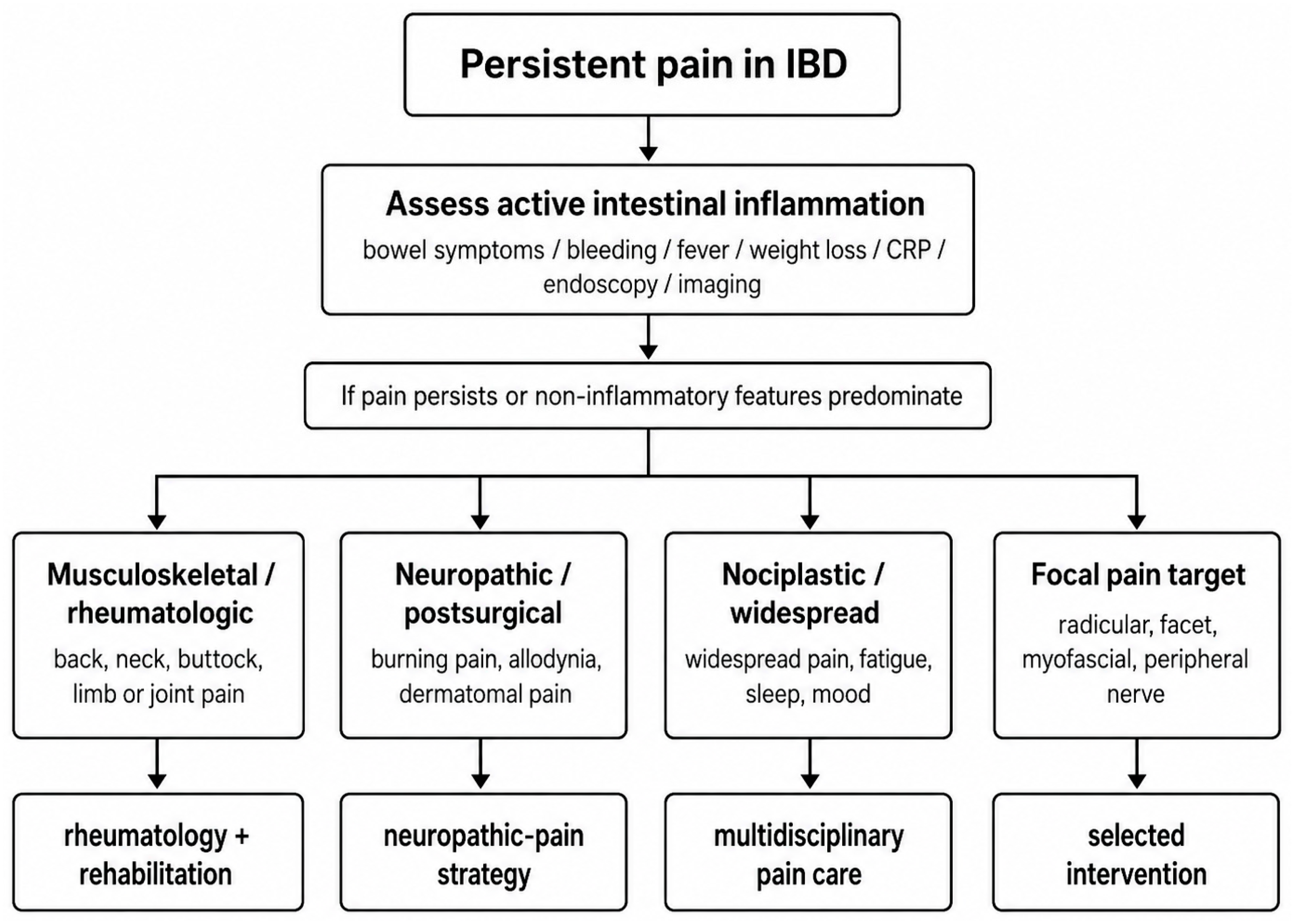
From a care-delivery standpoint, the findings support closer integration between gastroenterology, rheumatology, and pain medicine. We propose a structured referral algorithm for IBD patients with persistent pain. First, clinicians should assess whether pain is accompanied by features of active intestinal inflammation, including change in bowel symptoms, bleeding, fever, weight loss, elevated inflammatory markers, or recent endoscopic or imaging evidence of disease activity. Second, in patients with back, neck, buttock, limb, or joint pain, clinicians should screen for inflammatory musculoskeletal features and consider rheumatologic evaluation for peripheral arthropathy, enthesitis, or axial spondyloarthritis. Third, patients with dermatomal pain, allodynia, burning pain, postsurgical pain, or complex regional pain syndrome-like features should be evaluated for neuropathic pain mechanisms. Fourth, patients with widespread pain, sleep disturbance, fatigue, mood symptoms, or pain disproportionate to inflammatory findings should be assessed for nociplastic or centrally amplified pain. Finally, patients with focal axial, radicular, myofascial, or peripheral nerve pain may benefit from pain-medicine evaluation for targeted rehabilitation, medication optimization, or selected interventional procedures. This approach emphasizes mechanism-based triage rather than assuming that persistent pain in IBD is synonymous with uncontrolled bowel inflammation.
The main strength of this study is the large real-world pain-clinic cohort spanning more than 15 years, with aggregation of nearly 20,000 clinical entries into patient-level and visit-level variables. The main limitations are the retrospective design and reliance on clinical documentation. The dataset did not contain complete demographic information, standardized pain scores, validated IBD activity indices, inflammatory biomarkers, endoscopic activity, disease duration, prior abdominal surgery, biologic exposure, rheumatologic diagnoses, psychiatric comorbidities, imaging findings, or longitudinal treatment-response measures. Therefore, adjusted analyses for age, sex, rheumatologic disease, inflammatory activity, and structural spine disease could not be performed. The study also did not include a matched non-IBD pain-clinic control group or a denominator of all IBD patients treated at the institution. Documentation frequency may reflect clinical complexity and follow-up duration as much as true symptom burden. Medication variables were based on chart documentation rather than complete pharmacy records. Finally, because the cohort was ascertained through pain-clinic encounters at a tertiary care medical center, it cannot be generalized to all patients with IBD.
Despite these limitations, the study defines a clinically important referral phenotype. Among patients with IBD who reach tertiary pain care, the dominant picture is not isolated abdominal or pelvic pain. Instead, these patients demonstrate a mixed pain phenotype with high rates of musculoskeletal, axial, neuropathic, widespread, and procedurally treated pain. Prospective studies incorporating standardized pain instruments, validated IBD disease-activity indices, inflammatory biomarkers, rheumatologic assessment, matched control groups, and longitudinal treatment outcomes are warranted (
Figure 4).
Future Directions
Future studies should prospectively validate these findings in multicenter IBD cohorts that include both a general IBD denominator and matched non-IBD pain-clinic controls. Such studies should collect demographic variables, IBD duration and phenotype, prior abdominal and perianal surgery, biologic and small-molecule exposure, opioid exposure, inflammatory biomarkers, endoscopic or radiologic activity, rheumatologic diagnoses, spine imaging, psychiatric comorbidity, and socioeconomic variables. Standardized pain instruments, neuropathic pain scales, fibromyalgia or nociplastic pain screening, quality-of-life measures, and procedure-specific pre- and post-treatment outcomes should be incorporated. Future work should also test whether mechanism-based triage algorithms can reduce unnecessary escalation of anti-inflammatory therapy, improve selection for rheumatology or pain-medicine referral, and identify patients most likely to benefit from neuromodulators, rehabilitation, behavioral interventions, or selected interventional pain procedures.