Tissue microRNA Profiling Identifies Prognostic Signatures in Prostate Cancer and Highlights CPEB3 as a Candidate Biomarker
 , , , , ,
Abstract
1. Introduction
2. Materials and Methods
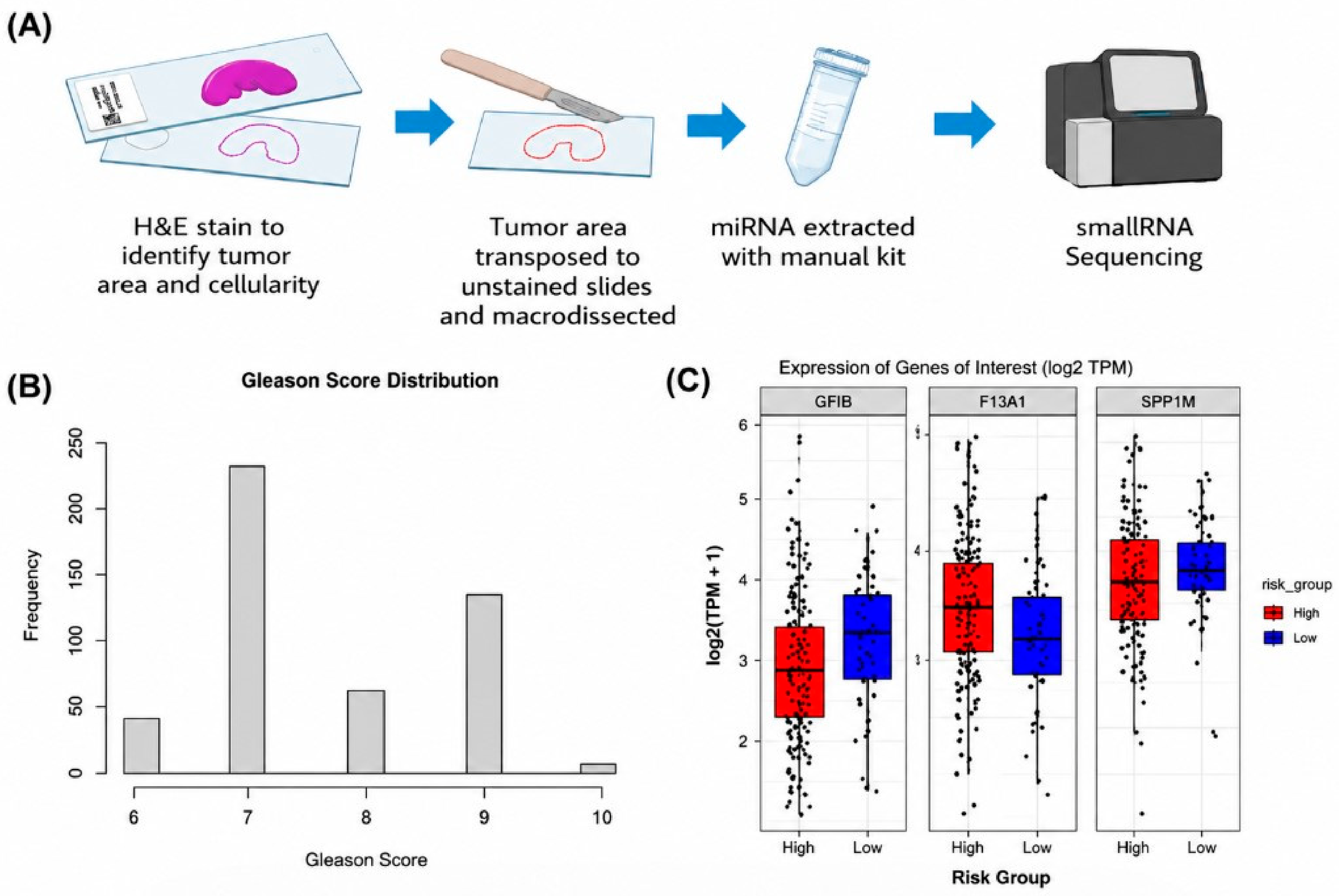
2.1. Patients and Sample Collection
2.2. miRNA Extraction
2.3. Library Preparation and Sequencing
2.4. miRNA Expression and Differential Analysis
2.5. Target Prediction and Pathway Analysis
2.6. Statistical Analysis
3. Results
3.1. Patient Characteristics
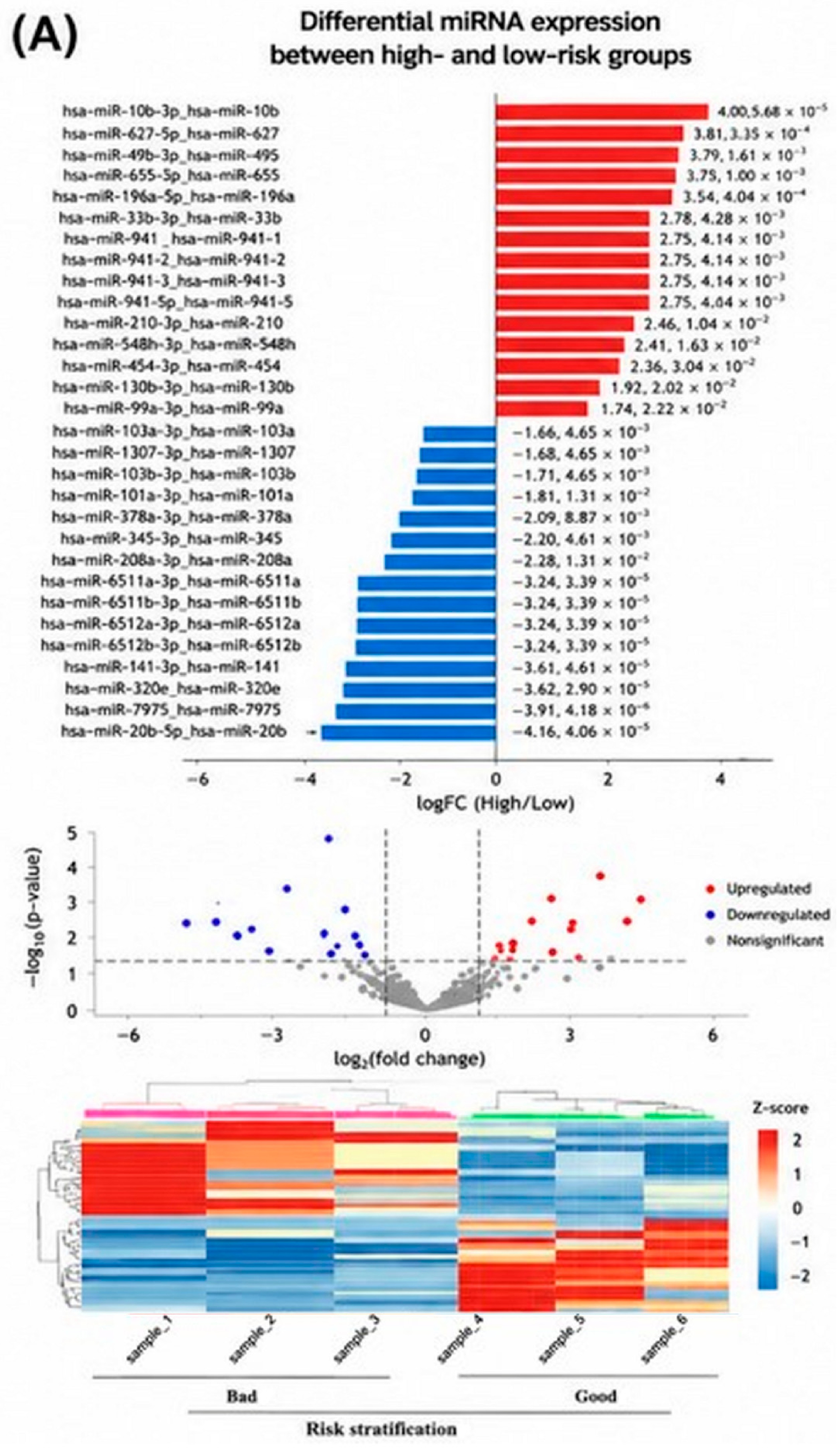
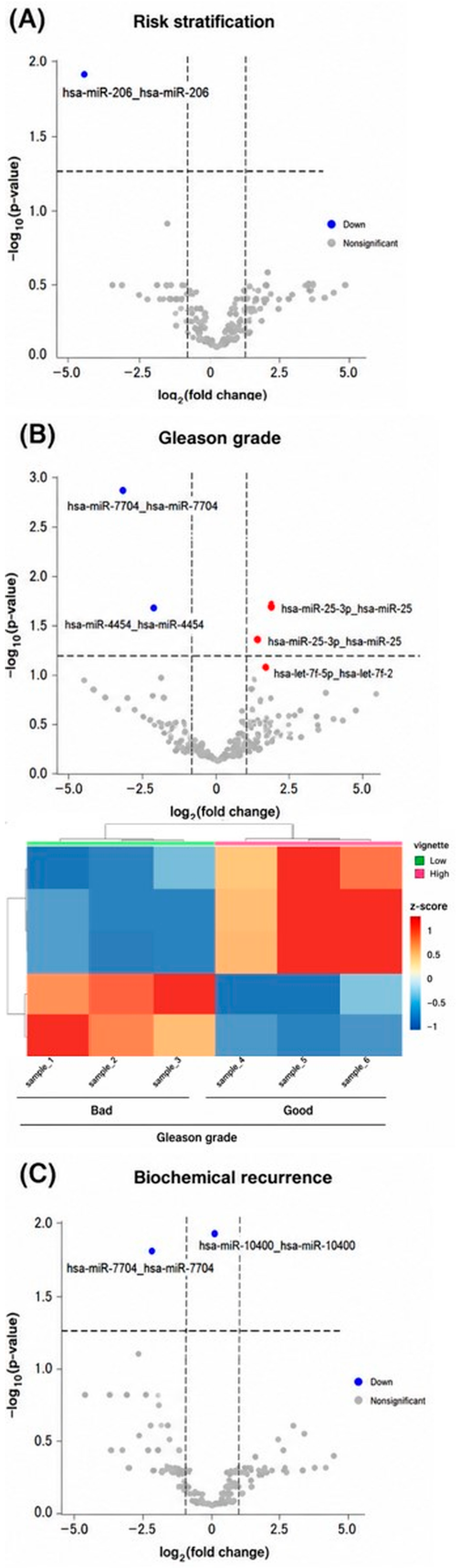
3.2. Differential miRNA Expression by Risk Stratification
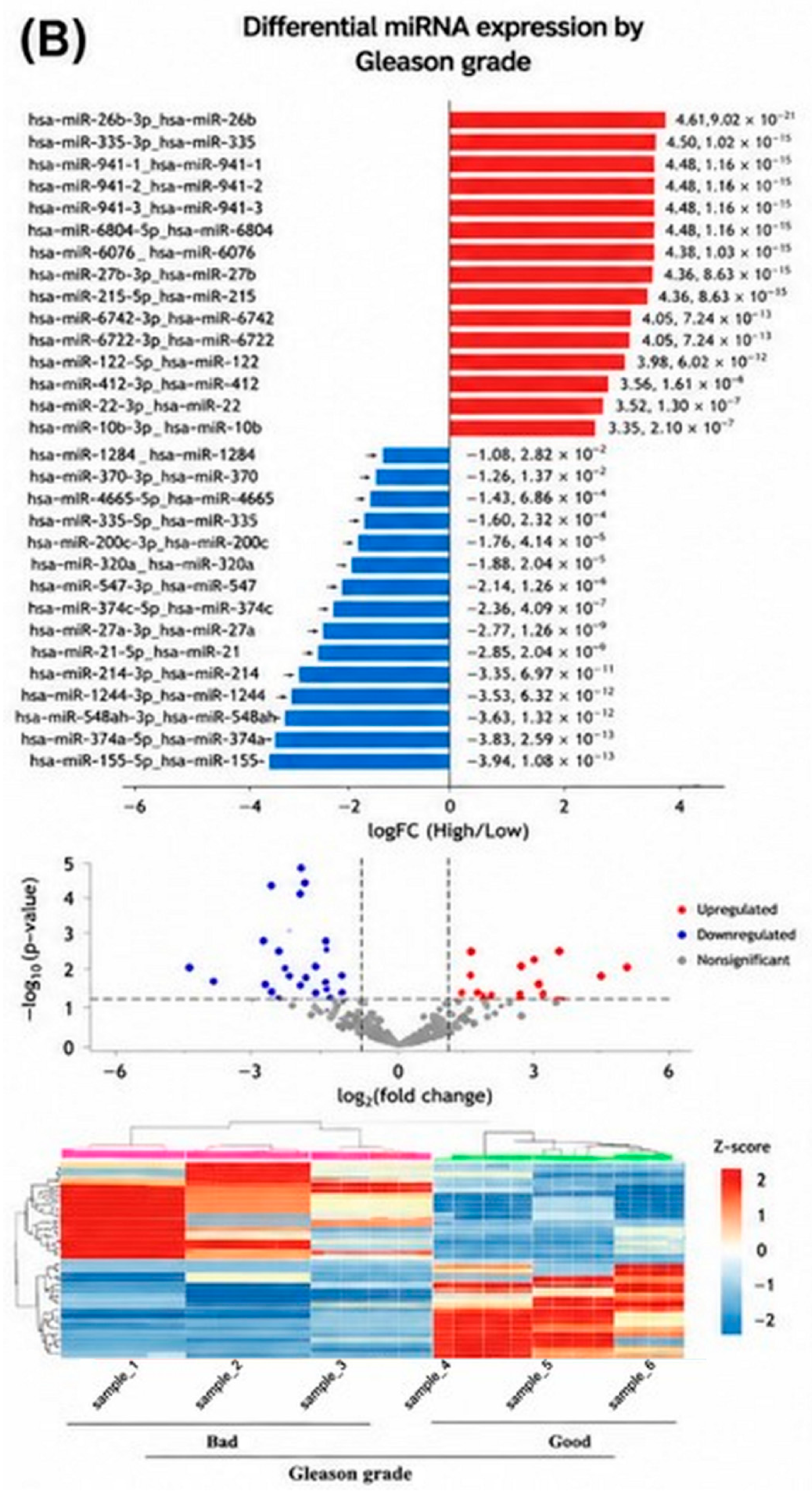
3.3. Differential miRNA Expression by Gleason Grade
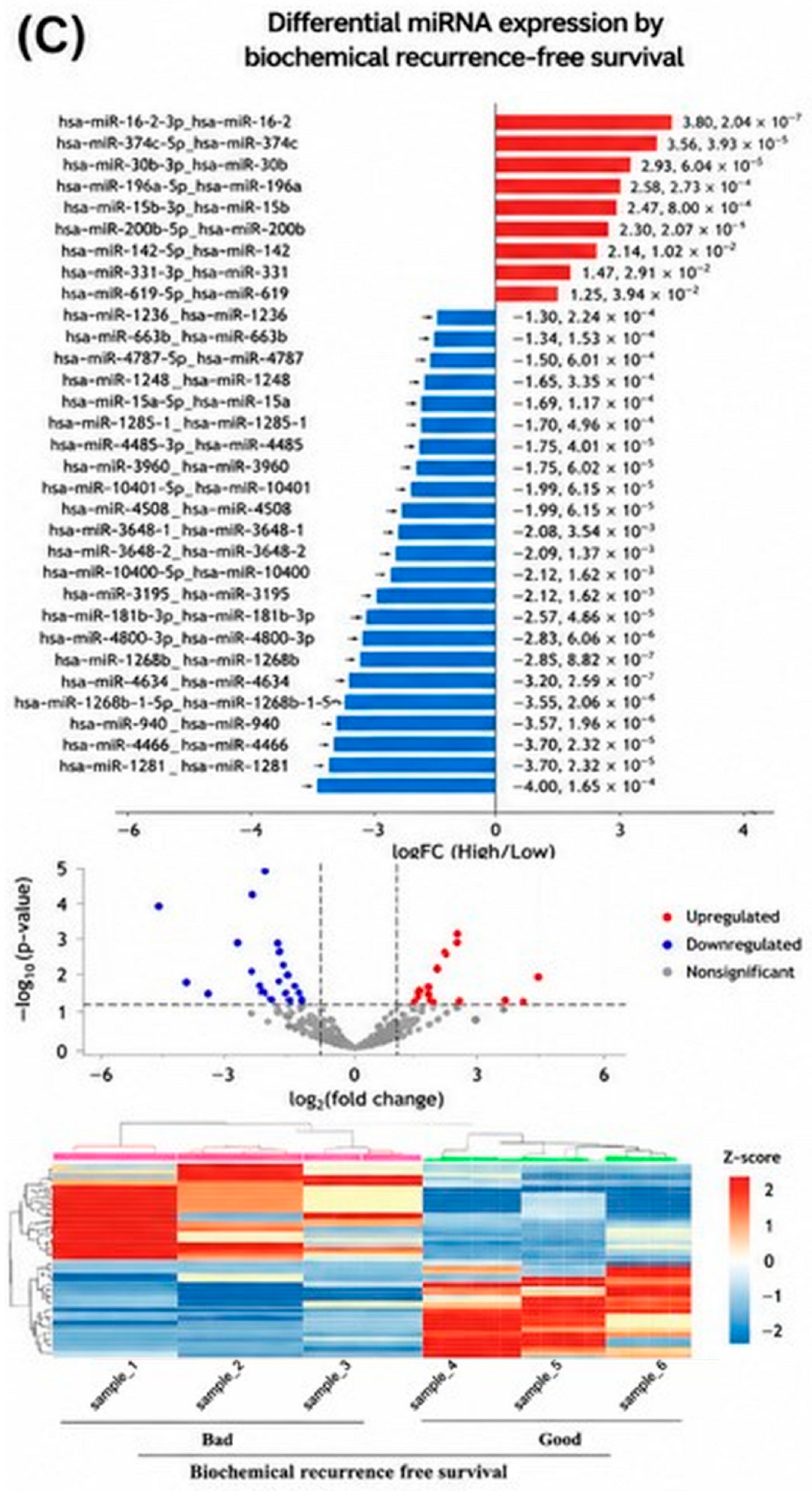
3.4. Differential miRNA Expression by Biochemical Recurrence
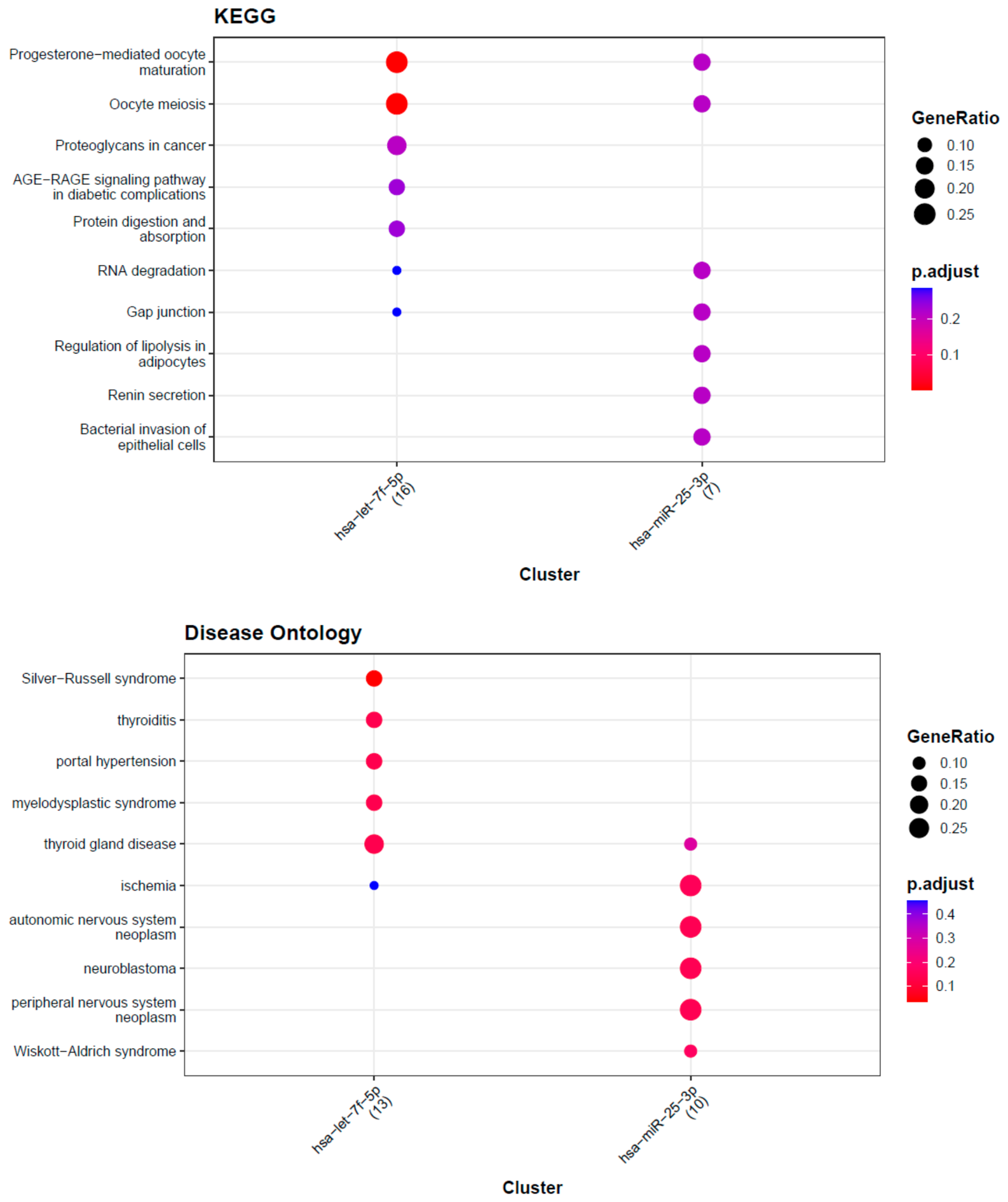
3.5. Pathway and Disease Enrichment Analysis
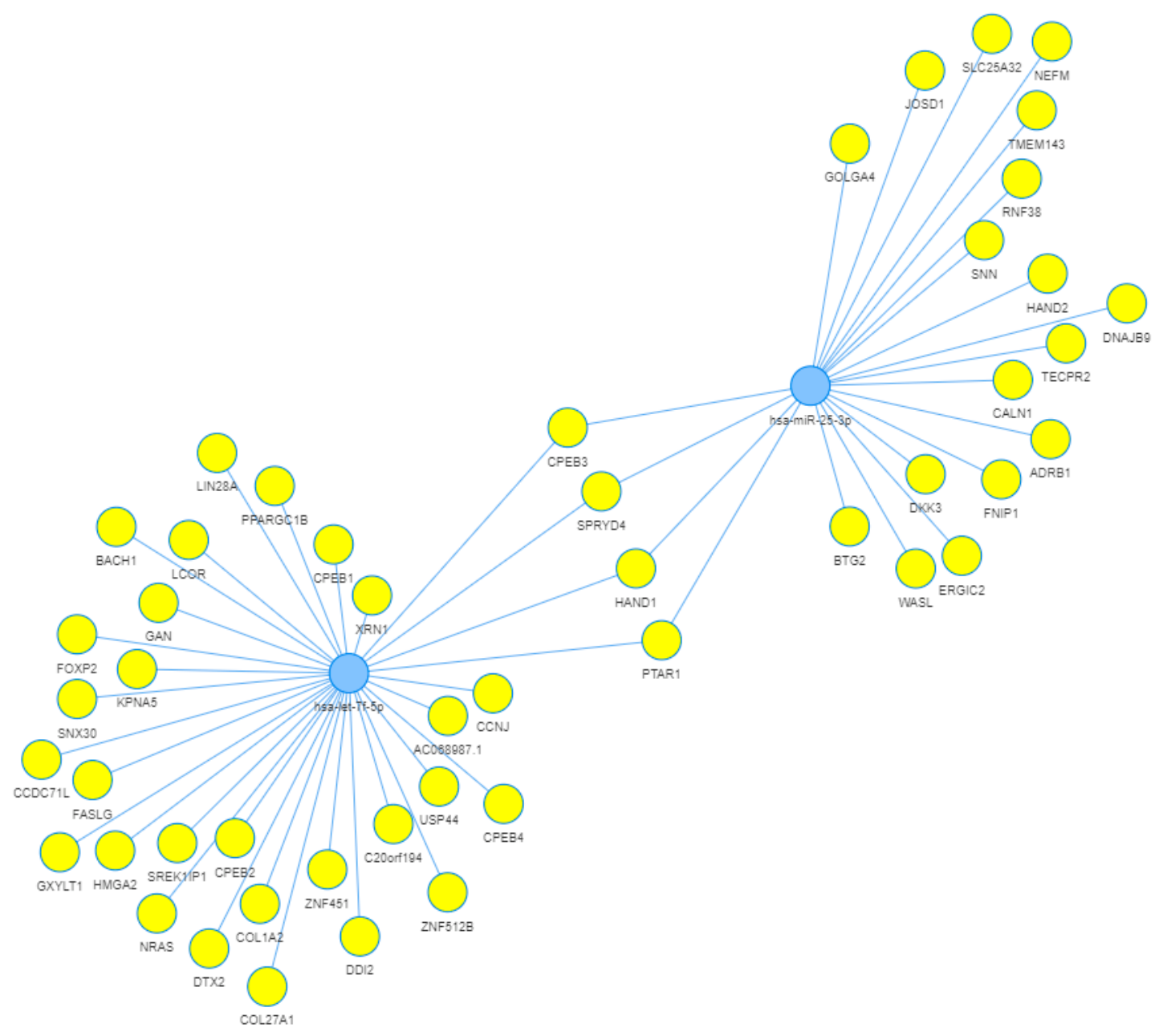
3.6. miRNA–Target Interaction Network
3.7. Validation in Public Cohorts
4. Discussion
5. Conclusions
Author Contributions
Funding
Institutional Review Board Statement
Informed Consent Statement
Data Availability Statement
Conflicts of Interest
Abbreviations
| BPH | Benign prostatic hyperplasia |
| VAPB | The protein vesicle-associated membrane protein-associated protein B (VAPB) |
| PSA | Prostate-specific antigen (PSA) |
| miRNAs | MicroRNAs (miRNAs) |
| NGS | Next-generation sequencing (NGS) |
| FFPE | Formalin-fixed paraffin-embedded (FFPE) |
| H&E | Hematoxylin–eosin (H&E) |
| PCa | Prostate cancer (PCa) |
| FDR | False discovery rate |
References
- Malvezzi, M.; Carioli, G.; Bertuccio, P.; Rosso, T.; Boffetta, P.; Levi, F.; La Vecchia, C.; Negri, E. European cancer mortality predictions for the year 2016 with focus on leukaemias. Ann. Oncol. 2016, 27, 725–731. [Google Scholar] [CrossRef] [PubMed]
- Klotz, L. Active surveillance for prostate cancer: For whom? J. Clin. Oncol. 2005, 23, 8165–8169. [Google Scholar] [CrossRef]
- Walz, J.; Gallina, A.; Saad, F.; Montorsi, F.; Perrotte, P.; Shariat, S.F.; Jeldres, C.; Graefen, M.; Bénard, F.; McCormack, M.; et al. A nomogram predicting 10-year life expectancy in candidates for radical prostatectomy or radiotherapy for prostate cancer. J. Clin. Oncol. 2007, 25, 3576–3581. [Google Scholar] [CrossRef]
- Sabbatini, P.; Larson, S.; Kremer, A.; Zhang, Z.; Sun, M.; Yeung, H.; Imbriaco, M.; Horak, I.; Conolly, M.; Ding, C.; et al. Prognostic significance of extent of disease in bone in patients with androgen-independent prostate cancer. J. Clin. Oncol. 1999, 17, 948–957. [Google Scholar] [CrossRef]
- Loberg, R.; Gayed, B.; Olson, K.; Pienta, K. A paradigm for the treatment of prostate cancer bone metastases based on an understanding of tumor cell–microenvironment interactions. J. Cell. Biochem. 2005, 96, 439–446. [Google Scholar] [CrossRef] [PubMed]
- Zamore, P.D.; Haley, B. Ribo-gnome: The big world of small RNAs. Science 2005, 309, 1519–1524. [Google Scholar] [CrossRef]
- Mattick, J.S.; Makunin, I.V. Non-coding RNA. Hum. Mol. Genet. 2006, 15, R17–R29. [Google Scholar] [CrossRef]
- Chen, C.Z.; Li, L.; Lodish, H.F.; Bartel, D.P. MicroRNAs modulate hematopoietic lineage differentiation. Science 2004, 303, 83–86. [Google Scholar] [CrossRef]
- Fraser, M.; Berlin, A.; Bristow, R.G.; van der Kwast, T. Genomic, pathological, and clinical heterogeneity as drivers of personalized medicine in prostate cancer. Urol. Oncol. 2015, 33, 85–94. [Google Scholar] [CrossRef]
- Lan, H.; Lu, H.; Wang, X.; Jin, H. MicroRNAs as potential biomarkers in cancer: Opportunities and challenges. Biomed. Res. Int. 2015, 2015, 125094. [Google Scholar] [CrossRef] [PubMed]
- Gordanpour, A.; Nam, R.K.; Sugar, L.; Seth, A. MicroRNAs in prostate cancer: From biomarkers to molecularly-based therapeutics. Prostate Cancer Prostatic Dis. 2012, 15, 314–319. [Google Scholar] [CrossRef]
- Mishra, S.; Yadav, T.; Rani, V. Exploring miRNA based approaches in cancer diagnostics and therapeutics. Crit. Rev. Oncol. Hematol. 2016, 98, 12–23. [Google Scholar] [CrossRef]
- Nazarov, P.V.; Reinsbach, S.E.; Muller, A.; Nicot, N.; Philippidou, D.; Vallar, L.; Kreis, S. Interplay of microRNAs, transcription factors and target genes: Linking dynamic expression changes to function. Nucleic Acids Res. 2013, 41, 2817–2831. [Google Scholar] [CrossRef]
- Liu, X.; Chen, Q.; Yan, J.; Wang, Y.; Zhu, C.; Chen, C.; Zhao, X.; Xu, M.; Sun, Q.; Deng, R.; et al. miRNA-296-3p–ICAM-1 axis promotes metastasis of prostate cancer by possibly enhancing survival of natural killer cell-resistant circulating tumour cells. Cell Death Dis. 2013, 4, e928. [Google Scholar] [CrossRef]
- Jin, M.; Zhang, T.; Liu, C.; Badeaux, M.A.; Liu, B.; Liu, R.; Jeter, C.; Chen, X.; Vlassov, A.V.; Tang, D.G. miRNA-128 suppresses prostate cancer by inhibiting BMI-1 to reduce tumor-initiating cell potential. Cancer Res. 2014, 74, 4183–4195. [Google Scholar] [CrossRef]
- Gallo, A.; Tandon, M.; Alevizos, I.; Illei, G.G. The majority of microRNAs detectable in serum and saliva is concentrated in exosomes. PLoS ONE 2012, 7, e30679. [Google Scholar] [CrossRef]
- Hunt, E.A.; Broyles, D.; Head, T.; Deo, S.K. MicroRNA detection: Current technology and research strategies. Annu. Rev. Anal. Chem. 2015, 8, 217–237. [Google Scholar] [CrossRef] [PubMed]
- Martin, M. Cutadapt removes adapter sequences from high-throughput sequencing reads. EMBnet. J. 2011, 17, 10–12. [Google Scholar] [CrossRef]
- Langmead, B.; Trapnell, C.; Pop, M.; Salzberg, S.L. Ultrafast and memory-efficient alignment of short DNA sequences to the human genome. Genome Biol. 2009, 10, R25. [Google Scholar] [CrossRef] [PubMed]
- Robinson, M.D.; McCarthy, D.J.; Smyth, G.K. edgeR: A Bioconductor package for differential expression analysis of digital gene expression data. Bioinformatics 2010, 26, 139–140. [Google Scholar] [CrossRef]
- Love, M.I.; Huber, W.; Anders, S. Moderated estimation of fold change and dispersion for RNA-seq data with DESeq2. Genome Biol. 2014, 15, 550. [Google Scholar] [CrossRef]
- Lewis, B.P.; Burge, C.B.; Bartel, D.P. Conserved seed pairing, often flanked by adenosines, indicates that thousands of human genes are microRNA targets. Cell 2005, 120, 15–20. [Google Scholar] [CrossRef]
- Garcia, D.M.; Baek, D.; Shin, C.; Bell, G.W.; Grimson, A.; Bartel, D.P. Weak seed-pairing stability and high target site abundance decrease the proficiency of lsy-6 and other microRNAs. Nat. Struct. Mol. Biol. 2011, 18, 1139–1146. [Google Scholar] [CrossRef]
- Huang, D.W.; Sherman, B.T.; Lempicki, R.A. Systematic and integrative analysis of large gene lists using DAVID bioinformatics resources. Nat. Protoc. 2009, 4, 44–57. [Google Scholar] [CrossRef] [PubMed]
- Huang, H.; Sun, X.; Li, P.; Cai, H.; Xu, L.; Shi, B.; Qu, S. Identification of novel gene-based risk score for prognosis in prostate cancer. Sci. Rep. 2025, 15, 22128. [Google Scholar] [CrossRef]
- GEO Accession Viewer. Prostate Cancer Cells, PC0168. Available online: https://www.ncbi.nlm.nih.gov/geo/query/acc.cgi?acc=GSM1133136 (accessed on 11 May 2026).
- GEO Accession Viewer. Prostate Cancer Cells, PC0279. Available online: https://www.ncbi.nlm.nih.gov/geo/query/acc.cgi?acc=GSM1133152 (accessed on 11 May 2026).
- Wang, Y.; Xu, H.; Si, L.; Li, Q.; Zhu, X.; Yu, T.; Gang, X. miR-206 inhibits proliferation and migration of prostate cancer cells by targeting CXCL11. Prostate 2018, 78, 479–490. [Google Scholar] [CrossRef] [PubMed]
- Kannathasan, T.; Kuo, W.; Viswanadha, V.P.; Shen, C.; Tu, C.C.; Bharath, M.; Shibu, M.A.; Huang, C. Chemoresistance-associated silencing of miR-4454 promotes colorectal cancer aggression through the GNL3L and NF-κB pathway. Cancers 2020, 12, 1231. [Google Scholar] [CrossRef]
- Dasari, S.; Pandhiri, T.; Grassi, T.; Visscher, D.W.; Multinu, F.; Agarwal, K.; Mariani, A.; Shridhar, V.; Mitra, A.K. Signals from the metastatic niche regulate early and advanced ovarian cancer metastasis through miR-4454 downregulation. Mol. Cancer Res. 2020, 18, 1204–1213. [Google Scholar] [CrossRef]
- Zoni, E.; van der Horst, G.; van de Merbel, A.F.; Chen, L.; Rane, J.K.; Pelger, R.C.M.; Collins, A.T.; Visakorpi, T.; Snaar-Jagalska, B.E.; Maitland, N.J.; et al. miR-25 modulates invasiveness and dissemination of human prostate cancer cells via regulation of αv- and α6-integrin expression. Cancer Res. 2015, 75, 2326–2336. [Google Scholar] [CrossRef] [PubMed]
- Li, D.; Chen, L.; Zhao, W.; Hao, J.; An, R. MicroRNA let-7f-1 is induced by lycopene and inhibits cell proliferation and triggers apoptosis in prostate cancer. Mol. Med. Rep. 2016, 13, 2708–2714. [Google Scholar] [CrossRef]
- Liang, S.; He, L.; Zhao, X.; Miao, Y.; Gu, Y.; Guo, C.; Xue, Z.; Dou, W.; Hu, F.; Wu, K.; et al. MicroRNA let-7f inhibits tumor invasion and metastasis by targeting MYH9 in human gastric cancer. PLoS ONE 2011, 6, e18409. [Google Scholar] [CrossRef] [PubMed]
- Fioriti, L.; Myers, C.; Huang, Y.-Y.; Li, X.; Stephan, J.S.; Trifilieff, P.; Colnaghi, L.; Kosmidis, S.; Drisaldi, B.; Pavlopoulos, E.; et al. The persistence of hippocampal-based memory requires protein synthesis mediated by the prion-like protein CPEB3. Neuron 2015, 86, 1433–1448. [Google Scholar] [CrossRef] [PubMed]
- Ma, Z.; Xie, T.; Sun, J.; Yu, J.; Huang, S.; Zhou, Q.; Li, B. Identification of SPRYD4 as a tumour suppressor that predicts prognosis and correlates with immune infiltration in cholangiocarcinoma. BMC Cancer 2023, 23, 404. [Google Scholar] [CrossRef]
- Kachakova, D.; Mitkova, A.; Popov, E.; Popov, I.; Vlahova, A.; Dikov, T.; Christova, S.; Mitev, V.; Slavov, C.; Kaneva, R. Combinations of serum prostate-specific antigen and plasma expression levels of let-7c, miR-30c, miR-141, and miR-375 as potential better diagnostic biomarkers for prostate cancer. DNA Cell Biol. 2015, 34, 189–200. [Google Scholar] [CrossRef]
- Kim, W.T.; Yun, S.J. Advances in biomarkers for prostate cancer. World J. Mens. Health 2018, 36, 96–110. [Google Scholar]
- Jain, G.; Das, P.; Ranjan, P.; Neha Valderrama, F.; Cieza-Borrella, C. Urinary extracellular vesicles miRNA—A new era of prostate cancer biomarkers. Front. Genet. 2023, 13, 1065757. [Google Scholar] [CrossRef]
- Alrehaili, J.A. Association between the expression of specific microRNAs and prostate cancer progression: A systematic review and meta-analysis. Front. Oncol. 2025, 14, 1481885. [Google Scholar] [CrossRef]



| Good (n = 3) | Bad (n = 3) | p Value | |
|---|---|---|---|
| Risk stratification | 0 ± 0 | 2 ± 0 | <0.05 |
| Age | 62.3 ± 5.2 | 68.0 ± 3.1 | >0.05 |
| Gleason grade | 1 ± 0 | 5 ± 0 | <0.05 |
| Age | 68.3 ± 0.7 | 68.3 ± 0.7 | >0.05 |
| Biochemical recurrence-free survival | 4869.0 ± 84.9 | 23.0 ± 8.4 | <0.05 |
| Age | 65.3 ± 0.9 | 66.7 ± 4.8 | >0.05 |
| Gene | Low-Risk Mean Expression | High-Risk Mean Expression | p-Value | FDR |
|---|---|---|---|---|
| CPEB3 | 3.4 | 3.1 | 0.00524 * | 0.00994 * |
| PTAR1 | 3.2 | 3.5 | 0.00662 * | 0.00994 * |
| SPRYD4 | 3.2 | 3.0 | 0.08041 | 0.08041 |
| Gene | Low-Risk Mean Expression | High-Risk Mean Expression | p-Value | FDR |
|---|---|---|---|---|
| CPEB3 | 7.200738 | 6.560153 | 0.01660545 * | 0.04981636 * |
| PTAR1 | 8.742913 | 8.456075 | 0.21304798 | 0.213047980 |
| SPRYD4 | 6.413232 | 6.776050 | 0.17575247 | 0.21304798 |
Disclaimer/Publisher’s Note: The statements, opinions and data contained in all publications are solely those of the individual author(s) and contributor(s) and not of MDPI and/or the editor(s). MDPI and/or the editor(s) disclaim responsibility for any injury to people or property resulting from any ideas, methods, instructions or products referred to in the content. |
© 2026 by the authors. Licensee MDPI, Basel, Switzerland. This article is an open access article distributed under the terms and conditions of the Creative Commons Attribution (CC BY) license.
Share and Cite
Kim, J.-H.; Moon, A.-R.; Song, M.; Lee, K.-W.; Suh, S.M.; Kim, H.J.; Pefianco, L.A.; Andrean, K.; Ryu, S.; Song, Y.-S. Tissue microRNA Profiling Identifies Prognostic Signatures in Prostate Cancer and Highlights CPEB3 as a Candidate Biomarker. Biomedicines 2026, 14, 1169. https://doi.org/10.3390/biomedicines14051169
Kim J-H, Moon A-R, Song M, Lee K-W, Suh SM, Kim HJ, Pefianco LA, Andrean K, Ryu S, Song Y-S. Tissue microRNA Profiling Identifies Prognostic Signatures in Prostate Cancer and Highlights CPEB3 as a Candidate Biomarker. Biomedicines. 2026; 14(5):1169. https://doi.org/10.3390/biomedicines14051169
Chicago/Turabian StyleKim, Jae-Heon, Ah-Rim Moon, Miho Song, Kwang-Woo Lee, Soo Min Suh, Hui Ji Kim, Luis Alfonso Pefianco, Kevin Andrean, Seongho Ryu, and Yun-Seob Song. 2026. "Tissue microRNA Profiling Identifies Prognostic Signatures in Prostate Cancer and Highlights CPEB3 as a Candidate Biomarker" Biomedicines 14, no. 5: 1169. https://doi.org/10.3390/biomedicines14051169
APA StyleKim, J.-H., Moon, A.-R., Song, M., Lee, K.-W., Suh, S. M., Kim, H. J., Pefianco, L. A., Andrean, K., Ryu, S., & Song, Y.-S. (2026). Tissue microRNA Profiling Identifies Prognostic Signatures in Prostate Cancer and Highlights CPEB3 as a Candidate Biomarker. Biomedicines, 14(5), 1169. https://doi.org/10.3390/biomedicines14051169