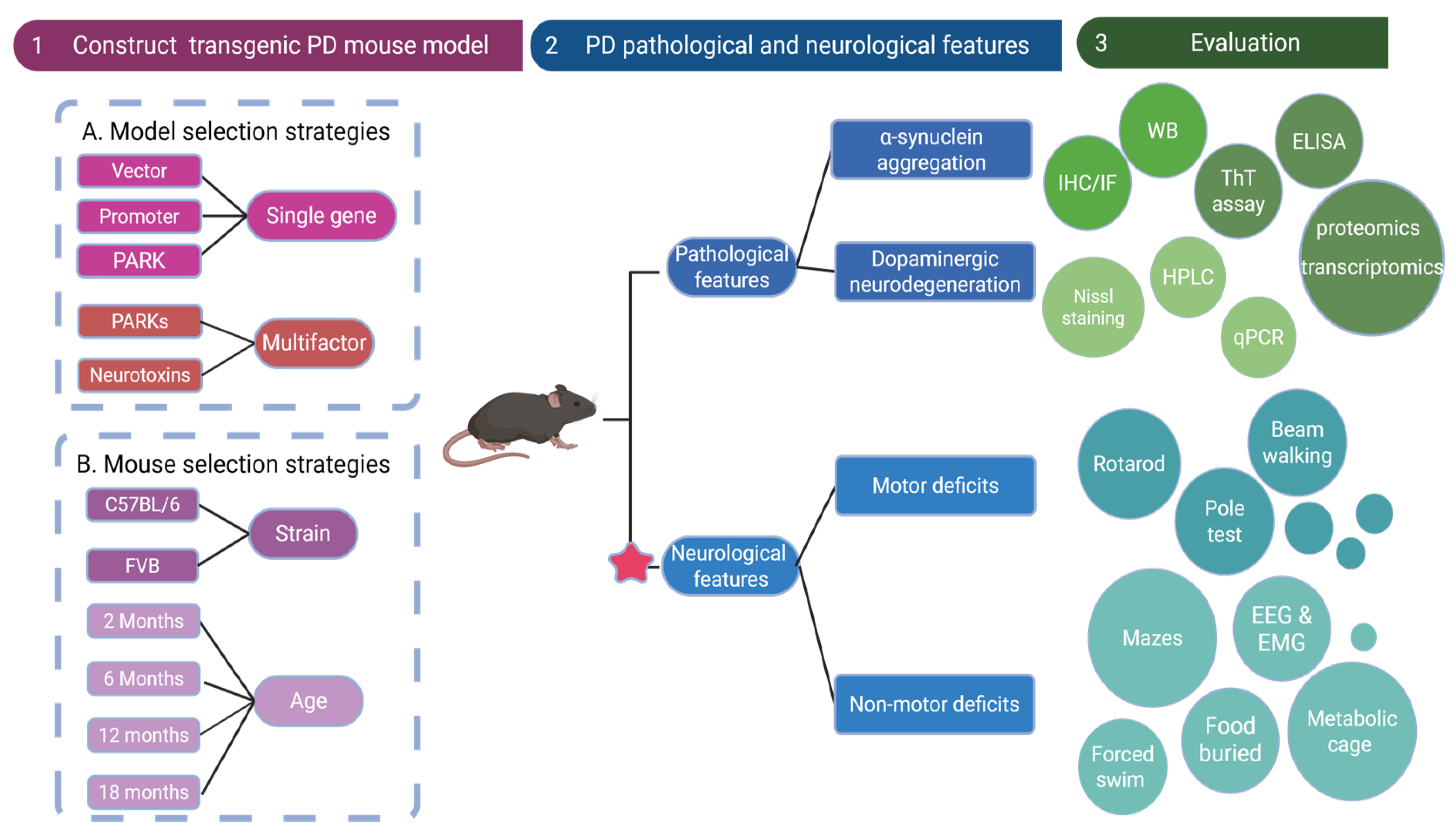
Strategies for Optimizing Genetic Mouse Models to Enhance the Understanding of Parkinson’s Disease

Abstract
Share and Cite
Shen, Z.; Ma, L.; Mellick, G.D. Strategies for Optimizing Genetic Mouse Models to Enhance the Understanding of Parkinson’s Disease. Biomedicines 2026, 14, 1162. https://doi.org/10.3390/biomedicines14051162
Shen Z, Ma L, Mellick GD. Strategies for Optimizing Genetic Mouse Models to Enhance the Understanding of Parkinson’s Disease. Biomedicines. 2026; 14(5):1162. https://doi.org/10.3390/biomedicines14051162
Chicago/Turabian StyleShen, Zhiqiang, Linlin Ma, and George D. Mellick. 2026. "Strategies for Optimizing Genetic Mouse Models to Enhance the Understanding of Parkinson’s Disease" Biomedicines 14, no. 5: 1162. https://doi.org/10.3390/biomedicines14051162
APA StyleShen, Z., Ma, L., & Mellick, G. D. (2026). Strategies for Optimizing Genetic Mouse Models to Enhance the Understanding of Parkinson’s Disease. Biomedicines, 14(5), 1162. https://doi.org/10.3390/biomedicines14051162