Liver Fibrosis Estimated Using Noninvasive Blood Biochemical Indices Is Correlated with Visit-to-Visit Glycated Hemoglobin A1c Variability in Individuals with Type 2 Diabetes

 , ,
, ,  , , , ,
Abstract
1. Introduction
2. Materials and Methods
2.1. Study Design and Data Source
2.2. Glycated Hemoglobin A1c (HbA1c) Variability
2.3. Biochemical Analysis
2.4. Determination of Severity of Steatotic Liver Disease Represented by Noninvasive Blood Chemical Biomarkers
- ∗
- FIB-4 index = age (years) × AST (U/L)/(platelet count [×109/L] × √ALT [U/L]) [19]
- ∗
- APRI = 100 × AST (U/L)/upper limit of normal AST (U/L)/platelet count (×109/L) [20]
- ∗
- NFS = −1.675 + 0.037 × age (years) + 0.094 × BMI (kg/m2) + 1.13 × IFG/diabetes (yes = 1, no = 0) + 0.99 × AST/ALT ratio − 0.013 × platelet count (×109/L) − 0.66 × ALB (g/dL) [21].
2.5. Statistical Analysis
3. Results
3.1. Characteristics of the Participants
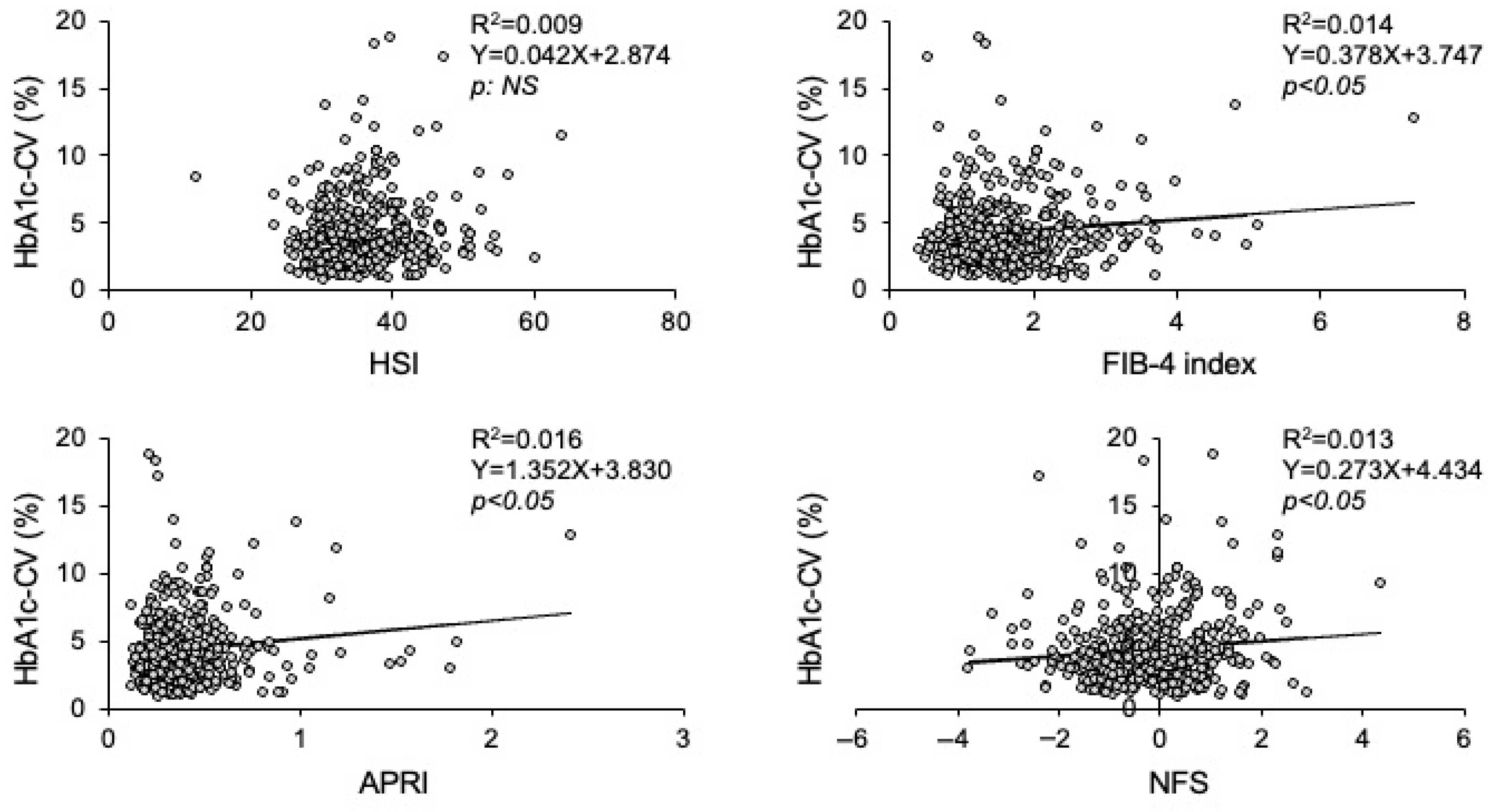
3.2. Association Between HbA1c Coefficient of Variation and Clinical Markers of MASLD
4. Discussion
Limitations
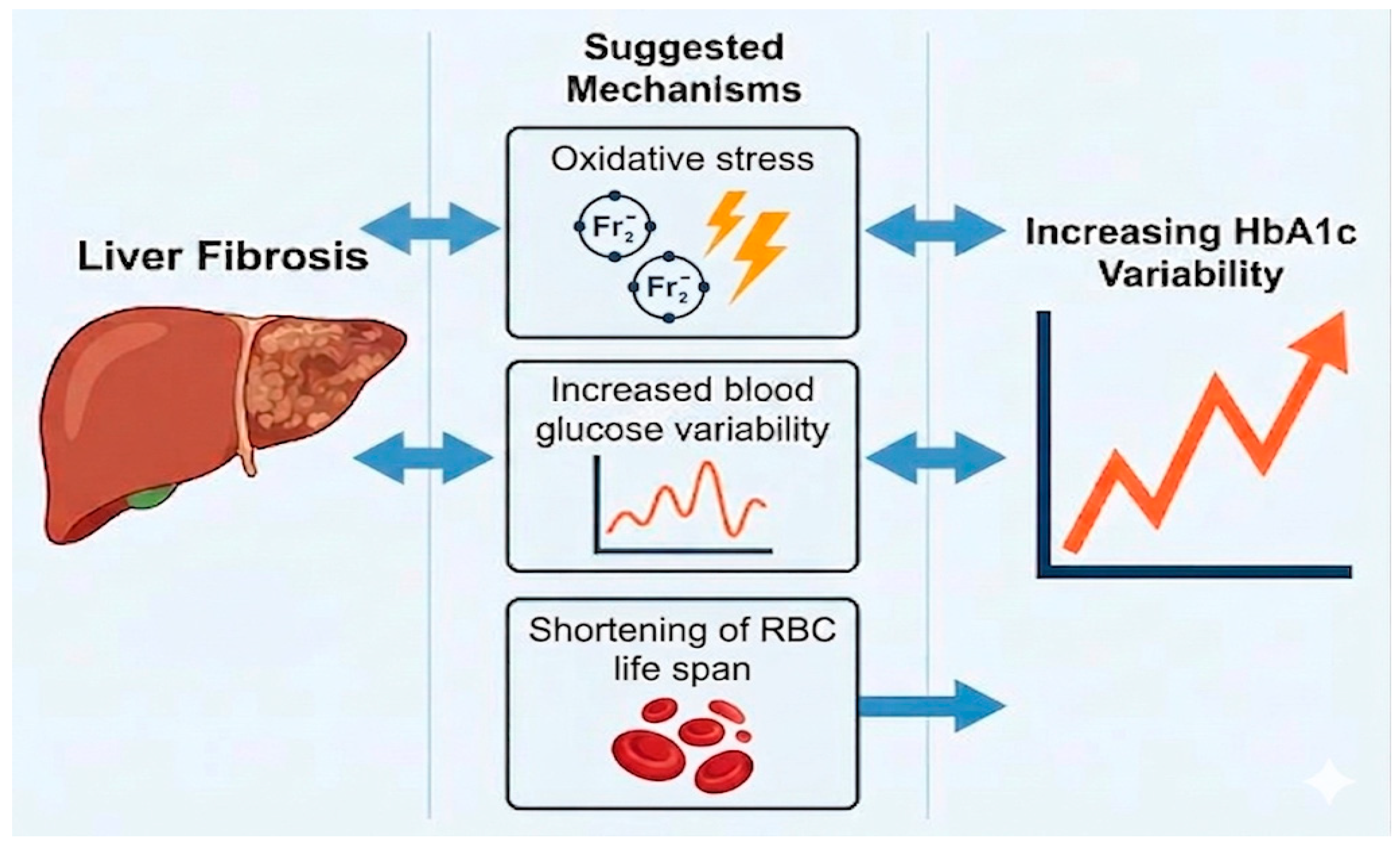
5. Conclusions and Perspectives
Supplementary Materials
Author Contributions
Funding
Institutional Review Board Statement
Informed Consent Statement
Data Availability Statement
Acknowledgments
Conflicts of Interest
Abbreviations
| HbA1c | glycated hemoglobin A1c |
| CVDs | cardiovascular diseases |
| MASLD | metabolic dysfunction–associated steatotic liver disease |
| T2D | type 2 diabetes |
| HbA1c-CV | HbA1c coefficient of variation |
| HSI | hepatic steatosis index |
| FIB-4 | fibrosis-4 |
| APRI | aspartate aminotransferase-to-platelet ratio index |
| NAFLD | non-alcoholic fatty liver disease |
| NFS | non-alcoholic fatty liver disease fibrosis score |
| BP | blood pressure |
| LDL-C | low-density lipoprotein cholesterol |
| TG | triglyceride |
| HDL-C | high-density lipoprotein cholesterol |
| ALB | albumin |
| Cr | creatinine |
| Hgb | hemoglobin |
| SD | standard deviation |
| PG | plasma glucose |
| UA | uric acid |
| AST | aspartate aminotransferase |
| BMI | body mass index |
| RBC | red blood cell |
| IDA | iron deficiency anemia |
| CLD | chronic liver disease |
| ROS | reactive oxygen species |
| TIR | time in range |
References
- Sarwar, N.; Gao, P.; Seshasai, S.R.; Gobin, R.; Kaptoge, S.; Di Angelantonio, E.; Ingelsson, E.; Lawlor, D.A.; Selvin, E.; Stampfer, M.; et al. Diabetes mellitus, fasting blood glucose concentration, and risk of vascular disease: A collaborative meta-analysis of 102 prospective studies. Lancet 2010, 375, 2215–2222. [Google Scholar] [CrossRef]
- Gaede, P.; Lund-Andersen, H.; Parving, H.H.; Pedersen, O. Effect of a multifactorial intervention on mortality in type 2 diabetes. N. Engl. J. Med. 2008, 358, 580–591. [Google Scholar] [CrossRef] [PubMed]
- Ohkubo, Y.; Kishikawa, H.; Araki, E.; Miyata, T.; Isami, S.; Motoyoshi, S.; Kojima, Y.; Furuyoshi, N.; Shichiri, M. Intensive insulin therapy prevents the progression of diabetic microvascular complications in Japanese patients with non-insulin-dependent diabetes mellitus: A randomized prospective 6-year study. Diabetes Res. Clin. Pract. 1995, 28, 103–117. [Google Scholar] [CrossRef]
- American Diabetes Association Professional Practice Committee. 6. Glycemic Goals and Hypoglycemia: Standards of Care in Diabetes—2024. Diabetes Care 2024, 47, S111–S125. [Google Scholar] [CrossRef] [PubMed]
- Sartore, G.; Ragazzi, E.; Caprino, R.; Lapolla, A. Long-term HbA1c variability and macro-/micro-vascular complications in type 2 diabetes mellitus: A meta-analysis update. Acta Diabetol. 2023, 60, 721–738. [Google Scholar] [CrossRef] [PubMed]
- Gorst, C.; Kwok, C.S.; Aslam, S.; Buchan, I.; Kontopantelis, E.; Myint, P.K.; Heatlie, G.; Loke, Y.; Rutter, M.K.; Mamas, M.A. Long-term Glycemic Variability and Risk of Adverse Outcomes: A Systematic Review and Meta-analysis. Diabetes Care 2015, 38, 2354–2369. [Google Scholar] [CrossRef]
- Dehghani Firouzabadi, F.; Poopak, A.; Samimi, S.; Deravi, N.; Nakhaei, P.; Sheikhy, A.; Moosaie, F.; Rabizadeh, S.; Meysamie, A.; Nakhjavani, M.; et al. Glycemic profile variability as an independent predictor of diabetic retinopathy in patients with type 2 diabetes: A prospective cohort study. Front. Endocrinol. 2024, 15, 1383345. [Google Scholar] [CrossRef] [PubMed]
- Sacks, D.B.; Bruns, D.E.; Goldstein, D.E.; Maclaren, N.K.; McDonald, J.M.; Parrott, M. Guidelines and recommendations for laboratory analysis in the diagnosis and management of diabetes mellitus. Clin. Chem. 2002, 48, 436–472. [Google Scholar] [CrossRef]
- Monnier, L.; Colette, C.; Bonnet, F.; Renard, E.; Owens, D. HbA1c variability and diabetes complications: Assessment and implications. Diabetes Metab. 2023, 49, 101399. [Google Scholar] [CrossRef]
- Takamura, T.; Sakurai, M.; Ota, T.; Ando, H.; Honda, M.; Kaneko, S. Genes for systemic vascular complications are differentially expressed in the livers of type 2 diabetic patients. Diabetologia 2004, 47, 638–647. [Google Scholar] [CrossRef]
- Rinella, M.E.; Lazarus, J.V.; Ratziu, V.; Francque, S.M.; Sanyal, A.J.; Kanwal, F.; Romero, D.; Abdelmalek, M.F.; Anstee, Q.M.; Arab, J.P.; et al. A multisociety Delphi consensus statement on new fatty liver disease nomenclature. J. Hepatol. 2023, 79, 1542–1556. [Google Scholar] [CrossRef]
- Younossi, Z.M.; Koenig, A.B.; Abdelatif, D.; Fazel, Y.; Henry, L.; Wymer, M. Global epidemiology of nonalcoholic fatty liver disease-Meta-analytic assessment of prevalence, incidence, and outcomes. Hepatology 2016, 64, 73–84. [Google Scholar] [CrossRef]
- Hagström, H.; Shang, Y.; Hegmar, H.; Nasr, P. Natural history and progression of metabolic dysfunction-associated steatotic liver disease. Lancet Gastroenterol. Hepatol. 2024, 9, 944–956. [Google Scholar] [CrossRef]
- Mayén, A.L.; Sabra, M.; Aglago, E.K.; Perlemuter, G.; Voican, C.; Ramos, I.; Debras, C.; Blanco, J.; Viallon, V.; Ferrari, P.; et al. Hepatic steatosis, metabolic dysfunction and risk of mortality: Findings from a multinational prospective cohort study. BMC Med. 2024, 22, 221. [Google Scholar] [CrossRef]
- Younossi, Z.M.; Golabi, P.; de Avila, L.; Paik, J.M.; Srishord, M.; Fukui, N.; Qiu, Y.; Burns, L.; Afendy, A.; Nader, F. The global epidemiology of NAFLD and NASH in patients with type 2 diabetes: A systematic review and meta-analysis. J. Hepatol. 2019, 71, 793–801. [Google Scholar] [CrossRef] [PubMed]
- Portillo-Sanchez, P.; Bril, F.; Maximos, M.; Lomonaco, R.; Biernacki, D.; Orsak, B.; Subbarayan, S.; Webb, A.; Hecht, J.; Cusi, K. High Prevalence of Nonalcoholic Fatty Liver Disease in Patients with Type 2 Diabetes Mellitus and Normal Plasma Aminotransferase Levels. J. Clin. Endocrinol. Metab. 2015, 100, 2231–2238. [Google Scholar] [CrossRef]
- American Diabetes Association. 2. Classification and Diagnosis of Diabetes. Diabetes Care 2016, 39, S13–S22. [Google Scholar] [CrossRef]
- Lee, J.H.; Kim, D.; Kim, H.J.; Lee, C.H.; Yang, J.I.; Kim, W.; Kim, Y.J.; Yoon, J.H.; Cho, S.H.; Sung, M.W.; et al. Hepatic steatosis index: A simple screening tool reflecting nonalcoholic fatty liver disease. Dig. Liver Dis. 2010, 42, 503–508. [Google Scholar] [CrossRef]
- Shah, A.G.; Lydecker, A.; Murray, K.; Tetri, B.N.; Contos, M.J.; Sanyal, A.J. Comparison of noninvasive markers of fibrosis in patients with nonalcoholic fatty liver disease. Clin. Gastroenterol. Hepatol. 2009, 7, 1104–1112. [Google Scholar] [CrossRef] [PubMed]
- Wai, C.T.; Greenson, J.K.; Fontana, R.J.; Kalbfleisch, J.D.; Marrero, J.A.; Conjeevaram, H.S.; Lok, A.S. A simple noninvasive index can predict both significant fibrosis and cirrhosis in patients with chronic hepatitis C. Hepatology 2003, 38, 518–526. [Google Scholar] [CrossRef]
- Angulo, P.; Hui, J.M.; Marchesini, G.; Bugianesi, E.; George, J.; Farrell, G.C.; Enders, F.; Saksena, S.; Burt, A.D.; Bida, J.P.; et al. The NAFLD fibrosis score: A noninvasive system that identifies liver fibrosis in patients with NAFLD. Hepatology 2007, 45, 846–854. [Google Scholar] [CrossRef]
- Lee, J.; Vali, Y.; Boursier, J.; Spijker, R.; Anstee, Q.M.; Bossuyt, P.M.; Zafarmand, M.H. Prognostic accuracy of FIB-4, NAFLD fibrosis score and APRI for NAFLD-related events: A systematic review. Liver Int. 2021, 41, 261–270. [Google Scholar] [CrossRef]
- Sanyal, A.J.; Harrison, S.A.; Ratziu, V.; Abdelmalek, M.F.; Diehl, A.M.; Caldwell, S.; Shiffman, M.L.; Aguilar Schall, R.; Jia, C.; McColgan, B.; et al. The Natural History of Advanced Fibrosis Due to Nonalcoholic Steatohepatitis: Data from the Simtuzumab Trials. Hepatology 2019, 70, 1913–1927. [Google Scholar] [CrossRef]
- Sebastiani, G.; Alshaalan, R.; Wong, P.; Rubino, M.; Salman, A.; Metrakos, P.; Deschenes, M.; Ghali, P. Prognostic Value of Non-Invasive Fibrosis and Steatosis Tools, Hepatic Venous Pressure Gradient (HVPG) and Histology in Nonalcoholic Steatohepatitis. PLoS ONE 2015, 10, e0128774. [Google Scholar] [CrossRef]
- Hashimoto, Y.; Kaji, A.; Sakai, R.; Osaka, T.; Ushigome, E.; Hamaguchi, M.; Yamazaki, M.; Fukui, M. Skipping breakfast is associated with glycemic variability in patients with type 2 diabetes. Nutrition 2020, 71, 110639. [Google Scholar] [CrossRef]
- Mellergård, E.; Johnsson, P.; Eek, F. Sociodemographic factors associated with HbA1c variability in type 2 diabetes: A prospective exploratory cohort study. BMC Endocr. Disord. 2020, 20, 102. [Google Scholar] [CrossRef]
- Scott, E.S.; Januszewski, A.S.; O’Connell, R.; Fulcher, G.; Scott, R.; Kesaniemi, A.; Wu, L.; Colagiuri, S.; Keech, A.; Jenkins, A.J. Long-Term Glycemic Variability and Vascular Complications in Type 2 Diabetes: Post Hoc Analysis of the FIELD Study. J. Clin. Endocrinol. Metab. 2020, 105, e3638–e3649. [Google Scholar] [CrossRef] [PubMed]
- Gough, A.; Sitch, A.; Ferris, E.; Marshall, T. Within-subject variation of HbA1c: A systematic review and meta-analysis. PLoS ONE 2023, 18, e0289085. [Google Scholar] [CrossRef] [PubMed]
- Solomon, A.; Hussein, M.; Negash, M.; Ahmed, A.; Bekele, F.; Kahase, D. Effect of iron deficiency anemia on HbA1c in diabetic patients at Tikur Anbessa specialized teaching hospital, Addis Ababa Ethiopia. BMC Hematol. 2019, 19, 2. [Google Scholar] [CrossRef]
- Svegliati-Baroni, G.; Pierantonelli, I.; Torquato, P.; Marinelli, R.; Ferreri, C.; Chatgilialoglu, C.; Bartolini, D.; Galli, F. Lipidomic biomarkers and mechanisms of lipotoxicity in non-alcoholic fatty liver disease. Free Radic. Biol. Med. 2019, 144, 293–309. [Google Scholar] [CrossRef] [PubMed]
- Allen, D.W.; Manning, N. Cholesterol-loading of membranes of normal erythrocytes inhibits phospholipid repair and arachidonoyl-CoA:1-palmitoyl-sn-glycero-3-phosphocholine acyl transferase. A model of spur cell anemia. Blood 1996, 87, 3489–3493. [Google Scholar] [CrossRef]
- Mei, C.; Peng, F.; Yin, W.; Xu, W.; Yao, R.; Li, B.; Zhou, R.; Fan, X.; Li, N. Increased suicidal erythrocyte death in patients with hepatitis B-related acute-on-chronic liver failure. Am. J. Physiol. Gastrointest. Liver Physiol. 2022, 323, G9–G20. [Google Scholar] [CrossRef] [PubMed]
- Sasaki, R.; Taura, N.; Nakao, Y.; Fukushima, M.; Haraguchi, M.; Miuma, S.; Miyaaki, H.; Nakao, K. Hypoglycemia measured by flash glucose monitoring system predicts liver-related events in chronic liver disease patients. Sci. Rep. 2023, 13, 13791. [Google Scholar] [CrossRef]
- Garcia-Compean, D.; Jaquez-Quintana, J.O.; Gonzalez-Gonzalez, J.A.; Maldonado-Garza, H. Liver cirrhosis and diabetes: Risk factors, pathophysiology, clinical implications and management. World J. Gastroenterol. 2009, 15, 280–288. [Google Scholar] [CrossRef] [PubMed]
- Bashir, A.; Duseja, A.; De, A.; Mehta, M.; Tiwari, P. Non-alcoholic fatty liver disease development: A multifactorial pathogenic phenomena. Liver Res. 2022, 6, 72–83. [Google Scholar] [CrossRef] [PubMed]
- Ashraf, H.; Anushiravani, A.; Rayatpisheh, M.; Hamidi Alamdari, D.; Hossieni, A.; Kazeminezhad, B. Association between oxidative stress and liver fibrosis severity in non-alcoholic fatty liver disease: Insights from the pro-oxidant antioxidant balance method in a population from Tehran and Mashhad, Iran. Front. Med. 2025, 12, 1539605. [Google Scholar] [CrossRef]
- Dimova, R.; Chakarova, N.; Grozeva, G.; Kirilov, G.; Tankova, T. The relationship between glucose variability and insulin sensitivity and oxidative stress in subjects with prediabetes. Diabetes Res. Clin. Pract. 2019, 158, 107911. [Google Scholar] [CrossRef]
- Evans, J.L.; Goldfine, I.D.; Maddux, B.A.; Grodsky, G.M. Are oxidative stress-activated signaling pathways mediators of insulin resistance and beta-cell dysfunction? Diabetes 2003, 52, 1–8. [Google Scholar] [CrossRef]
- Tsuchiya, T.; Saisho, Y.; Murakami, R.; Watanabe, Y.; Inaishi, J.; Itoh, H. Relationship between daily and visit-to-visit glycemic variability in patients with type 2 diabetes. Endocr. J. 2020, 67, 877–881. [Google Scholar] [CrossRef]
- Wang, C.H.; Ji, X.Y.; Ji, N.; Yan, Q.F.; Xu, H.Q.; Wang, X.Q.; Chen, X.F.; Lu, C.F. Association between glucose time-in-range and the severity of metabolic dysfunction-associated steatotic liver disease in Chinese adults with type 2 diabetes mellitus. BMC Endocr. Disord. 2025, 25, 113. [Google Scholar] [CrossRef]
- Yoo, J.H.; Kang, M.; Kim, G.; Hur, K.Y.; Kim, J.H.; Sinn, D.H.; Jin, S.M. Mean and visit-to-visit variability of glycated hemoglobin, and the risk of non-alcoholic fatty liver disease. J. Diabetes Investig. 2021, 12, 1252–1262. [Google Scholar] [CrossRef] [PubMed]
- Yin, X.; Zheng, F.; Pan, Q.; Zhang, S.; Yu, D.; Xu, Z.; Li, H. Glucose fluctuation increased hepatocyte apoptosis under lipotoxicity and the involvement of mitochondrial permeability transition opening. J. Mol. Endocrinol. 2015, 55, 169–181. [Google Scholar] [CrossRef] [PubMed]
- Monnier, L.; Mas, E.; Ginet, C.; Michel, F.; Villon, L.; Cristol, J.P.; Colette, C. Activation of oxidative stress by acute glucose fluctuations compared with sustained chronic hyperglycemia in patients with type 2 diabetes. Jama 2006, 295, 1681–1687. [Google Scholar] [CrossRef]
- Pan, A.; Wang, Y.; Talaei, M.; Hu, F.B.; Wu, T. Relation of active, passive, and quitting smoking with incident type 2 diabetes: A systematic review and meta-analysis. Lancet Diabetes Endocrinol. 2015, 3, 958–967. [Google Scholar] [CrossRef]
- Chiolero, A.; Faeh, D.; Paccaud, F.; Cornuz, J. Consequences of smoking for body weight, body fat distribution, and insulin resistance. Am. J. Clin. Nutr. 2008, 87, 801–809. [Google Scholar] [CrossRef]
- Li, Z.; Xu, W.; Su, Y.; Gao, K.; Chen, Y.; Ma, L.; Xie, Y. Nicotine induces insulin resistance via downregulation of Nrf2 in cardiomyocyte. Mol. Cell Endocrinol. 2019, 495, 110507. [Google Scholar] [CrossRef]
- Bergman, B.C.; Perreault, L.; Hunerdosse, D.; Kerege, A.; Playdon, M.; Samek, A.M.; Eckel, R.H. Novel and reversible mechanisms of smoking-induced insulin resistance in humans. Diabetes 2012, 61, 3156–3166. [Google Scholar] [CrossRef]
- Goh, G.B.-B.; Pagadala, M.R.; Dasarathy, J.; Unalp-arida, A.; Sargent, R.; Hawkins, C.J.; Sourianarayanane, A.; Khiyami, A.; Yerian, L.M.; Pai, R.K.; et al. Diabetes Mellitus, Insulin, Sulfonylurea and Advanced Fibrosis in Non- Alcoholic Fatty Liver Disease. J. Diabetes Metab. 2014, 5, 1–6. [Google Scholar]
- Ajmera, V.; Cepin, S.; Tesfai, K.; Hofflich, H.; Cadman, K.; Lopez, S.; Madamba, E.; Bettencourt, R.; Richards, L.; Behling, C.; et al. A prospective study on the prevalence of NAFLD, advanced fibrosis, cirrhosis and hepatocellular carcinoma in people with type 2 diabetes. J. Hepatol. 2023, 78, 471–478. [Google Scholar] [CrossRef] [PubMed]
- Sanyal, A.J.; Newsome, P.N.; Kliers, I.; Østergaard, L.H.; Long, M.T.; Kjær, M.S.; Cali, A.M.G.; Bugianesi, E.; Rinella, M.E.; Roden, M.; et al. Phase 3 Trial of Semaglutide in Metabolic Dysfunction-Associated Steatohepatitis. N. Engl. J. Med. 2025, 392, 2089–2099. [Google Scholar] [CrossRef]
- Kaneko, Y.; Kawano, Y.; Kawata, S.; Mori, K.; Hosoki, M.; Hori, T.; Miyataka, K.; Tsuji, S.; Hara, T.; Yamagami, H.; et al. Mean Corpuscular Volume Is Correlated with Liver Fibrosis Defined by Noninvasive Blood Biochemical Indices in Individuals with Metabolic Disorders Aged 60 Years or Older. J. Clin. Med. 2025, 14, 4680. [Google Scholar] [CrossRef] [PubMed]



| Clinical Factors | Total | Male | Female | p-Value |
|---|---|---|---|---|
| Number of participants | 402 | 219 | 183 | |
| Age (years) | 72 (63–77) | 72 (62–77) | 71 (64–76) | 0.678 |
| BMI (kg/m2) | 24.3 (21.9–26.9) | 24.6 (22.3–26.6) | 24.2 (21.7–27.2) | 0.430 |
| SBP (mmHg) | 134.6 ± 17.7 | 134.0 ± 14.5 | 135.3 ± 20.8 | 0.462 |
| LDL-C (mg/dL) | 98.0 (80.0–118.0) | 97.0 (79.0–118.5) | 99.0 (81.2–118.0) | 0.653 |
| TG (mg/dL) | 112.5 (86–165.8) | 117.0 (87.0–170.0) | 110.0 (83.0–156.5) | 0.215 |
| HDL-C (mg/dL) | 53.9 (44.0–63.0) | 51.0 (41.2–60.2) | 57.8 (49.0–66.7) | <0.001 |
| Casual PG (mg/dL) | 137.0 (117.0–173.0) | 147.0 (124.0–192.5) | 128.0 (113.0–157.5) | 0.002 |
| HbA1c (%) | 6.9 (6.5–7.4) | 6.9 (6.5–7.4) | 6.9 (6.6–7.4) | 0.615 |
| HbA1c-CV (%) | 3.8 (2.6–5.2) | 4.0 (2.6–5.5) | 3.6 (2.5–4.9) | 0.964 |
| UA (mg/dL) | 5.1 (4.2–5.9) | 5.4 (4.6–6.2) | 4.5 (3.8–5.5) | <0.001 |
| Cr (mg/dL) | 0.77 (0.63–0.96) | 0.88 (0.75–1.06) | 0.64 (0.56–0.77) | <0.001 |
| eGFR (mL/min/1.73 m2) | 68.7 ± 19.4 | 67.5 ± 20.0 | 70.1 ± 18.5 | 0.180 |
| ALB (g/dL) | 4.2 ± 0.3 | 4.2 ± 0.3 | 4.2 ± 0.3 | 0.355 |
| AST (U/L) | 21 (17.0–26.0) | 21 (17.0–28.0) | 20 (17.0–25.0) | 0.039 |
| ALT (U/L) | 21.0 (15.0–29.8) | 21.0 (16.0–32.0) | 19.0 (13.0–26.5) | 0.001 |
| RBC (1012/L) | 4.62 (4.28–5.00) | 4.77 (4.36–5.15) | 4.55 (4.21–4.82) | 0.035 |
| Hct (%) | 42.3 (39.4–45.1) | 43.5 (40.9–46.3) | 41.2 (38.3–43.2) | <0.001 |
| Hgb (g/dL) | 14.0 (12.9–15.1) | 14.5 (13.7–15.7) | 13.5 (12.5–14.3) | <0.001 |
| MCV (fL) | 91.4 (88.8–94.7) | 91.9 (88.9–95.2) | 90.7 (88.7–93.6) | 0.063 |
| Platelets (109/L) | 216.0 (181.0–254.0) | 209.0 (173.0–235.0) | 232.0 (198.0–267.5) | <0.001 |
| HSI | 34.9 (31.9–39.0) | 34.5 (32.0–38.2) | 36.0 (31.9–39.9) | 0.259 |
| FIB-4 index | 1.52 (1.10–2.05) | 1.61 (1.13–2.17) | 1.42 (1.08–1.92) | 0.015 |
| APRI | 0.35 (0.26–0.48) | 0.39 (0.28–0.53) | 0.32 (0.24–0.40) | <0.001 |
| NFS | −0.15 (−0.95–0.53) | 0.05 (−0.82–0.67) | −0.40 (−1.08–0.40) | 0.005 |
| Exercise habit (n, [%]) | 105 (26.1) | 70 (32.0) | 35 (19.1) | 0.004 |
| Current smoker (n, [%]) | 50 (12.4) | 48 (21.9) | 2 (1.1) | <0.001 |
| Hypertension (n, [%]) | 287 (71.4) | 151 (68.9) | 136 (74.3) | 0.236 |
| Dyslipidemia (n, [%]) | 301 (74.9) | 161 (73.5) | 140 (76.5) | 0.492 |
| Duration of T2D (years) | 11.0 (6.0–19.0) | 11.0 (6.0–17.0) | 11.0 (7.5–20.0) | 0.159 |
| ARB or ACEi (n, [%]) | 215 (53.5) | 113 (51.6) | 102 (55.7) | 0.407 |
| CCB (n, [%]) | 193 (48.0) | 101 (46.1) | 92 (50.3) | 0.406 |
| β blocker (n, [%]) | 30 (7.5) | 24 (11.1) | 6 (3.3) | 0.004 |
| MR antagonist (n, [%]) | 5 (1.2) | 3 (1.4) | 2 (1.1) | 0.803 |
| Statin (n, [%]) | 219 (54.5) | 104 (47.5) | 115 (62.8) | 0.002 |
| Ezetimibe (n, [%]) | 45 (11.2) | 26 (11.9) | 19 (10.4) | 0.637 |
| Antiplatelet (n, [%]) | 58 (14.4) | 44 (20.1) | 14 (7.7) | <0.001 |
| SU or glinide (n, [%]) | 103 (25.6) | 52 (23.7) | 51 (27.9) | 0.345 |
| Metformin (n, [%]) | 212 (52.7) | 114 (52.1) | 98 (53.6) | 0.765 |
| DPP-4i (n, [%]) | 266 (66.2) | 139 (63.5) | 127 (69.4) | 0.211 |
| SGLT2i (n, [%]) | 161 (40.0) | 92 (42.0) | 69 (37.7) | 0.380 |
| α-GI (n, [%]) | 77 (19.2) | 48 (21.9) | 29 (15.8) | 0.123 |
| Pioglitazone (n, [%]) | 16 (4.0) | 8 (3.7) | 8 (4.4) | 0.714 |
| Insulin (n, [%)]) | 81 (20.1) | 45 (20.5) | 36 (19.7) | 0.827 |
| GLP-1RA (n, [%)]) | 44 (10.9) | 25 (11.4) | 19 (10.4) | 0.741 |
| HbA1c-CV | ||||||||||||
|---|---|---|---|---|---|---|---|---|---|---|---|---|
| HSI | FIB-4 Index | APRI | NFS | |||||||||
| Variables | VIF | t-Value | p-Value | VIF | t-Value | p-Value | VIF | t-Value | p-Value | VIF | t-Value | p-Value |
| Age | 1.855 | −0.85 | 0.397 | 1.947 | −1.94 | 0.053 | 1.711 | −0.58 | 0.565 | 2.478 | −2.38 | 0.018 |
| Male | 1.734 | −1.13 | 0.260 | 1.743 | −1.57 | 0.117 | 1.769 | −1.53 | 0.128 | 1.750 | −1.51 | 0.132 |
| BMI | 6.895 | 2.11 | 0.036 | 1.658 | 2.04 | 0.042 | 1.651 | 1.68 | 0.093 | 1.846 | 0.49 | 0.622 |
| SBP | 1.082 | −1.27 | 0.207 | 1.155 | −1.23 | 0.218 | 1.156 | −1.21 | 0.229 | 1.156 | −1.35 | 0.179 |
| LDL-C | 1.273 | 1.17 | 0.244 | 1.115 | 1.50 | 0.136 | 1.109 | 1.27 | 0.204 | 1.135 | 1.65 | 0.101 |
| TG | 1.156 | 1.10 | 0.272 | 1.365 | 1.11 | 0.269 | 1.364 | 1.01 | 0.313 | 1.381 | 1.34 | 0.181 |
| HDL-C | 1.390 | 0.39 | 0.694 | 1.392 | 0.56 | 0.556 | 1.393 | 0.55 | 0.583 | 1.395 | 0.64 | 0.526 |
| HbA1c | 1.111 | 9.41 | <0.001 | 1.181 | 9.83 | <0.001 | 1.178 | 9.59 | <0.001 | 1.181 | 9.71 | <0.001 |
| UA | 1.424 | −0.07 | 0.947 | 1.420 | 0.17 | 0.862 | 1.419 | −0.05 | 0.964 | 1.434 | 0.40 | 0.687 |
| Cr | 1.753 | 1.28 | 0.201 | 1.746 | 1.65 | 0.099 | 1.767 | 1.79 | 0.075 | 1.746 | 1.23 | 0.218 |
| ALB | 1.206 | −2.25 | 0.025 | 1.201 | −2.00 | 0.046 | 1.190 | −2.27 | 0.024 | 1.331 | −1.18 | 0.240 |
| Hct | 1.493 | −0.23 | 0.816 | 1.484 | −0.47 | 0.638 | 1.487 | −0.51 | 0.613 | 1.484 | −0.44 | 0.660 |
| Exercise habit | 1.082 | 1.18 | 0.239 | 1.081 | 1.17 | 0.244 | 1.081 | 1.34 | 0.182 | 1.082 | 1.12 | 0.264 |
| Current Smoking | 1.273 | 2.08 | 0.038 | 1.263 | 2.40 | 0.017 | 1.262 | 2.33 | 0.020 | 1.272 | 2.57 | 0.011 |
| Hypertension | 1.267 | 1.04 | 0.297 | 1.269 | 1.25 | 0.211 | 1.268 | 1.15 | 0.253 | 1.290 | 1.53 | 0.127 |
| Dyslipidemia | 1.183 | −0.84 | 0.404 | 1.181 | −0.92 | 0.360 | 1.179 | −0.74 | 0.462 | 1.183 | −0.96 | 0.338 |
| Duration of T2D | 1.259 | −0.36 | 0.717 | 1.255 | −0.39 | 0.700 | 1.256 | −0.35 | 0.726 | 1.256 | −0.58 | 0.565 |
| HSI | 7.657 | −1.45 | 0.148 | - | - | - | - | - | - | - | - | - |
| FIB-4 index | - | - | - | 1.369 | 4.29 | <0.001 | - | - | - | - | - | - |
| APRI | - | - | - | - | - | - | 1.073 | 3.12 | 0.002 | - | - | - |
| NFS | - | - | - | - | - | - | - | - | - | 2.112 | 3.57 | <0.001 |
| HbA1c-CV | |||
|---|---|---|---|
| Variables | VIF | t-Value | p-Value |
| ARB or ACEi | 1.282 | 0.71 | 0.479 |
| CCB | 1.292 | −0.10 | 0.919 |
| β blocker | 1.189 | 0.54 | 0.588 |
| MR antagonist | 1.107 | 0.18 | 0.858 |
| Statin | 1.088 | −1.03 | 0.303 |
| Ezetimibe | 1.212 | −1.00 | 0.316 |
| Antiplatelet | 1.131 | −0.16 | 0.872 |
| SU or glinide | 1.119 | 1.62 | 0.107 |
| Metformin | 1.103 | 1.78 | 0.077 |
| DPP-4i | 1.479 | 1.50 | 0.134 |
| SGLT2i | 1.079 | 0.06 | 0.956 |
| α-GI | 1.109 | −0.37 | 0.709 |
| Pioglitazone | 1.049 | 1.95 | 0.052 |
| Insulin | 1.105 | 3.56 | <0.001 |
| GLP-1RA | 1.456 | 2.91 | 0.004 |
| HbA1c-CV | |||||||||
|---|---|---|---|---|---|---|---|---|---|
| FIB-4 Index | APRI | NFS | |||||||
| Variables | VIF | t-Value | p-Value | VIF | t-Value | p-Value | VIF | t-Value | p-Value |
| Age | - | - | - | - | - | - | 1.487 | −2.61 | 0.010 |
| BMI | 1.104 | 3.17 | 0.002 | - | - | - | - | - | - |
| HbA1c | 1.136 | 9.46 | <0.001 | 1.122 | 9.43 | <0.001 | 1.139 | 9.51 | <0.001 |
| ALB | 1.075 | −1.86 | 0.064 | 1.027 | −2.20 | 0.029 | - | - | - |
| Current smoking | 1.043 | 2.08 | 0.038 | 1.033 | 1.54 | 0.126 | 1.046 | 1.63 | 0.105 |
| Insulin | 1.148 | 0.82 | 0.413 | 1.142 | 0.64 | 0.521 | 1.125 | 0.97 | 0.332 |
| GLP-1RA | 1.071 | 1.57 | 0.118 | 1.061 | 1.56 | 0.120 | 1.074 | 1.52 | 0.131 |
| FIB-4 index | 1.129 | 3.52 | <0.001 | - | - | - | - | - | - |
| APRI | - | - | - | 1.011 | 2.82 | 0.005 | - | - | - |
| NFS | - | - | - | - | - | - | 1.488 | 3.94 | <0.001 |
Disclaimer/Publisher’s Note: The statements, opinions and data contained in all publications are solely those of the individual author(s) and contributor(s) and not of MDPI and/or the editor(s). MDPI and/or the editor(s) disclaim responsibility for any injury to people or property resulting from any ideas, methods, instructions or products referred to in the content. |
© 2026 by the authors. Licensee MDPI, Basel, Switzerland. This article is an open access article distributed under the terms and conditions of the Creative Commons Attribution (CC BY) license.
Share and Cite
Kaneko, Y.; Hori, T.; Miyataka, K.; Asai, T.; Hara, T.; Yamagami, H.; Otoda, T.; Yuasa, T.; Kuroda, A.; Nakamura, S.; et al. Liver Fibrosis Estimated Using Noninvasive Blood Biochemical Indices Is Correlated with Visit-to-Visit Glycated Hemoglobin A1c Variability in Individuals with Type 2 Diabetes. Biomedicines 2026, 14, 1150. https://doi.org/10.3390/biomedicines14051150
Kaneko Y, Hori T, Miyataka K, Asai T, Hara T, Yamagami H, Otoda T, Yuasa T, Kuroda A, Nakamura S, et al. Liver Fibrosis Estimated Using Noninvasive Blood Biochemical Indices Is Correlated with Visit-to-Visit Glycated Hemoglobin A1c Variability in Individuals with Type 2 Diabetes. Biomedicines. 2026; 14(5):1150. https://doi.org/10.3390/biomedicines14051150
Chicago/Turabian StyleKaneko, Yousuke, Taiki Hori, Kohsuke Miyataka, Takahito Asai, Tomoyo Hara, Hiroki Yamagami, Toshiki Otoda, Tomoyuki Yuasa, Akio Kuroda, Shingen Nakamura, and et al. 2026. "Liver Fibrosis Estimated Using Noninvasive Blood Biochemical Indices Is Correlated with Visit-to-Visit Glycated Hemoglobin A1c Variability in Individuals with Type 2 Diabetes" Biomedicines 14, no. 5: 1150. https://doi.org/10.3390/biomedicines14051150
APA StyleKaneko, Y., Hori, T., Miyataka, K., Asai, T., Hara, T., Yamagami, H., Otoda, T., Yuasa, T., Kuroda, A., Nakamura, S., Endo, I., Matsuhisa, M., Matsuoka, K.-i., & Aihara, K.-i. (2026). Liver Fibrosis Estimated Using Noninvasive Blood Biochemical Indices Is Correlated with Visit-to-Visit Glycated Hemoglobin A1c Variability in Individuals with Type 2 Diabetes. Biomedicines, 14(5), 1150. https://doi.org/10.3390/biomedicines14051150