PGAM2 Regulates Sepsis-Induced Diaphragmatic Atrophy via the JAK2/STAT3 Pathway

Abstract
1. Introduction
2. Materials and Methods
2.1. Experimental Design and Treatment
2.2. Surgical Process and Tissue Sampling
2.3. Immunofluorescence Staining
2.4. Cultivation of Escherichia Coli and Plasmid Cultivation
2.5. Cell Culture and Cell Viability Assay
2.6. Protein Immunoblotting
2.7. Real-Time Quantitative Polymerase Chain Reaction (RT-qPCR)
2.8. Data Analysis
3. Results
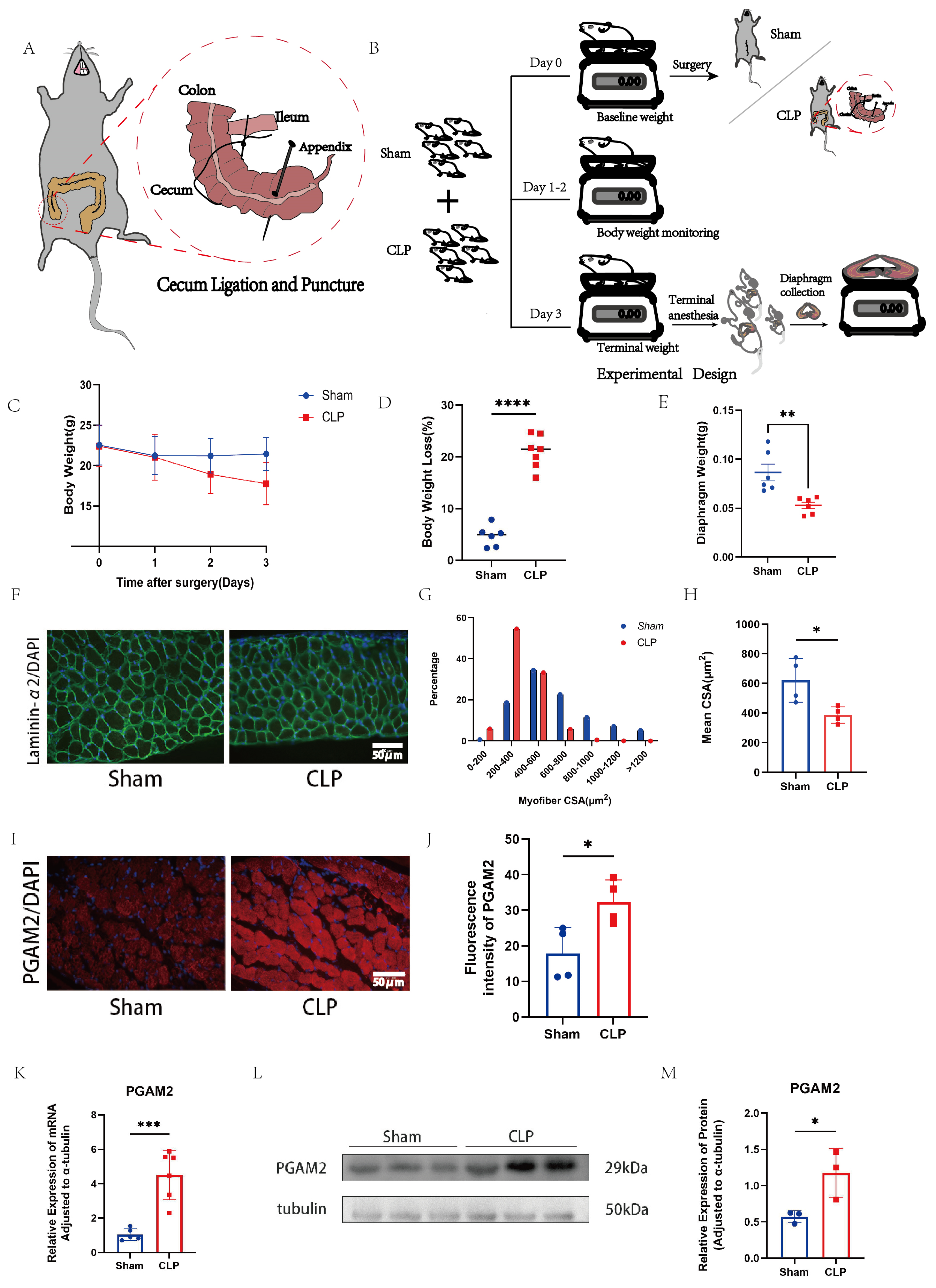
3.1. Sepsis Induces Diaphragm Atrophy of Mouse and Upregulates PGAM2 Expression
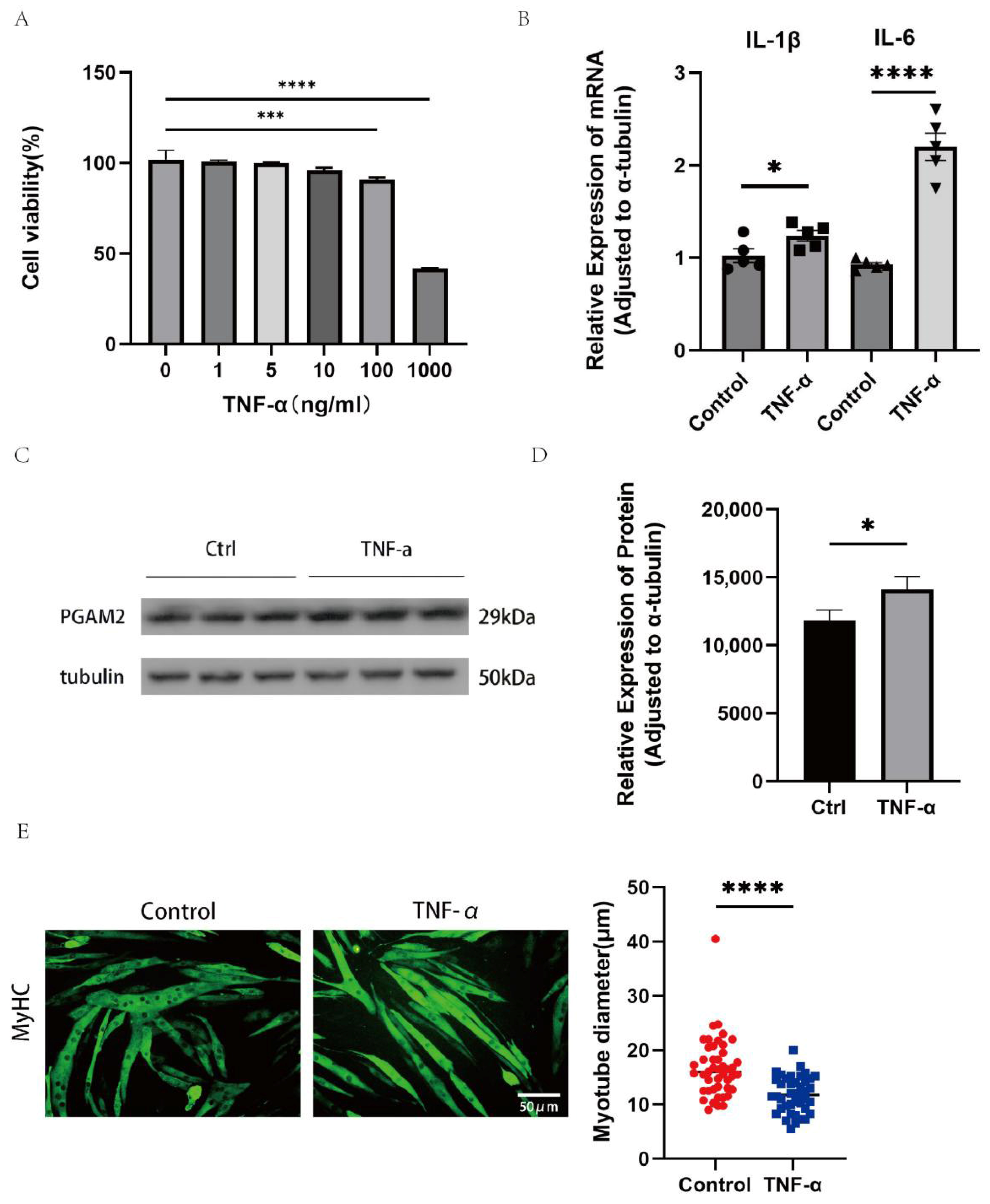
3.2. TNF-α-Induced C2C12 Myotubular Atrophy and Increased Expression of PGAM2
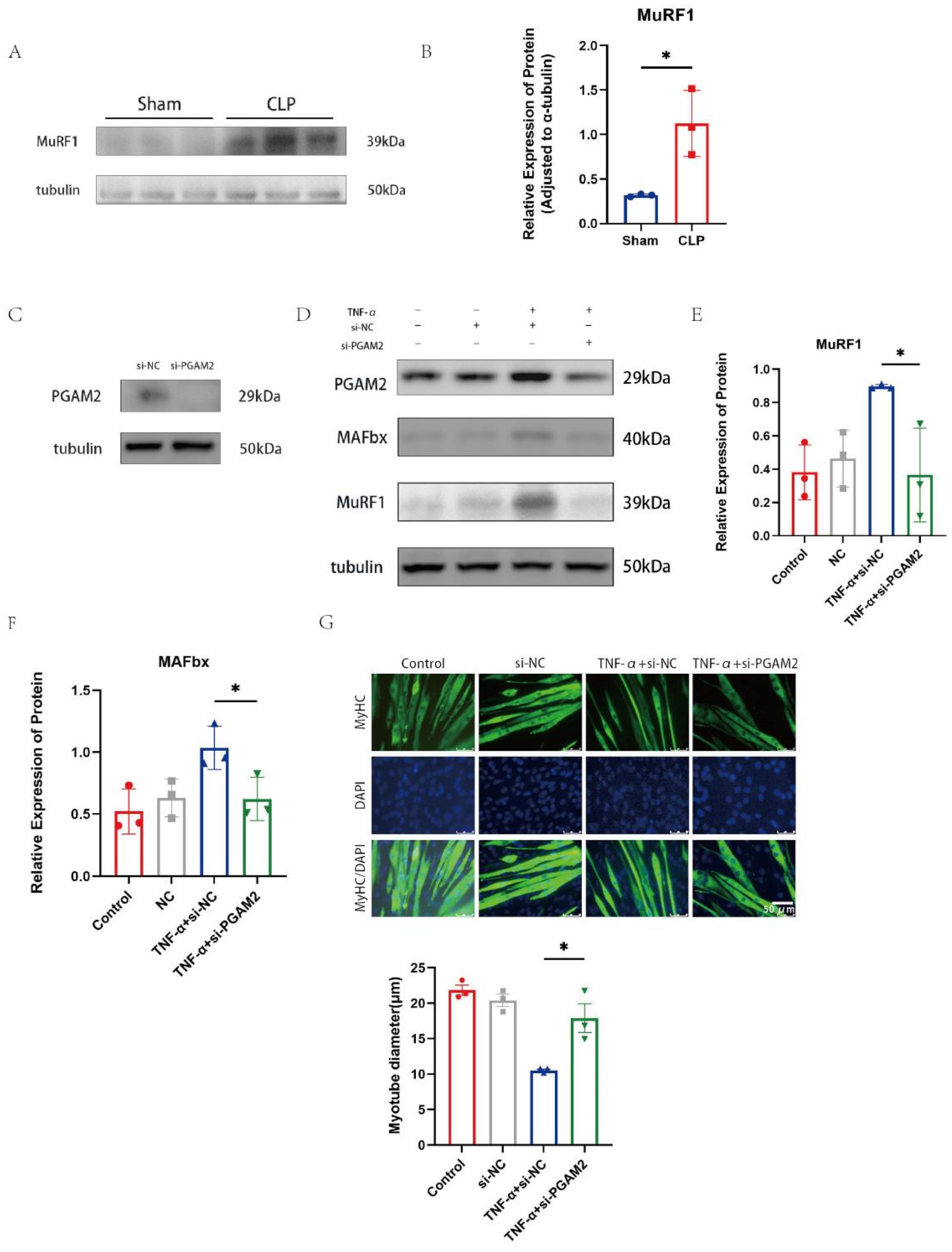
3.3. PGAM2 Knockdown Relieves TNF-α-Induced Myotube Atrophy
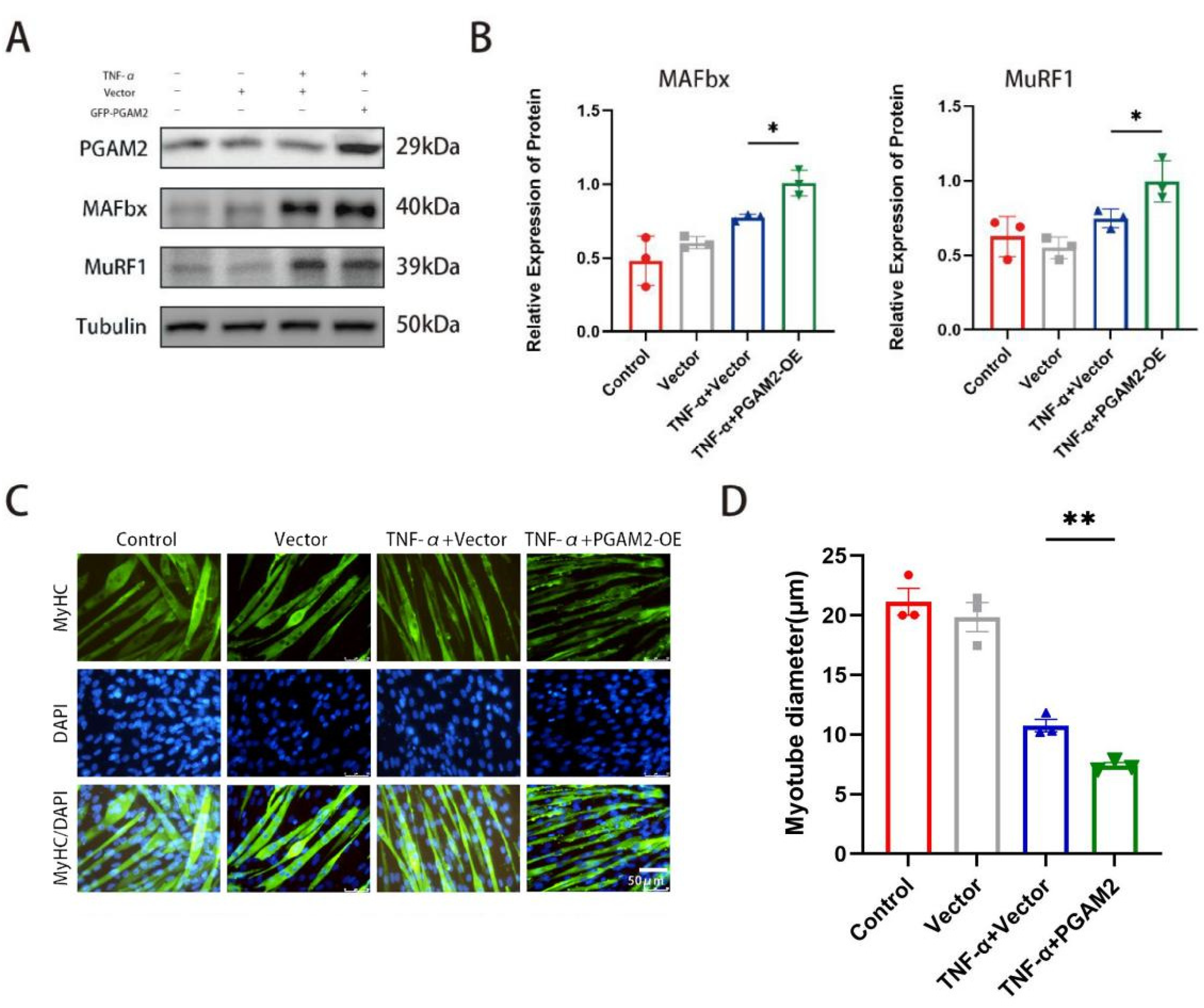
3.4. PGAM2 Overexpression Exacerbates TNF-α-Induced Muscle Atrophy
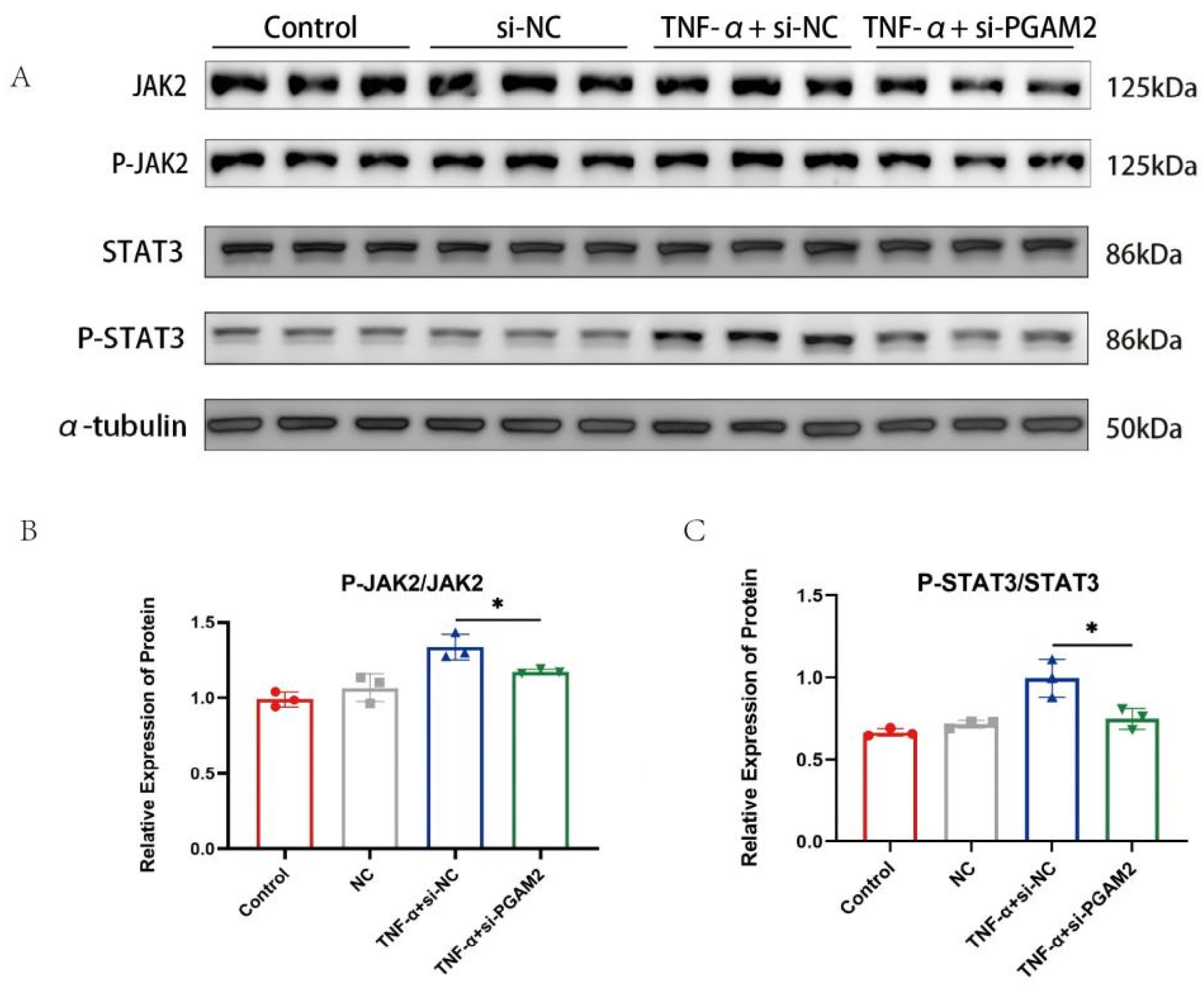
3.5. PGAM2 Promotes TNF-α-Induced Muscle Atrophy Through Activation of the JAK2/STAT3 Signaling Pathway
4. Discussion
4.1. Main Findings
4.2. Relation to Previous Studies
4.3. Mechanistic Insights and Implications
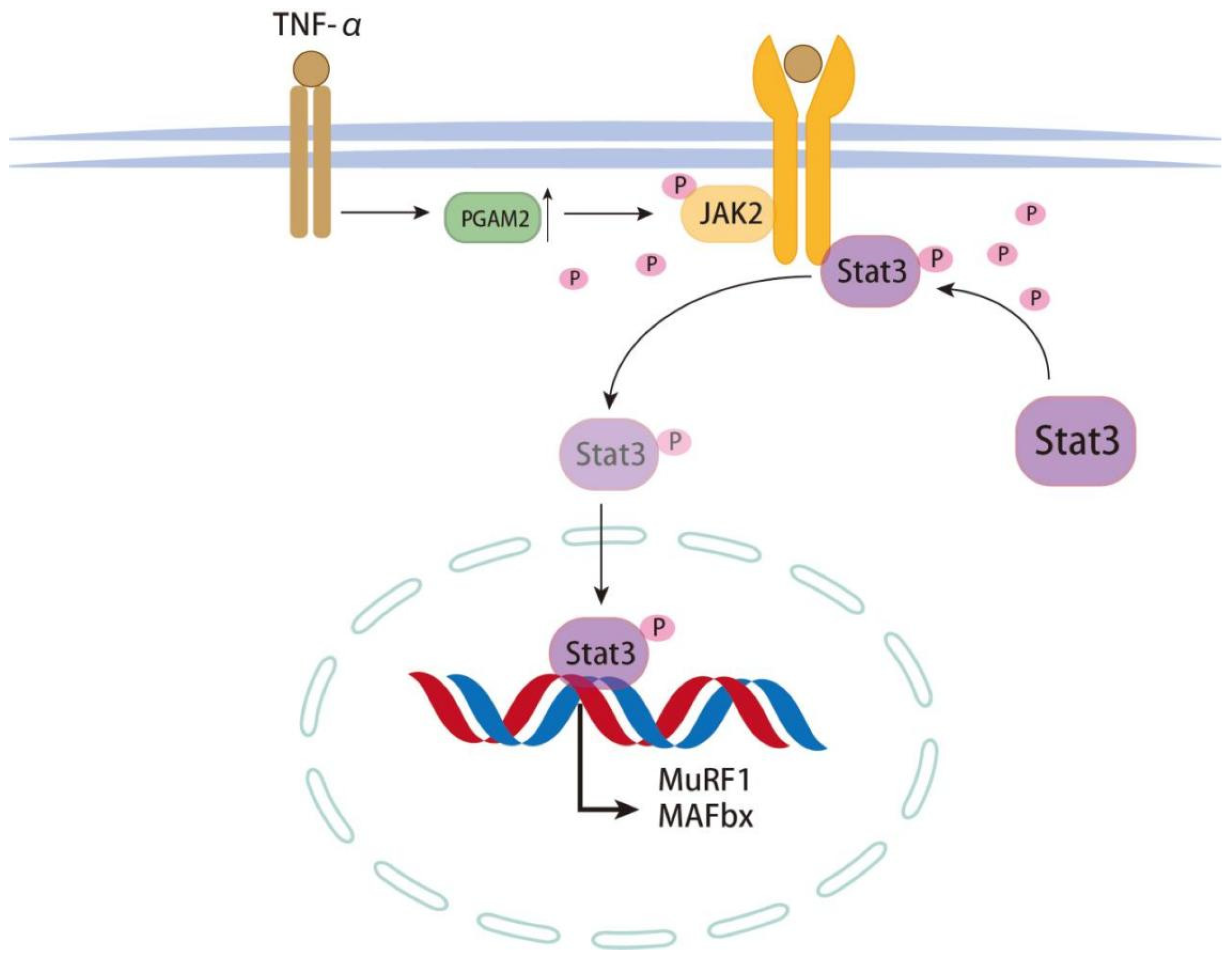
4.4. PGAM2 and JAK2/STAT3 Signaling
4.5. Limitations
4.6. Future Directions
5. Conclusions
Author Contributions
Funding
Institutional Review Board Statement
Data Availability Statement
Acknowledgments
Conflicts of Interest
Abbreviations
| PGAM2 | Multidisciplinary Digital Publishing Institute |
| CLP | Cecal Ligation and Puncture |
| C57BL/6 mice | C57BL/6 mouse strain |
| TNF-α: | Tumor necrosis factor alpha |
| JAK2 | Janus kinase 2 |
| STAT3 | Signal transducer and activator of transcription 3 |
| UPS | Ubiquitin–proteasome system |
| CSA | Cross-sectional area |
| MyHC | Myosin heavy chain |
| IL-1β | Interleukin-1β |
| IL-6 | Interleukin-6 |
| mTOR | Mammalian target of rapamycin |
| IKKα | Inhibitor of nuclear factor kappa-B kinase subunit alpha |
| HSP90 | Heat shock protein 90 |
| SYVN1 | Synovial apoptosis inhibitor 1 |
| BAD | BCL2-associated agonist of cell death |
| BCL-xL | B-cell lymphoma-extra large |
| PI3K/AKT | Phosphatidylinositol 3-kinase/protein kinase B |
References
- Demoule, A.; Jung, B.; Prodanovic, H.; Molinari, N.; Chanques, G.; Coirault, C.; Matecki, S.; Duguet, A.; Similowski, T.; Jaber, S. Diaphragm dysfunction on admission to the intensive care unit. Prevalence, risk factors, and prognostic impact—A prospective study. Am. J. Respir. Crit. Care Med. 2013, 188, 213–219. [Google Scholar] [CrossRef] [PubMed]
- Jung, B.; Moury, P.H.; Mahul, M.; de Jong, A.; Galia, F.; Prades, A.; Albaladejo, P.; Chanques, G.; Molinari, N.; Jaber, S. Diaphragmatic dysfunction in patients with icu-acquired weakness and its impact on extubation failure. Intensive Care Med. 2016, 42, 853–861. [Google Scholar] [CrossRef]
- Dres, M.; Dubé, B.P.; Mayaux, J.; Delemazure, J.; Reuter, D.; Brochard, L.; Similowski, T.; Demoule, A. Coexistence and impact of limb muscle and diaphragm weakness at time of liberation from mechanical ventilation in medical intensive care unit patients. Am. J. Respir. Crit. Care Med. 2017, 195, 57–66. [Google Scholar] [CrossRef]
- Dass, C.; Dako, F.; Simpson, S.; Marchetti, N.; Steiner, R.; Criner, G. Sonographic evaluation of diaphragmatic dysfunction: Technique, interpretation, and clinical applications. J. Thorac. Imaging 2019, 34, W131–W140. [Google Scholar] [CrossRef]
- Watson, A.C.; Hughes, P.D.; Louise Harris, M.; Hart, N.; Ware, R.J.; Wendon, J.; Green, M.; Moxham, J. Measurement of twitch transdiaphragmatic, esophageal, and endotracheal tube pressure with bilateral anterolateral magnetic phrenic nerve stimulation in patients in the intensive care unit. Crit. Care Med. 2001, 29, 1325–1331. [Google Scholar] [CrossRef]
- Parada-Gereda, H.M.; Tibaduiza, A.L.; Rico-Mendoza, A.; Molano-Franco, D.; Nieto, V.H.; Arias-Ortiz, W.A.; Perez-Terán, P.; Masclans, J.R. Effectiveness of diaphragmatic ultrasound as a predictor of successful weaning from mechanical ventilation: A systematic review and meta-analysis. Crit. Care 2023, 27, 174. [Google Scholar] [CrossRef]
- Supinski, G.S.; Callahan, L.A. Diaphragm weakness in mechanically ventilated critically ill patients. Crit. Care 2013, 17, R120. [Google Scholar] [CrossRef]
- Yuan, X.; Xue, F.; Yu, Y.; Cao, X.; Han, Y.; Wang, F.; Zhong, L. The molecular mechanism of sepsis-induced diaphragm dysfunction. J. Thorac. Dis. 2023, 15, 6831–6847. [Google Scholar] [CrossRef] [PubMed]
- Machado-Junior, P.A.; Dias, M.S.S.; de Souza, A.B.F.; Lopes, L.S.E.; Menezes, T.P.; Talvani, A.; Brochard, L.; Bezerra, F.S. A short duration of mechanical ventilation alters redox status in the diaphragm and aggravates inflammation in septic mice. Respir. Physiol. Neurobiol. 2025, 331, 104361. [Google Scholar] [CrossRef] [PubMed]
- Shrager, J.B.; Wang, Y.; Lee, M.; Nesbit, S.; Trope, W.; Konsker, H.; Fatodu, E.; Berry, M.S.; Poulstides, G.; Norton, J.; et al. Rationale and design of a mechanistic clinical trial of jak inhibition to prevent ventilator-induced diaphragm dysfunction. Respir. Med. 2021, 189, 106620. [Google Scholar] [CrossRef]
- Dridi, H.; Yehya, M.; Barsotti, R.; Reiken, S.; Angebault, C.; Jung, B.; Jaber, S.; Marks, A.R.; Lacampagne, A.; Matecki, S. Mitochondrial oxidative stress induces leaky ryanodine receptor during mechanical ventilation. Free Radic. Biol. Med. 2020, 146, 383–391. [Google Scholar] [CrossRef]
- Pohl, C.; Dikic, I. Cellular quality control by the ubiquitin-proteasome system and autophagy. Science 2019, 366, 818–822. [Google Scholar] [CrossRef]
- Helal, M.; Ahmed, M.; Ragab, M.; Ateya, A.; Sakr, S. Association of single nucleotide polymorphisms in neuropeptide y (npy) and phosphoglycerate mutase 2 (pgam2) genes with growth traits in rabbits. Trop. Anim. Health Prod. 2024, 56, 239. [Google Scholar] [CrossRef]
- Zhang, J.; Yu, L.; Fu, Q.; Gao, J.; Xie, Y.; Chen, J.; Zhang, P.; Liu, Q.; Zhao, S. Mouse phosphoglycerate mutase m and b isozymes: Cdna cloning, enzyme activity assay and mapping. Gene 2001, 264, 273–279. [Google Scholar] [CrossRef]
- Tixier, V.; Bataillé, L.; Etard, C.; Jagla, T.; Weger, M.; Daponte, J.P.; Strähle, U.; Dickmeis, T.; Jagla, K. Glycolysis supports embryonic muscle growth by promoting myoblast fusion. Proc. Natl. Acad. Sci. USA 2013, 110, 18982–18987. [Google Scholar] [CrossRef] [PubMed]
- Xu, Y.; Li, F.; Lv, L.; Li, T.; Zhou, X.; Deng, C.X.; Guan, K.L.; Lei, Q.Y.; Xiong, Y. Oxidative stress activates sirt2 to deacetylate and stimulate phosphoglycerate mutase. Cancer Res. 2014, 74, 3630–3642. [Google Scholar] [CrossRef] [PubMed]
- Tsusaka, T.; Guo, T.; Yagura, T.; Inoue, T.; Yokode, M.; Inagaki, N.; Kondoh, H. Deacetylation of phosphoglycerate mutase in its distinct central region by SIRT2 down-regulates its enzymatic activity. Genes Cells 2014, 19, 766–777. [Google Scholar] [CrossRef] [PubMed]
- Zhang, Y.; Beketaev, I.; Ma, Y.; Wang, J. Sumoylation-deficient phosphoglycerate mutase 2 impairs myogenic differentiation. Front. Cell Dev. Biol. 2022, 10, 1052363. [Google Scholar] [CrossRef]
- Li, M.; Gao, X.; Wang, H.; Zhang, M.; Li, X.; Wang, S.; Wang, S.; Cao, C.; Li, Y.; Su, G. Phosphoglycerate mutase 2 is elevated in serum of patients with heart failure and correlates with the disease severity and patient’s prognosis. Open Med. 2021, 16, 1134–1142. [Google Scholar] [CrossRef]
- Sato, S.; Ogura, Y.; Mishra, V.; Shin, J.; Bhatnagar, S.; Hill, B.G.; Kumar, A. Tweak promotes exercise intolerance by decreasing skeletal muscle oxidative phosphorylation capacity. Skelet. Muscle 2013, 3, 18. [Google Scholar] [CrossRef]
- Meyer, S.U.; Krebs, S.; Thirion, C.; Blum, H.; Krause, S.; Pfaffl, M.W. Tumor necrosis factor alpha and insulin-like growth factor 1 induced modifications of the gene expression kinetics of differentiating skeletal muscle cells. PLoS ONE 2015, 10, e0139520. [Google Scholar] [CrossRef]
- Li, Z.; Ning, K.; Zhao, D.; Zhou, Z.; Zhao, J.; Long, X.; Yang, Z.; Chen, D.; Cai, X.; Hong, L.; et al. Targeting the metabolic enzyme pgam2 overcomes enzalutamide resistance in castration-resistant prostate cancer by inhibiting bcl2 signaling. Cancer Res. 2023, 83, 3753–3766. [Google Scholar] [CrossRef]
- Liang, Q.; Gong, M.; Zou, J.H.; Luo, M.Y.; Jiang, L.L.; Wang, C.; Shen, N.X.; Zhang, M.C.; Xu, L.; Lei, H.M.; et al. A phosphoglycerate mutase 1 allosteric inhibitor overcomes drug resistance to egfr-targeted therapy via disrupting il-6/jak2/stat3 signaling pathway in lung adenocarcinoma. Drug Resist. Updates 2023, 68, 100957. [Google Scholar] [CrossRef]
- Zou, R.; Shi, W.; Chen, M.; Zhang, M.; Wu, D.; Li, H.; Zhou, H.; Li, Y.; Lu, W.; Li, C.; et al. Phosphoglycerate mutase 1-mediated dephosphorylation and degradation of dusp1 disrupt mitochondrial quality control and exacerbate endotoxemia-induced myocardial dysfunction. Theranostics 2024, 14, 7488–7504. [Google Scholar] [CrossRef]
- Zheng, Y.; Dai, H.; Chen, R.; Zhong, Y.; Zhou, C.; Wang, Y.; Zhan, C.; Luo, J. Endoplasmic reticulum stress promotes sepsis-induced muscle atrophy via activation of stat3 and smad3. J. Cell. Physiol. 2023, 238, 582–596. [Google Scholar] [CrossRef] [PubMed]
- Rom, O.; Reznick, A.Z. The role of e3 ubiquitin-ligases murf-1 and mafbx in loss of skeletal muscle mass. Free Radic. Biol. Med. 2016, 98, 218–230. [Google Scholar] [CrossRef] [PubMed]
- Panguluri, S.K.; Bhatnagar, S.; Kumar, A.; McCarthy, J.J.; Srivastava, A.K.; Cooper, N.G.; Lundy, R.F.; Kumar, A. Genomic profiling of messenger rnas and micrornas reveals potential mechanisms of tweak-induced skeletal muscle wasting in mice. PLoS ONE 2010, 5, e8760. [Google Scholar] [CrossRef]
- Le Neindre, A.; Wormser, J.; Luperto, M.; Bruel, C.; Misset, B.; Bouhemad, B.; Philippart, F. Diaphragm function in patients with sepsis and septic shock: A longitudinal ultrasound study. Aust. Crit. Care 2023, 36, 239–246. [Google Scholar] [CrossRef]
- Chen, Y.; Liu, Y.; Han, M.; Zhao, S.; Tan, Y.; Hao, L.; Liu, W.; Zhang, W.; Song, W.; Pan, M.; et al. Quantification of diaphragmatic dynamic dysfunction in septic patients by bedside ultrasound. Sci. Rep. 2022, 12, 17336. [Google Scholar] [CrossRef]
- Wang, M.M.; Hao, L.Y.; Guo, F.; Zhong, B.; Zhong, X.M.; Yuan, J.; Hao, Y.F.; Zhao, S.; Sun, X.F.; Lei, M.; et al. Decreased intracellular [Ca2+] coincides with reduced expression of dhprα1s, ryr1, and diaphragmatic dysfunction in a rat model of sepsis. Muscle Nerve 2017, 56, 1128–1136. [Google Scholar] [CrossRef]
- Lanone, S.; Taillé, C.; Boczkowski, J.; Aubier, M. Diaphragmatic fatigue during sepsis and septic shock. Intensive Care Med. 2005, 31, 1611–1617. [Google Scholar] [CrossRef] [PubMed]
- Li, C.; Cao, H.; Ren, Y.; Jia, J.; Yang, G.; Jin, J.; Shi, X. Eicosapentaenoic acid-mediated activation of pgam2 regulates skeletal muscle growth and development via the pi3k/akt pathway. Int. J. Biol. Macromol. 2024, 268, 131547. [Google Scholar] [CrossRef] [PubMed]
- Preau, S.; Vodovar, D.; Jung, B.; Lancel, S.; Zafrani, L.; Flatres, A.; Oualha, M.; Voiriot, G.; Jouan, Y.; Joffre, J.; et al. Energetic dysfunction in sepsis: A narrative review. Ann. Intensive Care 2021, 11, 104. [Google Scholar] [CrossRef]
- Hu, D.; Sheeja Prabhakaran, H.; Zhang, Y.Y.; Luo, G.; He, W.; Liou, Y.C. Mitochondrial dysfunction in sepsis: Mechanisms and therapeutic perspectives. Crit. Care 2024, 28, 292. [Google Scholar] [CrossRef]
- Cheng, S.C.; Scicluna, B.P.; Arts, R.J.; Gresnigt, M.S.; Lachmandas, E.; Giamarellos-Bourboulis, E.J.; Kox, M.; Manjeri, G.R.; Wagenaars, J.A.; Cremer, O.L.; et al. Broad defects in the energy metabolism of leukocytes underlie immunoparalysis in sepsis. Nat. Immunol. 2016, 17, 406–413. [Google Scholar] [CrossRef]
- Owen, A.M.; Patel, S.P.; Smith, J.D.; Balasuriya, B.K.; Mori, S.F.; Hawk, G.S.; Stromberg, A.J.; Kuriyama, N.; Kaneki, M.; Rabchevsky, A.G.; et al. Chronic muscle weakness and mitochondrial dysfunction in the absence of sustained atrophy in a preclinical sepsis model. Elife 2019, 8, e49920. [Google Scholar] [CrossRef]
- Seki, S.M.; Gaultier, A. Exploring non-metabolic functions of glycolytic enzymes in immunity. Front. Immunol. 2017, 8, 1549. [Google Scholar] [CrossRef]
- Ruiz, S.; Vardon-Bounes, F.; Merlet-Dupuy, V.; Conil, J.M.; Buléon, M.; Fourcade, O.; Tack, I.; Minville, V. Sepsis modeling in mice: Ligation length is a major severity factor in cecal ligation and puncture. Intensive Care Med. Exp. 2016, 4, 22. [Google Scholar] [CrossRef]



| Gene | Forward (5′-3′) | Reverse (3′-5′) |
|---|---|---|
| β-actin | CATCCGTAAAGACCTCTATC | ATGGAGCCACCGATCCACA |
| MAFbx1 | GAGGCAGATTCGCAAGCGTT | TCCAGGAGAGAATGGCAGT |
| MuRF1 | AGTGTCCATGTCTTGGAGGT | ACTGGAGCACTCCTGCTTGT |
| PGAM2 | ATGGAAGGAGGAAGTGAGG | GGTGGTCTCCTCGGAGTCAA |
| IL-1β | TGGGATGATTCCATGAGCTT | CTTGGTGGTGGTGGTGGAAG |
| IL-6 | GGGACTGATGCTGGTGACAA | CGCACTAGGTTTGCCGAGTA |
Disclaimer/Publisher’s Note: The statements, opinions and data contained in all publications are solely those of the individual author(s) and contributor(s) and not of MDPI and/or the editor(s). MDPI and/or the editor(s) disclaim responsibility for any injury to people or property resulting from any ideas, methods, instructions or products referred to in the content. |
© 2026 by the authors. Licensee MDPI, Basel, Switzerland. This article is an open access article distributed under the terms and conditions of the Creative Commons Attribution (CC BY) license.
Share and Cite
Chu, Y.; Yuan, X.; Gao, X.; Luo, J. PGAM2 Regulates Sepsis-Induced Diaphragmatic Atrophy via the JAK2/STAT3 Pathway. Biomedicines 2026, 14, 1075. https://doi.org/10.3390/biomedicines14051075
Chu Y, Yuan X, Gao X, Luo J. PGAM2 Regulates Sepsis-Induced Diaphragmatic Atrophy via the JAK2/STAT3 Pathway. Biomedicines. 2026; 14(5):1075. https://doi.org/10.3390/biomedicines14051075
Chicago/Turabian StyleChu, Yun, Xinrun Yuan, Xiaopo Gao, and Jinlong Luo. 2026. "PGAM2 Regulates Sepsis-Induced Diaphragmatic Atrophy via the JAK2/STAT3 Pathway" Biomedicines 14, no. 5: 1075. https://doi.org/10.3390/biomedicines14051075
APA StyleChu, Y., Yuan, X., Gao, X., & Luo, J. (2026). PGAM2 Regulates Sepsis-Induced Diaphragmatic Atrophy via the JAK2/STAT3 Pathway. Biomedicines, 14(5), 1075. https://doi.org/10.3390/biomedicines14051075