From Inflammation to Precision Medicine: Mechanistic Insights into Asthma, COPD, and IPF
Abstract
1. Introduction
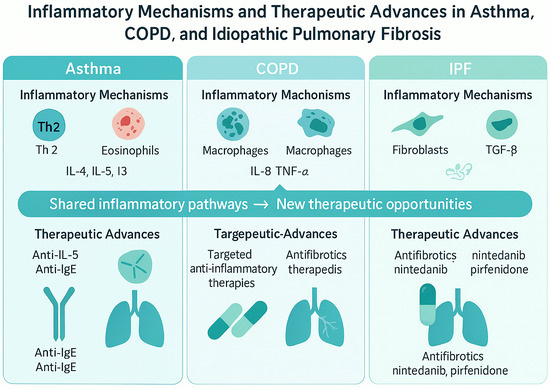
2. Shared and Distinct Inflammatory Pathways in Asthma, COPD, and Idiopathic Pulmonary Fibrosis
2.1. Asthma: Type 2 Inflammation and Immune Heterogeneity
2.2. Chronic Obstructive Pulmonary Disease (COPD): Persistent and Heterogeneous Inflammation
2.3. Idiopathic Pulmonary Fibrosis (IPF): Dysregulated Inflammation and Aberrant Wound Repair
3. Inflammatory Biomarkers: Endotyping and Precision Treatment
- -
- -
- -
- IPF: KL-6, SP-D, and MMP-7 are validated prognostic markers, associated with disease progression and mortality [30,31,32]. Combining KL-6 and MMP-7 improves prediction accuracy. Emerging markers such as CA19-9, periostin, and CCL18 show potential for treatment monitoring, particularly during antifibrotic therapy [32,33].
4. Targeted Therapies: Precision Medicine Across Asthma, COPD, and IPF
4.1. Targeted Therapies in Asthma
- -
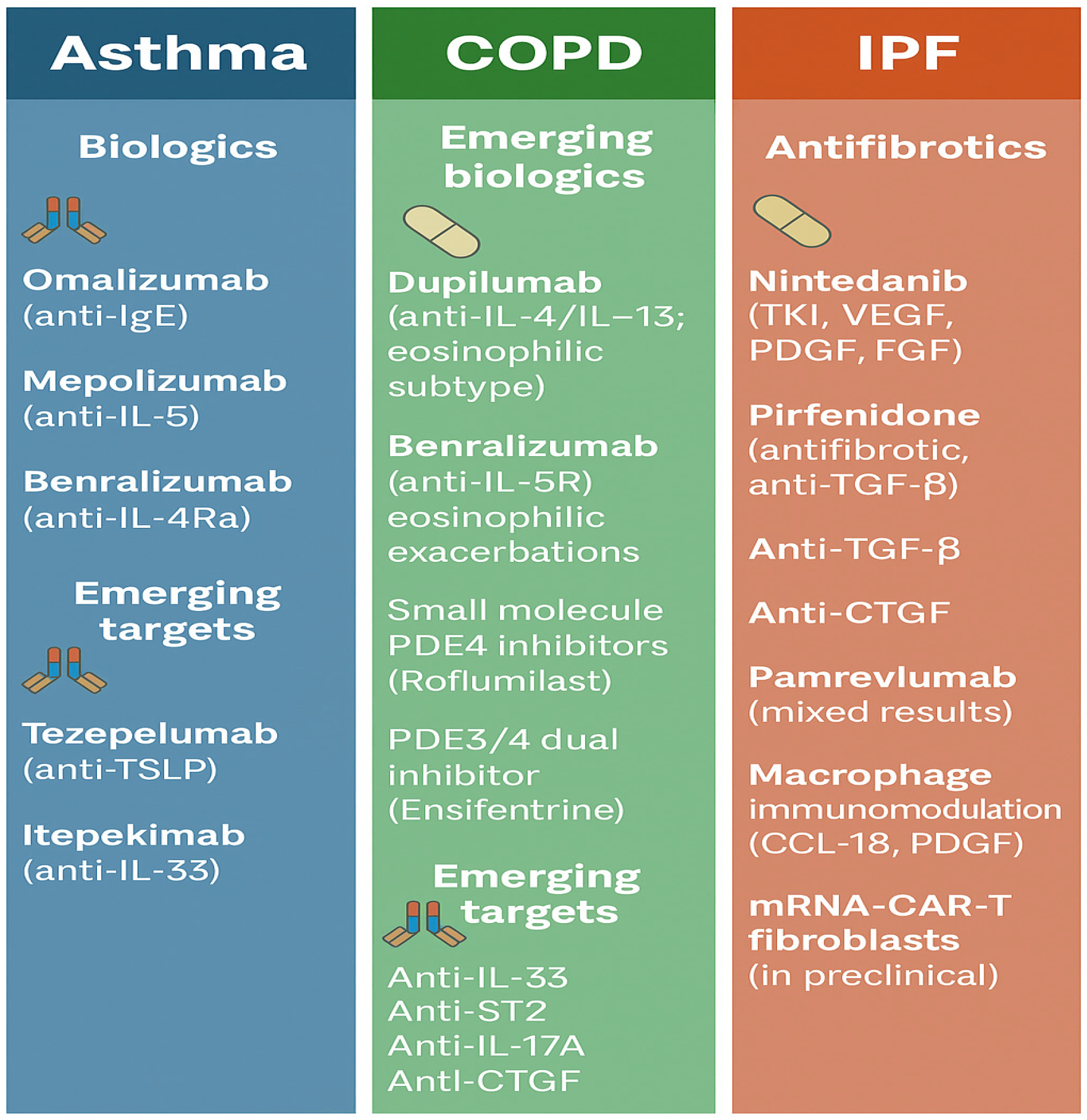
- ** Anti-IgE therapy (omalizumab): Established as the gold standard for allergic asthma with elevated serum IgE, omalizumab reduces exacerbations, improves quality of life, and decreases inhaled corticosteroid (ICS) requirements in sensitized patients, with efficacy confirmed in both randomized trials and real-world studies [37].
- -
- ** Anti–IL-5/IL-5R therapies (mepolizumab, reslizumab, benralizumab): Initially assessed in patients with baseline blood eosinophilia ≥150–300 cells/µL, these agents demonstrated consistent reductions in exacerbation rates, improved lung function, and corticosteroid sparing. Importantly, subsequent analyses and pivotal trials—including DREAM and MENSA for mepolizumab [38,39,40,41]. SIROCCO and CALIMA for benralizumab [40], and the BREATH program for reslizumab [41]—have shown efficacy across broader eosinophil thresholds, highlighting their robustness beyond initial cut-offs.
- -
- -
- ** Anti-alarmin therapies: These represent the newest therapeutic frontier, though their positioning differs. Tezepelumab (anti-TSLP) is the first biologic to demonstrate efficacy across a wide spectrum of asthma phenotypes, including low-eosinophil subgroups. Data from PATHWAY and NAVIGATOR trials confirmed reductions in exacerbations and broad applicability [44,45,46]. In contrast, itepekimab (anti-IL-33) remains in early development; phase II results are promising, but its role in clinical practice is not yet established [47].
4.2. Targeted Therapies in COPD
4.2.1. Biologics Targeting Type 2 Pathways
- -
- ** Dupilumab (anti–IL-4Rα): The landmark NOTUS trial demonstrated a 30–34% reduction in exacerbations, along with improvements in lung function and quality of life, in eosinophilic COPD patients. These results led to FDA approval in 2023, establishing dupilumab as the first biologic indicated for COPD [54].
- -
- ** Benralizumab (anti–IL-5Rα): The ABRA trial, a phase II study, showed reduced treatment failure and improved symptoms following a single 100 mg subcutaneous dose during acute eosinophilic exacerbations [55]. However, larger phase III trials (GALATHEA, TERRANOVA) did not meet their primary endpoints, although post hoc analyses suggested benefit in highly selected eosinophilic subgroups [56].
- -
- ** Mepolizumab (anti–IL-5): The METREX trial demonstrated modest reductions in exacerbations in eosinophilic COPD, whereas METREO failed to confirm consistent benefit [57].
4.2.2. Beyond Type 2 Inflammation
- -
- ** Ensifentrine (dual PDE3/4 inhibitor): Delivered via nebulizer, ensifentrine achieved ~40% reduction in exacerbations and improved lung function in the ENHANCE-1 and ENHANCE-2 trials, marking the most significant inhaled therapy innovation in two decades [59].
- -
- ** Emerging upstream targets: Novel strategies include blocking IL-33 (itepekimab), ST2 (astegolimab), and IL-17A. Although still in early phases, these agents hold promise for addressing steroid-unresponsive and frequent-exacerbator phenotypes [52].
4.2.3. Comparative Perspective
4.3. Targeted Therapies in IPF
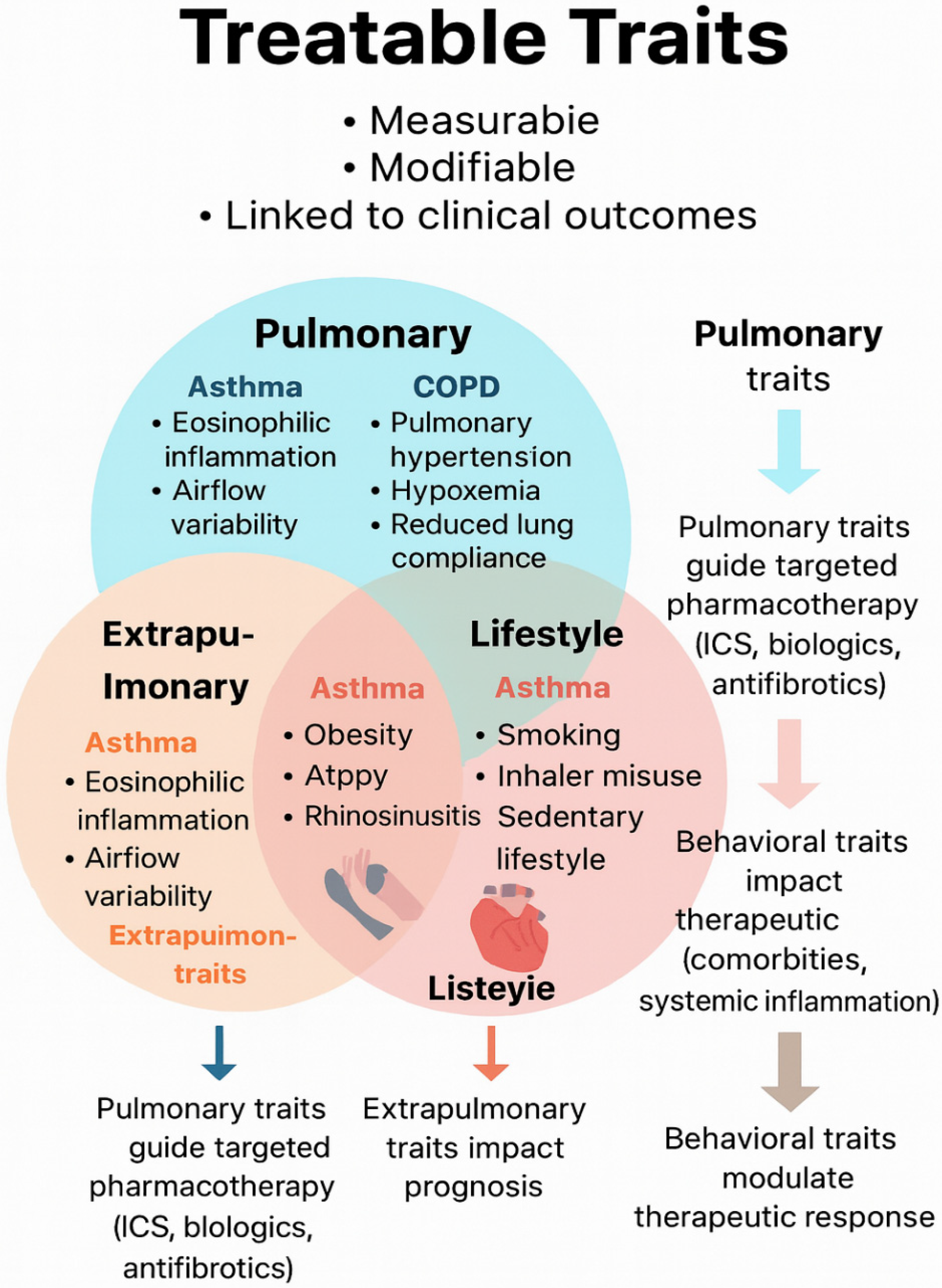
5. Treatable Traits: A Precision Care Framework for Asthma, COPD, and IPF
5.1. Pulmonary Traits and Biomarker-Guided Therapy
5.2. Extrapulmonary Traits: Impact Across Diseases
5.3. Behavioral and Lifestyle Traits
5.4. Implementation and Future Directions
- -
- Standardization of trait definitions and cut-offs across diseases;
- -
- Validation of composite indices integrating clinical, physiological, and biomarker data;
- -
- Integration of omics-enabled phenotyping and AI-supported decision tools;
- -
- Development of prospective TT-guided trials across asthma, COPD, and ILD populations.
6. Challenges and Future Perspectives
6.1. Disease Heterogeneity
6.2. Biomarker Validation
6.3. Bridging Translational Gaps
6.4. Integration of AI and Multi-Omics
6.5. Regulatory and Logistical Barriers
6.6. Future Perspectives
7. Conclusions
Author Contributions
Funding
Institutional Review Board Statement
Informed Consent Statement
Data Availability Statement
Conflicts of Interest
References
- Rajvanshi, N.; Kumar, P.; Goyal, J.P. Global Initiative for Asthma Guidelines 2024: An Update. Indian Pediatr. 2024, 61, 781–786. [Google Scholar] [CrossRef]
- Agustí, A.; Celli, B.R.; Criner, G.J.; Halpin, D.; Anzueto, A.; Barnes, P.; Bourbeau, J.; Han, M.K.; Martinez, F.J.; de Oca, M.M.; et al. Global Initiative for Chronic Obstructive Lung Disease 2023 Report: GOLD Executive Summary. Eur. Respir. J. 2023, 61, 2300239. [Google Scholar] [CrossRef]
- Bonella, F.; Spagnolo, P.; Ryerson, C. Current and Future Treatment Landscape for Idiopathic Pulmonary Fibrosis. Drugs 2023, 83, 1581–1593. [Google Scholar] [CrossRef]
- Agusti, A.; Bel, E.; Thomas, M.; Vogelmeier, C.; Brusselle, G.; Holgate, S.; Humbert, M.; Jones, P.; Gibson, P.G.; Vestbo, J.; et al. Treatable traits: Toward precision medicine of chronic airway diseases. Eur. Respir. J. 2016, 47, 410–419. [Google Scholar] [CrossRef]
- Shih, A.R.; Nitiwarangkul, C.; Little, B.P.; Roop, B.W.; Nandy, S.; Szabari, M.V.; Mercaldo, N.; Mercaldo, S.; Montesi, S.B.; Muniappan, A.; et al. Practical application and validation of the 2018 ATS/ERS/JRS/ALAT and Fleischner Society guidelines for the diagnosis of idiopathic pulmonary fibrosis. Respir. Res. 2021, 22, 124. [Google Scholar] [CrossRef]
- Chianese, M.; Screm, G.; Salton, F.; Confalonieri, P.; Trotta, L.; Barbieri, M.; Ruggero, L.; Mari, M.; Reccardini, N.; Geri, P.; et al. Pirfenidone and Nintedanib in Pulmonary Fibrosis: Lights and Shadows. Pharmaceuticals 2024, 17, 709. [Google Scholar] [CrossRef]
- Fahy, J.V. Type 2 inflammation in asthma—Present in most, absent in many. Nat. Rev. Immunol. 2014, 15, 57–65. [Google Scholar] [CrossRef]
- Boonpiyathad, T.; Sözener, Z.C.; Satitsuksanoa, P.; Akdis, C.A. Immunologic mechanisms in asthma. Semin. Immunol. 2019, 46, 101333. [Google Scholar] [CrossRef]
- Matucci, A.; Bormioli, S.; Nencini, F.; Maggi, E.; Vultaggio, A. The emerging role of type 2 inflammation in asthma. Expert Rev. Clin. Immunol. 2020, 17, 63–71. [Google Scholar] [CrossRef]
- Bartemes, K.R.; Kephart, G.M.; Fox, S.J.; Kita, H. Enhanced innate type 2 immune response in peripheral blood from patients with asthma. J. Allergy Clin. Immunol. 2014, 134, 671–678.e4. [Google Scholar] [CrossRef]
- Kabata, H.; Moro, K.; Koyasu, S. The group 2 innate lymphoid cell (ILC2) regulatory network and its underlying mechanisms. Immunol. Rev. 2018, 286, 37–52. [Google Scholar] [CrossRef]
- Licona-Limón, P.; Kim, L.K.; Palm, N.W.; Flavell, R.A. TH2, allergy and group 2 innate lymphoid cells. Nat. Immunol. 2013, 14, 536–542. [Google Scholar] [CrossRef]
- Ghrairi, N.; Elhechmi, Y.Z. Physiopathology of Allergic Asthma: A Comprehensive Review. Scand. J. Immunol. 2025, 101, e70032. [Google Scholar] [CrossRef]
- Chung, K.F. Asthma phenotyping: A necessity for improved therapeutic precision and new targeted therapies. J. Intern. Med. 2015, 279, 192–204. [Google Scholar] [CrossRef]
- Calhoun, W.J.; Chupp, G.L. The new era of add-on asthma treatments: Where do we stand? Allergy Asthma Clin. Immunol. 2022, 18, 42. [Google Scholar] [CrossRef]
- Kim, G.-D.; Lim, E.Y.; Shin, H.S. Macrophage Polarization and Functions in Pathogenesis of Chronic Obstructive Pulmonary Disease. Int. J. Mol. Sci. 2024, 25, 5631. [Google Scholar] [CrossRef]
- Górska, K.; Paplińska-Goryca, M.; Nejman-Gryz, P.; Goryca, K.; Krenke, R. Eosinophilic and Neutrophilic Airway Inflammation in the Phenotyping of Mild-to-Moderate Asthma and Chronic Obstructive Pulmonary Disease. COPD J. Chronic Obstr. Pulm. Dis. 2016, 14, 181–189. [Google Scholar] [CrossRef]
- Rojas-Quintero, J.; Ochsner, S.A.; New, F.; Divakar, P.; Yang, C.X.; Wu, T.D.; Robinson, J.; Chandrashekar, D.S.; Banovich, N.E.; Rosas, I.O.; et al. Spatial Transcriptomics Resolve an Emphysema-Specific Lymphoid Follicle B Cell Signature in Chronic Obstructive Pulmonary Disease. Am. J. Respir. Crit. Care Med. 2024, 209, 48–58. [Google Scholar] [CrossRef]
- Rovina, N.; Koutsoukou, A.; Koulouris, N.G. Inflammation and Immune Response in COPD: Where Do We Stand? Mediat. Inflamm. 2013, 2013, 413735. [Google Scholar] [CrossRef]
- Polverino, F.; Sin, D.D. Type 2 airway inflammation in COPD. Eur. Respir. J. 2024, 63, 2400150. [Google Scholar] [CrossRef]
- Xu, Y.; Lan, P.; Wang, T. The Role of Immune Cells in the Pathogenesis of Idiopathic Pulmonary Fibrosis. Medicina 2023, 59, 1984. [Google Scholar] [CrossRef]
- Mutsaers, S.E.; Miles, T.; Prêle, C.M.; Hoyne, G.F. Emerging role of immune cells as drivers of pulmonary fibrosis. Pharmacol. Ther. 2023, 252, 108562. [Google Scholar] [CrossRef]
- Parimon, T.; Hohmann, M.S.; Yao, C. Cellular Senescence: Pathogenic Mechanisms in Lung Fibrosis. Int. J. Mol. Sci. 2021, 22, 6214. [Google Scholar] [CrossRef]
- Koudstaal, T.; Wijsenbeek, M.S. Idiopathic pulmonary fibrosis. La Presse Médicale 2023, 52, 104166. [Google Scholar] [CrossRef]
- Heukels, P.; Moor, C.C.; von der Thüsen, J.H.; Wijsenbeek, M.S.; Kool, M. Inflammation and immunity in IPF pathogenesis and treatment. Respir. Med. 2019, 147, 79–91. [Google Scholar] [CrossRef]
- Denton, E.; Price, D.B.; Tran, T.N.; Canonica, G.W.; Menzies-Gow, A.; FitzGerald, J.M.; Sadatsafavi, M.; de Llano, L.P.; Christoff, G.; Quinton, A.; et al. Cluster Analysis of Inflammatory Biomarker Expression in the International Severe Asthma Registry. J. Allergy Clin. Immunol. Pr. 2021, 9, 2680–2688.e7. [Google Scholar] [CrossRef]
- Levy, M.L.; Bacharier, L.B.; Bateman, E.; Boulet, L.-P.; Brightling, C.; Buhl, R.; Brusselle, G.; Cruz, A.A.; Drazen, J.M.; Duijts, L.; et al. Key recommendations for primary care from the 2022 Global Initiative for Asthma (GINA) update. npj Prim. Care Respir. Med. 2023, 33, 7. [Google Scholar] [CrossRef]
- Lee, Y.-L.; Heriyanto, D.S.; Yuliani, F.S.; Laiman, V.; Choridah, L.; Lee, K.-Y.; Chang, J.-H.; Chung, K.F.; Chang, L.-T.; Chang, T.-Y.; et al. Eosinophilic inflammation: A key player in COPD pathogenesis and progression. Ann. Med. 2024, 56, 2408466. [Google Scholar] [CrossRef]
- Barnes, P.J. Inflammatory mechanisms in patients with chronic obstructive pulmonary disease. J. Allergy Clin. Immunol. 2016, 138, 16–27. [Google Scholar] [CrossRef]
- Maher, T.M.; Oballa, E.; Simpson, J.K.; Porte, J.; Habgood, A.; A Fahy, W.; Flynn, A.; Molyneaux, P.L.; Braybrooke, R.; Divyateja, H.; et al. An epithelial biomarker signature for idiopathic pulmonary fibrosis: An analysis from the multicentre PROFILE cohort study. Lancet Respir. Med. 2017, 5, 946–955. [Google Scholar] [CrossRef]
- Singh, V.; Ulasov, I.; Gupta, S.; Singh, A.; Roy, V.K.; Kharwar, R.K. Idiopathic Pulmonary Fibrosis: Where do We Stand and How Far to Go? Discov. Med. 2024, 36, 22–47. [Google Scholar] [CrossRef]
- Zhang, C.; Chen, L.; Xie, C.; Wang, F.; Wang, J.; Zhou, H.; Liu, Q.; Zeng, Z.; Li, N.; Huang, J.; et al. YTHDC1 delays cellular senescence and pulmonary fibrosis by activating ATR in an m6A-independent manner. EMBO J. 2023, 43, 61–86. [Google Scholar] [CrossRef]
- Klein, J.; Wheeler, A.M.; Baker, J.F.; Yang, Y.; Roul, P.; Frideres, H.; Wysham, K.D.; Kerr, G.S.; Reimold, A.; Ascherman, D.P.; et al. MUC5B promoter variant and survival in rheumatoid arthritis-associated interstitial lung disease. Rheumatology 2024, keae615. [Google Scholar] [CrossRef]
- Chung, K.F.; Dixey, P.; Abubakar-Waziri, H.; Bhavsar, P.; Patel, P.H.; Guo, S.; Ji, Y. Characteristics, phenotypes, mechanisms and management of severe asthma. Chin. Med. J. 2022, 135, 1141–1155. [Google Scholar] [CrossRef]
- Kaur, R.; Chupp, G. Phenotypes and endotypes of adult asthma: Moving toward precision medicine. J. Allergy Clin. Immunol. 2019, 144, 1–12. [Google Scholar] [CrossRef]
- Tiotiu, A. Applying personalized medicine to adult severe asthma. Allergy Asthma Proc. 2021, 42, e8–e16. [Google Scholar] [CrossRef]
- Busse, W.; Corren, J.; Lanier, B.Q.; McAlary, M.; Fowler-Taylor, A.; Della Cioppa, G.; van As, A.; Gupta, N. Omalizumab, anti-IgE recombinant humanized monoclonal antibody, for the treatment of severe allergic asthma. J. Allergy Clin. Immunol. 2001, 108, 184–190. [Google Scholar] [CrossRef]
- Pavord, I.D.; Korn, S.; Howarth, P.; Bleecker, E.R.; Buhl, R.; Keene, O.N.; Ortega, H.; Chanez, P. Mepolizumab for severe eosinophilic asthma (DREAM): A multicentre, double-blind, placebo-controlled trial. Lancet 2012, 380, 651–659. [Google Scholar] [CrossRef]
- Ortega, H.G.; Liu, M.C.; Pavord, I.D.; Brusselle, G.G.; Fitzgerald, J.M.; Chetta, A.; Humbert, M.; Katz, L.E.; Keene, O.N.; Yancey, S.W.; et al. Mepolizumab Treatment in Patients with Severe Eosinophilic Asthma. N. Engl. J. Med. 2014, 371, 1198–1207. [Google Scholar] [CrossRef]
- Goldman, M.; Hirsch, I.; Zangrilli, J.G.; Newbold, P.; Xu, X. The association between blood eosinophil count and benralizumab efficacy for patients with severe, uncontrolled asthma: Subanalyses of the Phase III SIROCCO and CALIMA studies. Curr. Med Res. Opin. 2017, 33, 1605–1613. [Google Scholar] [CrossRef]
- Deeks, E.D.; Brusselle, G. Reslizumab in Eosinophilic Asthma: A Review. Drugs 2017, 77, 777–784. [Google Scholar] [CrossRef]
- Gyawali, B.; Georas, S.N.; Khurana, S. Biologics in severe asthma: A state-of-the-art review. Eur. Respir. Rev. 2025, 34, 240088. [Google Scholar] [CrossRef]
- Moran, A.; Pavord, I.D. Anti-IL-4/IL-13 for the treatment of asthma: The story so far. Expert Opin. Biol. Ther. 2020, 20, 283–294. [Google Scholar] [CrossRef]
- Corren, J.; Menzies-Gow, A.; Chupp, G.; Israel, E.; Korn, S.; Cook, B.; Ambrose, C.S.; Hellqvist, Å.; Roseti, S.L.; Molfino, N.A.; et al. Efficacy of Tezepelumab in Severe, Uncontrolled Asthma: Pooled Analysis of the PATHWAY and NAVIGATOR Clinical Trials. Am. J. Respir. Crit. Care Med. 2023, 208, 13–24. [Google Scholar] [CrossRef]
- Menzies-Gow, A.; Corren, J.; Bourdin, A.; Chupp, G.; Israel, E.; Wechsler, M.E.; Brightling, C.E.; Griffiths, J.M.; Hellqvist, Å.; Bowen, K.; et al. Tezepelumab in Adults and Adolescents with Severe, Uncontrolled Asthma. N. Engl. J. Med. 2021, 384, 1800–1809. [Google Scholar] [CrossRef]
- Menzies-Gow, A.; Colice, G.; Griffiths, J.M.; Almqvist, G.; Ponnarambil, S.; Kaur, P.; Ruberto, G.; Bowen, K.; Hellqvist, Å.; Mo, M.; et al. NAVIGATOR: A phase 3 multicentre, randomized, double-blind, placebo-controlled, parallel-group trial to evaluate the efficacy and safety of tezepelumab in adults and adolescents with severe, uncontrolled asthma. Respir. Res. 2020, 21, 266. [Google Scholar] [CrossRef]
- Wechsler, M.E.; Ruddy, M.K.; Pavord, I.D.; Israel, E.; Rabe, K.F.; Ford, L.B.; Maspero, J.F.; Abdulai, R.M.; Hu, C.-C.; Martincova, R.; et al. Efficacy and Safety of Itepekimab in Patients with Moderate-to-Severe Asthma. N. Engl. J. Med. 2021, 385, 1656–1668. [Google Scholar] [CrossRef]
- Humbert, M.; Taillé, C.; Mala, L.; Le Gros, V.; Just, J.; Molimard, M.; STELLAIR Investigators. Omalizumab effectiveness in patients with severe allergic asthma according to blood eosinophil count: The STELLAIR study. Eur. Respir. J. 2018, 51, 1702523. [Google Scholar] [CrossRef]
- Chupp, G.L.; Bradford, E.S.; Albers, F.C.; Bratton, D.J.; Wang-Jairaj, J.; Nelsen, L.M.; Trevor, J.L.; Magnan, A.; Brinke, A.T. Efficacy of mepolizumab add-on therapy on health-related quality of life and markers of asthma control in severe eosinophilic asthma (MUSCA): A randomised, double-blind, placebo-controlled, parallel-group, multicentre, phase 3b trial. Lancet Respir. Med. 2017, 5, 390–400. [Google Scholar] [CrossRef]
- Nair, P.; Wenzel, S.; Rabe, K.F.; Bourdin, A.; Lugogo, N.L.; Kuna, P.; Barker, P.; Sproule, S.; Ponnarambil, S.; Goldman, M. Oral Glucocorticoid–Sparing Effect of Benralizumab in Severe Asthma. N. Engl. J. Med. 2017, 376, 2448–2458. [Google Scholar] [CrossRef]
- Charles, D.; Shanley, J.; Temple, S.; Rattu, A.; Khaleva, E.; Roberts, G. Real-world efficacy of treatment with benralizumab, dupilumab, mepolizumab and reslizumab for severe asthma: A systematic review and meta-analysis. Clin. Exp. Allergy 2022, 52, 616–627. [Google Scholar] [CrossRef]
- Agache, I.; Akdis, C.A. Precision medicine and phenotypes, endotypes, genotypes, regiotypes, and theratypes of allergic diseases. J. Clin. Investig. 2019, 129, 1493–1503. [Google Scholar] [CrossRef] [PubMed]
- Yue, M.; Tao, S.; Gaietto, K.; Chen, W. Omics approaches in asthma research: Challenges and opportunities. Chin. Med. J. Pulm. Crit. Care Med. 2024, 2, 1–9. [Google Scholar] [CrossRef]
- Bhatt, S.P.; Rabe, K.F.; Hanania, N.A.; Vogelmeier, C.F.; Bafadhel, M.; Christenson, S.A.; Papi, A.; Singh, D.; Laws, E.; Patel, N.; et al. Dupilumab for COPD with Blood Eosinophil Evidence of Type 2 Inflammation. N. Engl. J. Med. 2024, 390, 2274–2283. [Google Scholar] [CrossRef]
- Ramakrishnan, S.; Russell, R.E.K.; Mahmood, H.R.; Krassowska, K.; Melhorn, J.; Mwasuku, C.; Pavord, I.D.; Bermejo-Sanchez, L.; Howell, I.; Mahdi, M.; et al. Treating eosinophilic exacerbations of asthma and COPD with benralizumab (ABRA): A double-blind, double-dummy, active placebo-controlled randomised trial. Lancet Respir. Med. 2024, 13, 59–68. [Google Scholar] [CrossRef]
- Criner, G.J.; Celli, B.R.; Brightling, C.E.; Agusti, A.; Papi, A.; Singh, D.; Sin, D.D.; Vogelmeier, C.F.; Sciurba, F.C.; Bafadhel, M.; et al. Benralizumab for the Prevention of COPD Exacerbations. N. Engl. J. Med. 2019, 381, 1023–1034. [Google Scholar] [CrossRef]
- Pavord, I.D.; Chapman, K.R.; Bafadhel, M.; Sciurba, F.C.; Bradford, E.S.; Harris, S.S.; Mayer, B.; Rubin, D.B.; Yancey, S.W.; Paggiaro, P. Mepolizumab for Eosinophil-Associated COPD: Analysis of METREX and METREO. Int. J. Chronic Obstr. Pulm. Dis. 2021, ume 16, 1755–1770. [Google Scholar] [CrossRef]
- Qi, Y.; Yan, Y.; Tang, D.; Han, J.; Zhu, X.; Cui, M.; Wu, H.; Tao, Y.; Fan, F. Inflammatory and Immune Mechanisms in COPD: Current Status and Therapeutic Prospects. J. Inflamm. Res. 2024, ume 17, 6603–6618. [Google Scholar] [CrossRef]
- Cazzola, M.; Page, C.P.; Calzetta, L.; Martinez, F.J.; Rogliani, P.; Matera, M.G. Ensifentrine Plus a Long-Acting Muscarinic Antagonist in COPD: A Trifunctional Dual Bronchodilation Perspective. Drugs 2025, 85, 1099–1107. [Google Scholar] [CrossRef]
- Raghu, G.; Remy-Jardin, M.; Richeldi, L.; Thomson, C.C.; Inoue, Y.; Johkoh, T.; Kreuter, M.; Lynch, D.A.; Maher, T.M.; Martinez, F.J.; et al. Idiopathic Pulmonary Fibrosis (an Update) and Progressive Pulmonary Fibrosis in Adults: An Official ATS/ERS/JRS/ALAT Clinical Practice Guideline. Am. J. Respir. Crit. Care Med. 2022, 205, e18–e47. [Google Scholar] [CrossRef]
- Denis, A.; Tsiri, P.; Guiot, J.; Tzouvelekis, A. A new era in the treatment of progressive fibrosing interstitial lung diseases. Breathe 2025, 21, 240259. [Google Scholar] [CrossRef]
- Raghu, G.; Richeldi, L.; Pérez, E.R.F.; De Salvo, M.C.; Silva, R.S.; Song, J.W.; Ogura, T.; Xu, Z.J.; Belloli, E.A.; Zhang, X.; et al. Pamrevlumab for Idiopathic Pulmonary Fibrosis. JAMA 2024, 332, 380. [Google Scholar] [CrossRef]
- Maher, T.M.; Ford, P.; Brown, K.K.; Costabel, U.; Cottin, V.; Danoff, S.K.; Groenveld, I.; Helmer, E.; Jenkins, R.G.; Milner, J.; et al. Ziritaxestat, a Novel Autotaxin Inhibitor, and Lung Function in Idiopathic Pulmonary Fibrosis. JAMA 2023, 329, 1567–1578. [Google Scholar] [CrossRef]
- Kreuter, M.; Maher, T.M.; Wuyts, W.A.; Valenzuela, C.; Hamblin, M.; Kim, S.; Patel, A.; Elpers, B.; Richeldi, L. Effect of Admilparant, a Lysophosphatidic Acid Receptor 1 Antagonist, on Disease Progression in Pulmonary Fibrosis. Chest 2025, 168, 677–687. [Google Scholar] [CrossRef]
- King, T.E., Jr.; Bradford, W.Z.; Castro-Bernardini, S.; Fagan, E.A.; Glaspole, I.; Glassberg, M.K.; Gorina, E.; Hopkins, P.M.; Kardatzke, D.; Lancaster, L.; et al. A Phase 3 Trial of Pirfenidone in Patients with Idiopathic Pulmonary Fibrosis. N. Engl. J. Med. 2014, 370, 2083–2092. [Google Scholar] [CrossRef]
- Yan, J.; Wang, S.-Y.; Su, Q.; Zou, M.-W.; Zhou, Z.-Y.; Shou, J.; Huo, Y. Targeted immunotherapy rescues pulmonary fibrosis by reducing activated fibroblasts and regulating alveolar cell profile. Nat. Commun. 2025, 16, 3748. [Google Scholar] [CrossRef]
- A generative AI-Discovered TNIK Inhibitor for Idiopathic Pulmonary Fibrosis: A Randomized Phase 2a Trial—PubMed. Available online: https://pubmed.ncbi.nlm.nih.gov/40461817/ (accessed on 2 October 2025).
- McDonald, V.M.; Holland, A.E. Treatable traits models of care. Respirology 2023, 29, 24–35. [Google Scholar] [CrossRef]
- Agusti, A.; Gibson, P.G.; Heaney, L.G.; Thomas, M. Change is in the air: Key questions on the ‘Treatable Traits’ model for chronic airway diseases in primary care. npj Prim. Care Respir. Med. 2024, 34, 21. [Google Scholar] [CrossRef]
- Foer, D.; Forno, E.; Holguin, F.; Cahill, K.N. Weight Loss Interventions for Adults With Obesity-Related Asthma. J. Allergy Clin. Immunol. Pr. 2023, 12, 840–847. [Google Scholar] [CrossRef]
- Sharma, V.; Cowan, D.C. Obesity, Inflammation, and Severe Asthma: An Update. Curr. Allergy Asthma Rep. 2021, 21, 46. [Google Scholar] [CrossRef]
- Srivali, N.; Thongprayoon, C.; Tangpanithandee, S.; Cheungpasitporn, W.; Won, C. The use of continuous positive airway pressure in COPD-OSA overlap syndrome: A systematic review. Sleep Med. 2023, 108, 55–60. [Google Scholar] [CrossRef]
- Harrison, M.; Lawler, C.; Lake, F.; Navaratnam, V.; Fermoyle, C.; Moodley, Y.; Corte, T.J. Treatable traits in interstitial lung disease: A narrative review. Ther. Adv. Respir. Dis. 2025, 19, 17534666251335774. [Google Scholar] [CrossRef]
- Usmani, O.S.; Lavorini, F.; Marshall, J.; Dunlop, W.C.N.; Heron, L.; Farrington, E.; Dekhuijzen, R. Critical inhaler errors in asthma and COPD: A systematic review of impact on health outcomes. Respir. Res. 2018, 19, 10. [Google Scholar] [CrossRef]
- Amati, F.; Spagnolo, P.; Ryerson, C.J.; Oldham, J.M.; Gramegna, A.; Stainer, A.; Mantero, M.; Sverzellati, N.; Lacedonia, D.; Richeldi, L.; et al. Walking the path of treatable traits in interstitial lung diseases. Respir. Res. 2023, 24, 251. [Google Scholar] [CrossRef]
- Bafadhel, M.; Pavord, I.D.; Russell, R.E.K. Eosinophils in COPD: Just another biomarker? Lancet Respir. Med. 2017, 5, 747–759. [Google Scholar] [CrossRef]



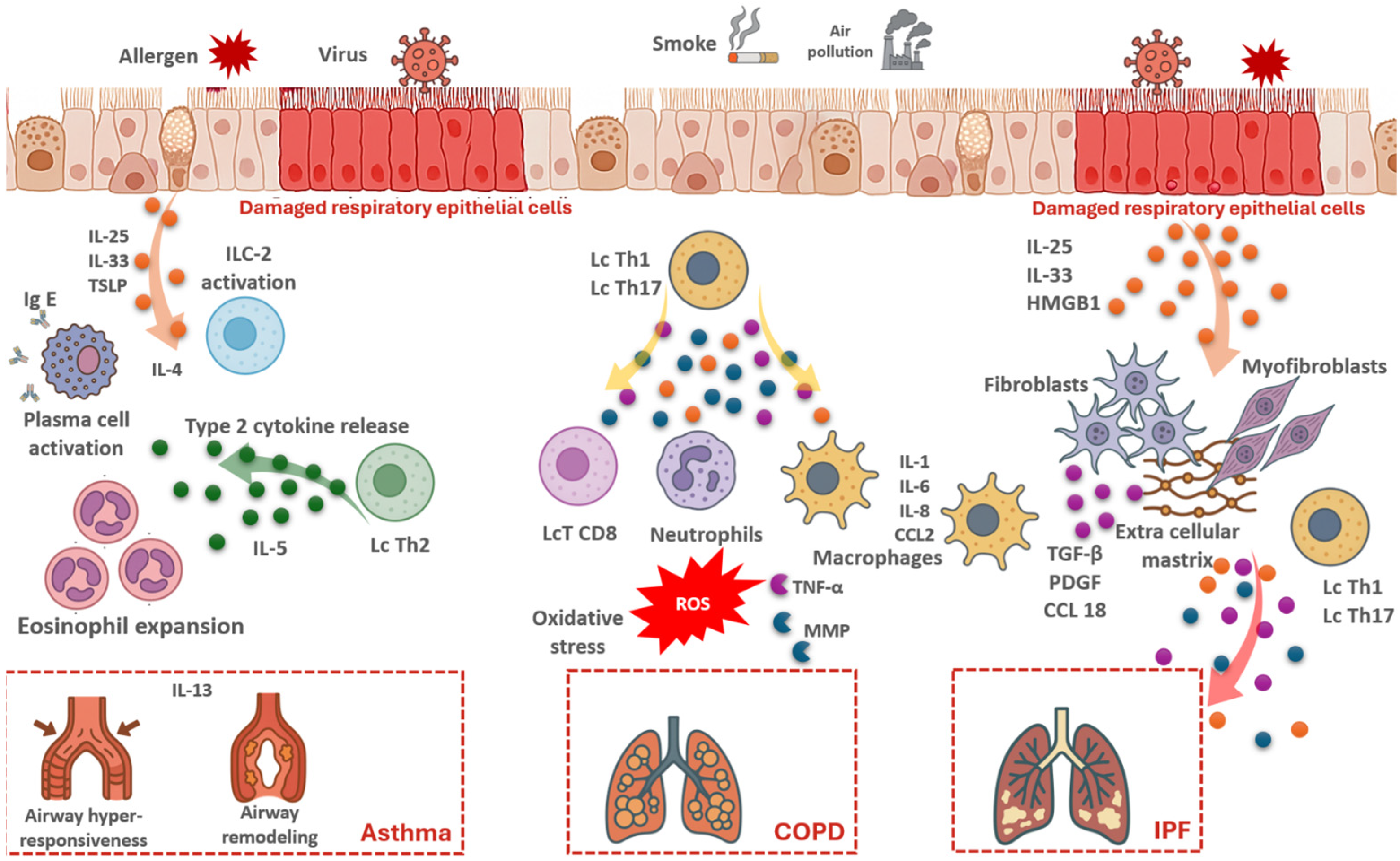
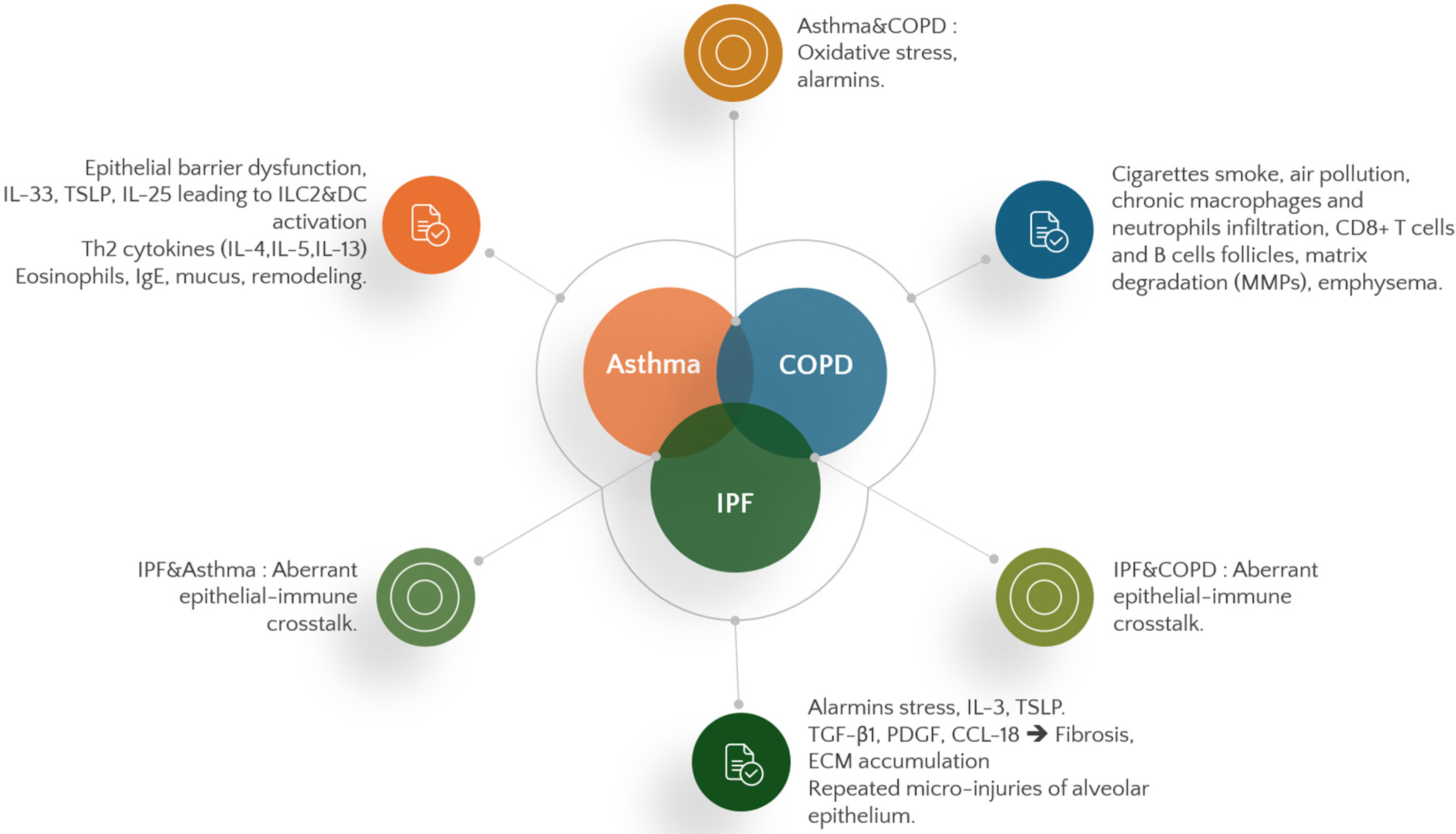
| Feature | COPD | Asthma | IPF |
|---|---|---|---|
| Primary trigger | Cigarette smoke, pollutants | Allergens, viral infections, irritants | Repetitive epithelial injury, aging, genetic factors |
| Main inflammatory cells | Neutrophils, macrophages, CD8+ T cells | Eosinophils, Th2 cells, mast cells | Epithelial cells, fibroblasts, alternatively activated macrophages |
| Key cytokines/mediators | TNF-α, IL-1β, IL-6, IL-8, CXCL1, MMP-9 | IL-4, IL-5, IL-13, TSLP, IL-33 | TGF-β1, PDGF, IL-13, IL-33, CCL18, alarmins (HMGB1) |
| Inflammation type | Type 1/neutrophilic | Type 2/eosinophilic (mostly) | Low-grade, profibrotic, dysregulated immune repair |
| Airway remodeling | Bronchiolar narrowing, emphysema | Subepithelial fibrosis, smooth muscle hypertrophy | Honeycombing, fibroblastic foci, loss of alveolar architecture |
| Biomarkers | CRP, fibrinogen, neutrophils, eosinophils (subset) | FeNO, eosinophils, periostin, IgE | KL-6, SP-A/D, MMP-7, CCL18 |
| Steroid responsiveness | Low (except eosinophilic phenotype) | High in most cases | Minimal to none (in classic IPF) |
| Targeted therapies | LABA/LAMA, PDE4 inhibitors, anti-IL-5 (select cases) | ICS, anti-IL-5, anti-IL-4Rα, anti-IgE | Anti-fibrotics (nintedanib, pirfenidone), trials ongoing for anti-TGF-β |
| Role of adaptive immunity | CD8+ T cells, B cell follicles | Th2 cells, IgE-producing B cells | Th2, Th17 cells, Tregs, possible autoimmune elements |
| Senescence/Aging | Contributes to pathogenesis | Less prominent | Strongly implicated (telomere shortening, epigenetics) |
| Biologic (Target) | Mechanism/Target Pathway | Patient Selection Biomarkers | Key Clinical Trials | Main Clinical Benefits |
|---|---|---|---|---|
| Omalizumab (anti-IgE) | Binds free IgE, prevents interaction with FcεRI on mast cells/basophils | Elevated total serum IgE (30–1500 IU/mL, depending on body weight); sensitization to perennial allergen | INNOVATE, EXALT; multiple real-world studies | ↓ Exacerbations, ↓ ICS use, ↑ QoL, benefit in allergic asthma |
| Mepolizumab (anti–IL-5) | Neutralizes IL-5, reduces eosinophil survival/activation | Blood eos ≥ 150 cells/µL at screening or ≥300 cells/µL in previous year (though benefits extend beyond these thresholds) | DREAM, MENSA, SIRIUS | ↓ Exacerbations, ↓ OCS use, ↑ FEV1 |
| Reslizumab (anti–IL-5) | Neutralizes IL-5 (IV administration) | Blood eos ≥ 400 cells/µL (trial inclusion); benefits observed also at lower thresholds | BREATH, phase III studies | ↓ Exacerbations, ↑ FEV1, improved asthma control |
| Benralizumab (anti–IL-5Rα) | Induces eosinophil and basophil depletion via ADCC | Blood eos ≥ 300 cells/µL; efficacy extends beyond this cut-off | SIROCCO, CALIMA, ZONDA | ↓ Exacerbations, ↓ OCS dependence, ↑ FEV1 |
| Dupilumab (anti–IL-4Rα) | Blocks IL-4 and IL-13 signaling (shared receptor) | Eosinophilic asthma, OCS-dependent asthma, uncontrolled asthma with/without atopy | LIBERTY ASTHMA QUEST, VENTURE | ↓ Exacerbations, ↑ FEV1, ↓ OCS, effective in both allergic and non-allergic |
| Tezepelumab (anti-TSLP) | Blocks TSLP, upstream alarmin | Broad efficacy regardless of eosinophil count, FeNO, or IgE | PATHWAY, NAVIGATOR | ↓ Exacerbations, ↑ FEV1, effective in T2-high and T2-low |
| Itepekimab (anti-IL-33) | Blocks IL-33 signaling, dampening type 2 response | Under clinical investigation; not yet approved | Phase II studies (e.g., NCT03469934) | Promising reduction in exacerbations; role not yet established |
| Therapy (Target) | Mechanism/Target Pathway | Key Clinical Trials | Main Results | Status |
|---|---|---|---|---|
| Dupilumab (anti–IL-4Rα) | Blocks IL-4 and IL-13 signaling | NOTUS | ↓ Exacerbations (30–34%), ↑ lung function, ↑ QoL in eosinophilic COPD | FDA approved 2023 |
| Benralizumab (anti–IL-5Rα) | Depletes eosinophils via ADCC | ABRA, GALATHEA, TERRANOVA | ABRA: ↓ treatment failure (OR 0.26). Phase III: primary endpoints not met, benefit in subgroups | Not approved |
| Mepolizumab (anti–IL-5) | Neutralizes IL-5, reduces eosinophil survival | METREX, METREO | METREX: modest ↓ exacerbations in eosinophilic COPD. METREO: no consistent benefit | Not approved |
| Ensifentrine (dual PDE3/4 inhibitor) | Bronchodilator + anti-inflammatory via PDE3/4 inhibition | ENHANCE-1, ENHANCE-2 | ↓ Exacerbations (~40%), ↑ FEV1 | Phase III positive, under review |
| Itepekimab (anti–IL-33) | Blocks IL-33 signaling | Ongoing phase II/III trials | Promising reduction in exacerbations in early-phase studies | Investigational |
| Astegolimab (anti-ST2) | Blocks IL-33 receptor (ST2) | Early-phase trials | Preliminary efficacy, data limited | Investigational |
| IL-17A inhibitors | Block IL-17A signaling | Phase II studies | Preliminary results, potential role in neutrophilic COPD | Investigational |
| Therapy/Agent | Target/Mechanism of Action | Clinical Development | Key Findings |
|---|---|---|---|
| Nintedanib | Tyrosine kinase inhibitor (VEGFR, FGFR, PDGFR) → reduces fibroblast proliferation & ECM deposition | Approved (Phase III, INPULSIS trials) | Slows FVC decline; no reversal of fibrosis. |
| Pirfenidone | Anti-fibrotic & anti-inflammatory; suppresses TGF-β, reduces fibroblast activation & cytokines | Approved (Phase III, ASCEND, CAPACITY) | Slows FVC decline; improves progression-free survival. |
| Pamrevlumab | Anti-CTGF monoclonal antibody | Phase III (ZEPHYRUS-1: negative; ZEPHYRUS-2 stopped) | Failed to reduce FVC decline; highlights redundancy of fibrogenic pathways. |
| Ziritaxestat | Autotaxin inhibitor → ↓ LPA signaling and fibroblast activation | Phase III (ISABELA 1/2: discontinued) | Ineffective, safety concerns; program terminated. |
| Admilparant (BMS-986278) | LPA1 antagonist → blocks LPA-mediated fibroblast activation & fibrosis signaling | Phase III ongoing (IPF, PPF) | Promising biomarker modulation; early data suggest reduced disease progression. |
| Treprostinil (inhaled) | Prostacyclin analogue → vasodilation, anti-inflammatory, anti-fibrotic effects | Phase III (TETON trials ongoing) | Improved FVC in PPF; potential add-on to antifibrotics. |
| Integrin antagonists | Block αvβ6/αvβ1 integrins → reduce TGF-β activation and ECM remodeling | Phase II trials ongoing | Early efficacy signals; further validation required. |
| CAR-T (FAP-targeted, LNP-mRNA) | In vivo transient CAR-T therapy targeting fibroblast activation protein (FAP) | Preclinical (mouse models) | Ablates activated fibroblasts; restores alveolar architecture & ECM balance. |
| Rentosertib (ISM001-055) | TNIK inhibitor, AI-discovered → modulates Wnt/β-catenin and pro-fibrotic signaling pathways | Phase IIa clinical trial | Favorable safety; early signals of slowed FVC decline in IPF patients. |
Disclaimer/Publisher’s Note: The statements, opinions and data contained in all publications are solely those of the individual author(s) and contributor(s) and not of MDPI and/or the editor(s). MDPI and/or the editor(s) disclaim responsibility for any injury to people or property resulting from any ideas, methods, instructions or products referred to in the content. |
© 2026 by the authors. Licensee MDPI, Basel, Switzerland. This article is an open access article distributed under the terms and conditions of the Creative Commons Attribution (CC BY) license.
Share and Cite
Ghrairi, N.; Elhechmi, Y.Z.; Ben Saad, S. From Inflammation to Precision Medicine: Mechanistic Insights into Asthma, COPD, and IPF. Biomedicines 2026, 14, 1055. https://doi.org/10.3390/biomedicines14051055
Ghrairi N, Elhechmi YZ, Ben Saad S. From Inflammation to Precision Medicine: Mechanistic Insights into Asthma, COPD, and IPF. Biomedicines. 2026; 14(5):1055. https://doi.org/10.3390/biomedicines14051055
Chicago/Turabian StyleGhrairi, Najla, Youssef Zied Elhechmi, and Soumaya Ben Saad. 2026. "From Inflammation to Precision Medicine: Mechanistic Insights into Asthma, COPD, and IPF" Biomedicines 14, no. 5: 1055. https://doi.org/10.3390/biomedicines14051055
APA StyleGhrairi, N., Elhechmi, Y. Z., & Ben Saad, S. (2026). From Inflammation to Precision Medicine: Mechanistic Insights into Asthma, COPD, and IPF. Biomedicines, 14(5), 1055. https://doi.org/10.3390/biomedicines14051055