IGF2BP2 Overexpression Predicts Poor Prognosis and Correlates with PD-L1 Expression in Intrahepatic Cholangiocarcinoma

 , ,
, ,
Abstract
1. Introduction
2. Materials and Methods
2.1. Bioinformatic Analysis
2.2. Patient Cohort and Data Collection
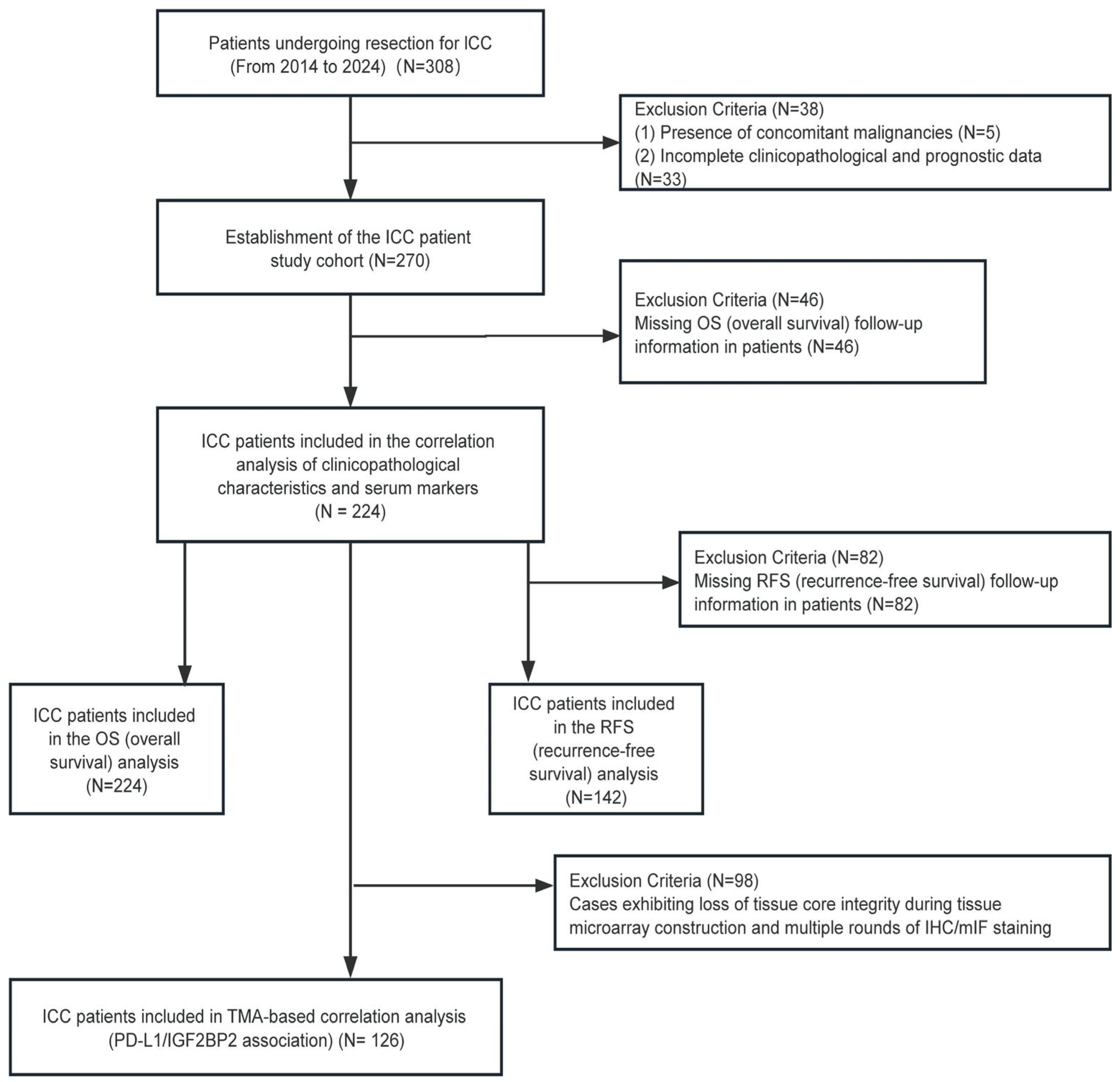
- Patients with no residual tumor present after curative surgical resection.
- Histologically confirmed intrahepatic cholangiocarcinoma by the Department of Pathology at our hospital.
- Complete clinicopathological data available for collection.
- Complete follow-up data available for collection.
- Written informed consent obtained from patients and their families for the use of tissue samples.
- Presence of other concurrent malignancies, such as intrahepatic cholangiocarcinoma combined with hepatocellular carcinoma, metastatic liver cancer, extrahepatic cholangiocarcinoma, or gallbladder carcinoma.
- Receipt of neoadjuvant therapy prior to surgery.
- Incomplete clinicopathological or prognostic data.
2.3. Tissue Microarray Construction
2.4. Immunohistochemistry
2.5. Multiplex Immunofluorescence
2.6. Statistical Analysis
3. Results
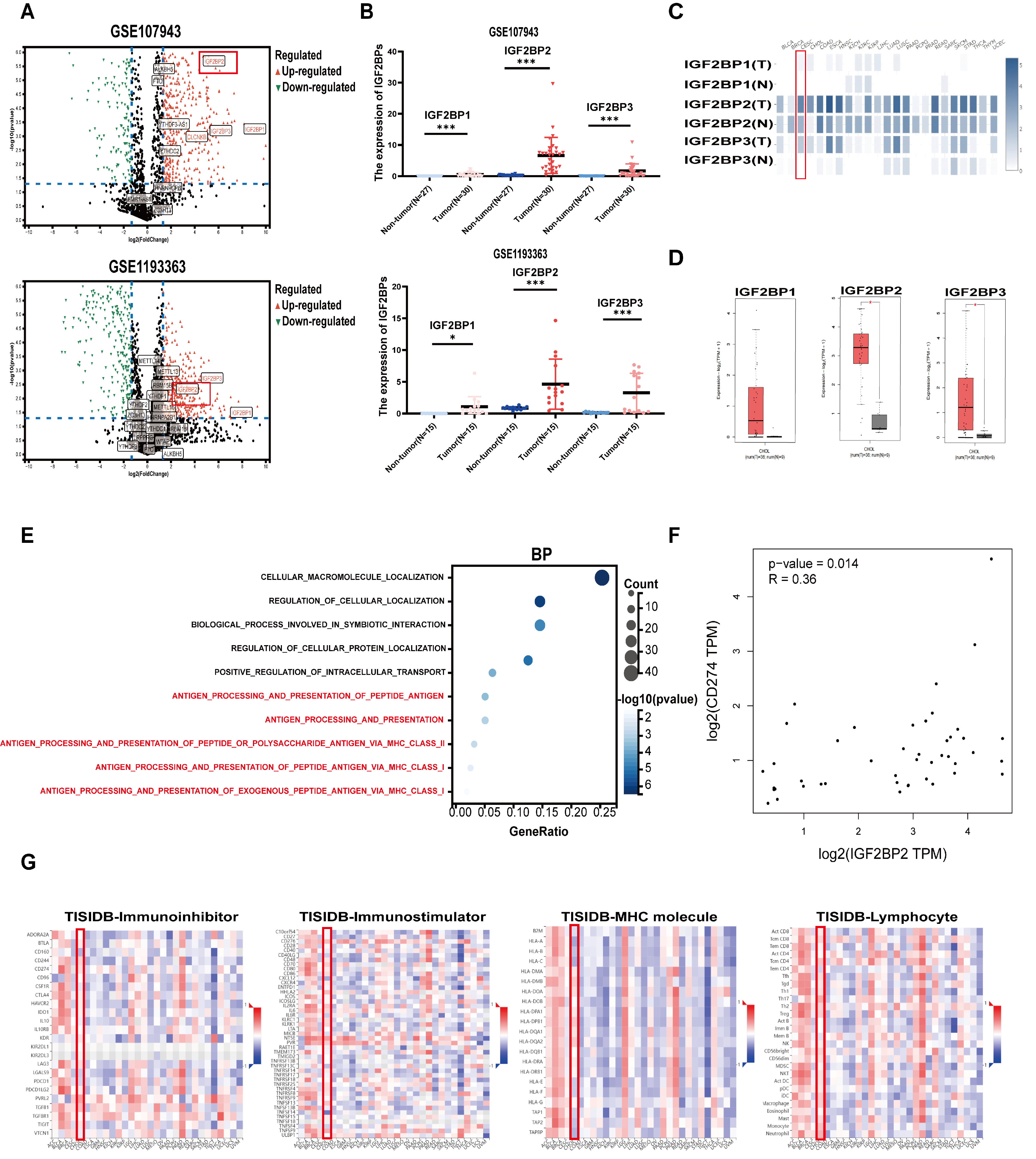
3.1. IGF2BP2 Is a Differentially Expressed m6A-Related Gene Associated with the Immune Microenvironment in ICC
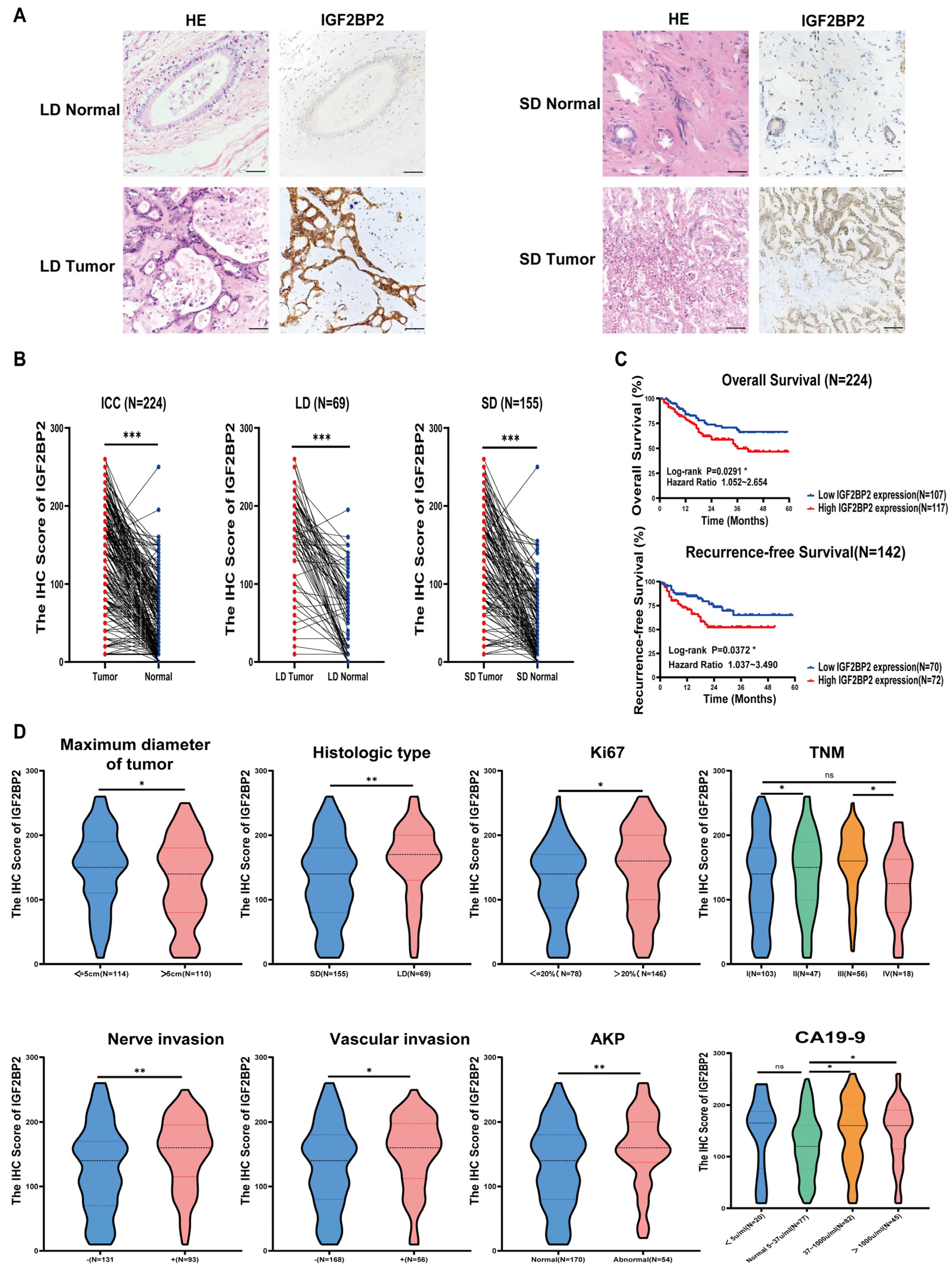
3.2. High Expression of IGF2BP2 in ICC Is Associated with Malignant Clinicopathological Characteristics, Altered Serum Indices, and Inferior Survival
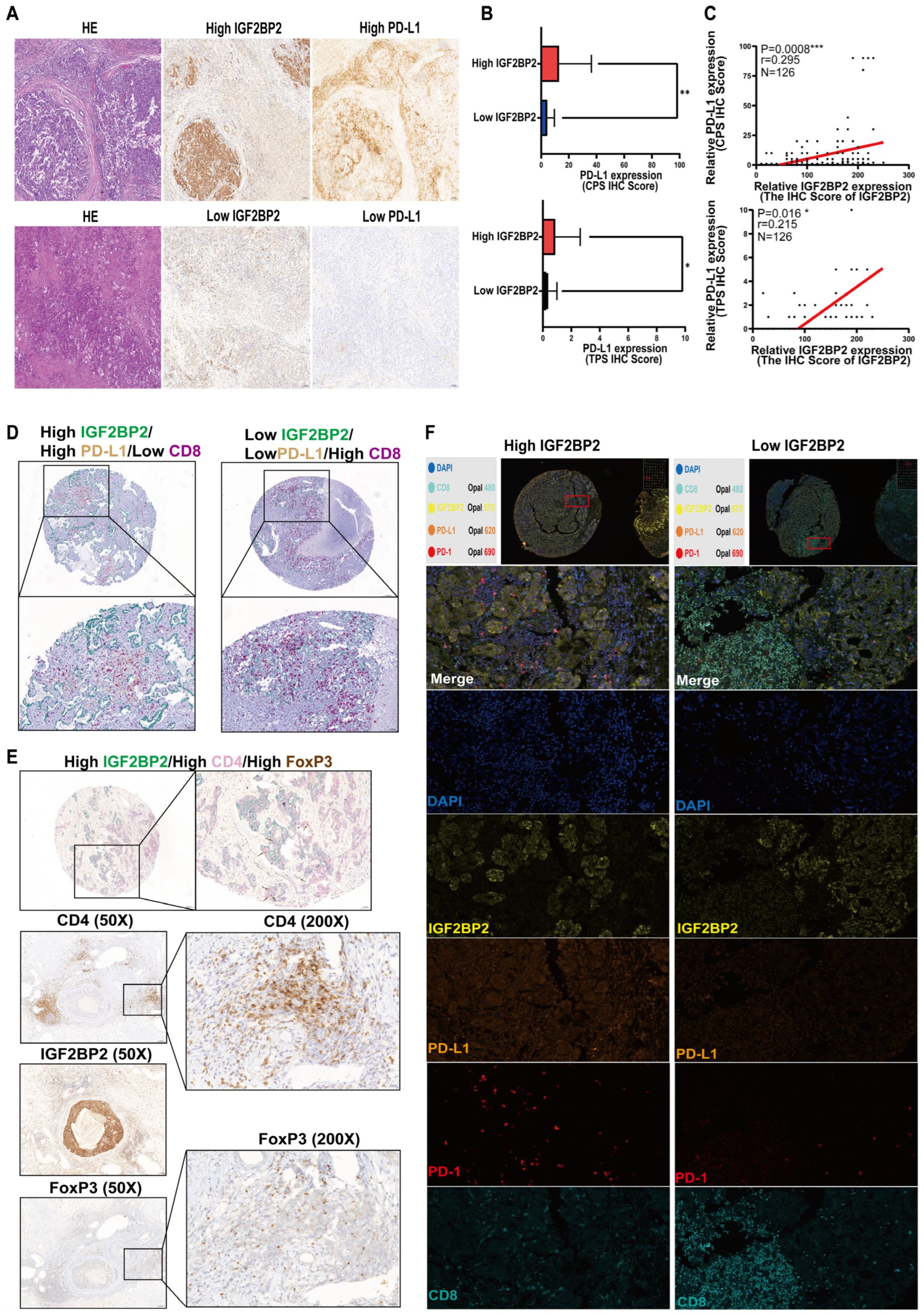
3.3. High Expression of IGF2BP2 Correlated with Upregulated PD-L1/PD-1 Expression and Reduced CD8+T-Cell Infiltration in ICC
3.4. High Expression of IGF2BP2 Was an Independent Prognostic Risk Factor for OS and RFS in ICC Patients
4. Discussion
5. Conclusions
Author Contributions
Funding
Institutional Review Board Statement
Informed Consent Statement
Data Availability Statement
Acknowledgments
Conflicts of Interest
Abbreviations
| TME | Tumor microenvironment |
| ICC | Intrahepatic cholangiocarcinoma |
| IGF2BP2 | Insulin-like growth factor 2 mRNA-binding protein 2 |
| PD-L1 | Programmed death-ligand 1 |
| PD-1 | Programmed cell death protein1 |
| IHC | Immunohistochemistry |
| TMA | Tissue microarray |
| OS | Overall survival |
| RFS | Recurrence-free survival |
| CCA/CHOL | Cholangiocarcinoma |
| m6A | N6-methyladenosine |
| LD | Large-duct |
| SD | Small-duct |
| TNM | Tumor-node-metastasis |
| ALT | Alanine aminotransferase |
| AST | Aspartate aminotransferase |
| AKP | Alkaline phosphatase |
| GGT | Gamma-glutamyl transpeptidase |
| Alb | Albumin |
| CRP | C-reactive protein |
| Cr | Creatinine |
| AFP | Alpha fetoprotein |
| CEA | Carcinoembryonic antigen |
| CA19-9 | Carbohydrate antigen 19-9 |
| GEO | Gene Expression Omnibus |
| TCGA | The Cancer Genome Atlas |
| TISIDB | Tumor Immune System Interaction Database |
References
- Moris, D.; Palta, M.; Kim, C.; Allen, P.J.; Morse, M.A.; Lidsky, M.E. Advances in the treatment of intrahepatic cholangiocarcinoma: An overview of the current and future therapeutic landscape for clinicians. CA Cancer J. Clin. 2023, 73, 198–222. [Google Scholar] [CrossRef] [Scilit]
- Khan, S.A.; Emadossadaty, S.; Ladep, N.G.; Thomas, H.C.; Elliott, P.; Taylor-Robinson, S.D.; Toledano, M.B. Rising Trends in Cholangiocarcinoma: Is the Icd Classification System Misleading Us? J. Hepatol. 2012, 56, 848–854. [Google Scholar] [CrossRef] [Scilit]
- Komuta, M. Intrahepatic cholangiocarcinoma: Tumour heterogeneity and its clinical relevance. Clin. Mol. Hepatol. 2022, 28, 396–407. [Google Scholar] [CrossRef] [Scilit]
- Lee, H.S.; Han, D.H.; Cho, K.; Park, S.B.; Kim, C.; Leem, G.; Jung, D.E.; Kwon, S.S.; Kim, C.H.; Jo, J.H.; et al. Integrative analysis of multiple genomic data from intrahepatic cholangiocarcinoma organoids enables tumor subtyping. Nat. Commun. 2023, 14, 237. [Google Scholar] [CrossRef] [Scilit]
- Nagtegaal, I.D.; Odze, R.D.; Klimstra, D.; Paradis, V.; Rugge, M.; Schirmacher, P.; Washington, K.M.; Carneiro, F.; Cree, I.A. The 2019 WHO classification of tumours of the digestive system. Histopathology 2020, 76, 182–188. [Google Scholar] [CrossRef] [Scilit]
- Bell, J.L.; Wächter, K.; Mühleck, B.; Pazaitis, N.; Köhn, M.; Lederer, M.; Hüttelmaier, S. Insulin-like growth factor 2 mRNA-binding proteins (IGF2BPs): Post-transcriptional drivers of cancer progression? Cell. Mol. Life Sci. 2013, 70, 2657–2675. [Google Scholar] [CrossRef] [Scilit]
- Qu, J.; Yan, H.; Hou, Y.; Cao, W.; Liu, Y.; Zhang, E.; He, J.; Cai, Z. RNA demethylase ALKBH5 in cancer: From mechanisms to therapeutic potential. J. Hematol. Oncol. 2022, 15, 8. [Google Scholar] [CrossRef] [Scilit] [PubMed]
- Dai, N. The diverse functions of IMP2/IGF2BP2 in metabolism. Trends Endocrinol. Metab. 2020, 31, 670–679. [Google Scholar] [CrossRef] [Scilit] [PubMed]
- Wang, J.; Chen, L.; Qiang, P. The role of IGF2BP2, an m6A reader gene, in human metabolic diseases and cancers. Cancer Cell Int. 2021, 21, 99. [Google Scholar] [CrossRef] [Scilit] [PubMed]
- Shen, J.; Ding, Y. Multifaceted roles of insulin-like growth factor 2 mRNA binding protein 2 in human cancer (Review). Mol. Med. Rep. 2025, 31, 75. [Google Scholar] [CrossRef] [Scilit]
- Hanahan, D.; Weinberg, R.A. Hallmarks of cancer: The next generation. Cell 2011, 144, 646–674. [Google Scholar] [CrossRef] [Scilit] [PubMed]
- de Visser, K.E.; Joyce, J.A. The evolving tumor microenvironment: From cancer initiation to metastatic outgrowth. Cancer Cell 2023, 41, 374–403. [Google Scholar] [CrossRef] [Scilit] [PubMed]
- Ruff, S.M.; Shannon, A.H.; Pawlik, T.M. Advances in targeted immunotherapy for hepatobiliary cancers. Int. J. Mol. Sci. 2022, 23, 13961. [Google Scholar] [CrossRef] [Scilit] [PubMed]
- Xian, F.; Ren, D.; Bie, J.; Xu, G. Prognostic value of programmed cell death ligand 1 expression in patients with intrahepatic cholangiocarcinoma: A meta-analysis. Front. Immunol. 2023, 14, 1119168. [Google Scholar] [CrossRef] [Scilit]
- Asahi, Y.; Hatanaka, K.C.; Hatanaka, Y.; Kamiyama, T.; Orimo, T.; Shimada, S.; Nagatsu, A.; Sakamoto, Y.; Kamachi, H.; Kobayashi, N.; et al. Prognostic impact of CD8+ T cell distribution and its association with the HLA class I expression in intrahepatic cholangiocarcinoma. Surg. Today 2020, 50, 931–940. [Google Scholar] [CrossRef] [Scilit]
- He, X.; Liu, Y.; Dai, T.; Yang, A.; Shen, J.; Hui, Z.; Shen, J.; Chen, J. Pathological study of the tumor microenvironment after neoadjuvant therapy in hepatocellular carcinoma: Difference of TACE combined with antiangiogenics and immunotherapy. Hepatol. Commun. 2025, 9, e0787. [Google Scholar] [CrossRef] [Scilit]
- Liu, Y.; Shi, M.; He, X.; Cao, Y.; Liu, P.; Li, F.; Zou, S.; Wen, C.; Zhan, Q.; Xu, Z.; et al. LncRNA-PACERR induces pro-tumour macrophages via interacting with miR-671-3p and m6A-reader IGF2BP2 in pancreatic ductal adenocarcinoma. J. Hematol. Oncol. 2022, 15, 52. [Google Scholar] [CrossRef] [Scilit]
- Elcheva, I.A.; Gowda, C.P.; Bogush, D.; Gornostaeva, S.; Fakhardo, A.; Sheth, N.; Kokolus, K.M.; Sharma, A.; Dovat, S.; Uzun, Y.; et al. IGF2BP family of RNA-binding proteins regulate innate and adaptive immune responses in cancer cells and tumor microenvironment. Front. Immunol. 2023, 14, 1224516. [Google Scholar] [CrossRef] [Scilit]
- Liu, Q.Z.; Zhang, N.; Chen, J.Y.; Zhou, M.; Zhou, D.; Chen, Z.; Huang, Z.; Xie, Y.; Qiao, G.; Tu, X. WTAP-induced N(6)-methyladenosine of PD-L1 blocked T-cell-mediated antitumor activity under hypoxia in colorectal cancer. Cancer Sci. 2024, 115, 1749–1762. [Google Scholar] [CrossRef] [Scilit]
- Li, Y.; Wang, Z.; Gao, P.; Cao, D.; Dong, R.; Zhu, M.; Fei, Y.; Zuo, X.; Cai, J. CircRHBDD1 promotes immune escape via IGF2BP2/PD-L1 signaling and acts as a nanotherapeutic target in gastric cancer. J. Transl. Med. 2024, 22, 704. [Google Scholar] [CrossRef] [Scilit]
- Li, N.; Deng, L.; Zhang, Y.; Tang, X.; Lei, B.; Zhang, Q. IGF2BP2 modulates autophagy and serves as a prognostic marker in glioma. Ibrain 2024, 10, 19–33. [Google Scholar] [CrossRef] [Scilit] [PubMed]
- Lv, L.; Zhang, X.; Liu, Y.; Zhu, X.; Pan, R.; Huang, L. Three liquid-liquid phase separation-related genes associated with prognosis in glioma. Pharmacogenom. Pers. Med. 2024, 17, 171–181. [Google Scholar] [CrossRef] [Scilit] [PubMed]
- Deng, X.; Jiang, Q.; Liu, Z.; Chen, W. Clinical significance of an m6A reader gene, IGF2BP2, in head and neck squamous cell carcinoma. Front. Mol. Biosci. 2020, 7, 68. [Google Scholar] [CrossRef] [Scilit] [PubMed]
- Tang, X.; Tang, Q.; Li, S.; Li, M.; Yang, T. IGF2BP2 acts as a m6A modification regulator in laryngeal squamous cell carcinoma through facilitating CDK6 mRNA stabilization. Cell Death Discov. 2023, 9, 371. [Google Scholar] [CrossRef] [Scilit]
- Lin, S.H.; Lin, C.W.; Lu, J.W.; Yang, W.-E.; Lin, Y.-M.; Lu, H.-J.; Yang, S.-F. Cytoplasmic IGF2BP2 protein expression in human patients with oral squamous cell carcinoma: Prognostic and clinical implications. Int. J. Med. Sci. 2022, 19, 1198–1204. [Google Scholar] [CrossRef] [Scilit]
- Gong, L.; Liu, Q.; Jia, M.; Sun, X. Systematic analysis of IGF2BP family members in non-small-cell lung cancer. Hum. Genom. 2024, 18, 63. [Google Scholar] [CrossRef] [Scilit]
- Jia, M.; Shi, Y.; Xie, Y.; Li, W.; Deng, J.; Fu, D.; Bai, J.; Ma, Y.; Zuberi, Z.; Li, J.; et al. WT1-AS/IGF2BP2 axis is a potential diagnostic and prognostic biomarker for lung adenocarcinoma according to ceRNA network comprehensive analysis combined with experiments. Cells 2021, 11, 25. [Google Scholar] [CrossRef] [Scilit]
- Barghash, A.; Golob-Schwarzl, N.; Helms, V.; Haybaeck, J.; Kessler, S.M. Elevated expression of the IGF2 mRNA binding protein 2 (IGF2BP2/IMP2) is linked to short survival and metastasis in esophageal adenocarcinoma. Oncotarget 2016, 7, 49743–49750. [Google Scholar] [CrossRef] [Scilit]
- Deng, H.; Yao, H.; Zhou, S.; He, C.; Huang, Y.; Li, Y.; Chen, H.; Shu, J. Pancancer analysis uncovers an immunological role and prognostic value of the m6A reader IGF2BP2 in pancreatic cancer. Mol. Cell. Probes 2024, 73, 101948. [Google Scholar] [CrossRef] [Scilit]
- Dahlem, C.; Barghash, A.; Puchas, P.; Haybaeck, J.; Kessler, S.M. The insulin-like growth factor 2 mRNA binding protein IMP2/IGF2BP2 is overexpressed and correlates with poor survival in pancreatic cancer. Int. J. Mol. Sci. 2019, 20, 3204. [Google Scholar] [CrossRef] [Scilit]
- Zhang, J.Y.; Chan, E.K.; Peng, X.X.; Tan, E.M. A novel cytoplasmic protein with RNA-binding motifs is an autoantigen in human hepatocellular carcinoma. J. Exp. Med. 1999, 189, 1101–1110. [Google Scholar] [CrossRef] [Scilit]
- Lu, M.; Nakamura, R.M.; Dent, E.D.; Zhang, J.Y.; Nielsen, F.C.; Christiansen, J.; Chan, E.K.; Tan, E.M. Aberrant expression of fetal RNA-binding protein p62 in liver cancer and liver cirrhosis. Am. J. Pathol. 2001, 159, 945–953. [Google Scholar] [CrossRef] [Scilit]
- Shen, C.; Xuan, B.; Yan, T.; Ma, Y.; Xu, P.; Tian, X.; Zhang, X.; Cao, Y.; Ma, D.; Zhu, X.; et al. m(6)A-dependent glycolysis enhances colorectal cancer progression. Mol. Cancer 2020, 19, 72. [Google Scholar] [CrossRef] [Scilit]
- Li, F.; Tian, J.; Zhang, L.; He, H.; Song, D. A multi-omics approach to reveal critical mechanisms of activator protein 1 (AP-1). Biomed. Pharmacother. 2024, 178, 117225. [Google Scholar] [CrossRef] [Scilit] [PubMed]
- Boussiotis, V.A. Molecular and biochemical aspects of the PD-1 checkpoint pathway. N. Engl. J. Med. 2016, 375, 1767–1778. [Google Scholar] [CrossRef] [Scilit] [PubMed]
- Sharpe, A.H.; Pauken, K.E. The diverse functions of the PD1 inhibitory pathway. Nat. Rev. Immunol. 2018, 18, 153–167. [Google Scholar] [CrossRef] [Scilit] [PubMed]
- Cai, Z.; Ang, X.; Xu, Z.; Li, S.; Zhang, J.; Pei, C.; Zhou, F. A pan-cancer study of PD-1 and CTLA-4 as therapeutic targets. Transl. Cancer Res. 2021, 10, 3993–4001. [Google Scholar] [CrossRef] [Scilit]
- Gong, H.; Liu, Z.; Yuan, C.; Luo, Y.; Chen, Y.; Zhang, J.; Cui, Y.; Zeng, B.; Liu, J.; Li, H.; et al. Identification of cuproptosis-related lncRNAs with the significance in prognosis and immunotherapy of oral squamous cell carcinoma. Comput. Biol. Med. 2024, 171, 108198. [Google Scholar] [CrossRef] [Scilit]
- He, Y.; Fan, Z.; Sun, W.; Ouyang, L.; Features, C.W.C. Treatment, and Outcome of Nivolumab-Induced Cholangitis. Immunopharmacol. Immunotoxicol. 2024, 46, 757–762. [Google Scholar] [CrossRef] [Scilit]



| Clinical Characteristics | Total (N = 224) | IGF2BP2-High (N = 117) | IGF2BP2-Low (N = 107) | p-Value |
|---|---|---|---|---|
| Age | 0.329 | |||
| <65 | 137 | 68 (58.1%) | 69 (64.5%) | |
| ≥65 | 87 | 49 (41.9%) | 38 (35.5%) | |
| Gender | 0.271 | |||
| Male | 117 | 57 (48.7%) | 60 (56.1%) | |
| Female | 107 | 60 (51.3%) | 47 (43.9%) | |
| Tumor number | 0.699 | |||
| Single | 184 | 95 (81.2%) | 89 (83.2%) | |
| Multiple | 40 | 22 (18.8%) | 18 (16.8%) | |
| Maximum diameter of tumor | 0.084 | |||
| ≤5 cm | 114 | 66 (56.4%) | 48 (44.9%) | |
| >5 cm | 110 | 51 (43.6%) | 59 (55.1%) | |
| Histologic type | <0.001 | |||
| LD | 69 | 48 (41.0%) | 21 (19.6%) | |
| SD | 155 | 69 (59.0%) | 86 (80.4%) | |
| Vascular invasion | 0.037 | |||
| No | 168 | 81 (69.2%) | 87 (81.3%) | |
| Yes | 56 | 36 (30.8%) | 20 (18.7%) | |
| Nerve invasion | 0.011 | |||
| No | 131 | 59 (50.4%) | 72 (67.3%) | |
| Yes | 93 | 58 (49.6%) | 35 (32.7%) | |
| TNM | 0.030 | |||
| Stage I | 103 | 49 (41.9%) | 54 (50.5%) | |
| Stage II | 47 | 24 (20.5%) | 23 (21.5%) | |
| Stage III | 56 | 38 (32.5%) | 18 (16.8%) | |
| Stage IV | 18 | 6 (5.1%) | 12 (11.2%) | |
| Tumor differentiation degree | 0.312 | |||
| Poorly | 40 | 18 (15.4%) | 22 (20.6%) | |
| Moderately/Well | 184 | 99 (84.6%) | 85 (79.4%) | |
| Ki67 | 0.183 | |||
| ≤20% | 78 | 36 (30.8%) | 42 (39.3%) | |
| >20% | 146 | 81 (69.2%) | 65 (60.7%) | |
| ALT (U/L) | 0.021 | |||
| Normal: 5~40 | 178 | 86 (73.5%) | 92 (86.0%) | |
| Abnormal: ≥40 | 46 | 31 (26.5%) | 15 (14.0%) | |
| AST (U/L) | 0.016 | |||
| Normal: 4~40 | 187 | 91 (77.8%) | 96 (89.7%) | |
| Abnormal: ≥40 | 37 | 26 (22.2%) | 11 (10.3%) | |
| AKP (U/L) | 0.015 | |||
| Normal: 40~150 | 170 | 81 (69.2%) | 89 (83.2%) | |
| Abnormal: ≥150 | 54 | 36 (30.8%) | 18 (16.8%) | |
| GGT (U/L) | 0.029 | |||
| Normal: <50 | 92 | 40 (34.2%) | 52 (48.6%) | |
| Abnormal: ≥50 | 132 | 77 (65.8%) | 55 (51.4%) | |
| Alb (g/L) | 0.077 | |||
| Normal: 35~55 | 206 | 104 (88.9%) | 102 (95.3%) | |
| Abnormal: <35 | 18 | 13 (11.1%) | 5 (4.7%) | |
| CRP (mg/L) | 0.044 | |||
| Normal: <10 | 164 | 79 (67.5%) | 85 (79.4%) | |
| Abnormal: ≥10 | 60 | 38 (32.5%) | 22 (20.6%) | |
| Cr (umol/L) | 0.037 | |||
| Normal: 44~133 | 207 | 104 (88.9%) | 103 (96.3%) | |
| Abnormal: <44 | 17 | 13 (11.1%) | 4 (3.7%) | |
| AFP (ng/mL) | 0.250 | |||
| Normal: <25 | 214 | 110 (94.0%) | 104 (97.2%) | |
| Abnormal: ≥25 | 10 | 7 (6.0%) | 3 (2.8%) | |
| CEA (ng/mL) | 0.527 | |||
| Normal: <5 | 189 | 97 (82.9%) | 92 (86.0%) | |
| Abnormal: ≥5 | 35 | 20 (17.1%) | 15 (14.0%) | |
| CA19-9 (U/mL) | 0.006 | |||
| Abnormal: <5 | 20 | 13 (11.1%) | 7 (6.5%) | |
| Normal: 5~37 | 77 | 28 (23.9%) | 49 (45.8%) | |
| Abnormal: 37~1000 | 82 | 47 (40.2%) | 35 (32.7%) | |
| Abnormal: >1000 | 45 | 29 (24.8%) | 16 (15.0%) |
| Clinical Characteristics | Univariate Analysis | Multivariate Analysis | ||
|---|---|---|---|---|
| p | HR (95% CI) | p | HR (95% CI) | |
| The expression of IGF2BP2 (High vs. Low) | 0.017 | 1.747 (1.104~2.765) | 0.044 | 1.683 (1.015~2.791) |
| Age (≥65 vs. <65) | 0.104 | 1.449 (0.926~2.268) | ||
| Gender (Female vs. Male) | 0.087 | 1.482 (0.944~2.325) | ||
| Tumor number (Multiple vs. Single) | 0.044 | 1.743 (1.014~2.995) | 0.316 | 1.395 (0.728~2.676) |
| Maximum diameter of tumor (>5 cm vs. ≤5 cm) | 0.035 | 1.633 (1.034~2.577) | 0.003 | 2.155 (1.292~3.595) |
| Histologic type (LD vs. SD) | 0.042 | 1.624 (1.018~2.591) | 0.976 | 0.992 (0.582~1.691) |
| TNM (Stages II–IV vs. Stage I) | <0.001 | 2.736 (1.666~4.492) | 0.615 | 1.273 (0.496~3.267) |
| Tumor differentiation degree (Well vs. Poorly) | 0.624 | 0.865 (0.484~1.546) | ||
| Vascular invasion (Yes vs. No) | 0.001 | 2.217 (1.39~3.535) | 0.234 | 1.423 (0.796~2.546) |
| Nerve invasion (Yes vs. No) | 0.033 | 1.628 (1.04~2.548) | 0.195 | 1.398 (0.842~2.32) |
| Ki67 (>20% vs. ≤20%) | 0.228 | 1.347 (0.83~2.186) | ||
| ALT (Abnormal vs. Normal) | 0.27 | 1.34 (0.797~2.253) | ||
| AST (Abnormal vs. Normal) | 0.026 | 1.824 (1.075~3.095) | 0.42 | 0.752 (0.376~1.504) |
| AKP (Abnormal vs. Normal) | <0.001 | 2.423 (1.515~3.873) | 0.061 | 1.819 (0.972~3.401) |
| GGT (Abnormal vs. Normal) | 0.003 | 2.157 (1.305~3.564) | 0.579 | 1.192 (0.641~2.219) |
| Alb (Abnormal vs. Normal) | <0.001 | 3.388 (1.82~6.304) | 0.007 | 2.653 (1.304~5.396) |
| Cr (Abnormal vs. Normal) | 0.711 | 1.171 (0.508~2.701) | ||
| CRP (Abnormal vs. Normal) | 0.126 | 1.461 (0.899~2.374) | ||
| AFP (Abnormal vs. Normal) | 0.161 | 1.914 (0.772~4.75) | ||
| CEA (Abnormal vs. Normal) | 0.076 | 1.671 (0.948~2.946) | ||
| CA19-9 (Abnormal vs. Normal) | <0.001 | 2.858 (1.713~4.768) | 0.01 | 2.06 (1.192~3.562) |
| Clinical Characteristics | Univariate Analysis | Multivariate Analysis | ||
|---|---|---|---|---|
| p | HR (95% CI) | p | HR (95% CI) | |
| The expression of IGF2BP2 (High vs. Low) | 0.047 | 1.852 (1.007~3.404) | 0.042 | 1.946 (1.024~3.698) |
| Age (≥65 vs. <65) | 0.932 | 1.027 (0.559~1.885) | ||
| Gender (Female vs. Male) | 0.079 | 1.707 (0.94~3.101) | ||
| Tumor number (Multiple vs. Single) | 0.112 | 1.817 (0.87~3.798) | ||
| Maximum diameter of tumor (>5 cm vs. ≤5 cm) | 0.036 | 1.906 (1.044~3.48) | 0.053 | 0.729 (0.53~1.004) |
| Histologic type (LD vs. SD) | 0.533 | 1.231 (0.641~2.365) | ||
| TNM (Stages II–IV vs. Stage I) | 0.092 | 1.692 (0.918~3.117) | ||
| Tumor differentiation degree (Well vs. Poorly) | 0.040 | 0.52 (0.279~0.971) | 0.057 | 0.525 (0.27~1.019) |
| Vascular invasion (Yes vs. No) | 0.023 | 2.043 (1.102~3.785) | 0.502 | 0.879 (0.603~1.282) |
| Nerve invasion (Yes vs. No) | 0.095 | 1.655 (0.915~2.994) | ||
| Ki67 (>20% vs. ≤20%) | 0.032 | 2.16 (1.066~4.374) | 0.029 | 2.279 (1.09~4.765) |
| ALT (Abnormal vs. Normal) | 0.346 | 1.423 (0.683~2.964) | ||
| AST (Abnormal vs. Normal) | 0.084 | 1.916 (0.915~4.008) | ||
| AKP (Abnormal vs. Normal) | 0.081 | 1.899 (0.924~3.902) | ||
| GGT (Abnormal vs. Normal) | 0.338 | 1.342 (0.735~2.451) | ||
| Alb (Abnormal vs. Normal) | 0.233 | 2.047 (0.631~6.639) | ||
| Cr (Abnormal vs. Normal) | 0.359 | 1.626 (0.576~4.59) | ||
| CRP (Abnormal vs. Normal) | 0.204 | 1.523 (0.795~2.916) | ||
| AFP (Abnormal vs. Normal) | 0.792 | 1.21 (0.292~5.012) | ||
| CEA (Abnormal vs. Normal) | 0.061 | 1.97 (0.97~4) | ||
| CA19-9 (Abnormal vs. Normal) | 0.002 | 3.004 (1.512~5.97) | 0.005 | 2.802 (1.366~5.747) |
Disclaimer/Publisher’s Note: The statements, opinions and data contained in all publications are solely those of the individual author(s) and contributor(s) and not of MDPI and/or the editor(s). MDPI and/or the editor(s) disclaim responsibility for any injury to people or property resulting from any ideas, methods, instructions or products referred to in the content. |
© 2026 by the authors. Licensee MDPI, Basel, Switzerland. This article is an open access article distributed under the terms and conditions of the Creative Commons Attribution (CC BY) license.
Share and Cite
Shen, J.; Yang, A.; He, X.; Dai, T.; Hui, Z.; Ding, Y.; Zhao, L.; Chen, J. IGF2BP2 Overexpression Predicts Poor Prognosis and Correlates with PD-L1 Expression in Intrahepatic Cholangiocarcinoma. Biomedicines 2026, 14, 929. https://doi.org/10.3390/biomedicines14040929
Shen J, Yang A, He X, Dai T, Hui Z, Ding Y, Zhao L, Chen J. IGF2BP2 Overexpression Predicts Poor Prognosis and Correlates with PD-L1 Expression in Intrahepatic Cholangiocarcinoma. Biomedicines. 2026; 14(4):929. https://doi.org/10.3390/biomedicines14040929
Chicago/Turabian StyleShen, Jianan, Aihua Yang, Xintao He, Tianyi Dai, Zexuan Hui, Youxiang Ding, Li Zhao, and Jun Chen. 2026. "IGF2BP2 Overexpression Predicts Poor Prognosis and Correlates with PD-L1 Expression in Intrahepatic Cholangiocarcinoma" Biomedicines 14, no. 4: 929. https://doi.org/10.3390/biomedicines14040929
APA StyleShen, J., Yang, A., He, X., Dai, T., Hui, Z., Ding, Y., Zhao, L., & Chen, J. (2026). IGF2BP2 Overexpression Predicts Poor Prognosis and Correlates with PD-L1 Expression in Intrahepatic Cholangiocarcinoma. Biomedicines, 14(4), 929. https://doi.org/10.3390/biomedicines14040929