Article

The Association Between Serum MOTS-c Levels and Myocardial Ischemia–Reperfusion Injury in Patients with Acute Myocardial Infarction: A Cross-Sectional Study


1
Department of Cardiology, The Third Affiliated Hospital of Chongqing Medical University, Chongqing 401120, China
2
Research Center for Metabolic and Cardiovascular Diseases, The Third Affiliated Hospital of Chongqing Medical University, Chongqing 401120, China
3
Science and Technology Innovation Center, The Third Affiliated Hospital of Chongqing Medical University, Chongqing 401120, China
4
Department of Clinical Nutrition, The Third Affiliated Hospital of Chongqing Medical University, Chongqing 401120, China
*
Authors to whom correspondence should be addressed.
These authors contributed equally to this work.
Biomedicines 2026, 14(4), 918; https://doi.org/10.3390/biomedicines14040918

Submission received: 27 February 2026 / Revised: 11 April 2026 / Accepted: 13 April 2026 / Published: 17 April 2026
(This article belongs to the Special Issue Advances in Biomarker Discovery for Cardiovascular Disease)

Abstract

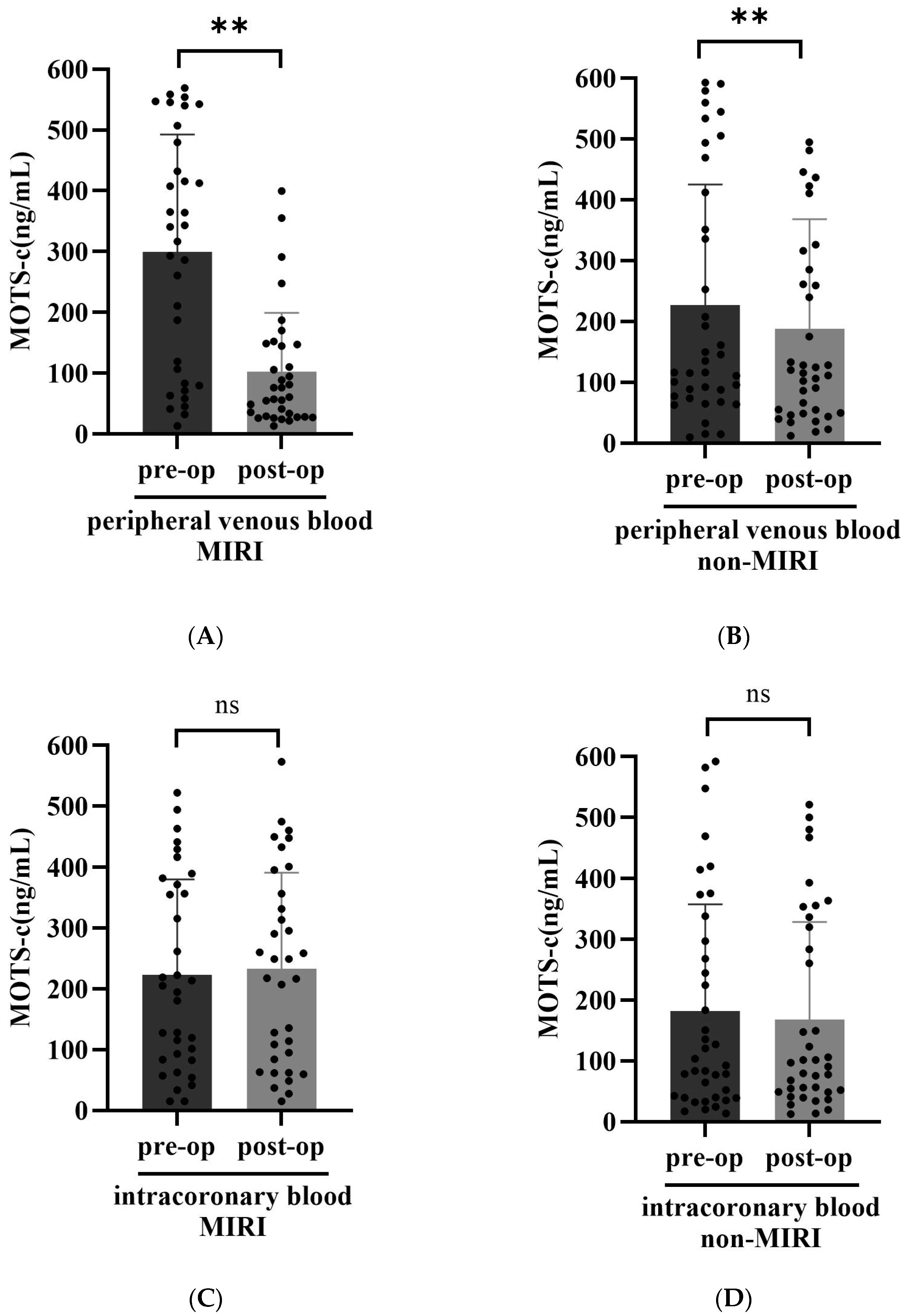
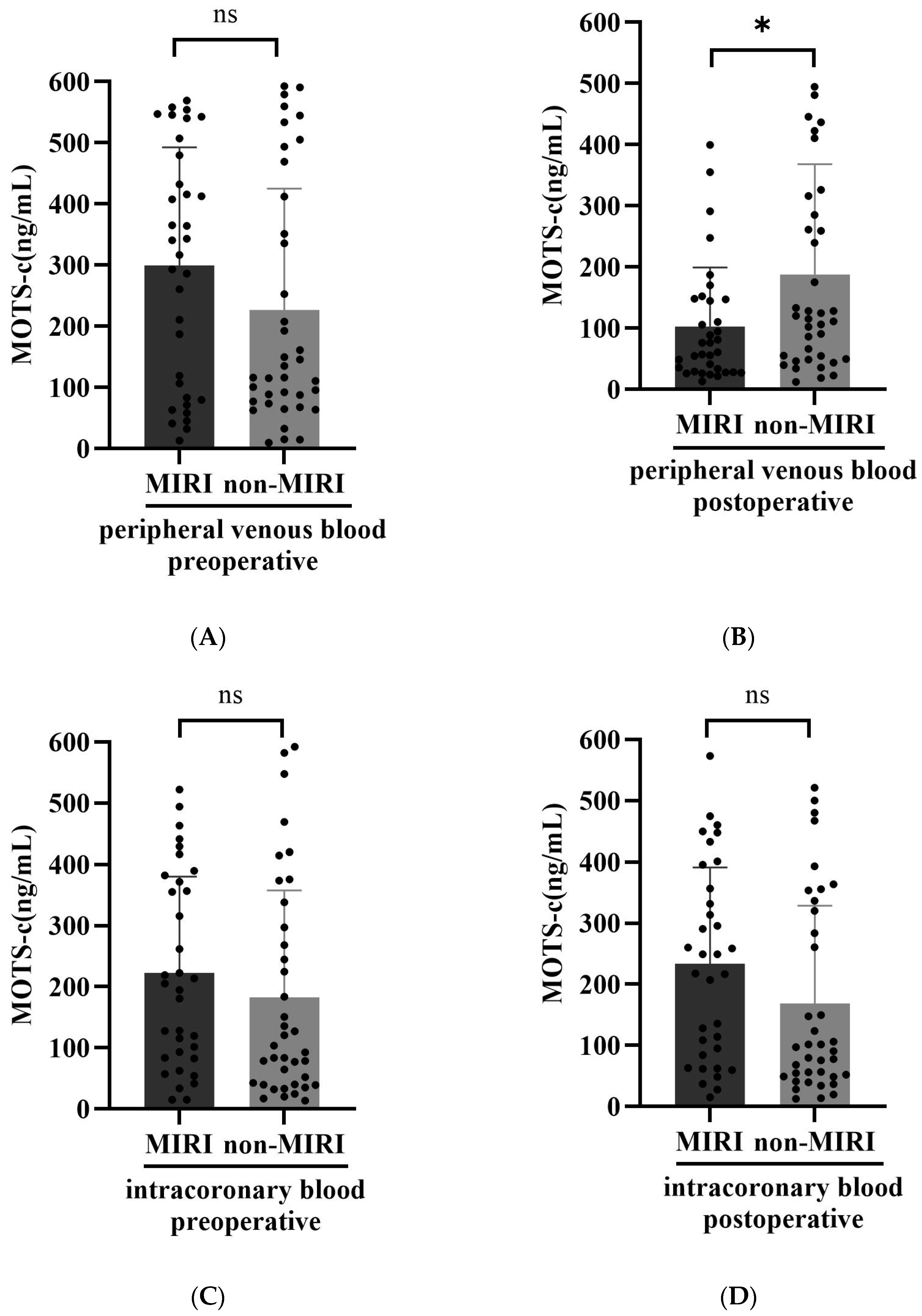
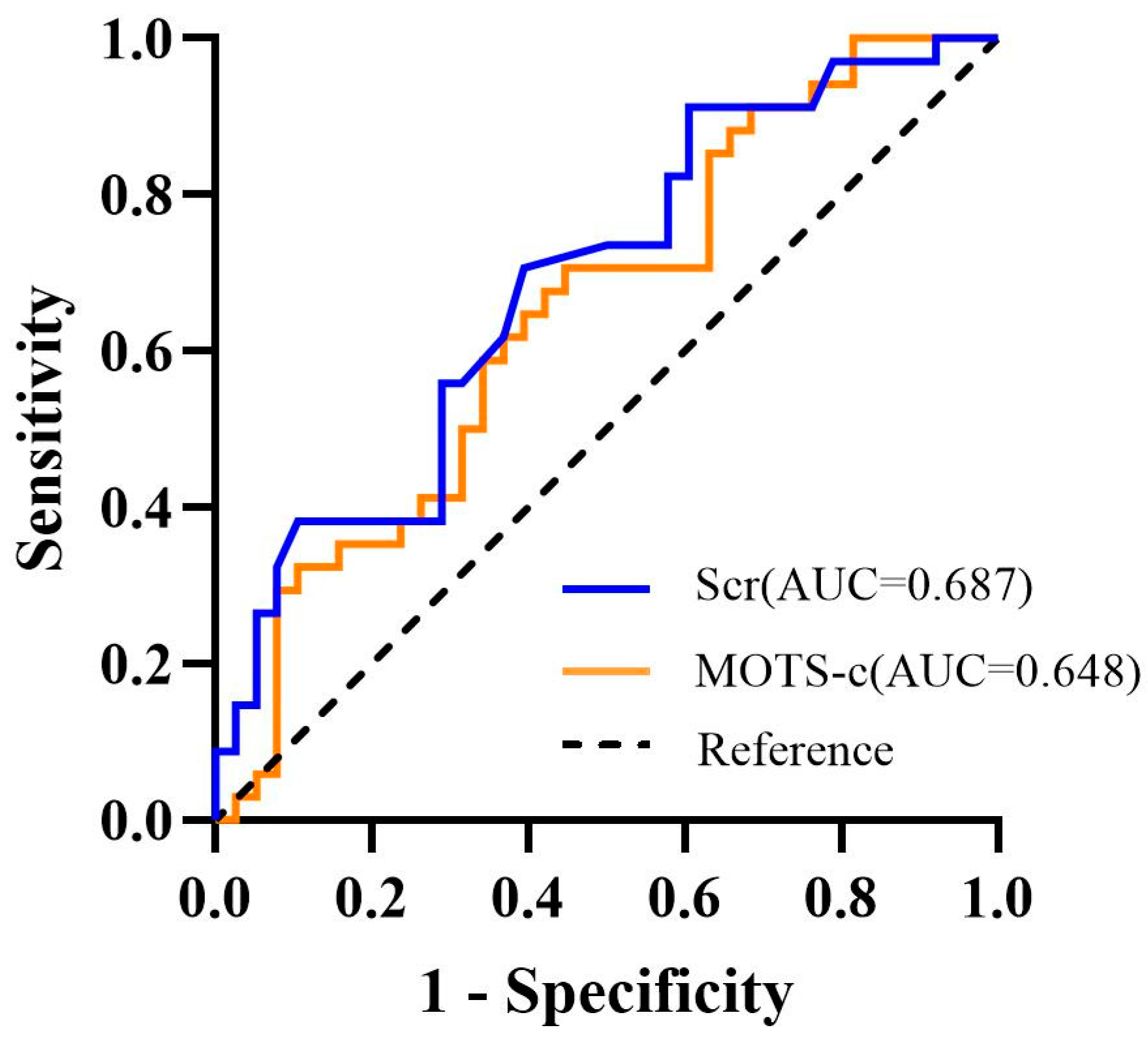
Background/Objectives: Percutaneous coronary intervention (PCI) effectively restores coronary flow in acute myocardial infarction (AMI), but myocardial ischemia–reperfusion injury (MIRI) remains a major prognostic determinant. Mitochondrial open reading frame of the 12S rRNA-c (MOTS-c) has shown cardiovascular protective effects, yet its association with MIRI is unclear. This study aimed to investigate the relationship between serum MOTS-c levels and MIRI in AMI patients. Methods: Seventy-two AMI patients undergoing PCI were enrolled and divided into MIRI (n = 34) and non-MIRI (n = 38) groups. Clinical data and MOTS-c levels in peripheral serum and intracoronary blood were compared. Multivariate logistic regression and receiver operating characteristic (ROC) analysis were performed to identify MIRI predictors. Results: The MIRI group exhibited lower systolic blood pressure, preoperative thrombolysis in myocardial infarction (TIMI) grade, and HDL-C, but higher total ischemic time, door-to-balloon time, culprit vessel stenosis severity, Killip grade and adverse event incidence (all p < 0.05). Postoperative peripheral serum MOTS-c levels were significantly lower in the MIRI group than in the non-MIRI group (p < 0.05), while preoperative peripheral and intracoronary MOTS-c levels showed no significant differences between groups. Multivariate logistic regression identified postoperative peripheral MOTS-c levels (OR = 0.986, 95%CI: 0.976–0.996) and preoperative TIMI grade ≥ 1 (OR = 0.036, 95%CI: 0.004–0.309) as independent protective factors for MIRI, whereas serum creatinine was identified as an independent risk factor. ROC analysis demonstrated that postoperative peripheral MOTS-c levels predicted MIRI with an area under the curve of 0.648. Conclusions: Postoperative peripheral serum MOTS-c levels represent an independent protective factor against MIRI in patients with acute myocardial infarction and suggest a potential predictive value for MIRI, although its clinical utility as a standalone predictor requires further validation through dynamic monitoring and larger-scale studies. This finding may offer a potential novel biomarker and therapeutic direction for MIRI.
Keywords: MOTS-c; acute myocardial infarction; myocardial ischemia-reperfusion injury; percutaneous coronary intervention MOTS-c; acute myocardial infarction; myocardial ischemia-reperfusion injury; percutaneous coronary intervention