Olive Components (Biophenols or Polyphenols) in Neurodegenerative Disease Models and Clinical Studies: A Systematic Review of Evidence and Translational Barriers


Abstract
1. Introduction
1.1. Neurodegenerative Disease Mechanisms
1.2. Olive Biophenols and Mediterranean Diet Evidence
1.3. Major Olive Biophenol Compounds
1.4. Translational Challenges and Objectives
2. Methods
2.1. Search Strategy and Data Sources
2.2. Inclusion and Exclusion Criteria
2.3. Screening Procedures
2.4. Data Extraction
2.5. Risk of Bias Assessment and Evidence Grading
2.6. Evidence Synthesis and Analysis
3. Results
3.1. Identification of Studies
3.2. Characteristics of the Studies
3.3. Characteristics of Olive Biophenol Components
3.4. Analysis Approach (Strength and Consistency of Evidence)
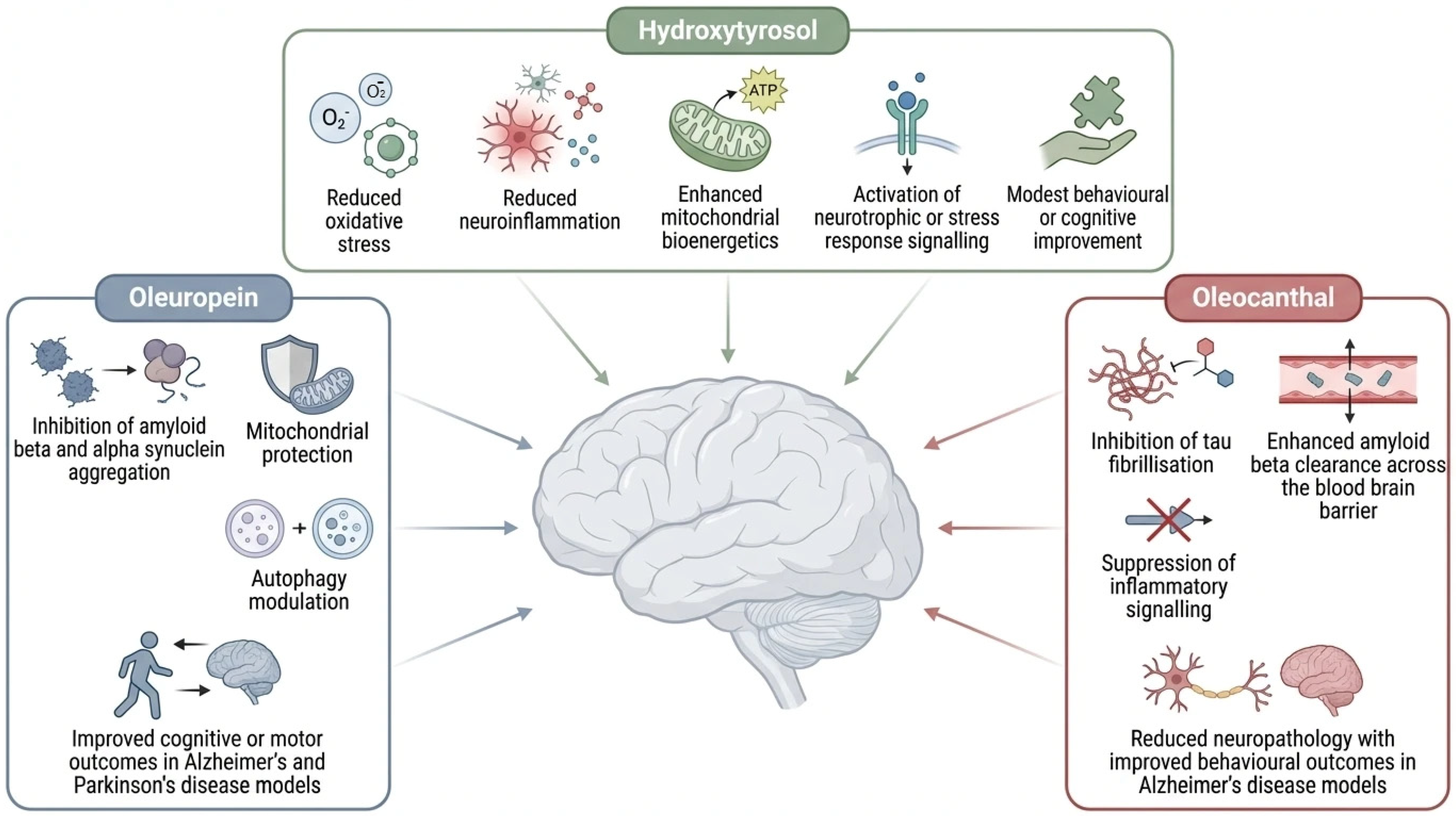
3.5. Key Findings
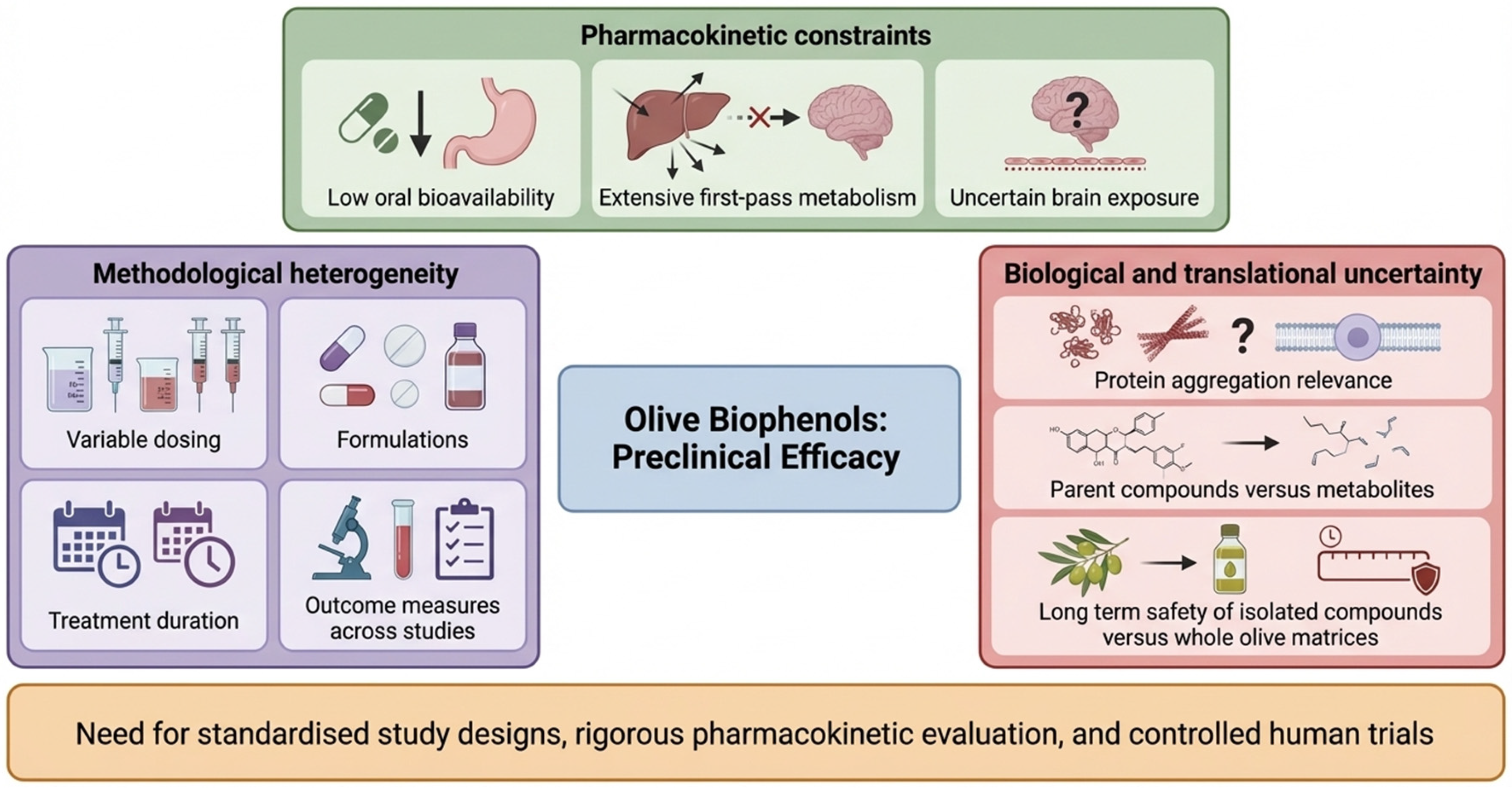
3.6. Key Translational Barriers
4. Discussion
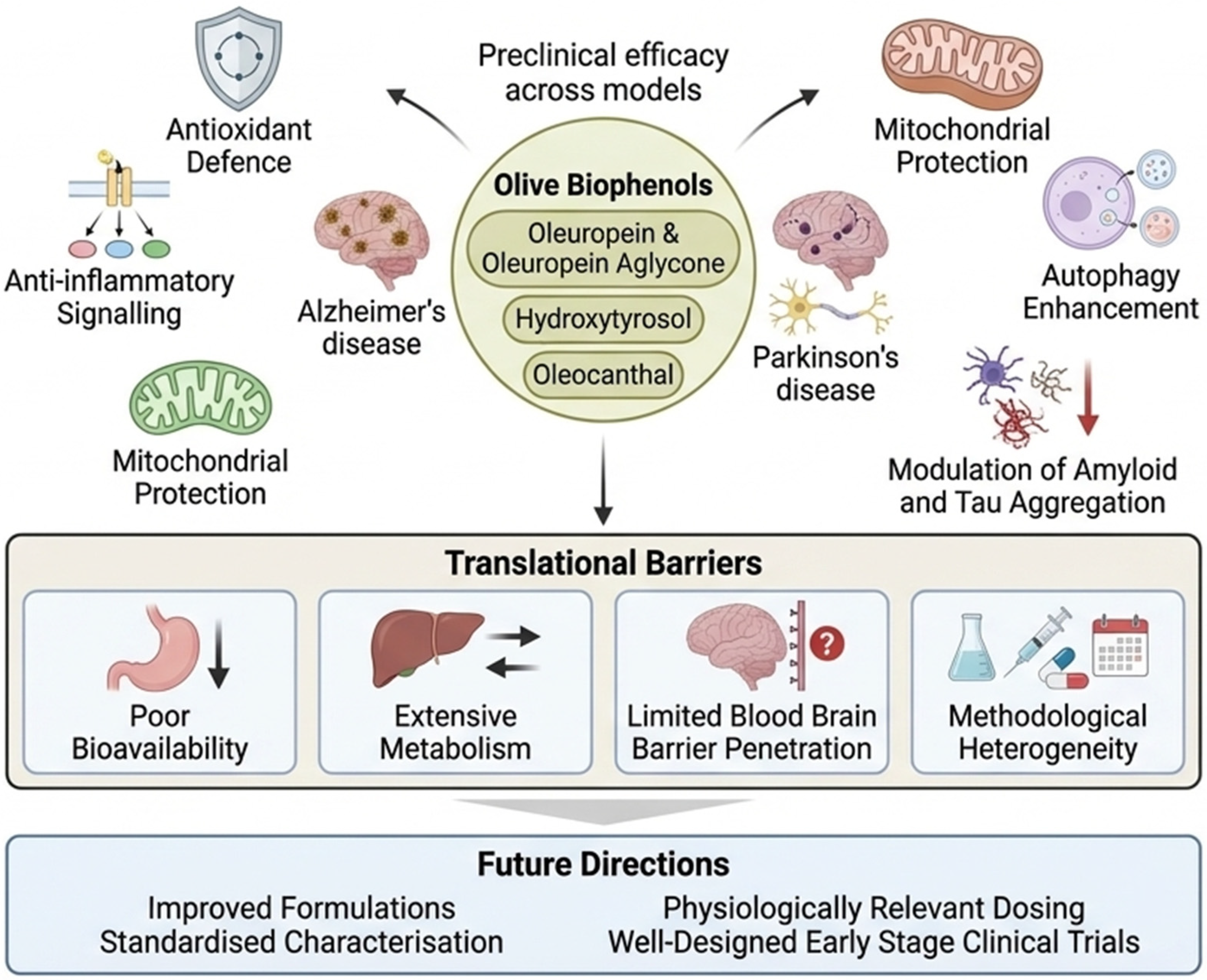
5. Conclusions
Author Contributions
Funding
Data Availability Statement
Acknowledgments
Conflicts of Interest
Abbreviations
| 5xFAD | Five familial Alzheimer’s disease mutation mouse model |
| 6-OHDA | 6-hydroxydopamine |
| α-syn or αSN | Alpha-synuclein |
| AD | Alzheimer’s disease |
| Akt | Protein kinase B |
| AMPK | Adenosine monophosphate activated protein kinase |
| APP/PS1 | Amyloid precursor protein and presenilin 1 transgenic mouse model |
| APP | Amyloid precursor protein |
| ATP | Adenosine triphosphate |
| Aβ | Amyloid beta |
| BBB | Blood–brain barrier |
| BDNF | Brain-derived neurotrophic factor |
| C. elegans | Caenorhabditis elegans |
| COX | Cyclooxygenase |
| CREB | cAMP response element binding protein |
| ERβ | Estrogen receptor beta |
| EVOO | Extra virgin olive oil |
| HO-1 | Heme oxygenase 1 |
| HT | Hydroxytyrosol |
| M-OHAT | Modified Office for Health Assessment and Translation |
| Nrf2 | Nuclear factor erythroid 2-related factor 2 |
| OC | Oleocanthal |
| OLE | Oleuropein |
| PD | Parkinson’s disease |
| pE3-Aβ | Pyroglutamylated amyloid beta |
| PRISMA | Preferred Reporting Items for Systematic Reviews and Meta-Analyses |
| PROSPERO | Prospective Register of Systematic Reviews |
| RoB | Risk of bias |
| ROS | Reactive oxygen species |
| SYRCLE | Systematic Review Centre for Laboratory Animal Experimentation |
| TgCRND8 | Transgenic mouse model overexpressing mutant amyloid precursor protein |
| TgSwDI | Swedish Dutch Iowa mutant amyloid precursor protein mouse model |
| ToxR | Toxicological data reliability |
References
- Kumari, N.; Daram, N.; Alam, M.S.; Verma, A.K. Rationalizing the Use of Polyphenol Nano-formulations in the Therapy of Neurodegenerative Diseases. CNS Neurol. Disord. Drug Targets 2022, 21, 966–976. [Google Scholar] [CrossRef] [Scilit] [PubMed]
- Ji, Z.; Chen, Q.; Yang, J.; Hou, J.; Wu, H.; Zhang, L. Global, regional, and national health inequalities of Alzheimer’s disease and Parkinson’s disease in 204 countries, 1990–2019. Int. J. Equity Health 2024, 23, 125. [Google Scholar] [CrossRef] [Scilit] [PubMed]
- Zheng, Q.; Wang, X. Alzheimer’s disease: Insights into pathology, molecular mechanisms, and therapy. Protein Cell 2025, 16, 83–120. [Google Scholar] [CrossRef] [Scilit] [PubMed]
- Ahmad, S.S.; Khalid, M.; Kamal, M.A.; Younis, K. Study of Nutraceuticals and Phytochemicals for the Management of Alzheimer’s Disease: A Review. Curr. Neuropharmacol. 2021, 19, 1884–1895. [Google Scholar] [CrossRef] [Scilit]
- Dadhania, V.P.; Trivedi, P.P.; Vikram, A.; Tripathi, D.N. Nutraceuticals against Neurodegeneration: A Mechanistic Insight. Curr. Neuropharmacol. 2016, 14, 627–640. [Google Scholar] [CrossRef] [Scilit]
- Casamenti, F.; Stefani, M. Olive polyphenols: New promising agents to combat aging-associated neurodegeneration. Expert Rev. Neurother. 2017, 17, 345–358. [Google Scholar] [CrossRef] [Scilit]
- Petrella, C.; Di Certo, M.G.; Gabanella, F.; Barbato, C.; Ceci, F.M.; Greco, A.; Ralli, M.; Polimeni, A.; Angeloni, A.; Severini, C.; et al. Mediterranean Diet, Brain and Muscle: Olive Polyphenols and Resveratrol Protection in Neurodegenerative and Neuromuscular Disorders. Curr. Med. Chem. 2021, 28, 7595–7613. [Google Scholar] [CrossRef] [Scilit]
- Tripoli, E.; Giammanco, M.; Tabacchi, G.; Di Majo, D.; Giammanco, S.; La Guardia, M. The phenolic compounds of olive oil: Structure, biological activity and beneficial effects on human health. Nutr. Res. Rev. 2005, 18, 98–112. [Google Scholar] [CrossRef] [Scilit]
- Omar, S.H. Mediterranean and MIND Diets Containing Olive Biophenols Reduces the Prevalence of Alzheimer’s Disease. Int. J. Mol. Sci. 2019, 20, 2797. [Google Scholar] [CrossRef] [Scilit]
- Goncalves, M.; Vale, N.; Silva, P. Neuroprotective Effects of Olive Oil: A Comprehensive Review of Antioxidant Properties. Antioxidants 2024, 13, 762. [Google Scholar] [CrossRef] [Scilit]
- Omar, S.H.; Scott, C.J.; Hamlin, A.S.; Obied, H.K. Biophenols: Enzymes (beta-secretase, Cholinesterases, histone deacetylase and tyrosinase) inhibitors from olive (Olea europaea L.). Fitoterapia 2018, 128, 118–129. [Google Scholar] [CrossRef] [Scilit]
- Hashmi, M.A.; Khan, A.; Hanif, M.; Farooq, U.; Perveen, S. Traditional Uses, Phytochemistry, and Pharmacology of Olea europaea (Olive). Evid.-Based Complement. Altern. Med. 2015, 2015, 541591. [Google Scholar] [CrossRef] [Scilit]
- Omar, S.H. Oleuropein in olive and its pharmacological effects. Sci. Pharm. 2010, 78, 133–154. [Google Scholar] [CrossRef] [Scilit] [PubMed]
- Alesci, A.; Miller, A.; Tardugno, R.; Pergolizzi, S. Chemical analysis, biological and therapeutic activities of Olea europaea L. extracts. Nat. Prod. Res. 2022, 36, 2932–2945. [Google Scholar] [CrossRef] [Scilit] [PubMed]
- Angeloni, C.; Malaguti, M.; Barbalace, M.C.; Hrelia, S. Bioactivity of Olive Oil Phenols in Neuroprotection. Int. J. Mol. Sci. 2017, 18, 2230. [Google Scholar] [CrossRef] [Scilit]
- Omar, S.H. Chapter 4—Biophenols: Impacts and Prospects in Anti-Alzheimer Drug Discovery. In Discovery and Development of Neuroprotective Agents from Natural Products; Brahmachari, G., Ed.; Elsevier: Amsterdam, The Netherlands, 2018; pp. 103–148. [Google Scholar] [CrossRef] [Scilit]
- Alkhalifa, A.E.; Al-Ghraiybah, N.F.; Kaddoumi, A. Extra-Virgin Olive Oil in Alzheimer’s Disease: A Comprehensive Review of Cellular, Animal, and Clinical Studies. Int. J. Mol. Sci. 2024, 25, 1914. [Google Scholar] [CrossRef] [Scilit]
- Bucciantini, M.; Leri, M.; Scuto, M.; Ontario, M.; Trovato Salinaro, A.; Calabrese, E.J.; Calabrese, V.; Stefani, M. Xenohormesis underlyes the anti-aging and healthy properties of olive polyphenols. Mech. Ageing Dev. 2022, 202, 111620. [Google Scholar] [CrossRef] [Scilit]
- Omar, S.H. Biophenols pharmacology against the amyloidogenic activity in Alzheimer’s disease. Biomed. Pharmacother. 2017, 89, 396–413. [Google Scholar] [CrossRef] [Scilit]
- Omar, S.H.; Kerr, P.G.; Scott, C.J.; Hamlin, A.S.; Obied, H.K. Olive (Olea europaea L.) Biophenols: A Nutriceutical against Oxidative Stress in SH-SY5Y Cells. Molecules 2017, 22, 1858. [Google Scholar] [CrossRef] [Scilit]
- Moreira Vasconcelos, C.F.; Neugebauer, A.Z.; Basto Souza, R. Exploring promising minor natural phenolic compounds in neuroprotection-related preclinical models. Basic Clin. Pharmacol. Toxicol. 2024, 134, 770–777. [Google Scholar] [CrossRef] [Scilit]
- Omar, S.H.; Scott, C.J.; Hamlin, A.S.; Obied, H.K. Olive Biophenols Reduces Alzheimer’s Pathology in SH-SY5Y Cells and APPswe Mice. Int. J. Mol. Sci. 2018, 20, 125. [Google Scholar] [CrossRef] [Scilit] [PubMed]
- Perrone, P.; Ortega-Luna, R.; Manna, C.; Alvarez-Ribelles, A.; Collado-Diaz, V. Increased Adhesiveness of Blood Cells Induced by Mercury Chloride: Protective Effect of Hydroxytyrosol. Antioxidants 2024, 13, 1576. [Google Scholar] [CrossRef] [Scilit] [PubMed]
- Tzekaki, E.E.; Tsolaki, M.; Pantazaki, A.A.; Geromichalos, G.; Lazarou, E.; Kozori, M.; Sinakos, Z. Administration of the extra virgin olive oil (EVOO) in mild cognitive impairment (MCI) patients as a therapy for preventing the progress to AD. Hell. J. Nucl. Med. 2019, 22, 181. [Google Scholar] [PubMed]
- Page, M.J.; McKenzie, J.E.; Bossuyt, P.M.; Boutron, I.; Hoffmann, T.C.; Mulrow, C.D.; Shamseer, L.; Tetzlaff, J.M.; Akl, E.A.; Brennan, S.E.; et al. The PRISMA 2020 statement: An updated guideline for reporting systematic reviews. BMJ 2021, 372, n71. [Google Scholar] [CrossRef] [Scilit]
- Hooijmans, C.R.; Rovers, M.M.; de Vries, R.B.; Leenaars, M.; Ritskes-Hoitinga, M.; Langendam, M.W. SYRCLE’s risk of bias tool for animal studies. BMC Med. Res. Methodol. 2014, 14, 43. [Google Scholar] [CrossRef] [Scilit]
- Waspe, J.; Bui, T.; Dishaw, L.; Kraft, A.; Luke, A.; Beronius, A. Evaluating reliability and risk of bias of in vivo animal data for risk assessment of chemicals—Exploring the use of the SciRAP tool in a systematic review context. Environ. Int. 2021, 146, 106103. [Google Scholar] [CrossRef] [Scilit]
- Brunetti, G.; Di Rosa, G.; Scuto, M.; Leri, M.; Stefani, M.; Schmitz-Linneweber, C.; Calabrese, V.; Saul, N. Healthspan Maintenance and Prevention of Parkinson’s-like Phenotypes with Hydroxytyrosol and Oleuropein Aglycone in C. elegans. Int. J. Mol. Sci. 2020, 21, 2588. [Google Scholar] [CrossRef] [Scilit]
- Abdallah, I.M.; Al-Shami, K.M.; Alkhalifa, A.E.; Al-Ghraiybah, N.F.; Guillaume, C.; Kaddoumi, A. Comparison of Oleocanthal-Low EVOO and Oleocanthal against Amyloid-beta and Related Pathology in a Mouse Model of Alzheimer’s Disease. Molecules 2023, 28, 1249. [Google Scholar] [CrossRef] [Scilit]
- Abuznait, A.H.; Qosa, H.; Busnena, B.A.; El Sayed, K.A.; Kaddoumi, A. Olive-oil-derived oleocanthal enhances beta-amyloid clearance as a potential neuroprotective mechanism against Alzheimer’s disease: In vitro and in vivo studies. ACS Chem. Neurosci. 2013, 4, 973–982. [Google Scholar] [CrossRef] [Scilit]
- Achour, I.; Arel-Dubeau, A.M.; Renaud, J.; Legrand, M.; Attard, E.; Germain, M.; Martinoli, M.G. Oleuropein Prevents Neuronal Death, Mitigates Mitochondrial Superoxide Production and Modulates Autophagy in a Dopaminergic Cellular Model. Int. J. Mol. Sci. 2016, 17, 1293. [Google Scholar] [CrossRef] [Scilit]
- Basellini, M.J.; Granadino-Roldan, J.M.; Torres-Ortega, P.V.; Simmini, G.; Rubio-Martinez, J.; Marin, S.; Cappelletti, G.; Cascante, M.; Canuelo, A. Oleuropein Aglycone, an Olive Polyphenol, Influences Alpha-Synuclein Aggregation and Exerts Neuroprotective Effects in Different Parkinson’s Disease Models. Mol. Neurobiol. 2025, 62, 15741–15758. [Google Scholar] [CrossRef] [Scilit] [PubMed]
- Batarseh, Y.S.; Mohamed, L.A.; Al Rihani, S.B.; Mousa, Y.M.; Siddique, A.B.; El Sayed, K.A.; Kaddoumi, A. Oleocanthal ameliorates amyloid-beta oligomers’ toxicity on astrocytes and neuronal cells: In vitro studies. Neuroscience 2017, 352, 204–215. [Google Scholar] [CrossRef] [Scilit] [PubMed]
- Beauchamp, G.K.; Keast, R.S.; Morel, D.; Lin, J.; Pika, J.; Han, Q.; Lee, C.H.; Smith, A.B.; Breslin, P.A. Phytochemistry: Ibuprofen-like activity in extra-virgin olive oil. Nature 2005, 437, 45–46. [Google Scholar] [CrossRef] [Scilit] [PubMed]
- Funakohi-Tago, M.; Sakata, T.; Fujiwara, S.; Sakakura, A.; Sugai, T.; Tago, K.; Tamura, H. Hydroxytyrosol butyrate inhibits 6-OHDA-induced apoptosis through activation of the Nrf2/HO-1 axis in SH-SY5Y cells. Eur. J. Pharmacol. 2018, 834, 246–256. [Google Scholar] [CrossRef] [Scilit]
- Grossi, C.; Rigacci, S.; Ambrosini, S.; Ed Dami, T.; Luccarini, I.; Traini, C.; Failli, P.; Berti, A.; Casamenti, F.; Stefani, M. The polyphenol oleuropein aglycone protects TgCRND8 mice against Ass plaque pathology. PLoS ONE 2013, 8, e71702. [Google Scholar] [CrossRef] [Scilit]
- Li, W.; Sperry, J.B.; Crowe, A.; Trojanowski, J.Q.; Smith, A.B., 3rd; Lee, V.M. Inhibition of tau fibrillization by oleocanthal via reaction with the amino groups of tau. J. Neurochem. 2009, 110, 1339–1351. [Google Scholar] [CrossRef] [Scilit]
- Luccarini, I.; Grossi, C.; Rigacci, S.; Coppi, E.; Pugliese, A.M.; Pantano, D.; la Marca, G.; Ed Dami, T.; Berti, A.; Stefani, M.; et al. Oleuropein aglycone protects against pyroglutamylated-3 amyloid-ss toxicity: Biochemical, epigenetic and functional correlates. Neurobiol. Aging 2015, 36, 648–663. [Google Scholar] [CrossRef] [Scilit]
- Monti, M.C.; Margarucci, L.; Riccio, R.; Casapullo, A. Modulation of tau protein fibrillization by oleocanthal. J. Nat. Prod. 2012, 75, 1584–1588. [Google Scholar] [CrossRef] [Scilit]
- Nardiello, P.; Pantano, D.; Lapucci, A.; Stefani, M.; Casamenti, F. Diet Supplementation with Hydroxytyrosol Ameliorates Brain Pathology and Restores Cognitive Functions in a Mouse Model of Amyloid-beta Deposition. J. Alzheimer’s Dis. 2018, 63, 1161–1172. [Google Scholar] [CrossRef] [Scilit]
- Pantano, D.; Luccarini, I.; Nardiello, P.; Servili, M.; Stefani, M.; Casamenti, F. Oleuropein aglycone and polyphenols from olive mill waste water ameliorate cognitive deficits and neuropathology. Br. J. Clin. Pharmacol. 2017, 83, 54–62. [Google Scholar] [CrossRef] [Scilit]
- Peng, Y.; Hou, C.; Yang, Z.; Li, C.; Jia, L.; Liu, J.; Tang, Y.; Shi, L.; Li, Y.; Long, J.; et al. Hydroxytyrosol mildly improve cognitive function independent of APP processing in APP/PS1 mice. Mol. Nutr. Food Res. 2016, 60, 2331–2342. [Google Scholar] [CrossRef] [Scilit] [PubMed]
- Qin, C.; Hu, S.; Zhang, S.; Zhao, D.; Wang, Y.; Li, H.; Peng, Y.; Shi, L.; Xu, X.; Wang, C.; et al. Hydroxytyrosol Acetate Improves the Cognitive Function of APP/PS1 Transgenic Mice in ERbeta-dependent Manner. Mol. Nutr. Food Res. 2021, 65, e2000797. [Google Scholar] [CrossRef] [Scilit] [PubMed]
- Qosa, H.; Batarseh, Y.S.; Mohyeldin, M.M.; El Sayed, K.A.; Keller, J.N.; Kaddoumi, A. Oleocanthal enhances amyloid-beta clearance from the brains of TgSwDI mice and in vitro across a human blood-brain barrier model. ACS Chem. Neurosci. 2015, 6, 1849–1859. [Google Scholar] [CrossRef] [Scilit] [PubMed]
- Singh, R.; Zahra, W.; Singh, S.S.; Birla, H.; Rathore, A.S.; Keshri, P.K.; Dilnashin, H.; Singh, S.; Singh, S.P. Oleuropein confers neuroprotection against rotenone-induced model of Parkinson’s disease via BDNF/CREB/Akt pathway. Sci. Rep. 2023, 13, 2452. [Google Scholar] [CrossRef] [Scilit]
- Sirangelo, I.; Borriello, M.; Vilasi, S.; Iannuzzi, C. Hydroxytyrosol Inhibits Protein Oligomerization and Amyloid Aggregation in Human Insulin. Int. J. Mol. Sci. 2020, 21, 4636. [Google Scholar] [CrossRef] [Scilit]
- Tajmim, A.; Cuevas-Ocampo, A.K.; Siddique, A.B.; Qusa, M.H.; King, J.A.; Abdelwahed, K.S.; Sonju, J.J.; El Sayed, K.A. (-)-Oleocanthal Nutraceuticals for Alzheimer’s Disease Amyloid Pathology: Novel Oral Formulations, Therapeutic, and Molecular Insights in 5xFAD Transgenic Mice Model. Nutrients 2021, 13, 1702. [Google Scholar] [CrossRef] [Scilit]
- Visioli, F.; Rodriguez-Perez, M.; Gomez-Torres, O.; Pintado-Losa, C.; Burgos-Ramos, E. Hydroxytyrosol improves mitochondrial energetics of a cellular model of Alzheimer’s disease. Nutr. Neurosci. 2022, 25, 990–1000. [Google Scholar] [CrossRef] [Scilit]
- Yang, E.; Wang, J.; Woodie, L.N.; Greene, M.W.; Kaddoumi, A. Oleocanthal Ameliorates Metabolic and Behavioral Phenotypes in a Mouse Model of Alzheimer’s Disease. Molecules 2023, 28, 5592. [Google Scholar] [CrossRef] [Scilit]
- Zhao, Y.T.; Zhang, L.; Yin, H.; Shen, L.; Zheng, W.; Zhang, K.; Zeng, J.; Hu, C.; Liu, Y. Hydroxytyrosol alleviates oxidative stress and neuroinflammation and enhances hippocampal neurotrophic signaling to improve stress-induced depressive behaviors in mice. Food Funct. 2021, 12, 5478–5487. [Google Scholar] [CrossRef] [Scilit]
- Zheng, A.; Li, H.; Xu, J.; Cao, K.; Li, H.; Pu, W.; Yang, Z.; Peng, Y.; Long, J.; Liu, J.; et al. Hydroxytyrosol improves mitochondrial function and reduces oxidative stress in the brain of db/db mice: Role of AMP-activated protein kinase activation. Br. J. Nutr. 2015, 113, 1667–1676. [Google Scholar] [CrossRef] [Scilit]
- Fuccelli, R.; Fabiani, R.; Rosignoli, P. Hydroxytyrosol Exerts Anti-Inflammatory and Anti-Oxidant Activities in a Mouse Model of Systemic Inflammation. Molecules 2018, 23, 3212. [Google Scholar] [CrossRef] [Scilit] [PubMed]
- Frumuzachi, O.; Gavrilas, L.I.; Vodnar, D.C.; Rohn, S.; Mocan, A. Systemic Health Effects of Oleuropein and Hydroxytyrosol Supplementation: A Systematic Review of Randomized Controlled Trials. Antioxidants 2024, 13, 1040. [Google Scholar] [CrossRef] [Scilit] [PubMed]
- Karkovic Markovic, A.; Toric, J.; Barbaric, M.; Jakobusic Brala, C. Hydroxytyrosol, Tyrosol and Derivatives and Their Potential Effects on Human Health. Molecules 2019, 24, 2001. [Google Scholar] [CrossRef] [Scilit] [PubMed]
- Galmes, S.; Reynes, B.; Palou, M.; Palou-March, A.; Palou, A. Absorption, Distribution, Metabolism, and Excretion of the Main Olive Tree Phenols and Polyphenols: A Literature Review. J. Agric. Food Chem. 2021, 69, 5281–5296. [Google Scholar] [CrossRef] [Scilit]
- Mechi, D.; Baccouri, B.; Martin-Vertedor, D.; Abaza, L. Bioavailability of Phenolic Compounds in Californian-Style Table Olives with Tunisian Aqueous Olive Leaf Extracts. Molecules 2023, 28, 707. [Google Scholar] [CrossRef] [Scilit]
- Kundisova, I.; Juan, M.E.; Planas, J.M. Simultaneous Determination of Phenolic Compounds in Plasma by LC-ESI-MS/MS and Their Bioavailability after the Ingestion of Table Olives. J. Agric. Food Chem. 2020, 68, 10213–10222. [Google Scholar] [CrossRef] [Scilit]
- Tsolaki, M.; Lazarou, E.; Kozori, M.; Petridou, N.; Tabakis, I.; Lazarou, I.; Karakota, M.; Saoulidis, I.; Melliou, E.; Magiatis, P. A Randomized Clinical Trial of Greek High Phenolic Early Harvest Extra Virgin Olive Oil in Mild Cognitive Impairment: The MICOIL Pilot Study. J. Alzheimer’s Dis. 2020, 78, 801–817. [Google Scholar] [CrossRef] [Scilit]
- Kabir, E.R.; Chowdhury, N.M.; Yasmin, H.; Kabir, M.T.; Akter, R.; Perveen, A.; Ashraf, G.M.; Akter, S.; Rahman, M.H.; Sweilam, S.H. Unveiling the Potential of Polyphenols as Anti-Amyloid Molecules in Alzheimer’s Disease. Curr. Neuropharmacol. 2023, 21, 787–807. [Google Scholar] [CrossRef] [Scilit]
- Mahmoudi, A.; Hadrich, F.; Feki, I.; Ghorbel, H.; Bouallagui, Z.; Marrekchi, R.; Fourati, H.; Sayadi, S. Oleuropein and hydroxytyrosol rich extracts from olive leaves attenuate liver injury and lipid metabolism disturbance in bisphenol A-treated rats. Food Funct. 2018, 9, 3220–3234. [Google Scholar] [CrossRef] [Scilit]
- Mohammad-Beigi, H.; Aliakbari, F.; Sahin, C.; Lomax, C.; Tawfike, A.; Schafer, N.P.; Amiri-Nowdijeh, A.; Eskandari, H.; Moller, I.M.; Hosseini-Mazinani, M.; et al. Oleuropein derivatives from olive fruit extracts reduce alpha-synuclein fibrillation and oligomer toxicity. J. Biol. Chem. 2019, 294, 4215–4232. [Google Scholar] [CrossRef] [Scilit]
- Perdigao, J.M.; Teixeira, B.J.B.; Carvalho-da-Silva, V.; Prediger, R.D.; Lima, R.R.; Rogez, H. A critical analysis on the concentrations of phenolic compounds tested using in vitro and in vivo Parkinson’s disease models. Crit. Rev. Food Sci. Nutr. 2024, 64, 6596–6615. [Google Scholar] [CrossRef] [Scilit]
- Lopez-Huertas, E.; Fonolla, J. Hydroxytyrosol supplementation increases vitamin C levels in vivo. A human volunteer trial. Redox Biol. 2017, 11, 384–389. [Google Scholar] [CrossRef] [Scilit]
- Gonzalez-Santiago, M.; Fonolla, J.; Lopez-Huertas, E. Human absorption of a supplement containing purified hydroxytyrosol, a natural antioxidant from olive oil, and evidence for its transient association with low-density lipoproteins. Pharmacol. Res. 2010, 61, 364–370. [Google Scholar] [CrossRef] [Scilit]
- Noguera-Navarro, C.; Vinten, K.T.; Aunon-Calles, D.; Carazo-Diaz, C.; Janssens, G.E.; Montoro-Garcia, S. Multi-omic analysis and platelet function distinguish treatment responses to hydroxytyrosol in cardiovascular risk. Food Funct. 2025, 16, 5928–5948. [Google Scholar] [CrossRef] [Scilit]
- Maan, G.; Sikdar, B.; Kumar, A.; Shukla, R.; Mishra, A. Role of Flavonoids in Neurodegenerative Diseases: Limitations and Future Perspectives. Curr. Top. Med. Chem. 2020, 20, 1169–1194. [Google Scholar] [CrossRef] [Scilit]
- Chen, C.; Ai, Q.; Shi, A.; Wang, N.; Wang, L.; Wei, Y. Oleanolic acid and ursolic acid: Therapeutic potential in neurodegenerative diseases, neuropsychiatric diseases and other brain disorders. Nutr. Neurosci. 2023, 26, 414–428. [Google Scholar] [CrossRef] [Scilit]
- Zhao, D.; Simon, J.E.; Wu, Q. A critical review on grape polyphenols for neuroprotection: Strategies to enhance bioefficacy. Crit. Rev. Food Sci. Nutr. 2020, 60, 597–625. [Google Scholar] [CrossRef] [Scilit]



| Study | Study Design | Component | Model | Disease Context | Risk of Bias |
|---|---|---|---|---|---|
| Abdallah et al., 2023 [29] | In vivo (mouse) | OC | OC vs. OC-low EVOO | AD | Moderate |
| Abuznait et al., 2013 [30] | In vitro + in vivo | OC | BBB & mouse models | AD | Moderate |
| Achour et al., 2016 [31] | In vitro (cellular) | OLE | Dopaminergic neuronal cells | PD | Moderate |
| Basellini et al., 2025 [32] | In vitro & in vivo | Oleuropein aglycone | α-synuclein PD models | PD | Moderate |
| Batarseh et al., 2017 [33] | In vitro (cellular) | OC | Astrocytes & neurons | AD | Moderate |
| Beauchamp et al., 2005 [34] | In vitro | OC | Enzymatic assays | Inflammation-related diseases; implications discussed for cardiovascular disease, cancer, platelet aggregation, and AD | Moderate |
| Brunetti et al., 2020 [28] | In vivo (C. elegans) | Oleuropein aglycone | C. elegans | Parkinson’s-like phenotypes | Low–Moderate |
| Brunetti et al., 2020 [28] | In vivo (C. elegans) | HT | C. elegans | Neurodegeneration & ageing | Low–Moderate |
| Funakohi-Tago et al., 2018 [35] | In vitro (cellular) | HT-butyrate | SH-SY5Y + 6-OHDA | PD | Moderate |
| Grossi et al., 2013 [36] | In vivo (transgenic mouse) | Oleuropein aglycone | TgCRND8 mice | AD (Aβ pathology) | Moderate |
| Li et al., 2009 [37] | In vitro (biochemical) | OC | Tau fibrillisation assays | AD | Moderate |
| Luccarini et al., 2015 [38] | In vivo & biochemical | Oleuropein aglycone | pE3-Aβ toxicity models | AD | Moderate |
| Monti et al., 2012 [39] | In vitro (biochemical) | OC | Tau aggregation assays | AD | Moderate |
| Nardiello et al., 2018 [40] | In vivo (mouse) | HT | Aβ deposition model | AD | Moderate |
| Pantano et al., 2017 [41] | In vivo (mouse) | Oleuropein aglycone | Cognitive & neuropathology models | AD | Moderate |
| Peng et al., 2016 [42] | In vivo (transgenic mouse) | HT | APP/PS1 mice | AD | Moderate |
| Qin et al., 2021 [43] | In vivo (transgenic mouse) | HT-acetate | APP/PS1 mice | AD | Moderate |
| Qosa et al., 2015 [44] | In vivo (transgenic mouse) | OC | TgSwDI mice | AD | Moderate |
| Singh et al., 2023 [45] | In vivo (toxin-induced) | OLE | Rotenone-induced rat model | PD | Low–Moderate |
| Sirangelo et al., 2020 [46] | In vitro (biochemical) | HT | Protein aggregation assays | Amyloid-related pathology | Moderate |
| Tajmim et al., 2021 [47] | In vivo (transgenic mouse) | OC | 5xFAD mice | AD | Moderate |
| Visioli et al., 2022 [48] | In vitro (cellular) | HT | Neuronal AD cellular model | AD | Moderate |
| Yang et al., 2023 [49] | In vivo (mouse) | OC | Metabolic–behavioural AD model | AD | Moderate |
| Zhao et al., 2021 [50] | In vivo (mouse) | HT | Chronic stress model | Depression/neuroinflammation | Moderate |
| Zheng et al., 2015 [51] | In vivo (mouse) | HT | db/db mice | Metabolic cognitive impairment | Moderate |
| Study | Component | Main Mechanisms Investigated | Dose Range (Reported) | Route of Administration | Species/Model | Duration | Primary Outcome Measures |
|---|---|---|---|---|---|---|---|
| Abdallah et al., 2023 [29] | OC | Anti-amyloid; EVOO comparison | ~10 mg/kg/day | Oral | AD mouse model | 4 weeks | Aβ load, inflammation |
| Abuznait et al., 2013 [30] | OC | Aβ clearance; BBB transport | ~10 mg/kg/day | Oral | AD mouse & BBB models | 2 weeks | Aβ clearance |
| Achour et al., 2016 [31] | OLE | Mitochondrial protection; autophagy modulation; oxidative stress reduction | 1–50 µM | Cell treatment | Dopaminergic cell line (PD model) | 24–72 h | Cell viability, ROS, autophagy markers |
| Basellini et al., 2025 [32] | Oleuropein aglycone | Inhibition of α-synuclein aggregation; neuroprotection | 1–20 µM; dietary equivalent in vivo | Cell treatment; oral | PD cellular & animal models | Acute–chronic | α-Syn aggregation, neuronal survival |
| Batarseh et al., 2017 [33] | OC | Protection against Aβ oligomer toxicity | 1–10 µM | Cell treatment | Astrocytes & neurons | 24–72 h | Cell viability |
| Beauchamp et al., 2005 [34] | OC | COX-1/2 inhibition (ibuprofen-like) | Dietary levels | Oral (EVOO) | Human sensory/biochemical | Acute | COX inhibition |
| Brunetti et al., 2020 [28] | Oleuropein aglycone | Stress resistance; proteostasis; longevity pathways | ~50 µM | Feeding | C. elegans PD-like model | Lifespan | Motor function, lifespan, aggregation |
| Brunetti et al., 2020 [28] | HT | Proteostasis; longevity; stress resistance | ~50 µM | Feeding | C. elegans | Lifespan | Motor activity, survival |
| Fuccelli et al., 2018 [52] | HT | Anti-inflammatory; antioxidant | 10–50 mg/kg/day | Oral | Mouse systemic inflammation model | 7 days | Cytokines, oxidative stress |
| Funakohi-Tago et al., 2018 [35] | HT butyrate | Nrf2/HO-1 activation; anti-apoptotic | 1–20 µM | Cell treatment | SH-SY5Y (6-OHDA PD model) | 24 h | Apoptosis, antioxidant enzymes |
| Grossi et al., 2013 [36] | Oleuropein aglycone | Anti-amyloidogenic; reduction in Aβ aggregation and plaque burden; autophagy induction | ~50 mg/kg/day | Diet supplementation | TgCRND8 mice (AD) | 8 weeks | Aβ plaque load, synaptic integrity, cognition |
| Li et al., 2009 [37] | OC | Tau fibrillisation inhibition | 1–10 µM | Biochemical assay | Tau aggregation system | Acute | Tau fibril formation |
| Luccarini et al., 2015 [38] | Oleuropein aglycone | Protection against pE3-Aβ toxicity; epigenetic modulation; synaptic preservation | 10–50 µM (in vitro); dietary equivalent in vivo | Cell treatment; diet | Neuronal cultures; mouse models | Acute–chronic | Neuronal viability, epigenetic markers, synaptic function |
| Monti et al., 2012 [39] | OC | Tau fibrillisation modulation | 1–20 µM | Biochemical assay | Tau protein system | Acute | Tau aggregation kinetics |
| Nardiello et al., 2018 [40] | HT | Anti-amyloid; synaptic restoration | ~50 mg/kg/day | Oral | Aβ-depositing mouse model | 8 weeks | Aβ load, cognition |
| Pantano et al., 2017 [41] | Oleuropein aglycone | Anti-amyloid; antioxidant; cognitive rescue | ~5–50 mg/kg/day (polyphenol-rich extract) | Oral (diet) | AD-like mouse model | 8 weeks | Cognitive performance, Aβ pathology |
| Peng et al., 2016 [42] | HT | Cognitive improvement independent of APP processing | 5–50 mg/kg/day | Oral | APP/PS1 mice | 6 months | Cognitive tests, synaptic markers |
| Qin et al., 2021 [43] | HT-acetate | ERβ-dependent neuroprotection; synaptic plasticity | ~30 mg/kg/day | Oral | APP/PS1 mice | 12 weeks | Learning, memory, ERβ signalling |
| Qosa et al., 2015 [44] | OC | Enhanced Aβ brain clearance | ~10 mg/kg/day | Oral | TgSwDI mice | 4 weeks | Brain Aβ levels |
| Singh et al., 2023 [45] | OLE | Antioxidant; BDNF/CREB/Akt signalling; mitochondrial protection | 25–100 mg/kg/day | Oral gavage | Rotenone-induced PD rat model | 28 days | Motor behaviour, dopaminergic neuron survival |
| Sirangelo et al., 2020 [46] | HT | Inhibition of protein oligomerisation | 10–100 µM | Biochemical assay | Human insulin aggregation model | Acute | Amyloid fibril formation |
| Tajmim et al., 2021 [47] | OC | Anti-amyloid; oral bioavailability | 5–20 mg/kg/day | Oral formulation | 5xFAD mice | 3 months | Aβ pathology, cognition |
| Visioli et al., 2022 [48] | HT | Mitochondrial energetics enhancement | 1–10 µM | Cell treatment | AD-related neuronal cells | 24–48 h | ATP production, respiration |
| Yang et al., 2023 [49] | OC | Metabolic modulation; behavioural improvement | 10 mg/kg/day | Oral | AD mouse model | 8 weeks | Behaviour, metabolic markers |
| Zhao et al., 2021 [50] | HT | Anti-inflammatory; neurotrophic signalling | 20–80 mg/kg/day | Oral | Stress-induced mouse model | 4 weeks | Behaviour, cytokines, BDNF |
| Zheng et al., 2015 [51] | HT | AMPK activation; mitochondrial bioenergetics; antioxidant | ~10 mg/kg/day | Oral | db/db mice | 8 weeks | Mitochondrial function, oxidative stress |
| Study | Component | Key Findings | Strength & Consistency of Evidence | Key Translational Barriers |
|---|---|---|---|---|
| Abdallah et al., 2023 [29] | OC | Superior efficacy of purified oleocanthal vs. EVOO | Moderate | Standardisation and dose scalability |
| Abuznait et al., 2013 [30] | OC | Enhanced Aβ clearance across BBB and in vivo | Moderate–strong (combined in vitro/in vivo) | Long-term safety and dosing in humans are unknown |
| Achour et al., 2016 [31] | OLE | Reduced mitochondrial ROS and modulation of autophagy in dopaminergic cells | Limited–moderate (cellular model only) | Lack of in vivo confirmation and pharmacokinetics |
| Basellini et al., 2025 [32] | Oleuropein aglycone | Inhibited α-synuclein aggregation and protected neurons across PD models | Moderate (multi-model consistency) | The human relevance of aggregation inhibition remains uncertain |
| Batarseh et al., 2017 [33] | OC | Protection against Aβ oligomer toxicity in neural cells | Limited–moderate | Lack of in vivo behavioural data |
| Beauchamp et al., 2005 [34] | OC | COX inhibition comparable to ibuprofen | Strong (mechanistic) | Not disease-specific; indirect neuroprotection |
| Brunetti et al., 2020 [28] | Oleuropein aglycone | Improved proteostasis, motor function, and lifespan in C. elegans | Limited–moderate (ageing model relevance) | Evolutionary distance; dose translation unclear |
| Brunetti et al., 2020 [28] | HT | Enhanced stress resistance and lifespan in C. elegans | Limited–moderate | Model simplicity and translational uncertainty |
| Fuccelli et al., 2018 [52] | HT | Reduced systemic inflammation and oxidative stress | Limited–moderate (indirect neuroprotection) | Not disease-specific to neurodegeneration |
| Funakohi-Tago et al., 2018 [35] | HT-butyrate | Protection against 6-OHDA-induced apoptosis via Nrf2/HO-1 | Limited–moderate (pathway specificity) | In vitro PD model limits translational inference |
| Grossi et al., 2013 [36] | Oleuropein aglycone | Reduced Aβ plaque burden, improved synaptic integrity and cognition in TgCRND8 mice | Moderate–strong (robust in vivo AD model, consistent outcomes) | Limited pharmacokinetic data; dietary dose equivalence to humans unclear |
| Li et al., 2009 [37] | OC | Direct inhibition of tau fibrillisation | Moderate (clear molecular target) | Requires validation in living systems |
| Luccarini et al., 2015 [38] | Oleuropein aglycone | Protection against pE3-Aβ toxicity; epigenetic modulation and synaptic preservation | Moderate (mechanistic depth, mixed in vitro/in vivo) | Translational relevance of epigenetic effects not fully established |
| Monti et al., 2012 [39] | OC | Modulation of tau fibrillisation kinetics | Limited | Biochemical model only |
| Nardiello et al., 2018 [40] | HT | Reduced Aβ deposition and restored cognitive function | Moderate (well-characterised AD mouse model) | Brain bioavailability is not directly measured |
| Pantano et al., 2017 [41] | Oleuropein aglycone | Improved cognition and reduced neuropathology following polyphenol supplementation | Moderate (in vivo efficacy, extract complexity) | Contribution of oleuropein aglycone vs. other polyphenols not isolated |
| Peng et al., 2016 [42] | HT | Mild cognitive improvement independent of APP processing | Moderate (long-term in vivo exposure) | Limited mechanistic linkage to amyloid pathology |
| Qin et al., 2021 [43] | HT-acetate | Cognitive improvement mediated by ERβ signalling | Moderate (clear receptor-dependent mechanism) | Ester derivative relevance to dietary HT uncertain |
| Qosa et al., 2015 [44] | OC | Increased brain Aβ clearance in TgSwDI mice | Moderate–strong (consistent with prior work) | Translational relevance of clearance magnitude |
| Singh et al., 2023 [45] | OLE | Neuroprotection in PD model via BDNF/CREB/Akt signalling | Moderate (clear pathway activation, toxin-induced model) | The acute toxin model may not reflect progressive PD pathology |
| Sirangelo et al., 2020 [46] | HT | Inhibited amyloid oligomerisation in biochemical assays | Limited (biochemical evidence only) | Absence of cellular or in vivo confirmation |
| Tajmim et al., 2021 [47] | OC | Reduced amyloid pathology and improved cognition with oral formulations | Moderate–strong (formulation + in vivo efficacy) | Human pharmacokinetics are still unresolved |
| Visioli et al., 2022 [48] | HT | Enhanced mitochondrial energetics in AD-related cells | Limited–moderate (cellular mechanistic evidence) | Lack of behavioural or in vivo validation |
| Yang et al., 2023 [49] | OC | Improved metabolic and behavioural phenotypes in AD mice | Moderate | Indirect mechanism; metabolic confounding |
| Zhao et al., 2021 [50] | HT | Reduced neuroinflammation and improved stress-related behaviours | Moderate (in vivo behavioural relevance) | Applicability to neurodegenerative disease unclear |
| Zheng et al., 2015 [51] | HT | Improved brain mitochondrial function via AMPK activation | Moderate (in vivo metabolic–neural link) | Disease specificity to AD/PD indirect |
Disclaimer/Publisher’s Note: The statements, opinions and data contained in all publications are solely those of the individual author(s) and contributor(s) and not of MDPI and/or the editor(s). MDPI and/or the editor(s) disclaim responsibility for any injury to people or property resulting from any ideas, methods, instructions or products referred to in the content. |
© 2026 by the authors. Licensee MDPI, Basel, Switzerland. This article is an open access article distributed under the terms and conditions of the Creative Commons Attribution (CC BY) license.
Share and Cite
Omar, S.H.; Ghani, M.A. Olive Components (Biophenols or Polyphenols) in Neurodegenerative Disease Models and Clinical Studies: A Systematic Review of Evidence and Translational Barriers. Biomedicines 2026, 14, 761. https://doi.org/10.3390/biomedicines14040761
Omar SH, Ghani MA. Olive Components (Biophenols or Polyphenols) in Neurodegenerative Disease Models and Clinical Studies: A Systematic Review of Evidence and Translational Barriers. Biomedicines. 2026; 14(4):761. https://doi.org/10.3390/biomedicines14040761
Chicago/Turabian StyleOmar, Syed Haris, and Md Ahsan Ghani. 2026. "Olive Components (Biophenols or Polyphenols) in Neurodegenerative Disease Models and Clinical Studies: A Systematic Review of Evidence and Translational Barriers" Biomedicines 14, no. 4: 761. https://doi.org/10.3390/biomedicines14040761
APA StyleOmar, S. H., & Ghani, M. A. (2026). Olive Components (Biophenols or Polyphenols) in Neurodegenerative Disease Models and Clinical Studies: A Systematic Review of Evidence and Translational Barriers. Biomedicines, 14(4), 761. https://doi.org/10.3390/biomedicines14040761