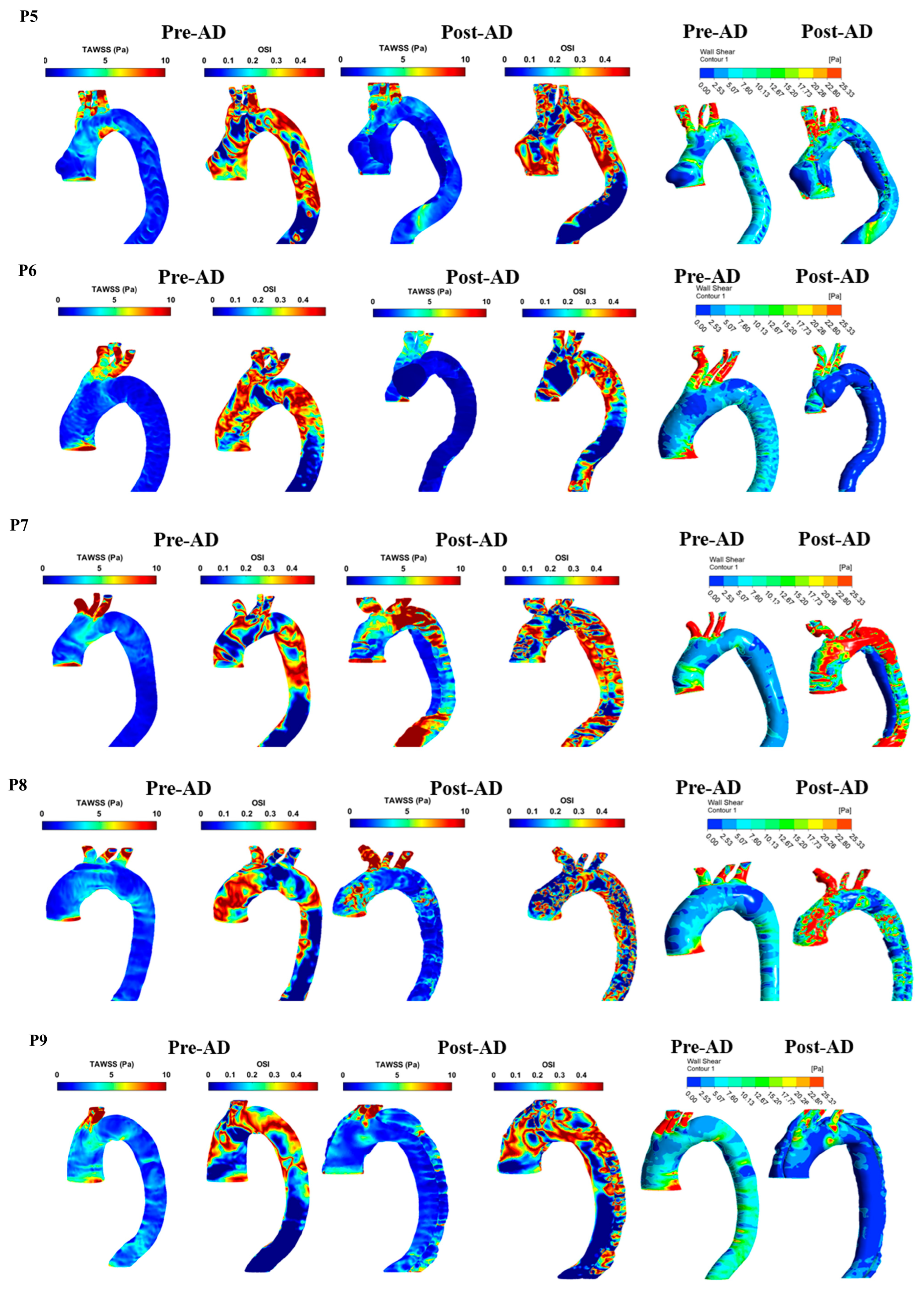
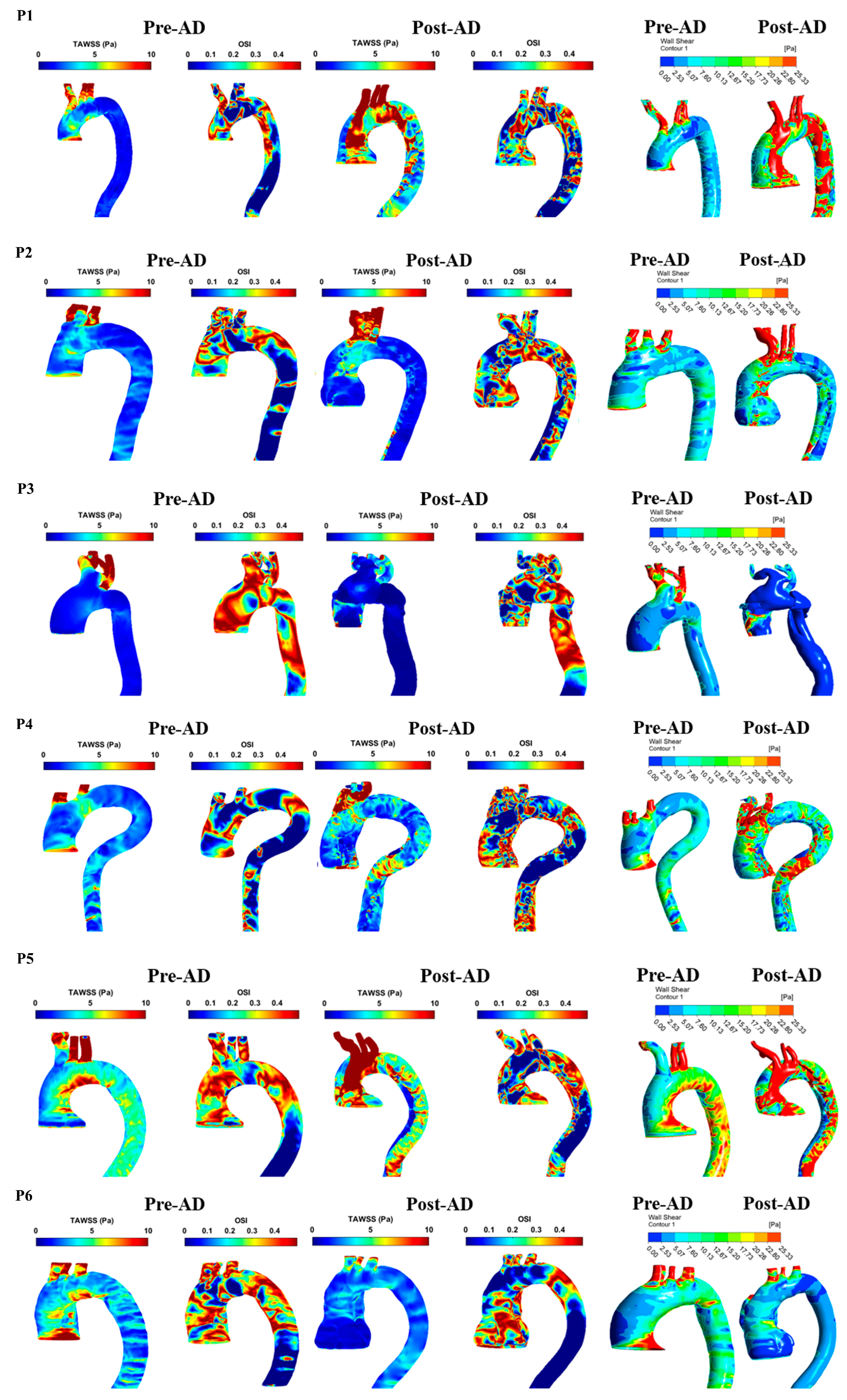
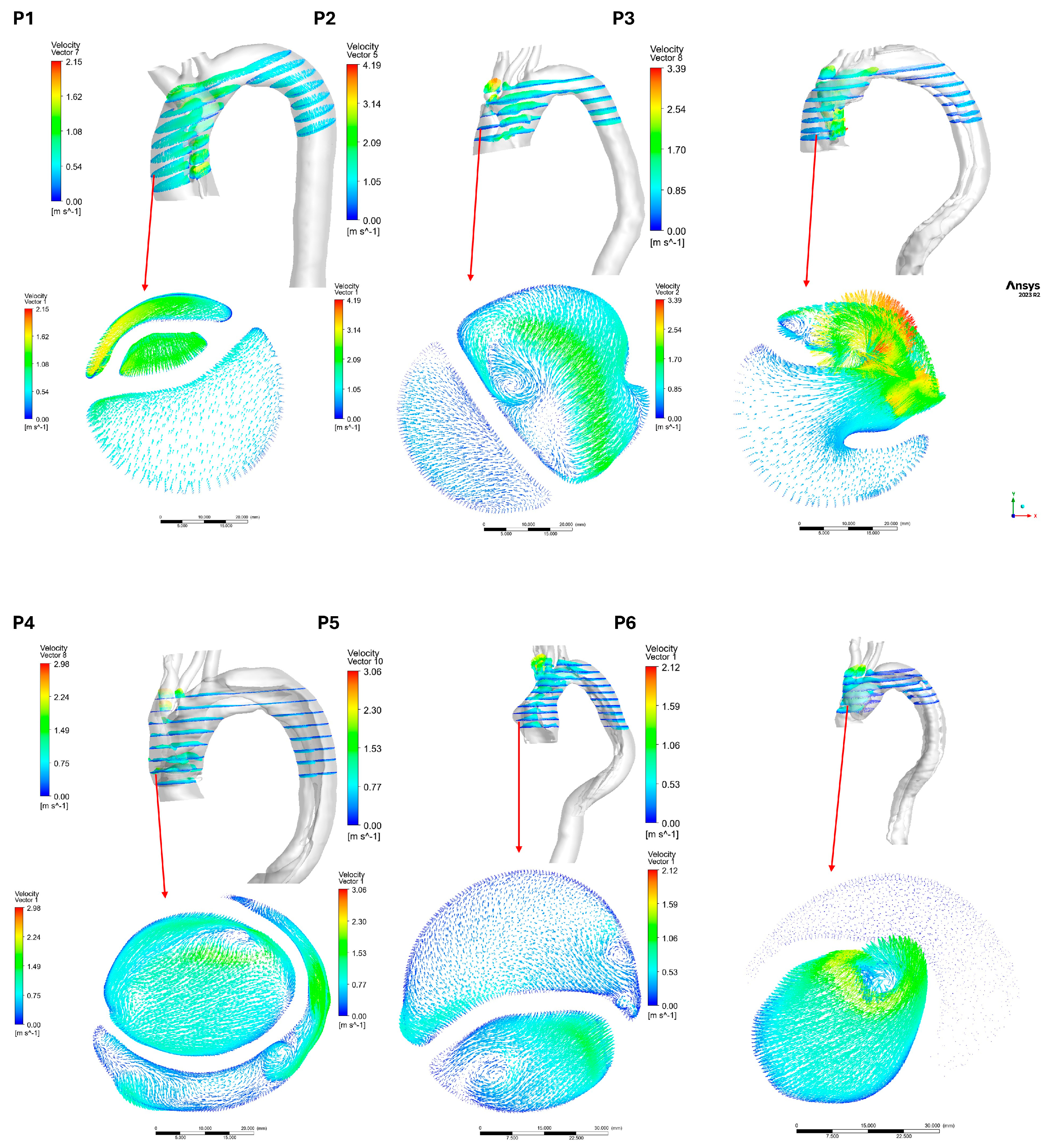
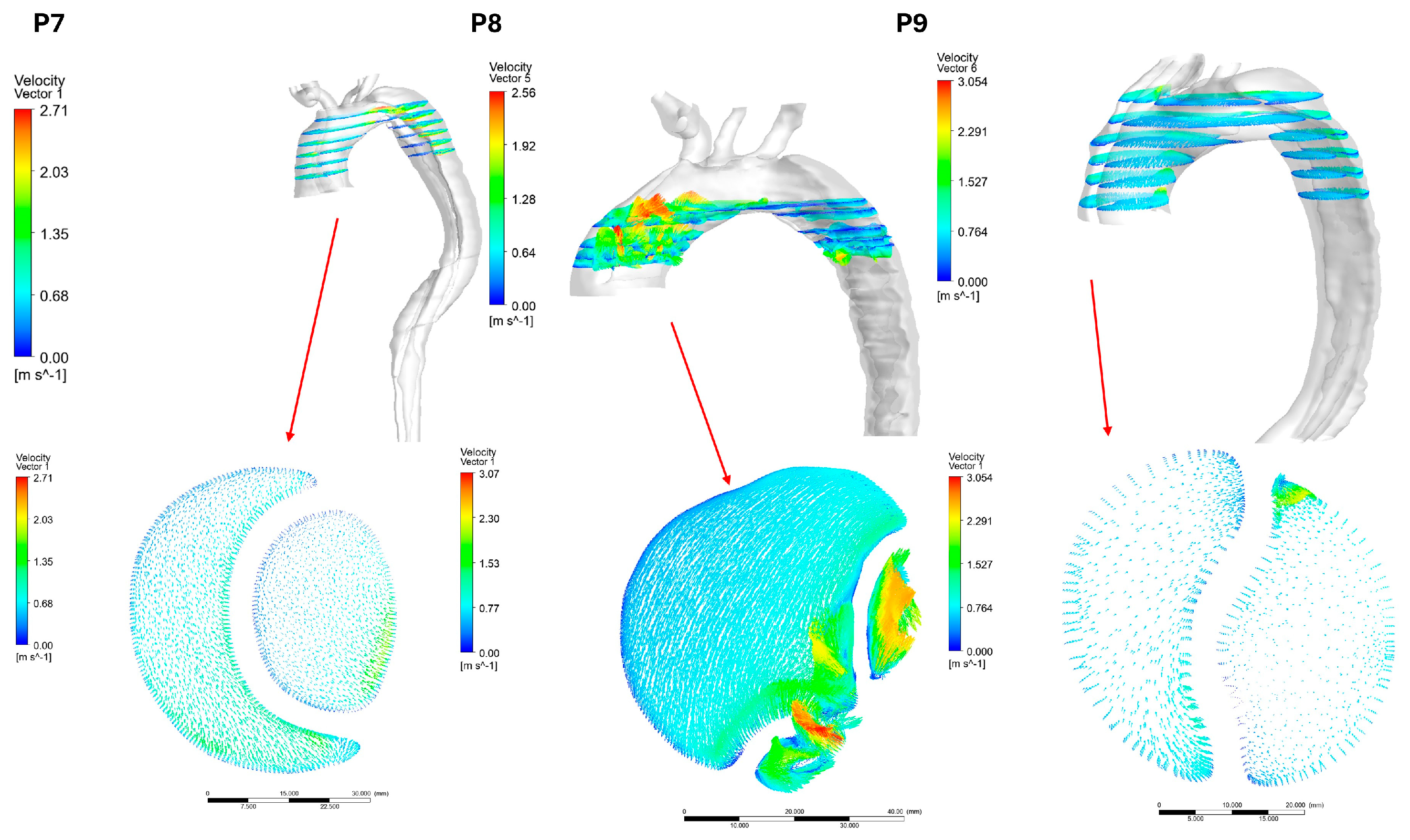
Utility of Computational Modeling in Reassessing the Threshold for Intervention and Progression into Type A Aortic Dissection



Abstract
1. Introduction
2. Materials and Methods
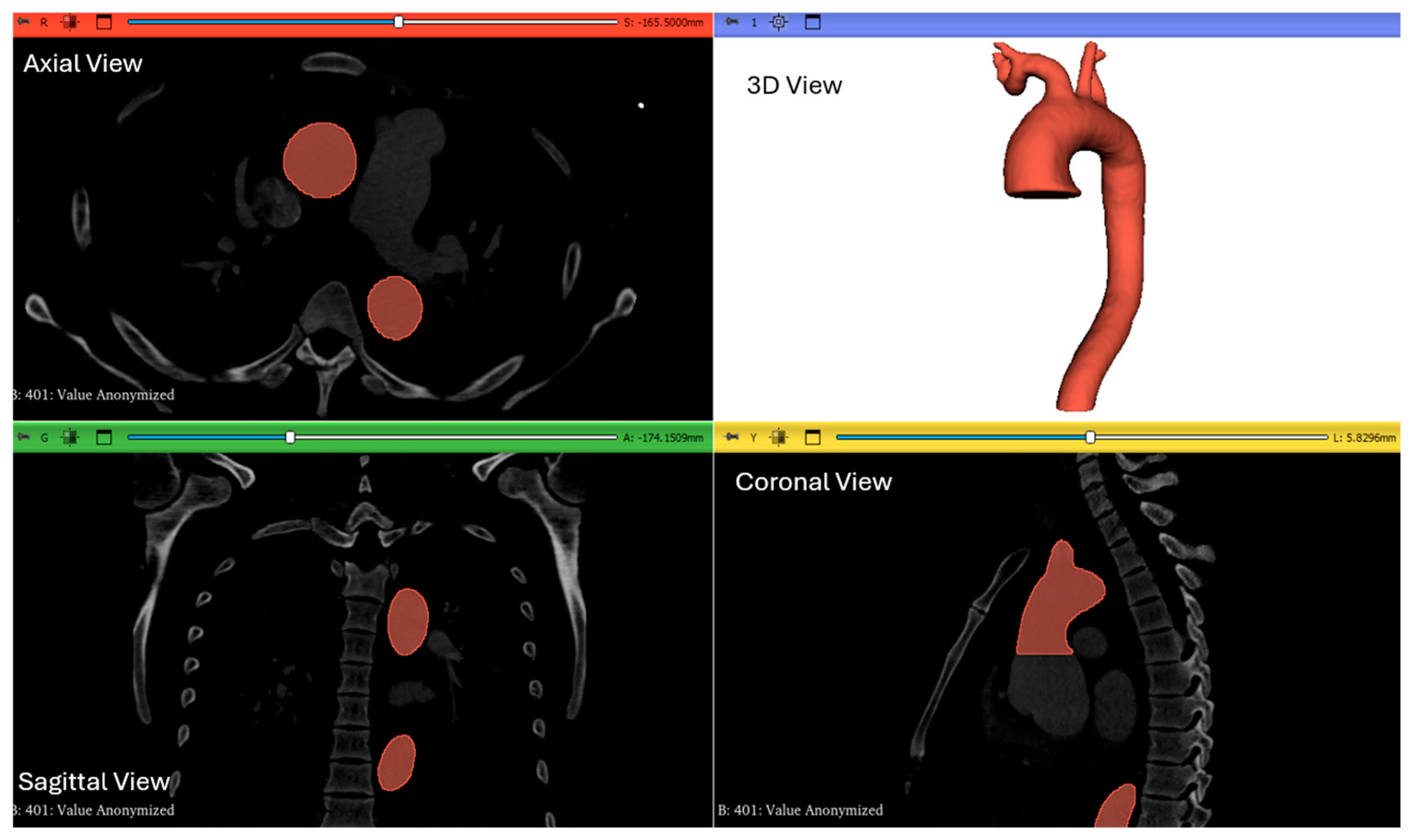
2.1. Geometry Construction
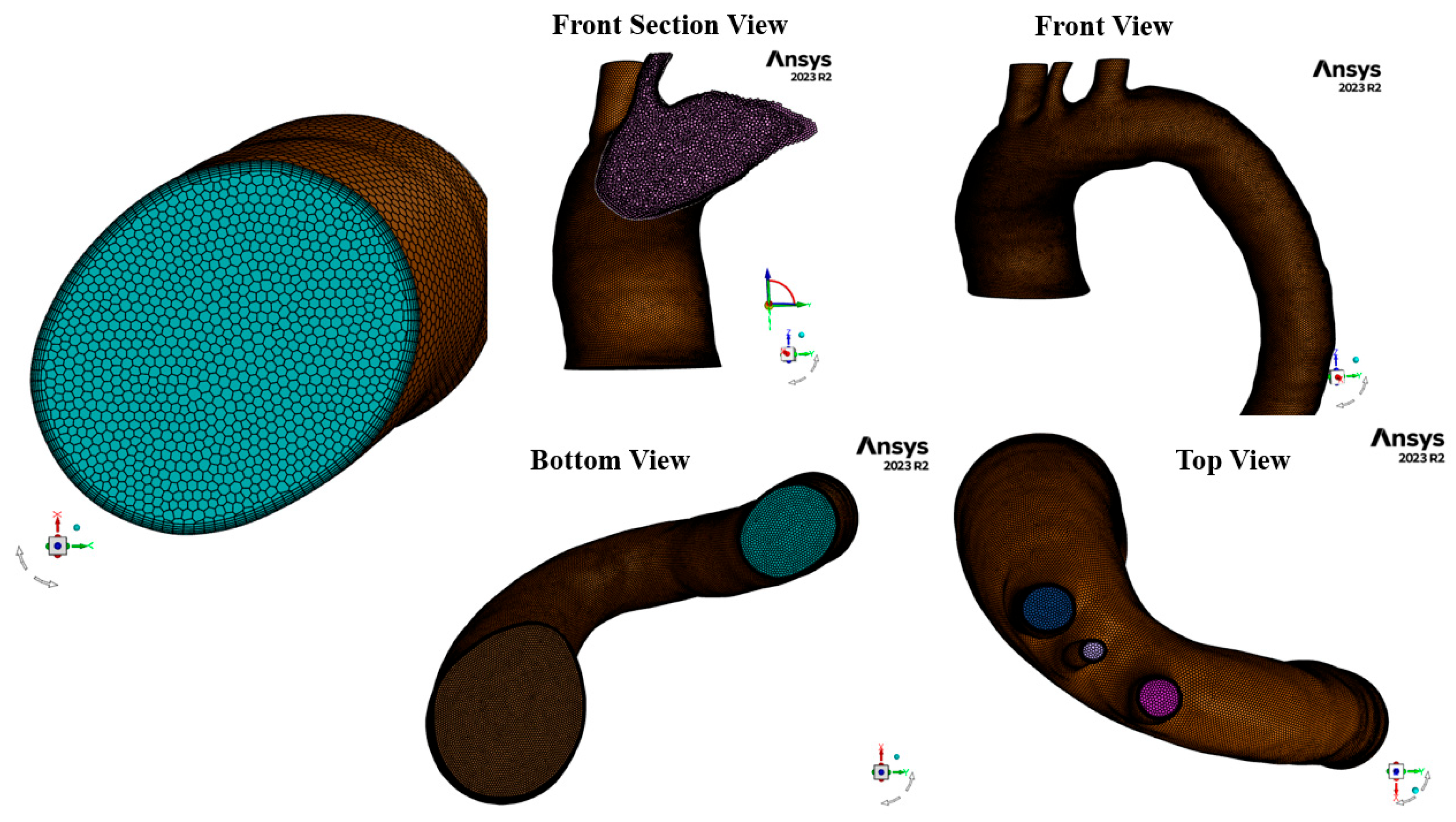
2.2. Computational Setup and Properties
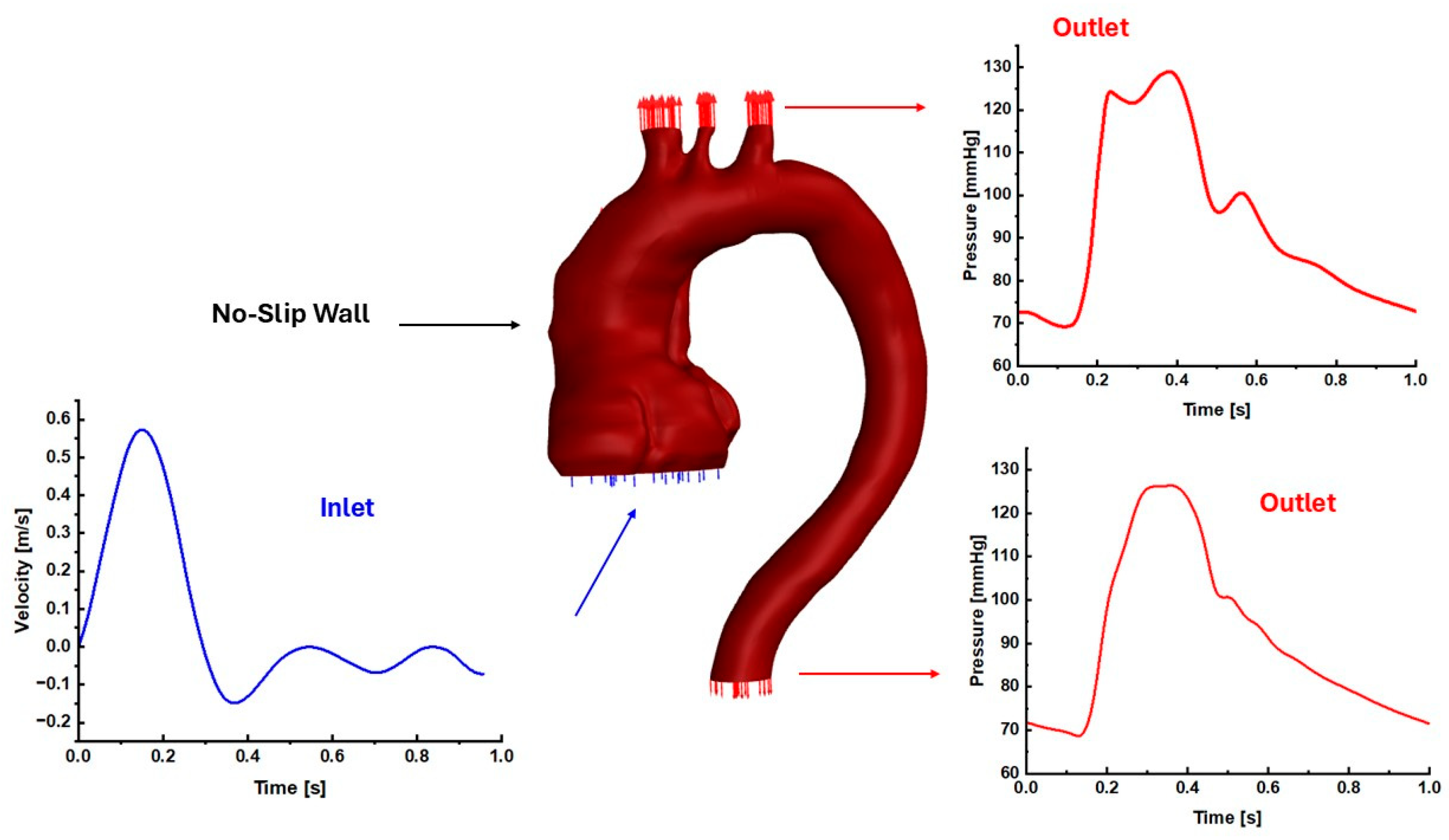
2.3. Boundary Conditions
2.4. Hemodynamic Analysis
3. Computational Validation
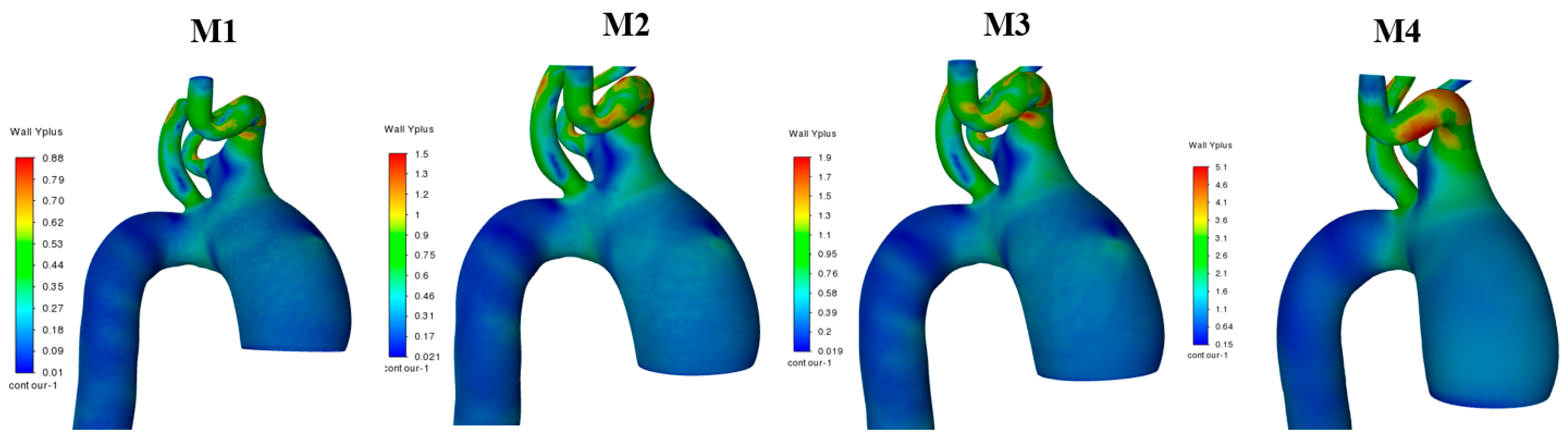
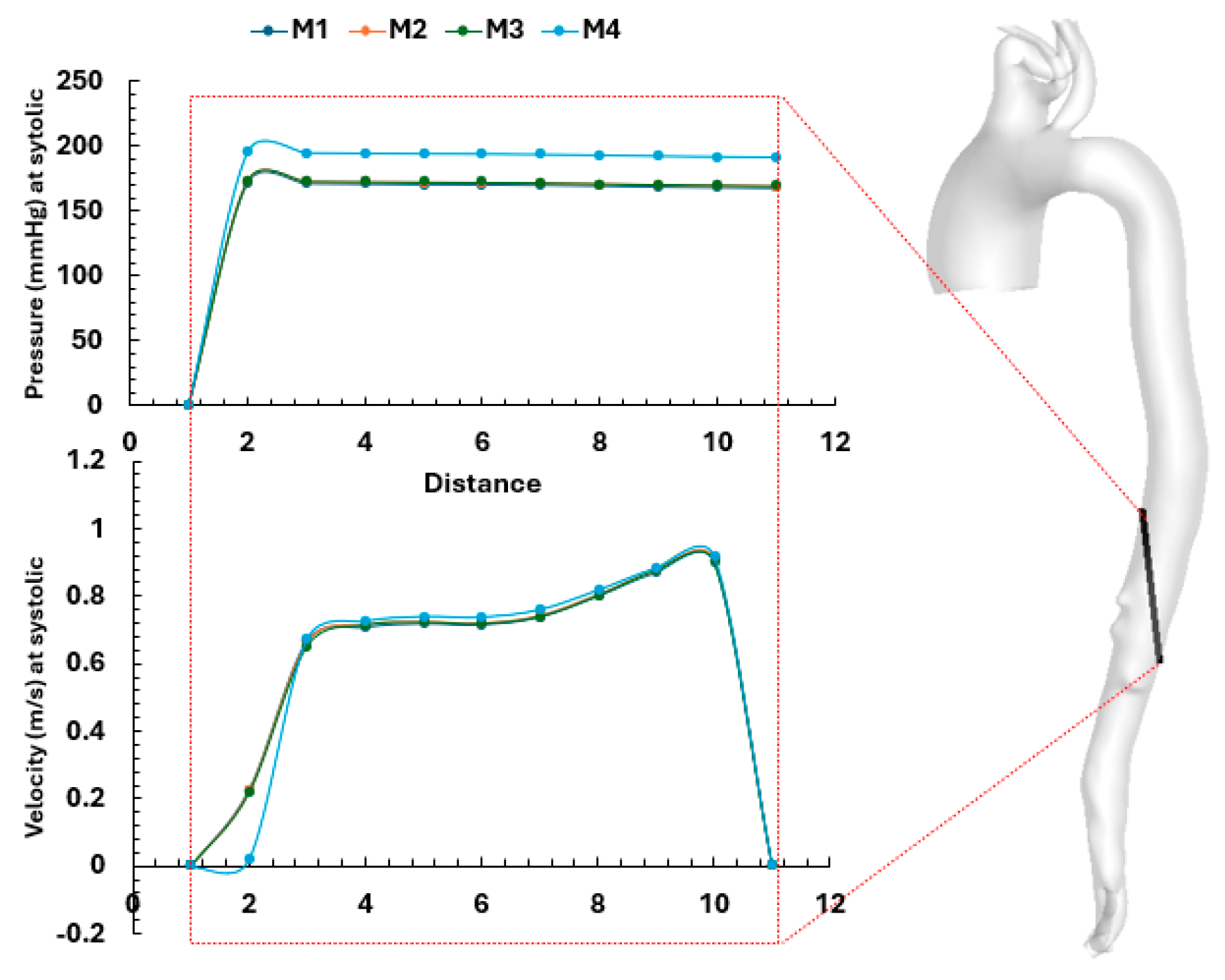
3.1. Mesh Test Analysis and Sensitivity Test
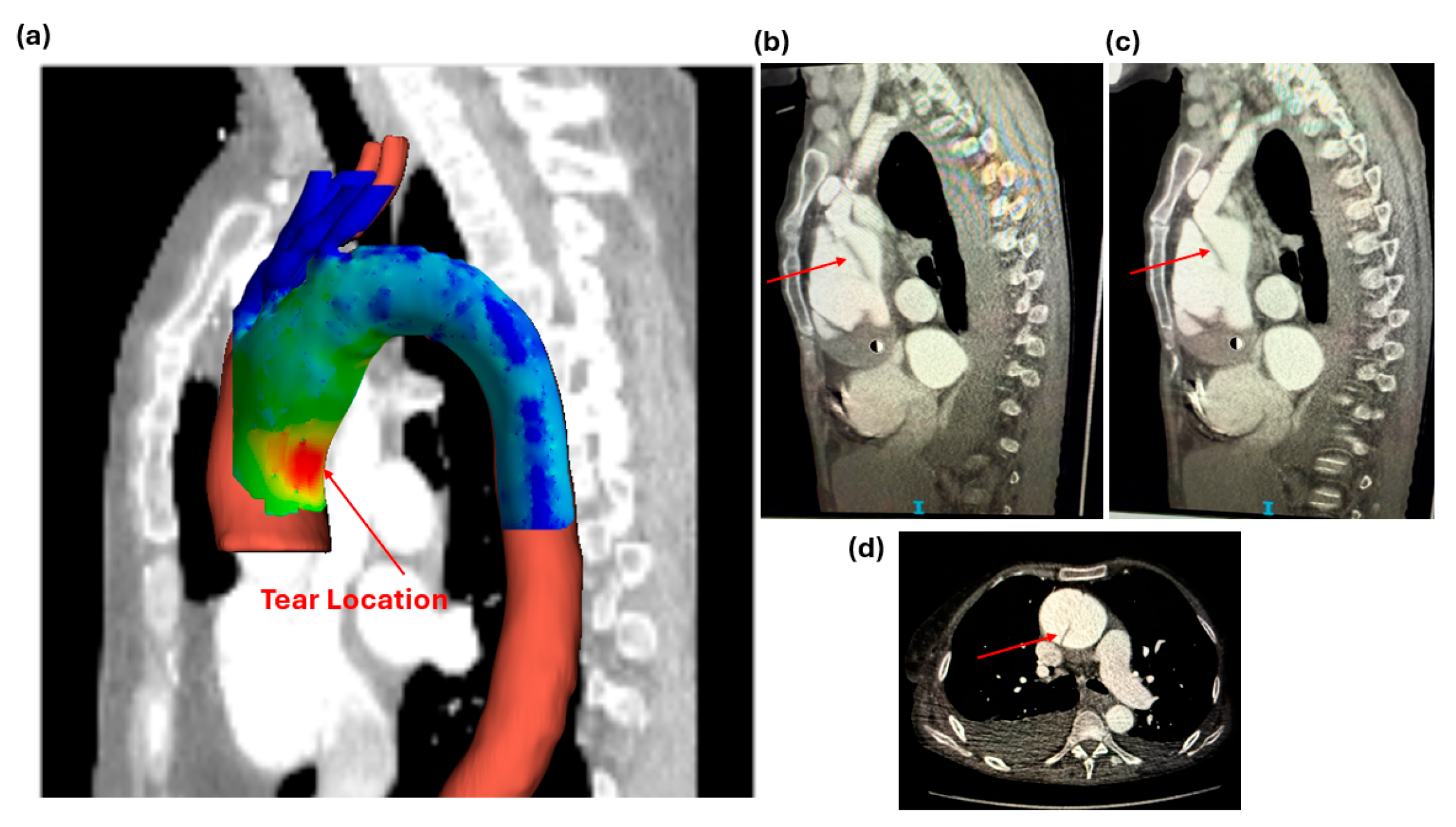
3.2. Validation
4. Results
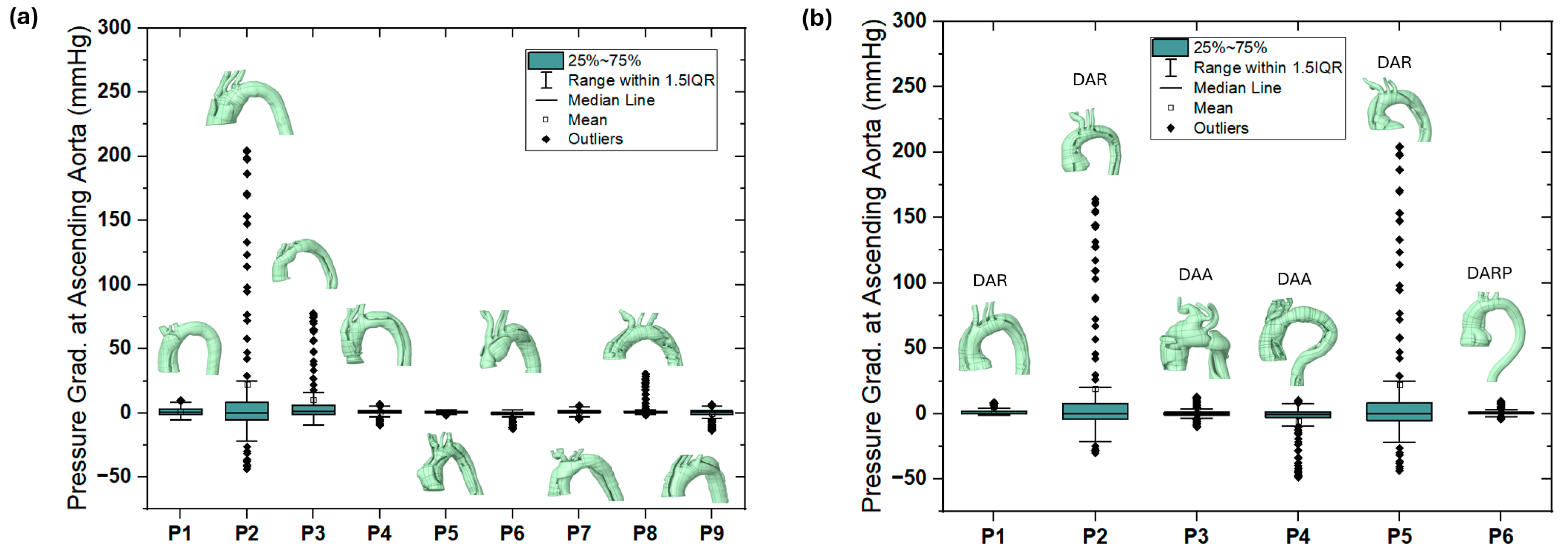
4.1. Pressure
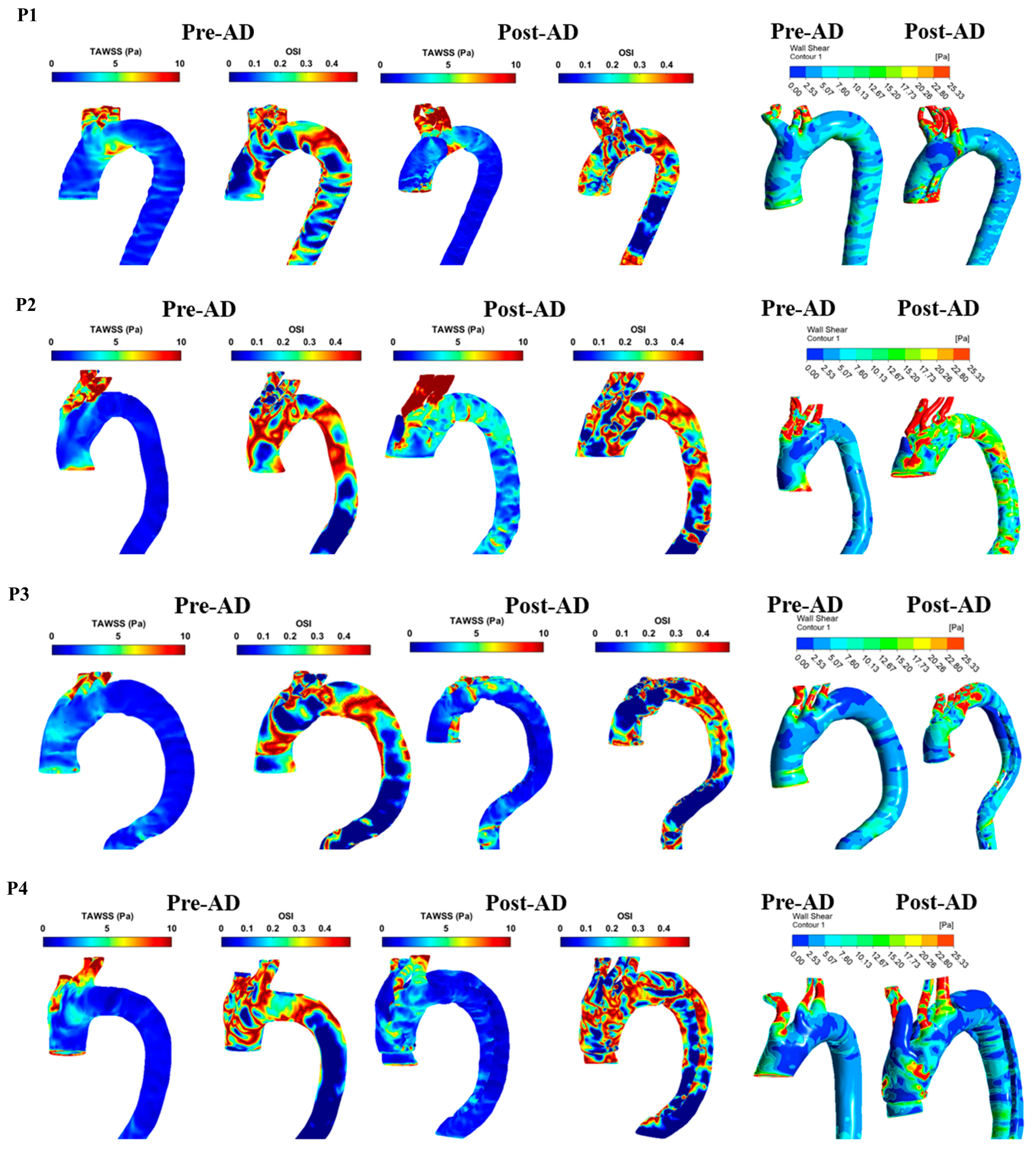
4.2. Wall Shear Stress Parameters
5. Discussion
6. Conclusions
Author Contributions
Funding
Institutional Review Board Statement
Informed Consent Statement
Data Availability Statement
Acknowledgments
Conflicts of Interest
Abbreviations
| AD | Aortic Dissection |
| CFD | Computational Fluid Dynamics |
| CT | Computed Tomography |
| DAA | Dilated Ascending Aorta |
| DAR | Dilated Aortic Root |
| DARP | Dilated Aortic Root with Pseudoaneurysm |
| IMH | Intramural Hematoma |
| OSI | Oscillatory Shear Index |
| PAU | Penetrating Aortic Ulcer |
| RANS | Reynolds-Averaged Navier–Stokes |
| SST | Shear Stress Transport |
| STL | Standard Tessellation Language |
| TAAD | Type A Aortic Dissection |
| TAWSS | Time-Average Wall Shear Stress |
| WSS | Wall Shear Stress |
References
- Haran, C.; Ghafouri, K.; Xu, W.; Hayes, I.; Stiles, M.; Khashram, M. Prevalence of genetically triggered aortopathy in acute aortic syndrome in Aotearoa New Zealand. Eur. J. Vasc. Endovasc. Surg. 2023, 66, 879–880. [Google Scholar] [CrossRef] [PubMed]
- Rolf-Pissarczyk, M.; Schussnig, R.; Fries, T.; Fleischmann, D.; Elefteriades, J.A.; Humphrey, J.D.; Holzapfel, G.A. Mechanisms of aortic dissection: From pathological changes to experimental and in silico models. Prog. Mater. Sci. 2024, 150, 101363. [Google Scholar] [CrossRef] [PubMed]
- Xu, W.; Mani, K.; Khashram, M. Ethnic differences in incidence and outcomes of acute aortic syndromes in the Midland region of New Zealand. J. Vasc. Surg. 2021, 75, 455–463.e2. [Google Scholar] [CrossRef]
- Aranda-Michel, E.; Bianco, V.; Yousef, S.; Brown, J.; Dai, Y.; Serna-Gallegos, D.; Hoskoppal, A.; Sultan, I. National trends in thoracic aortic aneurysms and dissections in patients with Marfans and Ehlers Danlos syndrome. J. Card. Surg. 2022, 37, 3313–3321. [Google Scholar] [CrossRef]
- Xu, W.; Haran, C.; Dean, A.; Lim, E.; Bernau, O.; Mani, K.; Khanafer, A.; Pitama, S.; Khashram, M. Acute aortic syndrome: Nationwide study of epidemiology, management, and outcomes. Br. J. Surg. 2023, 110, 1197–1205. [Google Scholar] [CrossRef]
- Isselbacher, E.M.; Preventza, O.; Black, J.H.; Augoustides, J.G.; Beck, A.W.; Bolen, M.A.; Braverman, A.C.; Bray, B.E.; Brown, Z.; Chen, E.P.; et al. 2022 ACC/AHA Guideline for the diagnosis and management of aortic disease: A report of the American Heart Association/American College of Cardiology Joint Committee on Clinical Practice Guidelines. J. Am. Coll. Cardiol. 2022, 80, e223–e393. [Google Scholar] [CrossRef] [PubMed]
- Wen, J.; Huang, Q.; Chen, X.; Zhang, K.; Peng, L. Impact of Aortic Branch Retention Strategies on Thrombus Growth Prediction in Type B Aortic Dissection: A Hemodynamic Study. Comput. Methods Programs Biomed. 2025, 263, 108679. [Google Scholar] [CrossRef]
- Poullis, M.P.; Warwick, R.; Oo, A.; Poole, R.J. Ascending aortic curvature as an independent risk factor for type A dissection, and ascending aortic aneurysm formation: A mathematical model. Eur. J. Cardio-Thorac. Surg. 2008, 33, 995–1001. [Google Scholar] [CrossRef]
- Zhu, Y.; Xu, X.Y.; Rosendahl, U.; Pepper, J.; Mirsadraee, S. Advanced risk prediction for aortic dissection patients using imaging-based computational flow analysis. Clin. Radiol. 2022, 78, e155–e165. [Google Scholar] [CrossRef]
- Wei, Y.; Li, D.; Weng, C.; Wang, J.; Yuan, D.; Zheng, T. Hypertension-Induced Biomechanical Modifications in the Aortic Wall and Their Role in Stanford Type B Aortic Dissection. Biomedicines 2024, 12, 2246. [Google Scholar] [CrossRef]
- Lee, G.; Heo, W.; Lee, Y.; Kim, T.; Huh, H.; Song, S.; Ha, H. Fluid–structure interaction simulation of visceral perfusion and impact of different cannulation methods on aortic dissection. Sci. Rep. 2023, 13, 1116. [Google Scholar] [CrossRef]
- Gramigna, V.; Palumbo, A.; Rossi, M.; Fragomeni, G. A computational fluid dynamics study to compare two types of arterial cannulae for cardiopulmonary bypass. Fluids 2023, 8, 302. [Google Scholar] [CrossRef]
- Alimohammadi, M.; Sherwood, J.M.; Karimpour, M.; Agu, O.; Balabani, S.; Díaz-Zuccarini, V. Aortic dissection simulation models for clinical support: Fluid-structure interaction vs. rigid wall models. BioMed. Eng. OnLine 2015, 14, 34. [Google Scholar] [CrossRef]
- Tsai, T.; Guo, X.; Kageyama, S.; Lim, R.P.; Tanaka, K.; De Mey, J.; La Meir, M.; Onuma, Y.; Poon, E.K.; Serruys, P.W. Managing Iatrogenic Aortic Dissection: Insight from 3D-holographic Imaging and CT Computational Fluid Dynamic Simulations. J. Am. Coll. Cardiol. 2024, 84, 130–136. [Google Scholar] [CrossRef]
- Wang, Z.; Tian, S.; Yu, L.; Ma, X.; Xing, Y.; Ma, X. The role of the aortic area in type A aortic dissection. Biomed. Signal Process. Control 2021, 68, 102642. [Google Scholar] [CrossRef]
- Karmonik, C.; Bismuth, J.; Shah, D.; Davies, M.; Purdy, D.; Lumsden, A. Computational study of haemodynamic effects of Entry- and Exit-Tear coverage in a DEBAKEY Type III aortic dissection: Technical report. Eur. J. Vasc. Endovasc. Surg. 2011, 42, 172–177. [Google Scholar] [CrossRef] [PubMed]
- Harris, C.; Croce, B.; Cao, C. Type A aortic dissection. Ann. Cardiothorac. Surg. 2016, 5, 256. [Google Scholar] [CrossRef] [PubMed]
- Osswald, A.; Karmonik, C.; Anderson, J.; Rengier, F.; Karck, M.; Engelke, J.; Kallenbach, K.; Kotelis, D.; Partovi, S.; Böckler, D.; et al. Elevated wall shear stress in aortic type B dissection may relate to retrograde aortic Type A dissection: A Computational Fluid dynamics pilot study. Eur. J. Vasc. Endovasc. Surg. 2017, 54, 324–330. [Google Scholar] [CrossRef] [PubMed]
- Shi, Y.; Zhu, M.; Chang, Y.; Qiao, H.; Liu, Y. The risk of stanford type-A aortic dissection with different tear size and location: A numerical study. BioMed. Eng. OnLine 2016, 15, 128. [Google Scholar] [CrossRef]
- Chi, Q.; He, Y.; Luan, Y.; Qin, K.; Mu, L. Numerical analysis of wall shear stress in ascending aorta before tearing in type A aortic dissection. Comput. Biol. Med. 2017, 89, 236–247. [Google Scholar] [CrossRef]
- Shad, R.; Kong, S.; Fong, R.; Quach, N.; Kasinpila, P.; Bowles, C.; Lee, A.; Hiesinger, W. Computational fluid dynamics simulations to predict false lumen enlargement after surgical repair of Type-A aortic dissection. Semin. Thorac. Cardiovasc. Surg. 2021, 34, 443–448. [Google Scholar] [CrossRef] [PubMed]
- Wen, J.; Huang, H.; Su, Z.; Jiang, L.; Gao, Q.; Chen, X.; Yan, T.; Peng, L. Predicting the Risk of Type B Aortic Dissection Using Hemodynamic Parameters in Aortic Arches: A Comparative Study between Healthy and Repaired Aortas. Comput. Methods Programs Biomed. 2022, 230, 107326. [Google Scholar] [CrossRef] [PubMed]
- Takeda, R.; Sato, F.; Yokoyama, H.; Sasaki, K.; Oshima, N.; Kuroda, A.; Takashima, H.; Li, C.; Honda, S.; Kamiya, H. Investigations into the Potential of Using Open Source CFD to Analyze the Differences in Hemodynamic Parameters for Aortic Dissections (Healthy versus Stanford Type A and B). Ann. Vasc. Surg. 2021, 79, 310–323. [Google Scholar] [CrossRef]
- Czerny, M.; Grabenwöger, M.; Berger, T.; Aboyans, V.; Della Corte, A.; Chen, E.P.; Desai, N.D.; Dumfarth, J.; Elefteriades, J.A.; Etz, C.D.; et al. EACTS/STS guidelines for diagnosing and treating acute and chronic syndromes of the aortic organ. Eur. J. Cardio-Thorac. Surg. 2024, 65, ezad426. [Google Scholar] [CrossRef]
- Slicer Community. 3D Slicer [Computer Software]. Available online: https://www.slicer.org (accessed on 15 December 2024).
- Al-Rawi, M.; Belkacemi, D.; Lim, E.T.A.; Khashram, M. Investigation of type A aortic dissection using computational modelling. Biomedicines 2024, 12, 1973. [Google Scholar] [CrossRef]
- Al-Jumaily, A.M.; Al-Rawi, M.; Belkacemi, D.; Sascău, R.A.; Stătescu, C.; Țurcanu, F.-E.; Anghel, L. Computational Modeling Approach to Profile Hemodynamical Behavior in a Healthy Aorta. Bioengineering 2024, 11, 914. [Google Scholar] [CrossRef] [PubMed]
- Wang, T.; Quast, C.; Bönner, F.; Kelm, M.; Zeus, T.; Lemainque, T.; Steinseifer, U.; Neidlin, M. Investigation of hemodynamic bulk flow patterns caused by aortic stenosis using a combined 4D Flow MRI-CFD framework. PLoS Computat. Biol. 2025, 21, e1012467. [Google Scholar] [CrossRef]
- Manchester, E.L.; Pirola, S.; Salmasi, M.Y.; O’Regan, D.P.; Athanasiou, T.; Xu, X.Y. Analysis of Turbulence Effects in a Patient-Specific Aorta with Aortic Valve Stenosis. Cardiovasc. Eng. Technol. 2021, 12, 438–453. [Google Scholar] [CrossRef]
- Benim, A.; Nahavandi, A.; Assmann, A.; Schubert, D.; Feindt, P.; Suh, S. Simulation of blood flow in human aorta with emphasis on outlet boundary conditions. Appl. Math. Model. 2010, 35, 3175–3188. [Google Scholar] [CrossRef]
- Al-Rawi, M.; Al-Jumaily, A.M.; Belkacemi, D. Non-invasive diagnostics of blockage growth in the descending aorta-computational approach. Med. Biol. Eng. Comput. 2022, 60, 3265–3279. [Google Scholar] [CrossRef]
- Petuchova, A.; Maknickas, A. Computational analysis of aortic haemodynamics in the presence of ascending aortic aneurysm. Technol. Health Care 2022, 30, 187–200. [Google Scholar] [CrossRef] [PubMed]
- Condemi, F.; Campisi, S.; Viallon, M.; Croisille, P.; Fuzelier, J.F.; Avril, S. Ascending thoracic aorta aneurysm repair induces positive hemodynamic outcomes in a patient with unchanged bicuspid aortic valve. J. Biomech. 2018, 81, 145–148. [Google Scholar] [CrossRef] [PubMed]
- Girardin, L.; Lind, N.; von Tengg-Kobligk, H.; Balabani, S.; Díaz-Zuccarini, V. Impact of Residual Intimal Flap Displacement Post-TEVAR on TBAD Haemodynamics in Compliant, Patient-specific CFD Simulations Informed by MRI. Ann. Biomed. Eng. 2025, 53, 1834–1851. [Google Scholar] [CrossRef]
- Torii, R.; Kalantzi, M.; Theodoropoulos, S.; Sarathchandra, P.; Xu, X.Y.; Yacoub, M.H. Predicting Impending Rupture of the Ascending Aorta with Bicuspid Aortic Valve: Spatiotemporal Flow and Wall Shear Stress. JACC Cardiovasc. Imaging 2013, 6, 1017–1019. [Google Scholar] [CrossRef] [PubMed]
- Al-Rawi, M.; Lim, E.T.A.; Khashram, M. Two-Way Fluid-Structure Interaction to Assess the Development of Aortic Dissection Type A. In Proceedings of the 2025 International Mechanical Engineering Congress and Exposition, Memphis, TN, USA, 16–20 November 2025. [Google Scholar] [CrossRef]
- Al-Rawi, M.; Lim, E.T.A.; Khashram, M. Boundary Conditions for Aorta Computational Modelling Using the Literature Data. In Proceedings of the 2025 International Mechanical Engineering Congress and Exposition, Memphis, TN, USA, 16–20 November 2025. [Google Scholar] [CrossRef]



| # | Total Number of Cells | P@Ascending (mmHg) | % | P@Descending (mmHg) | % | Min Orthogonal Quality | Max Aspect Ratio | Wall Y+ |
|---|---|---|---|---|---|---|---|---|
| M1 | 4,599,484 | 180.25 | 0.41% | 176.8 | 0.29% | 0.2355 | 13.49 | 0.88 |
| M2 | 963,421 | 181 | 0.10% | 177.32 | 0.05% | 0.2459 | 13.1 | 1.5 |
| M3 | 569,096 | 181.19 | 10.95% | 177.4 | 11.30% | 0.2382 | 14 | 1.9 |
| M4 | 30,021 | 203.47 | 200.01 | 0.1005 | 64.44 | 5.1 |
| Data | Count (%) |
|---|---|
| Male | 12 (86.7) |
| Female | 2 (13.3) |
Ethnicity
| 8 (53.3) 7 (46.7) |
| Ischaemic heart disease | 5 (33.3) |
| Hypertension | 11 (73.3) |
| Atrial fibrillation | 3 (20.0) |
| Previous stroke/transient ischaemic attack (TIA) | 4 (26.7) |
| Chronic obstructive pulmonary disease (COPD) | 4 (26.7) |
| Diabetes mellitus | 3 (20.0) |
| Congestive heart failure | 5 (33.3) |
| Presence of a bicuspid aortic valve | 0 (0.0) |
| Bovine arch | 2 (13.3) |
| Vertebral artery arch origin | 2 (13.3) |
| Familial aortopathy | 1 (6.7) |
| Known connective tissue disease | 0 (0.0) |
| Use of cocaine/methamphetamines | 1 (6.7) |
| Previous cardiac surgery | 5 (33.3) |
| Previous cardiac catheterization | 4 (26.7) |
Smoking
| 3 (20.0) 7 (46.7) 5 (33.3) |
| Previous aortic dissection | 1 (6.7) |
| Patient | Gender | Age at First Diagnosis | Imaging Finding Ascending Aorta | Pre-AD Aortic Diameter (mm) | Post-AD Aortic Diameter (mm) | Growth Rate (mm/Year) | Final Treatment Received |
|---|---|---|---|---|---|---|---|
| Group 1 with normal precondition | |||||||
| P1 | M | 60 | Normal | 37 | 48 | 1.27 | Surgery |
| P2 | F | 70 | Normal | 39 | 53 | 2.31 | Conservative |
| P3 | M | 54 | Normal | 42 | 42 | 0 | Conservative |
| P4 | M | 56 | Normal | 43 | 51 | 6.27 | Conservative |
| P5 | M | 76 | Normal | 44 | 57 | 2.65 | Conservative |
| P6 | M | 73 | Normal | 46 | 40 | −1.24 | Conservative |
| P7 | M | 63 | Normal | 46 | 51 | 1.46 | Conservative |
| P8 | M | 32 | Normal | 48 | 57 | 1.24 | Conservative |
| P9 | F | 69 | Normal | 48 | 49 | 0.29 | Conservative |
| Group 2 with abnormal precondition | |||||||
| P1 | M | 46 | DAR | 51 | 62 | 1.9 | Surgery |
| P2 | M | 46 | DAR | 54 | 64 | 31.86 | Surgery |
| P3 | M | 62 | DAA | 55 | 45 | −1.62 | Surgery |
| P4 | M | 86 | DAA | 58 | 60 | 144 | Conservative |
| P5 | M | 32 | DAR | 66 | 66 | 0 | Surgery |
| P6 | M | 66 | DARP | 69 | 81 | 17.63 | Conservative |
| # | Pre-TAWSS (Pa) | Post-TAWSS (Pa) | Comments on the Pre | OSI-Pre (-) | OSI-Post (-) | Comments |
|---|---|---|---|---|---|---|
| 1 | 4.79 | 4.49 | Uniform distribution of shear forces along the aorta, indicating weakened inflow into the FL. | 0.2546 | 0.2705 | Stagnation in the FL. High shear forces at the outflow increase thrombus risk. |
| 2 | 2.85 | 4.88 | Uniform distribution. Strong jet inflow. | 0.2644 | 0.2591 | Active flow propagation through the FL. Some flow dissipation causes turbulent flow. |
| 3 | 3.72 | 3.22 | Uniform distribution. Active flow propagation. | 0.2496 | 0.2598 | Dissipation at the outlet. Some flow dissipation causes turbulent flow. |
| 4 | 2.38 | 2.07 | Uniform distribution, reflecting inflow into the FL. | 0.2577 | 0.27 | Partial dissipation. Low-energy outflow. |
| 5 | 2.59 | 2.18 | Uniform flow. Weak inflow into the FL. | 0.2828 | 0.2971 | Low shear stresses, but still stagnant flow. |
| 6 | 2.51 | 1.2 | Exceeded the threshold; below normal range (mean . | 0.2471 | 0.3201 | Below normal range 0.025). |
| 7 | 2.44 | 9.33 | Exceeded the threshold. Strong jet inflow. | 0.2558 | 0.2765 | Active flow propagation through the FL. |
| 8 | 2.61 | 0.16 | Exceeded the threshold. Active flow propagation. | 0.253 | 0.2364 | Dissipation at the outlet. |
| 9 | 4.41 | 3.56 | Exceeded the threshold. Weak inflow into the FL. | 0.244 | 0.2647 | Low shear stresses. |
| # | Pre-TAWSS (Pa) | Post-TAWSS (Pa) | Comments | OSI-Pre (-) | OSI-Post (-) | Comments |
|---|---|---|---|---|---|---|
| 1 | 5.35 | 8.32 | Moderate shear stresses with very low oscillation. | 0.2495 | 0.3102 | Increase in shear stress but further reduction in its oscillation. |
| 2 | 2.77 | 13.29 | Normal shear stress with slightly elevated oscillation. | 0.1499 | 0.1057 | Stresses increased with the reduction in oscillation due to thrombus formation from the pre-AD state. |
| 3 | 37.93 | 218.92 | High shear stresses with moderate oscillation. | 0.079 | 0.2349 | Critical condition due to highly elevated shear tresses with high oscillation. |
| 4 | 3.23 | 4.38 | Balanced shear stresses on the artery wall with oscillation. | 0.2554 | 0.2819 | Increase in stresses and oscillation; post-AD flow active at the ascending aorta. |
| 5 | 5.17 | 10.38 | Elevated shear stresses and clear oscillatory behavior. | 0.272–0.4 | 0.1–0.2702 | Increased stresses at the locations of the ascending aorta and aortic arch. |
| 6 | 3.67 | 2.35 | Still above the threshold of stresses. The potential of a thrombus-prone region is evident at the ascending aorta. | 0.25299 | 0.2617 | Drop in shear stresses and oscillation. |
| Study | Cohort | Reported Metric(s) | Peak WSS (Pa) | TAWSS (Pa) (Reported or Estimated) | Notes |
|---|---|---|---|---|---|
| Takeda et al., 2022 [23] | 11 (3 healthy, 7 type A, 1 type B) | WSS | Type A: 30–88.16 | ~3–9 (est.) | 5/7 type A > 38 Pa (damage threshold); highest peak 88 Pa |
| Chi et al., 2017 [20] | 5 premorbid type A, 2 controls | WSS | 9.18–18.50 | ~0.5–2 (est.) | Pre-AD ascending aortas; lower stresses than Takeda |
| Al-Rawi et al., 2024 [26] | Single CFD case (pre-/post-type A) | TAWSS (direct) | – | Pre-AD: up to 5; post-AD: up to 10 | Directly reported TAWSS; highest in arch and supra-aortic branches |
| Osswald et al., 2017 [18] | 20 (10 RTAD, 10 control) | WSS | RTAD: 5.15–31.30; Controls: 3.82–12.07 | RTAD: 0.8–3 (est.); controls: 0.3–1.2 (est.) | High WSS near the subclavian in RTAD patients; predictor of retrograde type A |
| Wang, T. et al., 2021 [28] | 15 (rupture vs. unruptured type A vs. healthy) | Swirling strength, pressure | Not reported | Ruptured ~2–4 (est.); unruptured ~1–3 (est.); healthy ~1.5–3.3 (lit.) | Used swirling strength as a surrogate; rupture cases had the highest wall stress |
| Zhu, Y. et al., 2021 [9] | 17 (9 stable, 8 unstable post-type A repair) | TAWSS (direct) | – | Stable: 7–19; unstable: 16.5–32.8 | High TAWSS at the primary tear edge predicts dilatation risk |
Disclaimer/Publisher’s Note: The statements, opinions and data contained in all publications are solely those of the individual author(s) and contributor(s) and not of MDPI and/or the editor(s). MDPI and/or the editor(s) disclaim responsibility for any injury to people or property resulting from any ideas, methods, instructions or products referred to in the content. |
© 2026 by the authors. Licensee MDPI, Basel, Switzerland. This article is an open access article distributed under the terms and conditions of the Creative Commons Attribution (CC BY) license.
Share and Cite
Al-Rawi, M.; Lim, E.T.A.; Khashram, M.; Yoon, W.J. Utility of Computational Modeling in Reassessing the Threshold for Intervention and Progression into Type A Aortic Dissection. Biomedicines 2026, 14, 696. https://doi.org/10.3390/biomedicines14030696
Al-Rawi M, Lim ETA, Khashram M, Yoon WJ. Utility of Computational Modeling in Reassessing the Threshold for Intervention and Progression into Type A Aortic Dissection. Biomedicines. 2026; 14(3):696. https://doi.org/10.3390/biomedicines14030696
Chicago/Turabian StyleAl-Rawi, Mohammad, Eric T. A. Lim, Manar Khashram, and William J. Yoon. 2026. "Utility of Computational Modeling in Reassessing the Threshold for Intervention and Progression into Type A Aortic Dissection" Biomedicines 14, no. 3: 696. https://doi.org/10.3390/biomedicines14030696
APA StyleAl-Rawi, M., Lim, E. T. A., Khashram, M., & Yoon, W. J. (2026). Utility of Computational Modeling in Reassessing the Threshold for Intervention and Progression into Type A Aortic Dissection. Biomedicines, 14(3), 696. https://doi.org/10.3390/biomedicines14030696