Targeting the Glutamine Transporter SLC1A5 Enhances Sensitivity of Acute Myeloid Leukemia to MLN4924

Abstract
1. Introduction
2. Materials and Methods
2.1. Cell Culture and Reagents
2.2. Public Data Collection and Analysis
2.3. RNA Purification and Reverse Transcription qPCR (RT-qPCR)
2.4. Immunoblotting
2.5. Cell Viability Assay
2.6. Relative Consumption of Glutamine in Culture Supernatant
2.7. Knockdown of GLUL in AML Cell Lines
2.8. Knockdown of SLC1A5 in AML Cell Lines
2.9. Flow Cytometric Analyses
2.9.1. Surface SLC1A5 Analysis
2.9.2. Cell Differentiation Analysis
2.9.3. Cell Cycle Analysis
2.9.4. Cell Apoptosis Analysis
2.9.5. Mitochondrial Membrane Potential (MMP) Assay
2.10. Cell Morphology Analysis
2.11. Astral-DIA Proteomics
2.12. RNA-Seq and Data Analysis
2.13. AML Cell-Line-Derived Xenograft (CDX) Models
2.14. Drug Synergy Analysis
2.15. Statistical Analysis
3. Results
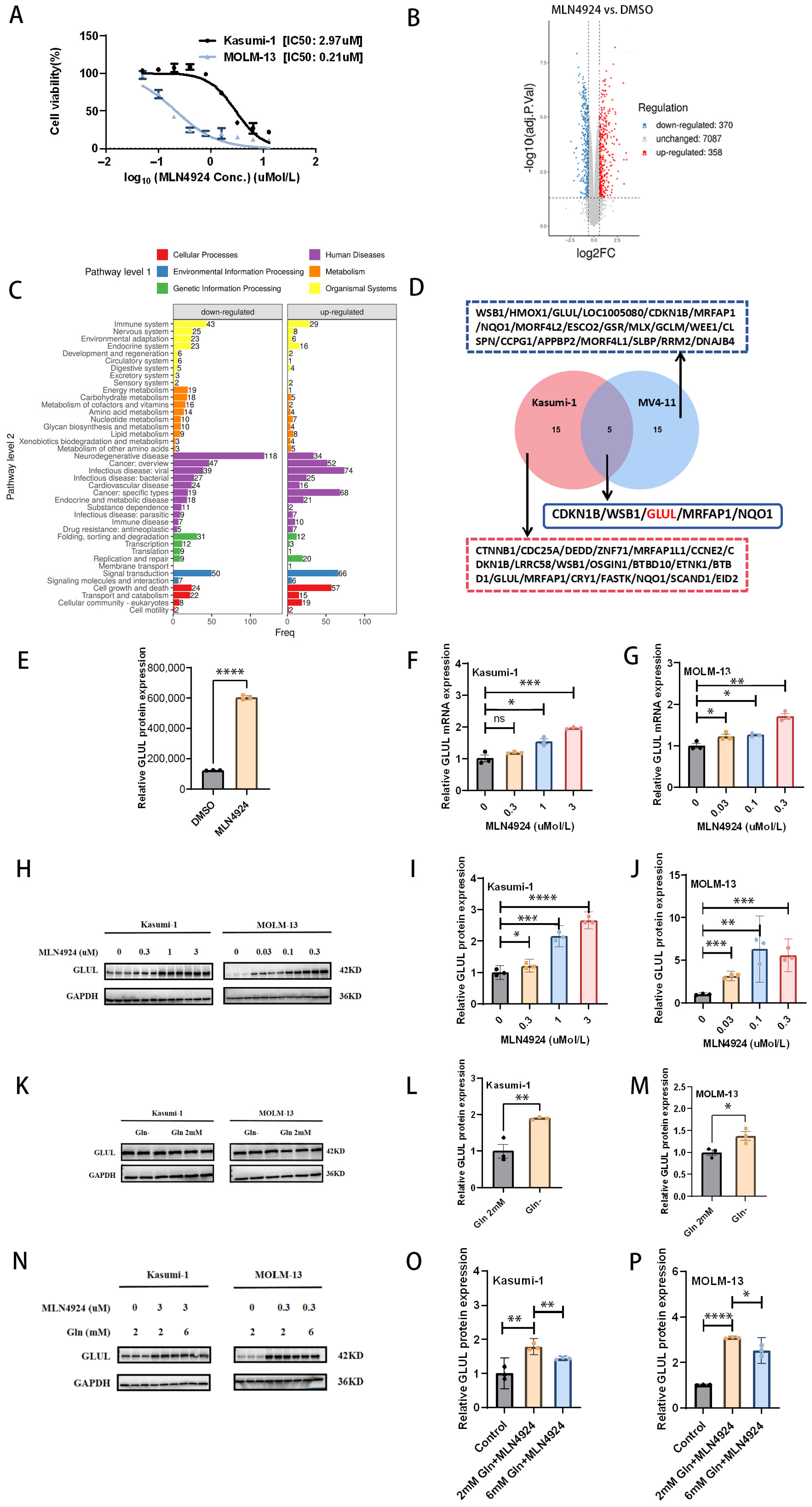
3.1. Protein Profiling Reveals Potential Effects of MLN4924 Treatment on Glutamine Metabolism in AML
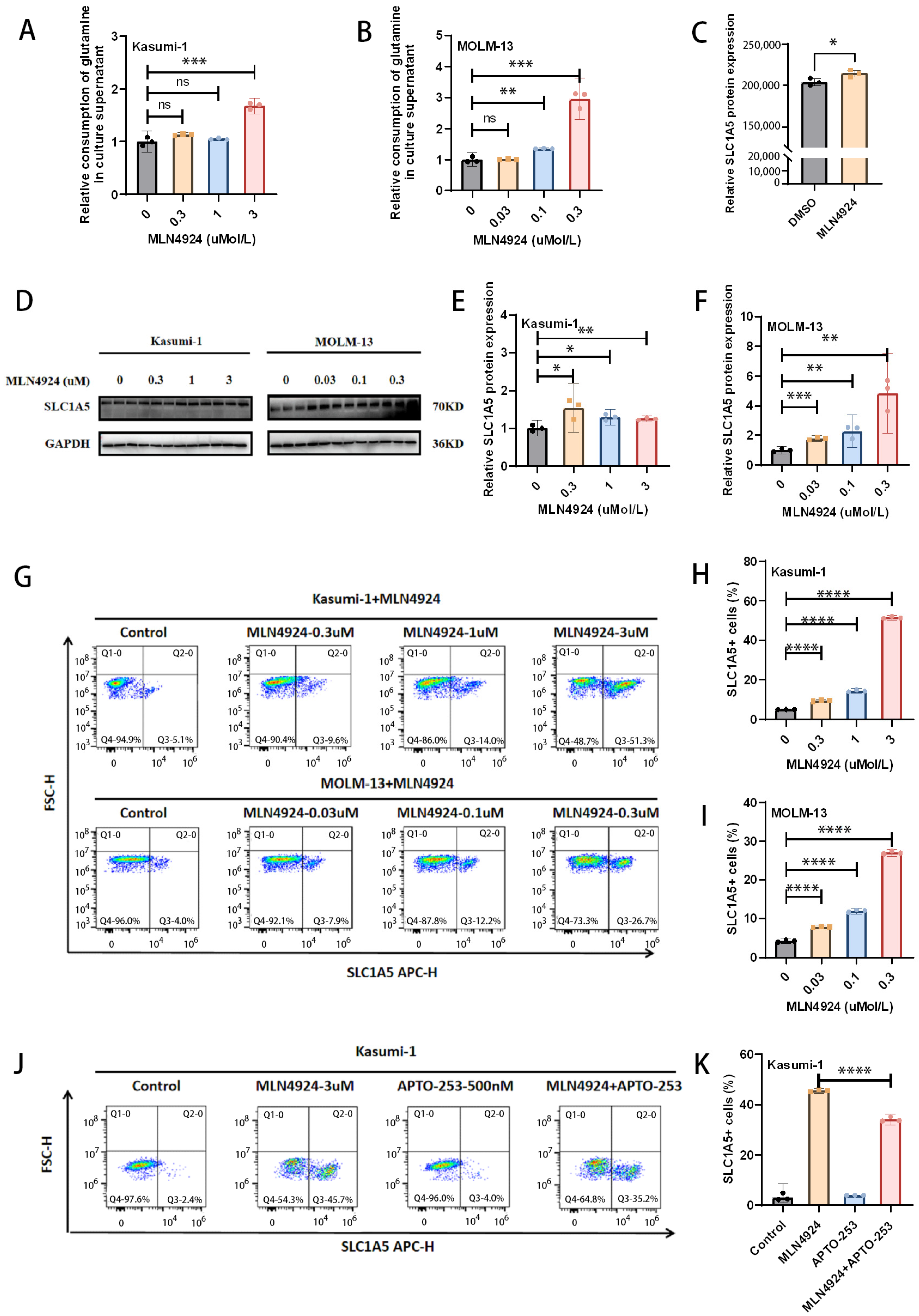
3.2. MLN4924 Promotes Glutamine Consumption by AML Cells and Upregulates Cell Surface SLC1A5 Expression
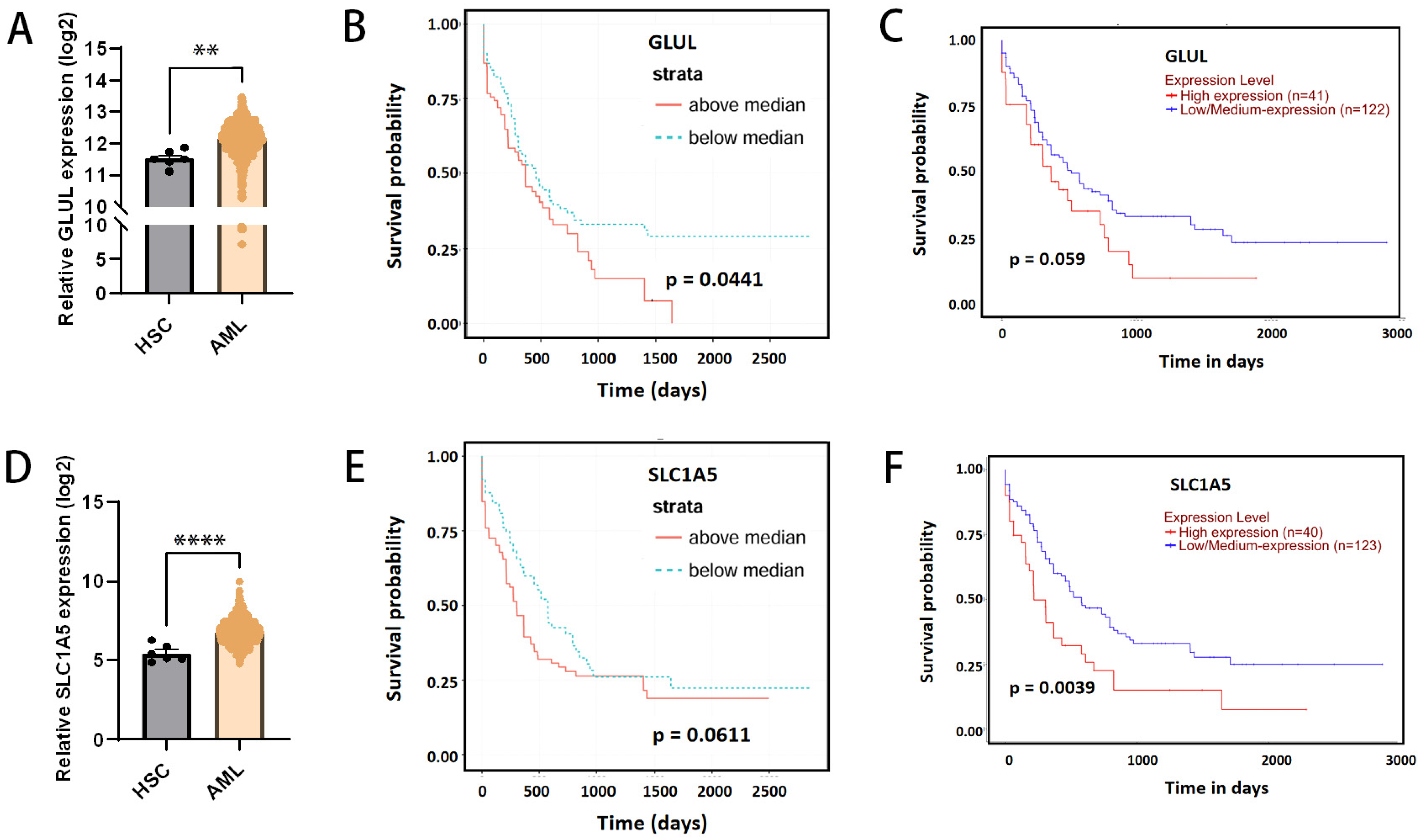
3.3. The Expression of GLUL and SLC1A5 in AML and Its Relationship with the Prognosis of AML Patients
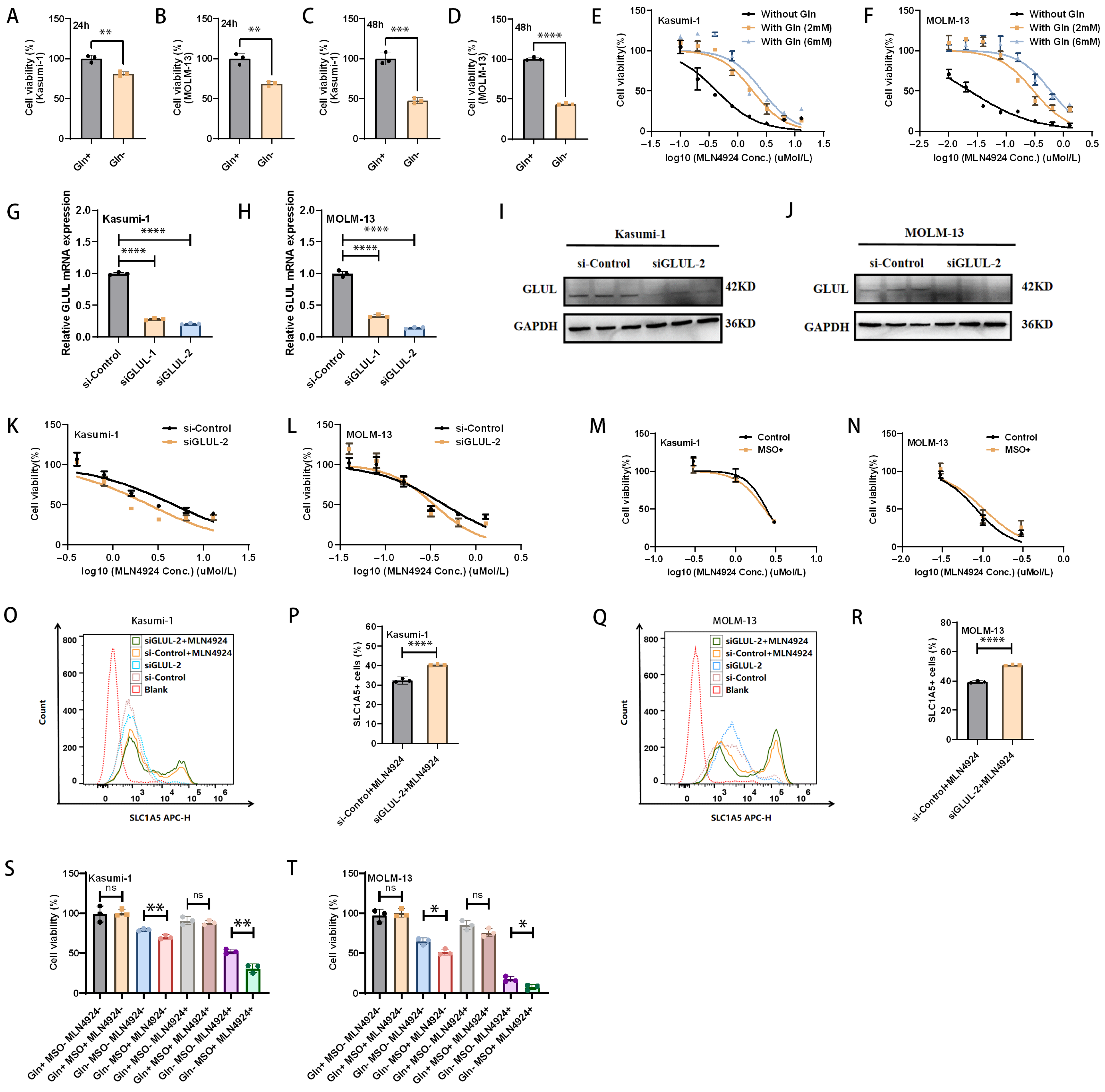
3.4. Extracellular Glutamine Affects AML Cell Growth and Survival, Whereas Inhibition of GLUL Does Not Further Enhance the Anti-Leukemic Effects of MLN4924
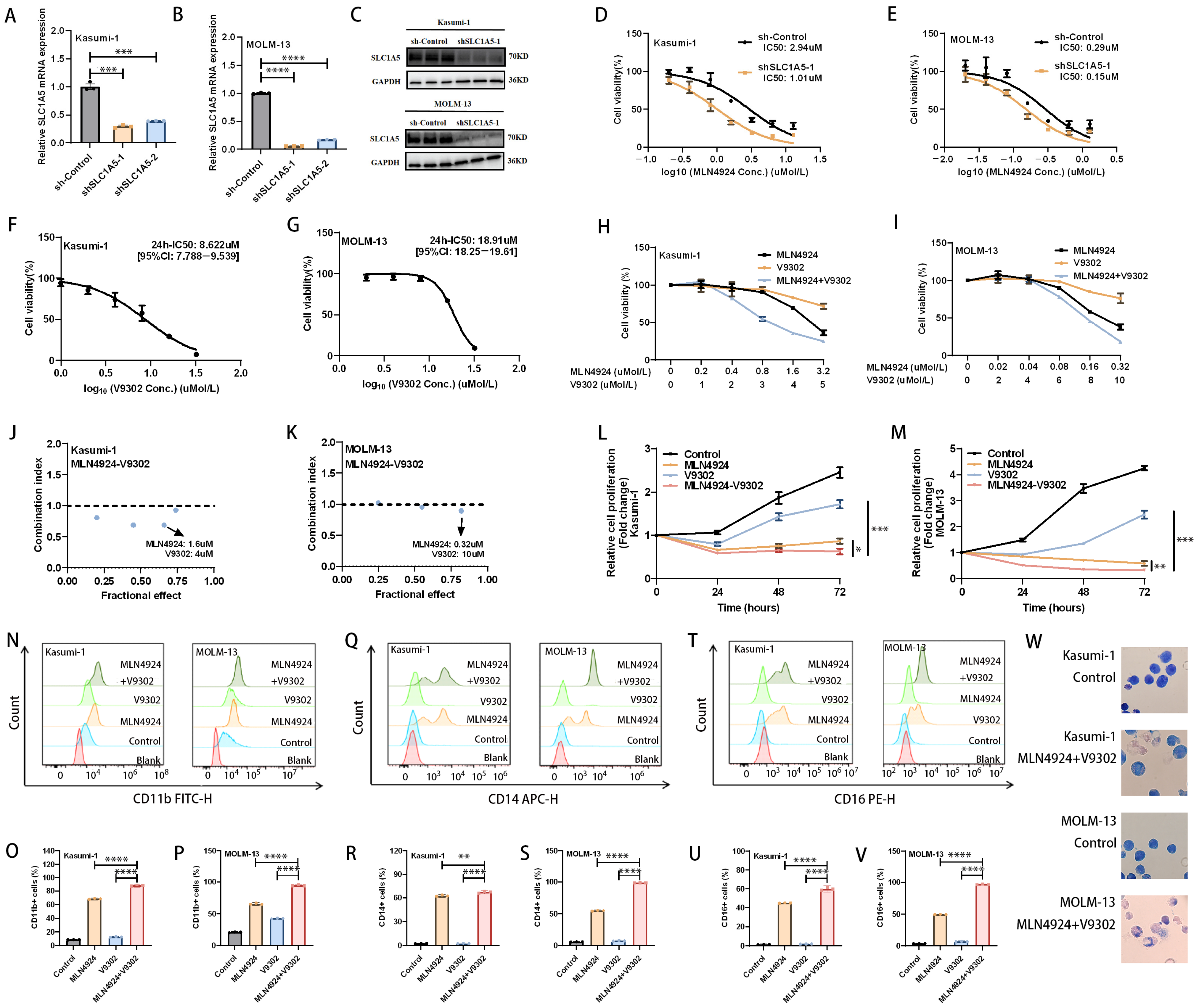
3.5. Effect of MLN4924 in Combination with SLC1A5 Inhibitor (V9302) on AML Cell Proliferation and Cell Differentiation
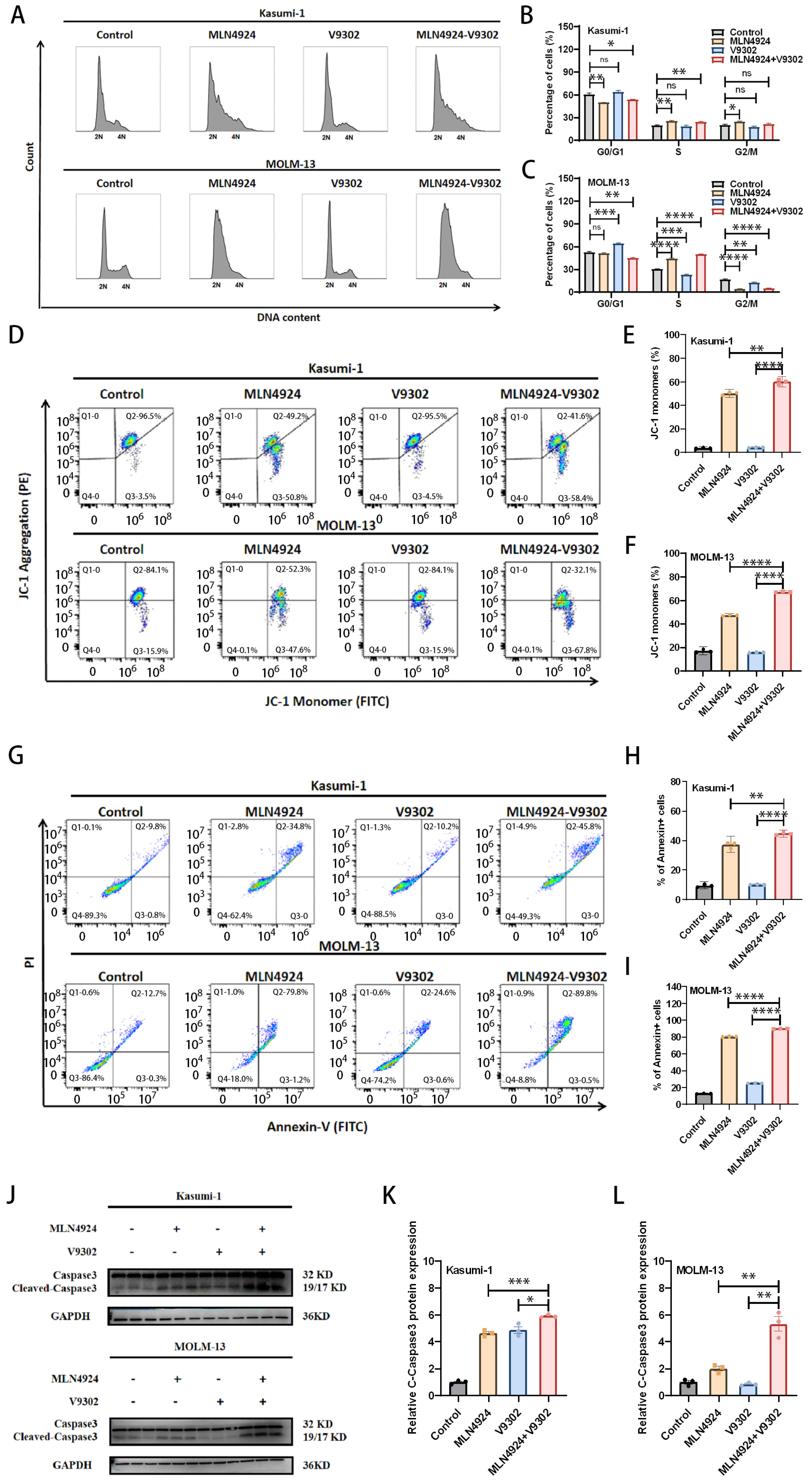
3.6. Combination of MLN4924 and V9302 Induces Cell Cycle Arrest, Loss of Mitochondrial Membrane Potential (MMP), and Apoptosis of AML Cells
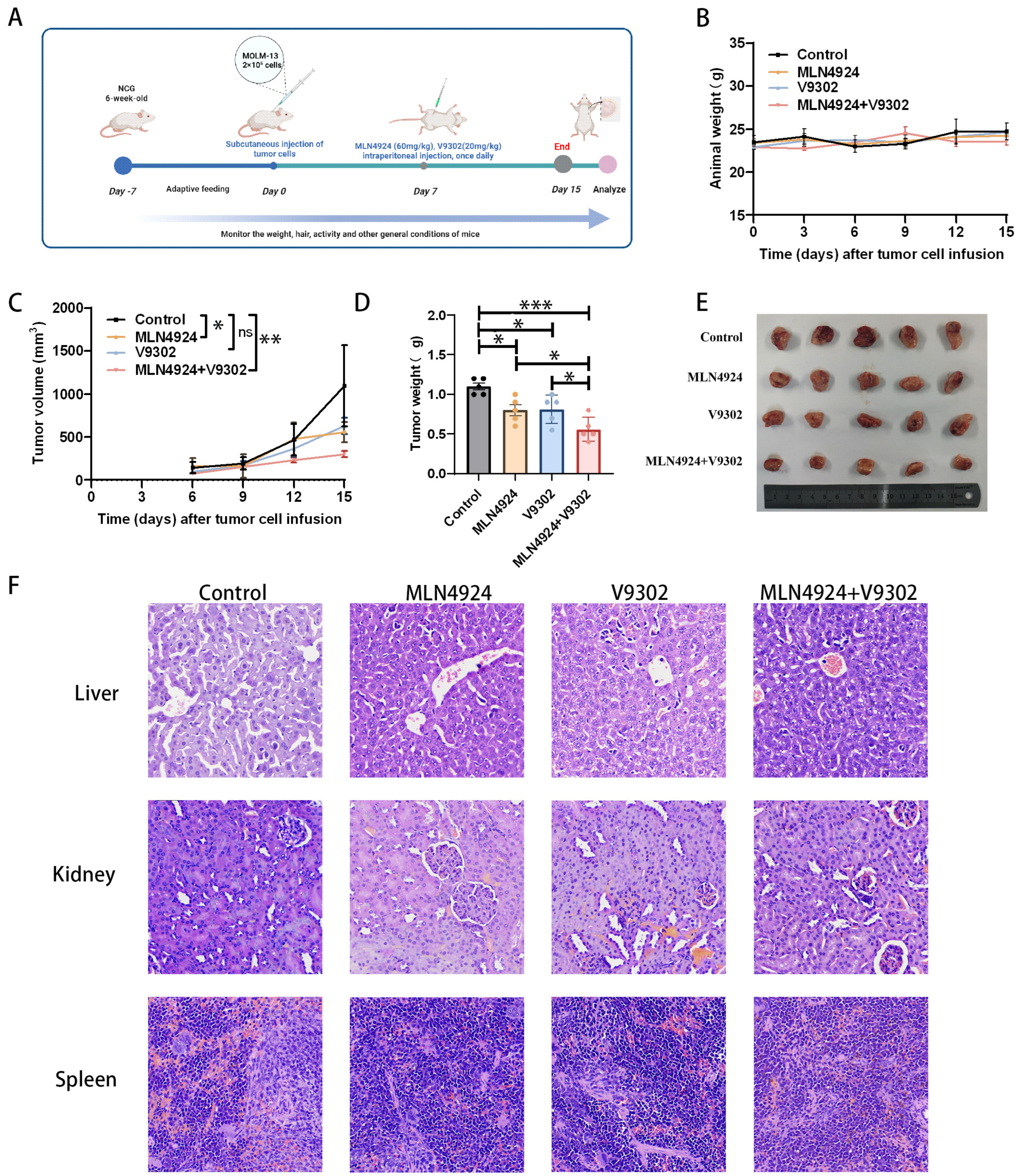
3.7. Combination of MLN4924 and V9302 Synergistically Inhibits AML In Vivo
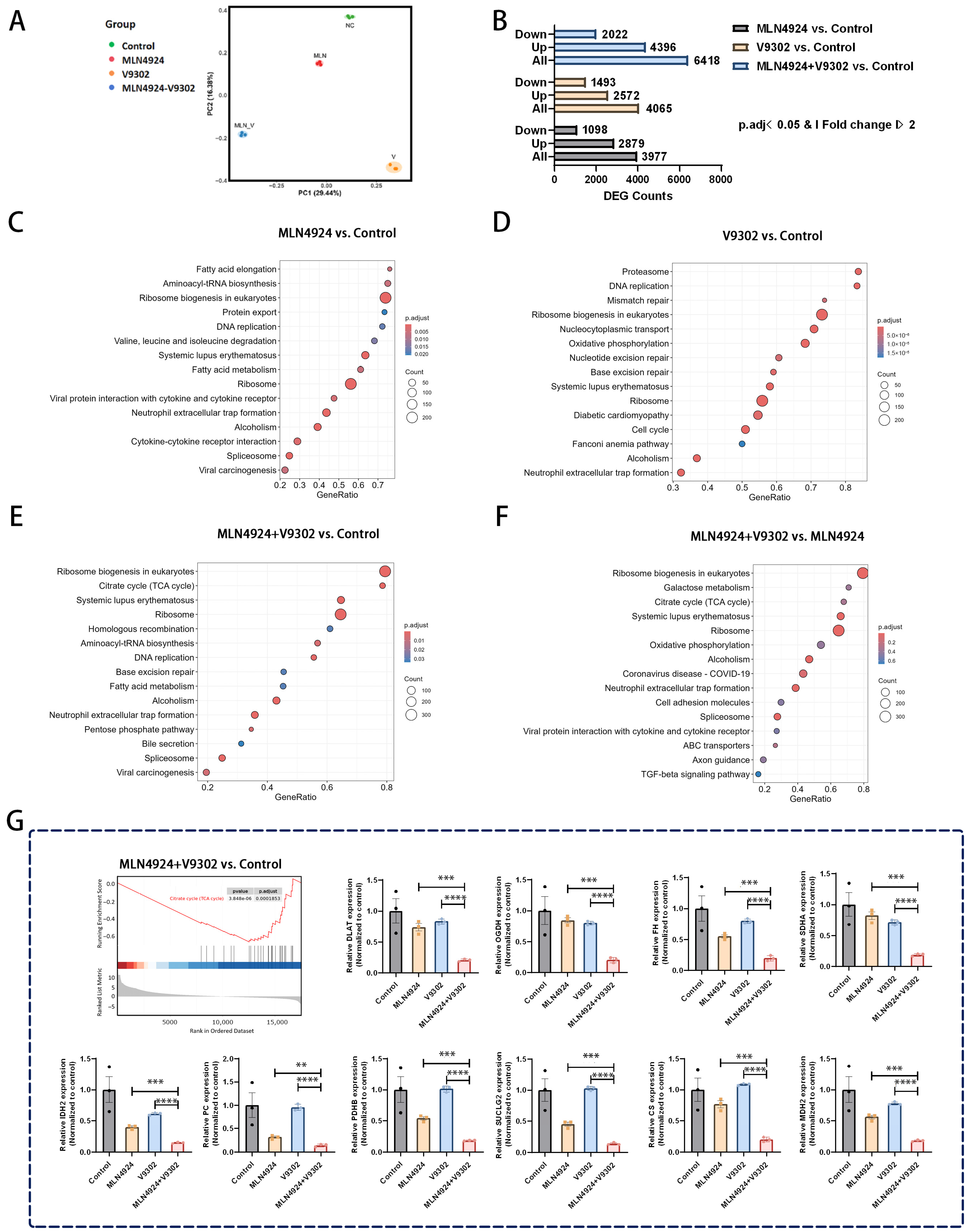
3.8. Combination of MLN4924 and V9302 Inhibits the Tricarboxylic Acid Cycle (TCA) Cycle
4. Discussion
5. Conclusions
Author Contributions
Funding
Institutional Review Board Statement
Informed Consent Statement
Data Availability Statement
Conflicts of Interest
References
- Shimony, S.; Stahl, M.; Stone, R.M. Acute Myeloid Leukemia: 2025 Update on Diagnosis, Risk-Stratification, and Management. Am. J. Hematol. 2025, 100, 860–891. [Google Scholar] [CrossRef] [PubMed]
- Senapati, J.; Kadia, T.M.; Daver, N.G.; DiNardo, C.D.; Borthakur, G.; Ravandi, F.; Kantarjian, H.M. Therapeutic horizon of acute myeloid leukemia: Success, optimism, and challenges. Cancer 2025, 131, e35806. [Google Scholar] [CrossRef] [PubMed]
- Sun, J.; Liu, C.; Lang, C.; Wang, J.; Li, Q.; Peng, C.; Du, Z.; Chen, Y.; Huang, P. Inhibiting neddylation: A new strategy for tumor therapy. J. Pharm. Anal. 2025, 15, 101140. [Google Scholar] [CrossRef] [PubMed]
- Chen, Y.; Sun, L. Inhibition of NEDD8 NEDDylation induced apoptosis in acute myeloid leukemia cells via p53 signaling pathway. Biosci. Rep. 2022, 42, BSR20220994. [Google Scholar] [CrossRef]
- Tang, H.; Pang, X.; Li, S.; Tang, L. The Double-Edged Effects of MLN4924: Rethinking Anti-Cancer Drugs Targeting the Neddylation Pathway. Biomolecules 2024, 14, 738. [Google Scholar] [CrossRef]
- Visconte, V.; Nawrocki, S.T.; Espitia, C.M.; Kelly, K.R.; Possemato, A.; Beausoleil, S.A.; Han, Y.; Carraway, H.E.; Nazha, A.; Advani, A.S.; et al. Comprehensive quantitative proteomic profiling of the pharmacodynamic changes induced by MLN4924 in acute myeloid leukemia cells establishes rationale for its combination with azacitidine. Leukemia 2015, 30, 1190–1194. [Google Scholar] [CrossRef][Green Version]
- Guo, Y.; Jian, J.; Tang, X.; Zhao, L.; Liu, B. Comprehensive analysis of DNA methylation and gene expression to identify tumor suppressor genes reactivated by MLN4924 in acute myeloid leukemia. Anticancer Drugs 2025, 36, 199–207. [Google Scholar] [CrossRef]
- Guo, N.; Azadniv, M.; Coppage, M.; Nemer, M.; Mendler, J.; Becker, M.; Liesveld, J. Effects of Neddylation and mTOR Inhibition in Acute Myelogenous Leukemia. Transl. Oncol. 2019, 12, 602–613. [Google Scholar] [CrossRef]
- El-Deiry, W.S.; Tan, M.; Li, Y.; Yang, R.; Xi, N.; Sun, Y. Inactivation of SAG E3 Ubiquitin Ligase Blocks Embryonic Stem Cell Differentiation and Sensitizes Leukemia Cells to Retinoid Acid. PLoS ONE 2011, 6, e27726. [Google Scholar] [CrossRef]
- Swords, R.T.; Kelly, K.R.; Smith, P.G.; Garnsey, J.J.; Mahalingam, D.; Medina, E.; Oberheu, K.; Padmanabhan, S.; O’Dwyer, M.; Nawrocki, S.T.; et al. Inhibition of NEDD8-activating enzyme: A novel approach for the treatment of acute myeloid leukemia. Blood 2010, 115, 3796–3800. [Google Scholar] [CrossRef]
- Liu, S.; Wan, J.; Kong, Y.; Zhang, Y.; Wan, L.; Zhang, Z. Inhibition of CRL-NEDD8 pathway as a new approach to enhance ATRA-induced differentiation of acute promyelocytic leukemia cells. Int. J. Med. Sci. 2018, 15, 674–681. [Google Scholar] [CrossRef] [PubMed]
- Knorr, K.L.; Schneider, P.A.; Meng, X.W.; Dai, H.; Smith, B.D.; Hess, A.D.; Karp, J.E.; Kaufmann, S.H. MLN4924 induces Noxa upregulation in acute myelogenous leukemia and synergizes with Bcl-2 inhibitors. Cell Death Differ. 2015, 22, 2133–2142. [Google Scholar] [CrossRef] [PubMed]
- Zou, L.; Cao, D.; Sun, Q.; Yu, W.; Li, B.; Xu, G.; Zhou, L. The histone demethylase KDM5C enhances the sensitivity of acute myeloid leukemia cells to lenalidomide by stabilizing cereblon. Cell. Mol. Biol. Lett. 2025, 30, 14. [Google Scholar] [CrossRef] [PubMed]
- Cojocari, D.; Smith, B.N.; Purkal, J.J.; Arrate, M.P.; Huska, J.D.; Xiao, Y.; Gorska, A.; Hogdal, L.J.; Ramsey, H.E.; Boghaert, E.R.; et al. Pevonedistat and azacitidine upregulate NOXA (PMAIP1) to increase sensitivity to venetoclax in preclinical models of acute myeloid leukemia. Haematologica 2022, 107, 825–835. [Google Scholar] [CrossRef]
- Ishikawa, Y.; Nakayama, K.; Morimoto, M.; Mizutani, A.; Nakayama, A.; Toyoshima, K.; Hayashi, A.; Takagi, S.; Dairiki, R.; Miyashita, H.; et al. Synergistic anti-AML effects of the LSD1 inhibitor T-3775440 and the NEDD8-activating enzyme inhibitor pevonedistat via transdifferentiation and DNA rereplication. Oncogenesis 2017, 6, e377. [Google Scholar] [CrossRef]
- Zhou, L.; Chen, S.; Zhang, Y.; Kmieciak, M.; Leng, Y.; Li, L.; Lin, H.; Rizzo, K.A.; Dumur, C.I.; Ferreira-Gonzalez, A.; et al. The NAE inhibitor pevonedistat interacts with the HDAC inhibitor belinostat to target AML cells by disrupting the DDR. Blood 2016, 127, 2219–2230. [Google Scholar] [CrossRef]
- Nawrocki, S.T.; Kelly, K.R.; Smith, P.G.; Keaton, M.; Carraway, H.; Sekeres, M.A.; Maciejewski, J.P.; Carew, J.S. The NEDD8-Activating Enzyme Inhibitor MLN4924 Disrupts Nucleotide Metabolism and Augments the Efficacy of Cytarabine. Clin. Cancer Res. 2015, 21, 439–447. [Google Scholar] [CrossRef]
- Tecson, M.C.B.; Geluz, C.; Cruz, Y.; Greene, E.R. Glutamine Synthetase: Diverse Regulation and Functions of an Ancient Enzyme. Biochemistry 2025, 64, 547–554. [Google Scholar] [CrossRef]
- Yücel, B.; Ada, S. Leukemia Cells Resistant to Glutamine Deprivation Express Glutamine Synthetase Protein. Turk. J. Hematol. 2022, 39, 22–28. [Google Scholar] [CrossRef]
- Xiao, Y.; Hu, B.; Guo, Y.; Zhang, D.; Zhao, Y.; Chen, Y.; Li, N.; Yu, L. Targeting Glutamine Metabolism as an Attractive Therapeutic Strategy for Acute Myeloid Leukemia. Curr. Treat. Options Oncol. 2023, 24, 1021–1035. [Google Scholar] [CrossRef]
- Gíslason, M.H.; Demircan, G.S.; Prachar, M.; Furtwängler, B.; Schwaller, J.; Schoof, E.M.; Porse, B.T.; Rapin, N.; Bagger, F.O. BloodSpot 3.0: A Database of Gene and Protein Expression Data in Normal and Malignant Haematopoiesis. Nucleic Acids Res. 2024, 52, D1138–D1142. [Google Scholar] [CrossRef] [PubMed]
- Lu, Y.; Zhou, C.; Li, J.; Liu, L.; Liu, X.; Shen, L.; Lai, X.; Gu, H.; Zhang, Z.; Qian, J. Radiation induces M2 polarization of glioma-associated macrophages via upregulation of glutamine synthetases. Int. Immunopharmacol. 2025, 154, 114595. [Google Scholar] [CrossRef]
- He, Y.; Yu, H.; Lu, Y.; Zhou, C.; Tian, Y.; Song, T.; Wang, D.; Fang, Z.; Zhang, Z.; Wang, H.; et al. The Role of Glutamine Synthetase on the Sensitivity to Radiotherapy of Hepatocellular Carcinoma. Radiat. Res. 2025, 203, 188–199. [Google Scholar] [CrossRef] [PubMed]
- Liu, X.; Qin, H.; Li, Z.; Lv, Y.; Feng, S.; Zhuang, W.; Quan, X.; Guo, C.; Chen, C.; Zhang, H. Inspiratory hyperoxia suppresses lung cancer metastasis through a MYC/SLC1A5-dependent metabolic pathway. Eur. Respir. J. 2022, 60, 2200062. [Google Scholar] [CrossRef] [PubMed]
- Local, A.; Zhang, H.; Benbatoul, K.D.; Folger, P.; Sheng, X.; Tsai, C.-Y.; Howell, S.B.; Rice, W.G. APTO-253 Stabilizes G-quadruplex DNA, Inhibits MYC Expression, and Induces DNA Damage in Acute Myeloid Leukemia Cells. Mol. Cancer Ther. 2018, 17, 1177–1186. [Google Scholar] [CrossRef]
- Yu, F.; Chen, Y.; Zhou, M.; Liu, L.; Liu, B.; Liu, J.; Pan, T.; Luo, Y.; Zhang, X.; Ou, H.; et al. Generation of a new therapeutic d-peptide that induces the differentiation of acute myeloid leukemia cells through A TLR-2 signaling pathway. Cell Death Discov. 2024, 10, 51. [Google Scholar] [CrossRef]
- Tohyama, K.; Shiga, S.; Fujimoto, H.; Hamaguchi, Y.; Ichiyama, S. Automated analysis of differentiation-induced leukemic cells during all-trans retinoic Acid therapy of acute promyelocytic leukemia. Arch. Pathol. Lab. Med. 2003, 127, e4–e10. [Google Scholar] [CrossRef]
- Schoeppe, R.; Babl, N.; Decking, S.-M.; Schönhammer, G.; Siegmund, A.; Bruss, C.; Dettmer, K.; Oefner, P.J.; Frick, L.; Weigert, A.; et al. Glutamine synthetase expression rescues human dendritic cell survival in a glutamine-deprived environment. Front. Oncol. 2023, 13, 1120194. [Google Scholar] [CrossRef]
- Teixeira, E.; Silva, C.; Martel, F. The role of the glutamine transporter ASCT2 in antineoplastic therapy. Cancer Chemother. Pharmacol. 2021, 87, 447–464. [Google Scholar] [CrossRef]
- Wang, Y.; Wu, J.; Zhang, G.; Shi, Y.; Meng, Y.; Lv, P.; Huang, W.; Su, Y.; Zhou, Z.; Wang, B.; et al. Androgens drive SLC1A5-dependent metabolic reprogramming in polycystic ovary syndrome. Nat. Commun. 2025, 16, 7611. [Google Scholar] [CrossRef]
- Willems, L.; Jacque, N.; Jacquel, A.; Neveux, N.; Trovati Maciel, T.; Lambert, M.; Schmitt, A.; Poulain, L.; Green, A.S.; Uzunov, M.; et al. Inhibiting glutamine uptake represents an attractive new strategy for treating acute myeloid leukemia. Blood 2013, 122, 3521–3532. [Google Scholar] [CrossRef] [PubMed]
- Chen, Y. Dissecting L-glutamine metabolism in acute myeloid leukemia: Single-cell insights and therapeutic implications. J. Transl. Med. 2024, 22, 1002. [Google Scholar] [CrossRef] [PubMed]
- Zhou, Q.; Lin, W.; Wang, C.; Sun, F.; Ju, S.; Chen, Q.; Wang, Y.; Chen, Y.; Li, H.; Wang, L.; et al. Neddylation inhibition induces glutamine uptake and metabolism by targeting CRL3SPOP E3 ligase in cancer cells. Nat. Commun. 2022, 13, 3034. [Google Scholar] [CrossRef] [PubMed]
- Zhang, W.; Liu, B.; Wu, S.; Zhao, L. TMT-based comprehensive proteomic profiling identifies serum prognostic signatures of acute myeloid leukemia. Open Med. 2023, 18, 20220602. [Google Scholar] [CrossRef]
- Amaya, M.L.; Inguva, A.; Pei, S.; Jones, C.; Krug, A.; Ye, H.; Minhajuddin, M.; Winters, A.; Furtek, S.L.; Gamboni, F.; et al. The STAT3-MYC axis promotes survival of leukemia stem cells by regulating SLC1A5 and oxidative phosphorylation. Blood 2022, 139, 584–596. [Google Scholar] [CrossRef]
- Martínez-Reyes, I.; Chandel, N.S. Mitochondrial TCA cycle metabolites control physiology and disease. Nat. Commun. 2020, 11, 102. [Google Scholar] [CrossRef]
- Millman, S.E.; Chaves-Perez, A.; Janaki-Raman, S.; Ho, Y.-J.; Morris, J.P.; Narendra, V.; Chen, C.-C.; Jackson, B.T.; Yashinskie, J.J.; Mezzadra, R.; et al. α-Ketoglutarate dehydrogenase is a therapeutic vulnerability in acute myeloid leukemia. Blood 2025, 145, 1422–1436. [Google Scholar] [CrossRef]
- Gao, Y.; Zimmer, J.T.; Vasic, R.; Liu, C.; Gbyli, R.; Zheng, S.-J.; Patel, A.; Liu, W.; Qi, Z.; Li, Y.; et al. ALKBH5 modulates hematopoietic stem and progenitor cell energy metabolism through m6A modification-mediated RNA stability control. Cell Rep. 2023, 42, 113163. [Google Scholar] [CrossRef]
- Chen, M.; Li, W.; Tao, Y.; Hu, C.; Ge, R.; Kang, S.; Yue, P.; Man, C.H.; Wang, L.; Yan, X. SLC25A1 reprograms mitochondrial and fatty acid metabolism to promote the progression of acute myeloid leukemia. Haematologica 2025. Online ahead of print. [Google Scholar] [CrossRef]


Disclaimer/Publisher’s Note: The statements, opinions and data contained in all publications are solely those of the individual author(s) and contributor(s) and not of MDPI and/or the editor(s). MDPI and/or the editor(s) disclaim responsibility for any injury to people or property resulting from any ideas, methods, instructions or products referred to in the content. |
© 2026 by the authors. Licensee MDPI, Basel, Switzerland. This article is an open access article distributed under the terms and conditions of the Creative Commons Attribution (CC BY) license.
Share and Cite
Wang, Y.; Guo, Y.; Tang, X.; Zhu, Y.; Liang, H.; Zhang, Y.; Liu, B. Targeting the Glutamine Transporter SLC1A5 Enhances Sensitivity of Acute Myeloid Leukemia to MLN4924. Biomedicines 2026, 14, 667. https://doi.org/10.3390/biomedicines14030667
Wang Y, Guo Y, Tang X, Zhu Y, Liang H, Zhang Y, Liu B. Targeting the Glutamine Transporter SLC1A5 Enhances Sensitivity of Acute Myeloid Leukemia to MLN4924. Biomedicines. 2026; 14(3):667. https://doi.org/10.3390/biomedicines14030667
Chicago/Turabian StyleWang, Yin, Yuancheng Guo, Xiao Tang, Yu Zhu, Haiping Liang, Yali Zhang, and Bei Liu. 2026. "Targeting the Glutamine Transporter SLC1A5 Enhances Sensitivity of Acute Myeloid Leukemia to MLN4924" Biomedicines 14, no. 3: 667. https://doi.org/10.3390/biomedicines14030667
APA StyleWang, Y., Guo, Y., Tang, X., Zhu, Y., Liang, H., Zhang, Y., & Liu, B. (2026). Targeting the Glutamine Transporter SLC1A5 Enhances Sensitivity of Acute Myeloid Leukemia to MLN4924. Biomedicines, 14(3), 667. https://doi.org/10.3390/biomedicines14030667