1. Introduction
Obstructive sleep apnea (OSA) is a chronic respiratory disorder caused by the repetitive obstructions of the upper airway during sleep, resulting in partial or complete airflow limitation. Consequential oxygen desaturations, hypercapnia and disrupted sleep with frequent arousals contribute to the cardiovascular, metabolic, and neurocognitive diseases [
1]. Because of its high prevalence, affecting up to 27% of women and 43% of men, OSA represents a significant public health burden [
2,
3]. The pathophysiology of OSA is heterogenous and varies between individuals. The occurrence of obstructions is influenced not only by unfavorable anatomical conditions but also by other factors that may either stabilize or worsen the respiratory pattern, so-called OSA endotypes, including upper airway dilator muscle effectiveness, arousal threshold, and ventilatory control stability. Based on the presence and severity of each of them, along with other clinical characteristics (e.g., symptoms, comorbidities), the concept of clustering patients into more homogeneous phenotypic groups has been developed. This represents a first step toward individualized treatment approaches [
4,
5]. Clinical assessment of OSA patients can be very challenging, as most individuals exhibit multiple predisposing factors for upper airway obstruction, and the upper airway itself comprises several collapsible segments. Moreover, the morphology of the upper airway observed during wakefulness may differ markedly from its configuration during sleep—especially at the level of the larynx [
6]. Identifying the obstruction site and collapse pattern during sleep is therefore crucial for appropriate treatment selection.
The epiglottis is an important anatomical structure that was largely overlooked in early research on obstructive breathing disorders. However, more recent studies have demonstrated that it plays a significant role—either independently or in combination with other pharyngeal structures [
7]. This has been further supported by the introduction of routine pre-operative assessments, particularly drug-induced sleep endoscopy (DISE), which has revealed that partial or complete obstruction at the level of the epiglottis occurs in approximately 20% to 40% of OSA patients [
8,
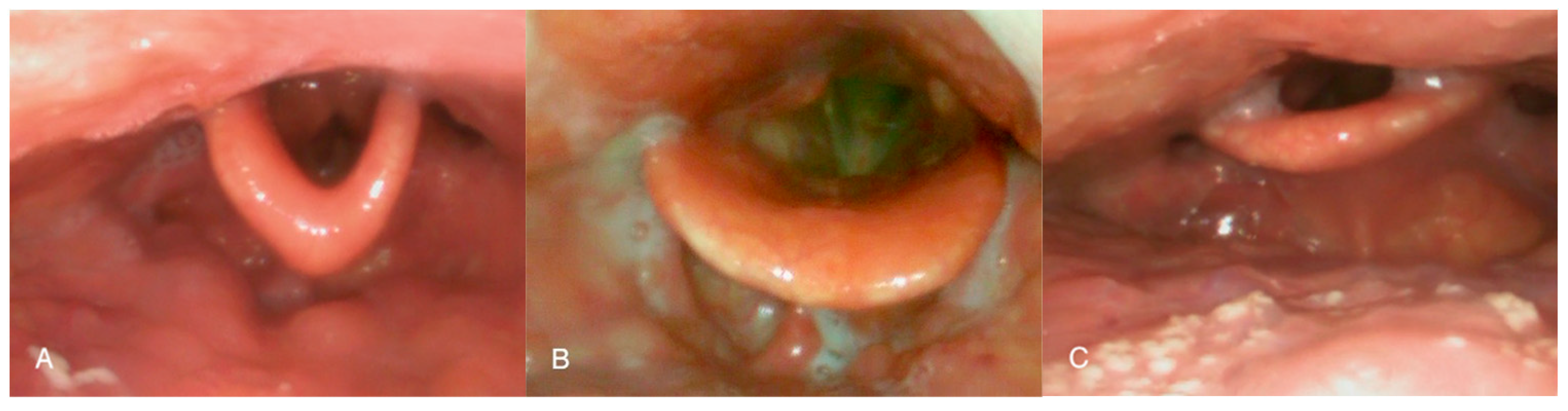
9]. Although it was long believed that such obstructions could not be suspected based solely on awake examination, careful observation may provide clues regarding epiglottic collapse. In a previous study, obstructions at this level were shown to occur more frequently in patients with a flat-shaped epiglottis—
Figure 1C [
10].
The influence of airflow on the collapse of soft tissues in the upper respiratory tract is a complex process that classical clinical methods, such as visual inspection, can only partially elucidate. Our understanding has been enhanced by dynamic radiological techniques—namely, dynamic magnetic resonance imaging (MRI), computed tomography (CT), and DISE—which provide real-time insights into changes in the shape, position, and spatial relationships of various anatomical structures. A significant advancement in this field has been the application of computational fluid dynamics (CFD). By numerically solving the Navier–Stokes equations, CFD enables detailed analysis of airflow patterns and pressure distributions within anatomically complex airway geometries, accounting for both laminar and turbulent flow conditions. Over the past few decades, CFD has been widely employed to investigate various aspects of pulmonary airflow, including ventilation efficiency, airway obstructions, and aerosol drug deposition [
11].
The importance of CFD in respiratory research was further underscored during the COVID-19 pandemic, when understanding aerosol transport became a critical concern. Researchers employed CFD models to analyze the movement of virus-laden droplets through the respiratory tract—from oral or nasal inhalation to deep lung deposition [
12]. These studies provided valuable insights into the risks of airborne transmission and the effectiveness of protective measures such as face masks and ventilation systems. In parallel, CFD simulations played a key role in optimizing aerosol-based drug delivery, enhancing targeted deposition within the lungs for the treatment of respiratory infections [
13]. CFD has also enabled detailed visualization of airflow fields within lumens of varying shapes, providing a foundation for analyzing the mechanical impact of flow on anatomical structures of the upper airway [
14,
15,
16]. This modeling approach has proven useful in predicting the severity of sleep-disordered breathing and assessing the potential success of surgical interventions [
17].
A key shortcoming of the given approach is its technical complexity, primarily due to the requirement for precise input data, including detailed characteristics of the tissues under study. By integrating high-resolution imaging techniques such as CT and MRI, modern CFD models have achieved unprecedented accuracy in replicating patient-specific airway geometries. This advancement has enabled more precise assessments of airflow dynamics, particularly in conditions like asthma, chronic obstructive pulmonary disease (COPD), and acute respiratory infections. Moreover, the growing application of CFD in personalized medicine underscores its potential for tailoring treatments based on individual anatomical and physiological characteristics [
12].
In the presented research, we investigated how the shape of the epiglottis influences the pressure field within the airway and, consequently, the aerodynamic forces acting upon it that may lead to collapse. To explore this, numerical simulations were conducted for two distinct epiglottis shapes—flat and curved. The simulations were first performed using a simplified airway lumen geometry to allow a direct comparison of shape effects under identical flow conditions. Subsequently, simulations were carried out using patient-specific upper airway geometries derived from CT scans, providing deeper insight into the interaction between individual airflow dynamics and epiglottis morphology.
2. Materials and Methods
Because real human airways are unique, it is difficult to perform parametric studies under unifying flow conditions to identify the critical parameters and compare different patient-related geometrical cases. For this reason, the research was conducted in two steps: The first was based on designing a simplified numerical experiment, where two different epiglottis shapes were positioned into a pipe, representing the airway, with matching diameter and length. This decision provides the same upstream flow conditions with only epiglottis shape affecting the local flow conditions, enabling a focused study of the effect of epiglottis shape on OSA conditions. In the second step of the research, two real human airways with different epiglottis shapes were analyzed. In the following, basic steps in constructing the 3D models based on patient-specific CT scans are described first, followed by a description of the two cases with simplified airway models.
2.1. Geometrical Models
2.1.1. CT Scan-Based Patient-Specific Geometrical Models
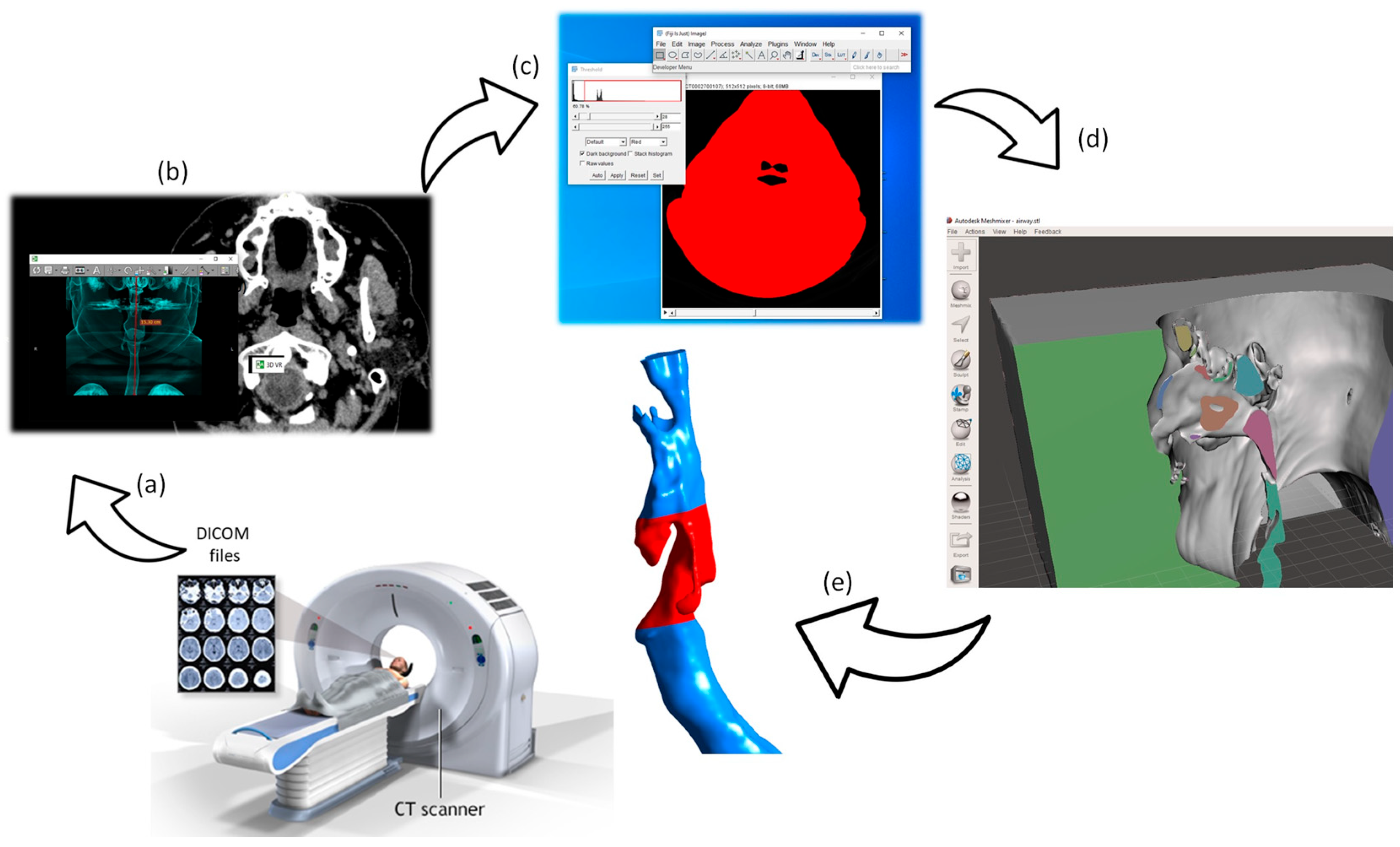
For physiologically accurate CFD analysis, obtaining realistic anatomical geometries of the respiratory tract and the epiglottis is essential. High-resolution CT scans provide detailed 3D reconstructions, enabling precise simulations that reflect real physiological conditions. The workflow from CT scan to the 3D reconstruction is presented in
Figure 2.
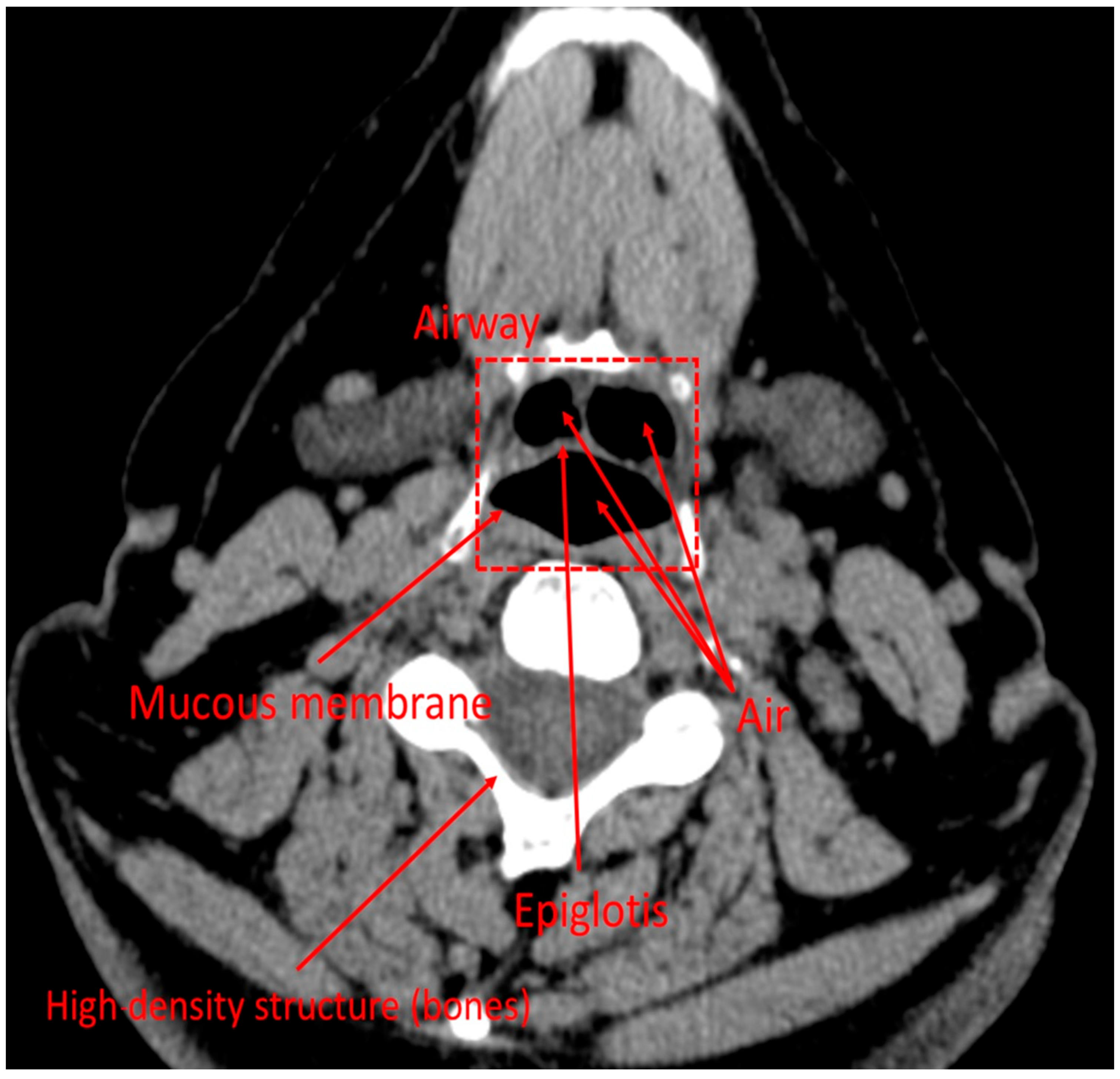
First, an anonymized CT scan captures cross-sectional images, stored in DICOM format, containing both imaging data and patient metadata. RadiAnt DICOM viewer was used to analyze image properties, including pixel dimensions. Airways appear dark on CT images due to the low X-ray attenuation of air, whereas soft tissues appear in shades of gray and bone appears white (
Figure 3). To isolate airways, Fiji software (version 2.16.0) was employed. The air–mucous membrane boundary, seen as a transition between dark air-filled spaces and grayish soft tissue, was identified using the threshold function. Unwanted gaps were filled using the Flood fill function, ensuring that only airway structures remained present.
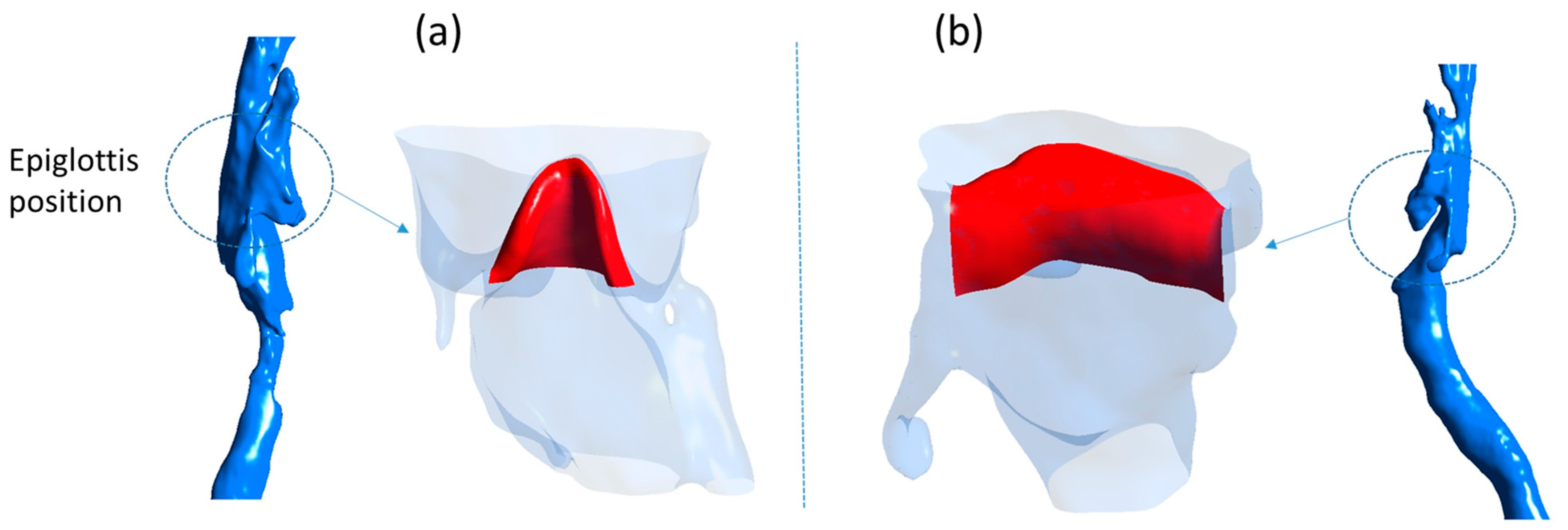
Next, the invert function was applied to define the airways for 3D modeling, preventing the surroundings from being modeled instead. The 3D Viewer function then converted the image set into an STL file. Finally, Meshmixer software was used for adjustments, resulting in two 3D airway models, as shown in
Figure 4.
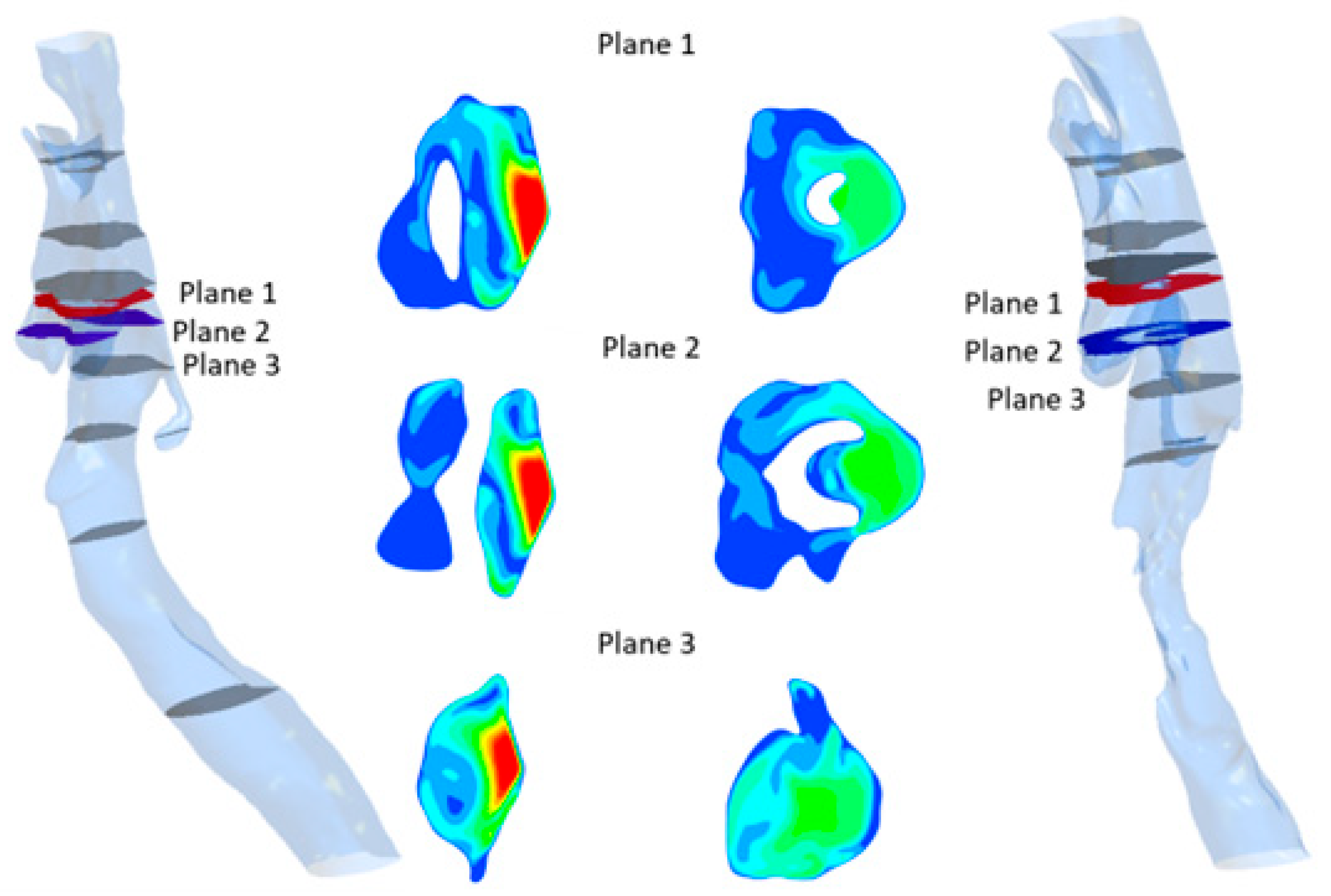
The two 3D models reconstructed from CT images differ in the shape of the epiglottis.
Figure 4a shows a curved epiglottis, whereas
Figure 4b depicts a flat epiglottis. The cross-sectional airflow areas between the two shapes are very similar, with a difference of less than 1%.
Once the 3D model was generated, a polyhedral mesh with five boundary layers was created to optimize the computational efficiency and accuracy of the resolution of the near-wall regions, a key element when applying the k-ω SST turbulence model in CFD simulations). Ansys Fluent [
6] with Fluent meshing was used for mesh generation and all further numerical simulations. The computational mesh of the curved epiglottis case consisted of 9,767,310 cells, and the mesh of the flat epiglottis case consisted of 9,866,854 cells.
2.1.2. Simplified Geometrical Model
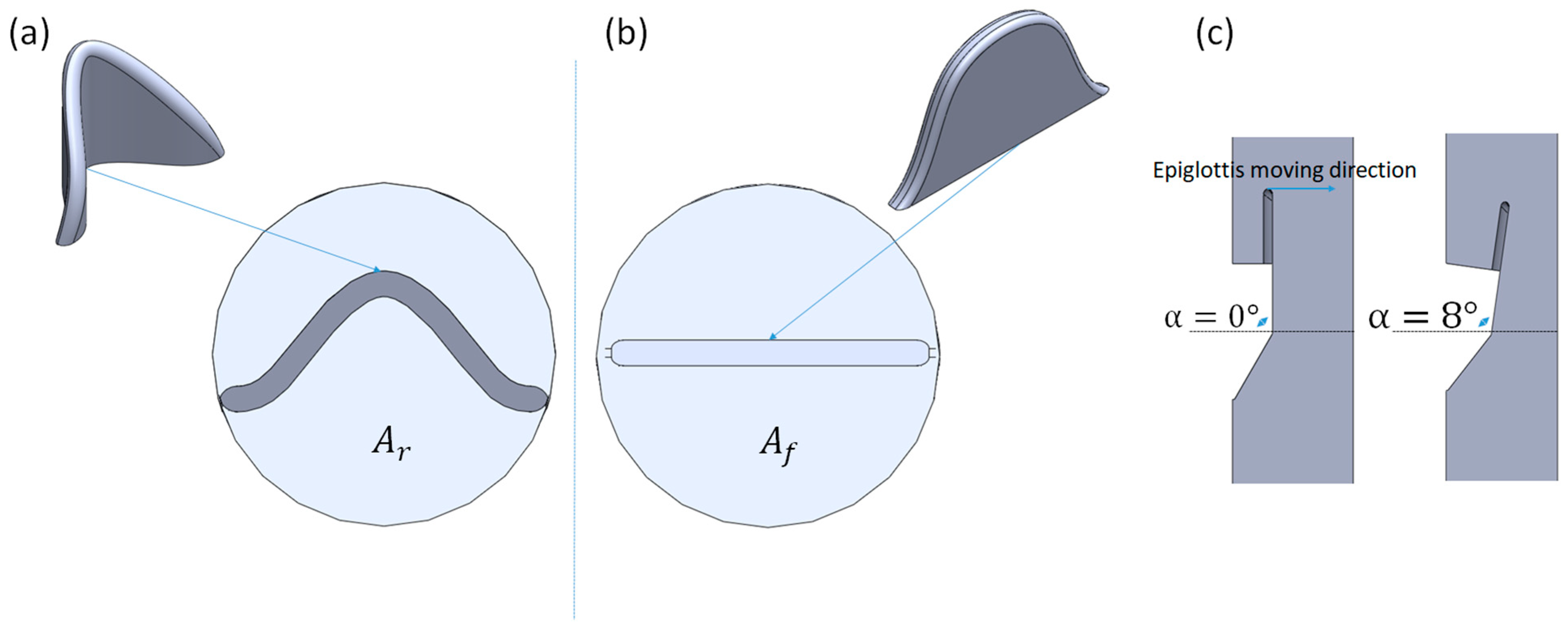
In the case of the simplified airways, a straight pipe with the epiglottis forming the flow obstruction was created. The total length of the pipe was 150 mm, with a diameter of 40 mm, and the epiglottis positioned in the middle of the pipe. Both selected typical epiglottis geometries are presented in
Figure 5.
For each epiglottis shape, eleven numerical simulations were performed. The inclination angle of the epiglottis relative to the incoming airflow was varied between 0° and 15°, as shown in
Figure 5. The channel cross-sectional area at the base of the epiglottis was kept the same for both epiglottis shapes (
) for initial epiglottis inclination angle 0°. With the position of the inclination angle of the epiglottis changing for each computed case, the cross-section areas (
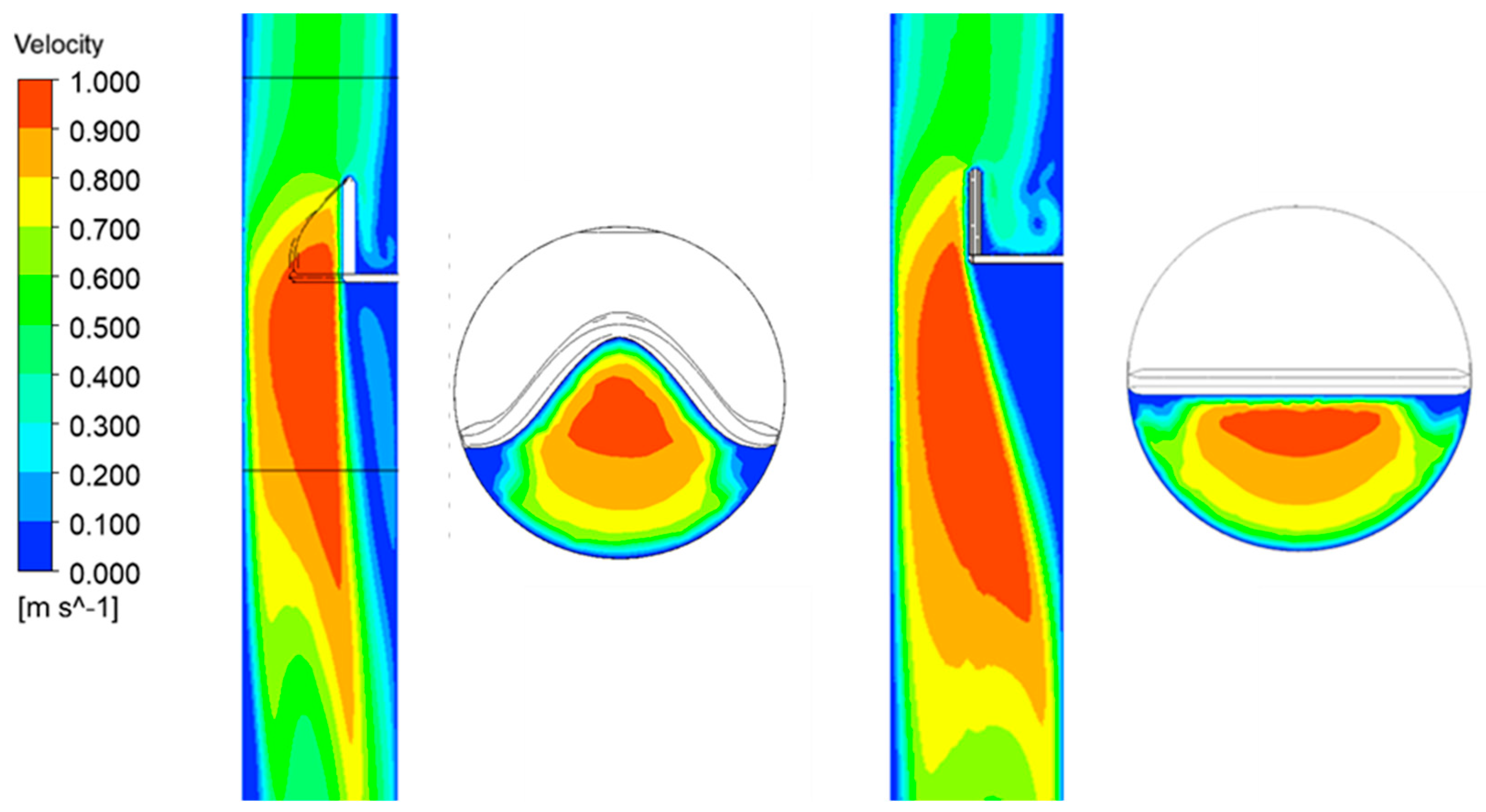
) also changed, which consequently means that the local duct geometry was different for both epiglottis shapes. Given that the airflow through the tube is kept constant, the change in the cross-sectional area affects the pressure and velocity distributions and consequently the aerodynamic force acting on the epiglottis. In this way the influence of the epiglottis shape can be evaluated under unified test conditions, making the comparison more decisive.
2.2. Numerical Model and Boundary Conditions
The CFD model for simulating respiratory airflow and particle transport is based on solving the Reynolds-averaged Navier–Stokes equations, governing the flow of incompressible air. In the current case, the Ansys Fluent CFD software (version 25.2) was used. Because the airflow in the airways is turbulent, a suitable turbulence model was required. We selected the k–ω Shear Stress Transport (SST) model, as it provides a good balance between computational cost and accuracy. As in our previous detailed CFD study of particle tracking under turbulent respiratory flow conditions, the numerical model used in this work was validated against experimental data [
12].
With respect to the boundary conditions at the inlet, a pressure boundary condition was applied, specifying a static pressure of 0 Pa. Since the study simulates human breathing, the inspiratory and expiratory volume flow rates can be described using a sinusoidal function. However, as obstructive events occur during inspiration, when the aerodynamic force acts in the direction of the main airflow, only the inspiratory phase was considered in this analysis. The maximum inspiratory volumetric flow rate was 25 L/min, which corresponded to the highest magnitude of the resulting aerodynamic force. The selected inspiratory flow rates (5–25 L/min) were chosen to reflect physiologically relevant peak inspiratory conditions during sleep in adults, encompassing both flow-limited breathing and near-normal inspiratory airflow observed in patients with OSA. Therefore, a constant mass flow outlet boundary condition was applied during the CFD simulation. For a flow rate of 25 L/min, the corresponding mass flow rate was 4.85 × 10⁻⁴ kg/s, which was prescribed as the outlet boundary condition. The air inlet temperature was set to 30 °C and held constant across all simulated test cases.
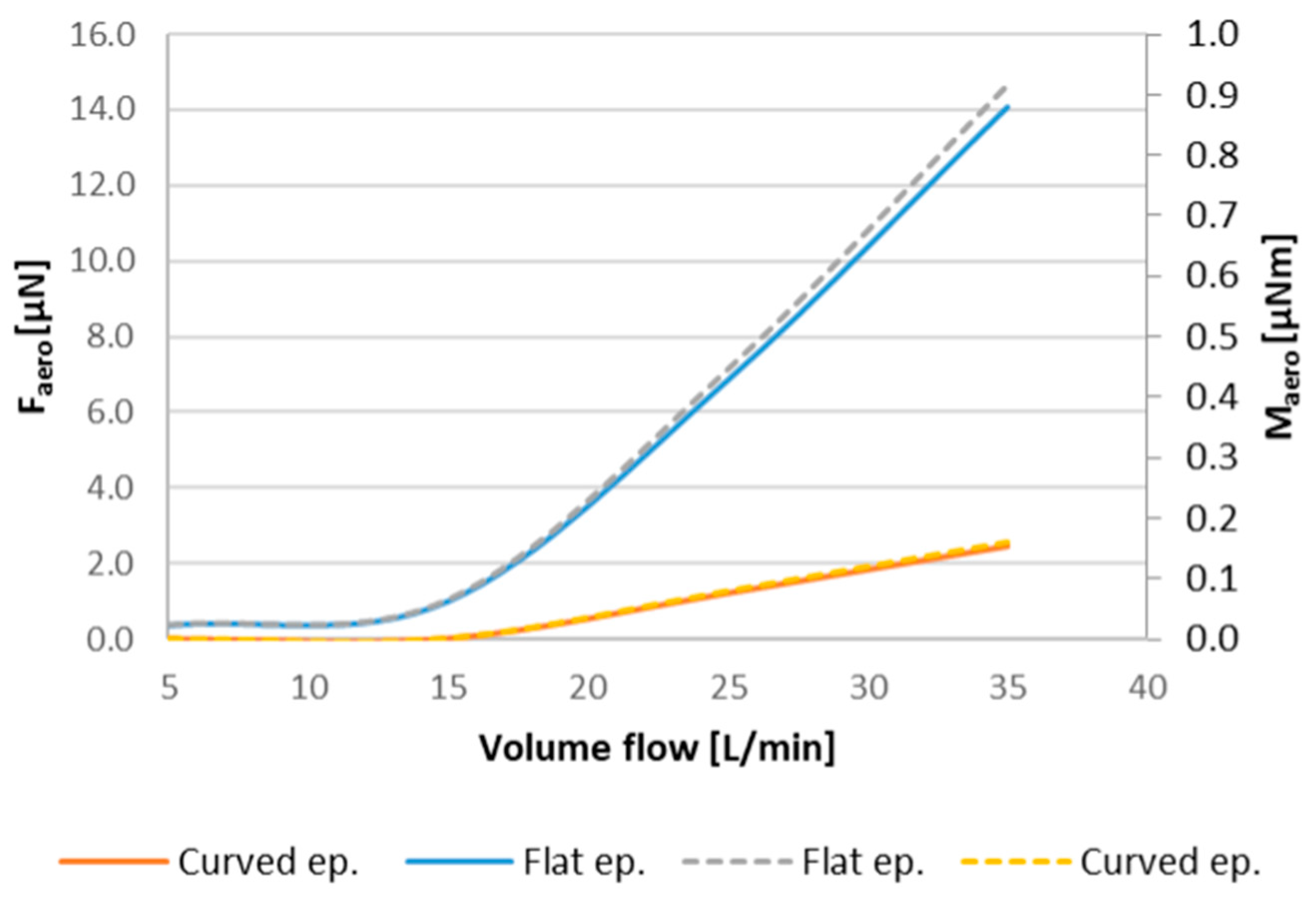
In order to analyze the results and compare the effect of different epiglottis shapes, several parameters were evaluated. First, the magnitude and direction of the aerodynamic force
, exerted by the flow on the epiglottis, was calculated from obtained flow results as follows:
with the summation of the pressure (pi) and shear stress (
) contributions over the surface element sizes Si, comprising the epiglottis shape. The resulting aerodynamic torque
, acting on the epiglottis, was defined with respect to the base point of the epiglottis.
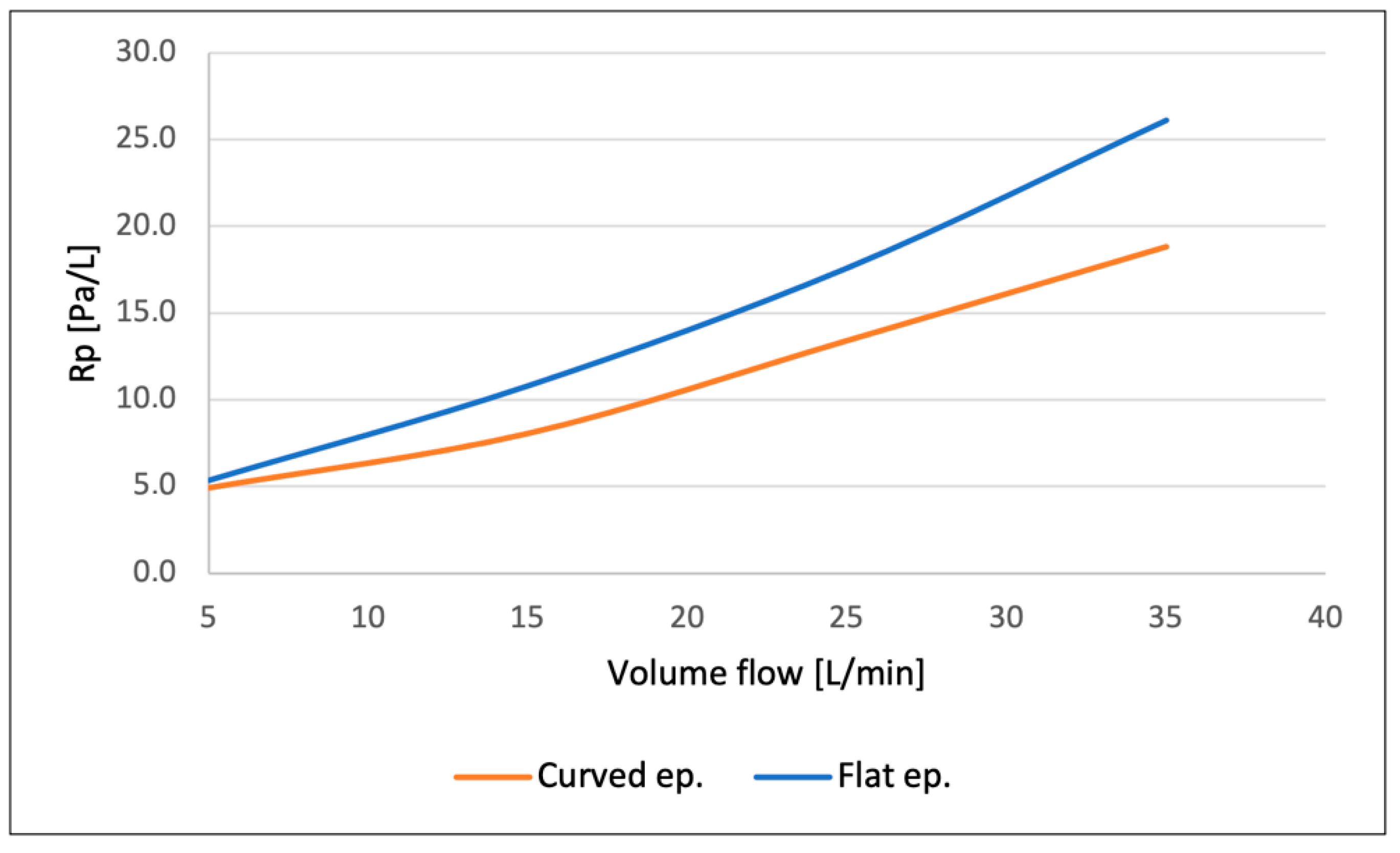
The influence of the pressure field was also evaluated by means of the epiglottis flow resistance (Rp), defined as follows:
where
is the volumetric low rate and
is the pressure drop along the constriction area, defined as the difference between the average pressure values at the inlet and outlet of the constriction area.
4. Discussion
Given the extensive use of CFD in the modeling of pulmonary airflow, its application extends naturally to understanding the role of the larynx in respiratory mechanics, where the epiglottis plays a key role. Using patient-specific 3D modeling, the CFD has provided an additional understanding of airway collapse mechanisms and of quantifying the severity of anatomical airway restrictions in OSA patients [
18,
19,
20]. A statistically significant correlation was found between CFD-derived airway resistance and OSA severity measured by the apnea–hypopnea index. Importantly, according to previous findings, the location of flow limitation and airway collapse are not always identical [
21]. Therefore, CFD analysis may serve as a valuable tool for guiding the selection of targeted therapeutic interventions in OSA management.
The relations between structures in the pharynx and larynx may be considerably different in the awake state and during sleep. To date, several morphological characteristics have been described in the population of patients with sleep breathing disorders, by which such patients differ from healthy individuals; however, the authors mostly focused on the shape of soft tissue in the oropharynx and relations between them. Some other studies have shown that the frequency of epiglottis obstructions depends on the relationship between the base of the tongue and the lingual side of the epiglottis, or its displacement towards the back wall of the pharynx [
22]. Similar conclusions were reached in a study in which they analyzed the influence of vocal cord visualization—the Cormack–Lehane score on the severity of OSA [
23]. According to the aforementioned research, the obstructions at the level of the epiglottis are probably influenced by both the epiglottis position that determines the cross-sectional area of the lumen behind it and the shape of the epiglottis itself.
Within the current endotypic model of OSA, epiglottic shape may be considered in relation to both anatomical and neuromuscular factors. From a clinical perspective, epiglottic shape can be readily assessed during awake examination, making it a practical anatomical marker. However, it should not be interpreted as a purely rigid or static feature. The epiglottis is composed of elastic cartilage and is mechanically coupled to surrounding structures through ligamentous and soft tissue attachments, most notably the hyoepiglottic ligament, which links it to the hyoid bone and the tongue base. Consequently, its observed shape and position may reflect not only intrinsic structural characteristics but also the biomechanical influence of adjacent structures and their neuromuscular control. Within this framework, epiglottic morphology may therefore primarily represent an anatomical determinant of airway collapsibility, while also indirectly reflecting aspects of upper airway dilator muscle responsiveness. This structural–neuromuscular interaction may be reflected in the dynamic collapse patterns observed during drug-induced sleep endoscopy (DISE), where epiglottic behavior often changes in response to tongue base position and airway configuration.
Obstructions at the pharyngeal level typically progress gradually, with the cross-sectional area decreasing as respiratory effort (i.e., downstream pressure) increases, until the point of critical closing pressure is reached and the airway lumen collapses, resulting in complete cessation of airflow. In contrast, obstructions at the level of the epiglottis in the anteroposterior direction occur abruptly [
24]. When the negative pressure difference increases to a critical value in the lumen behind the laryngeal surface of the epiglottis, it acts as a one-way valve, and sudden closure occurs with the airflow being completely interrupted—a mechanism known as the “trap-door phenomenon”.
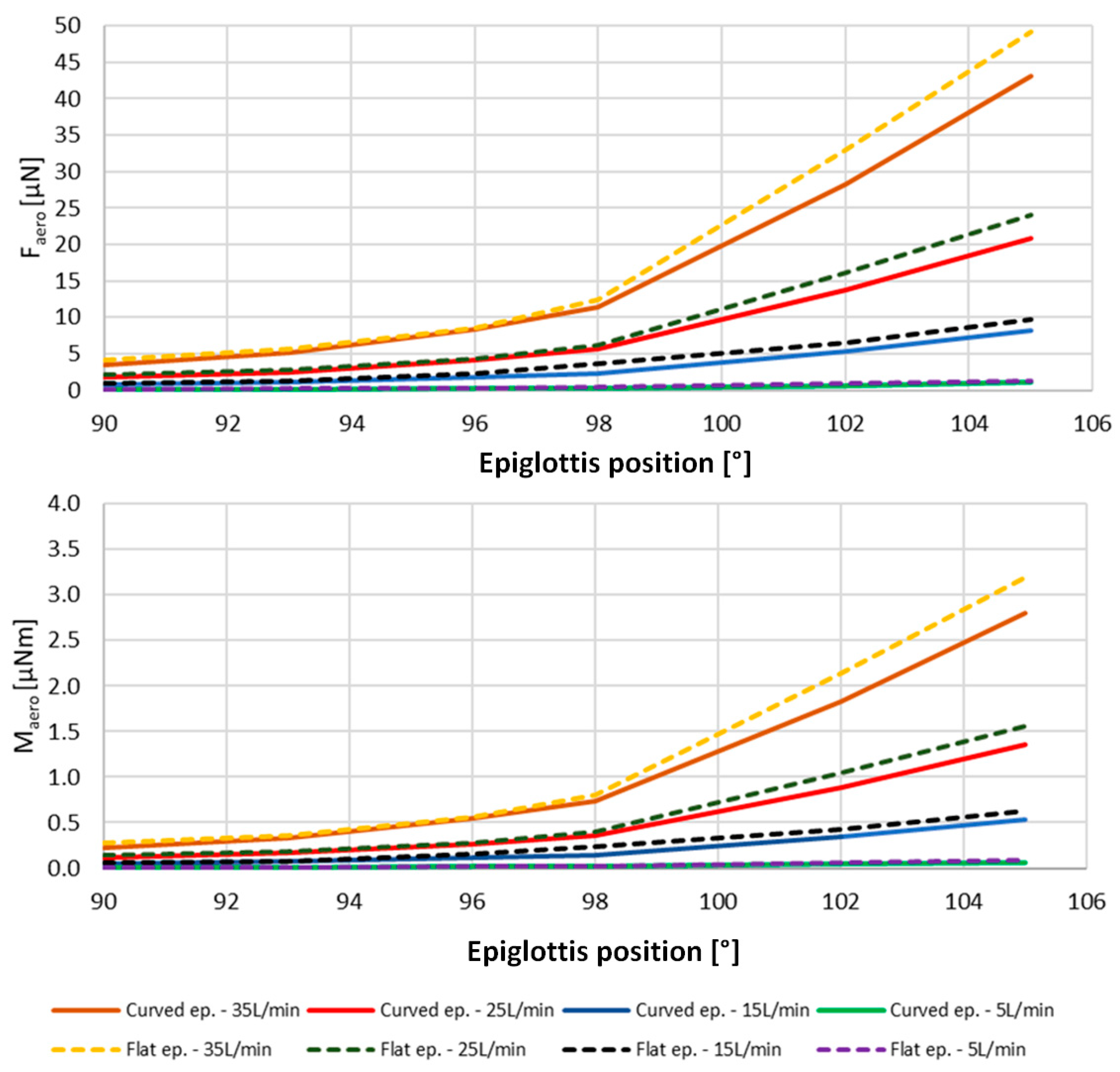
From an engineering perspective, the human upper airway can be likened to a collapsible tube, where reductions in cross-sectional area—particularly in the region of the epiglottis—significantly affect airflow behavior. Inspiratory airflow patterns vary among individuals due to differences in age, physical condition, and the presence of respiratory diseases. Among these factors, varying inspiratory flow rates in combination with different epiglottic morphologies can create conditions that favor the occurrence of OSA, as demonstrated in this study. Specifically, the resulting torque on the flat epiglottis can be up to 25% higher than that observed for the curved epiglottis under the same flow rate and epiglottis position. Although only a limited range of epiglottis positions was numerically analyzed for the simplified geometry, the obtained results clearly show a trend of increasing mechanical loads on the flat configuration compared with the curved one. The resulting torques on the epiglottis can contribute to the onset of OSA, particularly because, with increasing epiglottis rotation (i.e., inclination angle), the magnitude of the resulting torque rises markedly, creating conditions that accelerate epiglottic collapse.
Since the epiglottis was modeled as rigid in the present study, it is important to assess the implications of this assumption for a physiologically more realistic flexible configuration. An increase in epiglottic tissue flexibility is expected to lower the critical flow rate associated with the onset of obstruction compared with a more rigid epiglottis. Consequently, the rigid-body approximation adopted in the present computational study may be interpreted as representing an upper-bound scenario in terms of resistance to airway collapse and, thus, to the onset of OSA.
The results of the current analysis indicate that, within the rigid epiglottis framework, a flat epiglottic geometry is more susceptible to collapse than a curved configuration. It is therefore reasonable to anticipate that this relative susceptibility would persist in a fluid–structure interaction (FSI) analysis incorporating tissue flexibility. While the absolute rotational displacements of the epiglottis would differ between rigid and deformable models, the initial phase of motion—dominated primarily by global displacement—would be expected to remain comparable. As deformation progresses and bending effects become significant, structural compliance would increasingly influence the fluid–structure interaction, indicating that the system is approaching the collapse regime.
Accordingly, although the rigid-body assumption neglects deformation-induced effects, the present results provide valuable insight into the relative stability of different epiglottic shapes and may serve as a meaningful indicator of their susceptibility to the onset of OSA.
The findings of the present study underscore CFD as a valuable tool for biomechanical investigation of airway collapse in OSA. The results are consistent with previous clinical observations demonstrating that epiglottic obstruction occurs more frequently in patients with a flat epiglottis configuration [
10], and provide a biomechanical explanation for this association through increased aerodynamic force, torque, and flow resistance. Rather than suggesting routine CT-based assessment in OSA patients, the findings support careful evaluation of epiglottic shape during standard clinical examination and DISE. In this context, biomechanical modeling may enhance interpretation of collapse patterns, improve risk stratification, and support more targeted therapeutic and surgical decision-making.
However, the patient-specific validation was based on only two airway geometries and should therefore be interpreted as proof-of-concept evidence rather than statistical confirmation. In addition, the epiglottis was modeled as a rigid structure and neuromuscular influences were not explicitly incorporated, which limits direct extrapolation to in vivo dynamic collapse behavior. Despite these limitations, the developed CFD models enable detailed quantification of mechanical loading and may, in the future, contribute to more individualized assessment and treatment planning. Larger cohort studies and fluid–structure interaction analyses will be required to further establish the clinical relevance of epiglottic morphology as an anatomical determinant of airway vulnerability in OSA.