From Selection to Use: Aptamers as Targeting Reagents in Hematology


Abstract
1. Introduction
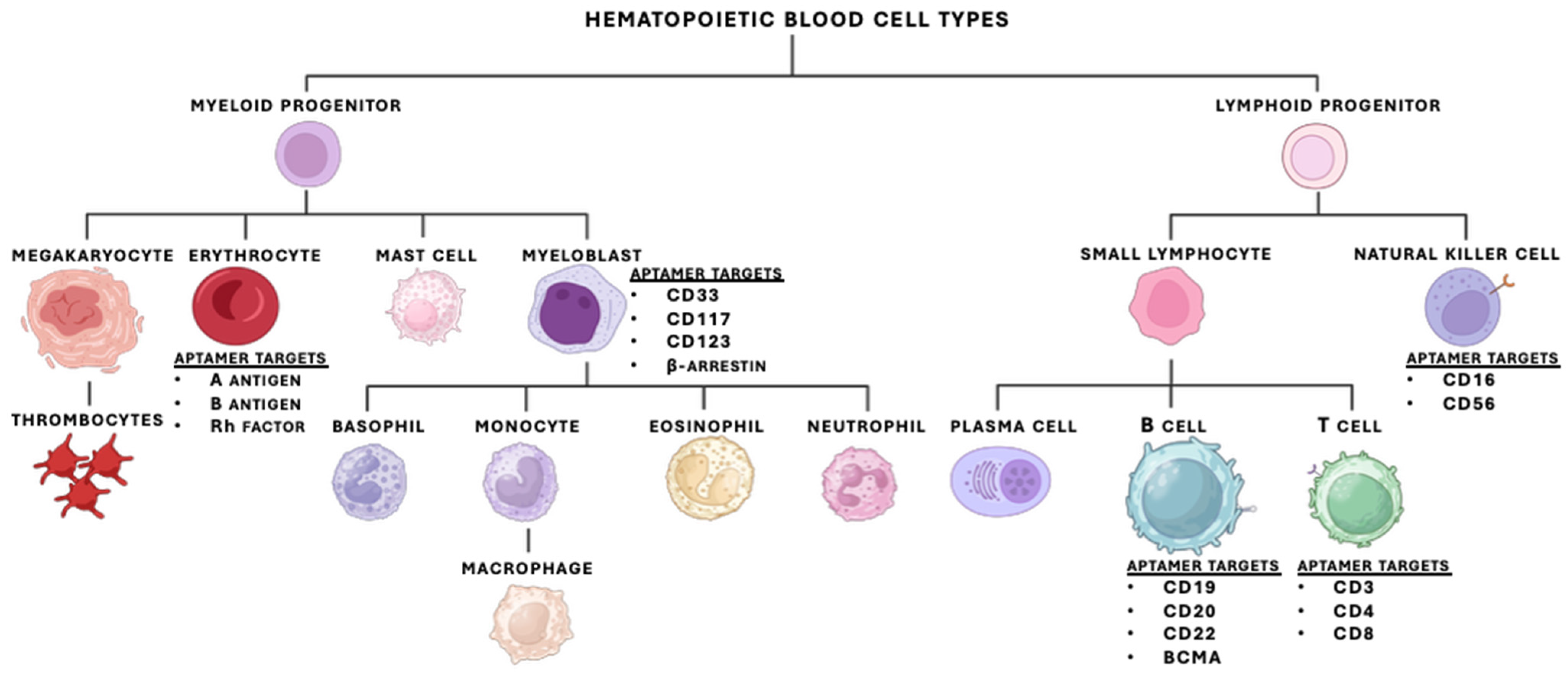
1.1. Hematopoiesis
1.2. Blood Diseases
1.3. Challenges in Blood Cell Targeting
1.4. Aptamers
2. Overview and Key Innovations of SELEX
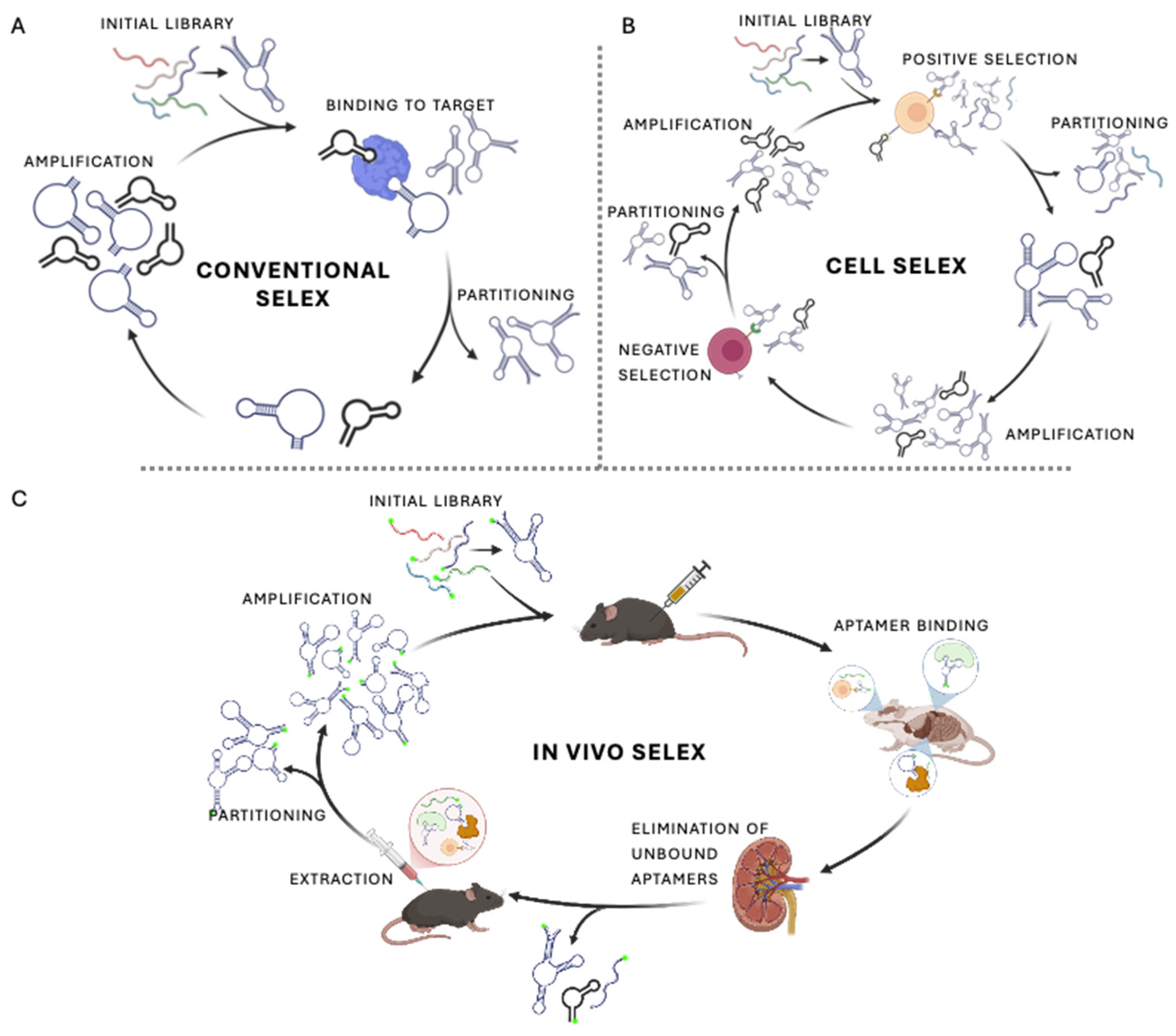
2.1. Classical, Cell-Based, and In Vivo SELEX Strategies
2.2. Limitations in SELEX for Blood Cell Targeting

| Example Target | a Reported KD, Measurement Method, and Reference | Relevant Disease | Type | Sequence (5′ → 3′) |
|---|---|---|---|---|
| A1 | 29.5 pM [84] b, flow cytometry | N/A c | DNA | CATCCATGGGAATTCGTCGACCCGGGCCTGACAACCTTTACACCTTCTCGAGAAGGTGTCTTCCTAAGCTCGATCTCG |
| AML1 | 0.99 ± 0.02 nM [85] b, SPR, truncation | Leukemia | RNA | GGGAUGGACGACCCACCACGGCGAGGUAUCCCAUCCCA |
| 3.5 ± 0.4 nM [86] b, SPR, truncation | AML | RNA | GGACCCUGCCACGAUAGCGGCGCGGGAAGUAAAGUAUACACCUAACGGUCCA | |
| BAFF-R | 47.1 ± 7.6 nM [87] b, gel shift assay | Lymphoma | RNA, 2’fluoro-pyrimidine | GGGAGGACGAUGCGGGAGGCUCAACAAUGAUAGAGCCCGCAAUGUUGAUAGUUGUGCCCAGUCUGCAGACGACUCGCCCGA |
| BCMA | 79.4 nM [88] b, qRT-PCR, truncation | MM | RNA, 2’fluoro-pyrimidine | AGUGCAAGACGUUCGCAGAUUAGCGAAAAGAGGGUCUCAUUGACUAGUAC |
| CCR5 | 31.3 nM, [89] b, gel shift assay, truncation | HIV | RNA, 2’fluoro-pyrimidine | GGGAGACAAGACUAGACGCUCAAUGUGGGCCACGCCCGAUUUUACGCUUUUACCCGCACGCGAUUGGUUUGUUUCCC |
| 110 nM [90] b, flow cytometry | AML | RNA, 2’fluoro-pyrimidine | GGGAGGACGATGCGGGCCUUCGUUUGUUUCGUCCAAGACGACTCGCCCGA | |
| CD3ε | 3 nM [91] b, flow cytometry, truncation | N/A c | DNA | GCCGCGGGGTGGGTCTAGTGTGGATGTTTAGGGGGCGGC |
| 0.3 nM [79], flow cytometry, dimer | N/A c | DNA, LNA, 2′-OMe, PEG-linker | ‘+A+GCCGCGGGGTGGGTCTAGTGTGGATGTTTAGGGGGCGGCmUmT- (C42H61N2O10P)4- +A+GCCGCGGGGTGGGTCTAGTGTGGATGTTTAGGGGGCGGCmUmT | |
| 135 nM [92], flow cytometry | N/A c | DNA, PEG-linker | TGGGCGGGGTGGGTCTAGTGTGGATGTTTAGGGGGCCCA | |
| CD3 (murine) | 37.9 nM [93] b, SPR | Blood cancer d | RNA, 2’fluoro-pyrimidine | CCTTGCCTGCTTTCACGTGTGATCCCTGCCCGT |
| CD4 | N/A c [94] | HIV | DNA | GTGACGTCCTGATCGATTGTGCATTCGGTGTGACGATCT |
| 1.59 nM [95] b, flow cytometry | HIV | DNA | ATCCAGAGTGACGCAGCACCACCACCGTACAATTCGCTTTCTTTTTTCATTACCTACTCTGGC | |
| 2.9 nM [96] b, qPCR | N/Ac | DNA | GCCTGTTGTGAGCCTCCTAACGATGTCGACGTGCAGCTTCCTTGAGCCTTACTGAAAATACTACCCAGTCCATGCTTATTCTTGTCTCCC | |
| CD8 | 10.59 nM [97] b, flow cytometry | Stevens–Johnson syndrome | DNA | ACGCTCGGATGCCACTACAGCTTGCTATGCTCCCCTTGGGGTACGTAACGATGTCGACGACTCATGGACGTGCTGGTGAC |
| 1.9 nM [14] b, flow cytometry | Blood cancer d | DNA | ATCCAGAGTGACGCAGCAACAGAGGTGTAGAAGTACACGTGAACAAGCTTGAAATTGTCTCTGACAGAGGACTAAGCCACCGTGTCCA | |
| CD16α | 45 ± 28 nM [98] b, dot blot, truncation | Blood cancer d | DNA, 15-deoxyadenosine linker, PEG | CACTGCGGGGGTCTATACGTGAGGAAGAAGTGGGCAGGTC |
| CD19 | 85.4 nM [99] b, flow cytometry | Lymphoma | DNA | TGCGTGTGTAGTGTGTCTGTTCTCCTTTTTTTGGTTGCTGCTCTTAGGGATTTGGGCGG |
| N/A c [100] b | ALL | DNA, RNA | RNA: UUGAAACUGUAAGGUGGC DNA: TTGAAACTGTAAGGTGGC | |
| 49.9 ± 13 nM [101] b, BLI, truncation | B-cell neoplasms | RNA, 2’fluoro-pyrimidine | UGAGCCCUGUUCGACAGGAGGCUCA | |
| CD20 | 96.91 nM [102] b, flow cytometry | Lymphoma | DNA | ATACCAGCTTATTCAATTGGAATAAGGGGGTATTACTGTCTGGTAAACAAACGCTATGCGAGGGGATTCAAGATAGTAAGTGCAATCT |
| CD22 | N/A c [103] b | B-ALL | RNA, 2’fluoro-pyrimidine | GGGAGGACGAUGCGGGCCAUUCGUCUUUUCGUCCCCAGACGACUCGCCCGA |
| CD28 (murine) | 40 nM [104] b, filter binding assay, dimer | N/A c | RNA, 2’fluoro-pyrimidine | CAGAGACTTCCAAAATAAAAGACTCCTGAAAGTTGCAAAATAAAAAACTC |
| CD30 | 0.11 Nm e [105] b, SPR | Blood cancers d | RNA, 2’fluoro-pyrimidine | N/Ac |
| 50 nM [106] b, flow cytometry | Lymphoma | DNA | TACCAGTGCGATGCTCAG ACTGGGCGAAACAAGTCTATTGACTATGAGCCTGACGCATTCGGTTGAC | |
| CD33 | 43 nM [107] b, flow cytometry | AML | DNA | TACCAGTGCGATGCTCAGCACGCTTATAGGGGCTGGACAAAATTCTACCCAGCCTTTTCTGACGCATTCGGTTGAC |
| CD33/CD34 | N/A c [108] | AML | DNA | N/a c |
| CD38 | 50.03 nM [109] b, flow cytometry, truncation | MM | DNA | TCCAGAGTGACGCAGCAGCCAACGTGCTTTCTACCTTATTTTCCGTCACTCTCACTCTGGA |
| 4.8 ± 0.2 nM [110] b, SPR, truncation | MM | DNA | AGGCGCCCAACCTCCTTTAGTGTCAAGGCAGGGGAAACAAGTCTGGCTTAGGGTGT | |
| CD44 | 187.0 ± 30.6 nM [111] b, filter binding assay | Blood cancer d | DNA, PS | GAGATTCATCACGCGCATAGTCTTGGGACGGTGTTAAACGAAAGGGGACGACCGACTATGCGATGATGTCTTC |
| 81.3 nM [78] b, fluorescence | Blood cancer d | RNA, 2’fluoro-pyrimidine, 2′-OMe | GGGAUGGAUCCAAGCUUACUGGCAUCUGGAUUUGCGCGUGCCAGAAUAAAGAGUAUAACGUGUGAAUGGGAAGCUUCGAUAGGAAUUCGG | |
| 238 ± 9 nM [112] b, MST, truncation | Blood cancer d | DNA | CATGCTTCCCCAGGGAGATGACCGGGCGTACACCGTCGCGGCACATGTCTGAATGCGTTTAGTCTCTGTG | |
| 14.54 nM [113] b, flow cytometry, truncation | Blood cancer d | DNA | GGGACGCTGAACACTATCATGGGGTGCTATCTCTCTTGGT | |
| 55.5 ± 13.4 nM [114] | Blood cancer d | DNA, PS | TTAAGATCXGXTAGGGAACCAAGACGACAG | |
| CD71 | 55.02 ± 0.4 nM [115] b, flow cytometry, truncation | Blood cancer d | DNA | ACTCATAGGGTTAGGGGCTGCTGGCCAGATACTCAGATGGTAGGGTTACTATGAGC |
| 35.2 ± 23.79 nM [116] b, flow cytometry, toehold | Lymphoma | DNA | GGAGTCACACGCATTAGCGTAAAGGGGGTGTTTGTGCGGTGTGGAGTGCGCGTGCTAATGCTGGAGTGTTTCCCAGGACCC | |
| CD117 | 7.14 nM [117] b, flow cytometry, truncation | AML | DNA | GGGGCCGGGGCAAGGGGGGGGTACCGTGGTAGGAC |
| 11.75 ± 1.30 nM [118] b, flow cytometry, truncation | AML | DNA | TCCAGTGACGCAGCATCGAGCGGGGGACCCTATTAGCTGAATGAGATGCAATTACAAGCGTGGACACTGGC | |
| 21.8 nM [119] b, BLI | AML | DNA | N/Ac | |
| CD123 | 29.41 nM [52] b, flow cytometry | AML | DNA | TGCGTGTGTACTGTGTCTGGTCCCGTAGCTACTAGCGAACTCCCTGCCTCTTAGGGATTTGGGCGG |
| 39.1 nM [80], flow cytometry | AML | DNA, PS | TGCGTGTGTACTGTGTCTGGTCCCGTAGCTACTAGCGAACTCCCTGCCTCTTAGGGATTTGGGCGG | |
| CD371 | 15.5 nM [120] b, SPR | AML | DNA | ATTACCAGGGACCGAAGGCAAAACTATGATCGGTGG |
| CTLA-4 | 10 nM [121] b, double-filter binding assay, truncation | Blood cancer d | RNA, 2’fluoro-pyrimidine | CCGACGTGCCGCAACTTCAACCCTGCACAACCAATCCGCC |
| 11.84 nM [122] b, flow cytometry | Blood cancer d | DNA | TCCCTACGGCGCTAACGATGGTGAAAATGGGCCTAGGGTGGACGGTGCCACCGTGCTACAAC | |
| DC-SIGN | 21.73 nM [123] b, LSC | N/A c | DNA | GGCGAAAATTTGTGGATATAGAGGGTTACTCGGAT |
| M0- and M2-like macrophages | 22.81 ± 5.6 nM (M0) and 44.12 ± 8.0 nM (M2) [51] b, flow cytometry | Blood cancer d | DNA | GAAGAGTAGATGAAACGTTTTTTCGCCCGATAAAAGGGACGTGCGTCAGACA |
| mIgM | N/A c [124] b | Burkitt’s lymphoma | DNA, 5′-iodo-deoxyuridine, PEG, disulfide bond | ACCGGGAGGATAGTTCGGTGGCTGTTCAGGGTCTCCTCCCGGTG |
| 359 nM [125], flow cytometry, multimers | Burkitt’s lymphoma | DNA, 5′-iodo-deoxyuridine, LNA, 2′-OMe, PEG | ACCGTGGAGGATAGTTCGGTGGCTGTTCAGGGTCTCCTCCACGGT | |
| N/A c [69] b, flow cytometry | Burkitt’s lymphoma | DNA | N/A c | |
| MLL-AF9 | 37.5 ± 2.5 nM [60] b, flow cytometry | AML | DNA | TAGGGAAGAGAAGGACATATGATCGCACACTATTAGAGTGTACGCATGATACATTGACTAGTACATGACCACTTGA |
| Nucleated red blood cells (NRBC) | 38.30 ± 4.99 nM [126] b, flow cytometry, truncation | Prenatal diagnostics | DNA | GCCAAATACCGGTCTGTCGGTGGGTATTGTGGACACTCTGGC |
| Nucleolin | N/A c [127] b | Blood cancer d | DNA | TTTGGTGGTGGTGGTTGTGGTGGTGGTGG |
| OFA/iLRP | 101.25 nM [128] b, flow cytometry | AML | DNA | TGCGTGTGTAGTGTGTCTGTTGTTTGTATTGTTGTCTATCCTCTTAGGGATTTGGGCGG |
| N/A c [129], truncation | AML | DNA | TTGTTTGTATTGTTGTCTATCCTCTTAGGGATT | |
| Red blood cell (RBC) | N/A c [28] b | Forensics | DNA | ATCCAGAGTGACGCAGCACGGGTTGGGGCTGGTTGTGTGTTGTTTTTTTGGCTGTATGTGGACACGGTGGCTTAGT |
| RhD | 580.5 ± 142.0 nM [130] b, flow cytometry | Hemolytic anemia | DNA | GGCCTGGTCTGTTAGCCGGGTAGCAGCCCCGGCACCTATT |
| Siglec-5 | 2.77 nM [131] b, flow cytometry | AML | DNA | GACGCTTACTCAGGTGTGACTCGGTACGCCGCAAGACGAGTTGTGTATAAGCCGGCCGAAGGACGCAGATGAAGTCTC |
3. Aptamers Targeting Blood Cell Types
3.1. B Cells
3.2. T Cells
3.3. Natural Killer (NK) Cells
3.4. Red Blood Cells (RBCs)
3.5. Integrative Perspective
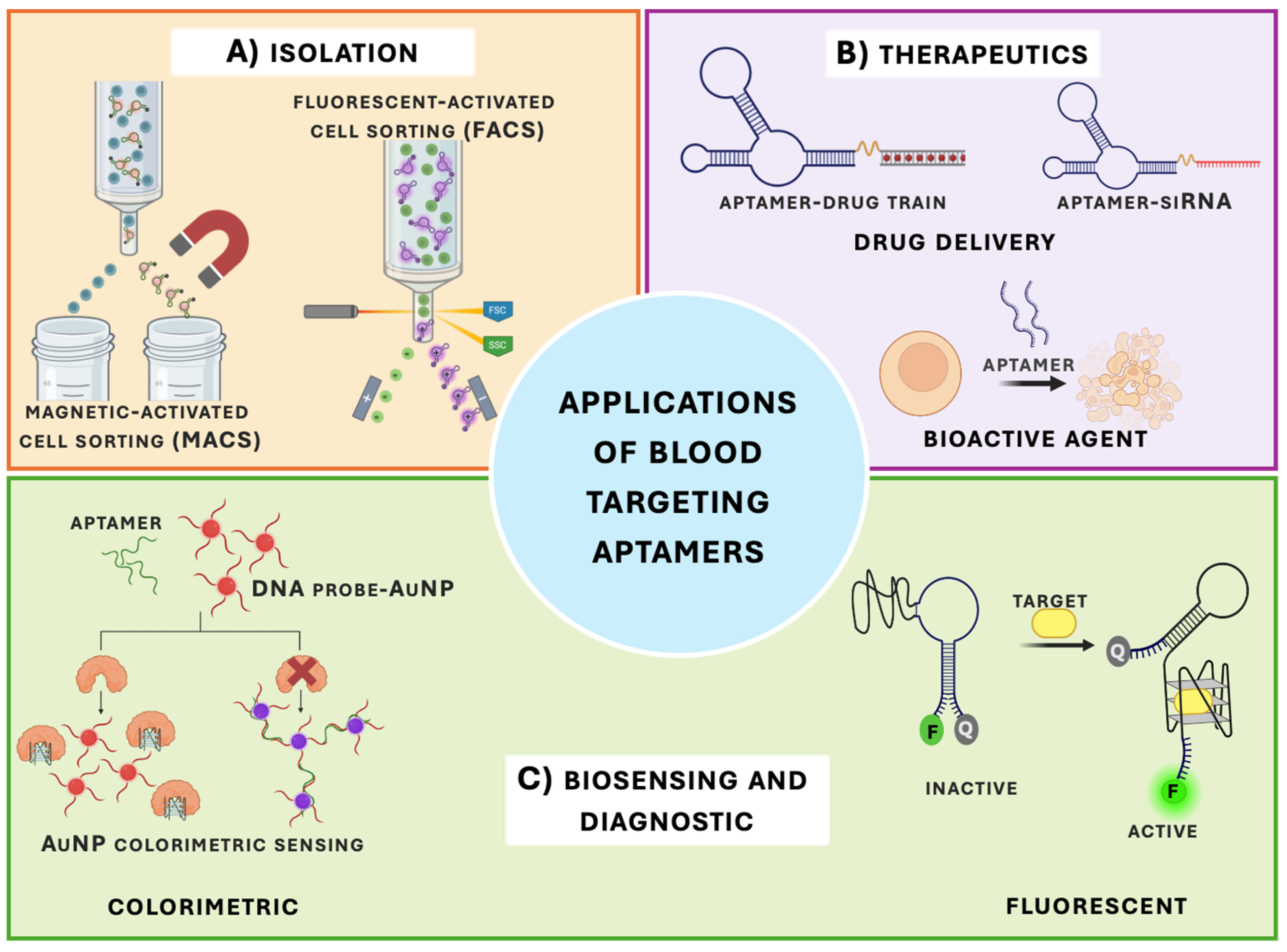
4. Applications
4.1. Selective Isolation of Blood Cells
4.2. Therapeutic Applications
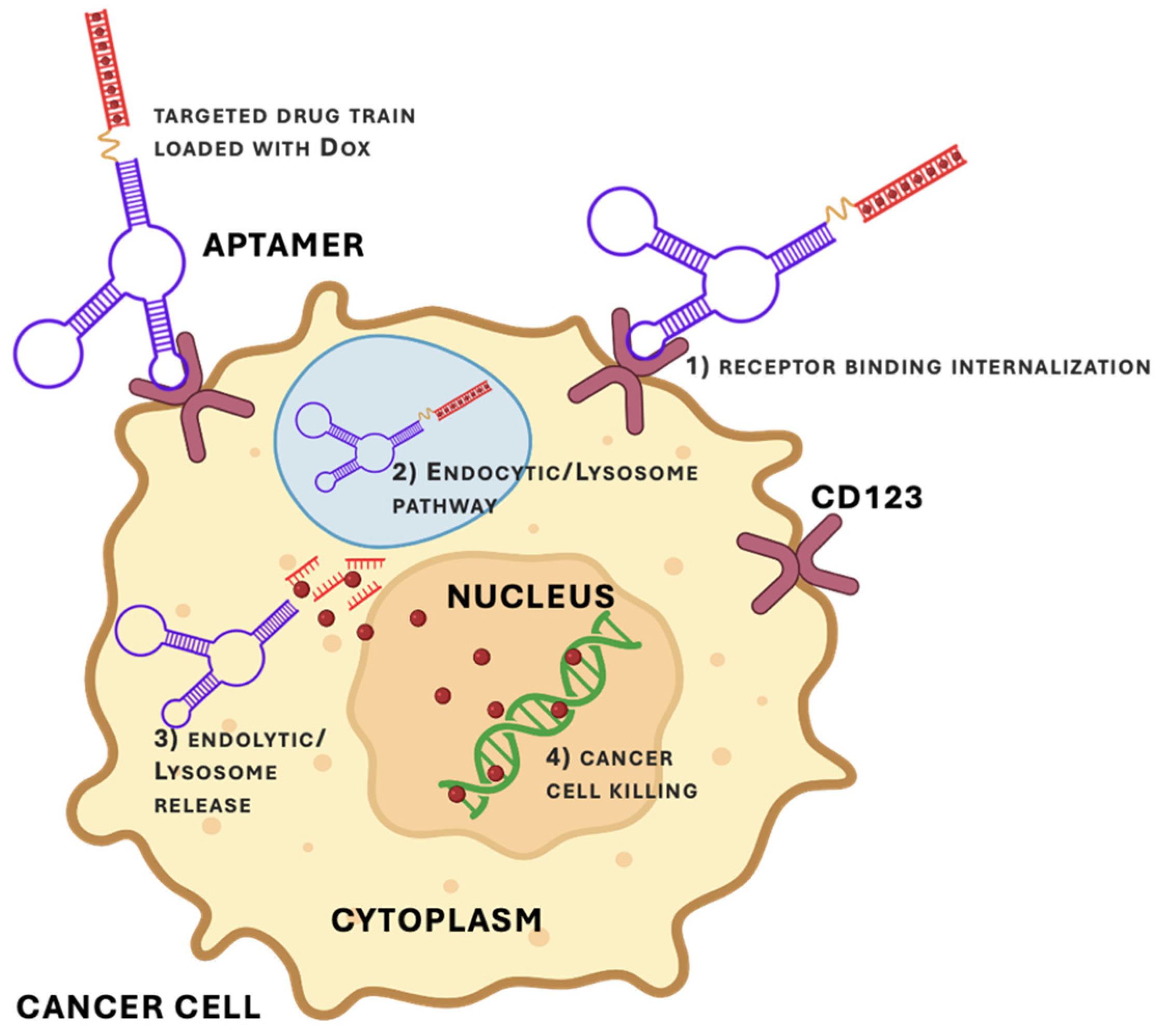
4.2.1. Drug Delivery
4.2.2. Aptamers as Therapeutics
4.3. Sensing in Diagnostics and Forensics
4.3.1. Colorimetric Aptasensors
4.3.2. Fluorescent Aptasensors
5. Summary, Challenges, and Future Perspectives
Author Contributions
Funding
Institutional Review Board Statement
Informed Consent Statement
Data Availability Statement
Acknowledgments
Conflicts of Interest
Abbreviations
| ALCL | Anaplastic large cell lymphoma |
| ALL | Acute lymphoblastic leukemia |
| AML | Acute myeloid leukemia |
| ATP | Adenosine triphosphate |
| AuNPs | Gold nanoparticles |
| BAFF-R | B-cell activating factor receptor |
| B-ALL | B-cell acute lymphoblastic leukemia |
| BCMA | B-cell maturation antigen |
| BCR | B-cell receptor |
| BLI | Bio-layer interferometry |
| CAR | Chimeric antigen receptor |
| CCR5 | C-C chemokine receptor type 5 |
| CLL | Chronic lymphocytic leukemia |
| CML | Chronic myeloid leukemia |
| CTLA4 | Cytotoxic T-lymphocyte antigen-4 |
| DC-SIGN | Dendritic cell-specific intercellular adhesion molecule-3 grabbing non-integrin |
| DNA | Deoxyribonucleic acid |
| FACS | Fluorescent-activated cell sorting |
| FRET | Förster resonance energy transfer |
| GMP | Good manufacturing practice |
| HIV | Human immunodeficiency virus |
| HSC | Hematopoietic stem cell |
| kDa | Kilodaltons |
| LNA | Locked nucleic acid |
| LSC | Liquid scintillation counting |
| MACS | Magnetic-activated cell sorting |
| MHC | Major histocompatibility complex |
| mIgM | Membrane immunoglobulin M |
| MST | Microscale thermophoresis |
| MM | Multiple myeloma |
| NK | Natural killer |
| NRBC | Nucleated red blood cell |
| OFA/iLRP | Oncofetal antigen-immature laminin receptor protein |
| PCR | Polymerase chain reaction |
| PEG | Polyethylene glycol |
| PS | Phosphorothioate |
| qRT-PCR | Quantitative real-time polymerase chain reaction |
| RBC | Red blood cell |
| Rh | Rhesus factor |
| RNA | Ribonucleic acid |
| SELEX | Systematic evolution of ligands by exponential enrichment |
| siRNA | Small-interfering RNA |
| SPR | Surface plasmon resonance |
| T-ALL | T-cell lymphoblastic leukemia |
| TCR | T-cell receptor |
References
- Kasbekar, M.; Mitchell, C.A.; Proven, M.A.; Passegue, E. Hematopoietic stem cells through the ages: A lifetime of adaptation to organismal demands. Cell Stem Cell 2023, 30, 1403–1420. [Google Scholar] [CrossRef]
- Cosgrove, J.; Hustin, L.S.P.; de Boer, R.J.; Perie, L. Hematopoiesis in numbers. Trends Immunol. 2021, 42, 1100–1112. [Google Scholar] [CrossRef]
- Cheng, H.; Zheng, Z.; Cheng, T. New paradigms on hematopoietic stem cell differentiation. Protein Cell 2020, 11, 34–44. [Google Scholar] [CrossRef]
- Asada, S.; Kitamura, T. Clonal hematopoiesis and associated diseases: A review of recent findings. Cancer Sci. 2021, 112, 3962–3971. [Google Scholar] [CrossRef]
- Pardali, E.; Dimmeler, S.; Zeiher, A.M.; Rieger, M.A. Clonal hematopoiesis, aging, and cardiovascular diseases. Exp. Hematol. 2020, 83, 95–104. [Google Scholar] [CrossRef]
- Desai, R.H.; Zandvakili, N.; Bohlander, S.K. Dissecting the Genetic and Non-Genetic Heterogeneity of Acute Myeloid Leukemia Using Next-Generation Sequencing and In Vivo Models. Cancers 2022, 14, 2182. [Google Scholar] [CrossRef]
- Ozer, O.; Dogan, L.; Baysal, Z.; Basir, H.; Ciftci, A.T.; Eroz, P.; Guclu, E.S. Evaluation of peripheral blood inflammatory biomarkers in sickle cell disease with and without retinopathy. Graefes Arch. Clin. Exp. Ophthalmol. 2024, 262, 3787–3796. [Google Scholar] [CrossRef]
- Schroeder, P.; Fulzele, K.; Forsyth, S.; Ribadeneira, M.D.; Guichard, S.; Wilker, E.; Marshall, C.G.; Drake, A.; Fessler, R.; Konstantinidis, D.G.; et al. Etavopivat, a Pyruvate Kinase Activator in Red Blood Cells, for the Treatment of Sickle Cell Disease. J. Pharmacol. Exp. Ther. 2022, 380, 210–219. [Google Scholar] [CrossRef]
- Spencer Chapman, M.; Wilk, C.M.; Boettcher, S.; Mitchell, E.; Dawson, K.; Williams, N.; Muller, J.; Kovtonyuk, L.; Jung, H.; Caiado, F.; et al. Clonal dynamics after allogeneic haematopoietic cell transplantation. Nature 2024, 635, 926–934. [Google Scholar] [CrossRef] [PubMed]
- Takeuchi, S.; Ito, Y.; Matsuoka, S.; Abe, M.; Tsurui, H.; Horimoto, Y.; Fukuhara, T.; Hirano, T.; Mizutani, N.; Ito, T.; et al. Novel anti-ITGA4 monoclonal antibody induces cell death via large pore formation in NK/T-cell lymphoma cells. Sci. Rep. 2025, 15, 45655. [Google Scholar] [CrossRef] [PubMed]
- Ferrara, F.; Geissler, K.; Mehta, P.; Montesinos, P.; Venditti, A. Unmet needs in patients with acute myeloid leukemia ineligible for intensive approaches: Perspectives from a European expert panel. Front. Oncol. 2025, 15, 1642472. [Google Scholar] [CrossRef] [PubMed]
- Chung, E.; Ewald, L.; Kassembaum, N.J.; Noyes, T.; Gakidou, E.; Mokdad, A.H. Delays in Blood Work and Disease Burden: A Cross-Sectional Analysis of Unmet Blood Work Need and Seven Key Health Conditions Across 21 Countries. Int. J. Public Health 2024, 69, 1607667. [Google Scholar] [CrossRef]
- Mukherjee, M.D.; Gupta, P.; Kumari, V.; Rana, I.; Jindal, D.; Sagar, N.; Singh, J.; Dhand, C. Wearable biosensors in modern healthcare: Emerging trends and practical applications. Talanta Open 2025, 12, 100486. [Google Scholar] [CrossRef]
- Kacherovsky, N.; Cardle, I.I.; Cheng, E.L.; Yu, J.L.; Baldwin, M.L.; Salipante, S.J.; Jensen, M.C.; Pun, S.H. Traceless aptamer-mediated isolation of CD8(+) T cells for chimeric antigen receptor T-cell therapy. Nat. Biomed. Eng. 2019, 3, 783–795. [Google Scholar] [CrossRef]
- Yan, J.; Bhadane, R.; Ran, M.; Ma, X.; Li, Y.; Zheng, D.; Salo-Ahen, O.M.H.; Zhang, H. Development of Aptamer-DNAzyme based metal-nucleic acid frameworks for gastric cancer therapy. Nat. Commun. 2024, 15, 3684. [Google Scholar] [CrossRef]
- Besedina, N.A.; Skverchinskaya, E.A.; Shmakov, S.V.; Ivanov, A.S.; Mindukshev, I.V.; Bukatin, A.S. Persistent red blood cells retain their ability to move in microcapillaries under high levels of oxidative stress. Commun. Biol. 2022, 5, 659. [Google Scholar] [CrossRef]
- Pan, T.; Zhang, J.; Wang, X.; Song, Y. Global burden and trends of hematologic malignancies based on Global Cancer Observatory 2022 and Global Burden of Disease 2021. Exp. Hematol. Oncol. 2025, 14, 98. [Google Scholar] [CrossRef]
- Zhang, N.; Wu, J.; Wang, Q.; Liang, Y.; Li, X.; Chen, G.; Ma, L.; Liu, X.; Zhou, F. Global burden of hematologic malignancies and evolution patterns over the past 30 years. Blood Cancer J. 2023, 13, 82. [Google Scholar] [CrossRef] [PubMed]
- Kovecses, O.; Sharif-Askari, B.; Gonzalez-Losada, C.; Reebye, V.; Ryan, B.M.; Luedtke, N.W.; Mercier, F.E.; McKeague, M. RNA activation of CEBPA improves leukemia treatment. Mol. Ther. Nucleic Acids 2025, 36, 102611, Erratum in Mol. Ther. Nucleic Acids 2025, 36, 102643. [Google Scholar] [CrossRef] [PubMed]
- Quessada, J.; Nozais, M.; Grosjean, C.; Savey, C.; Pankaew, S.; Allelova, S.; Potier, D.; Loosveld, M.; Payet-Bornet, D. Ectopic expression of BEX genes in T-cell acute lymphoblastic leukemia. Blood Adv. 2026, 10, 452–465. [Google Scholar] [CrossRef]
- Titcomb, C.P. Chronic Myeloid Leukemia—A Review of Current Status. J. Insur. Med. 2025, 52, 137–143. [Google Scholar] [CrossRef]
- Bottcher, M.; Reemts, L.; Hengeveld, P.J.; Bottcher-Loschinski, R.; Bhuria, V.; Lu, J.; Materna-Reichelt, S.; Das, D.; Stojanovic Guzvic, N.; Bruns, H.; et al. Immunoglobulin heavy-chain status and stromal interactions shape ferroptosis sensitivity in chronic lymphocytic leukemia. Signal Transduct. Target. Ther. 2026, 11, 3. [Google Scholar] [CrossRef] [PubMed]
- Weniger, M.A.; Kuppers, R. Molecular biology of Hodgkin lymphoma. Leukemia 2021, 35, 968–981. [Google Scholar] [CrossRef]
- Elbahoty, M.H.; Papineni, B.; Samant, R.S. Multiple myeloma: Clinical characteristics, current therapies and emerging innovative treatments targeting ribosome biogenesis dynamics. Clin. Exp. Metastasis 2024, 41, 829–842. [Google Scholar] [CrossRef]
- Elendu, C.; Amaechi, D.C.; Alakwe-Ojimba, C.E.; Elendu, T.C.; Elendu, R.C.; Ayabazu, C.P.; Aina, T.O.; Aborisade, O.; Adenikinju, J.S. Understanding Sickle cell disease: Causes, symptoms, and treatment options. Medicine 2023, 102, e35237. [Google Scholar] [CrossRef]
- Maru, B.; Nadeau, L.; McKeague, M. Enhancing CAR-T Cell Therapy with Functional Nucleic Acids. ACS Pharmacol. Transl. Sci. 2021, 4, 1716–1727. [Google Scholar] [CrossRef]
- Rakhshandehroo, T.; Mantri, S.R.; Moravej, H.; Louis, B.B.V.; Salehi Farid, A.; Munaretto, L.; Regan, K.; Khan, R.M.M.; Wolff, A.; Farkash, Z.; et al. A CAR enhancer increases the activity and persistence of CAR T cells. Nat. Biotechnol. 2025, 43, 948–959. [Google Scholar] [CrossRef]
- Costanzo, H.; Gooch, J.; Tungsirisurp, S.; Frascione, N. The Development and Characterisation of ssDNA Aptamers via a Modified Cell-SELEX Methodology for the Detection of Human Red Blood Cells. Int. J. Mol. Sci. 2024, 25, 1814. [Google Scholar] [CrossRef]
- Woll, P.S.; Yoshizato, T.; Hellstrom-Lindberg, E.; Fioretos, T.; Ebert, B.L.; Jacobsen, S.E.W. Targeting stem cells in myelodysplastic syndromes and acute myeloid leukemia. J. Intern. Med. 2022, 292, 262–277. [Google Scholar] [CrossRef] [PubMed]
- Molica, M.; Perrone, S.; Mazzone, C.; Niscola, P.; Cesini, L.; Abruzzese, E.; de Fabritiis, P. CD33 Expression and Gentuzumab Ozogamicin in Acute Myeloid Leukemia: Two Sides of the Same Coin. Cancers 2021, 13, 3214. [Google Scholar] [CrossRef]
- Vu, H.N.; Situ, A.J.; Dai, X.; Ulmer, T.S. Structure of the CD33 Receptor and Implications for the Siglec Family. Biochemistry 2025, 64, 1450–1462. [Google Scholar] [CrossRef]
- Thomas, R.; Ritchey, J.K.; DiPersio, J.F.; Kim, M.Y. Targeting CD117 on hematopoietic stem and progenitor cells impairs CAR T cell activity. Mol. Ther. 2025, 33, 4584–4599. [Google Scholar] [CrossRef]
- Pelosi, E.; Castelli, G.; Testa, U. CD123 a Therapeutic Target for Acute Myeloid Leukemia and Blastic Plasmocytoid Dendritic Neoplasm. Int. J. Mol. Sci. 2023, 24, 2718. [Google Scholar] [CrossRef] [PubMed]
- El Achi, H.; Dupont, E.; Paul, S.; Khoury, J.D. CD123 as a Biomarker in Hematolymphoid Malignancies: Principles of Detection and Targeted Therapies. Cancers 2020, 12, 3087. [Google Scholar] [CrossRef]
- Jiang, Y.; Lin, W.; Zhu, L. Targeted Drug Delivery for the Treatment of Blood Cancers. Molecules 2022, 27, 1310. [Google Scholar] [CrossRef] [PubMed]
- McKeague, M.; Derosa, M.C. Challenges and opportunities for small molecule aptamer development. J. Nucleic Acids 2012, 2012, 748913. [Google Scholar] [CrossRef]
- Ellington, A.D.; Szostak, J.W. In vitro selection of RNA molecules that bind specific ligands. Nature 1990, 346, 818–822. [Google Scholar] [CrossRef] [PubMed]
- Tuerk, C.; Gold, L. Systematic evolution of ligands by exponential enrichment: RNA ligands to bacteriophage T4 DNA polymerase. Science 1990, 249, 505–510. [Google Scholar] [CrossRef]
- Keefe, A.D.; Pai, S.; Ellington, A. Aptamers as therapeutics. Nat. Rev. Drug Discov. 2010, 9, 537–550, Erratum in Nat. Rev. Drug Discov. 2010, 9, 660. [Google Scholar] [CrossRef]
- Song, K.M.; Lee, S.; Ban, C. Aptamers and their biological applications. Sensors 2012, 12, 612–631. [Google Scholar] [CrossRef]
- Yu, H.; Frederiksen, J.; Sullenger, B.A. Applications and future of aptamers that achieve rapid-onset anticoagulation. RNA 2023, 29, 455–462. [Google Scholar] [CrossRef] [PubMed]
- Xiang, D.; Zheng, C.; Zhou, S.F.; Qiao, S.; Tran, P.H.; Pu, C.; Li, Y.; Kong, L.; Kouzani, A.Z.; Lin, J.; et al. Superior Performance of Aptamer in Tumor Penetration over Antibody: Implication of Aptamer-Based Theranostics in Solid Tumors. Theranostics 2015, 5, 1083–1097. [Google Scholar] [CrossRef] [PubMed]
- Zhou, J.; Rossi, J. Aptamers as targeted therapeutics: Current potential and challenges. Nat. Rev. Drug Discov. 2017, 16, 181–202, Erratum in Nat. Rev. Drug Discov. 2017, 16, 440. [Google Scholar] [CrossRef]
- Caruthers, M.H. Gene Synthesis Machines: DNA Chemistry and Its Uses. Science 1985, 230, 281–285. [Google Scholar] [CrossRef]
- Domsicova, M.; Korcekova, J.; Poturnayova, A.; Breier, A. New Insights into Aptamers: An Alternative to Antibodies in the Detection of Molecular Biomarkers. Int. J. Mol. Sci. 2024, 25, 6833. [Google Scholar] [CrossRef]
- Fu, Z.; Xiang, J. Aptamers, the Nucleic Acid Antibodies, in Cancer Therapy. Int. J. Mol. Sci. 2020, 21, 2793. [Google Scholar] [CrossRef]
- Bouchard, P.R.; Hutabarat, R.M.; Thompson, K.M. Discovery and development of therapeutic aptamers. Annu. Rev. Pharmacol. Toxicol. 2010, 50, 237–257. [Google Scholar] [CrossRef]
- Cesarini, V.; Appleton, S.L.; de Franciscis, V.; Catalucci, D. The recent blooming of therapeutic aptamers. Mol. Asp. Med. 2025, 102, 101350. [Google Scholar] [CrossRef]
- Zichel, R.; Chearwae, W.; Pandey, G.S.; Golding, B.; Sauna, Z.E. Aptamers as a sensitive tool to detect subtle modifications in therapeutic proteins. PLoS ONE 2012, 7, e31948. [Google Scholar] [CrossRef]
- Yang, L.F.; Ling, M.; Kacherovsky, N.; Pun, S.H. Aptamers 101: Aptamer discovery and in vitro applications in biosensors and separations. Chem. Sci. 2023, 14, 4961–4978. [Google Scholar] [CrossRef] [PubMed]
- Sylvestre, M.; Saxby, C.P.; Kacherovsky, N.; Gustafson, H.; Salipante, S.J.; Pun, S.H. Identification of a DNA Aptamer That Binds to Human Monocytes and Macrophages. Bioconjugate Chem. 2020, 31, 1899–1907. [Google Scholar] [CrossRef]
- Wu, H.; Wang, M.; Dai, B.; Zhang, Y.; Yang, Y.; Li, Q.; Duan, M.; Zhang, X.; Wang, X.; Li, A.; et al. Novel CD123-aptamer-originated targeted drug trains for selectively delivering cytotoxic agent to tumor cells in acute myeloid leukemia theranostics. Drug Deliv. 2017, 24, 1216–1229. [Google Scholar] [CrossRef] [PubMed]
- Yu, H.; Luo, Y.; Alkhamis, O.; Canoura, J.; Yu, B.; Xiao, Y. Isolation of Natural DNA Aptamers for Challenging Small-Molecule Targets, Cannabinoids. Anal. Chem. 2021, 93, 3172–3180. [Google Scholar] [CrossRef]
- Aljohani, M.M.; Cialla-May, D.; Popp, J.; Chinnappan, R.; Al-Kattan, K.; Zourob, M. Aptamers: Potential Diagnostic and Therapeutic Agents for Blood Diseases. Molecules 2022, 27, 383. [Google Scholar] [CrossRef]
- Liu, M.; Zaman, K.; Fortenberry, Y.M. Overview of the Therapeutic Potential of Aptamers Targeting Coagulation Factors. Int. J. Mol. Sci. 2021, 22, 3897. [Google Scholar] [CrossRef] [PubMed]
- Bayani, A.; Abosaoda, M.K.; Rizaev, J.; Nazari, M.; Jafari, Z.; Soleimani Samarkhazan, H. Aptamer-based approaches in leukemia: A paradigm shift in targeted therapy. Clin. Exp. Med. 2025, 25, 186. [Google Scholar] [CrossRef] [PubMed]
- Yilmaz, O.; Yilmaz, B.N.; Kandilcik, N.B.; Yigit, Z.S.; Altuntop Yayla, M.E. Aptamer-based monitorization and therapeutic applications of blood coagulation cascade disorders: A systematic review. Thromb. Res. 2025, 258, 109566. [Google Scholar] [CrossRef]
- Yousefnia, S.; Negahdary, M. Diagnostic application of aptamers against leukemia, multiple myeloma and lymphoma: A review. J. Drug Deliv. Sci. Technol. 2024, 100, 106103. [Google Scholar] [CrossRef]
- Ganguly, S.C.; Paul, R.; Mondal, B.; Kundu, M.; Chakraborty, T. Recent advancements in aptamer-mediated theranostics in the management of hematological disorders. Int. J. Pharm. 2026, 688, 126435. [Google Scholar] [CrossRef]
- Earnest, K.G.; McConnell, E.M.; Hassan, E.M.; Wunderlich, M.; Hosseinpour, B.; Bono, B.S.; Chee, M.J.; Mulloy, J.C.; Willmore, W.G.; DeRosa, M.C.; et al. Development and characterization of a DNA aptamer for MLL-AF9 expressing acute myeloid leukemia cells using whole cell-SELEX. Sci. Rep. 2021, 11, 19174. [Google Scholar] [CrossRef]
- Bing, T.; Zhang, N.; Shangguan, D. Cell-SELEX, an Effective Way to the Discovery of Biomarkers and Unexpected Molecular Events. Adv. Biosyst. 2019, 3, e1900193. [Google Scholar] [CrossRef] [PubMed]
- Zhang, Y.; Jiang, Y.; Kuster, D.; Ye, Q.; Huang, W.; Furbacher, S.; Zhang, J.; Doll, P.; Lin, W.; Dong, S.; et al. Single-step discovery of high-affinity RNA ligands by UltraSelex. Nat. Chem. Biol. 2025, 21, 1118–1126. [Google Scholar] [CrossRef]
- Darmostuk, M.; Rimpelova, S.; Gbelcova, H.; Ruml, T. Current approaches in SELEX: An update to aptamer selection technology. Biotechnol. Adv. 2015, 33, 1141–1161. [Google Scholar] [CrossRef]
- Brown, A.; Brill, J.; Amini, R.; Nurmi, C.; Li, Y. Development of Better Aptamers: Structured Library Approaches, Selection Methods, and Chemical Modifications. Angew. Chem. Int. Ed. Engl. 2024, 63, e202318665. [Google Scholar] [CrossRef]
- Zhong, Y.; Zhao, J.; Li, J.; Liao, X.; Chen, F. Advances of aptamers screened by Cell-SELEX in selection procedure, cancer diagnostics and therapeutics. Anal. Biochem. 2020, 598, 113620. [Google Scholar] [CrossRef]
- Goto, S.; Tsukakoshi, K.; Ikebukuro, K. Development of aptamers against unpurified proteins. Biotechnol. Bioeng. 2017, 114, 2706–2716. [Google Scholar] [CrossRef]
- Shigdar, S.; Agnello, L.; Fedele, M.; Camorani, S.; Cerchia, L. Profiling Cancer Cells by Cell-SELEX: Use of Aptamers for Discovery of Actionable Biomarkers and Therapeutic Applications Thereof. Pharmaceutics 2021, 14, 28. [Google Scholar] [CrossRef]
- Daniels, D.A.; Chen, H.; Hicke, B.J.; Swiderek, K.M.; Gold, L. A tenascin-C aptamer identified by tumor cell SELEX: Systematic evolution of ligands by exponential enrichment. Proc. Natl. Acad. Sci. USA 2003, 100, 15416–15421. [Google Scholar] [CrossRef]
- Zumrut, H.E.; Ara, M.N.; Fraile, M.; Maio, G.; Mallikaratchy, P. Ligand-Guided Selection of Target-Specific Aptamers: A Screening Technology for Identifying Specific Aptamers Against Cell-Surface Proteins. Nucleic Acid. Ther. 2016, 26, 190–198. [Google Scholar] [CrossRef] [PubMed]
- Williams, N.B.; Batool, S.; Zumrut, H.E.; Patel, R.; Sosa, G.; Jamal, M.; Mallikaratchy, P. An In Vitro Selection Platform to Identify Multiple Aptamers against Multiple Cell-Surface Markers Using Ligand-Guided Selection. Biochemistry 2022, 61, 1600–1613. [Google Scholar] [CrossRef]
- Sola, M.; Menon, A.P.; Moreno, B.; Meraviglia-Crivelli, D.; Soldevilla, M.M.; Carton-Garcia, F.; Pastor, F. Aptamers Against Live Targets: Is In Vivo SELEX Finally Coming to the Edge? Mol. Ther. Nucleic Acids 2020, 21, 192–204. [Google Scholar] [CrossRef] [PubMed]
- Civit, L.; Theodorou, I.; Frey, F.; Weber, H.; Lingnau, A.; Grober, C.; Blank, M.; Dambrune, C.; Stunden, J.; Beyer, M.; et al. Targeting hormone refractory prostate cancer by in vivo selected DNA libraries in an orthotopic xenograft mouse model. Sci. Rep. 2019, 9, 4976. [Google Scholar] [CrossRef]
- Wong, K.Y.; Wong, M.S.; Lee, J.H.; Liu, J. From cell-SELEX to tissue-SELEX for targeted drug delivery and aptamer nanomedicine. Adv. Drug Deliv. Rev. 2025, 224, 115646. [Google Scholar] [CrossRef]
- Liao, Y.; Xiong, S.; Ur Rehman, Z.; He, X.; Peng, H.; Liu, J.; Sun, S. The Research Advances of Aptamers in Hematologic Malignancies. Cancers 2023, 15, 300. [Google Scholar] [CrossRef]
- Kelly, L.; Maier, K.E.; Yan, A.; Levy, M. A comparative analysis of cell surface targeting aptamers. Nat. Commun. 2021, 12, 6275. [Google Scholar] [CrossRef]
- Shigdar, S.; Macdonald, J.; O’Connor, M.; Wang, T.; Xiang, D.; Al Shamaileh, H.; Qiao, L.; Wei, M.; Zhou, S.F.; Zhu, Y.; et al. Aptamers as theranostic agents: Modifications, serum stability and functionalisation. Sensors 2013, 13, 13624–13637. [Google Scholar] [CrossRef]
- Amero, P.; Lokesh, G.L.R.; Chaudhari, R.R.; Cardenas-Zuniga, R.; Schubert, T.; Attia, Y.M.; Montalvo-Gonzalez, E.; Elsayed, A.M.; Ivan, C.; Wang, Z.; et al. Conversion of RNA Aptamer into Modified DNA Aptamers Provides for Prolonged Stability and Enhanced Antitumor Activity. J. Am. Chem. Soc. 2021, 143, 7655–7670. [Google Scholar] [CrossRef]
- Ababneh, N.; Alshaer, W.; Allozi, O.; Mahafzah, A.; El-Khateeb, M.; Hillaireau, H.; Noiray, M.; Fattal, E.; Ismail, S. In vitro selection of modified RNA aptamers against CD44 cancer stem cell marker. Nucleic Acid. Ther. 2013, 23, 401–407. [Google Scholar] [CrossRef] [PubMed]
- Freage, L.; Jamal, D.; Williams, N.B.; Mallikaratchy, P.R. A Homodimeric Aptamer Variant Generated from Ligand-Guided Selection Activates the T Cell Receptor Cluster of Differentiation 3 Complex. Mol. Ther. Nucleic Acids 2020, 22, 167–178. [Google Scholar] [CrossRef] [PubMed]
- Wang, M.; Wu, H.; Duan, M.; Yang, Y.; Wang, G.; Che, F.; Liu, B.; He, W.; Li, Q.; Zhang, L. SS30, a novel thioaptamer targeting CD123, inhibits the growth of acute myeloid leukemia cells. Life Sci. 2019, 232, 116663, Erratum in Life Sci. 2019, 240, 117111. [Google Scholar] [CrossRef]
- McKeague, M.; Calzada, V.; Cerchia, L.; DeRosa, M.; Heemstra, J.M.; Janjic, N.; Johnson, P.E.; Kraus, L.; Limson, J.; Mayer, G.; et al. The minimum aptamer publication standards (MAPS guidelines) for de novo aptamer selection. Aptamers 2022, 6, 10–18. [Google Scholar]
- Miller, A.A.; Rao, A.S.; Nelakanti, S.R.; Kujalowicz, C.; Shi, T.; Rodriguez, T.; Ellington, A.D.; Stovall, G.M. Systematic Review of Aptamer Sequence Reporting in the Literature Reveals Widespread Unexplained Sequence Alterations. Anal. Chem. 2022, 94, 7731–7737. [Google Scholar] [CrossRef]
- Lee, S.J.; Cho, J.; Lee, B.H.; Hwang, D.; Park, J.W. Design and Prediction of Aptamers Assisted by In Silico Methods. Biomedicines 2023, 11, 356. [Google Scholar] [CrossRef] [PubMed]
- Hosseini, S.M.H.; Bassami, M.R.; Haghparast, A.; Sankian, M.; Hashemi Tabar, G. Identification of Aptamers that Specifically Bind to A(1) Antigen by Performing Cell-on Human Erythrocytes. Galen. Med. J. 2020, 9, e1657. [Google Scholar] [CrossRef] [PubMed]
- Fukunaga, J.; Nomura, Y.; Tanaka, Y.; Amano, R.; Tanaka, T.; Nakamura, Y.; Kawai, G.; Sakamoto, T.; Kozu, T. The Runt domain of AML1 (RUNX1) binds a sequence-conserved RNA motif that mimics a DNA element. RNA 2013, 19, 927–936. [Google Scholar] [CrossRef]
- Amano, R.; Takada, K.; Tanaka, Y.; Nakamura, Y.; Kawai, G.; Kozu, T.; Sakamoto, T. Kinetic and Thermodynamic Analyses of Interaction between a High-Affinity RNA Aptamer and Its Target Protein. Biochemistry 2016, 55, 6221–6229. [Google Scholar] [CrossRef]
- Zhou, J.; Tiemann, K.; Chomchan, P.; Alluin, J.; Swiderski, P.; Burnett, J.; Zhang, X.; Forman, S.; Chen, R.; Rossi, J. Dual functional BAFF receptor aptamers inhibit ligand-induced proliferation and deliver siRNAs to NHL cells. Nucleic Acids Res. 2013, 41, 4266–4283. [Google Scholar] [CrossRef]
- Catuogno, S.; Di Martino, M.T.; Nuzzo, S.; Esposito, C.L.; Tassone, P.; de Franciscis, V. An Anti-BCMA RNA Aptamer for miRNA Intracellular Delivery. Mol. Ther. Nucleic Acids 2019, 18, 981–990. [Google Scholar] [CrossRef]
- Dey, A.K.; Griffiths, C.; Lea, S.M.; James, W. Structural characterization of an anti-gp120 RNA aptamer that neutralizes R5 strains of HIV-1. RNA 2005, 11, 873–884. [Google Scholar] [CrossRef]
- Zhou, J.; Satheesan, S.; Li, H.; Weinberg, M.S.; Morris, K.V.; Burnett, J.C.; Rossi, J.J. Cell-specific RNA aptamer against human CCR5 specifically targets HIV-1 susceptible cells and inhibits HIV-1 infectivity. Chem. Biol. 2015, 22, 379–390. [Google Scholar] [CrossRef]
- Zumrut, H.E.; Batool, S.; Argyropoulos, K.V.; Williams, N.; Azad, R.; Mallikaratchy, P.R. Integrating Ligand-Receptor Interactions and In Vitro Evolution for Streamlined Discovery of Artificial Nucleic Acid Ligands. Mol. Ther. Nucleic Acids 2019, 17, 150–163. [Google Scholar] [CrossRef] [PubMed]
- Boykoff, N.; Freage, L.; Lenn, J.; Mallikaratchy, P. Bispecific Aptamer Sensor toward T-Cell Leukemia Detection in the Tumor Microenvironment. ACS Omega 2021, 6, 32563–32570. [Google Scholar] [CrossRef] [PubMed]
- Menon, A.P.; Villanueva, H.; Meraviglia-Crivelli, D.; van Santen, H.M.; Hellmeier, J.; Zheleva, A.; Nonateli, F.; Peters, T.; Wachsmann, T.L.A.; Hernandez-Rueda, M.; et al. CD3 aptamers promote expansion and persistence of tumor-reactive T cells for adoptive T cell therapy in cancer. Mol. Ther. Nucleic Acids 2024, 35, 102198. [Google Scholar] [CrossRef]
- Zhu, Q.; Shibata, T.; Kabashima, T.; Kai, M. Inhibition of HIV-1 protease expression in T cells owing to DNA aptamer-mediated specific delivery of siRNA. Eur. J. Med. Chem. 2012, 56, 396–399. [Google Scholar] [CrossRef]
- Zhao, N.; Pei, S.N.; Parekh, P.; Salazar, E.; Zu, Y. Blocking interaction of viral gp120 and CD4-expressing T cells by single-stranded DNA aptamers. Int. J. Biochem. Cell Biol. 2014, 51, 10–18. [Google Scholar] [CrossRef]
- Fellows, T.; Ho, L.; Flanagan, S.; Fogel, R.; Ojo, D.; Limson, J. Gold nanoparticle-streptavidin conjugates for rapid and efficient screening of aptamer function in lateral flow sensors using novel CD4-binding aptamers identified through Crossover-SELEX. Analyst 2020, 145, 5180–5193. [Google Scholar] [CrossRef] [PubMed]
- Wang, C.W.; Chung, W.H.; Cheng, Y.F.; Ying, N.W.; Peck, K.; Chen, Y.T.; Hung, S.I. A new nucleic acid-based agent inhibits cytotoxic T lymphocyte-mediated immune disorders. J. Allergy Clin. Immunol. 2013, 132, 713–722.e11. [Google Scholar] [CrossRef]
- Boltz, A.; Piater, B.; Toleikis, L.; Guenther, R.; Kolmar, H.; Hock, B. Bi-specific aptamers mediating tumor cell lysis. J. Biol. Chem. 2011, 286, 21896–21905. [Google Scholar] [CrossRef]
- Hu, Y.; Li, X.; An, Y.; Duan, J.; Yang, X.D. Selection of a novel CD19 aptamer for targeted delivery of doxorubicin to lymphoma cells. Oncotarget 2018, 9, 26605–26615. [Google Scholar] [CrossRef]
- Danquah, M.K.; Guo, H.B.; Tan, K.X.; Bhakta, M. Atomistic probing of aptameric binding of CD19 outer membrane domain reveals an “aptamer walking” mechanism. Biotechnol. Prog. 2020, 36, e2957. [Google Scholar] [CrossRef]
- Esposito, C.L.; Van Roosbroeck, K.; Santamaria, G.; Rotoli, D.; Sandomenico, A.; Wierda, W.G.; Ferrajoli, A.; Ruvo, M.; Calin, G.A.; de Franciscis, V.; et al. Selection of a Nuclease-Resistant RNA Aptamer Targeting CD19. Cancers 2021, 13, 5220. [Google Scholar] [CrossRef]
- Haghighi, M.; Khanahmad, H.; Palizban, A. Selection and Characterization of Single-Stranded DNA Aptamers Binding Human B-Cell Surface Protein CD20 by Cell-SELEX. Molecules 2018, 23, 715. [Google Scholar] [CrossRef]
- Ruiz-Ciancio, D.; Lin, L.H.; Veeramani, S.; Barros, M.N.; Sanchez, D.; Di Bartolo, A.L.; Masone, D.; Giangrande, P.H.; Mestre, M.B.; Thiel, W.H. Selection of a novel cell-internalizing RNA aptamer specific for CD22 antigen in B cell acute lymphoblastic leukemia. Mol. Ther. Nucleic Acids 2023, 33, 698–712. [Google Scholar] [CrossRef] [PubMed]
- Pastor, F.; Soldevilla, M.M.; Villanueva, H.; Kolonias, D.; Inoges, S.; de Cerio, A.L.; Kandzia, R.; Klimyuk, V.; Gleba, Y.; Gilboa, E.; et al. CD28 aptamers as powerful immune response modulators. Mol. Ther. Nucleic Acids 2013, 2, e98. [Google Scholar] [CrossRef]
- Mori, T.; Oguro, A.; Ohtsu, T.; Nakamura, Y. RNA aptamers selected against the receptor activator of NF-kappaB acquire general affinity to proteins of the tumor necrosis factor receptor family. Nucleic Acids Res. 2004, 32, 6120–6128. [Google Scholar] [CrossRef]
- Parekh, P.; Kamble, S.; Zhao, N.; Zeng, Z.; Portier, B.P.; Zu, Y. Immunotherapy of CD30-expressing lymphoma using a highly stable ssDNA aptamer. Biomaterials 2013, 34, 8909–8917. [Google Scholar] [CrossRef]
- Yang, C.; Wang, Y.; Ge, M.H.; Fu, Y.J.; Hao, R.; Islam, K.; Huang, P.; Chen, F.; Sun, J.; Hong, F.; et al. Rapid identification of specific DNA aptamers precisely targeting CD33 positive leukemia cells through a paired cell-based approach. Biomater. Sci. 2019, 7, 938–950. [Google Scholar] [CrossRef]
- Zaimy, M.A.; Jebali, A.; Bazrafshan, B.; Mehrtashfar, S.; Shabani, S.; Tavakoli, A.; Hekmatimoghaddam, S.H.; Sarli, A.; Azizi, H.; Izadi, P.; et al. Coinhibition of overexpressed genes in acute myeloid leukemia subtype M2 by gold nanoparticles functionalized with five antisense oligonucleotides and one anti-CD33(+)/CD34(+) aptamer. Cancer Gene Ther. 2016, 23, 315–320. [Google Scholar] [CrossRef] [PubMed]
- Wen, J.; Tao, W.; Hao, S.; Iyer, S.P.; Zu, Y. A unique aptamer-drug conjugate for targeted therapy of multiple myeloma. Leukemia 2016, 30, 987–991. [Google Scholar] [CrossRef] [PubMed]
- Jiang, D.; Wang, L.; Lin, H.; Wu, X.; Zhang, M.; Xu, S.; Long, Z.; Bing, T. Selection and characterization of aptamers against CD38 for clinical diagnostics. Chin. Chem. Lett. 2026, 37, 111502. [Google Scholar] [CrossRef]
- Somasunderam, A.; Thiviyanathan, V.; Tanaka, T.; Li, X.; Neerathilingam, M.; Lokesh, G.L.; Mann, A.; Peng, Y.; Ferrari, M.; Klostergaard, J.; et al. Combinatorial selection of DNA thioaptamers targeted to the HA binding domain of human CD44. Biochemistry 2010, 49, 9106–9112. [Google Scholar] [CrossRef] [PubMed]
- Pecak, A.; Skalniak, L.; Pels, K.; Ksiazek, M.; Madej, M.; Krzemien, D.; Malicki, S.; Wladyka, B.; Dubin, A.; Holak, T.A.; et al. Anti-CD44 DNA Aptamers Selectively Target Cancer Cells. Nucleic Acid. Ther. 2020, 30, 289–298. [Google Scholar] [CrossRef]
- Gao, T.; Li, W.; Ma, J.; Chen, Y.; Wang, Z.; Sun, N.; Pei, R. Selection of DNA aptamer recognizing CD44 for high-e ffi ciency capture of circulating tumor cells. Talanta 2023, 262, 124728. [Google Scholar] [CrossRef]
- Wang, H.; He, W.; Elizondo-Riojas, M.A.; Zhou, X.; Lee, T.J.; Gorenstein, D.G. Development and Characterization of CD44-Targeted X-Aptamers with Enhanced Binding Affinity for Cancer Therapeutics. Bioengineering 2025, 12, 113. [Google Scholar] [CrossRef]
- Wu, X.; Zhao, Z.; Bai, H.; Fu, T.; Yang, C.; Hu, X.; Liu, Q.; Champanhac, C.; Teng, I.T.; Ye, M.; et al. DNA Aptamer Selected against Pancreatic Ductal Adenocarcinoma for in vivo Imaging and Clinical Tissue Recognition. Theranostics 2015, 5, 985–994. [Google Scholar] [CrossRef]
- Cheng, E.L.; Kacherovsky, N.; Pun, S.H. Aptamer-Based Traceless Multiplexed Cell Isolation Systems. ACS Appl. Mater. Interfaces 2022, 14, 44136–44146. [Google Scholar] [CrossRef]
- Zhao, N.; Pei, S.N.; Qi, J.; Zeng, Z.; Iyer, S.P.; Lin, P.; Tung, C.H.; Zu, Y. Oligonucleotide aptamer-drug conjugates for targeted therapy of acute myeloid leukemia. Biomaterials 2015, 67, 42–51. [Google Scholar] [CrossRef]
- Li, X.; Dai, J.; Shi, Y.; Chen, J.; Zhou, F.; Qian, X.; Wang, P.; Fu, X.; Tan, W. Bispecific Aptamer-Drug Conjugates Selectively Eliminate Malignant Hematologic Cells for Treating Acute Myeloid Leukemia. Langmuir 2025, 41, 2580–2590. [Google Scholar] [CrossRef] [PubMed]
- Dwivedy, A.; Baskaran, D.; Sharma, G.; Hong, W.; Gandavadi, D.; Krissanaprasit, A.; Han, J.; Liu, Y.; Zimmers, Z.; Mafokwane, T.; et al. Engineering Novel DNA Nanoarchitectures for Targeted Drug Delivery and Aptamer mediated Apoptosis in Cancer Therapeutics. Adv. Funct. Mater. 2025, 35, 2425394. [Google Scholar] [CrossRef] [PubMed]
- Chen, Y.; Li, Q.; Lou, S.; Zeng, H.; Chen, S. Design and development of an aptamer targeting C-type lectin-like molecule-1 as a biomarker for acute myeloid leukemia: A SELEX approach. Front. Bioeng. Biotechnol. 2025, 13, 1601453. [Google Scholar] [CrossRef]
- Santulli-Marotto, S.; Nair, S.K.; Rusconi, C.; Sullenger, B.; Gilboa, E. Multivalent RNA aptamers that inhibit CTLA-4 and enhance tumor immunity. Cancer Res. 2003, 63, 7483–7489. [Google Scholar] [PubMed]
- Huang, B.T.; Lai, W.Y.; Chang, Y.C.; Wang, J.W.; Yeh, S.D.; Lin, E.P.; Yang, P.C. A CTLA-4 Antagonizing DNA Aptamer with Antitumor Effect. Mol. Ther. Nucleic Acids 2017, 8, 520–528. [Google Scholar] [CrossRef]
- Hui, Y.; Shan, L.; Lin-Fu, Z.; Jian-Hua, Z. Selection of DNA aptamers against DC-SIGN protein. Mol. Cell. Biochem. 2007, 306, 71–77. [Google Scholar] [CrossRef]
- Mallikaratchy, P.; Tang, Z.; Kwame, S.; Meng, L.; Shangguan, D.; Tan, W. Aptamer directly evolved from live cells recognizes membrane bound immunoglobin heavy mu chain in Burkitt’s lymphoma cells. Mol. Cell. Proteom. 2007, 6, 2230–2238. [Google Scholar] [CrossRef]
- Mallikaratchy, P.R.; Ruggiero, A.; Gardner, J.R.; Kuryavyi, V.; Maguire, W.F.; Heaney, M.L.; McDevitt, M.R.; Patel, D.J.; Scheinberg, D.A. A multivalent DNA aptamer specific for the B-cell receptor on human lymphoma and leukemia. Nucleic Acids Res. 2011, 39, 2458–2469. [Google Scholar] [CrossRef] [PubMed]
- Li, X.; Wang, T.; Xie, T.; Dai, J.; Zhang, Y.; Ling, N.; Guo, J.; Li, C.; Sun, X.; Zhang, X.; et al. Aptamer-Mediated Enrichment of Rare Circulating Fetal Nucleated Red Blood Cells for Noninvasive Prenatal Diagnosis. Anal. Chem. 2023, 95, 5419–5427. [Google Scholar] [CrossRef]
- Bates, P.J.; Kahlon, J.B.; Thomas, S.D.; Trent, J.O.; Miller, D.M. Antiproliferative activity of G-rich oligonucleotides correlates with protein binding. J. Biol. Chem. 1999, 274, 26369–26377. [Google Scholar] [CrossRef]
- An, Y.; Hu, Y.; Li, X.; Li, Z.; Duan, J.; Yang, X.D. Selection of a novel DNA aptamer against OFA/iLRP for targeted delivery of doxorubicin to AML cells. Sci. Rep. 2019, 9, 7343. [Google Scholar] [CrossRef]
- An, Y.; Yao, F.; Li, X.; Jiang, Q.; Yang, X.-D. Targeted drug delivery to AML by OFA/iLRP aptamer guided DNA nanostructure. Sci. Rep. 2026, 16, 4377. [Google Scholar] [CrossRef]
- Zhang, Y.; Xu, H.; Wang, X.; Wang, L.; Liu, R.; Li, L.; Zhou, H. Single-strained DNA aptamers mask RhD antigenic epitopes on human RhD+ red blood cells to escape alloanti-RhD immunological recognition. Mol. Med. Rep. 2020, 21, 1841–1848. [Google Scholar] [CrossRef] [PubMed]
- Yang, M.; Jiang, G.; Li, W.; Qiu, K.; Zhang, M.; Carter, C.M.; Al-Quran, S.Z.; Li, Y. Developing aptamer probes for acute myelogenous leukemia detection and surface protein biomarker discovery. J. Hematol. Oncol. 2014, 7, 5. [Google Scholar] [CrossRef]
- Martinis, E.; Tonon, S.; Colamatteo, A.; La Cava, A.; Matarese, G.; Pucillo, C.E.M. B cell immunometabolism in health and disease. Nat. Immunol. 2025, 26, 366–377. [Google Scholar] [CrossRef]
- Zaslavsky, M.E.; Craig, E.; Michuda, J.K.; Sehgal, N.; Ram-Mohan, N.; Lee, J.Y.; Nguyen, K.D.; Hoh, R.A.; Pham, T.D.; Roltgen, K.; et al. Disease diagnostics using machine learning of B cell and T cell receptor sequences. Science 2025, 387, eadp2407. [Google Scholar] [CrossRef]
- Trivedi, N.; Pitner, R.A.; Rawlings, D.J.; James, R.G. Engineering B cells to treat and study human disease. Nat. Biotechnol. 2025, 43, 1431–1444. [Google Scholar] [CrossRef] [PubMed]
- Walsh, R.; DeRosa, M.C. Retention of function in the DNA homolog of the RNA dopamine aptamer. Biochem. Biophys. Res. Commun. 2009, 388, 732–735. [Google Scholar] [CrossRef] [PubMed]
- Fang, Z.; Feng, X.; Tang, F.; Jiang, H.; Han, S.; Tao, R.; Lu, C. Aptamer Screening: Current Methods and Future Trend towards Non-SELEX Approach. Biosensors 2024, 14, 350. [Google Scholar] [CrossRef]
- Kunzli, M.; Masopust, D. CD4(+) T cell memory. Nat. Immunol. 2023, 24, 903–914. [Google Scholar] [CrossRef]
- Koh, C.H.; Lee, S.; Kwak, M.; Kim, B.S.; Chung, Y. CD8 T-cell subsets: Heterogeneity, functions, and therapeutic potential. Exp. Mol. Med. 2023, 55, 2287–2299. [Google Scholar] [CrossRef] [PubMed]
- Shah, K.; Al-Haidari, A.; Sun, J.; Kazi, J.U. T cell receptor (TCR) signaling in health and disease. Signal Transduct. Target. Ther. 2021, 6, 412. [Google Scholar] [CrossRef]
- Vivier, E.; Rebuffet, L.; Narni-Mancinelli, E.; Cornen, S.; Igarashi, R.Y.; Fantin, V.R. Natural killer cell therapies. Nature 2024, 626, 727–736. [Google Scholar] [CrossRef]
- Chen, S.; Zhu, H.; Jounaidi, Y. Comprehensive snapshots of natural killer cells functions, signaling, molecular mechanisms and clinical utilization. Signal Transduct. Target. Ther. 2024, 9, 302. [Google Scholar] [CrossRef]
- Senjor, E.; Ko, M.-W.; Kaur, K.; Chen, P.-C.; Breznik, B.; Chovatiya, N.; Kos, J.; Jewett, A. Multifaceted nature of natural killer cells: Potential mode of interaction and shaping of stem cells. In NK Cells in Cancer Immunotherapy: Successes and Challenges; Academic Press: San Diego, CA, USA, 2023; pp. 3–25. [Google Scholar]
- Yang, S.; Wen, J.; Li, H.; Xu, L.; Liu, Y.; Zhao, N.; Zeng, Z.; Qi, J.; Jiang, W.; Han, W.; et al. Aptamer-Engineered Natural Killer Cells for Cell-Specific Adaptive Immunotherapy. Small 2019, 15, e1900903. [Google Scholar] [CrossRef]
- Anastasiadi, A.T.; Arvaniti, V.Z.; Hudson, K.E.; Kriebardis, A.G.; Stathopoulos, C.; D’Alessandro, A.; Spitalnik, S.L.; Tzounakas, V.L. Exploring unconventional attributes of red blood cells and their potential applications in biomedicine. Protein Cell 2024, 15, 315–330. [Google Scholar] [CrossRef] [PubMed]
- Cao, H.; Antonopoulos, A.; Henderson, S.; Wassall, H.; Brewin, J.; Masson, A.; Shepherd, J.; Konieczny, G.; Patel, B.; Williams, M.L.; et al. Red blood cell mannoses as phagocytic ligands mediating both sickle cell anaemia and malaria resistance. Nat. Commun. 2021, 12, 1792. [Google Scholar] [CrossRef] [PubMed]
- Mithoowani, S.; Laureano, M.; Crowther, M.A.; Hillis, C.M. Investigation and management of erythrocytosis. Can. Med. Assoc. J. 2020, 192, E913–E918. [Google Scholar] [CrossRef]
- Zhang, N.; Chen, Z.; Liu, D.; Jiang, H.; Zhang, Z.K.; Lu, A.; Zhang, B.T.; Yu, Y.; Zhang, G. Structural Biology for the Molecular Insight between Aptamers and Target Proteins. Int. J. Mol. Sci. 2021, 22, 4093. [Google Scholar] [CrossRef]
- Lakhin, A.V.; Tarantul, V.Z.; Gening, L.V. Aptamers: Problems, Solutions and Prospects. Acta Naturae 2013, 5, 34–43. [Google Scholar] [CrossRef]
- Davydova, A.; Vorobyeva, M. Aptamer-Based Biosensors for the Colorimetric Detection of Blood Biomarkers: Paving the Way to Clinical Laboratory Testing. Biomedicines 2022, 10, 1606. [Google Scholar] [CrossRef]
- Pan, J.; Wan, J. Methodological comparison of FACS and MACS isolation of enriched microglia and astrocytes from mouse brain. J. Immunol. Methods 2020, 486, 112834. [Google Scholar] [CrossRef] [PubMed]
- Marsman, C.; Jorritsma, T.; Ten Brinke, A.; van Ham, S.M. Flow Cytometric Methods for the Detection of Intracellular Signaling Proteins and Transcription Factors Reveal Heterogeneity in Differentiating Human B Cell Subsets. Cells 2020, 9, 2633. [Google Scholar] [CrossRef] [PubMed]
- Aslam, A.; Khawaja, S.; Qazi, R.e.; Mian, A.A.; Rehman, F.U. Cell Sorting for Biomedical Applications Using Superparamagnetic Iron Oxide Nanoparticles. BioNanoScience 2025, 15, 413. [Google Scholar] [CrossRef]
- Gray, B.P.; Requena, M.D.; Nichols, M.D.; Sullenger, B.A. Aptamers as Reversible Sorting Ligands for Preparation of Cells in Their Native State. Cell Chem. Biol. 2020, 27, 232–244.e7. [Google Scholar] [CrossRef]
- Chen, M.; Chang, P.; Zhang, Z.; Liu, D.; Hou, R.; Shi, M.; Li, J.; Xu, K.; Zheng, J. Development of a DNA Aptamer-Based Approach to Noninvasively Image CAR-T Cells In Vivo and Traceless Enrichment In Vitro. Adv. Sci. 2025, 12, e2506746. [Google Scholar] [CrossRef]
- Li, Y.; Zamay, T.N.; Luzan, N.A.; Pryakhin, E.A.; Styazhkina, E.V.; Osminkina, L.A.; Kolovskaya, O.S.; Dymova, M.A.; Kuligina, E.V.; Richter, V.A.; et al. Aptamers as a new frontier in targeted cancer therapy. Adv. Drug Deliv. Rev. 2025, 226, 115692. [Google Scholar] [CrossRef]
- Zhu, Y.; Zhang, W.; Chen, J. Binary Nanodrug-Delivery System Designed for Leukemia Therapy: Aptamer- and Transferrin-Codecorated Daunorubicin- and Luteolin-Coloaded Nanoparticles. Drug Des. Dev. Ther. 2023, 17, 1–13. [Google Scholar] [CrossRef] [PubMed]
- Chowdhury, R.; Eslami, S.; Pham, C.V.; Rai, A.; Lin, J.; Hou, Y.; Greening, D.W.; Duan, W. Role of aptamer technology in extracellular vesicle biology and therapeutic applications. Nanoscale 2024, 16, 11457–11479. [Google Scholar] [CrossRef] [PubMed]
- Gong, Y.; Tian, S.; Xuan, Y.; Zhang, S. Lipid and polymer mediated CRISPR/Cas9 gene editing. J. Mater. Chem. B 2020, 8, 4369–4386. [Google Scholar] [CrossRef] [PubMed]
- Yu, Y.H.; Tian, W.T.; Grauffel, C.; Lin, W.C.; Hsieh, M.Y.; Wu, P.W.; Lee, H.J.; Peng, C.J.; Lin, P.H.; Chu, H.M.; et al. An Antibody-Drug Conjugate for Multiple Myeloma Prepared by Multi-Arm Linkers. Adv. Sci. 2024, 11, e2307852. [Google Scholar] [CrossRef]
- Lin, C.; Hadfield, M.J.; Santopietro, A.; Lagos, G.; Cheng, L.; El-Deiry, W.S.; Aggarwal, R.; Mega, A.; Hyams, E.; Carneiro, B.A. The evolving landscape of antibody-drug conjugates (ADCs) for treatment of prostate cancer. NPJ Precis. Oncol. 2025, 9, 351. [Google Scholar] [CrossRef]
- Neff, C.P.; Zhou, J.; Remling, L.; Kuruvilla, J.; Zhang, J.; Li, H.; Smith, D.D.; Swiderski, P.; Rossi, J.J.; Akkina, R. An aptamer-siRNA chimera suppresses HIV-1 viral loads and protects from helper CD4(+) T cell decline in humanized mice. Sci. Transl. Med. 2011, 3, 66ra66. [Google Scholar] [CrossRef]
- Wheeler, L.A.; Trifonova, R.; Vrbanac, V.; Basar, E.; McKernan, S.; Xu, Z.; Seung, E.; Deruaz, M.; Dudek, T.; Einarsson, J.I.; et al. Inhibition of HIV transmission in human cervicovaginal explants and humanized mice using CD4 aptamer-siRNA chimeras. J. Clin. Investig. 2011, 121, 2401–2412. [Google Scholar] [CrossRef]
- Gao, F.; Yin, J.; Chen, Y.; Guo, C.; Hu, H.; Su, J. Recent advances in aptamer-based targeted drug delivery systems for cancer therapy. Front. Bioeng. Biotechnol. 2022, 10, 972933. [Google Scholar] [CrossRef]
- de la Puente, P.; Luderer, M.J.; Federico, C.; Jin, A.; Gilson, R.C.; Egbulefu, C.; Alhallak, K.; Shah, S.; Muz, B.; Sun, J.; et al. Enhancing proteasome-inhibitory activity and specificity of bortezomib by CD38 targeted nanoparticles in multiple myeloma. J. Control. Release 2018, 270, 158–176. [Google Scholar] [CrossRef]
- Mayer, G.; Legen, T.; Patwari, T.; Weber, A.M. Hunting Cells for Gentle Liberation. Cell Chem. Biol. 2020, 27, 257–258. [Google Scholar] [CrossRef]
- Requena, M.D.; Yan, A.; Llanga, T.; Sullenger, B.A. Reversible Aptamer Staining, Sorting, and Cleaning of Cells (Clean FACS) with Antidote Oligonucleotide or Nuclease Yields Fully Responsive Cells. Nucleic Acid. Ther. 2024, 34, 12–17. [Google Scholar] [CrossRef] [PubMed]
- Byun, J. Recent Progress and Opportunities for Nucleic Acid Aptamers. Life 2021, 11, 193. [Google Scholar] [CrossRef] [PubMed]
- Du, H.; Rosbash, M. The U1 snRNP protein U1C recognizes the 5′ splice site in the absence of base pairing. Nature 2002, 419, 86–90. [Google Scholar] [CrossRef] [PubMed]
- Reed, C.R.; Bonadonna, D.; Otto, J.C.; McDaniel, C.G.; Chabata, C.V.; Kuchibhatla, M.; Frederiksen, J.; Layzer, J.M.; Arepally, G.M.; Sullenger, B.A.; et al. Aptamer-based factor IXa inhibition preserves hemostasis and prevents thrombosis in a piglet model of ECMO. Mol. Ther. Nucleic Acids 2022, 27, 524–534. [Google Scholar] [CrossRef]
- Lincoff, A.M.; Mehran, R.; Povsic, T.J.; Zelenkofske, S.L.; Huang, Z.; Armstrong, P.W.; Steg, P.G.; Bode, C.; Cohen, M.G.; Buller, C.; et al. Effect of the REG1 anticoagulation system versus bivalirudin on outcomes after percutaneous coronary intervention (REGULATE-PCI): A randomised clinical trial. Lancet 2016, 387, 349–356, Erratum in Lancet 2016, 387, 1162. [Google Scholar] [CrossRef]
- Povsic, T.J.; Lawrence, M.G.; Lincoff, A.M.; Mehran, R.; Rusconi, C.P.; Zelenkofske, S.L.; Huang, Z.; Sailstad, J.; Armstrong, P.W.; Steg, P.G.; et al. Pre-existing anti-PEG antibodies are associated with severe immediate allergic reactions to pegnivacogin, a PEGylated aptamer. J. Allergy Clin. Immunol. 2016, 138, 1712–1715. [Google Scholar] [CrossRef]
- Yu, H.; Pitoc, G.; Zhang, M.; Clancy, J.; Frederiksen, J.; Yan, A.; Francis, S.; Sullenger, R.; Rempel, R.; Gammell, S.; et al. An Aptamer-Based EXACT Anticoagulant as a Sustainable, Animal-Free Alternative to Unfractionated Heparin. Adv. Sci. 2025, 13, e09867. [Google Scholar] [CrossRef]
- Stangherlin, S.; Lui, N.; Lee, J.H.; Liu, J. Aptamer-based biosensors: From SELEX to biomedical diagnostics. TrAC Trends Anal. Chem. 2025, 191, 118349. [Google Scholar] [CrossRef]
- Nur, Y.; Gaffar, S.; Hartati, Y.W.; Subroto, T. Applications of electrochemical biosensor of aptamers-based (APTASENSOR) for the detection of leukemia biomarker. Sens. Bio-Sens. Res. 2021, 32, 100416. [Google Scholar] [CrossRef]
- Zhang, M.; Gao, G.; Ding, Y.; Deng, C.; Xiang, J.; Wu, H. A fluorescent aptasensor for the femtomolar detection of epidermal growth factor receptor-2 based on the proximity of G-rich sequences to Ag nanoclusters. Talanta 2019, 199, 238–243. [Google Scholar] [CrossRef]
- Sheraz, M.; Sun, X.-F.; Wang, Y.; Chen, J.; Sun, L. Recent Developments in Aptamer-Based Sensors for Diagnostics. Sensors 2024, 24, 7432. [Google Scholar] [CrossRef]
- Kordasht, H.K.; Hasanzadeh, M. Aptamer based recognition of cancer cells: Recent progress and challenges in bioanalysis. Talanta 2020, 220, 121436. [Google Scholar] [CrossRef]
- Shubin, A.V.; Kollar, B.; Dillon, S.T.; Pomahac, B.; Libermann, T.A.; Riella, L.V. Blood proteome profiling using aptamer-based technology for rejection biomarker discovery in transplantation. Sci. Data 2019, 6, 314. [Google Scholar] [CrossRef] [PubMed]
- Borghei, Y.S.; Hosseini, M.; Dadmehr, M.; Hosseinkhani, S.; Ganjali, M.R.; Sheikhnejad, R. Visual detection of cancer cells by colorimetric aptasensor based on aggregation of gold nanoparticles induced by DNA hybridization. Anal. Chim. Acta 2016, 904, 92–97. [Google Scholar] [CrossRef]
- Geleta, G.S. A colorimetric aptasensor based on gold nanoparticles for detection of microbial toxins: An alternative approach to conventional methods. Anal. Bioanal. Chem. 2022, 414, 7103–7122. [Google Scholar] [CrossRef]
- Ranganathan, V.; Srinivasan, S.; Singh, A.; DeRosa, M.C. An aptamer-based colorimetric lateral flow assay for the detection of human epidermal growth factor receptor 2 (HER2). Anal. Biochem. 2020, 588, 113471. [Google Scholar] [CrossRef]
- Zhang, F.; Liu, J. Label-Free Colorimetric Biosensors Based on Aptamers and Gold Nanoparticles: A Critical Review. Anal. Sens. 2020, 1, 30–43. [Google Scholar] [CrossRef]
- Chen, Z.; Yang, Y.; Liang, Y.; Cui, X.; Chai, L.; Wang, X.; Le, T. Rethinking the Role of AuNPs in Colorimetric Aptasensors: Dominant Nonspecific Interactions with Antibiotics over Aptamer Recognition. ACS Sens. 2026, 11, 522–532. [Google Scholar] [CrossRef] [PubMed]
- Lee, M.; Shin, S.; Kim, S.; Park, N. Recent Advances in Biological Applications of Aptamer-Based Fluorescent Biosensors. Molecules 2023, 28, 7327. [Google Scholar] [CrossRef] [PubMed]
- Tan, L.L.; Mohamad, N.S. Electrochemical Aptamer-Based Biosensors for Sepsis Diagnosis: Recent Advances, Challenges, and Future Perspectives (2020–2025). Biosensors 2025, 15, 402. [Google Scholar] [CrossRef] [PubMed]
- Shanaa, O.A.; Rumyantsev, A.; Sambuk, E.; Padkina, M. In Vivo Production of RNA Aptamers and Nanoparticles: Problems and Prospects. Molecules 2021, 26, 1422. [Google Scholar] [CrossRef]
- Afonin, K.A.; Dobrovolskaia, M.A.; Church, G.; Bathe, M. Opportunities, Barriers, and a Strategy for Overcoming Translational Challenges to Therapeutic Nucleic Acid Nanotechnology. ACS Nano 2020, 14, 9221–9227. [Google Scholar] [CrossRef]


| Attributes | Aptamers | Monoclonal Antibodies |
|---|---|---|
| Size | 10–30 kDa Small size displaying better internalization [42] | ~150–170 kDa Restricted internalization—suboptimal for hematologic targets |
| Stability [43] | Longer shelf life, stable over a wide temperature range Can be transported at ambient temperature Reversible denaturation | Sensitive to temperature Irreversible denaturation |
| Modification | Easy and versatile site-specific modification Can be modified at both the 5′ and 3′ end, and internally. Modifications can be done during solid phase synthesis or post synthesis | More complex and difficult to do site-specific modifications |
| Production time [43] | Several weeks to a few months | Several months |
| Development process | Sequences are chemically synthesized [39,44] SELEX is rapid and tunable to suit application needs Low batch-to-batch variation Scalable production | In vivo production Cell culture Higher batch-to-batch variation |
| Long-term shelf life | Aptamer sequences can be stored physically or documented digitally then synthesized at production sites [45] | Frozen cell stocks must be maintained for production |
| Immunogenicity [43] | Low to no immunogenicity [46,47] | Immunogenic |
| On-demand control/reversibility | Activity can be rapidly reversed with a complementary antidote strand | Lack of on-demand control once dosed |
| Pharmacokinetic properties | Prone to nuclease degradation and rapid renal clearance [48] Require stabilization | Large, stable proteins with prolonged circulation and slow renal clearance |
| Target heterogeneity | Able to distinguish isoforms, post-translational variants and conformational changes [49] | Variants can reduce antibody binding accuracy |
Disclaimer/Publisher’s Note: The statements, opinions and data contained in all publications are solely those of the individual author(s) and contributor(s) and not of MDPI and/or the editor(s). MDPI and/or the editor(s) disclaim responsibility for any injury to people or property resulting from any ideas, methods, instructions or products referred to in the content. |
© 2026 by the authors. Licensee MDPI, Basel, Switzerland. This article is an open access article distributed under the terms and conditions of the Creative Commons Attribution (CC BY) license.
Share and Cite
Albert, B.; Ebanks, F.; Gharagozloo, K.; Hai, X.; Ngu, R.; Munting, S.; McKeague, M. From Selection to Use: Aptamers as Targeting Reagents in Hematology. Biomedicines 2026, 14, 534. https://doi.org/10.3390/biomedicines14030534
Albert B, Ebanks F, Gharagozloo K, Hai X, Ngu R, Munting S, McKeague M. From Selection to Use: Aptamers as Targeting Reagents in Hematology. Biomedicines. 2026; 14(3):534. https://doi.org/10.3390/biomedicines14030534
Chicago/Turabian StyleAlbert, Brandon, Fiona Ebanks, Kimia Gharagozloo, Xinying Hai, Raymond Ngu, Sietse Munting, and Maureen McKeague. 2026. "From Selection to Use: Aptamers as Targeting Reagents in Hematology" Biomedicines 14, no. 3: 534. https://doi.org/10.3390/biomedicines14030534
APA StyleAlbert, B., Ebanks, F., Gharagozloo, K., Hai, X., Ngu, R., Munting, S., & McKeague, M. (2026). From Selection to Use: Aptamers as Targeting Reagents in Hematology. Biomedicines, 14(3), 534. https://doi.org/10.3390/biomedicines14030534