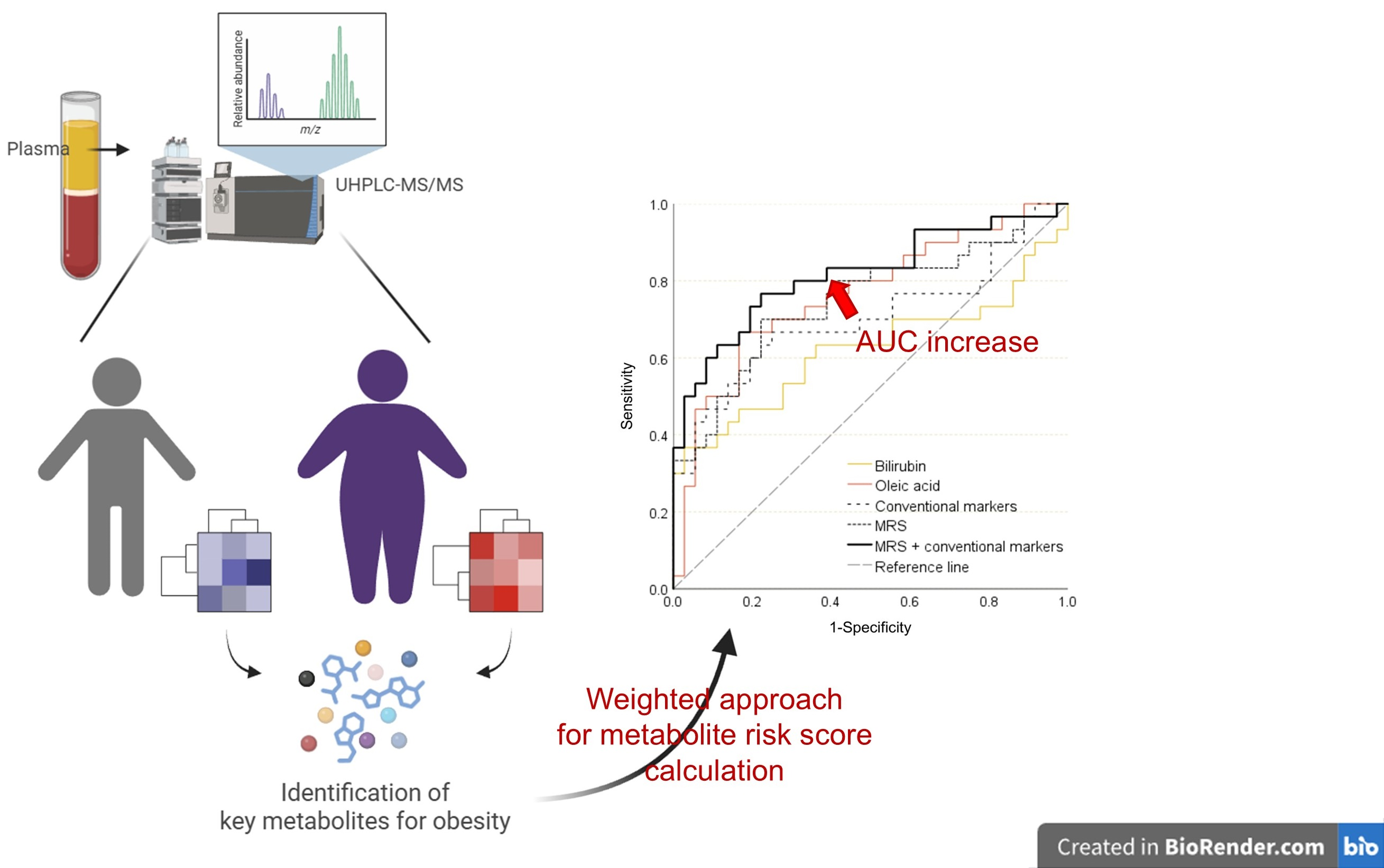
Molecular Diagnostics Based on a Metabolite Risk Score Constructed Using Bilirubin and Oleic Acid in Korean Individuals with Obesity

Abstract
1. Introduction
2. Materials and Methods
2.1. Samples and Dataset Acquisition
2.2. Cytokines and Oxidized (Ox-) Low-Density Lipoprotein (LDL) Analysis
2.3. Non-Targeted Metabolomics
2.3.1. Sample Preparation
2.3.2. Metabolite Analysis Using UPLC-MS/MS and Identification
2.4. The MRS Construction
2.4.1. Discovery of Significant Obesity-Related Metabolites in the Discovery Set
2.4.2. MRS Calculation
2.5. Comparison of Diagnostic Abilities
2.6. Statistical Analysis
3. Results
3.1. General Clinical/Biochemical Markers Between the Groups in the Discovery Set
3.2. Metabolic Differences Between the Groups of the Discovery Set and Identification of the Key Metabolites
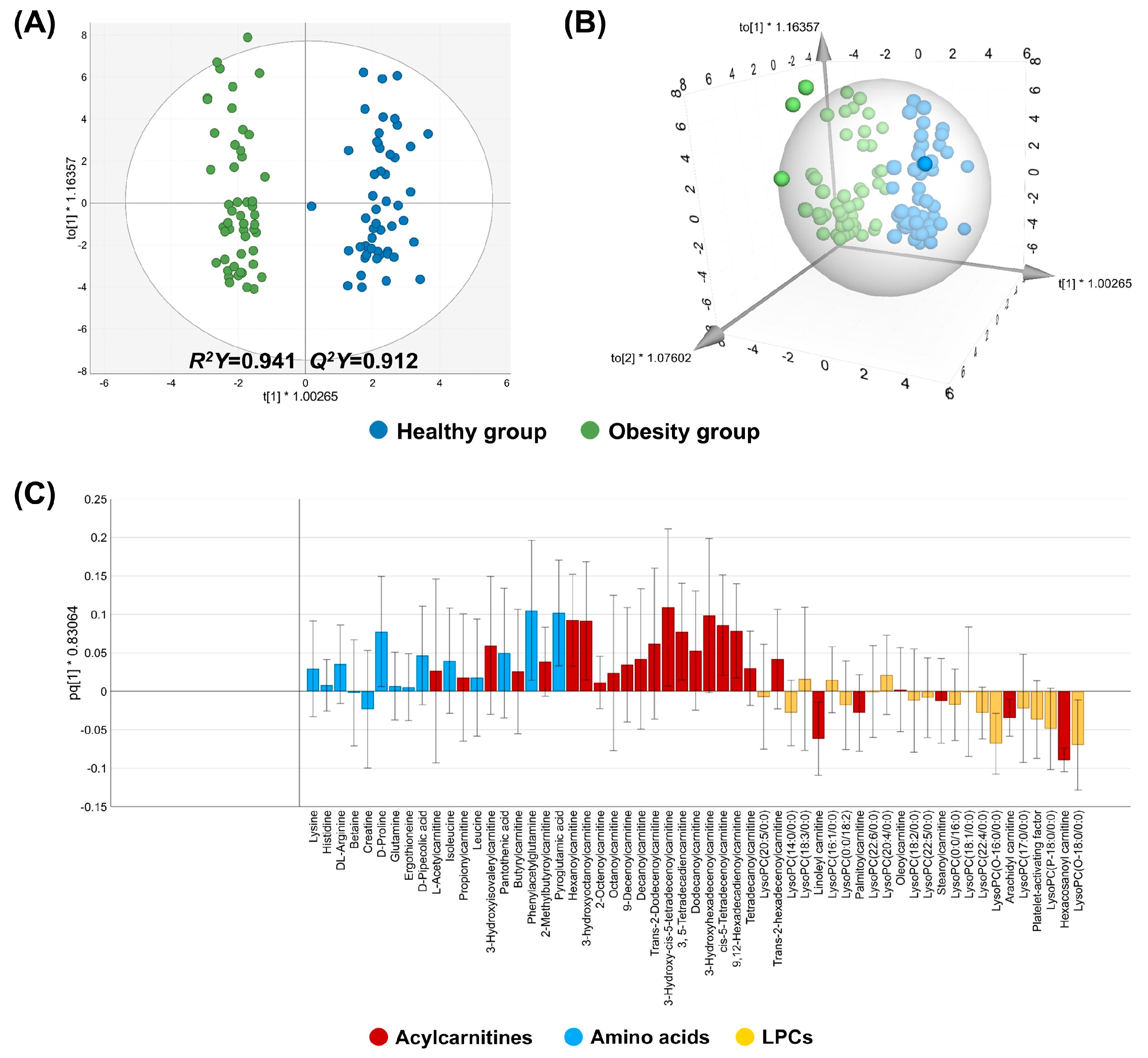
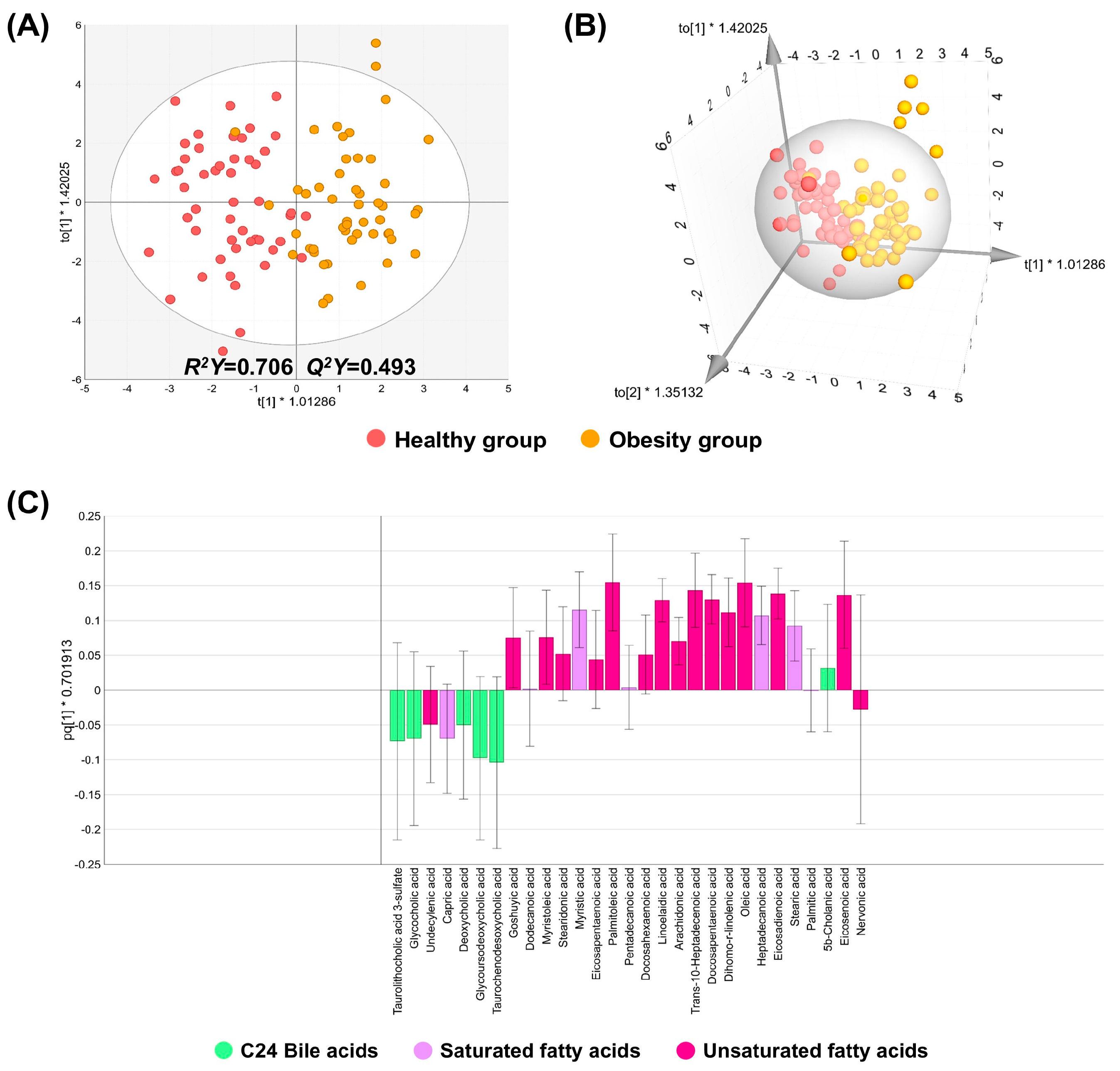
3.2.1. Group Discrimination in the Discovery Set
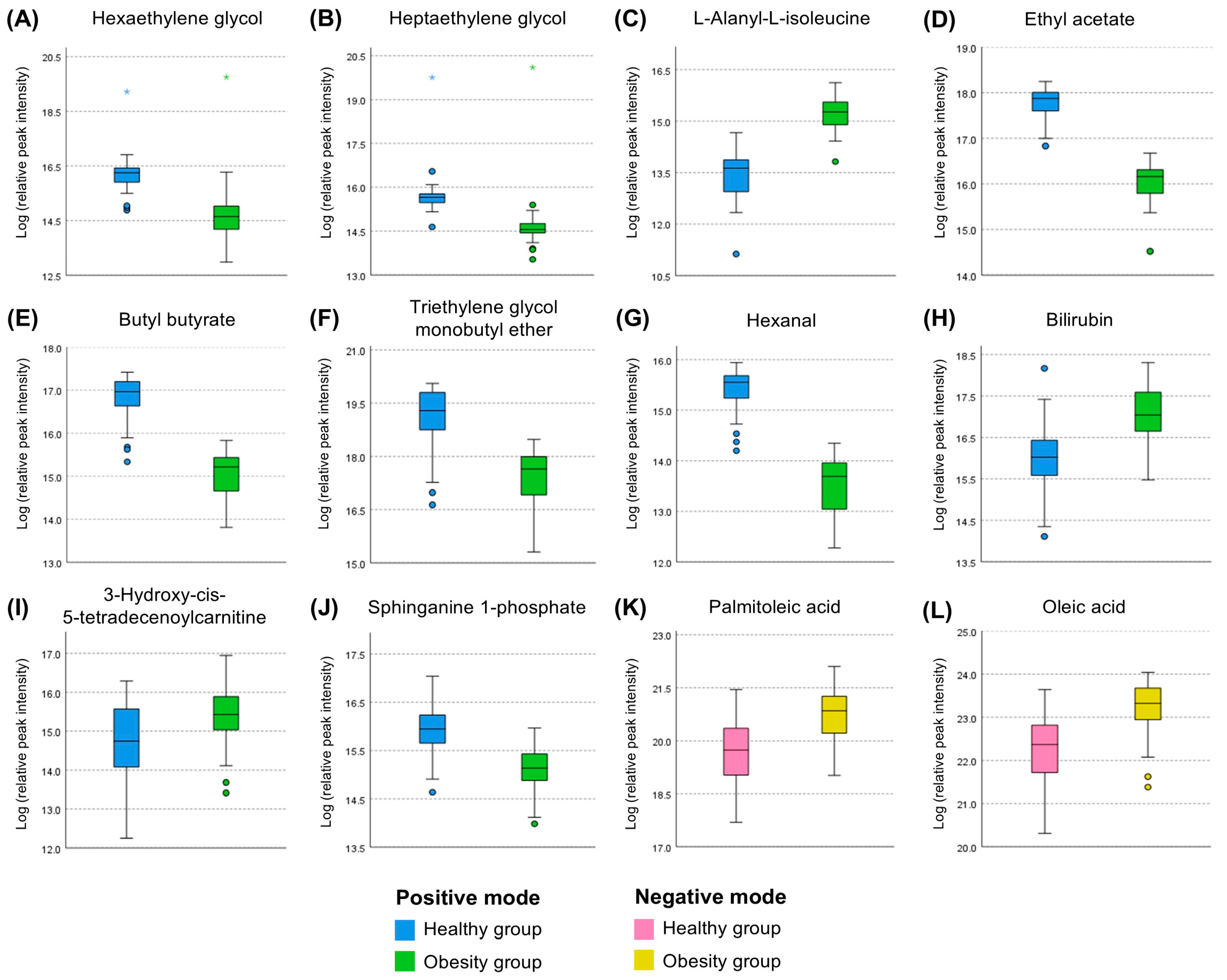
3.2.2. Key Metabolite Selection
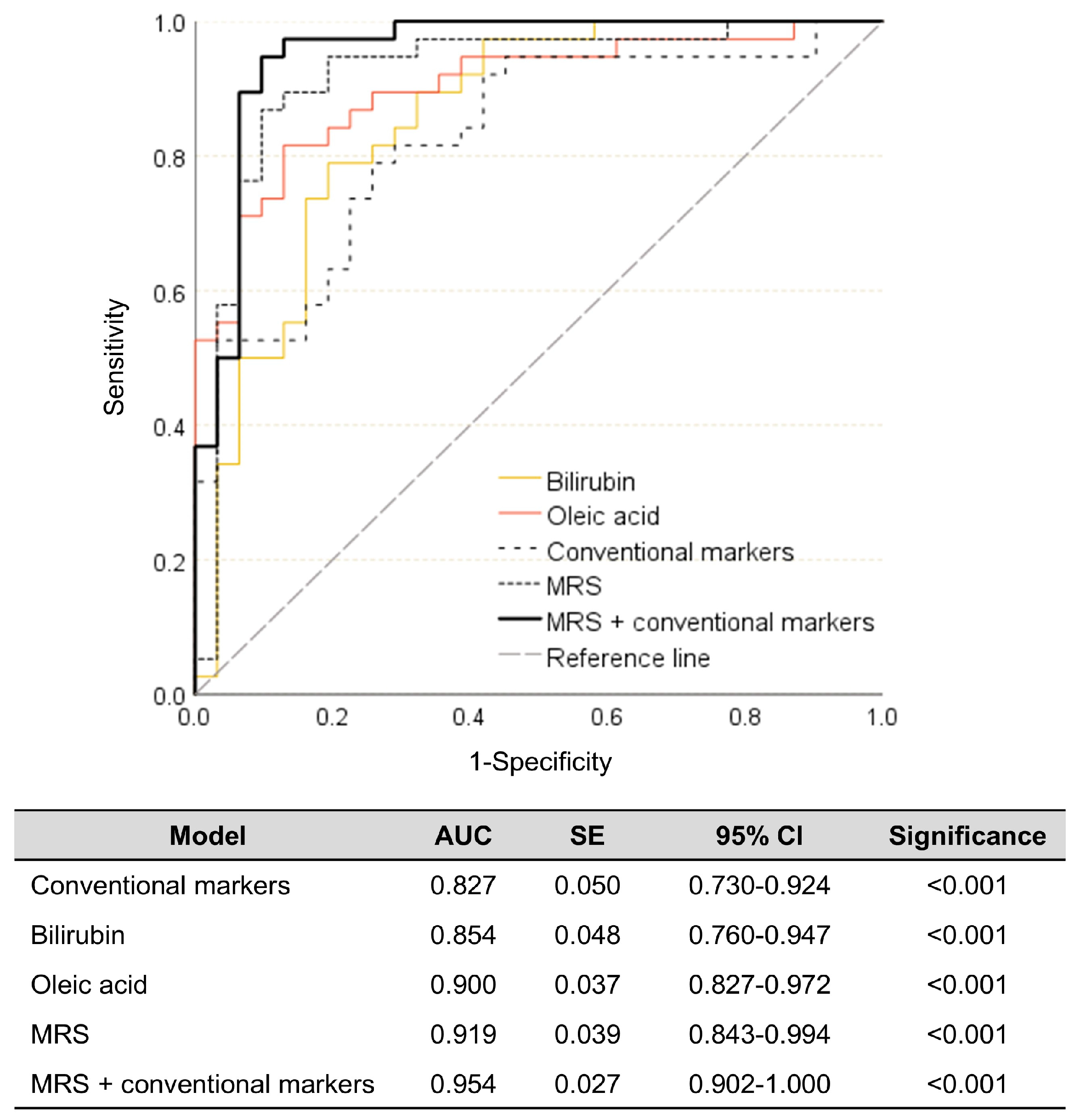
3.3. Calculation of MRS in the Discovery Set and Its Diagnostic Ability for Obesity
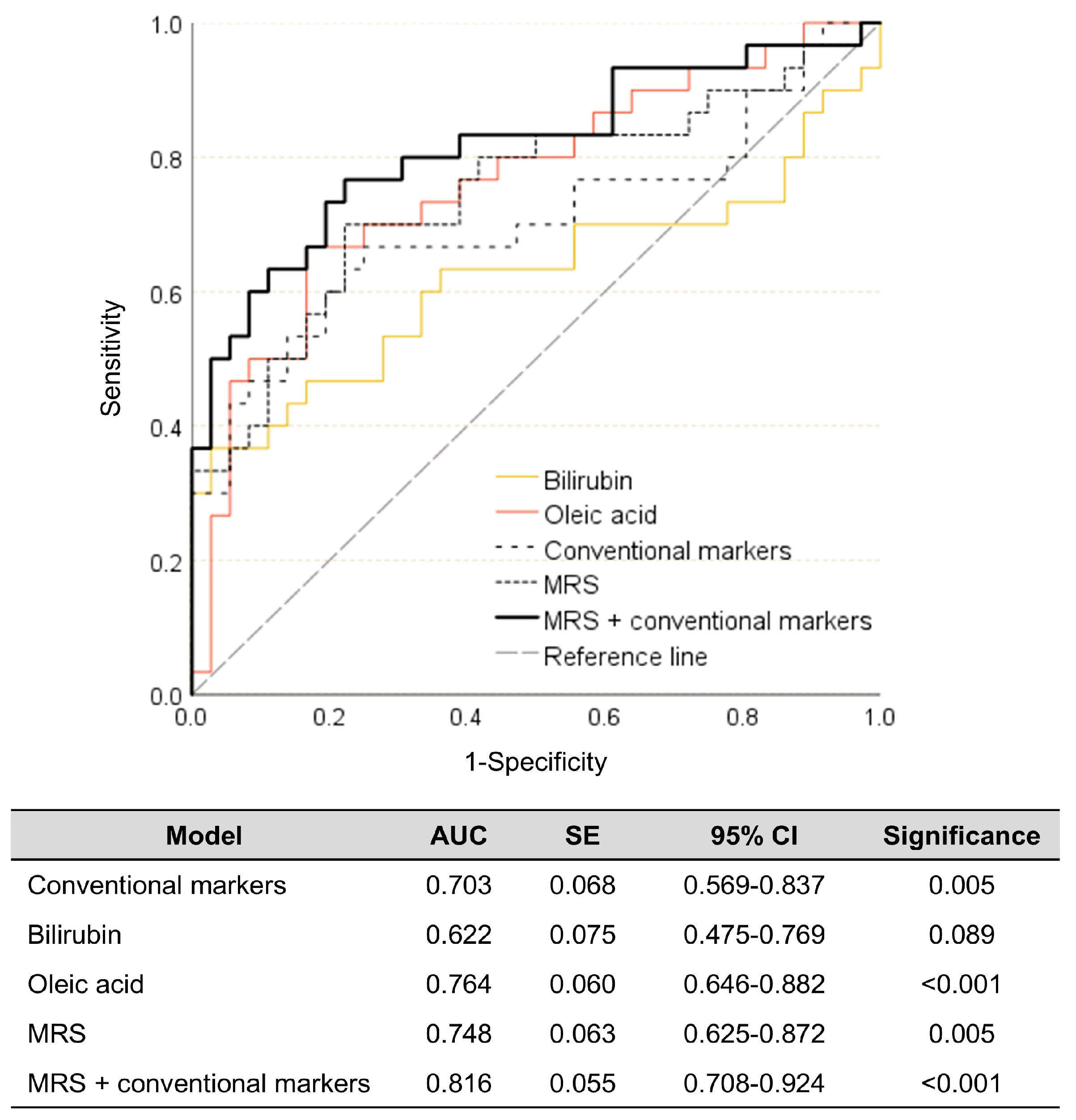
3.4. Verification of the MRS in the Validation Set
4. Discussion
5. Conclusions
Supplementary Materials
Funding
Institutional Review Board Statement
Informed Consent Statement
Data Availability Statement
Acknowledgments
Conflicts of Interest
Abbreviations
| ALT | Alanine aminotransferase |
| AST | Aspartate aminotransferase |
| BMI | Body mass index |
| BP | Blood pressure |
| ESI | Electrospray ionization |
| FDR | False discovery rate |
| GRS | Genetic risk score |
| HDL | High-density lipoprotein |
| IFN | Interferon |
| IL | Interleukin |
| ISTD | Internal standard |
| KCD | Korean standard classification of diseases |
| LDL | Low-density lipoprotein |
| LPC | Lysophosphatidyl choline |
| MRS | Metabolite risk score |
| OPLS-DA | Orthogonal partial least squares-discriminant analysis |
| Ox- | Oxidized |
| QC | Quality control |
| ROC | Receiver operating characteristic |
| SFA | Saturated fatty acid |
| TNF | Tumor necrosis factor |
| UPLC-MS/MS | Ultra-performance liquid chromatography-tandem mass spectrometry |
| USFA | Unsaturated fatty acid |
| VIP | Variable importance in projection |
| VLDL | Very-low-density lipoprotein |
References
- Korea Disease Control and Prevention Agency. Korea Health Statistics 2024: Korea National Health and Nutrition Examination Survey (KNHANES IX-3); Korea Disease Control and Prevention Agency: Chungbuk, Republic of Korea, 2025. (In Korean) [Google Scholar]
- World Health Organization. Fact Sheet—Obesity and Overweigh; World Health Organization: Geneva, Switzerland, 2021; Available online: https://www.who.int/news-room/fact-sheets/detail/obesity-and-overweight (accessed on 26 September 2025).
- World Obesity Federation. World Obesity Atlas 2025; World Obesity Federation: London, UK, 2023; Available online: https://www.worldobesity.org/resources/resource-library/world-obesity-atlas-2025 (accessed on 31 December 2025).
- Xie, B.; Waters, M.J.; Schirra, H.J. Investigating potential mechanisms of obesity by metabolomics. J. Biomed. Biotechnol. 2012, 2012, 805683. [Google Scholar] [CrossRef] [Scilit]
- Müller, T.D.; Blüher, M.; Tschöp, M.H.; DiMarchi, R.D. Anti-obesity drug discovery: Advances and challenges. Nat. Rev. Drug Discov. 2022, 21, 201–223. [Google Scholar] [CrossRef] [Scilit]
- Nimptsch, K.; Konigorski, S.; Pischon, T. Diagnosis of obesity and use of obesity biomarkers in science and clinical medicine. Metabolism 2019, 92, 61–70. [Google Scholar] [CrossRef] [Scilit] [PubMed]
- Endalifer, M.L.; Diress, G. Epidemiology, predisposing factors, biomarkers, and prevention mechanism of obesity: A systematic review. J. Obes. 2020, 2020, 6134362. [Google Scholar] [CrossRef] [Scilit]
- Rauschert, S.; Uhl, O.; Koletzko, B.; Hellmuth, C. Metabolomic biomarkers for obesity in humans: A short review. Ann. Nutr. Metab. 2014, 64, 314–324. [Google Scholar] [CrossRef] [Scilit] [PubMed]
- Bagheri, M.; Farzadfar, F.; Qi, L.; Yekaninejad, M.S.; Chamari, M.; Zeleznik, O.A.; Kalantar, Z.; Ebrahimi, Z.; Sheidaie, A.; Koletzko, B.; et al. Obesity-related metabolomic profiles and discrimination of metabolically unhealthy obesity. J. Proteome Res. 2018, 17, 1452–1462. [Google Scholar] [CrossRef] [Scilit]
- Rauschert, S.; Kirchberg, F.F.; Marchioro, L.; Koletzko, B.; Hellmuth, C.; Uhl, O. Early programming of obesity throughout the life course: A metabolomics perspective. Ann. Nutr. Metab. 2017, 70, 201–209. [Google Scholar] [CrossRef] [Scilit] [PubMed]
- Ahola-Olli, A.V.; Mustelin, L.; Kalimeri, M.; Kettunen, J.; Jokelainen, J.; Auvinen, J.; Puukka, K.; Havulinna, A.S.; Lehtimäki, T.; Kähönen, M.; et al. Circulating metabolites and the risk of type 2 diabetes: A prospective study of 11,896 young adults from four Finnish cohorts. Diabetologia 2019, 62, 2298–2309. [Google Scholar] [CrossRef] [Scilit]
- He, S.; Granot-Hershkovitz, E.; Zhang, Y.; Bressler, J.; Tarraf, W.; Yu, B.; Huang, T.; Zeng, D.; Wassertheil-Smoller, S.; Lamar, M.; et al. Blood metabolites predicting mild cognitive impairment in the study of Latinos-investigation of neurocognitive aging (HCHS/SOL). Alzheimer’s Dement. 2022, 14, e12259. [Google Scholar] [CrossRef] [Scilit]
- Geidenstam, N.; Hsu, Y.H.; Astley, C.M.; Mercader, J.M.; Ridderstråle, M.; Gonzalez, M.E.; Gonzalez, C.; Hirschhorn, J.N.; Salem, R.M. Using metabolite profiling to construct and validate a metabolite risk score for predicting future weight gain. PLoS ONE 2019, 14, e0222445. [Google Scholar] [CrossRef] [Scilit]
- Sweatt, K.; Garvey, W.T.; Martins, C. Strengths and limitations of BMI in the diagnosis of obesity: What is the path forward? Curr. Obes. Rep. 2024, 13, 584–595, Correction in Curr. Obes. Rep. 2024, 13, 831. https://doi.org/10.1007/s13679-024-00584-x. [Google Scholar] [CrossRef] [Scilit]
- Wu, Y.; Li, D.; Vermund, S.H. Advantages and limitations of the body mass index (BMI) to assess adult obesity. Int. J. Environ. Res. Public Health 2024, 21, 757. [Google Scholar] [CrossRef] [Scilit]
- Gurunathan, U.; Myles, P.S. Limitations of body mass index as an obesity measure of perioperative risk. Br. J. Anaesth. 2016, 116, 319–321. [Google Scholar] [CrossRef] [Scilit] [PubMed]
- Han, Y.; Kim, M.; Yoo, H.J. The MACROD2 rs6110695 A>G polymorphism and the metabolites indoleacrylic acid and butyrylcarnitine potentially have clinical relevance to WBC count -prediction. J. Pers. Med. 2024, 14, 889. [Google Scholar] [CrossRef] [Scilit]
- Igo, R.P., Jr.; Kinzy, T.G.; Cooke Bailey, J.N. Genetic risk scores. Curr. Protoc. Hum. Genet. 2019, 104, e95. [Google Scholar] [CrossRef] [Scilit] [PubMed]
- Yoon, N.; Cho, Y.S. Development of a polygenic risk score for BMI to assess the genetic susceptibility to obesity and related diseases in the Korean population. Int. J. Mol. Sci. 2023, 24, 11560. [Google Scholar] [CrossRef] [Scilit]
- Christiansen, M.R.; Kilpeläinen, T.O.; McCaffery, J.M. Abdominal obesity genetic variants predict waist circumference regain after weight loss. Diabetes 2023, 72, 1424–1432. [Google Scholar] [CrossRef] [Scilit] [PubMed]
- Yanes Cardozo, L.L.; Romero, D.G. Novel biomarkers of childhood and adolescent obesity. Hypertens. Res. 2021, 44, 1030–1033. [Google Scholar] [CrossRef] [Scilit]
- Choquet, H.; Meyre, D. Molecular basis of obesity: Current status and future prospects. Curr. Genom. 2011, 12, 154–168. [Google Scholar] [CrossRef] [Scilit] [PubMed]
- Zamanian-Azodi, M.; Vafaee, R.; Azodi, T.; Omidi, R.; Gilanchi, S.; Azizi-Jalilian, F.; Khodarahmi, R. Molecular approaches in obesity studies. Gastroenterol. Hepatol. Bed. Bench 2013, 6, S23–S31. [Google Scholar]
- Stępień, A.; Stępień, M.; Wlazeł, R.N.; Paradowski, M.; Banach, M.; Rysz, J. Assessment of the relationship between lipid parameters and obesity indices in non-diabetic obese patients: A preliminary report. Med. Sci. Monit. 2014, 20, 2683–2688. [Google Scholar]
- Osadnik, T.; Nowak, D.; Osadnik, K.; Gierlotka, M.; Windak, A.; Tomasik, T.; Mastej, M.; Łabuz-Roszak, B.; Jóźwiak, K.; Lip, G.Y.H.; et al. Association of body mass index and long-term mortality in patients from nationwide LIPIDOGRAM 2004–2015 cohort studies: No obesity paradox? Cardiovasc. Diabetol. 2023, 22, 323. [Google Scholar] [CrossRef] [Scilit]
- Zuo, L.; Prather, E.R.; Stetskiv, M.; Garrison, D.E.; Meade, J.R.; Peace, T.I.; Zhou, T. Inflammaging and oxidative stress in human diseases: From molecular mechanisms to novel treatments. Int. J. Mol. Sci. 2019, 20, 4472. [Google Scholar] [CrossRef] [Scilit] [PubMed]
- Poznyak, A.V.; Nikiforov, N.G.; Markin, A.M.; Kashirskikh, D.A.; Myasoedova, V.A.; Gerasimova, E.V.; Orekhov, A.N. Overview of oxLDL and its impact on cardiovascular health: Focus on atherosclerosis. Front. Pharmacol. 2021, 11, 613780. [Google Scholar] [CrossRef] [Scilit]
- Hong, C.G.; Florida, E.; Li, H.; Parel, P.M.; Mehta, N.N.; Sorokin, A.V. Oxidized low-density lipoprotein associates with cardiovascular disease by a vicious cycle of atherosclerosis and inflammation: A systematic review and meta-analysis. Front. Cardiovasc. Med. 2023, 9, 1023651. [Google Scholar] [CrossRef] [Scilit] [PubMed]
- Nano, J.; Muka, T.; Cepeda, M.; Voortman, T.; Dhana, K.; Brahimaj, A.; Dehghan, A.; Franco, O.H. Association of circulating total bilirubin with the metabolic syndrome and type 2 diabetes: A systematic review and meta-analysis of observational evidence. Diabetes Metab. 2016, 42, 389–397. [Google Scholar] [CrossRef] [Scilit] [PubMed]
- Žiberna, L.; Jenko-Pražnikar, Z.; Petelin, A. Serum bilirubin levels in overweight and obese individuals: The importance of anti-inflammatory and antioxidant responses. Antioxidants 2021, 10, 1352. [Google Scholar] [CrossRef] [Scilit]
- Wei, Y.; Liu, C.; Lai, F.; Dong, S.; Chen, H.; Chen, L.; Shi, L.; Zhu, F.; Zhang, C.; Lv, X.; et al. Associations between serum total bilirubin, obesity and type 2 diabetes. Diabetol. Metab. Syndr. 2021, 13, 143. [Google Scholar] [CrossRef] [Scilit]
- Kipp, Z.A.; Xu, M.; Bates, E.A.; Lee, W.H.; Kern, P.A.; Hinds, T.D., Jr. Bilirubin levels are negatively correlated with adiposity in obese men and women, and its catabolized product, urobilin, is positively associated with insulin resistance. Antioxidants 2023, 12, 170. [Google Scholar] [CrossRef] [Scilit]
- Fu, J.; Wang, Q.; Zhang, L.; Liu, J.; Wang, G. Serum bilirubin level is increased in metabolically healthy obesity. Front. Endocrinol. 2022, 12, 792795. [Google Scholar] [CrossRef] [Scilit]
- Tripathi, N.; Jialal, I. Conjugated hyperbilirubinemia. In StatPearls; StatPearls Publishing: Treasure Island, FL, USA, 2023. [Google Scholar]
- Lala, V.; Zubair, M.; Minter, D.A. Liver function tests. In StatPearls; StatPearls Publishing: Treasure Island, FL, USA, 2023. [Google Scholar]
- Marchesini, G.; Moscatiello, S.; Di Domizio, S.; Forlani, G. Obesity-associated liver disease. J. Clin. Endocrinol. Metab. 2008, 93, S74–S80. [Google Scholar] [CrossRef] [Scilit]
- Epitagama, D.; Kosgahagoda, P.; Pathiranage, D.; Athapaththu, P. Association between Asia–Pacific body mass index classification and serum liver enzymes: Alanine aminotransferase, aspartate aminotransferase and gamma-glutamyl transferase in healthy individuals. Egypt Liver J. 2023, 13, 42. [Google Scholar]
- Ali, N.; Sumon, A.H.; Fariha, K.A.; Asaduzzaman, M.; Kathak, R.R.; Molla, N.H.; Mou, A.D.; Barman, Z.; Hasan, M.; Miah, R.; et al. Assessment of the relationship of serum liver enzymes activity with general and abdominal obesity in an urban Bangladeshi population. Sci. Rep. 2021, 11, 6640. [Google Scholar] [CrossRef] [Scilit] [PubMed]
- Boden, G. Obesity and free fatty acids. Endocrinol. Metab. Clin. N. Am. 2008, 37, 635–646. [Google Scholar] [CrossRef] [Scilit]
- Perreault, M.; Zulyniak, M.A.; Badoud, F.; Stephenson, S.; Badawi, A.; Buchholz, A.; Mutch, D.M. A distinct fatty acid profile underlies the reduced inflammatory state of metabolically healthy obese individuals. PLoS ONE 2014, 9, e88539. [Google Scholar] [CrossRef] [Scilit] [PubMed]
- Malodobra-Mazur, M.; Cierzniak, A.; Dobosz, T. Oleic acid influences the adipogenesis of 3T3-L1 cells via DNA methylation and may predispose to obesity and obesity-related disorders. Lipids Health Dis. 2019, 18, 230. [Google Scholar] [CrossRef] [Scilit]
- Cai, H.; Zhang, J.; Liu, C.; Le, T.N.; Lu, Y.; Feng, F.; Zhao, M. High-fat diet-induced decreased circulating bile acids contribute to obesity associated with gut microbiota in mice. Foods 2024, 13, 699. [Google Scholar] [CrossRef] [Scilit] [PubMed]
- Billoir, E.; Navratil, V.; Blaise, B.J. Sample size calculation in metabolic phenotyping studies. Brief Bioinform. 2015, 16, 813–819. [Google Scholar] [CrossRef] [Scilit]
- Blaise, B.J.; Correia, G.; Tin, A.; Young, J.H.; Vergnaud, A.C.; Lewis, M.; Pearce, J.T.; Elliott, P.; Nicholson, J.K.; Holmes, E.; et al. Power analysis and sample size determination in metabolic phenotyping. Anal. Chem. 2016, 88, 5179–5188. [Google Scholar] [CrossRef] [Scilit]



| Total (n = 100) | pa | pb | ||||
|---|---|---|---|---|---|---|
| Healthy (n = 50) | Obesity (n = 50) | |||||
| Age (year) † | 45.6 | ±0.80 | 52.1 | ±0.66 | <0.001 | - |
| Male/Female n, (%) | 35 (70.0)/15 (30.0) | 44 (88.0)/6 (12.0) | 0.027 | - | ||
| Body weight (kg) † | 68.4 | ±1.59 | 79.3 | ±1.59 | <0.001 | - |
| BMI (kg/m2) | 23.8 | ±0.39 | 27.5 | ±0.39 | <0.001 | - |
| Systolic BP (mmHg) † | 122.4 | ±1.63 | 137.9 | ±3.46 | <0.001 | 0.006 |
| Diastolic BP (mmHg) | 78.1 | ±1.20 | 80.3 | ±2.37 | 0.398 | 0.252 |
| Glucose (mg/dL) † | 100.7 | ±1.53 | 109.0 | ±3.16 | 0.028 | 0.222 |
| Triglyceride (mg/dL) † | 146.5 | ±11.8 | 148.7 | ±12.5 | 0.915 | 0.427 |
| HDL-cholesterol (mg/dL) † | 50.2 | ±1.99 | 47.0 | ±2.01 | 0.198 | 0.756 |
| LDL-cholesterol (mg/dL) † | 112.9 | ±5.19 | 75.8 | ±5.18 | <0.001 | 0.044 |
| Total cholesterol (mg/dL) † | 192.1 | ±4.89 | 143.82 | ±6.28 | <0.001 | <0.001 |
| AST (U/L) † | 23.6 | ±1.53 | 48.2 | ±22.6 | 0.197 | 0.938 |
| ALT (U/L) † | 24.4 | ±1.84 | 38.3 | ±5.29 | 0.024 | 0.603 |
| TNF-α (pg/mL) † | 9.13 | ±0.62 | 17.0 | ±1.65 | <0.001 | <0.001 |
| IL-1β (pg/mL) † | 3.74 | ±0.28 | 5.53 | ±0.53 | 0.009 | 0.006 |
| IL-6 (pg/mL) † | 2.68 | ±0.19 | 9.53 | ±4.75 | 0.006 | 0.016 |
| IFN-γ (pg/mL) † | 15.9 | ±1.26 | 14.3 | ±1.25 | 0.464 | 0.335 |
| Ox-LDL (U/L) | 49.9 | ±1.99 | 51.7 | ±3.00 | 0.610 | 0.564 |
| Independent Variables | Standardized β | p | CI | Significance F |
|---|---|---|---|---|
| Bilirubin | 0.416 | <0.001 | 0.152–0.336 | <0.001 |
| Oleic acid | 0.421 | <0.001 | 0.159–0.347 |
Disclaimer/Publisher’s Note: The statements, opinions and data contained in all publications are solely those of the individual author(s) and contributor(s) and not of MDPI and/or the editor(s). MDPI and/or the editor(s) disclaim responsibility for any injury to people or property resulting from any ideas, methods, instructions or products referred to in the content. |
© 2026 by the author. Licensee MDPI, Basel, Switzerland. This article is an open access article distributed under the terms and conditions of the Creative Commons Attribution (CC BY) license.
Share and Cite
Yoo, H.J. Molecular Diagnostics Based on a Metabolite Risk Score Constructed Using Bilirubin and Oleic Acid in Korean Individuals with Obesity. Biomedicines 2026, 14, 492. https://doi.org/10.3390/biomedicines14030492
Yoo HJ. Molecular Diagnostics Based on a Metabolite Risk Score Constructed Using Bilirubin and Oleic Acid in Korean Individuals with Obesity. Biomedicines. 2026; 14(3):492. https://doi.org/10.3390/biomedicines14030492
Chicago/Turabian StyleYoo, Hye Jin. 2026. "Molecular Diagnostics Based on a Metabolite Risk Score Constructed Using Bilirubin and Oleic Acid in Korean Individuals with Obesity" Biomedicines 14, no. 3: 492. https://doi.org/10.3390/biomedicines14030492
APA StyleYoo, H. J. (2026). Molecular Diagnostics Based on a Metabolite Risk Score Constructed Using Bilirubin and Oleic Acid in Korean Individuals with Obesity. Biomedicines, 14(3), 492. https://doi.org/10.3390/biomedicines14030492