Review

Glial Triad in Diabetic Neuropathy: Central Players in Neuropathic Pain Pathogenesis and Disease-Modifying Therapeutic Avenues


Department of Endocrinology, Tongji Hospital, Tongji Medical College, Huazhong University of Science & Technology, No. 1095 Jiefang Avenue, Wuhan 430030, China
*
Authors to whom correspondence should be addressed.
Biomedicines 2026, 14(2), 435; https://doi.org/10.3390/biomedicines14020435
Submission received: 8 January 2026 / Revised: 6 February 2026 / Accepted: 10 February 2026 / Published: 14 February 2026
(This article belongs to the Section Molecular and Translational Medicine)

Abstract

Painful diabetic neuropathy (PDN) is a prevalent and debilitating complication of diabetes, characterized by persistent neuropathic pain that severely impairs quality of life. Current management strategies predominantly target peripheral nerve dysfunction and offer only symptomatic relief, with no disease-modifying therapies available. Emerging evidence now underscores the critical role of central nervous system (CNS) glial cells—microglia, astrocytes, and oligodendrocytes, collectively termed the “glial triad”—in driving PDN pathogenesis. This review synthesizes recent advances elucidating how these glial cells contribute to neuroinflammation, metabolic dysregulation, and central sensitization. We detail specific mechanisms including microglial NLR Family Pyrin Domain Containing 3 (NLRP3) inflammasome activation and metabolic reprogramming, astrocytic aquaporin-4 (AQP4) polarity disruption impairing glymphatic function, and oligodendrocyte myelination deficits via Mammalian Target of Rapamycin (mTOR) signaling. Furthermore, we discuss the translational potential of glia-derived biomarkers (e.g., Translocator Protein (TSPO), Glial Fibrillary Acidic Protein (GFAP), myelin basic protein (MBP)) for early diagnosis and patient stratification. Finally, we highlight promising therapeutic avenues that target glial pathways, such as interleukin-35 (IL-35), β-hydroxybutyrate, and metformin, which aim to shift the treatment paradigm from symptomatic control to disease modification. By integrating preclinical and clinical insights, this review proposes the glial triad as a central player in PDN and suggests that targeted glial interventions may represent a promising frontier for future disease-modifying strategies.

1. Introduction

Diabetes mellitus (DM) is a metabolic disorder characterized by chronic hyperglycemia, classified into type 1 diabetes (T1DM) and type 2 diabetes (T2DM) [1]. Prolonged hyperglycemia in diabetes leads to multi-organ damage, with the nervous system being particularly vulnerable [2]. Diabetic neuropathy (DN), one of the most prevalent complications of diabetes, affects approximately 50% of individuals with diabetes [3], manifesting in heterogeneous clinical subtypes. These include peripheral neuropathy, autonomic neuropathy, and proximal neuropathy [4], among others. Painful diabetic neuropathy (PDN) represents a predominant clinical phenotype, distinguished by debilitating neuropathic pain symptoms such as spontaneous burning sensations, lancinating pain, and mechanical allodynia, which severely impair quality of life [5].
PDN is a chronic neurological disorder predominantly driven by peripheral nerve injury, clinically characterized by burning dysesthesia, lancinating pain, and mechanical allodynia [6]. In severe cases, PDN progresses to functional disability, profoundly impairing patients’ quality of life [7]. Typically emerging in the advanced stages of diabetes, PDN is strongly associated with prolonged hyperglycemic exposure and suboptimal glycemic control [8]. Affected individuals frequently exhibit sensory abnormalities (e.g., hypoesthesia or paresthesia) and motor deficits (e.g., muscle weakness), with symptom severity escalating in parallel with disease chronicity [9].
The hallmark manifestations of PDN encompass bilateral distal limb involvement, featuring nocturnal exacerbation of burning sensations, numbness, and paroxysmal stabbing pain [10]. Epidemiological studies indicate that approximately 26% of diabetic patients develop PDN, with a disproportionate prevalence among those with T2DM [11]. Against the backdrop of the global diabetes pandemic, PDN has emerged as a critical public health challenge, imposing substantial socioeconomic burdens [12]. Beyond its physical morbidity, PDN is intricately linked to neuropsychiatric comorbidities, including sleep disturbances, anxiety, and depression, which collectively compromise psychosocial functioning and societal participation [13].
Emerging epidemiological data underscore a positive correlation between the duration of diabetes and the incidence of diabetic neuropathy [14]. In T2DM, the prevalence of PDN escalates markedly after 10–15 years of disease progression [15]. The pathogenesis of PDN is multifactorial, driven by chronic hyperglycemia-induced neuroaxonal degeneration, oxidative stress, and neuroimmune dysregulation [16]. These mechanisms synergistically perpetuate peripheral and central sensitization, fostering a self-reinforcing cycle of neuroinflammation and nociceptive signaling [17].
While significant advances have been made in elucidating peripheral mechanisms of diabetic neuropathy—including axonal injury, inflammatory cascades, and neurotrophic factor depletion [18]—the role of central nervous system (CNS) glial cells in PDN remains underexplored [19]. Glial populations (microglia, astrocytes, and oligodendrocytes) constitute dynamic regulators of CNS homeostasis, yet their reactive phenotypes and functional perturbations in PDN are poorly characterized [20].
Microglia, the resident immune sentinels of the CNS, exhibit pathological hyperactivation under diabetic conditions, potentially amplifying pain processing via maladaptive neuroimmune crosstalk [21]. Astrocytes, critical for synaptic glutamate clearance and metabolic support, undergo reactive gliosis in diabetes, which may exacerbate neuronal excitability and sustain central sensitization [22]. Oligodendrocyte dysfunction, implicated in myelination deficits, could further disrupt pain-modulatory pathways [23]. Despite preclinical evidence linking glial activation to neuropathic pain states, mechanistic insights into their spatiotemporal contributions to PDN are fragmentary [24].
The paucity of CNS-focused PDN research represents a critical knowledge gap [25]. Current biomarker discovery efforts predominantly target peripheral nerve pathology, neglecting glia-derived mediators such as CSF-soluble TREM2 (microglial activity) [26], AQP4 polarity indices (astrocyte metabolic function) [27], or myelin integrity markers (oligodendrocyte health) [28]. Unlocking the therapeutic potential of glial modulation may offer a promising new avenue to advance PDN management, with the potential to shift the treatment paradigm from symptomatic relief toward disease modification [29].
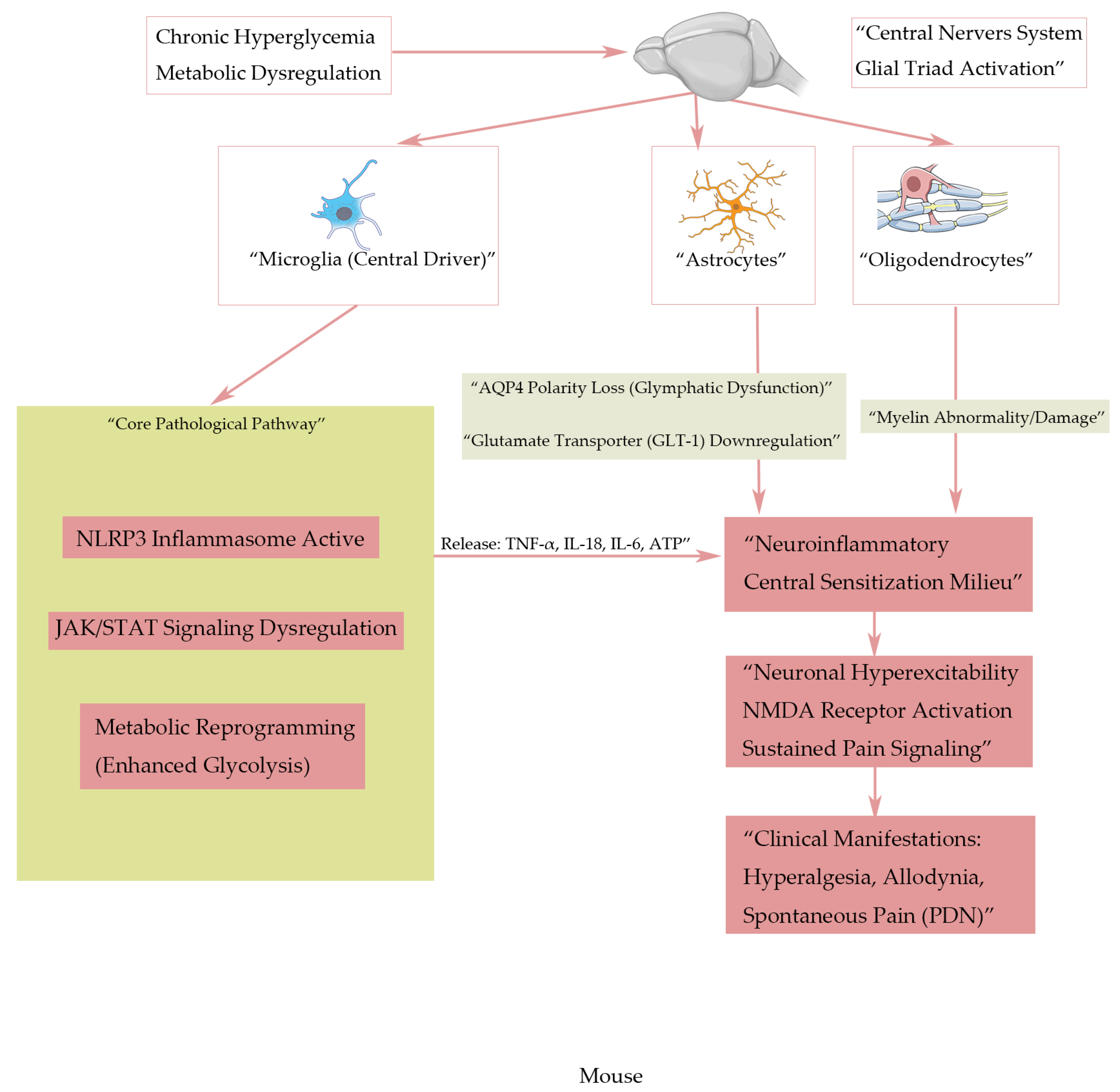
This review aims to elucidate the multifaceted roles of glial cells within the central nervous system (CNS) in the pathogenesis of painful diabetic neuropathy (PDN), with a focused analysis on microglia, astrocytes, and oligodendrocytes as key modulators of nociceptive processing, neuroinflammatory cascades, and neurorestorative processes [30]. By systematically reviewing preclinical and clinical evidence, we critically evaluate the mechanistic contributions of these glial subsets to PDN progression, synthesizing their molecular signatures (e.g., TSPO for microglial activation, AQP4 polarity for astrocytic dysfunction, MBP for oligodendrocyte integrity) and translational relevance [31]. Special emphasis is placed on identifying glia-derived biomarkers with potential utility in early PDN diagnosis, disease stratification, and therapeutic targeting [32] (Figure 1).

2. Methods

This article is a narrative review that systematically integrates and critically evaluates the existing evidence on the role of the glial triad in the pathogenesis and treatment of PDN. To ensure a comprehensive and representative synthesis, a structured approach to literature identification and selection was employed.
A systematic literature search was conducted across PubMed, Web of Science, and Google Scholar databases for publications up to December 2024. The search strategy utilized combinations of keywords and MeSH terms, including “painful diabetic neuropathy,” “diabetic neuropathic pain,” “glial cells,” “microglia,” “astrocyte,” “oligodendrocyte,” “neuroinflammation,” and “central sensitization.” Original research articles, reviews, and meta-analyses published in English from 2018 onward were included, with a focus on studies elucidating the mechanistic roles of central glial cells in established PDN preclinical models (e.g., STZ-induced, db/db) or providing relevant clinical insights. Studies focusing solely on peripheral neuropathy mechanisms, conference abstracts, and non-English publications were excluded.
It is important to clarify the methodological scope and inherent limitations of this review. As a narrative synthesis, its primary aim is conceptual integration and mechanistic hypothesis-building rather than quantitative data pooling. Therefore, while the search and selection process followed a systematic approach to ensure breadth, no formal quality assessment of individual studies (e.g., using specific risk-of-bias tools) or meta-analytic statistical pooling was performed. This approach prioritizes the construction of a coherent “glial triad” framework to explore interactions and pathways but acknowledges the potential for selection bias and does not provide a graded, quantitative summary of the evidence strength. Specific statistical results cited in the text are presented as reported in the original studies to illustrate findings within their specific experimental contexts.

3. Glial Cells: The Hidden Orchestrators of PDN Pathogenesis

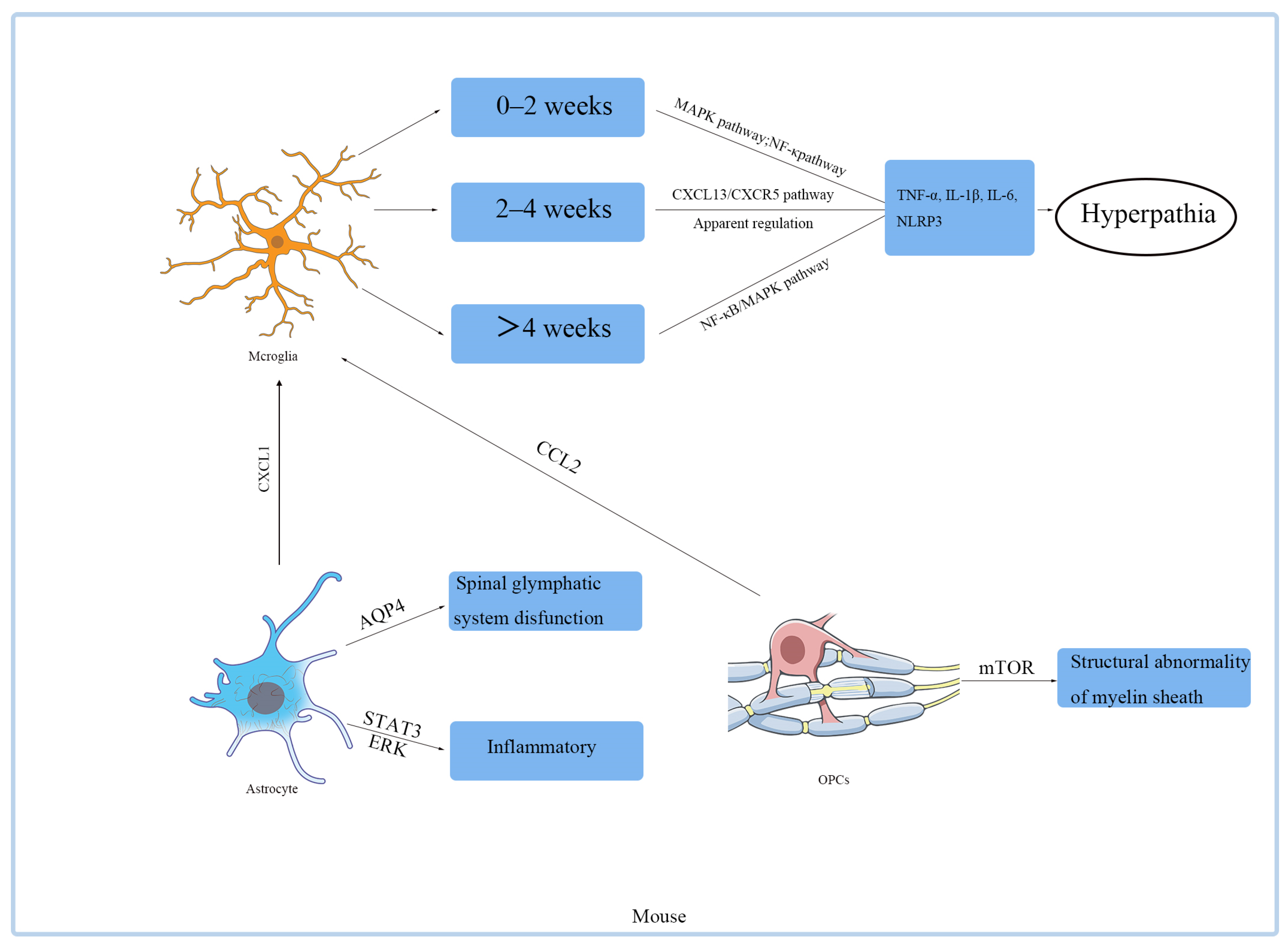
As the primary immune surveillants of the CNS, microglia propel PDN progression through phase-specific activation patterns. Teneligliptin and Semaglutide alleviate diabetic neuropathic pain by suppressing spinal astrocyte and microglia activation, demonstrating the neuro-anti-inflammatory potential of GLP-1R signaling [33]. During the early phase (0–2 weeks), Toll-like receptor 4/myeloid differentiation primary response 88 (TLR4/MyD88)-dependent signaling triggers TNF-α/IL-1β release and hyperactivation of Mitogen-Activated Protein Kinase/Nuclear Factor Kappa-Light-Chain-Enhancer of Activated B Cells (MAPK/NF-κB) pathways, directly amplifying nociceptive transmission [34]. In the intermediate-to-late phases, microglial perpetuation of chronic inflammation is mediated by CX3C chemokine receptor 1 (CX3CR1)/NLRP3 inflammasome axis activation [35] and metabolic reprogramming characterized by sirtuin 3 (Sirt3) downregulation and aerobic glycolysis (Warburg effect) [36], culminating in pyroptotic cell death (Gasdermin D (GSDMD)-mediated [37]). Therapeutic strategies to rebalance microglial states include phenotypic polarization (e.g., IL-35-induced M2 shift via Janus kinase 2/signal transducer and activator of transcription 6 (JAK2/STAT6) [38]) and metabolic modulation (e.g., metformin-mediated Sirt3 restoration [36]), both demonstrating efficacy in preclinical neuroinflammation models.
Astrocytic dysfunction lies at the epicenter of PDN’s self-reinforcing “metabolo-inflammatory” cascade. Hyperglycemia-induced AQP4 polarity disruption (via matrix metalloproteinase-9 (MMP-9)-mediated β-dystroglycan cleavage [39]) impairs glymphatic waste clearance, leading to glutamate excitotoxicity and NMDA receptor hyperactivation [40]. Concurrently, histone deacetylase 5/signal transducer and activator of transcription 3 (HDAC5-STAT3) axis dysregulation (impaired acetylation homeostasis [41]) and C-X-C motif chemokine ligand 13/C-X-C motif chemokine receptor 5 (CXCL13/CXCR5)-mediated chemotactic signaling [42] exacerbate neuroinflammatory cascades. Breaking this cycle requires interventions like AQP4 repolarization (β-hydroxybutyrate-induced syntrophin alpha 1 (SNTA1)upregulation [43]) and gap junction restoration (lycopene-mediated Cx43 stabilization [44]), which collectively ameliorate astrocytic metabolic-immune cross-talk.
Emerging evidence implicates oligodendrocyte dysfunction in PDN through dual mechanisms: ① demyelination-induced Aδ fiber conduction abnormalities, exacerbated by adaptor protein, phosphotyrosine interacting with PH domain and leucine zipper 1 (APPL1) deficiency-driven mTOR/Ras-related protein Rab5 (Rab5) signaling hyperactivation [45]; ② oligodendrocyte precursor cell (OPC)-derived C-C Motif Chemokine Ligand 2/C-C Motif Chemokine Receptor 2 (CCL2/CCR2)axis activation in spinal dorsal horn, potentiating nociceptive neurotransmission [46]. While therapeutic exploration remains nascent, strategies targeting myelin regeneration (metformin-mediated mTOR modulation) or APPL1/mTOR pathway rebalancing show promise in preclinical models for mitigating central sensitization.
Beyond the cytokine network, glial cells and neurons also share key molecular sensors. For example, the Transient Receptor Potential Ankyrin 1 (TRPA1) channel is expressed not only in nociceptive neurons but also in astrocytes and oligodendrocytes. As a common downstream target for multiple algogenic substances, TRPA1 may serve as a critical hub mediating glia-neuron crosstalk and amplifying central sensitization signals [47].

4. Microglia: Initiators of Inflammatory Storms in PDN

4.1. Inflammatory Pathways

4.1.1. NF-κB Signaling Pathway

Spinal microglial activation is significantly augmented in PDN rat models. Immunofluorescence analysis revealed elevated protein levels of the microglial marker Ionized Calcium-Binding Adapter Molecule 1 (IBA-1) in diabetic spinal cords compared to controls (p < 0.01), correlating with increased pro-inflammatory cytokine release. Diabetic rats exhibited heightened TNF-α and IL-1β levels accompanied by phosphorylation of p38 mitogen-activated protein kinase (p38), Extracellular Signal-Regulated Kinase (ERK), and c-Jun N-terminal kinase (JNK) kinases-molecular mediators of hyperalgesia. Pharmacological inhibition of p-p38 and p-JNK pathways by Ammoxetine attenuated microglial activation and cytokine accumulation, demonstrating their critical role in nociceptive regulation. Notably, reduced inhibitor of NF-kappaB alpha (IκBα) protein levels in diabetic spinal cords suggested NF-κB/p65 pathway activation, establishing its pivotal involvement in peripheral inflammatory hypersensitivity [48].
Sirtuin 3 (Sirt3), a mitochondrial deacetylase governing cellular metabolism and oxidative stress, showed hyperglycemia-induced downregulation during DNP progression. Sirt3 deficiency exacerbated spinal dorsal horn (SDH) microglial activation (Iba-1+ cells) with concomitant upregulation of IL-6, IL-1β, and TNF-α mRNA (p < 0.05 vs. wild-type). Genetic ablation of Sirt3 promoted NF-κB and MAPK pathway activation, whereas Sirt3 overexpression in BV-2 microglia attenuated high glucose-induced Iba-1 expression and suppressed IL-1β/TNF-α production through NF-κB/MAPK inhibition [36].
Intrathecal delivery of transcription factors achaete-scute family bHLH transcription factor 1/LIM homeobox 6 (Ascl1/Lhx6) rebalanced cytokine profiles, reducing pro-inflammatory mediators (TNF-α, IL-1β) while elevating anti-inflammatory cytokines (IL-4, IL-10, IL-13). This intervention concurrently suppressed spinal p38/JNK/NF-κB activation, achieving 62% reduction in neuropathic pain behaviors [49].

4.1.2. NLRP3 Inflammasome Axis

Intracerebroventricular administration of GLP-1 receptor agonists (GLP-1RAs) alleviated thermal hyperalgesia and mechanical allodynia in PDN rats through microglial NLRP3 modulation. RNA sequencing demonstrated 3.8-fold NLRP3 downregulation post-GLP-1RA treatment, with immunofluorescence co-localization showing 72% reduction in NLRP3/Iba-1 interactions. This mechanism effectively inhibited lipopolysaccharide (LPS)-induced inflammasome activation in microglia (p < 0.01 vs. vehicle) [50].
TANK-binding kinase 1 (TBK1) emerged as a critical mediator of NLRP3 inflammasome activation via non-canonical NF-κB signaling. Immunofluorescence localized TBK1 predominantly to Iba1+ microglia versus GFAP+ astrocytes and NeuN+ neurons. TBK1 silencing reduced microglial aggregation by 45% and pyroptosis markers (GSDMD) in PDN models. The TBK1 inhibitor AMX attenuated neuroinflammation through dual inhibition of NF-κB activation and NLRP3 inflammasome assembly [37].

4.1.3. TLR9/p38 MAPK Signaling

In streptozotocin (STZ)-induced PDN models, Toll-like receptor 9 (TLR9) upregulation drove microglial activation via p38 MAPK/ERK1/2 phosphorylation. TLR9 knockdown using short hairpin RNA (shRNA) lentivirus attenuated inflammatory cytokine secretion (TNF-α↓, IL-1β↓, IL-6↓) and reversed microglial chemotaxis (IBA1+ cells↓). Intrathecal SB203580 (20 μM p38 inhibitor) produced comparable anti-nociceptive effects, validating TLR9’s pathogenic role through p38-dependent mechanisms [51].

4.1.4. JAK-STAT Signaling Pathway

Interleukin-35 (IL-35) exhibits therapeutic potential in diabetic neuropathic pain (DNP) by modulating microglial polarization. In DNP rat models, IL-35 administration significantly elevated mechanical withdrawal thresholds (MWT) and thermal withdrawal latencies (TWL), concurrent with activation of the anti-inflammatory JAK2/STAT6 pathway. In LPS-stimulated microglia, IL-35 suppressed JNK phosphorylation while enhancing JAK2/STAT6 signaling, leading to upregulated expression of Arginase-1 (Arg-1) and Interleukin-10 (IL-10). These findings establish IL-35 as a potent activator of the JAK2/STAT6 cascade in pain regulation [38].
Jinmaitong (JMT) alleviates neuroinflammation through JAK2/STAT3 inhibition. The diabetes model was constructed using 11 to 12-week-old male Zucker diabetic fatty (ZDF) rat (fa/fa). DNP rats exhibited elevated phosphorylation levels of JAK2 and STAT3 in spinal microglia, which were normalized to 89% and 93% of control values respectively following JMT treatment (p < 0.05). This pharmacological intervention correlated with reduced microglial activation and attenuated neuropathic pain behaviors [52].
Immunofluorescence co-localization revealed predominant p-STAT3 expression in activated microglia within the dorsal horn. Intrathecal administration of the JAK2 inhibitor AG490 from day 3 post-modeling reduced p-JAK2 and p-STAT3 expression over a 14-day period (p < 0.01). In vitro studies demonstrated that AG490 suppressed high glucose-induced p-STAT3 activation in microglia, subsequently decreasing neuronal p-caveolin-1 (p-CAV-1) and p-NMDA receptor subunit 2B (p-NR2B) in co-culture systems. These data implicate the microglial JAK2/STAT3-CAV1-NR2B axis as a critical mediator of diabetic neuropathic pain pathogenesis [53].

4.1.5. P2 Receptor Pathways

P2Y purinoceptor 14 (P2Y14) receptor overexpression exacerbates microglial activation and neuroinflammation in PDN models. P2Y14 shRNA intervention achieved 68% receptor knockdown (p < 0.001), accompanied by reduced microglial activation, suppressed TNF-α and IL-1β levels, and inhibited p38 MAPK phosphorylation. Mechanistically, long non-coding RNA (LncRNA)-UC.25 + shRNA enhances signal transducer and activator of transcription 1 (STAT1) binding to P2Y14 promoter regions, thereby downregulating P2Y14 expression and mitigating neuropathic pain [54].
In STZ-induced diabetic models, spinal P2X7 receptor (P2X7R) expression increased, predominantly localized to Iba1+ microglia in the dorsal horn. Pharmacological antagonism or genetic ablation of P2X7R attenuated mechanical allodynia progression, with no detectable co-localization observed with GFAP+ astrocytes or NeuN+ neurons. This microglia-specific P2X7R signaling represents a novel therapeutic target for diabetic neuropathic pain management [55].

4.1.6. Microglial Phenotypic Switching

Microglial polarization plays a dual role in painful diabetic neuropathy (PDN), transitioning between pro-inflammatory M1 (inducible nitric oxide synthase (iNOS+), TNF-α+) and anti-inflammatory M2 (cluster of differentiation 206 (CD206+), Arg-1+) phenotypes. Diabetic mice exhibited 62% reduction in spinal Insulin-Like Growth Factor 1 (IGF-1) levels (p < 0.001), concomitant with increased M1 polarization (rise in iNOS+IBA1+ cells) and elevated pro-inflammatory cytokines (IL-1β, TNF-α). Recombinant IGF-1 (rIGF-1) and epigallocatechin gallate (EGCG) treatment restored IGF-1 expression to 85% of normal levels, reduced M1 markers, and enhanced M2 markers through IGF-1 receptor (IGF1R)-mediated JNK inhibition and STAT6 activation [56].
IL-35 therapy rebalanced microglial polarization in DNP models, decreasing Iba1+ cluster of differentiation 68 (CD68+) cell density while elevating CD206+ cells. Mechanistic studies revealed IL-35 suppresses JNK activation and enhances JAK2/STAT6 phosphorylation, shifting cytokine profiles from M1-dominant (TNF-α, IL-6 decrease) to M2-skewed (IL-10). Pharmacological validation confirmed pathway specificity, with JNK activator anisomycin reversing M2 polarization effects and JAK2 inhibitor AG490 blocking 76% of IL-35-mediated therapeutic outcomes [38].

4.2. Metabolic Regulation Pathways

Sirtuin 3 (Sirt3), a mitochondrial deacetylase pivotal in cellular metabolism and oxidative stress regulation, attenuates microglial pro-inflammatory states by suppressing glycolysis and inflammatory signaling. The downregulation of Sirt3 under hyperglycemic conditions exacerbates glycolytic metabolic reprogramming during diabetic neuropathic pain (DNP) pathogenesis. In Sirt3-deficient DNP mice, elevated expression of key glycolytic enzymes—including hexokinase 2 (HK2), pyruvate kinase M2 (PKM2), and lactate dehydrogenase A (LDHA)—was observed, accompanied by increased accumulation of glycolytic metabolites (lactate and pyruvate). Conversely, Sirt3 overexpression in BV-2 microglia significantly reduced the expression of these enzymes (p < 0.01) and diminished metabolite levels, thereby mitigating pro-inflammatory activation. Mechanistically, forkhead box O1 (FoxO1) serves as a critical mediator of Sirt3-dependent glycolytic control. While FoxO1 overexpression suppressed glycolytic enzyme expression under normal conditions, this inhibitory effect was abolished in Sirt3-deficient microglia, indicating Sirt3-dependent regulatory function. Furthermore, protein kinase B (Akt) pathway activation promotes FoxO1 inactivation and accelerates Sirt3 degradation via autophagy-lysosome pathway (ALP)-mediated proteolysis, ultimately driving microglial glycolysis and neuroinflammation [36].
The inositol-requiring enzyme 1 alpha–X-box binding protein 1 (IRE1α–XBP1s) axis, a central mediator of endoplasmic reticulum stress (ERS) responses, is hyperactivated in microglia under hyperglycemic conditions. High glucose exposure upregulated prostaglandin-endoperoxide synthase 2 (PTGS2), IRE1α, and XBP1s expression in OX-42-positive microglia, concomitant with elevated secretion of TNF-α, IL-1β, and IL-6. Sinomenine (SIN) treatment reversed these effects, reducing PTGS2 levels and suppressing IRE1α–XBP1s signaling through MKC8866 (IRE1α inhibitor), which subsequently decreased inflammatory cytokine release. Notably, PTGS2 overexpression exacerbated inflammation, an effect counteracted by MKC8866. These findings collectively demonstrate that SIN alleviates diabetic peripheral neuropathic pain by downregulating PTGS2 to inhibit the IRE1α–XBP1s pathway, thereby reducing microglial activation and neuroinflammation [57].

4.3. Neuroprotection and Repair

Notch receptor 1 (Notch-1) signaling in microglia critically mediates the progression of diabetic neuropathy. Pharmacological inhibition of Notch-1 using DAPT and/or minocycline effectively suppressed microglial proliferation and alleviated thermal hyperalgesia and mechanical allodynia in PDN models. Chronic administration of minocycline or DAPT for two weeks significantly attenuated PDN-associated mechanical withdrawal threshold (MWT) and thermal withdrawal latency (TWL) impairments (p < 0.01 vs. vehicle). This analgesic effect correlated with reduced Notch-1 receptor expression, diminished nuclear translocation of the Notch-1 intracellular domain, and suppressed hairy and enhancer of split 1 (Hes-1) activation. Concurrent downregulation of Iba-1 expression confirmed Notch-1-dependent microglial activation and neuroinflammation. Streptozotocin (STZ)-induced diabetes upregulated Notch-1 receptor expression and enhanced Notch intracellular domain (NICD)/Hes-1 signaling, indicating pathological activation of Notch signaling in diabetic neuropathy. These findings align with established mechanisms whereby Notch pathway activation exacerbates neural damage, while its inhibition prior to pain onset delays neuropathic progression [58].

4.4. Chemokine-Receptor Interactions

4.4.1. CXCL13/CXCR5 Axis

In PDN rat models, spinal dorsal horn microglia exhibited marked activation as evidenced by increased Iba-1 and cluster of differentiation 11b (CD11b) expression. Microglial activation coincided with CXCL13/CXCR5 axis hyperactivation, where neuron-derived CXCL13 binds microglial CXCR5 receptors to potentiate neuroinflammatory responses. Exogenous CXCL13 administration elevated spinal TNF-α, IL-6, and IL-1β levels in wild-type mice, effects abolished in CXCR5-knockout models. Immunohistochemical analysis revealed co-localization of CXCR5 with Iba-1+ microglia in PDN spinal cords, with less than co-expression in neuronal nuclear protein (NeuN+) neurons. This pathway regulates mechanical hypersensitivity through microglial-mediated inflammatory cascades, as CXCR5 deficiency reduced mechanical pain thresholds by and attenuated microglial activation [42].

4.4.2. XCL1/XCR1 Signaling

Microglial suppression attenuates X-C motif chemokine ligand 1/X-C motif chemokine receptor 1 (XCL1/XCR1)expression and exerts analgesic effects in streptozotocin (STZ)-induced PDN. Chlorpromazine (MC)-mediated microglial inhibition significantly reduced mechanical allodynia and dysesthesia in PDN models, concurrently preventing microglial activation and suppressing upregulation. Exogenous XCL1 administration enhanced nociceptive transmission, whereas XCL1-neutralizing antibodies attenuated hypersensitivity. Primary microglial cultures demonstrated that activation triggers XCL1 release and XCR1 upregulation. Immunofluorescence localized XCR1 predominantly to spinal neurons rather than astrocytes. In DNP progression, elevated XCL1 levels drive neuronal XCR1 overexpression, facilitating pain signal transduction. MC treatment reduced spinal XCL1, subsequently decreasing XCR1 expression and alleviating pain behaviors. Notably, MC administration also diminished CD4/CD8 protein levels, suggesting immunomodulatory mechanisms underlying its analgesic efficacy [59].

4.4.3. FKN/CX3CR1 Axis

The fractalkine (CX3CL1)/CX3CR1 axis, involving neuron/astrocyte-derived CX3CL1 and microglial CX3CR1 receptors, mediates neuropathic pain through pro-inflammatory activation. Diabetic mice exhibited increased CX3CL1 and CX3CR1 expression in spinal dorsal horn microglia. Intrathecal CX3CR1-neutralizing antibodies delayed mechanical pain onset and reduced pain severity scores in STZ models. CX3CR1-knockout mice demonstrated attenuated IL-1β and TNF-α levels, confirming this pathway’s role in microglial-mediated neuroinflammation. Mechanistically, CX3CL1 binding induces microglial proliferation and chemotaxis, while promoting inflammatory mediator release. Paradoxically, CX3CR1 deficiency correlates with impaired T-cell responses, suggesting bidirectional neuroimmune interactions in diabetic pain pathogenesis [35].

4.5. Additional Regulatory Mechanisms

4.5.1. miR-23a Signaling

Low-concentration bupivacaine demonstrated superior efficacy in alleviating mechanical allodynia and thermal hyperalgesia in diabetic mice compared to higher doses. This analgesic effect correlated with microglial inflammation suppression, evidenced by reduced spinal TNF-α, IL-6, IL-1β, and MCP-1 levels. Mechanistically, bupivacaine upregulated microRNA-23a (miR-23a) expression in microglia, which directly targeted the 3’untranslated region (3′-UTR) of phosphodiesterase 4B (PDE4B) mRNA, achieving PDE4B downregulation. miR-23a knockdown using antagomirs abolished bupivacaine’s anti-inflammatory effects, establishing miR-23a as the pivotal mediator [60].

4.5.2. Epigenetic Regulation

Diabetic neuropathic pain induces cell-type specific epigenetic modifications, with spinal microglia exhibiting increased H3K9 acetylation (H3K9ac) compared to neurons. Chromatin immunoprecipitation revealed HMGB1 as the primary histone acetyltransferase regulator in non-neuronal cells. Glycyrrhizin (GLC) treatment reduced High-Mobility Group Box 1 (HMGB1)release and normalized microglial H3K9ac levels, attenuating neuroinflammation through acetylation-dependent chromatin remodeling [34].

4.5.3. MOTS-c (Mitochondrial-Derived Peptide)

The mitochondrial-encoded peptide MOTS-c ameliorates painful diabetic neuropathy via dual metabolic-inflammatory modulation. MOTS-c administration significantly reduced Iba1+ microglial density, concurrently decreased pro-inflammatory mediators including TNF-α, IL-1β, IL-6, and iNOS, while upregulating anti-inflammatory Arg-1 expression. In vitro, MOTS-c suppressed LPS-induced microglial activation, lowering TNF-α/IL-6/IL-1β secretion while enhancing Arg-1 production. This anti-polarization effect persisted for 72 h post-treatment, confirming sustained therapeutic potential [61].

4.5.4. ADAM17 (A Disintegrin and Metalloproteinase 17)

ADAM17, an enzyme primarily responsible for membrane protein degradation, is activated under diabetic conditions and plays a critical role in painful diabetic neuropathy (PDN). In db/db diabetic mice, ADAM17-positive neurons significantly increased in spinal dorsal horn lamina IV, while ADAM17-positive microglia were elevated only in laminae I-II. Strong ADAM17 expression was observed in NeuN-positive neurons and IBA1-positive microglia, with negligible localization in GFAP-positive astrocytes. Comparative analysis revealed a marked increase in ADAM17-positive neurons across laminae I-V of the db/db spinal dorsal horn, whereas ADAM17-positive microglia accumulation remained restricted to laminae I-II [62].

4.5.5. H2S (Hydrogen Sulfide) Donor

Hydrogen sulfide (H2S), the third endogenous gasotransmitter following nitric oxide and carbon monoxide, exhibits diverse physiological effects and pathological associations. In STZ-induced diabetic rats, chronic administration of the H2S donor GYY4137 improved neuropathological indices and behavioral manifestations. Specifically, GYY4137 reduced spinal microglial activation (evidenced by decreased Iba-1+ cell counts and protein expression), attenuated pro-inflammatory cytokine levels, and ameliorated allodynia, mechanical hyperalgesia, and thermal hypersensitivity. These findings suggest that GYY4137 may represent a potential therapeutic strategy worthy of further investigation for diabetic neuropathic pain through dual modulation of central glial cells—suppressing microglia-mediated inflammation while regulating astrocytic metabolic support [63].

4.5.6. APPL1 Signaling Pathway

In PDN rats, APPL1 protein expression progressively declined in the spinal dorsal horn from week 1, achieving a significant reduction by week 4 (p < 0.05), concurrent with decreased mechanical withdrawal thresholds (lowest at week 4 via von Frey testing) and shortened thermal withdrawal latencies. Immunofluorescence localization demonstrated higher APPL1 expression in neurons and microglia versus astrocytes in controls, whereas PDN rats exhibited pronounced APPL1 reduction in dorsal horn laminae I-II. This reduction correlated with upregulated p-mTOR expression (p < 0.05), indicating an inverse regulatory relationship between APPL1 and mTOR activity. Furthermore, APPL1 deficiency enhanced Rab5, Akt, and AMPK phosphorylation, suggesting mTOR activation through Rab5/Akt and AMPK pathways exacerbates hyperalgesia [45].

4.6. Limitations and Translational Considerations

The signaling pathways summarized herein, including NLRP3, JAK/STAT, and metabolic reprogramming, are primarily derived from rodent models. While offering crucial mechanistic insights, these findings are constrained by notable limitations. Pathophysiological differences between STZ-induced (T1DM) and db/db (T2DM) models may lead to divergent glial responses. Furthermore, while interventions like IL-35 and MOTS-c show promise preclinically, significant translational hurdles remain regarding their human safety, efficacy, and feasible delivery routes (e.g., intrathecal administration) [61]. Additionally, many pathways are reported by a limited number of studies, underscoring the need for independent validation in models that better mimic chronic human disease and for exploration of synergies with existing clinical agents like metformin.
Furthermore, when translating preclinical findings to humans, the heterogeneity of diabetes types must be taken into account. Classical studies indicate that the pathology of “axon-glial dysfunction” modeled in STZ-induced T1DM rats is reflected in human T1DM. In contrast, morphological manifestations of neuropathy in T2DM patients are often dominated by Wallerian degeneration and ischemic patterns [64]. This suggests that glial responses observed in T2DM models such as db/db mice may be compounded by complex factors including aging and vasculopathy. Future studies need to validate these findings in models that more closely mirror the complex pathophysiology of human T2DM.
Specifically, the acute hyperglycemia and insulin deficiency in STZ (T1DM) models may elicit a different neuroinflammatory profile compared to the chronic metabolic syndrome (insulin resistance, hyperlipidemia) in db/db (T2DM) models, which could differentially impact microglial activation states and therapeutic responses.

5. Astrocytes: Metabolic Collapse and Inflammatory Cycling

5.1. Impaired Metabolic Clearance and Neuroinflammation

5.1.1. AQP4 Function in Astrocytes

Studies demonstrate that astrocyte activation in PDN rats correlates with altered aquaporin-4 (AQP4) polarization, impairing spinal glymphatic metabolic waste clearance. PDN models exhibit astrocytic activation accompanied by depolarized AQP4 distribution, manifested as reduced AQP4 expression (fluorescence labeling quantification) and compromised waste removal. This dysfunction coincides with increased MMP-9 and NLRP3 levels, suggesting AQP4 polarization defects constitute a key pathological mechanism in PDN. Restoring AQP4 polarity or suppressing astrocyte overactivation may alleviate neuroinflammation and chronic pain [39].
The NLRP3 inflammasome exacerbates neuroinflammation and chronic pain through astrocyte-mediated activation in PDN. NLRP3 upregulation strongly associates with astrocyte activation, showing marked elevation in PDN progression. Bidirectional interactions exist between AQP4 depolarization and NLRP3 activation: AQP4 dysfunction potentiates NLRP3 inflammasome activity via impaired waste clearance and amplified neuroinflammatory cascades, thereby intensifying pain and neural damage [39].
AQP4 depolarization, MMP-9 elevation, and NLRP3 activation form a self-perpetuating cycle in PDN, progressively aggravating neuroinflammation and chronic pain. Mechanistically, AQP4 defects impair metabolic clearance while promoting NLRP3-driven inflammation, establishing this triad as pivotal therapeutic targets [39].
Beta-hydroxybutyrate (BHB) mitigates PDN by restoring AQP4 polarity in spinal glymphatic systems. Emerging evidence indicates astrocytic endfoot-localized AQP4 governs CNS metabolic clearance, with syntrophin-α1 (SNTA1) anchoring AQP4 to maintain membrane polarity. BHB elevates SNTA1 expression to rescue AQP4 polarization in Alzheimer’s models. This study pioneers BHB’s therapeutic potential for PDN through spinal glymphatic AQP4 repolarization [43].
PDN rats exhibit glymphatic dysfunction characterized by a 40% reduction in metabolic clearance compared to controls, accompanied by enhanced mechanical allodynia (p < 0.01), 62% decreased SNTA1 expression, and paradoxical AQP4 upregulation with loss of perivascular polarity. Notably, beta-hydroxybutyrate (BHB) treatment reverses these pathological alterations, restoring AQP4 protein levels, recovering 75% of SNTA1 expression, and reestablishing vascular-polarized AQP4 localization, thereby demonstrating therapeutic efficacy in glymphatic system rehabilitation [43].
In PDN rats, spinal glymphatic dysfunction manifests as impaired metabolic waste clearance, exacerbated mechanical allodynia, reduced SNTA1 expression, elevated AQP4 levels, and reversed AQP4 polarity characterized by diminished perivascular localization. Compared to controls, PDN rats exhibited increased AQP4 protein expression with concurrent SNTA1 downregulation. BHB treatment reversed these alterations, normalizing AQP4 expression, restoring SNTA1 levels, and reestablishing vascular-polarized AQP4 distribution [43].
AQP4 polarity refers to the highly enriched distribution of this water channel protein on the astrocytic end-foot membranes, where it is anchored to the basement membrane of the perivascular space. This polarized spatial arrangement forms the structural basis for the efficient cerebrospinal–interstitial fluid exchange and metabolic waste clearance performed by the central nervous system’s “glymphatic system” [27,43]. In PDN, factors such as hyperglycemia drive the upregulation of proteolytic enzymes like matrix metalloproteinase-9 (MMP-9), leading to the cleavage of β-dystroglycan—a key protein that anchors AQP4 at the astrocytic end-feet [39,43]. This anchorage disruption results in the loss of AQP4 polarity, characterized by the dissociation of AQP4 from end-foot membranes and its diffuse redistribution across the entire astrocytic plasma membrane. The reason this event is pivotal in initiating pathogenesis is that it directly dismantles glymphatic clearance capacity, leading to the accumulation of excitatory neurotransmitters (e.g., glutamate), inflammatory factors, and damaging metabolites in the spinal dorsal horn. This accumulation not only triggers direct neuronal excitotoxicity (via NMDA receptor hyperactivation) but also creates and sustains a pro-inflammatory, metabolically dysregulated microenvironment, thereby exacerbating neuroinflammation and central sensitization in a positive-feedback manner [40,43]. Therefore, AQP4 polarity loss is not merely an epiphenomenon but constitutes a central hub event that links metabolic dysregulation (hyperglycemia), astrocytic dysfunction, and neuropathic pain (central sensitization).

5.1.2. Astrocytic Involvement in Neuroinflammation

Beta-hydroxybutyrate (BHB), a class I histone deacetylase (HDAC) inhibitor and ketone body metabolite produced during caloric restriction, demonstrates anti-inflammatory effects across metabolic disorders including Parkinson’s disease, Alzheimer’s disease, and diabetic microvascular complications. Experimental evidence confirms BHB’s capacity to enhance SNTA1 expression and restore AQP4 polarity, suggesting therapeutic potential for PDN through glymphatic modulation [41].
Curcumin administration (50 mg/kg for 4 weeks) alleviates neuropathic pain by suppressing phosphorylated c-Jun N-terminal kinase (pJNK) signaling in diabetic models. Dorsal root ganglia analysis revealed elevated pJNK expression in astrocytes and neurons, which curcumin treatment effectively reduced. Immunohistochemical co-localization identified pJNK-positive astrocytes (GFAP+) and neurons (NF200+), with curcumin decreasing their prevalence, indicating dual cellular targeting in pain regulation [65].
The CXCL13/CXCR5 axis predominantly activates spinal astrocytes in PDN, with CXCR5 overexpression correlating with astrocytic activation. This pathway promotes neuroinflammation via downstream pERK and pSTAT3 signaling. Pharmacological inhibition of CXCL13/CXCR5 attenuates astrocyte-mediated inflammatory responses and neuropathic pain, though precise mechanisms regulating cytokine release require further investigation [66].

5.2. Cellular Connectivity and Barrier Restoration

5.2.1. Connexin 43 (Cx43) in Astrocytes: Implications for Neuropathic Pain

Connexin 43 (Cx43), predominantly expressed in central nervous system (CNS) astrocytes, plays critical roles in intercellular communication. By forming gap junctions, Cx43 facilitates signal transmission between cells, mitigates extracellular ionic imbalances, and supports metabolic coordination across neighboring cells. Each gap junction channel comprises two connexons, with each hexameric connexon assembled from six Cx43 subunits, underscoring its centrality in cellular signaling and metabolic regulation [67].
In neuropathic pain pathogenesis, astrocytic Cx43 demonstrates dual functionality in both pain maintenance and transduction. Partial sciatic nerve ligation (PSNL) rat models revealed significant Cx43 downregulation in the spinal dorsal horn by day 7 post-injury, despite early mechanical hypersensitivity observed at day 3. This temporal dissociation highlights Cx43’s pivotal role in sustaining chronic pain states. Restoring physiological Cx43 levels alleviates hypersensitivity, further validating its mechanistic importance in neuropathic pain perpetuation [67,68].
Lycopene administration reverses tumor necrosis factor (TNF)-induced Cx43 suppression, restoring spinal astrocytic Cx43 expression and ameliorating mechanical hypersensitivity. Notably, chronic intrathecal lycopene delivery—but not single-dose treatment—significantly elevates dorsal horn Cx43 levels and attenuates mechanical allodynia in peripheral neuropathic pain models. These findings position Cx43 expression modulation as a novel therapeutic strategy for neuropathic pain management, with potential translational relevance to painful diabetic neuropathy (PDN) treatment [67].
Under the chronic stress of PDN, the function of astrocytic Cx43 undergoes a pathological shift. On one hand, gap junctions formed by Cx43 may facilitate the spread of pro-nociceptive signals within the astrocytic network, thereby expanding the zone of inflammation. On the other hand, and more critically, the aberrant opening of Cx43 hemichannels leads to the direct release of ATP and inflammatory cytokines (e.g., IL-1β, TNF-α) into the extracellular space. These “danger signals” can directly activate purinergic receptors and inflammatory pathways on neighboring neurons and microglia, thereby enhancing neuronal excitability and sustaining the neuroinflammatory state, which in turn exacerbates hyperalgesia through a positive-feedback loop. Consequently, the acquired functional abnormalities of Cx43, rather than simple changes in its expression level, constitute a crucial link connecting astrocytic reactivity to neuronal hyperexcitability.

5.2.2. Matrix Metalloproteinase-9 (MMP-9) Mechanism

Astrocytes critically maintain neuroenvironmental homeostasis through metabolic waste clearance mediated by endfeet-localized aquaporin-4 (AQP4). Under diabetic neuropathic pain (PDN) conditions, hyperglycemia induces MMP-9 overexpression, triggering β-dystroglycan (β-DG) cleavage and impairing AQP4 membrane anchoring. This pathological cascade disrupts metabolic waste clearance, exacerbating neuroinflammation and potentiating pain hypersensitivity [39].

5.3. Epigenetic and Transcriptional Regulation

5.3.1. HDAC5-STAT3 Pathway

Spinal astrocytic degeneration emerges prominently in type 1 diabetic (T1D) rat models during early-stage PDN progression. Hyperglycemia-induced astrocytic degeneration correlates with impaired STAT3 acetylation, a transcription factor essential for astrocytic homeostasis. STAT3 dysfunction precipitates functional loss, driving sustained pain hypersensitivity [41].
Mechanistically, histone deacetylase 5 (HDAC5) hyperactivation in diabetic astrocytes mediates STAT3 deacetylation via direct protein–protein interaction. This post-translational modification disrupts STAT3 signaling capacity, compromising astrocytic structural integrity and neuroprotective functions. Restoring STAT3 activity or pharmacologically inhibiting HDAC5 ameliorates astrocytic degeneration and attenuates PDN symptoms. These findings delineate the HDAC5-STAT3 axis as a pivotal regulator of diabetic astrocytopathy, providing novel therapeutic targets for PDN management [41].

5.3.2. miR-503-5p/SEPT9 Axis

The miR-503-5p/SEPT9 axis suppresses astrocytic activation to alleviate PDN-associated pain. Emerging evidence highlights microRNAs as pivotal regulators and potential therapeutic targets in PDN pathogenesis. miR-503-5p specifically mitigates neuropathic pain in type 2 diabetic (T2DM) models by targeting SEPT9 to inhibit astrocyte activation [69].
In db/db PDN mice, spinal miR-503-5p expression was significantly downregulated compared to db/m controls, correlating with hyperglycemia, mechanical allodynia (reduced mechanical withdrawal threshold), thermal hyperalgesia (shortened thermal withdrawal latency), and elevated GFAP/MCP-1 levels indicative of astrocytic activation. Parallel in vitro studies under high-glucose conditions recapitulated these findings, showing miR-503-5p suppression alongside astrocyte activation and increased IL-1β, IL-6, and TNF-α production. SEPT9 was aberrantly upregulated in both diabetic mice and glucose-stimulated astrocytes, whereas miR-503-5p agomir treatment normalized SEPT9 expression, reduced GFAP/MCP-1 levels, and improved pain thresholds. Conversely, antagomiR-503-5p exacerbated pain hypersensitivity and further elevated SEPT9 [69].
Rescue experiments confirmed SEPT9 as the mechanistic mediator: SEPT9 overexpression in miR-503-5p mimic-treated cells reversed the suppression of GFAP, MCP-1, and pro-inflammatory cytokines, demonstrating SEPT9’s essential role in miR-503-5p-mediated analgesia. These results establish miR-503-5p/SEPT9 signaling as a critical regulator of astrocyte-driven neuropathic pain in DPN, highlighting its therapeutic potential [69].

5.4. Activation of Astrocytes in the Ventrolateral Periaqueductal Gray (vlPAG)

During PDN progression, astrocytes in the ventrolateral periaqueductal gray (vlPAG) exhibit marked proliferation and morphological alterations, with activation initiating at day 14 and peaking by day 21, characterized by somatic hypertrophy, process elongation, and increased branching [70].
Chemogenetic activation of vlPAG astrocytes via Gq-DREADDs induced neuropathic pain behaviors and pain-related aversion, indicating their promotive role in PDN. Conversely, Gi-DREADDs-mediated inhibition alleviated pain hypersensitivity, confirming vlPAG’s critical involvement in nociceptive processing. Modulation of vlPAG astrocytic activation may offer novel therapeutic avenues for PDN management [70].
Fluorocitrate (FC) and neurotrophins demonstrated analgesic effects in PDN by suppressing vlPAG astrocyte activation. Compared to controls, PDN rats showed elevated GFAP expression in vlPAG (p = 0.002) and reduced mechanical withdrawal thresholds (MWT). Local FC microinjection or systemic neurotrophin administration increased MWT while decreasing GFAP+ cell density and protein levels (p < 0.001), suggesting astrocyte-targeted analgesia [71].

5.5. Astrocytic Neuroprotection Mechanisms

In type 2 diabetic PDN, astrocyte activation correlates with NMDAR-dependent signaling. Ten-week-old db/db mice exhibited increased substance P (SP) expression and enhanced ERK1/2 phosphorylation in lumbar spinal cord dorsal horn (LSCDH) layers I-III, accompanied by astrocytic hyperplasia. Concurrent NMDAR (NR1 subunit) phosphorylation upregulated neuronal nNOS and astrocytic iNOS, driving nitric oxide (NO) cascade activation. Pharmacological inhibition with MK801 (NMDAR antagonist) reduced nNOS/iNOS expression, attenuated GFAP+ astrocyte activation, and ameliorated mechanical allodynia. L-NAME (NOS inhibitor) and UO126 (ERK1/2 inhibitor) produced comparable anti-nociceptive effects, confirming the NMDAR-NO-ERK1/2 axis as a central pathway in PDN pathogenesis [40].

5.6. MCx Region Astrocyte Activation and Pain Modulation

Astrocytes regulate motor cortex (MCx) neuronal activity via pro-inflammatory cytokine release (e.g., TNF-α, IL-1β), amplifying pain perception in DNP. Elevated GFAP expression in PDN rat MCx regions implicates astrocytic activation in neuropathic pain maintenance. Chemogenetic inhibition of MCx excitatory neurons alleviated mechanical allodynia, whereas their activation exacerbated pain. Astrocyte-neuronal crosstalk potentiates nociceptive responses, with TNF-α/IL-1β serving as key mediators sustaining neuropathic pain. Targeting astrocytic activation or cytokine release may yield novel therapeutic strategies for PDN [72].

5.7. Limitations and Translational Considerations

The pathological mechanisms of astrocytes summarized in this section, such as AQP4 polarity loss, Cx43 dysfunction, and the dysregulation of signaling pathways like HDAC5-STAT3, are primarily derived from rodent models like STZ-induced or db/db. While these models provide crucial insights into astrocytic dysfunction in PDN, caution is required when extrapolating findings to human disease. Differences exist between STZ (T1DM-like) and db/db (T2DM-like) models regarding the origin of metabolic disturbances, progression rate, and systemic complications, which may influence the spatiotemporal characteristics and severity of astrocytic responses. For instance, hyperglycemia-induced MMP-9 overexpression and β-dystroglycan cleavage may not be entirely equivalent between the two models. Furthermore, most in vitro studies employ primary astrocytes or cell lines cultured under high glucose conditions, a simplified system that cannot fully replicate the complex microenvironment of the neurovascular unit in vivo or the dynamic interactions with neurons, microglia, and oligodendrocytes. Therefore, when interpreting the contribution of specific pathways (e.g., CXCL13/CXCR5 or miR-503-5p/SEPT9), their experimental model context must be considered. Future research should utilize models that more closely mimic the chronic progression of human disease (e.g., diet-induced combined with low-dose STZ T2DM models) and incorporate humanized astrocyte or organoid models to validate the translational potential of these targets and elucidate the specificity of astrocytopathy in different types of diabetes.

6. Oligodendrocytes: Overlooked Modulators of Pain in PDN

The role of oligodendrocytes in PDN remains underexplored, with current evidence being preliminary and largely derived from a limited number of preclinical studies. Study reveals a significant increase in oligodendrocyte numbers in the spinal dorsal horn of PDN rats, accompanied by hypermyelination in the spinothalamic tract. These findings suggest that dysmyelination or structural myelin abnormalities may contribute to central sensitization. Metformin treatment alleviates pain by suppressing excessive myelination, though its precise mechanism remains unclear [45]. Further analysis identifies that APPL1 deficiency exacerbates oligodendrocyte dysfunction through mTOR signaling activation and Rab5 upregulation, leading to demyelination and hyperalgesia, while APPL1 overexpression reverses these effects [45]. These results highlight the critical link between oligodendrocytic myelin homeostasis and the mTOR/Rab5 pathway, suggesting its potential role in sustaining PDN-related pain.
Oligodendrocyte precursor cells (OPCs) may influence pain transmission via paracrine mechanisms due to their aberrant proliferation. Study reports that OPCs secrete the chemokine CCL2, which activates CCR2 receptors on spinal dorsal horn neurons to directly amplify nociceptive signaling [45]. Although the exact pathways remain unelucidated, the pro-inflammatory role of the CCL2/CCR2 axis in other neuropathies supports its potential involvement in PDN, possibly through indirect activation of microglia or neuronal NMDA receptors. Additionally, interactions between oligodendrocytes and astrocytes—such as metabolic coupling or gap junction communication—remain unexplored and represent a crucial area for future investigation.
Recent lipidomic studies have further revealed that in obesity-associated diabetic neuropathy, the loss of myelin-characteristic lipids (such as galactosylglyceramide) occurs prior to structural deficits. This process is closely associated with obesity/hyperlipidemia, suggesting that lipid metabolism disturbances may represent an important mechanism—distinct from hyperglycemia—that drives early damage to the oligodendrocyte-myelin axis [73]. These findings provide a more upstream metabolic basis for understanding myelin abnormalities in PDN. Although the study focused on peripheral nerves, the revealed lipid-myelin axis mechanism likely exerts parallel or interactive effects in the central nervous system, warranting validation in future PDN models.
Therapeutic strategies targeting oligodendrocytes remain exploratory. Study proposes that metformin may indirectly promote remyelination by modulating mTOR signaling or energy metabolism, though its specific targets require validation [45]. Building on the APPL1/mTOR axis, novel approaches such as HDAC3 inhibitors (to enhance OPC differentiation) or neurotrophic factor interventions (to restore myelin integrity) could emerge as viable strategies for PDN management. Furthermore, integrating multi-omics technologies to delineate the transcriptomic and epigenetic profiles of oligodendrocytes across PDN stages may unravel precise mechanisms underlying their pain-regulatory functions (Figure 2).
Current understanding of the role of oligodendrocytes in PDN is still in its infancy, with related mechanisms based on limited studies and highly dependent on specific preclinical models. Existing evidence suggests that STZ and db/db models may exhibit different oligodendrocyte response patterns. Acute hyperglycemia induced by STZ may primarily trigger inflammation-mediated myelin damage, while the long-term metabolic syndrome background (e.g., insulin resistance, lipid metabolism abnormalities) in db/db models may be more likely to lead to energy metabolism disorder-related myelin maintenance defects and impaired regeneration. Findings such as the APPL1-mTOR/Rab5 pathway and the CCL2/CCR2 axis require independent validation in more diverse models (including female animal models to account for gender differences). It is particularly important that it remains unclear to what extent oligodendrocyte responses in the rodent spinal cord can mimic white matter pathology in the central nervous system (potentially involving higher brain regions) of human PDN patients. Targeting oligodendrocytes presents unique challenges: strategies aimed at promoting remyelination (e.g., mTOR modulators) must be precisely balanced to avoid aberrant hypermyelination potentially observed in the PDN context. Future research should employ longitudinal multimodal approaches (e.g., in vivo myelin imaging combined with molecular profiling) to systematically characterize the behavior of oligodendrocytes and their precursor cells at different pain stages in models that more closely reflect the pathophysiology of human T2DM, and to assess their interactions with astrocyte and microglial dysfunction, thereby identifying the most translationally promising timing and targets for intervention.
It is noteworthy that even in other diabetes-related neurological disorders with evident white matter involvement, the direct pathogenic role of oligodendrocytes remains inconclusive. For instance, in mouse and iPSC models of Wolfram syndrome—a condition characterized by diabetes and severe neurodegeneration—oligodendrocyte differentiation and core functions, such as mitochondrial-ER interactions, are largely preserved despite observed myelin abnormalities. This suggests that the myelination defects may arise from interactions with other cell types or systemic metabolic disturbances, rather than from autonomous oligodendrocyte dysfunction [74]. This finding further emphasizes that, in the context of painful diabetic neuropathy (PDN), it may be premature to directly equate initially observed changes in oligodendrocyte numbers or myelin-related molecules with definitive “driving” functional deficits in pain. Future research must move beyond correlative descriptions and strive to establish causal links between oligodendrocyte state alterations and pain behaviors in both in vivo and in vitro models, clarifying whether these cells act as “active players” or “secondary responders” within the interactive network involving microglia and astrocytes.

7. Biomarkers: From Bench to Bedside

Biomarker research in painful diabetic neuropathy (PDN) focuses on glia-specific molecules to distinguish peripheral and central pathological mechanisms. Microglia-associated biomarkers include cerebrospinal fluid (CSF)-soluble triggering receptor expressed on myeloid cells 2 (TREM2), which reflects phagocytic activity and correlates with neuroinflammatory burden, as well as TSPO-PET/MRI imaging—a noninvasive technique for mapping activated microglia in vivo [75]. Serum exosomal miRNAs, whose reduced levels inversely track microglial NLRP3 inflammasome hyperactivity, may predict responsiveness to anti-inflammatory therapies [76]. Astrocyte-derived biomarkers emphasize GFAP (elevated CSF/serum concentrations indicating astrogliosis and metabolic dysfunction) and AQP4 polarity imaging via high-resolution MRI, which visualizes glymphatic system impairment [77]. Oligodendrocyte biomarkers include myelin basic protein (MBP) for assessing demyelination and CCL2/CCR2 axis activity, where elevated serum CCL2 levels correlate with spinal oligodendrocyte precursor cell proliferation [16].
Translating glial biomarkers into clinical practice faces three major barriers: (1) Noninvasive detection limitations—TSPO-PET lacks the resolution to differentiate microglial subtypes, and AQP4 polarity imaging requires ultra-high-field MRI (≥7T), hindering widespread adoption [15]. (2) Cross-species validation gaps—rodent models inadequately replicate human CCL2/CCR2 signaling, necessitating humanized glial organoids for mechanistic validation [15]. (3) Dynamic monitoring standards—existing biomarkers like GFAP lack validated thresholds for disease staging, requiring longitudinal protocols such as serial CSF analysis paired with wearable pain sensors [22].
Emerging strategies aim to bridge biomarker discovery and targeted therapies: (1) Spatiotemporal biomarkers, such as CX3CR1-specific fluorescent nanoprobes, enable the real-time tracking of neuroinflammation by targeting live glial activation states [35]. (2) Closed-loop feedback systems, including implantable devices that release anti-inflammatory agents (e.g., IL-35) in response to biomarker detection (e.g., elevated TNF-α) [34]. (3) Patient stratification through combinatorial biomarkers (TSPO + GFAP + MBP) to define PDN subtypes, guiding personalized therapies—anti-inflammatory agents for microglia-dominant cases and remyelination promoters for oligodendrocyte pathology.
The growing understanding of glial dysregulation in PDN has unveiled a wealth of potential therapeutic targets. As detailed in Table 1, these strategies range from modulating microglial polarization and inflammasome activity, restoring astrocytic homeostasis and glymphatic function, to promoting oligodendrocyte integrity and remyelination. This consolidated view of glial cell-associated mechanisms and intervention strategies not only clarifies the pathophysiological contributions of each glial subset but also provides a rational basis for designing targeted therapies, potentially enabling personalized treatment approaches based on the predominant glial pathology in individual PDN patients.
While techniques such as TSPO-PET and AQP4 polarity imaging hold significant promise, their clinical translation faces substantial hurdles, including high technical barriers and prohibitive costs associated with ≥7T MRI systems and specialized PET ligands, unresolved questions regarding their diagnostic specificity and sensitivity for PDN versus general neural injury or diabetes itself which require large-scale clinical cohort validation, and the considerable engineering, long-term biocompatibility, and regulatory challenges that place biomarker-responsive “closed-loop” therapeutic systems (e.g., for IL-35 release) far beyond current feasibility, making the more immediate path the development of readily detectable, blood-based biomarker panels (e.g., GFAP, CCL2) for patient stratification.

8. Concluding Remarks

This review cites numerous statistical metrics from primary preclinical studies. It is crucial to interpret these values—such as specific p-values or percentage changes—with caution, as they are highly dependent on the experimental context (e.g., model type, timing, dosage) and should not be directly extrapolated to human disease. As a narrative synthesis without meta-analysis, this work does not provide aggregate effect sizes or formal assessments of heterogeneity; the findings should therefore be regarded as important but preliminary mechanistic signals that require further validation.
By consolidating a substantial body of evidence, this review proposes the integrated “glial triad” framework as a central pathogenic nexus in PDN. This perspective moves beyond a neuron-centric view to highlight the functionally coupled, and often self-reinforcing, interactions among microglia, astrocytes, and oligodendrocytes across neuroimmune, metabolic, and structural axes. Synthesizing their interdependent roles provides a more holistic model for understanding the complexity of PDN and the phenomenon of central sensitization.
However, translating this mechanistic framework into clinical practice is fraught with significant challenges that must be rigorously acknowledged. Fundamental species differences between animal models and human patients, combined with the clinical infeasibility of invasive delivery routes (e.g., intrathecal) for many promising biologic agents, pose major translational hurdles. Furthermore, the long-term safety of modulating novel glial targets in humans remains completely unknown. Even advanced biomarker tools, such as TSPO-PET or ultra-high-field MRI for assessing glymphatic function, face prohibitive costs and technical barriers that limit their near-term clinical utility.
Therefore, future research must balance ambitious mechanistic discovery with pragmatic translational strategies. Priority should be given to repurposing widely used and safe agents (e.g., metformin) within this framework, developing accessible blood-based biomarker panels for patient stratification, and conducting rigorous early-phase trials for feasible interventions like beta-hydroxybutyrate supplementation. Concurrently, the field must employ advanced techniques to establish causal, spatiotemporally resolved links between glial states and pain phenotypes in models that better mimic human disease. In summary, while the “glial triad” model opens a transformative perspective on PDN pathogenesis, its ultimate value will be determined by a focused and critical effort to bridge the formidable gap between compelling preclinical insight and effective, safe, and accessible patient care.

Author Contributions

Conceptualization, S.F. and Y.G.; methodology, S.F. and Y.G.; formal analysis, S.F., Y.G., M.C. and H.D.; investigation, S.F., Y.G., M.C. and H.D.; writing—original draft preparation, S.F. and Y.G.; writing—review and editing, H.R., G.Y. and Q.H.; supervision, H.R. and G.Y. All authors have read and agreed to the published version of the manuscript. G.Y. and H.R. served as corresponding authors.

Funding

This research was funded by the National Natural Science Foundation of China (NSFC) (No. 82470867, No. 82270855) and the Science and Technology Program of Hubei Province (2022BCA014).

Institutional Review Board Statement

Not applicable.

Informed Consent Statement

Not applicable.

Data Availability Statement

No new data were created or analyzed in this study.

Conflicts of Interest

The authors declare no conflicts of interest.

Abbreviations

The following abbreviations are used in this manuscript:
AQP4Aquaporin-4
Arg-1Arginase-1
BHBHydroxybutyrate β
CCL2C-C Motif Chemokine Ligand 2
CCR2C-C Motif Chemokine Receptor 2
CSFCerebrospinal Fluid
Cx43Connexin 43
DEXDexmedetomidine
DPP-4Dipeptidyl Peptidase-4
EGCGEpigallocatechin Gallate
ERKExtracellular Signal-Regulated Kinase
GFAPGlial Fibrillary Acidic Protein
GLP-1RAGlucagon-Like Peptide-1 Receptor Agonist
GSDMDGasdermin D
HDAC5Histone Deacetylase 5
HMGB1High-Mobility Group Box 1
Iba-1Ionized Calcium-Binding Adapter Molecule 1
IGF-1Insulin-Like Growth Factor 1
IL-1β/IL-6/IL-10Interleukin-1β/Interleukin-6/Interleukin-10
JAK2/STATJanus Kinase 2/Signal Transducer and Activator of Transcription 3
MAPKMitogen-Activated Protein Kinase
MBPMyelin Basic Protein
MMP-9Matrix Metalloproteinase-9
MOTS-cMitochondrial-Derived Peptide (Mitochondrial Open Reading Frame of the 12S rRNA)
mTORMammalian Target of Rapamycin
NF-κBNuclear Factor Kappa-Light-Chain-Enhancer of Activated B Cells
NGFNerve Growth Factor
NLRP3NLR Family Pyrin Domain Containing 3
NMDA/NMDARN-Methyl-D-Aspartate Receptor
OPCOligodendrocyte Precursor Cell
PDNPainful Diabetic Neuropathy
PET-MRIPositron Emission Tomography–Magnetic Resonance Imaging
SEMATeneligliptin (DPP-4 inhibitor)
Sirt3Sirtuin 3
TLR4/TLR9Toll-Like Receptor 4/9
TNF-αTumor Necrosis Factor-α
TSPOTranslocator Protein (18 kDa)

References

  1. American Diabetes Association Professional Practice Committee. 2. Diagnosis and Classification of Diabetes: Standards of Care in Diabetes-2024. Diabetes Care 2024, 47, S20–S42. [Google Scholar] [CrossRef] [PubMed] [PubMed Central]
  2. Pop-Busui, R.; Boulton, A.J.; Feldman, E.L.; Bril, V.; Freeman, R.; Malik, R.A.; Sosenko, J.M.; Ziegler, D. Diabetic Neuropathy: A Position Statement by the American Diabetes Association. Diabetes Care 2017, 40, 136–154. [Google Scholar] [CrossRef] [PubMed] [PubMed Central]
  3. Tesfaye, S.; Boulton, A.J.; Dyck, P.J.; Freeman, R.; Horowitz, M.; Kempler, P.; Lauria, G.; Malik, R.A.; Spallone, V.; Vinik, A.; et al. Diabetic neuropathies: Update on definitions, diagnostic criteria, estimation of severity, and treatments. Diabetes Care 2010, 33, 2285–2293, Erratum in Diabetes Care 2010, 33, 2725. [Google Scholar] [CrossRef] [PubMed] [PubMed Central]
  4. Abbott, C.A.; Malik, R.A.; van Ross, E.R.; Kulkarni, J.; Boulton, A.J. Prevalence and characteristics of painful diabetic neuropathy in a large community-based diabetic population in the U.K. Diabetes Care 2011, 34, 2220–2224. [Google Scholar] [CrossRef] [PubMed] [PubMed Central]
  5. Boulton, A.J.; Vinik, A.I.; Arezzo, J.C.; Bril, V.; Feldman, E.L.; Freeman, R.; Malik, R.A.; Maser, R.E.; Sosenko, J.M.; Ziegler, D.; et al. Diabetic neuropathies: A statement by the American Diabetes Association. Diabetes Care 2005, 28, 956–962. [Google Scholar] [CrossRef] [PubMed]
  6. Jensen, T.S.; Backonja, M.M.; Hernández Jiménez, S.; Tesfaye, S.; Valensi, P.; Ziegler, D. New perspectives on the management of diabetic peripheral neuropathic pain. Diab Vasc. Dis. Res. 2006, 3, 108–119. [Google Scholar] [CrossRef] [PubMed]
  7. Ziegler, D.; Papanas, N.; Vinik, A.I.; Shaw, J.E. Epidemiology of polyneuropathy in diabetes and prediabetes. Handb. Clin. Neurol. 2014, 126, 3–22. [Google Scholar] [CrossRef] [PubMed]
  8. Callaghan, B.C.; Cheng, H.T.; Stables, C.L.; Smith, A.L.; Feldman, E.L. Diabetic neuropathy: Clinical manifestations and current treatments. Lancet Neurol. 2012, 11, 521–534. [Google Scholar] [CrossRef] [PubMed] [PubMed Central]
  9. Yasuda, H.; Terada, M.; Maeda, K.; Kogawa, S.; Sanada, M.; Haneda, M.; Kashiwagi, A.; Kikkawa, R. Diabetic neuropathy and nerve regeneration. Prog. Neurobiol. 2003, 69, 229–285. [Google Scholar] [CrossRef] [PubMed]
  10. Baron, R.; Binder, A.; Wasner, G. Neuropathic pain: Diagnosis, pathophysiological mechanisms, and treatment. Lancet Neurol. 2010, 9, 807–819. [Google Scholar] [CrossRef] [PubMed]
  11. Adki, K.M.; Kulkarni, Y.A. Biomarkers in diabetic neuropathy. Arch. Physiol. Biochem. 2023, 129, 460–475. [Google Scholar] [CrossRef] [PubMed]
  12. International Diabetes Federation. IDF Diabetes Atlas, 10th ed.; International Diabetes Federation: Brussels, Belgium, 2021. [Google Scholar]
  13. Gore, M.; Brandenburg, N.A.; Dukes, E.; Hoffman, D.L.; Tai, K.S.; Stacey, B. Pain severity in diabetic peripheral neuropathy is associated with patient functioning, symptom levels of anxiety and depression, and sleep. J. Pain Symptom Manag. 2005, 30, 374–385. [Google Scholar] [CrossRef] [PubMed]
  14. Dyck, P.J.; Kratz, K.M.; Karnes, J.L.; Litchy, W.J.; Klein, R.; Pach, J.M.; Wilson, D.M.; O’Brien, P.C.; Melton, L.J., 3rd; Service, F.J. The prevalence by staged severity of various types of diabetic neuropathy, retinopathy, and nephropathy in a population-based cohort: The Rochester Diabetic Neuropathy Study. Neurology 1993, 43, 817–824, Erratum in Neurology 1993, 43, 2345. [Google Scholar] [CrossRef] [PubMed]
  15. Andersen, S.T.; Witte, D.R.; Dalsgaard, E.M.; Andersen, H.; Nawroth, P.; Fleming, T.; Jensen, T.M.; Finnerup, N.B.; Jensen, T.S.; Lauritzen, T.; et al. Risk Factors for Incident Diabetic Polyneuropathy in a Cohort with Screen-Detected Type 2 Diabetes Followed for 13 Years: ADDITION-Denmark. Diabetes Care 2018, 41, 1068–1075. [Google Scholar] [CrossRef] [PubMed]
  16. Elafros, M.A.; Andersen, H.; Bennett, D.L.; Savelieff, M.G.; Viswanathan, V.; Callaghan, B.C.; Feldman, E.L. Towards prevention of diabetic peripheral neuropathy: Clinical presentation, pathogenesis, and new treatments. Lancet Neurol. 2022, 21, 922–936. [Google Scholar] [CrossRef] [PubMed] [PubMed Central]
  17. Inoue, K.; Tsuda, M. Microglia in neuropathic pain: Cellular and molecular mechanisms and therapeutic potential. Nat. Rev. Neurosci. 2018, 19, 138–152. [Google Scholar] [CrossRef] [PubMed]
  18. Feldman, E.L.; Callaghan, B.C.; Pop-Busui, R.; Zochodne, D.W.; Wright, D.E.; Bennett, D.L.; Bril, V.; Russell, J.W.; Viswanathan, V. Diabetic neuropathy. Nat. Rev. Dis. Primers 2019, 5, 42. [Google Scholar] [CrossRef] [PubMed] [PubMed Central]
  19. Calvo, M.; Dawes, J.M.; Bennett, D.L. The role of the immune system in the generation of neuropathic pain. Lancet Neurol. 2012, 11, 629–642. [Google Scholar] [CrossRef] [PubMed]
  20. Ebrahimi, M.; Ahmadieh, H.; Rezaei Kanavi, M.; Safi, S.; Alipour-Parsa, S.; Advani, S.; Sorenson, C.M.; Sheibani, N. Shared signaling pathways and comprehensive therapeutic approaches among diabetes complications. Front. Med. 2025, 11, 1497750. [Google Scholar] [CrossRef] [PubMed] [PubMed Central]
  21. Tsuda, M.; Beggs, S.; Salter, M.W.; Inoue, K. Microglia and intractable chronic pain. Glia 2013, 61, 55–61. [Google Scholar] [CrossRef] [PubMed]
  22. Iliff, J.J.; Wang, M.; Liao, Y.; Plogg, B.A.; Peng, W.; Gundersen, G.A.; Benveniste, H.; Vates, G.E.; Deane, R.; Goldman, S.A.; et al. A paravascular pathway facilitates CSF flow through the brain parenchyma and the clearance of interstitial solutes, including amyloid β. Sci. Transl. Med. 2012, 4, 147ra111. [Google Scholar] [CrossRef] [PubMed] [PubMed Central]
  23. Yagihashi, S.; Yamagishi, S.; Wada, R. Pathology and pathogenetic mechanisms of diabetic neuropathy: Correlation with clinical signs and symptoms. Diabetes Res. Clin. Pract. 2007, 77, S184–S189. [Google Scholar] [CrossRef] [PubMed]
  24. Ji, R.R.; Chamessian, A.; Zhang, Y.Q. Pain regulation by non-neuronal cells and inflammation. Science 2016, 354, 572–577. [Google Scholar] [CrossRef] [PubMed] [PubMed Central]
  25. Dhanapalaratnam, R.; Issar, T.; Lee, A.T.K.; Poynten, A.M.; Milner, K.L.; Kwai, N.C.G.; Krishnan, A.V. Glucagon-like peptide-1 receptor agonists reverse nerve morphological abnormalities in diabetic peripheral neuropathy. Diabetologia 2024, 67, 561–566. [Google Scholar] [CrossRef] [PubMed]
  26. Qin, C.; Chen, M.; Dong, M.H.; Yang, S.; Zhang, H.; You, Y.F.; Zhou, L.Q.; Chu, Y.H.; Tang, Y.; Pang, X.W.; et al. Soluble TREM2 triggers microglial dysfunction in neuromyelitis optica spectrum disorders. Brain 2024, 147, 163–176. [Google Scholar] [CrossRef] [PubMed]
  27. Mestre, H.; Hablitz, L.M.; Xavier, A.L.; Feng, W.; Zou, W.; Pu, T.; Monai, H.; Murlidharan, G.; Castellanos Rivera, R.M.; Simon, M.J.; et al. Aquaporin-4-dependent glymphatic solute transport in the rodent brain. Elife 2018, 7, e40070. [Google Scholar] [CrossRef] [PubMed] [PubMed Central]
  28. Stassart, R.M.; Möbius, W.; Nave, K.A.; Edgar, J.M. The Axon-Myelin Unit in Development and Degenerative Disease. Front. Neurosci. 2018, 12, 467. [Google Scholar] [CrossRef] [PubMed] [PubMed Central]
  29. Llorián-Salvador, M.; Cabeza-Fernández, S.; Gomez-Sanchez, J.A.; de la Fuente, A.G. Glial cell alterations in diabetes-induced neurodegeneration. Cell. Mol. Life Sci. 2024, 81, 47. [Google Scholar] [CrossRef] [PubMed] [PubMed Central]
  30. Tsuda, M. Microglia in the CNS and Neuropathic Pain. Adv. Exp. Med. Biol. 2018, 1099, 77–91. [Google Scholar] [CrossRef] [PubMed]
  31. Marshall, A.; Alam, U.; Themistocleous, A.; Calcutt, N.; Marshall, A. Novel and Emerging Electrophysiological Biomarkers of Diabetic Neuropathy and Painful Diabetic Neuropathy. Clin. Ther. 2021, 43, 1441–1456. [Google Scholar] [CrossRef] [PubMed]
  32. Liu, C.; Wu, T.; Ren, N. Glucagon-like peptide-1 receptor agonists for the management of diabetic peripheral neuropathy. Front. Endocrinol. 2024, 14, 1268619. [Google Scholar] [CrossRef] [PubMed] [PubMed Central]
  33. Lee, S.-O.; Kuthati, Y.; Huang, W.-H.; Wong, C.-S. Semaglutide Ameliorates Diabetic Neuropathic Pain by Inhibiting Neuroinflammation in the Spinal Cord. Cells 2024, 13, 1857. [Google Scholar] [CrossRef]
  34. Thakur, V.; Sadanandan, J.; Chattopadhyay, M. High-Mobility Group Box 1 Protein Signaling in Painful Diabetic Neuropathy. Int. J. Mol. Sci. 2020, 21, 881. [Google Scholar] [CrossRef]
  35. Ni, C.-M.; Ling, B.-Y.; Xu, X.; Sun, H.-P.; Jin, H.; Zhang, Y.-Q.; Cao, H.; Xu, L. CX3CR1 contributes to streptozotocin-induced mechanical allodynia in the mouse spinal cord. J. Zhejiang Univ. Sci. B 2020, 21, 166–171. [Google Scholar] [CrossRef]
  36. Li, Y.; Kong, E.; Ding, R.; Chu, R.; Lu, J.; Deng, M.; Hua, T.; Yang, M.; Wang, H.; Chen, D.; et al. Hyperglycemia-induced Sirt3 downregulation increases microglial aerobic glycolysis and inflammation in diabetic neuropathic pain pathogenesis. CNS Neurosci. Ther. 2024, 30, e14913. [Google Scholar] [CrossRef]
  37. Liao, Q.; Yang, Y.; Li, Y.; Zhang, J.; Fan, K.; Guo, Y.; Chen, J.; Chen, Y.; Zhu, P.; Huang, L.; et al. Targeting TANK-binding kinase 1 attenuates painful diabetic neuropathy via inhibiting microglia pyroptosis. Cell Commun. Signal. 2024, 22, 368. [Google Scholar] [CrossRef]
  38. Jiang, Y.; Wang, J.; Li, H.; Xia, L. IL-35 promotes microglial M2 polarization in a rat model of diabetic neuropathic pain. Arch. Biochem. Biophys. 2020, 685, 108330. [Google Scholar] [CrossRef] [PubMed]
  39. Li, J.; Jia, S.; Song, Y.; Xu, W.; Lin, J. Ginkgolide B can alleviate spinal cord glymphatic system dysfunction and provide neuroprotection in painful diabetic neuropathy rats by inhibiting matrix metalloproteinase-9. Neuropharmacology 2024, 250, 109907. [Google Scholar] [CrossRef] [PubMed]
  40. Dauch, J.R.; Yanik, B.M.; Hsieh, W.; Oh, S.S.; Cheng, H.T. Neuron–astrocyte signaling network in spinal cord dorsal horn mediates painful neuropathy of type 2 diabetes. Glia 2012, 60, 1301–1315. [Google Scholar] [CrossRef]
  41. Fan, T.; Yu, Y.; Chen, Y.; Gu, P.; Wong, S.; Xia, Z.; Liu, J.A.; Cheung, C. Histone deacetylase 5-induced deficiency of signal transducer and activator of transcription-3 acetylation contributes to spinal astrocytes degeneration in painful diabetic neuropathy. Glia 2023, 71, 1099–1119. [Google Scholar] [CrossRef]
  42. Liu, S.; Liu, X.; Xiong, H.; Wang, W.; Liu, Y.; Yin, L.; Tu, C.; Wang, H.; Xiang, X.; Xu, J.; et al. CXCL13/CXCR5 signaling contributes to diabetes-induced tactile allodynia via activating pERK, pSTAT3, pAKT pathways and pro-inflammatory cytokines production in the spinal cord of male mice. Brain Behav. Immun. 2019, 80, 711–724. [Google Scholar] [CrossRef]
  43. Wang, F.; Xu, C.; Su, C.; Li, J.; Lin, J. β-Hydroxybutyrate Attenuates Painful Diabetic Neuropathy via Restoration of the Aquaporin-4 Polarity in the Spinal Glymphatic System. Front. Neurosci. 2022, 16, 926128. [Google Scholar] [CrossRef] [PubMed]
  44. Zhang, F.F.; Morioka, N.; Kitamura, T.; Fujii, S.; Miyauchi, K.; Nakamura, Y.; Hisaoka-Nakashima, K.; Nakata, Y. Lycopene ameliorates neuropathic pain by upregulating spinal astrocytic connexin 43 expression. Life Sci. 2016, 155, 116–122. [Google Scholar] [CrossRef]
  45. He, W.-Y.; Zhang, B.; Zhao, W.-C.; He, J.; Wang, Y.; Zhang, L.; Xiong, Q.-M.; Wang, H.-B. mTOR activation due to APPL1 deficiency exacerbates hyperalgesia via Rab5/Akt and AMPK signaling pathway in streptozocin-induced diabetic rats. Mol. Pain 2019, 15, 1744806919880643. [Google Scholar] [CrossRef]
  46. Dubový, P.; Klusáková, I.; Hradilová-Svíženská, I.; Joukal, M.; Boadas-Vaello, P. Activation of Astrocytes and Microglial Cells and CCL2/CCR2 Upregulation in the Dorsolateral and Ventrolateral Nuclei of Periaqueductal Gray and Rostral Ventromedial Medulla Following Different Types of Sciatic Nerve Injury. Front. Cell Neurosci. 2018, 12, 40. [Google Scholar] [CrossRef] [PubMed] [PubMed Central]
  47. Koivisto, A.; Jalava, N.; Bratty, R.; Pertovaara, A. TRPA1 Antagonists for Pain Relief. Pharmaceuticals 2018, 11, 117. [Google Scholar] [CrossRef] [PubMed] [PubMed Central]
  48. Zhang, T.-T.; Xue, R.; Fan, S.-Y.; Fan, Q.-Y.; An, L.; Li, J.; Zhu, L.; Ran, Y.-H.; Zhang, L.-M.; Zhong, B.-H.; et al. Ammoxetine attenuates diabetic neuropathic pain through inhibiting microglial activation and neuroinflammation in the spinal cord. J. Neuroinflamm. 2018, 15, 176. [Google Scholar] [CrossRef]
  49. Hwang, S.M.; Rahman, M.M.; Go, E.J.; Kim, Y.H.; Park, C.K. Specific transcription factors Ascl1 and Lhx6 attenuate diabetic neuropathic pain by modulating spinal neuroinflammation and microglial activation in mice. Biomed. Pharmacother. 2024, 173, 116392. [Google Scholar] [CrossRef]
  50. Zhang, Q.; Li, Q.; Liu, S.; Zheng, H.; Ji, L.; Yi, N.; Bao, W.; Zhu, X.; Sun, W.; Liu, X.; et al. Glucagon-like peptide-1 receptor agonist attenuates diabetic neuropathic pain via inhibition of NOD-like receptor protein 3 inflammasome in brain microglia. Diabetes Res. Clin. Pract. 2022, 186, 109806. [Google Scholar] [CrossRef] [PubMed]
  51. Niu, Z.; Bao, L.; Chen, J. Upregulation of TLR9 may contribute to activation of microglia and painful diabetic neuropathy via the p38 MAPK pathway in rats. Histol. Histopathol. 2022, 37, 81–91. [Google Scholar] [PubMed]
  52. Wang, S.; Taledaohan, A.; Tuohan, M.; Zhang, J.; Li, Y.; Song, W.; Wang, Y.; Liang, X.; Wu, Q. Jinmaitong alleviates diabetic neuropathic pain by inhibiting JAK2/STAT3 signaling in microglia of diabetic rats. J. Ethnopharmacol. 2024, 333, 118442. [Google Scholar] [CrossRef]
  53. Li, C.-D.; Zhao, J.-Y.; Chen, J.-L.; Lu, J.-H.; Zhang, M.-B.; Huang, Q.; Cao, Y.-N.; Jia, G.-L.; Tao, Y.-X.; Li, J.; et al. Mechanism of the JAK2/STAT3-CAV-1-NR2B signaling pathway in painful diabetic neuropathy. Endocrine 2019, 64, 55–66. [Google Scholar] [CrossRef]
  54. Wu, B.; Zhou, C.; Xiao, Z.; Tang, G.; Guo, H.; Hu, Z.; Hu, Q.; Peng, H.; Pi, L.; Zhang, Z.; et al. LncRNA-UC.25 + shRNA Alleviates P2Y14 Receptor–Mediated Diabetic Neuropathic Pain via STAT1. Mol. Neurobiol. 2022, 59, 5504–5515. [Google Scholar] [CrossRef] [PubMed]
  55. Ni, C.-M.; Sun, H.-P.; Xu, X.; Ling, B.-Y.; Jin, H.; Zhang, Y.-Q.; Zhao, Z.-Q.; Cao, H.; Xu, L. Spinal P2X7R contributes to streptozotocin-induced mechanical allodynia in mice. J. Zhejiang Univ. Sci. B 2020, 21, 155–165. [Google Scholar] [CrossRef]
  56. Chen, X.; Le, Y.; Tang, S.-Q.; He, W.-Y.; He, J.; Wang, Y.-H.; Wang, H.-B. Painful Diabetic Neuropathy Is Associated with Compromised Microglial IGF-1 Signaling Which Can Be Rescued by Green Tea Polyphenol EGCG in Mice. Oxidative Med. Cell. Longev. 2022, 2022, 6773662. [Google Scholar] [CrossRef]
  57. Chen, J.; Guo, P.; Liu, X.; Liao, H.; Chen, K.; Wang, Y.; Qin, J.; Yang, F. Sinomenine alleviates diabetic peripheral neuropathic pain through inhibition of the inositol-requiring enzyme 1 alpha–X-box binding protein 1 pathway by downregulating prostaglandin-endoperoxide synthase 2. J. Diabetes Investig. 2023, 14, 364–375. [Google Scholar] [CrossRef]
  58. Yang, C.; Gao, J.; Wu, B.; Yan, N.; Li, H.; Ren, Y.; Kan, Y.; Liang, J.; Jiao, Y.; Yu, Y. Minocycline attenuates the development of diabetic neuropathy by inhibiting spinal cord Notch signaling in rat. Biomed. Pharmacother. 2017, 94, 380–385. [Google Scholar] [CrossRef]
  59. Zychowska, M.; Rojewska, E.; Piotrowska, A.; Kreiner, G.; Mika, J. Microglial Inhibition Influences XCL1/XCR1 Expression and Causes Analgesic Effects in a Mouse Model of Diabetic Neuropathy. Anesthesiology 2016, 125, 573–589. [Google Scholar] [CrossRef]
  60. Zhang, X.; Xia, L.; Xie, A.; Liao, O.; Ju, F.; Zhou, Y. Low concentration of Bupivacaine ameliorates painful diabetic neuropathy by mediating miR-23a/PDE4B axis in microglia. Eur. J. Pharmacol. 2021, 891, 173719. [Google Scholar] [CrossRef] [PubMed]
  61. Xu, L.; Tang, X.; Yang, L.; Chang, M.; Xu, Y.; Chen, Q.; Lu, C.; Liu, S.; Jiang, J. Mitochondria-derived peptide is an effective target for treating streptozotocin induced painful diabetic neuropathy through induction of activated protein kinase/peroxisome proliferator-activated receptor gamma coactivator 1alpha -mediated mitochondrial biogenesis. Mol. Pain 2024, 20, 17448069241252654. [Google Scholar] [PubMed]
  62. Nemoto, W.; Yamagata, R.; Nakagawasai, O.; Hoshi, T.; Kobayashi, R.; Watanabe, M.; Tan-No, K. Spinal ADAM17 contributes to the pathogenesis of painful diabetic neuropathy in leptin receptor-deficient mice. Biochem. Pharmacol. 2025, 233, 116780. [Google Scholar] [CrossRef]
  63. Shayea, A.M.F.; Mousa, A.M.A.; Renno, W.M.; Nadar, M.S.; Qabazard, B.; Yousif, M.H.M. Chronic Treatment With Hydrogen Sulfide Donor GYY4137 Mitigates Microglial and Astrocyte Activation in the Spinal Cord of Streptozotocin-Induced Diabetic Rats. J. Neuropathol. Exp. Neurol. 2020, 79, 1320–1343. [Google Scholar] [CrossRef]
  64. Sima, A.A.; Nathaniel, V.; Bril, V.; McEwen, T.A.; Greene, D.A. Histopathological heterogeneity of neuropathy in insulin-dependent and non-insulin-dependent diabetes, and demonstration of axo-glial dysjunction in human diabetic neuropathy. J. Clin. Investig. 1988, 81, 349–364. [Google Scholar] [CrossRef] [PubMed] [PubMed Central]
  65. Park, H.; Lee, J.-H.; Sim, J.H.; Park, J.; Choi, S.-S.; Gil Leem, J. Effects of Curcumin Treatment in a Diabetic Neuropathic Pain Model of Rats: Involvement of c-Jun N-Terminal Kinase Located in the Astrocytes and Neurons of the Dorsal Root Ganglion. Pain Res. Manag. 2021, 2021, 8787231. [Google Scholar] [CrossRef]
  66. Jiang, B.C.; Cao, D.L.; Zhang, X.; Zhang, Z.J.; He, L.N.; Li, C.H.; Zhang, W.W.; Wu, X.B.; Berta, T.; Ji, R.R.; et al. CXCL13 drives spinal astrocyte activation and neuropathic pain via CXCR5. J. Clin. Investig. 2016, 126, 745–761. [Google Scholar] [CrossRef]
  67. Chen, G.; Park, C.K.; Xie, R.G.; Berta, T.; Nedergaard, M.; Ji, R.R. Connexin-43 induces chemokine release from spinal cord astrocytes to maintain late-phase neuropathic pain in mice. Brain 2014, 137, 2193–2209. [Google Scholar] [CrossRef]
  68. Morioka, N.; Zhang, F.F.; Nakamura, Y.; Kitamura, T.; Hisaoka-Nakashima, K.; Nakata, Y. Tumor necrosis factor-mediated downregulation of spinal astrocytic connexin43 leads to increased glutamatergic neurotransmission and neuropathic pain in mice. Brain Behav. Immun. 2015, 49, 293–310. [Google Scholar] [CrossRef]
  69. Guo, Y.; Zeng, J.; Zhuang, Y.; Jiang, C.; Xie, W. MiR-503-5p alleviates peripheral neuropathy-induced neuropathic pain in T2DM mice by regulating SEPT9 to inhibit astrocyte activation. Sci. Rep. 2024, 14, 14361. [Google Scholar] [CrossRef]
  70. Yang, L.; Lu, J.; Guo, J.; Chen, J.; Xiong, F.; Wang, X.; Chen, L.; Yu, C. Ventrolateral Periaqueductal Gray Astrocytes Regulate Nociceptive Sensation and Emotional Motivation in Diabetic Neuropathic Pain. J. Neurosci. 2022, 42, 8184–8199. [Google Scholar] [CrossRef]
  71. Liu, X.; He, J.; Gao, J.; Xiao, Z. Fluorocitrate and neurotropin confer analgesic effects on neuropathic pain in diabetic rats via inhibition of astrocyte activation in the periaqueductal gray. Neurosci. Lett. 2022, 768, 136378. [Google Scholar] [CrossRef]
  72. Lu, J.; Yang, L.; Xu, Y.; Ai, L.; Chen, J.; Xiong, F.; Hu, L.; Chen, H.; Liu, J.; Yan, X.; et al. The Modulatory Effect of Motor Cortex Astrocytes on Diabetic Neuropathic Pain. J. Neurosci. 2021, 41, 5287–5302. [Google Scholar] [CrossRef]
  73. Palavicini, J.P.; Chen, J.; Wang, C.; Wang, J.; Qin, C.; Baeuerle, E.; Wang, X.; Woo, J.A.; Kang, D.E.; Musi, N.; et al. Early disruption of nerve mitochondrial and myelin lipid homeostasis in obesity-induced diabetes. JCI Insight 2020, 5, e137286. [Google Scholar] [CrossRef] [PubMed] [PubMed Central]
  74. Ahuja, K.; Vandenabeele, M.; Nami, F.; Lefevere, E.; Van Hoecke, J.; Bergmans, S.; Claes, M.; Vervliet, T.; Neyrinck, K.; Burg, T.; et al. A deep phenotyping study in mouse and iPSC models to understand the role of oligodendroglia in optic neuropathy in Wolfram syndrome. Acta Neuropathol. Commun. 2024, 12, 140. [Google Scholar] [CrossRef] [PubMed] [PubMed Central]
  75. Kan, H.-W.; Ho, Y.-C.; Chang, Y.-S.; Hsieh, Y.-L. SEPT9 upregulation in satellite glial cells associated with diabetic polyneuropathy in a type 2 diabetes-like rat model. Int. J. Mol. Sci. 2022, 23, 9372. [Google Scholar] [CrossRef]
  76. Min, N.; Ma, J.; Shi, L.; Wang, L.; Liu, C.; Zhang, Y.; Xue, Q. miR-223 promotes cartilage differentiation of bone marrow-derived mesenchymal stem cells and protects against osteoarthritis by suppressing NLRP-3 expression. Arch. Med. Sci. 2020, 20, 2002–2008. [Google Scholar] [CrossRef] [PubMed] [PubMed Central]
  77. Gomolka, R.S.; Hablitz, L.M.; Mestre, H.; Giannetto, M.; Du, T.; Hauglund, N.L.; Xie, L.; Peng, W.; Martinez, P.M.; Nedergaard, M.; et al. Loss of aquaporin-4 results in glymphatic system dysfunction via brain-wide interstitial fluid stagnation. Elife 2023, 12, e82232. [Google Scholar] [CrossRef] [PubMed] [PubMed Central]
Figure 1. Integrated pathogenic mechanism of the glial triad in PDN. This schematic illustrates how chronic hyperglycemia and metabolic dysregulation drive the maladaptive activation and crosstalk of the central glial triad (microglia, astrocytes, and oligodendrocytes), culminating in central sensitization and neuropathic pain. Hyperglycemia initiates widespread glial activation in the spinal cord. Microglia act as the central inflammatory hub, undergoing activation through parallel pathways including NLRP3 inflammasome formation, dysregulated JAK/STAT signaling, and metabolic reprogramming (e.g., enhanced aerobic glycolysis). This activated state leads to sustained release of pro-inflammatory mediators (Tumor Necrosis Factor-α (TNF-α), Interleukin-1β (IL-1β), Interleukin-6 (IL-6)) and danger signals (e.g., adenosine triphosphate (ATP)). These microglial outputs directly disrupt the function of neighboring astrocytes and oligodendrocytes. Astrocytes develop loss of AQP4 polarity (impairing glymphatic clearance), dysfunctional connexin 43 (Cx43) hemichannels, and downregulation of the glutamate transporter glutamate transporter 1 (GLT-1). Oligodendrocytes exhibit myelin dysfunction and impaired integrity. Collectively, these glial disturbances create a self-reinforcing microenvironment characterized by neuroinflammation, excitotoxicity (due to glutamate accumulation), and disrupted metabolic support. This pathological milieu converges on spinal cord neurons, promoting excessive N-Methyl-D-Aspartate (NMDA) receptor activation, increased intracellular Ca2+, and transcriptional changes that underlie central sensitization—the key neural mechanism responsible for the clinical symptoms of PDN, including hyperalgesia, allodynia, and spontaneous pain. The model underscores that PDN is perpetuated not by isolated glial dysfunction, but by the maladaptive interactions within the glial triad.
Biomedicines 14 00435 g001
Figure 2. Pathological Roles of Glial Cells in Painful Neuropathy: Molecular Mechanisms and Signaling Pathways. Microglia: Activated by nerve injury or metabolic stress (e.g., diabetes), releasing pro-inflammatory cytokines (TNF-α, IL-1β, IL-6) and chemokines (e.g., CCL2). These mediators enhance neuronal excitability via TLR4/NF-κB and p38 MAPK pathways, driving central sensitization. Astrocytes: Respond to microglial signals (e.g., ATP, cytokines) through gap junctions, amplifying inflammation via JAK-STAT and NF-κB pathways. Astrocytic dysfunction disrupts glutamate homeostasis: specifically, functional abnormalities of connexin 43 (Cx43), such as excessive hemichannel opening, promote the release of pain mediators, while concurrently, the downregulation or impaired function of the glutamate transporter GLT-1 directly impedes synaptic glutamate clearance. The resulting accumulation of glutamate leads to excessive activation of NMDA receptors, which is a key driver of central sensitization. Oligodendrocytes: Demyelination due to metabolic dysfunction (e.g., hyperglycemia) impairs axonal conduction, leading to ectopic discharges and pain. Key cross-talk: Bidirectional signaling between glia and neurons (e.g., via CX3CL1-CX3CR1) sustains chronic pain. Targeting glial activation (e.g., minocycline for microglia; fluorocitrate for astrocytes) may alleviate neuropathic pain. Abbreviations: TLR4, Toll-like receptor 4; MAPK, mitogen-activated protein kinase; JAK-STAT, Janus kinase-signal transducer and activator of transcription; CX3CL1, chemokine (C-X3-C motif) ligand 1.
Biomedicines 14 00435 g002
Table 1. Glial Cell-Associated Molecular Mechanisms and Therapeutic Strategies in Painful Diabetic Neuropathy (PDN).
Glial Cell TypeKey Molecules/MarkersSignaling PathwaysPathological RoleIntervention StrategiesReference
MicrogliaIba-1↑, TNF-α, IL-1βp-p38/p-ERK/p-JNK, NF-κBEarly phase pain hypersensitivityAmmoxetine (p-p38/p-JNK inhibitor)[48]
NLRP3↑, IL-1β↓NLRP3 inflammasomeAlleviation of thermal hyperalgesiaGLP-1RA (intracerebroventricular administration)[50,51]
Sirt3↓, HK2/PKM2Sirt3-FoxO1-glycolysis axisEnhanced glycolysis-driven inflammationMetformin (Sirt3 upregulation)[36]
CD206↑, Arg-1JAK2/STAT6↑, JNKAnti-inflammatory M2 polarizationIL-35 injection[38]
JMT↓, p-STAT3↓JAK2/STAT3Neuroinflammation suppressionJMT (JAK2 inhibitor)[53]
P2Y14P2Y14-STAT1/LncRNA-UC.25+Enhanced inflammatory responseP2Y14 shRNA[54]
miR-23a↑, PDE4B↓miR-23a/PDE4B axisInhibition of cytokine releaseLow-dose bupivacaine[60]
XCL1/XCR1XCL1/XCR1-p38 MAPKEnhanced pain transmissionXCL1 neutralizing antibody[59]
Notch-1↓, NICDNotch-1 signalingSuppression of microglial activationMinocycline + DAPT (Notch inhibitor)[58]
Ascl1/Lhx6p38/JNK/NF-κBReduced pro-inflammatory cytokines (TNF-α↓, IL-1β↓)Intrathecal delivery of Ascl1/Lhx6[49]
P2X7RP2X7R (microglia-specific)Mechanical allodyniaP2X7R antagonist[55]
TBK1↑, GSDMD↑TBK1-non-canonical NF-κB-NLRP3Pyroptosis-driven chronic painTBK1-siRNA or AMX (TBK1 inhibitor)[37]
FKN/CX3CR1FKN/CX3CR1-NLRP3Pro-inflammatory cytokine releaseCX3CR1 neutralizing antibody[35]
CXCL13/CXCR5CXCL13/CXCR5-pERK/pSTAT3Enhanced spinal inflammationCXCR5 gene knockout[42,66]
HMGB1 acetylation↑, H3K9acHMGB1-TLR4/NLRP3Epigenetic regulation of inflammationGlycyrrhetinic acid (GLC)[34]
MOTS-c↑, Arg-1MOTS-c-HMGB1 axisInhibition of M1 polarizationMOTS-c therapy[61]
IGF-1↓, iNOS↑IGF-1/IGF1R signalingM1 polarization exacerbationRecombinant IGF-1 (rIGF-1) or EGCG[56]
ADAM17ADAM17 (neuron/microglia)Pro-inflammatory cytokine releaseNo specific targeted drug identified[62]
BHB↑, SNTA1BHB-SNTA1-AQP4 polarity restorationImproved metabolic waste clearanceBHB supplementation[43]
GYY4137↑, Iba-1TLR9/p38 MAPKInhibition of inflammation and glial activationH2S donor GYY4137[63]
CD11b↑, TNF-α↓UndefinedGut-spinal inflammatory axis modulationGinger extract supplementation[42]
p-STAT3↑, p-CAV-1↑JAK2/STAT3-CAV-1-NR2BEnhanced NMDA receptor activationAG490 (JAK2 inhibitor)[53]
APPL1↓, p-mTORAPPL1-mTOR/Rab5mTOR activation exacerbates hyperalgesiaAPPL1 overexpression[45,46]
SEMA↓, IBA-1/GFAPDPP-4 inhibition pathwaySuppression of glial activationDPP-4 inhibitor (Teneligliptin)[33,36,42]
SIN↓, PTGS2/IRE1/XBP1sPTGS2-IRE1α-XBP1sInhibition of inflammatory cytokine secretionSinomenine (SIN)[57]
DEX↓, Iba-1UndefinedSelective microglial inhibitionDexmedetomidine (DEX)[48]
TLR9↑, p-p38/p-ERK↑TLR9-p38 MAPK/ERK1/2Enhanced inflammatory cytokine releaseTLR9 shRNA or SB203580 (p38 inhibitor)[51]
AstrocytesMMP-9↑, AQP4 polarity disruptionMMP-9/β-DG/AQP4 axisImpaired metabolic waste clearanceBHB (restores AQP4 polarity)[39,40]
HDAC5↑, STAT3 deacetylation↓HDAC5-STAT3Astrocytic degenerationHDAC5 inhibitor[41]
Cx43Cx43 gap junction repairMechanical hypersensitivity alleviationLycopene[67,68]
miR-503-5p↓, SEPT9miR-503-5p/SEPT9 axisPro-inflammatory cytokine release (IL-1β↑, IL-6↑)agomiR-503-5p[69]
GFAP↑, TNF-α/IL-1β↑TNF-α/IL-1β-MCx neuron activationEnhanced pain perceptionChemogenetic inhibition of MCx neurons[72]
vlPAG GFAP↑Gq-DREADDs/Gi-DREADDsPain behavior modulationDREADDs technology intervention[71]
CXCR5↑, pERK/pSTAT3↑CXCL13/CXCR5-pERK/pSTAT3Enhanced inflammatory responseCXCR5 inhibitor[42]
HMGB1↑, TLR4HMGB1-RAGE/TLR4-NLRP3Aggravated neuroinflammationGLC (HMGB1 inhibition)[34]
NR1↑, ERK1/2↑, iNOS↑NMDAR-ERK1/2-NOAstrocyte proliferationMK801 (NMDAR inhibitor)[51]
GFAP↓, NGFNGF signaling pathwayInhibition of glial activationDuloxetine[55,62]
GFAP↑ (restored)H2S anti-inflammatory pathwayImproved metabolic supportGYY4137[63]
pJNK↓, GFAPJNK signaling inhibitionReduced DRG astrocyte activationCurcumin[65]
vlPAG GFAPUndefinedIncreased mechanical withdrawal thresholdFluorocitrate (FC) or neurotrophins[71]
APPL1↓, mTORAPPL1-mTOR/Rab5Functional disruption exacerbationAPPL1 overexpression[45]
OligodendrocytesMBP↑, CCL2↑, APPL1CCL2/CCR2 axis, mTOR/Rab5Demyelination, OPC abnormal proliferationMetformin (inhibits hypermyelination), APPL1 overexpression[16]
Symbols: ↑, upregulation/increase; ↓, downregulation/decrease. Statistical Significance: The effects reported in the table are derived from the cited original studies and are typically reported as statistically significant compared to controls (e.g., p < 0.05). For specific p-value ranges, please refer to the source articles. Data Source: The information in this table is synthesized from the preclinical studies (animal models and in vitro studies) cited in the main text. Abbreviations: Abbreviations not explicitly defined in the “Key Molecules/Markers” column can be found in the Abbreviations list at the end of the manuscript.
Disclaimer/Publisher’s Note: The statements, opinions and data contained in all publications are solely those of the individual author(s) and contributor(s) and not of MDPI and/or the editor(s). MDPI and/or the editor(s) disclaim responsibility for any injury to people or property resulting from any ideas, methods, instructions or products referred to in the content.