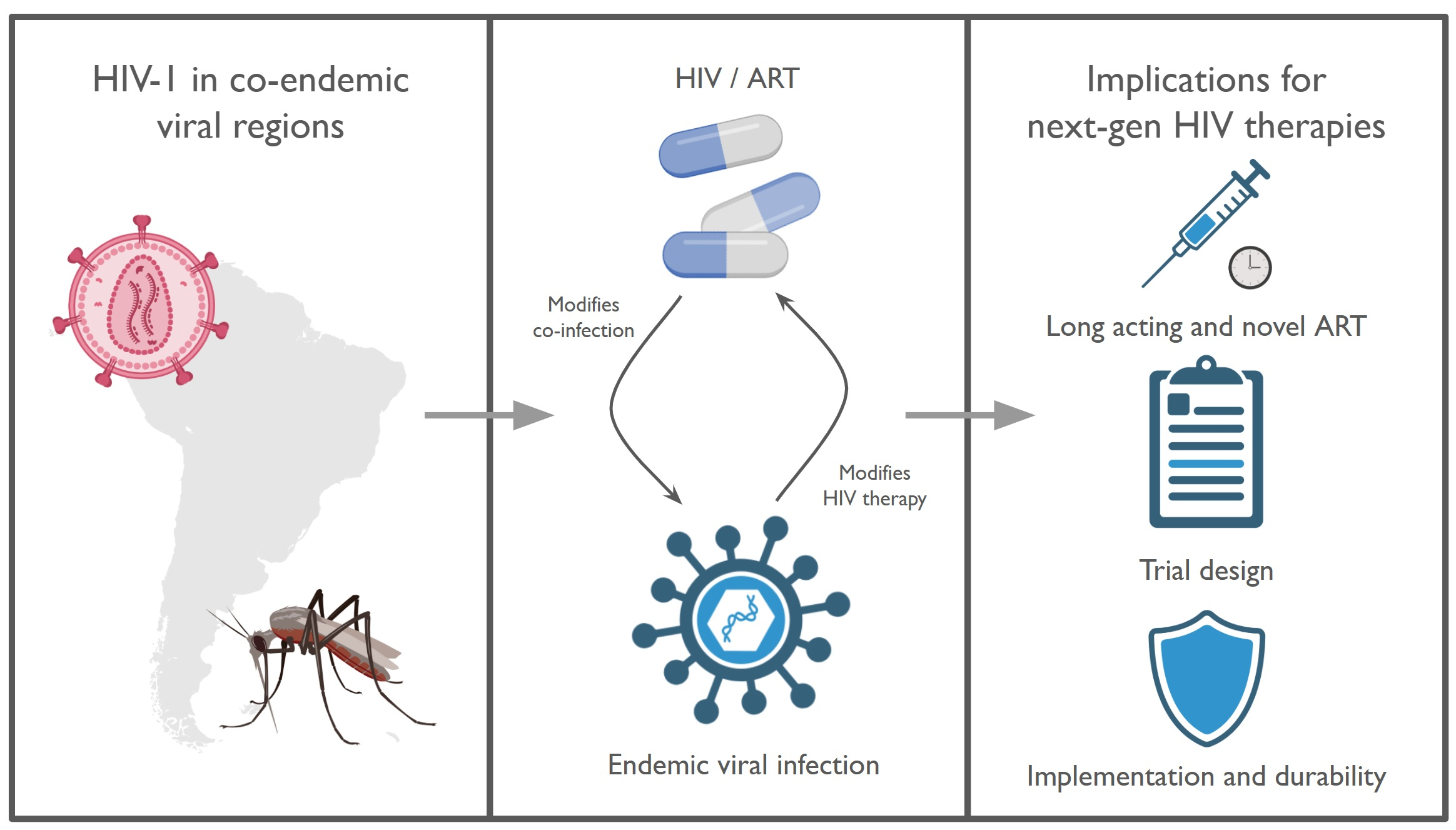

Next-Generation HIV-1 Therapeutics in Co-Endemic Settings

Abstract
1. Introduction
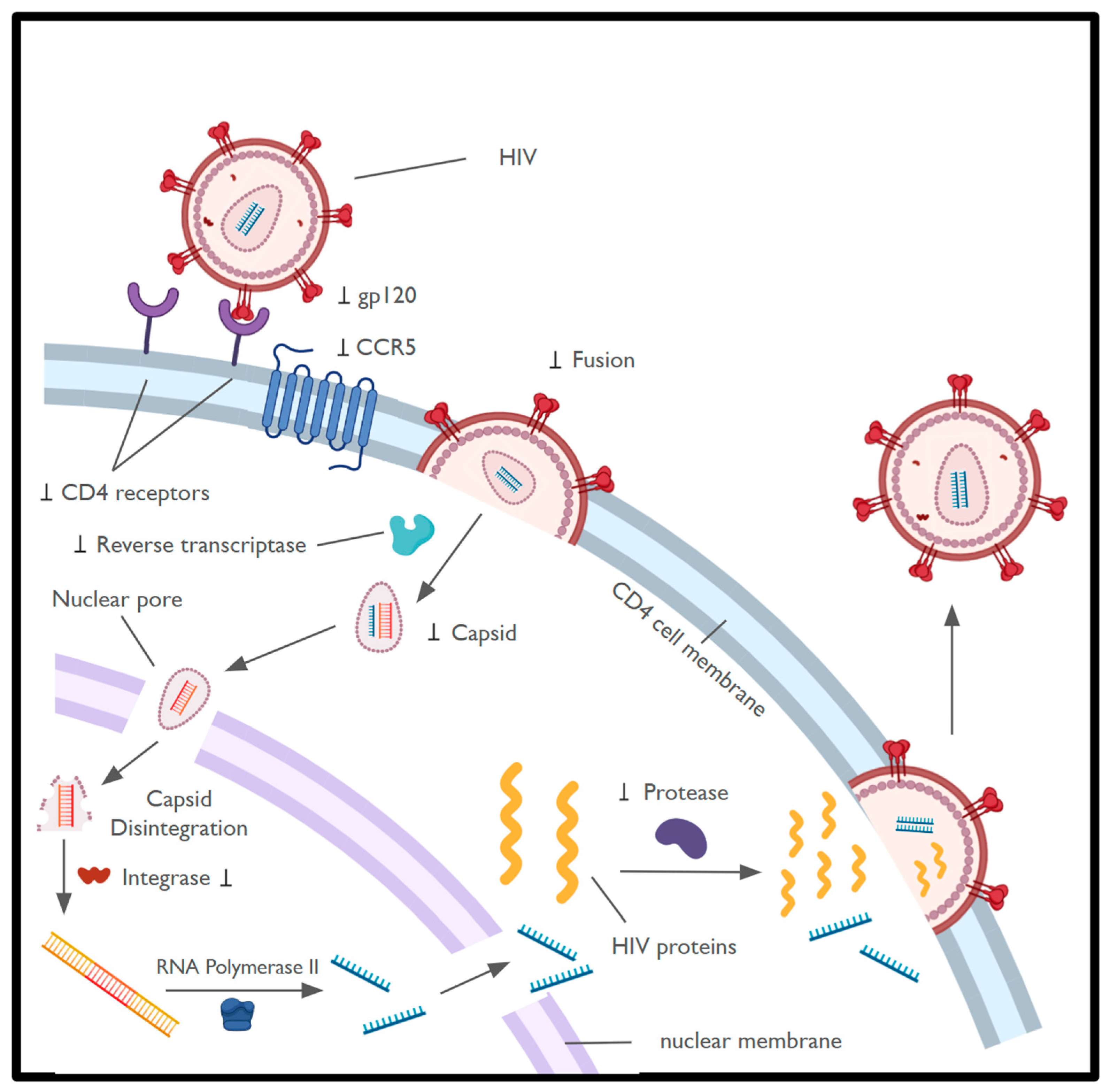
1.1. HIV-1 Life Cycle
1.2. HIV Therapeutics
2. Epidemiological Intersection: HIV-1 and Endemic Viruses in South America
2.1. The HIV-1 Landscape in South America
2.2. The Challenge of Endemic Viral Pathogens
2.3. The Co-Infection Reality
3. Consequences of Viral Co-Infections for HIV-1 Pathogenesis and Treatment
3.1. Immune Activation and HIV-1 Reservoir Dynamics
3.2. Organ Dysfunction and Altered Drug Pharmacokinetics (PK) and Pharmacodynamics (PD)
3.3. Healthcare Disruption and Adherence Challenges
3.4. Diagnostic Uncertainty and Clinical Management Complexity
3.5. Other Modifiers of Treatment Response
4. Evaluating Next-Generation HIV-1 Therapeutics Through a Co-Endemic Lens
4.1. Novel Small Molecules and Long-Acting Antivirals
4.2. Biologics and Immune-Based Strategies
4.3. Cure Strategies: “Shock and Kill” vs. “Block and Lock”
5. A Translational Roadmap for Co-Infection-Aware Therapeutic Development
5.1. Developing Physiologically Relevant Preclinical Models
5.2. Integrating Co-Endemic Endpoints into Clinical Trial Design
5.3. Implementation and Health System Considerations
6. Conclusions and Future Perspectives
Author Contributions
Funding
Institutional Review Board Statement
Informed Consent Statement
Data Availability Statement
Conflicts of Interest
References
- Fact Sheet 2025: Global HIV Statistics. UNAIDS. 2025. Available online: https://www.unaids.org/en/resources/fact-sheet (accessed on 27 December 2025).
- Kim, J.G.; Shan, L.; Kim, J.G.; Shan, L. Beyond Inhibition: A Novel Strategy of Targeting HIV-1 Protease to Eliminate Viral Reservoirs. Viruses 2022, 14, 1179. [Google Scholar] [CrossRef] [PubMed]
- Gallo, R.C.; Salahuddin, S.Z.; Popovic, M.; Shearer, G.M.; Kaplan, M.; Haynes, B.F.; Palker, T.J.; Redfield, R.; Oleske, J.; Safai, B. Frequent detection and isolation of cytopathic retroviruses (HTLV-III) from patients with AIDS and at risk for AIDS. Science 1984, 224, 500–503. [Google Scholar] [CrossRef] [PubMed]
- Gallay, P.; Hope, T.; Chin, D.; Trono, D. HIV-1 infection of nondividing cells through the recognition of integrase by the importin/karyopherin pathway. Proc. Natl. Acad. Sci. USA 1997, 94, 9825–9830. [Google Scholar] [CrossRef]
- Anderson, R.M.; Medley, G.F. Epidemiology of HIV infection and AIDS: Incubation and infectious periods, survival and vertical transmission. Aids 1988, 2, S57–S64. [Google Scholar] [CrossRef]
- Engelman, A.; Cherepanov, P.; Engelman, A.; Cherepanov, P. The structural biology of HIV-1: Mechanistic and therapeutic insights. Nat. Rev. Microbiol. 2012, 10, 279–290. [Google Scholar] [CrossRef]
- Merk, A.; Subramaniam, S. HIV-1 envelope glycoprotein structure. Curr. Opin. Struct. Biol. 2013, 23, 268–276. [Google Scholar] [CrossRef]
- Wilen, C.B.; Tilton, J.C.; Doms, R.W. HIV: Cell Binding and Entry. Cold Spring Harb. Perspect. Med. 2012, 2, a006866. [Google Scholar] [CrossRef]
- Deeks, S.G.; Overbaugh, J.; Phillips, A.; Buchbinder, S.; Deeks, S.G.; Overbaugh, J.; Phillips, A.; Buchbinder, S. HIV infection. Nat. Rev. Dis. Primers 2015, 1, 15035. [Google Scholar] [CrossRef]
- Craigie, R. The Molecular Biology of HIV Integrase. Future Virol. 2012, 7, 679–686. [Google Scholar] [CrossRef]
- Hu, W.-S.; Hughes, S.H. HIV-1 Reverse Transcription. Cold Spring Harb. Perspect. Med. 2012, 2, a006882. [Google Scholar] [CrossRef]
- Freed, E.O. HIV-1 assembly, release and maturation. Nat. Rev. Microbiol. 2015, 13, 484–496. [Google Scholar] [CrossRef]
- Guerrero, S.; Batisse, J.; Libre, C.; Bernacchi, S.; Marquet, R.; Paillart, J.-C. HIV-1 Replication and the Cellular Eukaryotic Translation Apparatus. Viruses 2015, 7, 199–218. [Google Scholar] [CrossRef]
- Ghosh, A.K. Four decades of continuing innovations in the development of antiretroviral therapy for HIV/AIDS: Progress to date and future challenges. Glob. Health Med. 2023, 5, 194–198. [Google Scholar] [CrossRef]
- Shafer, R.W.; Vuitton, D.A. Highly active antiretroviral therapy (Haart) for the treatment of infection with human immunodeficiency virus type 1. Biomed. Pharmacother. 1999, 53, 73–86. [Google Scholar] [CrossRef]
- Chun, T.; Nickle, D.; Justement, J.; Large, D.; Semerjian, A.; Curlin, M.; O’Shea, M.; Hallahan, C.; Daucher, M.; Ward, D.; et al. HIV-infected individuals receiving effective antiviral therapy for extended periods of time continually replenish their viral reservoir. J. Clin. Investig. 2005, 115, 3250–3255. [Google Scholar] [CrossRef]
- Sengupta, S.; Siliciano, R. Targeting the Latent Reservoir for HIV-1. Immunity 2018, 48, 872–895. [Google Scholar] [CrossRef]
- Margolis, D.; Archin, N.; Cohen, M.; Eron, J.; Ferrari, G.; Garcia, J.; Gay, C.; Goonetilleke, N.; Joseph, S.; Swanstrom, R.; et al. Curing HIV: Seeking to Target and Clear Persistent Infection. Cell 2020, 181, 189–206. [Google Scholar] [CrossRef] [PubMed]
- Gavegnano, C.; Brehm, J.; Dupuy, F.; Talla, A.; Ribeiro, S.; Kulpa, D.; Cameron, C.; Santos, S.; Hurwitz, S.; Marconi, V.; et al. Novel mechanisms to inhibit HIV reservoir seeding using Jak inhibitors. PLoS Pathog. 2017, 13, e1006740. [Google Scholar] [CrossRef] [PubMed]
- Spivak, A.; Planelles, V. Novel Latency Reversal Agents for HIV-1 Cure. Annu. Rev. Med. 2018, 69, 421–436. [Google Scholar] [CrossRef] [PubMed]
- Gupta, R.K.; Gregson, J.; Parkin, N.; Haile-Selassie, H.; Tanuri, A.; Forero, L.A.; Kaleebu, P.; Watera, C.; Aghokeng, A.; Mutenda, N.; et al. HIV-1 drug resistance before initiation or re-initiation of first-line antiretroviral therapy in low-income and middle-income countries: A systematic review and meta-regression analysis. Lancet Infect. Dis. 2018, 18, 346–355. [Google Scholar] [CrossRef]
- Dos Anjos Silva, L.; Divino, F.; da Silva Rêgo, M.; Lima Lopes, I.; Nóbrega Costa, C.; da Silva Pereira, F.; de Filippis, I.; Bello, G. HIV-1 Genetic Diversity and Transmitted Drug Resistance in Antiretroviral Treatment-Naive Individuals from Amapá State, Northern Brazil. AIDS Res. Hum. Retroviruses 2016, 32, 373–376. [Google Scholar] [CrossRef]
- Caldeira, D.B.; Vergara, T.R.C.; Schechter, M.; Bicudo, E.L.; Lopes, C.A.F.; Brites, C.; Sprinz, E.; Fernandes, J.C.; Silveira, O.S.; Durães-Carvalho, R.; et al. A national cross-sectional analysis of surveillance drug resistance mutations among recently diagnosed antiretroviral naïve Brazilian people with HIV. Lancet Reg. Health-Am. 2025, 52, 101283. [Google Scholar] [CrossRef]
- Situation Report N.1: Dengue Epidemiological Situation in the Americas—14 December 2023. Pan American Health Organization (PAHO), 2023. Available online: https://www.paho.org/en/documents/situation-report-n1-dengue-epidemiological-situation-americas-14-december-2023#:~:text=The%20Region%20of%20the%20Americas,over%20a%20million%20new%20cases (accessed on 27 December 2025).
- Musso, D.; Gubler, D. Zika Virus. Clin. Microbiol. Rev. 2016, 29, 487–524. [Google Scholar] [CrossRef] [PubMed]
- Possas, C.; Lourenço-de-Oliveira, R.; Tauil, P.; Pinheiro, F.; Pissinatti, A.; Cunha, R.; Freire, M.; Martins, R.; Homma, A. Yellow fever outbreak in Brazil: The puzzle of rapid viral spread and challenges for immunisation. Memórias Do Inst. Oswaldo Cruz 2018, 113, e180278. [Google Scholar] [CrossRef] [PubMed]
- Wilder-Smith, A.; Gubler, D.J.; Weaver, S.C.; Monath, T.P.; Heymann, D.L.; Scott, T.W. Epidemic arboviral diseases: Priorities for research and public health. Lancet Infect. Dis. 2017, 17, e101–e106. [Google Scholar] [CrossRef] [PubMed]
- Travassos da Rosa, J.; de Souza, W.; Pinheiro, F.; Figueiredo, M.; Cardoso, J.; Acrani, G.; Nunes, M. Oropouche Virus: Clinical, Epidemiological, and Molecular Aspects of a Neglected Orthobunyavirus. Am. J. Trop. Med. Hyg. 2017, 96, 1019–1030. [Google Scholar] [CrossRef]
- Frank, M.; Beitscher, A.; Webb, C.; Raabe, V. South American Hemorrhagic Fevers: A summary for clinicians. IJID 2021, 105, 505–515. [Google Scholar] [CrossRef]
- Charrel, R.; Coutard, B.; Baronti, C.; Canard, B.; Nougairede, A.; Frangeul, A.; Morin, B.; Jamal, S.; Schmidt, C.; Hilgenfeld, R.; et al. Arenaviruses and hantaviruses: From epidemiology and genomics to antivirals. Antivir. Res. 2011, 90, 102–114. [Google Scholar] [CrossRef]
- Ganjian, N.; Riviere-Cinnamond, A. Mayaro virus in Latin America and the Caribbean. Rev. Panam. Salud Pública 2020, 44, e14. [Google Scholar] [CrossRef]
- Tian, Y.; Grifoni, A.; Sette, A.; Weiskopf, D. Human T Cell Response to Dengue Virus Infection. Front. Immunol. 2019, 10, 2125. [Google Scholar] [CrossRef]
- Zoufaly, A.; Kiepe, J.; Hertling, S.; Hüfner, A.; Degen, O.; Feldt, T.; Schmiedel, S.; Kurowski, M.; Lunzen, J.v. Immune activation despite suppressive highly active antiretroviral therapy is associated with higher risk of viral blips in HIV-1-infected individuals. HIV Med. 2014, 15, 449–457. [Google Scholar] [CrossRef]
- Mankhatitham, W.; Lueangniyomkul, A.; Manosuthi, W. Hepatotoxicity in patients co-infected with HIV and tuberculosis while receiving NNRTI-based antiretroviral regimen and rifampicin. J. Int. AIDS Soc. 2010, 13, P90. [Google Scholar] [CrossRef]
- Neukam, K.; Espinosa, N.; Collado, A.; Delgado-Fernández, M.; Jiménez-Aguilar, P.; Rivero-Juárez, A.; Hontañón-Antoñana, V.; Gómez-Berrocal, A.; Ruiz-Morales, J.; Merino, D.; et al. Hepatic Safety of Rilpivirine/Emtricitabine/Tenofovir Disoproxil Fumarate Fixed-Dose Single-Tablet Regimen in HIV-Infected Patients with Active Hepatitis C Virus Infection: The hEPAtic Study. PLoS ONE 2016, 11, e0155842. [Google Scholar] [CrossRef]
- Cobb, D.A.; Smith, N.A.; Edagwa, B.J.; McMillan, J.M. Long-acting approaches for delivery of antiretroviral drugs for prevention and treatment of HIV: A review of recent research. Expert Opin. Drug Deliv. 2020, 17, 1227–1238. [Google Scholar] [CrossRef]
- Shubber, Z.; Mills, E.; Nachega, J.; Vreeman, R.; Freitas, M.; Bock, P.; Nsanzimana, S.; Penazzato, M.; Appolo, T.; Doherty, M.; et al. Patient-Reported Barriers to Adherence to Antiretroviral Therapy: A Systematic Review and Meta-Analysis. PLoS Med. 2016, 13, e1002183. [Google Scholar] [CrossRef] [PubMed]
- Jacobs, T.G.; Svensson, E.M.; Musiime, V.; Rojo, P.; Dooley, K.E.; McIlleron, H.; Aarnoutse, R.E.; Burger, D.M.; Turkova, A.; Colbers, A.; et al. Pharmacokinetics of antiretroviral and tuberculosis drugs in children with HIV/TB co-infection: A systematic review. J. Antimicrob. Chemother. 2020, 75, 3433–3457. [Google Scholar] [CrossRef]
- Chang, C.C.; Crane, M.; Zhou, J.; Mina, M.; Post, J.J.; Cameron, B.A.; Lloyd, A.R.; Jaworowski, A.; French, M.A.; Lewin, S.R. HIV and co-infections. Immunol. Rev. 2013, 254, 114–142. [Google Scholar] [CrossRef]
- Deeks, S.G.; Kitchen, C.M.R.; Liu, L.; Guo, H.; Gascon, R.; Narváez, A.B.; Hunt, P.; Martin, J.N.; Kahn, J.O.; Levy, J.; et al. Immune activation set point during early HIV infection predicts subsequent CD4+ T-cell changes independent of viral load. Blood 2004, 104, 942–947. [Google Scholar] [CrossRef]
- Kwan, C.K.; Ernst, J.D. HIV and Tuberculosis: A Deadly Human Syndemic. Clin. Microbiol. Rev. 2011, 24, 351–376. [Google Scholar] [CrossRef] [PubMed]
- González, R.; Ataíde, R.; Naniche, D.; Menéndez, C.; Mayor, A. HIV and malaria interactions: Where do we stand? Expert Rev. Anti-Infect. Ther. 2012, 10, 153–165. [Google Scholar] [CrossRef] [PubMed]
- Nunn, A.S.; Fonseca, E.M.; Bastos, F.I.; Gruskin, S.; Salomon, J.A. Evolution of Antiretroviral Drug Costs in Brazil in the Context of Free and Universal Access to AIDS Treatment. PLoS Med. 2007, 4, e305. [Google Scholar] [CrossRef]
- Soares, E.; Martínez, A.; Souza, T.; Santos, A.; Da Hora, V.; Silveira, J.; Bastos, F.; Tanuri, A.; Soares, M. HIV-1 subtype C dissemination in southern Brazil. AIDS 2005, 19, S81–S86. [Google Scholar] [CrossRef] [PubMed]
- Deeks, S.G. HIV Infection, Inflammation, Immunosenescence, and Aging. Annu. Rev. Med. 2011, 62, 141–155. [Google Scholar] [CrossRef] [PubMed]
- Bhatt, S.; Gething, P.W.; Brady, O.J.; Messina, J.P.; Farlow, A.W.; Moyes, C.L.; Drake, J.M.; Brownstein, J.S.; Hoen, A.G.; Sankoh, O.; et al. The global distribution and burden of dengue. Nature 2013, 496, 504–507. [Google Scholar] [CrossRef]
- Rasmussen, S.A.; Jamieson, D.J.; Honein, M.A.; Petersen, L.R. Zika Virus and Birth Defects—Reviewing the Evidence for Causality. N. Engl. J. Med. 2016, 374, 1981–1987. [Google Scholar] [CrossRef]
- Barrett, A.D.T. Yellow Fever in Angola and Beyond—The Problem of Vaccine Supply and Demand. N. Engl. J. Med. 2016, 375, 301–303. [Google Scholar] [CrossRef] [PubMed]
- Forshey, B.M.; Guevara, C.; Laguna-Torres, V.A.; Cespedes, M.; Vargas, J.; Gianella, A.; Vallejo, E.; Madrid, C.; Aguayo, N.; Gotuzzo, E.; et al. Arboviral Etiologies of Acute Febrile Illnesses in Western South America, 2000–2007. PLoS Neglected Trop. Dis. 2010, 4, e787. [Google Scholar] [CrossRef]
- Delgado, S.; Erickson, B.R.; Agudo, R.; Blair, P.J.; Vallejo, E.; Albariño, C.G.; Vargas, J.; Comer, J.A.; Rollin, P.E.; Ksiazek, T.G.; et al. Chapare Virus, a Newly Discovered Arenavirus Isolated from a Fatal Hemorrhagic Fever Case in Bolivia. PLoS Pathog. 2008, 4, e1000047. [Google Scholar] [CrossRef]
- Pourzangiabadi, M.; Najafi, H.; Fallah, A.; Goudarzi, A.; Pouladi, I. Dengue virus: Etiology, epidemiology, pathobiology, and developments in diagnosis and control—A comprehensive review. Infect. Genet. Evol. 2025, 127, 105710. [Google Scholar] [CrossRef]
- Dhenni, R.; Yohan, B.; Alisjahbana, B.; Lucanus, A.; Riswari, S.F.; Megawati, D.; Haryanto, S.; Gampamole, D.; Hayati, R.F.; Sari, K.; et al. Comparative cytokine profiling identifies common and unique serum cytokine responses in acute chikungunya and dengue virus infection. BMC Infect. Dis. 2021, 21, 639. [Google Scholar] [CrossRef]
- Santos, L.; de Aquino, E.; Fernandes, S.; Ternes, Y.; Feres, V. Dengue, chikungunya, and Zika virus infections in Latin America and the Caribbean: A systematic review. Rev. Panam. Salud Publica 2023, 47, e34. [Google Scholar] [CrossRef]
- Lin, S.; Wang, Q.; Wang, C.; Liu, Q.; Lin, S.; Wang, Q.; Wang, C.; Liu, Q. Oropouche virus: Molecular virological characteristics and research progress of a neglected arbovirus. Virol. J. 2025, 22, 393. [Google Scholar] [CrossRef] [PubMed]
- Silva-Ramos, C.R.; Mejorano-Fonseca, J.A.; Hidalgo, M.; Rodríguez-Morales, A.J.; Faccini-Martínez, Á.A.; Silva-Ramos, C.R.; Mejorano-Fonseca, J.A.; Hidalgo, M.; Rodríguez-Morales, A.J.; Faccini-Martínez, Á.A. Clinical, Epidemiological, and Laboratory Features of Mayaro Virus Infection: A Systematic Review. Curr. Trop. Med. Rep. 2023, 10, 309–319. [Google Scholar] [CrossRef]
- Vainrub, B.; Salas, R. Latin American Hemorrhagic Fever. Infect. Dis. Clin. North Am. 1994, 8, 47–59. [Google Scholar] [CrossRef]
- Calvet, G.A.; Brasil, P.; Siqueira, A.M.; Zogbi, H.E.; de Santis Gonçalves, B.; da Silva Santos, A.; Lupi, O.; Valls de Souza, R.; Damasceno dos Santos Rodrigues, C.; da Silveira Bressan, C.; et al. Zika Virus Infection and Differential Diagnosis in a Cohort of HIV-Infected Patients. JAIDS J. Acquir. Immune Defic. Syndr. 2018, 79, 237–243. [Google Scholar] [CrossRef]
- Pang, J.; Thein, T.-L.; Lye, D.C.; Leo, Y.-S. Differential Clinical Outcome of Dengue Infection among Patients with and without HIV Infection: A Matched Case–Control Study. Am. J. Trop. Med. Hyg. 2015, 92, 1156–1162. [Google Scholar] [CrossRef]
- Delgado-Enciso, I.; Espinoza-Gómez, F.; Ochoa-Jiménez, R.; Valle-Reyes, S.; Vásquez, C.; López-Lemus, U.A.; Delgado-Enciso, I.; Espinoza-Gómez, F.; Ochoa-Jiménez, R.; Valle-Reyes, S.; et al. Dengue Infection in a Human Immunodeficiency Virus-1 Positive Patient Chronically Infected with Hepatitis B Virus in Western Mexico. Am. J. Trop. Med. Hyg. 2017, 96, 122–125. [Google Scholar] [CrossRef]
- Green, A.M.; Beatty, P.R.; Hadjilaou, A.; Harris, E. Innate immunity to dengue virus infection and subversion of antiviral responses. J. Mol. Biol. 2013, 426, 1148–1160. [Google Scholar] [CrossRef] [PubMed]
- Wong, L.M.; Jiang, G. NF-κB sub-pathways and HIV cure: A revisit. EBioMedicine 2020, 63, 103159. [Google Scholar] [CrossRef] [PubMed]
- Pannus, P.; Rutsaert, S.; Wit, S.D.; Allard, S.D.; Vanham, G.; Cole, B.; Nescoi, C.; Aerts, J.; Spiegelaere, W.D.; Tsoumanis, A.; et al. Rapid viral rebound after analytical treatment interruption in patients with very small HIV reservoir and minimal on-going viral transcription. J. Int. AIDS Soc. 2020, 23, e25453. [Google Scholar] [CrossRef]
- Clarridge, K.E.; Blazkova, J.; Einkauf, K.; Petrone, M.; Refsland, E.W.; Justement, J.S.; Shi, V.; Huiting, E.D.; Seamon, C.A.; Lee, G.Q.; et al. Effect of analytical treatment interruption and reinitiation of antiretroviral therapy on HIV reservoirs and immunologic parameters in infected individuals. PLoS Pathog. 2018, 14, e1006792. [Google Scholar] [CrossRef]
- Shan, L.; Deng, K.; Shroff, N.S.; Durand, C.; Rabi, S.A.; Yang, H.-C.; Zhang, H.; Margolick, J.B.; Blankson, J.N.; Siliciano, R.F. Stimulation of HIV-1-specific cytolytic T-lymphocytes facilitates elimination of latent viral reservoir after virus reactivation. Immunity 2012, 36, 491–501. [Google Scholar] [CrossRef]
- Martina, B.E.E.; Koraka, P.; Osterhaus, A.D.M.E. Dengue Virus Pathogenesis: An Integrated View. Clin. Microbiol. Rev. 2009, 22, 564–581. [Google Scholar] [CrossRef]
- Guidelines for the Use of Antiretroviral Agents in Adults and Adolescents with HIV. Available online: https://clinicalinfo.hiv.gov/en/guidelines/hiv-clinical-guidelines-adult-and-adolescent-arv/drug-interactions-overview?utm_source=chatgpt.com (accessed on 27 December 2025).
- Wyles, D.L.; Gerber, J.G. Antiretroviral Drug Pharmacokinetics in Hepatitis with Hepatic Dysfunction. Clin. Infect. Dis. 2005, 40, 174–181. [Google Scholar] [CrossRef]
- Hosseinipour, M.C.; Gupta, R.K.; Van Zyl, G.; Eron, J.J.; Nachega, J.B. Emergence of HIV Drug Resistance During First- and Second-Line Antiretroviral Therapy in Resource-Limited Settings. J. Infect. Dis. 2013, 207, S49–S56. [Google Scholar] [CrossRef] [PubMed]
- Müller, M.; Wandel, S.; Colebunders, R.; Attia, S.; Furrer, H.; Egger, M. Immune reconstitution inflammatory syndrome in patients starting antiretroviral therapy for HIV infection: A systematic review and meta-analysis. Lancet Infect. Dis. 2010, 10, 251–261. [Google Scholar] [CrossRef] [PubMed]
- Belarbi, E.; Vietor, A.; Mendes, A.; Anoh, E.; Zongo, A.; Diarrassouba, A.; Badjo, A.; Ouattara, A.; Some, S.; Kabore, F.; et al. Multicountry surveillance study of acute febrile disease of unknown cause in sub-Saharan Africa. BMJ Public Health 2025, 3, e004155. [Google Scholar] [CrossRef] [PubMed]
- Brentlinger, P.E.; Silva, W.P.; Buene, M.; Morais, L.; Valverde, E.; Vermund, S.H.; Moon, T.D. Management of Fever in Ambulatory HIV-Infected Adults in Resource-Limited Settings: Prospective Observational Evaluation of a New Mozambican Guideline. J. Acquir. Immune Defic. Syndr. 2014, 67, 304–309. [Google Scholar] [CrossRef]
- Massanella, M.; Ignacio, R.A.B.; Lama, J.R.; Pagliuzza, A.; Dasgupta, S.; Alfaro, R.; Rios, J.; Ganoza, C.; Pinto-Santini, D.; Gilada, T.; et al. Long-term effects of early antiretroviral initiation on HIV reservoir markers: A longitudinal analysis of the MERLIN clinical study. Lancet Microbe 2021, 2, e198–e209. [Google Scholar] [CrossRef]
- Desai, N.; Burns, L.; Gong, Y.; Zhi, K.; Kumar, A.; Summers, N.; Kumar, S.; Cory, T.J. An update on drug–drug interactions between antiretroviral therapies and drugs of abuse in HIV systems. Expert Opin. Drug Metab. Toxicol. 2020, 16, 1005–1018. [Google Scholar] [CrossRef]
- Briceño-Patiño, N.; Prieto, M.C.; Manrique, P.; Calderon-Ospina, C.-A.; Gómez, L.; Briceño-Patiño, N.; Prieto, M.C.; Manrique, P.; Calderon-Ospina, C.-A.; Gómez, L. Pharmacokinetic Adaptations in Pregnancy: Implications for Optimizing Antiretroviral Therapy in HIV-Positive Women. Pharmaceutics 2025, 17, 913. [Google Scholar] [CrossRef]
- Bartelink, I.H.; Savic, R.M.; Dorsey, G.; Ruel, T.; Gingrich, D.; Scherpbier, H.J.; Capparelli, E.; Jullien, V.; Young, S.L.; Achan, J.; et al. The Effect of Malnutrition on the Pharmacokinetics and Virologic Outcomes of Lopinavir, Efavirenz and Nevirapine in Food Insecure HIV-infected Children in Tororo, Uganda. Pediatr. Infect. Dis. J. 2015, 34, e63–e70. [Google Scholar] [CrossRef]
- Vo, T.T.; Gupta, S.V. Role of Cytochrome P450 2B6 Pharmacogenomics in Determining Efavirenz-Mediated Central Nervous System Toxicity, Treatment Outcomes, and Dosage Adjustments in Patients with Human Immunodeficiency Virus Infection. Pharmacother. J. Hum. Pharmacol. Drug Ther. 2016, 36, 1245–1254. [Google Scholar] [CrossRef] [PubMed]
- Peltzer, K.; Pengpid, S. Socioeconomic Factors in Adherence to HIV Therapy in Low- and Middle-income Countries. J. Health Popul. Nutr. 2013, 31, 150–170. [Google Scholar] [CrossRef] [PubMed]
- Gulick, R.; Flexner, C. Long-Acting HIV Drugs for Treatment and Prevention. Annu. Rev. Med. 2019, 70, 137–150. [Google Scholar] [CrossRef]
- Baral, S. Leveraging implementation research to end HIV as a public health threat in our lifetimes. Curr. Opin. HIV AIDS 2025, 20, 574–577. [Google Scholar] [CrossRef] [PubMed]
- Link, J.O.; Rhee, M.S.; Tse, W.C.; Zheng, J.; Somoza, J.R.; Rowe, W.; Begley, R.; Chiu, A.; Mulato, A.; Hansen, D.; et al. Clinical targeting of HIV capsid protein with a long-acting small molecule. Nature 2020, 584, 614–618. [Google Scholar] [CrossRef]
- Segal-Maurer, S.; DeJesus, E.; Stellbrink, H.-J.; Castagna, A.; Richmond, G.J.; Sinclair, G.I.; Siripassorn, K.; Ruane, P.J.; Berhe, M.; Wang, H.; et al. Capsid Inhibition with Lenacapavir in Multidrug-Resistant HIV-1 Infection. N. Engl. J. Med. 2022, 386, 1793–1803. [Google Scholar] [CrossRef]
- Nachega, J.B.; Adetokunboh, O.; Uthman, O.A.; Knowlton, A.W.; Altice, F.L.; Schechter, M.; Galárraga, O.; Geng, E.; Peltzer, K.; Chang, L.W.; et al. Community-Based Interventions to Improve and Sustain Antiretroviral Therapy Adherence, Retention in HIV Care and Clinical Outcomes in Low- and Middle-Income Countries for Achieving the UNAIDS 90-90-90 Targets. Curr. HIV/AIDS Rep. 2016, 13, 241–255. [Google Scholar] [CrossRef]
- Margot, N.A.; Jogiraju, V.; Pennetzdorfer, N.; Naik, V.; VanderVeen, L.A.; Ling, J.; Singh, R.; Dvory-Sobol, H.; Ogbuagu, O.; Segal-Maurer, S.; et al. Resistance Analyses in Heavily Treatment-Experienced People With HIV Treated With the Novel HIV Capsid Inhibitor Lenacapavir After 2 Years. J. Infect. Dis. 2025, 231, 1239–1245. [Google Scholar] [CrossRef]
- Agência Nacional de Vigilância Sanitária—Anvisa. Anvisa Aprova Nova Indicação de Medicamento Para Prevenção do HIV-1. Available online: https://www.gov.br/anvisa/pt-br/assuntos/noticias-anvisa/2026/anvisa-aprova-nova-indicacao-para-prevencao-do-hiv-1?utm_source=chatgpt.com (accessed on 27 January 2026).
- Swindells, S.; Andrade-Villanueva, J.-F.; Richmond, G.J.; Rizzardini, G.; Baumgarten, A.; Masiá, M.; Latiff, G.; Pokrovsky, V.; Bredeek, F.; Smith, G.; et al. Long-Acting Cabotegravir and Rilpivirine for Maintenance of HIV-1 Suppression. N. Engl. J. Med. 2020, 382, 1112–1123. [Google Scholar] [CrossRef] [PubMed]
- Brenchley, J.M.; Price, D.A.; Schacker, T.W.; Asher, T.E.; Silvestri, G.; Rao, S.; Kazzaz, Z.; Bornstein, E.; Lambotte, O.; Altmann, D.; et al. Microbial translocation is a cause of systemic immune activation in chronic HIV infection. Nat. Med. 2006, 12, 1365–1371. [Google Scholar] [CrossRef] [PubMed]
- Orkin, C.; Arasteh, K.; Hernández-Mora, M.G.; Pokrovsky, V.; Overton, E.T.; Girard, P.-M.; Oka, S.; Walmsley, S.; Bettacchi, C.; Brinson, C.; et al. Long-Acting Cabotegravir and Rilpivirine after Oral Induction for HIV-1 Infection. N. Engl. J. Med. 2020, 382, 1124–1135. [Google Scholar] [CrossRef]
- Cutrell, A.G.; Schapiro, J.M.; Perno, C.F.; Kuritzkes, D.R.; Quercia, R.; Patel, P.; Polli, J.W.; Dorey, D.; Wang, Y.; Wu, S.; et al. Exploring predictors of HIV-1 virologic failure to long-acting cabotegravir and rilpivirine: A multivariable analysis. AIDS 2021, 35, 1333–1342. [Google Scholar] [CrossRef]
- van Welzen, B.J.; Van Lelyveld, S.F.L.; Ter Beest, G.; Gisolf, J.H.; Geerlings, S.E.; Prins, J.M.; Van Twillert, G.; Van Nieuwkoop, C.; Van der Valk, M.; Burger, D.; et al. Virological Failure After Switch to Long-Acting Cabotegravir and Rilpivirine Injectable Therapy: An In-depth Analysis. Clin. Infect. Dis. 2024, 79, 189–195. [Google Scholar] [CrossRef] [PubMed]
- Pennings, P.S. HIV Drug Resistance: Problems and Perspectives. Infect. Dis. Rep. 2013, 5, e5. [Google Scholar] [CrossRef]
- Rizzardini, G.; Overton, E.T.; Orkin, C.; Swindells, S.; Arasteh, K.; Górgolas Hernández-Mora, M.; Pokrovsky, V.; Girard, P.-M.; Oka, S.; Andrade-Villanueva, J.F.; et al. Long-Acting Injectable Cabotegravir + Rilpivirine for HIV Maintenance Therapy: Week 48 Pooled Analysis of Phase 3 ATLAS and FLAIR Trials. JAIDS 2020, 85, 498–506. [Google Scholar] [CrossRef]
- Kozal, M.; Aberg, J.; Pialoux, G.; Cahn, P.; Thompson, M.; Molina, J.-M.; Grinsztejn, B.; Diaz, R.; Castagna, A.; Kumar, P.; et al. Fostemsavir in Adults with Multidrug-Resistant HIV-1 Infection. N. Engl. J. Med. 2020, 382, 1232–1243. [Google Scholar] [CrossRef]
- Lataillade, M.; Lalezari, J.; Kozal, M.; Aberg, J.; Pialoux, G.; Cahn, P.; Thompson, M.; Molina, J.; Moreno, S.; Grinsztejn, B.; et al. Safety and efficacy of the HIV-1 attachment inhibitor prodrug fostemsavir in heavily treatment-experienced individuals: Week 96 results of the phase 3 BRIGHTE study. Lancet HIV 2020, 7, e740–e751. [Google Scholar] [CrossRef]
- Dicker, I.; Jeffrey, J.L.; Protack, T.; Lin, Z.; Cockett, M.; Chen, Y.; Sit, S.-Y.; Gartland, M.; Meanwell, N.A.; Regueiro-Ren, A.; et al. GSK3640254 Is a Novel HIV-1 Maturation Inhibitor with an Optimized Virology Profile. Antimicrob. Agents Chemother. 2021, 66, e0187621. [Google Scholar] [CrossRef]
- Joshi, S.R.; Cordova, E.; Mitha, E.; Castagna, A.; Ramgopal, M.; Llibre, J.M.; Potthoff, A.; Chernova, O.E.; Nuñez, S.A.; Man, C.; et al. Efficacy and safety of the HIV-1 maturation inhibitor GSK3640254 plus two NRTIs in adults naive to antiretroviral therapy (DOMINO): 24-week results from a randomised phase 2b study. EClinicalMedicine 2025, 89, 103567. [Google Scholar] [CrossRef] [PubMed]
- Zhou, N.; Nowicka-Sans, B.; McAuliffe, B.; Ray, N.; Eggers, B.; Fang, H.; Fan, L.; Healy, M.; Langley, D.R.; Hwang, C.; et al. Genotypic correlates of susceptibility to HIV-1 attachment inhibitor BMS-626529, the active agent of the prodrug BMS-663068. J. Antimicrob. Chemother. 2014, 69, 573–581. [Google Scholar] [CrossRef]
- Markowitz, M.; Gettie, A.; St. Bernard, L.; Andrews, C.D.; Mohri, H.; Horowitz, A.; Grasperge, B.F.; Blanchard, J.L.; Niu, T.; Sun, L.; et al. Once-Weekly Oral Dosing of MK-8591 Protects Male Rhesus Macaques from Intrarectal Challenge with SHIV109CP3. J. Infect. Dis. 2020, 221, 1398–1406. [Google Scholar] [CrossRef]
- Umumararungu, T.; Nyandwi, J.B.; Katandula, J.; Twizeyimana, E.; Tomani, J.C.; Gahamanyi, N.; Ishimwe, N.; Olawode, E.O.; Habarurema, G.; Mpenda, M.; et al. Current status of the small molecule anti-HIV drugs in the pipeline or recently approved. Bioorganic Med. Chem. 2024, 111, 117860. [Google Scholar] [CrossRef]
- Bar-On, Y.; Gruell, H.; Schoofs, T.; Pai, J.A.; Nogueira, L.; Butler, A.L.; Millard, K.; Lehmann, C.; Suárez, I.; Oliveira, T.Y.; et al. Safety and antiviral activity of combination HIV-1 broadly neutralizing antibodies in viremic individuals. Nat. Med. 2018, 24, 1701–1707. [Google Scholar] [CrossRef] [PubMed]
- Mendoza, P.; Gruell, H.; Nogueira, L.; Pai, J.A.; Butler, A.L.; Millard, K.; Lehmann, C.; Suárez, I.; Oliveira, T.Y.; Lorenzi, J.C.C.; et al. Combination therapy with anti-HIV-1 antibodies maintains viral suppression. Nature 2018, 561, 479–484. [Google Scholar] [CrossRef] [PubMed]
- Asokan, M.; Dias, J.; Liu, C.; Maximova, A.; Ernste, K.; Pegu, A.; McKee, K.; Shi, W.; Chen, X.; Almasri, C.; et al. Fc-mediated effector function contributes to the in vivo antiviral effect of an HIV neutralizing antibody. Proc. Natl. Acad. Sci. USA 2020, 117, 18754–18763. [Google Scholar] [CrossRef]
- Bournazos, S.; Ravetch, J.V. Fcγ receptor pathways during active and passive immunization. Immunol. Rev. 2015, 268, 88–103. [Google Scholar] [CrossRef]
- Halstead, S.B. Dengue Antibody-Dependent Enhancement: Knowns and Unknowns. Microbiol. Spectr. 2014, 2, 249–271. [Google Scholar] [CrossRef]
- Katzelnick, L.C.; Gresh, L.; Halloran, M.E.; Mercado, J.C.; Kuan, G.; Gordon, A.; Balmaseda, A.; Harris, E. Antibody-dependent enhancement of severe dengue disease in humans. Science 2017, 358, 929–932. [Google Scholar] [CrossRef]
- Lobo, E.D.; Hansen, R.J.; Balthasar, J.P. Antibody Pharmacokinetics and Pharmacodynamics. J. Pharm. Sci. 2004, 93, 2645–2668. [Google Scholar] [CrossRef] [PubMed]
- Guzman, M.G.; Halstead, S.B.; Artsob, H.; Buchy, P.; Farrar, J.; Gubler, D.J.; Hunsperger, E.; Kroeger, A.; Margolis, H.S.; Martínez, E.; et al. Dengue: A continuing global threat. Nat. Rev. Microbiol. 2010, 8, S7–S16. [Google Scholar] [CrossRef]
- Caskey, M.; Klein, F.; Lorenzi, J.C.C.; Seaman, M.S.; West, A.P.; Buckley, N.; Kremer, G.; Nogueira, L.; Braunschweig, M.; Scheid, J.F.; et al. Viraemia suppressed in HIV-1-infected humans by broadly neutralizing antibody 3BNC117. Nature 2015, 522, 487–491. [Google Scholar] [CrossRef]
- Karuna, S.; Corey, L. Broadly Neutralizing Antibodies for HIV Prevention. Annu. Rev. Med. 2020, 71, 329–346. [Google Scholar] [CrossRef]
- Liu, L. Pharmacokinetics of monoclonal antibodies and Fc-fusion proteins. Protein Cell 2018, 9, 15–32. [Google Scholar] [CrossRef]
- Leibman, R.S.; Riley, J.L. Engineering T Cells to Functionally Cure HIV-1 Infection. Mol. Ther. 2015, 23, 1149–1159. [Google Scholar] [CrossRef]
- Maldini, C.R.; Gayout, K.; Leibman, R.S.; Dopkin, D.L.; Mills, J.P.; Shan, X.; Glover, J.A.; Riley, J.L. HIV-Resistant and HIV-Specific CAR-Modified CD4+ T Cells Mitigate HIV Disease Progression and Confer CD4+ T Cell Help In Vivo. Mol. Ther. 2020, 28, 1585–1599. [Google Scholar] [CrossRef] [PubMed]
- Harrison, R.; Zylberberg, E.; Ellison, S.; Levine, B. Chimeric antigen receptor-T cell therapy manufacturing: Modelling the effect of offshore production on aggregate cost of goods. Cytotherapy 2019, 21, 224–233. [Google Scholar] [CrossRef]
- Brudno, J.N.; Kochenderfer, J.N. Recent advances in CAR T-cell toxicity: Mechanisms, manifestations and management. Blood Rev. 2019, 34, 45–55. [Google Scholar] [CrossRef] [PubMed]
- Archin, N.M.; Liberty, A.L.; Kashuba, A.D.; Choudhary, S.K.; Kuruc, J.D.; Crooks, A.M.; Parker, D.C.; Anderson, E.M.; Kearney, M.F.; Strain, M.C.; et al. Administration of vorinostat disrupts HIV-1 latency in patients on antiretroviral therapy. Nature 2012, 487, 482–485. [Google Scholar] [CrossRef]
- Gutiérrez, C.; Serrano-Villar, S.; Madrid-Elena, N.; Pérez-Elías, M.J.; Martín, M.E.; Barbas, C.; Ruipérez, J.; Muñoz, E.; Muñoz-Fernández, M.A.; Castor, T.; et al. Bryostatin-1 for latent virus reactivation in HIV-infected patients on antiretroviral therapy. AIDS 2016, 30, 1385–1392. [Google Scholar] [CrossRef]
- Kim, Y.; Anderson, J.L.; Lewin, S.R. Getting the “Kill” into “Shock and Kill”: Strategies to Eliminate Latent HIV. Cell Host Microbe 2018, 23, 14–26. [Google Scholar] [CrossRef]
- VE, W.-S.; CW, P.; PM, T.; JN, B. The Effect of Latency Reversal Agents on Primary CD8+ T Cells: Implications for Shock and Kill Strategies for Human Immunodeficiency Virus Eradication. EBioMedicine 2016, 8, 217–229. [Google Scholar] [CrossRef]
- Kessing, C.F.; Nixon, C.C.; Li, C.; Tsai, P.; Takata, H.; Mousseau, G.; Ho, P.T.; Honeycutt, J.B.; Fallahi, M.; Trautmann, L.; et al. In Vivo Suppression of HIV Rebound by Didehydro-Cortistatin A, a “Block-and-Lock” Strategy for HIV-1 Treatment. Cell Rep. 2017, 21, 600–611. [Google Scholar] [CrossRef]
- Vansant, G.; Chen, H.-C.; Zorita, E.; Trejbalová, K.; Miklík, D.; Filion, G.; Debyser, Z. The chromatin landscape at the HIV-1 provirus integration site determines viral expression. Nucleic Acids Res. 2020, 48, 7801–7817. [Google Scholar] [CrossRef]
- Puhl, A.C.; Demo, A.G.; Makarov, V.A.; Ekins, S. New targets for HIV drug discovery. Drug Discov. Today 2019, 24, 1139–1147. [Google Scholar] [CrossRef] [PubMed]
- Lewin, S.; Attoye, T.; Bansbach, C.; Doehle, B.; Dubé, K.; Dybul, M.; SenGupta, D.; Jiang, A.; Johnston, R.; Lamplough, R.; et al. Multi-stakeholder consensus on a target product profile for an HIV cure. Lancet 2021, 8, e42–e50. [Google Scholar] [CrossRef] [PubMed]
- Karpel, M.E.; Boutwell, C.L.; Allen, T.M. BLT humanized mice as a small animal model of HIV infection. Curr. Opin. Virol. 2015, 13, 75–80. [Google Scholar] [CrossRef] [PubMed]
- Chavez, L.; Calvanese, V.; Verdin, E. HIV Latency Is Established Directly and Early in Both Resting and Activated Primary CD4 T Cells. PLoS Pathog. 2015, 11, e1004955. [Google Scholar] [CrossRef]
- Glasner, D.R.; Puerta-Guardo, H.; Beatty, P.R.; Harris, E.; Glasner, D.R.; Puerta-Guardo, H.; Beatty, P.R.; Harris, E. The Good, the Bad, and the Shocking: The Multiple Roles of Dengue Virus Nonstructural Protein 1 in Protection and Pathogenesis. Annu. Rev. Virol. 2018, 5, 227–253. [Google Scholar] [CrossRef]
- Honeycutt, J.B.; Thayer, W.O.; Baker, C.E.; Ribeiro, R.M.; Lada, S.M.; Cao, Y.; Cleary, R.A.; Hudgens, M.G.; Richman, D.D.; Garcia, J.V. HIV persistence in tissue macrophages of humanized myeloid-only mice during antiretroviral therapy. Nat. Med. 2017, 23, 638–643. [Google Scholar] [CrossRef]
- Nixon, D.E.; Landay, A.L. Biomarkers of immune dysfunction in HIV. Curr. Opin. HIV AIDS 2010, 5, 498–503. [Google Scholar] [CrossRef] [PubMed]
- Landovitz, R.J.; Li, S.; Eron, J.J.; Grinsztejn, B.; Dawood, H.; Liu, A.Y.; Magnus, M.; Hosseinipour, M.C.; Panchia, R.; Cottle, L.; et al. Tail-phase safety, tolerability, and pharmacokinetics of long-acting injectable cabotegravir in HIV-uninfected adults: A secondary analysis of the HPTN 077 trial. Lancet HIV 2020, 7, e472–e481. [Google Scholar] [CrossRef] [PubMed]
- Eriksson, S.; Graf, E.H.; Dahl, V.; Strain, M.C.; Yukl, S.A.; Lysenko, E.S.; Bosch, R.J.; Lai, J.; Chioma, S.; Emad, F.; et al. Comparative Analysis of Measures of Viral Reservoirs in HIV-1 Eradication Studies. PLoS Pathog. 2013, 9, e1003174. [Google Scholar] [CrossRef] [PubMed]
- Binkley, A.; Zimmerman, M.; Maguire, C. Expanding Treatment Opportunities: Reviewing the Current State of Injectable Antiretrovirals for Treatment of HIV. Infect. Dis. Ther. 2024, 13, 2475–2488. [Google Scholar] [CrossRef]


| Virus | Vector/Transmission | Typical Clinical Syndrome | Affected Organ Systems | Immunologic Features (Typical) | Relevance to HIV-1 Care | Key Citations |
|---|---|---|---|---|---|---|
| Dengue virus | Aedes aegypti; Aedes albopictus (mosquito) | Acute febrile illness, myalgia/arthralgia, rash; severe dengue leading to plasma leakage, hemorrhage | Liver (transaminitis, possible acute liver injury), vascular endothelium, bone marrow (thrombocytopenia) | Marked innate/adaptive activation, high cytokines (TNF-α, IL-6, IFN-γ), strong T-cell activation; frequent thrombocytopenia | Immune activation leading to transient HIV RNA “blips”; hepatic injury and thrombocytopenia can alter ART PK/toxicity and complicate management | [24,46,51,52] |
| Zika virus | Aedes spp.; sexual transmission reported | Fever, rash, conjunctivitis; congenital infection leading to fetal brain malformations | Nervous system (esp. fetal brain), occasionally liver | Acute inflammatory response; high IgG levels post-infection | Theoretical effects on antibody distribution/clearance and immune milieu relevant to antibody therapies; limited direct clinical data in PLWH | [25,27,47,53] |
| Chikungunya virus | Aedes spp. mosquitoes | High fever, severe polyarthralgia/arthritis (can persist) | Joints, possible hepatic involvement | Pronounced inflammatory cytokine responses (e.g., IL-6) | Episodic immune activation could transiently increase HIV transcription and affect adherence during disabling illness | [27,52,53] |
| Yellow fever virus | Aedes spp.; sylvatic Haemagogus spp. | Fever, jaundice, hemorrhage (severe disease) | Liver (often severe hepatotoxicity), kidney | Cytokine storm in severe cases; marked hepatocellular injury | Hepatic injury can cause large PK changes for CYP-metabolized ARTs and increase toxicity risk | [26,27,48,53] |
| Oropouche virus | Primarily Culicoides paraensis (biting midges); some mosquitos (by report) | Febrile illness with headache, myalgia; occasional neurological involvement | Liver, brain in rare, severe cases | Innate/inflammatory activation typical of arboviral febrile illnesses | Potential for immune activation and PK disruption during symptomatic illness; diagnostic overlap with dengue | [28,49,54] |
| Mayaro virus | Primary sylvatic Haemagogus spp.; secondary Aedes possible | Fever, polyarthralgia similar to chikungunya | Joints, occasional hepatic involvement reported | Cytokine-mediated inflammation | Episodic immune activation; potential diagnostic confusion with chikungunya/dengue | [31,49,55] |
| Junín virus | Zoonotic, rodent reservoir (Calomys spp.) | Argentine hemorrhagic fever: fever, hemorrhage, neurologic signs | Multi-organ including liver, vasculature | Strong innate/adaptive activation; high morbidity/mortality in severe disease | Severe hepatic/vascular injury and systemic inflammation with major implications for ART PK and clinical management | [29,30,50,56] |
| Machupo virus | Zoonotic, rodent reservoir (Calomys callosus) | Bolivian hemorrhagic fever: fever, bleeding, multi-organ dysfunction | Liver, kidney, vasculature, CNS | Intense inflammatory responses in severe disease | Severe illness can cause hepatic/renal dysfunction and disrupt ART and monitoring | [29,30,50,56] |
| Agent/Class | Mechanism of Action | Typical Dosing Interval (Published/Approved) | Key Advantage in Co-Endemic Settings | Principal Vulnerability(s) to Co-Endemic Environment | Key Citations |
|---|---|---|---|---|---|
| Lenacapavir (SUNLENCA) | Capsid inhibitor (CA) | Subcutaneous injection every 6 months (treatment regimens) | Ultra-long-acting, covers long transmission seasons; reduces reliance on daily adherence | Long PK tail, prolonged subtherapeutic exposure if injections missed; documented resistance mutations (e.g., M66I, Q67H); requires robust appointment tracking/delivery systems. | [71,72,73,74,75] |
| Cabotegravir and Rilpivirine (LA CAB/RPV) | INSTI + NNRTI (long-acting IM formulations) | Monthly or every 2 months (approved regimens) | Eliminates daily pill burden; helps during acute illness/health-system strain | Virologic failure associated with pre-existing RPV resistance, some subtypes, low drug exposure/missed injections; PK tail risk | [75,76,77,78,79,80,81] |
| Fostemsavir (Rukobia) | gp120 attachment inhibitor (temsavir active) | Daily oral (for heavily treatment-experienced) | Useful salvage option for multi-drug-resistant HIV; distinct mechanism of action | Requires oral adherence; does not prevent missed-dose problems; PK in severe hepatic illness needs monitoring | [82,83,84,85] |
| Maturation inhibitors (e.g., GSK3640254) | Inhibit Gag cleavage / viral maturation | Daily oral (pipeline/clinical) | Active against viruses with other class resistances; useful as salvage | Limited data in acute co-infection; requires adherence and hepatic function assessment | [84,85,86] |
| Islatravir (MK-8591) | NRTTI | Extended half-life (development formulations for infrequent dosing; clinical status evolving) | Potential for infrequent dosing, resulting in better adherence in unstable settings | Observed dose-dependent lymphocyte/CD4 declines in trials, hematologic safety concern where arboviruses cause cytopenias | [87,88] |
| bNAbs (VRC01, 3BNC117+10-1074, others) | Passive monoclonal antibodies targeting HIV Env | IV/SC dosing ranges from monthly to quarterly in trials | Long-acting suppression option without daily ART; adjunctive/remission strategy | Fc-mediated interactions and immune complex dynamics could alter PK/clearance; pre-existing flavivirus immunity is a mechanistic concern (limited direct clinical data); cost/cold-chain barriers | [89,90,91,92,93,94,95,96,97,98] |
| CAR-T/gene therapies | Engineered cell therapy/gene editing targeting reservoir | Single or limited infusions (complex protocols) | Potentially curative (reservoir elimination) | Highly resource-intensive; safety during/after acute systemic inflammatory infections uncertain in co-endemic, resource-limited settings | [99,100,101,102] |
| Shock and Kill (LRAs) | Reactivate latent HIV to enable immune/therapeutic clearance | Variable (very agent dependent) | Aimed at reservoir reduction | In frequent natural reactivation environments, pharmacologic “shock” without robust “kill” could expand/reshuffle reservoir; toxicity risk during arboviral illness | [103,104,105,106] |
| Block and Lock (e.g., dCA) | Deep transcriptional silencing of HIV LTR | Variable (experimental) | May protect reservoirs from frequent natural immune “shocks” and stabilize latency | Durability and off-target effects remain to be fully established | [107,108,109] |
| Endpoint Type | Specific Measure/Assay | Rationale | Key Citations |
|---|---|---|---|
| Virologic | Plasma HIV-1 RNA (copies/mL), magnitude and duration of transient blips | Directly measures transient HIV-1 transcription/reactivation during immune activation | [32] |
| Immunologic | sCD14, IL-6, CRP, cytokine panel, HIV-1-specific T-cell responses | Quantify immune activation that could drive HIV transcription or affect therapeutic function | [115] |
| Pharmacologic (PK/PD) | ART trough/peak concentrations; population PK modeling; hepatic biomarkers (AST/ALT, bilirubin) | Assess impact of hepatic/GI dysfunction on exposure and risk for subtherapeutic levels or toxicity | [116] |
| Reservoir | Cell-associated HIV-1 DNA and RNA | Evaluate whether acute co-infection perturbs reservoir size or transcriptional activity | [117] |
| Clinical/implementation | Hospitalization, adverse events, missed injections/refills, adherence metrics, viral load monitoring delays | Measure operational impact on continuity of therapy and health-system resilience | [78,118] |
| Exploratory/mechanistic | Antibody titers to endemic viruses, Fc-receptor profiling, immune complex measurements, sequencing for emergent resistance | Investigate mechanisms by which flavivirus immunity or immune complexes could modify bNAb PK/efficacy or select for ART resistance | [89,90,91,92,93,94,95,96,97,98] |
Disclaimer/Publisher’s Note: The statements, opinions and data contained in all publications are solely those of the individual author(s) and contributor(s) and not of MDPI and/or the editor(s). MDPI and/or the editor(s) disclaim responsibility for any injury to people or property resulting from any ideas, methods, instructions or products referred to in the content. |
© 2026 by the authors. Licensee MDPI, Basel, Switzerland. This article is an open access article distributed under the terms and conditions of the Creative Commons Attribution (CC BY) license.
Share and Cite
Ngo, B.; Sutton, R.E. Next-Generation HIV-1 Therapeutics in Co-Endemic Settings. Biomedicines 2026, 14, 330. https://doi.org/10.3390/biomedicines14020330
Ngo B, Sutton RE. Next-Generation HIV-1 Therapeutics in Co-Endemic Settings. Biomedicines. 2026; 14(2):330. https://doi.org/10.3390/biomedicines14020330
Chicago/Turabian StyleNgo, Brandon, and Richard E. Sutton. 2026. "Next-Generation HIV-1 Therapeutics in Co-Endemic Settings" Biomedicines 14, no. 2: 330. https://doi.org/10.3390/biomedicines14020330
APA StyleNgo, B., & Sutton, R. E. (2026). Next-Generation HIV-1 Therapeutics in Co-Endemic Settings. Biomedicines, 14(2), 330. https://doi.org/10.3390/biomedicines14020330