Exploring the Benefits of Cranberries in Dentistry: A Comprehensive Review
 , , ,
, , ,  ,
,  and
and 
Abstract
1. Introduction
2. Methods
2.1. Search Strategy
2.2. Study Selection Process
2.3. Data Extraction
3. Results
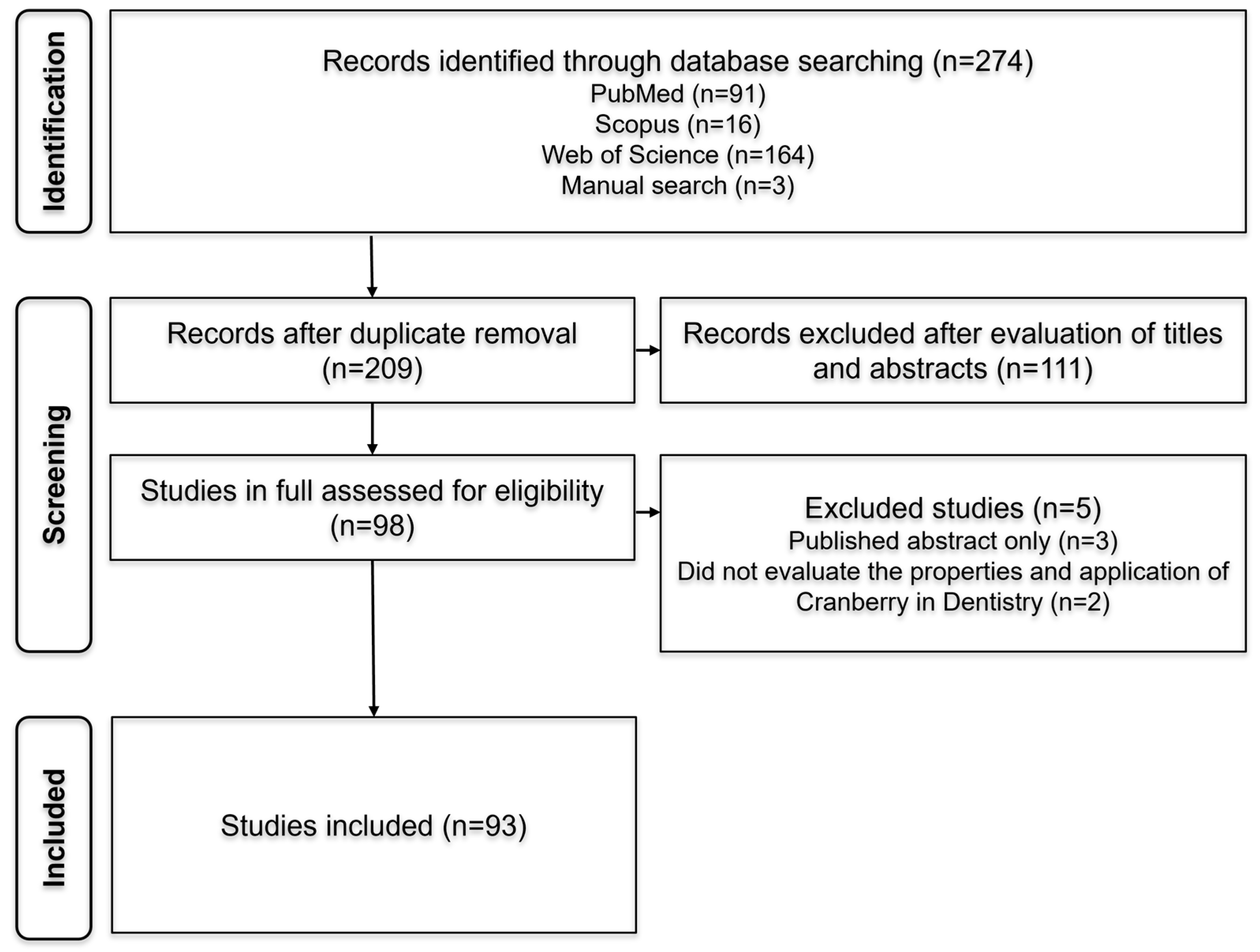
3.1. Study Selection Outcomes
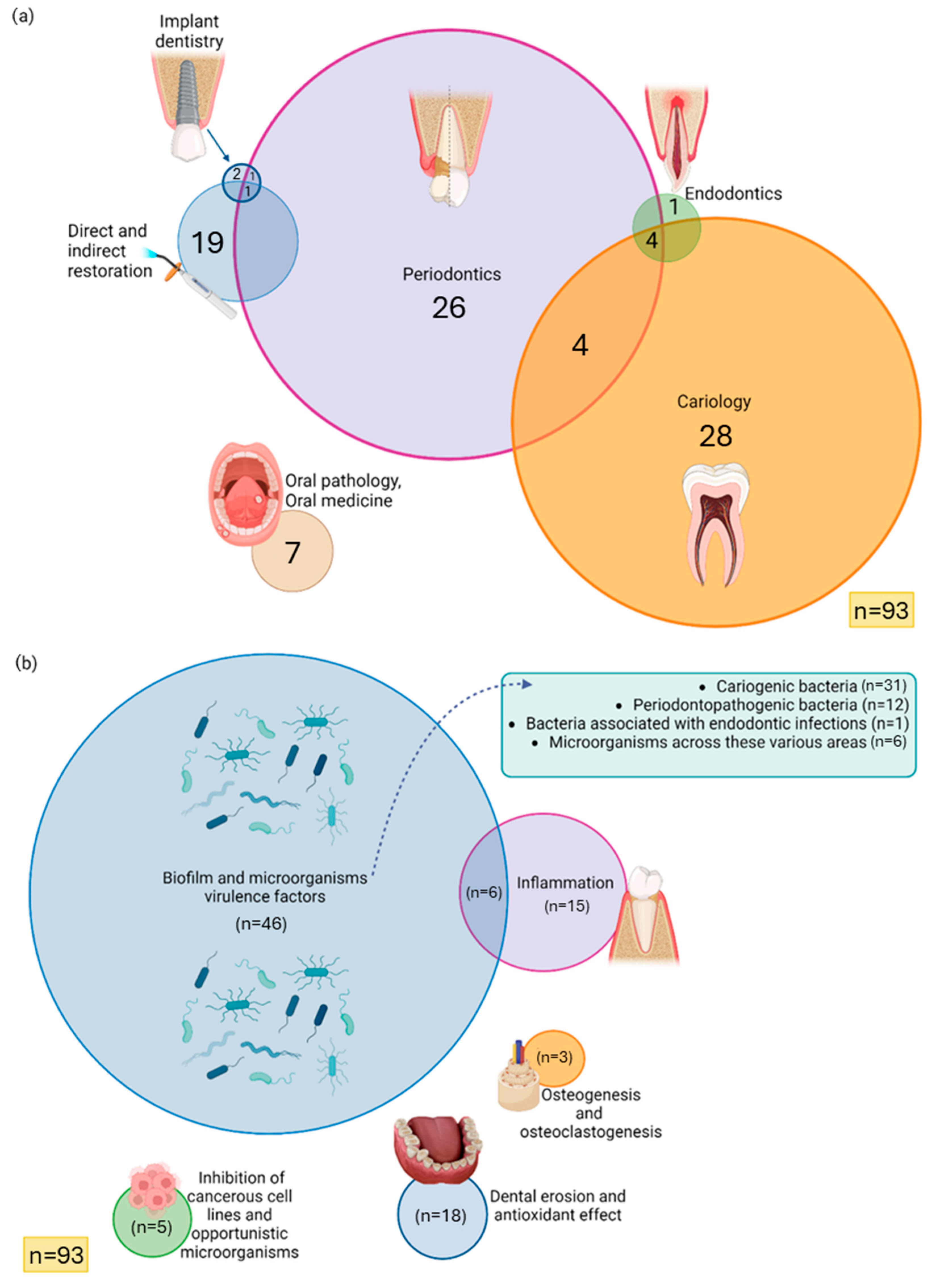
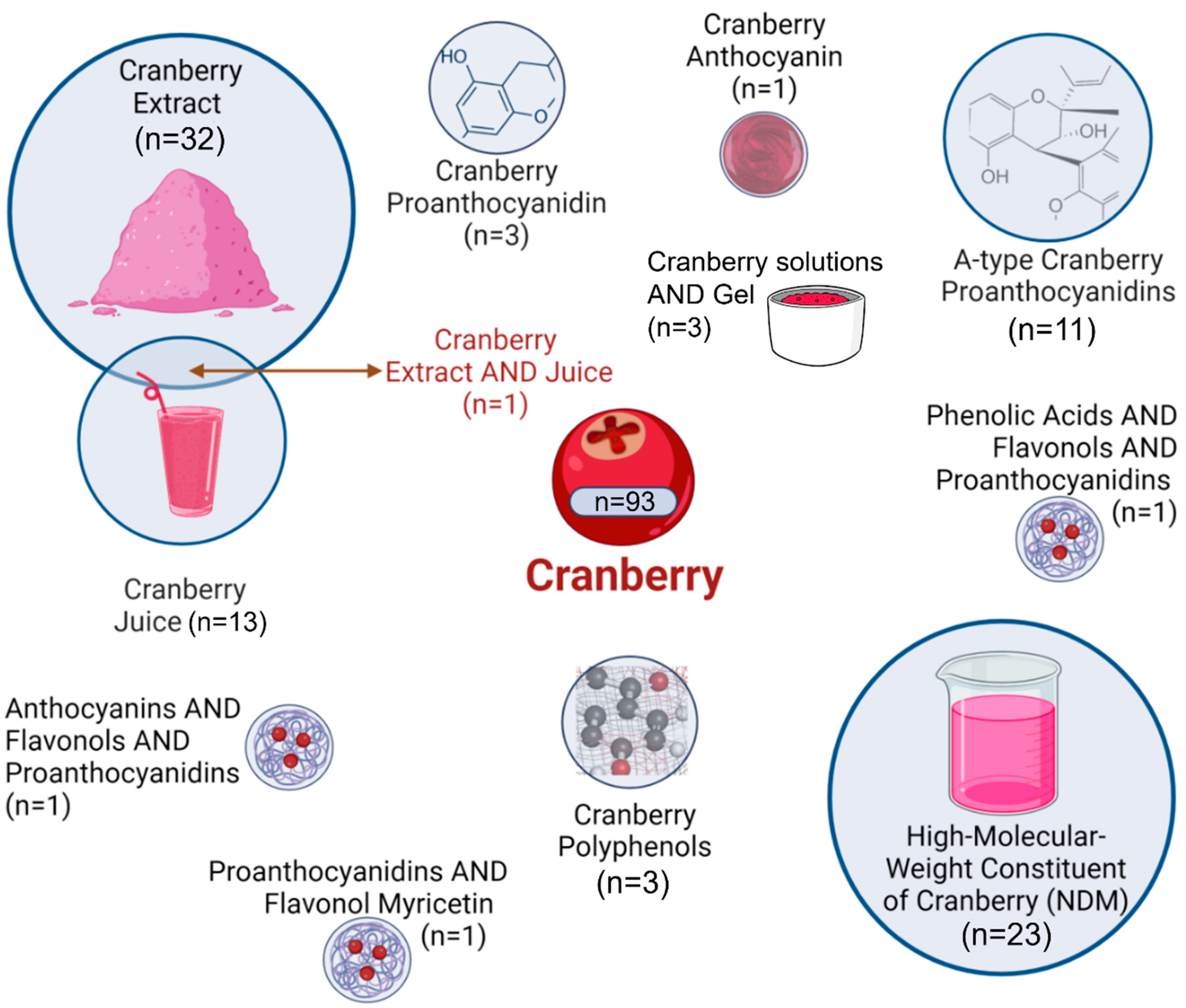
3.2. Study Characteristics
3.3. Biofilm and Microbial Virulence Factors
3.4. Osteogenesis and Osteoclastogenesis
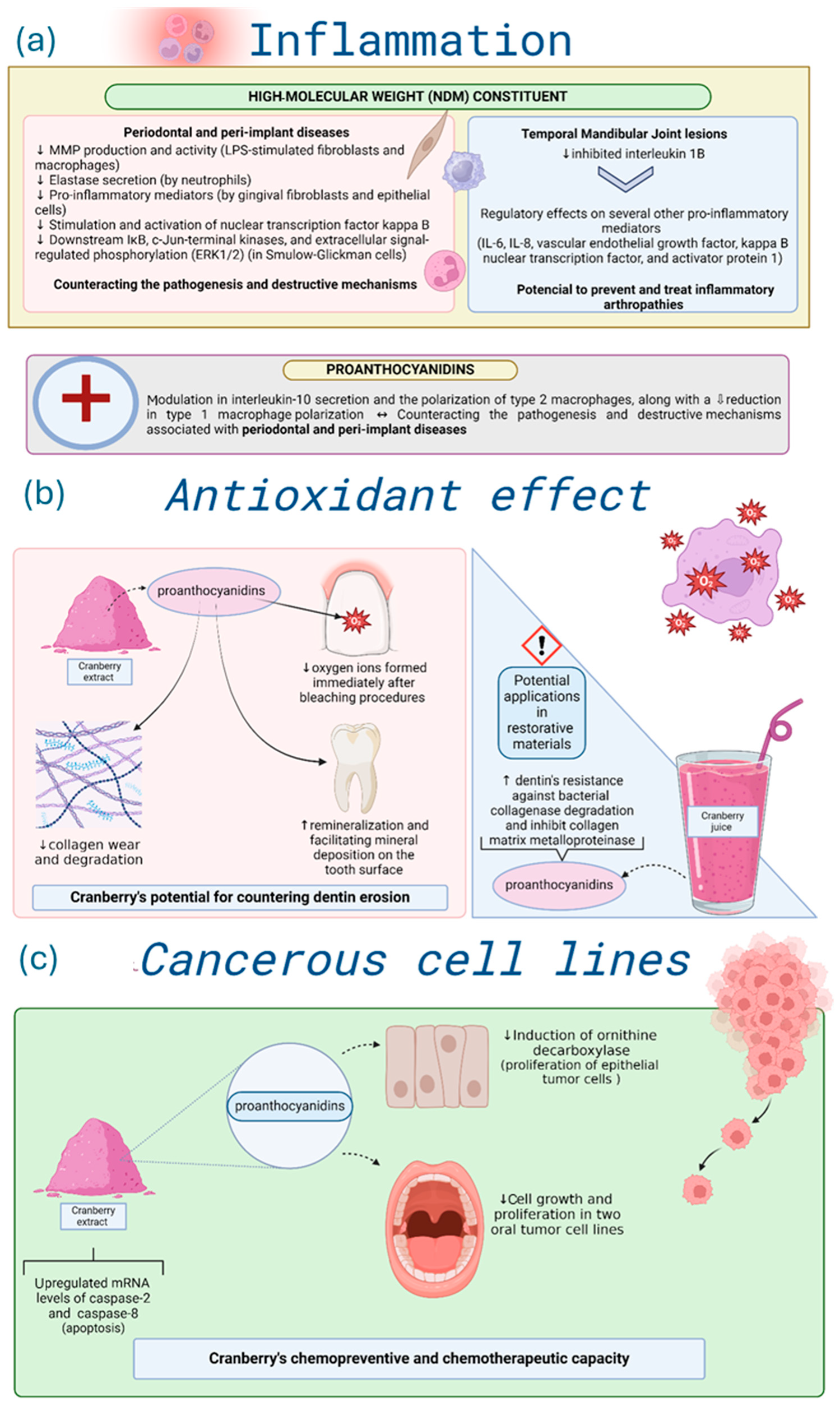
3.5. Inflammation
3.6. Dental Erosion and Antioxidant Effect
3.7. Inhibition of Cancerous Cell Lines
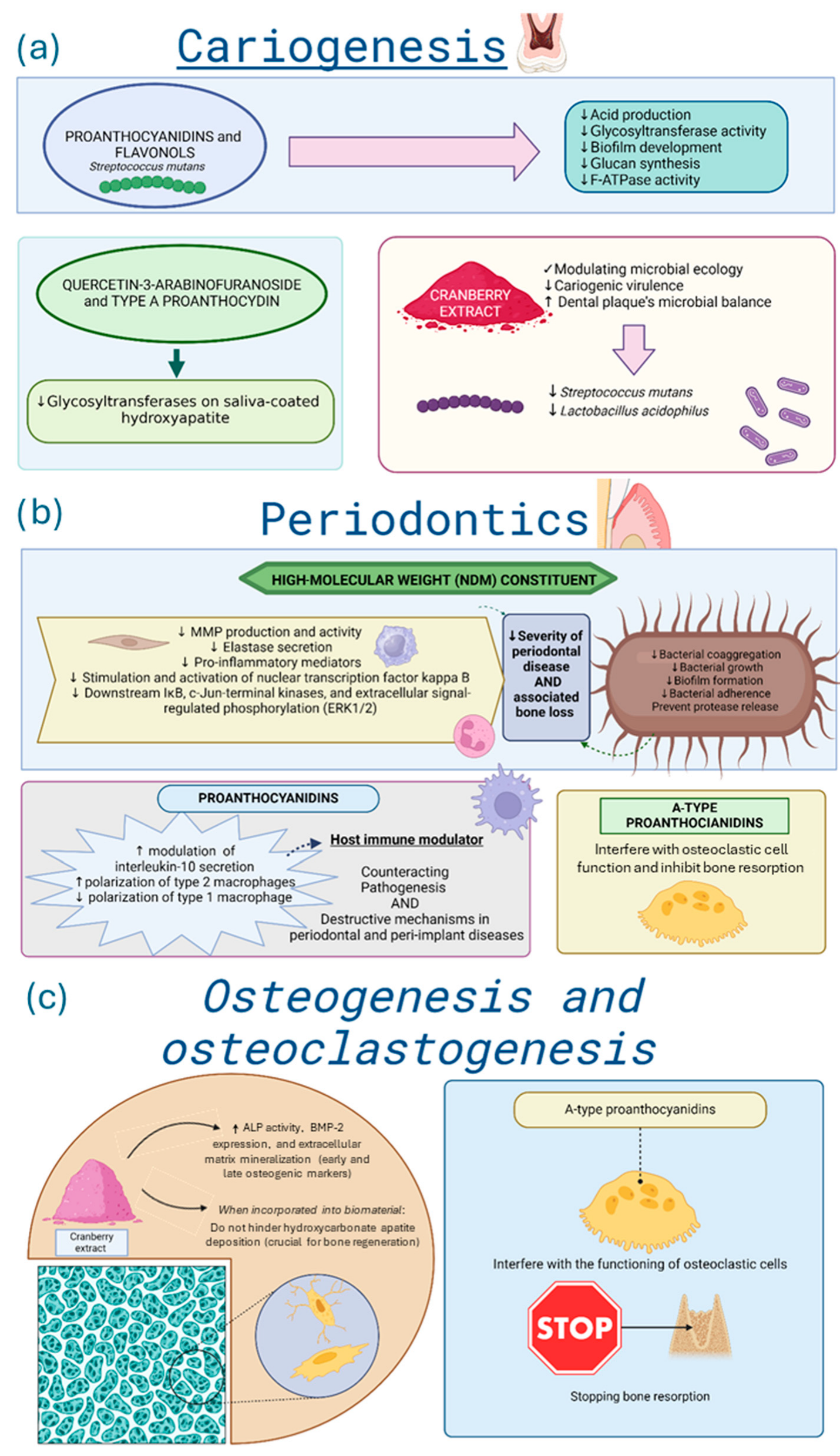
4. Overview on the Use of Cranberries in Dentistry
5. Perspectives on Cranberry Applications in Dentistry
6. Conclusions
Author Contributions
Funding
Data Availability Statement
Acknowledgments
Conflicts of Interest
References
- Philip, N.; Walsh, L.J. Cranberry Polyphenols: Natural Weapons against Dental Caries. Dent. J. 2019, 7, 20. [Google Scholar] [CrossRef] [PubMed]
- Guay, D.R.P. Cranberry and Urinary Tract Infections. Drugs 2009, 69, 775–807. [Google Scholar] [CrossRef]
- Philip, N.; Leishman, S.; Bandara, H.; Walsh, L. Growth Inhibitory Effects of Antimicrobial Natural Products against Cariogenic and Health-Associated Oral Bacterial Species. Oral Health Prev. Dent. 2020, 18, 537–542. [Google Scholar]
- Philip, N.; Leishman, S.J.; Bandara, H.; Walsh, L.J. Polyphenol-Rich Cranberry Extracts Modulate Virulence of Streptococcus mutans-Candida albicans Biofilms Implicated in the Pathogenesis of Early Childhood Caries. Pediatr. Dent. 2019, 41, 56–62. [Google Scholar]
- Anitha, K.V.; Rajkumar, K. Effect Of Vaccinium Macrocarpon On Candida Albicans Adhesion To Denture Base Resin. J. Pharm. Negat. Results 2022, 13, 989–997. [Google Scholar] [CrossRef]
- Ankola, A.; Kumar, V.; Thakur, S.; Singhal, R.; Smitha, T.; Sankeshwari, R. Anticancer and antiproliferative efficacy of a standardized extract of Vaccinium macrocarpon on the highly differentiating oral cancer KB cell line athwart the cytotoxicity evaluation of the same on the normal fibroblast L929 cell line. J. Oral Maxillofac. Pathol. 2020, 24, 258. [Google Scholar] [CrossRef]
- Kato, M.T.; de Cardoso, C.A.B.; Jordão, M.C.; de Galvão, R.P.O.; Iscuissati, A.G.S.; Kinoshita, A.M.O.; Buzalaf, M.A.R. Effect of the cranberry (Vaccinium macrocarpon) juice on reducing dentin erosion: An in vitro study. Braz. Oral Res. 2022, 36, e076. [Google Scholar] [CrossRef]
- Bodet, C.; Grenier, D.; Chandad, F.; Ofek, I.; Steinberg, D.; Weiss, E.I. Potential Oral Health Benefits of Cranberry. Crit. Rev. Food Sci. Nutr. 2008, 48, 672–680. [Google Scholar] [CrossRef]
- Li, X.; Chen, W.; Xia, J.; Pan, D.; Sun, G. The Effects of Cranberry Consumption on Glycemic and Lipid Profiles in Humans: A Systematic Review and Meta-Analysis of Randomized Controlled Trials. Nutrients 2024, 16, 782. [Google Scholar] [CrossRef] [PubMed]
- Pourmasoumi, M.; Hadi, A.; Najafgholizadeh, A.; Joukar, F.; Mansour-Ghanaei, F. The effects of cranberry on cardiovascular metabolic risk factors: A systematic review and meta-analysis. Clin. Nutr. 2020, 39, 774–788. [Google Scholar] [CrossRef] [PubMed]
- Heiss, C.; Istas, G.; Feliciano, R.P.; Weber, T.; Wang, B.; Favari, C.; Mena, P.; Del Rio, D.; Rodriguez-Mateos, A. Daily consumption of cranberry improves endothelial function in healthy adults: A double blind randomized controlled trial. Food Funct. 2022, 13, 3812–3824. [Google Scholar] [CrossRef]
- Masnadi Shirazi, K.; Shirinpour, E.; Masnadi Shirazi, A.; Nikniaz, Z. Effect of cranberry supplementation on liver enzymes and cardiometabolic risk factors in patients with NAFLD: A randomized clinical trial. BMC Complement. Med. Ther. 2021, 21, 283. [Google Scholar] [CrossRef]
- Faheem, S.A.; Saeed, N.M.; El-Naga, R.N.; Ayoub, I.M.; Azab, S.S. Hepatoprotective Effect of Cranberry Nutraceutical Extract in Non-alcoholic Fatty Liver Model in Rats: Impact on Insulin Resistance and Nrf-2 Expression. Front. Pharmacol. 2020, 11, 218. [Google Scholar] [CrossRef]
- Jepson, R.G.; Williams, G.; Craig, J.C. Cranberries for preventing urinary tract infections. Cochrane Database Syst. Rev. 2014, 10, 1–70. [Google Scholar]
- Rajeshwari, H.R.; Dhamecha, D.; Jagwani, S.; Patil, D.; Hegde, S.; Potdar, R.; Metgud, R.; Jalalpure, S.; Roy, S.; Jadhav, K.; et al. Formulation of thermoreversible gel of cranberry juice concentrate: Evaluation, biocompatibility studies and its antimicrobial activity against periodontal pathogens. Mater. Sci. Eng. C 2017, 75, 1506–1514. [Google Scholar] [CrossRef]
- Tanabe, S.; Santos, J.; La, V.D.; Howell, A.B.; Grenier, D. A-Type Cranberry Proanthocyanidins Inhibit the RANKL-Dependent Differentiation and Function of Human Osteoclasts. Molecules 2011, 16, 2365–2374. [Google Scholar] [CrossRef]
- Pappas, E.; Schaich, K.M. Phytochemicals of Cranberries and Cranberry Products: Characterization, Potential Health Effects, and Processing Stability. Crit. Rev. Food Sci. Nutr. 2009, 49, 741–781. [Google Scholar] [CrossRef] [PubMed]
- Oszmiański, J.; Lachowicz, S.; Gorzelany, J.; Matłok, N. The effect of different maturity stages on phytochemical composition and antioxidant capacity of cranberry cultivars. Eur. Food Res. Technol. 2018, 244, 705–719. [Google Scholar] [CrossRef]
- Tipton, D.A.; Cho, S.; Zacharia, N.; Dabbous, M.K. Inhibition of interleukin-17-stimulated interleukin-6 and -8 production by cranberry components in human gingival fibroblasts and epithelial cells. J. Periodontal. Res. 2013, 48, 638–646. [Google Scholar] [CrossRef]
- Polak, D.; Naddaf, R.; Shapira, L.; Weiss, E.I.; Houri-Haddad, Y. Protective Potential of Non-Dialyzable Material Fraction of Cranberry Juice on the Virulence of P. gingivalis and F. nucleatum Mixed Infection. J. Periodontol. 2013, 84, 1019–1025. [Google Scholar] [CrossRef]
- Kumar, V.; Ankola, A.V.; Sankeshwari, R.; Jalihal, S.; Deepak, V.; Jois, H.S. Assessment of the antimicrobial efficacy of hydroalcoholic fruit extract of cranberry against Socransky complexes and predominant cariogenic, mycotic and endodontic climax communities of the oral cavity: An extensive in-vitro study. J. Oral Maxillofac. Pathol. 2019, 23, 407–411. [Google Scholar] [CrossRef] [PubMed]
- Koo, H.; Duarte, S.; Murata, R.M.; Scott-Anne, K.; Gregoire, S.; Watson, G.E.; Singh, A.P.; Vorsa, N. Influence of cranberry proanthocyanidins on formation of biofilms by streptococcus mutans on saliva-coated apatitic surface and on dental caries development in vivo. Caries Res. 2010, 44, 116–126. [Google Scholar] [CrossRef] [PubMed]
- Weiss, E.I.; Lev-Dor, R.; Kashamn, Y.; Goldhar, J.; Sharon, N.; Ofek, I. Inhibiting Interspecies Coaggregation of Plaque Bacteria with a Cranberry Juice Constituent. J. Am. Dent. Assoc. 1998, 129, 1719–1723. [Google Scholar] [CrossRef]
- Yamanaka, A.; Kimizuka, R.; Kato, T.; Okuda, K. Inhibitory effects of cranberry juice on attachment of oral streptococci and biofilm formation. Oral Microbiol. Immunol. 2004, 19, 150–154. [Google Scholar] [CrossRef]
- Steinberg, D.; Feldman, M.; Ofek, I.; Weiss, E.I. Effect of a high-molecular-weight component of cranberry on constituents of dental biofilm. J. Antimicrob. Chemother. 2004, 54, 86–89. [Google Scholar] [CrossRef]
- Koo, H.; Nino De Guzman, P.; Schobel, B.D.; Vacca Smith, A.V.; Bowen, W.H. Influence of cranberry juice on glucan-mediated processes involved in Streptococcus mutans biofilm development. Caries Res. 2005, 40, 20–27. [Google Scholar] [CrossRef]
- Steinberg, D.; Feldman, M.; Ofek, I.; Weiss, E.I. Cranberry high molecular weight constituents promote Streptococcus sobrinus desorption from artificial biofilm. Int. J. Antimicrob. Agents 2005, 25, 247–251. [Google Scholar] [CrossRef]
- Bodet, C.; Chandad, F.; Grenier, D. Anti-inflammatory Activity of a High-molecular-weight Cranberry Fraction on Macrophages Stimulated by Lipopolysaccharides from Periodontopathogens. J. Dent. Res. 2006, 85, 235–239. [Google Scholar] [CrossRef] [PubMed]
- Labrecque, J. Effects of a high-molecular-weight cranberry fraction on growth, biofilm formation and adherence of Porphyromonas gingivalis. J. Antimicrob. Chemother. 2006, 58, 439–443. [Google Scholar] [CrossRef]
- Bodet, C.; Piché, M.; Chandad, F.; Grenier, D. Inhibition of periodontopathogen-derived proteolytic enzymes by a high-molecular-weight fraction isolated from cranberry. J. Antimicrob. Chemother. 2006, 57, 685–690. [Google Scholar] [CrossRef]
- Duarte, S.; Gregoire, S.; Singh, A.P.; Vorsa, N.; Schaich, K.; Bowen, W.H.; Koo, H. Inhibitory effects of cranberry polyphenols on formation and acidogenicity of Streptococcus mutans biofilms. FEMS Microbiol. Lett. 2006, 257, 50–56. [Google Scholar] [CrossRef]
- Gregoire, S.; Singh, A.P.; Vorsa, N.; Koo, H. Influence of cranberry phenolics on glucan synthesis by glucosyltransferases and Streptococcus mutans acidogenicity. J. Appl. Microbiol. 2007, 103, 1960–1968. [Google Scholar] [CrossRef]
- Bodet, C.; Chandad, F.; Grenier, D. Inhibition of host extracellular matrix destructive enzyme production and activity by a high-molecular-weight cranberry fraction. J. Periodontal. Res. 2007, 42, 159–168. [Google Scholar] [CrossRef]
- Bodet, C.; Chandad, F.; Grenier, D. Cranberry components inhibit interleukin-6, interleukin-8, and prostaglandin E 2 production by lipopolysaccharide-activated gingival fibroblasts. Eur. J. Oral Sci. 2007, 115, 64–70. [Google Scholar] [CrossRef] [PubMed]
- Yamanaka, A.; Kouchi, T.; Kasai, K.; Kato, T.; Ishihara, K.; Okuda, K. Inhibitory effect of cranberry polyphenol on biofilm formation and cysteine proteases of Porphyromonas gingivalis. J. Periodontal. Res. 2007, 42, 589–592. [Google Scholar] [CrossRef] [PubMed]
- La, V.D.; Labrecque, J.; Grenier, D. Cytoprotective effect of Proanthocyanidin-rich cranberry fraction against bacterial cell wall-mediated toxicity in macrophages and epithelial cells. Phytother. Res. 2009, 23, 1449–1452. [Google Scholar] [CrossRef]
- La, V.D.; Howell, A.B.; Grenier, D. Cranberry proanthocyanidins inhibit MMP production and activity. J. Dent. Res. 2009, 88, 627–632. [Google Scholar] [CrossRef]
- Feldman, M.; Weiss, E.; Shemesh, M.; Ofek, I.; Bachrach, G.; Rozen, R.; Steinberg, D. Cranberry constituents affect fructosyltransferase expression in Streptococcus mutans. Altern. Ther. Health Med. 2009, 15, 32–38. [Google Scholar]
- Feldman, M.; Weiss, E.I.; Ofek, I.; Shemesh, M.; Steinberg, D. In vitro real-time interactions of cranberry constituents with immobilized fructosyltransferase. J. Med. Food 2010, 13, 1153–1160. [Google Scholar] [CrossRef] [PubMed]
- La, V.D.; Howell, A.B.; Grenier, D. Anti-Porphyromonas gingivalis and Anti-Inflammatory Activities of A-Type Cranberry Proanthocyanidins. Antimicrob. Agents Chemother. 2010, 54, 1778–1784. [Google Scholar] [CrossRef]
- Kingsley, K.; Chatelain, K.; Phippen, S.; McCabe, J.; Teeters, C.A.; O’Malley, S. Cranberry and grape seed extracts inhibit the proliferative phenotype of oral squamous cell carcinomas. Evid.-Based Complement. Altern. Med. 2011, 2011, 467691. [Google Scholar]
- Babu, J.; Blair, C.; Jacob, S.; Itzhak, O. Inhibition of Streptococcus gordonii metabolic activity in biofilm by cranberry juice high-molecular-weight component. J. Biomed. Biotechnol. 2012, 2012, 590384. [Google Scholar] [CrossRef]
- Feldman, M.; Grenier, D. Cranberry proanthocyanidins act in synergy with licochalcone A to reduce Porphyromonas gingivalis growth and virulence properties, and to suppress cytokine secretion by macrophages. J. Appl. Microbiol. 2012, 113, 438–447. [Google Scholar] [CrossRef]
- Feldman, M.; Tanabe, S.; Howell, A.; Grenier, D. Cranberry proanthocyanidins inhibit the adherence properties of Candida albicans and cytokine secretion by oral epithelial cells. BMC Complement. Altern. Med. 2012, 12, 6. [Google Scholar] [CrossRef]
- Tipton, D.A.; Babu, J.P.; Dabbous, M.K. Effects of cranberry components on human aggressive periodontitis gingival fibroblasts. J. Periodontal. Res. 2013, 48, 433–442. [Google Scholar] [CrossRef]
- Tipton, D.A.; Carter, T.B.; Dabbous, M.K. Inhibition of interleukin 1β-stimulated interleukin-6 production by cranberry components in human gingival epithelial cells: Effects on nuclear factor κB and activator protein 1 activation pathways. J. Periodontal. Res. 2014, 49, 437–447. [Google Scholar] [CrossRef] [PubMed]
- Hrynash, H.; Pilly, V.K.; Mankovskaia, A.; Xiong, Y.; Nogueira Filho, G.; Bresciani, E.; Lévesque, C.M.; Prakki, A. Anthocyanin incorporated dental copolymer: Bacterial growth inhibition, mechanical properties, and compound release rates and stability by 1H NMR. Int. J. Dent. 2014, 2014, 289401. [Google Scholar] [CrossRef]
- Kim, D.; Hwang, G.; Liu, Y.; Wang, Y.; Singh, A.P.; Vorsa, N.; Koo, H. Cranberry flavonoids modulate cariogenic properties of mixed-species biofilm through exopolysaccharides-matrix disruption. PLoS ONE 2015, 10, e0145844. [Google Scholar] [CrossRef] [PubMed]
- Lombardo Bedran, T.B.; Palomari Spolidorio, D.; Grenier, D. Green tea polyphenol epigallocatechin-3-gallate and cranberry proanthocyanidins act in synergy with cathelicidin (LL-37) to reduce the LPS-induced inflammatory response in a three-dimensional co-culture model of gingival epithelial cells and fibroblasts. Arch. Oral Biol. 2015, 60, 845–853. [Google Scholar] [CrossRef] [PubMed]
- Tipton, D.A.; Hatten, A.A.; Babu, J.P.; Dabbous, M.K. Effect of glycated albumin and cranberry components on interleukin-6 and matrix metalloproteinase-3 production by human gingival fibroblasts. J. Periodontal. Res. 2016, 51, 228–236. [Google Scholar] [CrossRef]
- Tipton, D.A.; Christian, J.; Blumer, A. Effects of cranberry components on IL-1β-stimulated production of IL-6, IL-8 and VEGF by human TMJ synovial fibroblasts. Arch. Oral Biol. 2016, 68, 88–96. [Google Scholar] [CrossRef] [PubMed]
- Neto, C.C.; Penndorf, K.A.; Feldman, M.; Meron-Sudai, S.; Zakay-Rones, Z.; Steinberg, D.; Fridman, M.; Kashman, Y.; Ginsburg, I.; Ofek, I.; et al. Characterization of non-dialyzable constituents from cranberry juice that inhibit adhesion, co-aggregation and biofilm formation by oral bacteria. Food Funct. 2017, 8, 1955–1965. [Google Scholar] [CrossRef]
- Boteon, A.P.; Kato, M.T.; Buzalaf, M.A.R.; Prakki, A.; Wang, L.; Rios, D.; Honório, H.M. Effect of Proanthocyanidin-enriched extracts on the inhibition of wear and degradation of dentin demineralized organic matrix. Arch. Oral Biol. 2017, 84, 118–124. [Google Scholar] [CrossRef] [PubMed]
- Galarraga-Vinueza, M.E.; Mesquita-Guimarães, J.; Magini, R.S.; Souza, J.C.M.; Fredel, M.C.; Boccaccini, A.R. Mesoporous bioactive glass embedding propolis and cranberry antibiofilm compounds. J. Biomed. Mater. Res. A 2018, 106, 1614–1625. [Google Scholar] [CrossRef]
- Khairnar, M.R.; Wadgave, U.; Jadhav, H.; Naik, R. Anticancer activity of chlorhexidine and cranberry extract: An in-vitro study. J. Exp. Ther. Oncol. 2018, 12, 201–205. [Google Scholar]
- Nandakumar, M.; Nasim, I. Comparative evaluation of grape seed and cranberry extracts in preventing enamel erosion: An optical emission spectrometric analysis. J. Conserv. Dent. 2018, 21, 516–520. [Google Scholar] [CrossRef]
- Abu-Obaid, E.; Salama, F.; Abu-Obaid, A.; Alanazi, F.; Salem, M.; Auda, S. Comparative evaluation of the antimicrobial effects of different mouthrinses against Streptococcus mutans: An in vitro study. J. Clin. Pediatr. Dent. 2019, 43, 398–407. [Google Scholar] [CrossRef]
- Ben Lagha, A.; Howell, A.; Grenier, D. Cranberry Proanthocyanidins Neutralize the Effects of Aggregatibacter actinomycetemcomitans Leukotoxin. Toxins 2019, 11, 662. [Google Scholar] [CrossRef]
- Eggula, A.; Pranitha, V.; Dwijendra, K.S.; Nagarjuna, G.; Shaik, N.; Fatima, M. Reversal of Compromised Bond Strength of Bleached Enamel Using Cranberry Extract as an Antioxidant: An In Vitro Study. Cureus 2019, 11, e6188. [Google Scholar] [CrossRef] [PubMed]
- Philip, N.; Bandara, H.M.H.N.; Leishman, S.J.; Walsh, L.J. Inhibitory effects of fruit berry extracts on Streptococcus mutans biofilms. Eur. J. Oral Sci. 2019, 127, 122–129. [Google Scholar] [CrossRef]
- Philip, N.; Bandara, H.M.H.N.; Leishman, S.J.; Walsh, L.J. Effect of polyphenol-rich cranberry extracts on cariogenic biofilm properties and microbial composition of polymicrobial biofilms. Arch. Oral Biol. 2019, 102, 1–6. [Google Scholar] [CrossRef]
- Kokubu, E.; Kinoshita, E.; Ishihara, K. Inhibitory Effects of Lingonberry Extract on Oral Streptococcal Biofilm Formation and Bioactivity. Bull. Tokyo Dent. Coll. 2019, 60, 1–9. [Google Scholar] [CrossRef] [PubMed]
- Galarraga-Vinueza, M.E.; Dohle, E.; Ramanauskaite, A.; Al-Maawi, S.; Obreja, K.; Magini, R.; Sader, R.; Ghanaati, S.; Schwarz, F. Anti-inflammatory and macrophage polarization effects of Cranberry Proanthocyanidins (PACs) for periodontal and peri-implant disease therapy. J. Periodontal. Res. 2020, 55, 821–829. [Google Scholar] [CrossRef]
- Singhal, R.; Patil, P.; Siddibhavi, M.; Ankola, A.V.; Sankeshwari, R.; Kumar, V. Antimicrobial and antibiofilm effect of cranberry extract on Streptococcus mutans and Lactobacillus acidophilus: An in vitro study. Int. J. Clin. Pediatr. Dent. 2020, 13, 11–15. [Google Scholar] [CrossRef]
- Abu-obaid, E.; Salama, F.; Abu-obaid, A.; Alanazi, F.; Salem, M.; Auda, S.; Khadra, T. Al Comparative Evaluation of the Antimicrobial Effects of Different Mouthrinses against Oral Pathogens: An In Vitro Study. J. Contemp. Dent. Pract. 2020, 21, 500–508. [Google Scholar] [CrossRef]
- Kranz, S.; Guellmar, A.; Olschowsky, P.; Tonndorf-Martini, S.; Heyder, M.; Pfister, W.; Reise, M.; Sigusch, B. Antimicrobial effect of natural berry juices on common oral pathogenic bacteria. Antibiotics 2020, 9, 533. [Google Scholar] [CrossRef] [PubMed]
- Keshaav Krishnaa, P.; Prabakar, J. Efficacy of cranberry distillate as a root canal irrigant: An in vitro microbial analysis. Plant Cell Biotechnol. Mol. Biol. 2020, 21, 90–95. [Google Scholar]
- Islam, S.; Riaz, Z.; Waqar, A.; Nassar, M.; Hossain, A.; Rahman, M.M. The Effect of Cranberry, Strawberry and Blueberry Juices on the Viability of Cariogenic Bacteria: An in Vitro Study. J. Int. Dent. Med. Res. 2020, 13, 436–441. [Google Scholar]
- Islam, S.; Aryal, S.A.C.; Nassar, M.; Tagani, J. Bio-Modification of Demineralized Dentin Collagen by Proanthocyanidins-enriched Cranberry: An In-Vitro Study. J. Int. Dent. Med. Res. 2021, 14, 919–924. [Google Scholar]
- Wu, C.D.; Huang, E.; Li, W.; White, M.; Jung, S.; Xie, Q. Beverages containing plant-derived polyphenols inhibit growth and biofilm formation of streptococcus mutans and children’s supragingival plaque bacteria. Beverages 2021, 7, 43. [Google Scholar] [CrossRef]
- Souissi, M.; Ben Lagha, A.; Chaieb, K.; Grenier, D. Effect of a Berry Polyphenolic Fraction on Biofilm Formation, Adherence Properties and Gene Expression of Streptococcus mutans and Its Biocompatibility with Oral Epithelial Cells. Antibiotics 2021, 10, 46. [Google Scholar] [CrossRef]
- Pellerin, G.; Bazinet, L.; Grenier, D. Effect of cranberry juice deacidification on its antibacterial activity against periodontal pathogens and its anti-inflammatory properties in an oral epithelial cell model. Food Funct. 2021, 12, 10470–10483. [Google Scholar] [CrossRef] [PubMed]
- Wang, Y.; Green, A.; Yao, X.; Liu, H.; Nisar, S.; Gorski, J.P.; Hass, V. Cranberry juice extract rapidly protects demineralized dentin against digestion and inhibits its gelatinolytic activity. Materials 2021, 14, 3637. [Google Scholar] [CrossRef]
- Rahman, H.; Ansari, M.I.; Khangwal, M.; Solanki, R.; Mansoori, S. Comparative evaluation of 6% cranberry, 10% green tea, 50% aloe vera and 10% sodium ascorbate on reversing the immediate bond strength of bleached enamel: In vitro study. J. Oral Biol. Craniofac. Res. 2021, 11, 107–112. [Google Scholar] [CrossRef] [PubMed]
- Niemeyer, S.H.; Baumann, T.; Lussi, A.; Meyer-Lueckel, H.; Scaramucci, T.; Carvalho, T.S. Salivary pellicle modification with polyphenol-rich teas and natural extracts to improve protection against dental erosion. J. Dent. 2021, 105, 103567. [Google Scholar] [CrossRef] [PubMed]
- Pellerin, G.; Bazinet, L.; Grenier, D. Deacidification of cranberry juice reduces its antibacterial properties against oral streptococci but preserves barrier function and attenuates the inflammatory response of oral epithelial cells. Foods 2021, 10, 1634. [Google Scholar] [CrossRef]
- Vaillancourt, K.; Ben Lagha, A.; Grenier, D. Effects of a Berry Polyphenolic Fraction on the Pathogenic Properties of Porphyromonas gingivalis. Front. Oral Health 2022, 3, 923663. [Google Scholar] [CrossRef]
- Wang, R.; Stanley, T.; Yao, X.; Liu, H.; Wang, Y. Collagen stabilization by natural cross-linkers: A qualitative and quantitative FTIR study on ultra-thin dentin collagen model. Dent. Mater. J. 2022, 41, 2021–2247. [Google Scholar] [CrossRef]
- Alanazi, A.M.; Khan, A.A.; Mahmood, A.; Tahir, A.; Kamal, M.A. The effect of ascorbic acid and cranberry on the bond strength, surface roughness, and surface hardness of bleached enamel with hydrogen peroxide and zinc phthalocyanine activated by photodynamic therapy. Photodiagnosis Photodyn. Ther. 2023, 43, 103685. [Google Scholar] [CrossRef]
- Baumann, T.; Niemeyer, S.H.; Lussi, A.; Scaramucci, T.; Carvalho, T.S. Rinsing solutions containing natural extracts and fluoride prevent enamel erosion in vitro. J. Appl. Oral Sci. 2023, 31, e20230108. [Google Scholar] [CrossRef]
- Nisar, S.; Hass, V.; Wang, R.; Walker, M.P.; Wang, Y. Effect of Different Crosslinkers on Denatured Dentin Collagen’s Biostability, MMP Inhibition and Mechanical Properties. Polymers 2023, 15, 3683. [Google Scholar] [CrossRef]
- Silva, A.M.; Zaniboni, J.F.; de Alencar, C.M.; de Campos, E.A.; Dantas, A.A.R.; Kuga, M.C. Fracture resistance and bonding performance after antioxidants pre-treatment in non-vital and bleached teeth. Braz. Dent. J. 2023, 34, 62–71. [Google Scholar] [CrossRef]
- Bauer, Y.G.; Magini, E.B.; Farias, I.V.; Della Pasqua Neto, J.; Fongaro, G.; Reginatto, F.H.; Silva, I.T.; Cruz, A.C.C. Potential of Cranberry to Stimulate Osteogenesis: An In Vitro Study. Coatings 2024, 14, 1352. [Google Scholar] [CrossRef]
- Dame-Teixeira, N.; El-Gendy, R.; de Oliveira, A.S.; Holanda, C.A.; Romeiro, L.A.S.; Do, T. Engineering a dysbiotic biofilm model for testing root caries interventions through microbial modulation. Microbiome 2024, 12, 145. [Google Scholar] [CrossRef] [PubMed]
- Ingle, A.S.; Devadiga, D.; Jain, N.; Bhardwaj, S. Biomimetic remineralization of eroded dentin by synergistic effect of calcium phosphate and plant-based biomodifying agents: An in vitro study. J. Conserv. Dent. Endod. 2024, 27, 1221–1227. [Google Scholar] [CrossRef]
- Lewis, N.V.; Aggarwal, S.; Dhatavkar, P. Comparative evaluation of the degree of conversion of an 8th-generation bonding agent when applied to normal dentin or caries-affected dentin, pre-treated with MMP inhibitors—An in vitro study. J. Oral Biol. Craniofac. Res. 2024, 14, 808–814. [Google Scholar] [CrossRef]
- Shetty, P.; Jayakumar, H.D.; Pulickal, T.J.; Rai, N.; Bhat, R. Effects of Various Solutions on Color Stability and Surface Hardness of Nanohybrid Dental Composite Under Simulated Oral Conditions. J. Contemp. Dent. Pract. 2024, 25, 669–676. [Google Scholar] [PubMed]
- Adami, G.R.; Li, W.; Green, S.J.; Kim, E.M.; Wu, C.D. Ex vivo oral biofilm model for rapid screening of antimicrobial agents including natural cranberry polyphenols. Sci. Rep. 2025, 15, 6130. [Google Scholar] [CrossRef] [PubMed]
- Mailart, M.C.; Berisha, I.; Reinales, A.S.A.; Niemeyer, S.H.; Borges, A.B.; Baumann, T.; Carvalho, T.S. Effect of pellicle modification with polyphenol-rich solutions on enamel erosion and abrasion. Braz. Oral. Res. 2025, 39, e024. [Google Scholar] [CrossRef]
- Nisar, S.; Hass, V.; Wang, Y. Effects of crosslinker-modified etchants on durability of resin-dentin bonds in sound and caries-affected dentin. Dent. Mater. 2025, 41, 575–583. [Google Scholar] [CrossRef]
- Viswanathan, A.K.; Krishnan, R. In Vitro Evaluation of Flexural Strength, Impact Strength, and Surface Microhardness of Vaccinium macrocarpon Reinforced Polymethyl Methacrylate Denture Base Resin. Clin. Exp. Dent. Res. 2025, 11, e70145. [Google Scholar] [CrossRef]
- Weiss, E.I.; Lev-Dor, R.; Sharon, N.; Ofek, I. Inhibitory effect of a high-molecular-weight constituent of cranberry on adhesion of oral bacteria. Crit. Rev. Food Sci. Nutr. 2002, 42, 285–292. [Google Scholar] [CrossRef] [PubMed]
- Weiss, E.I.; Kozlovsky, A.; Steinberg, D.; Lev-Dor, R.; Greenstein, R.B.N.; Feldman, M.; Sharon, N.; Ofek, I. A high molecular mass cranberry constituent reduces mutans streptococci level in saliva and inhibits in vitro adhesion to hydroxyapatite. FEMS Microbiol. Lett. 2004, 232, 89–92. [Google Scholar] [CrossRef]
- Gupta, A.; Bansal, K.; Marwaha, M. Effect of high-molecular-weight component of Cranberry on plaque and salivary Streptococcus mutans counts in children: An in vivo study. J. Indian Soc. Pedod. Prev. Dent. 2015, 33, 128–133. [Google Scholar] [PubMed]
- Khairnar, M.R.; Karibasappa, G.N.; Dodamani, A.S.; Vishwakarma, P.; Naik, R.G.; Deshmukh, M.A. Comparative assessment of Cranberry and Chlorhexidine mouthwash on streptococcal colonization among dental students: A randomized parallel clinical trial. Contemp. Clin. Dent. 2015, 6, 35–39. [Google Scholar] [CrossRef] [PubMed]
- Woźniewicz, M.; Nowaczyk, P.M.; Kurhańska-Flisykowska, A.; Wyganowska-Świątkowska, M.; Lasik-Kurdyś, M.; Walkowiak, J.; Bajerska, J. Consumption of cranberry functional beverage reduces gingival index and plaque index in patients with gingivitis. Nutr. Res. 2018, 58, 36–45. [Google Scholar] [CrossRef]
- Zare Javid, A.; Maghsoumi-Norouzabad, L.; Ashrafzadeh, E.; Yousefimanesh, H.A.; Zakerkish, M.; Ahmadi Angali, K.; Ravanbakhsh, M.; Babaei, H. Impact of Cranberry Juice Enriched with Omega-3 Fatty Acids Adjunct with Nonsurgical Periodontal Treatment on Metabolic Control and Periodontal Status in Type 2 Patients with Diabetes with Periodontal Disease. J. Am. Coll. Nutr. 2018, 37, 71–79. [Google Scholar] [CrossRef]
- Philip, N.; Leishman, S.J.; Bandara, H.M.H.N.; Healey, D.L.; Walsh, L.J. Randomized Controlled Study to Evaluate Microbial Ecological Effects of CPP-ACP and Cranberry on Dental Plaque. JDR Clin. Trans. Res. 2020, 5, 118–126. [Google Scholar] [CrossRef]
- Kharche, A.; Kurhade, S.; Sarkate, P.; Khond, M.; Kotalwar, G.; Gelda, A. Comparative Efficacy of Four Fruit Extract Mouthrinses on Gingivitis in Orthodontic Patients: A Randomised Clinical Trial. J. Pharm. Res. Int. 2021, 33, 268–274. [Google Scholar] [CrossRef]
- Laky, B.; Bruckmann, C.; Blumenschein, J.; Durstberger, G.; Haririan, H. Effect of a multinutrient supplement as an adjunct to nonsurgical treatment of periodontitis: A randomized placebo-controlled clinical trial. J. Periodontol. 2024, 95, 101–113. [Google Scholar] [CrossRef]
- Bansal, K.; Shamoo, A.; Mohapatra, S.; Kalaivani, M.; Batra, P.; Mathur, V.P.; Srivastava, A.; Chaudhry, R. Comparative evaluation of cranberry extract and sodium fluoride as mouth rinses on S. mutans counts in children: A double-blind randomized controlled trial. Eur. Arch. Paediatr. Dent. 2024, 25, 801–809. [Google Scholar] [CrossRef] [PubMed]
- Figueiredo, L.C.; Bueno-Silva, B.; Denúncio, G.; Figueiredo, N.F.; da Cruz, D.F.; Shibli, J.A.; Borges, M.H.R.; Barão, V.A.R.; Haim, D.; Asbi, T.; et al. The Effect of a Nature-Based Gel on Gingival Inflammation and the Proteomic Profile of Crevicular Fluid: A Randomized Clinical Trial. Gels 2024, 10, 772. [Google Scholar] [CrossRef]
- Agrawal, A.; Padawe, D.; Takate, V.; Kharat, S.; Sachdev, S.S. Comparative Assessment of Efficacy of Cranberry Extract Mouthwash and Fluoride Mouthwash on Streptococcus mutans Count as an Adjunct to Conventional Caries Management among 6–12-year-old Children: A Randomized Controlled Trial. Int. J. Clin. Pediatr. Dent. 2025, 18, 198–202. [Google Scholar] [CrossRef] [PubMed]
- Olczak-Kowalczyk, D.; Turska-Szybka, A.; Twetman, S.; Gozdowski, D.; Piekoszewska-Ziętek, P.; Góra, J.; Wróblewska, M. Effect of tablets containing a paraprobiotic strain and the cranberry extract on caries incidence in preschool children: A randomized controlled trial. Dent. Med. Probl. 2025, 62, 209–215. [Google Scholar] [CrossRef]
- Rozen, R.; Steinberg, D.; Bachrach, G. Streptococcus mutans fructosyltransferase interactions with glucans. FEMS Microbiol. Lett. 2004, 232, 39–43. [Google Scholar] [CrossRef]
- Rosan, B.; Appelbaum, B.; Golub, E.; Malamud, D.; Mandel3, I.D. Enhanced Saliva-Mediated Bacterial Aggregation and Decreased Bacterial Adhesion in Caries-Resistant Versus Caries-Susceptible Individuals. Infect. Immun. 1982, 38, 1056–1059. [Google Scholar] [CrossRef]
- Jain, P.; Prabakar, J. Comparing the antigingivitis, antiplaque effectiveness of cranberry and chlorhexidine mouth rinse—A single blind randomized control trial. Plant Cell Biotechnol. Mol. Biol. 2020, 21, 115–127. [Google Scholar]
- Kandil, F.E.; Smith, M.A.L.; Rogers, R.B.; Pépin, M.F.; Song, L.L.; Pezzuto, J.M.; Seigler, D.S. Composition of a chemopreventive proanthocyanidin-rich fraction from cranberry fruits responsible for the inhibition of 12-O-tetradecanoyl phorbol-13-acetate (TPA)-induced ornithine decarboxylase (ODC) activity. J. Agric. Food Chem. 2002, 50, 1063–1069. [Google Scholar] [CrossRef] [PubMed]



| Author (Year) Cranberry Fraction (Vaccinium macrocarpon Specie) | Type of Study | Aim | Outcomes | Reference |
|---|---|---|---|---|
| Koo, H. et al. (2010) Proanthocyanidins | In vitro In vivo | To investigate the effect of a highly purified and chemically characterized Cranberry proanthocyanidin fraction on Streptococcus mutans biofilm formation on saliva-coated hydroxyapatite surface, and on dental caries development process in Sprague-Dawley rats. | Cranberry proanthocyanidins reduced Streptococcus mutans biofilm formation in vitro and dental caries development in vivo, effects that may be attributed to specific bioactive A-type dimers and oligomers. | [22] |
| Polak, D. et al. (2013) NDM | In vitro In vivo | To evaluate the NDM effect on the virulence of a mixed infection caused by Porphyromonas gingivalis and Fusobacterium nucleatum in mice. | NDM inhibited the adhesion of both bacterial species to epithelial cells and reduced their coaggregation in a dose-dependent manner. It also eliminated TNF-α expression in macrophages exposed to Porphyromonas gingivalis and Fusobacterium nucleatum, without affecting cell viability. In mice, NDM intake attenuated periodontitis severity and lowered TNF-α levels. | [20] |
| Author (Year) Cranberry Fraction (Vaccinium macrocarpon Specie) | Type of Study | Aim | Outcomes | Reference |
|---|---|---|---|---|
| Weiss, E.I. et al. (1998) NDM | In vitro | To evaluate the capacity of the NDM derived from Cranberry juice to hinder the coaggregation of specific oral bacterial strains. | NDM reversed the coaggregation of 49 bacterial pairs, of a total of 84 tested. | [23] |
| Yamanaka, A (2004) NDM | In vitro | To assess the capacity of Cranberry juice to inhibit the adhesion of [3H]-thymidine-labeled oral Streptococcus strains to saliva-coated hydroxyapatite beads. | NDM inhibited biofilm formation by oral Streptococci, including cariogenic strains, indicating that daily consumption of Cranberry juice may reduce dental plaque development. | [24] |
| Steinberg, D. et al., (2004) NDM | In vitro | To evaluate the impact of the NDM on dental biofilm components, including the activities of glucosyltransferase (GTF), fructosyltransferase (FTF), as well as the adhesion capacity of Streptococcus sobrinus. | NDM inhibited the activity of both immobilized and soluble GTF and FTF enzymes. Additionally, NDM reduced the adhesion of Streptococcus sobrinus to hydroxyapatite. | [25] |
| Koo, H. et al. (2005) Cranberry juice | In vitro | To assess the effect of Cranberry juice on the activity of specific GTF enzymes (GTF B, C, and D) adsorbed onto hydroxyapatite surfaces, and to determine the impact of short-term daily exposure to Cranberry on the development, glucan composition, and acidogenicity of Streptococcus mutans. | Cranberry juice inhibited glucan-mediated biofilm formation and acid production, demonstrating potential as a natural agent for preventing biofilm-related oral diseases. Additionally, Cranberry blocked bacterial adherence mediated by surface glucans and reduced Streptococcus mutans biofilm formation, acidogenicity, and insoluble glucan content. | [26] |
| Steinberg, D. et al. (2005) NDM | In vitro | To assess the anti-adhesion activity of the NDM against Streptococcus sobrinus. | NDM promoted desorption of Streptococcus sobrinus both in the presence and absence of extracellular glucans and frutans. Pre-coating the bacteria with NDM reduced their biofilm-forming capacity. | [27] |
| Bodet, C. et al. (2006) NDM | In vitro | To evaluate the influence of NDM on the macrophage proinflammatory cytokine response triggered by lipopolysaccharides (LPS) derived from periodontopathogenic bacteria. | NDM was shown to be a potent inhibitor of the pro-inflammatory cytokine and chemokine responses induced by LPS. | [28] |
| Labrecque, J. et al. (2006) NDM | In vitro | To investigate the NDM effect on biofilm development, growth, and adhesion characteristics of Porphyromonas gingivalis. | NDM was shown to be a potent inhibitor of biofilm formation by Porphyromonas gingivalis and reduced Porphyromonas gingivalis attachment to surfaces coated with type I collagen, fibrinogen, or human serum. | [29] |
| Bodet, C. et al. (2006) NDM | In vitro | To study the NDM impact on the proteolytic activity of periodontopathogenic bacteria. | NDM reduced the proliferation of Porphyromonas gingivalis, Treponema forsythia, and Treponema denticola in periodontal pockets, as well as their proteinase-mediated destructive activity associated with periodontitis. | [30] |
| Duarte, S. et al. (2006) Anthocyanins, flavonols, proanthocyanidins | In vitro | To assess the effects of flavonol, anthocyanin, and proanthocyanidin extracts on virulence factors associated with biofilm formation and acid production of Streptococcus mutans. | Flavonols and proanthocyanidins, individually or combined, inhibited the activities of surface-adsorbed glucosyltransferases and F-ATPases, as well as acid production by Streptococcus mutans. | [31] |
| Gregoire, S. et al. (2007) Phenolic acids, flavonols, proanthocyanidins | In vitro | To evaluate the effect of phenolic compounds on the virulence traits of Streptococcus mutans related to glucan production and acidogenic potential. | Specific flavonoids demonstrated biological activity against Streptococcus mutans. The activity of Cranberry extracts may be attributed to the complex mixture of flavonoids rather than a single active compound. | [32] |
| Bodet, C. et al. (2007) NDM | In vitro | To evaluate the influence of the NDM on the enzymatic activities of MMP-3, MMP-9, and elastase, and on the synthesis of MMP by human cells stimulated with LPS from Aggregatibacter actinomycetemcomitans. | NDM demonstrated strong inhibitory effects on MMP-3, MMP-9, and elastase production and activity in macrophages and gingival fibroblasts. | [33] |
| Bodet, C. et al. (2007) NDM | In vitro | To assess NDM influence on the inflammatory mediators production (IL-6, IL-8, and PGE2) by human gingival fibroblasts stimulated with LPS from Aggregatibacter actinomycetemcomitans. | NDM inhibited IL-6, IL-8, and PGE2 production by gingival fibroblasts, suggesting that NDM may exert a beneficial effect in slowing periodontal disease progression when used alongside conventional therapy. | [34] |
| Yamanaka, A. et al. (2007) Cranberry polyphenol fraction | In vitro | To determine the effect of the polyphenolic fraction of Cranberries on cell surface hydrophobicity, biofilm formation, and growth of Streptococcus mutans strains. | Cranberry polyphenolic fraction reduced the hydrophobicity of Streptococcus sobrinus and Streptococcus mutans in a dose-dependent manner and inhibited biofilm formation. Additionally, the growth of Streptococcus mutans was suppressed. | [35] |
| La, V.D. et al. (2009) Proanthocyanidin-rich fraction | In vitro | To investigate the protective capacity of Cranberries in preventing cytotoxic effects induced by bacterial components on monocyte-derived macrophages and oral epithelial cells. | Cranberry polyphenols demonstrated a protective capacity against toxicity induced by bacterial components on host cells. | [36] |
| La, V.D. et al. (2009) A-type proanthocyanidins | In vitro | To assess AC-PACs’ effects on the production of different MMPs by human monocyte-derived macrophages stimulated with LPS from Aggregatibacter actinomycetemcomitans, and on the catalytic activity of recombinant MMP-1 and MMP-9. | Cranberry suppressed MMP production and activity, indicating potential for developing host-modulating strategies to prevent MMP-mediated tissue destruction in periodontitis. | [37] |
| Feldman, M. et al. (2009) NDM | In vitro | To analyze the potential anti-adhesive action of the NDM by examining its effect on secretion, gene expression, and promoter activity of the fructosyltransferase. | NDM reduced the secretion of extracellular fructosyltransferase in a dose-dependent manner. It also significantly decreased luciferase activity under the control of the fructosyltransferase promoter. | [38] |
| Feldman, M. et al. (2010) NDM | In vitro | To evaluate the capacity of the NDM to bind to immobilized fructosyltransferase and inhibit its enzymatic activity. | One anti-biofilm mechanism of NDM involved an immediate and irreversible inhibition of immobilized fructosyltransferase activity, attributed to its strong binding affinity for the enzyme. | [39] |
| La, V.D. et al. (2010) A-type proanthocyanidins | In vitro | To assess the Cranberry effects on key virulence factors of Porphyromonas gingivalis and on the inflammatory response elicited in oral epithelial cells upon stimulation by this bacterium. | Cranberry diminishes the virulence of Porphyromonas gingivalis by inhibiting biofilm formation, adhesion, proteinase activity, and invasiveness. Additionally, Cranberry exhibited anti-inflammatory effects by suppressing the Porphyromonas gingivalis-induced inflammatory response in human oral epithelial cells. | [40] |
| Tanabe, S. et al. (2011) A-type proanthocyanidins | In vitro | To study the impact of AC-PACs on osteoclast differentiation and bone resorption activity. | AC-PACs interfered with osteoclastic cell maturation and physiology, and prevented bone resorption. | [16] |
| Chatelain, K. et al. (2011) Cranberry extract | In vitro | To analyze the effects of Cranberry and grape seed extracts on the proliferation of oral squamous cell carcinoma cells. | Cranberry extracts inhibited the proliferation of CAL27 cells and SCC25 cells. | [41] |
| Babu, J. et al. (2012) NDM | In vitro | To assess the effect of low concentrations of the NDM on the metabolic activity and biofilm formation of Streptococcus gordonii on restorative surfaces. | NDM selectively inhibited the metabolic activity of Streptococcus gordonii, without affecting bacterial viability on dental surfaces (including titanium implant, amalgam, and composite materials). | [42] |
| Feldman, M. et al. (2012) A-type proanthocyanidins | In vitro | To evaluate the potential synergistic effects of AC-PACs and licochalcone A against Porphyromonas gingivalis and the associated inflammatory response in a macrophage model. | AC-PACs did not affect the growth of Porphyromonas gingivalis, but reduced bacterial adherence. Additionally, AC-PACs and licochalcone A demonstrated synergistic anti-bacterial, anti-adherence, and anti-inflammatory activities. | [43] |
| Feldman, M. et al. (2012) A-type proanthocyanidins | In vitro | To understand the influence of AC-PACs on the pathogenic traits of Candida albicans and on the inflammatory response of oral epithelial cells. | AC-PACs inhibited Candida albicans adherence to oral epithelial cells and reduced IL-6 and IL-8 secretion in a dose-dependent manner during infection of epithelial cells with Candida albicans. | [44] |
| Tipton, D. et al. (2013) NDM | In vitro | To assess the Cranberry effects on the production of IL-6, IL-8, and IL-17 by human gingival epithelial cells and fibroblasts. | NDM inhibited the secretion of IL-17, IL-6, and IL-8 by gingival fibroblasts and epithelial cells. | [19] |
| Tipton, D. et al. (2013) NDM | In vitro | To evaluate the cytotoxicity of Cranberry and of LPS from the periodontopathogens Fusobacterium nucleatum and Porphyromonas gingivalis in fibroblasts, as well as to assess the effects of Cranberry components on fibroblast viability, NF-κB activation, and the production of IL-6 and MMP-3 following LPS stimulation. | Low concentrations of NDM did not exhibit toxicity and inhibited NF-κB and MMP-3, suggesting that Cranberry components modulated fibroblast inflammatory responses. | [45] |
| Tipton, D. et al. (2014) NDM | In vitro | To assess the effects of Cranberries on NF-κB and MAPK/AP-1 pathway activation involved in IL-6 production by gingival epithelial cells stimulated with IL-1β. | NDM decreased nuclear levels of IL-1β-activated NF-κB (p65) and AP-1 (phospho-c-Jun) and strongly inhibited IL-6 production. The absence of effects on IκBα, c-Jun, or ERK1/2 phosphorylation suggested that NDM acted downstream in these pathways, possibly via ubiquitination and proteosomal degradation of IκBα or inhibition of nuclear activity of c-Jun and/or ERK1/2 in S-G cells. | [46] |
| Hrynash, H. et al. (2014) Anthocyanin-rich extract incorporated in a resin | In vitro | To determine bacterial growth inhibition, mechanical characteristics, and the release rate and stability of compounds in copolymers incorporated with anthocyanins. | The anthocyanin-rich extract inhibited Streptococcus mutans growth to a lesser extent than chlorhexidine. | [47] |
| Kim, D. et al. (2015) Proanthocyanidins tetramer (DP4) and monomer (DP9), and flavanol myricetin | In vitro | To evaluate the effect of flavonoids on disrupting the accumulation and survival of Streptococcus mutans and on the mechanical stability of the biofilm-apatite interface. | Cranberry disrupted biofilm architecture, resulting in a defective matrix and failure to form microcolonies on the sHA surface. Topical applications of Cranberry flavonoids weakened biofilm mechanical stability and increased pH at the biofilm-apatite interface compared to vehicle-treated biofilms (vehicle comprised 5 mM phosphate-buffered solution containing 20% EtOH and 0.8% DMSO). | [48] |
| Lombardo, B. et al. (2015) A-type proanthocyanidins | In vitro | To assess the potential synergistic action of AC-PACs and EGCG with LL-37 in reducing the secretion of inflammatory mediators by oral mucosal cells. | AC-PACs reduced the secretion of G-CFS, GRO-α, IL-8, IP-10, and MCP-1, while not affecting the IL-6 and MMP secretion. The combination of AC-PACs or EGCG and LL-37 synergistically inhibited inflammatory cytokine release. | [49] |
| Tipton, D. et al. (2016) NDM | In vitro | To examine the effects of Cranberry on IL-6 and MMP-3 production by gingival fibroblasts exposed to representative AGEs formed during diabetic hyperglycemia, specifically G-HSA, or to LPS with or without G-HSA. | NDM inhibited IL-6 and MMP-3 production in the presence of either G-HSA or LPS, suggesting that Cranberry phenols may have modulated the host response and could be beneficial in managing periodontitis in patients with poorly controlled diabetes. | [50] |
| Tipton, D. et al. (2016) NDM | In vitro | To evaluate the NDM effects on IL-6, IL-8, and VEGF production by human TMJ synovial fibroblast-like cells stimulated by IL-1β. | NDM did not affect fibroblast viability, while it inhibited IL-1β-stimulated IL-6, IL-8, and VEGF production. NDM also reduced nuclear levels of NF-kB and AP-1. These findings suggested that NDM may serve as a host-modulatory agent for preventing or treating inflammatory arthropathies of the TMJ. | [51] |
| Neto, C. et al. (2017) NDM | In vitro | To identify the polyphenolic and non-polyphenolic constituents present in the NDM. | The crude NDM and NDMac demonstrated equal effectiveness in inhibiting coaggregation of Fusobacterium nucleatum with Streptococcus sanguinis or Porphyromonas gingivalis. NDMac also reduced biofilm formation. The anti-adhesion effects of NDM on oral bacteria appeared to result from a combination of polyphenol and non-polyphenol constituents. | [52] |
| Rajeshwari, H.R. et al. (2017) Cranberry juice concentrate, and thermoreversible gel of Cranberry juice concentrate | In vitro | To determine the efficacy of a thermoreversible gel formulated with Cranberry juice concentrate as a local drug delivery system for periodontitis treatment. | Cranberry exhibited inhibitory effects against Porphyromonas gingivalis virulence factors. Cranberry juice concentrate and 0.2% chlorhexidine gluconate gel showed similar inhibition against Streptococcus mutans, Enterococcus faecalis, Aggregatibacter actinomycetemcomitans, Porphyromonas gingivalis, and Tannerella forsythia. | [15] |
| Boteon, A.P. et al. (2017) 10% Cranberry extract gel | In vitro | To assess the effects of gels enriched with Cranberry and grape seed extracts on the inhibition of dental wear and degradation of the demineralized organic matrix. | Cranberry extract and sodium fluoride demonstrated comparable reductions in dentin wear and degradation of demineralized organic matrix. These results suggested that Cranberries could serve as a promising natural agent for the prevention of dentin erosion. | [53] |
| Galarraga-Vinueza, M.E. et al. (2018) A-type proanthocyanidins | In vitro | To evaluate the potential of 58S mesoporous bioactive glass particles incorporating Cranberry and propolis to generate antibiofilm compounds. | Bioactive glass incorporating Cranberry and propolis showed an increase in hydroxyapatite crystal formation. | [54] |
| Khairnar, M. et al. (2018) Cranberry extract | In vitro | To analyze the anti-cancer activity of Cranberry and chlorhexidine against oral cancer cell lines. | Cranberry did not exhibit anti-tumoral effect against the AW13516 cell line, whereas it demonstrated growth inhibition of the KB cell line. | [55] |
| Nandakumar, M.; Nasim, I. (2018) Cranberry extract | In vitro | To examine the effectiveness of grape seed and Cranberry extracts in preventing dental erosion using optical emission spectrometry. | The protective activities of grape seed extract and Cranberry extract were inferior to those of the stannous fluoride control group in preventing enamel erosion. | [56] |
| Abu-obaid, E. et al. (2019) Cranberry extract | In vitro | To evaluate the antimicrobial activity of various natural and semi-natural mouthrinses against Streptococcus mutans isolated from the saliva of Saudi children, as well as against reference Streptococcus mutans strains. | Mouthrinses formulated with an herbal mix and Cranberry demonstrated potential as effective natural alternatives to chlorhexidine mouthrinses. | [57] |
| Ben Lagha, A. et al. (2019) Proanthocyanidins | In vitro | To assess the Cranberry proanthocyanidins’ impacts on the gene expression and cytotoxic activity of LtxA. | Cranberry proanthocyanidins reduced gene expression in Aggregatibacter actinomycetemcomitans and neutralized the cytolytic and pro-inflammatory responses of human macrophages exposed to LtxA. | [58] |
| Eggula, A. et al. (2019) Cranberry extract | In vitro | To investigate the neutralizing effect of a 6% Cranberry solution on the bond strength of bleached enamel in comparison with a 10% sodium ascorbate solution. | Sodium ascorbate solution demonstrated the greatest ability to restore compromised bond strength following bleaching treatment. | [59] |
| Kumar, V. et al. (2019) Cranberry extract | In vitro | To determine the in vitro antimicrobial efficacy of hydro-alcoholic Cranberry extract against Socransky complexes and the predominant cariogenic, mycotic, and endodontic microbial communities of the oral cavity. | Cranberry extract showed satisfactory inhibitory and bactericidal effects against all test pathogens compared with the negative control, which contained only the bacterial suspension. | [21] |
| Philip. N. et al. (2019) Extracts of Cranberry, blueberry, and strawberry | In vitro | To assess the potential inhibition of Streptococcus mutans biofilm by Cranberry, blueberry, and strawberry extracts separately, and in combination (Orophenol®). | Cranberry and Orophenol® extracts affected bacterial metabolic activity, acid production, and bacterial/exopolysaccharide biovolumes. Cranberry extract proved most effective in disrupting the virulence factors of Streptococcus mutans, without affecting bacterial viability. | [60] |
| Philip. N. et al. (2019) A-type proanthocyanidins | In vitro | To study the impact of Cranberry extracts on saliva-derived polymicrobial biofilms with respect to biofilm biomass, acidogenicity, exopolysaccharide and microbial biovolumes, colony-forming units, and the proportion of bacterial species related to caries and oral health. | Cranberry extract reduced biofilm biomass, acidogenicity, exopolysaccharide and microbial biovolumes, and colony-forming units, while inducing beneficial ecological shifts in saliva-derived polymicrobial biofilms. | [61] |
| Philip. N. et al. (2019) Cranberry extract | In vitro | To assess the effects of Cranberry extracts on dual-species Streptococcus mutans-Candida albicans biofilms associated with the severity of early caries during childhood. | Cranberry extracts demonstrated inhibition of cariogenic virulence factors in Streptococcus mutans-Candida albicans biofilm. | [4] |
| Kokubu. E. et al. (2019) Cranberry extract | In vitro | To evaluate and compare the effects of polyphenol-rich lingonberry extract and Cranberry juice on oral Streptococcus species. | Cranberry and lingonberry fractions at 0.5–1 mg/mL significantly reduced biofilm formation by Streptococcus mutans, Streptococcus sobrinus, and Streptococcus sanguinis. Conversely, fractions at 0.5–2 mg/mL increased biofilm formation by Streptococcus mutans and Streptococcus sobrinus, but not by Streptococcus sanguinis. Fractions at 1–2 mg/mL diminished the bioactivity of Streptococcus mutans, whereas the 0.5 mg/mL fraction enhanced the bioactivity of all tested strains. | [62] |
| Philip. N. et al. (2020) Cranberry extract | In vitro | To investigate whether experimental natural products may selectively inhibit the growth of Streptococcus mutans without compromising the viability of the health-associated oral commensal Streptococcus sanguinis. | The tested fruit berry extracts (Cranberry, blueberry, and strawberry) failed to inhibit the growth of Streptococcus mutans and Streptococcus sanguinis, indicating that the applied concentrations lacked bactericidal activity. | [3] |
| Galarraga-Vinueza, M.E. et al. (2020) A-type proanthocyanidins | In vitro | To assess the effects of various Cranberry concentrates on cell viability, anti-inflammatory activity, and macrophage polarization. | AC-PACs did not reduce the viability of human gingival fibroblasts, human osteosarcoma, or macrophages. Cranberry downregulated pro-inflammatory cytokine expression and upregulates the expression and upregulated IL-10 expression. Macrophages stimulated with lipopolysaccharide and exposed to Cranberry showed decreased M1 polarization and increased M2 polarization. | [63] |
| Singhal, R. et al. (2020) Cranberry extract | In vitro | To analyze the antimicrobial and antibiofilm effects of Cranberry against Streptococcus mutans and Lactobacillus acidophilus. | Cranberry demonstrated bactericidal, bacteriostatic, and anti-biofilm activities against Streptococcus mutans and Lactobacillus acidophilus in a time- and dose-dependent manner. | [64] |
| Abu-obaid, E. et al. (2020) Cranberry extract (0.3%) mixed with chlorhexidine digluconate (0.06%) | In vitro | To assess the antimicrobial activity of natural and semi-natural mouthrinses against Streptococcus mutans, Lactobacillus fermentum, and Lactobacillus casei (isolated from the saliva samples) and their respective reference strains. | Cranberry combined with chlorhexidine demonstrated greater bacterial control than chlorhexidine with alcohol. Both the herbal mix and Cranberry mouthrinse showed potential as effective natural alternatives to chlorhexidine mouthrinse, with or without alcohol, for oral health promotion. | [65] |
| Kranz, S. et al. (2020) Cranberry juice | In vitro | To assess the antibacterial activity of blackcurrant, redcurrant, Cranberry, and raspberry juices against Streptococcus mutans, Streptococcus gordonii, Streptococcus sobrinus, Actinomyces naeslundii, Fusobacterium nucleatum, Aggregatibacter actinomycetemcomitans, Porphyromonas gingivalis, and Enterococcus faecalis. | Blackcurrant juice demonstrated the highest antibacterial efficacy, followed by redcurrant and Cranberry juice. Cranberry juice inhibited Fusobacterium nucleatum and Aggregatibacter actinomycetemcomitans to a degree similar to chlorhexidine and showed greater effectiveness in controlling Streptococcus sobrinus than chlorhexidine. | [66] |
| Ankola, A. et al. (2020) Cranberry extract | In vitro | Assess the cytotoxic potential of Cranberry extract on oral cancer KB cells. | Cranberry showed an antiproliferative effect on KB cell line and exhibited no cytotoxicity on the normal fibroblast cell line. | [6] |
| Keshaav Krishnaa, P.; Prabakar, J. (2020) Cranberry extract | In vitro | To analyze Cranberry extract distillate as a root canal irrigant. | Cranberry extract distillate demonstrated potent antimicrobial activities. | [67] |
| Islam, M.S. et al. (2020) Cranberry juice | In vitro | To evaluate the inhibitory effect of fresh Cranberry, strawberry, and blueberry juices on the viability of Streptococcus mutans, Streptococcus pyogenes, and Streptococcus viridans. | Cranberry juice had an antibacterial effect on Streptococcus mutans, Streptococcus pyogenes, and Streptococcus viridans. | [68] |
| Islam, M.S. et al. (2021) Cranberry juice | In vitro | To analyze Cranberry juice’s effects on demineralized dentin collagen, comparing its efficacy to glutaraldehyde. | Cranberry juice showed statistically significant effects on water sorption, ultimate tensile strength, and amount of collagen degradation compared to glutaraldehyde (control group). | [69] |
| Wu, C.D. et al. (2021) Cranberry extract | In vitro | To evaluate whether commercially available plant polyphenol-containing beverages may inhibit the growth and biofilm formation of Streptococcus mutans and dental plaque in children. | Cranberry juice inhibited the growth and biofilm formation of Streptococcus mutans and children’s supragingival plaque bacteria by over 90%. Plaque biofilms developed in the presence of Cranberry juice were loosely attached and easily removed from surfaces. | [70] |
| Souissi, M. et al. (2021) Polyphenolic fraction of blueberry, Cranberry, and strawberry (Orophenol®, Quebec, Canada) | In vitro | To assess the antibacterial, anti-biofilm, and anti-adhesion properties of a berry polyphenolic fraction (wild blueberry, Cranberry, and strawberry), marketed as Orophenol®, against Streptococcus mutans. | Orophenol® inhibited Streptococcus mutans biofilm formation and adhesion to saliva-coated hydroxyapatite and saliva-coated nickel–chrome alloy in a dose-dependent manner. The berry fraction exhibited no cytotoxicity in an oral epithelial cell model. | [71] |
| Pellerin, G. et al. (2021) Cranberry extract | In vitro | To evaluate the impact of partially removing organic acids (0%, 19%, 42%, 60%, and 79%) from Cranberry juice using electrodialysis with a bipolar membrane on its antibacterial activity against periodontopathogenic bacteria and its anti-inflammatory effects in an oral epithelial cell model. | Cranberry juice enhanced the adherence of Aggregatibacter actinomycetemcomitans and Porphyromonas gingivalis to oral epithelial cells, while reducing the adherence of Fusobacterium nucleatum. Exposure of Fusobacterium nucleatum to Cranberry juice deacidified by ≥42% increased hydrogen sulfide production compared with the unmodified beverage. Removal of organic acids from Cranberry juice decreased its cytotoxicity toward oral epithelial cells. Additionally, IL-6 secretion by LPS-stimulated oral epithelial cells exposed to Cranberry juice rose proportionally with the degree of deacidification. | [72] |
| Wang, Y. et al. (2021) Cranberry extract | In vitro | To assess the effects of natural extracts and a chemical cross-linker on dentin collagen cross-linking, resistance to enzymatic degradation, and endogenous MMP activity under clinically relevant conditions. | Dentin collagen treated with Cranberry juice extract shows a rapid increase in resistance to enzymatic degradation and inhibition of MMP. A 30 s application of Cranberry juice extract may provide a clinically feasible method to enhance the longevity of dentin bonding in composite restorations. | [73] |
| Rahman, H. et al. (2021) Cranberry extract | In vitro | To determine the antioxidant activity of Cranberry extract, green tea, aloe vera, and sodium ascorbate, and their effects on restoring bond strength in bleached enamel surface. | All substances restored the reduced bond strength following bleaching, with green tea showing the greatest effect, followed by aloe vera, sodium ascorbate, and Cranberry. | [74] |
| Niemeyer, S. et al. (2021) Cranberry extract | In vitro | To analyze the modification of the salivary pellicle by various polyphenol-rich teas and natural extracts for dental erosion protection. | Greater demineralization was induced by Cranberry due to its low pH, resulting in the lowest surface microhardness and surface reflection intensity. | [75] |
| Pellerin, G. et al. (2021) Cranberry juice | In vitro | To evaluate the effects of Cranberry juice deacidified by electrodialysis with a bipolar membrane on its antibacterial activity against Streptococcus mutans, Streptococcus sobrinus, Streptococcus gordonii, Streptococcus oralis, and Streptococcus salivarius, as well as on oral epithelial barrier function and inflammatory response. | Removal of organic acids from Cranberry juice decreased its bactericidal activity against Streptococcus mutans and Streptococcus gordonii. Conditioning saliva-coated hydroxyapatite with Cranberry juice reduced the adherence of Streptococcus mutans, Streptococcus sobrinus, and Streptococcus oralis. Deacidified Cranberry juice preserved the integrity of a keratinocyte monolayer, although it increased IL-6 secretion without affecting IL-8 production by oral epithelial cells. | [76] |
| Anitha, K.V. et al. (2022) Cranberry extract incorporated into polymer of polymethyl methacrylate | In vitro | To evaluate the effectiveness of Cranberry extract in inhibiting Candida albicans adhesion to denture base biomaterials biofunctionalized with Cranberry. | Enrichment of self-curing polymethyl methacrylate with Cranberry extract reduced Candida albicans attachment. Cranberry also inhibited Candida albicans growth compared with immersion in distilled water. | [5] |
| Kato, M. et al. (2022) Cranberry juice and Cranberry extract | In vitro | To assess the Cranberry effect on dentin erosion. | All treatments (green tea extract solution containing 400 µm EGCG, 10% Cranberry extract, and Cranberry juice) showed a significant reduction in dentin wear compared with the control (distilled water). No significant differences were observed among the treatments, despite the acidic pH of the solutions. | [7] |
| Vaillancourt, K. et al. (2022) Combination of Cranberry, blueberry, and strawberry extracts (Orophenol®) | In vitro | To determine the impact of Cranberry, blueberry, and strawberry extracts (Orophenol®) on Porphyromonas gingivalis. | The berry polyphenolic fraction (Orophenol®) diminished several pathogenic traits of Porphyromonas gingivalis. It inhibited bacterial growth and decreased hemolytic activity, adherence to a basement membrane matrix model, proteolytic enzyme activity, and the generation of reactive oxygen species by oral keratinocytes. | [77] |
| Wang, R. et al. (2022) A-type linkage proanthocyanidins from Cranberry extract | In vitro | To evaluate dentin collagen stabilization effects of three flavonoids from natural extracts: A-PA, B-PA, and EGCG. | A-PA and B-PA provided superior collagen stabilization compared with EGCG at concentrations of 0.65% and 1.3% (p < 0.01). | [78] |
| Alanazi, A.M. et al. (2023) Cranberry solution | In vitro | To investigate the effect of bleaching methods (40% hydrogen peroxide and ZP) PDT-activated with the utilization of different reversal procedures (10% ascorbic acid and 6% Cranberry solution) on bonding, surface microhardness, and surface roughness of the enamel surface. | Enamel surface bleached with 40% hydrogen peroxide and reversed using 10% ascorbic acid exhibited the highest shear bond strength, whereas 40% hydrogen peroxide without a reversal agent showed the least shear bond strength. On surface microhardness, enamel treated with ZP activated by PDT and reversed with 10% ascorbic acid demonstrated the highest surface microhardness, while bleaching with 40% hydrogen peroxide followed by reversal with 6% Cranberry solution resulted in the lowest surface microhardness. Regarding surface roughness, samples bleached with 40% hydrogen peroxide and reversed with 6% Cranberry solution showed the highest values, whereas enamel bleached with ZP activated by PDT and reversed with 6% Cranberry exhibited the lowest surface roughness. | [79] |
| Baumann, T. et al. (2023) Polyphenols from Cranberry extract | In vitro | To formulate a rinsing solution enriched with natural polyphenol-rich extracts, derived from grapeseed or Cranberry, aimed at preventing dental erosion. | Polyphenol solutions containing fluoride and additional flavors provided greater enamel protection than fluoride alone, and performed similarly to the Sn2+/F- solution in terms of relative surface microhardness and calcium release. In surface reflection intensity measurements, Sn2+/F- offered the highest protection, while the polyphenol solutions showed results comparable to fluoride alone. | [80] |
| Nisar, S. et al. (2023) Type-A proanthocyanidins from Cranberry juice | In vitro | To investigate the capacity of various crosslinkers to enhance or restore the properties of denatured dentin collagen. | Compared with control, cross-linking induced by theaflavins from black tea and AC-PACs from Cranberry juice significantly enhanced collagen biostability (reduced weight loss and hydroxyproline release, p < 0.05), inhibited endogenous MMP (p < 0.001), and improved mechanical properties (p < 0.05), irrespective of collagen denaturation. | [81] |
| Silva, A.M. et al. (2023) Cranberry solution 6% | In vitro | To assess the effects of antioxidant solutions on fracture strength and bonding performance in non-vital teeth treated with 38% hydrogen peroxide bleaching. | The tested antioxidants (10% sodium ascorbate, 10% alpha-tocopherol, 5% Cranberry, or 0.0025% capsaicin) had no significant effect on fracture strength, hybrid layer thickness, or dentin bond strength following bleaching endodontically treated teeth. | [82] |
| Bauer, Y. et al. (2024) Cranberry extract | In vitro | To evaluate Cranberry extract’s potential to promote osteogenesis. | Cranberry concentrations (ranging from 62.5 to 500 mg/mL) were biocompatible with osteoblasts and mesenchymal stromal cells. At 20 mg/mL, Cranberry enhanced ALP activity by 2-fold and increased BMP-2 expression by nearly 1.5-fold compared to the positive control (osteogenic medium: DMEM supplemented with FBS, 50 μM L-ascorbic acid, and 10 mM β-glycerophosphate). A concentration of 200 mg/mL stimulated a 1.7-fold increase in extracellular matrix mineralization relative to the positive control. | [83] |
| Dame-Teixeira, N. et al. (2024) Cranberry extract | In vitro | To develop a dysbiotic root caries biofilm model for studying microbial modulation, and to evaluate the effects of natural substances (phenolic lipid from cashew nutshell liquid and Cranberry extract) applied during biofilm formation or on mature biofilms. | Root pre-treatment with Cranberry reduced microbial viability and gelatinase activity, while collagenase activity remained unaffected (p < 0.05). | [84] |
| Ingle, A.S. et al. (2024) Cranberry extract | In vitro | To analyze the synergistic effects of CPP-ACPF combined with plant-derived dentin biomodifying agents (grape seed, green tea, and Cranberry extracts) on the biomimetic remineralization of eroded dentin. | A synergistic effect was observed when CPP-ACPF was applied following pre-treatment with plant-derived dentin biomodifying agents, enhancing biomimetic remineralization of eroded dentin. | [85] |
| Lewis, N.V. et al. (2024) Cranberry extract | In vitro | To determine the degree of conversion of an 8th-generation bonding agent in sound versus caries-affected dentin following pre-treatment with Cranberry or mulberry extracts in combination with MMP inhibitors. | Pre-treatment of the dentin with MMP inhibitors increased the degree of conversion in sound dentin, but not in caries-affected dentin. The highest degree of conversion was observed in sound dentin samples pre-treated with mulberry extract. | [86] |
| Shetty, P. et al. (2024) Cranberry juice | In vitro | To assess the effect of different solutions (artificial saliva, Biotene, orange juice, passion fruit juice, Sprite, Coca-Cola, apple cider vinegar, and Cranberry juice) on the color stability and surface hardness of a nanohybrid dental composite in simulated oral conditions. | Polished surfaces exhibited a 21.9–35.5% decrease in microhardness after 28 days, with apple cider vinegar and Cranberry juice producing the greatest reductions. In contrast, non-polished surfaces showed an 11.2–17.4% increase in microhardness. Color changes were more pronounced on polished surfaces, with Coca-Cola and Cranberry juice causing the largest differences. | [87] |
| Adami, G.R. et al. (2025) Cranberry juice | In vitro | To demonstrate that shed oral biofilms (obtained from donor saliva and tested under optimized conditions) respond consistently to antibacterial challenges, as indicated by reductions in rRNA accumulation in susceptible bacterial taxa. | Cranberry juice inhibited multiple oral taxa, including Alloprevotella species, Granulicatella adiacens, Lachnoanaerobaculum umeaense, Lepotrichia species, Peptostreptococcus stomatis, Prevotella nanceiensis, Stomatobaculum species, and Veillonella parvula, and eliminated certain susceptible targets. | [88] |
| Mailart, M.C. et al. (2025) Cranberry extract | In vitro | To evaluate the impacts of modifying the salivary pellicle with polyphenol-rich solutions containing fluoride on enamel erosion and abrasion. | The greatest surface loss was observed in the deionized water group (p < 0.001). All other tested solutions (including grape seed extract +500 ppm F−, Cranberry extract +500 ppm F−, 500 ppm F− sodium fluoride solution, a commercial solution, SnCl2/NaF/AmF) provided significant protection against erosive-abrasive challenges, with no differences among solutions. | [89] |
| Nisar, S. et al. (2025) Cranberry extract | In vitro | To develop crosslinker-modified etchants using phosphoric acid and an organic acid mixture (35% tartaric acid and 10% PA) supplemented with 1% theaflavins, Cranberry extract, or EDC/NHS, aiming for effective dentin demineralization while improving solubility, and to evaluate their effects on bond strength, nanoleakage, and MMP activity in sound and caries-affected dentin before and after thermocycling. | Crosslinker-modified etchants, especially those containing theaflavins and Cranberry extract, offered a promising strategy for simultaneous dentin etching and biomodification, improving bonding durability on clinically relevant substrates. | [90] |
| Viswanathan, A.K. et al. (2025) Cranberry extract | In vitro | To investigate the surface microhardness, flexural, and impact strength of heat-activated polymethyl methacrylate denture base resin reinforced with different concentrations of Cranberry extract. | Incorporating up to 2 wt.% Cranberry into heat-activated polymethyl methacrylate enhanced the surface microhardness, flexural, and impact resistance compared to 0 wt.% control. | [91] |
| Author (Year) Cranberry Fraction (Vaccinium macrocarpon Specie) | Type of Study | Aim | Outcomes | Reference |
|---|---|---|---|---|
| Weiss, E.I. et al. (2002) NDM | In vitro Clinical trial | To investigate the influence of the NDM from Cranberry juice on the coaggregation behavior of oral bacterial species. | NDM inhibited the coaggregation of oral bacteria and their adhesion to epithelial cells. Additionally, NDM altered the composition of the salivary microbiota in humans. | [92] |
| Weiss, E.I. et al. (2004) NDM | In vitro Clinical trial | To investigate how a mouthwash formulated with NDM influences salivary bacterial counts in healthy individuals. | NDM inhibited the adhesion of Streptococcus sobrinus to saliva-coated hydroxyapatite in vitro and reduced the total salivary bacterial load. However, NDM did not affect gingival or plaque indices. | [93] |
| Gupta, A. et al. (2015) NDM | Clinical trial | To comprehend the effect of the NDM-containing mouthrinse on Streptococcus mutans colonization in children. | NDM mouthrinse induced a reduction in Streptococcus mutans after 30 days compared with a control mouthrinse lacking a high-molecular-weight component. | [94] |
| Khairnar, M. et al. (2015) Cranberry extract | Clinical trial | To determine the relative efficacy of mouthwashes containing chlorhexidine or Cranberry on Streptococcus mutans. | Cranberry mouthwash demonstrated comparable efficacy to chlorhexidine mouthwash, suggesting it as a viable alternative. | [95] |
| Woźniewicz, M. et al. (2018) Cranberry functional beverage [Apple juice (80% v/v) with Cranberry juice (20% v/v), and grounded cinnamon (0.25 g)] | Clinical trial | To explore the ability of Cranberry functional beverage to reduce gingival inflammation through inhibition of dental biofilm formation, and to assess potential changes in antioxidant status and systemic inflammation in individuals with gingivitis. | Cranberry functional beverage demonstrated reductions in gingival inflammation, plaque index, and approximal plaque index compared with the control group (water). | [96] |
| Zare, A.J. et al. (2018) Cranberry juice and Cranberry juice enriched with omega-3 | Clinical trial | To test whether Cranberry juice enriched with omega-3 may improve glycemic control, lipid profile, and periodontal status in diabetic patients with periodontal disease. | Cranberry juice enriched with omega-3 consumption reduced glycated hemoglobin, increased HDL-C, and improved periodontal conditions. Consequently, this Cranberry juice was suggested as an adjunct to nonsurgical periodontal therapy. | [97] |
| Philip, N. et al. (2020) Casein phosphopeptide–amorphous calcium phosphate dentifrice supplemented with a polyphenol-rich Cranberry extract | Clinical trial | To clinically evaluate the microbial effects of two dentifrices: one containing casein phosphopeptide–amorphous calcium phosphate and the other supplemented with Cranberry extract. | The dentifrice containing Cranberry reduced the abundance of caries-associated bacteria and increased the proportion of health-associated bacteria, with the exception of Corynebacterium durum. | [98] |
| Kharche, A. et al. (2021) Cranberry extract | Clinical trial | To investigate the antimicrobial properties and the efficacy of different herbal mouthrinses on orthodontic patients diagnosed with gingivitis. | All phytotherapeutic agents effectively reduced plaque and gingivitis scores in individuals with fixed orthodontic treatment. Cranberries may serve as a useful adjunct to non-surgical periodontal therapy. | [99] |
| Laky, B. et al. (2023) Multinutrient supplement containing Cranberry extract | Clinical trial | To clinically analyze the efficacy of a multinutrient supplement as an adjunctive therapy to scaling and root planning in periodontitis patients. | Multinutrient supplementation led to a significantly greater reduction in pocket depth probing (-0.75 ± 0.42 mm) and bleeding on probing (-21.9 ± 16.1%) from baseline to re-evaluation compared with placebo (-0.51 ± 0.30 mm, p = 0.040 and -12.5 ± 9.8%, p = 0.046, respectively). Improvements in all other periodontal parameters were higher in the supplement group than in the placebo group, but these differences were not statistically significant (p > 0.05). | [100] |
| Bansal, K. et al. (2024) NDM | Clinical trial | To explore the effectiveness of the NDM-containing mouthrinse on Streptococcus mutans counts and compare it with a sodium fluoride mouthrinse. | The NDM-containing mouthrinse was shown to be non-inferior to the fluoride mouthrinse regarding changes in Streptococcus mutans counts. | [101] |
| Figueiredo, L.C. et al. (2024) DESPLAC® gel (São Paulo, Brazil)-containing propolis, aloe vera, green tea, Cranberry, and calendula | Clinical trial | To clinically assess the effects of a nature-based gel (containing propolis, aloe vera, green tea, Cranberry, and calendula) on gingival inflammation control and its impact on the proteomic profile of gingival crevicular fluid. | The nature-based gel produced clinical outcomes comparable to conventional dentifrices. However, it significantly altered the proteomic profile of gingival crevicular fluid after treatment, reflecting a host-response-associated profile. | [102] |
| Agrawal, A. et al. (2025) Cranberry extract | Clinical trial | To clinically analyze the efficacy of mouthwashes containing Cranberry extract or fluoride to decrease Streptococcus mutans counts in children with moderate-to-severe dental caries. | Cranberry extract and fluoride mouthwashes produced statistically significant reductions in Streptococcus mutans colony-forming units at 3 months (p < 0.01) and 6 months (p < 0.01) in relation to baseline. | [103] |
| Olczak-Kowalczyk, D. et al. (2025) Cranberry extract | Clinical trial | To clinically assess the effect of a tablet containing inactivated Lactobacillus salivarius and Cranberry extract on caries development in preschool children with active caries. | Daily consumption of a tablet containing a paraprobiotic and Cranberry extract decreased the 9-month incidence of initial non-cavitated carious lesions in caries-active preschool children. | [104] |
Disclaimer/Publisher’s Note: The statements, opinions and data contained in all publications are solely those of the individual author(s) and contributor(s) and not of MDPI and/or the editor(s). MDPI and/or the editor(s) disclaim responsibility for any injury to people or property resulting from any ideas, methods, instructions or products referred to in the content. |
© 2025 by the authors. Licensee MDPI, Basel, Switzerland. This article is an open access article distributed under the terms and conditions of the Creative Commons Attribution (CC BY) license.
Share and Cite
Manso, I.S.; Bauer, Y.G.; Magini, E.B.; Magrin, G.L.; da Silva, I.T.; Cruz, A.C.C. Exploring the Benefits of Cranberries in Dentistry: A Comprehensive Review. Biomedicines 2026, 14, 85. https://doi.org/10.3390/biomedicines14010085
Manso IS, Bauer YG, Magini EB, Magrin GL, da Silva IT, Cruz ACC. Exploring the Benefits of Cranberries in Dentistry: A Comprehensive Review. Biomedicines. 2026; 14(1):85. https://doi.org/10.3390/biomedicines14010085
Chicago/Turabian StyleManso, Isabella Schönhofen, Yasmim Guterres Bauer, Eduarda Blasi Magini, Gabriel Leonardo Magrin, Izabella Thais da Silva, and Ariadne Cristiane Cabral Cruz. 2026. "Exploring the Benefits of Cranberries in Dentistry: A Comprehensive Review" Biomedicines 14, no. 1: 85. https://doi.org/10.3390/biomedicines14010085
APA StyleManso, I. S., Bauer, Y. G., Magini, E. B., Magrin, G. L., da Silva, I. T., & Cruz, A. C. C. (2026). Exploring the Benefits of Cranberries in Dentistry: A Comprehensive Review. Biomedicines, 14(1), 85. https://doi.org/10.3390/biomedicines14010085