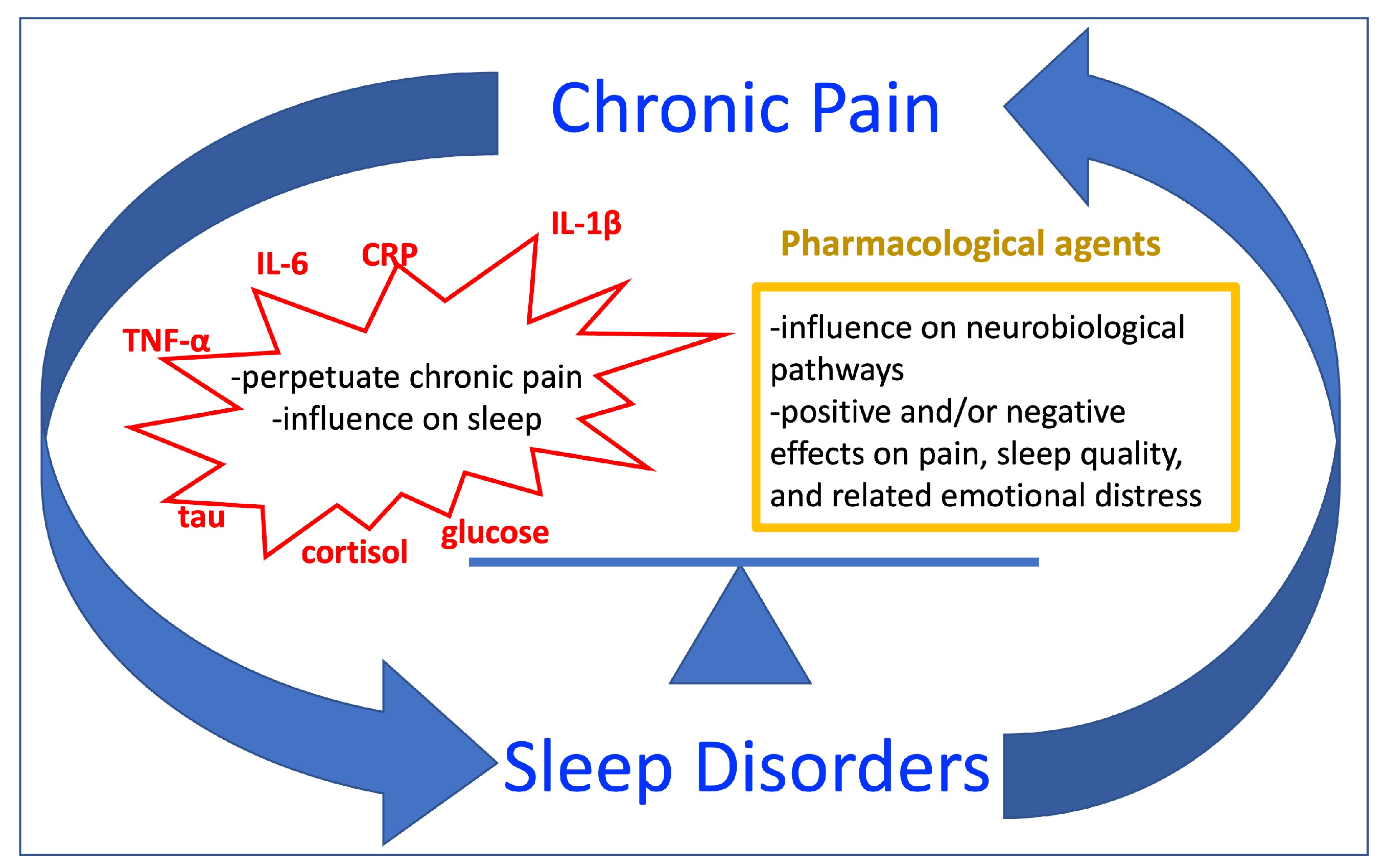
Biomarkers and Breakdowns: Neuroinflammatory Drivers Linking Sleep Disorders and Chronic Pain



Abstract
1. Introduction
2. Search for Existing Evidence in Human Studies
3. Discussion
3.1. Biological Mediators
3.2. Molecular Impact of Pharmacological Agents on CP and Sleep
3.2.1. Melatonin
3.2.2. Opioids
3.2.3. Other Pharmacological Agents
3.3. Limitations
4. Conclusions
Author Contributions
Funding
Institutional Review Board Statement
Informed Consent Statement
Data Availability Statement
Conflicts of Interest
Abbreviations
| CLBP | Chronic Low Back Pain |
| CP | Chronic pain |
| CRP | C-reactive protein |
| CBT | Cognitive–Behavioral Therapy |
| ESS | Epworth sleepiness scale |
| F | Female |
| IL | Interleukin |
| LPS | Latency to Persistent Sleep |
| M | Male |
| MOS-SS | Medical Outcomes Study-Sleep Scale |
| NAASO | Number of Awakenings After Sleep Onset |
| PVT | Psychomotor Vigilance Test |
| REM | Rapid Eye Movement Sleep |
| RLS | Restless legs syndrome |
| S2 | Stage 2 |
| SE | Sleep Efficiency |
| SOL | Sleep Onset Latency |
| SPI | Sleep Problems Index |
| SWS | Slow-Wave Sleep |
| TIB | Time in Bed |
| TNF | Tumor necrosis factor |
| TSP | Total Sleep Period |
| TST | Total Sleep Time |
| WASO | Wake After Sleep Onset |
Appendix A

| Phase | Number of Manuscripts | Reasons for Exclusion |
|---|---|---|
| Results using keywords | 656 in Scopus, 512 in PubMed, 111 in Web of Science | 272 manuscripts were removed due to duplication in the databases |
| Selection process | 1007 screened by titles and abstracts | 967 excluded as per the inclusion criteria |
| 40 selected | 1 not retrieved | |
| 39 comprehensively analyzed | 6 excluded after full text analysis | |
| Final inclusion | 7 related to biological mediators (Table A2) and 26 to pharmacological agents (Table A3) | - |
| Ref. | Pain | Sleep | Molecule | Main Results |
|---|---|---|---|---|
| Ho et al., 2023 [101] | Chronic Low Back Pain | Insomnia | High-sensitive C-reactive protein | Risk of CP in patients with insomnia |
| Park & Chung, 2016 [95] | Temporomandibular Disorder | Perceived sleep quality | C-reactive protein, interleukins, tumor necrosis factor | Cytokines and interleukins elevated in sleep and temporomandibular disorders |
| Lerman et al., 2022 [97] | Temporomandibular Disorder | Insomnia | Interleukin-6 | Higher pain severity, functional limitation, and interleukin 6 in insomnia |
| Hunt et al., 2022 [96] | Temporomandibular Disorder | Insomnia | Interleukin-6 | Higher pain sensitivity and interleukin 6 in poor sleep |
| Stehlik et al., 2018 [21] | Chronic Widespread Pain | Restless Leg Syndrome, Sleep quality | Cortisol, Glucose, Ferritin | Higher sleep problems severity, cortisol, glucose, anxiety, and depression in CP |
| Thi Nguy et al., 2022 [22] | Fibromyalgia | Sleep quality | Tau, β-amyloid 42 | Higher serum tau and β-amyloid 42 in poor sleep |
| Aroke et al., 2023 [99] | Chronic Low Back Pain | Insomnia | DNA methylation | Higher biological aging, insomnia severity, and reduced functional performance in high-impact pain. |
| Ref. | Pain | Sleep | Treatments | Main Results | Adverse Effects |
|---|---|---|---|---|---|
| Rosenthal et al., 2007 [104] | Osteoarthritis pain ≥ 4 | Perceived sleep quality | Morphine sulfate: 14 days 30 mg or 7 days 30 mg → 14 days 60 mg | Higher sleep duration, quality, and cognition with reduced pain after treatment | Nausea (n = 10) Sedation (n = 5) Constipation (n = 5) Vomiting (n = 4) Pruritus (n = 4) Sedation and unresponsiveness (n = 1) |
| Peles et al., 2009 [125] | Moderate to severe CP ≥6 months | Perceived sleep quality | High (>150 mg) or low (<80 mg) daily Methadone Maintenance treatment (≥3 months) | Higher sleep problems and awakenings with unchanged methadone levels | - |
| Jungquist et al., 2012 [66] | CP ≥ 6 months | Sleep Apnea | Morphine equivalent doses of 5–60 mg, 61–200 mg, or 201–960 mg | Higher sleep problems and pain with opioid use | - |
| Rose et al., 2014 [103] | CP | Sleep Disordered Breathing | Morphine 40–500 mg/day Oxycodone 30–350 mg/day Methadone 20–100 mg/day | Higher apnea severity, low arousal index, and impaired reaction time with opioid use | - |
| Morasco et al., 2014 [105] | Arthritis, Fibromyalgia, Low Back Pain, Migraine headache, Neck or Join Pain, Neuropathy (12.8 ± 11.5 years) | Perceived sleep quality | Opioids: average 34.6 ± 54.9 mg/day of Morphine equivalent | Higher sleep apnea, pain severity, and poor sleep quality with opioid use | - |
| Robertson et al., 2016 [127] | Chronic Back Pain (7.5 ± 8.6 years) | Perceived sleep quality | Opioids: high (~100 mg/day) or low (<100 mg/day) Morphine equivalent | Higher insomnia, fatigue, pain, and abnormal brain activity in CP with opioids | - |
| Yarlas et al., 2016 [107] | Chronic Low Back Pain (Moderate-severe pain for ≥12 weeks) | Perceived sleep quality | Buprenorphine 10/20 mcg/hour vs. placebo in opioid-naïve vs. Buprenorphine 20 mcg/hour vs. 5 mcg/hour in opioid-experienced | Higher sleep disturbance and lower pain severity associated with better sleep scores | - |
| Miller, Chan, Curtis et al., 2018 [102] | Pain ≥ 10/100 last 14 days | Insomnia | Opioids (14 days follow-up) | Lower sleep quality, and longer time in bed with opioid use | - |
| Curtis, Miller, Rathinakumar et al., 2019 [100] | Fibromyalgia (≥3 months) | Insomnia | Opioids (14 days follow-up) | Lower slow-wave sleep, and longer sleep onset with opioid use | - |
| Curtis, Miller, Boissoneault et al., 2019 [128] | Fibromyalgia (≥10/100 evening pain) | Insomnia | Opioids (14 days follow-up) | Higher subjective sleep improvements than objective measures with opioid use | - |
| Koffel et al., 2020 [132] | Chronic Back Pain and Osteoarthritis (moderate to severe pain almost daily for ≥6 months) | Perceived sleep quality | 12 months opioid therapy vs. nonopioid therapy | Higher baseline sleep problems predicted less pain improvement | - |
| Ponce Martinez et al., 2020 [126] | Chronic non-specific pain (≥3 months) | Perceived sleep quality | Methadone (mean daily dose of 81 mg) | Higher sleep problems and pain catastrophizing associated with greater pain intensity | - |
| Miller et al., 2021 [133] | Fibromyalgia (≥3 months) | Insomnia | Opioids (average daily use of 1.75 ± 0.73 dosage units) | Lower sleep quality and higher evening opioid use with greater pain | - |
| Cody et al., 2022 [111] | Chronic non-specific pain (≥3 months) | Insomnia | Opioids | Greater insomnia severity in HIV with pain, especially with opioid use | - |
| Ellis et al., 2022 [124] | Chronic non-specific pain | Insomnia, Sleep Apnea, Sleep Paralysis, Restless Leg Syndrome | Opioids (use disorder treatment) | Sleep quality worsens in CP + insomnia; less decline in opioid use disorder | - |
| Wilson et al., 2023 [113] | Chronic Low Back Pain (≥4/10 pain for ≥3 months | Perceived sleep quality | Opioids: observational | Sleep disturbance linked to higher pain severity, pain interference, and reduced physical function; opioids strengthen these associations | - |
| Lintzeris et al., 2016 [112] | Chronic Back and Neck Pain, Arthritis or Rheumatism (most common) | Perceived sleep quality | Morphine equivalent 72.7 (36–145) mg/day Benzodiazepines 28.2 (25.6–30.8) Antipsychotics 7.2 (5.8–8.8) Antidepressants 54.4 (51.6–57.4) Antiepileptic 40.9 (38.1–43.8) | Long-term opioids and multiple pain conditions worsen sleep and respiratory issues; benzodiazepines increase, and some psych meds reduce sleep problems | - |
| Saletu et al., 2005 [109] | Somatoform Pain Disorder | Insomnia | Trazodone hydrochloride: 3 nights vs. control: 2 nights | Improved sleep with higher O2 saturation and reduced arousals | - |
| Calderon et al., 2011 [98] | Temporomandibular Disorder (≥moderate pain for ≥6 months, almost daily last month) | Perceived sleep quality | Amitriptyline 7 weeks: 25 mg, 25 mg + CBT, placebo + CBT or placebo | Pain improved (amitriptyline most), depression eased with CBT, sleep unchanged. | visual symptoms (n = 1) |
| Roth et al., 2012 [106] | Fibromyalgia | Sleep problem | Pregabalin 300–450 mg (4 weeks) → taper/washout (2 weeks) → placebo (4 weeks) or inverse | Better objective and subjective sleep with less pain and fatigue | dizziness (n = 32) somnolence (n = 23) headache (n = 8) nausea (n = 7) |
| Silverman et al., 2012 [92] | Abdominal Adhesion Pain (pain ≥ 4/10 for ≥3 months) | Daily sleep interference | Pregabalin 150/300 mg or placebo (8 weeks) → pregabalin 300 mg (4 weeks) | Reduced pain, no significant change in sleep interference | dizziness (n = 2) night sweats, headaches, hyperactivity, drowsiness, blurred vision, numbness (n = 1) |
| Bamgbade et al., 2022 [110] | Limb Pain (frequent and/or significant) | Insomnia | Zopiclone (3.75/7.5 mg) and Clonidine (0.1/0.2 mg) on alternate nights for 3 weeks | Clonidine improved pain and sleep; zopiclone caused more side effects | Zopiclone: confusion, amnesia, mood disorder, hallucination, locomotor dysfunction, nausea and headache Clonidine: dry mouth |
| Vidor et al., 2013 [93] | Temporomandibular Disorder (pain ≥ 3/10 for 7 days) | Perceived sleep quality | 4 weeks Melatonin 5 mg or placebo | Pain and analgesic use decreased; pain threshold and sleep quality improved | - |
| Onyeakazi et al., 2024 [108] | CP ≥ 7/10 for ≥3 months | Perceived sleep quality | Melatonin 2 mg (6 weeks) → washout (2 weeks) → placebo (6 weeks) or inverse | Early improvements in sleep and pain, no long-term differences or adverse effect changes | 7% reported side-effects |
| Roehrs et al., 2020 [94] | Fibromyalgia | Insomnia | Suvorexant 20 mg (9 nights) → washout (7 days) → placebo (9 nights) | More sleep, fewer awakenings, unchanged stages, and lower pain sensitivity. | suvorexant: residual sedation (n = 4) nausea (n = 3) |
| Ueno et al., 2024 [142] | Chronic non-specific pain | Insomnia | Lemborexant 5 mg (2 weeks) → Lemborexant 2,5/5/10 mg (2 weeks) | Reduced insomnia and no changes in pain | 5 sleepiness or mood disorder |
References
- Treede, R.D.; Rief, W.; Barke, A.; Aziz, Q.; Bennett, M.I.; Benoliel, R.; Cohen, M.; Evers, S.; Finnerup, N.B.; First, M.B.; et al. Chronic pain as a symptom or a disease: The IASP Classification of Chronic Pain for the International Classification of Diseases (ICD-11). Pain 2019, 160, 19–27. [Google Scholar] [CrossRef]
- Raja, S.N.; Carr, D.B.; Cohen, M.; Finnerup, N.B.; Flor, H.; Gibson, S.; Keefe, F.J.; Mogil, J.S.; Ringkamp, M.; Sluka, K.A.; et al. The revised International Association for the Study of Pain definition of pain: Concepts, challenges, and compromises. Pain 2020, 161, 1976–1982. [Google Scholar] [CrossRef]
- Andrews, P.; Steultjens, M.; Riskowski, J. Chronic widespread pain prevalence in the general population: A systematic review. Eur. J. Pain 2018, 22, 5–18. [Google Scholar] [CrossRef] [PubMed]
- Azevedo, L.F.; Costa-Pereira, A.; Mendonca, L.; Dias, C.C.; Castro-Lopes, J.M. The economic impact of chronic pain: A nationwide population-based cost-of-illness study in Portugal. Eur. J. Health Econ. 2016, 17, 87–98. [Google Scholar] [CrossRef] [PubMed]
- Soares, J.M.; Carneiro, B.D.; Pozza, D.H. The Role of Biomarkers in Temporomandibular Disorders: A Systematic Review. Int. J. Mol. Sci. 2025, 26, 5971. [Google Scholar] [CrossRef] [PubMed]
- Ji, R.R.; Xu, Z.Z.; Gao, Y.J. Emerging targets in neuroinflammation-driven chronic pain. Nat. Rev. Drug Discov. 2014, 13, 533–548. [Google Scholar] [CrossRef]
- Ji, R.R.; Chamessian, A.; Zhang, Y.Q. Pain regulation by non-neuronal cells and inflammation. Science 2016, 354, 572–577. [Google Scholar] [CrossRef]
- Gao, Y.J.; Ji, R.R. Chemokines, neuronal-glial interactions, and central processing of neuropathic pain. Pharmacol. Ther. 2010, 126, 56–68. [Google Scholar] [CrossRef]
- Vecchio, E.; Lombardi, R.; Paolini, M.; Libro, G.; Delussi, M.; Ricci, K.; Quitadamo, S.G.; Gentile, E.; Girolamo, F.; Iannone, F.; et al. Peripheral and central nervous system correlates in fibromyalgia. Eur. J. Pain 2020, 24, 1537–1547. [Google Scholar] [CrossRef]
- Seybold, V.S. The role of peptides in central sensitization. In Handbook of Experimental Pharmacology; Springer: Berlin/Heidelberg, Germany, 2009; pp. 451–491. [Google Scholar] [CrossRef]
- Ji, R.R.; Nackley, A.; Huh, Y.; Terrando, N.; Maixner, W. Neuroinflammation and Central Sensitization in Chronic and Widespread Pain. Anesthesiology 2018, 129, 343–366. [Google Scholar] [CrossRef]
- Roecker, C.B.; Schut, S.M. Nociplastic pain: An introduction. J. Can. Chiropr. Assoc. 2025, 69, 131–144. [Google Scholar]
- Macionis, V. Nociplastic pain: Controversy of the concept. Korean J. Pain 2025, 38, 4–13. [Google Scholar] [CrossRef] [PubMed]
- Mesce, M.; Nimbi, F.M.; Sarzi-Puttini, P.; Lai, C.; Galli, F. Towards a better definition of nociplastic pain conditions: A psychological grounded study on fibromyalgia, chronic headache and vulvodynia. Eur. J. Psychotraumatol. 2025, 16, 2461434. [Google Scholar] [CrossRef]
- Kaplan, C.M.; Kelleher, E.; Irani, A.; Schrepf, A.; Clauw, D.J.; Harte, S.E. Deciphering nociplastic pain: Clinical features, risk factors and potential mechanisms. Nat. Rev. Neurol. 2024, 20, 347–363. [Google Scholar] [CrossRef] [PubMed]
- Heinricher, M.M.; Tavares, I.; Leith, J.L.; Lumb, B.M. Descending control of nociception: Specificity, recruitment and plasticity. Brain Res. Rev. 2009, 60, 214–225. [Google Scholar] [CrossRef]
- Nascimento, D.; Pozza, D.H.; Castro-Lopes, J.M.; Neto, F.L. Neuronal injury marker ATF-3 is induced in primary afferent neurons of monoarthritic rats. Neurosignals 2011, 19, 210–221. [Google Scholar] [CrossRef]
- Carneiro, B.D.; Torres, S.; Costa-Pereira, J.T.; Pozza, D.H.; Tavares, I. Descending Pain Modulation in Fibromyalgia: A Short Review of Mechanisms and Biomarkers. Diagnostics 2025, 15, 2702. [Google Scholar] [CrossRef] [PubMed]
- Irwin, M.R.; Olmstead, R.; Carroll, J.E. Sleep Disturbance, Sleep Duration, and Inflammation: A Systematic Review and Meta-Analysis of Cohort Studies and Experimental Sleep Deprivation. Biol. Psychiatry 2016, 80, 40–52. [Google Scholar] [CrossRef]
- Kawasaki, Y.; Zhang, L.; Cheng, J.K.; Ji, R.R. Cytokine mechanisms of central sensitization: Distinct and overlapping role of interleukin-1beta, interleukin-6, and tumor necrosis factor-alpha in regulating synaptic and neuronal activity in the superficial spinal cord. J. Neurosci. 2008, 28, 5189–5194. [Google Scholar] [CrossRef]
- Stehlik, R.; Ulfberg, J.; Zou, D.; Hedner, J.; Grote, L. Morning cortisol and fasting glucose are elevated in women with chronic widespread pain independent of comorbid restless legs syndrome. Scand. J. Pain 2018, 18, 187–194. [Google Scholar] [CrossRef]
- Thi Nguy, B.-H.; Liu, W.-T.; Chang, Y.-T.; Lin, C.-P.; Kang, J.-H. Elevated tau and β-amyloid in the serum of fibromyalgia patients. CNS Spectr. 2022, 27, 339–346. [Google Scholar] [CrossRef]
- Wang, K.L.; Gao, W.S.; Nasir, A.; Wang, Y.F.; Yuan, M.; Zhang, Z.Z.; Bai, Q.; Li, Z.S. Sleep deprivation modulates pain sensitivity through alterations in lncRNA and mRNA expression in the nucleus accumbens and ventral midbrain. Neuropharmacology 2025, 275, 110485. [Google Scholar] [CrossRef]
- Fowler, S.; Dowling, L.R.C.; Simm, N.; Talley, N.J.; Burns, G.L.; Keely, S. Sleep Disturbances, Fatigue and Immune Markers in the Irritable Bowel Syndrome and Inflammatory Bowel Disease, a Systematic Review. Neurogastroenterol. Motil. 2025, 37, e70133. [Google Scholar] [CrossRef]
- Patil, K.; Puttaraju, M.K.; Basavarajappa, R. Sleep apnea and orofacial pain: An integrative clinical perspective. J. Oral Facial Pain Headache 2025, 39, 50–55. [Google Scholar] [CrossRef]
- Herrero Babiloni, A.; Dal Fabbro, C.; Kapos, F.P.; Hachul, H.; Lavigne, G.J. Orofacial pain/headache interlaced to insomnia, sleep apnea and periodic limb movement during sleep/restless leg syndrome: A critical and comprehensive review with insights into social determinants. J. Oral Facial Pain Headache 2025, 39, 1–22. [Google Scholar] [CrossRef]
- Espana, J.C.; Yasoda-Mohan, A.; Vanneste, S. The Locus Coeruleus in Chronic Pain. Int. J. Mol. Sci. 2024, 25, 8636. [Google Scholar] [CrossRef] [PubMed]
- Lu, Y.F.; Yang, Y.; Li, C.L.; Wang, Y.; Li, Z.; Chen, J. The Locus Coeruleus-Norepinephrine System Mediates Empathy for Pain through Selective Up-Regulation of P2X3 Receptor in Dorsal Root Ganglia in Rats. Front. Neural Circuits 2017, 11, 66. [Google Scholar] [CrossRef]
- Li, J.; Wei, Y.; Zhou, J.; Zou, H.; Ma, L.; Liu, C.; Xiao, Z.; Liu, X.; Tan, X.; Yu, T.; et al. Activation of locus coeruleus-spinal cord noradrenergic neurons alleviates neuropathic pain in mice via reducing neuroinflammation from astrocytes and microglia in spinal dorsal horn. J. Neuroinflamm. 2022, 19, 123. [Google Scholar] [CrossRef]
- Bellesi, M.; de Vivo, L.; Chini, M.; Gilli, F.; Tononi, G.; Cirelli, C. Sleep Loss Promotes Astrocytic Phagocytosis and Microglial Activation in Mouse Cerebral Cortex. J. Neurosci. 2017, 37, 5263–5273. [Google Scholar] [CrossRef] [PubMed]
- Matre, D.; Haugen, F.; Moe, A.G.; Schjolberg, T.; Knardahl, S.; Holm, K.; Nilsen, K.B. Experimental partial-night sleep restriction increases pain sensitivity, but does not alter inflammatory plasma biomarkers. Scand. J. Pain 2025, 25, 20240081. [Google Scholar] [CrossRef] [PubMed]
- Ingiosi, A.M.; Raymond, R.M., Jr.; Pavlova, M.N.; Opp, M.R. Selective contributions of neuronal and astroglial interleukin-1 receptor 1 to the regulation of sleep. Brain Behav. Immun. 2015, 48, 244–257. [Google Scholar] [CrossRef] [PubMed]
- Jordan, A.S.; McSharry, D.G.; Malhotra, A. Adult obstructive sleep apnoea. Lancet 2014, 383, 736–747. [Google Scholar] [CrossRef]
- Manconi, M.; Garcia-Borreguero, D.; Schormair, B.; Videnovic, A.; Berger, K.; Ferri, R.; Dauvilliers, Y. Restless legs syndrome. Nat. Rev. Dis. Prim. 2021, 7, 80. [Google Scholar] [CrossRef]
- Mathias, J.L.; Cant, M.L.; Burke, A.L.J. Sleep disturbances and sleep disorders in adults living with chronic pain: A meta-analysis. Sleep Med. 2018, 52, 198–210. [Google Scholar] [CrossRef]
- Tang, N.K.Y.; Wright, K.J.; Salkovskis, P.M. Prevalence and correlates of clinical insomnia co-occurring with chronic back pain. J. Sleep Res. 2007, 16, 85–95. [Google Scholar] [CrossRef]
- Runge, N.; Ahmed, I.; Perea, J.; Labie, C.; Roland, A.; Goossens, Z.; Mairesse, O.; Nijs, J.; Malfliet, A.; Verschueren, S.; et al. Terminology and definitions of sleep problems and disorders used in chronic musculoskeletal pain research—A scoping review with recommendations for future research. Pain 2022, 166, e506–e517. [Google Scholar] [CrossRef] [PubMed]
- Sun, Y.; Laksono, I.; Selvanathan, J.; Saripella, A.; Nagappa, M.; Pham, C.; Englesakis, M.; Peng, P.; Morin, C.M.; Chung, F. Prevalence of sleep disturbances in patients with chronic non-cancer pain: A systematic review and meta-analysis. Sleep Med. Rev. 2021, 57, 101467. [Google Scholar] [CrossRef] [PubMed]
- Seiger, A.N.; Penzel, T.; Fietze, I. Chronic pain management and sleep disorders. Cell Rep. Med. 2024, 5, 101761. [Google Scholar] [CrossRef]
- Andersen, M.L.; Araujo, P.; Frange, C.; Tufik, S. Sleep Disturbance and Pain: A Tale of Two Common Problems. Chest 2018, 154, 1249–1259. [Google Scholar] [CrossRef]
- Runge, N.; Ahmed, I.; Saueressig, T.; Perea, J.; Labie, C.; Mairesse, O.; Nijs, J.; Malfliet, A.; Verschueren, S.; Van Assche, D.; et al. The bidirectional relationship between sleep problems and chronic musculoskeletal pain: A systematic review with meta-analysis. Pain 2024, 165, 2455–2467. [Google Scholar] [CrossRef]
- Shaver, J.L.F. Sleep Disturbed by Chronic Pain in Fibromyalgia, Irritable Bowel, and Chronic Pelvic Pain Syndromes. Sleep Med. Clin. 2008, 3, 47–60. [Google Scholar] [CrossRef]
- Onen, S.H.; Onen, F.; Courpron, P.; Dubray, C. How pain and analgesics disturb sleep. Clin. J. Pain 2005, 21, 422–431. [Google Scholar] [CrossRef]
- Onen, S.H.; Alloui, A.; Gross, A.; Eschallier, A.; Dubray, C. The effects of total sleep deprivation, selective sleep interruption and sleep recovery on pain tolerance thresholds in healthy subjects. J. Sleep Res. 2001, 10, 35–42. [Google Scholar] [CrossRef]
- Okifuji, A.; Hare, B.D. Do sleep disorders contribute to pain sensitivity? Curr. Rheumatol. Rep. 2011, 13, 528–534. [Google Scholar] [CrossRef]
- Finan, P.H.; Goodin, B.R.; Smith, M.T. The association of sleep and pain: An update and a path forward. J. Pain 2013, 14, 1539–1552. [Google Scholar] [CrossRef] [PubMed]
- McCracken, L.M.; Iverson, G.L. Disrupted Sleep Patterns and Daily Functioning in Patients with Chronic Pain. Pain Res. Manag. 2002, 7, 75–79. [Google Scholar] [CrossRef]
- Aytekin, E.; Demir, S.E.; Komut, E.A.; Okur, S.C.; Burnaz, O.; Caglar, N.S.; Demiryontar, D.Y. Chronic widespread musculoskeletal pain in patients with obstructive sleep apnea syndrome and the relationship between sleep disorder and pain level, quality of life, and disability. J. Phys. Ther. Sci. 2015, 27, 2951–2954. [Google Scholar] [CrossRef] [PubMed]
- Haack, M.; Simpson, N.; Sethna, N.; Kaur, S.; Mullington, J. Sleep deficiency and chronic pain: Potential underlying mechanisms and clinical implications. Neuropsychopharmacology 2020, 45, 205–216. [Google Scholar] [CrossRef]
- Herrero Babiloni, A.; De Koninck, B.P.; Beetz, G.; De Beaumont, L.; Martel, M.O.; Lavigne, G.J. Sleep and pain: Recent insights, mechanisms, and future directions in the investigation of this relationship. J. Neural Transm. 2020, 127, 647–660. [Google Scholar] [CrossRef] [PubMed]
- Bergum, N.; Berezin, C.-T.; King, C.M.; Vigh, J. µ-Opioid Receptors Expressed by Intrinsically Photosensitive Retinal Ganglion Cells Contribute to Morphine-Induced Behavioral Sensitization. Int. J. Mol. Sci. 2022, 23, 15870. [Google Scholar] [CrossRef]
- Heiliczer, S.; Wilensky, A.; Gaver, T.; Georgiev, O.; Hamad, S.; Nemirovski, A.; Hadar, R.; Sharav, Y.; Aframian, D.J.; Tam, J.; et al. Salivary Endocannabinoid Profiles in Chronic Orofacial Pain and Headache Disorders: An Observational Study Using a Novel Tool for Diagnosis and Management. Int. J. Mol. Sci. 2022, 23, 13017. [Google Scholar] [CrossRef] [PubMed]
- Nozad, A.; Hamidi, N.; Amani, M. The role of glutamate transporter-1 in firing activity of locus coeruleus neurons and nociception in rats. Exp. Brain Res. 2021, 239, 1287–1294. [Google Scholar] [CrossRef] [PubMed]
- Chun, W.; Chao, D.; Qi, H.; Dongliang, Z.; Zhenmei, L.; Jia, L. Pharmacological and non-pharmacological treatments for insomnia: A protocol for a systematic review and network meta-analysis. Medicine 2021, 100, e26678. [Google Scholar] [CrossRef] [PubMed]
- McKinstry, B.; Wilson, P.; Espie, C. Non-pharmacological management of chronic insomnia in primary care. Br. J. Gen. Pract. 2008, 58, 79–80. [Google Scholar] [CrossRef][Green Version]
- Qaseem, A.; Kansagara, D.; Forciea, M.A.; Cooke, M.; Denberg, T.D.; Clinical Guidelines Committee of the American College of Physicians. Management of Chronic Insomnia Disorder in Adults: A Clinical Practice Guideline From the American College of Physicians. Ann. Intern. Med. 2016, 165, 125–133. [Google Scholar] [CrossRef]
- Schutte-Rodin, S.; Broch, L.; Buysse, D.; Dorsey, C.; Sateia, M. Clinical guideline for the evaluation and management of chronic insomnia in adults. J. Clin. Sleep Med. 2008, 4, 487–504. [Google Scholar] [CrossRef]
- Palagini, L.; Brugnoli, R.; Dell’ Osso, B.M.; Di Nicola, M.; Maina, G.; Martinotti, G.; Maruani, J.; Mauries, S.; Serafini, G.; Mencacci, C.; et al. Clinical practice guidelines for switching or deprescribing hypnotic medications for chronic insomnia: Results of European neuropsychopharmacology and sleep expert’s consensus group. Sleep Med. 2025, 128, 117–126. [Google Scholar] [CrossRef]
- Riemann, D.; Espie, C.A.; Altena, E.; Arnardottir, E.S.; Baglioni, C.; Bassetti, C.L.A.; Bastien, C.; Berzina, N.; Bjorvatn, B.; Dikeos, D.; et al. The European Insomnia Guideline: An update on the diagnosis and treatment of insomnia 2023. J. Sleep Res. 2023, 32, e14035. [Google Scholar] [CrossRef]
- Sateia, M.J.; Buysse, D.J.; Krystal, A.D.; Neubauer, D.N.; Heald, J.L. Clinical Practice Guideline for the Pharmacologic Treatment of Chronic Insomnia in Adults: An American Academy of Sleep Medicine Clinical Practice Guideline. J. Clin. Sleep Med. 2017, 13, 307–349. [Google Scholar] [CrossRef]
- Smitherman, T.A.; Kuka, A.J.; Calhoun, A.H.; Walters, A.B.P.; Davis-Martin, R.E.; Ambrose, C.E.; Rains, J.C.; Houle, T.T. Cognitive-Behavioral Therapy for Insomnia to Reduce Chronic Migraine: A Sequential Bayesian Analysis. Headache 2018, 58, 1052–1059. [Google Scholar] [CrossRef]
- Malfliet, A.; De Baets, L.; Bilterys, T.; Van Looveren, E.; Mairesse, O.; Cagnie, B.; Meeus, M.; Moens, M.; Goubert, D.; Munneke, W.; et al. Cognitive Behavioral Therapy for Insomnia in Pain Management for Nonspecific Chronic Spinal Pain: A Randomized Clinical Trial. JAMA Netw. Open 2024, 7, e2425856. [Google Scholar] [CrossRef]
- Dimsdale, J.E.; Norman, D.; DeJardin, D.; Wallace, M.S. The effect of opioids on sleep architecture. J. Clin. Sleep Med. 2007, 3, 33–36. [Google Scholar]
- Hindmarch, I.; Dawson, J.; Stanley, N. A double-blind study in healthy volunteers to assess the effects on sleep of pregabalin compared with alprazolam and placebo. Sleep 2005, 28, 187–193. [Google Scholar] [CrossRef]
- Holshoe, J.M. Antidepressants and sleep: A review. Perspect. Psychiatr. Care 2009, 45, 191–197. [Google Scholar] [CrossRef] [PubMed]
- Jungquist, C.R.; Flannery, M.; Perlis, M.L.; Grace, J.T. Relationship of Chronic Pain and Opioid Use with Respiratory Disturbance during Sleep. Pain Manag. Nurs. 2012, 13, 70–79. [Google Scholar] [CrossRef]
- Walker, J.M.; Farney, R.J.; Rhondeau, S.M.; Boyle, K.M.; Valentine, K.; Cloward, T.V.; Shilling, K.C. Chronic opioid use is a risk factor for the development of central sleep apnea and ataxic breathing. J. Clin. Sleep Med. 2007, 3, 455–461. [Google Scholar] [CrossRef] [PubMed]
- Wang, D.; Teichtahl, H. Opioids, sleep architecture and sleep-disordered breathing. Sleep Med. Rev. 2007, 11, 35–46. [Google Scholar] [CrossRef]
- Webster, L.R.; Choi, Y.; Desai, H.; Webster, L.; Grant, B.J. Sleep-disordered breathing and chronic opioid therapy. Pain Med. 2008, 9, 425–432. [Google Scholar] [CrossRef]
- Wichniak, A.; Wierzbicka, A.; Walęcka, M.; Jernajczyk, W. Effects of Antidepressants on Sleep. Curr. Psychiatry Rep. 2017, 19, 63. [Google Scholar] [CrossRef] [PubMed]
- Zheng, Y.; Lv, T.; Wu, J.; Lyu, Y. Trazodone changed the polysomnographic sleep architecture in insomnia disorder: A systematic review and meta-analysis. Sci. Rep. 2022, 12, 14453. [Google Scholar] [CrossRef]
- Kovacevic, I.; Pavic, J.; Filipovic, B.; Ozimec Vulinec, S.; Ilic, B.; Petek, D. Integrated Approach to Chronic Pain-The Role of Psychosocial Factors and Multidisciplinary Treatment: A Narrative Review. Int. J. Environ. Res. Public Health 2024, 21, 1135. [Google Scholar] [CrossRef]
- Sa, M.; Faria, C.; Pozza, D.H. Conservative versus Invasive Approaches in Temporomandibular Disc Displacement: A Systematic Review of Randomized Controlled Clinical Trials. Dent. J. 2024, 12, 244. [Google Scholar] [CrossRef]
- Finnerup, N.B.; Attal, N.; Haroutounian, S.; McNicol, E.; Baron, R.; Dworkin, R.H.; Gilron, I.; Haanpää, M.; Hansson, P.; Jensen, T.S.; et al. Pharmacotherapy for neuropathic pain in adults: A systematic review and meta-analysis. Lancet Neurol. 2015, 14, 162–173. [Google Scholar] [CrossRef]
- Chou, R.; Deyo, R.; Friedly, J.; Skelly, A.; Weimer, M.; Fu, R.; Dana, T.; Kraegel, P.; Griffin, J.; Grusing, S. Systemic Pharmacologic Therapies for Low Back Pain: A Systematic Review for an American College of Physicians Clinical Practice Guideline. Ann. Intern. Med. 2017, 166, 480–492. [Google Scholar] [CrossRef]
- Macfarlane, G.J.; Kronisch, C.; Dean, L.E.; Atzeni, F.; Häuser, W.; Fluß, E.; Choy, E.; Kosek, E.; Amris, K.; Branco, J.; et al. EULAR revised recommendations for the management of fibromyalgia. Ann. Rheum. Dis. 2017, 76, 318–328. [Google Scholar] [CrossRef]
- Paroli, M.; Gioia, C.; Accapezzato, D.; Caccavale, R. Inflammation, Autoimmunity, and Infection in Fibromyalgia: A Narrative Review. Int. J. Mol. Sci. 2024, 25, 5922. [Google Scholar] [CrossRef]
- Cohen, S.P.; Vase, L.; Hooten, W.M. Chronic pain: An update on burden, best practices, and new advances. Lancet 2021, 397, 2082–2097. [Google Scholar] [CrossRef] [PubMed]
- Craige, E.A.; Tagliaferri, S.D.; Ferguson, S.A.; Scott, H.; Belavy, D.L.; Easton, D.F.; Buntine, P.; Memon, A.R.; Owen, P.J.; Vincent, G.E. Effects of pharmacotherapy on sleep-related outcomes in adults with chronic low back pain: A systematic review and meta-analysis of randomised controlled trials. EClinicalMedicine 2023, 55, 101749. [Google Scholar] [CrossRef]
- Hussain, M.S.; Maqbool, M.; Agrawal, M.; Rana, A.J.; Sultana, A.; Sulthana, N.; Bisht, A.S.; Khan, G. Exploring the Neurobiological Mechanisms of Cancer Growth. Curr. Pharm. Des. 2025, 32, 1002–1012. [Google Scholar] [CrossRef]
- Peattie, A.; Mark, S.; Block, A.; Cooper, B.A.; Paul, S.M.; Hammer, M.J.; Cartwright, F.; Conley, Y.P.; Levine, J.D.; Miaskowski, C. Risk factors associated with the co-occurrence of severe pain and sleep disturbance in oncology outpatients receiving chemotherapy. Support. Care Cancer 2025, 33, 1090. [Google Scholar] [CrossRef] [PubMed]
- Ruivo, J.; Tavares, I.; Pozza, D.H. Molecular targets in bone cancer pain: A systematic review of inflammatory cytokines. J. Mol. Med. 2024, 102, 1063–1088. [Google Scholar] [CrossRef]
- Francoeur, R.B. The relationship of cancer symptom clusters to depressive affect in the initial phase of palliative radiation. J. Pain Symptom Manag. 2005, 29, 130–155. [Google Scholar] [CrossRef]
- Cranford, J.A.; Arnedt, J.T.; Conroy, D.A.; Bohnert, K.M.; Bourque, C.; Blow, F.C.; Ilgen, M. Prevalence and correlates of sleep-related problems in adults receiving medical cannabis for chronic pain. Drug Alcohol. Depend. 2017, 180, 227–233. [Google Scholar] [CrossRef]
- Brown, T.W.; Filbey, F.M. Interactions between cannabis use and chronic pain on sleep architecture: Findings from in-home EEG recordings. Neurotherapeutics 2025, in press. [Google Scholar] [CrossRef] [PubMed]
- Datta, I.; Erridge, S.; Holvey, C.; Coomber, R.; Guru, R.; Holden, W.; Darweish Medniuk, A.; Sajad, M.; Searle, R.; Usmani, A.; et al. UK medical cannabis registry: A clinical outcome analysis of medical cannabis therapy in chronic pain patients with and without co-morbid sleep impairment. Pain Pract. 2025, 25, e13438. [Google Scholar] [CrossRef] [PubMed]
- Miller, M.B.; Chan, W.S.; Boissoneault, J.; Robinson, M.; Staud, R.; Berry, R.B.; McCrae, C.S. Dynamic daily associations between insomnia symptoms and alcohol use in adults with chronic pain. J. Sleep Res. 2018, 27, e12604. [Google Scholar] [CrossRef]
- Miller, M.B.; Freeman, L.K.; Deroche, C.B.; Park, C.J.; Hall, N.A.; McCrae, C.S. Sleep and alcohol use among young adult drinkers with Insomnia: A daily process model. Addict. Behav. 2021, 119, 106911. [Google Scholar] [CrossRef]
- Leite-Almeida, H.; Pinto-Ribeiro, F.; Almeida, A. Animal Models for the Study of Comorbid Pain and Psychiatric Disorders. Mod. Trends Pharmacopsychiatry 2015, 30, 1–21. [Google Scholar] [CrossRef]
- Lai, H.; Gereau, R.W.t.; Luo, Y.; O’Donnell, M.; Rudick, C.N.; Pontari, M.; Mullins, C.; Klumpp, D.J. Animal Models of Urologic Chronic Pelvic Pain Syndromes: Findings From the Multidisciplinary Approach to the Study of Chronic Pelvic Pain Research Network. Urology 2015, 85, 1454–1465. [Google Scholar] [CrossRef] [PubMed]
- Burma, N.E.; Leduc-Pessah, H.; Fan, C.Y.; Trang, T. Animal models of chronic pain: Advances and challenges for clinical translation. J. Neurosci. Res. 2017, 95, 1242–1256. [Google Scholar] [CrossRef]
- Silverman, A.; Samuels, Q.; Gikas, H.; Nawras, A. Pregabalin for the Treatment of Abdominal Adhesion Pain. Am. J. Ther. 2012, 19, 419–428. [Google Scholar] [CrossRef]
- Vidor, L.P.; Torres, I.L.S.; Custódio De Souza, I.C.; Fregni, F.; Caumo, W. Analgesic and Sedative Effects of Melatonin in Temporomandibular Disorders: A Double-Blind, Randomized, Parallel-Group, Placebo-Controlled Study. J. Pain Symptom Manag. 2013, 46, 422–432. [Google Scholar] [CrossRef] [PubMed]
- Roehrs, T.; Withrow, D.; Koshorek, G.; Verkler, J.; Bazan, L.; Roth, T. Sleep and pain in humans with fibromyalgia and comorbid insomnia: Double-blind, crossover study of suvorexant 20 mg versus placebo. J. Clin. Sleep Med. 2020, 16, 415–421. [Google Scholar] [CrossRef] [PubMed]
- Park, J.; Chung, J. Inflammatory Cytokines and Sleep Disturbance in Patients with Temporomandibular Disorders. J. Oral Facial Pain Headache 2016, 30, 27–33. [Google Scholar] [CrossRef]
- Hunt, C.A.; Mun, C.J.; Owens, M.A.; Lerman, S.F.; Kunatharaju, S.; Tennen, H.A.; Buenaver, L.F.; Campbell, C.M.; Haythornthwaite, J.A.; Smith, M.T.; et al. Sleep, Positive Affect, and Circulating Interleukin-6 in Women With Temporomandibular Joint Disorder. Psychosom. Med. 2022, 84, 383–392. [Google Scholar] [CrossRef] [PubMed]
- Lerman, S.F.; Mun, C.J.; Hunt, C.A.; Kunatharaju, S.; Buenaver, L.F.; Finan, P.H.; Campbell, C.M.; Phillips, J.; Fernandez-Mendoza, J.; Haythornthwaite, J.A.; et al. Insomnia with objective short sleep duration in women with temporomandibular joint disorder: Quantitative sensory testing, inflammation and clinical pain profiles. Sleep Med. 2022, 90, 26–35. [Google Scholar] [CrossRef]
- Calderon, P.D.S.; Tabaquim, M.D.L.M.; Oliveira, L.C.D.; Camargo, A.P.A.; Ramos Netto, T.D.C.; Conti, P.C.R. Effectiveness of cognitive-behavioral therapy and amitriptyline in patients with chronic temporomandibular disorders: A pilot study. Braz. Dent. J. 2011, 22, 415–421. [Google Scholar] [CrossRef]
- Aroke, E.N.; Wiggins, A.M.; Hobson, J.M.; Srinivasasainagendra, V.; Quinn, T.L.; Kottae, P.; Tiwari, H.K.; Sorge, R.E.; Goodin, B.R. The pace of biological aging helps explain the association between insomnia and chronic low back pain. Mol. Pain 2023, 19, 17448069231210648. [Google Scholar] [CrossRef]
- Curtis, A.F.; Miller, M.B.; Rathinakumar, H.; Robinson, M.; Staud, R.; Berry, R.B.; McCrae, C.S. Opioid use, pain intensity, age, and sleep architecture in patients with fibromyalgia and insomnia. Pain 2019, 160, 2086–2092. [Google Scholar] [CrossRef]
- Ho, K.K.N.; Skarpsno, E.S.; Nilsen, K.B.; Ferreira, P.H.; Pinheiro, M.B.; Hopstock, L.A.; Johnsen, M.B.; Steingrímsdóttir, Ó.A.; Nielsen, C.S.; Stubhaug, A.; et al. A bidirectional study of the association between insomnia, high-sensitivity C-reactive protein, and comorbid low back pain and lower limb pain. Scand. J. Pain 2023, 23, 110–125. [Google Scholar] [CrossRef]
- Miller, M.B.; Chan, W.S.; Curtis, A.F.; Boissoneault, J.; Robinson, M.; Staud, R.; Berry, R.B.; McCrae, C.S. Pain intensity as a moderator of the association between opioid use and insomnia symptoms among adults with chronic pain. Sleep Med. 2018, 52, 98–102. [Google Scholar] [CrossRef]
- Rose, A.R.; Catcheside, P.G.; McEvoy, R.D.; Paul, D.; Kapur, D.; Peak, E.; Vakulin, A.; Antic, N.A. Sleep Disordered Breathing and Chronic Respiratory Failure in Patients with Chronic Pain on Long Term Opioid Therapy. J. Clin. Sleep Med. 2014, 10, 847–852. [Google Scholar] [CrossRef]
- Rosenthal, D.M.; Moore, P.P.; Groves, M.P.E.; Iwan, B.T.; Schlosser, M.L.G.; Dziewanowska, M.P.Z.; Negro-Vilar, M.P.A. Sleep improves when patients with chronic OA pain are managed with morning dosing of once a day extended-release morphine sulfate (AVINZA®): Findings from a pilot study. J. Opioid Manag. 2007, 3, 145–154. [Google Scholar] [CrossRef]
- Morasco, B.J.; O’Hearn, D.; Turk, D.C.; Dobscha, S.K. Associations Between Prescription Opioid Use and Sleep Impairment among Veterans with Chronic Pain. Pain Med. 2014, 15, 1902–1910. [Google Scholar] [CrossRef][Green Version]
- Roth, T.; Lankford, D.A.; Bhadra, P.; Whalen, E.; Resnick, E.M. Effect of pregabalin on sleep in patients with fibromyalgia and sleep maintenance disturbance: A randomized, placebo-controlled, 2-way crossover polysomnography study. Arthritis Care Res. 2012, 64, 597–606. [Google Scholar] [CrossRef] [PubMed]
- Yarlas, A.; Miller, K.; Wen, W.; Lynch, S.Y.; Ripa, S.R.; Pergolizzi, J.V.; Raffa, R.B. Buprenorphine Transdermal System Improves Sleep Quality and Reduces Sleep Disturbance in Patients with Moderate-to-Severe Chronic Low Back Pain: Results from Two Randomized Controlled Trials. Pain Pract. 2016, 16, 345–358. [Google Scholar] [CrossRef]
- Onyeakazi, U.M.; Columb, M.O.; Rosalind, A.; Kanakarajan, S.; Galley, H.F. Melatonin treatment has consistent but transient beneficial effects on sleep measures and pain in patients with severe chronic pain: The DREAM–CP randomised controlled trial. Br. J. Anaesth. 2024, 132, 725–734. [Google Scholar] [CrossRef] [PubMed]
- Saletu, B.; Prause, W.; Anderer, P.; Mandl, M.; Aigner, M.; Mikova, O.; Saletu-Zyhlarz, G.M. Insomnia in Somatoform Pain Disorder: Sleep Laboratory Studies on Differences to Controls and Acute Effects of Trazodone, Evaluated by the Somnolyzer 24 × 7 and the Siesta Database. Neuropsychobiology 2005, 51, 148–163. [Google Scholar] [CrossRef] [PubMed]
- Bamgbade, O.A.; Tai-Osagbemi, J.; Bamgbade, D.O.; Murphy-Akpieyi, O.; Fadire, A.; Soni, N.K.; Mumporeze, L. Clonidine is better than zopiclone for insomnia treatment in chronic pain patients. J. Clin. Sleep Med. 2022, 18, 1565–1571. [Google Scholar] [CrossRef]
- Cody, S.L.; Hobson, J.M.; Gilstrap, S.R.; Gloston, G.F.; Riggs, K.R.; Justin Thomas, S.; Goodin, B.R. Insomnia severity and depressive symptoms in people living with HIV and chronic pain: Associations with opioid use. AIDS Care 2022, 34, 679–688. [Google Scholar] [CrossRef]
- Lintzeris, N.; Moodley, R.; Campbell, G.; Larance, B.; Bruno, R.; Nielsen, S.; Degenhardt, L. Sleep Quality Among People Living With Chronic Noncancer Pain. Clin. J. Pain 2016, 32, 380–387. [Google Scholar] [CrossRef]
- Wilson, J.M.; Yoon, J.; Schreiber, K.L.; Edwards, R.R.; Sieberg, C.B.; Meints, S.M. Interactive effects of sleep disturbance and opioid use on pain-related interference and physical functioning among patients with chronic low back pain. Pain Med. 2023, 24, 1396–1398. [Google Scholar] [CrossRef] [PubMed]
- Xiong, H.Y.; Wyns, A.; Campenhout, J.V.; Hendrix, J.; De Bruyne, E.; Godderis, L.; Schabrun, S.; Nijs, J.; Polli, A. Epigenetic Landscapes of Pain: DNA Methylation Dynamics in Chronic Pain. Int. J. Mol. Sci. 2024, 25, 8324. [Google Scholar] [CrossRef] [PubMed]
- Cruz-Almeida, Y.; Sinha, P.; Rani, A.; Huo, Z.; Fillingim, R.B.; Foster, T. Epigenetic aging is associated with clinical and experimental pain in community-dwelling older adults. Mol. Pain 2019, 15, 1744806919871819. [Google Scholar] [CrossRef]
- Tamargo, J.A.; Strath, L.J.; Cruz-Almeida, Y. High-Impact Pain Is Associated With Epigenetic Aging Among Middle-Aged and Older Adults: Findings From the Health and Retirement Study. J. Gerontol. A Biol. Sci. Med. Sci. 2024, 79, 1–8. [Google Scholar] [CrossRef]
- Esposito, E.; Cuzzocrea, S. Antiinflammatory activity of melatonin in central nervous system. Curr. Neuropharmacol. 2010, 8, 228–242. [Google Scholar] [CrossRef] [PubMed]
- Xie, S.; Fan, W.; He, H.; Huang, F. Role of Melatonin in the Regulation of Pain. J. Pain Res. 2020, 13, 331–343. [Google Scholar] [CrossRef]
- Givler, D.; Givler, A.; Luther, P.M.; Wenger, D.M.; Ahmadzadeh, S.; Shekoohi, S.; Edinoff, A.N.; Dorius, B.K.; Jean Baptiste, C.; Cornett, E.M.; et al. Chronic Administration of Melatonin: Physiological and Clinical Considerations. Neurol. Int. 2023, 15, 518–533. [Google Scholar] [CrossRef]
- Menczel Schrire, Z.; Phillips, C.L.; Chapman, J.L.; Duffy, S.L.; Wong, G.; D’Rozario, A.L.; Comas, M.; Raisin, I.; Saini, B.; Gordon, C.J.; et al. Safety of higher doses of melatonin in adults: A systematic review and meta-analysis. J. Pineal Res. 2022, 72, e12782. [Google Scholar] [CrossRef]
- Baldini, A.; Von Korff, M.; Lin, E.H. A Review of Potential Adverse Effects of Long-Term Opioid Therapy: A Practitioner’s Guide. Prim. Care Companion CNS Disord. 2012, 14, 27252. [Google Scholar] [CrossRef]
- Chou, R.; Turner, J.A.; Devine, E.B.; Hansen, R.N.; Sullivan, S.D.; Blazina, I.; Dana, T.; Bougatsos, C.; Deyo, R.A. The effectiveness and risks of long-term opioid therapy for chronic pain: A systematic review for a National Institutes of Health Pathways to Prevention Workshop. Ann. Intern. Med. 2015, 162, 276–286. [Google Scholar] [CrossRef]
- Krashin, D.; Murinova, N.; Sullivan, M. Challenges to Treatment of Chronic Pain and Addiction During the “Opioid Crisis”. Curr. Pain Headache Rep. 2016, 20, 65. [Google Scholar] [CrossRef]
- Ellis, J.D.; Mayo, J.L.; Gamaldo, C.E.; Finan, P.H.; Huhn, A.S. Worsening sleep quality across the lifespan and persistent sleep disturbances in persons with opioid use disorder. J. Clin. Sleep Med. 2022, 18, 587–595. [Google Scholar] [CrossRef] [PubMed]
- Peles, E.; Schreiber, S.; Adelson, M. Documented poor sleep among methadone-maintained patients is associated with chronic pain and benzodiazepine abuse, but not with methadone dose. Eur. Neuropsychopharmacol. 2009, 19, 581–588. [Google Scholar] [CrossRef]
- Ponce Martinez, C.; Edwards, K.A.; Roos, C.R.; Beitel, M.; Eller, A.; Barry, D.T. Associations Among Sleep Disturbance, Pain Catastrophizing, and Pain Intensity for Methadone-maintained Patients With Opioid Use Disorder and Chronic Pain. Clin. J. Pain 2020, 36, 641–647. [Google Scholar] [CrossRef] [PubMed]
- Robertson, J.A.; Purple, R.J.; Cole, P.; Zaiwalla, Z.; Wulff, K.; Pattinson, K.T.S. Sleep disturbance in patients taking opioid medication for chronic back pain. Anaesthesia 2016, 71, 1296–1307. [Google Scholar] [CrossRef]
- Curtis, A.F.; Miller, M.B.; Boissoneault, J.; Robinson, M.; Staud, R.; Berry, R.B.; McCrae, C.S. Discrepancies in sleep diary and actigraphy assessments in adults with fibromyalgia: Associations with opioid dose and age. J. Sleep Res. 2019, 28, e12746. [Google Scholar] [CrossRef] [PubMed]
- Byrne, J.; Grabow, D.; Campbell, H.; O’Brien, K.; Bielack, S.; Am Zehnhoff-Dinnesen, A.; Calaminus, G.; Kremer, L.; Langer, T.; van den Heuvel-Eibrink, M.M.; et al. PanCareLIFE: The scientific basis for a European project to improve long-term care regarding fertility, ototoxicity and health-related quality of life after cancer occurring among children and adolescents. Eur. J. Cancer 2018, 103, 227–237. [Google Scholar] [CrossRef]
- Martinez-Vives, P.; Jimenez-Borreguero, L.J.; Alfonso, F. ECG February 2020. Rev. Esp. Cardiol. 2020, 73, 171. [Google Scholar] [CrossRef]
- Schwartz, D.J.; Karatinos, G. For individuals with obstructive sleep apnea, institution of CPAP therapy is associated with an amelioration of symptoms of depression which is sustained long term. J. Clin. Sleep Med. 2007, 3, 631–635. [Google Scholar] [CrossRef] [PubMed]
- Koffel, E.; Kats, A.M.; Kroenke, K.; Bair, M.J.; Gravely, A.; Deronne, B.; Donaldson, M.T.; Goldsmith, E.S.; Noorbaloochi, S.; Krebs, E.E. Sleep Disturbance Predicts Less Improvement in Pain Outcomes: Secondary Analysis of the SPACE Randomized Clinical Trial. Pain Med. 2020, 21, 1162–1167. [Google Scholar] [CrossRef]
- Miller, M.B.; Curtis, A.F.; Chan, W.S.; Deroche, C.B.; McCrae, C.S. Daily associations between sleep and opioid use among adults with comorbid symptoms of insomnia and fibromyalgia. J. Clin. Sleep Med. 2021, 17, 729–737. [Google Scholar] [CrossRef]
- Robillard, R.; Saad, M.; Ray, L.B.; BuJaki, B.; Douglass, A.; Lee, E.K.; Soucy, L.; Spitale, N.; De Koninck, J.; Kendzerska, T. Selective serotonin reuptake inhibitor use is associated with worse sleep-related breathing disturbances in individuals with depressive disorders and sleep complaints: A retrospective study. J. Clin. Sleep Med. 2021, 17, 505–513. [Google Scholar] [CrossRef]
- Jackson, J.L.; Mancuso, J.M.; Nickoloff, S.; Bernstein, R.; Kay, C. Tricyclic and Tetracyclic Antidepressants for the Prevention of Frequent Episodic or Chronic Tension-Type Headache in Adults: A Systematic Review and Meta-Analysis. J. Gen. Intern. Med. 2017, 32, 1351–1358. [Google Scholar] [CrossRef] [PubMed]
- Kurian, B.T.; Greer, T.L.; Trivedi, M.H. Strategies to enhance the therapeutic efficacy of antidepressants: Targeting residual symptoms. Expert. Rev. Neurother. 2009, 9, 975–984. [Google Scholar] [CrossRef]
- Verma, V.; Singh, N.; Singh Jaggi, A. Pregabalin in neuropathic pain: Evidences and possible mechanisms. Curr. Neuropharmacol. 2014, 12, 44–56. [Google Scholar] [CrossRef]
- Michelini, S.; Cassano, G.B.; Frare, F.; Perugi, G. Long-term use of benzodiazepines: Tolerance, dependence and clinical problems in anxiety and mood disorders. Pharmacopsychiatry 1996, 29, 127–134. [Google Scholar] [CrossRef]
- Herrero Babiloni, A.; Sangalli, L.; Puertas-Cuesta, F.J.; Morin, C.M.; Lavigne, G.J.; Fabbro, C.D. The putative effects of orexin receptor antagonists on pain and sleep in humans: A systematic review. Sleep Med. 2025, 133, 106633. [Google Scholar] [CrossRef] [PubMed]
- Zhang, S.; Wang, P.; Ji, B.; Shao, Y.; Hou, S.; Chen, J.; Wang, C. Signal transduction, dimerization, and therapeutic targeting of Orexin and receptor systems. Front. Pharmacol. 2025, 16, 1697406. [Google Scholar] [CrossRef] [PubMed]
- Kim, H.J.J.; Zagzoog, A.; Smolyakova, A.M.; Ezeaka, U.C.; Benko, M.J.; Holt, T.; Laprairie, R.B. In vivo Evidence for Brain Region-Specific Molecular Interactions Between Cannabinoid and Orexin Receptors. Front. Neurosci. 2021, 15, 790546. [Google Scholar] [CrossRef]
- Ueno, K.; Sato, H.; Nomura, Y.; Obata, N.; Mizobuchi, S. Improvement of sleep and pain with lemborexant administration in patients with chronic pain: A retrospective observational study. Pain Med. 2024, 25, 139–143. [Google Scholar] [CrossRef] [PubMed]
- Chaki, S.; Imadera, Y. Dual orexin receptor antagonists in insomnia: Toward a new therapeutic paradigm. Pharmacol. Biochem. Behav. 2026, 258, 174117. [Google Scholar] [CrossRef]
- Inoue, Y.; Koebis, M. Comprehensive understanding of the treatment of insomnia with lemborexant. Expert. Rev. Clin. Pharmacol. 2025, 18, 785–796. [Google Scholar] [CrossRef] [PubMed]
- Alorfi, N.M. Pharmacological Methods of Pain Management: Narrative Review of Medication Used. Int. J. Gen. Med. 2023, 16, 3247–3256. [Google Scholar] [CrossRef] [PubMed]
- Cao, B.; Xu, Q.; Shi, Y.; Zhao, R.; Li, H.; Zheng, J.; Liu, F.; Wan, Y.; Wei, B. Pathology of pain and its implications for therapeutic interventions. Signal Transduct. Target. Ther. 2024, 9, 155. [Google Scholar] [CrossRef]
- Li, Z.; Li, X.; Liu, J.; Sun, R.; Ye, Y.; Xiang, H.; Luo, F.; Li, S.; Luo, A. Molecular Mechanisms of Chronic Pain and Therapeutic Interventions. MedComm 2025, 6, e70325. [Google Scholar] [CrossRef]
- Sutherland, A.M.; Nicholls, J.; Bao, J.; Clarke, H. Overlaps in pharmacology for the treatment of chronic pain and mental health disorders. Prog. Neuropsychopharmacol. Biol. Psychiatry 2018, 87, 290–297. [Google Scholar] [CrossRef]
- Chong, P.L.H.; Garic, D.; Shen, M.D.; Lundgaard, I.; Schwichtenberg, A.J. Sleep, cerebrospinal fluid, and the glymphatic system: A systematic review. Sleep Med. Rev. 2022, 61, 101572. [Google Scholar] [CrossRef]
- Zhou, H.; Li, M.; Zhao, R.; Sun, L.; Yang, G. A sleep-active basalocortical pathway crucial for generation and maintenance of chronic pain. Nat. Neurosci. 2023, 26, 458–469. [Google Scholar] [CrossRef]
- Rosenstrom, A.H.C.; Ahmed, A.S.; Farinotti, A.B.; Kultima, K.; Berg, S.; Bjurstrom, M.F.; Svensson, C.I.; Kosek, E. CCL25 in the cerebrospinal fluid is negatively correlated with fatigue in chronic pain patients. Brain Behav. Immun. 2025, 128, 54–64. [Google Scholar] [CrossRef]
- Backryd, E.; Lind, A.L.; Thulin, M.; Larsson, A.; Gerdle, B.; Gordh, T. High levels of cerebrospinal fluid chemokines point to the presence of neuroinflammation in peripheral neuropathic pain: A cross-sectional study of 2 cohorts of patients compared with healthy controls. Pain 2017, 158, 2487–2495. [Google Scholar] [CrossRef]
- Olsson, M.; Arlig, J.; Hedner, J.; Blennow, K.; Zetterberg, H. Sleep deprivation and cerebrospinal fluid biomarkers for Alzheimer’s disease. Sleep 2018, 41, zsy025. [Google Scholar] [CrossRef] [PubMed]
- Sun, J.; Yan, W.; Zhang, X.N.; Lin, X.; Li, H.; Gong, Y.M.; Zhu, X.M.; Zheng, Y.B.; Guo, X.Y.; Ma, Y.D.; et al. Polygenic evidence and overlapped brain functional connectivities for the association between chronic pain and sleep disturbance. Transl. Psychiatry 2020, 10, 252. [Google Scholar] [CrossRef] [PubMed]
- Williams, J.C.; Hum, R.M.; Alam, U.; Zhao, S.S. Insomnia and short sleep duration, but not chronotype, is associated with chronic widespread pain: Mendelian randomization study. Rheumatol. Int. 2024, 44, 2961–2966. [Google Scholar] [CrossRef] [PubMed]
- Broberg, M.; Karjalainen, J.; FinnGen; Ollila, H.M. Mendelian randomization highlights insomnia as a risk factor for pain diagnoses. Sleep 2021, 44, 1–8. [Google Scholar] [CrossRef]
- Elam, K.K.; Trevino, A.; Kutzner, J.; Su, J.; Quinn, P.D. Genetic and Environmental Associations Among Pain, Sleep Disturbances, and Substance Use Intent in Early Adolescence. J. Adolesc. 2025. [Google Scholar] [CrossRef]
- Pinheiro, M.B.; Morosoli, J.J.; Ferreira, M.L.; Madrid-Valero, J.J.; Refshauge, K.; Ferreira, P.H.; Ordonana, J.R. Genetic and Environmental Contributions to Sleep Quality and Low Back Pain: A Population-Based Twin Study. Psychosom. Med. 2018, 80, 263–270. [Google Scholar] [CrossRef]

Disclaimer/Publisher’s Note: The statements, opinions and data contained in all publications are solely those of the individual author(s) and contributor(s) and not of MDPI and/or the editor(s). MDPI and/or the editor(s) disclaim responsibility for any injury to people or property resulting from any ideas, methods, instructions or products referred to in the content. |
© 2026 by the authors. Licensee MDPI, Basel, Switzerland. This article is an open access article distributed under the terms and conditions of the Creative Commons Attribution (CC BY) license.
Share and Cite
Alves, B.; Tavares, I.; Pozza, D.H. Biomarkers and Breakdowns: Neuroinflammatory Drivers Linking Sleep Disorders and Chronic Pain. Biomedicines 2026, 14, 116. https://doi.org/10.3390/biomedicines14010116
Alves B, Tavares I, Pozza DH. Biomarkers and Breakdowns: Neuroinflammatory Drivers Linking Sleep Disorders and Chronic Pain. Biomedicines. 2026; 14(1):116. https://doi.org/10.3390/biomedicines14010116
Chicago/Turabian StyleAlves, Bento, Isaura Tavares, and Daniel Humberto Pozza. 2026. "Biomarkers and Breakdowns: Neuroinflammatory Drivers Linking Sleep Disorders and Chronic Pain" Biomedicines 14, no. 1: 116. https://doi.org/10.3390/biomedicines14010116
APA StyleAlves, B., Tavares, I., & Pozza, D. H. (2026). Biomarkers and Breakdowns: Neuroinflammatory Drivers Linking Sleep Disorders and Chronic Pain. Biomedicines, 14(1), 116. https://doi.org/10.3390/biomedicines14010116