Targeting the JAK/STAT Signaling Pathway in Breast Cancer: Leaps and Hurdles

 , ,
, , 
Abstract
1. Introduction
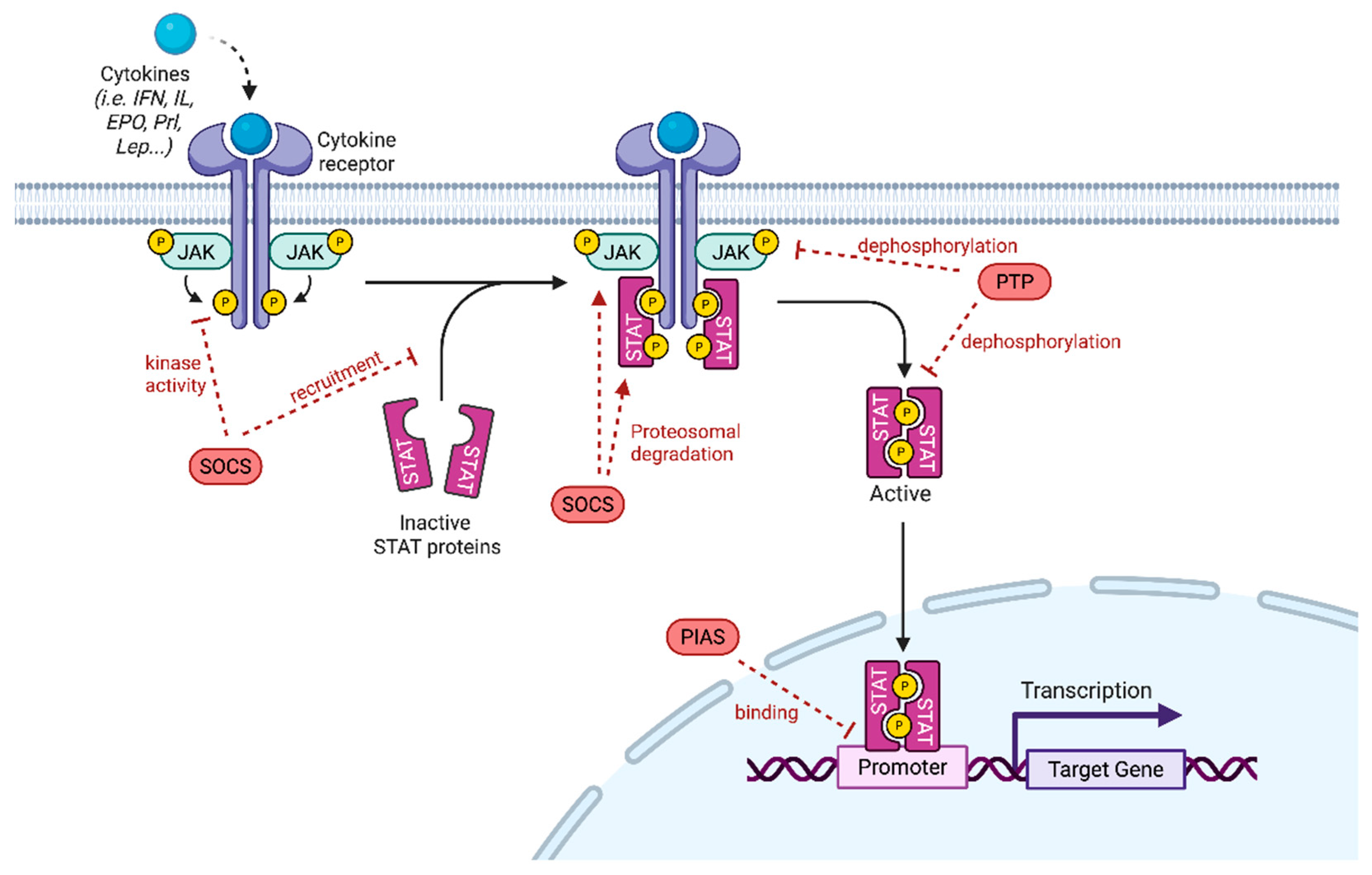
2. The JAK/STAT Signaling Pathway
Post-Translational Modifications in JAK/STAT Signaling
3. JAK/STAT in Hematological Malignancies
4. JAK-STAT Pathway Inhibitors
Approved Inhibitors

| Inhibitors of the JAK/STAT Signaling Pathway in Oncological Trials | ||||
|---|---|---|---|---|
| Drug | Mechanism | Approved Indications | Trials in Oncological Treatment | Safety Profile |
| RUXOLITINIB (Jakafi®) INCB018424 INC424 | Inhibitor of JAK1 JAK2 Mutationally activated JAK2 (JAK2V617F) | Myelofibrosis Polycythemia vera Acute and chronic graft versus host disease | Pancreatic cancer: although promising data from the RECAP phase II trial (2015) indicated that Ruxolitinib may have been approved as a second line treatment of refractory pancreatic cancer with systemic inflammation (CRP > 13mg/dL) progressing after first-line Gemcitabine [39], it failed to show efficacy in two larger phase III trials (JANUS 1 and JANUS 2-2018) [40]. Preclinical studies suggest that combining MEKi with STAT3i via JAK inhibition and immune checkpoint inhibitors is a promising treatment option in pancreatic adenocarcinoma, as it might overcome treatment resistance by mitigating stromal inflammation and reprogramming the tumor microenvironment. A phase I trial is ongoing (NCT05440942) [41]. Head and Neck cancer (HNSCC): Ruxolitinib was found to inhibit tumor growth in HNSCC by inhibiting STAT3 activation, in preclinical models (murine models bearing patient-derived xenografts). STAT3 levels seem to be a promising predictive biomarker for response to Ruxolitinib [42]. A phase II trial evaluating Ruxolitinib efficacy and safety in HNSCC patients that have operable disease, in the neoadjuvant setting, was performed—the data analysis is pending [43]. Hematological malignancies: numerous phase I/II trials are ongoing testing Ruxolitinib in MPN. AML, ALL, CLL, T-cell large granular lymphocytic leukemia. The clinical trial (NCT02092324) on chronic lymphoblastic leukemia (CLL) showed an overall response rate (ORR) of 32% among patients. Data from NCT01776723 on chronic monocytic leukemia patients demonstrated favorable survival outcomes and an acceptable safety profile [31]. Lung cancer: in a phase II trial, Ruxolitinib showed an acceptable safety profile in association to Cisplatin and Pemetrexed in the first line treatment of advanced NSCLC with systemic inflammation, but no efficacy [44]. | Anemia Thrombocytopenia Neutropenia Hypokalemia Infections Peripheral edema |
| PACRITINIB (Vonjo®) DB11697 | Inhibitor of JAK2, mutationally activated JAK2 (JAK2V617F), FLT3 | Myelofibrosis | Hematological malignancies: Pacritinib is an approved drug for myelofibrosis (MF), with proven efficacy in symptom control in the phase III PERSIST-1 trial and in NCT01437787. Phase I/II clinical trials are ongoing to test its use in leukemias [31]. Solid tumors harboring the 1q21.3 copy number amplification: Chromosome 1q21.3 copy number amplification is associated with IRAK1 upregulation, promoting in vitro tumor cell growth. Additionally, IRAK1 inhibition seems to modulate immune cell populations both in systemic circulation and in the tumor microenvironment. Therefore, Pacritinib that has a known inhibitory effect on IRAK1, is a promising therapeutic agent in this subgroup. The phase Ib/II NCT04520269 trail tested this hypothesis. Although the initial results showed no objective response, dose expansion is ongoing, with potentially favorable results [45]. Squamous cell lung cancer: in vitro studies show that Pacritinib effectively inhibits glucose consumption by cancer cells, and does not interfere with normal cell metabolism, therefore potentially blocking cancer cell growth. This effect is obtained by FLT3 inhibition [46]. Triple negative BC: in preclinical studies, simultaneously blocking JAK-STAT and SMO-GLI1/tGLI1 by combining Pacritinib to Sonidegib showed a reduction in metastatic potential in an animal model (murine model obtained by the injection of luciferase-expressing MDA-231 cells into the left ventricle) [47]. | Diarrhea Prolonged QT interval Peripheral edema Thrombocytopenia |
| FEDRATINIB (Inrebic®) TG101348 | Inhibitor of JAK2 JAK2V617F | Myelofibrosis | Pancreatic cancer: a study integrating bioinformatics resources demonstrated that KRAS-driven gene signature plays a crucial role in disease progression and prognosis, and that Fedratinib might be able to reverse the KRAS-driven gene signature, therefore establishing promising therapeutic benefits in this subgroup of patients [48]. | Fatal encephalopathies Anemia Gastrointestinal symptoms Increased liver transaminases, creatinine and pancreatic enzymes |
| TOFACITINIB (Xeljanz®) CP690550 | Inhibitor of JAK1 JAK2 JAK3 | Rheumatoid arthritis Psoriatic arthritis Ankylosing spondylitis Juvenile idiopathic arthritis Ulcerative colitis | Hematological malignancies: Tofacitinib showed promising results in treating T-ALL in preclinical trials [32]. | Infections Malignancies Anemia, Neutropenia Elevated creatinine and transaminases Hypercholesterolemia Gastrointestinal symptoms Thromboembolism |
| BARICITINIB (Olumiant®) LY3009104 | inhibitor of JAK1 JAK2 | Rheumatoid arthritis SARS-CoV2 infection | Prostate cancer: The use of Bacritinib has synergic effects with Docetaxel in castration-resistant prostate cancer in a preclinical trial [49]. | Infections Malignancies Hypercholesterolemia |
| UPADACITINIB (Rinvoq®) ABT-94 | inhibitor of JAK1 | Rheumatoid Arthritis (AR) atopic dermatitis (AD) Ulcerative Colitis Psoriatic Arthritis | Upadacitinib may offer protection against Cisplatin toxicity to the liver and kidneys, and does not limit its efficacy in the treatment of lung and BC in a preclinical in vitro and in vivo trial (murine model). Nonetheless, its antitumor effect has not been tested [50]. | Infections Malignancies Hypercholesterolemia Increased CPK Increased liver enzymes Thromboembolism |
| PEFICITINIB (Smyraf®) ASP015K | Pan-JAK inhibitor JAK1 JAK2 JAK3 TYK2 | Rheumatoid Arthritis (Japan) | Ovarian cancer—in vitro studies using ovarian cancer cell lines with knockdown or overexpression of CHAF1A (chromatin assembly factor 1 unit A) that induces cell proliferation and growth, showed an inhibitory effect of Peficitinib [51]. | Infections Malignancies Hypercholesterolemia Increased CPK Elevated Creatinine levels |
| DEUCRAVACITINIB Sotyktu™) BMS986165 | inhibitor of TYK2 | Moderate to severe plaque psoriasis | NF-1 associated malignant peripheral nerve sheath tumors (MPNST)—Delucravatinib associated with Mirdametinib, a MEK-inhibitor, showed an inhibitory effect on cell proliferation and induced apoptosis in vitro [52]. | Upper respiratory infection Folliculitis Mouth ulcers Acne Elevated blood CPK l |
| DELGOCITINIB (Corectim®) JTE052 | Pan-JAK inh JAK1 JAK2 JAK3 TYK2 | Atopic Dermatitis (Japan) | - | Upper respiratory tract infections Kaposi’s varicella Contact dermatitis Acne |
| ABROCITINIB (Cibinqo®) PF04965842 | inhibitor of JAK1 JAK2 | Atopic dermatitis (AD) | - | Upper respiratory tract infections Nausea and vomiting Acne, Herpes zoster Increased blood CPK |
| FILGOTINIB (Jyseleca®) GLPG0634 | inhibitor of JAK1 | Rheumatoid Arthritis | - | Infections Headache |
| OCLACTINIB Apoquel® PF03394197 | inhibitor of JAK1 | Canine allergic dermatitis | - | Diarrhea Nausea et vomiting Anorexia Fatigue |
| STAT inhibitors | ||||
| NAPABUCASIN BBI608 | inhibitor of STAT3 | No approved clinical indications. Trails are ongoing | Pancreatic cancer: in the phase 3 CanStem111P study (NCT02993731), the addition of Napabucasin to nab-paclitaxel with gemcitabine did not improve efficacy in the treatment of naive metastatic pancreatic adenocarcinoma [53]. Colorectal cancer: in the CanStem303C phase III clinical trial, Napabucasin + FOLFIRI versus FOLFIRI is tested for the treatment of previously treated metastatic colorectal cancer. The aim of the study is to objectify the sensitizing effect to chemotherapy by Napabucasin on cancer cells. The results are pending. Glioblastoma: Napabucasin induces cell cycle arrest and apoptosis, impairing glioma growth in in vivo xenograft murine models [54]. | Fatigue Nausea Diarrhea Anorexia Bone loss |
| OPB111077 | inhibitor of STAT3 | Diffuse Large B-Cell Lymphoma (DLBCL)—in a phase I trial, OPB-111077 in combination with Bendamustine and Rituximab showed promising results in terms of efficacy and safety [55]. | Fatigue Nausea Vomiting | |
| TTI101 | inhibitor of STAT3 | Advanced, treatment-refractory solid tumors: in a phase I trial (NCT03195699), TTI-101 monotherapy showed promising antitumor activity in relapsed and refractory solid tumors, particularly in the treatment of HCC, while bearing an acceptable safety profile [56] Advanced hepatocarcinoma: a phase Ib/II trail (EVERT-Liver Cancer trial, NCT05440708) is ongoing. It will assess the overall response rate and the incidence of adverse effects of TTI-101 use, both in monotherapy and in combination with Pembrolizumab and with Atezolizumab/Bevacizumab [57]. Metastatic hormone-receptor positive, HER2-negative BC: The phase Ib/II REVERT-BC trail (NCT05384119), evaluates the association of TTI-101 to AI or Fulvestrant + CDK4/6 inhibitors (Palbociclib). It aims to show the antitumor activity of TTI-101 by reverting resistance to hormone therapy [58]. | Diarrhea Hyperglycemia | |
| DANVATIRSEN AZD9150 | inhibitor of STAT3 | Head and Neck cancers (HNSCC): in the phase Ib/II SCORE trial, Danvatirsen in association to Durvalumab was superior to Durvalumab alone or Durvalumab + AZD5069 (CX2i) in patients with recurrent or metastatic HNSCC [59]. Diffuse Large B-Cell Lymphoma: in a phase I trial, Danvatirsen + Acalabrutinib showed an acceptable safety profile, but no gain in efficacy [60]. | Fatigue Thrombocytopenia Increased blood levels of liver enzymes | |
| BP1102 | inhibitor of STAT3 | T-cell acute lymphoblastic leukemia: in a preclinical trail, BP-1-102 induced apoptosis and cell cycle arrest in T-ALL cell lines [61]. | Toxicity profile not known 4 | |
| Antibody blockade of cytokines and their receptors | ||||
|
TOCILIZUMAB
(Actemra®) L04AC07 | humanized monoclonal antibody targeting IL6-R | Rheumatoid arthritis Giant cell arthritis Cytokine release syndrome | Epithelial ovarian cancer: in the NCT01637532 phase I trial, Tocilizumab in association with interferon-α2b and carboplatin/doxorubicin showed a good safety profile. Its antitumor activity remains to be explored in a following phase II trial [62]. Renal cell carcinoma: in preclinical in vitro and in vivo (xenograft) studies, Tocilizumab significantly suppressed cell proliferation, due to its capacity to suppress SOCS3 expression, a negative regulator of the JAK-STAT pathway [63]. | Upper respiratory tract infections Headache Increased blood pressure Injection site reactions |
|
SILTUXIMAB
(Sylvant®) CNTO328 | chimeric monoclonal antibody targeting IL-6 | HIV-negative and HHV-8-negative multicentric Castleman’s disease | Hematological malignancies: Siltuximab was explored in the treatment of refractory Multiple Myeloma, in multiple phase II trials, but it failed to show an antitumor activity. Siltuximab failed to reduce blood transfusions in low and intermediate risk MSD [64] Solid tumors: in a phase I/II trail, Situximab monotherapy seems to be safe, but with no clinical activity in advanced solid tumors [64]. | Anaphylactic reaction at infusion Skin rash Pruritus Upper respiratory tract infection Weight gain Increased blood level of uric acid |
5. JAK/STAT in Solid Tumors
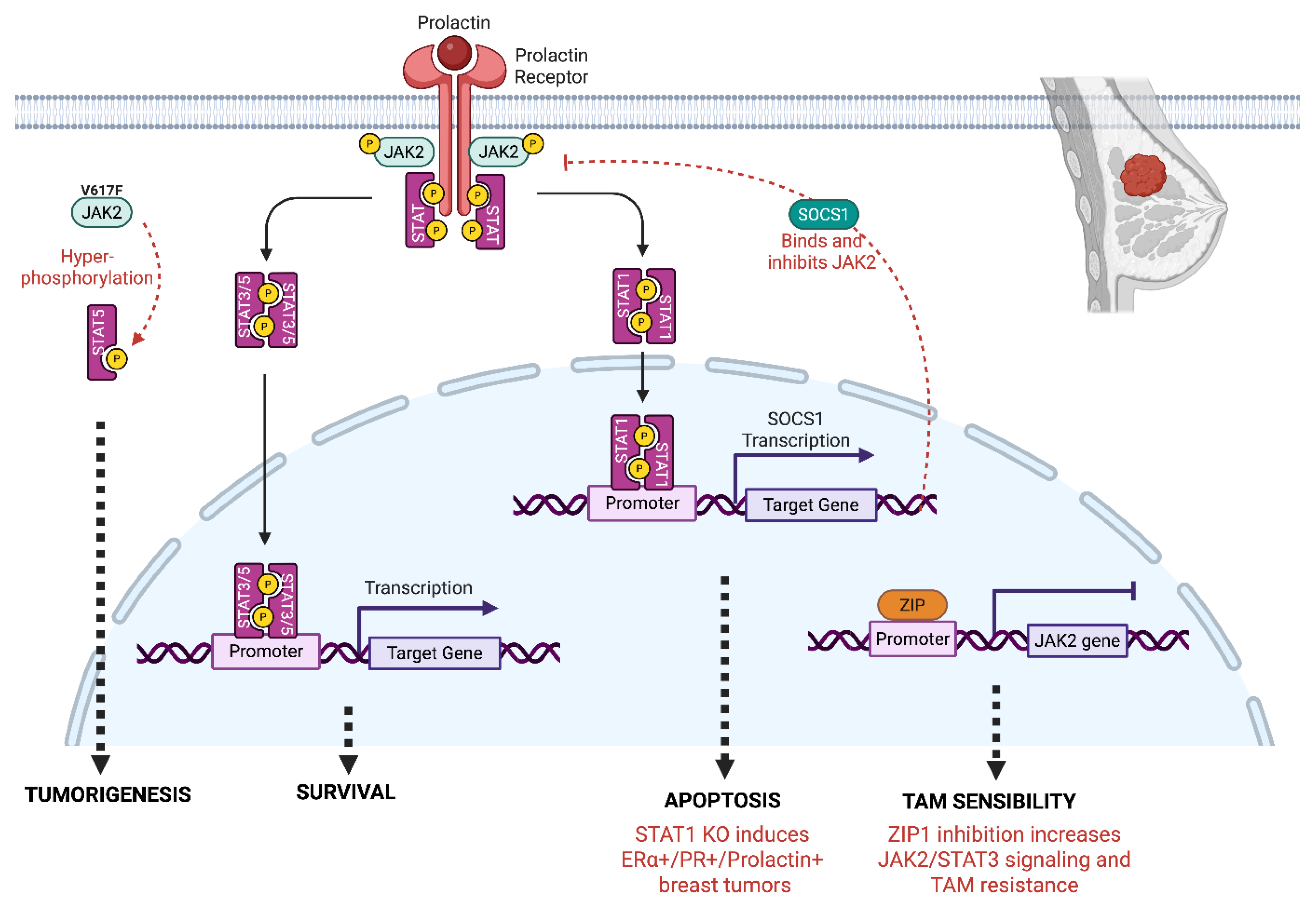
5.1. Focus on JAK/STAT Involvement in Breast Cancers
5.2. Inhibitors Under Development to Target Breast Cancer
5.3. Other Inhibitors in Preclinical Development
6. JAK/STAT Signaling and Resistance to Treatment
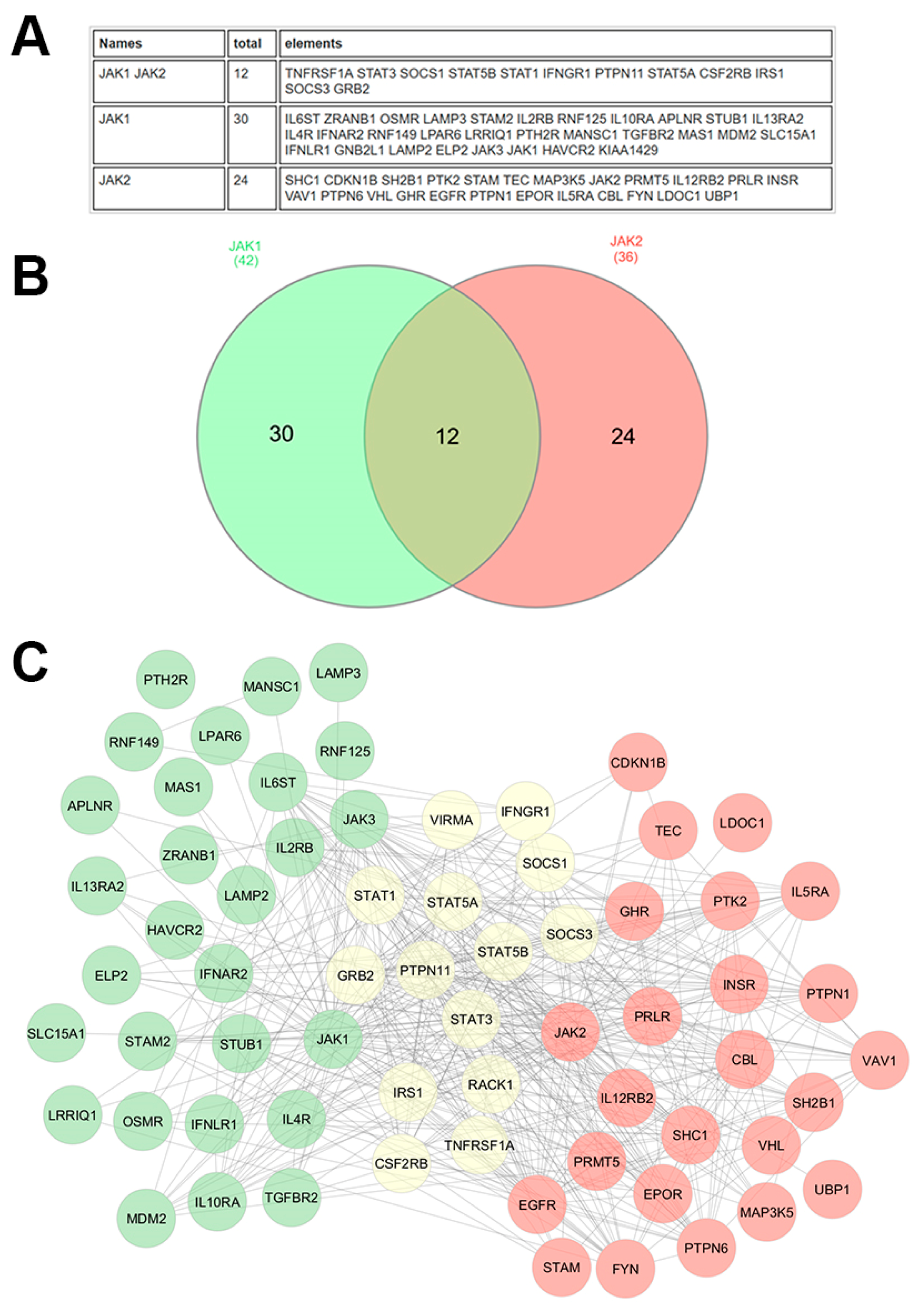
6.1. Proteomic Studies of the JAK/STAT Pathway in Cancer
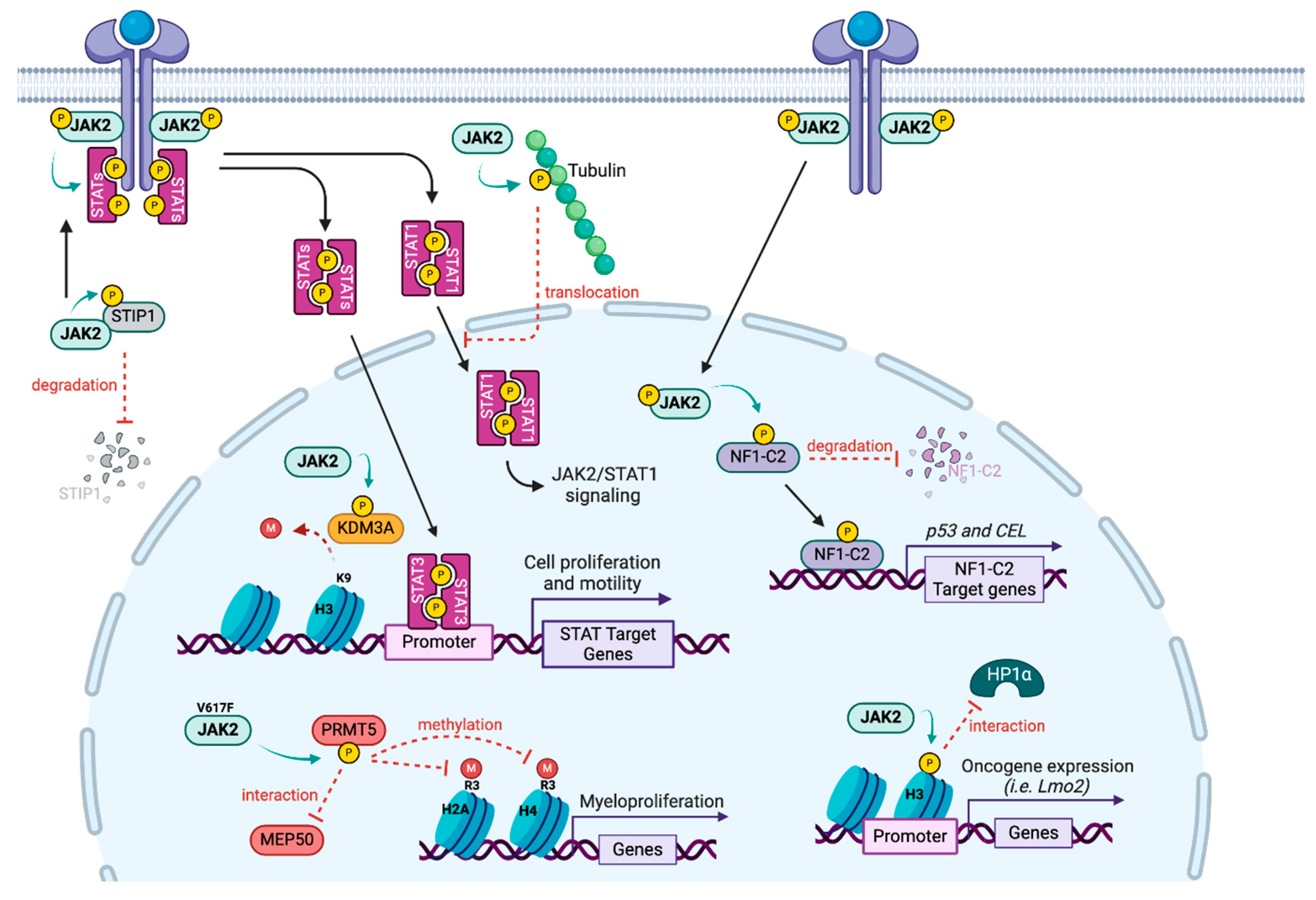
6.2. Other JAK Substrates
7. Conclusions
Author Contributions
Funding
Data Availability Statement
Acknowledgments
Conflicts of Interest
References
- Darnell, J.E. STATs and Gene Regulation. Science 1997, 277, 1630–1635. [Google Scholar] [CrossRef] [PubMed]
- Hu, X.; Li, J.; Fu, M.; Zhao, X.; Wang, W. The JAK/STAT signaling pathway: From bench to clinic. Signal Transduct. Target. Ther. 2021, 6, 402. [Google Scholar] [CrossRef]
- Xu, J.; Zhang, J.; Mao, Q.-F.; Wu, J.; Wang, Y. The Interaction Between Autophagy and JAK/STAT3 Signaling Pathway in Tumors. Front. Genet. 2022, 13, 880359. [Google Scholar] [CrossRef]
- Lai, K.S.; Jin, Y.; Graham, D.K.; Witthuhn, B.A.; Ihle, J.N.; Liu, E.T. A Kinase-deficient Splice Variant of the Human JAK3 Is Expressed in Hematopoietic and Epithelial Cancer Cells. J. Biol. Chem. 1995, 270, 25028–25036. [Google Scholar] [CrossRef] [PubMed]
- Verbsky, J.W.; Bach, E.A.; Fang, Y.-F.; Yang, L.; Randolph, D.A.; Fields, L.E. Expression of Janus Kinase 3 in Human Endothelial and Other Non-lymphoid and Non-myeloid Cells. J. Biol. Chem. 1996, 271, 13976–13980. [Google Scholar] [CrossRef]
- Rodig, S.J.; Meraz, M.A.; White, J.M.; Lampe, P.A.; Riley, J.K.; Arthur, C.D.; King, K.L.; Sheehan, K.C.F.; Yin, L.; Pennica, D.; et al. Disruption of the Jak1 Gene Demonstrates Obligatory and Nonredundant Roles of the Jaks in Cytokine-Induced Biologic Responses. Cell 1998, 93, 373–383. [Google Scholar] [CrossRef] [PubMed]
- Neubauer, H.; Cumano, A.; Müller, M.; Wu, H.; Huffstadt, U.; Pfeffer, K. Jak2 Deficiency Defines an Essential Developmental Checkpoint in Definitive Hematopoiesis. Cell 1998, 93, 397–409. [Google Scholar] [CrossRef]
- Park, S.Y.; Saijo, K.; Takahashi, T.; Osawa, M.; Arase, H.; Hirayama, N.; Miyake, K.; Nakauchi, H.; Shirasawa, T.; Saito, T. Developmental defects of lymphoid cells in Jak3 kinase-deficient mice. Immunity 1995, 3, 771–782. [Google Scholar] [CrossRef]
- Karaghiosoff, M.; Neubauer, H.; Lassnig, C.; Kovarik, P.; Schindler, H.; Pircher, H.; McCoy, B.; Bogdan, C.; Decker, T.; Brem, G.; et al. Partial impairment of cytokine responses in Tyk2-deficient mice. Immunity 2000, 13, 549–560. [Google Scholar] [CrossRef]
- O’Shea, J.J.; Schwartz, D.M.; Villarino, A.V.; Gadina, M.; McInnes, I.B.; Laurence, A. The JAK-STAT Pathway: Impact on Human Disease and Therapeutic Intervention. Annu. Rev. Med. 2015, 66, 311–328. [Google Scholar] [CrossRef]
- Schindler, C.; Strehlow, I. Cytokines and STAT Signaling. In Advances in Pharmacology; Elsevier: Amsterdam, The Netherlands, 1999; Volume 47, pp. 113–174. ISBN 978-0-12-032948-9. [Google Scholar]
- Ishida-Takahashi, R.; Rosario, F.; Gong, Y.; Kopp, K.; Stancheva, Z.; Chen, X.; Feener, E.P.; Myers, M.G. Phosphorylation of Jak2 on Ser523 InhibitsJak2-Dependent Leptin Receptor Signaling. Mol. Cell. Biol. 2006, 26, 4063–4073. [Google Scholar] [CrossRef] [PubMed][Green Version]
- Dimberg, A.; Karlberg, I.; Nilsson, K.; Öberg, F. Ser727/Tyr701-phosphorylated Stat1 is required for the regulation of c-Myc, cyclins, and p27Kip1 associated with ATRA-induced G0/G1 arrest of U-937 cells. Blood 2003, 102, 254–261. [Google Scholar] [CrossRef] [PubMed]
- Stephanou, A.; Brar, B.K.; Knight, R.A.; Latchman, D.S. Opposing actions of STAT-1 and STAT-3 on the Bcl-2 and Bcl-x promoters. Cell Death Differ. 2000, 7, 329–330. [Google Scholar] [CrossRef] [PubMed]
- Xu, X.; Fu, X.Y.; Plate, J.; Chong, A.S. IFN-gamma induces cell growth inhibition by Fas-mediated apoptosis: Requirement of STAT1 protein for up-regulation of Fas and FasL expression. Cancer Res. 1998, 58, 2832–2837. [Google Scholar]
- Liu, X.; Robinson, G.W.; Wagner, K.U.; Garrett, L.; Wynshaw-Boris, A.; Hennighausen, L. Stat5a is mandatory for adult mammary gland development and lactogenesis. Genes Dev. 1997, 11, 179–186. [Google Scholar] [CrossRef]
- Kershaw, N.J.; Murphy, J.M.; Liau, N.P.D.; Varghese, L.N.; Laktyushin, A.; Whitlock, E.L.; Lucet, I.S.; Nicola, N.A.; Babon, J.J. SOCS3 binds specific receptor–JAK complexes to control cytokine signaling by direct kinase inhibition. Nat. Struct. Mol. Biol. 2013, 20, 469–476. [Google Scholar] [CrossRef]
- Yasukawa, H. The JAK-binding protein JAB inhibits Janus tyrosine kinase activity through binding in the activation loop. EMBO J. 1999, 18, 1309–1320. [Google Scholar] [CrossRef]
- Okumura, F.; Joo-Okumura, A.; Nakatsukasa, K.; Kamura, T. The role of cullin 5-containing ubiquitin ligases. Cell Div. 2016, 11, 1. [Google Scholar] [CrossRef]
- Sonnenblick, A.; Levy, C.; Razin, E. Interplay between MITF, PIAS3, and STAT3 in Mast Cells and Melanocytes. Mol. Cell. Biol. 2004, 24, 10584–10592. [Google Scholar] [CrossRef][Green Version]
- Rogers, R.S.; Horvath, C.M.; Matunis, M.J. SUMO Modification of STAT1 and Its Role in PIAS-mediated Inhibition of Gene Activation. J. Biol. Chem. 2003, 278, 30091–30097. [Google Scholar] [CrossRef]
- Liu, B.; Mink, S.; Wong, K.A.; Stein, N.; Getman, C.; Dempsey, P.W.; Wu, H.; Shuai, K. PIAS1 selectively inhibits interferon-inducible genes and is important in innate immunity. Nat. Immunol. 2004, 5, 891–898. [Google Scholar] [CrossRef] [PubMed]
- Irie-Sasaki, J.; Sasaki, T.; Matsumoto, W.; Opavsky, A.; Cheng, M.; Welstead, G.; Griffiths, E.; Krawczyk, C.; Richardson, C.D.; Aitken, K.; et al. CD45 is a JAK phosphatase and negatively regulates cytokine receptor signalling. Nature 2001, 409, 349–354. [Google Scholar] [CrossRef] [PubMed]
- Klingmüller, U.; Lorenz, U.; Cantley, L.C.; Neel, B.G.; Lodish, H.F. Specific recruitment of SH-PTP1 to the erythropoietin receptor causes inactivation of JAK2 and termination of proliferative signals. Cell 1995, 80, 729–738. [Google Scholar] [CrossRef] [PubMed]
- Ten Hoeve, J.; De Jesus Ibarra-Sanchez, M.; Fu, Y.; Zhu, W.; Tremblay, M.; David, M.; Shuai, K. Identification of a Nuclear Stat1 Protein Tyrosine Phosphatase. Mol. Cell. Biol. 2002, 22, 5662–5668. [Google Scholar] [CrossRef]
- Schnoeder, T.M.; Perner, F.; Heidel, F.H. A JAK of all trades: How global phosphoproteomics reveal the Achilles heel of MPNs. Mol. Cell. Oncol. 2021, 8, 1871172. [Google Scholar] [CrossRef]
- Stenckova, M.; Nenutil, R.; Vojtesek, B.; Coates, P.J. Stat3 Tyrosine 705 and Serine 727 Phosphorylation Associate with Clinicopathological Characteristics and Distinct Tumor Cell Phenotypes in Triple-Negative Breast Cancer. Pathol. Oncol. Res. 2022, 28, 1610592. [Google Scholar] [CrossRef]
- Nascimento, A.S.; Peres, L.L.; Fari, A.V.S.; Milani, R.; Silva, R.A.; Da Costa Fernandes, C., Jr.; Peppelenbosch, M.P.; Ferreira-Halder, C.V.; Zambuzzi, W.F. Phosphoproteome profiling reveals critical role of JAK-STAT signaling in maintaining chemoresistance in breast cancer. Oncotarget 2017, 8, 114756–114768. [Google Scholar] [CrossRef]
- Zhang, Y.; Chen, C.; Yu, T.; Chen, T. Proteomic Analysis of Protein Ubiquitination Events in Human Primary and Metastatic Colon Adenocarcinoma Tissues. Front. Oncol. 2020, 10, 1684. [Google Scholar] [CrossRef]
- Kollmann, S.; Grundschober, E.; Maurer, B.; Warsch, W.; Grausenburger, R.; Edlinger, L.; Huuhtanen, J.; Lagger, S.; Hennighausen, L.; Valent, P.; et al. Twins with different personalities: STAT5B—But not STAT5A—Has a key role in BCR/ABL-induced leukemia. Leukemia 2019, 33, 1583–1597. [Google Scholar] [CrossRef]
- Liang, D.; Wang, Q.; Zhang, W.; Tang, H.; Song, C.; Yan, Z.; Liang, Y.; Wang, H. JAK/STAT in leukemia: A clinical update. Mol. Cancer 2024, 23, 25. [Google Scholar] [CrossRef]
- Wei, X.-H.; Liu, Y.-Y. Potential applications of JAK inhibitors, clinically approved drugs against autoimmune diseases, in cancer therapy. Front. Pharmacol. 2024, 14, 1326281. [Google Scholar] [CrossRef] [PubMed]
- Quintás-Cardama, A.; Kantarjian, H.; Cortes, J.; Verstovsek, S. Janus kinase inhibitors for the treatment of myeloproliferative neoplasias and beyond. Nat. Rev. Drug Discov. 2011, 10, 127–140, Erratum in Nat. Rev. Drug Discov. 2011, 10, 318. [Google Scholar] [CrossRef] [PubMed]
- Kraskouskaya, D.; Duodu, E.; Arpin, C.C.; Gunning, P.T. Progress towards the development of SH2 domain inhibitors. Chem. Soc. Rev. 2013, 42, 3337–3370. [Google Scholar] [CrossRef] [PubMed]
- Bielinska, A.; Shivdasani, R.A.; Zhang, L.; Nabel, G.J. Regulation of Gene Expression with Double-Stranded Phosphorothioate Oligonucleotides. Science 1990, 250, 997–1000. [Google Scholar] [CrossRef]
- Adesoye, T.; Tripathy, D.; Hunt, K.K.; Keyomarsi, K. Exploring Novel Frontiers: Leveraging STAT3 Signaling for Advanced Cancer Therapeutics. Cancers 2024, 16, 492. [Google Scholar] [CrossRef]
- Yang, Z.; Cai, J.-H.; Xie, S.-J.; Li, G.-X.; Song, W.-Q.; Yan, Q.-H.; Yan, L.; Zhang, F. Therapeutic effects of signal transducer and activator of transcription 3 siRNA on human breast cancer in xenograft mice. Chin. Med. J. 2011, 124, 1854–1861. [Google Scholar]
- Lippitz, B.E.; Harris, R.A. Cytokine patterns in cancer patients: A review of the correlation between interleukin 6 and prognosis. OncoImmunology 2016, 5, e1093722. [Google Scholar] [CrossRef]
- Hurwitz, H.I.; Uppal, N.; Wagner, S.A.; Bendell, J.C.; Beck, J.T.; Wade, S.M.; Nemunaitis, J.J.; Stella, P.J.; Pipas, J.M.; Wainberg, Z.A.; et al. Randomized, Double-Blind, Phase II Study of Ruxolitinib or Placebo in Combination with Capecitabine in Patients with Metastatic Pancreatic Cancer for Whom Therapy with Gemcitabine Has Failed. J. Clin. Oncol. 2015, 33, 4039–4047. [Google Scholar] [CrossRef]
- Hurwitz, H.; Van Cutsem, E.; Bendell, J.; Hidalgo, M.; Li, C.-P.; Salvo, M.G.; Macarulla, T.; Sahai, V.; Sama, A.; Greeno, E.; et al. Ruxolitinib + capecitabine in advanced/metastatic pancreatic cancer after disease progression/intolerance to first-line therapy: JANUS 1 and 2 randomized phase III studies. Investig. New Drugs 2018, 36, 683–695. [Google Scholar] [CrossRef]
- Datta, J.; Dai, X.; Bianchi, A.; De Castro Silva, I.; Mehra, S.; Garrido, V.T.; Lamichhane, P.; Singh, S.P.; Zhou, Z.; Dosch, A.R.; et al. Combined MEK and STAT3 Inhibition Uncovers Stromal Plasticity by Enriching for Cancer-Associated Fibroblasts with Mesenchymal Stem Cell-Like Features to Overcome Immunotherapy Resistance in Pancreatic Cancer. Gastroenterology 2022, 163, 1593–1612. [Google Scholar] [CrossRef]
- Qureshy, Z.; Li, H.; Zeng, Y.; Rivera, J.; Cheng, N.; Peterson, C.N.; Kim, M.-O.; Ryan, W.R.; Ha, P.K.; Bauman, J.E.; et al. STAT3 Activation as a Predictive Biomarker for Ruxolitinib Response in Head and Neck Cancer. Clin. Cancer Res. 2022, 28, 4737–4746. [Google Scholar] [CrossRef] [PubMed]
- University of California, San Francisco. Pharmacodynamic Effects and Predictive Biomarkers of Janus Kinases (JAK); Signal Transducer and Activator of Transcription (STAT) Inhibition with Ruxolitinib in Operable Head and Neck Cancer: A Window Trial; University of California: San Francisco, CA, USA, 2024. Available online: https://clinicaltrials.gov/study/NCT03153982 (accessed on 8 July 2018).
- Giaccone, G.; Sanborn, R.E.; Waqar, S.N.; Martinez-Marti, A.; Ponce, S.; Zhen, H.; Kennealey, G.; Erickson-Viitanen, S.; Schaefer, E. A Placebo-Controlled Phase II Study of Ruxolitinib in Combination with Pemetrexed and Cisplatin for First-Line Treatment of Patients with Advanced Nonsquamous Non–Small-Cell Lung Cancer and Systemic Inflammation. Clin. Lung Cancer 2018, 19, e567–e574. [Google Scholar] [CrossRef]
- Lim, J.S.J.; Aau, M.Y.; Yeong, J.; Goh, B.C.; Yong, W.P.; Soo, R.A.; Wong, A.; Tan, D.S.P.; Chee, C.E.; Sundar, R.; et al. A phase Ib/II study of pacritinib, an interleukin 1 receptor associated kinase 1 (IRAK1) inhibitor, in patients (pts) with solid tumors harboring the 1q21.3 copy number amplification (CNA). J. Clin. Oncol. 2024, 42, 43. [Google Scholar] [CrossRef]
- Ghezzi, C.; Chen, B.Y.; Damoiseaux, R.; Clark, P.M. Pacritinib inhibits glucose consumption in squamous cell lung cancer cells by targeting FLT3. Sci. Rep. 2023, 13, 1442. [Google Scholar] [CrossRef] [PubMed]
- Doheny, D.; Sirkisoon, S.; Carpenter, R.L.; Aguayo, N.R.; Regua, A.T.; Anguelov, M.; Manore, S.G.; Arrigo, A.; Jalboush, S.A.; Wong, G.L.; et al. Combined inhibition of JAK2-STAT3 and SMO-GLI1/tGLI1 pathways suppresses breast cancer stem cells, tumor growth, and metastasis. Oncogene 2020, 39, 6589–6605, Erratum in Oncogene 2024, 43, 1811. [Google Scholar] [CrossRef]
- Liu, L.-W.; Hsieh, Y.-Y.; Yang, P.-M. Bioinformatics Data Mining Repurposes the JAK2 (Janus Kinase 2) Inhibitor Fedratinib for Treating Pancreatic Ductal Adenocarcinoma by Reversing the KRAS (Kirsten Rat Sarcoma 2 Viral Oncogene Homolog)-Driven Gene Signature. J. Pers. Med. 2020, 10, 130. [Google Scholar] [CrossRef]
- Nalairndran, G.; Chung, I.; Abdul Razack, A.H.; Chung, F.F.; Hii, L.; Lim, W.; Looi, C.K.; Mai, C.; Leong, C. Inhibition of Janus Kinase 1 synergizes docetaxel sensitivity in prostate cancer cells. J. Cell. Mol. Med. 2021, 25, 8187–8200. [Google Scholar] [CrossRef]
- Anbar, H.S.; Shehab, N.G.; El-Rouby, N.M.M.; Ansari, M.A.; Chenoth, H.; Majeed, M.; Naeem, K.; Hersi, F.; Omar, H.A. Upadacitinib protects against cisplatin-induced renal and hepatic dysfunction without impairing its anticancer activity. Eur. J. Pharm. Sci. 2022, 172, 106149. [Google Scholar] [CrossRef]
- Xia, D.; Xu, X.; Wei, J.; Wang, W.; Xiong, J.; Tan, Q.; Xue, P.; Wang, H. CHAF1A promotes the proliferation and growth of epithelial ovarian cancer cells by affecting the phosphorylation of JAK2/STAT3 signaling pathway. Biochem. Biophys. Rep. 2023, 35, 101522. [Google Scholar] [CrossRef]
- Borcherding, D.C.; Amin, N.V.; He, K.; Zhang, X.; Lyu, Y.; Dehner, C.; Bhatia, H.; Gothra, A.; Daud, L.; Ruminski, P.; et al. MEK Inhibition Synergizes with TYK2 Inhibitors in NF1-Associated Malignant Peripheral Nerve Sheath Tumors. Clin. Cancer Res. 2023, 29, 1592–1604. [Google Scholar] [CrossRef]
- Bekaii-Saab, T.; Okusaka, T.; Goldstein, D.; Oh, D.-Y.; Ueno, M.; Ioka, T.; Fang, W.; Anderson, E.C.; Noel, M.S.; Reni, M.; et al. Napabucasin plus nab-paclitaxel with gemcitabine versus nab-paclitaxel with gemcitabine in previously untreated metastatic pancreatic adenocarcinoma: An adaptive multicentre, randomised, open-label, phase 3, superiority trial. eClinicalMedicine 2023, 58, 101897. [Google Scholar] [CrossRef] [PubMed]
- Han, D.; Yu, T.; Dong, N.; Wang, B.; Sun, F.; Jiang, D. Napabucasin, a novel STAT3 inhibitor suppresses proliferation, invasion and stemness of glioblastoma cells. J. Exp. Clin. Cancer Res. 2019, 38, 289. [Google Scholar] [CrossRef] [PubMed]
- Toubai, T.; Kuroda, J.; Suehiro, Y.; Mishima, Y.; Sunami, K.; Kato, K.; Uoshima, N.; Kumode, T.; Ota, A.; Mitsuki, K.; et al. A Phase 1 Trial of OPB-111077 in Combination with Bendamustine (B) and Rituximab (R) in Patients with Relapsed or Refractory (R/R) Diffuse Large B-Cell Lymphoma (DLBCL): Preliminary Results of Dose-Escalation Stage. Blood 2023, 142, 4464. [Google Scholar] [CrossRef]
- Tsimberidou, A.M.; Vining, D.J.; Arora, S.P.; de Achaval, S.; Larson, J.; Cartwright, C.; Avritscher, R.; Alibhai, I.; Kaseb, A.O. Phase 1 trial evaluating TTI-101, a first-in-class, orally bioavailable, small molecule, inhibitor of STAT3, in patients with advanced solid tumors. J. Clin. Oncol. 2023, 41, 3018. [Google Scholar] [CrossRef]
- Tvardi Therapeutics, Incorporated. REVERT-Liver Cancer: A Phase 1b/2 Multicenter, Open-Label Study to Evaluate the Safety and Efficacy of TTI-101 as Monotherapy and in Combination in Participants with Locally Advanced or Metastatic, and Unresectable Hepatocellular Carcinoma; Tvardi Therapeutics, Incorporated: Sugar Land, TX, USA, 2025. Available online: https://clinicaltrials.gov/study/NCT05440708 (accessed on 21 July 2025).
- Tvardi Therapeutics, Incorporated. REVERT-Breast Cancer: Phase 1b/2 Study of the Addition of STAT3 Inhibitor TTI-101 to Reverse Resistance to Palbociclib or Ribociclib Plus Aromatase Inhibitor or Fulvestrant Therapy for Metastatic Hormone Receptor-Positive and HER2-Negative Breast Cancer; Tvardi Therapeutics, Incorporated: Sugar Land, TX, USA, 2025. Available online: https://clinicaltrials.gov/study/NCT05384119 (accessed on 21 July 2025).
- Cohen, E.E.W.; Harrington, K.J.; Hong, D.S.; Mesia, R.; Brana, I.; Segura, P.P.; Wise-Draper, T.; Scott, M.L.; Mitchell, P.D.; Mugundu, G.M.; et al. A phase Ib/II study (SCORES) of durvalumab (D) plus danvatirsen (DAN.; AZD9150) or AZD5069 (CX2i) in advanced solid malignancies and recurrent/metastatic head and neck squamous cell carcinoma (RM-HNSCC): Updated results. Ann. Oncol. 2018, 29, viii372. [Google Scholar] [CrossRef]
- Roschewski, M.; Patel, M.R.; Reagan, P.M.; Saba, N.S.; Collins, G.P.; Arkenau, H.-T.; De Vos, S.; Nuttall, B.; Acar, M.; Burke, K.; et al. Phase I Study of Acalabrutinib Plus Danvatirsen (AZD9150) in Relapsed/Refractory Diffuse Large B-Cell Lymphoma Including Circulating Tumor DNA Biomarker Assessment. Clin. Cancer Res. 2023, 29, 3301–3312. [Google Scholar] [CrossRef]
- Ye, C.; Ruan, X.; Zhao, Y.; Zhu, H.; Wang, C.; Cheng, Z.; Peng, H. BP-1-102 exerts antitumor effects on T-cell acute lymphoblastic leukemia cells by suppressing the JAK2/STAT3/c-Myc signaling pathway. Exp. Ther. Med. 2023, 25, 191. [Google Scholar] [CrossRef]
- Dijkgraaf, E.M.; Santegoets, S.J.A.M.; Reyners, A.K.L.; Goedemans, R.; Wouters, M.C.A.; Kenter, G.G.; Van Erkel, A.R.; Van Poelgeest, M.I.E.; Nijman, H.W.; Van Der Hoeven, J.J.M.; et al. A phase I trial combining carboplatin/doxorubicin with tocilizumab, an anti-IL-6R monoclonal antibody, and interferon-α2b in patients with recurrent epithelial ovarian cancer. Ann. Oncol. 2015, 26, 2141–2149. [Google Scholar] [CrossRef]
- Oguro, T.; Ishibashi, K.; Sugino, T.; Hashimoto, K.; Tomita, S.; Takahashi, N.; Yanagida, T.; Haga, N.; Aikawa, K.; Suzutani, T.; et al. Humanised antihuman IL-6R antibody with interferon inhibits renal cell carcinoma cell growth in vitro and in vivo through suppressed SOCS3 expression. Eur. J. Cancer 1990 2013, 49, 1715–1724. [Google Scholar] [CrossRef]
- Chen, B.-A.; Chen, R. Siltuximab (CNTO 328): A promising option for human malignancies. Drug Des. Devel. Ther. 2015, 2015, 3455–3458. [Google Scholar] [CrossRef]
- Owen, K.L.; Brockwell, N.K.; Parker, B.S. JAK-STAT Signaling: A Double-Edged Sword of Immune Regulation and Cancer Progression. Cancers 2019, 11, 2002. [Google Scholar] [CrossRef] [PubMed]
- Deng, S.; Wang, C.; Wang, Y.; Xu, Y.; Li, X.; Johnson, N.A.; Mukherji, A.; Lo, U.-G.; Xu, L.; Gonzalez, J.; et al. Ectopic JAK–STAT activation enables the transition to a stem-like and multilineage state conferring AR-targeted therapy resistance. Nat. Cancer 2022, 3, 1071–1087. [Google Scholar] [CrossRef] [PubMed]
- Geiger, J.L.; Grandis, J.R.; Bauman, J.E. The STAT3 pathway as a therapeutic target in head and neck cancer: Barriers and innovations. Oral Oncol. 2016, 56, 84–92. [Google Scholar] [CrossRef] [PubMed]
- Goetz, M.P.; Toi, M.; Campone, M.; Sohn, J.; Paluch-Shimon, S.; Huober, J.; Park, I.H.; Trédan, O.; Chen, S.-C.; Manso, L.; et al. MONARCH 3: Abemaciclib As Initial Therapy for Advanced Breast Cancer. J. Clin. Oncol. Off. J. Am. Soc. Clin. Oncol. 2017, 35, 3638–3646. [Google Scholar] [CrossRef]
- Hortobagyi, G.N.; Stemmer, S.M.; Burris, H.A.; Yap, Y.-S.; Sonke, G.S.; Hart, L.; Campone, M.; Petrakova, K.; Winer, E.P.; Janni, W.; et al. Overall Survival with Ribociclib plus Letrozole in Advanced Breast Cancer. N. Engl. J. Med. 2022, 386, 942–950. [Google Scholar] [CrossRef]
- Im, S.-A.; Lu, Y.-S.; Bardia, A.; Harbeck, N.; Colleoni, M.; Franke, F.; Chow, L.; Sohn, J.; Lee, K.-S.; Campos-Gomez, S.; et al. Overall Survival with Ribociclib plus Endocrine Therapy in Breast Cancer. N. Engl. J. Med. 2019, 381, 307–316. [Google Scholar] [CrossRef]
- Sledge, G.W., Jr.; Toi, M.; Neven, P.; Sohn, J.; Inoue, K.; Pivot, X.; Burdaeva, O.; Okera, M.; Masuda, N.; Kaufman, P.A.; et al. The Effect of Abemaciclib Plus Fulvestrant on Overall Survival in Hormone Receptor–Positive, ERBB2-Negative Breast Cancer That Progressed on Endocrine Therapy—MONARCH 2: A Randomized Clinical Trial. JAMA Oncol. 2020, 6, 116–124. [Google Scholar] [CrossRef]
- Johnston, S.R.D.; Harbeck, N.; Hegg, R.; Toi, M.; Martin, M.; Shao, Z.M.; Zhang, Q.Y.; Martinez Rodriguez, J.L.; Campone, M.; Hamilton, E.; et al. Abemaciclib Combined with Endocrine Therapy for the Adjuvant Treatment of HR+, HER2-, Node-Positive, High-Risk, Early Breast Cancer (monarchE). J. Clin. Oncol. Off. J. Am. Soc. Clin. Oncol. 2020, 38, 3987–3998. [Google Scholar] [CrossRef]
- Slamon, D.J.; Diéras, V.; Rugo, H.S.; Harbeck, N.; Im, S.-A.; Gelmon, K.A.; Lipatov, O.N.; Walshe, J.M.; Martin, M.; Chavez-MacGregor, M.; et al. Overall Survival with Palbociclib Plus Letrozole in Advanced Breast Cancer. J. Clin. Oncol. 2024, 42, 994–1000. [Google Scholar] [CrossRef]
- Slamon, D.J.; Neven, P.; Chia, S.; Fasching, P.A.; Laurentiis, M.D.; Im, S.-A.; Petrakova, K.; Bianchi, G.V.; Esteva, F.J.; Martín, M.; et al. Overall Survival with Ribociclib plus Fulvestrant in Advanced Breast Cancer. N. Engl. J. Med. 2020, 382, 514–524. [Google Scholar] [CrossRef]
- Turner, N.C.; Slamon, D.J.; Ro, J.; Bondarenko, I.; Im, S.-A.; Masuda, N.; Colleoni, M.; DeMichele, A.; Loi, S.; Verma, S.; et al. Overall Survival with Palbociclib and Fulvestrant in Advanced Breast Cancer. N. Engl. J. Med. 2018, 379, 1926–1936. [Google Scholar] [CrossRef] [PubMed]
- Curigliano, G.; Hu, X.; Dent, R.A.; Yonemori, K.; Barrios, C.H.; O’Shaughnessy, J.; Wildiers, H.; Zhang, Q.; Im, S.-A.; Saura, C.; et al. Trastuzumab deruxtecan (T-DXd) vs physician’s choice of chemotherapy (TPC) in patients (pts) with hormone receptor-positive (HR+), human epidermal growth factor receptor 2 (HER2)-low or HER2-ultralow metastatic breast cancer (mBC) with prior endocrine therapy (ET): Primary results from DESTINY-Breast06 (DB-06). J. Clin. Oncol. 2024, 42, LBA1000. [Google Scholar] [CrossRef]
- Rugo, H.S.; Bardia, A.; Marmé, F.; Cortés, J.; Schmid, P.; Loirat, D.; Trédan, O.; Ciruelos, E.; Dalenc, F.; Pardo, P.G.; et al. Overall survival with sacituzumab govitecan in hormone receptor-positive and human epidermal growth factor receptor 2-negative metastatic breast cancer (TROPiCS-02): A randomised, open-label, multicentre, phase 3 trial. Lancet 2023, 402, 1423–1433. [Google Scholar] [CrossRef] [PubMed]
- Fehm, T.; Cottone, F.; Dunton, K.; André, F.; Krop, I.; Park, Y.H.; Laurentiis, M.D.; Miyoshi, Y.; Armstrong, A.; Borrego, M.R.; et al. Trastuzumab deruxtecan versus treatment of physician’s choice in patients with HER2-positive metastatic breast cancer (DESTINY-Breast02): Patient-reported outcomes from a randomised, open-label, multicentre, phase 3 trial. Lancet Oncol. 2024, 25, 614–625. [Google Scholar] [CrossRef]
- Geyer, C.E.; Untch, M.; Huang, C.-S.; Mano, M.S.; Mamounas, E.P.; Wolmark, N.; Rastogi, P.; Schneeweiss, A.; Redondo, A.; Fischer, H.H.; et al. Survival with Trastuzumab Emtansine in Residual HER2-Positive Breast Cancer. N. Engl. J. Med. 2025, 392, 249–257. [Google Scholar] [CrossRef]
- Verma, S.; Miles, D.; Gianni, L.; Krop, I.E.; Welslau, M.; Baselga, J.; Pegram, M.; Oh, D.-Y.; Diéras, V.; Guardino, E.; et al. Trastuzumab Emtansine for HER2-Positive Advanced Breast Cancer. N. Engl. J. Med. 2012, 367, 1783–1791. [Google Scholar] [CrossRef]
- Murthy, R.K.; Loi, S.; Okines, A.; Paplomata, E.; Hamilton, E.; Hurvitz, S.A.; Lin, N.U.; Borges, V.; Abramson, V.; Anders, C.; et al. Tucatinib, Trastuzumab, and Capecitabine for HER2-Positive Metastatic Breast Cancer. N. Engl. J. Med. 2020, 382, 597–609, Erratum in N. Engl. J. Med. 2020, 382, 586.. [Google Scholar] [CrossRef]
- Schmid, P.; Cortes, J.; Dent, R.; McArthur, H.; Pusztai, L.; Kümmel, S.; Denkert, C.; Park, Y.H.; Hui, R.; Harbeck, N.; et al. Overall Survival with Pembrolizumab in Early-Stage Triple-Negative Breast Cancer. N. Engl. J. Med. 2024, 391, 1981–1991. [Google Scholar] [CrossRef]
- Cortés, J.; Cescon, D.W.; Rugo, H.S.; Im, S.-A.; Md Yusof, M.; Gallardo, C.; Lipatov, O.; Barrios, C.H.; Perez-Garcia, J.; Iwata, H.; et al. LBA16 KEYNOTE-355: Final results from a randomized, double-blind phase III study of first-line pembrolizumab + chemotherapy vs placebo + chemotherapy for metastatic TNBC. Ann. Oncol. 2021, 32, S1289–S1290. [Google Scholar] [CrossRef]
- Bardia, A.; Hurvitz, S.A.; Tolaney, S.M.; Loirat, D.; Punie, K.; Oliveira, M.; Brufsky, A.; Sardesai, S.D.; Kalinsky, K.; Zelnak, A.B.; et al. Sacituzumab Govitecan in Metastatic Triple-Negative Breast Cancer. N. Engl. J. Med. 2021, 384, 1529–1541. [Google Scholar] [CrossRef]
- Modi, S.; Jacot, W.; Yamashita, T.; Sohn, J.; Vidal, M.; Tokunaga, E.; Tsurutani, J.; Ueno, N.T.; Prat, A.; Chae, Y.S.; et al. Trastuzumab Deruxtecan in Previously Treated HER2-Low Advanced Breast Cancer. N. Engl. J. Med. 2022, 387, 9–20. [Google Scholar] [CrossRef]
- Geyer, C.E.; Garber, J.E.; Gelber, R.D.; Yothers, G.; Taboada, M.; Ross, L.; Rastogi, P.; Cui, K.; Arahmani, A.; Aktan, G.; et al. Overall survival in the OlympiA phase III trial of adjuvant olaparib in patients with germline pathogenic variants in BRCA1/2 and high-risk, early breast cancer. Ann. Oncol. 2022, 33, 1250–1268. [Google Scholar] [CrossRef] [PubMed]
- Litton, J.K.; Rugo, H.S.; Ettl, J.; Hurvitz, S.A.; Gonçalves, A.; Lee, K.-H.; Fehrenbacher, L.; Yerushalmi, R.; Mina, L.A.; Martin, M.; et al. Talazoparib in Patients with Advanced Breast Cancer and a Germline BRCA Mutation. N. Engl. J. Med. 2018, 379, 753–763. [Google Scholar] [CrossRef] [PubMed]
- Robson, M.; Im, S.-A.; Senkus, E.; Xu, B.; Domchek, S.M.; Masuda, N.; Delaloge, S.; Li, W.; Tung, N.; Armstrong, A.; et al. Olaparib for Metastatic Breast Cancer in Patients with a Germline BRCA Mutation. N. Engl. J. Med. 2017, 377, 523–533, Erratum in N. Engl. J. Med. 2017, 377, 1700.. [Google Scholar] [CrossRef] [PubMed]
- Shao, F.; Pang, X.; Baeg, G.H. Targeting the JAK/STAT Signaling Pathway for Breast Cancer. Curr. Med. Chem. 2021, 28, 5137–5151. [Google Scholar] [CrossRef]
- Jeong, E.G.; Kim, M.S.; Nam, H.K.; Min, C.K.; Lee, S.; Chung, Y.J.; Yoo, N.J.; Lee, S.H. Somatic Mutations of JAK1 and JAK3 in Acute Leukemias and Solid Cancers. Clin. Cancer Res. 2008, 14, 3716–3721. [Google Scholar] [CrossRef]
- The Cancer Genome Atlas Network. Comprehensive molecular portraits of human breast tumours. Nature 2012, 490, 61–70. [Google Scholar] [CrossRef]
- Wagner, K.-U.; Krempler, A.; Triplett, A.A.; Qi, Y.; George, N.M.; Zhu, J.; Rui, H. Impaired Alveologenesis and Maintenance of Secretory Mammary Epithelial Cells in Jak2 Conditional Knockout Mice. Mol. Cell. Biol. 2004, 24, 5510–5520. [Google Scholar] [CrossRef]
- Cotarla, I.; Ren, S.; Zhang, Y.; Gehan, E.; Singh, B.; Furth, P.A. Stat5a is tyrosine phosphorylated and nuclear localized in a high proportion of human breast cancers. Int. J. Cancer 2004, 108, 665–671. [Google Scholar] [CrossRef]
- Nevalainen, M.T.; Xie, J.; Torhorst, J.; Bubendorf, L.; Haas, P.; Kononen, J.; Sauter, G.; Rui, H. Signal transducer and activator of transcription-5 activation and breast cancer prognosis. J. Clin. Oncol. Off. J. Am. Soc. Clin. Oncol. 2004, 22, 2053–2060. [Google Scholar] [CrossRef]
- Yamashita, H.; Nishio, M.; Ando, Y.; Zhang, Z.; Hamaguchi, M.; Mita, K.; Kobayashi, S.; Fujii, Y.; Iwase, H. Stat5 expression predicts response to endocrine therapy and improves survival in estrogen receptor-positive breast cancer. Endocr. Relat. Cancer 2006, 13, 885–893. [Google Scholar] [CrossRef] [PubMed]
- Sultan, A.S.; Xie, J.; LeBaron, M.J.; Ealley, E.L.; Nevalainen, M.T.; Rui, H. Stat5 promotes homotypic adhesion and inhibits invasive characteristics of human breast cancer cells. Oncogene 2005, 24, 746–760. [Google Scholar] [CrossRef] [PubMed]
- Park, D.S.; Lee, H.; Frank, P.G.; Razani, B.; Nguyen, A.V.; Parlow, A.F.; Russell, R.G.; Hulit, J.; Pestell, R.G.; Lisanti, M.P. Caveolin-1-deficient Mice Show Accelerated Mammary Gland Development During Pregnancy, Premature Lactation, and Hyperactivation of the Jak-2/STAT5a Signaling Cascade. Mol. Biol. Cell 2002, 13, 3416–3430. [Google Scholar] [CrossRef] [PubMed]
- Williams, T.M.; Sotgia, F.; Lee, H.; Hassan, G.; Di Vizio, D.; Bonuccelli, G.; Capozza, F.; Mercier, I.; Rui, H.; Pestell, R.G.; et al. Stromal and Epithelial Caveolin-1 Both Confer a Protective Effect Against Mammary Hyperplasia and Tumorigenesis. Am. J. Pathol. 2006, 169, 1784–1801. [Google Scholar] [CrossRef]
- Banerjee, K.; Resat, H. Constitutive activation of STAT3 in breast cancer cells: A review. Int. J. Cancer 2016, 138, 2570–2578. [Google Scholar] [CrossRef]
- Iavnilovitch, E.; Cardiff, R.D.; Groner, B.; Barash, I. Deregulation of Stat5 expression and activation causes mammary tumors in transgenic mice. Int. J. Cancer 2004, 112, 607–619. [Google Scholar] [CrossRef]
- Caffarel, M.M.; Zaragoza, R.; Pensa, S.; Li, J.; Green, A.R.; Watson, C.J. Constitutive activation of JAK2 in mammary epithelium elevates Stat5 signalling, promotes alveologenesis and resistance to cell death, and contributes to tumourigenesis. Cell Death Differ. 2012, 19, 511–522. [Google Scholar] [CrossRef]
- Rädler, P.D.; Wehde, B.L.; Wagner, K.-U. Crosstalk between STAT5 activation and PI3K/AKT functions in normal and transformed mammary epithelial cells. Mol. Cell. Endocrinol. 2017, 451, 31–39. [Google Scholar] [CrossRef]
- Marotta, L.L.C.; Almendro, V.; Marusyk, A.; Shipitsin, M.; Schemme, J.; Walker, S.R.; Bloushtain-Qimron, N.; Kim, J.J.; Choudhury, S.A.; Maruyama, R.; et al. The JAK2/STAT3 signaling pathway is required for growth of CD44+CD24– stem cell–like breast cancer cells in human tumors. J. Clin. Investig. 2011, 121, 2723–2735. [Google Scholar] [CrossRef]
- Wagner, K.-U.; Schmidt, J.W. The two faces of Janus kinases and their respective STATs in mammary gland development and cancer. J. Carcinog. 2011, 10, 32. [Google Scholar] [CrossRef]
- Diaz, N.; Minton, S.; Cox, C.; Bowman, T.; Gritsko, T.; Garcia, R.; Eweis, I.; Wloch, M.; Livingston, S.; Seijo, E.; et al. Activation of Stat3 in Primary Tumors from High-Risk Breast Cancer Patients Is Associated with Elevated Levels of Activated Src and Survivin Expression. Clin. Cancer Res. 2006, 12, 20–28. [Google Scholar] [CrossRef]
- Gritsko, T.; Williams, A.; Turkson, J.; Kaneko, S.; Bowman, T.; Huang, M.; Nam, S.; Eweis, I.; Diaz, N.; Sullivan, D.; et al. Persistent Activation of Stat3 Signaling Induces Survivin Gene Expression and Confers Resistance to Apoptosis in Human Breast Cancer Cells. Clin. Cancer Res. 2006, 12, 11–19. [Google Scholar] [CrossRef] [PubMed]
- Charpin, C.; Secq, V.; Giusiano, S.; Carpentier, S.; Andrac, L.; Lavaut, M.; Allasia, C.; Bonnier, P.; Garcia, S. A signature predictive of disease outcome in breast carcinomas, identified by quantitative immunocytochemical assays. Int. J. Cancer 2009, 124, 2124–2134. [Google Scholar] [CrossRef] [PubMed]
- Stover, D.G.; Gil Del Alcazar, C.R.; Brock, J.; Guo, H.; Overmoyer, B.; Balko, J.; Xu, Q.; Bardia, A.; Tolaney, S.M.; Gelman, R.; et al. Phase II study of ruxolitinib, a selective JAK1/2 inhibitor, in patients with metastatic triple-negative breast cancer. NPJ Breast Cancer 2018, 4, 10. [Google Scholar] [CrossRef] [PubMed]
- Zhu, N.; Zhang, J.; Du, Y.; Qin, X.; Miao, R.; Nan, J.; Chen, X.; Sun, J.; Zhao, R.; Zhang, X.; et al. Loss of ZIP facilitates JAK2-STAT3 activation in tamoxifen-resistant breast cancer. Proc. Natl. Acad. Sci. USA 2020, 117, 15047–15054. [Google Scholar] [CrossRef]
- Chang, Q.; Bournazou, E.; Sansone, P.; Berishaj, M.; Gao, S.P.; Daly, L.; Wels, J.; Theilen, T.; Granitto, S.; Zhang, X.; et al. The IL-6/JAK/Stat3 Feed-Forward Loop Drives Tumorigenesis and Metastasis. Neoplasia 2013, 15, 848-IN45. [Google Scholar] [CrossRef]
- Guo, L.; Chen, C.; Shi, M.; Wang, F.; Chen, X.; Diao, D.; Hu, M.; Yu, M.; Qian, L.; Guo, N. Stat3-coordinated Lin-28–let-7–HMGA2 and miR-200–ZEB1 circuits initiate and maintain oncostatin M-driven epithelial–mesenchymal transition. Oncogene 2013, 32, 5272–5282. [Google Scholar] [CrossRef]
- Wang, H.; Man, Q.; Huo, F.; Gao, X.; Lin, H.; Li, S.; Wang, J.; Su, F.; Cai, L.; Shi, Y.; et al. STAT3 pathway in cancers: Past, present, and future. MedComm 2022, 3, e124. [Google Scholar] [CrossRef]
- Bapat, A.S.; O’Connor, C.H.; Schwertfeger, K.L. Targeting the NF-κB pathway enhances responsiveness of mammary tumors to JAK inhibitors. Sci. Rep. 2023, 13, 5349, Erratum in Sci. Rep. 2023, 13, 16689. [Google Scholar] [CrossRef]
- Chan, S.R.; Vermi, W.; Luo, J.; Lucini, L.; Rickert, C.; Fowler, A.M.; Lonardi, S.; Arthur, C.; Young, L.J.; Levy, D.E.; et al. STAT1-deficient mice spontaneously develop estrogen receptor α-positive luminal mammary carcinomas. Breast Cancer Res. 2012, 14, R16. [Google Scholar] [CrossRef]
- Chan, S.R.; Rickert, C.G.; Vermi, W.; Sheehan, K.C.F.; Arthur, C.; Allen, J.A.; White, J.M.; Archambault, J.; Lonardi, S.; McDevitt, T.M.; et al. Dysregulated STAT1-SOCS1 control of JAK2 promotes mammary luminal progenitor cell survival and drives ERα+ tumorigenesis. Cell Death Differ. 2014, 21, 234–246. [Google Scholar] [CrossRef]
- Widschwendter, A.; Tonko-Geymayer, S.; Welte, T.; Daxenbichler, G.; Marth, C.; Doppler, W. Prognostic significance of signal transducer and activator of transcription 1 activation in breast cancer. Clin. Cancer Res. Off. J. Am. Assoc. Cancer Res. 2002, 8, 3065–3074. [Google Scholar]
- Weichselbaum, R.R.; Ishwaran, H.; Yoon, T.; Nuyten, D.S.A.; Baker, S.W.; Khodarev, N.; Su, A.W.; Shaikh, A.Y.; Roach, P.; Kreike, B.; et al. An interferon-related gene signature for DNA damage resistance is a predictive marker for chemotherapy and radiation for breast cancer. Proc. Natl. Acad. Sci. USA 2008, 105, 18490–18495. [Google Scholar] [CrossRef] [PubMed]
- Khodarev, N.; Ahmad, R.; Rajabi, H.; Pitroda, S.; Kufe, T.; McClary, C.; Joshi, M.D.; MacDermed, D.; Weichselbaum, R.; Kufe, D. Cooperativity of the MUC1 oncoprotein and STAT1 pathway in poor prognosis human breast cancer. Oncogene 2010, 29, 920–929. [Google Scholar] [CrossRef] [PubMed]
- Magkou, C.; Giannopoulou, I.; Theohari, I.; Fytou, A.; Rafailidis, P.; Nomikos, A.; Papadimitriou, C.; Nakopoulou, L. Prognostic significance of phosphorylated STAT-1 expression in premenopausal and postmenopausal patients with invasive breast cancer. Histopathology 2012, 60, 1125–1132. [Google Scholar] [CrossRef]
- Bottos, A.; Gotthardt, D.; Gill, J.W.; Gattelli, A.; Frei, A.; Tzankov, A.; Sexl, V.; Wodnar-Filipowicz, A.; Hynes, N.E. Decreased NK-cell tumour immunosurveillance consequent to JAK inhibition enhances metastasis in breast cancer models. Nat. Commun. 2016, 7, 12258. [Google Scholar] [CrossRef]
- Makhlin, I.; McAndrew, N.P.; Wileyto, E.P.; Clark, A.S.; Holmes, R.; Bottalico, L.N.; Mesaros, C.; Blair, I.A.; Jeschke, G.R.; Fox, K.R.; et al. Ruxolitinib and exemestane for estrogen receptor positive, aromatase inhibitor resistant advanced breast cancer. NPJ Breast Cancer 2022, 8, 122. [Google Scholar] [CrossRef]
- O’Shaughnessy, J.; DeMichele, A.; Ma, C.X.; Richards, P.; Yardley, D.A.; Wright, G.S.; Kalinsky, K.; Steis, R.; Diab, S.; Kennealey, G.; et al. A randomized, double-blind, phase 2 study of ruxolitinib or placebo in combination with capecitabine in patients with advanced HER2-negative breast cancer and elevated C-reactive protein, a marker of systemic inflammation. Breast Cancer Res. Treat. 2018, 170, 547–557. [Google Scholar] [CrossRef]
- Long, L.; Fei, X.; Chen, L.; Yao, L.; Lei, X. Potential therapeutic targets of the JAK2/STAT3 signaling pathway in triple-negative breast cancer. Front. Oncol. 2024, 14, 1381251. [Google Scholar] [CrossRef]
- Cordo’, V.; Meijer, M.T.; Hagelaar, R.; De Goeij-de Haas, R.R.; Poort, V.M.; Henneman, A.A.; Piersma, S.R.; Pham, T.V.; Oshima, K.; Ferrando, A.A.; et al. Phosphoproteomic profiling of T cell acute lymphoblastic leukemia reveals targetable kinases and combination treatment strategies. Nat. Commun. 2022, 13, 1048. [Google Scholar] [CrossRef]
- Laudisi, F.; Cherubini, F.; Monteleone, G.; Stolfi, C. STAT3 Interactors as Potential Therapeutic Targets for Cancer Treatment. Int. J. Mol. Sci. 2018, 19, 1787. [Google Scholar] [CrossRef]
- Neagu, A.-N.; Jayathirtha, M.; Whitham, D.; Mutsengi, P.; Sullivan, I.; Petre, B.A.; Darie, C.C. Proteomics-Based Identification of Dysregulated Proteins in Breast Cancer. Proteomes 2022, 10, 35. [Google Scholar] [CrossRef] [PubMed]
- Chakraborty, R.; Khodlan, P.; Tay, A.; Liu, F. STAT3 interactome predicts presence of proteins that regulate immune system in oral squamous cell carcinoma. J. Oral Biosci. 2024, 66, 67–73. [Google Scholar] [CrossRef] [PubMed]
- Madden, S.F.; Cremona, M.; Farrelly, A.M.; Low, W.H.; McBryan, J. Proteomic time course of breast cancer cells highlights enhanced sensitivity to Stat3 and Src inhibitors prior to endocrine resistance development. Cancer Gene Ther. 2023, 30, 324–334. [Google Scholar] [CrossRef] [PubMed]
- Unver, N.; Delgado, O.; Zeleke, K.; Cumpian, A.; Tang, X.; Caetano, M.S.; Wang, H.; Katayama, H.; Yu, H.; Szabo, E.; et al. Reduced IL-6 levels and tumor-associated phospho-STAT 3 are associated with reduced tumor development in a mouse model of lung cancer chemoprevention with myo-inositol. Int. J. Cancer 2018, 142, 1405–1417. [Google Scholar] [CrossRef]
- Maranto, C.; Sabharwal, L.; Udhane, V.; Pitzen, S.P.; McCluskey, B.; Qi, S.; O’Connor, C.; Devi, S.; Johnson, S.; Jacobsohn, K.; et al. Stat5 induces androgen receptor (AR) gene transcription in prostate cancer and offers a druggable pathway to target AR signaling. Sci. Adv. 2024, 10, eadi2742. [Google Scholar] [CrossRef]
- Dawson, M.A.; Bannister, A.J.; Göttgens, B.; Foster, S.D.; Bartke, T.; Green, A.R.; Kouzarides, T. JAK2 phosphorylates histone H3Y41 and excludes HP1α from chromatin. Nature 2009, 461, 819–822. [Google Scholar] [CrossRef]
- Nilsson, J.; Helou, K.; Kovács, A.; Bendahl, P.-O.; Bjursell, G.; Fernö, M.; Carlsson, P.; Kannius-Janson, M. Nuclear Janus-Activated Kinase 2/Nuclear Factor 1-C2 Suppresses Tumorigenesis and Epithelial-to-Mesenchymal Transition by Repressing Forkhead Box F1. Cancer Res. 2010, 70, 2020–2029. [Google Scholar] [CrossRef]
- Kim, H.; Kim, D.; Choi, S.A.; Kim, C.R.; Oh, S.K.; Pyo, K.E.; Kim, J.; Lee, S.-H.; Yoon, J.-B.; Zhang, Y.; et al. KDM3A histone demethylase functions as an essential factor for activation of JAK2−STAT3 signaling pathway. Proc. Natl. Acad. Sci. USA 2018, 115, 11766–11771. [Google Scholar] [CrossRef]
- Pollack, B.P.; Kotenko, S.V.; He, W.; Izotova, L.S.; Barnoski, B.L.; Pestka, S. The human homologue of the yeast proteins Skb1 and Hsl7p interacts with Jak kinases and contains protein methyltransferase activity. J. Biol. Chem. 1999, 274, 31531–31542. [Google Scholar] [CrossRef]
- Liu, F.; Zhao, X.; Perna, F.; Wang, L.; Koppikar, P.; Abdel-Wahab, O.; Harr, M.W.; Levine, R.L.; Xu, H.; Tefferi, A.; et al. JAK2V617F-Mediated Phosphorylation of PRMT5 Downregulates Its Methyltransferase Activity and Promotes Myeloproliferation. Cancer Cell 2011, 19, 283–294. [Google Scholar] [CrossRef]
- Ma, X.; Sayeski, P.P. Identification of Tubulin as a Substrate of Jak2 Tyrosine Kinase and Its Role in Jak2-Dependent Signaling. Biochemistry 2007, 46, 7153–7162. [Google Scholar] [CrossRef]
- Chao, A.; Liao, M.-J.; Chen, S.-H.; Lee, Y.-S.; Tsai, C.-N.; Lin, C.-Y.; Tsai, C.-L. JAK2-Mediated Phosphorylation of Stress-Induced Phosphoprotein-1 (STIP1) in Human Cells. Int. J. Mol. Sci. 2022, 23, 2420. [Google Scholar] [CrossRef]


Disclaimer/Publisher’s Note: The statements, opinions and data contained in all publications are solely those of the individual author(s) and contributor(s) and not of MDPI and/or the editor(s). MDPI and/or the editor(s) disclaim responsibility for any injury to people or property resulting from any ideas, methods, instructions or products referred to in the content. |
© 2025 by the authors. Licensee MDPI, Basel, Switzerland. This article is an open access article distributed under the terms and conditions of the Creative Commons Attribution (CC BY) license (https://creativecommons.org/licenses/by/4.0/).
Share and Cite
Aho, S.; Coste, C.; Purcari, L.; Trédan, O.; Poulard, C.; Mery, B.; Boisvert, F.-M.; Le Romancer, M. Targeting the JAK/STAT Signaling Pathway in Breast Cancer: Leaps and Hurdles. Biomedicines 2025, 13, 3061. https://doi.org/10.3390/biomedicines13123061
Aho S, Coste C, Purcari L, Trédan O, Poulard C, Mery B, Boisvert F-M, Le Romancer M. Targeting the JAK/STAT Signaling Pathway in Breast Cancer: Leaps and Hurdles. Biomedicines. 2025; 13(12):3061. https://doi.org/10.3390/biomedicines13123061
Chicago/Turabian StyleAho, Simon, Clio Coste, Luiza Purcari, Olivier Trédan, Coralie Poulard, Benoite Mery, François-Michel Boisvert, and Muriel Le Romancer. 2025. "Targeting the JAK/STAT Signaling Pathway in Breast Cancer: Leaps and Hurdles" Biomedicines 13, no. 12: 3061. https://doi.org/10.3390/biomedicines13123061
APA StyleAho, S., Coste, C., Purcari, L., Trédan, O., Poulard, C., Mery, B., Boisvert, F.-M., & Le Romancer, M. (2025). Targeting the JAK/STAT Signaling Pathway in Breast Cancer: Leaps and Hurdles. Biomedicines, 13(12), 3061. https://doi.org/10.3390/biomedicines13123061