
What Is Inside the Sinus Tarsi? Mechanoreceptor Distribution, Typing and Clinical Relevance—A Histological and Immunohistochemical Synthesis
 ,
,  , , , , , ,
  , and
, and 
Abstract
1. Introduction
2. Materials and Methods
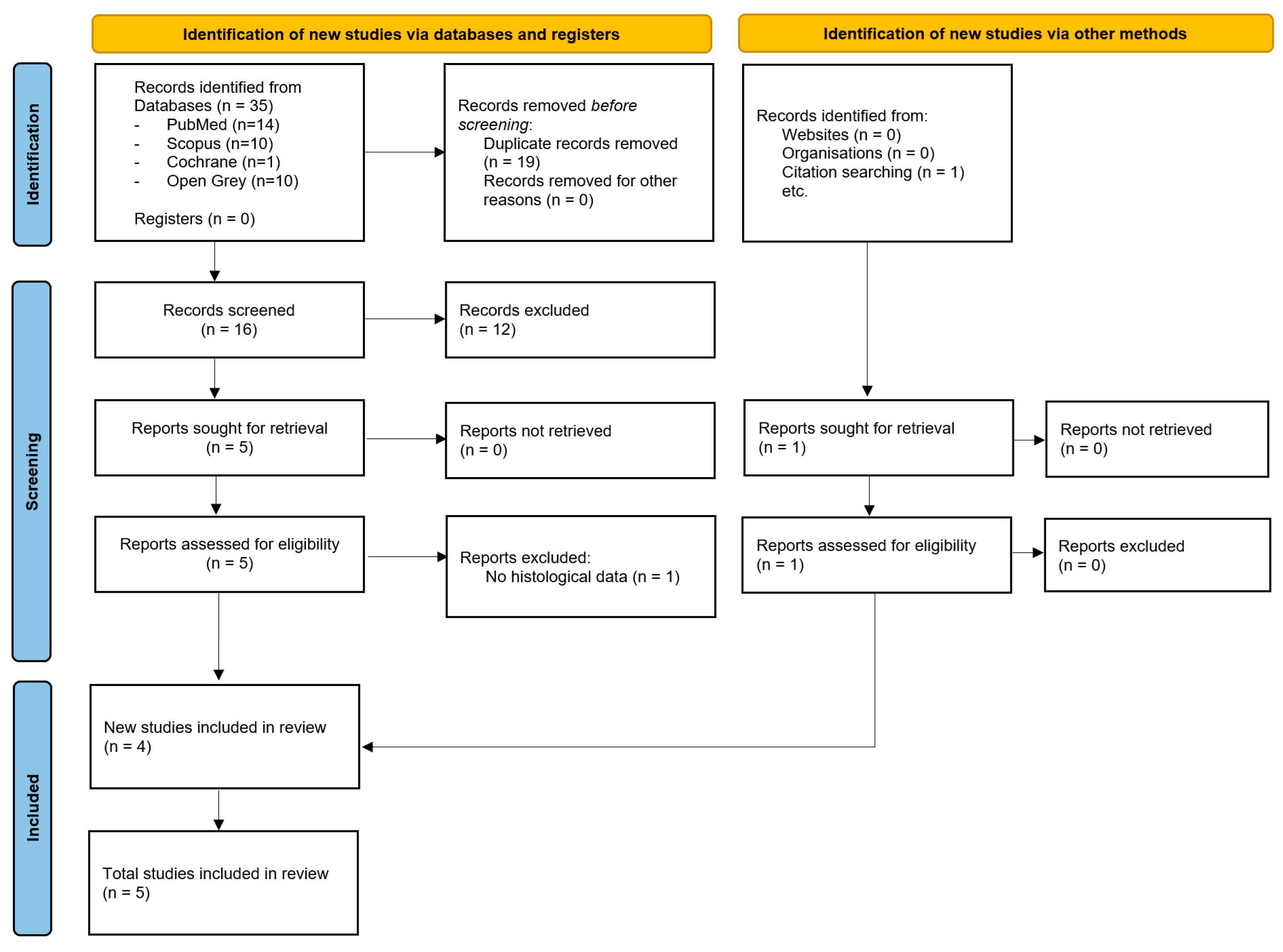
3. Tissue Analyzed
4. Histological and Immunohistochemical Findings
4.1. Techniques for Neural Visualization
4.2. Types and Distribution of Neural Elements
4.3. Spatial and Neurovascular Correlates
5. Discussion
6. Conclusions
Author Contributions
Funding
Institutional Review Board Statement
Informed Consent Statement
Data Availability Statement
Conflicts of Interest
References
- Adachi, N.; Ochi, M.; Uchio, Y.; Iwasa, J.; Ryoke, K.; Kuriwaka, M. Mechanoreceptors in the anterior cruciate ligament contribute to the joint position sense. Acta Orthop. 2002, 73, 330–334. [Google Scholar] [CrossRef]
- Yahia, L.H.; Newman, N.; Rivard, C.H. Neurohistology of lumbar spine ligaments. Acta Orthop. 1988, 59, 508–512. [Google Scholar] [CrossRef]
- Zimny, M.L. Mechanoreceptors in articular tissues. Am. J. Anat. 1988, 182, 16–32. [Google Scholar] [CrossRef]
- Zimny, M.L.; Wink, C.S. Neuroreceptors in the tissues of the knee joint. J. Electromyogr. Kinesiol. 1991, 1, 148–157. [Google Scholar] [CrossRef]
- Freeman, M.; Wyke, B. The innervation of the ankle joint. An anatomical and histological study in the cat. Cells Tissues Organs 1967, 68, 321–333. [Google Scholar] [CrossRef]
- Hagert, E.; Garcia-Elias, M.; Forsgren, S.; Ljung, B.-O. Immunohistochemical analysis of wrist ligament innervation in relation to their structural composition. J. Hand Surg. 2007, 32, 30–36. [Google Scholar] [CrossRef]
- Lin, Y.; Berger, R.A.; Berger, E.J.; Tomita, K.; Jew, J.Y.; Yang, C.; An, K. Nerve endings of the wrist joint: A preliminary report of the dorsal radiocarpal ligament. J. Orthop. Res. 2006, 24, 1225–1230. [Google Scholar] [CrossRef] [PubMed]
- Moraes, M.R.B.; Cavalcante, M.L.C.; Leite, J.A.D.; Ferreira, F.V.; Castro, A.J.O.; Santana, M.G. Histomorphometric evaluation of mechanoreceptors and free nerve endings in human lateral ankle ligaments. Foot Ankle Int. 2008, 29, 87–90. [Google Scholar] [CrossRef] [PubMed]
- Lopes, R.; Bauer, T. Lateral endoscopy of the sinus tarsi: Anatomy, technique and current indications. Orthop. Traumatol. Surg. Res. 2022, 108, 103383. [Google Scholar] [CrossRef] [PubMed]
- Stagni, R.; Leardini, A.; O’COnnor, J.J.; Giannini, S. Role of passive structures in the mobility and stability of the human subtalar joint: A literature review. Foot Ankle Int. 2003, 24, 402–409. [Google Scholar] [CrossRef]
- Rein, S.; Manthey, S.; Zwipp, H.; Witt, A. Distribution of sensory nerve endings around the human sinus tarsi: A cadaver study. J. Anat. 2014, 224, 499–508. [Google Scholar] [CrossRef] [PubMed]
- Sbarbati, A.; Accorsi, D.; Benati, D.; Marchetti, L.; Orsini, G.; Rigotti, G.; Panettiere, P. Subcutaneous adipose tissue classification. Eur. J. Histochem. 2010, 54, e48. [Google Scholar] [CrossRef] [PubMed]
- Bartness, T.J.; Bamshad, M. Innervation of mammalian white adipose tissue: Implications for the regulation of total body fat. Am. J. Physiol.-Regul. Integr. Comp. Physiol. 1998, 275, R1399–R1411. [Google Scholar] [CrossRef]
- Fantuzzi, G. Adipose tissue, adipokines, and inflammation. J. Allergy Clin. Immunol. 2005, 115, 911–919; quiz 920. [Google Scholar] [CrossRef]
- Benjamin, M.; Redman, S.; Milz, S.; Büttner, A.; Amin, A.; Moriggl, B.; Brenner, E.; Emery, P.; McGonagle, D.; Bydder, G. Adipose tissue at entheses: The rheumatological implications of its distribution. A potential site of pain and stress dissipation? Ann. Rheum. Dis. 2004, 63, 1549–1555. [Google Scholar] [CrossRef]
- Rein, S.; Hagert, E.; Hanisch, U.; Lwowski, S.; Fieguth, A.; Zwipp, H. Immunohistochemical analysis of sensory nerve endings in ankle ligaments: A cadaver study. Cells Tissues Organs 2013, 197, 64–76. [Google Scholar] [CrossRef]
- Akiyama, K.; Takakura, Y.; Tomita, Y.; Sugimoto, K.; Tanaka, Y.; Tamai, S. Neurohistology of the sinus tarsi and sinus tarsi syndrome. J. Orthop. Sci. 1999, 4, 299–303. [Google Scholar] [CrossRef]
- Pisani, P.C.; Pecora, R. Piede valgo evolutivo dell’infanzia: La risi informativa seno-tarsica versus l’artrorisi della sotto-astragalica con endortesi calcaneare. Chir. Piede 1998, 22, 9–13. [Google Scholar]
- Page, M.J.; McKenzie, J.E.; Bossuyt, P.M.; Boutron, I.; Hoffmann, T.C.; Mulrow, C.D.; Shamseer, L.; Tetzlaff, J.M.; Akl, E.A.; Brennan, S.E.; et al. The PRISMA 2020 statement: An updated guideline for reporting systematic reviews. Br. Med. J. 2021, 372, n71. [Google Scholar] [CrossRef]
- Spagnolli, G.; Pasquali, M.P.; Biscaglia, R.; Hacker, G.W. The proprioceptive innervation of tarsal sinus. Chir. Piede 2001, 25, 93–98. [Google Scholar]
- Morsy, M.G.; Filler, T.J. Sinus tarsi: A proprioceptive organ? Egypt. Orthop. J. 2017, 52, 278. [Google Scholar] [CrossRef]
- Pisani, G. From Grice to endorthesis. Chir. Piede 2000, 24, 173–186. [Google Scholar]
- Viladot, A.; Lorenzo, J.C.; Salazar, J.; Rodriguez, A. The subtalar joint: Embryology and morphology. Foot Ankle 1984, 5, 54–66. [Google Scholar] [CrossRef] [PubMed]
- Faldini, C.; Mazzotti, A.; Panciera, A.; Perna, F.; Stefanini, N.; Giannini, S. Bioabsorbable implants for subtalar arthroereisis in pediatric flatfoot. Musculoskelet. Surg. 2018, 102, 11–19. [Google Scholar] [CrossRef]
- Mazzotti, A.; Di Martino, A.; Geraci, G.; Casadei, C.; Panciera, A.; Giannini, S.; Faldini, C. Long-term results of subtalar arthroereisis for the treatment of symptomatic flexible flatfoot in children: An average fifteen year follow-up study. Int. Orthop. 2021, 45, 657–664. [Google Scholar] [CrossRef]
- Faldini, C.; Mazzotti, A.; Panciera, A.; Persiani, V.; Pardo, F.; Perna, F.; Giannini, S. Patient-perceived outcomes after subtalar arthroereisis with bioabsorbable implants for flexible flatfoot in growing age: A 4-year follow-up study. Eur. J. Orthop. Surg. Traumatol. 2018, 28, 707–712. [Google Scholar] [CrossRef]
- Hagert, E.; Lee, J.; Ladd, A.L. Innervation patterns of thumb trapeziometacarpal joint ligaments. J. Hand Surg. 2012, 37, 706–714.e1. [Google Scholar] [CrossRef]
- Tomita, K.; Berger, E.J.; Berger, R.A.; Kraisarin, J.; An, K.-N. Distribution of nerve endings in the human dorsal radiocarpal ligament. J. Hand Surg. 2007, 32, 466–473. [Google Scholar] [CrossRef]
- Lee, J.; Ladd, A.; Hagert, E. Immunofluorescent triple-staining technique to identify sensory nerve endings in human thumb ligaments. Cells Tissues Organs 2012, 195, 456–464. [Google Scholar] [CrossRef]
- Hagert, E. Wrist Ligaments: Innervation Patterns and Ligamento-Muscular Reflexes. Doctoral Thesis, Karolinska Institutet, Solna, Sweden, 2008. [Google Scholar]


| Study (Year) | Design—Sample Size | Age (y) | Tissue Analyzed | Methods/Stains Used | Mechanoreceptor Types Observed | Quantitative Data/Distribution (Means ± SD/Prevalence) |
|---|---|---|---|---|---|---|
| Akiyama et al., 1999 [17] | 20 patients with sinus tarsi syndrome; 2 controls | 25 (10–57) | Sinus tarsi’s synovial membrane and fatty tissue | Modified Gairns gold-chloride staining (15 specimens) + H&E (5 specimens) | Free nerve endings (predominant); Pacini, Golgi, Ruffini corpuscles. | Neural elements present in both symptomatic and control specimens, mainly in the synovial tissue. (No numeric counts reported) |
| Spagnolli et al., 2001 [20] | Cadaver study | Not reported | Dorsal talonavicular and plantar calcaneonavicular ligaments | Histological: H&E Immunohistochemistry: Immuno-gold-silver staining with PGP9.5, S100, NPY | Isolate and noradrenergic neural fibers, Ruffini and Golgi corpuscles. | No numeric counts reported. Mechanoreceptors mainly near bone insertions. |
| Rein et al., 2014 [11] | Cadaver study—13 feet | 58 ± 16 | Three specimen types from sinus-tarsi region: superficial fat pad at IER, deep fat pad at IER and subtalar joint capsule (inside sinus tarsi) | Histological: H&E, Elastica van Gieson (EvG); Immunohistochemistry: S100, p75, PGP9.5; vascular marker sm-actin. | Free nerve endings (predominant) among adipocytes and in subsynovial layer. Ruffini and Golgi-like rare. No Pacini corpuscles detected. | Free nerve endings—subtalar joint capsule: 88.8 ± 71.3 cm2; superficial fat pad (IER): 47.8 ± 31.3 cm2 (p < 0.001). No Pacini found |
| Rein et al., 2013 [16] | Cadaver study—140 ligaments (from 10 feet) | 58 ± 20 | Ankle ligaments, grouped into complexes: lateral, medial, sinus tarsi complex, ATiFL (syndesmosis) | H&E + immunohistochemistry: S100, p75, PGP9.5; vascular marker sm-actin. | Free nerve endings (present in 100% of ligaments), Ruffini, Pacini, Golgi-like, unclassifiable corpuscles. | Free nerve endings 100%; Ruffini endings in 108/140 (77%); Pacini in 49/140 (35%); Golgi-like in 15/140 (11%); unclassifiable corpuscles in 95/140 (68%). Ratios (mean across all ligaments): Ruffini:Pacini 4.7:1; Free:Ruffini 122:1; Free:Pacini 582:1; Free:Golgi 1890:1. Free endings were more abundant in epiligamentous and near bone insertions. |
| Morsy and Filler, 2017 [21] | 46 surgical cases | 39 (8–77) | Soft tissue material from the sinus tarsi | H&E, Trichrome, Orcein. Immunohistochemistry: M0762 for neurofilament, A0623 for Myelin basic protein | Myelinated and unmyelinated fibers | No numeric counts reported |
Disclaimer/Publisher’s Note: The statements, opinions and data contained in all publications are solely those of the individual author(s) and contributor(s) and not of MDPI and/or the editor(s). MDPI and/or the editor(s) disclaim responsibility for any injury to people or property resulting from any ideas, methods, instructions or products referred to in the content. |
© 2025 by the authors. Licensee MDPI, Basel, Switzerland. This article is an open access article distributed under the terms and conditions of the Creative Commons Attribution (CC BY) license (https://creativecommons.org/licenses/by/4.0/).
Share and Cite
Arceri, A.; Mazzotti, A.; Di Paola, G.; Sgubbi, F.; Langone, L.; Zielli, S.O.; Veronesi, F.; Giavaresi, G.; Mora, P.; Faldini, C. What Is Inside the Sinus Tarsi? Mechanoreceptor Distribution, Typing and Clinical Relevance—A Histological and Immunohistochemical Synthesis. Biomedicines 2025, 13, 3052. https://doi.org/10.3390/biomedicines13123052
Arceri A, Mazzotti A, Di Paola G, Sgubbi F, Langone L, Zielli SO, Veronesi F, Giavaresi G, Mora P, Faldini C. What Is Inside the Sinus Tarsi? Mechanoreceptor Distribution, Typing and Clinical Relevance—A Histological and Immunohistochemical Synthesis. Biomedicines. 2025; 13(12):3052. https://doi.org/10.3390/biomedicines13123052
Chicago/Turabian StyleArceri, Alberto, Antonio Mazzotti, Gianmarco Di Paola, Federico Sgubbi, Laura Langone, Simone Ottavio Zielli, Francesca Veronesi, Gianluca Giavaresi, Paolo Mora, and Cesare Faldini. 2025. "What Is Inside the Sinus Tarsi? Mechanoreceptor Distribution, Typing and Clinical Relevance—A Histological and Immunohistochemical Synthesis" Biomedicines 13, no. 12: 3052. https://doi.org/10.3390/biomedicines13123052
APA StyleArceri, A., Mazzotti, A., Di Paola, G., Sgubbi, F., Langone, L., Zielli, S. O., Veronesi, F., Giavaresi, G., Mora, P., & Faldini, C. (2025). What Is Inside the Sinus Tarsi? Mechanoreceptor Distribution, Typing and Clinical Relevance—A Histological and Immunohistochemical Synthesis. Biomedicines, 13(12), 3052. https://doi.org/10.3390/biomedicines13123052