



Modulation of BDNF/TrkB Signalling Pathway in Alzheimer’s Disease: Mechanistic Insights and the Role of Stem Cell Therapy
 , , , and
Abstract
1. Introduction
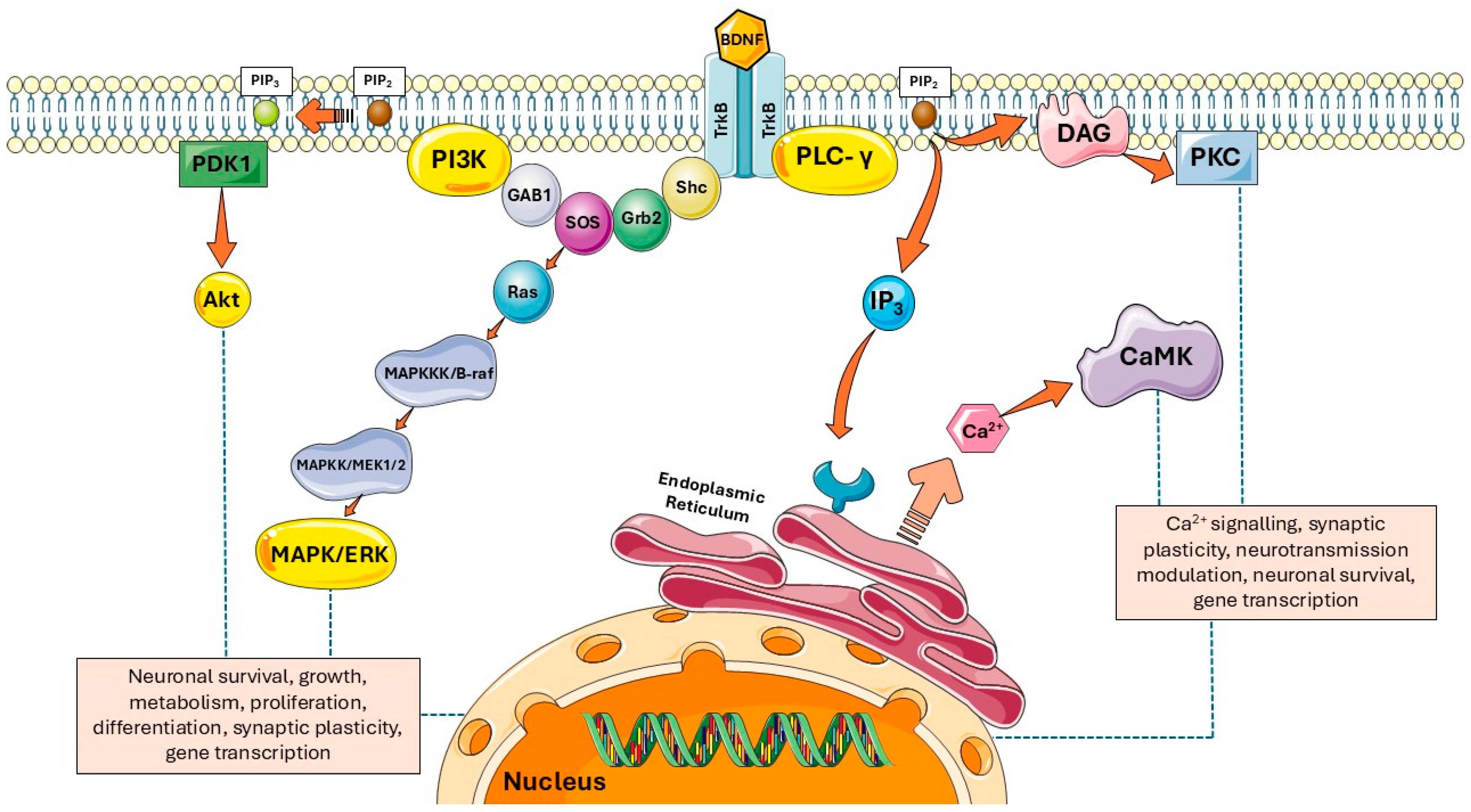
2. Overview of BDNF/TrkB Signalling Pathway
2.1. PI3K/Akt Signalling Pathway
2.2. MAPK/ERK Signalling Pathway
2.3. PLC-γ Signalling Pathway
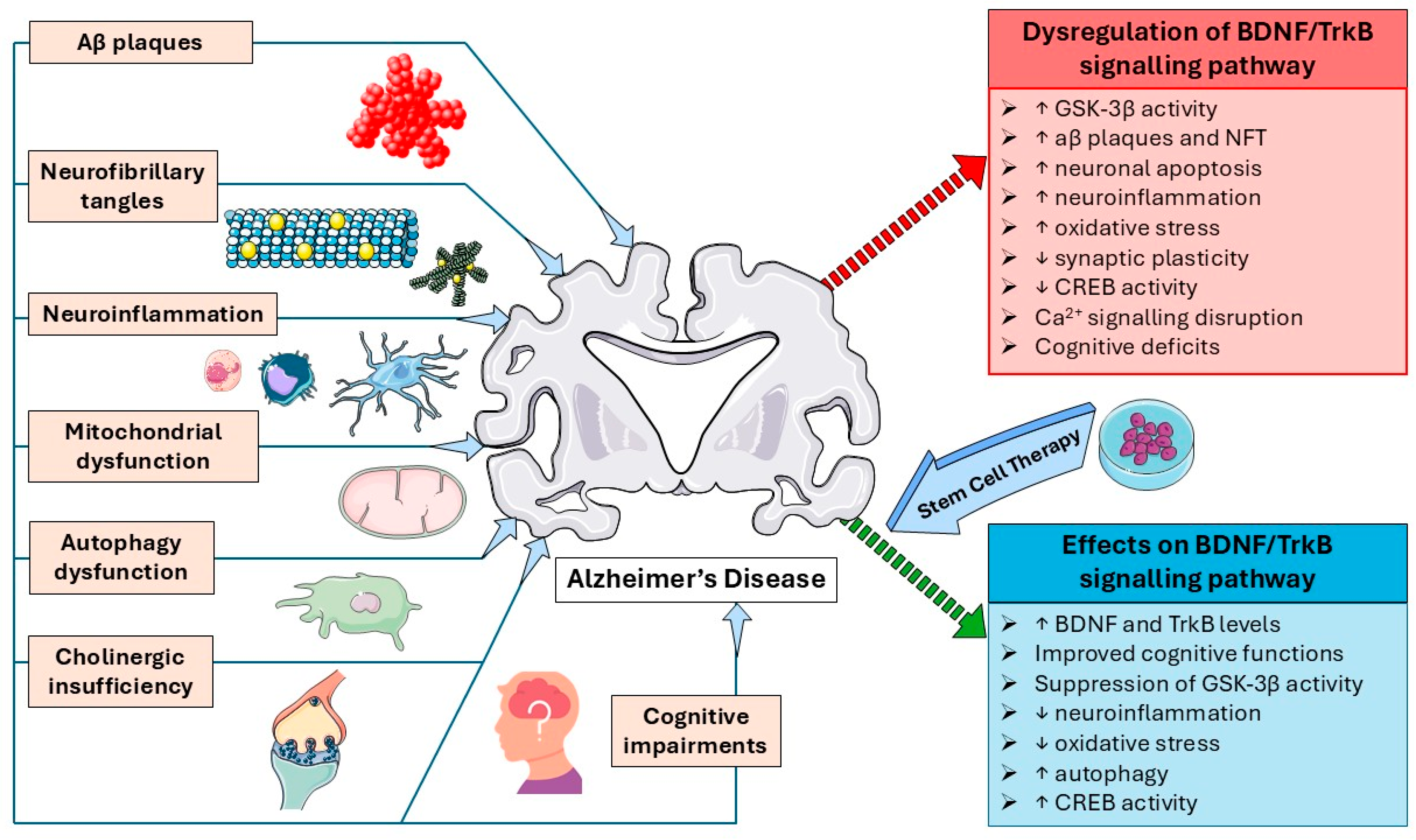
3. Dysregulation of BDNF/TrkB Signalling Pathway in AD
3.1. Pathophysiology of AD
3.2. Reduction in BDNF and TrkB Levels in AD
3.3. BNDF/TrkB Dysregulation Effects on Downstream Cascades—PI3K/Akt Signalling Pathway
3.4. BNDF/TrkB Dysregulation Effects on Downstream Cascades—MAPK/ERK Signalling Pathway
3.5. BDNF/TrkB Dysregulation Effects on Downstream Cascades—PLC-γ Signalling Pathway
3.6. BDNF/TrkB Dysregulation Effects on Neuroinflammation and Neuronal Apoptosis
4. Effects of Stem Cell Therapy on BDNF/TrkB Signalling Pathway in AD
4.1. Upregulation of BDNF/TrkB Levels and Enhanced Cognitive Functions
4.2. Enhanced Downstream Cascades of BDNF/TrkB Signalling Pathway
5. Challenges and Limitations
6. Future Directions
7. Conclusions
Funding
Data Availability Statement
Conflicts of Interest
References
- Steinmetz, J.D.; Seeher, K.M.; Schiess, N.; Nichols, E.; Cao, B.; Servili, C.; Cavallera, V.; Cousin, E.; Hagins, H.; Moberg, M.E.; et al. Global, Regional, and National Burden of Disorders Affecting the Nervous System, 1990–2021: A Systematic Analysis for the Global Burden of Disease Study 2021. Lancet Neurol. 2024, 23, 344–381. [Google Scholar] [CrossRef] [PubMed]
- Kesidou, E.; Theotokis, P.; Damianidou, O.; Boziki, M.; Konstantinidou, N.; Taloumtzis, C.; Sintila, S.-A.; Grigoriadis, P.; Evangelopoulos, M.E.; Bakirtzis, C.; et al. CNS Ageing in Health and Neurodegenerative Disorders. J. Clin. Med. 2023, 12, 2255. [Google Scholar] [CrossRef] [PubMed]
- Wilson, D.M.; Cookson, M.R.; Van Den Bosch, L.; Zetterberg, H.; Holtzman, D.M.; Dewachter, I. Hallmarks of Neurodegenerative Diseases. Cell 2023, 186, 693–714. [Google Scholar] [CrossRef] [PubMed]
- Wu, J.; Wu, J.; Chen, T.; Cai, J.; Ren, R. Protein Aggregation and Its Affecting Mechanisms in Neurodegenerative Diseases. Neurochem. Int. 2024, 180, 105880. [Google Scholar] [CrossRef]
- Wu, Y.; Ma, B.; Liu, C.; Li, D.; Sui, G. Pathological Involvement of Protein Phase Separation and Aggregation in Neurodegenerative Diseases. Int. J. Mol. Sci. 2024, 25, 10187. [Google Scholar] [CrossRef]
- Breijyeh, Z.; Karaman, R. Comprehensive Review on Alzheimer’s Disease: Causes and Treatment. Molecules 2020, 25, 5789. [Google Scholar] [CrossRef]
- Lamptey, R.N.L.; Chaulagain, B.; Trivedi, R.; Gothwal, A.; Layek, B.; Singh, J. A Review of the Common Neurodegenerative Disorders: Current Therapeutic Approaches and the Potential Role of Nanotherapeutics. Int. J. Mol. Sci. 2022, 23, 1851. [Google Scholar] [CrossRef]
- Zhang, J.; Kong, G.; Yang, J.; Pang, L.; Li, X. Pathological Mechanisms and Treatment Progression of Alzheimer’s Disease. Eur. J. Med. Res. 2025, 30, 625. [Google Scholar] [CrossRef]
- Passeri, E.; Elkhoury, K.; Morsink, M.; Broersen, K.; Linder, M.; Tamayol, A.; Malaplate, C.; Yen, F.T.; Arab-Tehrany, E. Alzheimer’s Disease: Treatment Strategies and Their Limitations. Int. J. Mol. Sci. 2022, 23, 13954. [Google Scholar] [CrossRef]
- Wareham, L.K.; Liddelow, S.A.; Temple, S.; Benowitz, L.I.; Di Polo, A.; Wellington, C.; Goldberg, J.L.; He, Z.; Duan, X.; Bu, G.; et al. Solving Neurodegeneration: Common Mechanisms and Strategies for New Treatments. Mol. Neurodegener. 2022, 17, 23. [Google Scholar] [CrossRef]
- Enkavi, G.; Girych, M.; Moliner, R.; Vattulainen, I.; Castrén, E. TrkB Transmembrane Domain: Bridging Structural Understanding with Therapeutic Strategy. Trends Biochem. Sci. 2024, 49, 445–456. [Google Scholar] [CrossRef] [PubMed]
- Numakawa, T.; Odaka, H. Brain-Derived Neurotrophic Factor Signaling in the Pathophysiology of Alzheimer’s Disease: Beneficial Effects of Flavonoids for Neuroprotection. Int. J. Mol. Sci. 2021, 22, 5719. [Google Scholar] [CrossRef] [PubMed]
- Alqahtani, S.M.; Al-Kuraishy, H.M.; Al Gareeb, A.I.; Albuhadily, A.K.; Alexiou, A.; Papadakis, M.; Hemeda, L.R.; Faheem, S.A.; El-Saber Batiha, G. Unlocking Alzheimer’s Disease: The Role of BDNF Signaling in Neuropathology and Treatment. Neuromol. Med. 2025, 27, 36. [Google Scholar] [CrossRef] [PubMed]
- Zakrzewski, W.; Dobrzyński, M.; Szymonowicz, M.; Rybak, Z. Stem Cells: Past, Present, and Future. Stem Cell Res. Ther. 2019, 10, 68. [Google Scholar] [CrossRef]
- McKinley, K.L.; Longaker, M.T.; Naik, S. Emerging Frontiers in Regenerative Medicine. Science 2023, 380, 796–798. [Google Scholar] [CrossRef]
- Sivandzade, F.; Cucullo, L. Regenerative Stem Cell Therapy for Neurodegenerative Diseases: An Overview. Int. J. Mol. Sci. 2021, 22, 2153. [Google Scholar] [CrossRef]
- Temple, S. Advancing Cell Therapy for Neurodegenerative Diseases. Cell Stem Cell 2023, 30, 512–529. [Google Scholar] [CrossRef]
- Rahimi Darehbagh, R.; Seyedoshohadaei, S.A.; Ramezani, R.; Rezaei, N. Stem Cell Therapies for Neurological Disorders: Current Progress, Challenges, and Future Perspectives. Eur. J. Med. Res. 2024, 29, 386. [Google Scholar] [CrossRef]
- Hu, J.; Wang, X. Alzheimer’s Disease: From Pathogenesis to Mesenchymal Stem Cell Therapy—Bridging the Missing Link. Front. Cell Neurosci. 2021, 15, 811852. [Google Scholar] [CrossRef]
- Barde, Y.-A.; Edgar, D.; Thoenen, H. Purification of a New Neurotrophic Factor from Mammalian Brain. EMBO J. 1982, 1, 549–553. [Google Scholar] [CrossRef]
- Hofer, M.; Pagliusi, S.R.; Hohn, A.; Leibrock, J.; Barde, Y.-A. Regional Distribution of Brain-Derived Neurotrophic Factor MRNA in the Adult Mouse Brain. EMBO J. 1990, 9, 2459–2464. [Google Scholar] [CrossRef] [PubMed]
- Albini, M.; Krawczun-Rygmaczewska, A.; Cesca, F. Astrocytes and Brain-Derived Neurotrophic Factor (BDNF). Neurosci. Res. 2023, 197, 42–51. [Google Scholar] [CrossRef] [PubMed]
- Binder, D.K.; Scharfman, H.E. Brain-Derived Neurotrophic Factor. Growth Factors 2004, 22, 123–131. [Google Scholar] [CrossRef] [PubMed]
- Björkholm, C.; Monteggia, L.M. BDNF—A Key Transducer of Antidepressant Effects. Neuropharmacology 2016, 102, 72–79. [Google Scholar] [CrossRef]
- Foltran, R.B.; Diaz, S.L. BDNF Isoforms: A Round Trip Ticket between Neurogenesis and Serotonin? J. Neurochem. 2016, 138, 204–221. [Google Scholar] [CrossRef]
- Miranda, M.; Morici, J.F.; Zanoni, M.B.; Bekinschtein, P. Brain-Derived Neurotrophic Factor: A Key Molecule for Memory in the Healthy and the Pathological Brain. Front. Cell Neurosci. 2019, 13, 363. [Google Scholar] [CrossRef]
- Barbacid, M. The Trk Family of Neurotrophin Receptors. J. Neurobiol. 1994, 25, 1386–1403. [Google Scholar] [CrossRef]
- Klein, R.; Nanduri, V.; Jing, S.; Lamballe, F.; Tapley, P.; Bryant, S.; Cordon-Cardo, C.; Jones, K.R.; Reichardt, L.F.; Barbacid, M. The TrkB Tyrosine Protein Kinase Is a Receptor for Brain-Derived Neurotrophic Factor and Neurotrophin-3. Cell 1991, 66, 395–403. [Google Scholar] [CrossRef]
- Gupta, V.K.; You, Y.; Gupta, V.B.; Klistorner, A.; Graham, S.L. TrkB Receptor Signalling: Implications in Neurodegenerative, Psychiatric and Proliferative Disorders. Int. J. Mol. Sci. 2013, 14, 10122–10142. [Google Scholar] [CrossRef]
- Middlemas, D.S.; Lindberg, R.A.; Hunter’, T. TrkB, a Neural Receptor Protein-Tyrosine Kinase: Evidence for a Full-Length and Two Truncated Receptors. Mol. Cell Biol. 1991, 11, 143–153. [Google Scholar]
- Stoilov, P.; Stamm, S.; Castren, E. Analysis of the Human TrkB Gene Genomic Organization Reveals Novel TrkB Isoforms, Unusual Gene Length, and Splicing Mechanism. Biochem. Biophys. Res. Commun. 2002, 290, 1054–1065. [Google Scholar] [CrossRef]
- Andreska, T.; Lüningschrör, P.; Sendtner, M. Regulation of TrkB Cell Surface Expression—A Mechanism for Modulation of Neuronal Responsiveness to Brain-Derived Neurotrophic Factor. Cell Tissue Res. 2020, 382, 5–14. [Google Scholar] [CrossRef]
- Huang, E.J.; Reichardt, L.F. Trk Receptors: Roles in Neuronal Signal Transduction. Annu. Rev. Biochem. 2003, 72, 609–642. [Google Scholar] [CrossRef]
- Bibel, M.; Hoppe, E.; Barde, Y.-A. Biochemical and Functional Interactions between the Neurotrophin Receptors Trk and P75 NTR. EMBO J. 1999, 18, 616–622. [Google Scholar] [CrossRef] [PubMed]
- Middlemas, D.S.; Meisenhelder, J.; Hunter, T. Identification of TrkB Autophosphorylation Sites and Evidence That Phospholipase C-Yl Is a Substrate of the TrkB Receptor*. J. Biol. Chem. 1994, 269, 5458–5466. [Google Scholar] [CrossRef] [PubMed]
- Atwal, J.K.; Massie, B.; Miller, F.D.; Kaplan, D.R. The TrkB-Shc Site Signals Neuronal Survival and Local Axon Growth via MEK and PI3-Kinase. Neuron 2000, 27, 265–277. [Google Scholar] [CrossRef] [PubMed]
- Johnstone, A.; Mobley, W. Local TrkB Signaling: Themes in Development and Neural Plasticity. Cell Tissue Res. 2020, 382, 101–111. [Google Scholar] [CrossRef]
- Korhonen, J.M.; Saïd, F.A.; Wong, A.J.; Kaplan, D.R. Gab1 Mediates Neurite Outgrowth, DNA Synthesis, and Survival in PC12 Cells. J. Biol. Chem. 1999, 274, 37307–37314. [Google Scholar] [CrossRef]
- Schaeper, U.; Gehring, N.H.; Fuchs, K.P.; Sachs, M.; Kempkes, B.; Birchmeier, W. Coupling of Gab1 to C-Met, Grb2, and Shp2 Mediates Biological Responses. J. Cell Biol. 2000, 149, 1419–1432. [Google Scholar] [CrossRef]
- Bathina, S.; Das, U.N. Brain-Derived Neurotrophic Factor and Its Clinical Implications. Arch. Med. Sci. 2015, 11, 1164–1178. [Google Scholar] [CrossRef]
- Ahmed, S.B.M.; Prigent, S.A. Insights into the Shc Family of Adaptor Proteins. J. Mol. Signal 2017, 12, 1–17. [Google Scholar] [CrossRef] [PubMed]
- Wang, D.; Liu, G.; Meng, Y.; Chen, H.; Ye, Z.; Jing, J. The Configuration of GRB2 in Protein Interaction and Signal Transduction. Biomolecules 2024, 14, 259. [Google Scholar] [CrossRef] [PubMed]
- Huang, S.-H.; Zhao, L.; Sun, Z.-P.; Li, X.-Z.; Geng, Z.; Zhang, K.-D.; Chao, M.V.; Chen, Z.-Y. Essential Role of Hrs in Endocytic Recycling of Full-Length TrkB Receptor but Not Its Isoform TrkB.T1. J. Biol. Chem. 2009, 284, 15126–15136. [Google Scholar] [CrossRef] [PubMed]
- Moya-Alvarado, G.; Guerra, M.V.; Tiburcio, R.; Bravo, E.; Bronfman, F.C. The Rab11-Regulated Endocytic Pathway and BDNF/TrkB Signaling: Roles in Plasticity Changes and Neurodegenerative Diseases. Neurobiol. Dis. 2022, 171, 105796. [Google Scholar] [CrossRef]
- Cantley, L.C. The Phosphoinositide 3-Kinase Pathway. Science 2002, 296, 1655–1657. [Google Scholar] [CrossRef]
- Fox, M.; Mott, H.R.; Owen, D. Class IA PI3K Regulatory Subunits: P110-Independent Roles and Structures. Biochem. Soc. Trans. 2020, 48, 1397–1417. [Google Scholar] [CrossRef]
- Besset, V.; Scott, R.P.; Ibáñez, C.F. Signaling Complexes and Protein-Protein Interactions Involved in the Activation of the Ras and Phosphatidylinositol 3-Kinase Pathways by the c-Ret Receptor Tyrosine Kinase. J. Biol. Chem. 2000, 275, 39159–39166. [Google Scholar] [CrossRef]
- Vanhaesebroeck, B.; Leevers, S.J.; Ahmadi, K.; Timms, J.; Katso, R.; Driscoll, P.C.; Woscholski, R.; Parker, P.J.; Waterfield, M.D. Synthesis and Function of 3-Phosphorylated Inositol Lipids. Annu. Rev. Biochem. 2001, 70, 535–602. [Google Scholar] [CrossRef]
- Denley, A.; Gymnopoulos, M.; Kang, S.; Mitchell, C.; Vogt, P.K. Requirement of Phosphatidylinositol(3,4,5)Trisphosphate in Phosphatidylinositol 3-Kinase-Induced Oncogenic Transformation. Mol. Cancer Res. 2009, 7, 1132–1138. [Google Scholar] [CrossRef]
- Hemmings, B.A.; Restuccia, D.F. The PI3K-PKB/Akt pathway. Cold Spring Harb. Perspect. Biol. 2012, 4, a011189, Erratum in Cold Spring Harb. Perspect. Biol. 2015, 7, a026609. https://doi.org/10.1101/cshperspect.a026609. [Google Scholar] [CrossRef] [PubMed] [PubMed Central]
- Rickle, A.; Bogdanovic, N.; Volkman, I.; Winblad, B.; Ravid, R.; Cowburn, R.F. Akt Activity in Alzheimer’s Disease and Other Neurodegenerative Disorders. Neuroreport 2004, 15, 955–959. [Google Scholar] [CrossRef]
- Wang, Q.; Liu, L.; Pei, L.; Ju, W.; Ahmadian, G.; Lu, J.; Wang, Y.; Liu, F.; Wang, Y.T. Control of Synaptic Strength, a Novel Function of Akt. Neuron 2003, 38, 915–928. [Google Scholar] [CrossRef] [PubMed]
- Horwood, J.M.; Dufour, F.; Laroche, S.; Davis, S. Signalling Mechanisms Mediated by the Phosphoinositide 3-kinase/Akt Cascade in Synaptic Plasticity and Memory in the Rat. Eur. J. Neurosci. 2006, 23, 3375–3384. [Google Scholar] [CrossRef] [PubMed]
- Chen, A.; XIONG, L.-J.; TONG, Y.; MAO, M. Neuroprotective Effect of Brain-Derived Neurotrophic Factor Mediated by Autophagy through the PI3K/Akt/MTOR Pathway. Mol. Med. Rep. 2013, 8, 1011–1016. [Google Scholar] [CrossRef] [PubMed]
- Lowenstein, E.J.; Daly, R.J.; Batzer, A.G.; Li, W.; Margolis, B.; Lammers, R.; Ullrich, A.; Skolnik, E.Y.; Bar-Sagi, D.; Schlessinger, J. The SH2 and SH3 Domain-Containing Protein GRB2 Links Receptor Tyrosine Kinases to Ras Signaling. Cell 1992, 70, 431–442. [Google Scholar] [CrossRef]
- English, J.; Pearson, G.; Wilsbacher, J.; Swantek, J.; Karandikar, M.; Xu, S.; Cobb, M.H. New Insights into the Control of MAP Kinase Pathways. Exp. Cell Res. 1999, 253, 255–270. [Google Scholar] [CrossRef]
- Reichardt, L.F. Neurotrophin-Regulated Signalling Pathways. Philos. Trans. R. Soc. B Biol. Sci. 2006, 361, 1545–1564. [Google Scholar] [CrossRef]
- Davis, S.; Vanhoutte, P.; Pagè, C.; Caboche, J.; Laroche, S. The MAPK/ERK Cascade Targets Both Elk-1 and CAMP Response Element-Binding Protein to Control Long-Term Potentiation-Dependent Gene Expression in the Dentate Gyrus In Vivo. J. Neurosci. Off. J. Soc. Neurosci. 2000, 20, 4563–4572. [Google Scholar] [CrossRef]
- Kelleher, R.J.; Govindarajan, A.; Jung, H.-Y.; Kang, H.; Tonegawa, S. Translational Control by MAPK Signaling in Long-Term Synaptic Plasticity and Memory. Cell 2004, 116, 467–479. [Google Scholar] [CrossRef]
- Yoshii, A.; Constantine-Paton, M. Postsynaptic BDNF-TrkB Signaling in Synapse Maturation, Plasticity, and Disease. Dev. Neurobiol. 2010, 70, 304–322. [Google Scholar] [CrossRef]
- Nairn, A.C.; Picciotto, M.R. Calcium/Calmodulin-Dependent Protein Kinases. Semin. Cancer Biol. 1994, 5, 295–303. [Google Scholar] [PubMed]
- Kim, M.J.; Kim, E.; Ryu, S.H.; Suh, P.-G. The Mechanism of Phospholipase C-Γ1 Regulation. Exp. Mol. Med. 2000, 32, 101–109. [Google Scholar] [CrossRef] [PubMed]
- Ishida, A.; Shigeri, Y.; Taniguchi, T.; Kameshita, I. Protein Phosphatases That Regulate Multifunctional Ca2+/Calmodulin-Dependent Protein Kinases: From Biochemistry to Pharmacology. Pharmacol. Ther. 2003, 100, 291–305. [Google Scholar] [CrossRef]
- Nishizuka, Y.; Shearman, M.S.; Oda, T.; Berry, N.; Shinomura, T.; Asaoka, Y.; Ogita, K.; Koide, H.; Kikkawa, U.; Kishimoto, A.; et al. Chapter 9: Protein Kinase C Family and Nervous Function. Prog. Brain Res. 1991, 89, 125–141. [Google Scholar]
- Callender, J.A.; Newton, A.C. Conventional Protein Kinase C in the Brain: 40 Years Later. Neuronal Signal 2017, 1, NS20160005. [Google Scholar] [CrossRef]
- Glenner, G.G.; Wong, C.W. Alzheimer’s Disease and Down’s Syndrome: Sharing of a Unique Cerebrovascular Amyloid Fibril Protein. Biochem. Biophys. Res. Commun. 1984, 122, 1131–1135. [Google Scholar] [CrossRef]
- Grundke-Iqbal, I.; Iqbal, K.; Quinlan, M.; Tung, Y.C.; Zaidi, M.S.; Wisniewski, H.M. Microtubule-Associated Protein Tau. A Component of Alzheimer Paired Helical Filaments. J. Biol. Chem. 1986, 261, 6084–6089. [Google Scholar] [CrossRef]
- Selkoe, D.J. Alzheimer’s Disease: Genes, Proteins, and Therapy. Physiol. Rev. 2001, 81, 741–766. [Google Scholar] [CrossRef]
- Haass, C.; Selkoe, D.J. Soluble Protein Oligomers in Neurodegeneration: Lessons from the Alzheimer’s Amyloid β-Peptide. Nat. Rev. Mol. Cell Biol. 2007, 8, 101–112. [Google Scholar] [CrossRef]
- Shankar, G.M.; Bloodgood, B.L.; Townsend, M.; Walsh, D.M.; Selkoe, D.J.; Sabatini, B.L. Natural Oligomers of the Alzheimer Amyloid-β Protein Induce Reversible Synapse Loss by Modulating an NMDA-Type Glutamate Receptor-Dependent Signaling Pathway. J. Neurosci. 2007, 27, 2866–2875. [Google Scholar] [CrossRef]
- Hardy, J.; Allsop, D. Amyloid Deposition as the Central Event in the Aetiology of Alzheimer’s Disease. Trends Pharmacol. Sci. 1991, 12, 383–388. [Google Scholar] [CrossRef]
- Brion, J.-P. Neurofibrillary Tangles and Alzheimer’s Disease. Eur. Neurol. 1998, 40, 130–140. [Google Scholar] [CrossRef]
- Gamblin, T.C.; Chen, F.; Zambrano, A.; Abraha, A.; Lagalwar, S.; Guillozet, A.L.; Lu, M.; Fu, Y.; Garcia-Sierra, F.; LaPointe, N.; et al. Caspase Cleavage of Tau: Linking Amyloid and Neurofibrillary Tangles in Alzheimer’s Disease. Proc. Natl. Acad. Sci. USA 2003, 100, 10032–10037. [Google Scholar] [CrossRef]
- Serrano-Pozo, A.; Frosch, M.P.; Masliah, E.; Hyman, B.T. Neuropathological Alterations in Alzheimer Disease. Cold Spring Harb. Perspect. Med. 2011, 1, a006189. [Google Scholar] [CrossRef]
- Dhapola, R.; Hota, S.S.; Sarma, P.; Bhattacharyya, A.; Medhi, B.; Reddy, D.H.K. Recent Advances in Molecular Pathways and Therapeutic Implications Targeting Neuroinflammation for Alzheimer’s Disease. Inflammopharmacology 2021, 29, 1669–1681. [Google Scholar] [CrossRef]
- Connor, B.; Young, D.; Yan, Q.; Faull, R.L.M.; Synek, B.; Dragunow, M. Brain-Derived Neurotrophic Factor Is Reduced in Alzheimer’s Disease. Mol. Brain Res. 1997, 49, 71–81. [Google Scholar] [CrossRef] [PubMed]
- Ferrer, I.; Marín, C.; Rey, M.J.; Ribalta, T.; Goutan, E.; Blanco, R.; Tolosa, E.; Martí, E. BDNF and Full-Length and Truncated TrkB Expression in Alzheimer Disease. Implications in Therapeutic Strategies. J. Neuropathol. Exp. Neurol. 1999, 58, 729–739. [Google Scholar] [CrossRef] [PubMed]
- Garzon, D.; Yu, G.; Fahnestock, M. A New Brain-derived Neurotrophic Factor Transcript and Decrease Inbrain-derived Neurotrophic Factor Transcripts 1, 2 and 3 in Alzheimer’s Disease Parietal Cortex. J. Neurochem. 2002, 82, 1058–1064. [Google Scholar] [CrossRef] [PubMed]
- Peng, S.; Wuu, J.; Mufson, E.J.; Fahnestock, M. Precursor Form of Brain-Derived Neurotrophic Factor and Mature Brain-Derived Neurotrophic Factor Are Decreased in the Pre-Clinical Stages of Alzheimer’s Disease. J. Neurochem. 2005, 93, 1412–1421. [Google Scholar] [CrossRef]
- Ahmad Abdullah, A.H.; Jufri, N.F.; Masre, S.F.; Rajab, N.F.; Damanhuri, H.A.; Che Roos, N.A.; Ibrahim, F.W. BDNF-Altering Cell Death Mechanisms of Brain Disorders: Pyroptosis and/or Ferroptosis? A Systematic Review. Turk. J. Biochem. 2024, 49, 471–483. [Google Scholar] [CrossRef]
- Tecalco-Cruz, A.C.; Ramírez-Jarquín, J.O.; Alvarez-Sánchez, M.E.; Zepeda-Cervantes, J. Epigenetic Basis of Alzheimer Disease. World J. Biol. Chem. 2020, 11, 62–75. [Google Scholar] [CrossRef]
- Nagata, T.; Kobayashi, N.; Ishii, J.; Shinagawa, S.; Nakayama, R.; Shibata, N.; Kuerban, B.; Ohnuma, T.; Kondo, K.; Arai, H.; et al. Association between DNA Methylation of the BDNF Promoter Region and Clinical Presentation in Alzheimer’s Disease. Dement. Geriatr. Cogn. Dis. Extra 2015, 5, 64–73. [Google Scholar] [CrossRef] [PubMed]
- Nikolac Perkovic, M.; Videtic Paska, A.; Konjevod, M.; Kouter, K.; Svob Strac, D.; Nedic Erjavec, G.; Pivac, N. Epigenetics of Alzheimer’s Disease. Biomolecules 2021, 11, 195. [Google Scholar] [CrossRef] [PubMed]
- Egan, M.F.; Kojima, M.; Callicott, J.H.; Goldberg, T.E.; Kolachana, B.S.; Bertolino, A.; Zaitsev, E.; Gold, B.; Goldman, D.; Dean, M.; et al. The BDNF Val66met Polymorphism Affects Activity-Dependent Secretion of BDNF and Human Memory and Hippocampal Function. Cell 2003, 112, 257–269. [Google Scholar] [CrossRef]
- Meyer, H.E.; Mandelkow, E.-M.; Drewes, G.; Trinczek, B.; Illenberger, S.; Biernat, J.; Schmitt-Ulms, G.; Mandelkow, E. Microtubule-Associated Protein/Microtubule Affinity-Regulating Kinase (P110mark). J. Biol. Chem. 1995, 270, 7679–7688. [Google Scholar] [CrossRef]
- Neves, A.F.; Camargo, C.; Premer, C.; Hare, J.M.; Baumel, B.S.; Pinto, M. Intravenous Administration of Mesenchymal Stem Cells Reduces Tau Phosphorylation and Inflammation in the 3xTg-AD Mouse Model of Alzheimer’s Disease. Exp. Neurol. 2021, 341, 113706. [Google Scholar] [CrossRef]
- Townsend, M.; Mehta, T.; Selkoe, D.J. Soluble Aβ Inhibits Specific Signal Transduction Cascades Common to the Insulin Receptor Pathway. J. Biol. Chem. 2007, 282, 33305–33312. [Google Scholar] [CrossRef]
- Jope, R.S.; Johnson, G.V.W. The Glamour and Gloom of Glycogen Synthase Kinase-3. Trends Biochem. Sci. 2004, 29, 95–102. [Google Scholar] [CrossRef]
- Bijur, G.N.; Jope, R.S. Proapoptotic Stimuli Induce Nuclear Accumulation of Glycogen Synthase Kinase-3 Beta. J. Biol. Chem. 2001, 276, 37436–37442. [Google Scholar] [CrossRef]
- Razani, E.; Pourbagheri-Sigaroodi, A.; Safaroghli-Azar, A.; Zoghi, A.; Shanaki-Bavarsad, M.; Bashash, D. The PI3K/Akt Signaling Axis in Alzheimer’s Disease: A Valuable Target to Stimulate or Suppress? Cell Stress Chaperones 2021, 26, 871–887. [Google Scholar] [CrossRef]
- Kumar, M.; Bansal, N. Implications of Phosphoinositide 3-Kinase-Akt (PI3K-Akt) Pathway in the Pathogenesis of Alzheimer’s Disease. Mol. Neurobiol. 2022, 59, 354–385. [Google Scholar] [CrossRef]
- Pan, J.; Yao, Q.; Wang, Y.; Chang, S.; Li, C.; Wu, Y.; Shen, J.; Yang, R. The Role of PI3K Signaling Pathway in Alzheimer’s Disease. Front Aging Neurosci 2024, 16. [Google Scholar] [CrossRef] [PubMed]
- Caccamo, A.; Magrì, A.; Medina, D.X.; Wisely, E.V.; López-Aranda, M.F.; Silva, A.J.; Oddo, S. mTORRegulates Tau Phosphorylation and Degradation: Implications for Alzheimer’s Disease and Other Tauopathies. Aging Cell 2013, 12, 370–380. [Google Scholar] [CrossRef] [PubMed]
- Tamagno, E.; Guglielmotto, M.; Giliberto, L.; Vitali, A.; Borghi, R.; Autelli, R.; Danni, O.; Tabaton, M. JNK and ERK1/2 Pathways Have a Dual Opposite Effect on the Expression of BACE1. Neurobiol. Aging 2009, 30, 1563–1573. [Google Scholar] [CrossRef] [PubMed]
- Ma, Q.; Harris-White, M.E.; Ubeda, O.J.; Simmons, M.; Beech, W.; Lim, G.P.; Teter, B.; Frautschy, S.A.; Cole, G.M. Evidence of Aβ- and Transgene-dependent Defects in ERK-CREB Signaling in Alzheimer’s Models. J. Neurochem. 2007, 103, 1594–1607. [Google Scholar] [CrossRef]
- Faucher, P.; Mons, N.; Micheau, J.; Louis, C.; Beracochea, D.J. Hippocampal Injections of Oligomeric Amyloid β-Peptide (1–42) Induce Selective Working Memory Deficits and Long-Lasting Alterations of ERK Signaling Pathway. Front. Aging Neurosci. 2016, 7, 245. [Google Scholar] [CrossRef]
- Ferrer, I.; Blanco, R.; Carmona, M.; Ribera, R.; Goutan, E.; Puig, B.; Rey, M.J.; Cardozo, A.; Viñals, F.; Ribalta, T. Phosphorylated Map Kinase (ERK1, ERK2) Expression Is Associated with Early Tau Deposition in Neurones and Glial Cells, but Not with Increased Nuclear DNA Vulnerability and Cell Death, in Alzheimer Disease, Pick’s Disease, Progressive Supranuclear Palsy and Corticobasal Degeneration. Brain Pathol. 2001, 11, 144–158. [Google Scholar] [CrossRef]
- Pei, J.-J.; Braak, H.; An, W.-L.; Winblad, B.; Cowburn, R.F.; Iqbal, K.; Grundke-Iqbal, I. Up-Regulation of Mitogen-Activated Protein Kinases ERK1/2 and MEK1/2 Is Associated with the Progression of Neurofibrillary Degeneration in Alzheimer’s Disease. Mol. Brain Res. 2002, 109, 45–55. [Google Scholar] [CrossRef]
- Feld, M.; Krawczyk, M.C.; Sol Fustiñana, M.; Blake, M.G.; Baratti, C.M.; Romano, A.; Boccia, M.M. Decrease of ERK/MAPK Overactivation in Prefrontal Cortex Reverses Early Memory Deficit in a Mouse Model of Alzheimer’s Disease. J. Alzheimer’s Dis. 2014, 40, 69–82. [Google Scholar] [CrossRef]
- Hwang, S.C.; Jhon, D.-Y.; Bae, Y.S.; Kim, J.H.; Rhee, S.G. Activation of Phospholipase C-γ by the Concerted Action of Tau Proteins and Arachidonic Acid. J. Biol. Chem. 1996, 271, 18342–18349. [Google Scholar] [CrossRef]
- Reynolds, C.H.; Garwood, C.J.; Wray, S.; Price, C.; Kellie, S.; Perera, T.; Zvelebil, M.; Yang, A.; Sheppard, P.W.; Varndell, I.M.; et al. Phosphorylation Regulates Tau Interactions with Src Homology 3 Domains of Phosphatidylinositol 3-Kinase, Phospholipase Cγ1, Grb2, and Src Family Kinases. J. Biol. Chem. 2008, 283, 18177–18186. [Google Scholar] [CrossRef]
- Shimohama, S.; Matsushima, H.; Fujimoto, S.; Takenawa, T.; Taniguchi, T.; Kameyama, K.; Kimura, J. Differential Involvement of Phospholipase C Isozymes in Alzheimer’s Disease. Gerontology 1995, 41, 13–19. [Google Scholar] [CrossRef]
- Cole, G.; Dobkins, K.R.; Hansen, L.A.; Terry, R.D.; Saitoh, T. Decreased Levels of Protein Kinase C in Alzheimer Brain. Brain Res. 1988, 452, 165–174. [Google Scholar] [CrossRef]
- Govoni, S.; Bergamaschi, S.; Racchi, M.; Battaini, F.; Binetti, G.; Bianchetti, A.; Trabucchi, M. Cytosol Protein Kinase C Downregulation in Fibroblasts from Alzheimer’s Disease Patients. Neurology 1993, 43, 2581. [Google Scholar] [CrossRef] [PubMed]
- Pakaski, M.; Balaspiri, L.; Checler, F.; Kasa, P. Human Amyloid-β Causes Changes in the Levels of Endothelial Protein Kinase C and Its α Isoform in Vitro. Neurochem. Int. 2002, 41, 409–414. [Google Scholar] [CrossRef] [PubMed]
- Stutzmann, G.E. Calcium Dysregulation, IP3 Signaling, and Alzheimer’s Disease. Neuroscientist 2005, 11, 110–115. [Google Scholar] [CrossRef] [PubMed]
- Bovolenta, R.; Zucchini, S.; Paradiso, B.; Rodi, D.; Merigo, F.; Mora, G.N.; Osculati, F.; Berto, E.; Marconi, P.; Marzola, A.; et al. Hippocampal FGF-2 and BDNF Overexpression Attenuates Epileptogenesis-Associated Neuroinflammation and Reduces Spontaneous Recurrent Seizures. J. Neuroinflamm. 2010, 7, 81. [Google Scholar] [CrossRef]
- Jiang, Y.; Wei, N.; Lu, T.; Zhu, J.; Xu, G.; Liu, X. Intranasal Brain-Derived Neurotrophic Factor Protects Brain from Ischemic Insult via Modulating Local Inflammation in Rats. Neuroscience 2011, 172, 398–405. [Google Scholar] [CrossRef]
- Wang, Z.H.; Xiang, J.; Liu, X.; Yu, S.P.; Manfredsson, F.P.; Sandoval, I.M.; Wu, S.; Wang, J.Z.; Ye, K. Deficiency in BDNF/TrkB Neurotrophic Activity Stimulates δ-Secretase by Upregulating C/EBPβ in Alzheimer’s Disease. Cell Rep. 2019, 28, 655–669.e5. [Google Scholar] [CrossRef]
- Bamji, S.X.; Majdan, M.; Pozniak, C.D.; Belliveau, D.J.; Aloyz, R.; Kohn, J.; Causing, C.G.; Miller, F.D. The P75 Neurotrophin Receptor Mediates Neuronal Apoptosis and Is Essential for Naturally Occurring Sympathetic Neuron Death. J. Cell Biol. 1998, 140, 911–923. [Google Scholar] [CrossRef]
- Mamidipudi, V.; Wooten, M.W. Dual Role for P75 NTR Signaling in Survival and Cell Death: Can Intracellular Mediators Provide an Explanation? J. Neurosci. Res. 2002, 68, 373–384. [Google Scholar] [CrossRef]
- Li, T.; Yu, Y.; Cai, H. Effects of Brain-Derived Neurotrophic Factor-Pretreated Neuron Stem Cell Transplantation on Alzheimer’s Disease Model Mice. Int. J. Clin. Exp. Med. 2015, 8, 21947–21955. [Google Scholar]
- Wu, C.-C.; Lien, C.-C.; Hou, W.-H.; Chiang, P.-M.; Tsai, K.-J. Gain of BDNF Function in Engrafted Neural Stem Cells Promotes the Therapeutic Potential for Alzheimer’s Disease. Sci. Rep. 2016, 6, 27358. [Google Scholar] [CrossRef]
- Cui, Y.; Ma, S.; Zhang, C.; Cao, W.; Liu, M.; Li, D.; Lv, P.; Xing, Q.; Qu, R.; Yao, N.; et al. Human Umbilical Cord Mesenchymal Stem Cells Transplantation Improves Cognitive Function in Alzheimer’s Disease Mice by Decreasing Oxidative Stress and Promoting Hippocampal Neurogenesis. Behav. Brain Res. 2017, 320, 291–301. [Google Scholar] [CrossRef] [PubMed]
- Zhang, T.; Ke, W.; Zhou, X.; Qian, Y.; Feng, S.; Wang, R.; Cui, G.; Tao, R.; Guo, W.; Duan, Y.; et al. Human Neural Stem Cells Reinforce Hippocampal Synaptic Network and Rescue Cognitive Deficits in a Mouse Model of Alzheimer’s Disease. Stem Cell Rep. 2019, 13, 1022–1037. [Google Scholar] [CrossRef] [PubMed]
- Gao, J.; Li, L. Enhancement of Neural Regeneration as a Therapeutic Strategy for Alzheimer’s Disease (Review). Exp. Ther. Med. 2023, 26, 444. [Google Scholar] [CrossRef] [PubMed]
- Liu, S.; Fan, M.; Xu, J.-X.; Yang, L.-J.; Qi, C.-C.; Xia, Q.-R.; Ge, J.-F. Exosomes Derived from Bone-Marrow Mesenchymal Stem Cells Alleviate Cognitive Decline in AD-like Mice by Improving BDNF-Related Neuropathology. J. Neuroinflamm. 2022, 19, 35. [Google Scholar] [CrossRef]
- Zhang, W.; Wang, P.-J.; Sha, H.; Ni, J.; Li, M.; Gu, G. Neural Stem Cell Transplants Improve Cognitive Function Without Altering Amyloid Pathology in an APP/PS1 Double Transgenic Model of Alzheimer’s Disease. Mol. Neurobiol. 2014, 50, 423–437. [Google Scholar] [CrossRef]
- Blurton-Jones, M.; Kitazawa, M.; Martinez-Coria, H.; Castello, N.A.; Müller, F.-J.; Loring, J.F.; Yamasaki, T.R.; Poon, W.W.; Green, K.N.; LaFerla, F.M. Neural Stem Cells Improve Cognition via BDNF in a Transgenic Model of Alzheimer Disease. Proc. Natl. Acad. Sci. USA 2009, 106, 13594–13599. [Google Scholar] [CrossRef]
- Lee, I.-S.; Jung, K.; Kim, I.-S.; Lee, H.; Kim, M.; Yun, S.; Hwang, K.; Shin, J.E.; Park, K.I. Human Neural Stem Cells Alleviate Alzheimer-like Pathology in a Mouse Model. Mol. Neurodegener. 2015, 10, 38. [Google Scholar] [CrossRef]
- Gaber, A.; Elbakry, A.M.; Aljarari, R.M.; Jaber, F.A.; Khadrawy, Y.A.; Sabry, D.; Abo-ELeneen, R.E.; Ahmed, O.M. Bone Marrow-Derived Mesenchymal Stem Cells and γ-Secretase Inhibitor Treatments Suppress Amyloid-Β25-35-Induced Cognitive Impairment in Rat Dams and Cortical Degeneration in Offspring. Stem Cells Int. 2023, 2023, 2690949. [Google Scholar] [CrossRef]
- Farahzadi, R.; Fathi, E.; Vietor, I. Mesenchymal Stem Cells Could Be Considered as a Candidate for Further Studies in Cell-Based Therapy of Alzheimer’s Disease via Targeting the Signaling Pathways. ACS Chem. Neurosci. 2020, 11, 1424–1435. [Google Scholar] [CrossRef] [PubMed]
- Li, A.; Zhao, J.; Fan, C.; Zhu, L.; Huang, C.; Li, Q.; Gan, D.; Wen, C.; Chen, M.; Lu, D. Delivery of Exogenous Proteins by Mesenchymal Stem Cells Attenuates Early Memory Deficits in a Murine Model of Alzheimer’s Disease. Neurobiol. Aging 2020, 86, 81–91. [Google Scholar] [CrossRef] [PubMed]
- Xiong, W.; Liu, Y.; Zhou, H.; Li, J.; Jing, S.; Jiang, C.; Li, M.; He, Y.; Ye, Q. Human Dental Pulp Stem Cells Mitigate the Neuropathology and Cognitive Decline via AKT-GSK3β-Nrf2 Pathways in Alzheimer’s Disease. Int. J. Oral Sci. 2024, 16, 40. [Google Scholar] [CrossRef] [PubMed]
- Abozaid, O.A.R.; Sallam, M.W.; Ahmed, E.S.A. Mesenchymal Stem Cells Modulate SIRT1/MiR-134/GSK3β Signaling Pathway in a Rat Model of Alzheimer’s Disease. J. Prev. Alzheimers Dis. 2022, 9, 458–468. [Google Scholar] [CrossRef]
- Alenzi, F.Q. Exploring the molecular mechanisms of MSC-derived exosomes in Alzheimer’s disease: Focus on autophagy, insulin and PI3K/Akt/mTOR signaling pathways. Biomed. Pharmacother. 2024, 176, 116836, Erratum in Biomed. Pharmacother. 2024, 179, 117381. https://doi.org/10.1016/j.biopha.2024.117381. [Google Scholar] [CrossRef] [PubMed]
- Yu, S.; Hei, Y.; Liu, W. Upregulation of Seladin-1 and Nestin Expression in Bone Marrow Mesenchymal Stem Cell Transplantation via the ERK1/2 and PI3K/Akt Signaling Pathways in an Alzheimer’s Disease Model. Oncol. Lett. 2017, 15, 7443–7449. [Google Scholar] [CrossRef]
- Lee, J.K.; Jin, H.K.; Bae, J.-S. Bone Marrow-Derived Mesenchymal Stem Cells Attenuate Amyloid β-Induced Memory Impairment and Apoptosis by Inhibiting Neuronal Cell Death. Curr. Alzheimer Res. 2010, 7, 540–548. [Google Scholar] [CrossRef]
- Banik, A.; Prabhakar, S.; Kalra, J.; Anand, A. Effect of Human Umbilical Cord Blood Derived Lineage Negative Stem Cells Transplanted in Amyloid-β Induced Cognitive Impaired Mice. Behav. Brain Res. 2015, 291, 46–59. [Google Scholar] [CrossRef]
- Yang, S.; Zhu, G. 7,8-Dihydroxyflavone and Neuropsychiatric Disorders: A Translational Perspective from the Mechanism to Drug Development. Curr. Neuropharmacol. 2022, 20, 1479–1497. [Google Scholar] [CrossRef]
- Charou, D.; Rogdakis, T.; Latorrata, A.; Valcarcel, M.; Papadogiannis, V.; Athanasiou, C.; Tsengenes, A.; Papadopoulou, M.A.; Lypitkas, D.; Lavigne, M.D.; et al. Comprehensive Characterization of the Neurogenic and Neuroprotective Action of a Novel TrkB Agonist Using Mouse and Human Stem Cell Models of Alzheimer’s Disease. Stem Cell Res. Ther. 2024, 15, 200. [Google Scholar] [CrossRef]
- Jusop, A.S.; Thanaskody, K.; Tye, G.J.; Dass, S.A.; Wan Kamarul Zaman, W.S.; Nordin, F. Development of Brain Organoid Technology Derived from IPSC for the Neurodegenerative Disease Modelling: A Glance Through. Front. Mol. Neurosci. 2023, 16, 1173433. [Google Scholar] [CrossRef]
- Zhang, P.; Zhao, G.; Kang, X.; Su, L. Effects of Lateral Ventricular Transplantation of Bone Marrow-Derived Mesenchymal Stem Cells Modified with Brain-Derived Neurotrophic Factor Gene on Cognition in a Rat Model of Alzheimer’s Disease. Neural Regen. Res. 2012, 7, 245–250. [Google Scholar] [CrossRef] [PubMed]
- Song, M.-S.; Learman, C.R.; Ahn, K.-C.; Baker, G.B.; Kippe, J.; Field, E.M.; Dunbar, G.L. In Vitro Validation of Effects of BDNF-Expressing Mesenchymal Stem Cells on Neurodegeneration in Primary Cultured Neurons of APP/PS1 Mice. Neuroscience 2015, 307, 37–50. [Google Scholar] [CrossRef] [PubMed]
- Hu, W.; Feng, Z.; Xu, J.; Jiang, Z.; Feng, M. Brain-Derived Neurotrophic Factor Modified Human Umbilical Cord Mesenchymal Stem Cells-Derived Cholinergic-like Neurons Improve Spatial Learning and Memory Ability in Alzheimer’s Disease Rats. Brain Res. 2019, 1710, 61–73. [Google Scholar] [CrossRef] [PubMed]
- Wang, Y.; Jiang, J.; Fu, X.; Zhang, J.; Song, J.; Wang, Y.; Duan, L.; Shao, P.; Xu, X.; Zeng, L.; et al. Fe3O4@polydopamine Nanoparticle-Loaded Human Umbilical Cord Mesenchymal Stem Cells Improve the Cognitive Function in Alzheimer’s Disease Mice by Promoting Hippocampal Neurogenesis. Nanomedicine 2022, 40, 102507. [Google Scholar] [CrossRef]
- Cheng, Q.; Ma, X.; Liu, J.; Feng, X.; Liu, Y.; Wang, Y.; Ni, W.; Song, M. Pharmacological Inhibition of the Asparaginyl Endopeptidase (AEP) in an Alzheimer’s Disease Model Improves the Survival and Efficacy of Transplanted Neural Stem Cells. Int. J. Mol. Sci. 2023, 24, 7739. [Google Scholar] [CrossRef]
- Ban, Y.-H.; Park, D.; Choi, E.-K.; Kim, T.M.; Joo, S.S.; Kim, Y.-B. Effectiveness of Combinational Treatments for Alzheimer’s Disease with Human Neural Stem Cells and Microglial Cells Over-Expressing Functional Genes. Int. J. Mol. Sci. 2023, 24, 9561. [Google Scholar] [CrossRef]
- Zhang, L. MicroRNA-214-3p Delivered by Bone Marrow Mesenchymal Stem Cells-Secreted Exosomes Affects Oxidative Stress in Alzheimer’s Disease Rats by Targeting CD151. Organogenesis 2025, 21, 2489673. [Google Scholar] [CrossRef]
- Sha, S.; Sun, C.; Gao, X.; Bi, W.; Chen, H.; Ren, W.; Wang, L.; Luo, E.; Xing, C.; Du, H. Engineered Stem Cell Membrane-Coated Nanodrugs for Targeted Therapy of Alzheimer’s Disease. ACS Appl. Mater. Interfaces 2025, 17, 47497–47511. [Google Scholar] [CrossRef]
- Bashirrohelleh, M.-A.; Bavarsad, K.; Khodadadi, A.; Shohan, M.; Asadirad, A. Curcumin-Enhanced Stem Cell Exosomes: A Novel Approach to Modulating Neuroinflammation and Improving Cognitive Function in a Rat Model of Alzheimer’s Disease. Eur. J. Pharmacol. 2025, 999, 177695. [Google Scholar] [CrossRef]
- Malik, S.Z.A.; Muhilan, Y.; Nordin, F.; Ng, M.H.; Law, J.X.; Imran, S.A.M.; Idris, I.M.; Tye, G.J. Stem Cell Derived Exosome Trilogy: An Epic Comparison of Human MSCs, ESCs and IPSCs. Stem Cell Res. Ther. 2025, 16, 318. [Google Scholar] [CrossRef] [PubMed]
- Losurdo, M.; Pedrazzoli, M.; D’Agostino, C.; Elia, C.A.; Massenzio, F.; Lonati, E.; Mauri, M.; Rizzi, L.; Molteni, L.; Bresciani, E.; et al. Intranasal Delivery of Mesenchymal Stem Cell-Derived Extracellular Vesicles Exerts Immunomodulatory and Neuroprotective Effects in a 3xTg Model of Alzheimer’s Disease. Stem Cells Transl. Med. 2020, 9, 1068–1084. [Google Scholar] [CrossRef] [PubMed]
- Lu, M.-H.; Ji, W.-L.; Chen, H.; Sun, Y.-Y.; Zhao, X.-Y.; Wang, F.; Shi, Y.; Hu, Y.-N.; Liu, B.-X.; Wu, J.; et al. Intranasal Transplantation of Human Neural Stem Cells Ameliorates Alzheimer’s Disease-Like Pathology in a Mouse Model. Front. Aging Neurosci. 2021, 13, 650103. [Google Scholar] [CrossRef] [PubMed]
- Mo, H.; Kim, J.; Kim, J.Y.; Kim, J.W.; Han, H.; Choi, S.H.; Rim, Y.A.; Ju, J.H. Intranasal Administration of Induced Pluripotent Stem Cell-Derived Cortical Neural Stem Cell-Secretome as a Treatment Option for Alzheimer’s Disease. Transl. Neurodegener. 2023, 12, 50. [Google Scholar] [CrossRef]
- Peng, D.; Liu, T.; Lu, H.; Zhang, L.; Chen, H.; Huang, Y.; Hu, B.; Zhang, Q. Intranasal Delivery of Engineered Extracellular Vesicles Loaded with MiR-206-3p Antagomir Ameliorates Alzheimer’s Disease Phenotypes. Theranostics 2024, 14, 7623–7644. [Google Scholar] [CrossRef]
- Sun, C.; Sha, S.; Shan, Y.; Gao, X.; Li, L.; Xing, C.; Guo, Z.; Du, H. Intranasal Delivery of BACE1 SiRNA and Berberine via Engineered Stem Cell Exosomes for the Treatment of Alzheimer’s Disease. Int. J. Nanomed. 2025, 20, 5873–5891. [Google Scholar] [CrossRef]
- Fatima, E.; Fatima, A. Intranasal Administration of Stem Cell Therapy: A Promising Approach for Early Alzheimer’s Disease Intervention. Am. J. Med. Sci. 2025, 370, 405–406. [Google Scholar] [CrossRef]



| Model | Stem Cell Type | Dose and Route of Administration | Key Findings (BDNF/TrkB and Downstream Cascades) | Ref. |
|---|---|---|---|---|
| In vivo C57BL/6 transgenic mice | NSCs isolated from mice (untreated + treated with BDNF) | 1 × 10⁶ cells/μL Stereotactic transplantation | NSC+BDNF group significantly improved memory and learning ability; BDNF pretreatment improved NSC transplantation effects | [112] |
| In vivo Tg2576 transgenic mice | NSCs isolated from mice (untreated + treated with BDNF and knockdown BDNF) | 5 × 10⁴ cells/μL Stereotactic transplantation | NSC and NSC+BDNF groups improved cognitive deficits with better performance from NSC+BDNF group; BDNF pretreatment improved NSC transplantation effects; BDNF knockdown blocked cognitive improvement | [113] |
| In vivo Tg2576 transgenic mice | Human UC-MSCs | 2 × 10⁶ cells Intravenous injection | hUC-MSCs improved cognitive function and increased BDNF level significantly | [114] |
| In vivo 5xFAD transgenic mice | Induced neural progenitor/stem cells (iNPCs) | 5 × 10⁴ cells/μL Stereotactic transplantation | iNPCs improved cognitive function and increased BDNF level in hippocampus | [115] |
| In vivo C57BL/6 transgenic mice | BMSC-exos isolated from mouse BMSCs | 0.5 μg BMSC exos (dissolved in 2 μL ACSF) for ICV 25 μg BMSC exos (dissolved in 100 μL PBS) for IV | BMSC-exos via ICV group improved AD-like behaviours and significantly increased BDNF expression compared to BMSC-exos via IV group | [117] |
| In vivo APP/PS1 double transgenic mice | NSCs isolated from mice | 5 × 10⁵ to 1 × 10⁶ in 5 μL Stereotactic transplantation | NSCs significantly restored spatial learning and memory deficits; NSCs increased the levels of BDNF and TrkB proteins and mRNA | [118] |
| In vivo 3xTg-AD transgenic mice | NSCs isolated from mice | 1 × 10⁵ cells/μL Stereotactic transplantation | NSCs improved AD-related cognitive dysfunction; NSCs increased BDNF level significantly, without altering aβ and tau levels; BDNF knockdown within NSCs abolished cognitive recovery | [119] |
| In vivo NSE/APPsw transgenic mice | Human NSCs (hNSCs) | 1 × 10⁵ cells/μL Stereotactic transplantation | hNSCs improved spatial memory; hNSC reduced tau phosphorylation via Trk-induced Akt/GSK3β signalling; hNSCs expressed BDNF that induce Trk-dependent Akt activation; hNSC induced significantly higher phosphorylation levels of TrkA/B and Akt and markedly elevated the level of GSK3β phosphorylation | [120] |
| In vivo Aβ25-35-induced during pregnancy Wistar rat dam | BMSCs isolated from rat’s bone marrow | 1 × 10⁶ cells Intravenous injection | BMSCs significantly increased serum BDNF and BDNF mRNA and decreased serum GSK-3β levels | [121] |
| In vivo APP/PS1 double transgenic mice | BMSCs (isolated from mice’s bone marrow) + adenovirus carrying GFP-CX3CL1-Wnt3a (CX3CL1-Wnt3a-MSC) | 5 × 10⁴ cells/μL Stereotactic transplantation | CX3CL1-Wnt3a-MSC significantly alleviated cognitive impairments, increased p-Akt and PI3K levels and elevated phosphorylation of GSK-3β at Ser9; CX3CL1-Wnt3a-MSC inhibited GSK-3β via PI3K/Akt pathway | [123] |
| In vivo 3xTg-AD transgenic mice | Human DPSCs (hDPSCs) | 1 × 10⁵ in 5 μL PBS ICV injection | hDPSCs promoted the upregulation of p-AKT (ser473) and p-GSK-3β (ser9); hDPSCs ameliorated LPS-induced oxidative stress and apoptosis in BV2 cells by activating Nrf2 via the AKT/GSK-3β pathway | [124] |
| In vivo aluminum-induced Wistar rat | BMSCs isolated from rat’s bone marrow | 1 × 10⁶ cells Intravenous injection | BMSCs ameliorated the downregulation of p-PI3K level; BMSCs inhibited GSK-3β via increasing the expression of the p-GSK-3β | [125] |
| In vivo aluminum-induced Albino rat | BMSC-exos isolated from rat’s BMSCs | 0.5 mL of BMSC-exos (100 μg protein/mL) Intraperitoneal injection | BMSC-exos improved memory function; BMSC-exos effectively reduced the elevated levels of p-Akt/Akt and p- GSK-3β; MSC-exos together with autophagy inhibitors significantly reduced cerebral p-Akt/Akt and p- GSK-3β levels; BMSC-exos modulated AKT/mTOR signalling in the AD rat brain by decreasing mTOR expression and increasing AMPK expression | [126] |
| In vivo aluminum-induced Sprague-dawley rat | BMSCs isolated from rat’s bone marrow | 3 × 10⁶ cells Intravenous injection | BMSC transplantation significantly enhanced p-Akt protein expression; BMSC transplantation significantly increased p-ERK1/2 protein expression | [127] |
| In vivo and in vitro aβ-induced AD mice and hippocampal cell culture | BMSCs isolated from mice’s bone marrow and hippocampal neurons from E18 C57BL/6 mice | 1 × 10⁵ cells Stereotactic transplantation (in vivo) Co-incubation with BMSCs for 24 h (in vitro) | In vivo: BMSCs treatment improved learning and memory In vitro: BMSCs significantly increased CREB and ERK phosphorylation; BM-MSCs mediated protection against aβ-induced apoptosis via activation of the MAPK/ERK pathway | [128] |
| In vivo aβ-induced Swiss albino mice | Lin− stem cells were isolated from mono-nucleated cell population of human UCB samples | 5 × 10⁴ or 1 × 10⁵ cells Stereotactic transplantation | hUCB Lin− stem cells could potentially reverse aβ-induced cognitive impairment through a neuroprotective mechanism mediated by CREB and BDNF | [129] |
| In vitro aβ1−42-treated neural cells | BMSCs isolated from rat’s bone marrow | Co-culture with BMSCs with ratio of cells 1:1 | BMSCs significantly decreased protein expression levels of p-AMPK, mTOR, p-mTOR and GSK-3β; BMSCs significantly increased levels of p-GSK-3β, Wnt3, and β-catenin; BMSCs’ effects on aβ-treated neural cells showed positive effects through modulation of mTOR, AMPK, GSK-3β and Wnt/β-catenin pathways | [122] |
Disclaimer/Publisher’s Note: The statements, opinions and data contained in all publications are solely those of the individual author(s) and contributor(s) and not of MDPI and/or the editor(s). MDPI and/or the editor(s) disclaim responsibility for any injury to people or property resulting from any ideas, methods, instructions or products referred to in the content. |
© 2025 by the authors. Licensee MDPI, Basel, Switzerland. This article is an open access article distributed under the terms and conditions of the Creative Commons Attribution (CC BY) license (https://creativecommons.org/licenses/by/4.0/).
Share and Cite
Harun, Z.Z.; Abdul Azhar, A.; Kim, Y.-J.; Ibrahim, F.W.; Ng, M.-H.; Tan, J.-K.; Lokanathan, Y. Modulation of BDNF/TrkB Signalling Pathway in Alzheimer’s Disease: Mechanistic Insights and the Role of Stem Cell Therapy. Biomedicines 2025, 13, 2931. https://doi.org/10.3390/biomedicines13122931
Harun ZZ, Abdul Azhar A, Kim Y-J, Ibrahim FW, Ng M-H, Tan J-K, Lokanathan Y. Modulation of BDNF/TrkB Signalling Pathway in Alzheimer’s Disease: Mechanistic Insights and the Role of Stem Cell Therapy. Biomedicines. 2025; 13(12):2931. https://doi.org/10.3390/biomedicines13122931
Chicago/Turabian StyleHarun, Zairin Zulaikha, Auji Abdul Azhar, Yun-Jin Kim, Farah Wahida Ibrahim, Min-Hwei Ng, Jen-Kit Tan, and Yogeswaran Lokanathan. 2025. "Modulation of BDNF/TrkB Signalling Pathway in Alzheimer’s Disease: Mechanistic Insights and the Role of Stem Cell Therapy" Biomedicines 13, no. 12: 2931. https://doi.org/10.3390/biomedicines13122931
APA StyleHarun, Z. Z., Abdul Azhar, A., Kim, Y.-J., Ibrahim, F. W., Ng, M.-H., Tan, J.-K., & Lokanathan, Y. (2025). Modulation of BDNF/TrkB Signalling Pathway in Alzheimer’s Disease: Mechanistic Insights and the Role of Stem Cell Therapy. Biomedicines, 13(12), 2931. https://doi.org/10.3390/biomedicines13122931