Multisensory Stimulation in Rehabilitation of Dementia: A Systematic Review

 , , , ,
  and
and 
Abstract
1. Introduction
2. Materials and Methods
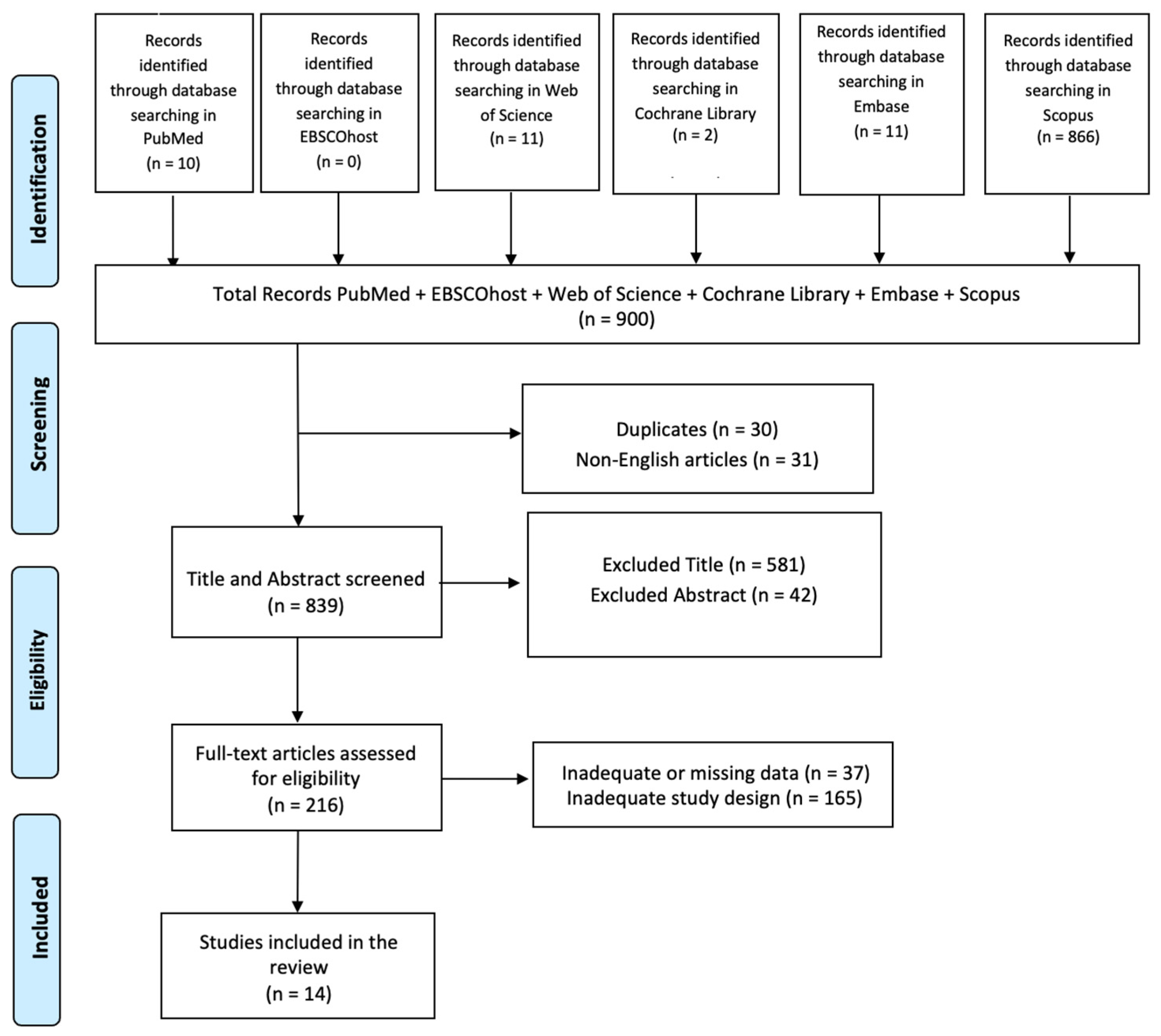
2.1. Search Strategy
2.2. PICO Evaluation
2.3. Inclusion Criteria
2.4. Exclusion Criteria
3. Results
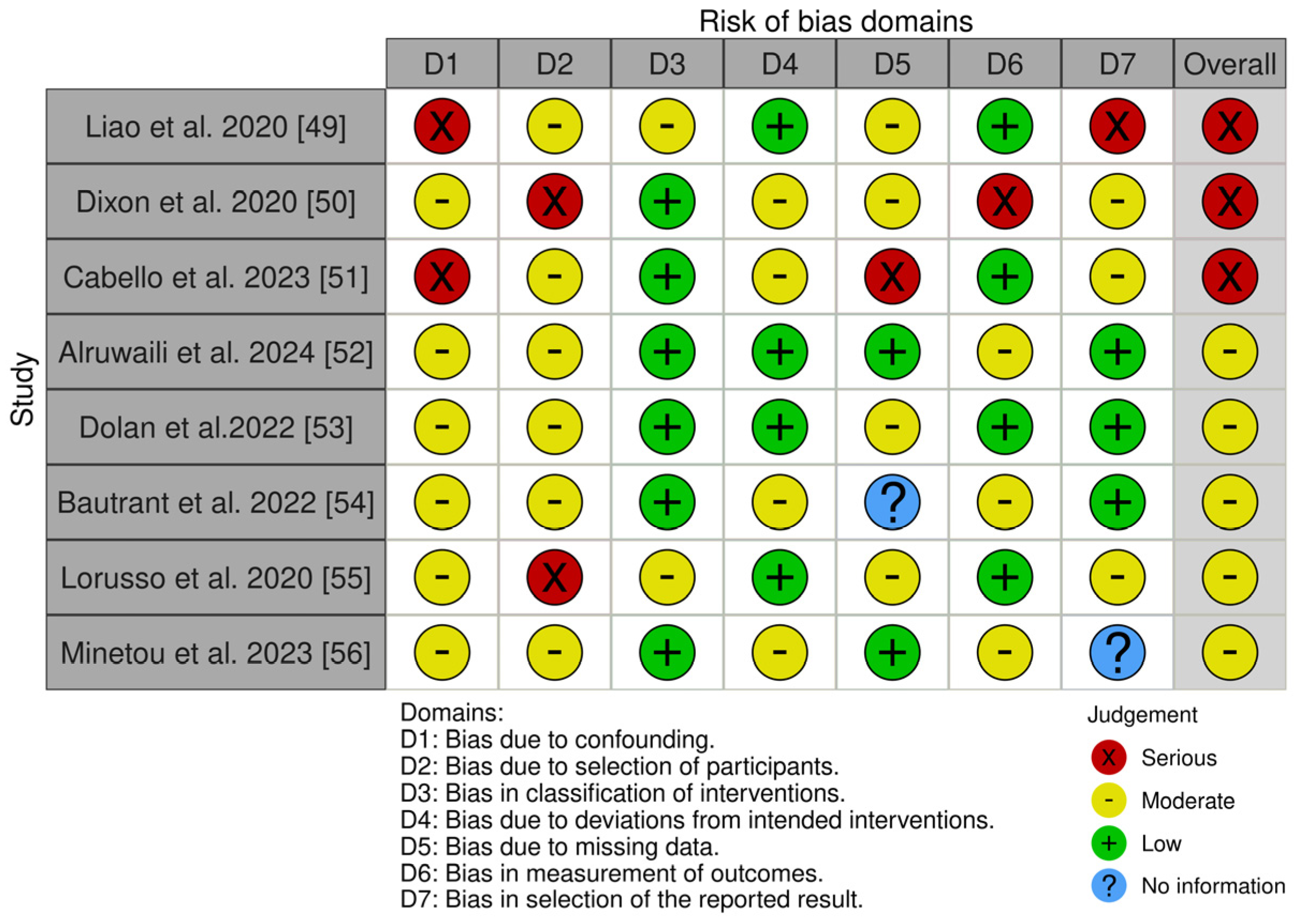
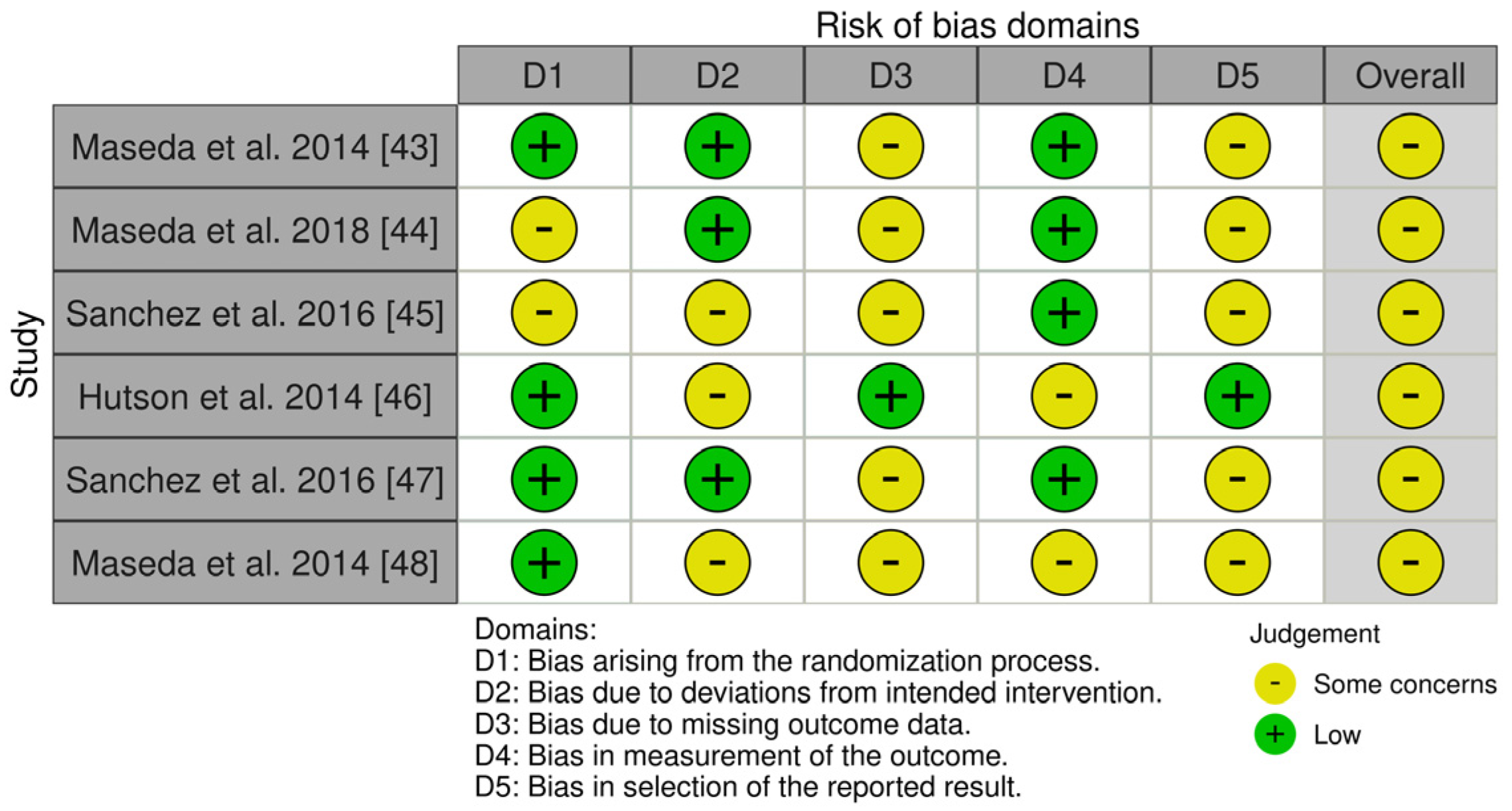
3.1. Quality of Included Studies—Risk of Bias
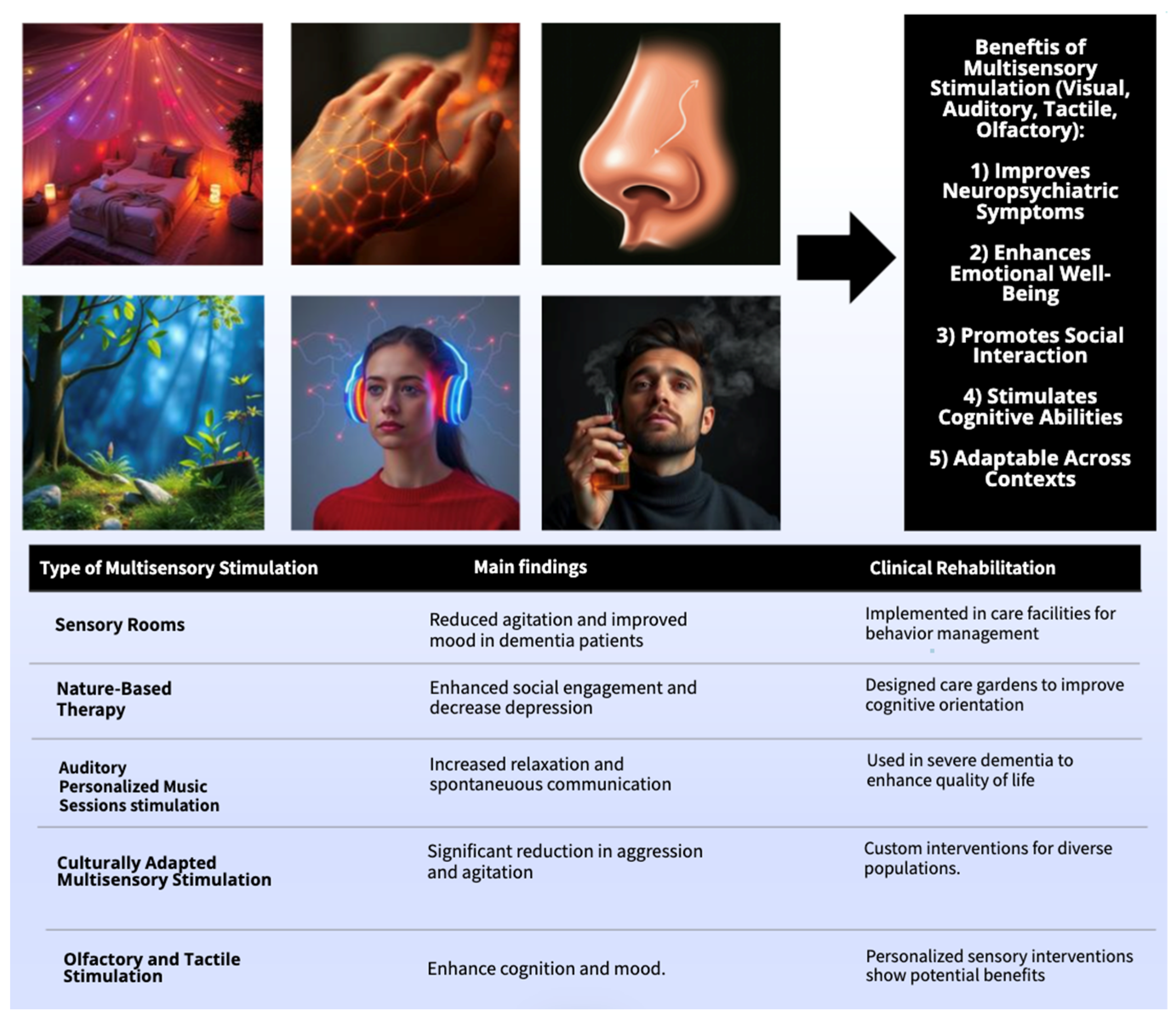
3.2. Synthesis of Evidence
3.3. Effects of MSS on Cognition
3.4. Impact of MSS on Mood and Emotional Well-Being
3.5. Effects of MSS on Agitation and Related Behaviors
3.6. Role of Environment and Technology in MSS
4. Discussion
4.1. Clinical Applications of MSS in Cognitive Rehabilitation of Dementia
4.2. Clinical Applications of MSS for Mood and Behavioral Management in Dementia
4.3. MSS and Neuroplasticity in Dementia Rehabilitation
4.4. Strengths and Limitations
5. Conclusions
Author Contributions
Funding
Informed Consent Statement
Data Availability Statement
Conflicts of Interest
References
- Dening, T.; Sandilyan, M.B. Dementia: Definitions and types. Nurs. Stand. 2015, 29, 37–42. [Google Scholar] [CrossRef]
- Chertkow, H.; Feldman, H.H.; Jacova, C.; Massoud, F. Definitions of dementia and predementia states in Alzheimer’s disease and vascular cognitive impairment: Consensus from the Canadian conference on diagnosis of dementia. Alzheimers Res. Ther. 2013, 5 (Suppl. 1), S2. [Google Scholar] [CrossRef] [PubMed]
- Kukull, W.A.; Bowen, J.D. Dementia epidemiology. Med. Clin. N. Am. 2002, 86, 573–590. [Google Scholar] [CrossRef] [PubMed]
- Shin, J.H. Dementia Epidemiology Fact Sheet 2022. Ann. Rehabil. Med. 2022, 46, 53–59. [Google Scholar] [CrossRef]
- Hendriks, S.; Peetoom, K.; Bakker, C.; van der Flier, W.M.; Papma, J.M.; Koopmans, R.; Verhey, F.R.J.; de Vugt, M.; Köhler, S.; Young-Onset Dementia Epidemiology Study Group; et al. Global Prevalence of Young-Onset Dementia: A Systematic Review and Meta-analysis. JAMA Neurol. 2021, 78, 1080–1090. [Google Scholar] [CrossRef] [PubMed]
- Kwon, C.Y.; Lee, B. Prevalence of Behavioral and Psychological Symptoms of Dementia in Community-Dwelling Dementia Patients: A Systematic Review. Front. Psychiatry 2021, 12, 741059. [Google Scholar] [CrossRef]
- Andin, U.; Gustafson, L.; Brun, A.; Passant, U. Clinical manifestations in neuropathologically defined subgroups of vascular dementia. Int. J. Geriatr. Psychiatry 2006, 21, 688–697. [Google Scholar] [CrossRef]
- Nervi, A.; Reitz, C.; Tang, M.X.; Santana, V.; Piriz, A.; Reyes-Dumeyer, D.; Lantigua, R.; Medrano, M.; Jiménez-Velázquez, I.Z.; Lee, J.H.; et al. Comparison of clinical manifestations in Alzheimer disease and dementia with Lewy bodies. Arch. Neurol. 2008, 65, 1634–1639. [Google Scholar] [CrossRef] [PubMed][Green Version]
- McKeith, I.; Cummings, J. Behavioural changes and psychological symptoms in dementia disorders. Lancet Neurol. 2005, 4, 735–742. [Google Scholar] [CrossRef]
- Lemstra, A.W.; de Beer, M.H.; Teunissen, C.E.; Schreuder, C.; Scheltens, P.; van der Flier, W.M.; Sikkes, S.A. Concomitant AD pathology affects clinical manifestation and survival in dementia with Lewy bodies. J. Neurol. Neurosurg. Psychiatry 2017, 88, 113–118. [Google Scholar] [CrossRef]
- Sim, J.; Li, H.; Hameed, S.; Ting, S.K.S. Clinical Manifestations of Early-Onset Dementia with Lewy Bodies Compared with Late-Onset Dementia with Lewy Bodies and Early-Onset Alzheimer Disease. JAMA Neurol. 2022, 79, 702–709. [Google Scholar] [CrossRef]
- Reisberg, B.; Wegiel, J.; Franssen, E.; Kadiyala, S.; Auer, S.; Souren, L.; Golomb, J. Clinical features of severe dementia: Staging. In Severe Dementia; John Wiley & Sons, Ltd.: Hoboken, NJ, USA, 2006; pp. 83–115. [Google Scholar]
- Ismail, Z.; Smith, E.E.; Geda, Y.; Sultzer, D.; Brodaty, H.; Smith, G.; Agüera-Ortiz, L.; Sweet, R.; Miller, D.; Lyketsos, C.G.; et al. Neuropsychiatric symptoms as early manifestations of emergent dementia: Provisional diagnostic criteria for mild behavioral impairment. Alzheimers Dement. 2016, 12, 195–202. [Google Scholar] [CrossRef]
- Clare, L.; Woods, R.T. (Eds.) Cognitive Rehabilitation in Dementia; Psychology Press: East Sussex, UK, 2001. [Google Scholar]
- Bahar-Fuchs, A.; Clare, L.; Woods, B. Cognitive training and cognitive rehabilitation for mild to moderate Alzheimer’s disease and vascular dementia. Cochrane Database Syst. Rev. 2013, CD003260. [Google Scholar] [CrossRef] [PubMed]
- Irazoki, E.; Contreras-Somoza, L.M.; Toribio-Guzmán, J.M.; Jenaro-Río, C.; van der Roest, H.; Franco-Martín, M.A. Technologies for Cognitive Training and Cognitive Rehabilitation for People with Mild Cognitive Impairment and Dementia. A Systematic Review. Front. Psychol. 2020, 11, 648. [Google Scholar] [CrossRef] [PubMed]
- Niederstrasser, N.G.; Hogervorst, E.; Giannouli, E.; Bandelow, S. Approaches to cognitive stimulation in the prevention of dementia. J. Gerontol. Geriatr. Res. 2016, 5, 005. [Google Scholar] [CrossRef]
- Cotelli, M.; Manenti, R.; Zanetti, O. Reminiscence therapy in dementia: A review. Maturitas 2012, 72, 203–205. [Google Scholar] [CrossRef]
- Yamagami, T.; Oosawa, M.; Ito, S.; Yamaguchi, H. Effect of activity reminiscence therapy as brain-activating rehabilitation for elderly people with and without dementia. Psychogeriatrics 2007, 7, 69–75. [Google Scholar] [CrossRef]
- Clare, L.; Bayer, A.; Burns, A.; Corbett, A.; Jones, R.; Knapp, M.; Kopelman, M.; Kudlicka, A.; Leroi, I.; Oyebode, J.; et al. Goal-oriented cognitive rehabilitation in early-stage dementia: Study protocol for a multi-centre single-blind randomised controlled trial (GREAT). Trials 2013, 14, 152. [Google Scholar] [CrossRef] [PubMed]
- Cheng, C.; Baker, G.B.; Dursun, S.M. Use of multisensory stimulation interventions in the treatment of major neurocognitive disorders. Psychiatry Clin. Psychopharmacol. 2019, 29, 916–921. [Google Scholar] [CrossRef]
- Brugada-Ramentol, V.; Bozorgzadeh, A.; Jalali, H. Enhance VR: A Multisensory Approach to Cognitive Training and Monitoring. Front. Digit. Health 2022, 4, 916052. [Google Scholar] [CrossRef] [PubMed]
- Sánchez, A.; Millán-Calenti, J.C.; Lorenzo-López, L.; Maseda, A. Multisensory stimulation for people with dementia: A review of the literature. Am. J. Alzheimers Dis. Other Dement. 2013, 28, 7–14. [Google Scholar] [CrossRef] [PubMed]
- Feng, Y.; Yu, S.; Van De Mortel, D.; Barakova, E.; Rauterberg, M.; Hu, J. Closer to Nature: Multi-Sensory Engagement in Interactive Nature Experience for Seniors with Dementia. In Proceedings of the Sixth International Symposium of Chinese CHI, Montreal, QC, Canada, 21–22 April 2018; pp. 49–56. [Google Scholar]
- Milev, R.V.; Kellar, T.; McLean, M.; Mileva, V.; Luthra, V.; Thompson, S.; Peever, L. Multisensory stimulation for elderly with dementia: A 24-week single-blind randomized controlled pilot study. Am. J. Alzheimers Dis. Other Dement. 2008, 23, 372–376. [Google Scholar] [CrossRef] [PubMed]
- Chen, B.; Espin, M.; Haussmann, R.; Matthes, C.; Donix, M.; Hummel, T.; Haehner, A. The Effect of Olfactory Training on Olfaction, Cognition, and Brain Function in Patients with Mild Cognitive Impairment. J. Alzheimers Dis. 2022, 85, 745–754. [Google Scholar] [CrossRef] [PubMed]
- Cha, H.; Kim, S.; Kim, H.; Kim, G.; Kwon, K.Y. Effect of intensive olfactory training for cognitive function in patients with dementia. Geriatr. Gerontol. Int. 2022, 22, 5–11, Erratum in Geriatr. Gerontol. Int. 2022, 22, 188. [Google Scholar] [CrossRef]
- Johannessen, B. Nurses experience of aromatherapy use with dementia patients experiencing disturbed sleep patterns. An action research project. Complement. Ther. Clin. Pract. 2013, 19, 209–213. [Google Scholar] [CrossRef]
- Olley, R.; Morales, A. Systematic review of evidence underpinning non-pharmacological therapies in dementia. Aust. Health Rev. 2018, 42, 361–369. [Google Scholar] [CrossRef]
- Cruz, J.; Marques, A.; Barbosa, A.L.; Figueiredo, D.; Sousa, L. Effects of a motor and multisensory-based approach on residents with moderate-to-severe dementia. Am. J. Alzheimers Dis. Other Dement. 2011, 26, 282–289. [Google Scholar] [CrossRef]
- Taher, A.V.; Ahmadi, M.K.; Zamir, F.P. Effects of multisensory stimulation on cognition function, depression, anxiety and quality of life in elderly persons with dementia. Int. J. Sport Studies 2015, 5, 355–360. [Google Scholar]
- Collier, L.; McPherson, K.; Ellis-Hill, C.; Staal, J.; Bucks, R. Multisensory stimulation to improve functional performance in moderate to severe dementia--interim results. Am. J. Alzheimers Dis. Other Dement. 2010, 25, 698–703. [Google Scholar] [CrossRef] [PubMed]
- Machado, B.M.; Castro, C.D.S.S. Use of multisensory stimulation in institutionalized older adults with moderate or severe dementia. Dement. Neuropsychol. 2022, 16, 202–212. [Google Scholar] [CrossRef] [PubMed]
- Van Diepen, E.; Baillon, S.F.; Redman, J.; Rooke, N.; Spencer, D.A.; Prettyman, R. A Pilot Study of the Physiological and Behavioural Effects of Snoezelen in Dementia. Br. J. Occup. Ther. 2002, 65, 61–66. [Google Scholar] [CrossRef]
- Smith, B.C.; D’Amico, M. Sensory-Based Interventions for Adults with Dementia and Alzheimer’s Disease: A Scoping Review. Occup. Ther. Health Care 2020, 34, 171–201. [Google Scholar] [CrossRef] [PubMed]
- Carvalho, S.C.; Martins, F.S.; Martins, A.N.; Barbosa, R.C.; Vicente, S.G. Effectiveness of Snoezelen in older adults with neurocognitive and other pathologies: A systematic review of the literature. J. Neuropsychol. 2024, 18, 312–331. [Google Scholar] [CrossRef] [PubMed]
- Abraha, I.; Rimland, J.M.; Trotta, F.M.; Dell’Aquila, G.; Cruz-Jentoft, A.; Petrovic, M.; Gudmundsson, A.; Soiza, R.; O’Mahony, D.; Guaita, A.; et al. Systematic review of systematic reviews of non-pharmacological interventions to treat behavioural disturbances in older patients with dementia. The SENATOR-OnTop series. BMJ Open 2017, 7, e012759, Erratum in BMJ Open 2017, 7, e012759corr1. [Google Scholar] [CrossRef] [PubMed]
- Lorusso, L.N.; Bosch, S.J. Impact of Multisensory Environments on Behavior for People with Dementia: A Systematic Literature Review. Gerontologist 2018, 58, e168–e179. [Google Scholar] [CrossRef] [PubMed]
- De Oliveira, T.C.G.; Soares, F.C.; De Macedo, L.D.E.D.; Diniz, D.L.W.P.; Bento-Torres, N.V.O.; Picanço-Diniz, C.W. Beneficial Effects of Multisensory and Cognitive Stimulation on Age-Related Cognitive Decline in Long-Term-Care Institutions. Clin. Interv. Aging 2014, 9, 309–321. [Google Scholar]
- Sposito, G.; Barbosa, A.; Figueiredo, D.; Yassuda, M.S.; Marques, A. Effects of multisensory and motor stimulation on the behavior of people with dementia. Dementia 2017, 16, 344–359. [Google Scholar] [CrossRef] [PubMed]
- Cui, Y.; Shen, M.; Ma, Y.; Wen, S.W. Senses make sense: An individualized multisensory stimulation for dementia. Med. Hypotheses 2017, 98, 11–14. [Google Scholar] [CrossRef]
- Goodall, G.; Ciobanu, I.; Taraldsen, K.; Sørgaard, J.; Marin, A.; Draghici, R.; Zamfir, M.V.; Berteanu, M.; Maetzler, W.; Serrano, J.A. The Use of Virtual and Immersive Technology in Creating Personalized Multisensory Spaces for People Living with Dementia (SENSE-GARDEN): Protocol for a Multisite Before-After Trial. JMIR Res. Protoc. 2019, 8, e14096. [Google Scholar] [CrossRef] [PubMed]
- Maseda, A.; Sánchez, A.; Marante, M.P.; González-Abraldes, I.; Buján, A.; Millán-Calenti, J.C. Effects of Multisensory Stimulation on a Sample of Institutionalized Elderly People with Dementia Diagnosis: A Controlled Longitudinal Trial. Am. J. Alzheimers Dis. Other Dement. 2014, 29, 463–473. [Google Scholar] [CrossRef]
- Maseda, A.; Cibeira, N.; Lorenzo-López, L.; González-Abraldes, I.; Buján, A.; de Labra, C.; Millán-Calenti, J.C. Multisensory Stimulation and Individualized Music Sessions on Older Adults with Severe Dementia: Effects on Mood, Behavior, and Biomedical Parameters. J. Alzheimers Dis. 2018, 63, 1415–1425. [Google Scholar] [CrossRef] [PubMed]
- Sánchez, A.; Marante-Moar, M.P.; Sarabia, C.; de Labra, C.; Lorenzo, T.; Maseda, A.; Millán-Calenti, J.C. Multisensory Stimulation as an Intervention Strategy for Elderly Patients with Severe Dementia: A Pilot Randomized Controlled Trial. Am. J. Alzheimers Dis. Other Dement. 2016, 31, 341–350. [Google Scholar] [CrossRef]
- Hutson, C.; Orrell, M.; Dugmore, O.; Spector, A. Sonas: A pilot study investigating the effectiveness of an intervention for people with moderate to severe dementia. Am. J. Alzheimers Dis. Other Dement. 2014, 29, 696–703. [Google Scholar] [CrossRef]
- Sánchez, A.; Maseda, A.; Marante-Moar, M.P.; de Labra, C.; Lorenzo-López, L.; Millán-Calenti, J.C. Comparing the Effects of Multisensory Stimulation and Individualized Music Sessions on Elderly People with Severe Dementia: A Randomized Controlled Trial. J. Alzheimers Dis. 2016, 52, 303–315. [Google Scholar] [CrossRef]
- Maseda, A.; Sánchez, A.; Marante, M.P.; González-Abraldes, I.; de Labra, C.; Millán-Calenti, J.C. Multisensory stimulation on mood, behavior, and biomedical parameters in people with dementia: Is it more effective than conventional one-to-one stimulation? Am. J. Alzheimers Dis. Other Demen. 2014, 29, 637–647. [Google Scholar] [CrossRef]
- Liao, M.L.; Ou, S.J.; Heng Hsieh, C.; Li, Z.; Ko, C.C. Effects of garden visits on people with dementia: A pilot study. Dementia 2020, 19, 1009–1028. [Google Scholar] [CrossRef] [PubMed]
- Dixon, E.; Lazar, A. The Role of Sensory Changes in Everyday Technology use by People with Mild to Moderate Dementia. ASSETS 2020, 2020, 41. [Google Scholar]
- Villamil-Cabello, E.; Meneses-Domínguez, M.; Fernández-Rodríguez, Á.; Ontoria-Álvarez, P.; Jiménez-Gutiérrez, A.; Fernández-Del-Olmo, M. A Pilot Study of the Effects of Individualized Home Dual Task Training by Mobile Health Technology in People with Dementia. Int. J. Environ. Res. Public Health 2023, 20, 5464. [Google Scholar] [CrossRef]
- Alruwaili, A.N.; Alruwaili, M.M.; Ramadan, O.M.E.; Ali, S.I.; Shaban, M. Nursing strategies for enhancing calm in older Arabs with dementia: Integrating Snoezelen methods, aromatherapy, and personal items to reduce agitation. Geriatr. Nurs. 2024, 59, 379–391. [Google Scholar] [CrossRef]
- Dolan, O.; O’Halloran, J.; O’Cuill, M.; Rafiq, A.; Edgeworth, J.; Hogan, M.; Shiel, A. Rehabilitation in dementia: CST and Sonas group interventions for people with moderate cognitive impairment. A pilot study. Irish J. Occup. Ther. 2022, 50, 28–35. [Google Scholar] [CrossRef]
- Bautrant, T.; Franqui, C.; Clément, H.; Rabault, M.; Masseboeuf, F.; Pastore, M.; Pardo, M.; Brandi, Y.; Drouin, N.; Brice, A.D.; et al. A pragmatic trial testing a tailored non pharmacologic therapies on nocturnal behavioral and psychological symptoms associated with dementia. Geriatr. Nurs. 2022, 43, 85–90. [Google Scholar] [CrossRef] [PubMed]
- Lorusso, L.; Park, N.K.; Bosch, S.; Freytes, I.M.; Shorr, R.; Conroy, M.; Ahrentzen, S. Sensory Environments for Behavioral Health in Dementia: Diffusion of an Environmental Innovation at the Veterans Health Administration. HERD 2020, 13, 44–56. [Google Scholar] [CrossRef] [PubMed]
- Minetou, L.; Chatzopoulos, A.; Tzerachoglou, A.; Priniotakis, G.; van Hoof, J.; Sfyroera, E.; Georgiadou, Z.; Tyrovola, S.; Drosos, C. Homing wellness: Can narrative design transform living spaces for people with dementia into engaging environments enabling communication? Front. Public Health 2024, 11, 1198253. [Google Scholar] [CrossRef]
- Sterne, J.A.C.; Savović, J.; Page, M.J.; Elbers, R.G.; Blencowe, N.S.; Boutron, I.; Cates, C.J.; Cheng, H.Y.; Corbett, M.S.; Eldridge, S.M.; et al. RoB 2: A revised tool for assessing risk of bias in randomised trials. BMJ 2019, 366, l4898. [Google Scholar] [CrossRef]
- Sterne, J.A.; Hernán, M.A.; Reeves, B.C.; Savović, J.; Berkman, N.D.; Viswanathan, M.; Henry, D.; Altman, D.G.; Ansari, M.T.; Boutron, I.; et al. ROBINS-I: A tool for assessing risk of bias in non-randomised studies of interventions. BMJ 2016, 355, i4919. [Google Scholar] [CrossRef]
- Baker, R.; Holloway, J.; Holtkamp, C.C.; Larsson, A.; Hartman, L.C.; Pearce, R.; Scherman, B.; Johansson, S.; Thomas, P.W.; Wareing, L.A.; et al. Effects of multi-sensory stimulation for people with dementia. J. Adv. Nurs. 2003, 43, 465–477. [Google Scholar] [CrossRef]
- Baker, R.; Bell, S.; Baker, E.; Gibson, S.; Holloway, J.; Pearce, R.; Dowling, Z.; Thomas, P.; Assey, J.; Wareing, L.A. A randomized controlled trial of the effects of multi-sensory stimulation (MSS) for people with dementia. Br. J. Clin. Psychol. 2001, 40, 81–96. [Google Scholar] [CrossRef] [PubMed]
- Takahashi, Y.; Shindo, S.; Kanbayashi, T.; Takeshima, M.; Imanishi, A.; Mishima, K. Examination of the influence of cedar fragrance on cognitive function and behavioral and psychological symptoms of dementia in Alzheimer type dementia. Neuropsychopharmacol. Rep. 2020, 40, 10–15. [Google Scholar] [CrossRef] [PubMed]
- Kim, J.; Lee, H.; Lee, J.; Rhee, S.Y.; Shin, J.I.; Lee, S.W.; Cho, W.; Min, C.; Kwon, R.; Kim, J.G.; et al. Quantification of identifying cognitive impairment using olfactory-stimulated functional near-infrared spectroscopy with machine learning: A post hoc analysis of a diagnostic trial and validation of an external additional trial. Alzheimers Res. Ther. 2023, 15, 127. [Google Scholar] [CrossRef] [PubMed]
- Haehner, A.; Chen, B.; Espin, M.; Haussmann, R.; Matthes, C.; Desser, D.; Loessner, L.; Brandt, M.D.; Donix, M.; Hummel, T. Training with Odors Impacts Hippocampal Thickness in Patients with Mild Cognitive Impairment. J. Alzheimers Dis. 2022, 88, 743–755. [Google Scholar] [CrossRef]
- Sakamoto, Y.; Ebihara, S.; Ebihara, T.; Tomita, N.; Toba, K.; Freeman, S.; Arai, H.; Kohzuki, M. Fall prevention using olfactory stimulation with lavender odor in elderly nursing home residents: A randomized controlled trial. J. Am. Geriatr. Soc. 2012, 60, 1005–1011. [Google Scholar] [CrossRef]
- Gilbert, P.E.; Murphy, C. The effect of the ApoE epsilon4 allele on recognition memory for olfactory and visual stimuli in patients with pathologically confirmed Alzheimer’s disease, probable Alzheimer’s disease, and healthy elderly controls. J. Clin. Exp. Neuropsychol. 2004, 26, 779–794. [Google Scholar] [CrossRef] [PubMed]
- Scales, K.; Zimmerman, S.; Miller, S.J. Evidence-Based Nonpharmacological Practices to Address Behavioral and Psychological Symptoms of Dementia. Gerontologist 2018, 58 (Suppl. 1), S88–S102. [Google Scholar] [CrossRef]
- Tichko, P.; Kim, J.C.; Large, E.; Loui, P. Integrating music-based interventions with Gamma-frequency stimulation: Implications for healthy ageing. Eur. J. Neurosci. 2022, 55, 3303–3323. [Google Scholar] [CrossRef] [PubMed]
- Clements-Cortes, A.; Bartel, L. Long-Term Multi-Sensory Gamma Stimulation of Dementia Patients: A Case Series Report. Int. J. Environ. Res. Public. Health 2022, 19, 15553. [Google Scholar] [CrossRef]
- Meyer, C.; O’Keefe, F. Non-pharmacological interventions for people with dementia: A review of reviews. Dementia 2020, 19, 1927–1954. [Google Scholar] [CrossRef]
- Bunn, F.; Lynch, J.; Goodman, C.; Sharpe, R.; Walshe, C.; Preston, N.; Froggatt, K. Improving living and dying for people with advanced dementia living in care homes: A realist review of Namaste Care and other multisensory interventions. BMC Geriatr. 2018, 18, 303. [Google Scholar] [CrossRef] [PubMed]
- Broadhouse, K.M.; Singh, M.F.; Suo, C.; Gates, N.; Wen, W.; Brodaty, H.; Jain, N.; Wilson, G.C.; Meiklejohn, J.; Singh, N.; et al. Hippocampal plasticity underpins long-term cognitive gains from resistance exercise in MCI. Neuroimage Clin. 2020, 25, 102182. [Google Scholar] [CrossRef] [PubMed]
- Maneemai, O.; Cujilan Alvarado, M.C.; Calderon Intriago, L.G.; Donoso Triviño, A.J.; Franco Coffré, J.A.; Pratico, D.; Schwartz, K.; Tesfaye, T.; Yamasaki, T. Sensory Integration: A Novel Approach for Healthy Ageing and Dementia Management. Brain Sci. 2024, 14, 285. [Google Scholar] [CrossRef] [PubMed]
- Barnes, S.J.; Keller, G.B.; Keck, T. Homeostatic regulation through strengthening of neuronal network-correlated synaptic inputs. eLife 2022, 11, e81958. [Google Scholar] [CrossRef] [PubMed]
- Knöpfel, T.; Sweeney, Y.; Radulescu, C.I.; Zabouri, N.; Doostdar, N.; Clopath, C.; Barnes, S.J. Audio-visual experience strengthens multisensory assemblies in adult mouse visual cortex. Nat. Commun. 2019, 10, 5684. [Google Scholar] [CrossRef] [PubMed]
- Gao, L.; Zhang, Y.; Sterling, K.; Song, W. Brain-derived neurotrophic factor in Alzheimer’s disease and its pharmaceutical potential. Transl. Neurodegener. 2022, 11, 4. [Google Scholar] [CrossRef] [PubMed]


| Section Methodology | Details |
|---|---|
| Search Strategy | Databases: PubMed, EBSCOhost, Web of Science, Cochrane Library, Embase, and Scopus. Keywords/Search String: (All Fields: “Multisensory Stimulation”) AND (All Fields: “Cognitive Rehabilitation”) AND (All Fields: “Dementia”). Boolean operators and controlled vocabulary (e.g., MeSH terms) were used. |
| Search Period | Search Time Range: studies published between 2014 and 2024. Time Search Conduction: from 1 September to 20 December 2024. |
| Study Selection | Two reviewers (AC and DL) independently screened articles at title, abstract, and full-text levels. Disagreements resolved through discussion or by a third reviewer (RSC). PRISMA flowchart used to visualize selection process. |
| Tool Used | Risk of Bias Tools: RoB 2 for randomized controlled trials and ROBINS-I for non-randomized studies. Inter-Rater Agreement: Kappa statistic used to measure inter-rater reliability (threshold for substantial agreement: kappa > 0.61). |
| Inclusion Criteria | Primary research focused on multisensory stimulation in rehabilitation for dementia. Studies must include well-defined interventions using multiple senses and report measurable outcomes (e.g., cognitive function, well-being, and life quality). Published in English. |
| Exclusion Criteria | Excluded reviews, animal studies, and studies focusing on single-sensory stimulation (e.g., olfactory training). Conference abstracts, editorials, and opinion articles were also excluded due to insufficient data for assessment. |
| Data Extraction | Extracted data included study design, sample size, participant characteristics, intervention details (e.g., sensory types, duration, etc.), outcomes assessed (e.g., cognitive performance, emotional well-being, etc.), and findings. |
| Synthesis Approach | Narrative synthesis combined with quantitative analysis. Effect sizes, evidence certainty, and statistical outcomes analyzed to address varied study designs and dementia stages. |
| PICO Evaluation | Population: individuals with dementia undergoing cognitive rehabilitation. Intervention: multisensory stimulation techniques. Comparison: standard care, other therapies, or no intervention. Outcome: improved cognitive function, emotional well-being, and quality of life. |
| Articles Included per Database | PubMed: 11; EBSCOhost: 0; Web of Science: 0; Cochrane Library: 0; Embase: 0; Scopus: 3; Total articles included: 14 |
| Author | Aim | Study Design/Intervention | Treatment Period | Sample Size/Sample Characteristics | Outcomes Measures | Type of Multisensory Stimulation/Senses Involved/Main Findings | Effect Size/Certainty of Evidence | Statistical Analysis/Magnitude of Effect |
|---|---|---|---|---|---|---|---|---|
| Maseda et al. 2014 [43] | To explore how MSSE, activity sessions, and a control group impact the behavior, mood, cognitive function, and ADLs in dementia patients. | Randomized Controlled Trial. | The program lasted 16 weeks, with each group having two 30 min sessions per week, and was followed by an 8-week follow-up period. | Size: 30 participants. Age: mean (SD): 87.3 (5.3) years; minimum–maximum: 77–96 years. Gender: female: 27 (90%); male: 3 (10%). | CMAI, NPI-NH, CSDD, and MMSE. | Multisensory stimulation: employed fiber-optic cables, water columns, vibrating water beds, aromatherapy, tactile boards, music, video displays, and mirror balls, among various others. Senses involved: visual, auditory, tactile, and olfactory senses. Main findings: MSSE sessions led to more significant decreases in agitation (CMAI scores) than both activity-based sessions and control groups. Enhancements were observed in emotional and functional areas (Barthel index). Behavioral symptoms (NPI-NH scores) demonstrated considerable improvement. Cognitive results (MMSE scores) showed slight improvement, but they were not the main emphasis. | Effect size: large effect: verbally agitated behavior (F = 10.540, p < 0.001). Medium effect: physically nonaggressive behavior (F = 4.172, p = 0.023), NPI-NH total behavior (F = 4.513, p = 0.018), and mood (CSDD scores, F = 6.166, p = 0.024). Small-to-medium effect: occupational disruptiveness (F = 3.575, p = 0.040), cognitive level (GDS scores, F = 5.457, p = 0.038), and functional status in ADL (Barthel index). Certainty of evidence: high for the managed design and standardized measures applied, although the sample size restricts generalizability. | Student t-tests for continuous data. Chi-square tests for nominal variables. Data were summarized using frequency, percentage, mean, and standard deviation. Notable disparities in agitation reduction, behavioral symptoms, and functional enhancements between the MSSE group and others indicate a significant therapeutic effect. |
| Maseda et al. 2018 [44] | To examine the impacts of MSSE and personalized music therapy on mood, behavior, and biomedical measurements in elderly individuals with dementia. | Randomized Controlled Trial. | 12 weeks consisting of 24 sessions, each with a duration of 30 min. | Size: 21 participants. Age: The mean age of participants was 88.9 years (SD ± 6.69). Gender: 71.4% females. | Interact scale and biomedical parameters. | Multisensory stimulation: Snoezelen therapy. Senses involved: visual, auditory, tactile, and olfactory stimulation. Main findings: Both groups exhibited notable enhancements in mood, such as heightened happiness/contentment, increased social interaction, and better attentiveness. The MSSE group demonstrated more pronounced improvements in relaxation and alertness in comparison to the individualized music group. | Effect size: Significant improvements were noted in mood and behavior, including increased happiness/contentment (p = 0.001). Better social engagement (p = 0.023). Improved attentiveness/focus (p = 0.005). Enhanced alertness or activity (p = 0.017). Reduced boredom (p = 0.026). Increased relaxation/contentment or appropriate sleeping (p = 0.021). Individualized music group: Participants showed improvements in increased happiness/contentment (p = 0.013). Better social engagement (p = 0.034). Improved attentiveness/focus (p = 0.007). Certainty of evidence: moderate, based on the noted statistical significance in mood and behavior enhancements without variance between groups. | Paired t-tests were employed to evaluate changes in mood and behavior within the group (e.g., prior to and following the intervention). A two-way mixed ANOVA with repeated measures examined group differences in changes in mood and behavior. Indicators of effect size: Eta-squared (η2) was utilized, with small, medium, and large effects reflecting values of 0.02, 0.13, and 0.26, accordingly. The notable results indicated substantial impacts on mood and behavior enhancements (η2 > 0.26). |
| Sanchez et al. 2016 [45] | To assess the impact of an MSSE in addressing agitation, mood, and cognitive function among elderly individuals with severe or very severe dementia, as compared to activity-based therapy and a control group. | Randomized Controlled Trial. | 16 weeks. | Size: 32 participants. Age: 68–102 years range. Gender: females 25 (78.1%) and males 7 (21.9%) | CMAI, CSDD, SMMSE, BANS-S, and NPI. | Multisensory stimulation: fiber-optic cables, water bubble columns, a water bed, a rotating mirror ball, video, interactive projecting system, music, and aromatherapy with fragrant oils. Senses involved: visual, auditory, tactile, and olfactory stimulation. Main findings: Members of the MSSE group exhibited notable enhancements in behavior, mood, and cognitive status relative to both the control group and the activity group, especially concerning agitation, depressive symptoms, and cognitive performance (assessed via the SMMSE and NPI). | Effect size: Eta-squared values (Z2) were utilized to assess effect size: small (Z2 = 0.02), medium (Z2 = 0.13), and large (Z2 = 0.26). The MSSE group demonstrated a significant effect size for progress in behavior, mood, and cognition when compared to the activity and control groups. Certainty of evidence: pilot study featuring a limited sample size, suggesting initial evidence with a moderate degree of confidence. | Two-way mixed ANOVAs were employed to examine group variations at different timepoints (pre-, mid-, and posttrial), evaluating the impacts on behavior, mood, cognitive status, and dementia severity. |
| Hutson et al. 2014 [46] | To evaluate how the Sonas approach impacts individuals with dementia residing in care facilities. | Randomized Controlled Trial. | 7–8 weeks. | Size: 39 participants. Age: mean 86.6 years (range 70–99). Gender: 86.1% female. | CSDD, NPI-Q, QoL-AD, Holden Communication Scale, and RAID. | Multisensory stimulation: Sonas intervention with a focus on music and poetry. Senses involved: auditory, tactile, and visual stimuli. Main findings: No notable variances were noted in any of the outcome assessments. The TAU group had a slight advantage in depression scores (CSDD) compared to the standard treatment. | Effect size: No notable differences were observed between the Sonas and treatment-as-usual groups for any of the outcome metrics. The effect size was minor (<0.20), suggesting there was no significant advantage from the intervention. Minimal effect size for the depression measure (CSDD), with r < 0.20. Certainty of evidence: low because of the study’s small sample size and preliminary pilot design. | T-test with independent measures conducted, effect size (r) determined, and no statistically significant results observed. |
| Sanchez et al. 2016 [47] | To evaluate the impact of MSSE versus personalized music therapy on agitation, mood, anxiety, and cognitive abilities in dementia patients experiencing severe or very severe cognitive deterioration. | Randomized Controlled Trial | 16 weeks (32 sessions, two weekly sessions lasting 30 min each). | Size: initial: 22 participants. Final: 18 participants (9 in each group). Age: not specified. Gender: 15 females and 7 males. | CMAI, CSDD, RAID, and SMMSE. | Multisensory stimulation: visual (fiber-optic lights, video, bubble columns), auditory (music), tactile (varied textures), and olfactory (aromatherapy). Senses involved: Visual, tactile, and olfactory. Main findings: MSSE resulted in larger decreases in agitation and anxiety than personalized music. Enhancements in mood were more pronounced in the MSSE group. Cognitive function exhibited slight alterations in both groups, with no notable difference. | Effect size: In terms of agitation, both groups showed improvement in the CMAI total score (F(2,34) = 3.837, p = 0.031, η2 = 0.166); mood: (F(1,16) = 9.822, p = 0.006, η2 = 0.374); anxiety: (F(1,16) = 6.500, p = 0.021, η2 = 0.267); cognitive: No significant effects were reported. Certainty of evidence: moderate given the randomization design. | The extent of the effects is explained qualitatively: MSSE resulted in more significant decreases in agitation and mood issues when compared to music therapy. |
| Maseda et al. 2014 [48] | To assess the impact of MSSE in a Snoezelen room on the mood and behavior of elderly individuals with dementia in relation to activity-based interventions and control groups. | Randomized Controlled Trial | 16 weeks, with 2 weekly sessions lasting 30 min each. | Size: thirty participants separated into three groups of ten. Age: mean age 87.6 years (SD ± 5.7); range 77–96 years. Gender: predominantly female (95%, 19/20 participants). | Behavior and mood: measured using the Interact scale; biomedical parameters: heart rate (beats per minute) and SpO₂ measured before and after sessions. | Multisensory stimulation: visual (fiber optics, water columns, projections), tactile (textured boards, vibrating bed), auditory (music), and olfactory (aroma therapy). Senses involved: visual, tactile, olfactory, and auditory. Main findings: MSSE group: notable enhancements in spontaneous speech (p = 0.006), improved social interactions (p = 0.014), increased attentiveness (p = 0.022), greater enjoyment (p = 0.004), and heightened relaxation (p = 0.000). Activity group: notable enhancements in happiness (p = 0.012), decreased confusion (p = 0.043), increased spontaneous speech (p = 0.016), social interactions (p = 0.005), attentiveness (p = 0.002), less boredom (p = 0.002), and improved relaxation (p = 0.000). | Effect size: high effect sizes: Relating to the environment (Activity: 1.17), relaxed/content (Activity: 1.20), and bored/inactive (Activity: 1.09) show the largest effect sizes, indicating substantial differences. Low effect sizes: Happy/content (MSSE: 0.06), wandering/restless (MSSE: 0.12), and wandering/restless (Activity: 0.14) indicate minimal differences between groups. Certainty of evidence: The research utilized validated instruments (Interact scale) boasting high inter-rater reliability (r = 0.99). Nonetheless, the limited sample size (n = 30) restricts the reliability of the evidence. | Unpaired t-tests: examined variations in mood and behavior among MSSE and activity groups throughout sessions. Paired t-tests: evaluated intra-group variations in behavior and mood prior to and following sessions. Repeated-measures ANOVA: analyzed interactions between groups and time regarding mood, behavior, and biomedical factors. Level of significance: p < 0.05 for every test conducted. |
| Liao et al. 2020 [49] | To assess how garden visits affect the mood, social interactions, cognitive function, and behavioral issues of dementia patients based on staff observations. | Uncontrolled Experimental Study. | Visits to the garden that last approximately 1 h, as indicated by staff. | Size: 42 eligible employees from 9 dementia care centers. Age: between 21–60 years. Gender: all women. | The research utilized a semi-structured questionnaire grounded on a five-point Likert-type scale to evaluate alterations in cognitive traits (e.g., short-term memory, attention, and language skills) and behavioral issues (e.g., aggression, anxiety, and wandering) following visits to the garden. MMSE. | Multisensory stimulation: environmental sensory stimulation (through gardens) Senses involved: all senses. Main findings: The results showed that visits to gardens resulted in enhanced mood, increased social interaction, and advancements in specific cognitive and behavioral areas, along with decreases in behavioral issues like aggression, anxiety, and wandering. | Effect size: The effect sizes for different cognitive and behavioral skills are significant across the categories evaluated. Cognitive skills such as attention (3.60), language skills (3.21), and short-term memory (3.19) demonstrate noticeable advancements, along with behavioral problems like anxiety/agitation (3.69) and mood (3.81). Certainty of evidence: preliminary evidence; restricted because of the small sample size and the observational design. | One-way ANOVA with repeated measures was used to compare mood, social interaction, and cognitive and behavioral traits, while the Mann–Whitney U test assessed differences between groups with differing garden access. |
| Dixon et al. 2020 [50] | To investigate how people with dementia utilize technology to meet their evolving sensory needs and to pinpoint tactics used by both individuals with dementia and professionals in this specific situation. | Qualitative Study. | There was not a designated treatment duration since the research centered on how individuals with dementia utilized technology in their everyday activities. | Size: There were 30 semi-structured interviews conducted, with 11 interviews involving individuals with dementia and 19 involving practitioners. Age: average age of 61.55 years (SD = 3.503). Gender: All practitioners were women, whereas the individuals with dementia included both men and women. | In-depth understanding of the approaches employed by people with dementia and professionals to adjust to sensory changes, along with the difficulties encountered when utilizing technology. | Multisensory stimulation: sensory changes experienced by individuals with dementia, particularly related to over- or under-stimulation Senses involved: visual and auditory. Main findings: Individuals with dementia frequently faced challenges related to sensory overload during everyday tasks like shopping, reading, and social interactions. Technology was utilized to assist in managing overstimulation (e.g., noise-canceling headphones) and to minimize sensory input, like streamlining visual components on websites. The primary strategies involved inducing at a target level, modifying technology configurations, and relocating devices when changes were inadequate. | Effect size: The research did not determine effect size because it was a qualitative study aimed at descriptive results instead of statistical analysis. Certainty of evidence: The results of the study possess a moderate degree of certainty, as they rely on qualitative data gathered from semi-structured interviews conducted with a small and homogeneous group. There are restrictions concerning the diversity of participants and the ability to generalize. | A constructivist grounded theory method was employed to examine data, organize themes, and confirm them via repeated review. Quantitative statistical analysis was not performed because the study was qualitative in nature. |
| Cabello et al. 2023 [51] | To evaluate how well a cognitive–multisensory–physical exercise program carried out at home can enhance cognitive and motor skills in individuals with dementia | Uncontrolled Experimental Study. | 24 sessions (3 per week) over a period of 8 weeks. | Size: There was a total of 19 participants, with 12 in the experimental group and 7 in the control group. Age: 65–79 years. Gender: 14 males and 5 females. | MMSE, IADL, BI, TUG, gait test, and handgrip strength, dual-task interference (gait and cognitive tasks). | Multisensory stimulation: ROXPro© system. Patients interacted with small devices providing these stimuli, performing motor–cognitive exercises. Senses involved: visual, auditory, and proprioceptive stimuli. Main findings: The experimental group demonstrated notable enhancements in dual-task interference while completing both subtraction and verbal fluency tasks. In the verbal fluency condition, the control group exhibited a notable rise in dual-task interference. | Effect size: η2 values were found to be 0.22 for the subtraction task, indicating a moderate effect, and 0.49 for the verbal fluency task, indicating a large effect. Certainty of evidence: high, as the study adhered to ethical guidelines and employed sound statistical methods (ANOVA with repeated measures, post hoc t-tests, and Bonferroni corrections). | The ANOVA findings indicated notable group × time interactions (F = 16.50, p < 0.01; η2 = 0.49; observed power (OP) = 0.96) for dual-task interference, which reinforces the efficacy of the exercise program. |
| Alruwaili et al. 2024 [52] | To evaluate how effective a Snoezelen-based multisensory environment, combined with aromatherapy and personal items, is at decreasing agitation in elderly patients with dementia. | Uncontrolled Experimental Study. | Not specified. | Size: 62 participants. Age: 65–90 years. Gender: 53.2% female and 46.8% male. | CMAI, MMSE, and QoL-AD. | Multisensory stimulation: Snoezelen room. Sensor involved: visual, auditory, tactile, and olfactory. Main findings: The treatment effectively decreased restlessness, boosted cognitive abilities, and elevated general health in individuals with dementia. The use of aromatherapy and personal items in a multisensory method had a soothing impact. | Effect size: moderate effect size (f = 0.1) determined through G*Power 3.1.9.2. Certainty of evidence: high, based on the controlled study design and statistical analysis. | Data were examined with a multiple linear regression model at a significance level of α = 0.05 and power of 80%. The research employed intention-to-treat analysis to address dropout rates. |
| Dolan et al.2022 [53] | To assess the effectiveness of CST and Sonas group treatments for individuals with moderate dementia, specifically targeting cognitive abilities. | Prospective Controlled Study. | Sessions were held twice a week in both inpatient and community settings over a period of time. | Size: 28 participants (25 completed assessments). Age: mean age of 80.29 years (SD = 7.57) Gender: 11 males and 17 females. | NPI, QoL-AD, RBANS, SMMSE, DKEFS, and TT. | Multisensory stimulation: Sonas interventions Sensor involved: auditory, tactile, and visual stimulation. Main findings: The CST group exhibited notable enhancements in cognitive abilities in comparison to the Sonas group, demonstrating a moderate impact on verbal fluency and cognitive function. There were not any notable fluctuations in Sonas. | Effect size: Token Test improvement in the CST group showed a moderate effect size of 0.37. The DKEFS Verbal Fluency also showed a significant difference between groups, with a very small effect size (r = 0.08). Certainty of evidence: moderate; CST showed notable changes within groups, but no differences were seen between groups. | Different types of tests, such as t-test, ANOVA, and Mann–Whitney U test, were utilized, both parametric and non-parametric. The CST group showed statistically significant changes with moderate effect sizes in cognitive improvements. |
| Bautrant et al. 2022 [54] | To assess how effective various NPTs are at decreasing nighttime BPSDs in older residents living in institutions. | Retrospective Cohort Study. | 12 months (January to December 2019). | Size: 84 residents. Age: Mean age 83.6 ± 7.3 years. Gender: 75% female, 25% male. | NPI, MMSE, and AGGIR. | Multisensory stimulation: combination of sensory stimulation. Sensory involved: visual, auditory, tactile, and olfactory. Main findings: Alternative treatments, particularly Montessori-inspired, multisensory activation, and cognitive stimulation, yielded notable progress in decreasing BPSDs. MSSE worked best for wandering, while Montessori-based therapy was most effective for agitation/aggression and screaming. There was a significant decrease in the NPI score from the beginning to the conclusion of the study. | Effect size: Various NPTs showed varying levels of effectiveness, with MSSE proving the best for wandering, while Montessori-based therapy was most effective for agitation/aggression and screaming. Certainty of evidence: high, relying on substantial findings and strong statistical analysis. | The SPSS software (V23) was used to conduct statistical analysis, including the Wilcoxon test, Kruskal–Wallis test, and Mann–Whitney U test. The Bonferroni–Holm correction was employed to account for multiple comparisons. The effect size was considerable, showing p-values < 0.0001 in multiple comparisons. |
| Lorusso et al. 2020 [55] | To investigate how well MSEs work for veterans with dementia, analyzing the views of staff on using MSEs, obstacles to implementing them, and knowledge gained from their use. | Qualitative Study. | From June to August 2018 | Size: 32 employees from 12 different locations within the VHA. There was a total of 22 interviews conducted, including 21 individual interviews and 1 group interview with 11 participants. Age: not specified. Gender: not specified. | Employee attitudes towards the efficiency of MSE. Veteran inclinations towards particular MSE components. | Multisensory stimulation: Various elements like bubble tubes, aromatherapy, and music. Sensory involved: visual, auditory, and olfactory. Main findings: MSE had beneficial effects on veterans with dementia, such as decreased agitation, disruptive behavior, and aggression, utilizing calming tools like bubble tubes and aromatherapy. | Effect size: Participants indicated a notable positive effect from MSE, comprising decreased agitation, increased engagement, and enhanced behavior. Elements of MSE like bubble tubes, aromatherapy, and music were frequently mentioned as having positive impacts. Adverse effects: Several participants noted adverse effects, especially for veterans suffering from PTSD, including increased sensitivity to sounds and lights, along with challenges in comprehending MSE stimuli in individuals with severe dementia. Certainty of evidence: grounded in qualitative stories and thematic evaluation. | Rapid Qualitative Inquiry was utilized for coding data and performing thematic analysis. The results illustrate descriptive categories (few, several, and many) determined by the frequency of responses. |
| Minetou et al. 2023 [56] | To create and build spatial items with integrated technology to improve the quality of life for individuals with dementia through a collaborative design method. | Qualitative Study. | The research was carried out in several phases, with continuous assessment scheduled for the spatial items following their setup. | Size: There were a total of 50 individuals involved, including 30 dementia patients and 10 nurses/caregivers. Age: not specified. Gender: not specified. | Gathering qualitative data through semi-structured interviews, co-design workshops, and sensory ethnography. | Multisensory stimulation: different interventions. Sensory involved: olfactory, tactile, and audio–visual elements. Main findings: Key findings indicate that interactive prototypes (e.g., armchairs and wall frames) may offer sensory experiences including imitated seaside sounds, fragrances, and tactile feelings. These prototypes aim to involve individuals with dementia, aid mobility, and stimulate social connections. | Effect size: not specified. Certainty of evidence: The research employs a qualitative method with continuous iterative assessments. The level of certainty in the evidence is moderate since the results rely on expert evaluations and initial tests that have limited quantitative information. | The study did not include any formal statistical analysis or report effect size. The focus is on qualitative assessment and collaborative design methods to improve prototypes and increase their efficacy in dementia care. |
| Type of Multisensory Stimulation | Mechanism of Action | Intervention Duration and Number of Sessions | Dementia Conditions for Applications (Based on Findings) | Benefits and Practical Application of the Technique | Specific Observed Results |
|---|---|---|---|---|---|
| Snoezelen Multisensory Environments | Uses a controlled sensory environment combining light, sound, and tactile stimuli to enhance mood and reduce agitation. | Typically, 30 min sessions, 2 times per week, over 12–16 weeks. | Severe dementia | Reduces neuropsychiatric symptoms, improves mood, and promotes engagement in institutional settings. | Immediate improvements in mood, behavior, and physiological parameters (heart rate and oxygen saturation). Enhanced visual tracking of stimuli and increased relaxation during sessions. Some studies show a reduction in agitation and improvement in neuropsychiatric symptoms over time, but long-term effectiveness can vary. |
| Nature-Based Interventions | Leverages natural environments to stimulate senses, improve mood, and foster social interaction. | Unrestricted or scheduled garden or nature environmental visits, varying from daily to weekly interventions. | Mild-to-moderate dementia | Enhances mood, reduces depression, improves attention, and fosters social connections. | Positive influence on mood, social interaction, depression, and agitation. Improvements in attention, time orientation, long-term memory, language, spatial ability, and reduced aggression, especially with unrestricted garden access. Limited access still offers some benefits but to a lesser extent. |
| Technology-Driven Multisensory Stimulation | Employs digital tools like apps, wearables, and sensory devices to provide customized sensory stimulation and dual-task training. | Varies by device, e.g., 24 sessions of home-based dual-task training in 6–8 weeks. | Mild-to-moderate dementia | Promotes dual-task abilities, improves cognitive engagement, and supports home-based rehabilitation programs. | Improvements in dual-tasking performance (walking while performing a verbal fluency task). Potential for enhancing functional cognition, the ability to apply cognitive skills in daily life. Improvements in verbal fluency during ambulation. Mobile health technology shows promise for delivering combined interventions (cognitive, multisensory, and physical). |
| Culturally Adapted Multisensory Therapy | Combines sensory activities like Snoezelen and aromatherapy with culturally relevant elements. | Duration and frequency tailored to the cultural context; typically, twice a week for 8–12 weeks. | Applicable across various dementia severities | Reduces agitation, improves neuropsychiatric symptoms, and enhances quality of life in culturally sensitive ways. | Significant reductions in agitation behaviors and improvements in quality of life. Effective for managing nocturnal BPSDs (such as wandering). Cultural adaptation is crucial for maximizing effectiveness. This approach demonstrates the importance of tailoring interventions to individual and cultural backgrounds. |
| Sonas Program | Group-based sensory therapy incorporating music, tactile activities, and memory games to enhance cognitive and emotional responses | Typically, 14 sessions over 7 weeks, with each session lasting approximately 45 min. | Moderate-to-severe dementia | Enhances cognitive function, improves caregiver quality of life, and fosters communication skills. | Improvements in general cognitive function (MMSE), language skills, and verbal fluency (compared to Sonas itself in comparative studies). Well-tolerated, but no significant benefits on other cognitive measures such as memory, attention, or ADLs were consistently found. This suggests a more targeted effect on specific cognitive domains. |
Disclaimer/Publisher’s Note: The statements, opinions and data contained in all publications are solely those of the individual author(s) and contributor(s) and not of MDPI and/or the editor(s). MDPI and/or the editor(s) disclaim responsibility for any injury to people or property resulting from any ideas, methods, instructions or products referred to in the content. |
© 2025 by the authors. Licensee MDPI, Basel, Switzerland. This article is an open access article distributed under the terms and conditions of the Creative Commons Attribution (CC BY) license (https://creativecommons.org/licenses/by/4.0/).
Share and Cite
Calderone, A.; Marra, A.; De Luca, R.; Latella, D.; Corallo, F.; Quartarone, A.; Tomaiuolo, F.; Calabrò, R.S. Multisensory Stimulation in Rehabilitation of Dementia: A Systematic Review. Biomedicines 2025, 13, 149. https://doi.org/10.3390/biomedicines13010149
Calderone A, Marra A, De Luca R, Latella D, Corallo F, Quartarone A, Tomaiuolo F, Calabrò RS. Multisensory Stimulation in Rehabilitation of Dementia: A Systematic Review. Biomedicines. 2025; 13(1):149. https://doi.org/10.3390/biomedicines13010149
Chicago/Turabian StyleCalderone, Andrea, Angela Marra, Rosaria De Luca, Desirèe Latella, Francesco Corallo, Angelo Quartarone, Francesco Tomaiuolo, and Rocco Salvatore Calabrò. 2025. "Multisensory Stimulation in Rehabilitation of Dementia: A Systematic Review" Biomedicines 13, no. 1: 149. https://doi.org/10.3390/biomedicines13010149
APA StyleCalderone, A., Marra, A., De Luca, R., Latella, D., Corallo, F., Quartarone, A., Tomaiuolo, F., & Calabrò, R. S. (2025). Multisensory Stimulation in Rehabilitation of Dementia: A Systematic Review. Biomedicines, 13(1), 149. https://doi.org/10.3390/biomedicines13010149