Article

Low Levels of Adropin Predict Adverse Clinical Outcomes in Outpatients with Newly Diagnosed Prediabetes after Acute Myocardial Infarction

by
Tetiana A. Berezina
1,
Oleksandr O. Berezin
2,
Uta C. Hoppe
3,
Michael Lichtenauer
3 and
Alexander E. Berezin
3,*
1
Department of Internal Medicine and Nephrology, VitaCenter, 69000 Zaporozhye, Ukraine
2
Department of Alter Psychiatrie, Luzerner Psychiatrie AG, 4915 St. Urban, Switzerland
3
Department of Internal Medicine II, Division of Cardiology, Paracelsus Medical University, 5020 Salzburg, Austria
*
Author to whom correspondence should be addressed.
Biomedicines 2024, 12(8), 1857; https://doi.org/10.3390/biomedicines12081857

Submission received: 24 July 2024 / Revised: 9 August 2024 / Accepted: 12 August 2024 / Published: 15 August 2024
(This article belongs to the Special Issue Molecular Insights into Myocardial Infarction)

Abstract

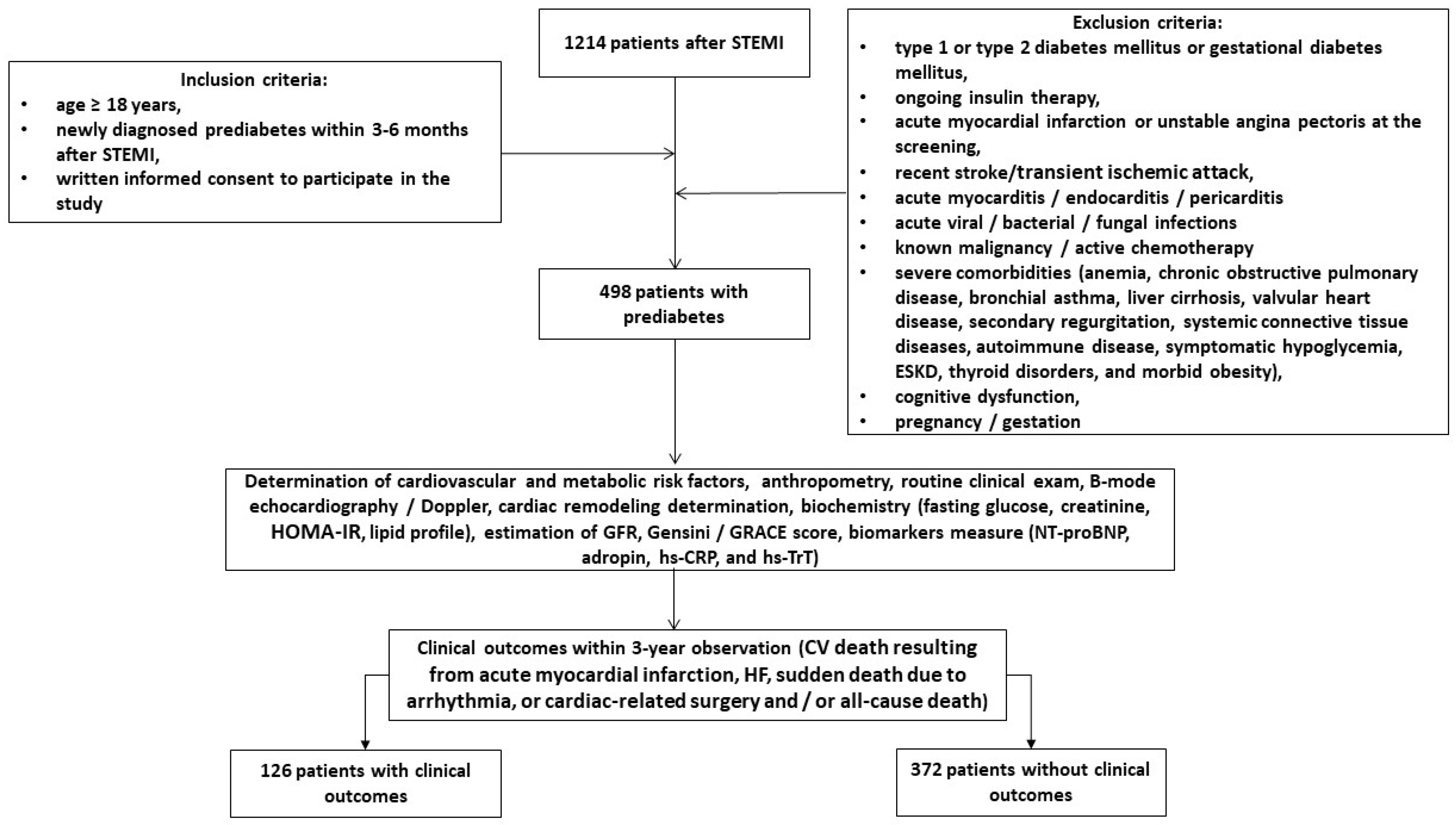
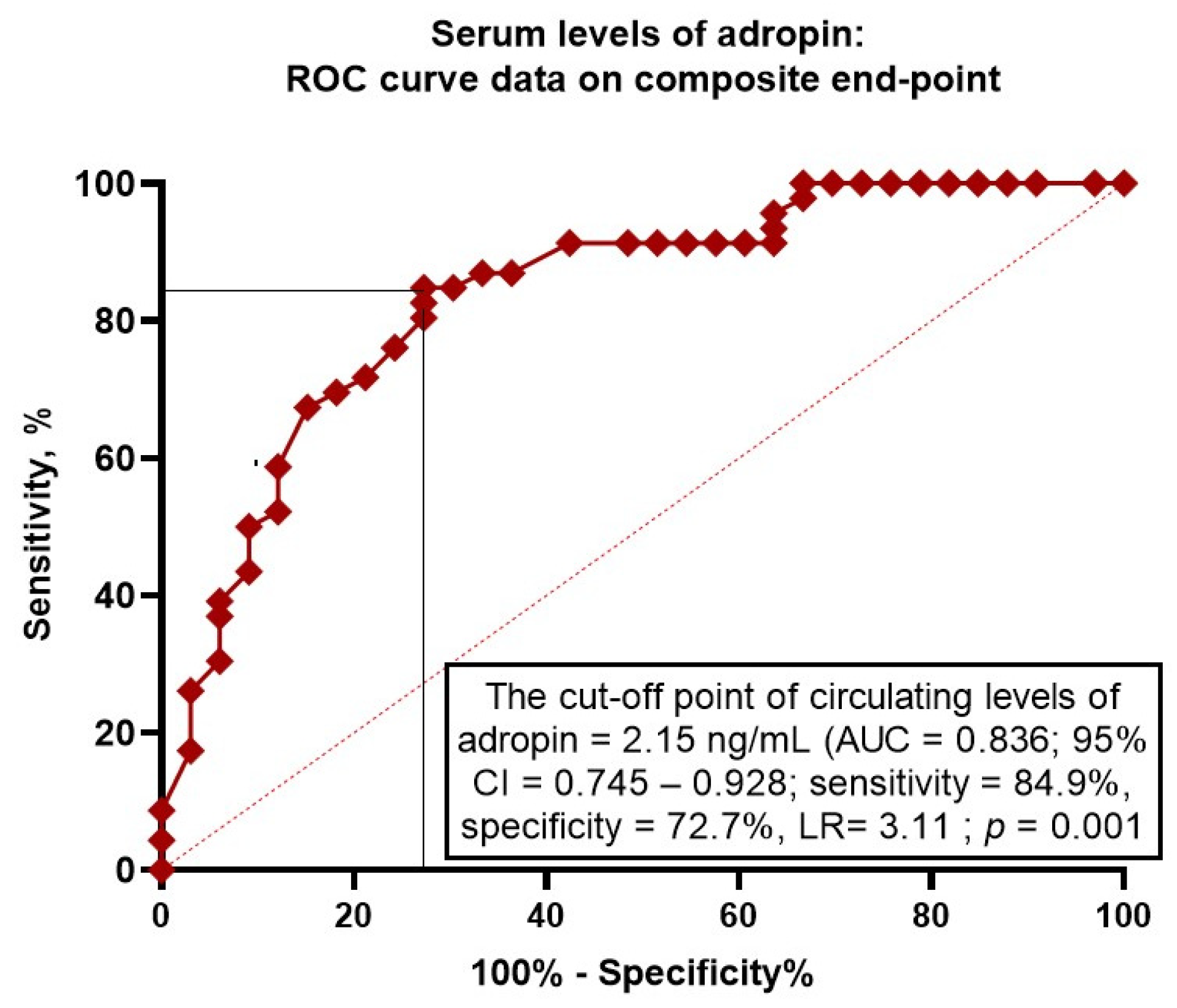
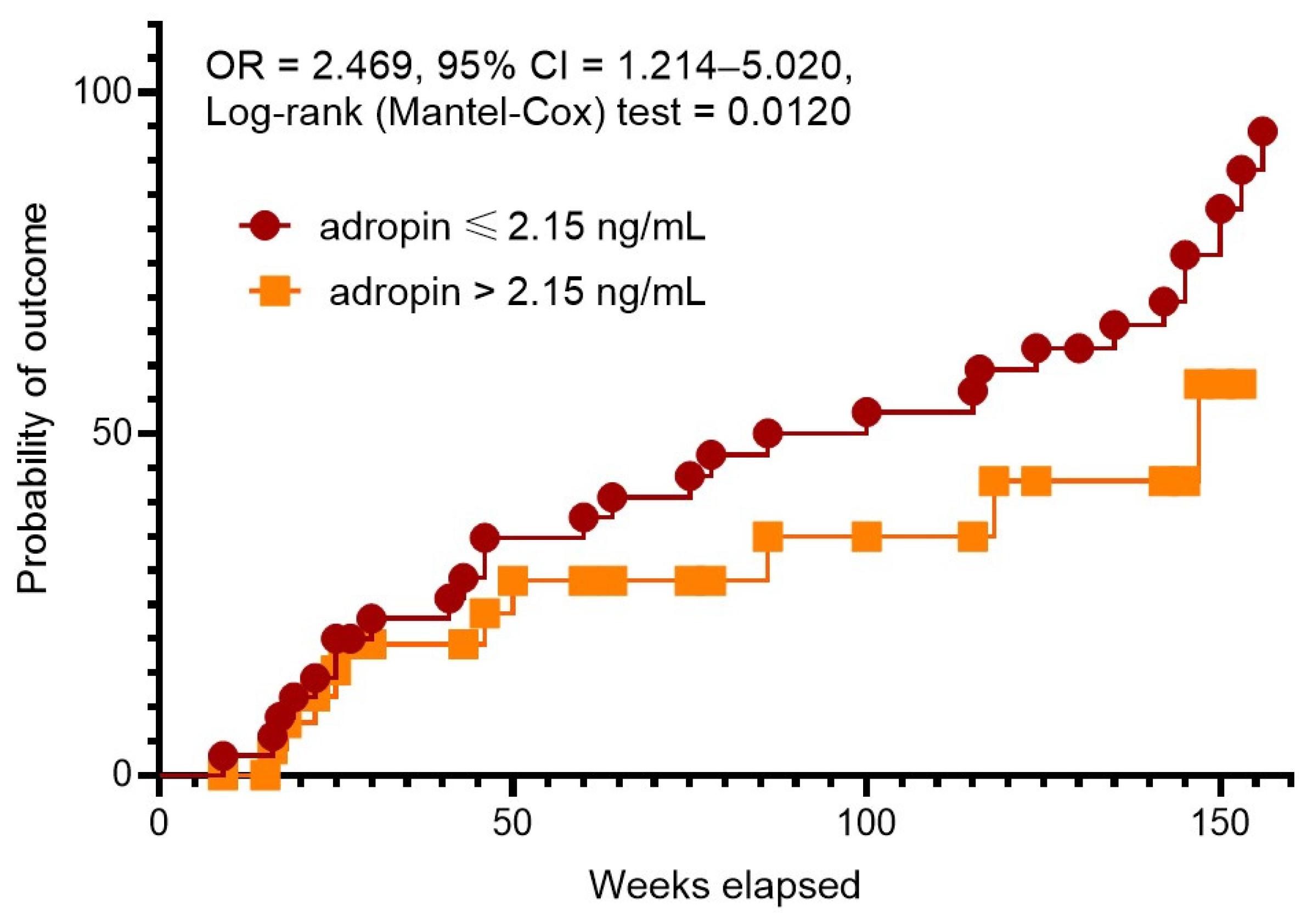
Adropin—a multifunctional peptide with tissue-protective capacity that regulates energy homeostasis, sensitivity to insulin and inflammatory response—seems to show an inverse association with the presence of cardiovascular and renal diseases, obesity and diabetes mellitus in the general population. The purpose of the study is to elucidate whether adropin may be a plausible predictive biomarker for clinical outcomes in post-ST elevation of myocardial infarction (STEMI) patients with newly diagnosed prediabetes according to the American Diabetes Association criteria. A total of 1214 post-STEMI patients who received percutaneous coronary intervention were identified in a local database of the private hospital “Vita Center” (Zaporozhye, Ukraine). Between November 2020 and June 2024, we prospectively enrolled 498 patients with prediabetes in this open prospective cohort study and followed them for 3 years. The combined clinical endpoint at follow-up was defined as cardiovascular death due to acute myocardial infarction, heart failure, sudden death due to arrhythmia or cardiac surgery, and/or all-cause death. We identified 126 clinical events and found that serum levels of adropin < 2.15 ng/mL (area under the curve = 0.836; 95% confidence interval = 0.745–0.928; sensitivity = 84.9%; specificity = 72.7%; likelihood ratio = 3.11; p = 0.0001) predicted clinical outcomes. Multivariate logistic regression showed that a Gensini score ≥ 32 (Odds ratio [OR] = 1.07; p = 0.001), adropin ≤ 2.15 ng/mL (OR = 1.18; p = 0.001), use of SGLT2i (OR = 0.94; p = 0.010) and GLP-1 receptor agonist (OR = 0.95; p = 0.040) were independent predictors of clinical outcome. Kaplan–Meier plots showed that patients with lower adropin levels (≤2.15 ng/mL) had worse clinical outcomes compared to patients with higher adropin levels (>2.15 ng/mL). In conclusion, low levels of adropin (≤2.15 ng/mL) independently predicted clinical outcomes in post-STEMI patients with newly detected prediabetes and improved the discriminative ability of the Gensini score for 3-year follow-up events. Future clinical studies are needed to clarify whether adropin is a promising molecule to be incorporated into conventional risk scores for the prediction of MACCEs after STEMI.
Keywords: prediabetes; adropin; acute myocardial infarction; heart failure; cardiovascular death; all-cause mortality; prognosis prediabetes; adropin; acute myocardial infarction; heart failure; cardiovascular death; all-cause mortality; prognosis