Review

Experimental Models for Testing the Efficacy of Pharmacological Treatments for Neonatal Hypoxic-Ischemic Encephalopathy

by
Elisa Landucci
1,
Domenico E. Pellegrini-Giampietro
1,* and
Fabrizio Facchinetti
2
1
Department of Health Sciences, Section of Clinical Pharmacology and Oncology, University of Florence, 50139 Florence, Italy
2
Department of Experimental Pharmacology and Translational Science, Corporate Pre-Clinical R&D, Chiesi Farmaceutici S.p.A., 43122 Parma, Italy
*
Author to whom correspondence should be addressed.
Biomedicines 2022, 10(5), 937; https://doi.org/10.3390/biomedicines10050937

Submission received: 28 February 2022 / Revised: 13 April 2022 / Accepted: 15 April 2022 / Published: 19 April 2022
(This article belongs to the Special Issue State of the Art: Neurodegenerative Diseases in Italy)

Abstract

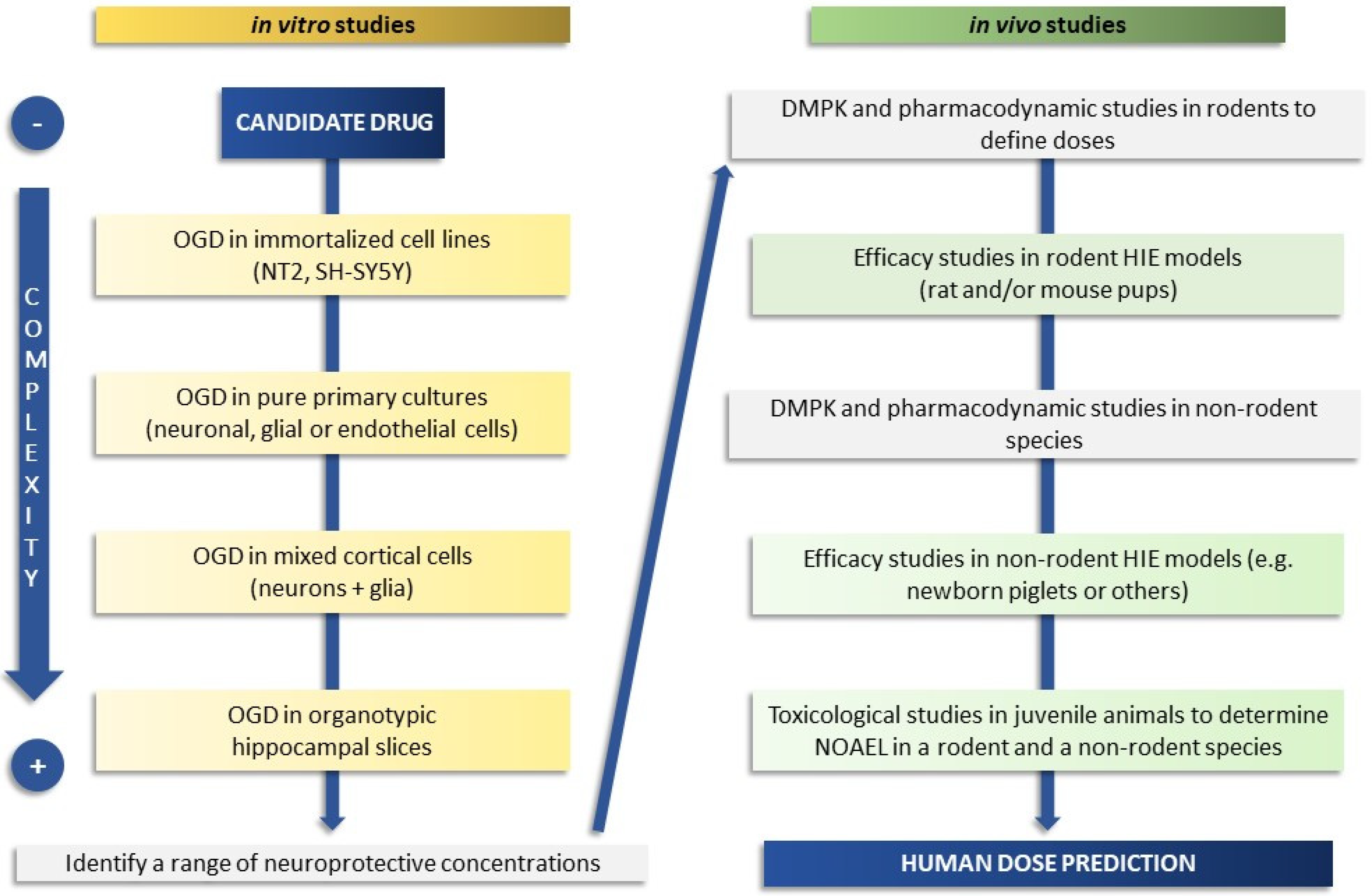
Representing an important cause of long–term disability, term neonatal hypoxic-ischemic encephalopathy (HIE) urgently needs further research aimed at repurposing existing drug as well as developing new therapeutics. Since various experimental in vitro and in vivo models of HIE have been developed with distinct characteristics, it becomes important to select the appropriate preclinical screening cascade for testing the efficacy of novel pharmacological treatments. As therapeutic hypothermia is already a routine therapy for neonatal encephalopathy, it is essential that hypothermia be administered to the experimental model selected to allow translational testing of novel or repurposed drugs on top of the standard of care. Moreover, a translational approach requires that therapeutic interventions must be initiated after the induction of the insult, and the time window for intervention should be evaluated to translate to real world clinical practice. Hippocampal organotypic slice cultures, in particular, are an invaluable intermediate between simpler cell lines and in vivo models, as they largely maintain structural complexity of the original tissue and can be subjected to transient oxygen–glucose deprivation (OGD) and subsequent reoxygenation to simulate ischemic neuronal injury and reperfusion. Progressing to in vivo models, generally, rodent (mouse and rat) models could offer more flexibility and be more cost-effective for testing the efficacy of pharmacological agents with a dose–response approach. Large animal models, including piglets, sheep, and non-human primates, may be utilized as a third step for more focused and accurate translational studies, including also pharmacokinetic and safety pharmacology assessments. Thus, a preclinical proof of concept of efficacy of an emerging pharmacological treatment should be obtained firstly in vitro, including organotypic models, and, subsequently, in at least two different animal models, also in combination with hypothermia, before initiating clinical trials.
Keywords: cerebral ischemia; hypoxia; oxygen and glucose deprivation; cell cultures; organotypic hippocampal slices; neonate animal models; efficacy studies; toxicological studies; drug development cerebral ischemia; hypoxia; oxygen and glucose deprivation; cell cultures; organotypic hippocampal slices; neonate animal models; efficacy studies; toxicological studies; drug development