


Abstract
An alarming 30% to 50% prevalence rate of disease-related malnutrition among hospitalized patients compels the need for early diagnosis and treatment of malnutrition. Registered Dietitian Nutritionists (RDNs) can utilize the nutrition-focused physical examination (NFPE) as one of the nutrition assessment criteria to accurately diagnose malnutrition. Although RDNs are striving to employ NFPE in practice, a lack of experience and adequate training impedes full utilization of this technique. This results in wide skill variations requiring continuous evaluation of RDNs’ NFPE competency. However, a standardized, validated competency tool is not widely available and hence this study aims to develop a standardized, interactive nutrition-specific physical exam competency tool (INSPECT). As a first step in the development of INSPECT, a qualitative, technology-based focus group approach with 7 content and practice experts was utilized to generate appropriate tool items. A total of 70 NFPE items under 9 areas including 12 items for muscle loss, 4 items for subcutaneous fat loss, 31 items for micronutrient deficiencies, 1 item for fluid status, 2 items for handgrip strength, 5 items for initial preparation, 4 items for bedside manner, 8 items for swallowing, and 3 items for abdominal evaluation were generated. This study successfully utilized technology-based focus groups to generate appropriate NFPE items for the competency tool development. Using the items, an initial version of INSPECT has been developed, which is presently being investigated for content and face validity. The final version will undergo field tests and will be examined for reliability, validity, and item-level psychometric properties.
1. Introduction
Disease-related malnutrition is a growing concern in today’s healthcare landscape with an estimated prevalence rate as high as 30% to 50% among patients hospitalized in the United States [1,2,3]. The mean rate of prevalence based on a retrospective review of 20 studies has shown to be a substantial 41.7% [1]. Malnutrition has devastating effects, particularly in patients with chronic disease conditions. It impairs recovery; is associated with high morbidity and mortality rates; results in poor clinical outcomes and functional status decline [4,5,6,7,8,9,10,11]. In addition, malnutrition imposes an enormous economic burden, with disease-associated malnutrition costs totaling $157 billion in the United States [12]. Such a high rate of prevalence along with serious health and economic implications calls for early detection and accurate diagnosis of malnutrition along with timely treatment.
Despite the disconcerting prevalence and consequences of malnutrition, only about 4% to 8% of the hospitalized patients are actually being diagnosed and documented as malnourished [2,13]. Tobert and colleagues (2018) analyzed 5,896,792 hospitalizations across 105 hospitals in the United States over a 2-year period and found that the median documented rate of malnutrition to be 4% with a range of 0.65% to 18.6% [2]. This huge discrepancy between the rate of prevalence and the rate of diagnosed malnutrition is due to underdiagnosis [14] and under-documentation of malnutrition in clinical practice. When researchers dedicate the time to study the prevalence of malnutrition, alarming rates are identified. In routine clinical practice, however, the majority of cases of malnutrition are underdiagnosed, untreated, and under-documented [15,16].
One of the major reasons for underdiagnosing malnutrition is that there is no single objective marker or laboratory test for diagnosis [2,17,18]. For decades, healthcare providers, including Registered Dietitian Nutritionists (RDNs) have underdiagnosed malnutrition due to dependence on various laboratory markers, nutrition screening tools, and devices such as dual-energy X-ray absorptiometry and bioelectric impedance analysis [14,17]. In 2012, to address the need for a standardized approach to diagnosing malnutrition, the nation’s two most reputable professional nutrition organizations, the Academy of Nutrition and Dietetics (the Academy) and the American Society of Parenteral and Enteral Nutrition (ASPEN) collaborated to provide a diagnosis framework [11,19]. This collaborative effort resulted in a consensus statement that included 6 diagnostic criteria to identify all types of adult malnutrition. The criteria include insufficient oral intake, weight loss, loss of muscle mass, loss of subcutaneous fat, localized and/or generalized fluid accumulation, and functional handgrip strength [11,19]. Of these 6 characteristics, food intake and weight loss are most often obtained through nursing or patient/caregiver reports and medical documentation. The remaining 4 characteristics of loss of muscle mass, loss of subcutaneous fat, accumulation of fluids, and hand-grip strength are best determined through a comprehensive nutrition-focused physical exam (NFPE) performed by clinicians, in particular by RDNs [20].
The NFPE is a systematic examination of the physical and functional capabilities of patients to assess their nutritional status and to determine the presence of any nutrient deficiencies or excesses. Evaluating muscle mass and subcutaneous fat loss as part of a comprehensive physical exam is crucial, as muscle atrophy and decreased subcutaneous fat are well-established indicators of malnutrition [11,17]. During times of severe illness and stress, insulin production decreases in the body while glucagon levels increase stimulating a breakdown of adipocytes and myocytes. Consequently, fat and muscle stores are depleted resulting in a nutrition deficit, which when not compensated may result in malnutrition [21]. By applying the physical examination techniques of inspection and palpation, the RDNs have an opportunity to uncover clues of atrophied muscles and depleted fat stores in patients. Furthermore, RDNs may discover physical signs of micronutrient deficiencies during the NFPE, which otherwise could easily go unidentified and untreated [22]. Findings from the NFPE can then be utilized by the RDNs to compare data from the patients’ historical information to fully assess the patients’ nutritional status and any existing nutrient deficiencies. Subsequently, RDNs would consolidate the gathered information to identify the nutrition diagnosis and provide the appropriate plan of care.
In spite of the evident need for RDNs to diagnose and treat malnutrition, several factors impede diagnosis. Typically, physicians, physician assistants, and nurse practitioners establish a medical diagnosis by performing a physical exam on patients [22]. As these healthcare professionals focus on identifying the immediate medical concern, any underlying malnutrition may go undiscovered. Unlike the physical exam performed by these practitioners, the NFPE performed by RDNs focuses on nutrient-related clinical changes enabling the RDNs to assemble all of the clinical characteristics towards determining the presence and severity of malnutrition including any existing micronutrient deficiencies [14]. Consequently, there is a compelling need for RDNs to incorporate a hands-on physical examination to identify the signs of malnutrition accurately [17], and if malnutrition exists, to provide appropriate treatment recommendations to alleviate the condition [23].
Despite the aforementioned benefits of a physical examination performed by RDNs, this skill has been severely under-utilized in clinical dietetic practice since it was only added to the revised dietitians’ scope of practice within the past 8 years for practicing RDNs and within the past 5 years for dietetic students [24,25,26]. Additionally, in recent studies, RDNs have indicated several barriers to performing NFPE [20,27]. The barriers include a lack of experience and training in NFPE, inadequate time, and the reluctance to physically touch patients [20,27]. Attempts are being made to train RDNs by using simulation models, in-person training, and video demonstrations. However, there is a wide range of skill and comfort level in applying this technique in practice in addition to a lack of a standardized tool to measure the application of NFPE in routine patient care [20,28,29]. Regular evaluation, refinement, and retraining of RDNs’ skills in performing NFPE [14] are necessary to compensate for the infrequent training and the lack of consistent practice. A limited number of NFPE competency tools are available including those developed in-house as part of didactic curriculums [30], the Academy skill development checklist that is accessible only to the Academy workshop participants [20], and a recently published validated competency tool developed based on evidence-based literature [29]. Nevertheless, there are currently no NFPE competency tools that have been developed with the contribution of content and practice experts based on their current NFPE experience in clinical practice. Hence, as a first step in developing a standardized tool, Interactive Nutrition-Specific Physical Exam Competency Tool (INSPECT), this study aims to generate NFPE competency tool items by utilizing the expertise of content and practice experts through technology-based focus group discussions.
2. Materials and Methods
As NFPE is a relatively new area for RDNs [28], a qualitative research approach employing focus group discussions with content and practice experts was utilized to explore appropriate items for the development of INSPECT. A focus group technique was desirable as it was less formal, allowed for open, in-depth group discussions with participants exchanging their viewpoints, experiences, and NFPE practice preferences [31,32,33,34]. A technology-based focus group approach was selected for this study where the experts could log into a virtual meeting room to participate in live discussions. Several studies have utilized technology-based focus groups to generate items for measurement tools [35,36]. This online approach allowed experts to participate from around the nation without the need for travel [35]. The Augusta University institutional review board provided exempt approval for this study (# 1319708-2).
Purposive sampling methodology [37] was employed to recruit actively practicing RDNs from across the United States who have expertise in clinical dietetics and in performing NFPEs. A sample size of 5–7 focus group participants has been recommended as adequate for technology-based focus groups [38]. Seven RDNs deemed as experts based on their clinical and NFPE practice experience were identified and invited to participate in the study. The experts provided a representative sample based on the following criteria: 1. they were from a variety of hospitals including teaching and community hospitals; 2. they were from across the United States representing various geographic locations; 3. they had a wide range of clinical dietetic experience; and 4. they had diverse practice skills in NFPE. Each expert was sent an email with the study description along with a SurveyMonkey® participation link to provide informed consent (Survey Monkey Inc., San Mateo, CA, USA). All invited participants provided informed consent and self-selected 1 of 3 focus group sessions based solely on their convenience and availability. Two sessions contained 2 experts and 1 session had 3 experts to allow ample time for in-depth discussions, adequate participation from each expert, and to avoid an environment where the discussion moved rapidly skimming over the NFPE components [38]. All of the focus group meetings were conducted utilizing ZoomTM online platform (Zoom Video Communications, Inc., 2020, San Jose, CA, USA). To preserve participants’ privacy and to allow for full exchange of ideas without distractions, the video feature of the online platform was not utilized during the focus group sessions [36]. Study participants were informed that the discussions were being audio recorded for future data extraction and analysis, and their rights and responsibilities were reviewed.
The principal investigator S.Z., an RDN and doctoral candidate who has been conducting NFPE related research since early 2018, played the role of the moderator for the semi-structured focus group discussions. Six exploratory, open-ended questions were formulated by S.Z. to reveal participants’ expert opinions regarding potential components of the NFPE and the practical aspects of applying NFPE in clinical practice. The involvement of the moderator was limited to taking notes, guiding the groups to different topics, and ensuring all participants were given adequate opportunity to participate in the discussion [39]. Each of the 3 focus group discussions lasted between 60 to 90 min and all experts participated for the entire duration of the focus group session. Discussions were audio-recorded using ZoomTM online conferencing platform.
The recorded focus group discussions were transcribed verbatim excluding all identifiers to maintain participant confidentiality. Member checking was completed by allowing participants to check, edit, and/or elaborate any part of their own words in the transcribed script [40]. All members participated in the member checking process. The verified transcription was then analyzed using NVivo software (QSR International Pty Ltd. Version 11.4, 2017, Melbourne, Australia) to reveal emergent codes and themes from the focus group experts.
In the first cycle of coding, in vivo coding was applied [39,41] and labels were assigned by the principal investigator S.Z. to words and short phrases, establishing a detailed inventory of NFPE components. A second cycle of pattern coding [39,41] was conducted to further refine the initial coding and to consolidate the NFPE elements into categories. This coding and recoding process produced common themes and item pools of NFPE. A co-investigator and one of the project advisors, A.G., independently reviewed and agreed with the recoded labels. NFPE item components and themes identified from the coding and recoding process were discussed over multiple meetings between S.Z. and A.G. to reach consensus, thus improving reliability [39]. These item pools served as the framework for the initial item bank of NFPE components for INSPECT.
3. Results
All 7 NFPE experts who were invited in December 2018 agreed and participated in the technology-based focus group discussions, resulting in a 100% response rate. All experts took part in the entire process of this study including the focus group interviews and the member checking process. All participants were females, identified themselves as White, had a median clinical dietetic experience of 22 years (range = 5 to 43 years) and a median NFPE experience of 10 years (range = 2 to 40 years). Participants were employed as clinical dietitians (n = 3, 43%), clinical nutrition managers (n = 3, 43%), or as an educator/researcher (n = 1, 14%). Table 1 depicts participant characteristics and their geographic locations.

Table 1.
Characteristics of Focus Group Participants
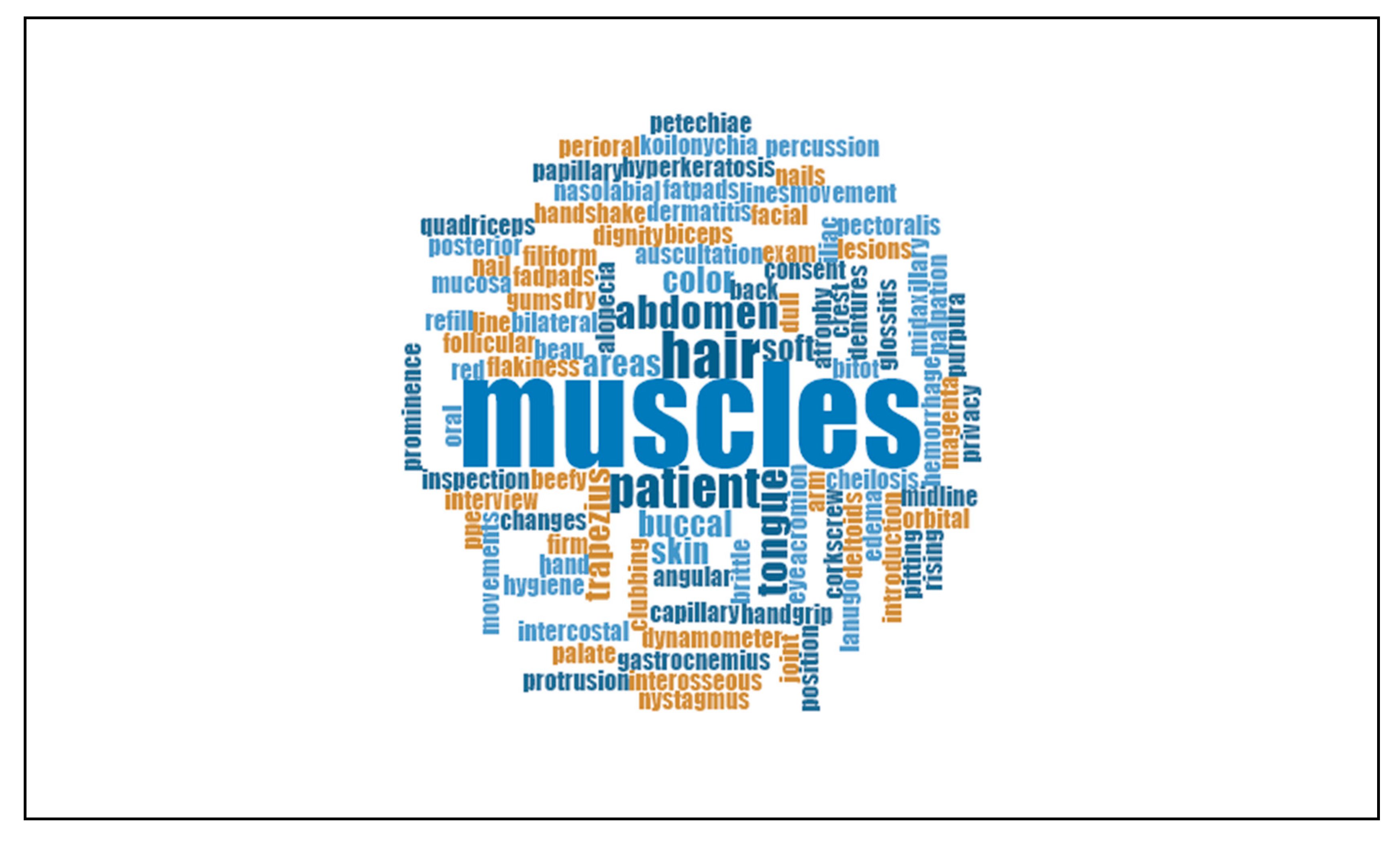
All participants agreed that NFPE is an important skill and should be incorporated as part of the routine nutrition assessment process by RDNs. All participants also concurred that hands-on NFPE training and competency evaluation should begin at the undergraduate level for dietitians to become adequately proficient to begin practice. The initial in vivo coding analysis of the focus group transcription resulted in 111 NFPE item components. The recoding process allowed for refinement of the item pool to 70 items. The 70 NFPE item components generated from the focus group discussions are presented as a Word Cloud in Figure 1.In addition, two themes emerged from the expert focus group discussions: (1) culturally sensitive evaluation and (2) NFPE competency evaluation of RDNs.
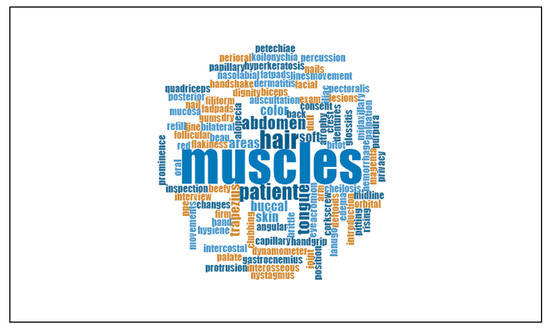
Figure 1.
Word Cloud of 70 nutrition-focused physical examination (NFPE) Items Generated from Focus Groups
3.1. NFPE Item Components
Content experts discussed various components of the physical exam, which are presented here in 9 categories: muscle loss, subcutaneous fat loss, micronutrient deficiencies, fluid status, handgrip strength, basic swallow assessment, abdominal evaluation, initial preparation to NFPE, and bedside manner while performing NFPE.
3.1.1. Muscle Loss
All experts agreed that accurate assessment of muscle loss is a crucial part of malnutrition diagnosis and identified the most frequently inspected and palpated muscle groups during the NFPE exam. Six out of 7 experts agreed that they begin their hands-on assessment focusing on the temporalis muscle. Experts discussed 8 muscle groups in varying order, which comprised of the trapezius, deltoids, pectoralis, scapular (supraspinatus and infraspinatus), interosseous, quadriceps, and gastrocnemius. Although intercostal muscles, thenar muscles and muscles around midaxillary lines were not explicitly mentioned by their names, experts referenced these muscle groups during their discussion. In total, 12 items focusing on muscle loss were identified and the corresponding exemplary quotes from the expert focus group discussions are given in Table 2.
Table 2.
Expert Exemplary Quotes Extracted Verbatim on Muscle Loss
3.1.2. Subcutaneous Fat Loss
Experts largely discussed inspecting and palpating 4 areas of subcutaneous fat loss including orbital fad pads, buccal fat pads, triceps, and fat pads between the last rib and iliac crest. Four items were generated from the focus group discussions and the complementing exemplary quotes are given in Table 3.
Table 3.
Expert Exemplary Quotes Extracted Verbatim on Subcutaneous Fat Loss
3.1.3. Micronutrient Deficiencies
All experts expressed inspecting and palpating for micronutrient deficiencies. The main areas of the micronutrient exam involved hair, face, eyes, mouth/oral cavity, upper extremities including skin and nails, and skin on the lower extremities. In total, 31 micronutrient deficiency items were generated during the expert focus group discussions and the corresponding exemplary quotes are shown in Table 4.
Table 4.
Expert Exemplary Quotes Extracted Verbatim on Micronutrient Deficiencies
3.1.4. Fluid Status
All participants discussed assessing pitting edema in the pretibial area, ankles, and feet. Participants did not discuss any other type of fluid status assessment. Therefore, 1 item of fluid assessment was generated, and the related exemplary quotes are given in Table 5.
Table 5.
Expert Exemplary Quotes Extracted Verbatim on Fluid Status
3.1.5. Hand Grip Strength
The utilization of grip strength was mixed among the participants. Some experts used grip strength assessment using a hand dynamometer while others used handshake to assess grip strength. Some participants omitted grip strength and instead limited their assessment to interviewing patients on functional activities. Two items were generated for grip strength from the expert discussions and the complementing exemplary quotes are displayed in Table 6.
Table 6.
Expert Exemplary Quotes Extracted Verbatim on Hand Grip Strength
3.1.6. Basic Swallow and Abdominal Exam
While 2 of the experts considered assessing the abdomen and conducting a basic swallow exam as important components of NFPE, other experts agreed that it is a valuable skill for the RDNs, however felt these components are advanced skills, and they did not routinely apply them in their own practice. In view of developing a competency tool that would cater to the needs of a broad base of RDNs, it was decided to incorporate these items within the tool. Hence, 8 items for the basic swallow exam and 3 items for the abdominal exam were generated and the related exemplary quotes are shown in Table 7 and Table 8 respectively.
Table 7.
Expert Exemplary Quotes Extracted Verbatim on Basic Swallow Exam
Table 8.
Expert Exemplary Quotes Extracted Verbatim on Abdomen Exam
3.1.7. Appropriate Preparation and Initial Steps
As part of the initial preparation for NFPE, experts considered hand hygiene, personal protective equipment such as gloves, obtaining patient consent, maintaining patient privacy, and self-introduction as essential steps to the process. Therefore, 5 items were generated to be included as initial steps and the corresponding exemplary quotes from the participants are given in Table 9.
Table 9.
Expert Exemplary Quotes Extracted Verbatim on Appropriate Preparation and Initial Steps
3.1.8. Bedside Manner and Etiquette
The experts discussed bedside manner as a vital part of the NFPE process. Maintaining patient dignity at all times during the exam, performing the exam bilaterally, and ensuring comfort and position of the patient were discussed as essential etiquette in NFPE. In addition, participants highlighted patient interviews as an indispensable component of the NFPE process. In total, 4 items on bedside manner and etiquette were generated from the focus group discussions and the related exemplary quotes are shown in Table 10.
Table 10.
Expert Exemplary Quotes Extracted Verbatim on Bedside Manner and Etiquette
3.2. Themes
In addition to the NFPE components, 2 themes emerged from the focus group discussions as critical to the NFPE process. These included culturally sensitive evaluation and evaluating RDNs’ NFPE competency on an ongoing basis.
3.2.1. Theme 1: Culturally Sensitive Evaluation
Only 1 of the 7 experts raised the importance of race and ethnicity while performing NFPE. Since there was no consensus among the experts on this topic, items were not generated from this theme and the exemplary quote is given in Table 11.
Table 11.
Theme 1: Culturally Sensitive Evaluation
3.2.2. Theme 2: NFPE Competency Evaluation of RDNs
Experts agreed that it is critical to evaluate RDN competency at regular intervals to maintain and improve their NFPE skills. Six out of 7 experts agreed that annual or alternate year evaluation was appropriate. Experts also concurred that the direct manager usually completed the evaluation. As this theme was not directly related to performing NFPE, no items were generated from this theme and the complementing exemplary quotes are given in Table 12.
Table 12.
Theme 2: NFPE Competency Evaluation of Registered Dietitian Nutritionists (RDNs)
In summary, 70 NFPE items under 9 areas were generated from the expert focus group discussions and are given in Table 13. These items comprised of 12 items for examining muscle loss, 4 items to assess the subcutaneous fat loss, 31 items to evaluate micronutrient deficiencies, 1 item to assess fluid status, 2 items to gauge handgrip strength, 5 items for initial preparation to NFPE, 4 items for bedside manner, 8 items for basic swallowing and 3 items for abdominal evaluation.
Table 13.
Summary of 70 NFPE Items Generated from Focus Groups
4. Discussion
The findings of this study offer significant knowledge on the potential competency tool items that are critical to evaluate NFPE skills among practicing RDNs. As there is a paucity of standardized and validated NFPE competency tools [28], this preliminary information will aid in developing INSPECT and other similar NFPE competency tools and will assist in establishing their validity and reliability. To the knowledge of the investigators, this study is the first to engage content and practice experts in in-depth focus group discussions to generate NFPE competency tool items. Allowing the content experts to freely exchange ideas in a non-threatening, open discussion forum stimulated dynamic discussions of similarities and differences in performing NFPE. Such an open, qualitative approach has been successfully applied in several previous studies for item generation [42,43] and in specific, technology-based focus groups have been employed to generate items for tool development [36,44].
Nine areas of NFPE were gleaned as important parts of NFPE competency from the expert focus group discussions: muscle loss, subcutaneous fat loss, micronutrient deficiencies, fluid status, handgrip strength, basic swallow assessment, abdominal exam, initial preparation before NFPE, and bedside manner during NFPE. In total, 70 NFPE tool items were generated to represent these 9 areas. The items generated from the focus group discussions were compared with evidence-informed literature, which revealed the items to be pertinent for NFPE assessment and therefore are considered appropriate items for the development of the INSPECT [14,19,22,23,28,45].
Along with inspection and palpation, experts emphasized the importance of patient interviewing as part of the NFPE process. They resoundingly agreed that it is not only sufficient to inspect and palpate the patients during a physical exam but to also ask pertinent questions to correlate with the findings of the exam [14,22]. Moreover, experts discussed the value of ongoing evaluation of NFPE competency for RDNs to maintain their skill set in clinical practice. Experts suggested a yearly evaluation or evaluating alternate years at a minimum as optimal and recommended direct managers to be responsible for this skill assessment. The Accreditation Council for Nutrition and Education (ACEND), the accrediting agency for dietetic education programs, has recently conducted a competency gap analysis as part of the future education preparation for RDN practitioners and has identified NFPE as one of the required competencies to complete a comprehensive nutrition assessment [24,25]. Therefore, demonstrating adequate competency of this required skill warrants initial NFPE evaluation and ongoing evaluation thereafter, utilizing a standardized competency tool.
Although this study produced spirited expert exchanges, some gaps in discussions were also observed. One main gap noted was the lack of discussion around ethnic and gender identity differences influencing NFPE. Unquestionably, race, ethnicity, gender identity, and gender transition affect the physical exam and the interpretation of its results. In particular, the varying skin color of different ethnic groups means the skin examination of lighter-skinned individuals will differ vastly when compared to darker-skinned individuals [46]. In addition, facial enhancements such as Botox® may modify the appearance and texture of the skin, thus altering the results of the facial exam. However, ethnic variations and cosmetic skin enhancements influencing NFPE were not adequately discussed during the focus group sessions indicating the need for RDNs to be cognitive of these differences and to be able to adjust their physical exam accordingly.
As transgender individuals may opt to transition from one gender to the other using hormonal therapy and/or through gender-affirming surgeries, these practices may have a marked impact on their nutritional status, weight, and body habitus, which in turn, may impact the NFPE performed on these individuals [47,48,49]. Nonetheless, gender identification differences were not discussed during the expert focus group discussions, suggesting that this may be a relatively new area for the RDNs. Increasing awareness and training focused on transgender-centered care is essential for RDNs.
Limitations of this study are the small sample size of the content experts and that they were all White females. It would have been valuable to have included additional experts from diverse gender and ethnic backgrounds. Despite these limitations, the experts were representative as they were from across the United States, representing various geographic locations, had a wide range of clinical dietetic experience and current NFPE practice experience.
5. Conclusions
Currently, there is limited availability of standardized and validated competency tools to measure NFPE competency skills among RDNs in clinical practice. An NFPE competency tool such as the INSPECT, which is scientifically developed and rigorously tested for validity and reliability is essential to evaluate RDNs’ competency in performing NFPE on patients. Ongoing competency evaluation will equip RDNs in maintaining and improving their NFPE skills, which in turn will improve their ability to accurately diagnose malnutrition and to provide early patient intervention. As a first step in competency tool development, this study generated a set of 70 NFPE items under 9 areas through expert focus group discussions. The generated items were found to be relevant when validated using evidence-informed literature. These generated NFPE items were used to design and develop the initial version of the INSPECT, which is presently undergoing face and content validity testing. The final version of the INSPECT will be field-tested and assessed for inter-rater and intra-rater reliability and construct validity. Item–response theory methodologies will also be applied to examine the item-level psychometric properties. The resultant standardized and validated tool will be made widely available to evaluate the initial and ongoing NFPE competency among RDNs in clinical practice.
Author Contributions
S.Z.: Conceptualization, Methodology, Data acquisition and analysis, Writing and Original draft preparation. A.J.G.: Conceptualization, Data analysis, Writing, Reviewing and Editing. L.L.: Writing, Reviewing and Editing. J.L.W.: Writing, Reviewing and Editing. G.D.L.: Writing, Reviewing and Editing. J.S.: Writing, Reviewing and Editing. All authors have read and agreed to the published version of the manuscript.
Funding
This research received no external funding.
Institutional Review Board Statement
The study was provided exempt status by the Institutional Review Board of Augusta University (# 1319708-2 and 28 September 2018).
Informed Consent Statement
Informed consent was obtained from all participants involved in the focus group discussions.
Data Availability Statement
The data presented in this study are available on request from the corresponding author. The data are not publicly available to protect the confidentiality and privacy of the study participants.
Conflicts of Interest
The authors declare no conflict of interest.
References
- Norman, K.; Pichard, C.; Lochs, H.; Pirlich, M. Prognostic impact of disease-related malnutrition. Clin. Nutr. 2008, 27, 5–15. [Google Scholar] [CrossRef]
- Tobert, C.M.; Mott, S.L.; Nepple, K.G. Malnutrition Diagnosis during Adult Inpatient Hospitalizations: Analysis of a Multi-Institutional Collaborative Database of Academic Medical Centers. J. Acad. Nutr. Diet. 2018, 118, 125–131. [Google Scholar] [CrossRef] [PubMed]
- Jensen, G.L.; Compher, C.; Sullivan, D.H.; Mullin, G.E. Recognizing malnutrition in adults: Definitions and characteristics, screening, assessment, and team approach. JPEN J. Parenter. Enteral Nutr. 2013, 37, 802–807. [Google Scholar] [CrossRef]
- Correia, M.I.; Hegazi, R.A.; Higashiguchi, T.; Michel, J.P.; Reddy, B.R.; Tappenden, K.A.; Uyar, M.; Muscaritoli, M. Evidence-based recommendations for addressing malnutrition in health care: An updated strategy from the feedM.E. Global Study Group. J. Am. Med. Dir. Assoc. 2014, 15, 544–550. [Google Scholar] [CrossRef]
- Gariballa, S.; Forster, S.; Walters, S.; Powers, H. A randomized, double-blind, placebo-controlled trial of nutritional supplementation during acute illness. Am. J. Med. 2006, 119, 693–699. [Google Scholar] [CrossRef]
- Milne, A.C.; Potter, J.; Vivanti, A.; Avenell, A. Protein and energy supplementation in elderly people at risk from malnutrition. Cochrane Database Syst. Rev. 2009, 2, Cd003288. [Google Scholar] [CrossRef]
- Neelemaat, F.; Lips, P.; Bosmans, J.E.; Thijs, A.; Seidell, J.C.; van Bokhorst-de van der Schueren, M.A. Short-term oral nutritional intervention with protein and vitamin D decreases falls in malnourished older adults. J. Am. Geriatr. Soc. 2012, 60, 691–699. [Google Scholar] [CrossRef] [PubMed]
- Philipson, T.J.; Snider, J.T.; Lakdawalla, D.N.; Stryckman, B.; Goldman, D.P. Impact of oral nutritional supplementation on hospital outcomes. Am. J. Manag. Care 2013, 19, 121–128. [Google Scholar] [CrossRef]
- Lim, S.L.; Ong, K.C.; Chan, Y.H.; Loke, W.C.; Ferguson, M.; Daniels, L. Malnutrition and its impact on cost of hospitalization, length of stay, readmission and 3-year mortality. Clin. Nutr. 2012, 31, 345–350. [Google Scholar] [CrossRef] [PubMed]
- Thibault, R.; Makhlouf, A.M.; Kossovsky, M.P.; Iavindrasana, J.; Chikhi, M.; Meyer, R.; Pittet, D.; Zingg, W.; Pichard, C. Healthcare-associated infections are associated with insufficient dietary intake: An observational cross-sectional study. PLoS ONE 2015, 10, e0123695. [Google Scholar] [CrossRef] [PubMed]
- White, J.V.; Guenter, P.; Jensen, G.; Malone, A.; Schofield, M. Consensus statement: Academy of Nutrition and Dietetics and American Society for Parenteral and Enteral Nutrition: Characteristics recommended for the identification and documentation of adult malnutrition (undernutrition). JPEN J. Parenter. Enteral Nutr. 2012, 36, 275–283. [Google Scholar] [CrossRef]
- Snider, J.T.; Linthicum, M.T.; Wu, Y.; LaVallee, C.; Lakdawalla, D.N.; Hegazi, R.; Matarese, L. Economic burden of community-based disease-associated malnutrition in the United States. JPEN J. Parenter. Enteral Nutr. 2014, 38 (Suppl. 2), 77S–85S. [Google Scholar] [CrossRef] [PubMed]
- Barrett, M.L.; Bailey, M.K.; Owens, P.L. Non-Maternal and Non-Neonatal Inpatient Stays in the United States Involving Malnutrition. 2016. Available online: www.hcupus.ahrq.gov/reports.jsp (accessed on 30 August 2018).
- Fischer, M.; JeVenn, A.; Hipskind, P. Evaluation of muscle and fat loss as diagnostic criteria for malnutrition. Nutr. Clin. Pract. 2015, 30, 239–248. [Google Scholar] [CrossRef]
- Correia, M.I.; Hegazi, R.A.; Diaz-Pizarro Graf, J.I.; Gomez-Morales, G.; Fuentes Gutierrez, C.; Goldin, M.F.; Navas, A.; Pinzon Espitia, O.L.; Tavares, G.M. Addressing Disease-Related Malnutrition in Healthcare: A Latin American Perspective. JPEN J. Parenter. Enteral Nutr. 2016, 40, 319–325. [Google Scholar] [CrossRef]
- McCauley, S.M.; Mitchell, K.; Heap, A. The Malnutrition Quality Improvement Initiative: A Multiyear Partnership Transforms Care. J. Acad. Nutr. Diet. 2019, 119, S18–S24. [Google Scholar] [CrossRef]
- Bharadwaj, S.; Ginoya, S.; Tandon, P.; Gohel, T.D.; Guirguis, J.; Vallabh, H.; Jevenn, A.; Hanouneh, I. Malnutrition: Laboratory markers vs nutritional assessment. Gastroenterol. Rep. 2016, 4, 272–280. [Google Scholar] [CrossRef]
- Toulson Davisson Correia, M.I. Addressing the Hidden Burden of Malnutrition for Hospitalized Patients. J. Acad. Nutr. Diet. 2018, 118, 37–39. [Google Scholar] [CrossRef]
- White, J.V.; Guenter, P.; Jensen, G.; Malone, A.; Schofield, M.; Academy Malnutrition Work Group, A.S.P.E.N.; Malnutrition Task Force, A.S.P.E.N.; Board of Directors. Consensus statement of the Academy of Nutrition and Dietetics/American Society for Parenteral and Enteral Nutrition: Characteristics recommended for the identification and documentation of adult malnutrition (undernutrition). J. Acad. Nutr. Diet. 2012, 112, 730–738. [Google Scholar] [CrossRef] [PubMed]
- Mordarski, B. Nutrition-Focused Physical Exam Hands-On Training Workshop. J. Acad. Nutr. Diet. 2016, 116, 868–869. [Google Scholar] [CrossRef] [PubMed]
- Winkler, M.F.; Malone, A.M. Medical Nutrition Therapy for Metabolic Stress: Sepsis, trauma, burns and surgery. In Krause’s Food and Nutrition Therapy, 12th ed.; Mahan, L.K., Escott-stump, S., Eds.; Saunders Elsevier: St Louis, CA, USA, 2008; pp. 1022–1026. [Google Scholar]
- Esper, D.H. Utilization of nutrition-focused physical assessment in identifying micronutrient deficiencies. Nutr. Clin. Pract. 2015, 30, 194–202. [Google Scholar] [CrossRef] [PubMed]
- Malone, A.; Hamilton, C. The Academy of Nutrition and Dietetics/the American Society for Parenteral and Enteral Nutrition consensus malnutrition characteristics: Application in practice. Nutr. Clin. Pract. 2013, 28, 639–650. [Google Scholar] [CrossRef]
- Accreditation Council for Education in Nutrition and Dietetics. Crosswalk of Knowledge and Competency Statements for CP, DI, DPD, FDE, IDE Programs; Academy of Nutrition and Dietetics: Chicago, IL, USA, 2016. [Google Scholar]
- Accreditation Council for Education in Nutrition and Dietetics. Future Education Model Standards for Accredited Graduate Programs in Dietetics; Academy of Nutrition and Dietetics: Chicago, IL, USA, 2019. [Google Scholar]
- Academy Quality Management Committee and Scope of Practice Subcommittee of Quality Management Committee. Academy of Nutrition and Dietetics: Revised 2012 Standards of Practice in Nutrition Care and Standards of Professional Performance for Registered Dietitians. J. Acad. Nutr. Diet. 2013, 113 (Suppl. 6), S29–S45. [Google Scholar] [CrossRef]
- Stankorb, S.; Radler-Rigassio, D.; Touger-Decker, R. Nutrition Focused Physical Examination Practices of Registered Dietitians. Top. Clin. Nutr. 2010, 25, 335–344. [Google Scholar] [CrossRef]
- Touger-Decker, R. Physical Assessment Skills for Dietetics Practice—The Past, the Present and Recommendations for the Future. Top. Clin. Nutr. 2006, 21, 190–198. [Google Scholar] [CrossRef]
- MacQuillan, E.L.; Ford, J.; Baird, K. Clinical Competence Assessed Using Simulation: Development of a Standardized Tool to Assess Nutrition-Focused Physical Exam Skill Competence for Registered Dietitian Nutritionists. J. Nutr. Educ. Behav. 2020, 53, 174–182. [Google Scholar] [CrossRef]
- Tyler, C.; Alnaim, L.; Diekemper, J.; Hamilton-Reeves, J.; Goetz, J.; Sullivan, D.K.; Gibbs, H.D. Simulations for Teaching and Evaluating Nutrition-Focused Physical Exam Skills. J. Nutr. Educ. Behav. 2020, 52, 882–889. [Google Scholar] [CrossRef]
- Dawson, S.; Manderson, L.; Tallo, V.L. A Manual for the Use of Focus; International Nutrition Foundation for Developing Countries: Boston, MA, USA, 1993. [Google Scholar]
- Kitzinger, J. Qualitative research. Introducing focus groups. BMJ 1995, 311, 299–302. [Google Scholar] [CrossRef]
- Krueger, R.A.; Casey, M.A. Focus Groups: A Practical Guide for Applied Research; SAGE Publications: Thousand Oaks, CA, USA, 2009. [Google Scholar]
- Rowan, N.; Wulff, D. Using qualitative methods to inform scale development. Qual. Rep. 2007, 12, 450–466. [Google Scholar]
- James, N.; Busher, H. Credibility, authenticity and voice: Dilemmas in online interviewing. Qual. Res. 2016, 6, 403–420. [Google Scholar] [CrossRef]
- Strout, T.D.; DiFazio, R.L.; Vessey, J.A. Technology-enhanced focus groups as a component of instrument development. Nurse Res. 2017, 25, 16–23. [Google Scholar] [CrossRef]
- Stalmeijer, R.E.; McNaughton, N.; Van Mook, W.N. Using focus groups in medical education research: AMEE Guide No. 91. Med. Teach. 2014, 36, 923–939. [Google Scholar] [CrossRef] [PubMed]
- Mann, C.; Stewart, F. Internet Communication and Qualitative Research: A Handbook for Researching Online; Sage Publications: London, UK, 2000. [Google Scholar]
- Miles, M.B.; Huberman, A.M.; Saldaña, J. Qualitative Data Analysis: A Methods Sourcebook; SAGE: Los Angeles, CA, USA, 2020. [Google Scholar]
- Carlson, J. Avoiding Traps in Member Checking. Qual. Rep. 2010, 15, 1102–1113. [Google Scholar]
- Saldaña, J. An introduction to codes and coding [Chapter 1 from: The coding manual for qualitative researchers]. In The Coding Manual for Qualitative Researchers, 2nd ed.; Saldana, J., Ed.; SAGE: Los Angeles, CA, USA, 2013; pp. 1–40. [Google Scholar]
- Uy, E.J.B.; Xiao, L.Y.S.; Xin, X.; Yeo, J.P.T.; Pua, Y.H.; Lee, G.L.; Kwan, Y.H.; Teo, E.P.S.; Vaingankar, J.A.; Subramaniam, M.; et al. Developing item banks to measure three important domains of health-related quality of life (HRQOL) in Singapore. Health Qual. Life Outcomes 2020, 18, 2. [Google Scholar] [CrossRef] [PubMed]
- George, J.; Phun, Y.T.; Bailey, M.J.; Kong, D.C.; Stewart, K. Development and validation of the medication regimen complexity index. Ann. Pharmacother. 2004, 38, 1369–1376. [Google Scholar] [CrossRef] [PubMed]
- Wong, E.L.; Coulter, A.; Cheung, A.W.; Yam, C.H.; Yeoh, E.K.; Griffiths, S. Item generation in the development of an inpatient experience questionnaire: A qualitative study. BMC Health Serv. Res. 2013, 13, 265. [Google Scholar] [CrossRef] [PubMed]
- DiBaise, M.; Tarleton, S.M. Hair, Nails, and Skin: Differentiating Cutaneous Manifestations of Micronutrient Deficiency. Nutr. Clin. Pract. 2019, 34, 490–503. [Google Scholar] [CrossRef]
- Everett, J.S.; Budescu, M.; Sommers, M.S. Making sense of skin color in clinical care. Clin. Nurs. Res. 2012, 21, 495–516. [Google Scholar] [CrossRef]
- Linsenmeyer, W.; Drallmeier, T.; Thomure, M. Towards gender-affirming nutrition assessment: A case series of adult transgender men with distinct nutrition considerations. Nutr. J. 2020, 19, 74. [Google Scholar] [CrossRef]
- Rahman, R.; Linsenmeyer, W.R. Caring for Transgender Patients and Clients: Nutrition-Related Clinical and Psychosocial Considerations. J. Acad. Nutr. Diet. 2019, 119, 727–732. [Google Scholar] [CrossRef]
- Klein, D.A.; Paradise, S.L.; Goodwin, E.T. Caring for Transgender and Gender-Diverse Persons: What Clinicians Should Know. Am. Fam. Physician 2018, 98, 645–653. [Google Scholar]
Publisher’s Note: MDPI stays neutral with regard to jurisdictional claims in published maps and institutional affiliations. |
© 2021 by the authors. Licensee MDPI, Basel, Switzerland. This article is an open access article distributed under the terms and conditions of the Creative Commons Attribution (CC BY) license (https://creativecommons.org/licenses/by/4.0/).