
Point-of-Care Bilirubin Testing in Neonates: Comparative Performance of Blood Gas Analysis and Transcutaneous Bilirubinometry

 , and
, and
Highlights
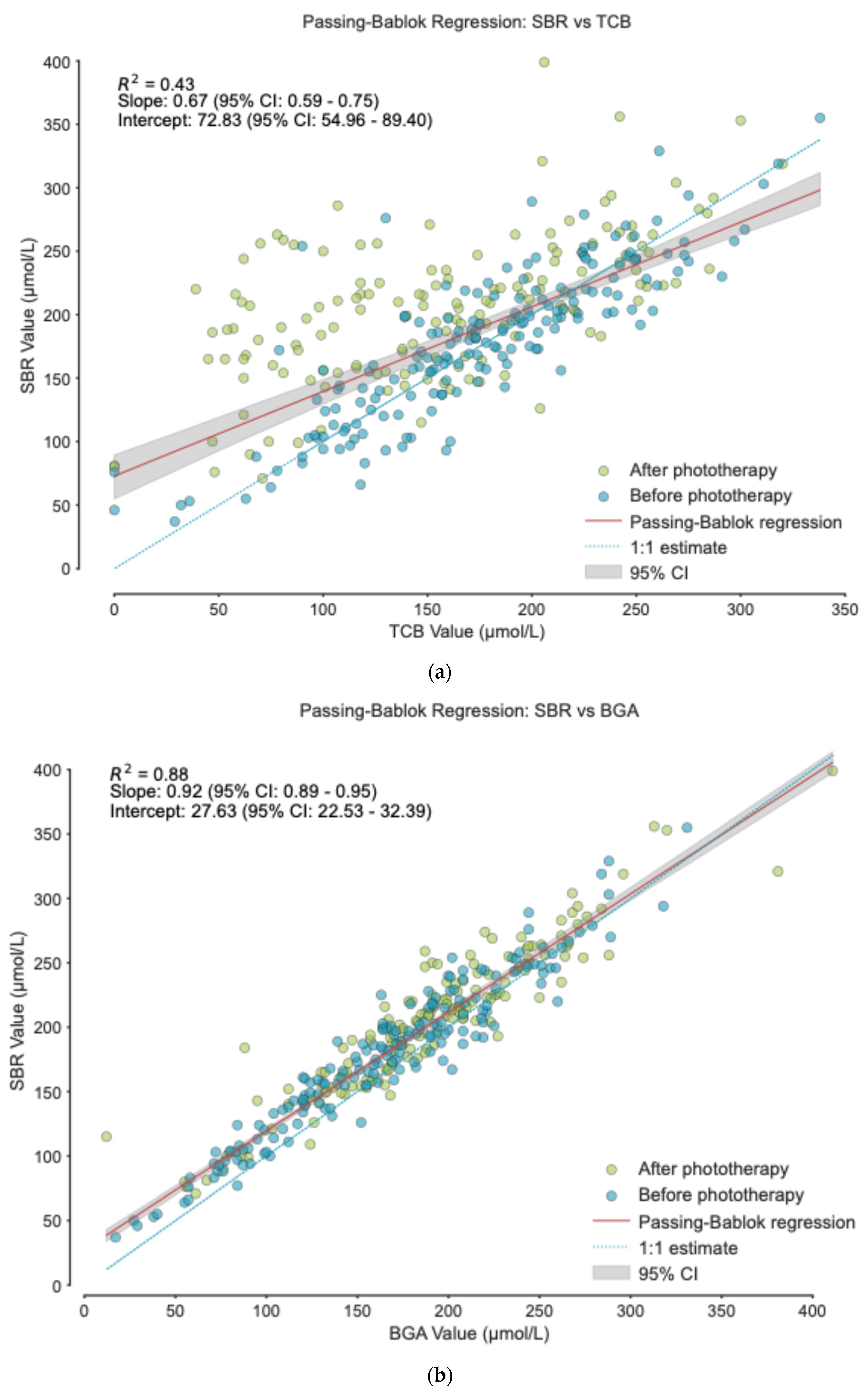
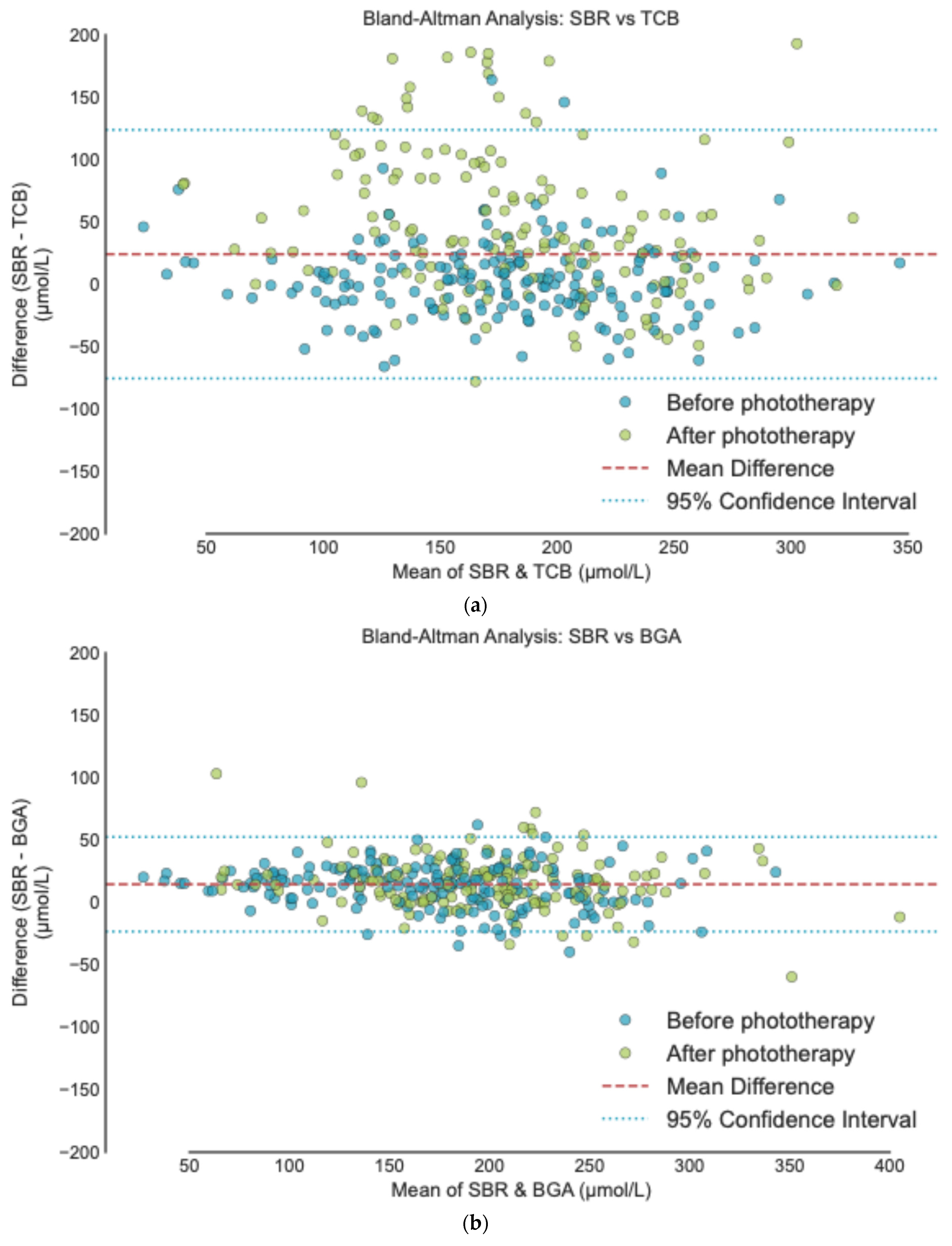
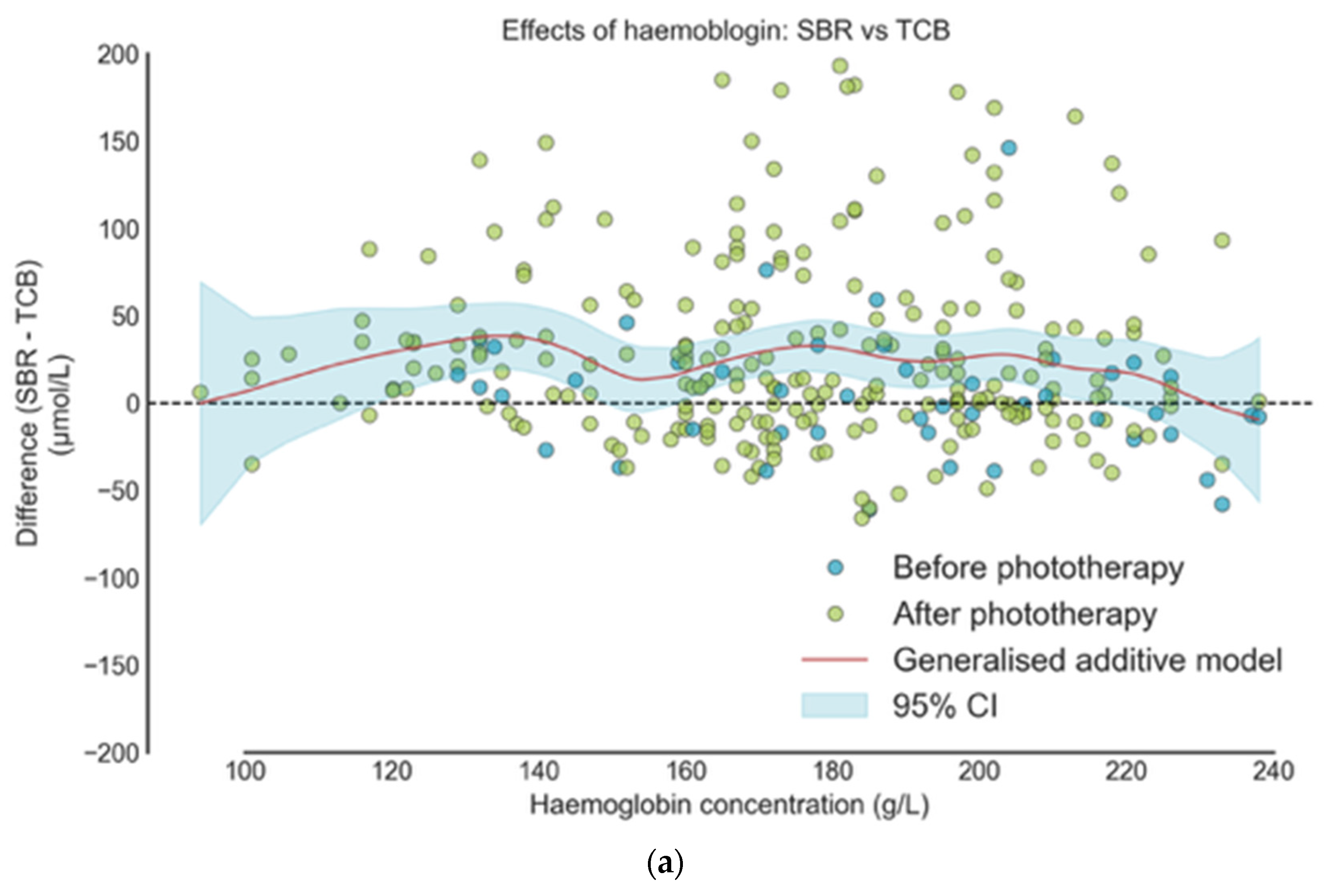
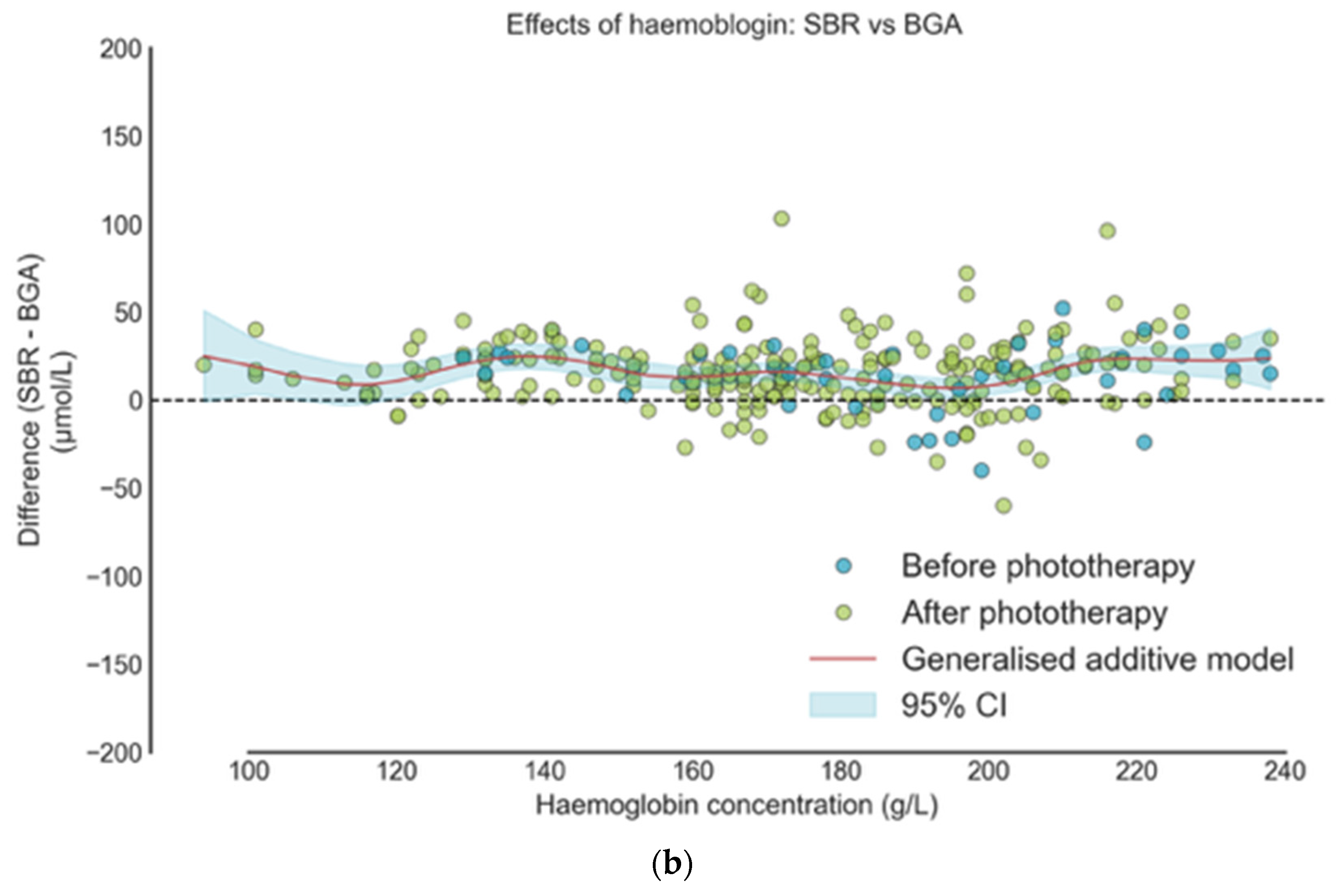
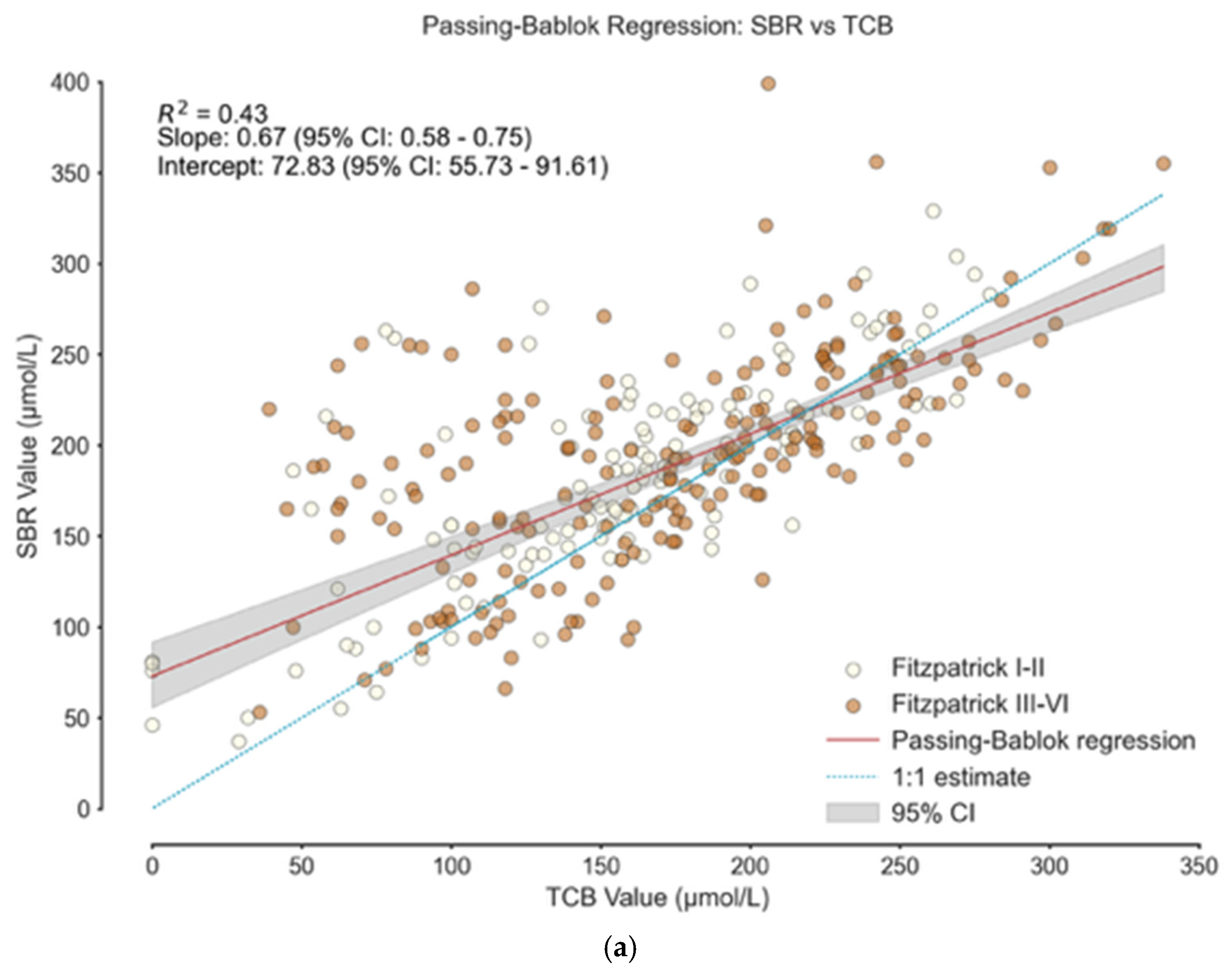
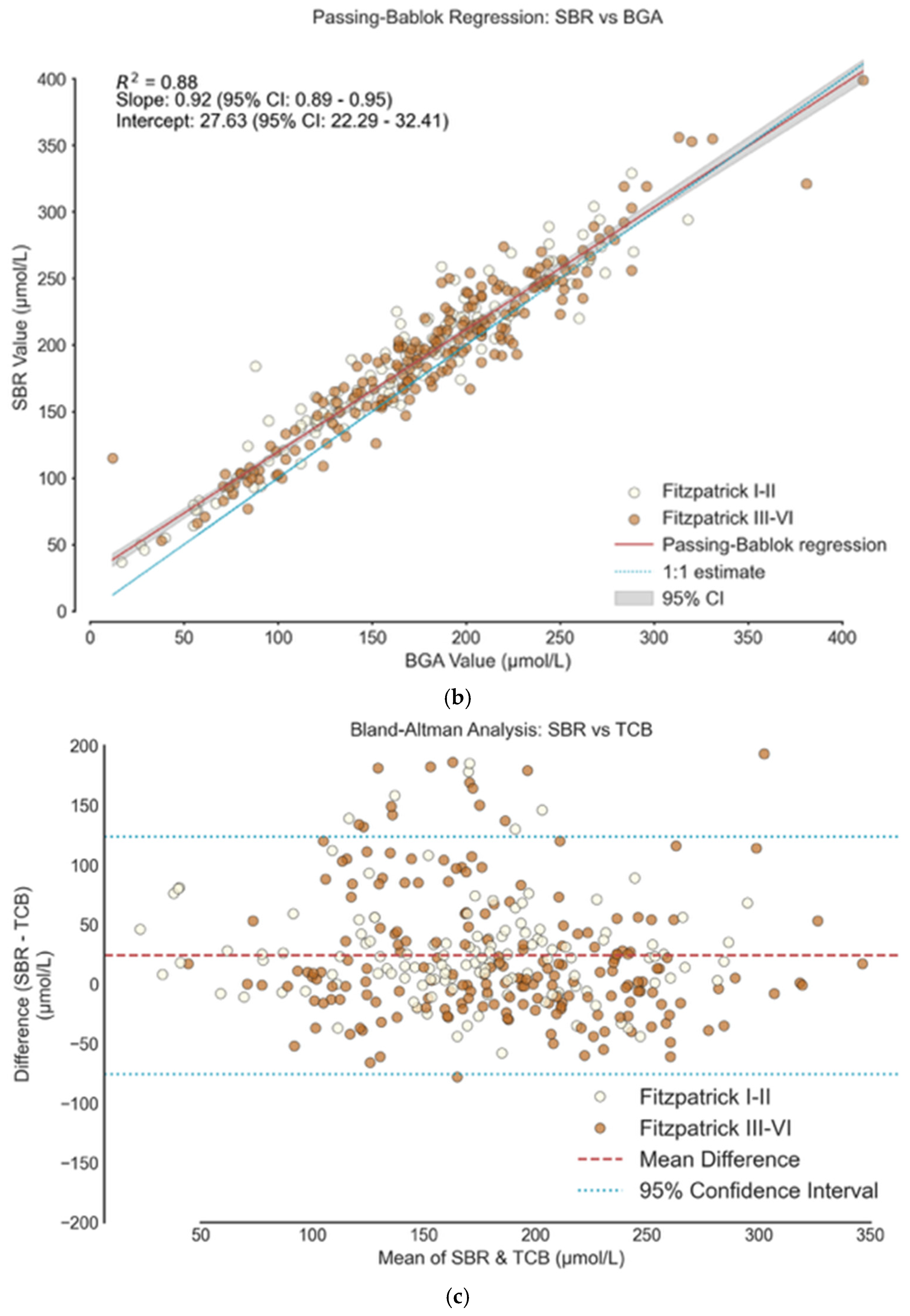
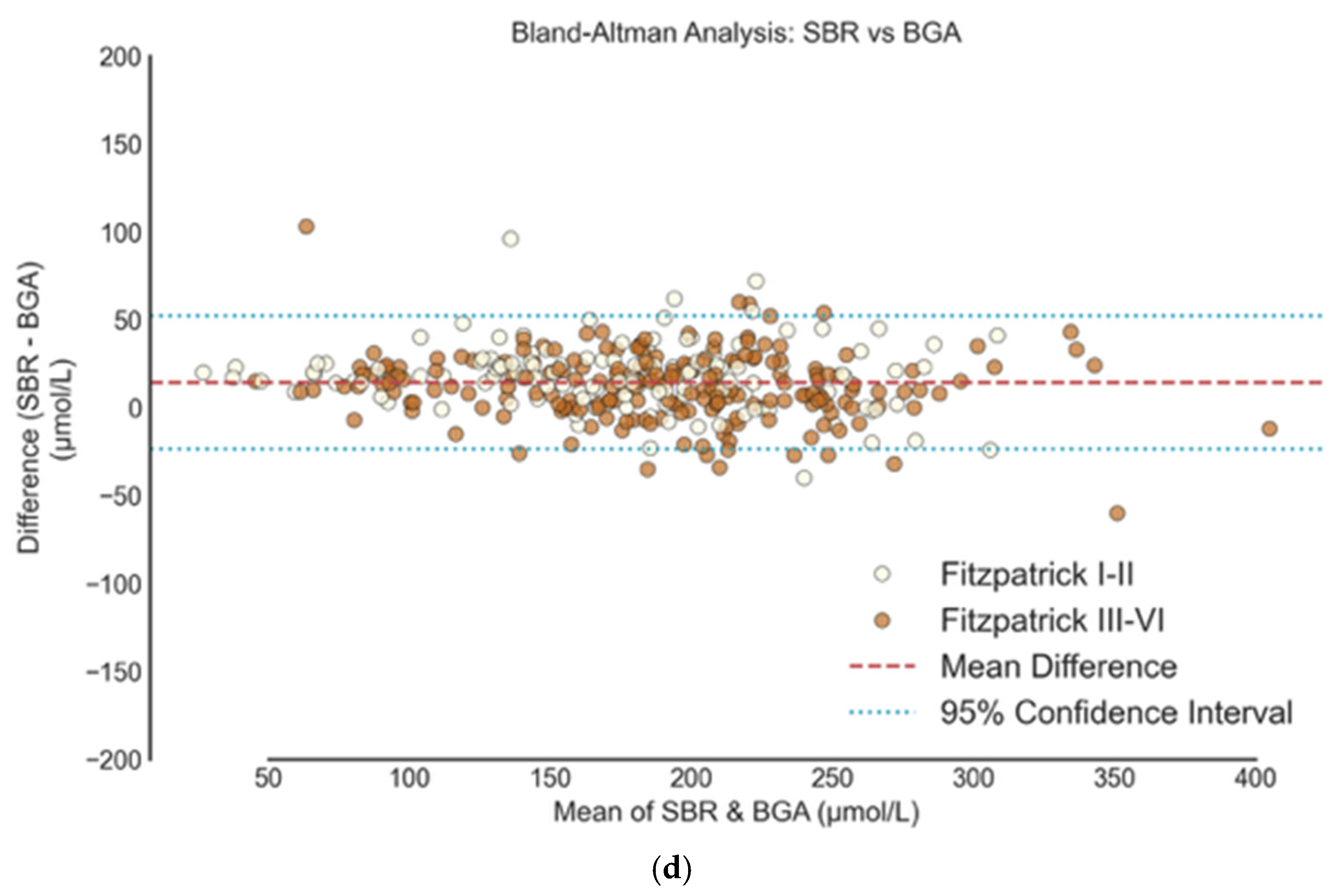
- Blood gas analyser bilirubin showed stronger agreement with central laboratory serum bilirubin (R2 = 0.88) than transcutaneous bilirubinometry (R2 = 0.43), with blood gas analyser maintaining accuracy regardless of pre- vs. post-phototherapy or haemoglobin levels.
- Transcutaneous bilirubinometry accuracy significantly reduced post-phototherapy and showed reduced predictive value in darker-skinned neonates (Fitzpatrick III–VI), while the blood gas analyser demonstrated superior diagnostic performance with a diagnostic odds ratio of 47.5.
- Blood gas analysers represent a more reliable point-of-care alternative to serum bilirubin than transcutaneous bilirubinometry for neonatal hyperbilirubinaemia screening and hyperbilirubinaemia tracking, particularly valuable in time-critical or resource-limited clinical settings, where rapid, accurate results are essential.
- While transcutaneous bilirubinometry remains useful as a non-invasive screening tool, positive findings require confirmatory serum bilirubin testing, especially in post-phototherapy neonates and those with darker skin tones, to prevent misclassification and overtreatment.
Abstract
1. Introduction
2. Materials and Methods
2.1. Patients
2.2. Bilirubin Measurement Principles
2.3. Statistical Analysis
3. Results
3.1. Demographics
3.2. Association Between Bilirubin Measurements
3.3. Predictive Performance of BGA and TcB
3.4. Effect of Haemoglobin on BGA Accuracy
3.5. Effect of Skin Colour on TcB Accuracy
3.6. Comparison of SBR and BGA Measurements for Sequential Tracking Performance
4. Discussion
5. Conclusions
Supplementary Materials
Author Contributions
Funding
Institutional Review Board Statement
Informed Consent Statement
Data Availability Statement
Acknowledgments
Conflicts of Interest
Abbreviations
| APGAR | Appearance, Pulse, Grimace, Activity, Respiration score |
| BGA | Blood Gas Analyser |
| FDR | False Discovery Rate |
| HbF | Foetal Haemoglobin |
| LoA | Limit of Agreement |
| PPV | Positive Predictive Value |
| SBR | Serum Bilirubin |
| TcB | Transcutaneous Bilirubinometry |
References
- Rennie, J.; Burman-Roy, S.; Murphy, M.S. Neonatal Jaundice: Summary of NICE Guidance. BMJ 2010, 340, c2409. [Google Scholar] [CrossRef] [PubMed]
- Ansong-Assoku, B.; Shah, S.; Adnan, M.; Ankola, P. Neonatal Jaundice; StatPearls: Orlando, FL, USA, 2024. [Google Scholar]
- Cohen, R.S.; Wong, R.J.; Stevenson, D.K. Understanding Neonatal Jaundice: A Perspective on Causation. Pediatr. Neonatol. 2010, 51, 143–148. [Google Scholar] [CrossRef] [PubMed]
- Clinical Guidelines for Jaundice Management. Available online: https://www.thewomens.org.au/health-professionals/clinical-resources/clinical-guidelines-gps (accessed on 6 July 2025).
- Mitra, S.; Rennie, J. Neonatal Jaundice: Aetiology, Diagnosis and Treatment. Br. J. Hosp. Med. 2017, 78, 699–704. [Google Scholar] [CrossRef] [PubMed]
- Kazmierczak, S.C.; Robertson, A.F.; Catrou, P.G.; Briley, K.P.; Kreamer, B.L.; Gourley, G.R. Direct Spectrophotometric Method for Measurement of Bilirubin in Newborns: Comparison with HPLC and an Automated Diazo Method. Clin. Chem. 2002, 48, 1096–1097. [Google Scholar] [CrossRef]
- Okwundu, C.I.; Bhutani, V.K.; Uthman, O.A.; Smith, J.; Olowoyeye, A.; Fiander, M.; Wiysonge, C.S. Transcutaneous bilirubinometry for detecting jaundice in term or late preterm neonates. Cochrane Database Syst. Rev. 2024, 5, CD011060. [Google Scholar] [CrossRef]
- Peake, M.; Mazzachi, B.; Fudge, A.; Bais, R. Bilirubin Measured on a Blood Gas Analyser: A Suitable Alternative for near-Patient Assessment of Neonatal Jaundice? Ann. Clin. Biochem. 2001, 38, 533–540. [Google Scholar] [CrossRef]
- Mustakim, M.; Rashid, N.I.; Roslan, N.; Mohammad, N.A.; Yunos, N.M.; Noor, A. Comparison between the Transcutaneous and Total Serum Bilirubin Measurement in Malay Neonates with Neonatal Jaundice. Malays. J. Med. Sci. 2022, 29, 64–76. [Google Scholar] [CrossRef]
- Mukerji, S.; Popat, H.; Chung, J.Z. Accuracy of Bilirubin on the Siemens RAPIDPoint 500 Blood Gas Analyser: A Data Mining Study. J. Paediatr. Child. Health 2022, 58, 1013–1015. [Google Scholar] [CrossRef]
- Ng, Y.; Maul, T.; Viswanathan, S.; Chua, C. The Accuracy of Transcutaneous Bilirubin as a Screening Test in Preterm Infants. Cureus 2023, 15, e42793. [Google Scholar] [CrossRef]
- Norman, M.; Aytug, H.; Celebi, H.B. Evaluation of a New Transcutaneous Bilirubinometer in Newborn Infants. Sci. Rep. 2022, 12, 5835. [Google Scholar] [CrossRef]
- Wang, Q.; Zhang, T.; Lin, Y.; Jiang, L.; Zhou, W.; Zong, X. Accuracy and Reliability of Whole Blood Bilirubin Measurements Using a Roche Blood Gas Analyzer for Neonatal Hyperbilirubinemia Screening and Risk Stratification. Front. Pediatr. 2022, 10, 910566. [Google Scholar] [CrossRef] [PubMed]
- Wang, L.; Albert, A.Y.K.; Jung, B.; Hadad, K.; Lyon, M.E.; Basso, M. Limitations and Opportunities of Whole Blood Bilirubin Measurements by GEM Premier 4000®. BMC Pediatr. 2017, 17, 92. [Google Scholar] [CrossRef]
- Okwundu, C.I.; Olowoyeye, A.; Uthman, O.A.; Smith, J.; Wiysonge, C.S.; Bhutani, V.K.; Fiander, M.; Gautham, K.S. Transcutaneous Bilirubinometry versus Total Serum Bilirubin Measurement for Newborns. Cochrane Database Syst. Rev. 2023, 5, CD012660. [Google Scholar] [CrossRef]
- Hynes, S.; Moore, Z.; Patton, D.; O’Connor, T.; Nugent, L. Accuracy of Transcutaneous Bilirubin Versus Serum Bilirubin Measurement in Preterm Infants Receiving Phototherapy: A Systematic Review. Adv. Neonatal Care 2020, 20, E118–E126. [Google Scholar] [CrossRef]
- Dam-Vervloet, A.J.; Morsink, C.F.; Krommendijk, M.E.; Nijholt, I.M.; van Straaten, H.L.M.; Poot, L.; Bosschaart, N. Skin color influences transcutaneous bilirubin measurements: A systematic in vitro evaluation. Pediatr. Res. 2025, 97, 1706–1710. [Google Scholar] [CrossRef] [PubMed] [PubMed Central]
- Harris, P.A.; Taylor, R.; Minor, B.L.; Elliott, V.; Fernandez, M.; O’Neal, L.; McLeod, L.; Delacqua, G.; Delacqua, F.; Kirby, J.; et al. The REDCap Consortium: Building an International Community of Software Platform Partners. J. Biomed. Inform. 2019, 95, 103208. [Google Scholar] [CrossRef]
- Higgins, T.; Beutler, E.; Doumas, B.T. Hemoglobin, Iron, and Bilirubin. In Textbook of Clinical Chemistry and Molecular Diagnostics, 4th ed.; Elsevier: St. Louis, MO, USA, 2006; pp. 1186–1191. [Google Scholar]
- García-Payá, M.E.; Fernández-González, M.; Morote, N.V.; Cobos, Á.B.; Díaz, M.C.T.; Hernández, J.F.S. Performance of the Radiometer ABL-90 FLEX Blood Gas Analyzer Compared with Similar Analyzers. Lab. Med. 2013, 44, e52–e61. [Google Scholar] [CrossRef]
- Costa-Posada, U.; Concheiro-Guisán, A.; Táboas-Ledo, M.F.; González-Colmenero, E.; González-Durán, M.L.; Suarez-Albo, M.; Duran Fernández-Feijoo, C.; Pumarada-Prieto, M.; Martínez-Reglero, C.; Fernández-Lorenzo, J.R. Accuracy of Transcutaneous Bilirubin on Covered Skin in Preterm and Term Newborns Receiving Phototherapy Using a JM-105 Bilirubinometer. J. Perinatol. 2020, 40, 226–231. [Google Scholar] [CrossRef]
- Zidan, M.; Thomas, R.L.; Slovis, T.L. What You Need to Know about Statistics, Part II: Reliability of Diagnostic and Screening Tests. Pediatr. Radiol. 2015, 45, 317–328. [Google Scholar] [CrossRef] [PubMed]
- Giavarina, D. Understanding Bland Altman Analysis. Biochem. Medica 2015, 25, 141–151. [Google Scholar] [CrossRef]
- Schober, P.; Boer, C.; Schwarte, L.A. Correlation Coefficients: Appropriate Use and Interpretation. Anesth. Analg. 2018, 126, 1763–1768. [Google Scholar] [CrossRef]
- Jaundice in Neonates. 2017. Available online: https://www.safercare.vic.gov.au/best-practice-improvement/clinical-guidance/neonatal/jaundice-in-neonates (accessed on 6 July 2025).
- Ndabakuranye, J.P.; Nadarajah, A.; Niyitanga, T.; Prawer, S.; Ahnood, A. Photodegradation Kinetics for Bilirubin Sensing: New Solutions for Old Problems. Biosens. Bioelectron. X 2022, 12, 100272. [Google Scholar] [CrossRef]
- Ho, S.-R.; Lin, Y.-C.; Chen, C.-N. The Impact of Phototherapy on the Accuracy of Transcutaneous Bilirubin Measurements in Neonates: Optimal Measurement Site and Timing. Diagnostics 2021, 11, 1729. [Google Scholar] [CrossRef] [PubMed]
- El-Beshbishi, S.N.; Shattuck, K.E.; Mohammad, A.A.; Petersen, J.R. Hyperbilirubinemia and Transcutaneous Bilirubinometry. Clin. Chem. 2009, 55, 1280–1287. [Google Scholar] [CrossRef] [PubMed]
- Shull, B.C.; Lees, H.; Li, P.K. Mechanism of Interference by Hemoglobin in the Determination of Total Bilirubin. I. Method of Malloy-Evelyn. Clin. Chem. 1980, 26, 22–25. [Google Scholar] [CrossRef] [PubMed]
- Dhungana, N.; Morris, C.; Krasowski, M.D. Operational Impact of Using a Vanadate Oxidase Method for Direct Bilirubin Measurements at an Academic Medical Center Clinical Laboratory. Pract. Lab. Med. 2017, 8, 77–85. [Google Scholar] [CrossRef]



| Demographic | Values |
|---|---|
| Gestational age, weeks (median, IQR) | 37.1 [35.0, 39.0] |
| Postnatal age, days (mean, SD) | 3.5 (2.9) |
| Male sex (n, %) | 135 (61.1) |
| Birth weight, gram (mean, SD) | 2803.8 (828.9) |
| Fitzpatrick ≥ III (n, %) | 139 (62.9) |
| Prematurity (n, %) | 102 (46.2) |
| Mode of delivery | |
| Vaginal (n, %) | 114 (51.6%) |
| Caesarean (n, %) | 107 (48.4) |
| Jaundice treatment | |
| None (n, %) | 122 (55.2) |
| Phototherapy (n, %) | 99 (44.8) |
| APGAR at 5 min < 7 (n, %) | 8 (3.6) |
| Respiratory distress (n, %) | 73 (33.0) |
| Hypoglycaemia (n, %) | 60 (27.2) |
| Prophylactic antibiotics (n, %) | 99 (44.8) |
| Haemoglobin (n = 186) | 178.5 [151.0, 199.0] |
| BGA | TcB | |
|---|---|---|
| True Positives (n) | 22 | 22 |
| False Positives (n) | 5 | 12 |
| True Negatives (n) | 281 | 274 |
| False Negatives (n) | 26 | 26 |
| Sensitivity (%) | 45.8% | 45.8% |
| Specificity (%) | 98.3% | 95.8% |
| Accuracy (%) | 90.7% | 88.6% |
| Positive Predictive Value (%) | 81.5% | 64.7% |
| Negative Predictive Value (%) | 91.5% | 91.3% |
| False Discovery Rate (%) | 18.5% | 35.3% |
| Diagnostic odds ratio [95% CI] | 47.6 [16.6, 135.1] | 19.3 [8.6, 43.4] |
Disclaimer/Publisher’s Note: The statements, opinions and data contained in all publications are solely those of the individual author(s) and contributor(s) and not of MDPI and/or the editor(s). MDPI and/or the editor(s) disclaim responsibility for any injury to people or property resulting from any ideas, methods, instructions or products referred to in the content. |
© 2026 by the authors. Licensee MDPI, Basel, Switzerland. This article is an open access article distributed under the terms and conditions of the Creative Commons Attribution (CC BY) license.
Share and Cite
Xu, A.; Francis, B.; Choy, K.W.; Dargaville, G.F.; Surkitt, A.; Tran, D.; Subhi, R.; Fan, W.Q. Point-of-Care Bilirubin Testing in Neonates: Comparative Performance of Blood Gas Analysis and Transcutaneous Bilirubinometry. Healthcare 2026, 14, 370. https://doi.org/10.3390/healthcare14030370
Xu A, Francis B, Choy KW, Dargaville GF, Surkitt A, Tran D, Subhi R, Fan WQ. Point-of-Care Bilirubin Testing in Neonates: Comparative Performance of Blood Gas Analysis and Transcutaneous Bilirubinometry. Healthcare. 2026; 14(3):370. https://doi.org/10.3390/healthcare14030370
Chicago/Turabian StyleXu, Andrew, Bincy Francis, Kay Weng Choy, George Francis Dargaville, Amy Surkitt, David Tran, Rami Subhi, and Wei Qi Fan. 2026. "Point-of-Care Bilirubin Testing in Neonates: Comparative Performance of Blood Gas Analysis and Transcutaneous Bilirubinometry" Healthcare 14, no. 3: 370. https://doi.org/10.3390/healthcare14030370
APA StyleXu, A., Francis, B., Choy, K. W., Dargaville, G. F., Surkitt, A., Tran, D., Subhi, R., & Fan, W. Q. (2026). Point-of-Care Bilirubin Testing in Neonates: Comparative Performance of Blood Gas Analysis and Transcutaneous Bilirubinometry. Healthcare, 14(3), 370. https://doi.org/10.3390/healthcare14030370