3.1. Bypassing Trabecular Meshwork by Implantable Devices
The trabecular meshwork is considered one of the primary sources of resistance to aqueous humor outflow. The trabecular outflow accounts for 70% to 90% of total aqueous outflow [
18]. In glaucoma, the trabecular meshwork becomes blocked due to factors such as increased resistance and cell necrosis. The goal of trabecular bypass is to improve IOP control by creating a new drainage pathway [
19]. Current MIGS trabecular micro-bypass devices include the iStent and Hydrus.
The iStent (Glaukos, Laguna Hills, CA, USA) was the first-generation single nonferromagnetic titanium stent, featuring a 40-degree angled inlet connected to a heparin-coated intracanalicular half-cylinder to minimize fibrosis and enhance aqueous outflow [
20]. This may be used as a standalone procedure or combined with cataract surgery with phacoemulsification in those with mild–moderate POAG. If the iStent is implanted as a standalone procedure, a 1.5–2 mm clear corneal incision is made temporally. If the iStent is implanted during phacoemulsification, then the same corneal incision is used. The iStent penetrates the trabecular meshwork and resides in Schlemm’s canal. The most common adverse effects following iStent implantation include an IOP spike, stent blockage or obstruction, stent malposition, hyphema (blood in the anterior chamber), and blood reflux [
21].
Table 1 provides the details of iStent randomized controlled trials.
The second-generation stent, iStent inject (Glaukos, Laguna Hills, CA, USA), featured two button-shaped titanium stents that reside in Schlemm’s canal, a thorax that resides in the trabecular meshwork, and a rear flange that resides in the anterior chamber to enhance IOP reduction [
22]. This device may also be used as a standalone procedure or in combination with phacoemulsification in patients with mild-to-moderate POAG. The iStent inject is implanted in the eye similarly to the first-generation stent. A key difference between the first-generation iStent and the second-generation iStent inject is that two stents can be implanted with the same inserter in the iStent inject. Transient IOP elevation and hyphema have been reported as postoperative complications [
23]. Fea et al. [
24] demonstrated in a randomized controlled trial the cost-effectiveness of the iStent inject compared to phacoemulsification alone. They further demonstrated a moderate quality of life gain in those who received the iStent inject and phacoemulsification [
24].
Table 2 provides the details of iStent inject randomized controlled trials.
Table 1.
Characteristics and methodology of iStent randomized controlled trials.
Table 1.
Characteristics and methodology of iStent randomized controlled trials.
| Study | Number of | Age of | Length of | Baseline IOP | IOP-Lowering Effect | Secondary | Efficacy/ |
|---|
| (Name) | Participants | Participants (Years) | Study (Months) | (mmHg) | (mmHg)/Outcome | Outcome | Rate of Success |
|---|
| Ahmed, 2020 [25] | 75 | 66.9 ± 10.0 | 12 | 19.0 ± 3.9 | 17.3 ± 3.3 | 46.6% (medication | 30.1% (IOP ≤ 18 mmHg |
| (COMPARE) | (Hydrus) | (Hydrus) | | (Hydrus) | (Hydrus) | reduction; Hydrus) | without treatment; Hydrus) |
| | 77 | 66.5 ± 9.5 | | 19.1 ± 3.6 | 19.2 ± 2.4 | 24% (medication | 9.3% (IOP ≤ 18 mmHg |
| | (iStent) | (iStent) | | (iStent) | (iStent) | (reduction; iStent) | without treatment; iStent) |
| Ahmed, 2024 [26] | 69 ± 7.8 (iStent | 178 (iStent | 60 | not reported | not reported | 2099 ± 430 | not reported |
| | inject treatment) | inject treatment) | | | | (ECL cells/mm2) | |
| | 69.3 ± 7.0 | 49 | | not reported | not reported | 2103 ± 419 | not reported |
| | (iStent inject control) | (iStent inject control) | | | | (ECL cells/mm2) | |
| | 71.1 ± 7.9 | 369 | | 24.4 ± 2.8 | not reported | 1967 ± 522 | not reported |
| | (Hydrus treatment) | (Hydrus treatment) | | (Hydrus treatment) | | (ECL cells/mm2) | |
| | 71.2 ± 7.6 | 187 | | 24.5 ± 3.0 | not reported | 2117 ± 442 | not reported |
| | (Hydrus control) | (Hydrus control) | | (Hydrus control) | | (ECL cells/mm2) | |
| | 69.4 ± 7.9 | 215 | | 24.5 ± 2.9 | not reported | 1931 ± 517 | not reported |
| | (CyPass treatment) | (CyPass treatment) | | (CyPass treatment) | | (ECL cells/mm2) | |
| | 70.8 ± 7.5 | 67 | | 24.8 ± 3.1 | not reported | 2189 ± 375 | not reported |
| | (CyPass control) | (CyPass control) | | (CyPass control) | | (ECL cells/mm2) | |
| Katz, 2015 [27] | 38 | 68.1 ± 9.1 | 18 | 19.8 ± 1.3 | 15.9 ± 0.9) | not reported | 89.2% (IOP ≤ 18 mmHg |
| | (one stent) | (one stent) | | (one stent) | (one stent) | | unmedicated; one stent) |
| | 41 | 67.8 ± 9.3 | | 20.1 ± 1.6 | 14.1 ± 1.0 | not reported | 90.2% (IOP ≤ 18 mmHg |
| | (two stents) | (two stents) | | (two stents) | (two stents) | | unmedicated; two stents) |
| | 40 | 60.9 ± 8.1 | | 20.4 ± 1.8 | 12.2 ± 1.1 | not reported | 92.1% (IOP ≤ 18 mmHg |
| | (three stents) | (three stents) | | (three stents) | (three stents) | | unmedicated; three stents) |
| Samuelson, 2011 [28] | 117 | 73 | 12 | 18.4 ± 3.2 | 1.5 ± 3.0 | not reported | 72% (≥20% IOP reduction; |
| | (iStent + CE) | (iStent + CE) | | (iStent + CE) | (iStent + CE) | | iStent + CE) |
| | 123 | 73 | | 18.4 ± 3.2 | 1.0 ± 3.3 | not reported | 50% (≥20% IOP reduction; |
| | (CE) | (CE) | | (CE) | (CE) | | CE) |
| Craven, 2012 [29] | 116 | not specified | 24 | 25.4 ± 3.6 | 17.0 ± 2.8 | not reported | 53% (≥20% IOP reduction; |
| | (iStent + CE) | | | (iStent + CE) | (iStent + CE) | | iStent + CE) |
| | 123 | not specified | | 25.2 ± 3.6 | 17.0 ± 3.1 | not reported | 44% (≥20% IOP reduction; |
| | (CE) | | | (CE) | (CE) | | CE) |
Table 2.
Characteristics and methodology of iStent inject randomized controlled trials.
Table 2.
Characteristics and methodology of iStent inject randomized controlled trials.
| Study | Number of | Age of | Length of | Baseline IOP | IOP-Lowering Effect | Secondary | Efficacy/Rate of Success |
|---|
| (Name) | Participants | Participants (Years) | Study (Months) | (mmHg) | (mmHg)/Outcome | Outcome | >20% IOP Reduction |
|---|
| Fan, 2024 [30] | 56 | 73.9 ± 7.4 | 24 | 17.7 mmHg ± 4.0 | 0.7 ± 0.9 glaucoma medications | Improvement in VF QofL in both groups | not reported |
| | (iStent inject + CE) | (iStent inject + CE) | | (iStent inject + CE) | (iStent inject + CE) | compared to baseline | |
| | 48 | 72.6 ± 7.7 | | 17.1 mmHg ± 3.1 | 1.5 ± 1.9 glaucoma medications | Improvement in VF QofL in both groups | not reported |
| | (CE) | (CE) | | (CE) | (CE) | compared to baseline | |
| Lima, 2023 [31] | 35 | 66.2 ± 9.3 | 12 | 22.1 ± 3.6 | ↓24.2% | not reported | not reported |
| | (ECP + CE) | (ECP + CE) | | (ECP + CE) | (ECP + CE) | | |
| | 36 | 68.7 ± 6.9 | | 22.0 ± 2.5 | ↓43.6% | not reported | not reported |
| | (ECP + CE + iStent inject) | (ECP + CE + iStent inject) | | (ECP + CE + iStent inject) | (ECP + CE + iStent inject) | | |
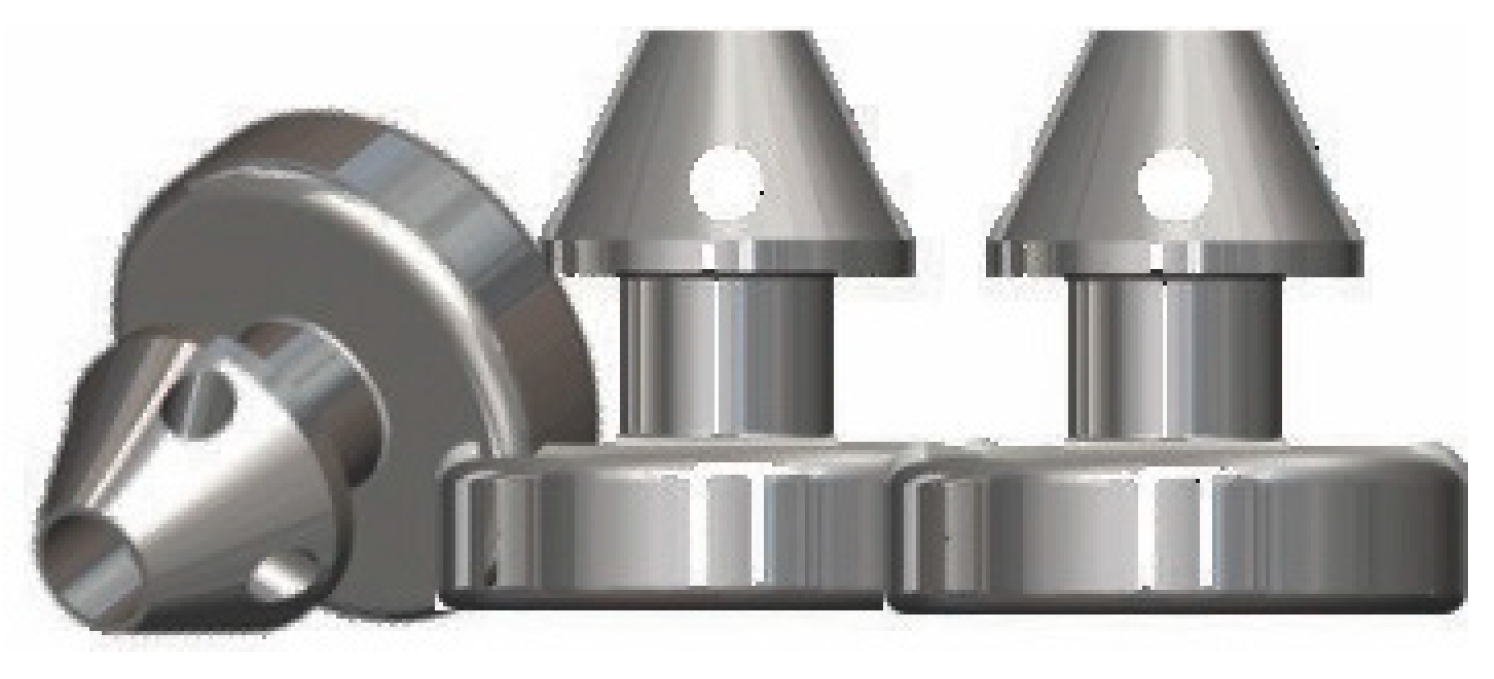
The third-generation stent, iStent inject W (Glaukos, Laguna Hills, CA, USA), features a wider flange at its base to optimize stent visualization and placement. This device (
Figure 2) features two preloaded stents that can be implanted through a single entry point. This may be a standalone procedure or combined with phacoemulsification in those with mild-to-moderate POAG. During this procedure, the surgeon implants the stent through a clear corneal incision, which is made in the temporal cornea (same location as cataract extraction) to place the stents in the nasal aspect of Schlemm’s canal. Transient IOP elevation and hyphema have been reported as postoperative complications [
23].
The VENICE study was a randomized controlled trial comparing the safety and efficacy of iStent inject W to STREAMLINE in mild-to-moderate primary open-angle glaucoma patients undergoing phacoemulsification. A total of 72 eyes were randomized, 35 underwent STREAMLINE canaloplasty, and 37 were implanted with the iStent inject W. Baseline IOP in the STREAMLINE group was 24.86 ± 3.05 mmHg compared to 25.16 ± 3.41 in the iStent W group, with a mean IOP at 6 months of 16.52 ± 3.63 in the STREAMLINE group compared to 16.08 ± 3.19. This difference in postoperative IOP between the two procedures was not statistically significant. At 6 months, more eyes were on no glaucoma medications in the STREAMLINE group (81.8%) compared to the iStent W group (78.4%). The authors also concluded that the adverse effects were mild and self-limiting [
32].
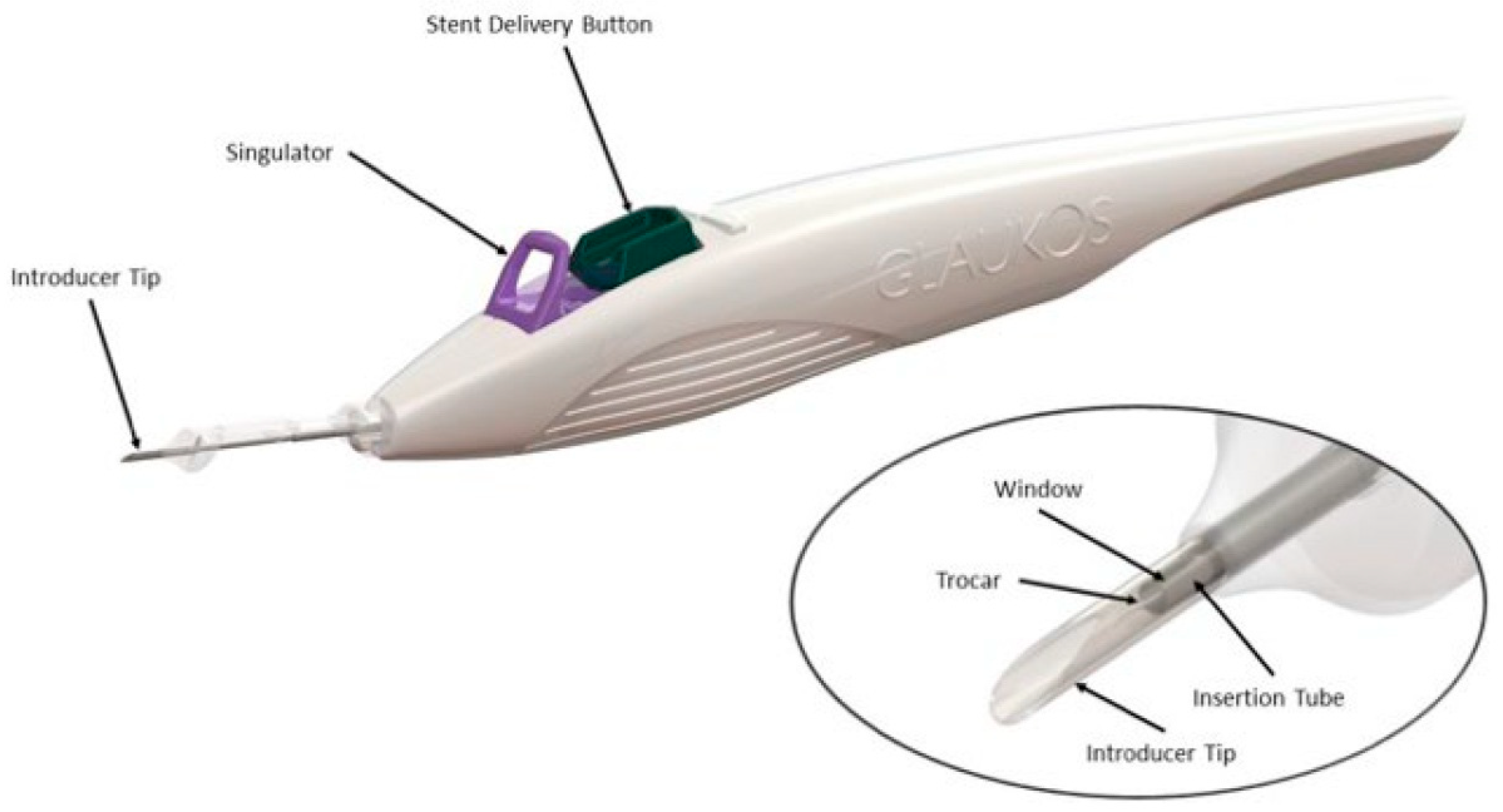
Comparatively, iStent Infinite (Glaukos, Laguna Hills, CA, USA) is intended to be a standalone procedure for those who previously failed other medical and surgical treatments. The name “infinite” was derived due to there being no limit to the number of times a stent can be deployed compared to other iStent models. This device (
Figure 3) consists of three microscale wide-flange stents on a single preloaded injector to be injected over three separate areas of the trabecular meshwork, creating a patent bypass through the trabecular meshwork into Schlemm’s canal to increase physiological outflow and reduce IOP. A clear corneal incision is made, and the stents are injected into the trabecular meshwork. As there are three stents, they should be placed approximately two–three clock hours apart. The most common postoperative complications include an IOP increase ≥ 10 mmHg, loss of best-corrected visual acuity ≥ 2 lines, ocular surface disease, perioperative inflammation, and visual field loss ≥ 2.5 decibels [
33]. There are no published randomized controlled trials for this device.
The Hydrus Microstent (Ivantis Inc, Irvine, CA, USA) consists of nonferromagnetic nickel–titanium alloy and incorporates a curved, flexible open design to dilate approximately 8 mm of Schlemm’s canal to improve aqueous outflow and bypass the trabecular meshwork [
34]. An injector that is preloaded with the device is utilized to insert the device into the Schlemm’s canal. Although the injector aids in appropriate placement of the device, it has to be remembered that incorrect placement, mispositioning, and unexpected postoperative shifts may still occur. The Hydrus Microstent may be implanted as a standalone procedure or in combination with phacoemulsification in patients with mild-to-moderate primary open-angle glaucoma. This device is inserted via a temporal clear corneal incision followed by implantation of the stent into the nasal Schlemm’s canal spanning approximately 90 degrees. Postoperative complications may include device obstruction, obstruction of the microstent inlet by peripheral anterior synechiae (adhesions between the iris and the trabecular meshwork), transient hyphema, and an IOP spike [
35,
36].
Table 3 summarizes the Hydrus Microstent studies.
Both the iStent and Hydrus have shown successful lowering of IOP when performed with phacoemulsification when compared to a traditional standalone phacoemulsification procedure. The Compare Study [
25] was a prospective, randomized, single-masked trial that compared the efficacy of the iStent to Hydrus. A total of 152 eyes of 152 patients aged 45 to 84 with open-angle glaucoma were enrolled. Eyes were randomized to standalone MIGS consisting of either one Hydrus Microstent or two iStent devices. Patients were evaluated at 1 day, 1 week, and 3, 6, and 12 months postoperatively. The authors found that by 1 year, the Hydrus stent implantation group required less medication usage compared to the iStent group (46.6% vs. 24.0%). At 12 months, the Hydrus group eliminated 1.6 medications compared to 1.0 in the iStent group. The mean IOP in the Hydrus group was 17.3 ± 3.7 mmHg with 39.7% of patients achieving ≥20% IOP reduction. Comparatively, the mean IOP in the iStent group was 19.2 ± 2.4 mmHg with 13.3% of patients achieving ≥20% IOP reduction [
25].
3.2. Bypassing the Trabecular Meshwork by Tissue Excision: Enhancing Aqueous Outflow Through Schlemm’s Canal
Schlemm’s canal: Schlemm’s canal is a key source of outflow resistance leading to increased IOP. A smaller fraction of aqueous humor drains through the non-trabecular outflow pathway. Here, the aqueous humor flows through the ciliary muscle into the suprachoroidal space [
37]. As the trabecular meshwork is considered the primary site of resistance to aqueous humor outflow, bypassing this structure and directing aqueous flow directly from the anterior chamber into Schlemm’s canal is an approach that can enhance aqueous outflow.
Kahook Dual Blade Goniotomy (New World Medical, Rancho Cucamonga, CA, USA) is a single-use instrument designed to stretch and remove a strip of trabecular meshwork. Through a temporal clear corneal incision, the instrument pierces the trabecular meshwork. Next, two parallel blades excise a strip of the trabecular meshwork, allowing for unobstructed flow of the aqueous humor into Schlemm’s canal and minimal collateral damage to the surrounding tissue. This contributes to faster recovery times and fewer complications [
38]. This strip is then removed from the eye by either forceps or the instrument itself. This procedure may be performed as a standalone procedure or with phacoemulsification in those with moderate-to-severe primary open-angle glaucoma. Common postoperative complications include transient hyphema and an IOP spike [
39].
Arimura et al. [
40] found in a randomized controlled trial using anterior segment optical coherence tomography that the Kahook Dual Blade Goniotomy group had a larger incisional cross-sectional area in the trabecular meshwork compared to the microhook group throughout the postoperative follow-up visits. Compared to Kahook Dual Blade Goniotomy, microhook ab interno trabeculectomy incises the trabecular meshwork using small hooks that are inserted through corneal side ports. It was theorized that this contributes to reduced trabecular meshwork repair. However, there was no statistically significant difference in postoperative IOP or the number of glaucoma medications between the two groups providing favorable data in favor of the microhook ab interno device [
40].
Ventura et al. [
40] compared Kahook Dual Blade Goniotomy with cataract extraction in a single-center longitudinal, randomized controlled trial. A total of 43 eyes with open-angle glaucoma or ocular hypertension were randomized, 22 to Kahook Dual Blade Goniotomy and cataract extraction and 21 to cataract extraction alone. Baseline IOP in the Kahook Dual Blade Goniotomy and cataract extraction group was 17.3 ± 3.5 mmHg compared to 17.3 ± 3.5 mmHg in the cataract extraction alone group. At 12 months, the mean IOP in the Kahook Dual Blade Goniotomy and cataract extraction group was 16.0 ± 2.2 mmHg compared to 15.0 ± 3.2 mmHg in the cataract extraction alone group. The authors also concluded that both groups had similar best-corrected visual acuity, endothelial cell counts, and standard automated perimetry results [
41].
Trabectome (Microsurgical Technology, Redmond, WA, USA) is a microelectrocautery device that applies high-frequency electrical energy. This electrical energy ablates and extracts a strip of trabecular meshwork along with the inner wall of Schlemm’s canal, allowing aqueous humor outflow directly into the canal [
15]. Although this procedure causes decreased damage to the tissues and decreased inflammation and postoperative scarring compared to other procedures, it should be noted that microcautery procedures using high-frequency ablation may lead to intraoperative blood reflux. Spontaneous blood reflux does not necessarily affect postoperative outcome, but it may increase intraoperative visualization, possibly prolong surgical duration, and increase surgical difficulty. Other adverse effects of Trabectome may include transient hyphema and elevated IOP on the first post-op day. Trabectome may be performed as a standalone procedure or in conjunction with phacoemulsification. It is most beneficial in those with moderate-to-severe primary open-angle glaucoma [
42]. Ting et al. [
43] compared Trabectome with cataract surgery (phaco-AIT) to trabeculectomy with mitomycin C and cataract extraction (phaco-trabeculectomy) in a prospective randomized controlled trial with a single surgeon and surgical center. A total of 19 eyes with open-angle glaucoma were randomized, 10 to phaco-AIT and 9 to phaco-trab. The baseline IOP was 20.0 ± 5.3 mmHg in the phaco-AIT group compared to 23.1 ± 6.4 mmHg in the phaco-trab group. After 12 months, the mean IOP was 17.5 ± 3.8 mmHg in the phaco-AIT group with a mean medication reduction of 0.44 ± 0.88. Comparatively, the mean IOP in the phaco-trab group was 16.0 ± 6.0 mmHg, with a mean medication reduction of 0.75 ± 0.89. Efficacy was defined as a reduction in IOP greater than 20%. A total of 40% of eyes with phaco-AIT achieved this compared to 87.5% in the phaco-trab group. The authors concluded that both groups achieved similar IOP that was lower at 6 and 12 months and a similar number of glaucoma medications required at 1 year [
43].
Gonioscopy-Assisted Transluminal Trabeculotomy (NeoMedix Co., Tustin, CA, USA) (GATT) is performed by an ab interno approach. This procedure involves a 360-degree trabeculectomy using either a microcatheter or a Prolene suture to aid in the circumferential unroofing of Schlemm’s canal [
44]. The GATT procedure is performed through a temporal clear corneal incision, followed by the insertion of the microcatheter within Schlemm’s canal under gonioscopic guidance, which is carefully threaded circumferentially around the canal. Once the microcatheter tip is visualized in the opposite side of the anterior chamber angle, the suture is tied to the microcatheter and subsequently drawn through the length of Schlemm’s canal. Next, the suture is gently pulled, essentially unroofing the trabecular meshwork and creating a trabeculotomy of up to 360 degrees. GATT may be performed as a standalone procedure or with phacoemulsification. This procedure is indicated for those with moderate-to-severe POAG. Transient hyphema is the most common postoperative complication [
45]. Yin et al. [
46] compared the efficacy and safety of ab interno canaloplasty (ABiC) with GATT in a randomized controlled trial. Thirty-eight eyes with POAG were randomized to ABiC and twenty-nine to GATT. Follow-ups were performed at 1, 3, 6, and 12 months postoperatively. The primary outcome measures were IOP and use of glaucoma medication at 12 months postoperatively. The second outcome measure was complete surgical success, defined as an IOP ≤ 21 mmHg without requiring glaucoma medications and not needing additional glaucoma surgery. At 12 months, the mean IOP was 19.0 ± 5.2 mmHg in the ABiC group and 16.0 ± 3.1 mmHg in the GATT group. In the ABiC group, 57.2% of patients were medication-free compared to 75% in the GATT group. Three eyes in the ABiC group needed additional glaucoma surgery compared to one eye in the GATT group. The authors concluded that GATT was advantageous over ABiC in terms of IOP reduction in primary open-angle glaucoma patients [
46].
3.3. Enhancing Aqueous Outflow Through Schlemm’s Canal
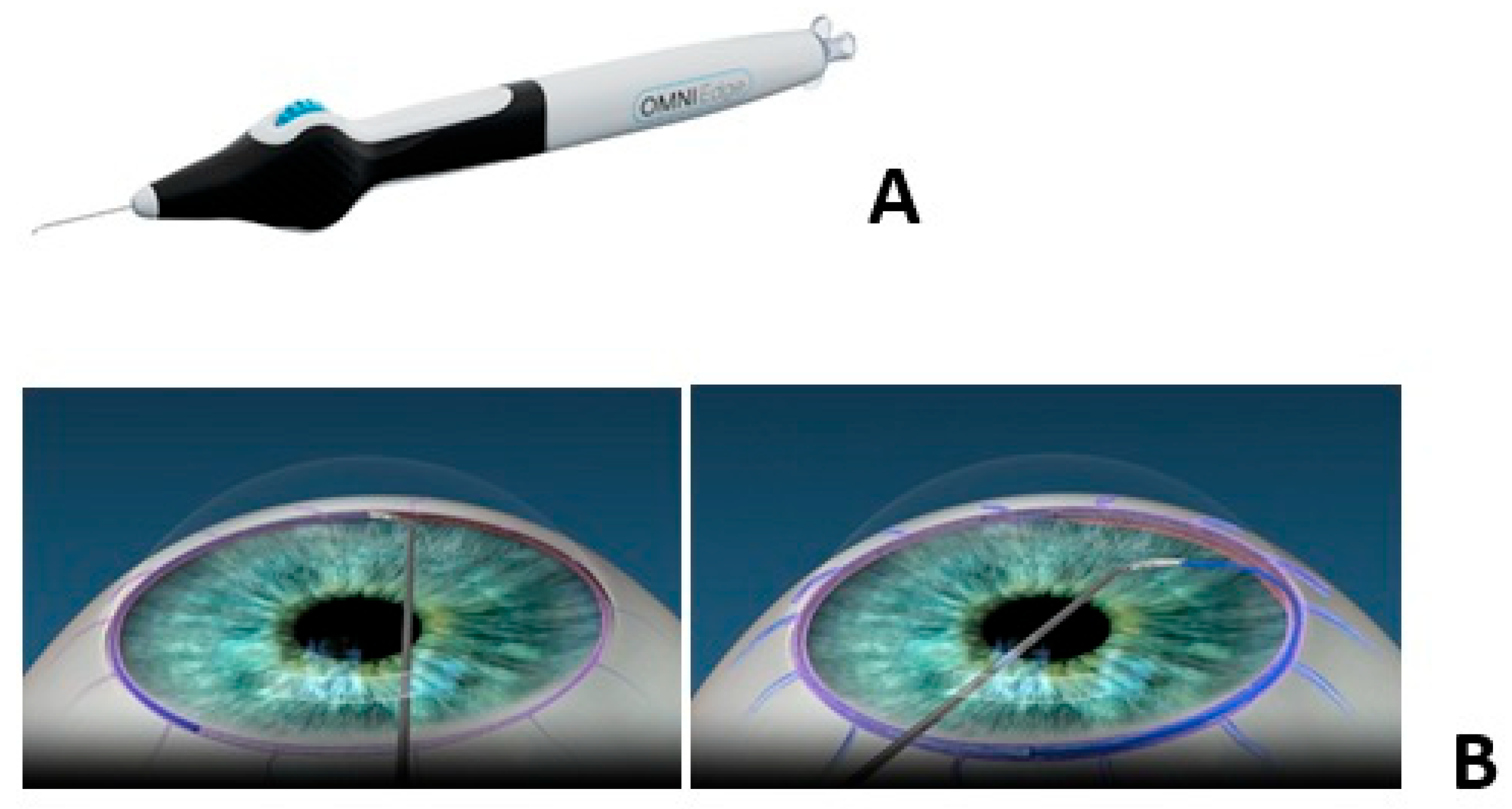
The OMNI device (Sight Sciences, Menlo Park, CA, USA) is a single-use device designed to enhance aqueous outflow that performs both canaloplasty and trabeculotomy. The OMNI device (
Figure 4) dilates Schlemm’s canal and its collector channels. Through a temporal clear corneal incision, the device is forwarded into the anterior chamber and the nasal Schlemm’s canal is accessed. A microcatheter is inserted nasally and advanced, which automatically that moves circumferentially due to the Schlemm’s canal’s anatomy. Upon retraction, a viscoelastic is dispensed at approximately 5.5 microliters per 20 mm advancement. This procedure is performed a second time without retracting the microcatheter that performs the trabeculotomy [
47]. OMNI may be performed as a standalone procedure or with phacoemulsification in those with mild-to-moderate primary open-angle glaucoma. Postoperative complications may include hyphema, iridodialysis, cyclodialysis, and partial goniosynechiae [
48]. No randomized controlled trials have been found for this device.
TRAB360 (Sight Sciences, Menlo Park, CA, USA) is a single-use device that allows a trabeculotomy to be performed through a temporal clear corneal incision. Next, the trabecular meshwork is incised with the tip of the device, and the microcatheter is advanced from the tip and threaded through 180 degrees of Schlemm’s canal to unroof the trabecular meshwork to achieve 180 degrees of trabeculotomy. Once deployed, the device is retracted, then rotated and reinserted. The procedure is repeated for the remaining 180 degrees of the angle to accomplish a complete 360-degree treatment. This device is recommended for those with mild-to-moderate primary open-angle glaucoma, either as a standalone procedure or in conjunction with phacoemulsification. There are no published randomized controlled trials for this device at this time.
The iTrack microcatheter system (Ellex iScience, Fremont, CA, USA) can be used to perform either ab externo or ab interno canaloplasty. The device uses an illuminated fiber-optic light 250 μm microcatheter to perform the procedure. The illumination allows visualization of Schlemm’s canal during the procedure whilst the catheter is advanced 180 degrees in each direction. The viscoelastic material is released from the tip of the catheter, which is retracted by the surgeon. The purpose of the viscoelastic material is to dilate Schlemm’s canal, which aids restoration of conventional outflow [
49]. This device and procedure can be performed during cataract surgery or as a standalone procedure and is recommended for mild-to-moderate glaucoma. Ye et al. [
50] compared penetrating canaloplasty to ab externo canaloplasty (CP) in a randomized controlled trial. A total of 52 patients with open-angle glaucoma were randomized: 26 to penetrating canaloplasty and 26 to CP. The baseline IOP in the penetrating canaloplasty group was 30.8 ± 10.7 mmHg compared to 28.6 ± 11.8 mmHg in the CP group. After 24 months, the mean IOP was 14.1 ± 3.3 mmHg in the penetrating canaloplasty group with a mean number of glaucoma medications of 0.2 ± 0.5 compared to 22.1 ± 13.6 mmHg in the CP group with a mean number of medications of 0.7 ± 1.2. Efficacy was defined as an IOP reduction ≥20%; 92% of the penetrating canaloplasty group achieved this compared to 77% of the CP group [
50]. The authors concluded that compared to ab externo canaloplasty, penetrating canaloplasty had a greater surgical success rate and IOP reduction.
Table 4 summarizes the characteristics and methodology of canaloplasty randomized controlled trials.
The STREAMLINE system (New World Medical, Rancho Cucamonga, CA, USA) enhances aqueous outflow by accessing Schlemm’s canal through a canaloplasty-based approach. This technique uses cannulation and viscodilation of the canal without performing a trabeculotomy. The device is a single-use stainless steel inner cutting cannula encased in a polymer outer sleeve, introduced through a clear corneal incision.
As the surgeon retracts the outer sleeve, the instrument creates a 150 µm goniotomy while simultaneously delivering roughly 7 µL of viscoelastic into Schlemm’s canal. This viscodilation expands both the canal and its collector channels, thereby improving aqueous humor egress and contributing to IOP reduction [
27]. STREAMLINE can be incorporated into phacoemulsification or be performed as a standalone procedure in those with mild-to-moderate primary open-angle glaucoma. No significant postoperative outcomes such as IOP spikes or hyphema have been observed [
51].
3.5. Other Devices That Show Potential Promise but Do Not Have Published RCTs
The iStent Supra (Glaukos, Laguna Hills, CA, USA) is a stent designed to enable drainage through the suprachoroidal space and to provide more stable retention that decreases fibrosis due to its biocompatible heparin-coated polyethersulfone ridged tube. It uses a curved design to follow the anatomical contour of the suprachoroidal space and is designed as an ab interno implant through a clear corneal incision [
56]. This device is most appropriate for those with mild-to-moderate POAG as a standalone procedure or combined with phacoemulsification. This device has a favorable safety profile; no reports of suprachoroidal hemorrhage, hypotony, or hyphema have been reported [
57].
The STARflo (iSTAR Medical, Wavre, Belgium) is a flexible, single continuous sheet with an anvil-like head that helps prevent extrusion. The STAR material is made up of microporous silicone and designed with hollow spheres to augment the eye’s natural uveoscleral outflow. The surgery involves an ab externo approach to increase suprachoroidal outflow. A scleral flap is made with the device head positioned in the anterior chamber with the body of the device positioned between the sclera and the choroid [
55]. Transient, mild IOP peaks may occur between the fourth and twelfth postoperative weeks. Other postoperative complications may include hyphema and fibrin formation in the anterior chamber, which resolve after the first month [
58].
The Biostent (IANTREK, White Plains, NY, USA) is a highly permeable, acellular scleral allograft to structurally reinforce the cyclodialysis cleft opening. Scleral allografts offer long-term durability and, due to their biomechanical properties, resemble the native sclera, lowering the risk of fibrosis and foreign body reaction [
59]. The Biostent is inserted in the eye using a cyclodialysis cannula for an ab interno supraciliary approach. A cyclodialysis cannula detaches the ciliary body from the scleral spur. This surgical technique along with a scleral allograft bio-scaffold enhances uveoscleral outflow, reducing the IOP [
59]. No adverse effects such as stent migration, hyphema, or corneal edema were noted at twelve months with this device [
60].
AlloFlo (IANTREK, White Plains, NY, USA) is a flexible, 5 mm conforming allogenic implant made from scleral allograft homologous acellular matrix using high-precision microtrephination. This design enables a bio-scaffolded supraciliary reservoir with durable structural supplementation, eliminating the need for exogenous hardware and providing a basis for aqueous conductivity and outflow [
39]. An ab interno cyclodialysis is created by the surgeon to enhance aqueous outflow, followed by positioning of AlloFlo inside the cleft. There have been minimal postoperative complications from this device such as iritis, intraocular inflammation, and implant migration due to the bio tissue ensuring no mismatch between the implant and the surrounding tissue [
61].
MINIject (iSTAR Medical, Wavre, Belgium) is a suprachoroidal implant made up of the same material as STARflo, providing minimal tissue reaction. It has 27 μm spherical pores allowing for enhanced aqueous outflow and two-thirds of the implant is empty space. The device is inserted via an ab interno approach through a 2 mm clear corneal incision and inserted in the nasal quadrant. The device is flexible, and thus it conforms to the shape of the eye and enabling suprachoroidal flow. A green ring is positioned 0.5 mm from the tip of the device allowing for accurate positioning in the anterior chamber. The device is released by retracting the supportive sheath [
62]. MINIject has demonstrated a favorable safety profile with minimal complications such as postoperative hyphema and cystoid macular edema that was self-limiting [
63].
3.6. Treatment of the Ciliary Body
Aqueous humor is synthesized by the ciliary processes, and various procedures that target the ciliary body can benefit IOP lowering through multiple mechanisms. These mechanisms include a decrease in the production of aqueous humor and an increase in uveoscleral outflow due to the prevention of the contraction of the ciliary muscle [
64].
Micropulse transscleral laser (IRIDEX Corporation, Mountain View, CA, USA) treatment aims to reduce the IOP by targeting the ciliary body with minimal coagulative necrosis. Short repetitive laser pulses are applied, followed by periods of rest, to the ciliary epithelium that is pigmented. The minimal coagulative necrosis induced by this process leads to decreased aqueous humor production and thus lowers the IOP [
65]. The laser also causes contraction of the scleral spur, altering the configuration of the trabecular meshwork, increasing outflow via this pathway [
66]. Micropulse may be recommended to those with POAG or refractory glaucoma. The probe is placed on the limbus of the eye, and a 180-degree sweeping motion is made for treatment. Adverse effects may include cystoid macular edema, transient anterior chamber inflammation, transient hypotony, hyphema, and, rarely, phthisis bulbi. Balendiran et al. [
67] compared the long-term effectiveness and safety outcomes of two treatment dosages of the micropulse transscleral laser therapy in a single-blinded randomized controlled trial. A total of 19 patients with POAG were randomized into two groups: 8 to a 100 s group and 11 to a 120 s group. The baseline IOP of the 100 s group was 20.0 ± 2.45 mmHg compared to 21.09 ± 3.94 mmHg in the 120 s group. After 12 months, the mean IOP reduction in the 100 s group was 7.3 ± 4.2 mmHg compared to 9.0 ± 4.8 mmHg in the 120 s group. The authors concluded that the 120 s group achieved greater IOP control compared to the 100 s group [
67].
Endoscopic cyclophotocoagulation (Endo Optiks, Little Silver, NJ, USA) is an ab interno procedure that involves direct visualization and treatment of ciliary processes. The procedure involves a clear corneal incision, and a probe is placed beneath the iris to directly visualize the ciliary process while the laser is applied. This procedure limits injury to the ciliary processes and their capillary bed whilst causing sparing damage, if any, to the ciliary muscle and stroma. With a curved probe, a single incision allows for approximately 270 degrees of treatment. This incision may be placed either temporally or superiorly near the limbus and is about 2.0 mm in width. If more treatment is desired, a second incision may be placed 180 degrees away from the initial wound for a complete 360-degree treatment and additional IOP lowering [
68]. A “popping” sound indicates over-treatment of the ciliary processes and should be avoided. Endoscopic photocoagulation can be performed as a standalone procedure or in combination with phacoemulsification. Postoperative complications of endoscopic photocoagulation may include pain, diplopia, hypotony, phthisis bulbi, and cystoid macular edema [
69]. Lima et al. [
31] found, in a randomized controlled trial comparing the safety and effectiveness of phacoemulsification and endoscopic photocoagulation with phacoemulsification and endoscopic photocoagulation and iStent inject in open-angle glaucoma patients, that both groups achieved substantial IOP reduction at 1 year. However, the group with iStent inject achieved a greater reduction in IOP and a lower proportion of those on glaucoma medications [
31].
Ultrasound cycloplasty (EyeTechCare, Rillieux-la-Pape, France) decreases the aqueous production by treating the distal portion of the ciliary body. This is accomplished by application of a high-intensity focused ultrasound that induces thermal necrosis confined to the distal portion of the ciliary body that contains the ciliary processes, the functional unit for aqueous humor production. This technique also increases uveoscleral aqueous humor outflow by increasing the intra-scleral outflow spaces [
70]. Ultrasound cycloplasty may be used in those with advanced or refractory glaucoma and may be used as a standalone procedure or with phacoemulsification. A coupling cone is placed centrally on the patient’s eye followed by the treatment probe being inserted into the cone. The transducers are activated by maintaining constant pressure on the foot pedal. Adverse effects may include anterior chamber inflammation, early and recurrent cataract development/progression, and hypotony with choroidal detachment [
71]. Torky et al. [
72] compared ultrasound cycloplasty and cataract extraction (UCP + CE) to cataract extraction (CE) in a randomized controlled trial. A total of 61 patients with open-angle glaucoma were randomized, 31 to UCP + CE and 30 to CE. The baseline IOP in the UCP + CE and CE group was 24 mmHg. The mean IOP-lowering effect in the UCP + CE group was 7 mmHg compared to 2 mmHg in the CE group. Efficacy in this study was defined as >20% IOP reduction; 68% of the UCP + CE group was able to achieve this compared to 17% of the CE group, demonstrating the efficacy of UCP + CE [
72].
3.7. Subconjunctival Space
Conjunctival bleb-forming procedures (minimally invasive bleb surgery): This procedure aims to reduce IOP by creating a new subconjunctival pathway. These devices create a small channel for aqueous humor drainage via the subconjunctival space by forming a blister-like fluid collection (bleb) on the surface of the eye, allowing for drainage [
73].
EX-PRESS Glaucoma Filtration Device (Alcon Laboratories, Fort Worth, TX, USA) is a subconjunctival filtering device that forms a bleb-like trabeculectomy. The amount of fluid exit or filtering is managed by varying the lumen diameter, which is either 50 μm or 200 μm. The smaller lumen delivers a more regulated, slower outflow compared to the larger lumen unit, potentially decreasing the risk of post-surgical hypotony. A limbal-based conjunctival incision is made to insert the EX-PRESS device under a partial-thickness scleral flap, into the anterior chamber, similarly to a trabeculectomy, to divert aqueous humor from the anterior chamber into the subconjunctival space. The scleral flap is closed with sutures that can be titrated postoperatively to modulate aqueous outflow and maintain an optimal IOP [
74,
75]. This device is most appropriate for patients with uncontrolled glaucoma, including those who have failed prior medical and surgical treatments. Arimura et al. [
76] found in a randomized controlled trial comparing the postoperative complications of EX-PRESS to trabeculectomy that EX-PRESS had lower postoperative complications such as anterior chamber inflammation, hypotony, and choroidal detachment. Similarly, Beltran-Agullo et al. [
77] compared visual recovery following EX-PRESS to that of trabeculectomy and found those who underwent EX-PRESS recovered vision faster and were less likely to lose ≥2 Snellen lines due to complications such as cataract growth.
Table 6 summarizes the characteristics and methodology of EX-PRESS randomized controlled trials.
The XEN 45 Gel Stent (Allergan–AbbVie, Irvine, CA, USA) is supplied preloaded in an injector with a 27-gauge, double-beveled needle for ab interno placement. This creates a controlled channel for aqueous humor to drain from the anterior chamber into the subconjunctival space [
83]. The implant is a 6 mm hydrophilic, crosslinked porcine gelatin stent engineered to provide a fixed outflow resistance of approximately 6–8 mmHg under normal aqueous production rates, eliminating the need for a valve mechanism [
84]. By forming a new subconjunctival filtration pathway that bypasses the trabecular meshwork, the stent facilitates steady aqueous egress and absorption by surrounding tissues [
82]. Although not FDA-labeled for this purpose, surgeons commonly pair the procedure with mitomycin C to reduce postoperative scarring. The XEN 45 is indicated for POAG and refractory glaucoma, particularly in patients who have failed prior surgery or whose condition remains uncontrolled on maximally tolerated medical therapy.
The bulbar conjunctiva is lifted in the superotemporal quadrant, and a preloaded injector is inserted through the conjunctiva and advanced between the tenon capsule and the conjunctiva. The needle is guided into the anterior chamber, parallel to the iris, before releasing the XEN 45 Gel Stent. A subtenon injection of mitomycin C is administered at the end of the exam to minimize bleb fibrosis. The XEN 45 Gel Stent can be placed in phakic or pseudophakic eyes as a standalone procedure. Postoperative complications may include transient IOP spikes, transient hyphema, choroidal effusion, hypotony, and bleb fibrosis [
85]. Sheybani et al. compared the efficacy of the XEN stent to trabeculectomy in a randomized controlled trial. A total of 158 patients with open-angle glaucoma were randomized: 107 to the XEN 45 Gel Stent and 51 to trabeculectomy. The baseline IOP was 23.1 ± 5.8 mmHg in the XEN 45 Gel Stent group compared to 22.6 ± 5.7 mmHg in the trabeculectomy group. After 12 months, the mean IOP in the XEN 45 Gel Stent group was 14.4 ± 4.1 mmHg compared to 11.8 ± 3.5 mmHg in the trabeculectomy group. Efficacy in this study was defined as ≥20% IOP reduction; 62.1% of the XEN group achieved this compared to 68.20% of the trabeculectomy group. The authors concluded there was no statistically significant difference between these two treatments [
86].
The PRESERFLO MicroShunt (Santen Pharmaceutical Co., Osaka, Japan) is a small, flexible tube made of a flexible polymer aimed at minimizing inflammation, scarring, and fibrosis [
87]. The PRESERFLO MicroShunt is an implant that requires an ab externo approach that involves a subconjunctival incision and a scleral flap that creates a pocket for the device, which is followed by the implantation of the device’s distal end, which is positioned under the conjunctiva and the Tenon’s capsule. This diverts the fluid from the anterior chamber into the subconjunctival space, creating a bleb and thereby lowering IOP [
87,
88]. This procedure can be performed as a standalone surgery or combined with cataract extraction with phacoemulsification. The 1 mm “wing” of the shunt is positioned 4.5 mm from the flat end and buried in the scleral pocket to prevent the shunt’s dislocation into the anterior chamber. This procedure is usually recommended in individuals with moderate-to-severe POAG. Postoperative complications may include transient hypotony, choroidal effusion, hyphema, keratitis, and bleb fibrosis [
89]. Scheres et al. compared the effectiveness and cost-effectiveness of MicroShunt implantation to trabeculectomy and concluded that it was unclear whether the MicroShunt was more cost effective [
90]. Atik et al. [
91] also performed a randomized controlled trial comparing the cost-effectiveness of MicroShunt implantation to trabeculectomy and found trabeculectomy to be superior to the MicroShunt in terms of surgical management of POAG. Panarelli et al. [
92] compared the efficacy of the MicroShunt to trabeculectomy in a prospective, randomized, multi-center trial. A total of 527 patients with primary open-angle glaucoma were randomized, 395 to the MicroShunt and 132 to trabeculectomy. The mean IOP in the MicroShunt group was 21.1 ± 4.9 mmHg compared to 21.1 ± 5.0 mmHg in the trabeculectomy group. After 24 months, the mean IOP in the MicroShunt group was 13.9 ± 3.9 mmHg compared to 10.7 ± 3.7 mmHg in the trabeculectomy group. In this study, efficacy was defined as ≥20% IOP reduction; 50.6% of the MicroShunt group were able to achieve this compared to 64.4% of the trabeculectomy group, demonstrating a higher surgical success rate in the trabeculectomy group [
92].