1. Introduction
Hearing impairment is a major disability affecting millions globally. It causes communication problems, social isolation, loneliness, and a higher risk of mood disorders. In U.S. surveys, 11.4% of adults with hearing loss have moderate-to-severe depression with the risk in adults 40–55 is especially high. In this group, untreated hearing loss raises depression risk by over 200% [
1]. Meta-analyses link hearing loss to a 1.3–1.4 times higher risk of depression and nearly double the risk for anxiety [
2]. These effects may arise from social isolation, reduced engagement, and the neurobiological impact of hearing loss [
3]. Recent reviews confirm that adults with hearing loss have much higher odds of depression [
4].
Most evidence concerns older adults, but less is known about younger and middle-aged adults (18–65) with early hearing loss. We do not fully understand how mild, untreated hearing loss affects mood in this group. Some individuals with mild loss may still report significant mood problems if they perceive their condition as severe. This study explored whether hearing problems predict depression and anxiety in a clinical sample of adults under 65. We measured both objective hearing (PTA) and subjective handicap (HHIA). We hypothesized that greater hearing loss-especially if perceived as worse- would be associated with higher depression (BDI-II) and anxiety (BAI) scores. We also examined whether early diagnosis and treatment of hearing loss influences these mood outcomes.
Hearing difficulties can often lead to emotional challenges. Sensorineural hearing loss (SNHL) in older adults has been linked with higher depression and anxiety. Lawrence et al. (2020) found that older adults with hearing loss had more depression than those with normal hearing [
4]. A recent review by Wei et al. (2024) confirmed that hearing loss raises depression risk (pooled OR ≈ 1.35) [
5]. Hearing loss also appears to increase anxiety: Zhang et al. (2024) reported that around 40% of people with SNHL experience significant anxiety (OR ≈ 1.83 vs. the general population) [
2]. Tinnitus, often accompanying hearing loss, is similarly associated with elevated psychiatric symptoms. These findings highlight the profound psychosocial impact of hearing disorders.
Several mechanisms may underlie the connection between hearing loss and mood. Communication difficulties can cause social isolation and loss of support, contributing to depression. Biological changes may also play a role: hearing loss can induce neuroplastic changes in the brain. Neuroimaging shows altered connections between auditory and emotional brain regions in individuals with hearing loss, aligning with observed mood symptoms. Animal studies suggest hearing loss can alter mood-related chemicals, such as serotonin [
6]. Hearing difficulties can also heighten stress, compounding emotional strain. These changes support the idea that not just hearing loss itself, but feeling handicapped by hearing loss, raises the risk of mood issues.
Self-perceived handicap often affects outcomes more than measured hearing thresholds [
7]. The Hearing Handicap Inventory (HHIA/HHIE) measures the extent to which hearing loss impacts daily life. Two people with similar hearing test results can experience very different handicaps depending on their coping skills and support [
8]. Self-perceived handicap is a better predictor of quality of life and help-seeking than pure-tone thresholds [
9]. Most research focuses on older adults; young and middle-aged groups are understudied. Recognizing these gaps underscores the importance of identifying mood effects early and considering early interventions.
In summary, this study examined the relationship between hearing loss and depression/anxiety in adults, using the HHIA to quantify perceived hearing difficulties and the Beck tools for mood. We adjusted for age, gender, and audiometric results to determine whether subjective handicap adds explanatory value for psychological distress. We expected that self-perceived hearing impairment would be linked to higher depression and anxiety. By focusing on adults under 65, this work addresses an understudied demographic. Our goal is to better understand the hearing loss–mental health relationship and to highlight opportunities for integrated audiological and psychosocial care.
2. Materials and Methods
2.1. Study Design and Participants
We conducted a cross-sectional study in an audiology clinic and via community outreach between August and October 2025. Adults aged 18–65 with at least 6 months of self-reported hearing trouble were eligible to participate. The sample size was determined a priori: expecting a moderate correlation (r ≈ 0.30) [
10], with α = 0.05 (two-tailed) and power = 0.80, we required a minimum of 84 participants. We aimed to recruit 100 individuals to allow for potential dropouts.
2.2. Inclusion and Exclusion Criteria
Inclusion criteria were age 18–65 and a self-reported hearing difficulty persisting for ≥6 months (defining “subjective hearing loss” as answering “yes” to having hearing trouble or difficulty understanding speech). Exclusion criteria were congenital or childhood-onset deafness; any diagnosed psychiatric illness predating the onset of hearing loss; active substance abuse; neurological disease (e.g., stroke or dementia); and any active ear disease. We also excluded individuals for whom severe tinnitus was the primary complaint, those undergoing cancer treatment, or those with any severe medical illness known to affect mood. Use of antidepressant or anxiolytic medication was not an exclusion criterion if dosage had been stable for ≥3 months, but medication use was recorded. All participants provided written informed consent, and the study protocol was approved by the local institutional review board.
2.3. Audiometric Assessment
All participants underwent standard pure-tone audiometry administered by a certified audiologist in a soundproof booth. Air-conduction hearing thresholds were measured at octave frequencies from 0.5 through 8 kHz in each ear. The better-ear PTA (the average threshold at 0.5, 1, 2, 4 kHz in the better-hearing ear) was calculated as the measure of objective hearing level. Hearing loss severity was classified using conventional WHO criteria: normal (<25 dB HL), mild (25–40 dB HL), moderate (41–70 dB HL), or severe (>70 dB HL) based on the PTA.
2.4. Subjective Hearing Handicap
We assessed perceived hearing disability using the Hearing Handicap Inventory for Adults (HHIA), a 25-item self-report questionnaire with two subscales (13 emotional and 12 social/situational items) [
11]. Each item is answered “Yes” (4 points), “Sometimes” (2 points), or “No” (0 points), yielding a total score from 0 to 100, with higher scores indicating a greater perceived hearing handicap. The HHIA has well-established reliability and validity. In our sample, the total HHIA demonstrated excellent internal consistency (Cronbach’s α = 0.89).
2.5. Psychological Measures
Depressive symptoms were measured with the Beck Depression Inventory-II (BDI-II), a 21-item self-report instrument evaluating depression severity over the past two weeks. Each item is rated 0–3; total scores range from 0 to 63, with higher scores reflecting more severe depression. We categorized BDI-II scores as minimal (0–13), mild (14–19), moderate (20–28), or severe (≥29) per standard guidelines [
12]. Anxiety was measured with the Beck Anxiety Inventory (BAI), a 21-item self-report scale assessing common anxiety symptoms over the past week (each item 0–3; total 0–63). Established cutoffs for the BAI are minimal (0–7), mild (8–15), moderate (16–25), and severe (≥26) anxiety. Both the BDI-II and BAI have been used in hearing-impaired populations [
13] and showed high internal consistency in our sample (Cronbach’s α = 0.91 for BDI-II; 0.90 for BAI).
2.6. Procedure
After providing informed consent, participants completed questionnaires on demographics and medical history, followed by the HHIA, BDI-II, and BAI in a quiet room. A researcher was available to clarify any questionnaire items if needed (for example, to assist with literacy or wording issues). Participants were assured that their responses on the psychological questionnaires were confidential and would not affect their clinical care or hearing test results. Following the surveys, pure-tone audiometry was performed. We recorded basic demographic information (age, sex, education level, employment status) and clinical factors such as duration of perceived hearing loss, whether the loss was unilateral or bilateral, and current use of hearing aids (yes/no). We also collected information on common comorbid medical conditions (diabetes, hypertension, thyroid disease), as these can co-occur with hearing loss and potentially affect mood.
2.7. Statistical Analysis
All analyses were conducted using SPSS Statistics version 27 (IBM Corp., Armonk, NY, USA). We first computed descriptive statistics for all variables. Continuous variables are presented as mean ± standard deviation (SD) if approximately normally distributed, or median (interquartile range) if markedly skewed. Categorical variables are summarized as frequencies and percentages. The distribution of key continuous measures (BDI-II, BAI, HHIA, PTA) was assessed using the Shapiro–Wilk test. BDI-II and HHIA scores were significantly right-skewed (Shapiro–Wilk p < 0.001 for each), whereas BAI and age were approximately normal (p > 0.05). Therefore, for group comparisons involving non-normally distributed variables, nonparametric tests were used. Specifically, we compared mean depression and anxiety scores between subgroups of interest using independent-samples t-tests (for roughly normal distributions) or the Mann–Whitney U test (for skewed distributions). We examined differences in mood scores by sex (male vs. female) and by hearing loss severity (mild vs. moderate-to-severe, using PTA > 40 dB HL to define moderate-to-severe).
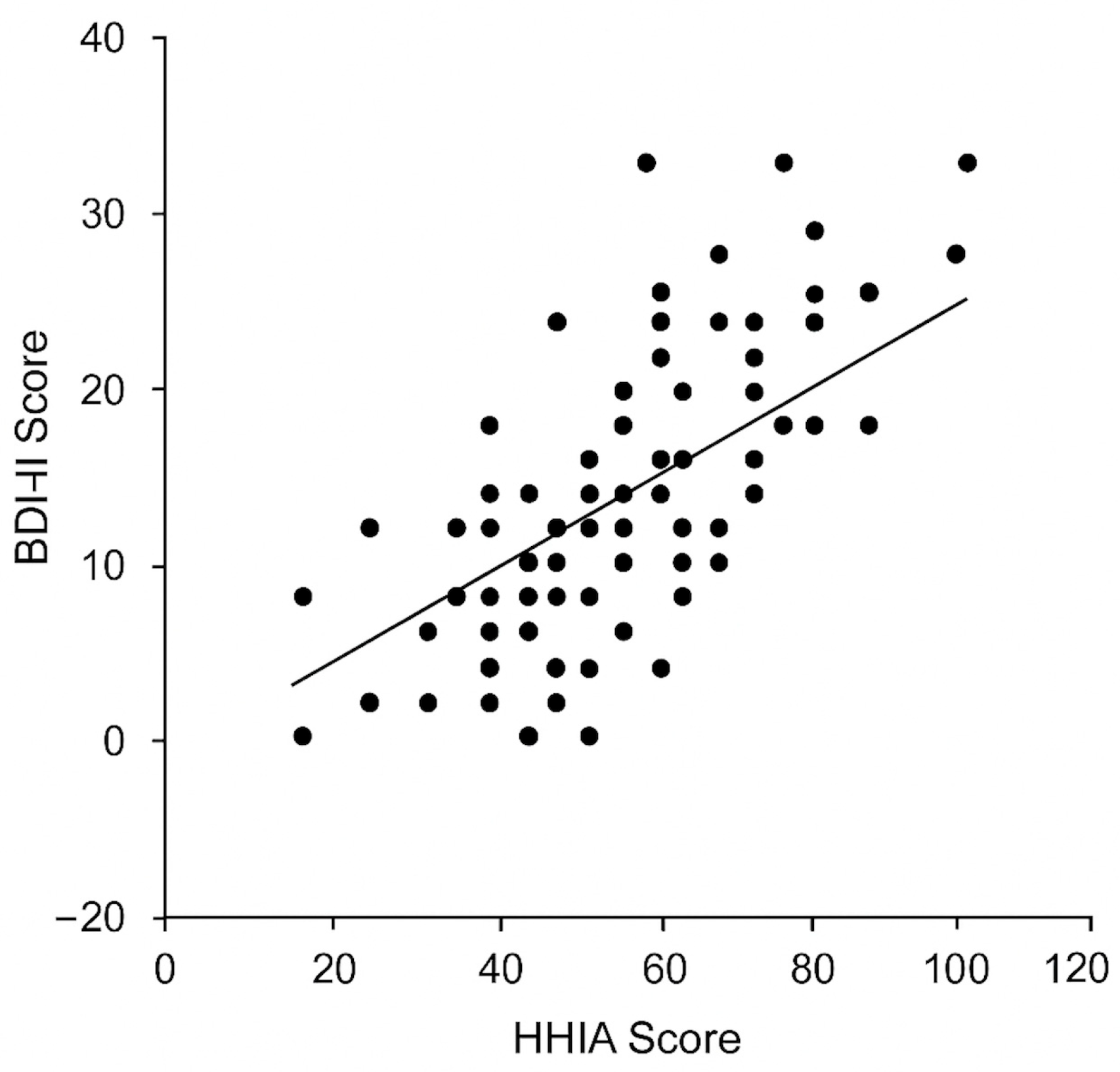
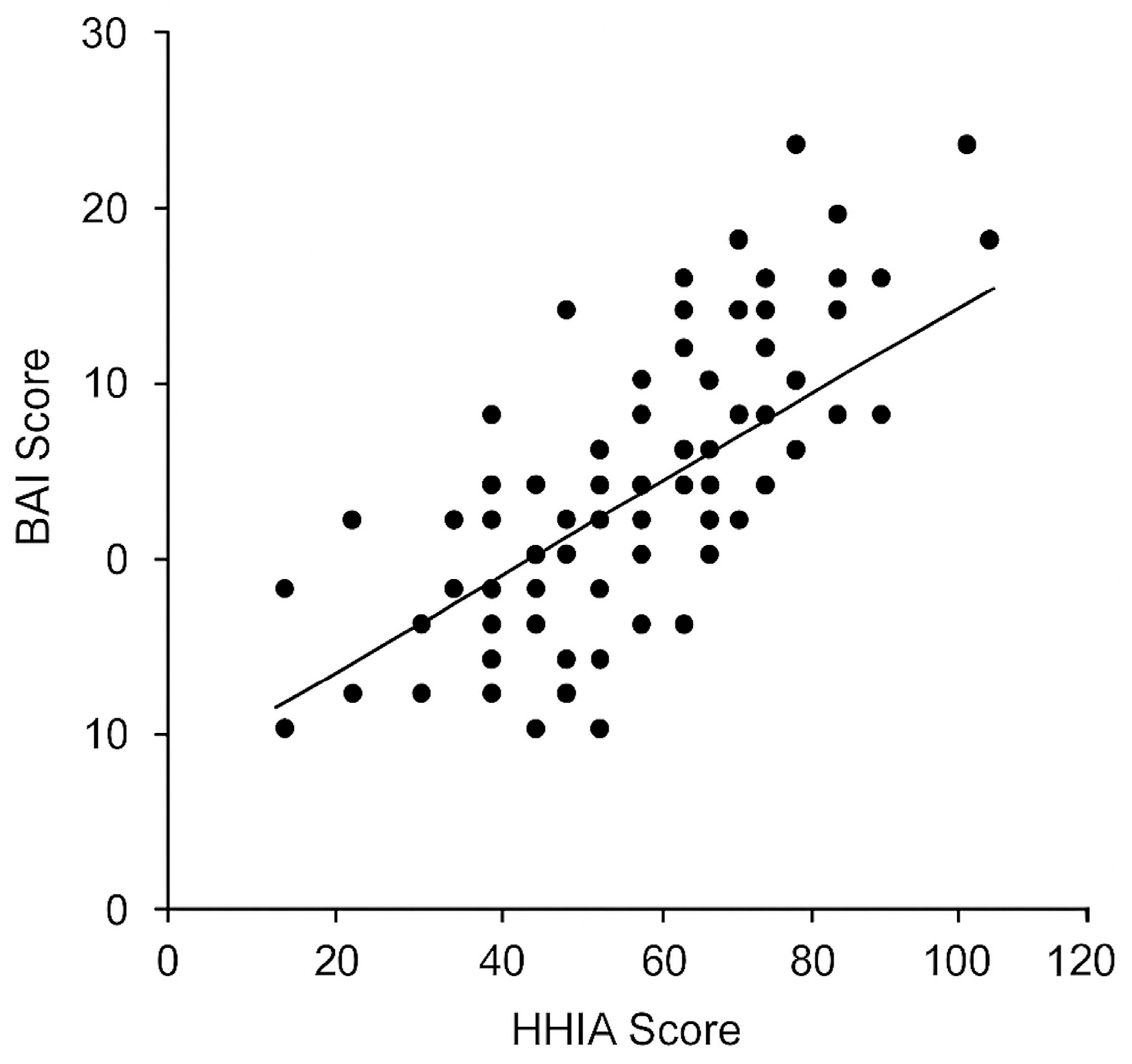
Correlations between hearing loss metrics and psychological scores were analyzed using Pearson’s correlation for approximately normal variables and Spearman’s rank-order correlation for non-normal variables. We calculated bivariate correlations between HHIA scores and BDI-II, HHIA and BAI, and PTA (dB HL) and each mood scale. Correlation effect sizes were interpreted using standard benchmarks (small ~0.10, moderate ~0.30, large ≥0.50).
Finally, to identify independent predictors of mood outcomes, we performed multiple linear regression analyses for depression and anxiety scores. Separate models were constructed with BDI-II or BAI score as the dependent variable. Candidate predictors included perceived hearing handicap (HHIA score), objective hearing level (PTA in dB), age, and sex. These covariates were selected a priori based on their clinical or epidemiological relevance. Before running the regressions, we checked for multicollinearity; the correlation between HHIA and PTA was r = 0.36 (p < 0.001), indicating only moderate overlap (variance inflation factor ~1.15). We proceeded to include all predictors in each model (enter method). Regression assumptions were verified by inspecting residual plots for homoscedasticity and linearity, and by confirming normal distribution of residuals (Shapiro–Wilk p > 0.05 for both models). We report unstandardized coefficients, standardized β, 95% confidence intervals, p-values for each predictor, and the model R2 (adjusted) as a measure of explained variance. A two-tailed p < 0.05 was considered statistically significant.
4. Discussion
Our study demonstrates a robust association between hearing loss and mood disturbances in adults, in line with and extending prior research. Importantly, the subjective impact of hearing loss (as measured by HHIA) showed a substantially stronger relationship with psychological distress than the objective audiogram did. Participants who felt more handicapped by their hearing difficulties had much higher depression and anxiety scores, even after controlling for age, sex, and audiometric hearing level. This finding underscores that the psychosocial repercussions of hearing loss—rather than the audiometric severity alone—drive much of the mood impact. It is consistent with the notion that factors like social isolation, communication stress, and loss of autonomy mediate the link between hearing loss and depression. At the same time, we acknowledge the possibility of reverse causation: heightened depression or anxiety might itself inflate one’s perceived hearing difficulties. In other words, mood disturbances and perceived hearing handicap could potentially exacerbate each other. This bidirectional perspective warrants further investigation.
We observed strikingly elevated rates of mood symptoms in our sample. About 28% of participants had BDI-II scores in the moderate-to-severe range (≥20), which far exceeds the roughly 5–10% prevalence of depression in the general adult population [
14]. Similarly, 22% of our sample had moderate or severe anxiety (BAI ≥ 16). These figures align with epidemiological reports that individuals with hearing loss have roughly twice the odds of depression compared to those without hearing impairment [
1], and similarly higher anxiety prevalence (approximately 1.8-fold) [
2,
15]. Our findings reinforce the notion that hearing impairment carries a hidden mental health burden: even those with relatively mild hearing deficits may experience clinically relevant depression or anxiety, particularly if they perceive their hearing problems to be debilitating.
Consistent with prior studies, we found that subjective hearing handicap is a more potent correlation of psychological distress than objective hearing thresholds. HHIA scores had moderate correlations with both BDI-II (~0.45) and BAI (~0.38), whereas PTA’s correlations were weak (~0.2) and became non-significant in multivariate analysis. This indicates that how a person perceives and copes with their hearing loss is crucial in determining their emotional well-being. Two individuals with the same audiogram can have very different outcomes—one may adapt well with strong support systems, while another feels devastated and socially isolated [
11]. Our multivariate results confirm that perceived hearing difficulties independently predict depression and anxiety severity, even when accounting for audiometric severity. This echoes findings by Huber et al. (2023) in cochlear implant candidates, where subjective hearing difficulties (on the APHAB questionnaire) correlated with BDI-II depression scores, while pure-tone measures did not [
13]. Together, these data suggest that clinicians should not rely solely on audiograms to assess the impact of hearing loss; the patient’s self-reported hearing handicap and psychosocial challenges must also be considered [
16]. Routine use of instruments like the HHIA, and direct questions about emotional and social effects of hearing loss, may help identify patients at risk for depression or anxiety who might otherwise be overlooked if one considers only the audiometric degree of loss.
Interestingly, neither age nor sex was associated with depression or anxiety severity in our cohort. In the general population, depression is often more common in women, and some studies have reported higher depression risk in older adults with hearing loss compared to middle-aged adults. Our sample (which deliberately excluded those over 65) did not show significant sex differences in BDI-II or BAI scores, nor any significant correlation between age (within 18–65) and mood. This could suggest that hearing loss imposes a fairly uniform psychological burden across adult subgroups. Even middle-aged adults in their 40s and 50s with hearing impairment can experience depression and anxiety at levels comparable to older adults with hearing loss. Past research has focused heavily on elderly or retired populations, but our results highlight that the middle-aged hearing-impaired population also warrants attention for mental health screening [
17]. Some prior studies found no sex difference in depression among older hearing-impaired patients (e.g., Nilforoush et al. [
12]), whereas others suggested women with hearing loss may be more prone to depression than men [
18]. Our null finding for sex might reflect our sample size or the fact that we adjusted for multiple factors; it is also possible that in our sample women were slightly more likely to use hearing aids and have better social support, which might mitigate gender differences in mood outcomes.
The potential benefits of early hearing intervention for mitigating depression risk are an important consideration. Emerging evidence suggests that treating hearing loss can help reduce depressive symptoms in older adults [
19]. For instance, a large cross-sectional study found that individuals with hearing loss who used hearing aids had significantly lower odds of moderate depression than those who did not use amplification (adjusted OR ~0.66) [
20]. Likewise, a longitudinal study observed reductions in depressive symptoms within months of starting hearing aid use in previously untreated older adults [
21]. In our sample, participants who used hearing aids tended to have slightly better mood scores (lower BDI-II/BAI) than non-users, although the difference was not statistically significant. This trend could be due to self-selection (those less depressed may be more consistent in using hearing aids), but it aligns with the idea that improving hearing can enhance social engagement and mood. The psychosocial benefits of audiological rehabilitation should be emphasized to patients. Audiologists and physicians can counsel patients that addressing hearing loss—through hearing aids, assistive devices, communication training, and environmental modifications—may help alleviate the feelings of frustration and isolation that contribute to depression [
22]. It may also be prudent for audiology clinics to include brief mood screenings (e.g., PHQ-2/PHQ-9 for depression, GAD-7 for anxiety) as part of routine evaluations, in order to identify psychological distress early and refer patients for appropriate care.
Our results point to the importance of multidisciplinary management for patients with hearing loss. Treating the hearing deficit is crucial, but some individuals may also benefit from concurrent psychosocial support. Counseling or cognitive-behavioral therapy (CBT) techniques can help patients develop coping strategies for communication challenges and manage the emotional reactions to hearing loss (such as frustration, embarrassment, or low self-esteem). Support groups for people with hearing loss can reduce feelings of isolation and provide practical advice and encouragement from peers. Mental health professionals treating patients with depression or anxiety should remain alert to the possibility of undiagnosed hearing loss, especially in middle-aged and older adults. Simply asking patients about their hearing or referring them for a hearing evaluation when appropriate could improve overall treatment outcomes—unrecognized hearing impairment might otherwise hinder psychotherapy (for example, if the patient struggles to hear the therapist) and can contribute to social withdrawal. Some experts have even suggested that hearing evaluations be incorporated into the work-up for late-life depression.
Several limitations should be noted. First, the cross-sectional design limits our ability to infer causality; it is possible that mood disorders exacerbate perceived hearing problems rather than result from them (or both). Second, because inclusion was based on self-reported hearing trouble, there may be selection bias toward individuals who were already concerned about their hearing, potentially inflating the associations with mood. Third, our sample size (N = 100) was moderate and drawn from a combination of clinic visitors and community volunteers, which may limit generalizability. We also did not specifically assess tinnitus severity or cognitive function, which are factors that can influence mood and often co-occur with hearing loss.
Despite these limitations, our findings underscore the need for further research to clarify the causal pathways. Longitudinal studies could determine whether intervening to address hearing loss (for example, through hearing aid fitting or cochlear implants) leads to subsequent improvements in mood. Randomized controlled trials would be especially informative; for instance, assigning hearing-impaired individuals to receive early hearing intervention vs. delayed treatment and tracking depressive and anxious symptoms over time could provide high-quality evidence on the psychological benefits of audiological care. Future studies with larger and more diverse samples are also needed to explore whether certain subgroups (defined by age, sex, or coping resources) are particularly vulnerable to the mood effects of hearing loss.