
Article

The Fall Risk Screening Scale Is Suitable for Evaluating Adult Patient Fall
1
Department of Nursing, Linkou Chang Gung Memorial Hospital, Taoyuan 333, Taiwan
2
Department of Nursing, Chang Gung University of Science and Technology, Taoyuan 333, Taiwan
3
Department of Nursing, New Taipei Municipal Tucheng Hospital Built and Operated by Chang Gung Medical Foundation, New Taipei City 236, Taiwan
4
Graduate Institute of Gerontology and Health Care Management, Chang Gung University of Science and Technology, Taoyuan 333, Taiwan
*
Author to whom correspondence should be addressed.
Healthcare 2022, 10(3), 510; https://doi.org/10.3390/healthcare10030510

Submission received: 25 January 2022 / Revised: 8 March 2022 / Accepted: 8 March 2022 / Published: 11 March 2022
(This article belongs to the Special Issue Human Health Related to Social, Ambient and Built Environment)

Abstract

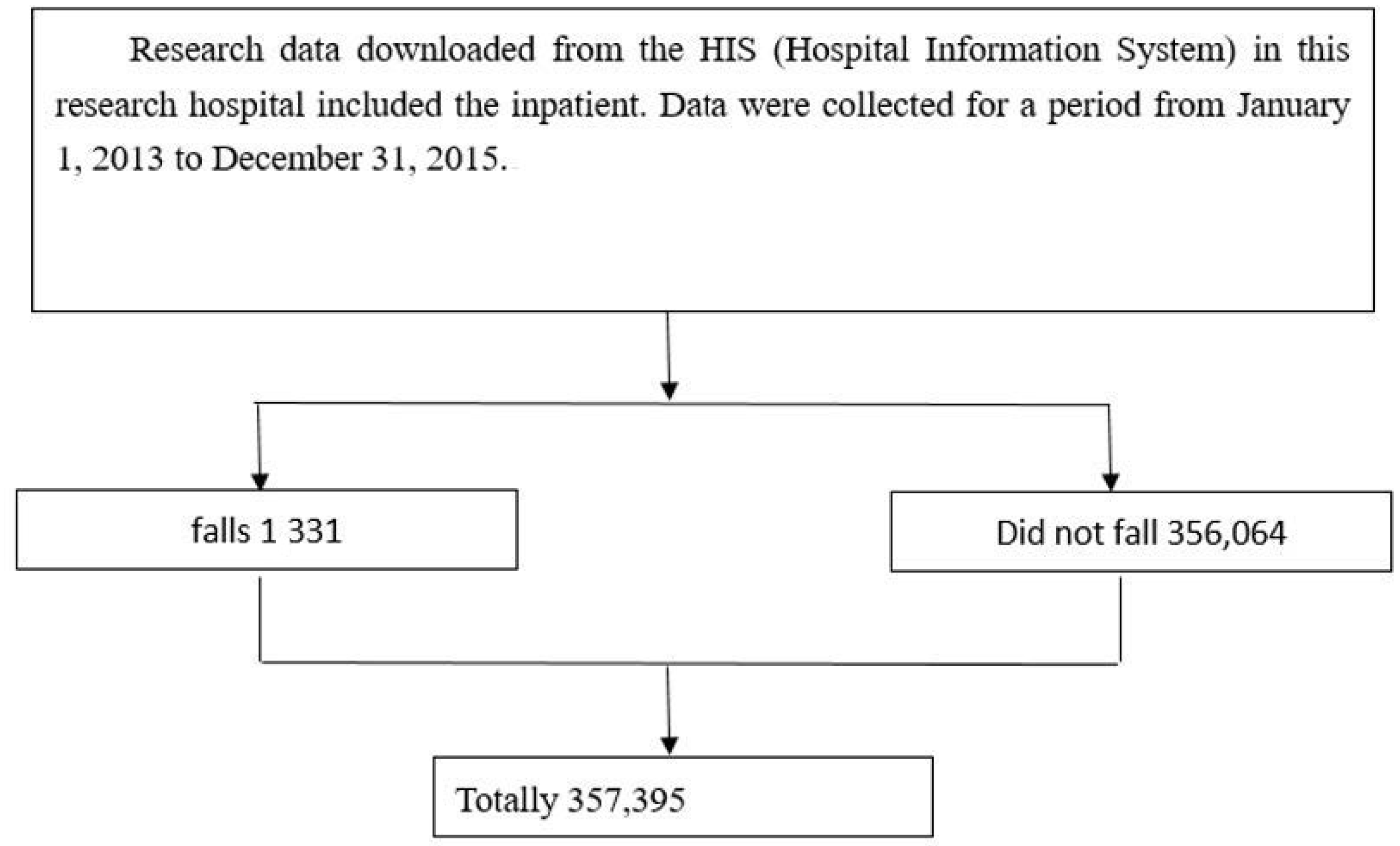
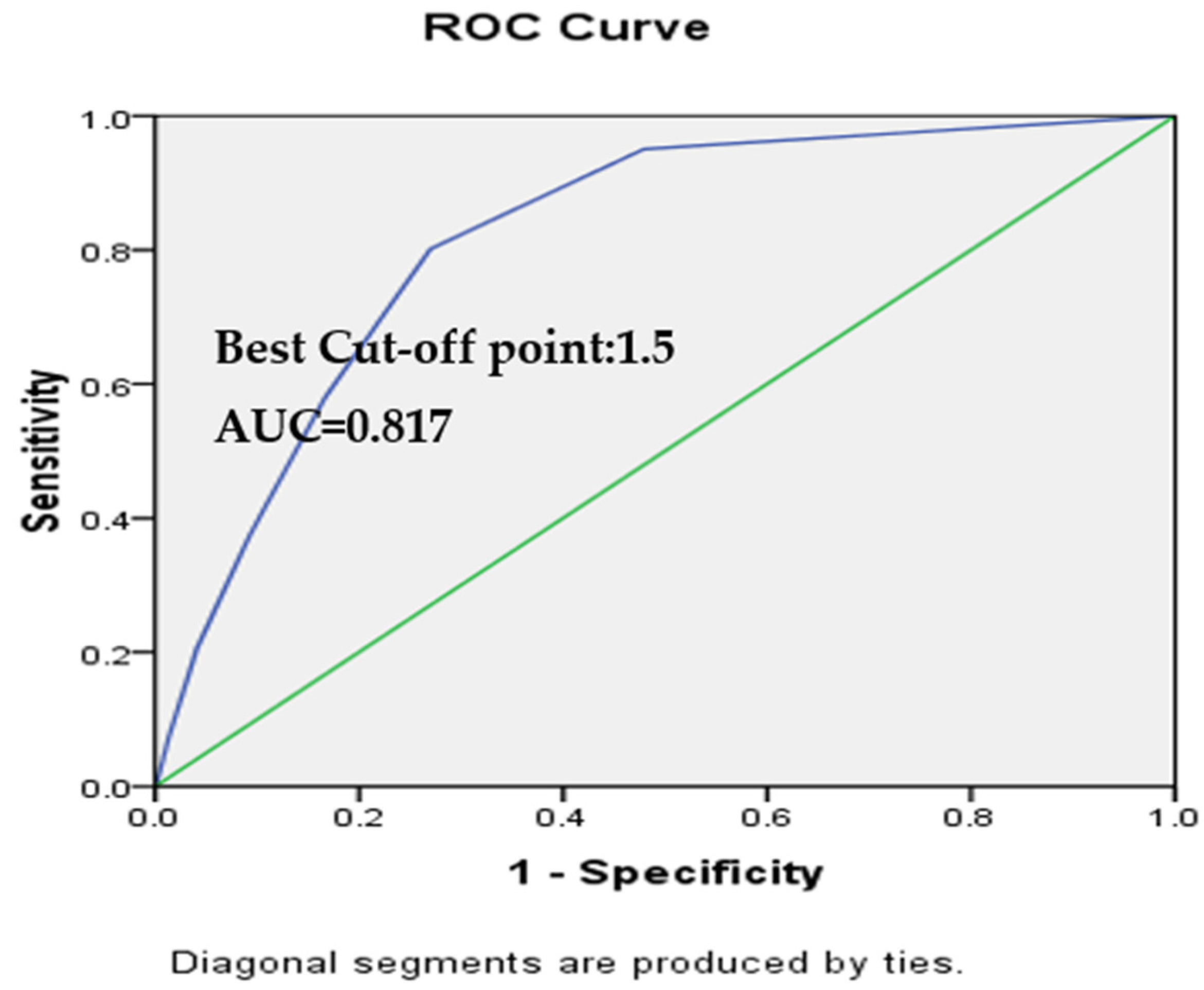
(1) Background: This study aimed to test the feasibility of utilizing the screening tool for fall risk assessment in adult inpatient and verify its accuracy in a medical center in Taiwan. (2) Methods: This study retrospectively collected all adult fall cases among inpatients occurring in the general wards of a medical center between 1 January 2013 and 31 December 2015. This inpatient fall risk screening scale was measured by the sensitivity, specificity, and accuracy. (3) Results: There were 1331 (0.4%) falls among a total of 357,395 inpatients during this period. Factors predictive of falling risk included: age, consciousness, body shift assistance, use of fall risk medications, fall history, dizziness or weakness, toileting, and impaired mobility. Using the eight-factor assessment, two was the best cutoff point for identifying the fall risk group, with area under Receiver Operating Characteristic (ROC) curve (AUC) = 0.817, sensitivity = 80.93%, specificity = 73.0%, accuracy = 73.03%, and likelihood ratio = 11.48. (4) Conclusions: The accuracy of the eight-item fall risk assessment tool created for this study was validated. These results can serve as a reference for institutions to develop more effective fall risk assessment scale for inpatients, enabling clinical nurses to identify and more comprehensively assess the groups at highest risk for falling during their hospital stay.
Keywords: fall risk assessment; screening tool; patient falls; patient safety fall risk assessment; screening tool; patient falls; patient safety