Article

Improving Convergence in Therapy Scheduling Optimization: A Simulation Study


by
Juan C. Chimal-Eguia
1,*,
Julio C. Rangel-Reyes
1 and
Ricardo T. Paez-Hernandez
2
1
Lab. Simulación y Modelado, Centro de Investigación en Computación (CIC) del Instituto Politécnico Nacional, IPN, Av. Miguel Othon de Mendizabal s/n. Col. La Escalera, Ciudad de México CP 07738, Mexico
2
Área de Física de Procesos Irreversibles, Departamento de Ciencias Básicas, Universidad Autónoma Metropolitana, U-Azcapotzalco, Av. San Pablo 180, Col. Reynosa, Ciudad de México CP 02200, Mexico
*
Author to whom correspondence should be addressed.
Mathematics 2020, 8(12), 2114; https://doi.org/10.3390/math8122114
Submission received: 29 September 2020 / Revised: 10 November 2020 / Accepted: 12 November 2020 / Published: 26 November 2020
(This article belongs to the Special Issue Dynamical Systems and Optimal Control)

Abstract

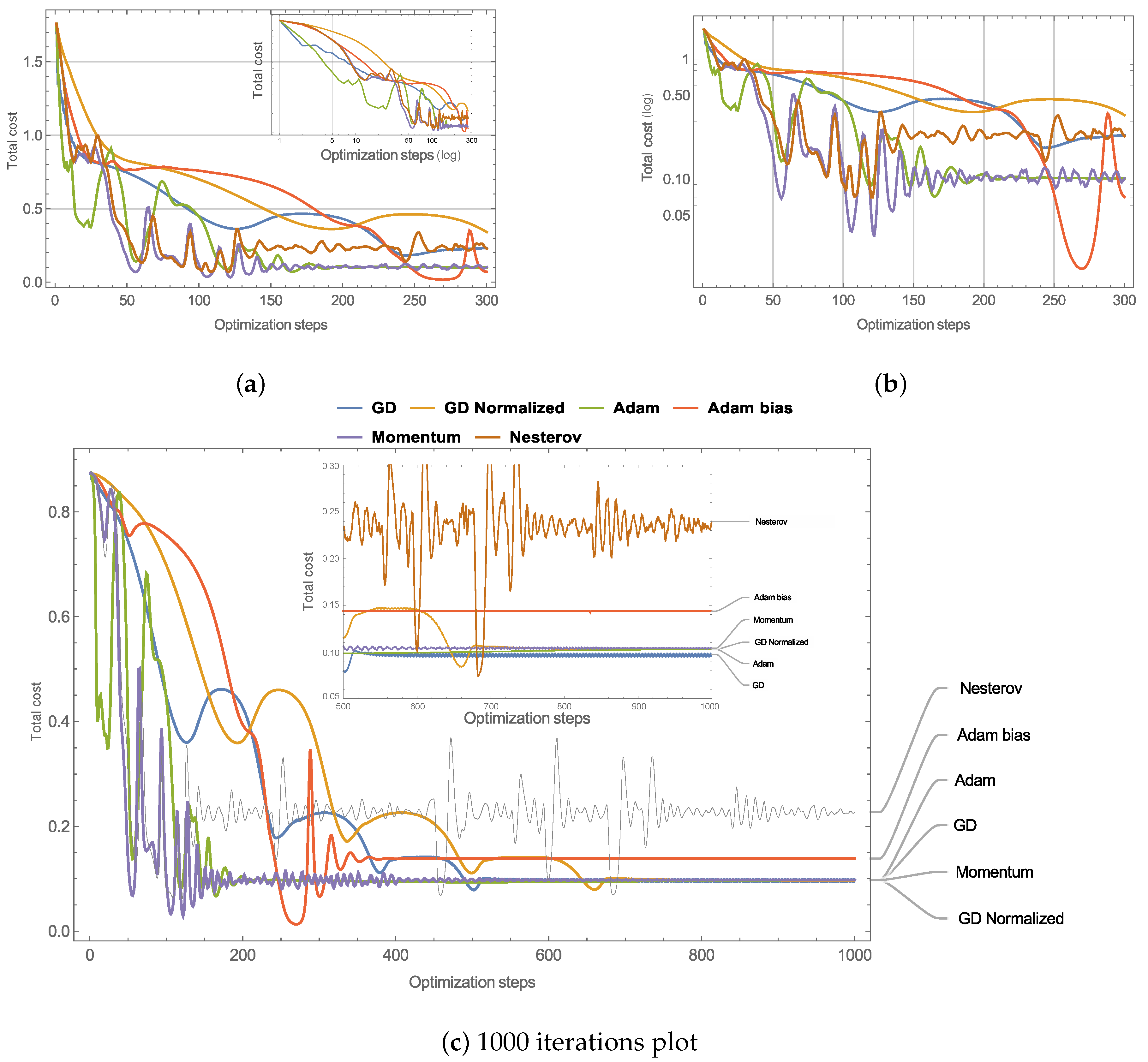
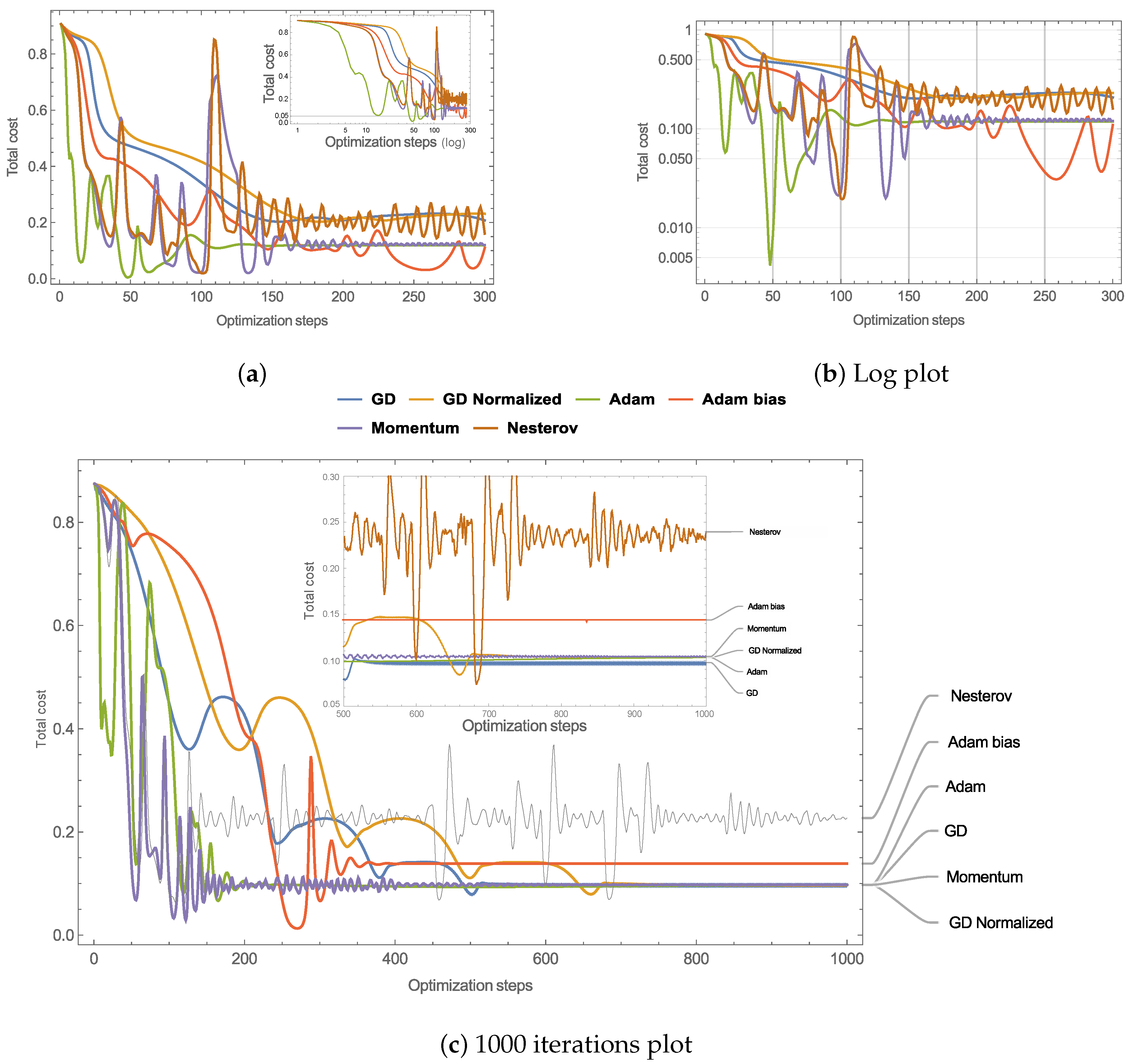
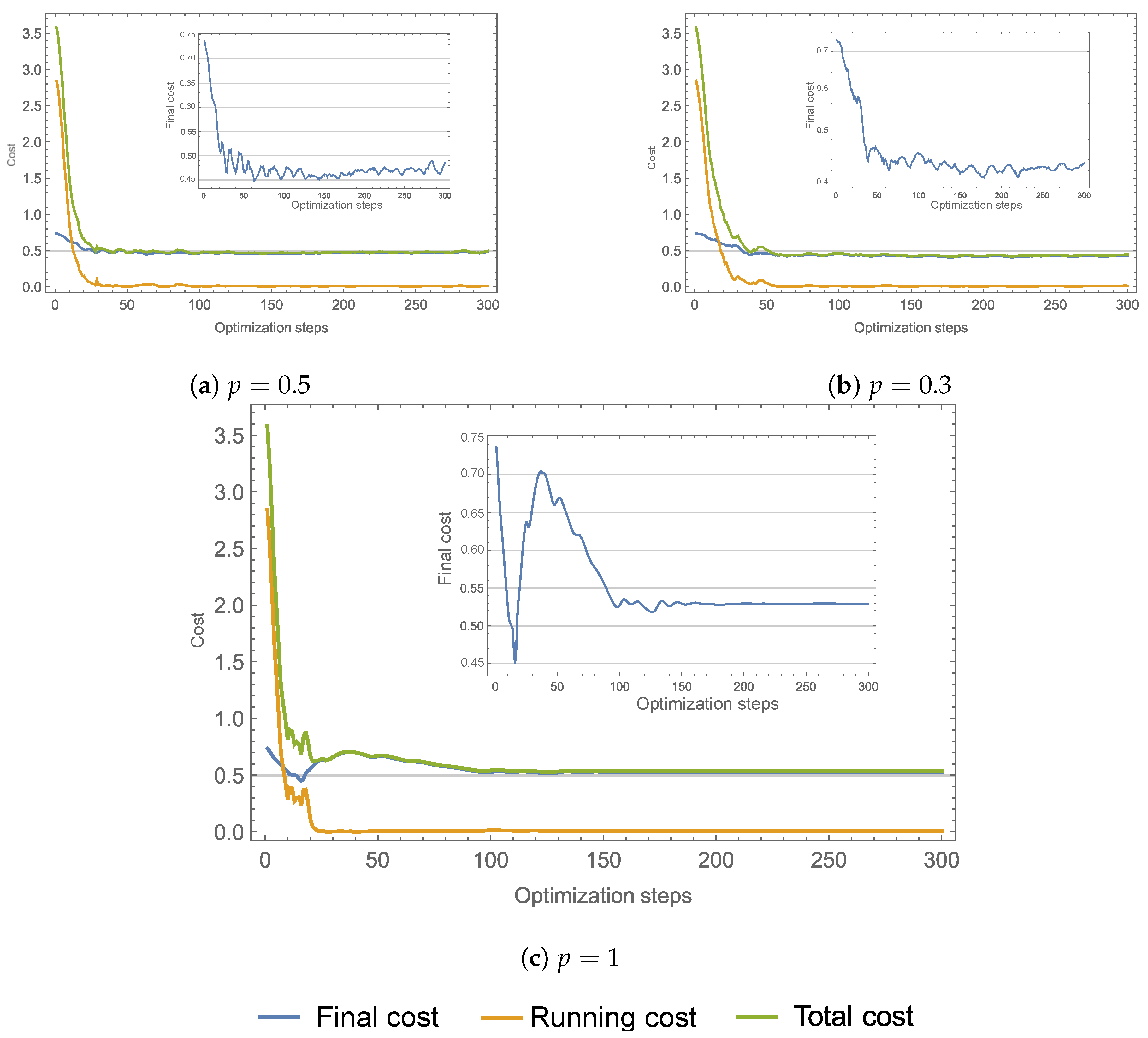
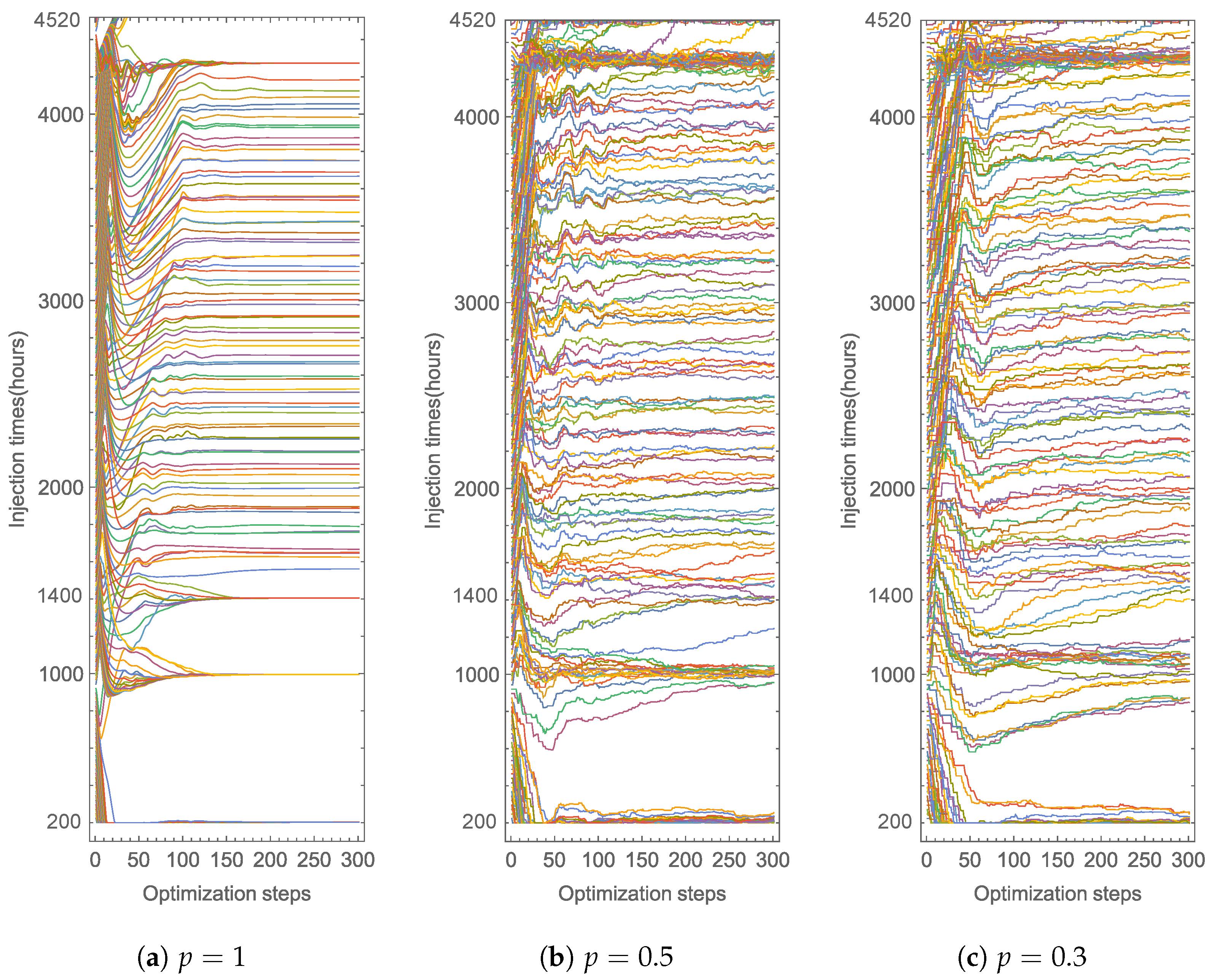
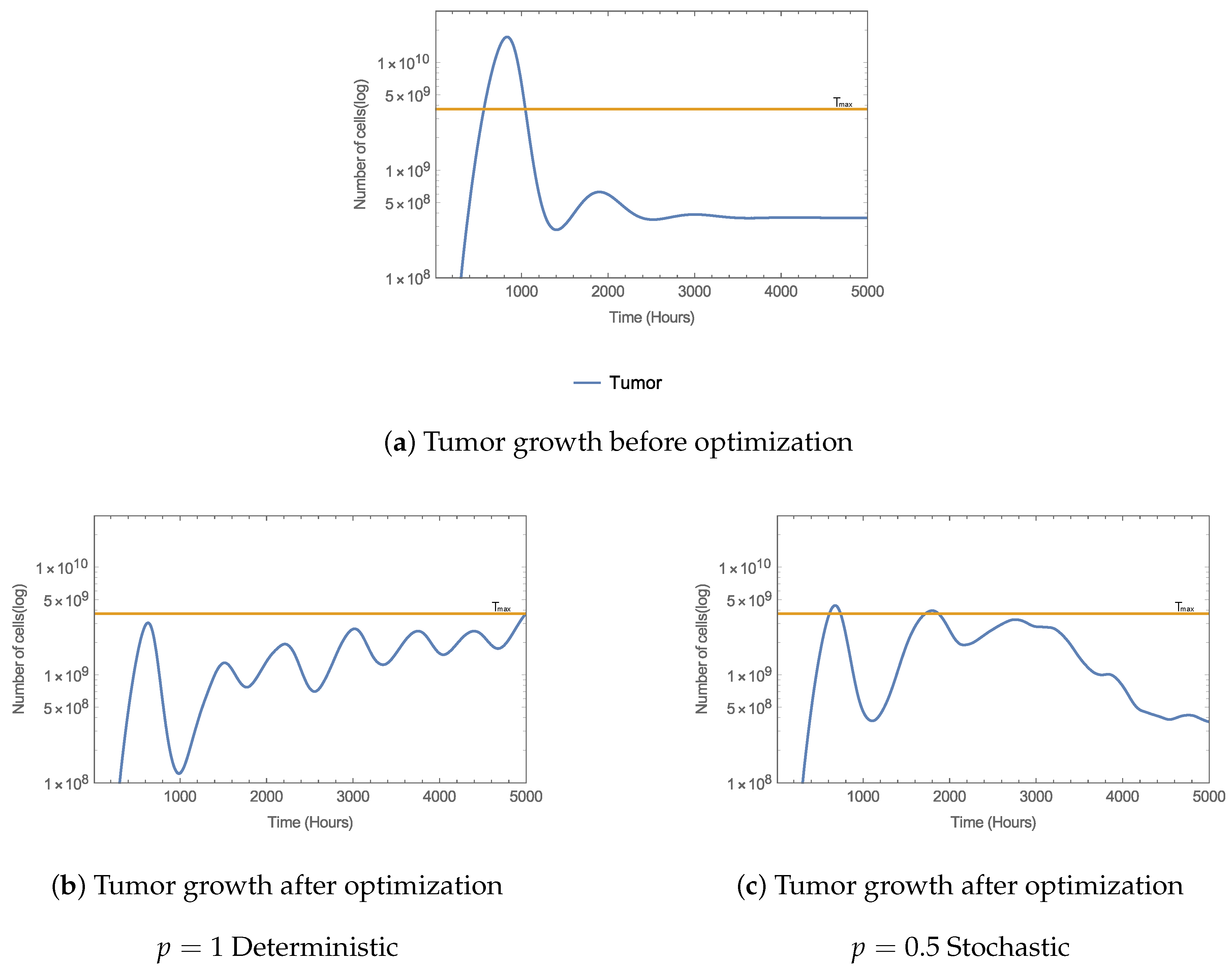
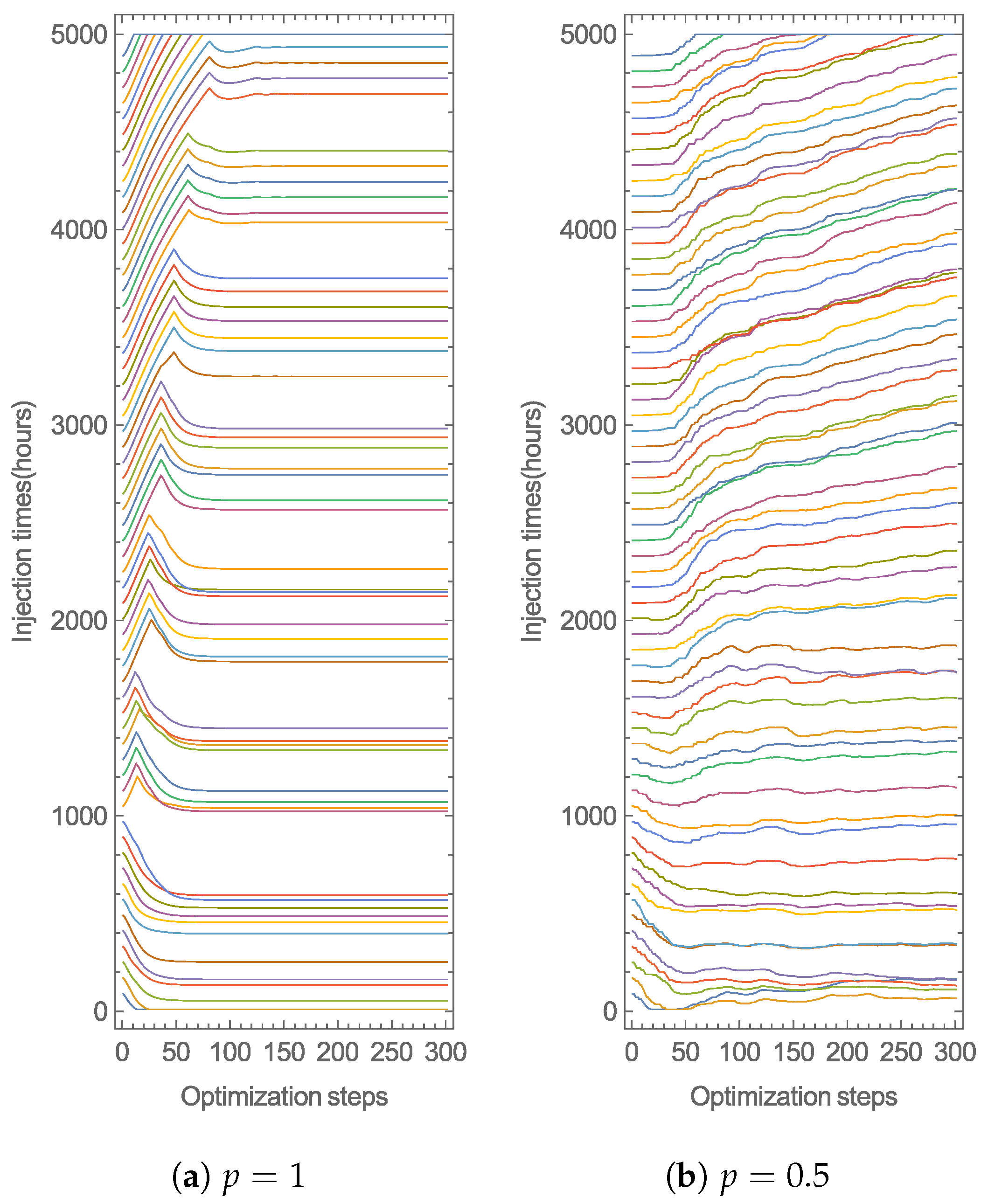
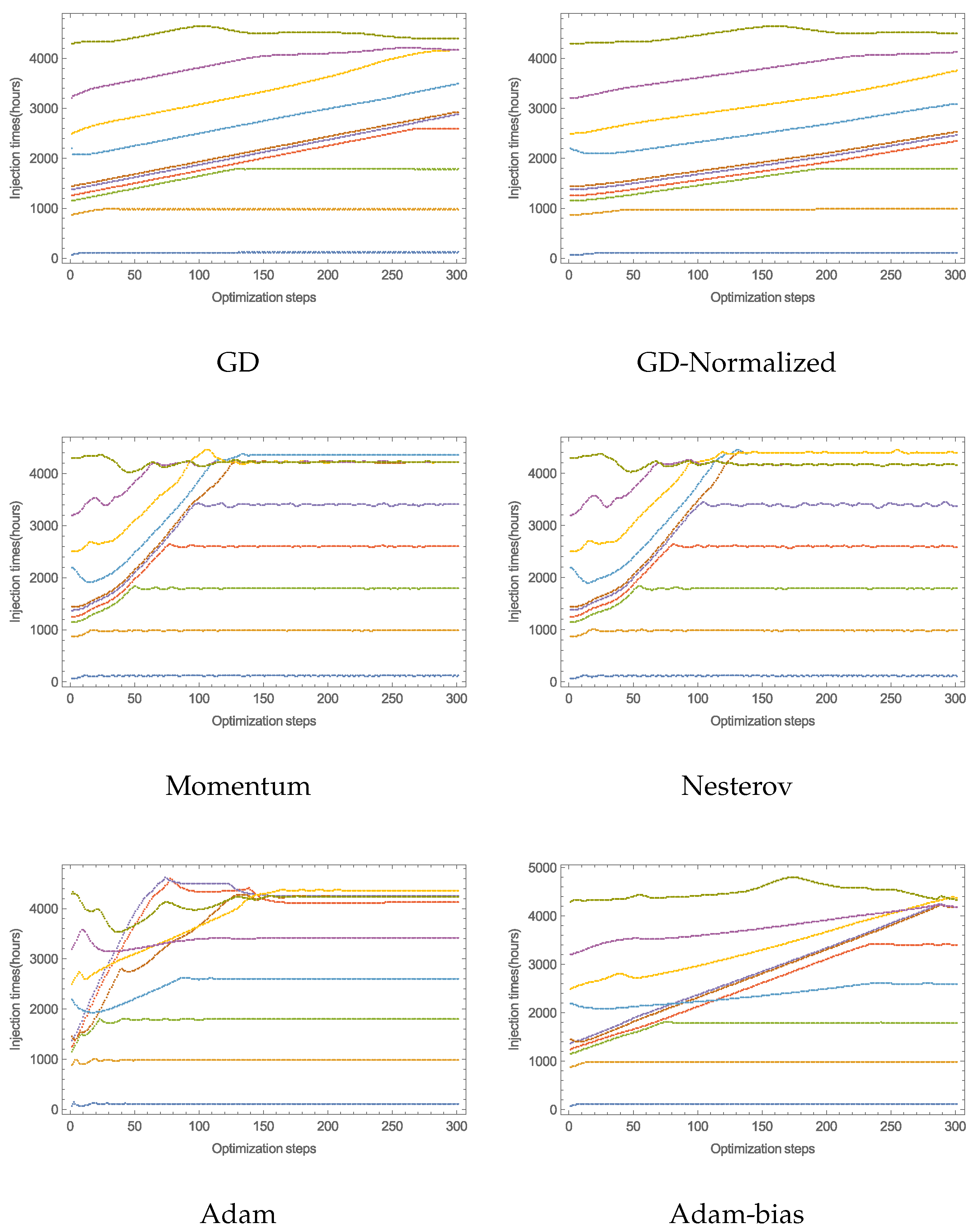
The infusion times and drug quantities are two primary variables to optimize when designing a therapeutic schedule. In this work, we test and analyze several extensions to the gradient descent equations in an optimal control algorithm conceived for therapy scheduling optimization. The goal is to provide insights into the best strategies to follow in terms of convergence speed when implementing our method in models for dendritic cell immunotherapy. The method gives a pulsed-like control that models a series of bolus injections and aims to minimize a cost a function, which minimizes tumor size and to keep the tumor under a threshold. Additionally, we introduce a stochastic iteration step in the algorithm, which serves to reduce the number of gradient computations, similar to a stochastic gradient descent scheme in machine learning. Finally, we employ the algorithm to two therapy schedule optimization problems in dendritic cell immunotherapy and contrast our method’s stochastic and non-stochastic optimizations.
Keywords: optimal control; immunotherapy; drug scheduling; adam optimizer optimal control; immunotherapy; drug scheduling; adam optimizer