1. Introduction
Food supply chains (FSCs), which play a central role in feeding the global population, are undergoing continuous transformation driven by technological innovation, demographic shifts, evolving consumer preferences, and broader economic development. Understanding their current state is essential for adapting improvement and modernization efforts to specific local contexts. The commercial relationships among actors across the agri-food system—from producers to end consumers—are fundamental to this transformation. However, the evolution of these chains depends not only on the actions of producers but also on the power dynamics that shape interactions among the various stakeholders, including governments and civil society organizations. The Food and Agriculture Organization of the United Nations (FAO) highlights that achieving inclusive and sustainable agri-food systems requires the active participation of all actors and the effective management of these power relationships [
1].
An estimated 1.23 billion people—approximately one-third of the global workforce—are directly employed in agri-food systems, linking primary producers with value-added stages such as storage, transportation, and distribution. These systems are interconnected with input and service supply chains and vary widely in scale and formality, ranging from local to global operations. According to the FAO, the largest farms account for only 1% of all holdings yet control more than 70% of the world’s agricultural land, whereas small farms (less than 2 hectares) represent 84% of total holdings but manage only 12% of the land. Additionally, more than 90% of farms are family-run, producing roughly 80% of the world’s food, with small farms contributing approximately 35% [
1].
Particularly within the hierarchical structures of agri-food supply chains (ASCs), actors operate autonomously and often pursue objectives that may conflict with one another, hindering integration and limiting the ability to understand how individual decisions influence the overall performance of the chain [
2,
3]. Moon et al. [
4] emphasize that the competitiveness of agricultural products depends on coordinated efforts within an integrated chain, while Yi et al. [
5] argue that the operational efficiency of ASCs requires close collaboration among all actors, along with the adoption of shared protocols and harmonized production and inventory strategies.
In real-world contexts, hierarchical decision-making structures are common, with lower-level actions conditioned by decisions made at higher levels. In this regard, bilevel programming (BP) has proven useful in a variety of applications, including road and logistics network design, supply chain optimization, routing problems, and congestion pricing [
6,
7,
8,
9,
10,
11].
Unlike centralized supply chains (CSCs), where a single entity optimizes overall profit, actors in decentralized supply chains (DSCs) pursue their own individual objectives, often generating conflicts. This lack of coordination can lead to the bullwhip effect, characterized by amplified demand fluctuations and excessive inventories, with severe consequences for perishable products such as economic losses, environmental impacts, and quality deterioration [
12].
Within such structures, game theory (GT) has enabled the design of coordination mechanisms and contractual arrangements that equitably distribute benefits among actors [
12]. However, traditional two-level and multilevel hierarchical models—where a leader makes decisions first, and followers respond without feedback—face computational and practical limitations, particularly when dealing with vague or imprecise decision environments [
13].
The classical treatment of duopoly and multi-actor decision problems is commonly framed through bilevel (BLPP) and multilevel (MLPP) programming. These formulations may be centralized or decentralized, such as in decentralized bilevel programming (BLDPP) and decentralized multilevel programming (MLDPP). Existing solution approaches can be grouped into four main categories: extreme point search, transformation techniques, descent methods, and heuristic–evolutionary algorithms. While the first three rely on traditional optimization principles, evolutionary methods incorporate modern decision-making paradigms and function more as guided decision processes than as pure optimization tools [
13].
Although classical algorithms for solving hierarchical models such as MLDPP or BLDPP can be adapted to increase flexibility, such modifications fundamentally alter the decision framework, increase computational burden, and become inefficient for medium- or large-scale applications [
14]. Moreover, BLPP problems are NP-hard, making exact solutions computationally demanding [
15]. Despite advances in algorithmic development, classical models often assume levels of precision that are unrealistic for poorly defined real-world problems, limiting their applicability in decentralized organizational contexts [
16].
In contrast, interactive fuzzy decision-making offers a more suitable alternative for contemporary organizational settings, as it simplifies complex problems without sacrificing realism. By incorporating membership functions to handle imprecision and coupling them with multi-objective optimization, this approach provides a methodological framework that is both computationally efficient and highly adaptable to decentralized hierarchical systems [
13].
Consistent with the discussion above, Bustos et al. [
17] argue that research on agri-food supply chain management (ASCM) with hierarchical structures should prioritize the development of bilevel mixed-integer linear programming (BMILP) models, as well as three-level formulations that integrate suppliers, producers, and distributors. Caselli et al. [
18] highlight that BP has been applied in the agricultural sector for the design of public policies, optimizing instruments such as subsidies and incentives. These models typically assume a single-leader/multiple-follower structure and require advanced solution techniques such as Lagrangian relaxation or heuristic approaches. However, a common limitation is the assumption of a push-based system, which overlooks end-consumer behavior. In response, An et al. [
19] propose incorporating demand functions to develop more realistic supply chain representations.
The review conducted by Taşkıner and Bilgen [
20] identifies significant gaps in the development of integrated harvest–production models, the limited validation of models with real-world data, and the need for heuristics capable of addressing large-scale instances. Although traditional approaches predominate—51 single-objective studies and 21 multi-objective studies—only two contributions employ BP-type optimization. Given that BP is particularly well-suited for modeling hierarchical structures and multilevel decision-making, both inherent characteristics of ASCs, its limited use represents a substantial research gap.
Accordingly, this study addresses the following research questions:
RQ1: How can hierarchical coordination among autonomous actors in an agri-food supply chain be improved while accounting for their heterogeneous objectives and operating conditions?
RQ2: Which alternative solution approaches to classical bilevel programming models enable the efficient management of decentralized agri-food supply chains under imprecise and interactive decision environments?
RQ3: To what extent can an interactive fuzzy bilevel framework enhance social inclusion—particularly the participation of small producers—while maintaining operational efficiency in agri-food supply chain planning?
To address these questions, this study begins with a focused review of the distributed two-level linear programming problem (BLDPP) and the interactive fuzzy approach proposed by Shih et al. [
21]. Subsequently, a bilevel model with multiple followers is developed for a four-tier ASC, whose decision-making process is grounded in this approach. The model is then validated using a real case study from an agri-food supply chain in Colombia.
The main contributions of this research are as follows: (i) the development of a decentralized bilevel mixed-integer linear programming model for ASCM that integrates multiple producers, transporters, processing plants, and markets; (ii) the incorporation of an interactive fuzzy approach that combines membership functions with multi-objective programming to realistically model the hierarchical decision-making process; and (iii) the validation of the proposed model through a case study applied to an ASC in Colombia.
The proposed decentralized bilevel interactive fuzzy approach achieved a satisfaction level of approximately 94% among all decision-makers involved in the supply chain. The resulting planning integrated up to 99% of the productive capacity of small-scale producers into the purchasing plan, supporting their effective inclusion in the chain. In addition, the approach maintained processing-plant idle capacity below 10% during the majority of the planning periods, demonstrating its ability to balance social objectives and operational efficiency in a real-world agri-food supply chain.
The remainder of this paper is organized as follows:
Section 2 reviews the relevant literature on agri-food supply chain management under hierarchical and decentralized decision-making structures.
Section 3 describes the real-world case study and the structure of the agri-food supply chain considered.
Section 4 presents the formulation of the decentralized bilevel mixed-integer linear programming model.
Section 5 explains the interactive fuzzy decision-making methodology and discusses the computational results. Finally,
Section 6 concludes the paper and outlines directions for future research.
2. Literature Review
2.1. Decentralized Two-Level Linear Programming Problem (BLDPP)
In hierarchical decision-making systems, a distinction is made between two-level and multilevel models, in which the leader makes the initial decision and the follower responds without reciprocal feedback. Bilevel programming (BP) is a tool used to model decentralized decision-making, consisting of the leader’s objectives at the upper level and the follower’s objectives at the lower level. A three-level programming structure arises when the second level itself contains a bilevel problem. Extending this concept, multilevel programs can be defined with any number of hierarchical levels [
22].
To better organize these approaches, they are classified according to their structural complexity. The main categories include BLPP, BLDPP, MLPP, and MLDPP. Decentralization implies the existence of multiple divisions at each hierarchical level, except for the top level. Furthermore, MLPP problems can be subdivided according to the number of levels involved in the decision-making system [
13].
A BLDPP is characterized by a leader at the upper level and multiple divisions at the lower level, which make decisions independently but remain constrained by the leader’s choices. The leader acts first, and the followers react based on that decision. The degree of cooperation among divisions varies depending on the organizational context; in many cases, divisions are expected to optimize both their individual objectives and the collective performance of the system [
14].
To represent a BLDPP, we introduce the following notation: let denote the objective function of the -th division at the -th level, and let be the cost coefficient associated with decision variable for the -th division at the -th level, where and . Since there is only one division at the upper level, we have . Assuming that there are divisions at level 2, then and . Here, the decision variables are indexed to represent the hierarchical structure of the problem. To avoid ambiguity in the notation used in Equations (1)–(3), the decision variables are defined according to their hierarchical structure. Let denote the complete decision vector of the BLDPP, where represents the decision variable controlled by the upper-level decision-maker (leader), and represents the set of decision variables associated with the divisions at the lower level (followers).
In Equation (1), the scalar notation , , is used as a compact representation of this hierarchical decision vector, where corresponds to the leader’s decision, and for corresponds to the decisions of the lower-level divisions, with .
Accordingly, the variables appearing in Equations (2) and (3) represent the individual decision components of each lower-level division, which are optimized independently subject to the leader’s decision.
Under this notation, the BLDPP can be represented as follows:
On the other hand, traditional solution approaches rely on algorithms that often become complex and difficult to implement efficiently when addressing bilevel and multilevel decision problems [
14]. Given these limitations of classical methods for hierarchical decision-making systems, Shih et al. [
21] propose an alternative approach based on fuzzy set theory, which explicitly models the uncertainty inherent in complex hierarchical structures. This interactive fuzzy approach combines membership functions with multi-objective programming to more realistically represent hierarchical decision processes. Through iterative procedures, it enhances computational tractability and accommodates imprecise or linguistically vague decision environments [
16].
2.2. Interactive Fuzzy Decision-Making in Two-Level Problems with Multiple Followers
In a two-level hierarchical organization, the upper level defines its preferences and tolerance ranges, which are communicated to the lower level through membership functions. The follower then proposes an optimal solution based on these guidelines. If the proposed solution is not accepted, both levels adjust their decisions and repeat the process iteratively until an agreement is reached. This procedure can be readily extended to a two-level structure with multiple followers.
According to Shih et al. [
21], the mathematical process begins by independently solving the problem for each decision-maker (1) and (2) subject to the set of constraints represented in (3), as follows:
For all
and
, where the superscript * indicates the actual solution, or the individual optimal values obtained. Next, the minimum satisfaction that should satisfy all decision-makers is defined as follows:
Here, minimization is performed with respect to all satisfaction levels of all decision-makers. Given the tolerance vector
for the higher-level decision-maker, the membership functions
and
can be formulated as follows:
With all the above described, the lower-level decision-making problem remains as follows:
Introducing the lower-level tolerance function and eliminating the satisfaction degree vector, we have
By substituting the definitions of the membership functions into the equation above and solving it, the satisfaction levels of the different decision-makers can be obtained. If these levels do not meet the expectations of all parties, the membership functions or their associated tolerance ranges are adjusted accordingly. This iterative process is repeated until a solution is reached that is deemed satisfactory by all decision-makers involved [
14].
2.3. Background Related to ASCM with Hierarchical Structures
Supply chain management (SCM) formally emerged in 1982 with Keith Oliver, although its underlying principles had been applied since the early 20th century [
23]. Agri-food supply chains (ASCs), focused specifically on the agricultural sector, began to gain relevance in the early 21st century in developing countries and refer to the processes that move an agricultural product from the field to the final consumer [
24]. Although no unified definition exists, ASCs are widely recognized as networks of interconnected activities [
25]. The growing complexity of supply chains has required strategic, tactical, and operational decision-making to maintain competitiveness. In the case of ASCs, these decisions range from financial planning to daily operations such as harvesting, processing, and storage [
26].
SCM problems naturally exhibit a multilevel decision network structure [
22]. In particular, bilevel programming (BP) models hierarchical decisions between a leader and a follower, and can be extended to multilevel structures. In business settings, SCM problems commonly follow this architecture, requiring coordinated decisions across operational levels [
22]. Similarly, Kuo et al. [
27] demonstrated that BLPPs are effective tools for modeling supply chains, proving particularly valuable for practical applications, especially in real logistics environments.
To identify trends, research gaps, and methodological approaches applied in the study of ASCs under hierarchical structures, a comparative analysis was conducted based on a detailed review of recent scientific literature (
Table 1). The table summarizes key aspects of each study, including the type of model used (two-level or multilevel), the objectives assigned to each decision-making tier, the actors involved (governmental, industrial, or agricultural), the proposed solution methodology (mathematical programming, game theory, heuristics, etc.), and the type of ASC studied along with the country in which the model was applied or validated. This organization enables a structured view of the evolution of research in the field, highlighting the diversity of contexts, tools, and hierarchical configurations used to model complex agri-food supply problems.
The analysis of eighteen recent studies reveals a clear predominance of two-level optimization models, present in 87.5% of the reviewed publications, compared to only 25% that employ multilevel structures. This trend confirms the usefulness of two-level models for representing hierarchical relationships common in ASCs, where a strategic actor guides decisions that condition the tactical or operational responses of other agents. In terms of methodological focus, 94.4% of the studies present practical applications validated through real case studies, demonstrating a strong orientation toward addressing concrete problems in agricultural contexts, while only one study adopts a purely theoretical perspective.
Temporally, most studies concentrate on the period 2016–2024, indicating a growing and sustained interest in the application of hierarchical models to ASCs. Geographically, Iran and China stand out as the countries with the highest number of applications, reflecting methodological developments in regions with significant agricultural activity. Notable contributions have also been identified in Chile, Colombia, Brazil, and the United States, providing contextual diversity and reinforcing the global relevance of hierarchical approaches in agri-food supply chain research.
Based on the comparative analysis summarized in
Table 1, several methodological and application-oriented gaps can be identified.
Despite the extensive use of bilevel models in ASCM, the reviewed literature reveals three main gaps: (i) limited integration of social inclusion objectives, (ii) scarce application of interactive fuzzy approaches in decentralized settings, and (iii) insufficient validation using real-world agri-food chains. This study directly addresses these gaps.
With regard to solution approaches, the literature exhibits a wide range of methodologies, including mixed-integer and robust programming, as well as metaheuristic techniques such as genetic algorithms, particle swarm optimization (PSO), and hybrid methods. Additionally, several studies incorporate game theory, fuzzy logic, or Stackelberg strategies to model competitive or cooperative interactions among actors. These tools enable the representation of both uncertainty and the hierarchical structure of decision-making, making them particularly valuable for ASCs, which operate under dynamic conditions, product perishability, and logistical constraints.
3. Problem Description
Colombia, with its abundant natural resources and social dynamics rooted in rurality, has significant agricultural potential. These conditions position rural territories as areas with strong productive, competitive, sustainable, and inclusive capacity [
43]. Cassava, a carbohydrate-rich tuber, is cultivated in the Colombian Caribbean in two main varieties: industrial and sweet, with the M-Tai and Venezuelan varieties being the most representative, respectively. The cassava production cycle comprises planting, maintenance, and root harvesting. Industrial cassava is subsequently delivered to processing plants to obtain native starch, which serves as a raw material in various sectors. However, harvest scheduling and cassava distribution rely heavily on the empirical experience of producers and purchasing agents. This dependence on informal decision-making creates challenges for supply chain management, due to the lack of structured planning systems and the inherent limitations of human judgment [
44].
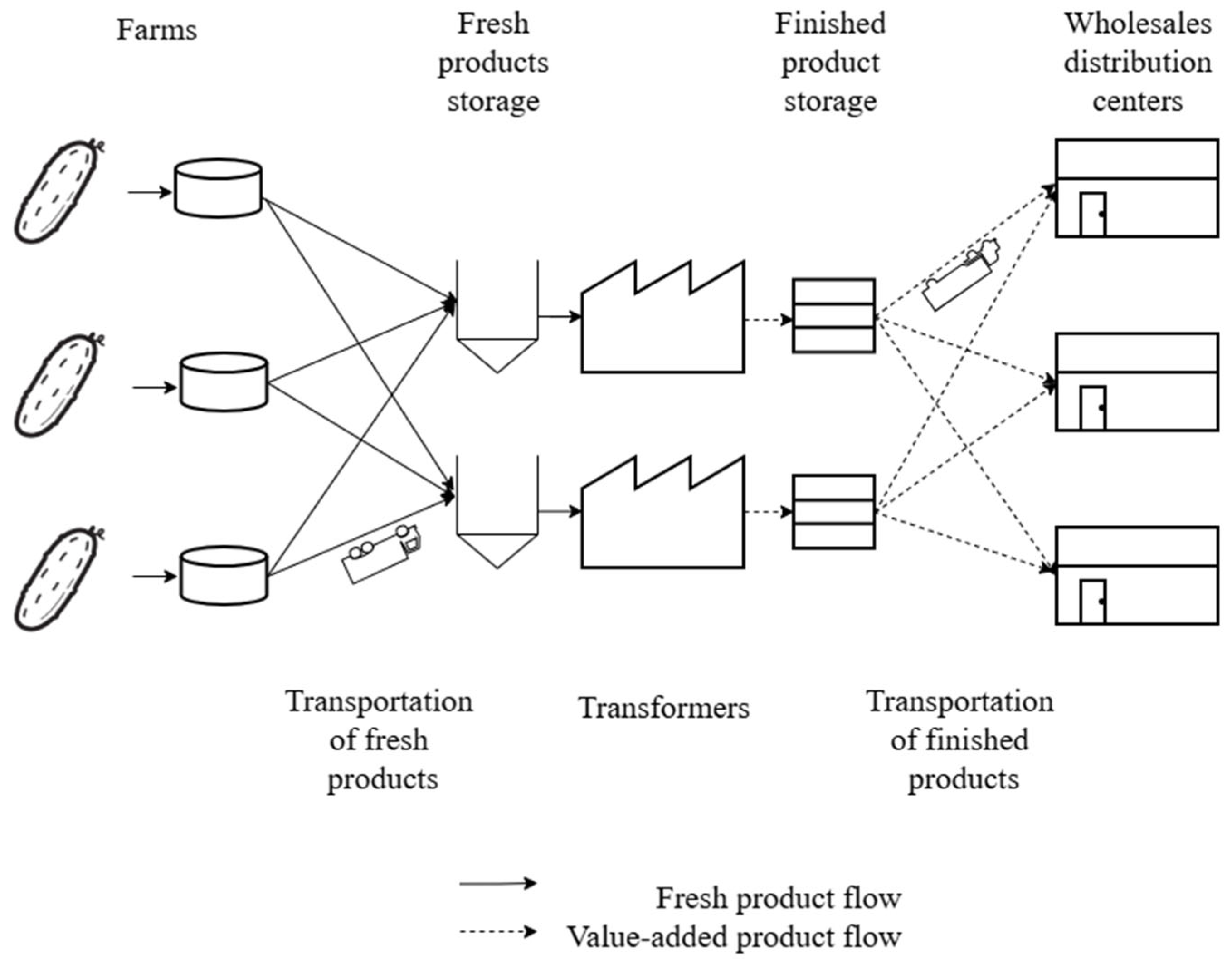
The supply chain under study is composed of multiple actors responsible for cassava production, transportation, processing into cassava starch, and subsequent distribution to customers, as illustrated in
Figure 1. These actors are organized across two hierarchical levels. At the lower level are two processing plants. These agents receive fresh cassava transported from farms, store it in silos with limited capacity and subject to time-dependent losses, and subsequently transform it into a finished product (FP), considering specific yields for each variety. The FP is stored in warehouses that also experience losses and have storage constraints, after which it is distributed to wholesale markets through specialized transporters. A key challenge faced by processors is the high level of idle time at the processing plant, stemming from insufficient synchronization between the supply of raw cassava and the processing cycles.
Also at this level are 33 farmers responsible for planting and harvesting cassava in accordance with the crop’s production cycles. Each crop has specific yields depending on planting and harvesting periods, and harvested cassava is temporarily stored on-farm before transportation. Farmers operate under constraints such as available land area and operating costs (planting, maintenance, harvesting, and leasing), and seek to maximize profits by selling fresh product (FP) to processing plants. Planning activities in this ASC are carried out over a 34-period time horizon, where each period represents 15 calendar days, corresponding to cassava production cycles and seasonal patterns in the Colombian Caribbean.
At the upper hierarchical level is the National Government of Colombia (GNC), which regulates activities across the chain. As part of its public policy, the GNC seeks to promote the participation of small agricultural producers in agri-food supply chains. One of the mechanisms used to achieve this is the establishment of regulations governing food supply and distribution systems, which mandate minimum percentages of local purchases from small producers. These requirements apply specifically to organizations that manage public resources and, in this case study, are enforced upon the two processors in the chain.
The profits of farmers, the calculation of processing-plant idle time, and the GNC’s policies to support small producers are explicitly modelled. Hierarchical decisions are represented through the interactive fuzzy approach, which seeks a solution that efficiently balances the interests of all actors involved in the chain. The formulation of the BLDPP is presented below.
5. Resolution Methodology and Numerical Analysis
It is important to emphasize that the proposed bilevel mixed-integer linear programming model is not solved directly as a bilevel model using a commercial solver. As is well known, even continuous bilevel linear programs are NP-hard, and mixed-integer bilevel problems are considerably more challenging, with no general-purpose solver currently capable of guaranteeing global optimality.
In this study, the bilevel structure is addressed through an interactive fuzzy decision-making approach, following Shih et al. [
21]. This methodology transforms the original decentralized bilevel problem into a sequence of single-level mixed-integer linear programming (MILP) problems by means of membership functions, tolerance ranges, and auxiliary constraints. Each resulting MILP is subsequently solved using GAMS with the CPLEX solver.
All computational experiments were implemented using GAMS (General Algebraic Modeling System), version 49.6.1, through GAMS Studio 49, and solved with the MIP solver ILOG CPLEX 12.8. The experiments were carried out on a Lenovo LOQ 15IAX9 laptop computer (Lenovo, 1009 Think Place, Morrisville, NC, USA). The system is equipped with a 12th Gen Intel Core i5-12450HX processor running at 2.40 GHz and 24 GB of RAM (23.7 GB usable), operating under a standard 64-bit desktop environment. The equipment was purchased and used in Sincelejo, Colombia. This specification also applies to the remaining equipment mentioned in the manuscript.
The computational time required to solve each reformulated single-level MILP generated within the interactive fuzzy framework was negligible for the case study considered. Therefore, no detailed computational performance analysis is reported in this study, and the focus is placed on the methodological validity and managerial interpretability of the obtained solutions.
In this context, CPLEX is employed exclusively to solve the single-level subproblems resulting from the interactive fuzzy reformulation, rather than the original bilevel model itself. Therefore, the objective of the proposed approach is not to compute a globally optimal solution to the original bilevel problem, but rather to derive a Pareto-efficient and practically implementable solution that is consistent with the theoretical foundations of decentralized bilevel decision-making and interactive fuzzy optimization, where multiple actors with potentially conflicting objectives require non-dominated compromise solutions.
Methodologically, the decision-making procedure employed in this study is based on the interactive approach proposed by Shih et al. [
21]. As a first step, the problem was solved independently for each decision-maker.
The top-level problem seeks to maximize the participation of small farmers in the cassava purchased by processors. The processors’ problem focuses on minimizing idle time at the production plants, while the farmers’ problem aims to maximize their profits.
Table 3 presents the individual optimal solutions obtained for the top-level and lower-level decision-makers, considering the constraints defined in Equations (13)–(32) for each case.
Given that the solutions presented in
Table 3 differ from one another, it can be concluded that a global optimal solution has not yet been reached, likely due to the inherent conflicts between the objectives of the decision-makers. Following the methodology, the minimum acceptable satisfaction level must be one that is simultaneously acceptable to all decision-makers. Thus, the requirement is expressed as
where the minimisation is performed over the satisfaction degrees of all decision-makers, as follows:
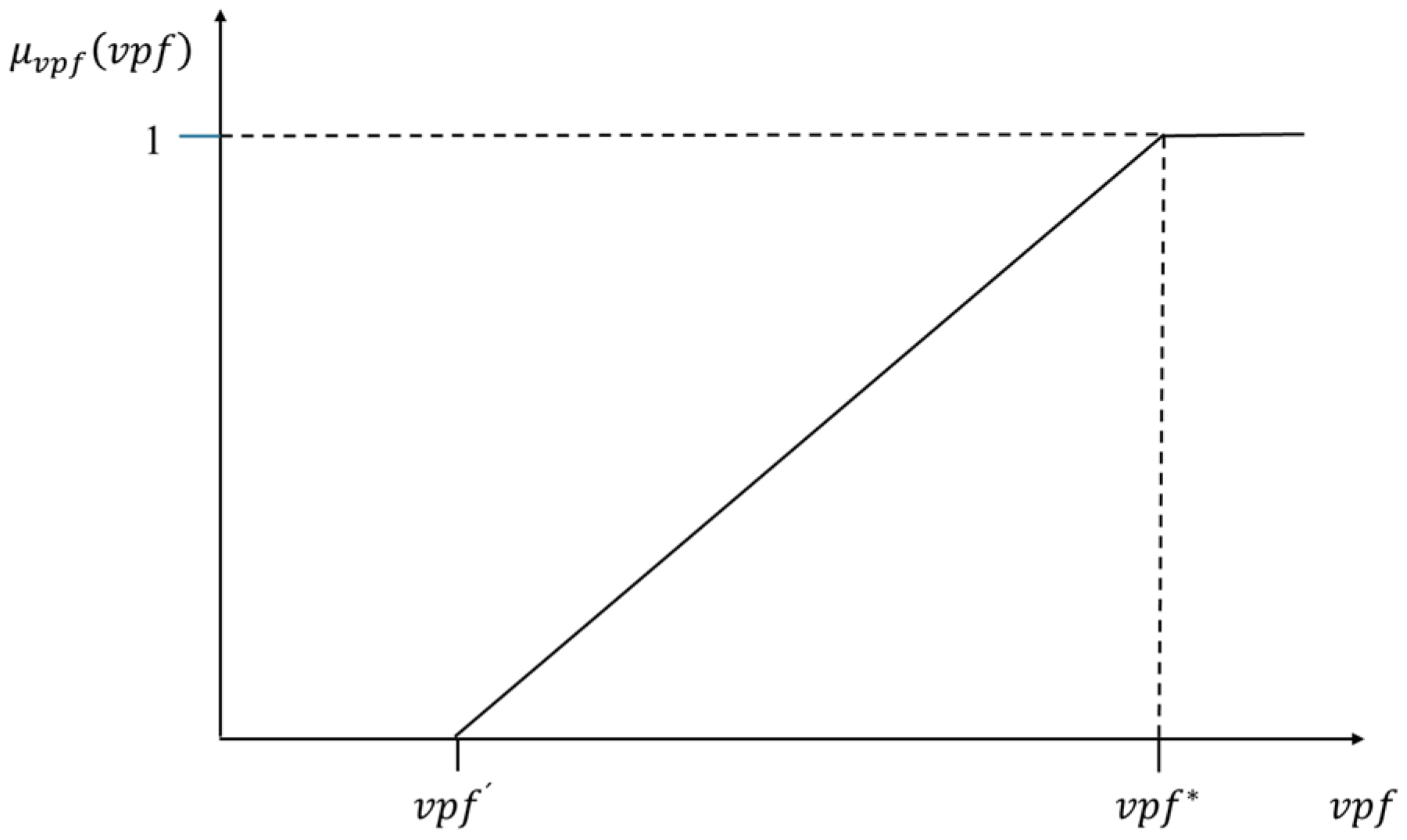
In the case of the processor’s problem, the minimum satisfaction level corresponds to the maximum idle capacity observed among the solutions. The declared tolerance for the first-level control variable ranges between 897.5 ton and 1312.5 ton. These values guarantee that processors source more than 30% of their cassava supply from small producers, depending on the planning scenario of the chain. The associated membership function, therefore, has the same structure as expression (7).
This preference is modeled using membership functions in accordance with fuzzy set theory and is communicated to the lower-level decision-makers in the form of additional constraints or first-level requirements, following the methodological procedure proposed by [
21], as detailed below:
The above membership function is illustrated in
Figure 2.
Similarly, the membership functions corresponding to the objectives of the first- and second-level decision-makers—including the GNC, processors, and farmers—were specified. Considering the entire procedure described above, and incorporating the tolerance function of the lower level while omitting the satisfaction degree vector, the following auxiliary equations are obtained by applying Expression (9):
By solving the system of Equations (37)–(42), subject to the constraints (13) to (32) established for the supply chain in the case study, the solution presented in
Table 4 is obtained.
The application of the interactive fuzzy decision-making process, under a decentralized two-level scheme, enabled the planning of activities within the ASC with a satisfaction level of 94% for all decision-makers in the chain.
5.1. Comparative Analysis of Planning Scenarios
To empirically validate the approach adopted in this study, four planning scenarios were analyzed: (i) the interactive fuzzy solution (), (ii) maximization of purchases from small producers (), (iii) minimization of idle capacity in processing plants (), and (iv) maximization of farmers’ profits (). This comparison enables an explicit assessment of the structural trade-offs between social inclusion, operational efficiency, and agricultural profitability.
The numerical results show that extreme single-objective solutions lead to outcomes that are optimal for one decision-maker but detrimental to at least one other actor. In particular, Scenario 2 () achieves the highest level of purchases from small producers () but at the cost of increased idle capacity and a severe reduction in farmers’ profits. Conversely, Scenario 3 () minimizes idle capacity but significantly reduces both inclusion and agricultural income. Scenario 4 () maximizes farmers’ profits but leads to lower inclusion levels and higher idle capacity compared to the best operational scenario.
The obtained results confirm the existence of structural conflicts among the objectives of the different decision-makers, thereby justifying the need for a compromise solution within a decentralized decision-making framework. Subsequently, the performance of the solution derived from the interactive fuzzy methodology is examined.
5.2. Performance of the Interactive Fuzzy Solution
The interactive fuzzy solution () does not aim to compute a globally optimal solution to the original bilevel problem. Instead, it maximizes the minimum common satisfaction level through a max–min formulation, ensuring that all objectives achieve at least a proportional level of performance within their admissible ranges.
Table 5 summarizes the comparative performance of the four planning scenarios and reports the relative gaps of the interactive fuzzy solution with respect to the individual optima, highlighting its near-optimal behavior across all objectives.
Numerically, achieves ≈ $828.5 M COP, ≈ 31,683.7, and ≈ $1765.7 M COP, with a satisfaction level of . Importantly, the performance of remains very close to the best values obtained under individual optimization. Relative to the extreme scenarios, exhibits a gap of approximately 2.5% with respect to the maximum inclusion level (), 0.12% with respect to the minimum idle capacity (), and 5% with respect to the maximum farmers’ profit ().
These results quantitatively demonstrate that the fuzzy solution represents a Pareto-efficient and practically implementable compromise, achieving near-optimal performance for all objectives while avoiding the extreme outcomes observed in single-objective scenarios.
5.3. Temporal Behavior and Operational Feasibility
To analyze the temporal behavior and operational feasibility of the solution obtained through the fuzzy approach implemented in this study, the evolution of key decision variables was graphically examined over the planning horizon under the different scenarios considered.
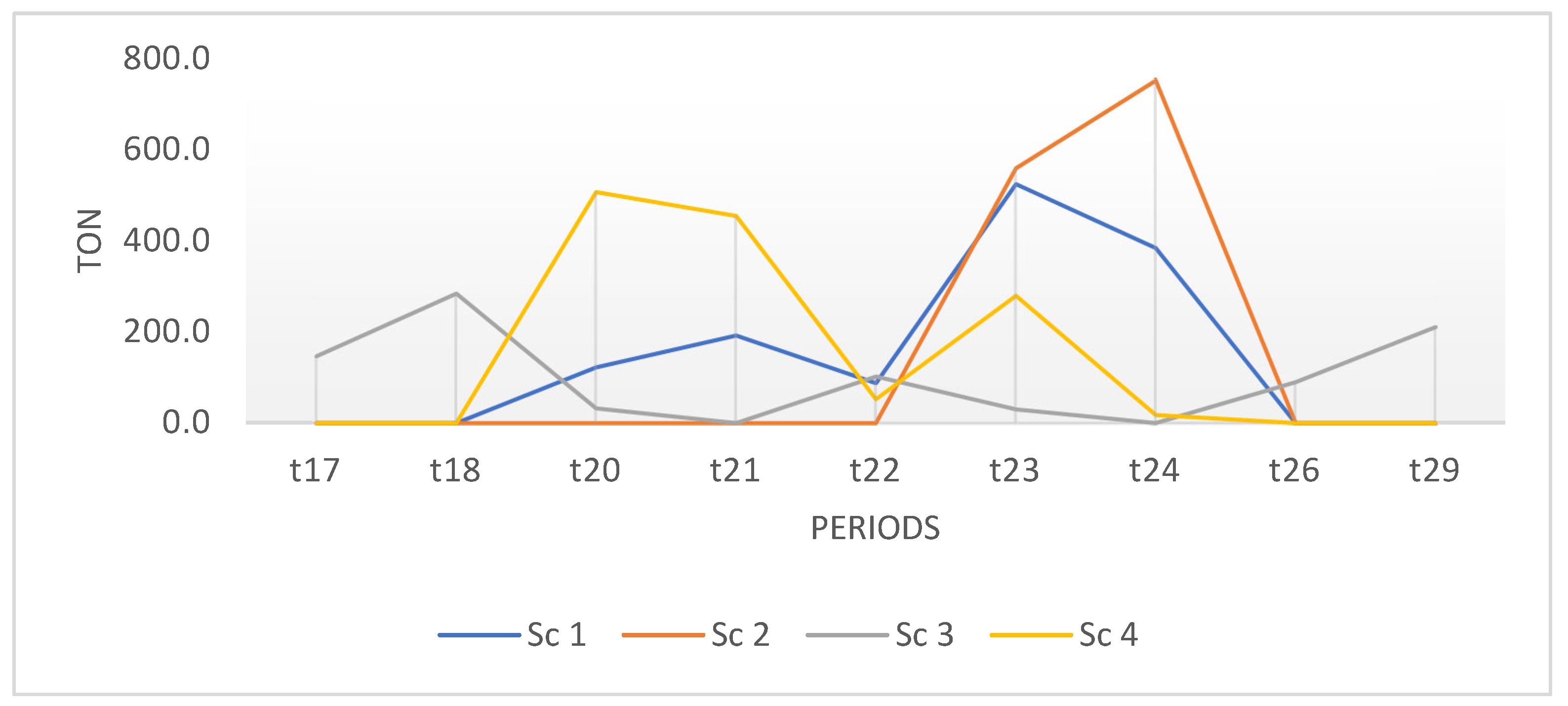
Figure 3 illustrates the temporal distribution of purchases from small producers across the scenarios. In
, purchases are strongly concentrated between periods 22 and 26, which increases logistical pressure and limits flexibility in transportation and storage operations. In contrast,
distributes purchases over a broader time window, reducing peak loads while simultaneously maintaining high levels of inclusion.
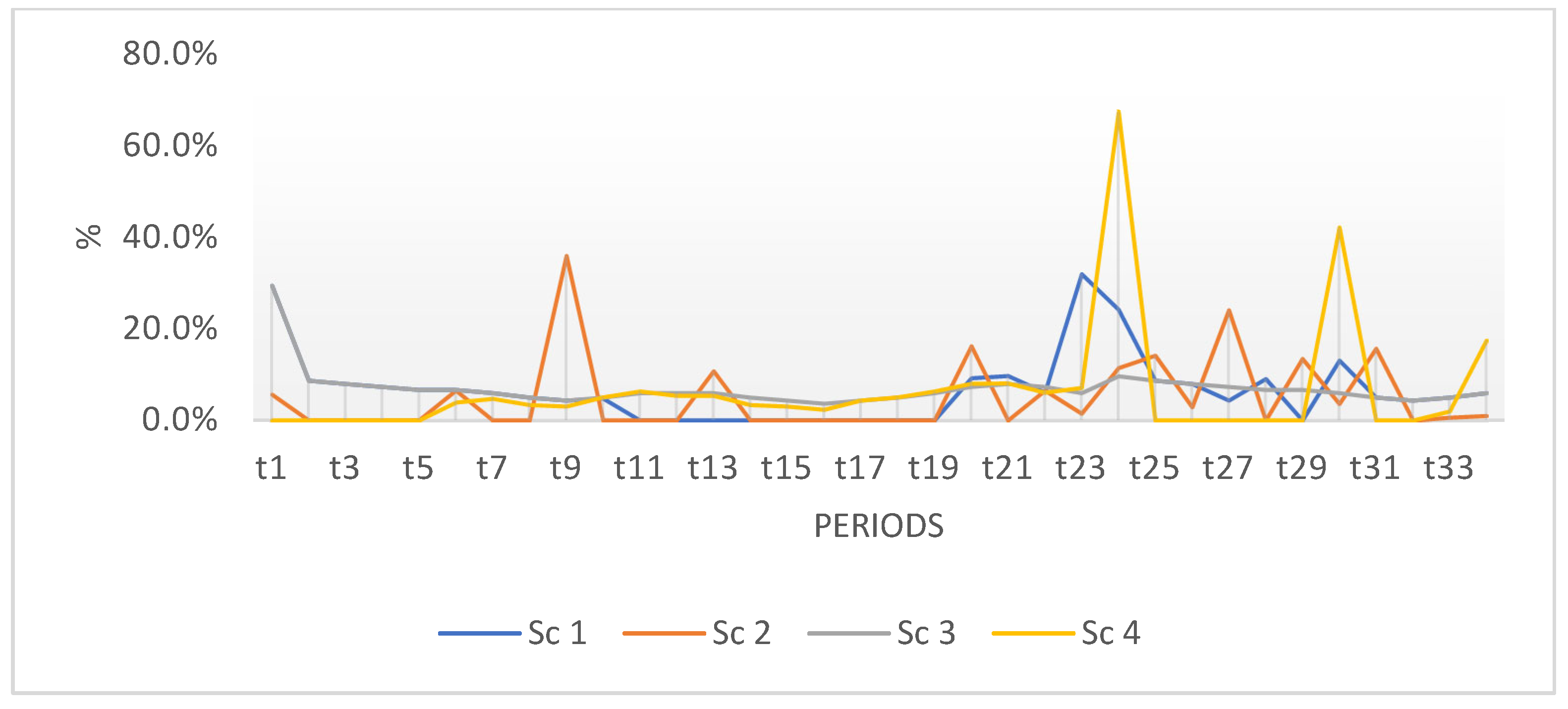
Figure 4 presents the behavior of idle capacity in processing plants. Under
, idle capacity remains below 10% of installed capacity in approximately 88% of the planning periods, indicating a balanced utilization of processing resources. Conversely,
exhibits pronounced peaks of unused capacity, particularly in periods 23–25 and 29–31, reflecting a misalignment between profit-oriented production and efficient plant utilization.
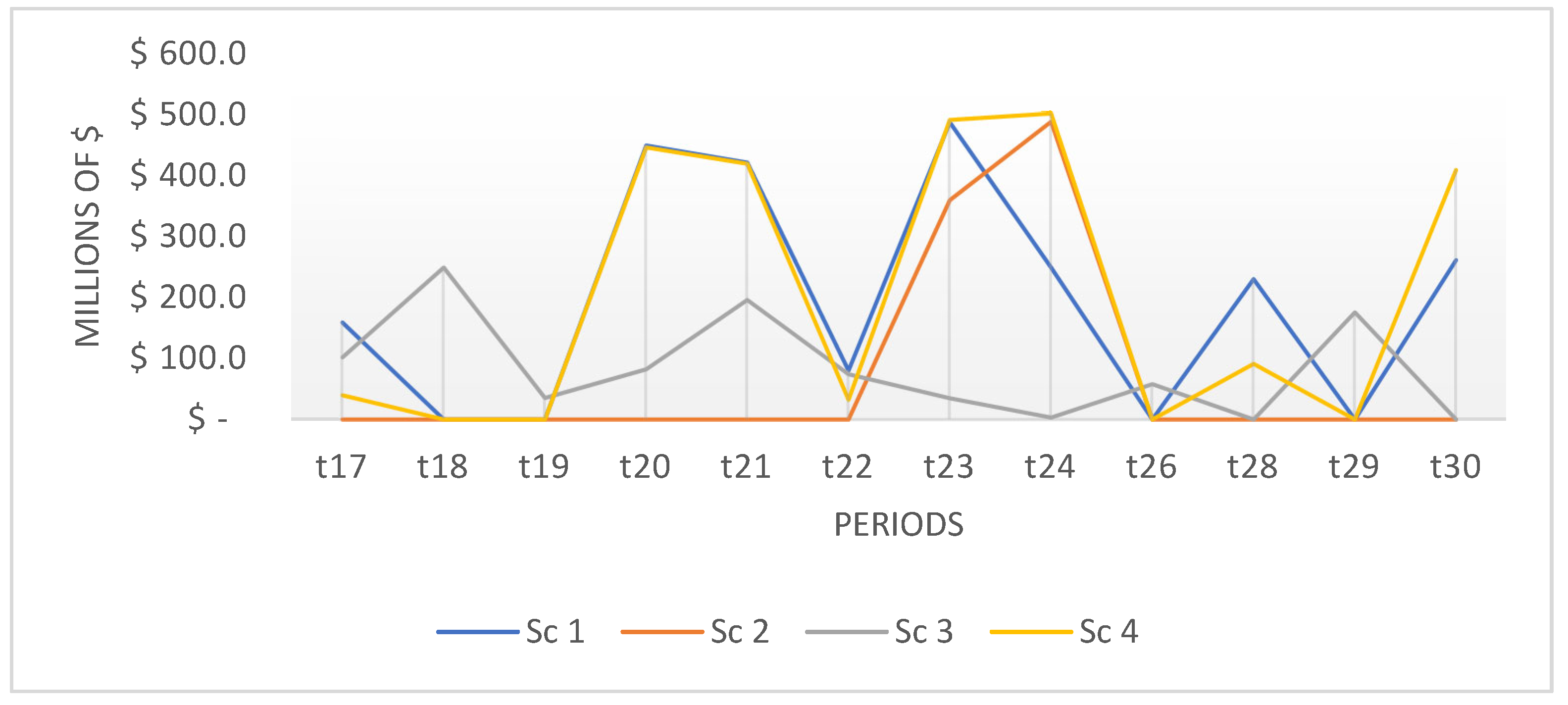
Figure 5 shows the evolution of farmers’ profits over time. While
generates the highest total agricultural income, it also displays a more irregular income pattern. In contrast,
maintains a more stable income flow during periods 17–24, with recovery in later periods, which is consistent with the diversified livelihood strategies typically observed among rural producers.
Based on these results, the next section examines the main managerial implications derived from the proposed planning strategies under the interactive fuzzy solution approach implemented in this study.
5.4. Managerial Implications
The numerical results obtained from the comparative analysis of planning scenarios and the interactive fuzzy solution provide relevant managerial insights for the main stakeholders involved in the agri-food supply chain, particularly in contexts characterized by decentralized decision-making and potentially conflicting objectives.
From the perspective of government and regulatory authorities, the results indicate that high levels of inclusion of small producers can be achieved without incurring significant losses in operational efficiency or overall economic performance. In particular, the fuzzy solution (Sc1) attains purchase levels from small producers that are close to the maximum achievable under individual optimization, with only marginal deviations from the best-case scenario, while avoiding the adverse effects observed under strict maximization policies. This finding suggests that public policies based on tolerance ranges and gradual targets, rather than rigid maximization mandates, may be more effective in promoting social inclusion without generating operational distortions along the supply chain.
For processing plants, the results show that strict minimization of idle capacity is not compatible with high levels of inclusion or with adequate agricultural profitability. The fuzzy approach enables a balanced coordination between plant utilization targets and flexibility in procurement decisions, maintaining idle capacity within acceptable levels during most of the planning horizon. From a managerial standpoint, this implies that planning schemes incorporating explicit tolerances can improve coordination among procurement, production, and logistics decisions, reducing the risk of bottlenecks or underutilization while preserving the participation of small producers.
In the case of farmers, the analysis reveals that although individual profit maximization yields the highest aggregate agricultural income, it also leads to less stable and more imbalanced supply chain configurations. By contrast, the fuzzy solution allows farmers to achieve near-maximum profit levels while benefiting from greater temporal income stability and a reduced risk of exclusion from the procurement system. Such stability is particularly relevant in rural contexts, where income volatility can be as critical as expected profit levels for long-term sustainability.
More broadly, the managerial implications of this study suggest that planning approaches based on non-dominated compromise solutions can serve as effective decision-support tools in agri-food supply chains involving multiple autonomous actors. By translating conflicting objectives into membership functions and satisfaction levels, the proposed approach facilitates implicit negotiation among stakeholders and delivers operational plans that are technically feasible, socially inclusive, and economically reasonable. In this sense, the model can support both public policy design and strategic and tactical decision-making by private agents operating within the supply chain.
5.5. Robustness and Sensitivity Analysis
To further strengthen the empirical validation of the proposed approach, an integrated robustness and sensitivity analysis was conducted to evaluate the behavior of the interactive fuzzy solution under moderate variations in key policy, preference, and operational parameters. Specifically, three dimensions were analyzed: (i) the minimum purchase quota from small producers, (ii) the tolerance bounds of the fuzzy membership functions, and (iii) the storage capacity of raw material silos at processing plants.
To this end, six alternative scenarios were defined around the baseline fuzzy solution (Sc1). Scenarios and assess policy-related variations by modifying the minimum purchase quota from small producers to 25% and 35%, respectively, relative to the baseline value of 30%. Scenarios and analyze the sensitivity associated with decision-makers’ preferences by tightening (−2%) and relaxing (+2%) the tolerance bounds of the fuzzy membership functions. Finally, scenarios and explore operational sensitivity by decreasing and increasing, respectively, the storage capacity of raw material silos at processing plants by 10%.
Table 6 summarizes the results of the integrated robustness and sensitivity analysis of the interactive fuzzy solution under these alternative policy, preference, and operational scenarios, highlighting both the stability of the common satisfaction level
and the shifting nature of the limiting objective in response to parameter perturbations.
To summarize, the results indicate that the compromise solution obtained through the interactive fuzzy approach is stable and robust under moderate variations in policy, preference, and operational parameters. While such perturbations may induce adjustments in temporal flow allocation, capacity utilization, or the dominant limiting objective, the overall structure of the solution remains unchanged, and the common satisfaction level stays high.
This behavior confirms that the satisfaction-based max–min formulation allows the solution to endogenously absorb reasonable changes in the decision environment while preserving a balanced trade-off among social inclusion, operational efficiency, and agricultural profitability. Consequently, the proposed approach constitutes a viable and reliable decision-support tool for decentralized agri-food supply chains, where regulatory uncertainty and operational variability are inherent features of real-world planning contexts.
6. Conclusions
This study examined the hierarchical functioning of an agri-food supply chain (ASC) through a two-level mixed-integer linear programming model with multiple followers. Based on this formulation, several methodological approaches to agri-food supply chain management (ASCM) with hierarchical structures were evaluated. Although classical methods for solving decentralized bilevel programming problems have shown important progress, they often require levels of precision that are unrealistic for poorly defined real-world systems, thereby limiting their practical usefulness. In contrast, the interactive fuzzy decision-making approach provides a more suitable alternative, as it simplifies problem representation without compromising realism. By using membership functions to model imprecision and multi-objective algorithms to guide the search process, this methodology offers lower computational complexity and greater adaptability to decentralized hierarchical systems.
To validate the proposed model, a cassava ASC in the Colombian Caribbean was selected as a case study for starch production. Applying the interactive fuzzy decision-making method within a decentralized two-level framework made it possible to design a management plan that simultaneously satisfied the objectives of decision-makers at both hierarchical levels of the chain. As a result, overall ASC planning achieved a satisfaction level of 94% for the case study, demonstrating the effectiveness of the approach in harmonizing the interests of the various actors involved. Both the result and the resulting management plan were validated by a technical committee of ASC stakeholders, becoming the foundation for a strategic planning module incorporated into the processors’ software application aimed at synchronizing cassava supply with crop planning.
The hierarchical structure of the proposed model places public policy at the upper decision level, reflecting Colombia’s strong social interest in promoting the participation of small producers in agri-food chains. Validation results showed that, beyond meeting the regulatory requirement of ensuring at least 30% of supply from small local producers, all evaluated scenarios exceeded 95%. This outcome suggests a potentially significant positive impact on the social performance of the chain when implemented in decision-making processes. These findings provide strong evidence that the decentralized bilevel model, solved through the interactive fuzzy approach, constitutes an effective strategy for advancing socially sustainable management in agri-food supply chains.
Another significant contribution of this study is the reduction in idle time in processing plants. The plan generated through the interactive fuzzy approach kept idle time below 10% of installed capacity in more than 85% of planning periods—a performance notably superior to that achieved in the alternative scenarios analyzed.
Despite its contributions, this study is subject to certain limitations. First, the proposed model was validated using a single real-world case study, which may limit the direct generalizability of the results to other agri-food supply chains with different structural, institutional, or geographical characteristics. Second, the model adopts a deterministic planning framework and does not explicitly account for environmental or climatic uncertainty, such as variability in crop yields, weather-related disruptions, or stochastic demand fluctuations. While these assumptions are consistent with the scope and objectives of the present study, incorporating such sources of uncertainty represents a relevant extension and is therefore left as a direction for future research.
Finally, future research should incorporate environmental indicators—such as carbon footprint, water and energy use efficiency, and loss management throughout the chain—to strengthen the economic and social analysis and move toward a more comprehensive sustainability assessment. Additionally, integrating uncertainty in crop yields, especially that arising from climatic variability, into optimization models is recommended, along with further exploration of methodologies capable of robustly evaluating sustainability indicators.