Article

Artificial Intelligence and the Emergence of New Quality Productive Forces: A Machine Learning Perspective


1
School of Economics & Management, Jiulong Lake Campus, Southeast University, Nanjing 211189, China
2
School of Accounting, Jiangxi University of Finance and Economics, Nanchang 330013, China
*
Author to whom correspondence should be addressed.
Mathematics 2026, 14(1), 135; https://doi.org/10.3390/math14010135 (registering DOI)
Submission received: 19 November 2025 / Revised: 23 December 2025 / Accepted: 24 December 2025 / Published: 29 December 2025

Abstract

In the era of the digital economy, AI technology is regarded as a key driver in promoting the development of new quality productive forces of enterprises. Based on the theories of creative destruction and resource allocation, this study selects Chinese enterprise-level data from 2009 to 2022 as the research sample, constructs enterprise new quality productivity indicators through text analysis and machine learning methods, and explores the impact of artificial intelligence on new quality productivity. The study results show that AI technology significantly improves the new quality productivity of enterprises. Further research found that enterprise director background, digital industry agglomeration and financial agglomeration positively moderated the relationship between AI and new quality productivity. Heterogeneity analysis shows that the enabling effect of AI technology on new quality productivity is more significant in high-tech enterprises, state-owned enterprises and enterprises with strong policy support. Through empirical analysis, this study verifies the facilitating effect of AI technological innovation on enterprises’ new quality productivity, which provides important insights for enterprises in emerging economies to achieve the development of new quality productive forces in digital transformation.
MSC:
91B06; 68T05; 62M10; 62H30; 62P20

1. Introduction

The world is currently undergoing a transformation not seen in a century. Global trends such as multipolarity, economic globalization, informatization, and cultural diversification are deepening, while the rapid development of information technology and intelligence is creating the necessary momentum for a new scientific and technological revolution [1]. Amidst intensifying geopolitical tensions and the rise of great power rivalries, international competition for technological supremacy has never been fiercer. However, China faces significant challenges in areas such as semiconductor production, advanced manufacturing equipment, and core software development, where its technological reserves and capabilities remain inadequate.
In response to these challenges, China’s leadership has introduced the concept of “new quality productive force” (NQPF), offering a roadmap for future economic development. The NQPF represents a novel embodiment of advanced productive forces, aiming to shift traditional economic growth models and overcome the limitations of existing productive forces. It promotes innovation as the key driver of economic development, creating a new form of productivity characterized by high-tech, high-efficiency, and high-quality outcomes. This concept not only serves as an innovation in Marxist productivity theory but also signifies a profound transformation in modern production modes [2].
The development of productive forces depends on three main factors: science and technology, labor quality, and labor resources. Of these, science and technology plays a pivotal role in improving production efficiency, shortening product life cycles, and driving market and economic restructuring through “creative destruction.” Artificial intelligence (AI), the key force behind the fourth industrial revolution, accelerates this transformation. By reshaping social production processes and lifestyles, AI gives productivity an entirely new meaning.
From the perspective of AI’s role in empowering the NQPF, advancements in AI technology have significantly enhanced the automation and intelligence of production processes, exerting a profound impact on production relations and systems. This has fostered the digital transformation of the economic growth model [3]. Schumpeter’s theory of innovation strongly supports the mechanisms explored in this study [4]. AI brings about a fundamental change in enterprise productivity through disruptive innovations. Technologies such as big data, deep learning, and natural language processing have optimized resource allocation, broken down traditional industry barriers, improved production efficiency and product quality, and enabled the intelligent interconnection of production factors—ultimately driving the development of the NQPF.
Existing research primarily explores AI’s role in enhancing macroeconomic and social productivity. However, there is a gap in the micro-level analysis of how AI specifically promotes the NQPF at the enterprise level. The mechanisms through which AI facilitates NQPF development at the firm level have not been adequately examined. Macro-level studies have demonstrated that AI’s grand model accelerates the arrival of the intelligent era by inducing qualitative changes in production factors, which in turn foster the enhancement of the NQPF [5]. Moreover, the enhancement of computational power significantly drives productivity changes, steering the transition from traditional industrialization to intelligence-based production, and emerging as a critical driver of NQPF development [3].
The work of Huang and Rust [6] further suggests that AI impacts the labor process by optimizing not only laborers and labor tools but also labor objects, contributing to the development of the NQPF. Additionally, the rapid progress of technologies such as the Internet of Things, big data, and AI has facilitated the shift from traditional production processes to intelligent systems [7], further accelerating the leap of the NQPF [2].
Despite these advances, there has been limited research at the micro level regarding AI’s facilitative effects on digital knowledge accumulation and sharing [8]. AI has also enhanced productivity and corporate employment by fostering technological innovation [9,10,11,12,13]. Moreover, AI’s increasing role in labor production [14] has expanded the division of labor into human–machine collaborations, enhancing the qualitative productivity of firms and opening new possibilities for labor emancipation [15]. However, the complexity and rapid iteration of AI technology raise the cost of enterprise R&D [16,17], and the path through which AI promotes the development of the NQPF requires further investigation.
Existing studies also highlight several challenges in NQPF development, including inadequate infrastructure, core technology gaps, and structural shifts in the labor market [18]. A key question remains whether AI can emerge as the core driver of the NQPF through disruptive innovation. As a new form of qualitative productivity, the NQPF is fundamentally different from traditional total factor productivity metrics used in earlier studies [19,20,21]. Furthermore, standardized and objective measurement criteria for the NQPF are still lacking.
This study introduces an innovative approach to measuring the development level of the NQPF at the enterprise level using machine learning technology. By analyzing 28,293 sample observations of A-share listed companies in Shanghai and Shenzhen from 2009 to 2022, the study investigates how AI influences the NQPF, focusing on the role of AI innovation subjects to clarify its mechanisms.
This study makes three significant contributions. First, it offers a novel portrayal of the NQPF at the enterprise level. While current research on the NQPF is largely theoretical [1,5] or based on subjective index evaluations [22], this paper uses machine learning and text analysis techniques to assess the NQPF through textual data from company annual reports.
Second, this study is the first to empirically examine the enabling role of AI in the NQPF at the enterprise level, thereby enriching the literature on AI’s impact in the micro field. Previous studies have primarily focused on AI’s economic effects on firms [13,23] and its potential to optimize production, management, and decision-making [14]. This research expands the understanding of AI’s impact on a new form of firm productivity, a previously underexplored area, thus broadening the research on AI technology at the micro-enterprise level.
Third, the study empirically explores the mechanisms by which AI contributes to the NQPF, investigating the relationships between AI and NQPF in terms of factors such as enterprise leadership, digital industry agglomeration, and financial clustering. This work not only advances the literature on AI’s impact but also provides insights into how enterprises can leverage AI to foster high-quality economic development through innovative productivity.
The rest of the paper is organized as follows: Section 2 covers theoretical analysis and research hypotheses. Section 3 outlines the research design. Section 4 discusses the empirical result. Finally, Section 5 discusses conclusions and policy implications.

2. Theoretical Analysis and Research Hypotheses

The report of the 20th National Congress of the Communist Party of China underscores the strategic importance of integrating strategic emerging industries and accelerating the development of the digital economy. As a core component of national strategy, artificial intelligence—with machine learning, natural language processing, and deep learning as its technical pillars—has emerged as a pivotal driver of enterprise operational transformation and the enhancement of New Quality Productive Forces. Following Lai et al. [24] and Zhong et al. [25], this study conceptualizes New Quality Productive Forces as a multidimensional construct comprising three core dimensions: technological innovation efficiency (the ability to generate and apply disruptive technologies), factor allocation efficiency (the optimal combination of traditional and digital elements), and industrial synergy efficiency (the coordinated development of enterprises within industrial ecosystems). The following sections systematically elaborate the mechanisms through which AI influences New Quality Productive Forces, integrating classical theoretical perspectives with insights from the digital economy to establish a robust theoretical framework.

2.1. The Direct Impact Mechanism of Artificial Intelligence on Corporate New Quality Productive Forces

Artificial Intelligence drives the development of corporate New Quality Productive Forces through three mutually reinforcing pathways, each targeting a distinct core dimension of NQPF.

2.1.1. AI-Driven Enhancement of Technological Innovation Efficiency Through Factor Reconfiguration

Grounded in Schumpeterian theory of innovation [4], artificial intelligence engenders “creative destruction” by structurally transforming the foundational triad of the production function—laborers, labor tools, and labor objects. This reconfiguration constitutes a core mechanism for advancing technological innovation efficiency, a key dimension of New Quality Productive Forces.
In the domain of laborers, the integration of big data analytics and intelligent decision-support systems augments human cognitive and decision-making capacities. This convergence facilitates profound synthesis between specialized knowledge and cross-disciplinary competencies, contributing not only to individual productivity enhancement but also to the generation of both incremental and radical innovations [26,27]. Illustratively, AI-enabled predictive analytics allow R&D teams to dynamically identify technical bottlenecks, compressing new product development cycles by 30–50% [28].
Regarding labor tools, AI-embedded intelligent equipment and automated systems represent a paradigm shift from conventional manual operations. By extending functional capabilities and operational precision, these technologies transition production modalities from human-centric models to hybrid human–machine collaboration. Such evolution enables refined manufacturing processes and mass-customization capabilities [15]. Empirical evidence from smart robotics implementations demonstrates 24/7 operational continuity with error margins below 0.1%, substantially elevating both productive throughput and quality assurance standards.
Concerning labor objects, AI redefines productive targets through its catalytic role in developing intelligent products and services—from smart home ecosystems to personalized healthcare platforms. This transformation aligns with increasingly diversified and individualized market requirements, generating novel consumption paradigms and entrepreneurial opportunities while expanding the frontiers of technological innovation [6].

2.1.2. Optimization of Factor Allocation Efficiency Through Asymmetric Information Mitigation by AI

Grounded in information asymmetry theory [29], artificial intelligence fundamentally addresses the core issue of resource misallocation inherent in traditional factor allocation mechanisms. By enhancing information transparency and systematically reducing transaction costs, AI contributes to the advancement of factor allocation efficiency—a critical dimension of New Quality Productive Forces.
Mitigation of Information Asymmetry
Through advanced data analytics and predictive modeling, AI enables external investors and resource providers to monitor enterprise operational dynamics in real time, thereby transcending the constraints of conventional information dissemination channels [30]. This technological capability facilitates the directional flow of capital, labor, and other production factors toward high-efficiency enterprises and sectors, optimizing resource distribution at both macro and micro levels [3]. Empirical evidence from the fintech sector demonstrates that AI-powered credit assessment systems substantially narrow the information gap between financial institutions and small- and medium-sized enterprises, increasing SME loan approval rates by approximately 40% [31].
Reduction in Transaction Costs
AI-driven intellectualization of production, information, and decision-making systems streamlines historically redundant allocation processes, such as automated supply chain coordination and intelligent procurement. Studies indicate that such integration reduces associated transaction costs by 20–30% [32]. Moreover, by minimizing resource misallocation attributable to human error or cognitive bias, AI reinforces structural improvements in factor allocation efficiency, establishing a more robust foundation for sustained productivity growth.

2.1.3. The Enhancement of Industrial Synergy Efficiency Through Digitally Intelligent Agglomeration

Building upon the theoretical foundations of industrial agglomeration and the digital economy, artificial intelligence emerges as a critical enabler for the digital transformation and intelligent upgrading of industrial clusters. By facilitating cross-sectoral integration and fostering systemic innovation, AI substantially enhances industrial synergy efficiency—constituting the third critical dimension of New Quality Productive Forces.
Virtual Agglomeration Mechanisms
AI transcends the spatial limitations inherent in traditional industrial agglomeration by establishing virtual clusters anchored in data, algorithmic capabilities, and computational resources. Within these digital ecosystems, enterprises engage in efficient interaction and resource reciprocity through intelligent coordination networks, simultaneously intensifying competitive dynamics and collaborative potential [15]. A representative manifestation is the AI-driven platform economy, which integrates upstream and downstream entities across value chains, demonstrably reducing supply chain response latency by approximately 50%.
Emergence of Novel Industrial Archetypes
AI serves as a catalytic force in the technological modernization of conventional industries—exemplified by smart manufacturing and precision agriculture—while concurrently giving rise to innovative organizational frameworks such as the sharing economy and platform-based business models. These emergent industrial configurations synthesize conventional production factors with digital assets—most notably data—thereby advancing the holistic optimization of socioeconomic systems and augmenting the synergistic efficiency of broader industrial ecosystems [3].
Therefore, based on the above inferences, this study proposes the following hypothesis:
Hypothesis 1:  
Artificial Intelligence technology has significantly improved the company’s NQPF.

2.2. Moderating Mechanisms: The Reinforcing Role of Boundary Conditions

The aforementioned direct impact mechanism is not universal; it is contingent on three key boundary conditions—directors’ technology backgrounds, digital industry agglomeration, and financial agglomeration—which reinforce the role of AI in promoting NQPF through targeted pathways:

2.2.1. Directors’ Technology Background: Strengthening the Implementation of AI-Driven Innovation

Drawing on upper echelons theory [33], the technological expertise possessed by board members fundamentally shapes cognitive frameworks and strategic decision-making patterns. This, in turn, amplifies the efficacy with which AI initiatives translate into enhanced New Quality Productive Forces through three distinct yet interconnected pathways.
Strategic Technology Selection and Deployment
Directors with formal technical training exhibit heightened capacity for identifying viable AI adoption pathways and strategically aligning technological solutions with organizational objectives. Their expertise enables precise evaluation of data ecosystems and algorithmic alternatives, thereby reducing strategic ambiguity in high-stakes technological investments. In algorithmically intensive domains particularly, such directors provide essential guidance in developing AI architectures that maintain functional alignment with core business processes while mitigating implementation risks.
Knowledge Integration and Organizational Learning
Technologically competent leadership employs AI systems as epistemological instruments for synthesizing heterogeneous information streams across internal and external environments. By systematically dismantling institutional knowledge barriers, they accelerate the intra-organizational diffusion of frontier technologies [34]. This orchestrated knowledge management facilitates the appropriation of digital knowledge externalities, directly enhancing firms’ technological innovation capacity [2].
Human–Machine System Optimization
Directors possessing technical backgrounds demonstrate superior competency in diagnosing production workflows amenable to automation while architecting hybrid human-AI collaboration frameworks. Their interventions ensure optimal complementarity between artificial and human cognitive systems, thereby maximizing the synergistic potential of intelligent technologies in simultaneously elevating productive efficiency and innovation outcomes [15].
Therefore, based on the above inferences, this study proposes the following hypothesis:
Hypothesis 2a:  
Directors’ technology backgrounds strengthen the positive impact of AI on NQPF by promoting AI-driven innovation implementation.

2.2.2. The Amplification of AI-Driven Factor Allocation Through Digital Industrial Agglomeration

Digital industrial agglomeration serves as a structural catalyst for both the implementation and diffusion of artificial intelligence. By providing an integrated ecosystem for technological deployment, it systematically reinforces AI’s capacity to optimize factor allocation and enhance industrial synergy through three synergistic mechanisms.
Data Resource Concentration and Algorithmic Refinement
The spatial concentration of digital enterprises generates rich, multi-dimensional datasets encompassing both corporate operations and individual behavioral patterns. These aggregated data streams constitute essential inputs for the training and iterative refinement of AI models [3]. The resulting enhancement in algorithmic precision and contextual adaptability enables more granular and efficient allocation of production factors across economic units.
Inter-Organizational Innovation Networks
Digital agglomeration fosters the formation of collaborative innovation ecosystems, wherein enterprises collectively engage in the optimization and scaling of AI applications [31]. The shared infrastructure for data exchange and systemic interoperability reduces duplication of efforts and accelerates collective learning, thereby amplifying AI’s impact on cross-firm coordination and industrial synergy.
Technological Diffusion and Productivity Conversion
The co-location of complementary entities within digital clusters establishes accelerated pathways for translating AI research into applied productivity tools [15]. This integrated transformation chain facilitates rapid iteration of intelligent systems while concurrently addressing enterprise-specific implementation bottlenecks, thus shortening the temporal gap between technological development and measurable productivity gains.
Therefore, based on the above inferences, this study proposes the following hypothesis:
Hypothesis 2b:  
Digital industry agglomeration strengthens the positive impact of AI on NQPF by enhancing the scale effect of AI-driven factor allocation.

2.2.3. Financial Agglomeration: Mitigating Resource Constraints in AI Development and Deployment

Drawing upon financial geography and innovation economics, the spatial concentration of financial institutions constitutes a critical institutional mechanism for overcoming the resource constraints inherent in AI research, development, and application. Through three interconnected channels, financial agglomeration facilitates the translation of AI innovation into enhanced New Quality Productive Forces.
Reducing Financing Constraints Through Diversified Capital Access
The geographical clustering of financial intermediaries—including commercial banks, venture capital firms, and specialized investment funds—creates a diversified capital ecosystem that expands financing channels for AI-intensive enterprises [35]. This institutional density is particularly consequential for high-risk, capital-intensive AI projects, where traditional financing mechanisms often prove inadequate. By providing layered capital structures and risk-sharing arrangements, financial agglomeration lowers effective financing thresholds while improving project feasibility and long-term sustainability.
Accelerating Commercialization Through Specialized Financial Ecosystems
Financial clusters generate co-location advantages through the development of specialized service ecosystems encompassing technology valuation, regulatory compliance advisory, and innovation incubation services [3]. These complementary institutions reduce transaction costs in the commercialization process, facilitating the transition of AI technologies from laboratory prototypes to scalable market applications. The resulting reduction in market-entry barriers enables more efficient translation of technological breakthroughs into measurable productivity enhancements across economic sectors.
Enhancing Investment Efficiency Through Proximity-Based Information Advantages
The geographical proximity between financial institutions and technology enterprises within agglomerated regions fosters information symmetry through repeated interactions and specialized monitoring capabilities [30]. This institutional proximity reduces due diligence costs while improving the accuracy of risk assessment, particularly important for evaluating the complex technical and commercial prospects of AI initiatives. The resulting improvement in capital allocation efficiency accelerates both the development cycles of AI technologies and their diffusion into productive applications, thereby strengthening the innovation-to-productivity transformation pathway.
Therefore, based on the above inferences, this study proposes the following hypothesis:
Hypothesis 2c:  
Financial agglomeration strengthens the positive impact of AI on NQPF by alleviating the resource constraints of AI R&D and application.

3. Research Design

3.1. Model Specification

In order to examine the relationship between AI and firms’ NQPF, this paper builds the following benchmark model (1) for regression testing:
N Q P F i , t = α 0 + α 1 AItech i , t + Control + Firm FE + YearFE + ε i , t
Thus, the explanatory variable NQPFit is the level of the NQPF of listed company i in year t, AItechit represents the level of AI development of listed company i in year t, Control is the ensemble of control variables, and City FE and Year FE represent the listed company fixed effect and year fixed effect. The main hypothesis of this paper is that when the predicted regression coefficient α1 is positive and significant, it represents that AI promotes the development of firms’ the NQPF.

3.2. Data

This paper selected Chinese-listed companies as the research sample from 2009 to 2022. The following treatments were made to the initial sample: (1) the companies that were ST and *ST were excluded, as well as the listed companies in the financial category; (2) the missing data samples and data anomalous samples were excluded, and the continuous variables were subjected to shrinking of the tail with 1% above and 1% below (Winsorize). This paper’s data processing and analysis were completed using STATA 16.0, and finally, 28,293 annual enterprise sample values were obtained. The data source pathway mainly includes the AI patent data from the Artificial Intelligence Patent Research Database (AIPD) of the CNRDS database. The control variable data comes from the CSMAR database and the CNRDS database.

3.3. Variables

3.3.1. Explanatory Variable: Firms’ Level of Artificial Intelligence Development (AItech)

Drawing on the research method of Yao et al. [2], Wang et al. [20] and Hussain et al. [36]), this study adopts the natural logarithm of the number of enterprise AI invention patent applications after adding one as an indicator of the level of enterprise AI development. Specifically, this study relies on the Artificial Intelligence Patent Research Database (AIPD) in the CNRDS database, combines patent data from the State Intellectual Property Office and related literature, and identifies whether listed companies have applied for AI-related patents in the current year through the AI lexicon constructed by machine learning methods by searching for the inclusion of the keywords of AI in the titles and abstracts of the patents.
The number of invention patent applications was chosen in this study as an indicator of the level of AI development because the innovation value embodied in invention patents is more significant than that of utility model patents and design patents and can better reflect the quality and value of enterprises in the field of AI technological innovation. Compared with invention patents, the increase in the number of applications for the latter two categories of patents represents more of a “quantitative change” than a “qualitative change” in technological innovation. In addition, compared with the number of patents granted, the number of patent applications is less affected by the intervention of the examining authority, so this study chooses the number of patent applications rather than the number of patents granted as a measurement indicator.

3.3.2. New Quality Productive Force (NQPF)

In this paper, based on machine learning and text mining techniques, combined with the research experience of Lai et al. [24] and Zhong et al. [25], we constructed the enterprise new quality productive force (NQPF) index. The design process of this indicator includes the following steps:
First, a Python web crawler program collected and organized the annual reports of A-share listed companies on the Shanghai and Shenzhen stock exchanges. Then, the text of these reports was extracted using Java’s PDF processing library to form the study’s core dataset.
Second, referring to the ideas of Li [37] and Brochet et al. [38] in constructing text indicators, this paper analyzes the speeches of the central leaders on the new quality of productivity, the 2024 work report of the Chinese government, as well as policy documents such as the “Implementing Opinions on Promoting the Innovative Development of the Future Industries” jointly issued by the Ministry of Industry and Information Technology (MIIT), Ministry of Education (MOE), and the Ministry of Science and Technology (MOST). Several seed terms related to “new quality productive forces”, “advanced productivity”, “new materials,” “technological innovation,” “data elements,” “digitalization,” “digital economy,” “digital productivity,” “artificial intelligence,” “high quality,” “high technology”, “high computing power,” “high-quality talents,” “core technical talents,” “cloud technology,” “intelligent manufacturing,” “ecological manufacturing,” “green and low-carbon,” “green transformation,” and “green productivity.”
However, considering that the same concept or thing can usually be expressed by multiple semantically similar words, especially “new quality productive forces” as an emerging economic concept with wide coverage, this paper semantically expands the set of seed words. Based on the Word2Vec technique proposed by Mikolov et al. [39], which has become an important advancement in the field [40], and through its neural network Word Embedding method, the words are transformed into multi-dimensional vectors based on the contextual context, to identify the semantic similarity of the words by calculating the similarity between the word vectors [41]. However, the effectiveness of Word2Vec depends largely on the quality and quantity of the training data, so if the training data is insufficient or fails to cover certain technical terms or uncommon words, the generated word vectors may not accurately reflect the semantics of the words, which in turn affects the recognition of proximate words. In this paper, we use Python’s (3.8) “Synonyms” package to identify more accurate near-synonyms for the “new quality productive forces” feature thesaurus based on Word2Vec training and use the CBOW model (Continuous Bag-of-Word) in Word2Vec to identify the near-synonyms. The CBOW model in Word2Vec was used to train more than 1000 featured texts, including government work reports, academic literature, brokerage research reports, etc. The parameters of the CBOW model are as follows.
The detailed parameters of the CBOW model are shown below:
Max = w = C Logp ( w Context ( w ) )
The basic principle of the CBOW model is to train the word vectors by predicting the probability of the current word occurrence in the Context, and by maximizing the objective function, the Word2Vec word vectors corresponding to the central word can be obtained. In this model, C represents the corpus, w represents the center word, and Context (w) is the Context of the center word. By calculating the similarity between the vectors, words similar to the center word can be identified. In this study, the model is trained based on the texts related to “new quality productive forces” so that the recommended similar words better fit the core meaning of “new quality productive forces”. To ensure the accuracy of the results, only words with a similarity of 0.8 or more to the seed words were considered. In addition, 284 keywords related to “new quality productive forces” were identified through manual screening to eliminate words unrelated to the research topic and improve the accuracy of the thesaurus.
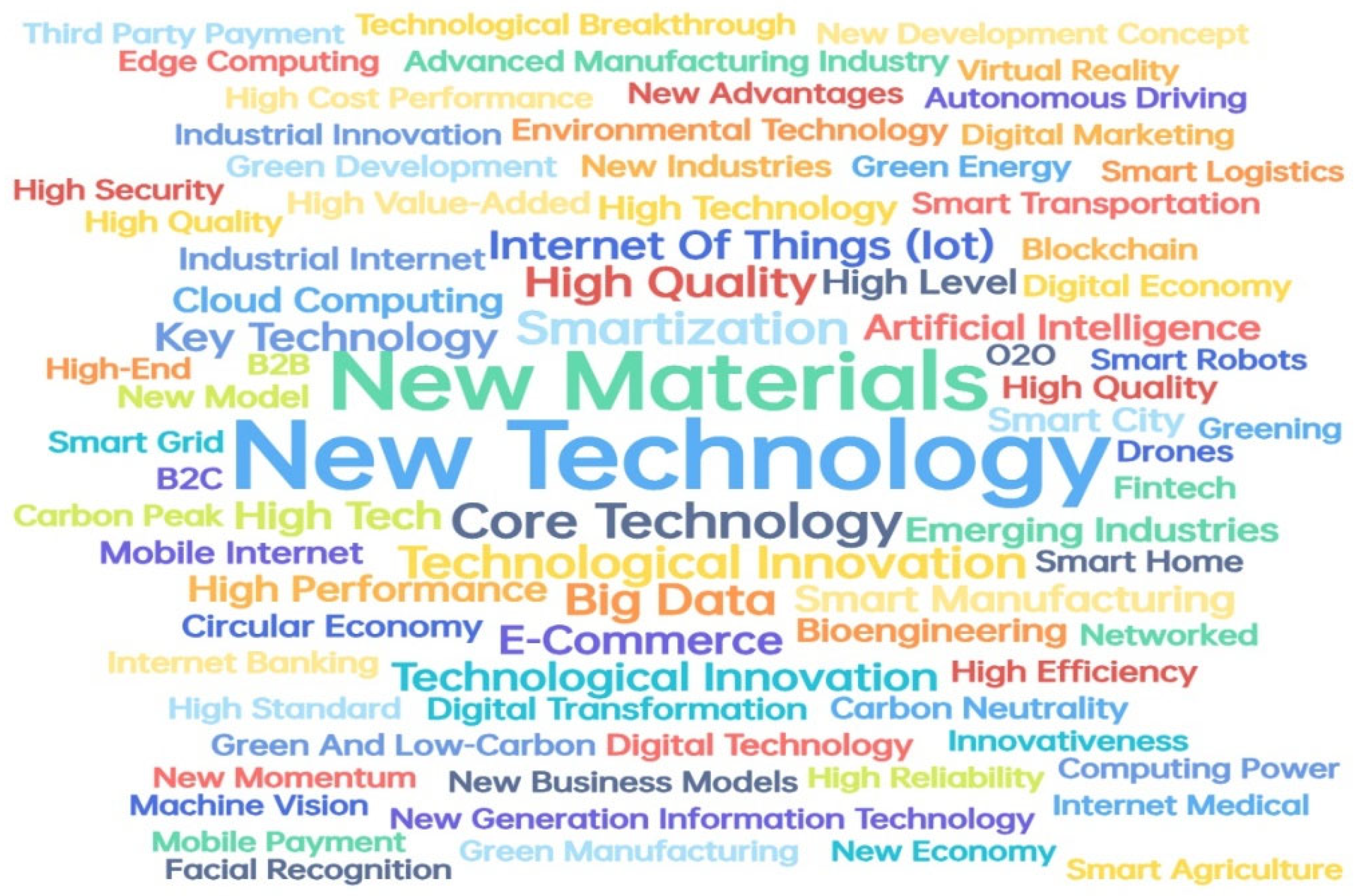
Finally, the Jieba word separation tool was used to separate and filter the text of annual reports of listed companies, and the frequency of keywords related to “new quality productive forces” in the annual reports was counted. The word frequency data are normalized by adding one to the original frequency and taking the natural logarithm. In order to better understand the focus and characteristics of the textual data related to “new quality productive forces”, this paper draws a word cloud map of the top 50 keywords in terms of word frequency during the whole sample period, shown in Figure A1.

3.3.3. Control Variables

Referring to the study of Yao et al. [2], this paper proposes to include a series of control variables to mitigate the endogeneity problem, specifically firm size (Size), firm age (Age), gearing ratio (Leverage), net profitability of total assets (ROA), firm growth (Growth), board size (BoardSize), whether the chairman of the board and the General Manager are two positions (Dual), equity concentration (Top1), and technological innovation (Lnallpats): Table A1 and Table A2 report variable-specific descriptions and descriptive statistics.

4. Empirical Results

4.1. Baseline Regression

Columns (1) to (3) of Table 1 depict the regression results for Artificial Intelligence (AItech) and new quality productive force (NQPF). After adding the control variables, year and firm fixed effects and control variables step by step, it is found that the regression results of the core variables remain unchanged. The regression coefficients of the variable AItech are 0.122, 0.038, and 0.025, respectively, and the estimated coefficients are all positive at the 1% significance level. The results indicate that AI innovation significantly enhances the NQPF of firms, thus confirming the basic Hypothesis 1 of this paper.
Economically, this means that for every 1 standard deviation increase in AItech (1.86), the NQPF index will rise by 0.0465 (0.025 × 1.86), which is approximately 1.94% of the sample mean of 2.40. Since the NQPF index comprehensively reflects a firm’s technological innovation efficiency, resource allocation efficiency, and industry synergy efficiency, this marginal effect should not be overlooked.
From a macroeconomic perspective, Acemoglu et al. [7] estimate the macroeconomic impact of AI, projecting a potential increase of up to 0.66% in total factor productivity (TFP) over 10 years. Existing microeconomic literature also demonstrates AI’s impact on traditional TFP at the firm level [20,42], but there is limited research on AI’s effect on high-quality TFP. While existing studies estimate that AI raises traditional TFP by 1–1.5% (in elasticity terms), our findings suggest that its association with the qualitative dimensions of productivity—such as technological sophistication, digital integration, and strategic innovation captured by NQPF—is economically meaningful and potentially more salient in the context of high-quality development. Furthermore, Yuan et al. [43] show that AI significantly enhances Green Total Factor Energy Efficiency, while Li et al. [44] empirically confirm that AI can drive new levels of productivity, with particularly strong effects in private enterprises and competitive industries. These findings are consistent with and support the results of this study.
From a theoretical perspective, the findings of this study extend Schumpeter’s theory of “creative destruction.” The systemic restructuring of workers, labor tools, and labor objects by AI is not just a technological transformation, but also a new mechanism driving “quality-driven” productivity (NQPF). This enriches Schumpeter’s [4] theory of disruptive innovation in the digital age. Additionally, expanding on the theory of information asymmetry, we find that AI significantly reduces factor misallocation (coefficient of 0.025), indicating that digital technologies are more effective than traditional contracts or intermediaries in alleviating market frictions. This provides new evidence for Akerlof’s [29] framework in the context of the digital era.

4.2. Endogeneity Tests

4.2.1. Instrumental Variables Test

To further address possible endogeneity issues such as reverse causality and omitted variables in the benchmark model, this study draws on Yao et al. [2] to construct an instrumental variable based on whether or not a city had a port of trade (PORT) from 1840 to the end of the Qing Dynasty. The instrumental variable reflects whether a city has served as a trade port. This historical factor may affect the application and development of AI technology in local firms but does not directly affect the NQPF of listed companies. Therefore, this instrumental variable satisfies the requirements of relevance and homogeneity. Specifically, the dummy variable PORT is defined as one if a city has had a port of entry during the period; otherwise, it is 0. Considering that this study uses firm-year level panel data and the establishment of a port of entry is a time-invariant variable, this paper, in order to deal with the time-varying nature of the instrumental variable and selects the annual global AI number of patent applications as a time-varying variable. The number of global AI patent applications can be regarded as an indicator of the level of global AI technology development, and its impact on enterprise productivity is transmitted only indirectly through its effect on the level of AI technology. Therefore, this paper constructs the cross-multiplier term of the natural logarithm of the pass-through port and the number of global AI patent applications (PORT*LnAI) as an instrumental variable (IV1). The result of the under-identified test of instrumental variables is 24.494 and passes at a 1% significant level, indicating no correlation between instrumental variables and endogenous explanatory variables; the result of the test of weak instrumental variables is 23.174, which exceeds the critical value and further rejects the original hypothesis of weak instrumental variables. The first-stage regression results are shown in column (1) of Table 2, indicating that the instrumental variable (IV1) is significantly and positively correlated with the level of AI development, which verifies the robustness of the main conclusions; the second-stage regression results are shown in column (2) of Table 2, indicating that the regression coefficient of AI on the firm’s NQPF, as fitted through the instrumental variable, is 0.148, which is significantly positive.
On the other hand, this study draws on Huang et al. [45] research methodology by using the historical data of post and telecommunications in 1984 for each city as the second instrumental variable. Considering that the AI development of enterprises is closely related to digital infrastructure, the historical communication conditions of cities may affect the construction of digital infrastructure in the region, affecting the AI development of enterprises. Hence, this variable satisfies the correlation condition. Meanwhile, the city’s postal and telecommunications development level directly impacts firm productivity, thus satisfying the homogeneity condition. It adopts the natural logarithm of the cross-multiplication term of the number of Internet access ports in the province where the enterprise was located in the previous year and the number of fixed-line telephones per 10,000 people in 1984 in the prefectural-level city where the enterprise is located as the instrumental variable for the enterprise’s AI (IV2). The test result for the under-identification of instrumental variables is 26.751 and passes at a 1% significance level, indicating that there is no correlation between instrumental variables and endogenous explanatory variables; the test result for weak instrumental variables is 23.174, which exceeds the critical value and further rejects the original hypothesis of weak instrumental variables. The first-stage regression results are shown in column (3) of Table 2, indicating that the instrumental variable (IV2) is significantly and positively correlated with the level of AI development, which verifies the robustness of the main conclusions; the second-stage regression results are shown in column (3) of Table 2, indicating that the regression coefficient of AI on firms’ NQPF as fitted through the instrumental variable is 0.129, which is still significantly positive. In summary, after correction by instrumental variables, artificial intelligence still has a significant role in enhancing the NQPF of enterprises.

4.2.2. Propensity Score Matching

In order to avoid the screening bias induced by sample self-selection, this paper adopts the propensity score matching method to explore further the impact of AI on the NQPF of enterprises. Specifically, the continuous type control variable in the main regression model is used as a covariate, and through the nearest neighbor matching method, 0.05 is set as the caliper threshold, and the experimental and control groups are matched in the ratio of 1:1. A total of 4381 compliant samples are obtained after matching. The regression results are shown in column (5) of Table 2, indicating that the regression coefficient of Artificial Intelligence (PSM-AItech) on firms’ NQPF after propensity score matching is still significantly positive at a 1% significance level, which is consistent with the findings of the main regression analysis.

4.2.3. Kinky Least Squares Estimation

The main limitation of the instrumental variables approach is its strict dependence on the validity of the exclusion restrictions. To further address the endogeneity issue, this study employs the singular least squares estimation (KLS) method for robustness testing [46,47]. The method can efficiently identify the regression coefficients despite weak instrumental variables or the inability to find suitable instrumental variables. In particular, in the case of weak instrumental variables, the confidence intervals provided by the KLS method are usually more informative than those provided by traditional instrumental variable estimation methods. They can better narrow down the assumptions of endogeneity, resulting in clearer analytical results [48]. Column (6) of Table 2 presents the KLS regression results, showing that the regression coefficient of artificial intelligence (KLS-AItech) on firms’ NQPF is 0.094, which is significant at the 1% level of significance, validating the robustness of the benchmark regression results.

4.3. Robustness Tests

4.3.1. Replacement of Core Variables

In order to test the robustness of the benchmark regression results, this paper replaces the indicators of firms’ NQPF in two ways. First, the disclosure information in the management’s analysis and discussion (MD&A) section of a firm’s annual report is identified by a Python program. The word frequency of related terms is calculated, and the natural logarithm measures the NQPF level. Since the disclosure requirements of MD&A in the regular reports of enterprises are more complete, they are more accurate than the innovation information provided in the annual reports. Second, based on the study of the government work report and other important documents, this paper divides the 284 keywords related to the NQPF into three categories: new quality laborers, new quality labor materials, and new quality labor objects, and measures their word frequencies in the annual reports of the enterprises and takes the natural logarithm of the word frequencies, and then finally conducts regression analysis on the level of AI and the enterprises’ new quality laborers, new quality labor materials, and new quality labor objects. After replacing the variables, the regression results are shown in columns (1) to (4) of Table 3, where the regression coefficients of AItech are still significant at the 1% significance level, proving the robustness of the benchmark regression results.

4.3.2. Change in Sample Interval

To avoid the impact of COVID-19 on firms’ NQPF, this paper excludes the sample data after 2020 and re-runs the regression; the results are shown in column (5) of Table 3. The regression coefficient is still significantly positive, consistent with the main regression findings.

4.3.3. Placebo Test

In order to further solve the endogeneity problem and eliminate the influence of random factors on the research results, this paper conducts a placebo test by randomly selecting the experimental group. Listed companies with the level of AI development are randomly selected as the experimental group and the rest as the control group in the existing sample, which is repeatedly estimated 1000 times. As shown in Figure 1, the estimated regression coefficients in the multiple regression results obtained from the placebo test are always concentrated around 0. The true coefficient of the benchmark regression is indicated by the vertical dotted line on the right side, with a value of 0.0324. The estimated coefficients deviate significantly from those obtained in the 1000 randomized trials, proving that the coefficients obtained from the benchmark regression are a small probability event and prove the robustness of the main conclusions of this paper.

4.4. Moderating Mechanism Tests

The mechanism analysis in the previous section concludes that digital industry agglomeration, executive technology background and financial agglomeration positively moderate the impact relationship between AI and new quality productive forces. Therefore, this paper constructs the moderating effect test model as follows:
N Q P F i , t = α 0 + α 1 A I t e c h i , t + M o d e r a t o r i , t + C ontrol + F irm F E + Y earFE + ε i , t
Among them, the Moderator is the moderating variable, which will be defined and measured later. The rest of the model’s parameters (3) are consistent with the baseline model (1). They are used to test the effect of the moderator variable on the relationship between AI and the NQPF.

4.4.1. Digital Industry Clustering

Drawing on Zhang et al. [49] and Ren et al. [50], the number of employees in the information transmission, software and information technology industry in the prefecture-level city where the listed company is located is used as an indicator to construct the location entropy index, which is used to measure the degree of digital industry agglomeration (Int_agg). The specific calculation formula is as follows:
I n t _ a g g = x i / y i x i / y i
where Int_agg represents the locational entropy of the city’s digital industry, xi is the number of employees in the information transmission, software and information technology service industry in city i where the listed company is located; yi represents the total number of employees in city i; ∑x represents the number of employees in the digital industry nationwide, and ∑y represents the total number of employees in the country. a larger Int_agg represents a higher degree of digital industry agglomeration in the city where the listed company is located. Column (1) of Table 3 reports the moderating effect of digital industry agglomeration on the relationship between AI and firms’ NQPF, and the regression coefficient of the cross-multiplier term AItech × Int_agg is 0.002, which is positively correlated at the 1% significance level, suggesting that the digital industry agglomeration strengthens the role of AI in empowering firms’ NQPF by exerting the effect of virtual agglomeration, which proves the derivation of Hypothesis 2b.

4.4.2. Directors’ Technological Background

Referring to Zhu and Wang [51], this paper constructs the moderator variable executive technological background (Back) by defining a director with a technological background as a director who has a professional background in production, research and development, or design or who has a relevant technical title as an engineer or researcher, and by calculating the proportion of the total number of the board of directors that satisfy the above backgrounds. Column (2) of Table 3 reports the moderating effect of directors’ technological background on the relationship between AI and firms NQPF, and the regression coefficient of the cross-multiplier term AItech × Back is 0.11, which is positive at the 1% significance level, indicating that technological directors’ technological experience and expertise are conducive to the development of firms’ NQPF empowered by AI, which is in line with the theoretical derivation of the previous Hypothesis 2a.

4.4.3. Financial Cluster

Drawing on Song and Ge [52], the financial location entropy coefficient manifests the non-equilibrium situation of the spatial pattern of financial resources. So, the location entropy coefficient is used to measure financial agglomeration.
F i n a n c e _ a g g = a i / b i a i / b i
As shown in the formula, Finance_agg represents the locational entropy of the city’s financial agglomeration, ai is the number of employees in the financial sector of city i where the listed company is located; bi represents the total employment in city i; ∑a represents the number of employees in the financial sector of the whole country, and ∑b represents the total employment in the whole country. a larger Finance_agg represents a higher degree of financial agglomeration in the city where the listed company is located. Column (3) of Table 4 reports the moderating effect of financial agglomeration on the relationship between AI and firms’ NQPF and the regression coefficient of the cross-multiplier term AItech × Finance_agg is 0.063, which is positive at a 1% significance level. The empirical results show that financial agglomeration promotes the allocation of financial resources as production factors between regions by maximizing market profits through financial support, effectively supporting enterprises’ AI R&D projects, and promoting the development of the NQPF, which is in line with the theoretical derivation of the previous Hypothesis 2c.

4.5. Heterogeneity Tests

Compared with the development history of international AI, China’s AI industry started late and is currently in a rapid development stage, shouldering the goal of promoting the transformation and upgrading of trillion-dollar real economy industries [45]. As a capital-intensive and technology-intensive industry, the development of emerging industries such as AI requires strong capital, solid technological capabilities and a large pool of talents, and its advancement of the NQPF of enterprises is affected by the enterprises’ own qualifications and external environment. This study further explores the heterogeneity of AI-enabled NQPF development in different enterprises from the perspectives of whether listed companies are high-tech enterprises, the nature of property rights and the strength of policy support.

4.5.1. Enterprise Technology Background

This study divides the sample into high-tech and non-high-tech industries according to the criteria for recognizing high-tech enterprises in the Wind database. The regression results in columns (1) to (2) of Table 4 show that AI significantly promotes the development of the NQPF in high-tech enterprises. At the same time, it does not have a significant role in promoting enterprises in non-high-tech industries. High-tech enterprises usually have a higher level of strong R&D capabilities and technology accumulation. They can quickly absorb and apply AI technology to accelerate the innovation and iteration of products and services, forming a virtuous cycle that enhances the new productivity of enterprises more directly and rapidly. In addition, high-tech enterprises urgently need AI technology, especially in improving their innovation ability and market competitiveness. AI technology can effectively help them gain a competitive advantage. In contrast, non-high-tech enterprises lag significantly in technological transformation and innovation ability. Therefore, AI technology research and development is constrained by capital, technology and talent.

4.5.2. Nature of Property Rights

This study divides the sample into state-owned enterprises (SOEs) and non-state-owned enterprises for group regression according to the nature of the listed companies’ ownership. From the regression results in columns (3) to (4) of Table 4, AI significantly promotes the development of the NQPF in both SOEs and non-SOEs. However, the effect of promotion on SOEs is more obvious. This is because SOEs usually have stronger financial support and resource integration capabilities, the cost of AI R&D projects is higher, and SOEs can actively promote the R&D and application of AI under the government’s guidance. In addition, SOEs’ management systems and decision-making mechanisms are relatively robust, and they can effectively absorb and apply AI technology to achieve productivity breakthroughs. Among non-SOEs, despite the greater flexibility and market-driven nature of AI applications, the breadth and depth of AI technological innovation is less than that of SOEs due to factors such as capital and technology accumulation.

4.5.3. Policy Support

Referring to the study of Yao et al. [2], in order to measure the strength of government support for AI in different regions, we collect provincial government work reports and examine whether AI is included in the work reports of provincial governments to measure the strength of local government policy support for AI. The regression results in columns (5) to (6) of Table 4 show that the strength of local government policy support influences the impact of AI on firms’ NQPF. This is specifically manifested in the fact that in regions with strong policy support, the driving effect of AI on firms’ NQPF is more significant. First, in regions with strong policy support, the government encourages enterprises to increase investment in technological innovation and AI applications through financial subsidies, tax incentives and R&D funding, creating favorable conditions for enterprises to introduce AI technology. Secondly, improving the policy environment can shorten the time for the technology to be put into practice, improve the productivity of enterprises, and promote the optimal allocation of resources, thus significantly enhancing the NQPF. On the contrary, in regions with weak policy support, the R&D and promotion of AI are constrained by financial and technical barriers. The differentiation of regional policy support characterizes the impact of AI on the NQPF, and the policy environment is crucial to its role.

5. Conclusions and Policy Implications

Taking Chinese A-share listed companies from 2009 to 2022 as the research sample, this study innovatively measures the level of the NQPF of enterprises through machine learning and text analytics, explores the impact of artificial intelligence on the new quality productive forces of enterprises, and discusses the regulating mechanism from three dimensions. The findings show that AI drives the development of new productivity of enterprises, which is still valid after considering the interference of a series of influencing factors, and that directors’ technological background, digital industry agglomeration and financial agglomeration positively regulate the relationship between AI and new productivity of enterprises. Further analysis reveals that the positive impact of AI on the NQPF of enterprises is more significant in high-tech enterprises, state-owned enterprises and enterprises with strong policy support.
This paper puts forward the following suggestions based on the above empirical findings. First, based on the main regression analysis, we found that AI technology has a significant positive impact on the enhancement of enterprise NQPF. Therefore, the government should increase support for enterprises in applying AI technologies, particularly by providing financial subsidies and tax incentives for AI innovation to encourage enterprises to accelerate the adoption of AI to boost productivity. For small and medium-sized enterprises (SMEs), the government could establish special funds to help them overcome technological and financial barriers and support their investments in AI research, development, and application. These policies can effectively promote the improvement of enterprise productivity and drive high-quality economic development.
Second, according to the moderation analysis, we found that the technology background of the board, digital industry agglomeration, and financial industry agglomeration play significant moderating roles in the relationship between AI and new quality productivity. Therefore, the government should encourage and support top management, especially those with technical backgrounds, to engage in AI innovation, which will enhance the efficiency of AI applications in enterprises. Additionally, the government can promote digital industry agglomeration by encouraging collaboration and resource-sharing among enterprises, particularly in key areas of digital transformation such as smart manufacturing and big data applications. Moreover, financial industry agglomeration has a positive effect on the promotion of AI applications, so the government should strengthen financial support, particularly by providing more funding for AI technology research and development to help enterprises accelerate the process of AI innovation and application.
Third, through the heterogeneity analysis, we found that the enabling effect of AI technology on new quality productivity is more significant in high-tech enterprises, state-owned enterprises, and enterprises with strong policy support. Therefore, we recommend that, for high-tech enterprises, the government should provide more research and development support and financial subsidies, encouraging deeper investment in AI technology research, development, and application to foster technological innovation. For state-owned enterprises, the government should continue to strengthen policy support, including increasing financial investment and providing technical support, to promote the wider application of AI in SOEs, particularly in improving production efficiency and innovation capacity. For regions with strong policy support, the government should further enhance policy incentives, improve the policy environment, and provide better infrastructure and support for the widespread adoption of AI technology by enterprises.
Finally, the AI development level indicator (AItech) used in this study is a composite measure that encompasses innovative outputs from core AI technologies, including machine learning, natural language processing, and computer vision. While this effectively captures the overall intensity of a firm’s AI innovation, it does not differentiate between the specific impacts of various AI technology subcategories or application scenarios (such as process automation, intelligent customer service, precision marketing, or R&D assistance) on NQPF. Since New Quality Productive Forces is a multidimensional concept that integrates technological innovation, resource allocation, and industrial synergy, it is likely to benefit from the combined effects of multiple AI technologies. However, understanding the specific contributions of different technology paths is crucial for firms to make precise AI investment decisions. Future research can leverage more granular patent classification data or corporate AI investment announcement texts to decompose the types of AI technologies and explore their heterogeneous impact mechanisms.

Author Contributions

Conceptualization, L.T. and Y.Z. (Yuan Zhong); methodology, X.L.; software, Y.Z. (Yuxin Zhao); Validation, L.T., Y.Z. (Yuxin Zhao) and Y.Z. (Yuan Zhong); Formal analysis, L.T.; investigation, Y.Z. (Yuan Zhong); Resources, Y.Z. (Yuan Zhong); Data curation, Y.Z. (Yuxin Zhao); Writing—original draft preparation, L.T. and Y.Z. (Yuxin Zhao); Writing—review and editing, L.T. and Y.Z. (Yuan Zhong); Visualization, Y.Z. (Yuan Zhong); Supervision, Y.Z. (Yuan Zhong); Project administration, X.L.; Funding acquisition, X.L. All authors have read and agreed to the published version of the manuscript.

Funding

Humanities and Social Science Foundation of the Ministry of Education of China [25YJC790053].

Data Availability Statement

The data presented in this study are available on request from the corresponding author. Due to the fact that part of the data involves confidential information of the research cooperation unit and the privacy protection requirements of the survey subjects, the raw data cannot be publicly shared. Researchers who meet the legitimate research purposes can contact the corresponding author to request access to the data.

Conflicts of Interest

The authors declare no conflicts of interest.

Appendix A

Table A1. Variable definitions.
VariableDefinition
NQPFThe natural logarithm of the word frequency representing new quality productive forces within the annual reports of listed companies is utilized
AItechThe natural logarithm of the number of invention-based AI applications filed by listed companies plus one
TobinqThe ratio of the market value of a firm’s stock to the replacement cost of the asset represented by the stock
SizeThe natural log of the number of employees
RoaThe ratio of company’s net profit to total assets
LevrageCorporate liabilities as a percentage of total assets
BoardSizeThe natural log of the number of directors on the board
GrowthThe ratio of increase in operating income for the current year to total operating income for the previous year
AgeThe current year minus the year of listing plus one is taken as the natural logarithm
DualChairman and CEO are the same person
Top1The number of shares held by the largest shareholder as a percentage of total shares
LnallpatsTotal number of patent applications filed by firms plus one taken as a natural logarithm
Table A2. Descriptive statistics.
VarNameObsMeanSDMinMax
AItech28,2930.441.860.00014.000
NQPF28,2932.401.120.0004.796
Tobinq28,2931.991.210.8487.826
ROA28,2930.040.06−0.1640.210
Size28,29322.281.2820.02926.248
Age28,2932.910.331.7923.526
Leverage28,2930.430.200.0600.880
Growth28,2930.170.38−0.5222.311
BoardSize28,2932.130.201.6092.708
Dual28,2930.270.440.0001.000
TOP128,2930.350.150.0940.748
Lnallpats28,2932.811.770.0007.056
Figure A1. Word cloud diagram. Word clouds were generated for various sample periods by analyzing the word frequencies associated with firms’ new quality productive forces. Due to space constraints, only the word cloud corresponding to the full sample period is presented. The most frequently occurring words are “new technologies” and “new materials,” indicating that listed companies currently place significant emphasis on technological innovation and the development of new materials. Furthermore, emerging digital technologies, including artificial intelligence and the Internet of Things, have also garnered widespread attention.
Mathematics 14 00135 g0a1

References

  1. Liu, W. Scientific understanding and practical development of new qualitative productive forces. Econ. Res. J. 2024, 4–11. [Google Scholar]
  2. Yao, W.; Zhang, K.; Guo, L.; Feng, X. How can artificial intelligence improve enterprise production efficiency? From the perspective of the adjustment of labor skill structure. Manag. World 2024, 101–116+133+117–122. [Google Scholar] [CrossRef]
  3. Yu, D. Computing power: A new qualitative productivity in the era of digital economy. Financ. Trade Res. 2024, 1–16. [Google Scholar]
  4. Schumpeter, J.A. The Theory of Economic Development; Harvard University Press: Cambridge, MA, USA, 1912. [Google Scholar]
  5. Huang, Z. AI large model empowers the accelerated development of new qualitative productive forces: Internal mechanism, practical obstacles and practical approaches. Reform Strategy 2024, 1–12. [Google Scholar]
  6. Huang, M.H.; Rust, R.T. A strategic framework for artificial intelligence in marketing. J. Acad. Mark. Sci. 2021, 49, 30–50. [Google Scholar] [CrossRef]
  7. Acemoglu, D. The simple macroeconomics of AI. Econ. Policy 2025, 40, 13–58. [Google Scholar] [CrossRef]
  8. Cong, L.W.; Xie, D.; Zhang, L. Knowledge accumulation, privacy, and growth in a data economy. Manag. Sci. 2021, 67, 6480–6492. [Google Scholar] [CrossRef]
  9. Rammer, C.; Fernández, G.P.; Czarnitzki, D. Artificial intelligence and industrial innovation: Evidence from German firm-level data. Res. Policy 2022, 51, 104555. [Google Scholar] [CrossRef]
  10. Babina, T.; Fedyk, A.; He, A.; Hodson, J. Artificial intelligence, firm growth, and product innovation. J. Financ. Econ. 2024, 151, 103745. [Google Scholar] [CrossRef]
  11. Wang, Z.; Zhang, T.; Ren, X.; Shi, Y. AI adoption rate and corporate green innovation efficiency: Evidence from Chinese energy companies. Energy Econ. 2024, 132, 107499. [Google Scholar] [CrossRef]
  12. Makridis, C.A.; Mishra, S. Artificial intelligence as a service, economic growth, and well-being. J. Serv. Res. 2022, 25, 505–520. [Google Scholar] [CrossRef]
  13. Noy, S.; Zhang, W. Experimental evidence on the productivity effects of generative artificial intelligence. Science 2023, 381, 187–192. [Google Scholar] [CrossRef]
  14. Damioli, G.; Van Roy, V.; Vertesy, D. The impact of artificial intelligence on labor productivity. Eurasian Bus. Rev. 2021, 11, 1–25. [Google Scholar] [CrossRef]
  15. Liu, Y.; He, Z. Synergistic Industrial Agglomeration, New quality productive forces and high-quality development of the manufacturing industry. Int. Rev. Econ. Financ. 2024, 94, 103373. [Google Scholar] [CrossRef]
  16. Lu, Y.; Zhou, Y. A review on the economics of artificial intelligence. J. Econ. Surv. 2021, 35, 1045–1072. [Google Scholar] [CrossRef]
  17. Taeihagh, A. Governance of artificial intelligence. Policy Soc. 2021, 40, 137–157. [Google Scholar] [CrossRef]
  18. Wang, S.; Liu, Y. Intelligent productivity: A new quality productive forces. J. Contemp. Econ. Res. 2024, 36–45. [Google Scholar]
  19. Zhai, S.; Liu, Z. Artificial intelligence technology innovation and firm productivity: Evidence from China. Financ. Res. Lett. 2023, 58, 104437. [Google Scholar] [CrossRef]
  20. Wang, K.L.; Sun, T.T.; Xu, R.Y. The impact of artificial intelligence on total factor productivity: Empirical evidence from China’s manufacturing enterprises. Econ. Change Restruct. 2023, 56, 1113–1146. [Google Scholar] [CrossRef]
  21. Parteka, A.; Kordalska, A. Artificial intelligence and productivity: Global evidence from AI patent and bibliometric data. Technovation 2023, 125, 102764. [Google Scholar] [CrossRef]
  22. Guangqin, L.I.; Mengjiao, L.I. Provincial-level new quality productive forces in China: Evaluation, spatial pattern and evolution characteristics. Econ. Geogr. 2024, 44, 116–125. [Google Scholar]
  23. Yang, C.H. How artificial intelligence technology affects productivity and employment: Firm-level evidence from Taiwan. Res. Policy 2022, 51, 104536. [Google Scholar] [CrossRef]
  24. Lai, X.; Yue, S.; Guo, C.; Gao, P. Unleashing global potential: The impact of digital technology innovation on corporate international diversification. Technol. Forecast. Soc. Change 2024, 208, 123727. [Google Scholar] [CrossRef]
  25. Zhong, Y.; Lai, H.; Zhang, L.; Guo, L.; Lai, X. Does public data openness accelerate new quality productive forces? Evidence from China. Econ. Anal. Policy 2025, 85, 1409–1427. [Google Scholar] [CrossRef]
  26. Montobbio, F.; Staccioli, J.; Virgillito, M.E.; Vivarelli, M. Robots and the origin of their labor-saving impact. Technol. Forecast. Soc. Change 2022, 174, 121122. [Google Scholar] [CrossRef]
  27. Jia, N.; Luo, X.; Fang, Z.; Liao, C. When and how artificial intelligence augments employee creativity. Acad. Manag. J. 2024, 67, 5–32. [Google Scholar] [CrossRef]
  28. Pei, J.; Wang, H.; Peng, Q.; Liu, S. Saving face: Leveraging artificial intelligence-based negative feedback to enhance employee job performance. Hum. Resour. Manag. 2024, 63, 775–790. [Google Scholar] [CrossRef]
  29. Akerlof, G.A. Behavioral macroeconomics and macroeconomic behavior. Am. Econ. Rev. 2002, 92, 411–433. [Google Scholar] [CrossRef]
  30. Cui, X.; Xu, B.; Razzaq, A. Can application of artificial intelligence in enterprises promote the corporate governance? Front. Environ. Sci. 2022, 10, 944467. [Google Scholar] [CrossRef]
  31. Queiroz, M.; Anand, A.; Baird, A. Manager appraisal of artificial intelligence investments. J. Manag. Inf. Syst. 2024, 41, 682–707. [Google Scholar] [CrossRef]
  32. Zhao, P.; Gao, Y.; Sun, X. How does artificial intelligence affect green economic growth?—Evidence from China. Sci. Total Environ. 2022, 834, 155306. [Google Scholar] [CrossRef] [PubMed]
  33. Hambrick, D.C.; Mason, P.A. Upper echelons: The organization as a reflection of its top managers. Acad. Manag. Rev. 1984, 9, 193–206. [Google Scholar] [CrossRef]
  34. Lévesque, M.; Obschonka, M.; Nambisan, S. Pursuing impactful entrepreneurship research using artificial intelligence. Entrep. Theory Pract. 2022, 46, 803–832. [Google Scholar] [CrossRef]
  35. Li, H.; Cui, H.; Wu, F. Does Financial Agglomeration Promote the Digital Transformation of Enterprises: Empirical Evidence Based on Big Data Analysis of Enterprise Annual Report Text. South. Econ. 2022, 60–81. [Google Scholar]
  36. Hussain, M.; Yang, S.; Maqsood, U.S.; Zahid, R.A. Tapping into the green potential: The power of artificial intelligence adoption in corporate green innovation drive. Bus. Strategy Environ. 2024, 33, 4375–4396. [Google Scholar] [CrossRef]
  37. Li, F. Textual analysis of corporate disclosures: A survey of the literature. J. Account. Lit. 2010, 29, 143–165. [Google Scholar]
  38. Brochet, F.; Loumioti, M.; Serafeim, G. Speaking of the short-term: Disclosure horizon and managerial myopia. Rev. Account. Stud. 2015, 20, 1122–1163. [Google Scholar] [CrossRef]
  39. Mikolov, T.; Sutskever, I.; Chen, K.; Corrado, G.S.; Dean, J. Distributed representations of words and phrases and their compositionality. In Advances in Neural Information Processing Systems; Curran Associates Inc.: Red Hook, NY, USA, 2013; Volume 26. [Google Scholar]
  40. LeCun, Y.; Bengio, Y.; Hinton, G. Deep learning. Nature 2015, 521, 436–444. [Google Scholar] [CrossRef]
  41. Bengio, Y.; Ducharme, R.; Vincent, P.; Jauvin, C. A neural probabilistic language model. J. Mach. Learn. Res. 2003, 3, 1137–1155. [Google Scholar]
  42. Gao, X.; Feng, H. AI-driven productivity gains: Artificial intelligence and firm productivity. Sustainability 2023, 15, 8934. [Google Scholar] [CrossRef]
  43. Yuan, B.; Gu, R.; Wang, P.; Hu, Y. How Does New Quality Productive Forces Affect Green Total Factor Energy Efficiency in China? Consider the Threshold Effect of Artificial Intelligence. Sustainability 2025, 17, 7012. [Google Scholar] [CrossRef]
  44. Li, X.; Tang, H.; Chen, Z. Artificial intelligence and the new quality productive forces of enterprises: Digital intelligence empowerment paths and spatial spillover effects. Systems 2025, 13, 105. [Google Scholar] [CrossRef]
  45. Huang, Q.; Yu, Y.; Zhang, S. Internet development and manufacturing productivity improvement: Internal mechanism and Chinese experience. China Ind. Econ. 2019, 8, 5–23. [Google Scholar]
  46. Kiviet, J.F. Testing the impossible: Identifying exclusion restrictions. J. Econom 2020, 218, 294–316. [Google Scholar] [CrossRef]
  47. Kiviet, J.F. Instrument-free inference under confined regressor endogeneity and mild regularity. Econom. Stat. 2023, 25, 1–22. [Google Scholar] [CrossRef]
  48. Fang, M.; Njangang, H.; Padhan, H.; Simo, C.; Yan, C. Social media and energy justice: A global evidence. Energy Econ. 2023, 125, 106886. [Google Scholar] [CrossRef]
  49. Zhang, J.; Fu, Y.; Zhang, B. Research on the firm spatial distribution and influencing factors of the service-oriented digital industry in yangtze river delta. Sustainability 2022, 14, 14902. [Google Scholar] [CrossRef]
  50. Ren, S.; Li, L.; Han, Y.; Hao, Y.; Wu, H. The emerging driving force of inclusive green growth: Does digital economy agglomeration work? Bus. Strategy Environ. 2022, 31, 1656–1678. [Google Scholar] [CrossRef]
  51. Zhu, Y.; Wang, G. The impact of techno-executive power and non-techno-executive power on firm performance: An empirical test from China’s A-share listed high-tech enterprises. Account. Res. 2017, 73–79+97. [Google Scholar]
  52. Song, Z.; Ge, X. Financial agglomeration, government intervention, opening-up and regional economic development. Stat. Decis. 2022, 150–153. [Google Scholar]
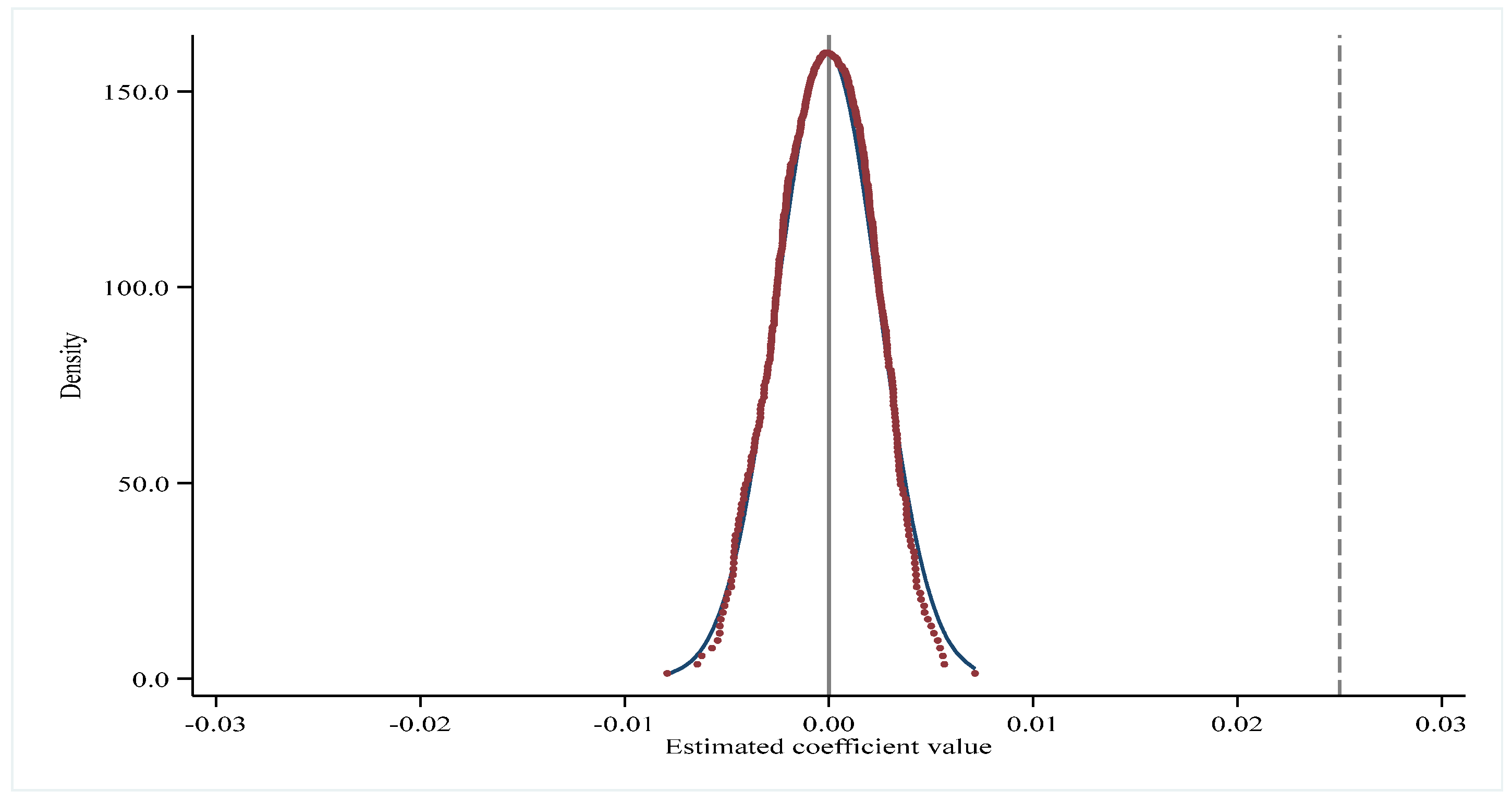
Figure 1. Placebo tests. The above placebo tests results for 1000 regressions with randomized treatment of the explanatory variables demonstrate that the coefficient of the benchmark regression is a small probability event. The brown line represents the density of the regression coefficients derived from 1000 placebo regressions.
Mathematics 14 00135 g001
Table 1. Baseline regression results.
Variable(1)(2)(3)
NQPFNQPFNQPF
AItech0.122 ***0.038 ***0.025 ***
(35.024)(12.168)(8.172)
Size −0.071 ***0.175 ***
(−11.538)(13.998)
Leverage −0.463 ***−0.477 ***
(−12.768)(−9.890)
Tobinq −0.005−0.005
(−0.895)(−0.982)
Growth 0.109 ***0.011
(6.742)(0.852)
BoardSize −0.0270.111 ***
(−0.940)(2.827)
Dual 0.110 ***0.014
(8.905)(1.016)
TOP1 −0.005 ***−0.000
(−13.221)(−0.657)
Age −0.374 ***−0.825 ***
(−20.060)(−10.701)
Lnallpats 0.210 ***0.048 ***
(57.801)(8.993)
ROA −0.243 **0.190 *
(−2.173)(1.838)
ControlNoYesYes
Year FENoNoYes
Firm FENoYesYes
_cons2.346 ***4.862 ***0.747 **
(350.794)(36.066)(2.137)
N28,29328,29328,293
adj. R20.0420.3760.725
Note: Robust t values are presented in parentheses; *, **, and *** denote significance at the 10%, 5%, and 1% levels, respectively.
Table 2. Endogeneity tests.
VariableInstrumental Variables TestPSMKLS
FirstSecondFirstSecond
(1)(2)(3)(4)(5)(6)
AItechNQPFAItechNQPFNQPFNQPF
AItech 0.148 ***
(5.681)
0.129 ***
(4.021)
IV10.068 *
(1.831)
IV2 0.043 ***
(4.035)
PSM-AItech 0.161 ***
(3.461)
KLS-AItech 0.094 ***
(2.781)
K-P rk LM F24.494 ***26.751 ***
28.884
--
K-P rk Wald F23.174--
ControlYesYesYesYesYesYes
Year FEYesYesYesYesYesYes
Firm FEYesYesYesYesYesYes
N23,57323,57323,24723,247438128,293
Note: Robust t values are presented in parentheses; *, **, and *** denote significance at the 10%, 5%, and 1% levels, respectively.
Table 3. Robustness tests.
VariableMD&ALaborersLabor MaterialsLabor
Objects
Change Interval
NQPFNQPFNQPFNQPFNQPF
(1)(2)(3)(4)(5)
AItech0.029 ***
(7.662)
AItech 0.033 ***
(6.232)
AItech 0.038 ***
(6.571)
AItech 0.041 ***
(6.422)
AItech 0.023 ***
(3.391)
ControlYesYesYesYesYes
Year FEYesYesYesYesYes
Firm FEYesYesYesYesYes
N28,29328,29328,29328,29319,076
adj. R20.7250.7120.7140.7010.732
Note: Robust t values are presented in parentheses; *, **, and *** denote significance at the 10%, 5%, and 1% levels, respectively.
Table 4. Heterogeneity tests.
VariableHigh-TechNon-High-TechState-Owned Non-State-OwnedHigh Policy SupportLow Policy Support
NQPFNQPFNQPFNQPFNQPFNQPF
(1)(2)(3)(4)(5)(6)
AItech0.002 ***0.0010.004 **0.001 ***0.003 ***0.001
(3.383)(0.823)(2.336)(2.968)(3.438)(0.951)
ControlYesYesYesYesYesYes
Year FEYesYesYesYesYesYes
Firm FEYesYesYesYesYesYes
_cons1.087 **−0.8571.387 **−0.326−1.838 *0.497
(2.450)(−1.436)(2.175)(−0.716)(−1.842)(0.970)
N15,80312,49010,83717,45611,14717,146
adj. R20.7140.6860.7120.7210.7900.702
Note: Robust t values are presented in parentheses; *, **, and *** denote significance at the 10%, 5%, and 1% levels, respectively.
Disclaimer/Publisher’s Note: The statements, opinions and data contained in all publications are solely those of the individual author(s) and contributor(s) and not of MDPI and/or the editor(s). MDPI and/or the editor(s) disclaim responsibility for any injury to people or property resulting from any ideas, methods, instructions or products referred to in the content.