1. Introduction
Wearable devices for physiological monitoring have rapidly expanded in both research and consumer health, offering accessible and non-invasive methods for tracking cardiovascular signals. Among these, ring-type sensors have gained particular attention because of their unobtrusive design, long battery life, and ability to continuously monitor heart rate (HR) and heart rate variability (HRV). Compared with wristbands or chest straps, rings are easier to integrate into daily life, making them an attractive option for wellness applications. Nevertheless, questions remain regarding their accuracy, reliability, and the physiological as well as technical factors that may influence measurement outcomes.
Previous studies have investigated ring-type wearables in several application domains. In sleep research, they have shown reasonable accuracy for sleep staging, HR, and HRV assessment [
1,
2,
3,
4]. During exercise and daily activities, their validity has also been demonstrated, though accuracy tends to decrease under dynamic conditions [
5,
6,
7,
8]. Studies on HRV validation indicate that HR and time-domain indices are generally reliable, while frequency-domain measures remain more variable, especially outside of resting states [
9,
10,
11,
12]. Long-term monitoring research further supports their feasibility for continuous use in naturalistic environments [
13,
14,
15]. Collectively, this body of work underscores both the promise and the context-dependent limitations of ring sensors.
Despite these advances, relatively little attention has been given to potential lateral differences—namely, whether measurements differ depending on whether the ring is worn on the left or right hand. Yoshida and Yuda (2024) addressed this issue in sleep monitoring and reported that while sleep staging accuracy varied across stages, measures such as bedtime, total sleep time, REM duration, sleep score, and HR were minimally affected by laterality [
16]. However, their study compared outputs between two ring sensors without referencing standard HRV indices derived from electrocardiography (ECG), leaving unanswered questions about the influence of hand placement on HRV accuracy.
The consideration of lateral differences is particularly relevant given the biological asymmetry of the human body. Internal organs are not symmetrically arranged; for example, the heart lies on the left side of the thoracic cavity, the liver on the right, and the lungs differ in lobe number between sides. Such asymmetry plays a crucial role in normal physiology, and disturbances can have significant healthcare implications. Accordingly, it is plausible that cardiovascular signals may differ subtly between the left and right hands due to variations in vascular anatomy, blood flow distribution, or neural regulation. Yet, this possibility has not been systematically evaluated in the context of wearable ring sensors.
The present study therefore aimed to assess the accuracy and reliability of ring-type wearable sensors for HR and HRV monitoring, with specific focus on left–right lateral differences. We compared ring-derived data with a reference Holter ECG and a wrist-worn device under three controlled conditions: sitting, exercise, and supine rest. By simultaneously recording from both hands, we sought not only to validate the accuracy of ring-based HR and HRV measures, but also to clarify whether hand laterality introduces systematic variation. This approach extends prior validation studies and addresses an underexplored but potentially important factor in wearable health monitoring—lateral asymmetry. Our findings aim to inform both methodological considerations in research and practical recommendations for healthcare and consumer applications of ring-type sensors.
2. Materials and Methods
2.1. Measurement Devices and Data Acquisition
Three devices were used for simultaneous physiological recordings:
Holter electrocardiograph (ECG): Pico 303 (Suzuken Co., Ltd., Nagoya, Japan). Sampling frequency: 125 Hz for R–R interval (RRI) detection, 31.25 Hz for triaxial acceleration. Data were exported and converted to CSV files using Cardy Analyzer 05 software (Suzuken Co., Ltd., Nagoya, Japan).
Wrist-worn sensor: Silmee™ W22 (TDK Corporation, Tokyo, Japan). Provided pulse-to-pulse interval (PPI) signals with a sampling frequency of approximately 32 Hz.
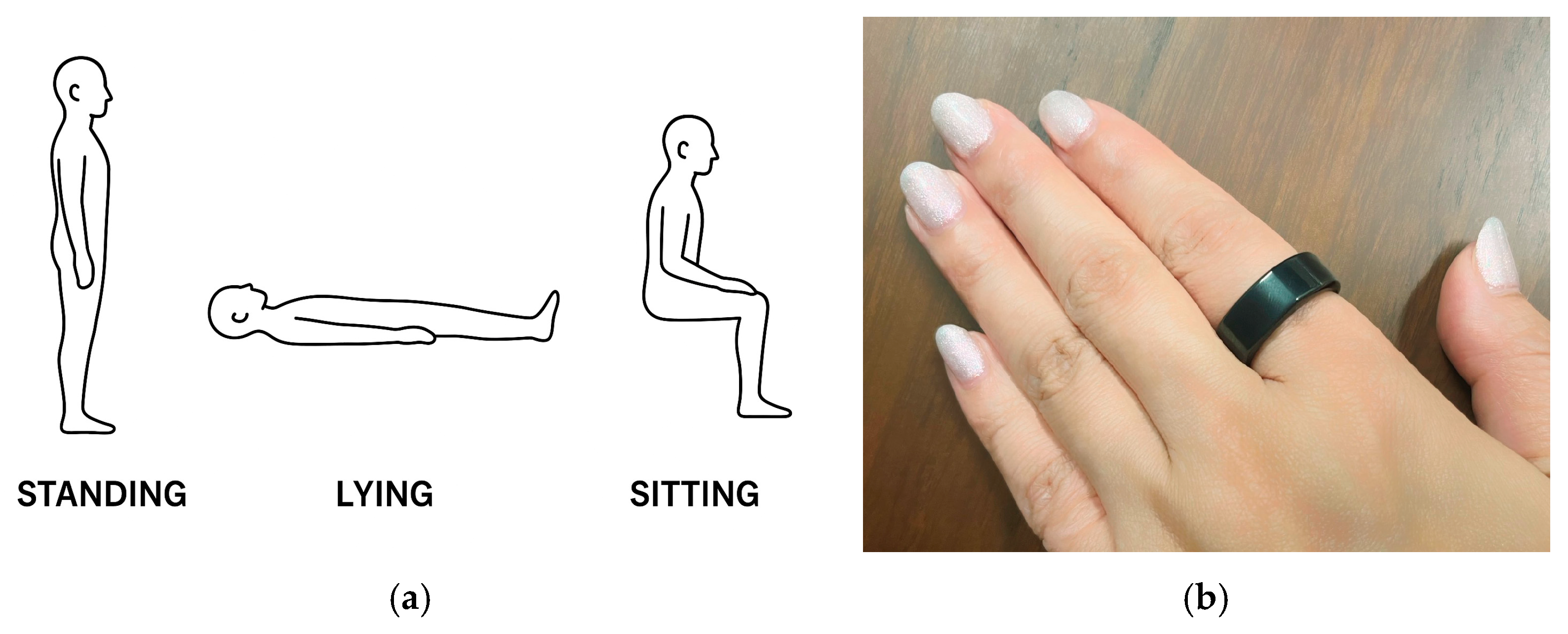
Ring-type sensor: Prototype device (uncommercialized). Photoplethysmography (PPG) signals were acquired at a sampling frequency of 125 Hz, and interbeat intervals were extracted from the PPG waveform. The experimental posture and ring sensor position are shown in
Figure 1 (the ring sensor was worn on the index finger).
Data collection for Experiment 1 took place over two consecutive days. The timetable is shown in
Table 1. Exercise was performed on a treadmill at 0% incline at a speed of 5.0 km/h. Moderate intensity was defined as maintaining Heart Rate (HR) between 60 and 70% of maximum (220—age) × 0.6–0.7. Participants were instructed to maintain the 5.0 km/h pace, and their HR was continuously monitored to ensure the target intensity was achieved. Participants underwent a 10 min rest period before starting the exercise. The exercise protocol included a 1 min warm-up (slow walk at a self-selected pace), 8 min main exercise (at 5.0 km/h), and a 1 min cool-down (slow walk at a self-selected pace). A further 5 min rest period was administered immediately after the cool-down. Heart rate and activity levels were continuously monitored to ensure consistency across conditions and compliance with the specified intensity range.
The Holter ECG, left-hand ring, and right-hand ring were recorded under controlled conditions (sitting, exercise, and supine) with time-synchronized sessions. In this protocol, standing measurements are taken before exercise, but the likelihood of fatigue caused by this is considered low.
Recordings were conducted under three experimental conditions: Exercise (light-to-moderate physical activity), Sitting (upright resting posture), and Supine rest (lying in the supine position). During each condition, simultaneous recordings were obtained from the Holter ECG, wrist-worn device, and ring sensors worn on both the left and right hands.
Experiment 2 was conducted to verify whether the trends observed in Experiment 1—particularly the decrease in agreement during exercise—would also appear in a wrist-worn wearable watch. The experiment focused on comparing autonomic indices across three conditions: rest, exercise, and recovery.
Heart rate (HR) and pulse rate variability (PRV) indices were analyzed, including mean HR, Root Mean Square of Successive Differences (rMSSD), Standard Deviation of P-P intervals (SDPP), Low Frequency (LF), High Frequency (HF), and Low Frequency/High Frequency ratio (LF/HF). For each variable, the condition-related changes (e.g., exercise data—rest data) were calculated to evaluate responsiveness to activity level.
A total of 9 participants were included in Experiment 2 (mean age: 61.4 ± 12.6 years, 1 female).
Rest condition: 30 min (09:15–09:45);
Exercise condition: 30 min (11:15–11:45);
Recovery condition: immediately following the exercise session.
HR and PRV data were obtained continuously throughout these periods, and analyses were performed to identify condition-dependent variations and to assess the reproducibility of findings across different wearable form factors.
2.2. Data Preprocessing
All data streams were synchronized offline based on recording timestamps. For HR analysis, RR intervals (ECG) and PPIs (wristband, ring) were processed to obtain beat-to-beat HR. For HRV analysis, standard time-domain (e.g., SDNN, RMSSD) and frequency-domain indices (very low frequency [VLF], low frequency [LF], high frequency [HF], and LF/HF ratio) were calculated. Preprocessing included artifact removal by detecting outliers (>20% deviation from local median) and applying cubic spline interpolation for gap correction. Frequency-domain measures were derived using Fast Fourier Transform (FFT) with 5 min windows, following standard HRV analysis guidelines. In the present study, movement artifacts were first identified visually and then removed using an automated artifact detection algorithm based on a signal variation threshold.
2.3. Analytical Items
The following analyses were conducted; Comparison of HR trends across Holter, wrist-worn, and ring sensors. Comparison of HRV trends between Holter and ring sensors. Correlation of HR across devices under each measurement condition. Correlation of HRV between Holter and ring sensors under each measurement condition. Evaluation of left–right differences in ring-derived HR and HRV.
The high-frequency (HF) component of heart rate variability (HRV) strongly reflects parasympathetic (vagus) nerve activity in autonomic cardiac control. This HF component is closely related to respiratory sinus arrhythmia (RSA), a phenomenon in which heart rate fluctuates in sync with respiration. Analyzing this frequency can estimate respiration rate.
Heart rate variability and respiration: When a person inhales (inhales), their heart rate increases, and when they exhale (exhales), their heart rate decreases. This periodic variation in heart rate is recorded as fluctuations in the heart’s electrical activity (RR interval variability).
Frequency analysis: When power spectrum analysis (frequency analysis) is performed using a Fourier transform on time-series RR interval data to examine the strength (power) of each frequency component contained in the RR interval variability, the HF component is typically defined as the frequency band between 0.15 Hz and 0.40 Hz (Hertz). Fluctuations in this band correspond to heart rate fluctuations (RSA) due to normal human breathing.
0.15 Hz = 9 breaths/min (60 × 0.15);
0.40 Hz = 24 breaths/min (60 × 0.40).
In other words, this band corresponds to a breathing rate between 9 and 24 breaths per minute.
The specific steps for counting breathing rate from the HF component are: (1) Measure the subject’s ECG and create a time series (tachogram) of the time interval between successive R-wave peaks (RR intervals). (2) Perform power spectral analysis: Calculate the power spectral density (PSD) of the RR interval data. (3) HF band peak detection: Find the frequency with the strongest power (peak frequency) within the HF band (0.15–0.40 Hz) from the PSD results. (4) Convert to breathing rate: Multiply this peak frequency value (Hz) by 60 to estimate the breathing rate per minute (breaths/min). (5) Estimated respiratory rate (bpm) = HF peak frequency (Hz) × 60.
HF power (high frequency components):
Peak Frequency in the HF Band (Respiration Frequency):
Respiratory rate (number of breaths per minute):
Respiratory rate calculated from center of gravity frequency:
S(f): Power spectral density of the RR interval series (ms2/Hz);
PHF: Total power in the HF band (0.15–0.40 Hz) (ms2);
fresp: Respiratory frequency (Hz);
Rresp: Respiratory rate (breaths per minute) (breaths/min).
The above is the formula for estimating respiration from the HF component of heart rate variability. fresp is the “peak frequency of the HF band,” meaning the respiration frequency (Hz). The respiration rate Rresp is simply multiplied by 60 to convert from seconds to minutes. In actual analysis, it is common to use the peak of the HF band or the HF spectrum centroid frequency. In this study, the HF spectrum centroid was used. This method allows for a rough estimation of respiration rate using only the ECG, even if a respiration sensor is not available.
Next, we will show the formulas for calculating HR (heart rate), DSPP (mean pulse wave interval variability), and power spectrum components (VLF, LF, HF) based on the pulse interval (PI) obtained from the pulse wave (PPG: Photoplethysmogram).
Pulse Interval Series (
ti is the pulse wave arrival time of the
ith beat):
Mean pulse wave interval and heart rate (bpm):
Detrended pulse interval variability series:
Discrete Fourier Transform (DFT):
Power Spectral Density (PSD):
Power components of each frequency band:
Normalized power and ratio:
DSPP: Dispersion of Successive Pulse Period:
2.4. Participant and Ethical Considerations
A healthy female volunteer in her 30 s, with no known underlying medical conditions, participated in Experiment 1. Ethical approval for Experiment 1 was obtained from the Ethics Committee of Nagoya City University Hospital (Approval No. 60-20-0004, 19 April 2020). Written informed consent was obtained from the participant prior to participation. Experiment 2 was conducted to verify whether the trends observed in Experiment 1—particularly the decrease in agreement during exercise—would also appear when using a wrist-worn wearable watch. The experiment focused on comparing autonomic indices across three conditions: rest, exercise, and recovery.
A total of 10 participants were initially enrolled in Experiment 2. However, data from one participant were excluded due to excessive missing data, resulting in 9 participants included in the final analysis (mean age: 61.4 ± 12.6 years; 1 female). The rest condition was recorded for 30 min (09:15–09:45), followed by an exercise condition of 30 min (11:15–11:45), and a recovery condition immediately after exercise. HR and PRV data were obtained continuously throughout all conditions. Ethical approval for Experiment 2 was obtained from the Ethics Committee of the Graduate School of Engineering, Mie University (Approval No. 135, 14 October). Written informed consent was obtained from all participants prior to participation, in accordance with the principles of the Declaration of Helsinki.
2.5. Statistical Analysis
Mixed model analysis was applied to examine main effects and interactions among devices, laterality (left vs. right hand), and measurement conditions. Statistical analyses were conducted using SAS 9.4® software (SAS Institute Inc., Cary, NC, USA). A linear mixed-effects model was used with fixed factors of device (Holter/ring), laterality (left/right), condition (sitting/exercise/supine), and their interaction. Random effects included repeated measurements within participant(s). Residual normality was tested using the Shapiro–Wilk test (p > 0.05), homogeneity of variance by Levene’s test (p > 0.05), and multicollinearity by variance inflation factor (VIF < 2) (Experiment 1).
For Experiment 2, statistical power was evaluated a priori using G*Power (version 3.1). A t-test framework was selected, specifically; Means: Difference between two dependent means (matched pairs), corresponding to the comparison between rest and exercise conditions. Effect size was calculated using Cohen’s d for paired-sample designs according to the following formula. μ
idff represents the mean difference between the two conditions (exercise and rest), while σ
diff represents the standard deviation of the difference between the two conditions (calculated as exercise data—rest data for each subject, then the standard deviation of this difference data).
A post hoc power analysis was conducted using the following parameters: Effect size: dz = 0.8, Significance level: α = 0.05, Total sample size: N = 9, Tails: Two-tailed test. Under these conditions, the achieved statistical power was 0.767.
3. Results
Representative Physiological Signals;
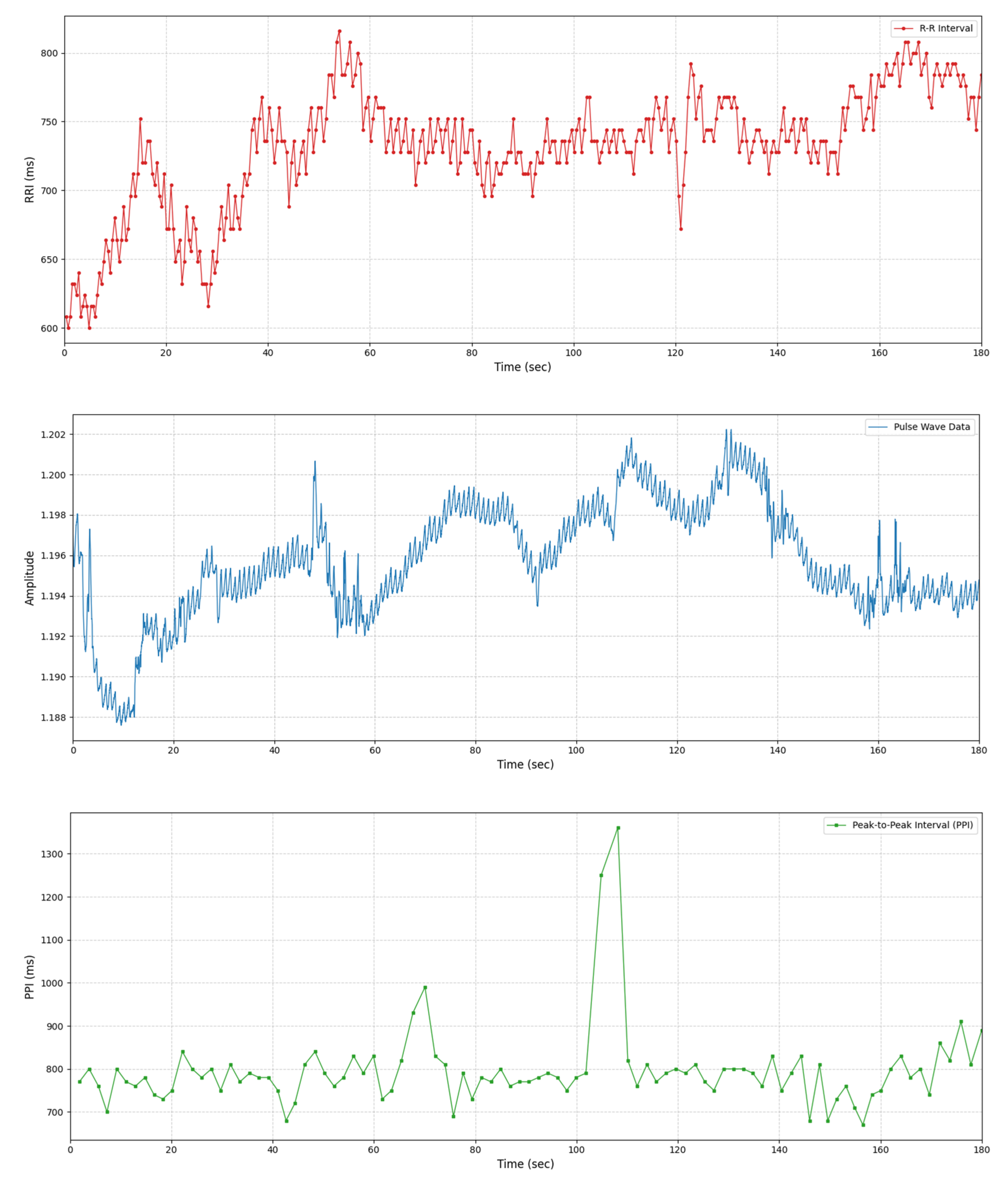
Figure 2 presents representative examples of ECG-derived R–R intervals (RRI), PPG pulse waveforms, and pulse-to-pulse intervals (PPI) obtained from the ring sensor. The ECG signals show clearly identifiable QRS complexes, while the corresponding PPG signals exhibit distinct pulse peaks under resting conditions. These examples confirm that synchronous ECG and PPG signals were successfully acquired and that beat-to-beat interval estimation was feasible across devices under stable conditions.
Heart Rate Comparison across Devices;
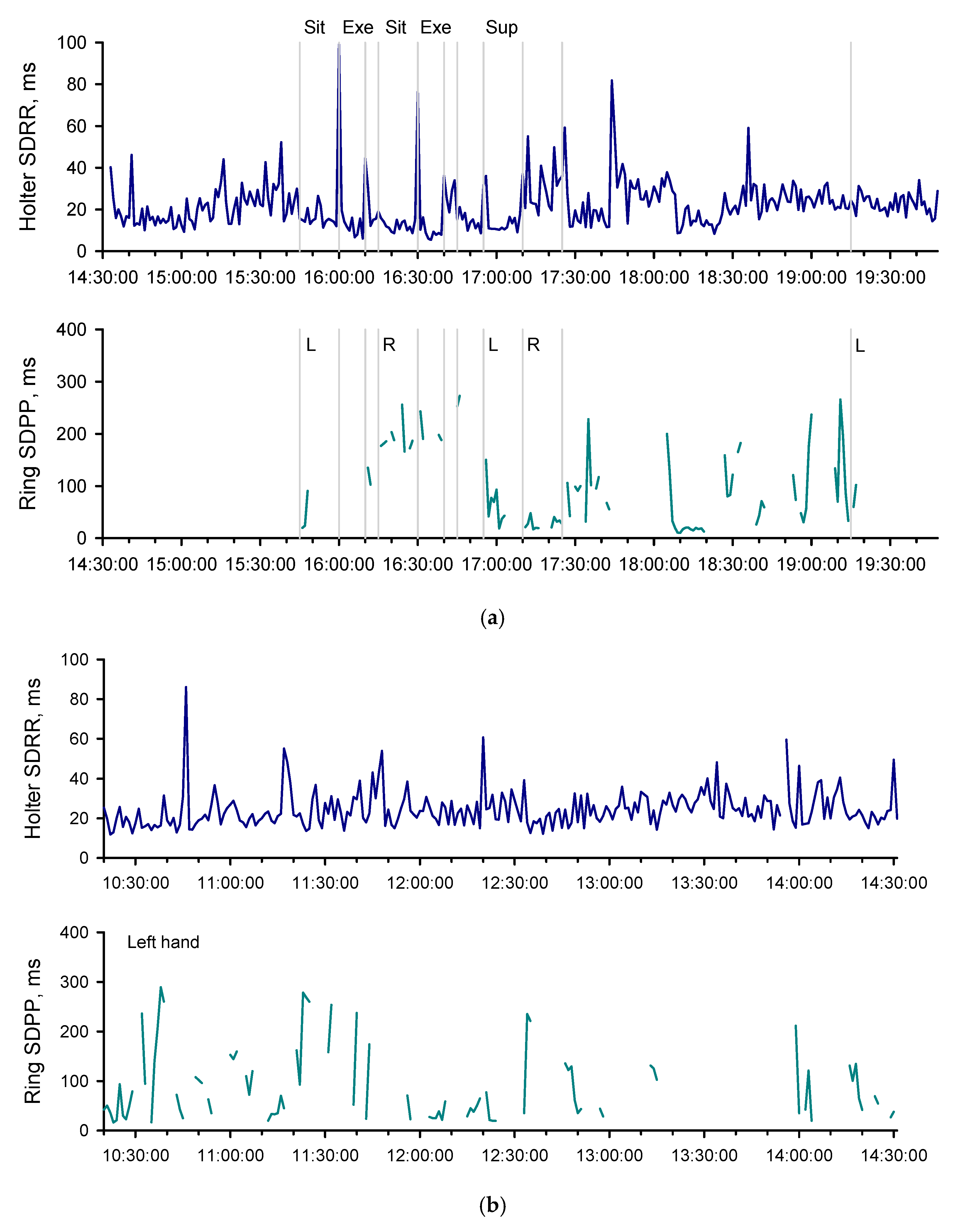
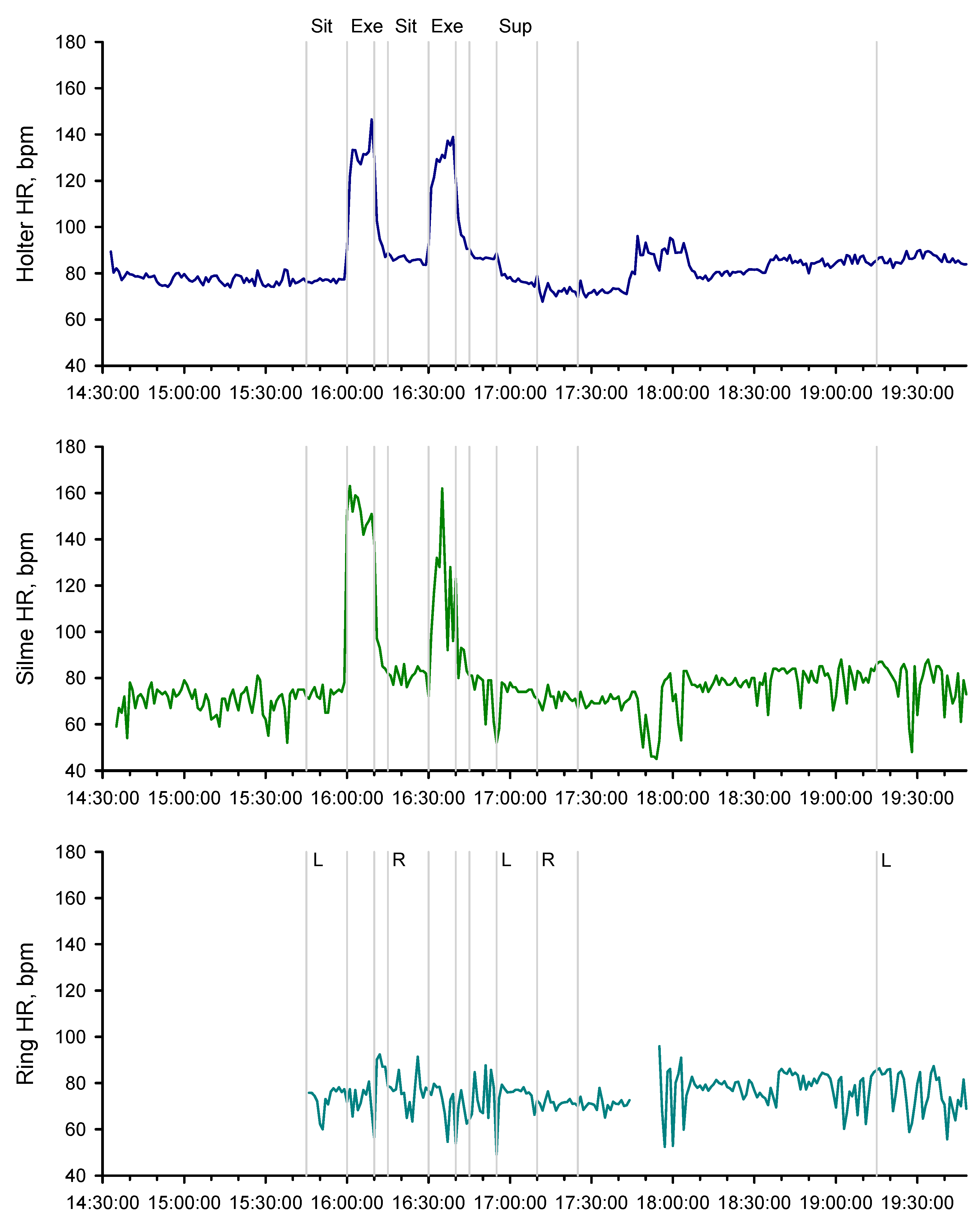
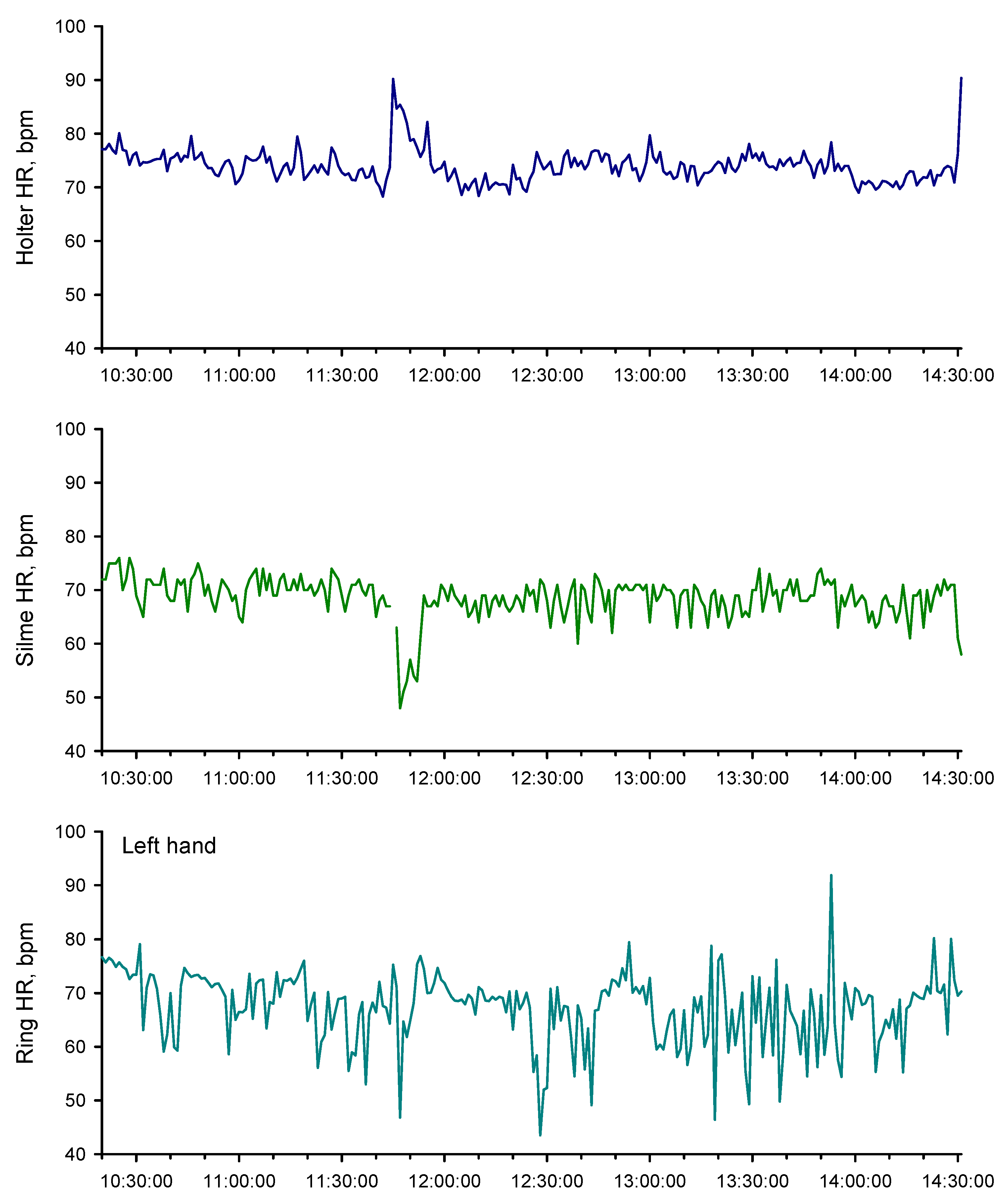
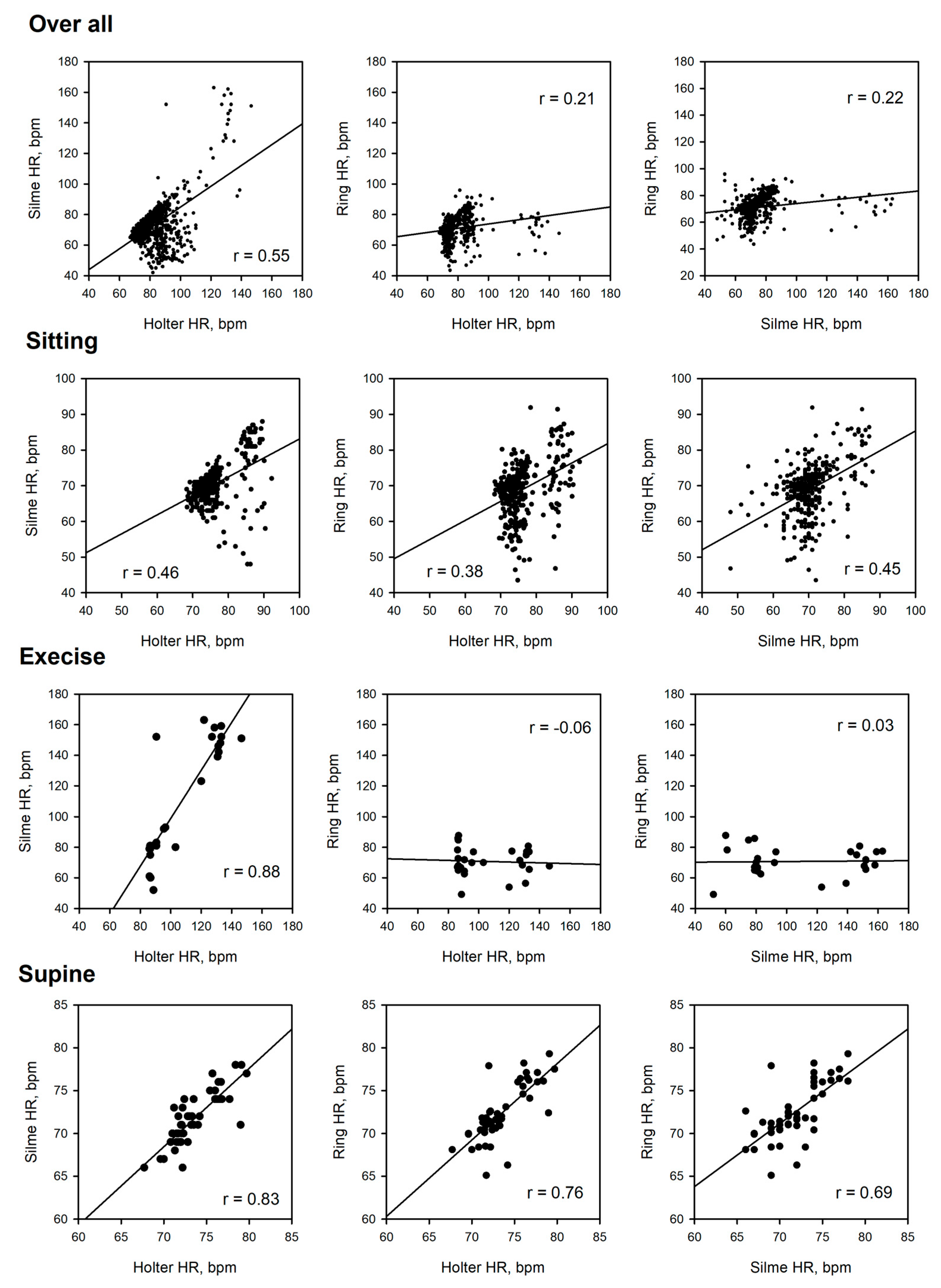
Figure 3 and
Figure 4 show time-series comparisons of total heart rate (HR) obtained from the Holter ECG (reference), wristband sensor, and ring sensor on Day 1 and Day 2, respectively. Across both days, HR trends derived from the ring sensor closely followed those of the Holter ECG during sitting and supine conditions. Mean HR values differed only marginally between devices during resting periods, whereas transient deviations were observed during exercise and immediately after posture changes, as indicated by the vertical lines in the figures.
Figure 5,
Figure 6,
Figure 7 and
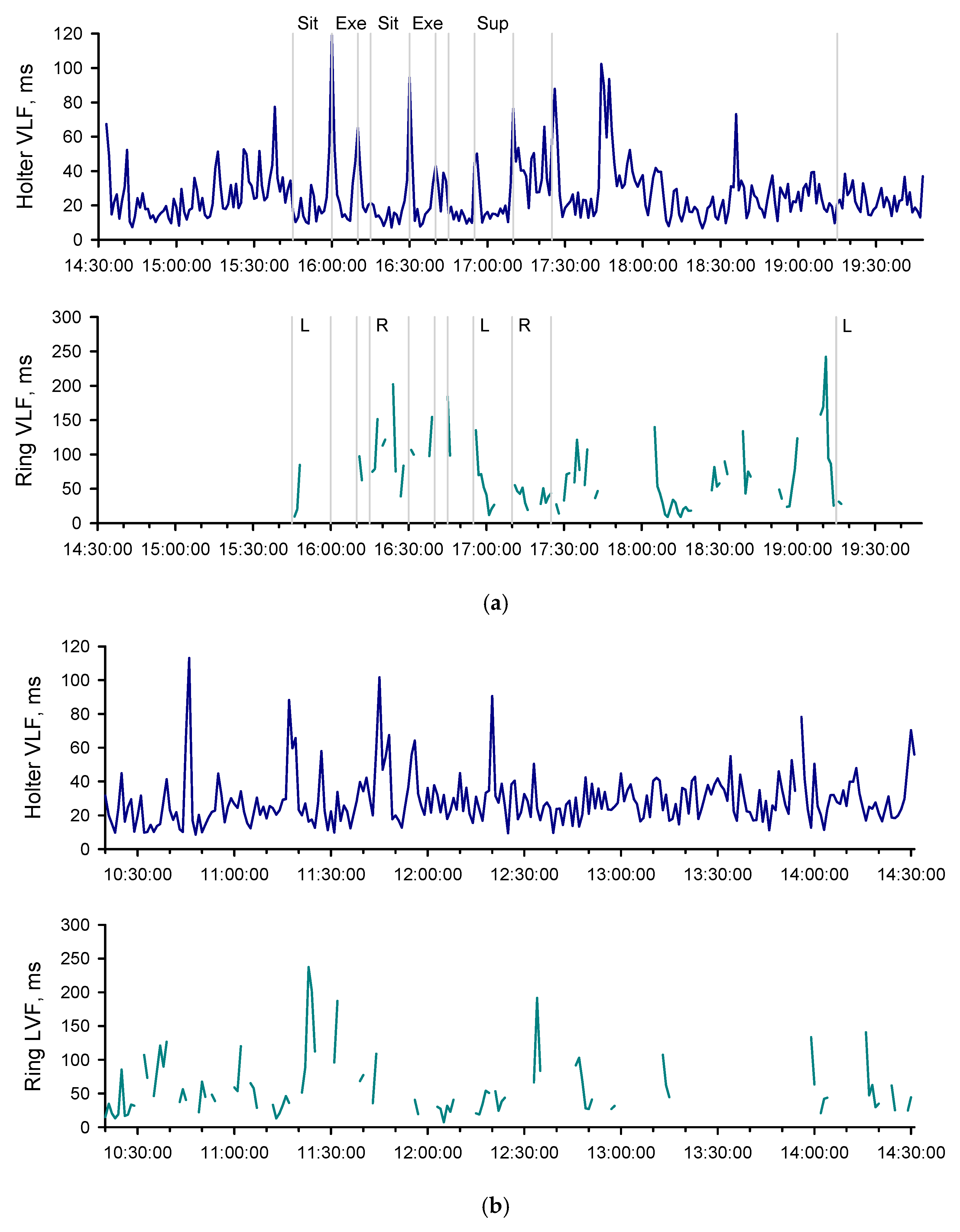
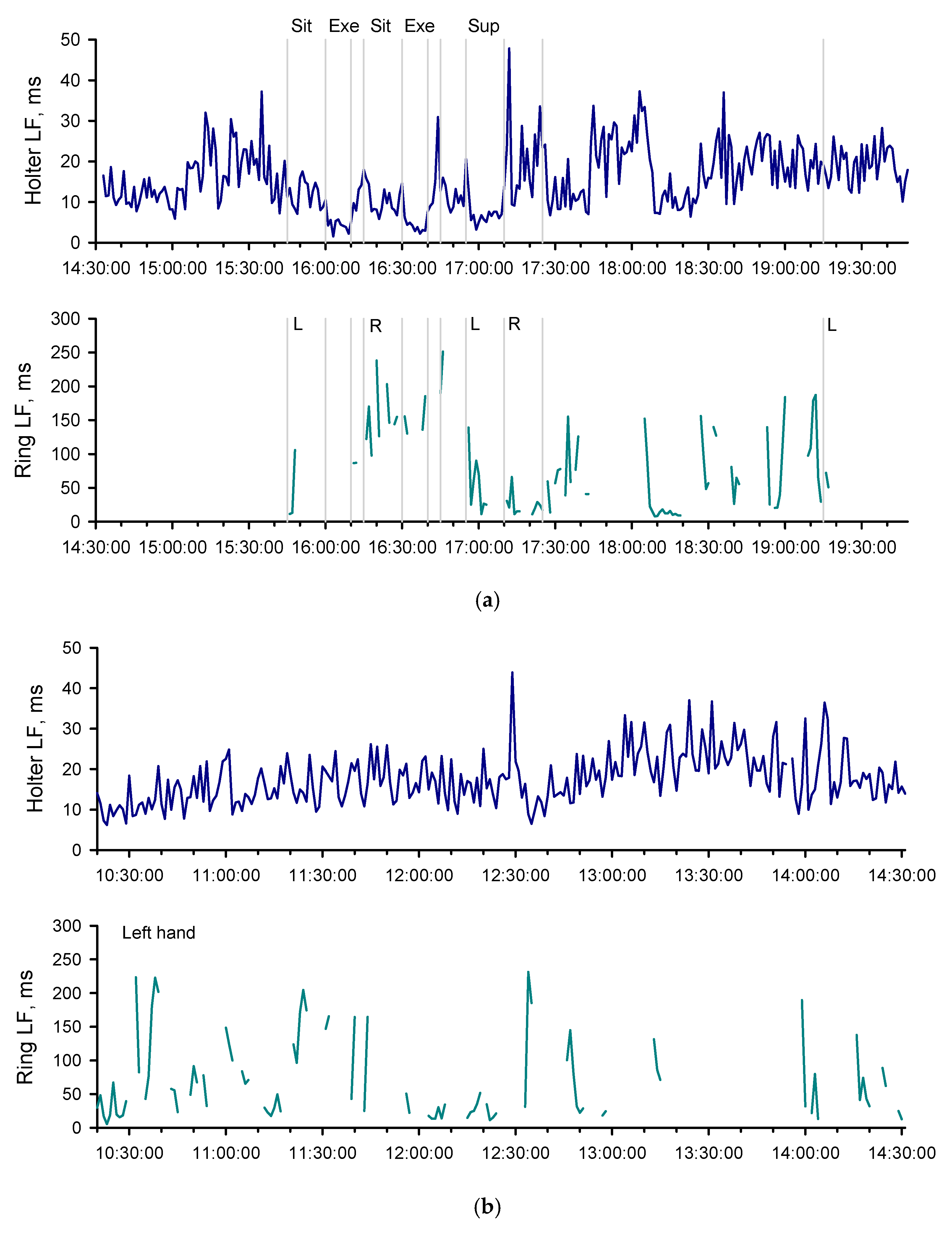
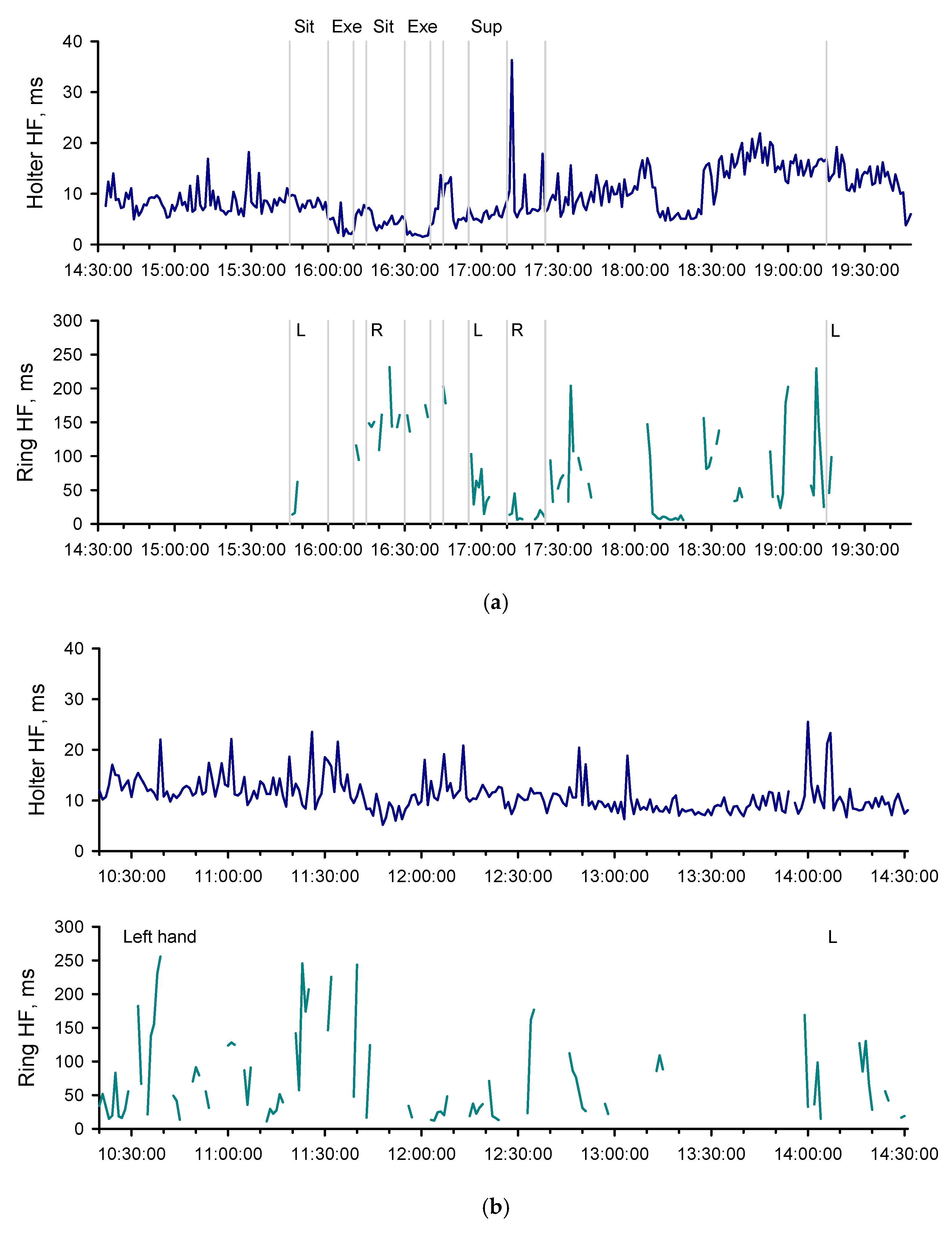
Figure 8 show a comparison between the ring sensor and HRV index.
Quantitatively, inter-sensor correlation analysis (
Figure 9) demonstrated moderate to strong correlations between the Holter ECG and ring sensor for HR during resting states, whereas correlation coefficients decreased during exercise. This reduction indicates condition-dependent variability rather than systematic measurement bias.
Time-Domain HRV Indices;
Figure 5 compares SDRR (ECG) and SDPP (ring sensor) across conditions. Under resting conditions, SDPP values obtained from the ring sensor showed similar temporal trends to ECG-derived SDRR; however, increased dispersion was observed during exercise. This variability is reflected in the mixed-model analysis (
Table 2), which revealed a significant effect of condition on time-domain HRV indices, while left–right differences remained limited for most parameters.
Frequency-Domain HRV Analysis;
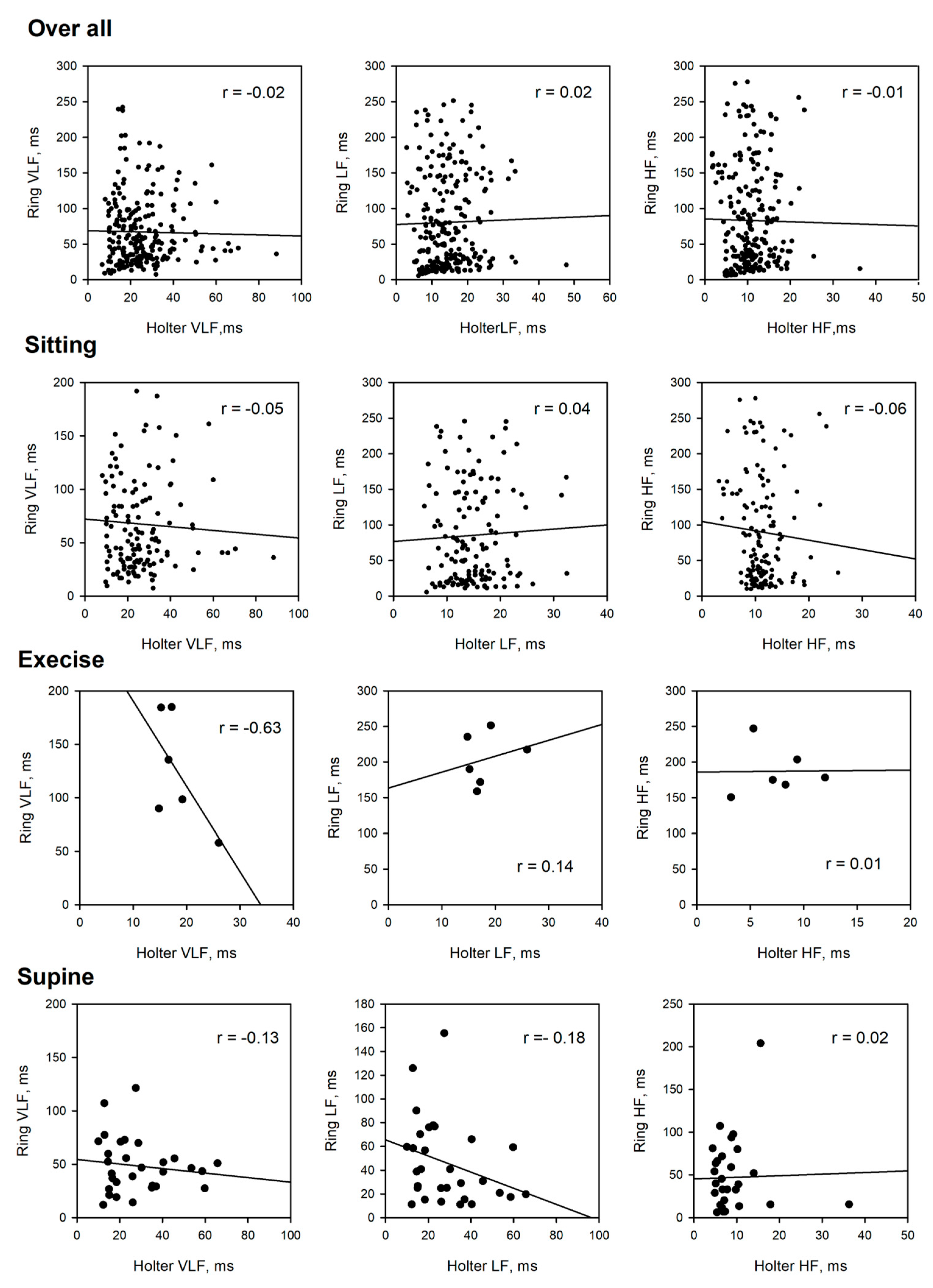
Figure 6,
Figure 7 and
Figure 8 present comparisons of frequency-domain HRV components (VLF, LF, and HF) between the Holter ECG and ring sensors. Among these, VLF power exhibited a significant lateral difference, with higher values observed on one hand compared to the other (mixed-model analysis,
Table 2;
p = 0.001). In addition, significant side × condition interactions were identified for HR and LF components, indicating that lateral differences were dependent on measurement conditions (sitting, exercise, supine).
HF power showed greater variability across conditions, particularly during exercise (
Figure 8). The mixed-model analysis of HF components (
Table 3) confirmed a significant main effect of condition, whereas systematic left–right bias was not consistently observed.
Inter-Sensor Correlation Analysis; Inter-sensor correlations for HR and HRV indices are summarized in
Figure 9 and
Figure 10. HR correlations between the Holter ECG and ring sensor were strongest during resting conditions and weakened during exercise. For frequency-domain HRV indices, correlations were generally lower than those for HR, particularly for VLF and LF components, reflecting the higher sensitivity of these indices to signal quality and motion-related artifacts.
Importantly, these results indicate that agreement between devices is condition-specific. While ring-type wearable sensors demonstrate acceptable concordance with ECG for HR and selected HRV indices under static conditions, reduced correlations during exercise and low-activity sitting conditions highlight inherent limitations of PPG-based measurements.
Summary of Mixed-Model Analysis;
Table 2,
Table 3 and
Table 4 summarize the results of the mixed-model analyses. Significant effects of condition were consistently observed across multiple HRV indices, confirming the strong influence of activity level on autonomic measurements. Lateral differences were statistically significant for selected parameters (notably VLF power), but their magnitude was modest and strongly dependent on measurement conditions.
Overall, Experiment 1 demonstrates that ring-type wearable sensors provide reliable HR measurements and acceptable HRV estimates under resting conditions, while revealing condition-dependent variability and limited lateral asymmetry, which should be considered in both experimental design and practical applications (Experiment 1).
Table 2 summarizes heart rate and HRV metrics across conditions (sitting, exercise, supine) for left- and right-hand rings, showing mean ± SD.
The results of Experiment 2 are shown in
Table 4. The analysis examined whether there was a statistically significant difference between rest and exercise, taking into account inter-subject variability. SDPP (Standard Deviation of the PP interval) significantly increased during exercise. SDPP is a time-domain index of heart rate variability and indicates the overall variability (total variation) of autonomic nervous activity. In conclusion, the data showed a significant difference in the magnitude of overall variability in autonomic nervous activity between rest and exercise, with the variability being greater during exercise (
p = 0.017).
4. Discussion
This study evaluated the validity and lateral differences in ring-type wearable sensors for HR and HRV monitoring under multiple conditions. Overall, the results demonstrate that these ring devices provide generally reliable measurements, particularly in static conditions such as sitting and supine rest. HR and HRV indices measured by the rings closely followed trends observed with the Holter ECG, supporting their potential utility in research and healthcare settings. In recent years, studies have increasingly focused on using pulse wave signals to detect diseases at an early stage and to estimate individual health status [
17,
18,
19,
20,
21] and sleep [
22,
23,
24,
25]. However, our findings highlight that challenges remain in measurement technology, particularly regarding lateral differences and condition-dependent variability. In wearable devices, missing data tend to occur due to physical limitations of the sensors. During low-activity or resting periods, signal acquisition was relatively stable, and the missing data rate remained below 5%. However, during exercise, the missing rate increased up to 15%, likely due to reduced sensor attachment stability and increased motion-induced noise (Outlier detection was based on a 10 s sliding window; RR intervals deviating > 20% from the local median were marked as outliers. There are no characteristics of the distribution of missing data during exercise. Median imputation (a method of replacing missing values with the median, which is less susceptible to outliers and more common than mean imputation) was used to reduce the impact of missing data on the results. However, there is room for future consideration of advanced imputation methods, such as multiple imputation (MI), which predicts missing values multiple times using variables other than the missing value to create multiple complete datasets, thereby reflecting the uncertainty of the missing value and minimizing bias, and k-NN imputation (which imputes the mean or mode of the k samples nearest to a sample with a missing value, taking into account the local structure of the data). Cubic spline interpolation was performed at 0.1 s intervals. The interpolation quality was verified using RMSE (<5 ms) between interpolated and raw data.). While the ring sensor showed promising reliability in estimating resting heart rate and HRV, its current configuration is not suitable for accurate monitoring during active exercise. Further development in reducing motion artifacts is needed before such devices can be deployed for continuous monitoring while walking. Previous research [
26] suggests that HRV is one of the most promising markers of autonomic nervous system regulation; however, reliable detection of RR intervals requires acquisition of an ECG signal, which is not always practical or comfortable in personal health applications. In healthy subjects, significant correlations exceeding 82% were observed for both time- and frequency-domain characteristics, suggesting that PRV can often be used as a surrogate for HRV analysis. However, in post-exercise and CVD subjects, time- and frequency-domain characteristics should be interpreted with caution, as average correlations range from 68% to 88%. Another study [
27] reported that PPG is not a reliable substitute for HRV analysis. When applying HRV analysis to beat-to-beat intervals obtained from ECG and PPG in 19 healthy male subjects, the parameters with the smallest errors were SDNN and SD, with relative errors of 2.46% and 2.0%, respectively, whereas the most affected parameter was pNN50, with a relative error of 29.89%.
Significant lateral differences were observed between rings worn on the left and right hands, most notably in VLF power. These findings suggest that physiological signals captured by wearable rings may be influenced by hand dominance or differential vascular and neural characteristics between sides. In addition, interactions between device side and measurement condition were evident for HR and LF components, indicating that exercise and dynamic conditions can exacerbate measurement discrepancies. The reduced concordance during and immediately after exercise highlights the limitations of current ring-type sensors under physically active conditions, potentially due to motion artifacts or transient changes in autonomic regulation. Despite these limitations, moderate to strong inter-sensor correlations at rest confirm that ring-type sensors are suitable for long-term or continuous HR and HRV monitoring in low-movement scenarios.
However, given the limited sample size in the present study, the observed lateral differences in VLF power should be interpreted with caution. Further large-scale investigations are needed to clarify whether these differences represent a general physiological tendency or simply reflect interindividual variability. Mechanistically, VLF power in HRV has been associated with autonomic regulatory processes, particularly those involving the renin–angiotensin system (RAS), thermoregulation, and vasomotor activity [
28,
29,
30,
31,
32]. In our exploratory analysis, we specifically examined the relationship between the reduced VLF power observed in the left hand and the corresponding decrease in left-hand skin temperature. This association suggests that the lateral asymmetry in VLF power may be directly linked to regional vasomotor tone and thermoregulatory responses.
The lateral asymmetry in VLF power may therefore be explained by two principal physiological and methodological factors:
- (1)
Asymmetry in Local Autonomic Control and Vascular Properties
The most direct physiological explanation for the observed asymmetry is lateral differences in pulse wave propagation and peripheral vascular characteristics (e.g., arterial stiffness, resistance), which are inherently reflected in PPG-derived measurements. Although VLF oscillations are strongly influenced by systemic mechanisms, including the RAS and thermoregulation, they are also modulated by vascular function, which changes with aging and disease. Even subtle differences in the elasticity or tone of peripheral arteries—such as those between the left and right radial or ulnar arteries—could influence the propagation of the pulse wave and therefore alter the VLF component measured by PPG.
Localized sympathetic tone may also contribute. While the VLF band is often considered non-neurogenic or related to very slow neurogenic mechanisms, localized sympathetic influences cannot be dismissed. More frequent use of the dominant arm, along with micro-traumas and muscle tension accumulated from daily activities, may result in chronic differences in local sympathetic drive compared with the non-dominant arm. Such persistent asymmetry could indirectly affect the VLF component, reflecting slow fluctuations in vasomotor tone.
- (2)
Measurement Artifacts and Signal Quality Asymmetry
In addition to physiological factors, several measurement-related issues may explain the unexpectedly low correlations observed under the sitting condition, as shown in
Figure 8 and
Figure 9. In low-activity states, body motion is minimal, which reduces large motion-induced fluctuations but simultaneously makes the recorded signals more sensitive to subtle measurement instabilities.
One important factor is sensor contact pressure instability. During sitting, small changes in finger posture, muscle tone, or vascular filling can alter the contact pressure between the ring sensor and the skin, leading to variability in PPG signal amplitude and morphology. Unlike ECG, PPG signals are highly dependent on stable mechanical coupling, and minor pressure changes may disproportionately affect pulse detection accuracy under low-motion conditions. Furthermore, PPG waveform morphology in low-activity states differs from that during exercise or higher activity. Reduced peripheral perfusion variability and lower pulse amplitude can obscure pulse peaks and increase susceptibility to noise, resulting in degraded beat-to-beat interval estimation. These effects may partially account for the reduced agreement with ECG-derived indices in the sitting condition.
Measurement-related asymmetries inherent to wearable PPG devices must also be considered, particularly with respect to lateral differences. The dominant hand tends to exhibit more frequent micro-movements than the non-dominant hand, even during nominally resting conditions. Such asymmetry can lead to differences in the occurrence and severity of motion artifacts, which degrade PPG signal quality in a hand-dependent manner. Because accurate estimation of low-frequency and very-low-frequency spectral components requires long, stable, and noise-free signal segments, even subtle degradation in signal quality can substantially affect correlation outcomes. Consequently, poorer signal quality in one hand may artifactually suppress or distort spectral indices, contributing to both the observed lateral differences and the overall reduction in correlation.
Taken together, these findings suggest that the correlations observed in the sitting condition should be interpreted cautiously. Rather than indicating strong agreement,
Figure 8 and
Figure 9 highlight the limitations of PPG-based HRV assessment under low-activity, quasi-static conditions, where signal quality is strongly influenced by contact stability and subtle motion. This limitation is particularly relevant for wearable ring sensors and underscores the importance of condition-specific interpretation of HRV metrics.
Overall, the finding of lower VLF power in the left hand—and its association with lower left-hand skin temperature—highlights a potential link between regional vasomotor tone and VLF modulation. Nevertheless, future studies employing long-term monitoring and larger sample sizes will be essential to statistically disentangle the physiological and artifactual sources of the observed asymmetry.
First, asymmetric sympathetic activity between the left and right sides may also contribute to this phenomenon. Although VLF power reflects predominantly sympathetic (and partially parasympathetic) modulation, the sympathetic nervous system itself is not perfectly symmetrical. Reflex arcs within the autonomic nervous system—such as carotid baroreceptor or pressure reflex pathways—may produce side-dependent differences in vasomotor responses. Thus, subtle differences in skin temperature or vascular state between the hands, driven by local sympathetic activity, could reasonably result in variations in VLF amplitude and frequency. Such asymmetry may represent a natural manifestation of homeostatic regulation, thermoregulatory adjustments, or local muscular activity.
Second, lateral differences may arise from biomechanical or sensor-related factors inherent to wearable PPG measurements. Ring placement on the dominant versus non-dominant hand may capture physiological modulations influenced by habitual laterality in daily tasks, posture, or micro-movements. These unconscious behaviors—such as typing or object handling—may contribute to fluctuations in the VLF range that are physiological rather than artifactual. Additionally, small differences in skin temperature or conductivity between hands can subtly affect PPG signal quality and noise characteristics, further influencing the calculated VLF component.
Collectively, these findings suggest that the lateral difference in VLF power likely reflects physiological adaptations of the autonomic nervous system to asymmetric peripheral conditions, rather than measurement error or abnormality alone. Anatomical differences between the left and right subclavian arteries—where the left arises directly from the aortic arch and the right from the brachiocephalic trunk—could also contribute to subtle hemodynamic variation. Because the VLF band reflects vascular tone and endothelial modulation, it may exhibit asymmetry even when HR and HF—which reflect more systemic autonomic activity—remain relatively symmetric. Similar lateral asymmetries have been reported by Yoshida et al. (2024) under different physiological conditions such as sleep and wakefulness [
16].
Taken together, these findings emphasize the need to consider sensor placement and lateral differences when interpreting HRV data from wearable rings. Future studies should focus on minimizing side-dependent variability, improving robustness during dynamic activities, and further validating these devices for early detection of health alterations, ensuring reliable physiological monitoring across diverse conditions. As a limitation, the signal instability observed during exercise is likely not an inherent flaw of the ring-type form factor itself, but rather a consequence of the limited motion artifact suppression capabilities and hardware constraints of the prototype device used in this study. Future models with optimized photoplethysmography (PPG) signal processing and enhanced motion compensation algorithms may achieve greater reliability during periods of physical activity. This study was conducted as a preliminary pilot test to validate the prototype sensor’s functionality (Experiment 1).
In Experiment 2, although the heart rate increased from resting (72.0 bpm) to exercising (76.6 bpm), this difference did not reach statistical significance (P = 0.203). One plausible explanation is that the exercise stimulus itself was insufficient; the actual exercise intensity was not objectively verified using metrics such as the Metabolic Equivalent of Task (MET) or the Rating of Perceived Exertion (RPE), leaving uncertainty about whether the load was physiologically meaningful. This ambiguity is further reflected in the HRV indices. Typically, even light exercise is expected to evoke a reduction in parasympathetic activity, leading to decreases in rMSSD and HF power due to sympathetic activation or parasympathetic withdrawal. Contrary to these expectations, rMSSD showed an unexpected increase (143 to 184 ms), and HF exhibited a slight, non-significant rise (7.51 to 7.77). These counterintuitive patterns suggest two overlapping possibilities: the exercise intensity may have been too weak to elicit measurable autonomic modulation, or motion-related artifacts during data acquisition may have compromised the reliability of the pulse rate variability signal. The latter possibility is particularly important, as artifacts can inflate beat-to-beat variability and obscure true physiological responses, thereby limiting the interpretability of parasympathetic indices.
Moreover, the mixed-model analysis revealed substantial subject-level variability in several parameters, with non-zero variance components observed for SDPP and rMSSD. This indicates that individual differences strongly influenced the autonomic responses and may have contributed to the inconsistent trends across the dataset. Taken together, while SDPP demonstrated a significant exercise effect, the unclear behavior of parasympathetic indices highlights the need for more rigorous control of exercise intensity and improved artifact-handling procedures in future PRV-based assessments.