

Impact of Dust Deposition on Photovoltaic Systems and Mitigation Strategies


Abstract
1. Introduction
1.1. Aim and Objectives
- To review and analyze the physical, optical, and thermal impacts of dust accumulation on PV modules based on recent experimental and modeling studies.
- To compare global findings on dust-induced power losses across different climatic zones, dust compositions, and PV technologies.
- To evaluate current cleaning and mitigation techniques, including hydrophobic coatings, robotic systems, and manual methods, assessing their efficiency, cost, and applicability.
- To identify research trends and bibliometric patterns related to dust effects, maintenance practices, and performance modeling in PV systems.
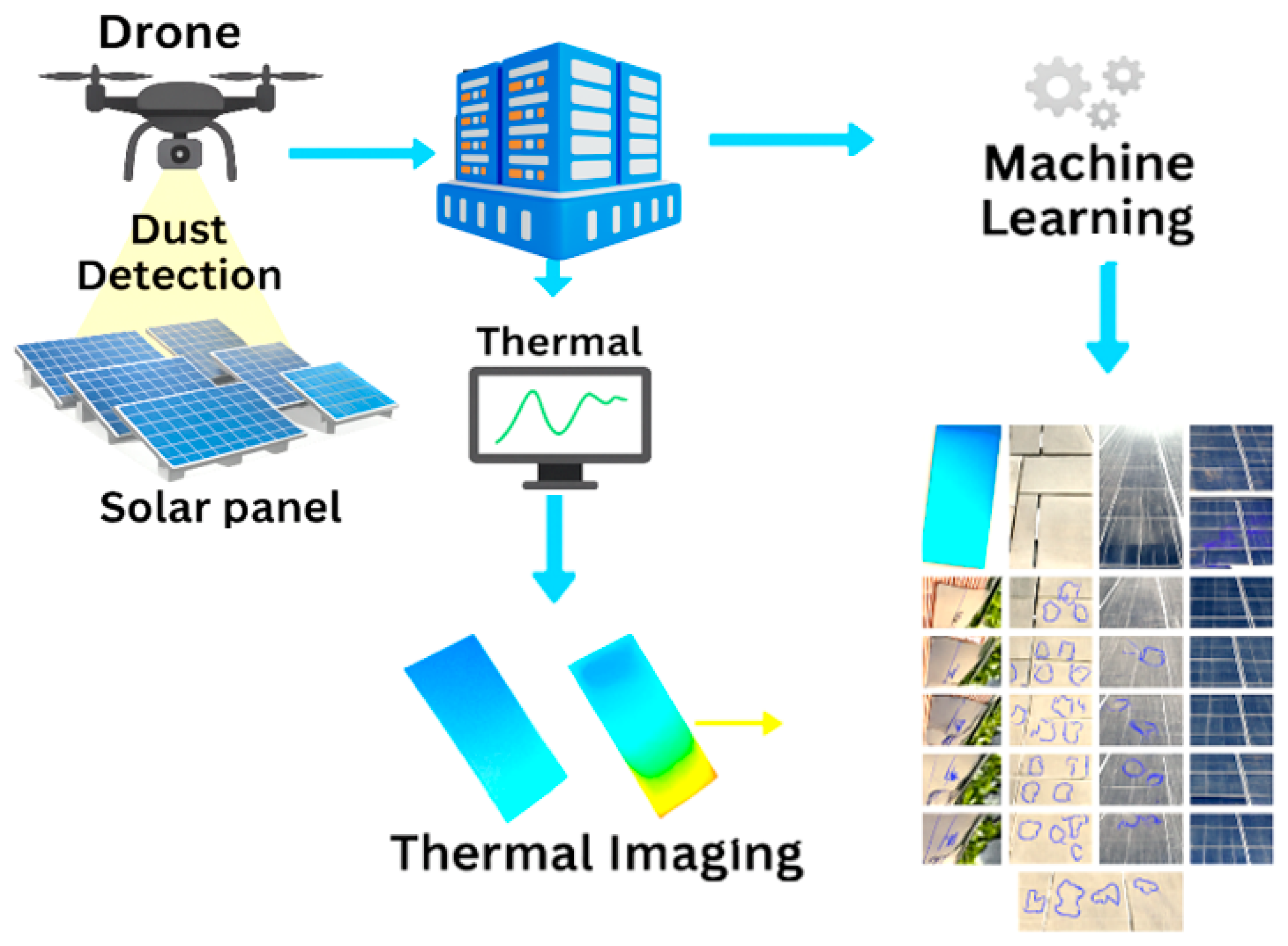
- To explore the potential of image processing and machine learning techniques as emerging tools for automated dust detection, predictive maintenance, and performance optimization.
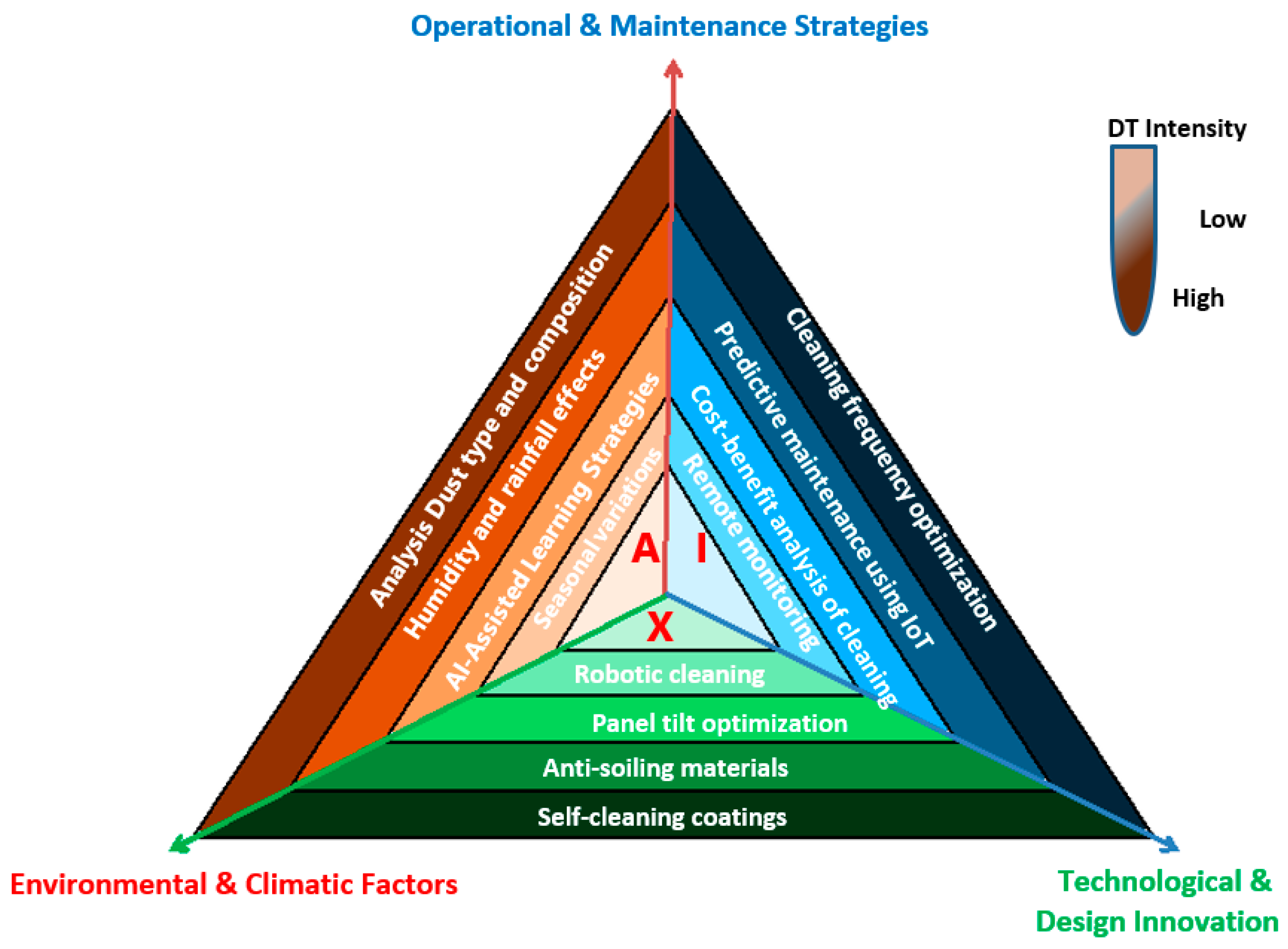
- To propose an integrated framework linking environmental, technological, and operational strategies for effective and sustainable dust mitigation in PV systems.
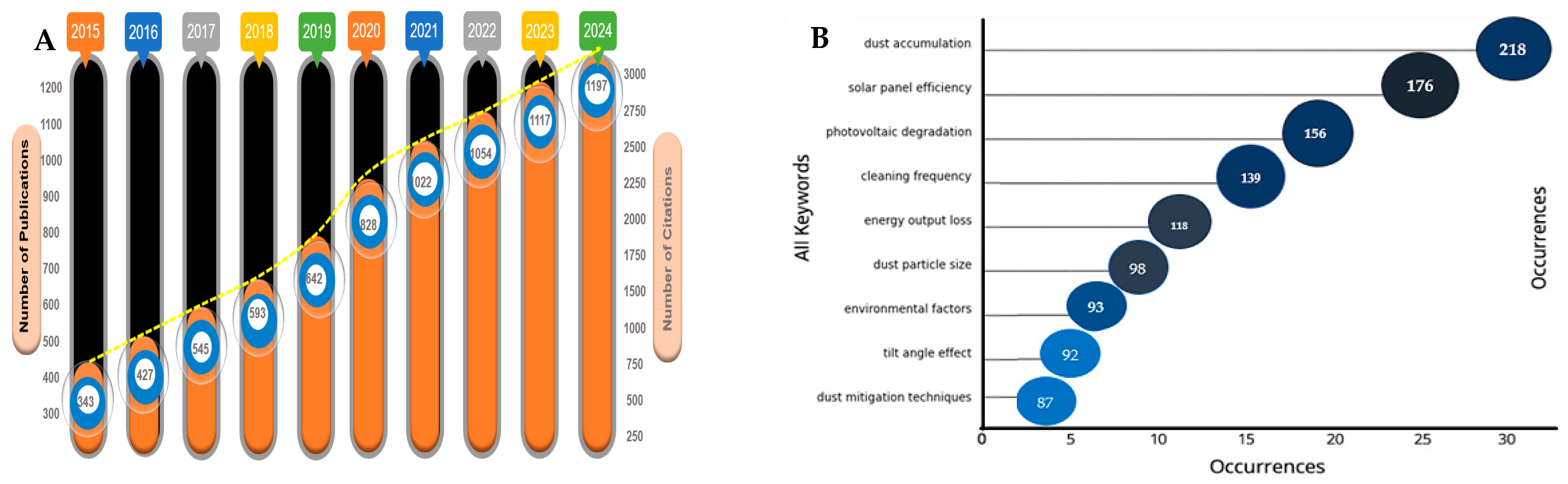
1.2. Metadata Analysis
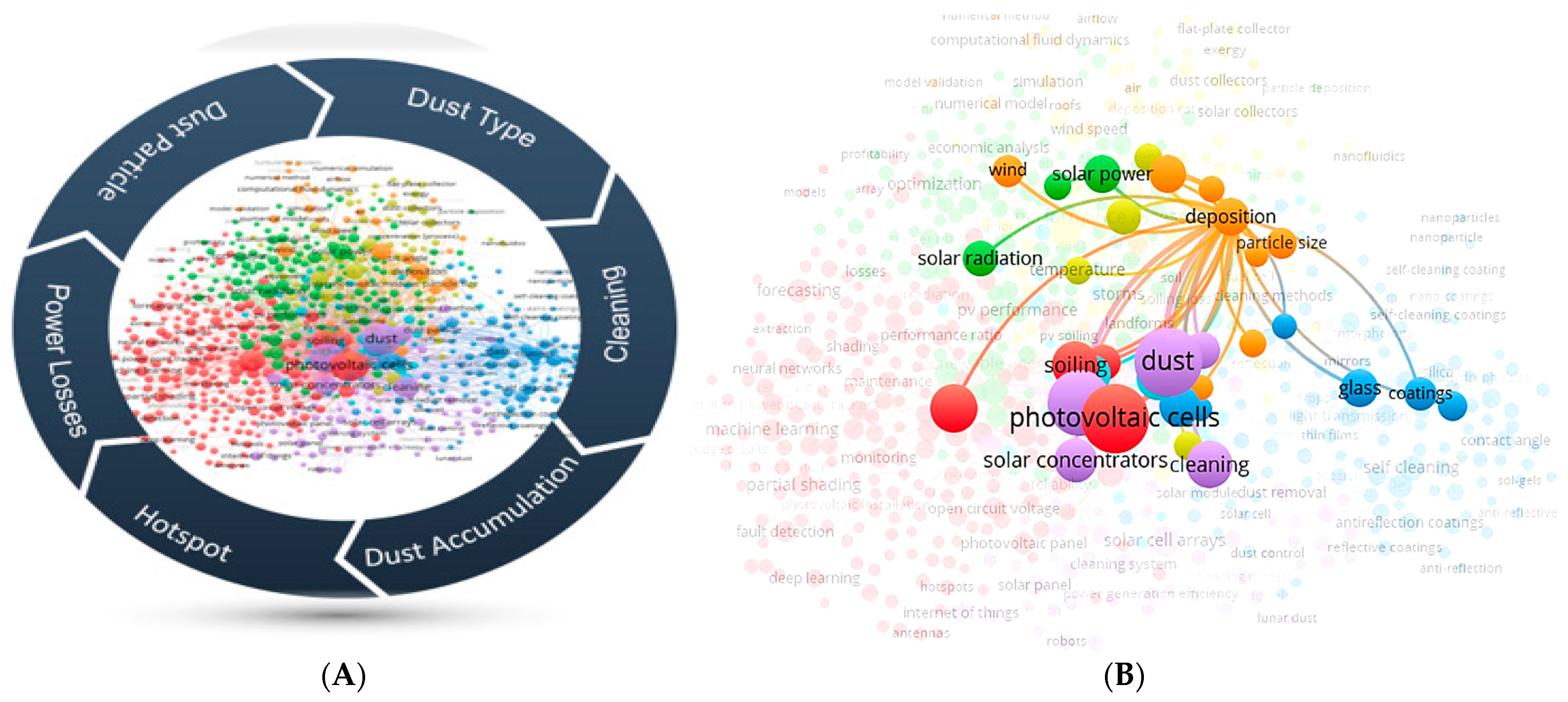
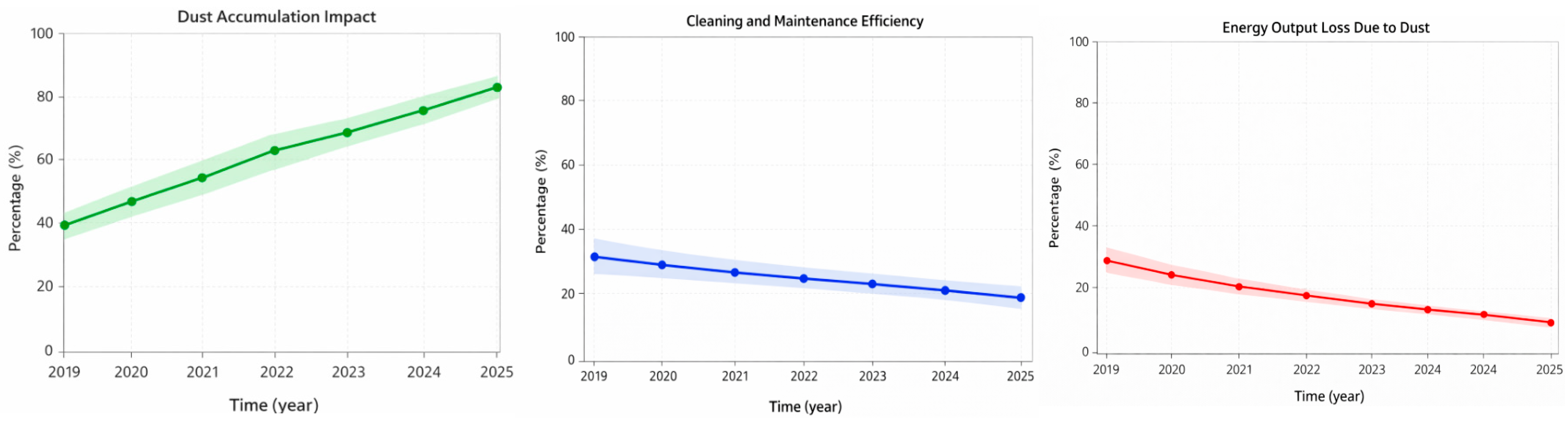
1.3. Research Trend Analysis
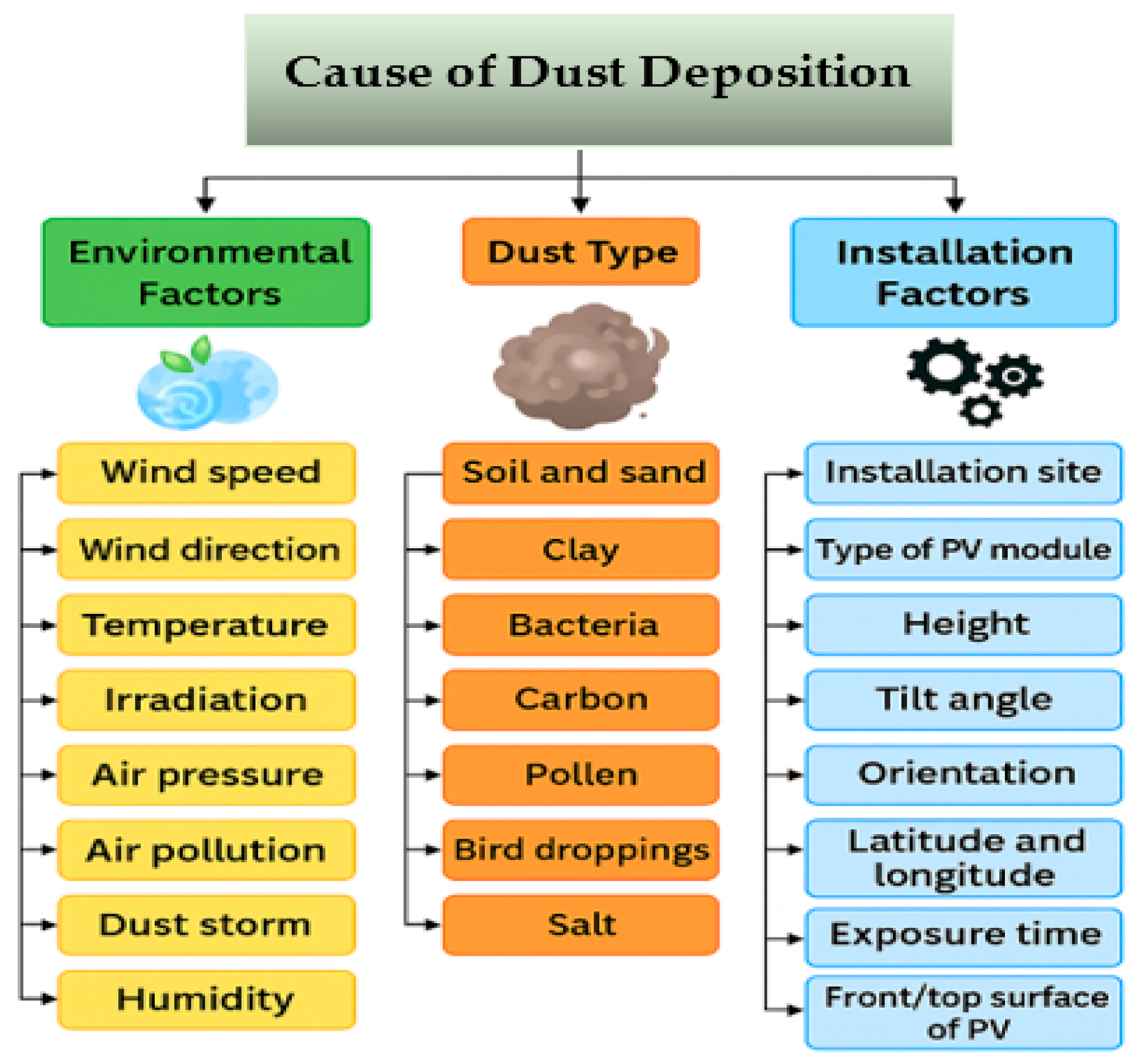
2. Cause and Effects of Dust Deposited on Solar Cells
Quantification of Power Loss Due to Soiling
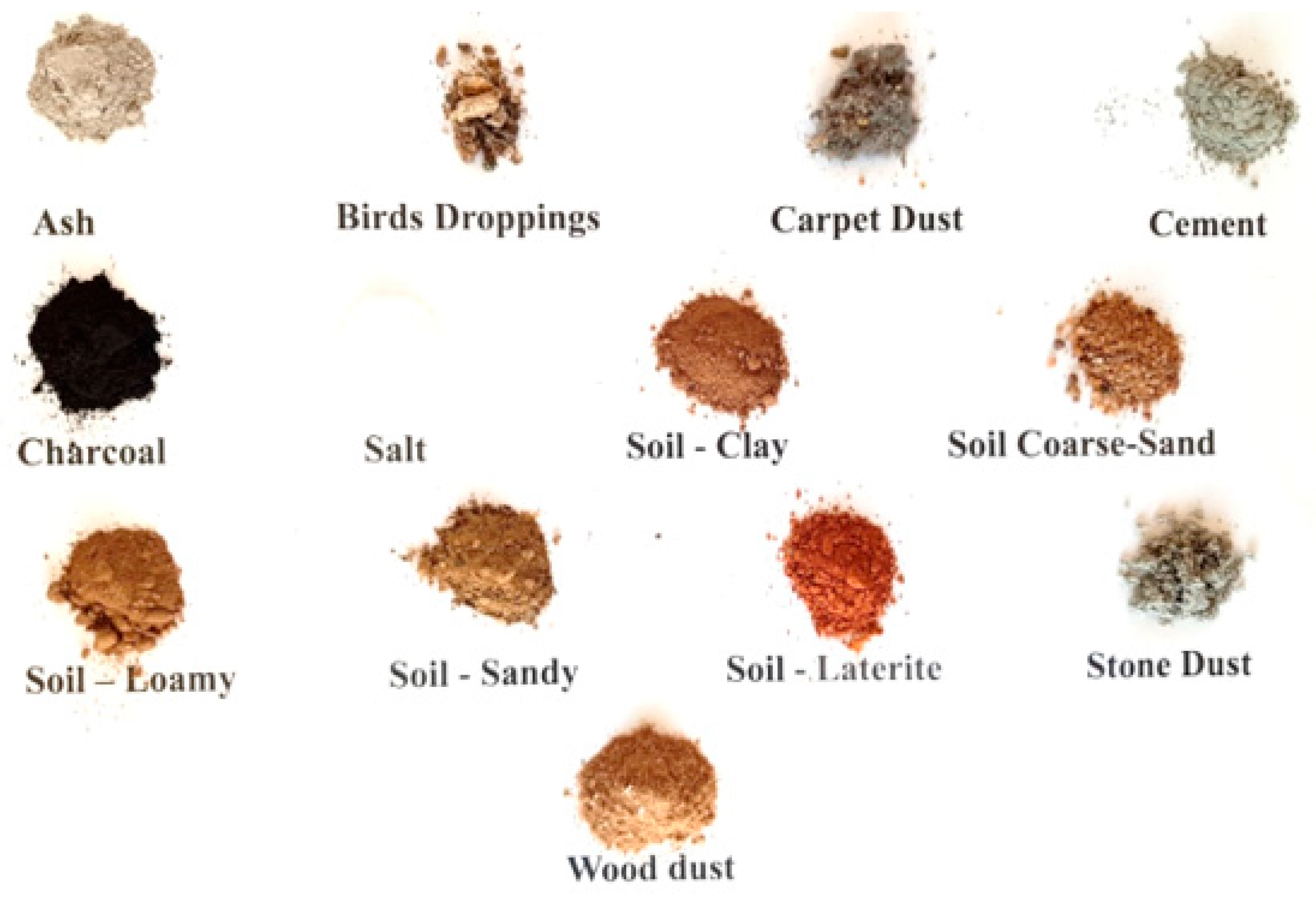
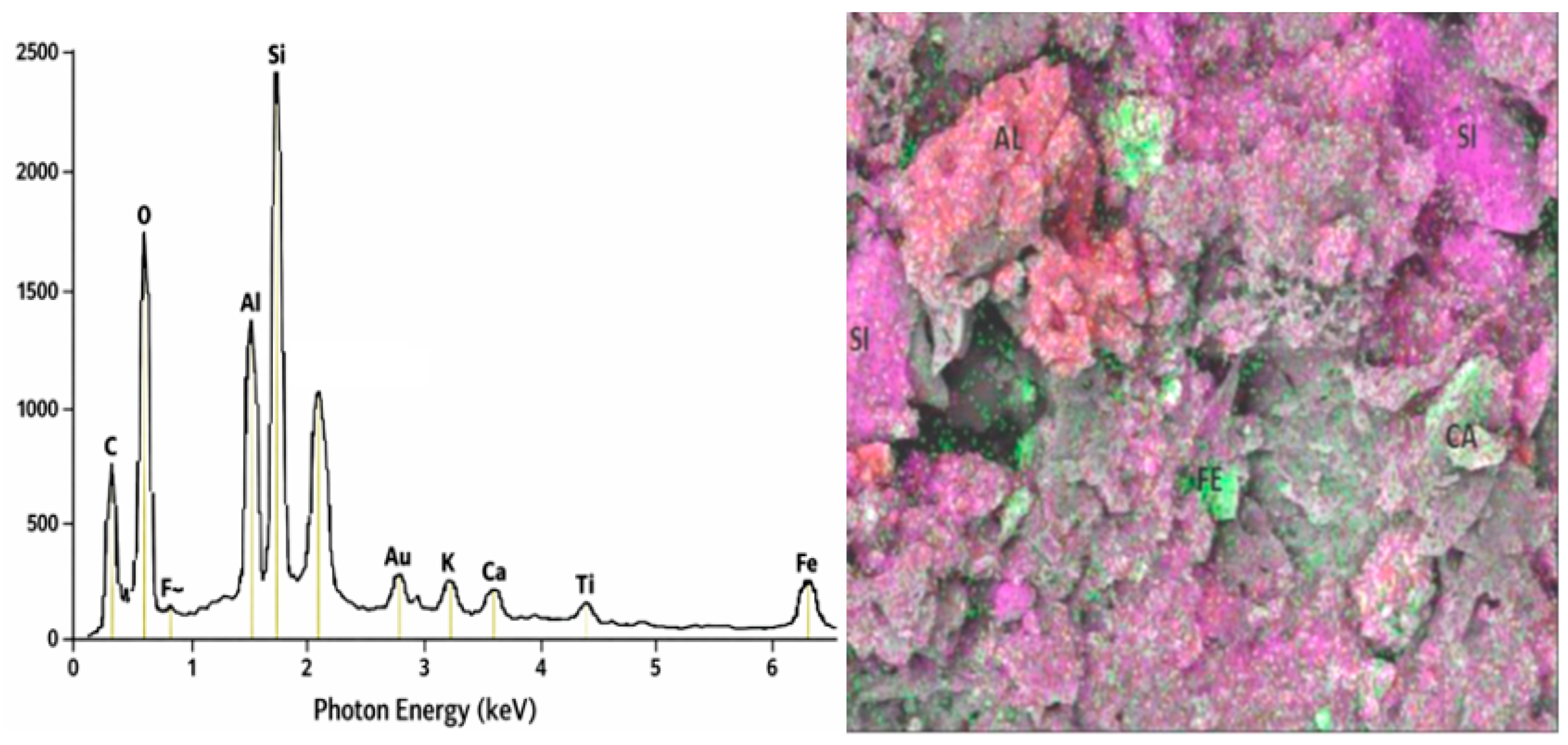
3. Types of Pollutants and Their Impact on PV
Classification and Comparative Impact of Dust and Pollutants on PV Performance
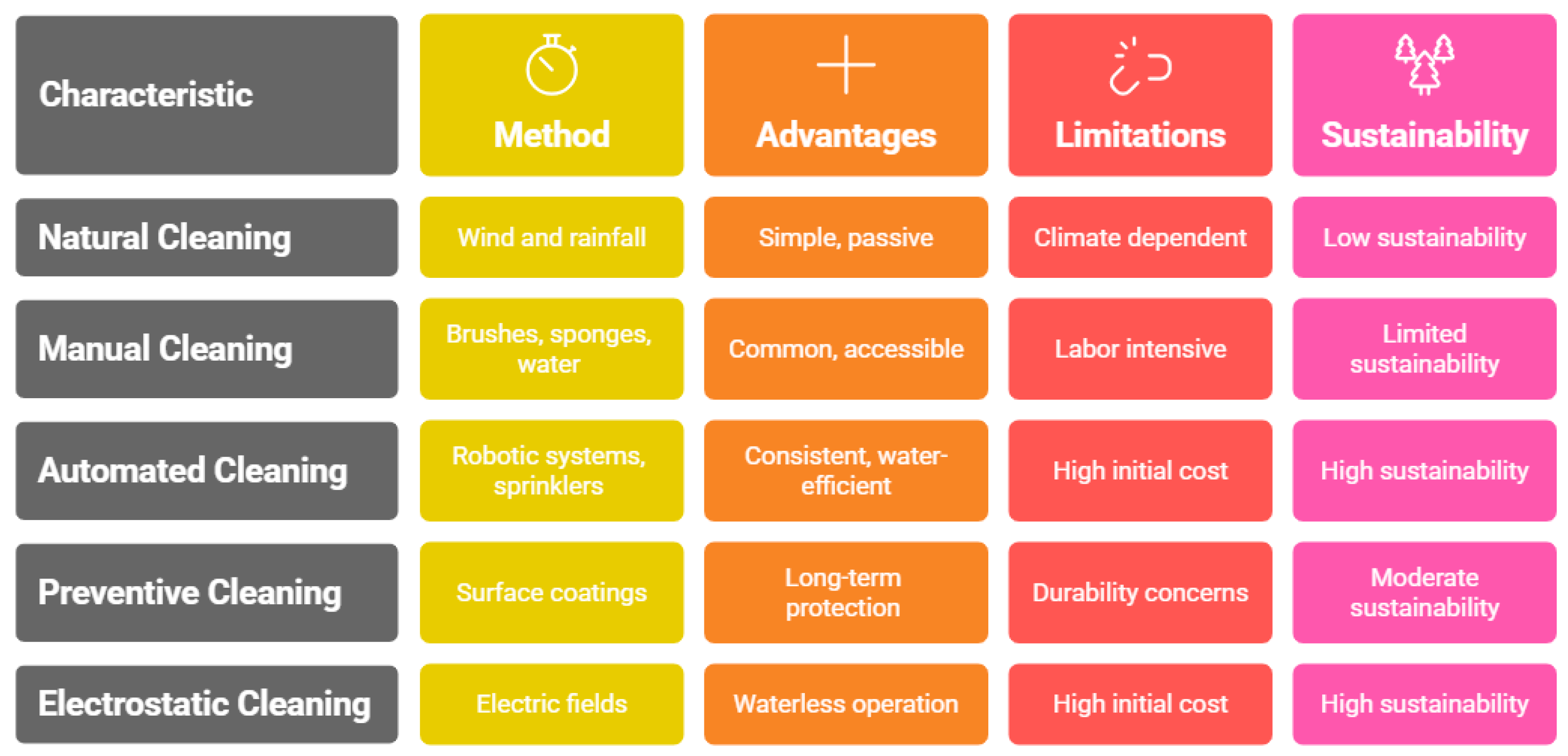
4. Existing Mitigation Strategies and Cleaning Methods
4.1. Machine Learning in Dust Detection as a Mitigation Technique
4.2. Standardization and Emerging Dust Mitigation Technologies
5. Discussion and Future Direction Framework
Integrated Framework for Future Improvement
6. Conclusions
Funding
Institutional Review Board Statement
Informed Consent Statement
Data Availability Statement
Conflicts of Interest
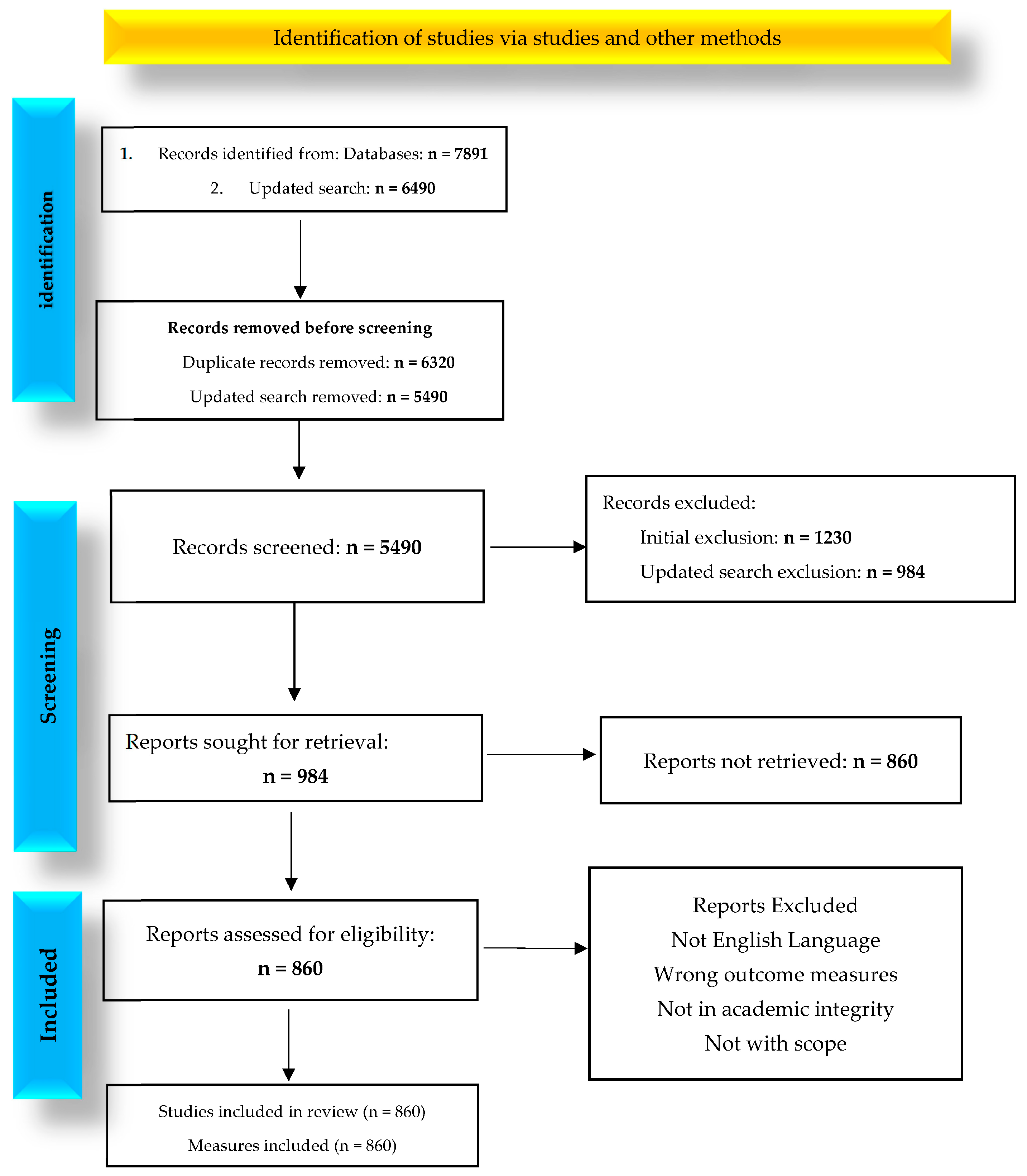
Appendix A. Bibliometric Data Extraction and Analysis
- Search Query (Scopus):


| Criteria | Inclusion | Exclusion |
|---|---|---|
| Time Range | 2015–2025 | Publications before 2015 |
| Language | English Only | Non-English publications |
| Document Type | Research Articles | Conference abstracts, editorials, etc. |
| Subject Area | Solar energy, Environment, Electrical, | Other fields of engineering or unrelated fields |
| Search Logic | Applied AND, OR for specific filtering | - |
| Source Database | Scopus | Other databases (e.g., IEEE Xplore) |
| Publishers | All publishers indexed in Scopus | - |
References
- Abuzaid, H.; Awad, M.; Shamayleh, A. Impact of dust accumulation on photovoltaic panels: A review paper. Int. J. Sustain. Eng. 2022, 15, 264. [Google Scholar] [CrossRef]
- Katoch, M.; Kumar, K.; Dahiya, V. Dust accumulation and reduction in electrical performance of solar PV panels. Mater. Today Proc. 2021, 46, 6608. [Google Scholar] [CrossRef]
- Shirzadi, S.; Hizam, H.; Wahab, N.I.A.; Maghami, M.R.; MacAlpine, S. Increasing energy harvest of photovoltaic arrays under uniform illumination: A case study on photovoltaic arrays in boulder CO and Tucson AZ. In Proceedings of the 2016 IEEE International Conference on Power and Energy (PECon), Melaka, Malaysia, 28–29 November 2016; IEEE: New York, NY, USA; pp. 23–27. [Google Scholar]
- Pradhan, A.; Panda, B.; Nanda, L.; Jena, C. Analysis of dust on the parameters of PV module and design of an effective solar dust cleaner. Int. J. Power Electron. Drive Syst. /Int. J. Electr. Comput. Eng. 2022, 13, 900. [Google Scholar] [CrossRef]
- Hooshyar, P.; Moosavi, A.; Borujerdi, A.N. Enhanced dust reduction method for solar panels application. Sci. Rep. 2024, 14, 30351. [Google Scholar] [CrossRef] [PubMed]
- Ahmed, A.; Elsakka, M.M.; Elhenawy, Y.; Amer, A.E.; Mansi, A.; Bassyouni, M.; Gadalla, M.A.; Refaat, A. Experimental investigation of a nano coating efficiency for dust mitigation on photovoltaic panels in harsh climatic conditions. Sci. Rep. 2024, 14, 23013. [Google Scholar] [CrossRef] [PubMed]
- Nezamisavojbolaghi, M.; Davodian, E.; Bouich, A.; Tlemçani, M.; Mesbahi, O.; Janeiro, F.M. The Impact of Dust Deposition on PV Panels’ Efficiency and Mitigation Solutions: Review Article. Energies 2023, 16, 8022. [Google Scholar] [CrossRef]
- Hassan, G.; Abubakar, A.A.; Yilbaş, B.S.; Al-Sharafi, A.; Al-Qahtani, H. Dust mitigation by a water droplet in between movable and modified wetting states surfaces. Sci. Rep. 2023, 13, 14927. [Google Scholar] [CrossRef] [PubMed]
- Said, S.Z.; Islam, S.Z.; Radzi, N.H.M.; Wekesa, C.W.; Altimania, M.; Uddin, J. Dust impact on solar PV performance: A critical review of optimal cleaning techniques for yield enhancement across varied environmental conditions. Energy Rep. 2024, 12, 1121. [Google Scholar] [CrossRef]
- El-wahhab, G.G.A.; Abdelwahab, T.A.M.; Osman, Y.K.O.T.; Abuhussein, M.F.A.; Fodah, A.E.M.; Ali, K.A.M. Performance evaluation of solar panels under different dust accumulation conditions using thermography: Focusing on PV temperature variation. Mater. Renew. Sustain. Energy 2023, 12, 247. [Google Scholar] [CrossRef]
- Diallo, S.; Melhaoui, F.Z.; Rafi, M.; Elassoudi, A. Understanding Photovoltaic Module Degradation: An Overview of Critical Factors, Models, and Reliability Enhancement Methods. E3S Web Conf. 2023, 469, 11. [Google Scholar] [CrossRef]
- Ezzat, D.; Ahmed, E.; Soliman, M.; Hassanien, A.E. An interpretable Bayesian deep learning-based approach for sustainable clean energy. Neural Comput. Appl. 2024, 36, 17145. [Google Scholar] [CrossRef]
- Li, X.; Mauzerall, D.L.; Bergin, M.H. Global reduction of solar power generation efficiency due to aerosols and panel soiling. Nat. Sustain. 2020, 3, 720–727. [Google Scholar] [CrossRef]
- Gholami, A.; Khazaee, I.; Eslami, S.; Zandi, M.; Akrami, E. Experimental investigation of dust deposition effects on photo-voltaic output performance. Sol. Energy 2018, 159, 346–352. [Google Scholar] [CrossRef]
- Morawala, K. Solar Panel Automated Cleaning Using Water Re-Capture and Re-Circulation System. Int. J. Res. Appl. Sci. Eng. Technol. 2022, 10, 2081. [Google Scholar] [CrossRef]
- Sarmah, P.; Das, D.; Saikia, M.; Kumar, V.; Yadav, S.K.; Paramasivam, P.; Dhanasekaran, S. Comprehensive Analysis of Solar Panel Performance and Correlations with Meteorological Parameters. ACS Omega 2023, 8, 47897. [Google Scholar] [CrossRef]
- Tamoor, M.; Hussain, M.I.; Bhatti, A.R.; Miran, S.; Arif, W.; Kiren, T.; Lee, G.H. Investigation of dust pollutants and the impact of suspended particulate matter on the performance of photovoltaic systems. Front. Energy Res. 2022, 10, 1017293. [Google Scholar] [CrossRef]
- Mustafa, R.J.; Gomaa, M.R.; Al-Dhaifallah, M.; Rezk, H. Environmental Impacts on the Performance of Solar Photovoltaic Systems. Sustainability 2020, 12, 608. [Google Scholar] [CrossRef]
- Sepúlveda-Oviedo, E.H. Impact of environmental factors on photovoltaic system performance degradation. Energy Strategy Rev. 2025, 59, 101682. [Google Scholar] [CrossRef]
- Shaik, F.; Sundar, L.S.; Veeraboina, P. Effect of various parameters on the performance of solar PV power plant: A review and the experimental study. Sustain. Energy Res. 2023, 10, 6. [Google Scholar] [CrossRef]
- Borah, P.; Micheli, L.; Sarmah, N. Analysis of Soiling Loss in Photovoltaic Modules: A Review of the Impact of Atmospheric Parameters, Soil Properties, and Mitigation Approaches. Sustainability 2023, 15, 16669. [Google Scholar] [CrossRef]
- Akı, O.; Akal, D.; Tez, T.; Umut, İ. Investigation of pollution effect reducing energy production in solar panels and self cleaning with hydrophilic nano coatings without using water. Res. Sq. 2024, 32, 21722–21739. [Google Scholar] [CrossRef]
- Rao, A.; Pillai, R.; Mani, M.; Ramamurthy, P.C. Influence of Dust Deposition on Photovoltaic Panel Performance. Energy Procedia 2014, 54, 690. [Google Scholar] [CrossRef]
- Chadly, A.; Aldayyani, H.Y.; Hamasha, M.M.; Amer, S.; Maalouf, M.; Mayyas, A. Selection of optimal strategy for managing decentralized solar PV systems considering uncertain weather conditions. Sci. Rep. 2024, 14, 12269. [Google Scholar] [CrossRef]
- Rehman, T.; Qaisrani, M.A.; Shafiq, M.B.; Baba, Y.F.; Aslfattahi, N.; Shahsavar, A.; Cheema, T.A.; Park, C.W. Global perspectives on advancing photovoltaic system performance—A state-of-the-art review. Renew. Sustain. Energy Rev. 2024, 207, 114889. [Google Scholar] [CrossRef]
- Yadav, V.; Suthar, P.; Mukhopadhyay, I.; Ray, A. Cutting edge cleaning solution for PV modules. Mater. Today Proc. 2020, 39, 2005. [Google Scholar] [CrossRef]
- Patil, P.; Bagi, J.S.; Wagh, M.; Patil, G. Design Optimization, Automation and Testing Analysis of Dust Cleaning Mechanism for Solar Photovoltaic Power Plant. In Lecture Notes in Mechanical Engineering; Springer Nature: Berlin, Germany, 2018; p. 289. [Google Scholar]
- Ali, A.A.; Ouhassan, Y.; Abouyaakoub, M.; Chahboun, M.; Hihi, H. The Impact of Desert Regions on Solar Energy Production with the Evaluation of Groundwater for Maintenance: A Case Study in Morocco. Sustainability 2024, 16, 5476. [Google Scholar] [CrossRef]
- Zhou, L.; Schwede, D.; Appel, K.W.; Mangiante, M.J.; Wong, D.C.; Napelenok, S.L.; Whung, P.; Zhang, B. The impact of air pollutant deposition on solar energy system efficiency: An approach to estimate PV soiling effects with the Community Multiscale Air Quality (CMAQ) model. Sci. Total Environ. 2018, 651, 456. [Google Scholar] [CrossRef] [PubMed]
- Muller, M.; Rashed, F. Considering the Variability of Soiling in Long-Term PV Performance Forecasting: Preprint. In Proceedings of the OSTI OAI, San Francisco, CA, USA, 29 September–1 October 2023; Volume 13, pp. 825–829. Available online: https://www.osti.gov/biblio/1992297 (accessed on 6 September 2023).
- Al-Addous, M.; Dalala, Z.; Alawneh, F.; Class, C.B. Modeling and quantifying dust accumulation impact on PV module performance. Sol. Energy 2019, 194, 86. [Google Scholar] [CrossRef]
- Bessa, J.G.; Micheli, L.; Almonacid, F.; Férnández, E.F. Monitoring photovoltaic soiling: Assessment, challenges, and perspectives of current and potential strategies. iScience 2021, 24, 102165. [Google Scholar] [CrossRef] [PubMed]
- Maghami, M.R.; Asl, S.N.; Rezadad, M.E.; Ale Ebrahim, N.; Gomes, C. Qualitative and quantitative analysis of solar hydrogen generation literature from 2001 to 2014. Scientometrics 2015, 105, 759–771. [Google Scholar] [CrossRef]
- Rezadad, M.I.; Maghami, M. Quantitative and qualitative analysis on trend of literature on flapping wing (2004–2014) by bibliometric analysis. Int. Rev. Aerosp. Eng. 2014, 7, 177–186. [Google Scholar] [CrossRef]
- Maghami, M.; Hizam, H.; Gomes, C. Impact of dust on solar energy generation based on actual performance. In Proceedings of the 2014 IEEE International Conference on Power and Energy (PECon), Kuching, Malaysia, 1–3 December 2014; IEEE: New York, NY, USA; pp. 388–393. [Google Scholar]
- Polo, J.; Martín-Chivelet, N.; Sanz-Saiz, C.; Alonso-Montesinos, J.; López, G.; Alonso-Abellá, M.; Battles, F.J.; Marzo, A.; Hanrieder, N. Modeling soiling losses for rooftop PV systems in suburban areas with nearby forest in Madrid. Renew. Energy 2021, 178, 420. [Google Scholar] [CrossRef]
- Song, Z.; Liu, J.; Yang, H. Air pollution and soiling implications for solar photovoltaic power generation: A comprehensive review. Appl. Energy 2021, 298, 117247. [Google Scholar] [CrossRef]
- Dagher, M.M.; Kandil, O.A. Computational prediction of dust deposition on solar panels. Environ. Sci. Pollut. Res. 2022, 30, 12545. [Google Scholar] [CrossRef]
- Yakubu, S.; Samikannu, R.; Gawusu, S.; Wetajega, S.D.; Okai, V.; Shaibu, A.K.S.; Workneh, G.A. A Holistic Review of the Effects of Dust Buildup on Solar Photovoltaic Panel Efficiency. Sol. Compass 2024, 13, 100101. [Google Scholar] [CrossRef]
- Wang, J.; Hu, W.; Wen, Y.; Zhang, F.; Li, X. Dust deposition characteristics on photovoltaic arrays investigated through wind tunnel experiments. Sci. Rep. 2025, 15, 1582. [Google Scholar] [CrossRef]
- Bhattacharjee, S.; Saharia, B.J. A comparative study on converter topologies for maximum power point tracking application in photovoltaic generation. J. Renew. Sustain. Energy 2014, 6. [Google Scholar] [CrossRef]
- Maghami, M.R.; Hizam, H.; Gomes, C.; Radzi, M.A.; Rezadad, M.I.; Hajighorbani, S. Power loss due to soiling on solar panel: A review. Renew. Sustain. Energy Rev. 2016, 59, 1307–1316. [Google Scholar] [CrossRef]
- Jafar, M.A.; Zakaria, M.I.; Dahlan, N.Y.; Kamarudin, M.N.; El Fezazi, N. Enhancing photovoltaic system maximum power point tracking with fuzzy logic-based perturb and observe method. Int. J. Electr. Comput. Eng. 2024, 14, 2386–2399. [Google Scholar] [CrossRef]
- Sooriamoorthy, D.; Manoharan, A.; Sivanesan, S.K.; Lun, S.K.; Cheong, A.C.H.; Perumal, S.K.S. Optimizing Solar Maximum Power Point Tracking with Adaptive PSO: A Comparative Analysis of Inertia Weight and Acceleration Coefficient Strategies. Results Eng. 2025, 27, 106429. [Google Scholar] [CrossRef]
- Hajighorbani, S. Dual search maximum power point algorithm based on mathematical analysis under partially-shaded conditions. Energies 2015, 8, 12116–12146. [Google Scholar] [CrossRef]
- Alzahrani, M.; Rahman, T.; Rawa, M.; Weddell, A.S. Impact of dust and tilt angle on the photovoltaic performance in a desert environment. Sol. Energy 2025, 288, 113239. [Google Scholar] [CrossRef]
- You, S.; Lim, Y.J.; Dai, Y.; Wang, C. On the temporal modelling of solar photovoltaic soiling: Energy and economic impacts in seven cities. Appl. Energy 2018, 228, 1136. [Google Scholar] [CrossRef]
- Javed, W.; Guo, B.; Figgis, B.; Aïssa, B. Dust potency in the context of solar photovoltaic (PV) soiling loss. Sol. Energy 2021, 220, 1040–1052. [Google Scholar] [CrossRef]
- Libra, M.; Beránek, V.; Sedláček, J.; Poulek, V.; Tyukhov, I. Roof photovoltaic power plant operation during the solar eclipse. Sol. Energy 2016, 140, 109–112. [Google Scholar] [CrossRef]
- Jaszczur, M.; Teneta, J.; Styszko, K.; Hassan, Q.; Burzyńska, P.; Marcinek, E.; Łopian, N. The field experiments and model of the natural dust deposition effects on photovoltaic module efficiency. Environ. Sci. Pollut. Res. 2019, 26, 8402–8417. [Google Scholar] [CrossRef]
- Guan, Y.; Zhang, H.; Xiao, B.; Zhou, Z.; Yan, X. In-situ investigation of the effect of dust deposition on the performance of polycrystalline silicon photovoltaic modules. Renew. Energy 2017, 101, 1273–1284. [Google Scholar] [CrossRef]
- Fan, S.; Wang, Y.; Cao, S.; Zhao, B.; Sun, T.; Liu, P. A deep residual neural network identification method for uneven dust accumulation on photovoltaic (PV) panels. Energy 2022, 239, 122302. [Google Scholar] [CrossRef]
- Abraim, M.; Salihi, M.; El Alani, O.; Hanrieder, N.; Ghennioui, H.; Ghennioui, A.; El Ydrissi, M.; Azouzoute, A. Techno-economic assessment of soiling losses in CSP and PV solar power plants: A case study for the semi-arid climate of Morocco. Energy Convers. Manag. 2022, 270, 116285. [Google Scholar] [CrossRef]
- Bellmann, P.; Wolfertstetter, F.; Conceição, R.; Silva, H.G. Comparative modeling of optical soiling losses for CSP and PV energy systems. Sol. Energy 2020, 197, 229–237. [Google Scholar] [CrossRef]
- Maghami, M.; Hizam, H.; Gomes, C.; Hajighorbani, S.; Rezaei, N. Evaluation of the 2013 southeast asian haze on solar generation performance. PLoS ONE 2015, 10, e0135118. [Google Scholar] [CrossRef] [PubMed]
- Gholami, A.; Saboonchi, A.; Alemrajabi, A.A. Experimental study of factors affecting dust accumulation and their effects on the transmission coefficient of glass for solar applications. Renew. Energy 2017, 112, 466–473. [Google Scholar] [CrossRef]
- Hosseini, A.; Mirhosseini, M.; Dashti, R. Analytical study of the effects of dust on photovoltaic module performance in Tehran, capital of Iran. J. Taiwan Inst. Chem. Eng. 2023, 148, 104752. [Google Scholar] [CrossRef]
- Sadat, S.A.; Faraji, J.; Nazififard, M.; Ketabi, A. The experimental analysis of dust deposition effect on solar photovoltaic panels in Iran’s desert environment. Sustain. Energy Technol. Assess. 2021, 47, 101542. [Google Scholar]
- Khodakaram-Tafti, A.; Yaghoubi, M. Experimental study on the effect of dust deposition on photovoltaic performance at various tilts in semi-arid environment. Sustain. Energy Technol. Assess. 2020, 42, 100822. [Google Scholar] [CrossRef]
- Kazem, A.A.; Chaichan, M.T.; Kazem, H.A. Dust effect on photovoltaic utilization in Iraq. Renew. Sustain. Energy Rev. 2014, 37, 734–749. [Google Scholar] [CrossRef]
- Saidan, M.; Albaali, A.G.; Alasis, E.; Kaldellis, J.K. Experimental study on the effect of dust deposition on solar photovoltaic panels in desert environment. Renew. Energy 2016, 92, 499–505. [Google Scholar] [CrossRef]
- Kaldellis, J.K.; Kapsali, M. Simulating the dust effect on the energy performance of photovoltaic generators based on experimental measurements. Energy 2011, 36, 5154–5161. [Google Scholar] [CrossRef]
- Charabi, Y.; Gastli, A. Integration of temperature and dust effects in siting large PV power plant in hot arid area. Renew. Energy 2013, 57, 635–644. [Google Scholar] [CrossRef]
- Kazem, H.A.; Chaichan, M.T. Experimental analysis of the effect of dust’s physical properties on photovoltaic modules in Northern Oman. Sol. Energy 2016, 139, 68–80. [Google Scholar] [CrossRef]
- Fathi, M.; Abderrezek, M.; Grana, P. Technical and economic assessment of cleaning protocol for photovoltaic power plants: Case of Algerian Sahara sites. Sol. Energy 2017, 147, 358–367. [Google Scholar] [CrossRef]
- Abderrezek, M.; Fathi, M. Experimental study of the dust effect on photovoltaic panels’ energy yield. Sol. Energy 2017, 142, 308–320. [Google Scholar] [CrossRef]
- Benatiallah, A.; Ali, A.M.; Abidi, F.; Benatiallah, D.; Harrouz, A.; Mansouri, I. Experimental study of dust effect in mult-crystal PV solar module. Int. J. Multidiscip. Sci. Eng. 2012, 3, 3–6. [Google Scholar]
- Fathi, M.; Abderrezek, M.; Friedrich, M. Reducing dust effects on photovoltaic panels by hydrophobic coating. Clean Technol. Environ. Policy 2017, 19, 577–585. [Google Scholar] [CrossRef]
- Bouraiou, A.; Hamouda, M.; Chaker, A.; Mostefaoui, M.; Lachtar, S.; Sadok, M.; Boutasseta, N.; Othmani, M.; Issam, A. Analysis and evaluation of the impact of climatic conditions on the photovoltaic modules performance in the desert environment. Energy Convers. Manag. 2015, 106, 1345–1355. [Google Scholar] [CrossRef]
- Said, S.A.; Al-Aqeeli, N.; Walwil, H.M. The potential of using textured and anti-reflective coated glasses in minimizing dust fouling. Sol. Energy 2015, 113, 295–302. [Google Scholar] [CrossRef]
- Ali, A.H.H.; ElDin, S.; Abdel-Gaie, S. Effect of dust and ambient temperature on PV panels performance in Egypt. Jordan J. Phys. 2015, 8, 113–124. [Google Scholar]
- Mehmood, U.; Al-Sulaiman, F.A.; Yilbas, B. Characterization of dust collected from PV modules in the area of Dhahran, Kingdom of Saudi Arabia, and its impact on protective transparent covers for photovoltaic applications. Sol. Energy 2017, 141, 203–209. [Google Scholar] [CrossRef]
- Mathiak, G.; Hansen, M.; Schweiger, M.; Rimmelspacher, L.; Herrmann, W.; Althaus, J.; Reil, F. PV module test for arid climates including sand storm and dust testing. In Proceedings of the Proceedings of the 32nd European Photovoltaic Solar Energy Conference and Exhibition, Munich, Germany, 20–24 June 2016; pp. 20–24. [Google Scholar]
- Said, S.A.; Walwil, H.M. Fundamental studies on dust fouling effects on PV module performance. Sol. Energy 2014, 107, 328–337. [Google Scholar] [CrossRef]
- Abdeen, E.; Orabi, M.; Hasaneen, E.-S. Optimum tilt angle for photovoltaic system in desert environment. Sol. Energy 2017, 155, 267–280. [Google Scholar] [CrossRef]
- Moharram, K.; Abd-Elhady, M.; Kandil, H.; El-Sherif, H. Influence of cleaning using water and surfactants on the performance of photovoltaic panels. Energy Convers. Manag. 2013, 68, 266–272. [Google Scholar] [CrossRef]
- Elminir, H.K.; Ghitas, A.E.; Hamid, R.; El-Hussainy, F.; Beheary, M.; Abdel-Moneim, K.M. Effect of dust on the transparent cover of solar collectors. Energy Convers. Manag. 2006, 47, 3192–3203. [Google Scholar] [CrossRef]
- Al-Shabaan, G.; Shehab, W.A.; Abu-Al-Aish, A.; Al-Sawalmeh, W.; Al-Shaweesh, M. Effects of dust grain size and density on the monocrystalline PV output power. Int. J. Appl. 2016, 6, 1–9. [Google Scholar]
- Mohsin, L.; Sakhrieh, A.; Aboushi, A.; Hamdan, A.; Abdelhafez, E.; Hamdan, M. Optimized cleaning and cooling for photovoltaic modules based on the output performance. Therm. Sci. 2018, 22, 237–246. [Google Scholar] [CrossRef]
- Hammad, B.K.; Rababeh, S.M.; Al-Abed, M.A.; Al-Ghandoor, A.M. Performance Study of On-Grid Thin-Film Photovoltaic Solar Station as a Pilot Project for Architectural Use. Jordan J. Mech. Ind. Eng. 2013, 7, 1–9. [Google Scholar]
- Qasem, H.; Betts, T.; Gottschalg, R. Spatially-resolved modelling of dust effect on cadmium telluride photovoltaic modules. Sol. Energy 2013, 90, 154–163. [Google Scholar] [CrossRef]
- Qasem, H.; Betts, T.R.; Müllejans, H.; AlBusairi, H.; Gottschalg, R. Dust-induced shading on photovoltaic modules. Prog. Photovolt. Res. Appl. 2014, 22, 218–226. [Google Scholar] [CrossRef]
- Dahlioui, D.; Laarabi, B.; Sebbar, M.A.; Barhdadi, A.; Dambrine, G.; Menard, E.; Boardman, J. Soiling effect on photovoltaic modules performance: New experimental results. In Proceedings of the 2016 International Renewable and Sustainable Energy Conference (IRSEC), Marrakech, Morocco, 14–17 November 2016; IEEE: New York, NY, USA; pp. 111–114. [Google Scholar]
- Varga, G.; Gresina, F.; Szeberényi, J.; Gelencsér, A.; Rostási, Á. Effect of Saharan dust episodes on the accuracy of photovoltaic energy production forecast in Hungary (Central Europe). Renew. Sustain. Energy Rev. 2024, 193, 114289. [Google Scholar] [CrossRef]
- Merrouni, A.A.; Conceição, R.; Mouaky, A.; Silva, H.G.; Ghennioui, A. CSP performance and yield analysis including soiling measurements for Morocco and Portugal. Renew. Energy 2020, 162, 1777–1792. [Google Scholar] [CrossRef]
- Sinha, P.; Hayes, W.; Littmann, B.; Ngan, L.; Znaidi, R. Environmental variables affecting solar photovoltaic energy generation in Morocco. In Proceedings of the 2014 International Renewable and Sustainable Energy Conference (IRSEC), Ouarzazate, Morocco, 17–19 October 2014; IEEE: New York, NY, USA; pp. 230–234. [Google Scholar]
- Almukhtar, H.; Lie, T.T.; Al-Shohani, W.A. Comprehensive analysis of dust impact on photovoltaic module temperature: Experimental insights and mathematical modeling. Sol. Energy 2023, 265, 112125. [Google Scholar] [CrossRef]
- Darwish, Z.A.; Kazem, H.A.; Sopian, K.; Alghoul, M.; Chaichan, M.T. Impact of some environmental variables with dust on solar photovoltaic (PV) performance: Review and research status. Int. J. Energy Environ. 2013, 7, 152–159. [Google Scholar]
- Fan, S.; Wang, Y.; Cao, S.; Sun, T.; Liu, P. A novel method for analyzing the effect of dust accumulation on energy efficiency loss in photovoltaic (PV) system. Energy 2021, 234, 121112. [Google Scholar] [CrossRef]
- Chanchangi, Y.N.; Ghosh, A.; Sundaram, S.; Mallick, T.K. An analytical indoor experimental study on the effect of soiling on PV, focusing on dust properties and PV surface material. Sol. Energy 2020, 203, 46–68. [Google Scholar] [CrossRef]
- Chaichan, M.T.; Kazem, H.A. Effect of sand, ash and soil on photovoltaic performance: An experimental study. Int. J. Sci. Eng. Sci. 2017, 1, 27–32. [Google Scholar]
- Radonjić, I.S.; Pavlović, T.M.; Mirjanić, D.L.; Radović, M.K.; Milosavljević, D.D.; Pantić, L.S. Investigation of the impact of atmospheric pollutants on solar module energy efficiency. Therm. Sci. 2017, 21, 2021–2030. [Google Scholar] [CrossRef]
- Darwish, Z.A.; Kazem, H.A.; Sopian, K.; Al-Goul, M.; Alawadhi, H. Effect of dust pollutant type on photovoltaic performance. Renew. Sustain. Energy Rev. 2015, 41, 735–744. [Google Scholar] [CrossRef]
- Darwish, Z.A.; Sopian, K.; Fudholi, A. Reduced output of photovoltaic modules due to different types of dust particles. J. Clean. Prod. 2021, 280, 124317. [Google Scholar] [CrossRef]
- Chaichan, M.T.; Kazem, H.A.; Al-Waeli, A.H.; Sopian, K. The effect of dust components and contaminants on the performance of photovoltaic for the four regions in Iraq: A practical study. Renew. Energy Environ. Sustain. 2020, 5, 3. [Google Scholar] [CrossRef]
- Paudyal, B.R.; Shakya, S.R. Dust accumulation effects on efficiency of solar PV modules for off grid purpose: A case study of Kathmandu. Sol. Energy 2016, 135, 103–110. [Google Scholar] [CrossRef]
- Adıgüzel, E.; Özer, E.; Akgündoğdu, A.; Yılmaz, A.E. Prediction of dust particle size effect on efficiency of photovoltaic modules with ANFIS: An experimental study in Aegean region, Turkey. Sol. Energy 2019, 177, 690–702. [Google Scholar] [CrossRef]
- Derakhshandeh, J.F. A comprehensive review of automatic cleaning systems of solar panels. Sustain. Energy Technol. Assess. 2021, 47, 101518. [Google Scholar] [CrossRef]
- Güngör, O.; Kahveci, H.; Gökçe, H.S. The effect of various industrial dust particles on the performance of photovoltaic panels in Turkey. Environ. Sci. Pollut. Res. 2023, 30, 15128–15144. [Google Scholar] [CrossRef]
- Reza, M.; Hizam, H.; Gomes, C.; Ag, I. Characterization of dust materials on the surface of solar panel. Life Sci. J. 2014, 11, 387–390. [Google Scholar]
- Darwish, Z.A.; Kazem, H.A.; Sopian, K.; Alghoul, M.; Alawadhi, H. Experimental investigation of dust pollutants and the impact of environmental parameters on PV performance: An experimental study. Environ. Dev. Sustain. 2018, 20, 155–174. [Google Scholar] [CrossRef]
- Fan, S.; Liang, W.; Wang, G.; Zhang, Y.; Cao, S. A novel water-free cleaning robot for dust removal from distributed photovoltaic (PV) in water-scarce areas. Sol. Energy 2022, 241, 553–563. [Google Scholar] [CrossRef]
- Hammoud, M.; Shokr, B.; Assi, A.; Hallal, J.; Khoury, P. Effect of dust cleaning on the enhancement of the power generation of a coastal PV-power plant at Zahrani Lebanon. Sol. Energy 2019, 184, 195–201. [Google Scholar] [CrossRef]
- Alghamdi, A.S.; Bahaj, A.S.; Blunden, L.S.; Wu, Y. Dust removal from solar PV modules by automated cleaning systems. Energies 2019, 12, 2923. [Google Scholar] [CrossRef]
- Kasim, N.K.; Obaid, N.M.; Abood, H.G.; Mahdi, R.A.; Humada, A.M. Experimental study for the effect of dust cleaning on the performance of grid-tied photovoltaic solar systems. Int. J. Electr. Comput. Eng. 2021, 11, 74–83. [Google Scholar] [CrossRef]
- Al Qdah, K.S.; Abdulqadir, S.A.; Al Harbi, N.Y.; Soqyyah, A.Z.; Isa, K.J.; Alharbi, M.Y.; Binsaad, N.M. Design and performance of PV dust cleaning system in medina region. J. Power Energy Eng. 2019, 7, 1–14. [Google Scholar] [CrossRef]
- Al-Kouz, W.; Al-Dahidi, S.; Hammad, B.; Al-Abed, M. Modeling and analysis framework for investigating the impact of dust and temperature on PV systems’ performance and optimum cleaning frequency. Appl. Sci. 2019, 9, 1397. [Google Scholar] [CrossRef]
- Kazem, H.A.; Chaichan, M.T. The effect of dust accumulation and cleaning methods on PV panels’ outcomes based on an experimental study of six locations in Northern Oman. Sol. Energy 2019, 187, 30–38. [Google Scholar] [CrossRef]
- Alnasser, T.M.; Mahdy, A.M.; Abass, K.I.; Chaichan, M.T.; Kazem, H.A. Impact of dust ingredient on photovoltaic performance: An experimental study. Sol. Energy 2020, 195, 651–659. [Google Scholar] [CrossRef]
- Babatunde, A.; Abbasoglu, S.; Senol, M. Analysis of the impact of dust, tilt angle and orientation on performance of PV Plants. Renew. Sustain. Energy Rev. 2018, 90, 1017–1026. [Google Scholar] [CrossRef]
- Haydaroğlu, C.; Gümüş, B. Investigation of the effect of short term environmental contamination on energy production in photovoltaic panels: Dicle University solar power plant example. Appl. Sol. Energy 2017, 53, 31–34. [Google Scholar] [CrossRef]
- Şevik, S.; Aktaş, A. Performance enhancing and improvement studies in a 600 kW solar photovoltaic (PV) power plant; manual and natural cleaning, rainwater harvesting and the snow load removal on the PV arrays. Renew. Energy 2022, 181, 490–503. [Google Scholar] [CrossRef]
- Alnaser, N.W. First smart 8.64 kW BIPV in a building in Awali Town at Kingdom of Bahrain. Renew. Sustain. Energy Rev. 2018, 82, 205–214. [Google Scholar] [CrossRef]
- Guo, B.; Javed, W.; Figgis, B.; Mirza, T. Effect of dust and weather conditions on photovoltaic performance in Doha, Qatar. In Proceedings of the 2015 First Workshop on Smart Grid and Renewable Energy (SGRE), Doha, Qatar, 22–23 March 2015; IEEE: New York, NY, USA; pp. 1–6. [Google Scholar]
- Majed, A.-R.; Gueymard, C.A.; Al-Khayat, M.; Ismail, A.; Lee, J.A.; Al-Duaj, H. Performance evaluation of a utility-scale dual-technology photovoltaic power plant at the Shagaya Renewable Energy Park in Kuwait. Renew. Sustain. Energy Rev. 2020, 133, 110139. [Google Scholar]
- Hachicha, A.A.; Al-Sawafta, I.; Said, Z. Impact of dust on the performance of solar photovoltaic (PV) systems under United Arab Emirates weather conditions. Renew. Energy 2019, 141, 287–297. [Google Scholar] [CrossRef]
- Conceicao, R.; Silva, H.G.; Mirao, J.; Gostein, M.; Fialho, L.; Narvarte, L.; Collares-Pereira, M. Saharan dust transport to Europe and its impact on photovoltaic performance: A case study of soiling in Portugal. Sol. Energy 2018, 160, 94–102. [Google Scholar] [CrossRef]
- Chiteka, K.; Arora, R.; Sridhara, S.; Enweremadu, C. A novel approach to Solar PV cleaning frequency optimization for soiling mitigation. Sci. Afr. 2020, 8, e00459. [Google Scholar] [CrossRef]
- Menoufi, K.; Farghal, H.F.; Farghali, A.A.; Khedr, M.H. Dust accumulation on photovoltaic panels: A case study at the East Bank of the Nile (Beni-Suef, Egypt). Energy Procedia 2017, 128, 24–31. [Google Scholar] [CrossRef]
- Adekanbi, M.; Alaba, E.S.; John, T.J.; Tundealao, T.D.; Banji, T.I. Soiling loss in solar systems: A review of its effect on solar energy efficiency and mitigation techniques. Clean. Energy Syst. 2023, 7, 100094. [Google Scholar] [CrossRef]
- Abd-Elhady, M.S.; Rana, A.S.; Elsebaaie, M.A.; Kandil, O.A. A new cleaning method for solar panels inspired from the natural vibrations of tree branches and leaves. Sci. Rep. 2024, 14, 18138. [Google Scholar] [CrossRef]
- Shenouda, R.; Abd-Elhady, M.S.; Kandil, O.A. A review of dust accumulation on PV panels in the MENA and the Far East regions. J. Eng. Appl. Sci. 2022, 69, 8. [Google Scholar] [CrossRef]
- Gonzalo, A.P.; Marugán, A.P.; Márquez, F.P.G. Survey of maintenance management for photovoltaic power systems. Renew. Sustain. Energy Rev. 2020, 134, 110347. [Google Scholar] [CrossRef]
- Kazem, H.A.; Chaichan, M.T.; Al-Waeli, A.H.; Sopian, K. A review of dust accumulation and cleaning methods for solar photovoltaic systems. J. Clean. Prod. 2020, 276, 123187. [Google Scholar] [CrossRef]
- Younis, A.; Onsa, M. A brief summary of cleaning operations and their effect on the photovoltaic performance in Africa and the Middle East. Energy Rep. 2022, 8, 2334–2347. [Google Scholar] [CrossRef]
- Sheikholeslami, M.; Khalili, Z. Enhancing photovoltaic solar panel performance with integration of PCM-based spectral filter and self-cleaning coating. J. Build. Eng. 2024, 94, 110019. [Google Scholar] [CrossRef]
- Ghenai, C.; Salameh, T.; Merabet, A. Technico-economic analysis of off grid solar PV/Fuel cell energy system for residential community in desert region. Int. J. Hydrog. Energy 2020, 45, 11460–11470. [Google Scholar] [CrossRef]
- Latthe, S.S.; Sutar, R.S.; Kodag, V.S.; Bhosale, A.; Kumar, A.M.; Sadasivuni, K.K.; Xing, R.; Liu, S. Self–cleaning superhydrophobic coatings: Potential industrial applications. Prog. Org. Coat. 2019, 128, 52–58. [Google Scholar] [CrossRef]
- Parnianifard, A.; Azfanizam, A.; Ariffin, M.; Ismail, M.; Maghami, M.R.; Gomes, C. Kriging and Latin hypercube sampling assisted simulation optimization in optimal design of PID controller for speed control of DC motor. J. Comput. Theor. Nanosci. 2018, 15, 1471–1479. [Google Scholar] [CrossRef]
- Maghami, M.R.; Mutambara, A.G.O.; Gomes, C. Assessing cyber attack vulnerabilities of distributed generation in grid-connected systems. Environ. Dev. Sustain. 2025, 1–27. [Google Scholar] [CrossRef]


| Ref Year | Location | Study Features | Key Findings |
|---|---|---|---|
| [56,57] (2017) | Iran | To understand how dust accumulates on PV arrays, researchers studied the impact of factors like tilt angle, direction, and wind speed. | A reduction in the transmission coefficient by 15–24.83% is observed over 70 days for various tilt angles, in the absence of rain. |
| [57] (2023) | Iran | A new mathematical model can help us better understand how dust affects solar panels. By combining existing knowledge with a new approach, researchers can predict the effect of soiling on power output. | The results indicate that, considering dust accumulation, southern Tehran provides more favorable conditions for PV module installation than other regions. |
| [58] (2021) | Iran | To analyze the physical and chemical properties of a dust collected from the desert region of Iran and its influence on optical and electrical performance properties of PV arrays. | The findings demonstrate that the uniform distribution of soiling on the PV module prevents any major impact of the soiling process on the fill factor. |
| [59] (2020) | Iran | A study examining the effects of dust on solar system efficiency across different tilt angles in a semi-arid climate. | Dust accumulation resulted in an 8.6% average daily energy reduction for horizontal modules and a 0.8% reduction for tilted modules. |
| [60] (2014) | Iraq |
|
|
| [61] (2016) | Iraq | The study of the reduction in the efficiency of a solar cell due to soil in a controlled experimental setting | The system’s performance took a significant hit, with efficiency dropping by 6%, 12%, and 19% after just a day, week, and a month, respectively. |
| [62] (2011) | Iraq | Mathematical model to simulate trial in [61] | A comparison of the results obtained from the experiment and those predicted by the mathematical model. |
| [63] (2013) | Oman | The application of fuzzy logic techniques within a geographic information system framework to conduct spatial multi-criteria decision analysis | In Oman, only 9% of the country’s land area is deemed suitable for the installation of large-scale PV power plants. |
| [64] (2016) | Oman | Conducting a series of experiments to characterize the physical properties, including particle size distribution, shape, and mineralogical composition, of six different dust samples. | The system lost up to 0.05% efficiency per day, resulting in a 35–40% drop in power output over three months. |
| [65] (2017) | Algeria | Thin-Film and Monocrystalline PV Technologies: Performance Comparison and Homologous Work. | A thin-film PV plant needs a lower threshold to achieve optimum cleaning work than a mono-crystalline PV module. Still, the good performance/thermal cleaning ratio of a thin film plant does yield more revenues than for a monocrystalline plant. |
| [66] (2017) | Algeria | Conducting analytical experiments to study the effects of dust parameters, such as grain size and type, as well as glazing temperature on the behavior of PV panels and the level of light transmittance | The efficiency of the system decreased by 17.76% for indoor tests and 9.92% for outdoor tests. Additionally, the accumulation of ash and soil on the module glazing led to a significant increase in temperature. |
| [67] (2012) | Algeria | A comparison of the performance and characteristics of thin-film and monocrystalline PV technologies. | Thin-film PV plants need to be cleaned more often than monocrystalline ones. |
| [68] (2017) | Algeria | Comparative analysis of voltage and temperature degradation in untreated and nano-coated PV modules. | Nano-coating lowers cleaning costs for large solar plants from 2.25 to 1.89 euros/m2/year. |
| [69] (2015) | Algeria | Experimental analysis of the degradation in PV system performance induced by sand and dust accumulation and partial shading over a two-month period. | The power output was reduced by 5.1% on dusty days compared to clean days, primarily due to a decrease in short-circuit current. |
| [70,71] (2015) | Saudi Arabia | A real-world test to see how different glass coatings affect solar panel performance over two months. |
|
| [72] (2017) | Saudi Arabia | Understanding the effect of dust and dried mud on the mechanical, optical, and textile properties of polycarbonate and glass, commonly used as protective transparent covers for PV modules, through controlled laboratory experiments. | The protective cover experienced a greater reduction in transmittance due to the accumulation of dried mud compared to dust. |
| [73] (2016) | Saudi Arabia |
|
|
| [74] (2014) | Saudi Arabia | Investigating the influence of anti-reflective coatings on glass covers and inclination angle on dust accumulation. | A reduction of approximately 20% in dust accumulation and an increase in total glass permeability was observed for increased inclination angles or the application of anti-reflective coatings. |
| [51] (2017) | Egypt | Finding a link between dust buildup, tilt angle, and time using one year of data. |
|
| [75] (2017) | Egypt | Studying how tilt angle affects dirty solar panels |
|
| [71] (2015) | Egypt | Experimental & numerical investigation of the effect of dust accumulation & ambient temperature on the optical and electrical performance of a thin-film PV module under real-world conditions. |
|
| [76] (2013) | Egypt | Experiments to determine the impact of daily cleaning on the performance of solar cells over a 45-day period. |
|
| [77] (2006) | Egypt | Quantifying the impact of natural dust deposition on the permeability of glass covers used in PV modules, considering the influence of dust deposition density, tilt angle, and surface orientation under arid conditions. |
|
| [78] (2016) | Jordan | Quantifying the impact of dust particle size distribution and mass deposition density on the maximum power output of horizontally oriented monocrystalline PV modules under controlled laboratory conditions, using dust samples collected from three different sites. |
|
| [79] (2016) | Jordan | Experimental analysis of the performance enhancement of a PV module equipped with a front-side water spray cooling system designed to maintain the module’s surface temperature below 30 °C. | A significant increase of 8% in performance and 8.7% in energy yield was observed for the cooled and cleaned PV panel compared to an identical panel without a cooling/cleaning system. |
| [80] (2013) | Jordan | A two-month field trial was conducted to assess the performance degradation of thin-film PV modules under the harsh conditions of a hot, semi-arid environment. | A significant 10% improvement in efficiency was observed for the thin-film PV modules following a cleaning operation on the 51st day of the experiment. |
| [81] (2013) | Kuwait | Building a model to predict how dust affects solar panels: Using real-world data to understand the impact of dust at different angles. |
|
| [82] (2014) | Kuwait | An experimental study determined the optimal tilt angle for PV arrays to be 30°. | Wide bandgap technologies-based PV modules like amorphous silicon (a-Si) and cadmium telluride (CdTe), however, showed a steep reduction in photocurrent, up by 33%. In contrast, technologies such as crystalline silicon (C-Si) and copper indium gallium selenide (CIGS) registered lesser declines of 28.6% and 28.5%, respectively. In addition, the maximum dust deposition (1.4 mg cm2) occurred at the lower edge of the sample. |
| [83] (2016) | Morocco | Measuring soiling levels on PV modules to establish an appropriate cleaning protocol for optimal performance. | A 5% rise in the deposition of pollutants on the PV windshield was observed over a three-month period, correlating with a decrease in precipitation events. |
| [84] | Hungary | Impact of Saharan dust episodes on PV power forecasting accuracy | episodes on PV power forecasting accuracy 16 dust events in 2022 reduced 24 h forecast accuracy; semi-direct aerosol effect on cloud formation was dominant; highlights importance of aerosol modeling in PV forecasting |
| [36] | Spain | Characterization of soiling losses in suburban rooftop PV systems; evaluation of pvlib models | Soiling up to 6% day−1 at 8° tilt; models require calibration; air-quality data improve predictions; relevant for European urban PV growth |
| [85] | Portugal/Morocco | Comparative soiling assessment on CSP mirrors and impact on thermal & economic performance | Soiling 3× higher in Morocco (1.6% day−1); LCOE rises to ~0.231 €/kWh; standardized protocols enable reliable cross-site comparison |
| [13] | Global | Global modeling of atmospheric PM and soiling effects on PV generation using satellite-derived data | PM reduces PV output by up to 50% in polluted/desert regions; soiling ≈ 70% of losses; precipitation insufficient; cleaning and air-quality improvement can recover 30–40% of energy |
| Type of Dust/Pollutant | Main Source | Typical Particle Size | Dominant Adhesion Mechanism | Optical/Chemical Effect | Power Loss (%) | Key Implications |
|---|---|---|---|---|---|---|
| Natural/Mineral Dust | Desert soil, sand, wind-blown silicates | 10–100 μm | Van der Waals, gravitational | Strong light scattering and absorption; reduces transmittance | 10–40% | Most common in arid regions; rapid accumulation during dust storms |
| Organic/Biological Deposits | Pollen, bird droppings, microbial films | 1–50 μm | Capillary and chemical bonding | Alters hydrophobicity; may cause staining and surface degradation | 5–20% | Difficult to clean; promotes biofilm formation in humid environments |
| Anthropogenic/Industrial Pollutants | Soot, carbon black, metallic oxides, urban aerosols | <1–10 μm | Electrostatic, capillary | Strong absorption of visible light; chemical corrosion over time | 15–35% | High impact in urban and industrial zones; accelerates coating wear |
| Marine/Saline Dust | Sea spray, coastal aerosols | 2–50 μm | Capillary condensation, crystallization | Causes salt crystallization, rough surface, reduced light transmission | 10–30% | Common in coastal PV systems; requires anti-salt coatings |
| Agricultural/Mixed Dust | Soil tillage, fertilizers, organic residues | 5–100 μm | Mixed (electrostatic + chemical) | Variable; depends on local composition and humidity | 10–25% | Seasonal influence; mitigated by regular cleaning or surface coatings |
| Ref/PV Size | Location | Method | Dust Material | Objectives | Findings |
|---|---|---|---|---|---|
| [102] (2022) | China 2-KW | Cleaning by robot | Dirt, Volatile dust | To create an automated, water-free cleaning system capable of maintaining PV performance in regions where water resources are limited. | The robot performed cleaning in the absence of water but still achieved average cleaning rates of 92% by removing dust from the PV arrays. This led to an increase in the PV array efficiency by 11% to 50%. |
| [103] (2019) | Lebanon 1 MWp | Wet Cleaning by robot | Dirt, Snow | To evaluate how effective robotic wet cleaning is during both summer and winter seasons. | The cleaning procedure effectively minimized dust’s impact on PV power output, resulting in a 32% average power generation increase. |
| [104] (2019) | Saudi Arabia 8 KWp | Automated Cleaning Systems | Sand | To identify the most efficient sequence of cleaning methods—air jets, water jets, and mechanical vibration—for removing dust from PV modules. | Sand accumulation caused noticeable short-term performance losses, and using high-pressure water jets improved the array’s power output by over 27% by effectively removing the sand. In comparison, air jets and vibration methods showed much lower cleaning efficiency |
| [105] (2021) | Iraq- Baghdad 15 KW | Cleaning by based water nozzle | Dirt, Volatile dust | To compare the DC and AC performance of clean and dusty arrays in a 15 kW grid-connected PV system in Baghdad and quantify the benefits of cleaning. | The highest energy improvement, reaching 7.69%, was recorded in January, largely due to heavy dust accumulation and a major dust storm. In contrast, energy gains were lowest in March and April (2.68% and 2.87%), as frequent rainfall during these months limited dust deposition on the module surface |
| [106] (2019) | Saudi Arabia 805 W/m2 & 460 W/m2 | Cleaning by wiper and water jet | Accumulated sand and other dirt | To develop a cleaning mechanism that preserves PV panel efficiency under Medina’s harsh desert climate. | Soil deposition significantly reduced PV module efficiency. At 805 W/m2, clean panel efficiency was 14%, while the dusty panels were 9%. Similarly, at 460 W/m2, the clean panel achieved 13%, and the dusty pane 17%. |
| [107] (2019) | Hashemite University, Jordan 7.98 KWp | Manual cleaning | Dirt, Volatile dust | To investigate how dust buildup and ambient temperature influence PV system operation and to assess various cleaning methods and intervals for improved performance. | The analysis showed that all examined parameters significantly influenced system performance, consistent with field correlations. The enhanced ELM model demonstrated high predictive accuracy (R2 = 91.4%), and the results indicate that cleaning the PV system every two weeks is optimal for maintaining peak efficiency. |
| [108] (2019) | Oman 125 W Experimental cells) | Cleaning by (sodium solution & water) | Particulate matters from the chimneys | To examine the effects of multiple dust types and their accumulated mass on PV cell output across six locations in Oman. | The findings indicate that solar cell cleaning is most effective when performed at night, as this allows salts to be removed before being redeposited by dew formation, which can otherwise accelerate degradation. While monthly cleaning helps limit performance losses, more frequent cleaning—such as weekly or bi-weekly—results in substantially better overall PV system performance. |
| [109] (2020) | Iraq-Bagdad UN-WIND 12 V (Experimental cells) | Cleaning without liquid | Ordinary and white cement, sand, gypsum | To investigate how dust originating from common building materials (sand, cement, and gypsum) affects the power output of photovoltaic (PV) modules, and to evaluate the effectiveness of dry and preventive cleaning strategies in mitigating dust- and dew-related performance losses under Iraqi environmental conditions. | The study found that ordinary and white cement deposits caused the greatest reduction in PV power output, followed by sand and gypsum. To prevent potential chemical interactions with the module surface, a dry cleaning approach was adopted, eliminating the use of liquids during the cleaning process. |
| [110] (2018) | Cyprus 1280 KWp | Regular cleaning | Volatile dust, Factory smoke | To conduct a comparative analysis of the performance of PV arrays under different dust conditions and directions, including different tilt angles. | The results showed an average specific-yield variation of about 2.5%. Comparison between simulated and measured data revealed that some PV plants produced up to 7% more energy than predicted, while others generated about 3% less, underscoring the importance of accounting for site-specific conditions in PV performance modeling. |
| [111] (2017) 250 KW | Turkey | Cleaning by water | Factory smoke, Dirt | To conduct a study to assess the impact of environmental pollution on the performance of PV arrays at Dekel University. | The findings demonstrate that the two groups of PV arrays, which were investigated prior to cleaning, produced nearly identical amounts of energy. This similarity in pre-cleaning energy output provides a reliable baseline for accurately assessing the impact of cleaning on the PV operation. Between October 8th and 27th, the total energy generation of the cleaned group was 2372.6 kWh, while the uncleaned group produced 2257.2 kWh. This represents a 5.11% increase in energy generation for the cleaned group, highlighting the significant positive effect of cleaning on the PV arrays performance |
| [112] (2022) | Turkey 600 kW | Manual and natural cleaning | Snow, Rainwater | To conduct an analysis of various efficiency enhancement and improvement activities, such as manual and natural cleaning techniques, and the integration of rainwater harvesting system in PV power plants. | This is an area of much debate, as the energy gain is huge—50–75% more energy compared to a power plant that sees snow loads, as the results of the study show. By removing snow from the panels, both degradation of the panels and a reduction in power generation can be prevented. Furthermore, regular cleaning of the panels can improve energy efficiency and overall system performance. |
| [113] (2018) | Bahrain 8.64 kW | Cleaned by sweet water | CO2, Dirt | To conduct a study to investigate the possibility of increasing the production of solar cells by cleaning them with distilled water in the town of Awali. | The solar installation yielded 26%—34.%, and 37.%, respectively. Ironically, from January to June of 2016, 992 kWh were generated in total solar electricity, compared to 4471 kWh in the same six-month period of 2015. It indicates how factors like weather conditions, system maintenance, and various other factors can play a role in energy production of a solar installation. |
| [76] (2023) | Egypt 14 kW | Cleaned by water and energy | Dirt deposited | To explore innovative ways to remove dust from PV panels using minimal amounts of water and energy. | Results showed 50% of the PV panels cleaning was decreased after 45 days of using domestic non-pressurized water as cleaning solution. However, the cleaning efficacy was consistent when anionic and cationic surfactants were used in a mixture. Such techniques are also relatively few, due to the fact, these findings should ensure there are more facilities to help the proper cleaning of PV systems. |
| [114] (2015) | Qatar 1KW | Without cleaning | Desert sand | To conduct a study to collect data on the deterioration of the processes of PV arrays caused by dust deposition, as well as ambient dust and weather conditions. | The results quantify Qatar’s solar module performance decline due to dust deposition. Soiling caused a performance reduction of 0.0042 ± 0.0080% for biannually cleaned modules and 0.0045 ± 0.0091% for bimonthly cleaned modules. The findings emphasize the need for regular cleaning to avoid soiling-related solar system losses. |
| [115] (2020) | Kuwait 5.5 MW & 5.6 MW | Without cleaning | Dry sand | To conduct a comparative assessment of the performance of various grid-connected PV technologies under the specific conditions of a hot desert environment. | A major environmental element affecting PV array performance is soiling, according to studies. Power generation losses were monitored precisely and carefully along with other performance parameters like temperature and irradiation. This is especially important in arid places where dust and other particulates can greatly limit PV panel efficiency. |
| [116] (2019) | United Arab Emirates 20 KV | Without cleaning | Flying sand, dirt | To conduct a study to investigate the impact of dust on the performance of PV systems in Sharjah, UAE. | Indoor tests showed that every gram of dust per square meter on a solar panel reduces power output by 1.7%. Flatter panels collect more dust, with 37.63%, 14.11%, and 10.95% more dust on 0°, 25°, and 45° tilts, respectively. Outdoors, panels lost 12.7% power and gained 5.44 g/m2 of dust in five months. |
| [18] (2020) | Mutah University’s, Jordan 2.423 W (Experimental cells) | Without cleaning | Dust accumulation, water drops, shading effects, bird droppings (fouling) | To conduct a study to assess the impact of various environmental factors, such as dust accumulation, water droplets, shading effects and bird droppings, on the performance of PV systems under the specific climatic conditions of Muta University. | The findings revealed that water droplets had a positive impact on PV performance. By decreasing the temperature of the PV panel and increasing the potential difference, water droplets led to a 5.6% improvement in power output. In contrast, dust accumulation had a negative impact, reducing output power by 9% and efficiency by 12%. Additionally, bird fouling was found to decrease solar arrays performance by approximately 7.5%. These findings highlight the importance of mitigating the effects of these factors to optimize the performance of PV systems. |
| [117] (2018) | Portugal 140 KW | Without cleaning | Long range Saharan dust | To conduct a study to investigate the impact of the transfer of desert dust to Europe on the performance of PV systems in Portugal. | The results show that the first dust event caused a very high drop in maximum output power of photovoltaic (PV) system (around 8%). Moreover, the short-circuit current reduced by ∼3%. The latter showed a milder effect and caused a degradation of around 3% in maximum output power and short-circuit current. Moreover, this study effectively investigated the correlation of PV performance and mass accumulation, which significantly improved knowledge about dust impact on PV panels. |
| [118] (2020) | Zimbabwe 3.6 KWp | Without cleaning | Dirt, dust-laden wind, dust-rich humidity | To conduct a study to investigate the impact of pollution on energy loss in PV systems located in Mizrabani, Zimbabwe. The study will employ a new modeling approach to determine the extent of energy loss due to soiling. | The findings demonstrate that soiling levels on PV arrays varied significantly both between months and on a daily basis. These variations were influenced by fluctuating weather situations, such as temperature, direction of wind speed, and humidity. The study highlights the fact that soiling rates are not constant throughout the year, emphasizing the importance of considering these variations in the development of soiling models and the implementation of effective cleaning strategies. |
| [119] (2017) | Egypt, Beni-Suef 10 wat (Experimental cells) | Without cleaning | Natural dust | To conduct a practical case study to assess the impact of natural dust deposition on the photovoltaic-electrical process on the East Bank of the Nile region. | Dusty solar arrays had lower power output, voltage, current, and output, the study found. It was found that the dirty panel produced approximately 50% less power than the reference panel. These findings demonstrate the importance of regular cleaning to maintain PV systems’ peak performance and energy output. |
Disclaimer/Publisher’s Note: The statements, opinions and data contained in all publications are solely those of the individual author(s) and contributor(s) and not of MDPI and/or the editor(s). MDPI and/or the editor(s) disclaim responsibility for any injury to people or property resulting from any ideas, methods, instructions or products referred to in the content. |
© 2025 by the author. Licensee MDPI, Basel, Switzerland. This article is an open access article distributed under the terms and conditions of the Creative Commons Attribution (CC BY) license.
Share and Cite
Maghami, M.R. Impact of Dust Deposition on Photovoltaic Systems and Mitigation Strategies. Technologies 2026, 14, 15. https://doi.org/10.3390/technologies14010015
Maghami MR. Impact of Dust Deposition on Photovoltaic Systems and Mitigation Strategies. Technologies. 2026; 14(1):15. https://doi.org/10.3390/technologies14010015
Chicago/Turabian StyleMaghami, Mohammad Reza. 2026. "Impact of Dust Deposition on Photovoltaic Systems and Mitigation Strategies" Technologies 14, no. 1: 15. https://doi.org/10.3390/technologies14010015
APA StyleMaghami, M. R. (2026). Impact of Dust Deposition on Photovoltaic Systems and Mitigation Strategies. Technologies, 14(1), 15. https://doi.org/10.3390/technologies14010015