
Review

From Knowledge to Choice: How Financial Literacy Shapes Decision Making Through Behavioral Finance Mechanisms—A Systematic Bibliometric Study

by
Antonija Mandić
1,*,
Katerina Fotova Čiković
2 and
Tanja Jakšić
3
1
Department of University Library, University North, Trg dr. Zarka Dolinara 1, 48000 Koprivnica, Croatia
2
Department of Economy, University North, Trg dr. Zarka Dolinara 1, 48000 Koprivnica, Croatia
3
Department of Student Support and Lifelong Learning, University North, Trg dr. Zarka Dolinara 1, 48000 Koprivnica, Croatia
*
Author to whom correspondence should be addressed.
Int. J. Financial Stud. 2026, 14(4), 79; https://doi.org/10.3390/ijfs14040079
Submission received: 27 January 2026 / Revised: 4 March 2026 / Accepted: 9 March 2026 / Published: 1 April 2026
(This article belongs to the Special Issue Behavioral Insights into Financial Decision Making)

Abstract

Despite extensive research on financial literacy and financial decision-making, the scholarly literature remains conceptually fragmented, particularly regarding how behavioral biases mediate or moderate the relationship between knowledge and financial behavior. The existing literature often focuses on financial literacy or behavioral biases in isolation, limiting a systematic understanding of their interaction. This study addresses this gap by conducting a bibliometric analysis of research at the intersection of financial literacy, behavioral finance, and decision-making. Following the Preferred Reporting Items for Systematic Reviews and Meta-Analyses (PRISMA) guidelines, we analyzed 267 peer-reviewed publications indexed in Web of Science and Scopus over the period 2010–2025 using the Bibliometrix 5.2.1 R package and VOSviewer 1.6.20 for co-occurrence, thematic clustering, and trend analysis. The results identify three interconnected research clusters: (i) socio-demographic and educational determinants of financial literacy, (ii) cognitive and behavioral biases influencing financial decision processes, and (iii) applied investment decision contexts. Overconfidence and herding dominate the literature, whereas biases such as framing, mental accounting, and intertemporal inconsistency remain comparatively underexplored. The analysis further reveals a post-2022 surge in publications, increasing internationalization, and emerging integration of digital finance and artificial intelligence themes. By systematically mapping the intellectual structure of this research domain, this study clarifies theoretical fragmentation, identifies under-researched behavioral mechanisms, and provides an evidence-based framework to guide future interdisciplinary and policy-relevant research on how financial literacy translates into financial behavior.

1. Introduction

In today’s complex financial environment, developing responsible financial behavior is increasingly important for personal stability and resilience to market challenges. Financial literacy encompasses three key dimensions: knowledge, attitudes and behavior. Although financial knowledge is a fundamental component of financial literacy, more and more research shows that it alone is not a sufficient predictor of financial behavior. Such a discrepancy between knowledge and behavior implies an important role of behavioral factors and personal attitudes towards finances. Today, when we address financial literacy, we must include all aspects that affect financial decision-making. Behavioral factors such as loss aversion, the herd effect, overconfidence or the tendency to postpone decisions can act independently of the level of knowledge and significantly affect financial decision-making. Individuals often rely on intuition and emotions instead of rational judgments, which results in a mismatch between their knowledge and specific financial decisions, such as (not) investing, saving or avoiding risk. Several studies have investigated the factors of behavioral finance, encompassing biases, emotional biases, social influences, risk perception, and personality traits, shedding light on their potential to induce suboptimal decision-making (Akybayeva et al., 2024; Balcilar et al., 2013; Lather et al., 2020; Shahani & Ahmed, 2022; Talapbayeva et al., 2024).
Research has found that financial decisions are not only influenced by what individuals objectively know, but crucially by what they believe they know. This distinction between objective financial literacy (actual knowledge) and subjective financial literacy (perceived knowledge) has profound implications for financial behavior. Recent evidence shows that subjective financial literacy often has a stronger impact on financial decisions than objective knowledge (Anderson et al. (2017)) and that mismatches between the two—especially overconfidence—can lead to systematically poor financial outcomes (Balasubramnian & Sargent, 2020). Modern research has significantly improved our understanding of excessive financial self-confidence and its behavioral consequences. Bawalle et al. (2025) provide compelling evidence from Japan showing that overconfident investors are more prone to panic selling during market downturns, even when financial literacy reduces such tendencies. These findings challenge conventional assumptions about the protective role of financial knowledge, suggesting that overconfidence may override rational decision-making processes. Similarly, Chawla and Mokhtari (2025) find that individuals who exhibit excessive financial confidence, especially those using mobile payment technologies, are 94% more likely to rely on expensive alternative financial services such as payday loans.
Current conceptualizations of financial literacy inadequately capture the complex psychological processes underlying financial decision-making, as they prioritize rational knowledge acquisition while marginalizing behavioral and emotional determinants. Such an approach overlooks how subjective financial literacy, cognitive biases, and affective responses influence the translation of knowledge into behavior. To overcome these limitations, the present study synthesizes insights from financial literacy and behavioral finance research, proposing an integrated understanding of financial decision-making that reflects both rational and behavioral dimensions. Therefore, the main objective of this systematic literature review (SLR) is to critically synthesize and evaluate existing empirical evidence on how financial literacy influences financial decision-making through behavioral finance mechanisms, with particular emphasis on the roles of cognitive biases, emotional factors, and the distinction between objective and subjective financial literacy. By integrating insights from financial literacy and behavioral finance research, the study aims to identify dominant research streams and topics, most prominent authors, affiliations, journals, countries, and trend topics, thereby providing a comprehensive framework for understanding individual financial decision-making. In addition to the primary objective, this study pursues several secondary objectives aimed at strengthening the structural and analytical understanding of the field. Specifically, the study seeks to:
(1)
Identify dominant research streams and thematic clusters within the literature;
(2)
Determine the most influential authors, journals, affiliations, and countries contributing to this research domain;
(3)
Analyze collaboration patterns and geographical distribution of scientific output;
(4)
Trace the temporal evolution of research topics and emerging thematic trends.
Together, these secondary objectives provide a comprehensive framework for understanding the intellectual structure and developmental trajectory of research at the intersection of financial literacy, behavioral finance, and decision-making.
This bibliometric study contributes to the research area at hand in different ways:
  • First, such a review paper synthesizes existing research findings at a meta-level in order to highlight the status quo of the research field and identify opportunities for future research (Garcia-Lillo et al., 2023).
  • Second, to the best of the authors’ knowledge, there are no previous review studies that have incorporated the three research areas: financial literacy, financial decision-making and behavioral finance.
  • And third, this bibliometric study is robust and reproducible, and it surveys the two globally most renowned scientific databases (i.e., the Scopus and Web of Science databases).
While much of the early literature on financial literacy and economic decision-making is grounded in rational-choice frameworks—particularly expected utility theory and life-cycle consumption models—these approaches assume that individuals process information efficiently and consistently optimize their choices. Within this perspective, financial literacy improves decision quality primarily by reducing information asymmetry and enhancing computational ability. However, a substantial body of empirical evidence demonstrates persistent deviations from rational predictions, including excessive trading, under-diversification, panic selling, and overconfidence-driven risk-taking. These anomalies suggest that knowledge alone is insufficient to ensure optimal decision outcomes. Behavioral finance provides a complementary explanatory framework by incorporating bounded rationality, heuristics, and cognitive biases that systematically shape financial behavior. Therefore, this study adopts a behavioral finance perspective not to disregard rational models, but to address their explanatory limitations and to examine how psychological mechanisms influence the translation of financial literacy into actual decision-making behavior.
Although the present bibliometric analysis focuses on literature published between 2010 and 2025, it is important to acknowledge that the intellectual foundations of research on financial literacy and behavioral decision-making were established earlier. Seminal contributions in behavioral economics and early empirical investigations of financial literacy laid the theoretical and methodological groundwork for the expansion of the field in the post-global financial crisis period. The selected time frame, therefore, reflects a deliberate focus on mapping the contemporary evolution, development and consolidation of research streams, rather than a dismissal of foundational scholarship. To ensure intellectual continuity, key pre-2010 contributions are discussed separately to situate the subsequent bibliometric findings within their broader theoretical context.
This article has the following structure: Section 2 analyzes and builds the theory underpinning the research and outlines the conceptual background on financial literacy, behavioral finance and the intersection of financial literacy, behavioral finance and the decision-making process. In Section 3, the methodology and data collection process are described. The research results from the bibliometric study are presented in Section 4 and offer a discussion on both the theoretical and practical contributions, and the limitations of the study, and Section 5 concludes the paper.

2. Conceptual Background

2.1. Financial Literacy

The term “financial literacy” is a complex concept encompassing knowledge, education, skills, competence, and responsibility. Numerous definitions try to define this layered phrase. One of the most commonly used definitions is the term offered by the OECD—Organization for Economic Co-operation and Development—according to which “financial literacy is a process in which financial investors/sellers improve their understanding of financial products and concepts, and through the information and/or instructions provided, develop the necessary skills and security to become more aware of financial opportunities and risks, to be able to make informed decisions and to know how to adequately seek help”. Financial literacy is a critical enabler of economic and scientific success, providing comprehensive benefits across decision-making, resource management, and entrepreneurial development. Multiple studies substantiate this claim. Burchi et al. (2021) found a statistically significant positive relationship between financial literacy and sustainable entrepreneurial activity. Šipić et al. (2024) demonstrated that individuals with better financial understanding are more likely to adopt digital tools for efficient resource management. Hammer and Siegfried (2023) defined financial literacy as a combination of awareness, knowledge, and skills crucial for effective entrepreneurial decision-making. The evidence spans diverse contexts, including small businesses, student entrepreneurship, and broader economic development, consistently showing financial literacy’s transformative potential in linking scientific excellence with practical economic implementation (Dwyanti, 2024). There are a few multidimensional components of financial literacy according to Hamurcu et al. (2025), and these are knowledge, attitude, and behavior. In other words, financial literacy is a combination of knowledge, information, skills, attitudes, and behaviors necessary to make sound financial decisions and achieve personal financial well-being. One of the definitions is “that financial literacy is the skill of managing personal finances” (Chen & Volpe, 2002). A similar definition is given by Lusardi and Mitchell (2014), “financial literacy is an indicator of the level of understanding and application of knowledge about personal finance management”. According to the definition of Atkinson and Messy (2012), financial literacy encompasses the understanding of financial concepts, awareness of financial risks, motivation and the ability to apply this knowledge in the context of personal finance, thus achieving long-term financial security. This definition specifically emphasizes proactive behavior and risk awareness as key elements of financial literacy.

2.2. Behavioral Finance

Financial behavior refers to the information, knowledge and actual actions of an individual (consumer, household) when making decisions related to money, budget management, saving, investing, borrowing, and planning for the future, to achieve financial stability and well-being.
The intellectual foundations of behavioral finance originate in Prospect Theory and the heuristics-and-biases tradition, which documented systematic deviations from expected utility theory, including loss aversion, framing effects, and reference dependence. These core contributions established the theoretical basis for subsequent empirical research examining how cognitive biases influence financial decision-making.
According to Lovrinović (1997), the decision-making function in the world of finance is not exclusively guided by the rational behavior of investors but is strongly defined and shaped by various psychological factors and emotional states of individuals. Such a financial market represents a complex system in which investors, institutions and regulators meet, and it reflects not only economic trends, but also the complex area of human psychology. Moreover, Pearson and Korankye (2023) demonstrate that overconfidence in financial literacy can impair individuals’ ability to accurately assess their own financial circumstances. Their findings show that individuals who overestimate their financial knowledge perform worse on objective measures of financial literacy, while simultaneously reporting higher levels of financial satisfaction. This paradox indicates that financial literacy overconfidence is associated not only with poorer financial capability but also with distorted self-perceptions that may lead to misleading evaluations of one’s financial situation. Conversely, the evidence on financial literacy under confidence suggests that individuals who possess adequate financial knowledge yet underestimate their competence tend to report lower levels of financial satisfaction. Ashfaq et al. (2024), on the other hand, have explored the influence financial literacy holds on the cognitive biases of students in Germany while investing.
Multiple studies demonstrate that financial decision-making is not purely rational. Psychological elements significantly shape investment choices, with cognitive biases playing a crucial role (James, 2023). Research shows that financial literacy confidence can be paradoxical: overconfident individuals often perform worse on objective financial assessments, while simultaneously reporting higher satisfaction (Asaad, 2015). Behavioral finance reveals that emotional, cognitive, and social factors profoundly impact financial choices, challenging traditional assumptions of purely logical decision-making. The field emphasizes understanding how psychological mechanisms, rather than just economic calculations, drive financial behavior and market dynamics. Studies identify specific biases affecting financial decisions, including overconfidence, loss aversion, anchoring, and herd mentality (He, 2026). These biases can lead to market volatility, asset bubbles, and financial downturns (Zindel et al., 2014). Research using U.S. national survey data found that self-assessed financial competence often contains self-deceptive components induced by biases (Verma, 2017). Individuals with less understanding of their actual financial knowledge are more likely to engage in imprudent decisions, regardless of their real financial literacy. A Brazilian study of 1487 citizens revealed that financial literacy models do not apply uniformly across all groups (Ramalho & Forte, 2019). The relationship between knowledge, confidence, and behavior varies significantly for individuals with different confidence levels, suggesting the need for customized financial education approaches. Recent systematic reviews identify four major research clusters: the relationship between financial literacy and capability, factors influencing financial behavior, the impact on financial well-being, and demographic group differences (Shi et al., 2025).
Behavioral finance is a field that combines psychology and economics, studying how emotional, cognitive and social factors influence the investment and financial decisions of individuals and institutions, while departing from the traditional theory of rational people. Behavioral finance focuses on the way in which individual investors interpret information and react to it, exploring the psychological mechanisms that shape their decisions in the market (Gounaris & Prout, 2009).
While traditional financial theories assume that market participants always act rationally (Kamoune & Ibenrissoul, 2022), behavioral finance addresses emotions, cognitive biases, and psychological factors that often play a significant role in shaping financial decisions and market outcomes (Shahani & Ahmed, 2022). Financial decisions grounded in rational thinking require intentional and reflective cognitive processing, as opposed to dependence on heuristics or fast, intuitive judgments. This approach is typically marked by systematic assessment of risks, rewards, and long-term implications, relying on analytical reasoning rather than impulsive or emotion-based reactions (Lučić et al., 2024).

2.3. The Intersection of Financial Literacy, Behavioral Finance and Decision-Making Process

The intersection of financial literacy and behavioral finance becomes evident in the observation that financial knowledge does not automatically translate into optimal financial behavior, but operates through its interaction with behavioral biases. Empirical studies show that higher financial literacy can reduce the tendency toward certain biases, such as herding or misjudging interest rates, especially in the context of complex financial products (Stolper & Walter, 2017). Foundational empirical evidence on investor overconfidence demonstrates that individuals systematically overestimate their informational advantages and trading abilities. For example, Barber and Odean (2001) document that overconfident investors trade excessively, leading to suboptimal performance outcomes. While their analysis does not explicitly examine financial literacy, these findings highlight how cognitive biases could distort the application of financial knowledge in decision-making contexts.
Across the examined literature, financial literacy is predominantly measured using objective knowledge-based instruments derived from the Lusardi and Mitchell framework, which assesses understanding of inflation, interest compounding, and risk diversification. A smaller subset of research incorporates subjective self-assessed financial knowledge, introducing the possibility that overconfidence may distort perceived competence. This distinction is critical, as objective and subjective measures often yield different behavioral implications.
Beyond knowledge measures, a growing body of research emphasizes psychological traits—such as self-control, planning propensity, self-efficacy, cognitive ability, and risk tolerance—as significant predictors of financial behavior. In many contexts, these traits exhibit equal or greater explanatory power than financial literacy alone. Empirical evidence consistently indicates that financial literacy improves decision quality but does not deterministically eliminate behavioral distortions. Cognitive biases, including herding, overconfidence, and availability effects, frequently mediate a substantial portion of the relationship between literacy and investment outcomes.
This emerging perspective suggests that the intersection between financial literacy and behavioral finance is not merely additive, but interactive: knowledge shapes decision-making capacity, while psychological mechanisms influence how that knowledge is interpreted and applied.
The empirical evidence, on the other hand, is geographically concentrated in both developed and emerging markets, with frequent contributions from the United States, European countries, and selected Asian economies. Studies conducted in emerging markets often report stronger behavioral distortions, potentially reflecting differences in institutional environments and financial education systems. However, cross-country comparative analyses remain limited, indicating a need for more globally integrated research designs. This concentration may limit the generalizability of findings across institutional and cultural contexts.
In terms of temporal distribution, most empirical studies were conducted in the post-2010 period, coinciding with increased policy emphasis on financial capability following the global financial crisis. Over time, research appears to shift from examining direct literacy–outcome relationships toward exploring mediating behavioral mechanisms such as overconfidence, loss aversion, and heuristic-driven decision-making.
In this context, financial literacy functions as both a direct determinant of decision quality and an indirect mechanism whose effects are partially mediated by behavioral biases. On the one hand, it increases the ability to understand and interpret financial information, while on the other hand it affects the way this information is cognitively and emotionally processed (Fernandes et al., 2014). Behavioral mechanisms mediate the relationship between knowledge and behavior, explaining why individuals with similar levels of financial literacy can make significantly different financial decisions.
By integrating financial literacy and behavioral finance, it is possible to develop a more realistic and empirically based model of financial decision-making that considers both rational and psychological aspects of behavior. Such an integrated approach provides a theoretical basis for designing more effective financial education policies, which should not only focus on the transfer of knowledge, but also on identifying and mitigating behavioral biases in the actual decisions of individuals (Lusardi & Mitchell, 2014; Özen & Ersoy, 2019). All things considered, the literature suggests that financial literacy does not operate in isolation but interacts dynamically with cognitive biases and contextual factors. However, heterogeneity in measurement approaches, geographic concentration of samples, and limited longitudinal analysis constrain the comparability of findings, thereby underscoring the need for more integrated and methodologically harmonized research.

2.4. Foundational Contributions Before 2010

Before the financial literacy research rapidly accelerated after 2010, several influential studies established the conceptual and empirical foundations for integrating behavioral mechanisms into financial decision-making research. Early literature on financial literacy clearly shows that financial knowledge is a crucial, but insufficient prerequisite for quality financial decision-making. Rather than directly influencing behavior, financial literacy operates through a series of behavioral and psychological mechanisms that mediate the transition from knowledge to actual financial choices (see Table 1). In behavioral economics, early theoretical work demonstrated systematic deviations from rational choice models, most notably through prospect theory and subsequent developments in behavioral finance. These contributions provided the conceptual basis for understanding cognitive biases such as overconfidence, loss aversion, and heuristic-driven judgment. Fundamental works in the field of home finance have indicated that individuals with limited financial knowledge systematically make mistakes in saving, borrowing and investing, which calls into question the assumption of complete rationality (Campbell, 2006; Prowse, 1990). Empirical studies of financial literacy have further confirmed that a lower level of knowledge leads to weaker financial planning, especially in the context of retirement, and an increased tendency to procrastinate and inertia in decision-making (Lusardi & Mitchell, 2007, 2008). Studies that integrate behavioral variables show that financial knowledge influences behavior primarily indirectly. Perry and Morris (2005) identify financial attitudes and perceived control as key mediators between knowledge and behavior, while Norvilitis et al. (2006) associate low financial literacy with impulsivity and problematic borrowing. Furthermore, the perception of the complexity of financial products (Devlin, 2001) and limited numerical ability (Huhmann & McQuitty, 2009) further weaken the ability of individuals to translate knowledge into optimal choices. The theoretical framework of these findings can be explained by the Theory of Planned Behavior (Ajzen, 1991), according to which knowledge shapes attitudes and intentions, but does not guarantee behavior change without appropriate psychological prerequisites. Together, these studies (Table 1) lay the conceptual foundation of contemporary research that views financial literacy as a cognitive resource that guides financial decision-making and final choices through behavioral mechanisms. These seminal studies introduced standardized measures of financial literacy and documented persistent knowledge gaps across demographic groups. Importantly, some of these studies began to recognize that financial knowledge alone could not fully explain observed financial behaviors, thereby implicitly paving the way for later integration of behavioral mechanisms.
Table 1 summarizes selected high-impact pre-2010 studies that significantly shaped the trajectory of the field.

3. Data and Method

Bibliometric methods, long established as standard analytical tools in the natural sciences, are increasingly being adopted within the social sciences (Sankar et al., 2026). This study applies bibliometric analysis to systematically explore the intellectual structure and thematic evolution of research at the intersection of financial literacy, behavioral finance, and decision-making. The specific analytical tools and procedures are described in detail in Section 3.2.

3.1. Databases and Search Strategy

This bibliometric study explored both the Scopus and Web of Science (WoS) databases to grasp the thematic essence of the research area as presented in scholarly works. The rationale behind the decision and the choice behind these two scientific databases is found in the notion that they are currently two of the most globally renowned scientific databases. Moreover, the Web of Science database is considered “a widely known scholarly database featuring high-quality academic publications” (Ramachandran et al., 2025), and the Scopus database is referred to as “a competition to WoS, a similarly comprehensive academic database introduced to rival its scope and coverage” (Fotova Čiković et al., 2025a).
The search query was constructed within the Web of Science (WoS) and Scopus databases to retrieve relevant scientific publications. The search strategy was conducted using the keywords: “financial literacy”, “behavioral finance”, “decision making” (“financial literacy” AND “behavioral finance” AND “decision making). Although financial literacy encompasses knowledge, attitudes, and behavior, we intentionally centered our search on the umbrella term “financial literacy” to preserve conceptual coherence and avoid unnecessary dispersion in the analysis. Including individual components such as “financial knowledge,” “financial attitude,” or “financial behavior” as standalone search terms would have substantially broadened the dataset to capture studies not explicitly framed within the financial literacy construct or not linked to behavioral finance mechanisms. Given the bibliometric objective of mapping research at the explicit intersection of financial literacy, behavioral finance, and decision-making, a more expansive search strategy would have introduced thematic dispersion and reduced interpretative clarity. This approach aligns with established bibliometric practice, which prioritizes construct specificity to avoid excessive heterogeneity in network and cluster analyses.
Similarly, the search relied on the domain-level construct “behavioral finance” rather than enumerating individual cognitive biases (e.g., overconfidence, loss aversion, herding, framing). The purpose was to capture research explicitly positioned within the behavioral finance paradigm as it relates to financial literacy and decision-making. Listing individual biases as independent search terms would have expanded the dataset to include psychological and experimental studies not situated within financial literacy research, thereby fragmenting the conceptual scope of the analysis. Accordingly, the selected keyword strategy was designed to balance comprehensiveness with disciplinary coherence.
The search was conducted in November 2025, and the results revealed that the earliest publication dates back to 2010, thus defining the time range of the surveyed studies from 2010 to 2025 (2026 for online first articles). Although foundational behavioral finance theories and pioneering studies emerged before 2010, the present study deliberately focuses on the period 2010–2025. This time frame was selected to capture the phase in which financial literacy and behavioral finance began to be systematically integrated within empirical research, particularly following the 2008 global financial crisis. The post-crisis period marked a significant shift in academic and policy attention toward individual financial capability, behavioral biases, and investor protection, leading to a more structured intersection between financial literacy and behavioral decision-making research.
By concentrating on the most recent 15 years, the study aims to map the contemporary intellectual structure, emerging themes, and current research trajectories rather than the theoretical origins of behavioral finance. Foundational contributions from the early 2000s and prior are acknowledged as essential to the development of the field; however, the analytical focus here is on the consolidation, expansion, and interdisciplinary evolution of research linking financial literacy and behavioral mechanisms. The search strategy intentionally centered on the umbrella constructs “financial literacy” and “behavioral finance” to preserve conceptual coherence within the bibliometric mapping. While financial literacy encompasses related dimensions such as financial knowledge, attitudes, and behavior, incorporating these components as standalone search terms would substantially broaden the dataset to include studies not explicitly positioned within the financial literacy construct or not framed within the behavioral finance paradigm. Such expansion would increase thematic heterogeneity and reduce interpretative clarity in network and cluster analyses.
The objective of this study is not to exhaustively capture all studies related to financial knowledge or financial behavior, but rather to map research explicitly situated at the intersection of financial literacy, behavioral finance, and decision-making. Accordingly, the selected search terms balance coverage with analytical precision, consistent with established bibliometric practice that prioritizes construct specificity to ensure robust clustering and meaningful thematic interpretation.
This study follows the procedures established by PRISMA Preferred Reporting Items for Systematic Reviews and Meta-Analyses 2020 guidelines (Moher et al., 2009).
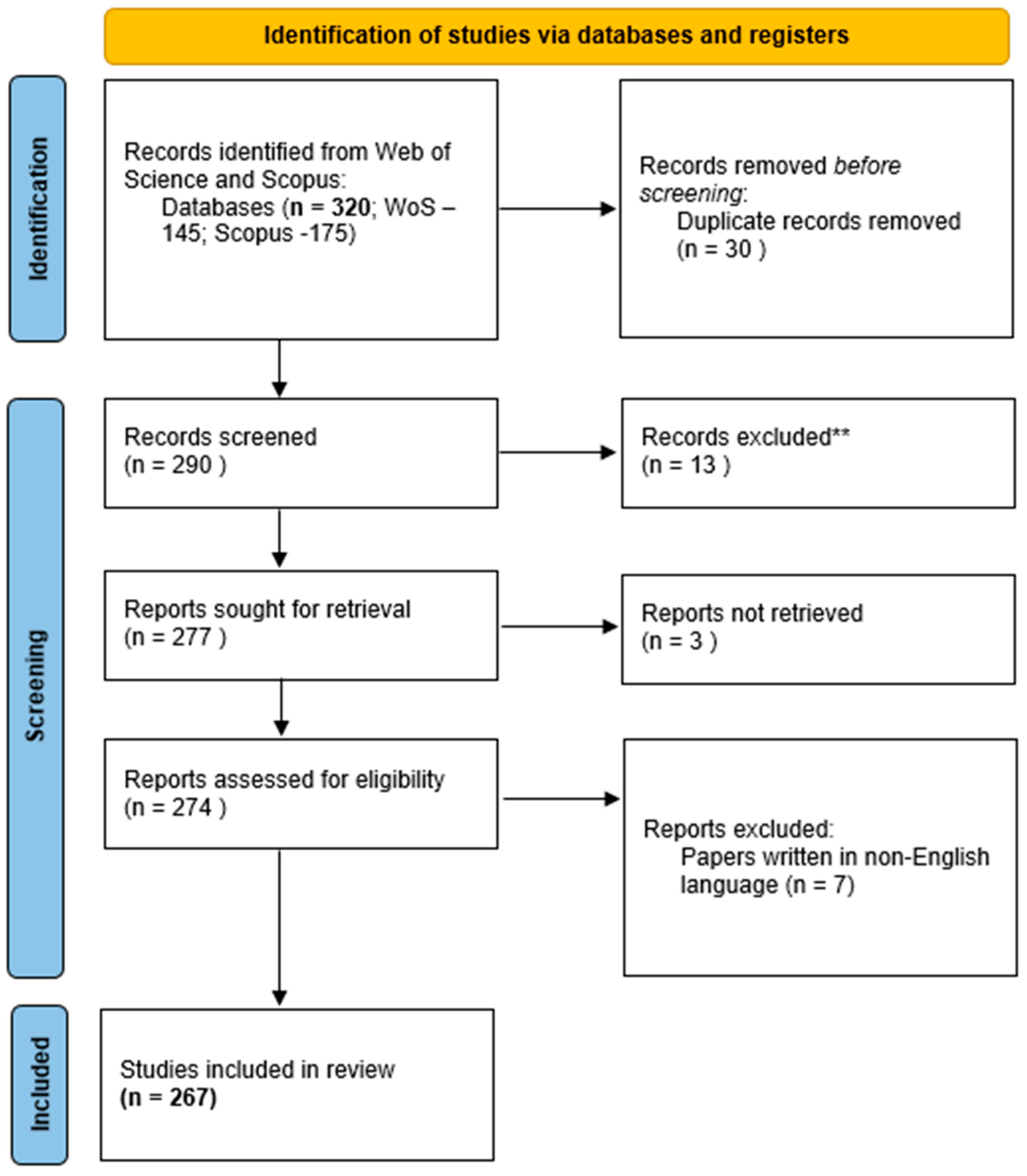
A PRISMA flow diagram is presented in Figure 1. The identification and selection of studies were carried out according to the principles outlined in the PRISMA guidelines. A search of relevant literature was conducted in the Web of Science and Scopus databases, resulting in the initial identification of 320 records (145 from Web of Science and 175 from Scopus). Before proceeding to the review phase, duplicates were removed, which excluded 30 records. This left 290 records for evaluation based on their titles and abstracts. During this phase, 13 records were manually excluded because they did not meet the predefined inclusion criteria. Full texts were requested for 277 records; however, three papers were not available for further analysis. The remaining 274 papers underwent a detailed eligibility assessment, during which seven were excluded due to being written in languages other than English. In the end, a total of 267 studies were included in the systematic review. Finally, a total of 267 studies were included in the systematic review.
Nevertheless, as with all bibliometric studies, the choice of keywords might influence dataset composition, and potentially relevant studies using alternative terminology and focus on a different perspective may not be fully captured.

3.2. Bibliometric and Data Processing

The bibliometric analysis and visualization were conducted using VOSviewer and R package Bibliometrix tool software. These tools were selected for their user-friendly interfaces and robust capabilities in visualizing complex bibliometric data. Bibliometrix generated annual publications, country-specific publications, most relevant countries, journals and thematic maps, as well as co-occurrence networks and topic trends, whereas the VOSViewer offered a deeper thematic analysis, resulting in network visualizations maps and the identification of thematic clusters and the most dominant trends in research (Fotova Čiković et al., 2025b). VOSviewer is highly effective for the visualization and analysis of bibliometric networks, offering strong capabilities for managing and interpreting large-scale datasets (Donthu et al., 2021), while Bibliometrix® (https://www.bibliometrix.org/home/, accessed on 21 November 2025) is “a user-friendly R package to ease interfacing with bibliographic data and records developed by (Aria & Cuccurullo, 2017) to carry out quantitative research in bibliometrics and scientometrics” (García-Lillo et al., 2024).
Thematic clusters were identified using a keyword co-occurrence analysis implemented in VOSviewer. Author keywords were utilized as the unit of analysis to capture the conceptual focus of each publication. The clustering procedure follows the VOS (Visualization of Similarities) mapping technique, which constructs a similarity matrix based on co-occurrence frequencies and applies a modularity-based optimization algorithm to partition the network into internally coherent clusters. Each cluster represents a group of keywords that frequently co-appear across publications, indicating a shared thematic orientation. Cluster labels were assigned through interpretative analysis of the most central and frequently occurring terms within each group, ensuring conceptual consistency with the broader research context.

4. Results and Discussion

The bibliometric results should be analyzed and taken into consideration within the defined temporal scope of 2010–2025, a period characterized by heightened academic and policy attention to financial capability following the global financial crisis of 2008/09. While foundational theoretical and empirical contributions were published prior to the analyzed window, the present analysis captures the consolidation, diversification, and methodological maturation of research during its contemporary expansion phase.
In the past couple of years, with the growing importance of financial literacy worldwide, the publications in the research area and intersection of financial literacy, decision-making and behavioral finance have increased exponentially. The following analysis moves beyond descriptive bibliometric indicators to examine the intellectual structure and thematic evolution of research at the intersection of financial literacy and behavioral finance. Special attention is given to dominant research streams, frequently studied behavioral biases, and emerging conceptual directions.
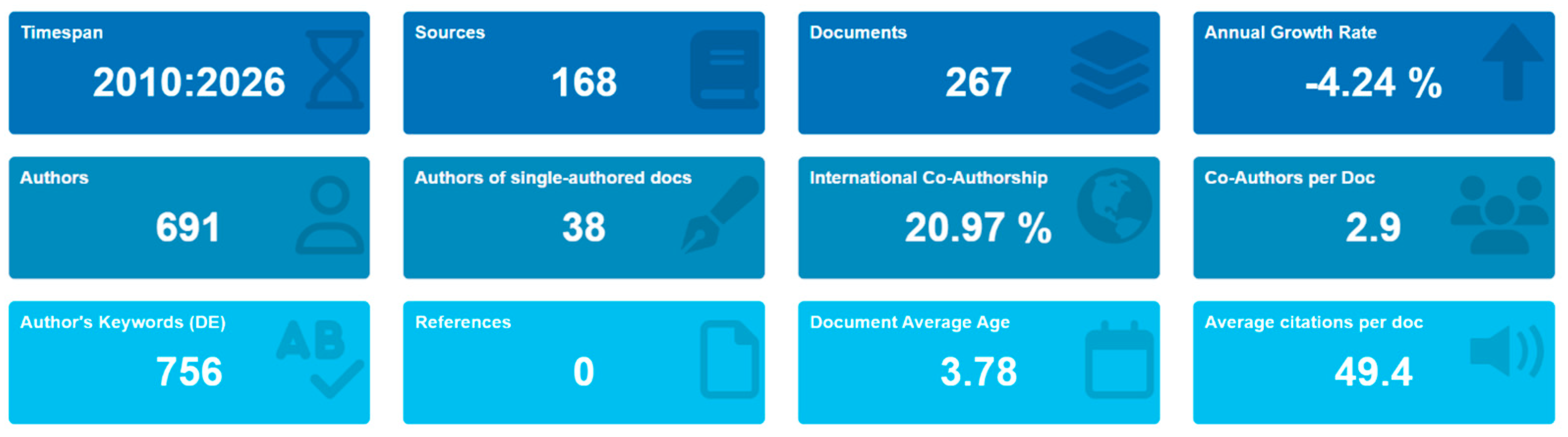
The bibliometric analysis as shown in Table 2 and Figure 2 covers publications indexed between 2010 and 2026, comprising a total of 267 documents drawn from 168 distinct sources, including journals, books, and conference proceedings. The dataset shows a negative annual growth rate of −4.24%, indicating a gradual decline in publication output over the analyzed period. The average age of the documents is 3.78 years, suggesting that the body of literature is relatively recent. On average, each document has received 49.4 citations, reflecting a high level of scholarly impact within the field. In terms of content characteristics, the analysis identified 492 Keywords Plus and 756 Author’s Keywords, highlighting a broad and diverse conceptual structure and indicating substantial thematic variability across the literature. Authorship analysis reveals the involvement of 691 unique authors. Of these, 38 authors contributed to single-authored documents. Collaboration patterns indicate that 39 documents were single-authored, while the average number of co-authors per document is 2.9, demonstrating a moderate level of collaborative research activity. International collaboration is also notable, with 20.97% of publications involving international co-authorships. Regarding document types, research articles dominate the dataset, accounting for 216 publications. Reviews constitute a smaller but significant portion (15 documents), reflecting efforts to synthesize existing knowledge. Conference-related outputs, including conference papers (7), proceedings papers (11), and a conference review (1), indicate active dissemination of research in scholarly meetings. Additional document types include book chapters (3), early access articles (7), editorials (1), an erratum (1), a short survey (1), and one retracted publication. Overall, the distribution of document types underscores the predominance of peer-reviewed journal articles as the primary medium of scholarly communication in this field.
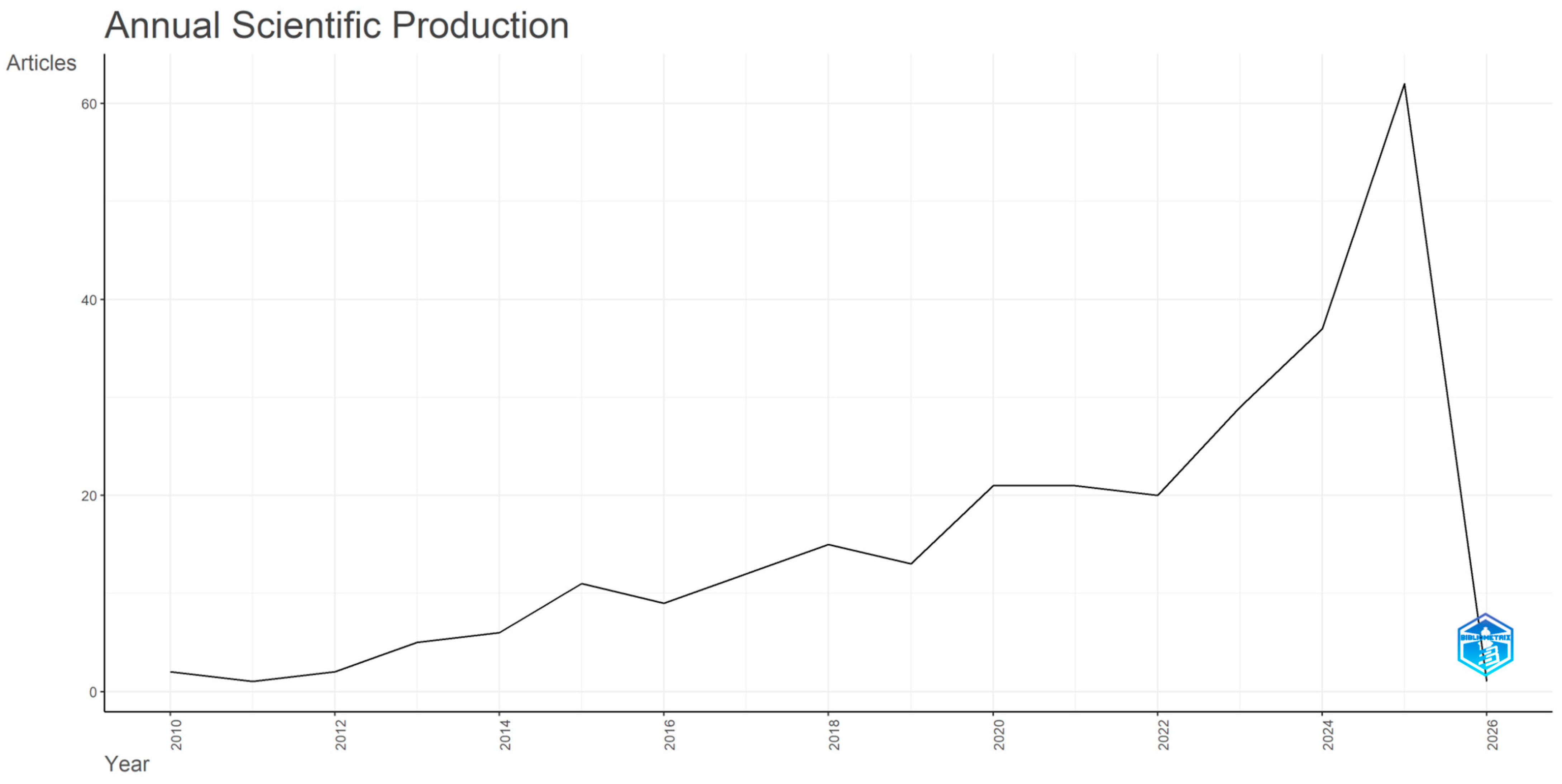
The annual scientific production as shown in Figure 3 reveals a slow and steady upward trend in the publication of studies regarding the intersection of the financial literacy, behavioral finance and decision-making process. Moreover, the research area has become increasingly prominent after 2022, when publication output rose sharply, indicating that this has become a highly topical subject in recent years.
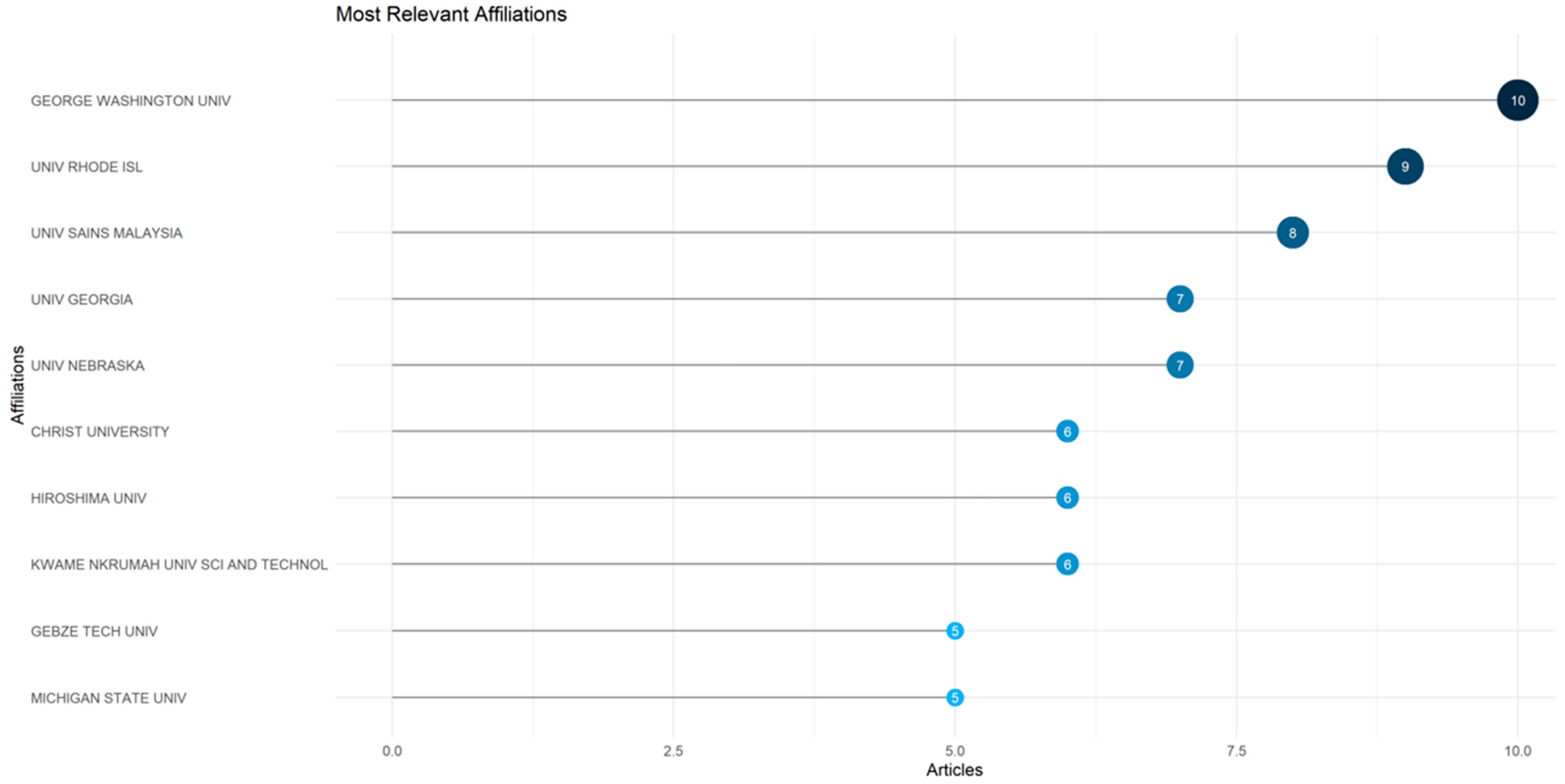
Figure 4 reveals the most relevant affiliations in the publication of papers in this research area, which are the George Washington University (USA), University Rhode Island (USA) and Universiti Sains Malaysia (Malaysia).
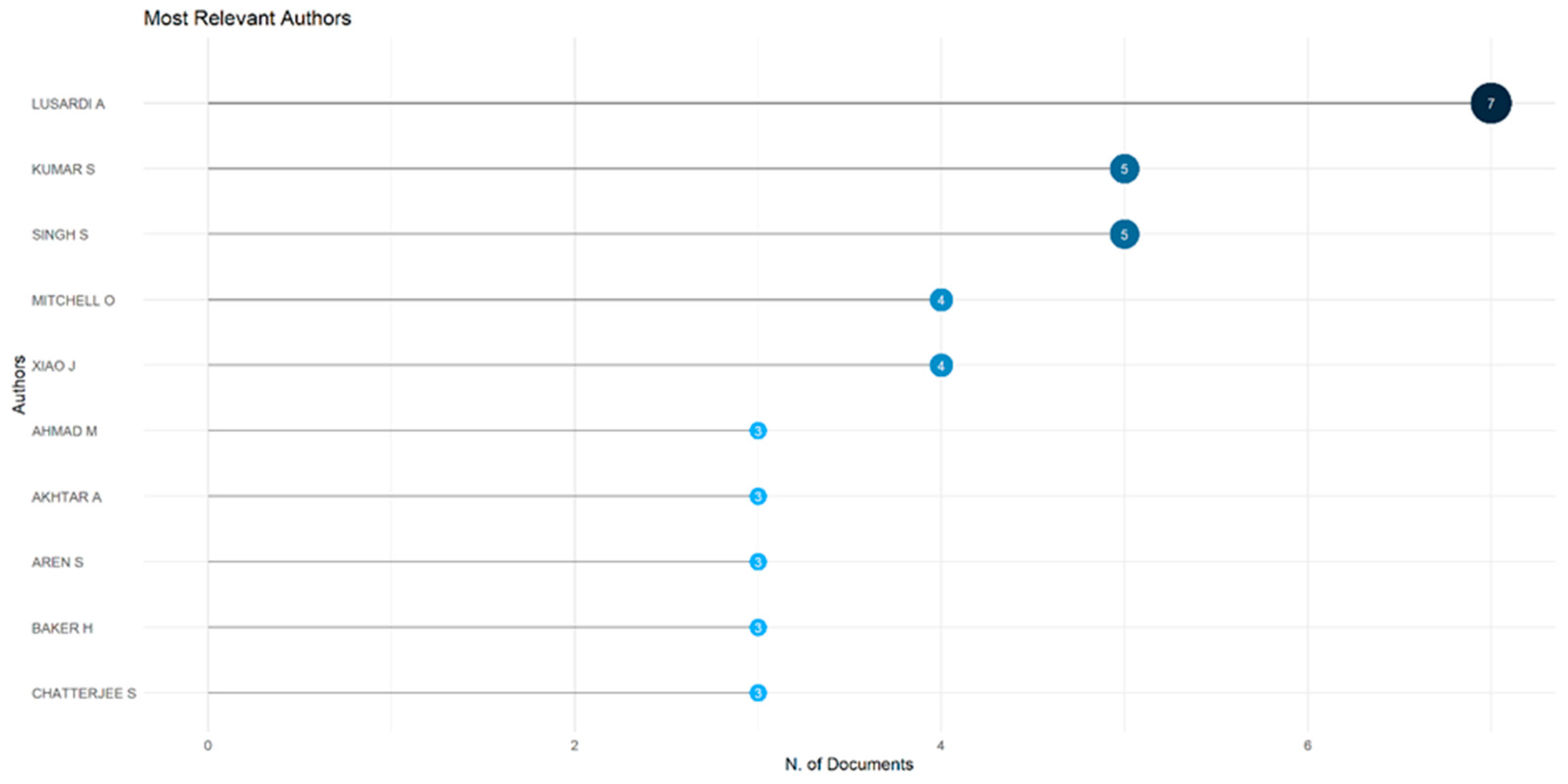
The research output is concentrated among a relatively small group of scholars, with a limited number of authors contributing multiple publications as shown in Figure 5 (namely Lusardi A. with seven papers, Kumar S. and Singh S. with five papers each, and Xiao J. and Mitchell O. with four papers each), highlighting the presence of key opinion leaders who have substantially shaped the evolution of research at the intersection of financial literacy, behavioral finance, and decision-making. This concentration suggests that the field is still developing a stable core of recurring contributors. This publication pattern suggests a core–periphery structure within the literature. A small core group of highly productive authors appears to drive theoretical development, empirical methodologies, and research agendas, while a broader set of contributors participates more sporadically. In particular, the prominence of Lusardi A. and Mitchell O., who are widely recognized for foundational work on financial literacy and retirement decision-making, indicates that the field builds strongly on established theoretical frameworks and policy-relevant research streams. Moreover, the recurrence of authors such as Kumar S., Singh S., and Xiao J. reflects the increasing diversification and internationalization of the field, with contributions extending beyond its original economic and policy roots toward behavioral, managerial, and consumer-finance perspectives. This diversification is consistent with the observed post-2022 growth in publications and suggests that the topic is attracting sustained interest across disciplines.
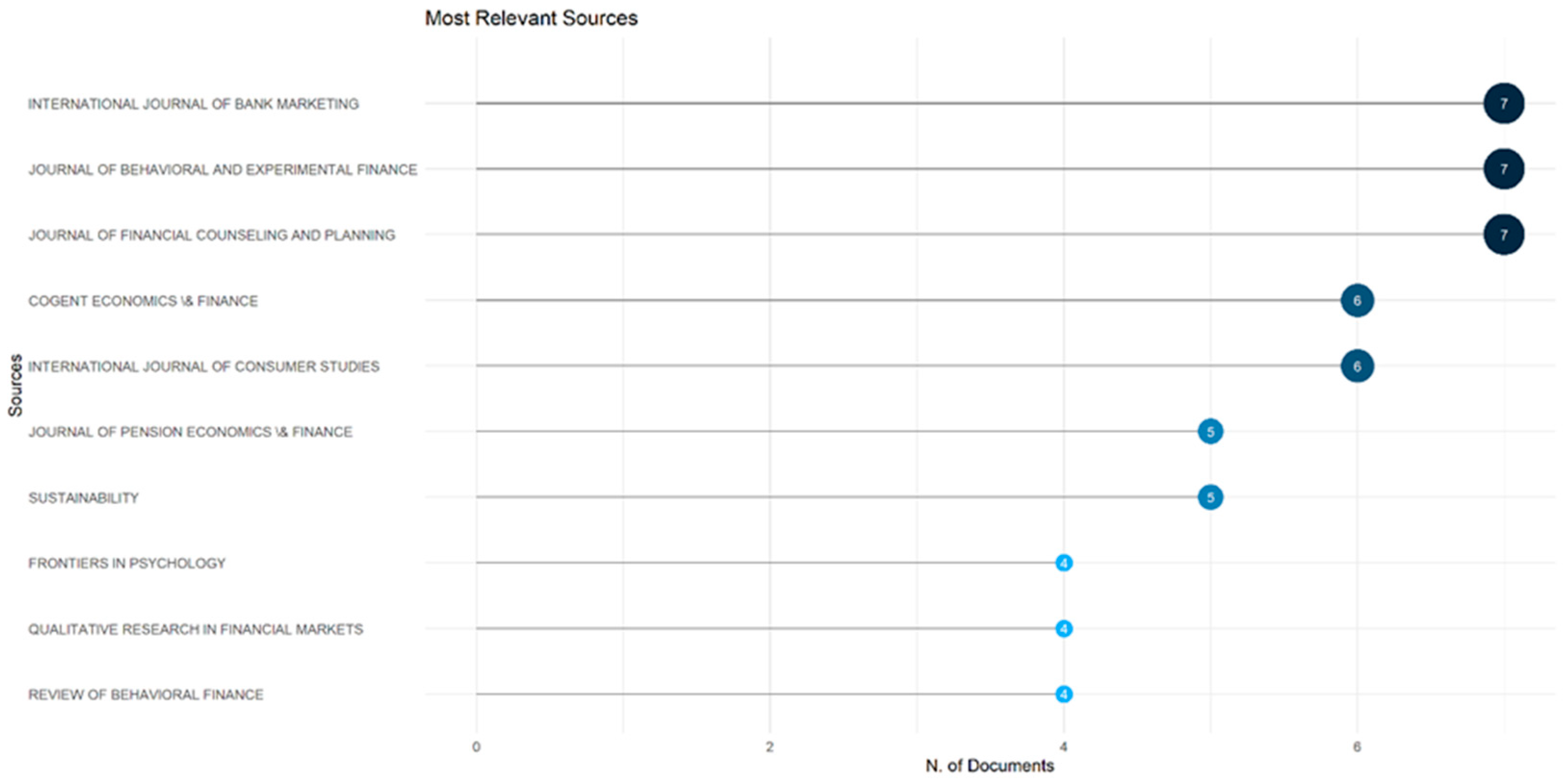
The most relevant sources (i.e., the venues where the works are published) are shown in Figure 6. These are the International Journal of Bank Marketing, Journal of Behavioral and Experimental Finance and Journal of Financial Counseling and Planning, each contributing to the area with seven published papers.
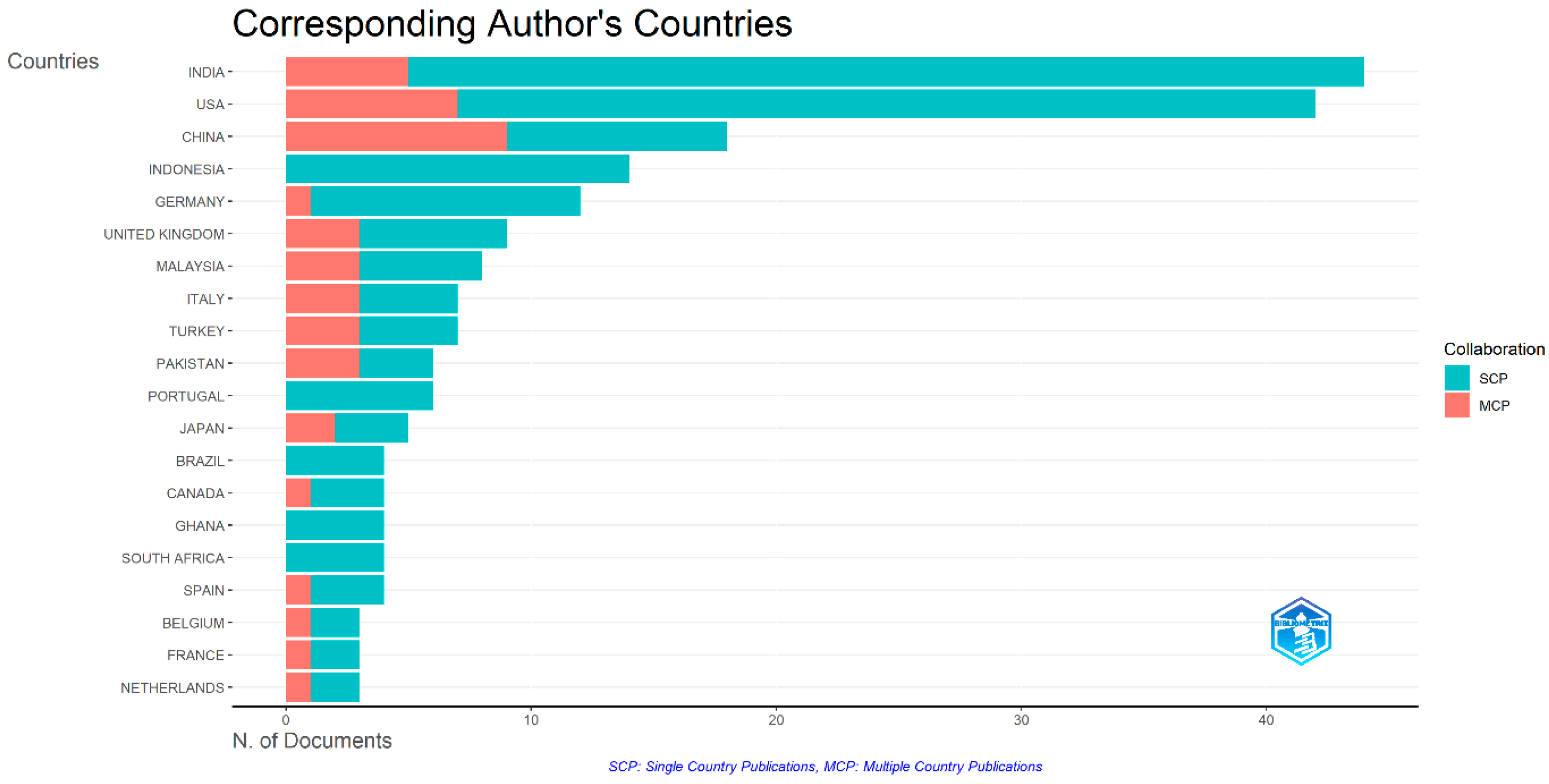
The distribution of corresponding authors’ countries shown in Figure 7 provides important insights into the geographical concentration, collaboration patterns, and international maturity of the research field.
First and foremost, the results reveal a strong concentration of scientific output in a limited number of countries. India and the United States clearly dominate in terms of total publications, indicating that these two countries serve as the principal hubs for research on financial literacy, behavioral finance, and decision-making. Their leadership reflects both the size of their academic systems and the policy relevance of financial decision-making in emerging and developed economies alike.
Second, the breakdown between Single-Country Publications (SCPs) and Multiple-Country Publications (MCPs) highlights meaningful differences in collaboration behavior. Countries such as India, China, and Indonesia show a relatively higher proportion of SCPs, suggesting that research in these contexts is predominantly conducted within national boundaries. This may reflect a strong domestic research agenda focused on country-specific financial systems, literacy levels, and institutional settings. In contrast, countries such as the United States, Germany, and the United Kingdom exhibit a higher share of MCPs, pointing to greater international collaboration. This pattern is characteristic of more internationally integrated research environments and suggests that scholars in these countries often participate in cross-border projects, comparative studies, and global research networks. Such collaboration is typically associated with higher visibility and broader dissemination of research findings.
Third, the presence of both developed economies (e.g., USA, Germany, UK, Japan, Canada) and emerging or developing economies (e.g., India, China, Indonesia, Pakistan, Ghana, South Africa) indicates that the topic has global relevance. Financial literacy and behavioral decision-making are not confined to a single economic context but represent universal challenges, albeit with region-specific manifestations.
Overall, this geographical analysis suggests that while the field remains regionally concentrated, it is progressively moving toward greater internationalization, particularly among leading research countries. The coexistence of high SCP volumes and growing MCP contributions implies a transition phase in which nationally grounded research is increasingly complemented by collaborative, cross-country perspectives—an important signal of the field’s consolidation and global reach.
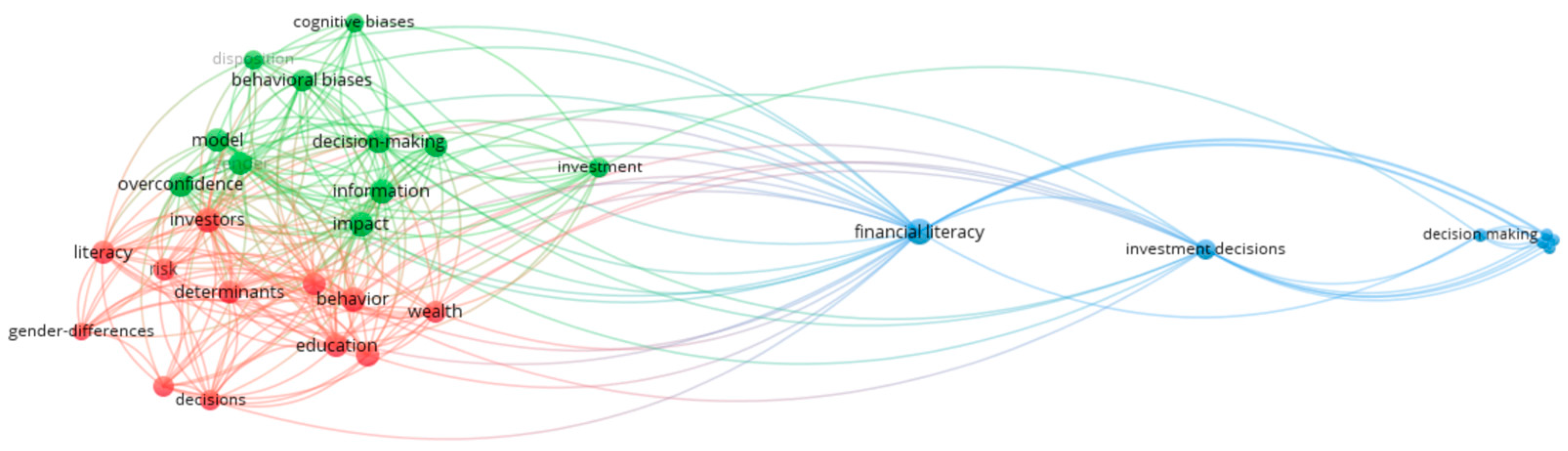
The keyword co-occurrence network in Figure 8 and Table 3 reveals a well-defined yet interconnected intellectual structure, organized around three major thematic clusters. These clusters collectively illustrate how the literature on behavioral finance, decision-making, and financial literacy has evolved, spanning individual-level determinants, cognitive–behavioral mechanisms, and applied investment decision contexts. Namely, the first (red) cluster is focused on individual-level characteristics and socio-demographic determinants that impact financial behavior. Key terms such as attitudes, behavior, decisions, determinants, education, gender differences, knowledge, literacy, participation, risk, and wealth indicate a strong emphasis on foundational drivers of financial decision-making. More importantly, these key terms reflect a few dominant research areas within this cluster, such as the role of financial literacy and education in risk-taking behavior; the gender differences in financial education and knowledge, attitudes and behavior; and the connection between financial and risk attitudes and behaviors on an individual level and the wealth accumulation and market participation, as broader outcomes. The visible dense interconnectedness within the red cluster reveals that these key terms are often studied together. Notwithstanding, the red cluster represents the micro-foundational base of the scholarly literature, since it provides explanatory variables that are the basis for more complex behavioral and cognitive models revealed in the other two clusters.
The second (green) cluster is focused on behavioral and cognitive mechanisms that profoundly influence financial decision-making processes. The most important and frequent key terms here are behavioral biases, cognitive biases, decision-making, overconfidence, disposition, information, impact, investment, model, and performance. As opposed to the red cluster, the green cluster includes behavioral finance theory, including the systematic biases, the information processing and biased judgment and the behavioral biases in investment performance and results. There is a strong connection between the red and the green cluster, which suggests that cognitive biases are frequently examined as mediating mechanisms through which education, knowledge, or demographic factors influence financial behavior.
The third (blue) cluster revolves around applied behavioral finance and investment decisions. This cluster is more compact and application-oriented. The most prominent key terms here are behavioral research, behavioral finance, decision-making, financial literacy, investment decisions, and investments—which indicate a synthesis of behavioral theories with practical financial decision environments. The interesting visual positioning of the third cluster reveals a linkage and connection to the first and second cluster, and it reveals that the third cluster functions as a convergence point, where it draws foundational determinants, variables and key terms from both Cluster 1 and 2, in order to explain actual investment behavior.
The inter-cluster relationships show strong interconnections among all three thematic groups, indicating a high degree of integration within the scholarly literature. Financial literacy and decision-making emerge as key bridging concepts that link individual attributes and socio-demographic characteristics with cognitive and behavioral biases, ultimately extending to applied investment outcomes. Collectively, the clustering pattern reflects a progressive research trajectory that moves from identifying who investors are and what they know (Cluster 1), to understanding how they think and where systematic judgment errors arise (Cluster 2), and finally to examining how these factors translate into concrete investment decisions and behaviors (Cluster 3). This integrated structure highlights the inherently multidisciplinary nature of the field and suggests valuable opportunities for future research to more explicitly combine socio-demographic determinants, cognitive biases, and institutional or market-level influences within comprehensive analytical frameworks. Across the study period, some behavioral biases consistently dominate the scholarly literature. For instance, overconfidence and herding emerge as the most frequently examined mechanisms, particularly in investment contexts. Availability bias and loss aversion appear prominently in later periods, reflecting growing attention to cognitive processing under uncertainty. In contrast, biases such as mental accounting, present bias, and framing effects receive comparatively limited attention within the financial literacy literature.
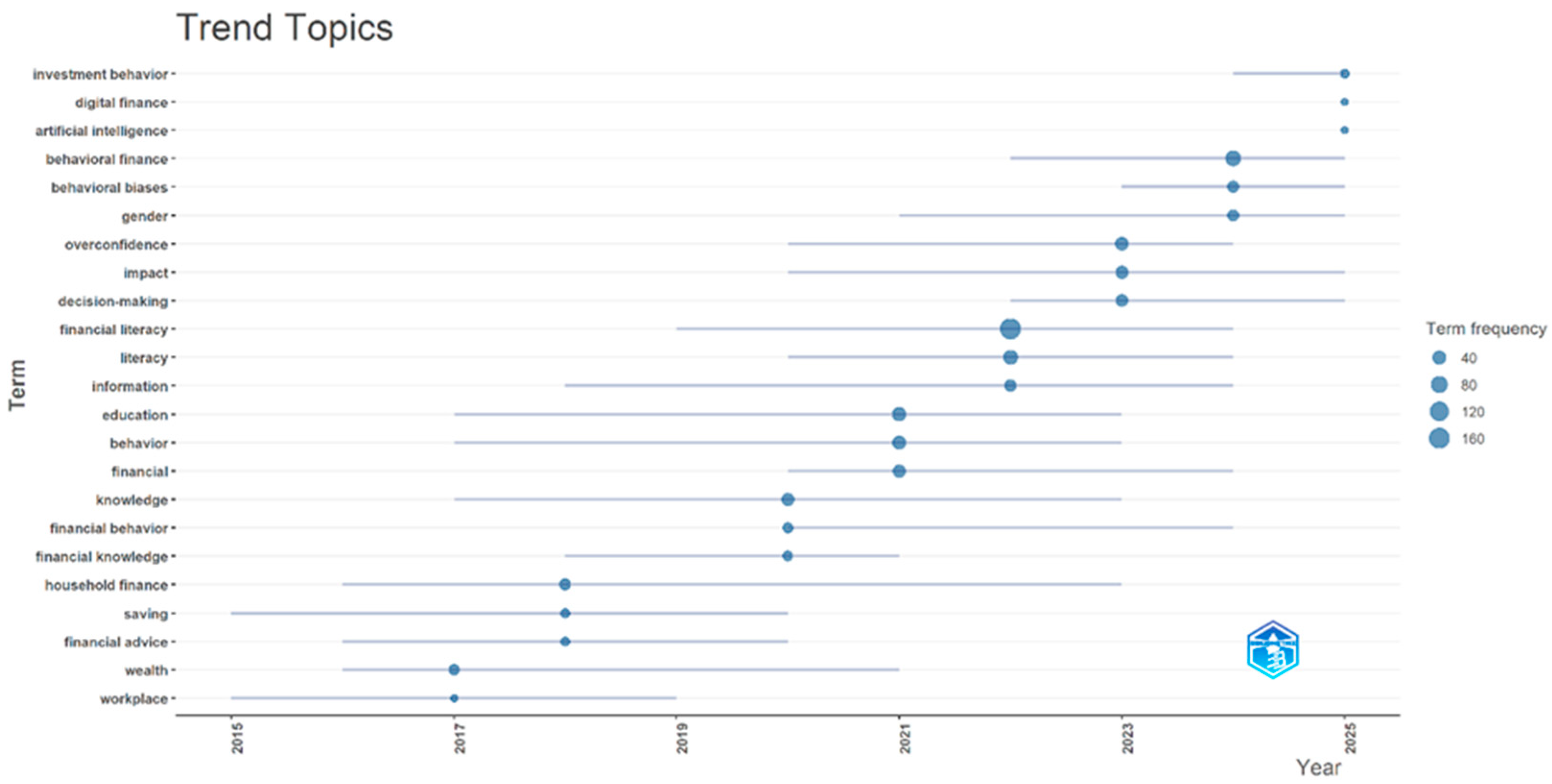
The reviewed literature is predominantly concentrated on financial decision-making contexts, particularly investment behavior, portfolio allocation, savings decisions, and credit use. Although the conceptual framing occasionally extends to broader economic decision-making, empirical applications remain largely focused on personal finance domains. This indicates that the integration of behavioral finance and financial literacy has primarily evolved within applied financial settings rather than general economic choice environments. The trend topics analysis (Figure 9) highlights the evolving thematic hotspots in the research field over the period 2015–2025. In the early phase, research attention was primarily directed toward wealth and workplace-related financial issues (2016). This focus subsequently shifted in 2017 toward household finance, saving behavior, and financial advice. Early studies primarily examined direct associations between financial literacy and decision outcomes. By 2020, the literature increasingly emphasized financial knowledge, financial behavior, and related cognitive dimensions. From 2021 onward, the thematic orientation gradually consolidated around education, behavior, and broader financial decision-making, culminating in a pronounced focus on financial literacy in 2022. Thus, over time, the literature demonstrates an interesting conceptual shift. More recent research increasingly models behavioral biases as mediating or moderating mechanisms, suggesting a more nuanced understanding of how financial knowledge translates into behavior. This evolution reflects a broader transition from linear literacy–outcome models toward psychologically integrated frameworks. More recently, the field has expanded to incorporate behavioral and socio-demographic perspectives, with growing attention to behavioral biases, behavioral finance, and gender issues in 2024. The most recent trends in 2025 point to an emerging integration of technology-driven themes, including investment behavior, digital finance, and artificial intelligence, signaling a new phase in the evolution of the literature. In this context, identifying past and future trends in the intersection of financial literacy, behavioral finance and decision-making will be useful for future studies and for academic members. This research domain is expected to grow, reflecting the field’s evolving research trajectory and persistent scholarly engagement.
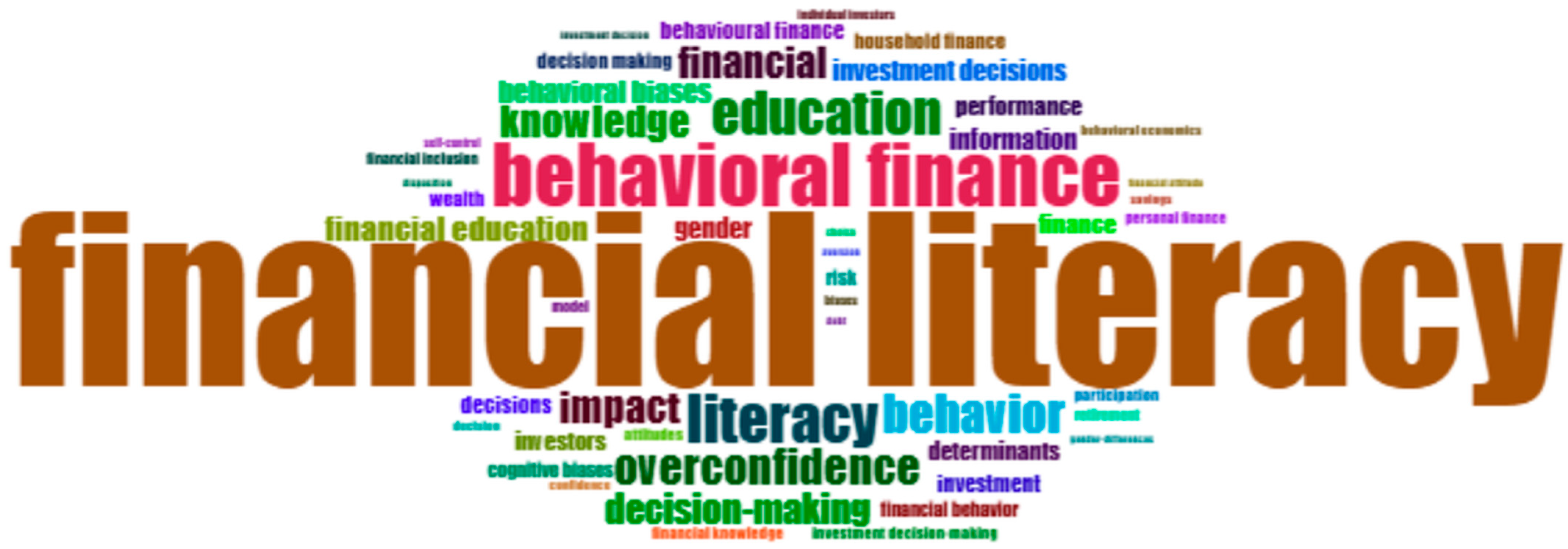
The word cloud Figure 10 reveals the most commonly used words in the surveyed papers. The term financial literacy absolutely dominates, and is followed by behavioral finance, literacy, education, overconfidence and decision-making.
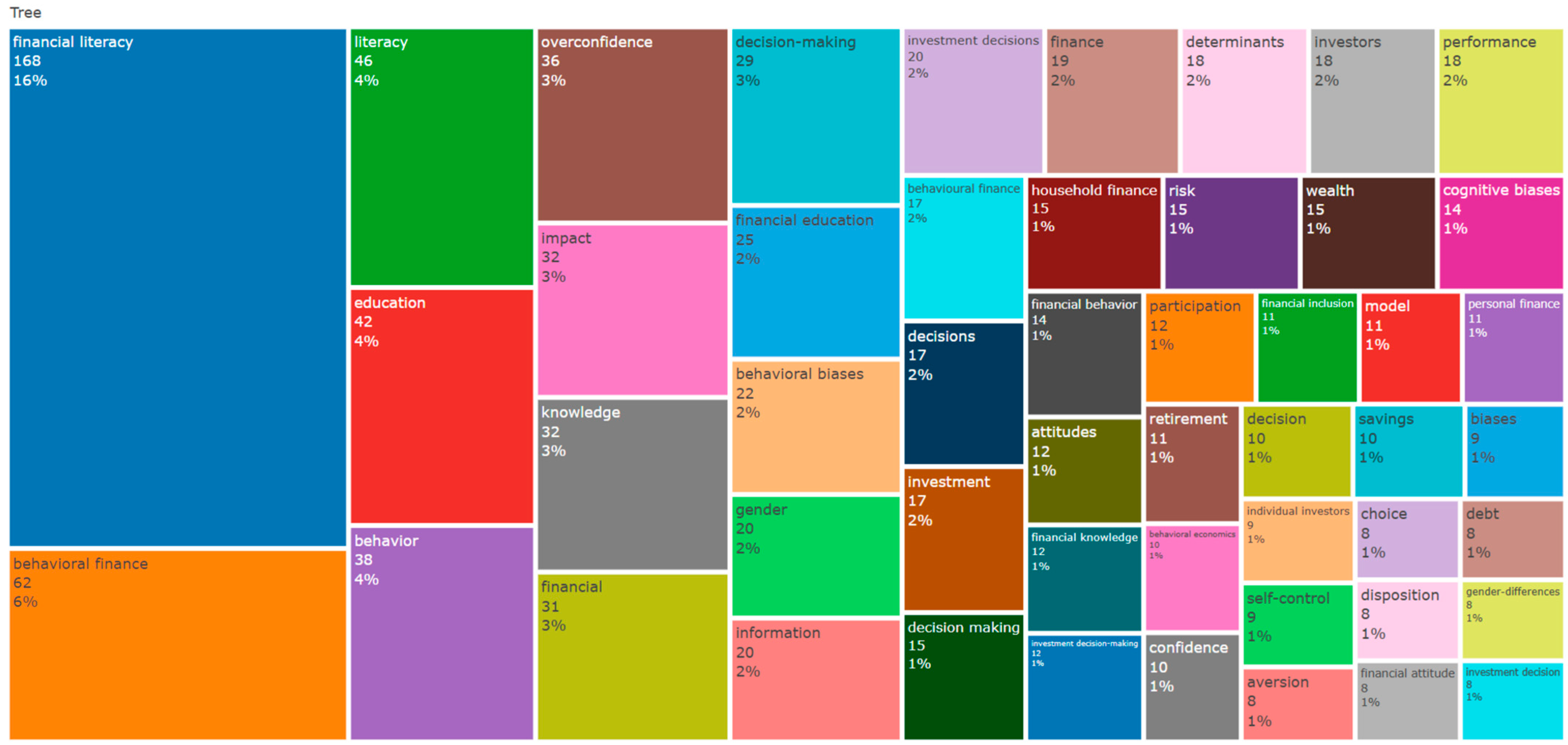
The tree map (Figure 11) reveals a hierarchical and proportional overview of the intellectual structure of the research field. In this case, it reveals the absolute dominance of the topic of financial literacy (with 16%), behavioral finance (with 6%), literacy (4%), education (4%) and behaviors (4%).
Overall, the bibliometric results reveal that research at the intersection of financial literacy and behavioral finance has evolved from focusing on direct literacy–outcome relationships toward investigating behavioral mediation mechanisms. However, the dominance of certain biases (e.g., overconfidence and herding) suggests thematic concentration, while other cognitive and emotional dimensions remain underexplored. These patterns indicate both consolidation and fragmentation within the field, shaping and inspiring the future research agenda.
Collectively, these trends suggest that behavioral biases do not merely coexist with financial literacy but actively shape the extent to which knowledge influences financial decisions. The concentration of research on a limited set of biases indicates thematic consolidation, yet also reveals underexplored dimensions of cognitive and emotional processes. Future research may benefit from expanding beyond dominant biases and incorporating longitudinal and cross-cultural perspectives to better understand the dynamic interaction between financial literacy and behavioral decision-making mechanisms.

5. Conclusions

Financial literacy is crucial for global economic well-being, but especially vital in developing economies, where the quick digital changes consistently create new challenges for both regulators and end users (Chowdhury et al., 2025). Therefore, the topic addressed in this study is both timely and highly relevant. However, examining financial literacy in isolation provides only a partial understanding of financial behavior, as individual decision-making is systematically shaped by cognitive limitations and behavioral biases emphasized in behavioral finance. By integrating financial literacy, behavioral finance, and the decision-making process, this study offers a more comprehensive perspective on how individuals acquire financial knowledge, process information, and translate both rational and biased judgments into actual financial choices. The primary contribution of this paper lies in its systematic bibliometric mapping of this interdisciplinary research domain, which identifies its core themes, intellectual structure, and evolving trends, thereby providing a consolidated foundation for future theoretical development, empirical investigation, and policy-oriented research.
This study systematically mapped research published between 2010 and 2025 at the intersection of financial literacy, behavioral finance, and financial decision-making. By employing bibliometric techniques, the analysis identified dominant thematic clusters, intellectual structures, and evolving research trajectories within this interdisciplinary domain. Although earlier foundational contributions are not included in the bibliometric dataset, they are acknowledged as providing the theoretical and empirical groundwork upon which the post-2010 expansion of research developed. The present study therefore complements, rather than replaces, historical accounts by offering a focused mapping of contemporary research dynamics. Subsequently, the study aimed to identify dominant research streams and topics, most prominent authors, affiliations, journals, countries, and trend topics, thereby providing a comprehensive framework for understanding individual financial decision-making.
The systematic literature review (SLR) was conducted in accordance with the PRISMA guidelines. In addition, the R package Bibliometrix and the software VOSviewer were employed to support data analysis, visualization, and the generation of high-quality bibliometric indicators.
The findings reveal that research has increasingly shifted from examining direct literacy–outcome relationships toward modeling behavioral biases as mediating mechanisms. Overconfidence and herding emerge as the most consistently examined biases, particularly within investment contexts, while other cognitive dimensions remain comparatively underexplored. Empirical evidence remains geographically concentrated in developed economies, limiting broader generalizability. The results suggest that financial literacy does not operate in isolation but interacts dynamically with psychological processes that shape how knowledge is interpreted and applied. This integrative perspective challenges linear models of financial education and supports a more behaviorally informed framework of financial decision-making.
This bibliometric study provides a comprehensive overview of the evolution, structure, and intellectual foundations of research at the intersection of financial literacy, behavioral finance, and decision-making between 2010 and 2025(6). Although the annual growth rate of publications is negative, the relatively low average document age and high citation intensity indicate that the field remains both current and influential. The sharp rise in publications after 2022 further confirms that this research area has gained renewed relevance, driven by growing global concern over financial capability, individual decision-making quality, and behavioral biases in increasingly complex financial environments.
The analysis reveals a field characterized by moderate collaboration, a clear core–periphery authorship structure, and increasing international reach. A small group of highly productive and influential scholars has played a central role in shaping the research agenda, while a broader and more diverse set of contributors reflects the field’s expansion across disciplines and regions. Geographically, research output is concentrated in a limited number of countries, particularly India and the United States, yet the presence of both single-country and multi-country publications suggests a transitional phase toward greater international collaboration and maturity of the field.
The thematic analysis highlights a well-integrated and progressive knowledge structure organized around three interconnected clusters. Research has evolved from a focus on individual-level determinants and financial literacy, through the examination of cognitive and behavioral biases, toward applied investment decision-making contexts. Financial literacy and decision-making act as central bridging concepts across clusters, reinforcing the multidisciplinary nature of the field and its relevance for economics, finance, psychology, education, and policy. Trend topic analysis further demonstrates a dynamic evolution of research priorities, moving from traditional wealth and household finance issues toward behavioral, socio-demographic, and, more recently, technology-driven themes such as digital finance and artificial intelligence.
Overall, the findings suggest that research on financial literacy and behavioral decision-making is transitioning from foundational and descriptive studies toward more integrative, applied, and forward-looking approaches. The dominance of financial literacy across keywords, word clouds, and thematic maps underscores its central role as both a theoretical anchor and a practical policy concern. Taken together, these results confirm that the field is consolidating while simultaneously opening new avenues for innovation, particularly through interdisciplinary integration and the incorporation of emerging technological and behavioral dimensions.
Even though there are many scientific and practical contributions to the study, there are several methodological and conceptual limitations to be acknowledged. First, the systematic literature review is based exclusively on English-language, open-access publications indexed in the Web of Science and Scopus databases. Although these databases ensure mostly high-quality sources, these choices may exclude other relevant studies published in other databases, working paper repositories, or non-English outlets, potentially limiting the global and cultural scope of the findings.
Second, the bibliometric and thematic analyses rely primarily on author-assigned keywords and database-generated indexing terms. As a result, nuanced behavioral constructs, evolving terminology, or interdisciplinary overlaps—particularly those rooted in psychology or sociology—may be underrepresented or fragmented across thematic clusters. This reliance may obscure subtle distinctions between objective and subjective financial literacy or the multifaceted nature of behavioral biases influencing financial decisions. As with all bibliometric studies, the findings are shaped by the selected time frame and keyword strategy. While the focus on recent literature enhances relevance to contemporary debates, earlier foundational contributions lie outside the analytical scope.
From a conceptual standpoint, a considerable portion of the existing literature examines financial literacy and behavioral finance factors in isolation, often focusing on specific biases (e.g., overconfidence or loss aversion) or individual financial outcomes such as saving or investment behavior. This fragmented approach limits the development of a holistic framework capable of capturing the complex interactions among financial knowledge, psychological mechanisms, and decision-making contexts. Additionally, much of the empirical evidence is drawn from developed economies and student or investor samples, leaving households in developing countries and vulnerable populations comparatively underexplored.
These limitations contribute to an uneven accumulation of knowledge across the field. Future research would benefit from incorporating additional databases, multilingual publications, and mixed-method approaches that combine bibliometric techniques with qualitative content analysis and text mining. Such extensions would enable a more nuanced understanding of the conceptual evolution, methodological diversity, and contextual dynamics shaping the relationship between financial literacy, behavioral finance, and financial decision-making.
Future research should expand beyond dominant bias constructs, incorporate cross-cultural comparative designs, and employ longitudinal approaches to better understand how behavioral mechanisms evolve over time. Additionally, greater attention to underexamined biases and contextual moderators may enhance theoretical precision and policy relevance. In future work, the authors plan to advance this research field by integrating psychological, socioeconomic, and technological perspectives within more comprehensive analytical frameworks that simultaneously account for both individual characteristics, cognitive and behavioral biases, and contextual investment environments. Moreover, a shift in focus on the impact of emerging digital tools such as artificial intelligence, machine learning, and digital finance platforms is needed—as to their interaction with financial literacy, behavioral biases, and individual decision-making processes. Cross-country and longitudinal studies could bring new and deeper insights into the connection between the financial literacy, education and socio-demographic factors over time and across different settings. The incorporation of technological and regulatory dimensions is also an issue to be tackled. All the proposed efforts for future work could contribute and enable scholars to better capture the complexity of contemporary financial behavior in rapidly digitizing and globally interconnected markets.

Supplementary Materials

The following supporting information can be downloaded at: https://www.mdpi.com/article/10.3390/ijfs14040079/s1, PRISMA 2020 Checklist.

Author Contributions

Conceptualization, K.F.Č. and A.M.; methodology, A.M.; software, A.M.; validation, A.M. and K.F.Č.; formal analysis, K.F.Č. and A.M.; investigation, K.F.Č., A.M. and T.J.; resources, A.M. and K.F.Č.; data curation, A.M.; writing—original draft preparation, T.J.; writing—review and editing, T.J.; visualization, A.M.; supervision, K.F.Č.; project administration, T.J.; funding acquisition, K.F.Č. All authors have read and agreed to the published version of the manuscript.

Funding

This research was funded by University North, Croatia (NextGeneration EU programme) grant number IP-UNIN-DIH-2025-6.

Institutional Review Board Statement

Not applicable.

Informed Consent Statement

Not applicable.

Data Availability Statement

The original contributions presented in this study are included in the article/Supplementary Materials. Further inquiries can be directed to the corresponding authors.

Conflicts of Interest

The author declares that they have no competing interests.

References

  1. Ajzen, I. (1991). The theory of planned behavior. Organizational Behavior and Human Decision Processes, 50(2), 179–211. [Google Scholar] [CrossRef]
  2. Akybayeva, G., Kazbekov, T., Mambetova, S., & Aikenova, R. (2024). Toward a new economy: Digital currency and international development. Collection of Papers New Economy, 2, 47–62. [Google Scholar]
  3. Anderson, A., Baker, F., & Robinson, D. T. (2017). Precautionary savings, retirement planning and misperceptions of financial literacy. Journal of Financial Economics, 126(2), 383–398. [Google Scholar] [CrossRef]
  4. Aria, M., & Cuccurullo, C. (2017). Bibliometrix: An R-tool for comprehensive science mapping analysis. Journal of Informetrics, 11(4), 959–975. [Google Scholar] [CrossRef]
  5. Asaad, C. T. (2015). Financial literacy and financial behavior: Assessing knowledge and confidence. Financial Services Review, 24(2), 101–117. [Google Scholar] [CrossRef]
  6. Ashfaq, M., Shafique, A., & Selezneva, V. (2024). Exploring the missing link: Financial literacy and cognitive biases in investment decisions. Journal of Modelling in Management, 19(3), 871–898. [Google Scholar] [CrossRef]
  7. Atkinson, A., & Messy, F.-A. (2012). Measuring financial literacy: Results of the OECD/International Network on Financial Education (INFE) pilot study. OECD. [Google Scholar]
  8. Balasubramnian, B., & Sargent, C. S. (2020). Impact of inflated perceptions of financial literacy on financial decision making. Journal of Economic Psychology, 80, 102306. [Google Scholar] [CrossRef]
  9. Balcilar, M., Demirer, R., & Hammoudeh, S. (2013). Investor herds and regime-switching: Evidence from Gulf Arab stock markets. Journal of International Financial Markets, Institutions and Money, 23, 295–321. [Google Scholar] [CrossRef]
  10. Barber, B. M., & Odean, T. (2001). Boys will be boys: Gender, overconfidence, and common stock investment. The Quarterly Journal of Economics, 116(1), 261–292. [Google Scholar] [CrossRef]
  11. Bawalle, A. A., Khan, M. S. R., & Kadoya, Y. (2025). Overconfidence, financial literacy, and panic selling: Evidence from Japan. PLoS ONE, 20(3), e0315622. [Google Scholar] [CrossRef]
  12. Burchi, A., Włodarczyk, B., Szturo, M., & Martelli, D. (2021). The effects of financial literacy on sustainable entrepreneurship. Sustainability, 13, 5070. [Google Scholar] [CrossRef]
  13. Campbell, J. Y. (2006). Household finance. The Journal of Finance, 61(4), 1553–1604. [Google Scholar] [CrossRef]
  14. Chawla, I., & Mokhtari, M. (2025). Financial overconfidence and high-cost borrowing: The moderating effect of mobile payments. FinTech, 4(1), 9. [Google Scholar] [CrossRef]
  15. Chen, H., & Volpe, R. P. (2002). Gender differences in personal financial literacy among college students. Financial Services Review, 11(3), 289–307. [Google Scholar] [CrossRef]
  16. Chowdhury, T. A., Chowdhury, M. A. H., Rahman, M. T., Ahmed, I., Ahmed, N., Tuhin, M. A. I., & Al Kafy, A. (2025). Modeling financial literacy through explainable machine learning and behavioral segmentation in emerging economies. Computers in Human Behavior Reports, 2025, 100926. [Google Scholar] [CrossRef]
  17. Devlin, J. F. (2001). Consumer evaluation and competitive advantage in retail financial services: A research agenda. European Journal of Marketing, 35(5/6), 639–660. [Google Scholar] [CrossRef]
  18. Donthu, N., Kumar, S., Mukherjee, D., Pandey, N., & Lim, W. M. (2021). How to conduct a bibliometric analysis: An overview and guidelines. Journal of Business Research, 133, 285–296. [Google Scholar] [CrossRef]
  19. Dwyanti, D. (2024). The importance of financial literacy in financial management in micro, small and medium enterprises (msmes). Journal of Applied Management and Business, 5(1), 1–6. [Google Scholar] [CrossRef]
  20. Fernandes, D., Lynch, J. G., Jr., & Netemeyer, R. G. (2014). Financial literacy, financial education, and downstream financial behaviors. Management Science, 60(8), 1861–1883. [Google Scholar] [CrossRef]
  21. Fotova Čiković, K., Cvetkoska, V., & Primorac, D. (2025a). The nexus between green finance and artificial intelligence: A systemic bibliometric analysis based on Web of Science Database. Journal of Risk and Financial Management, 18(8), 420. [Google Scholar] [CrossRef]
  22. Fotova Čiković, K., Mandić, A., & Dmitrović, V. (2025b). Global research trends in data envelopment analysis for evaluating sustainability of complex socioeconomic systems: A systematic bibliometric perspective. Systems, 13(10), 903. [Google Scholar] [CrossRef]
  23. Fox, J. J., Bartholomae, S., & Lee, J. (2005). Building the case for financial education. Journal of Consumer Affairs, 39(1), 195–214. [Google Scholar] [CrossRef]
  24. Garcia-Lillo, F., Seva-Larrosa, P., & Sanchez-Garcia, E. (2023). What is going on in entrepreneurship research? A bibliometric and SNA analysis. Journal of Business Research, 158, 113624. [Google Scholar] [CrossRef]
  25. García-Lillo, F., Seva-Larrosa, P., & Sánchez-García, E. (2024). On the basis of research on ‘green’ in the disciplines of management and business. Journal of Business Research, 172, 114432. [Google Scholar] [CrossRef]
  26. Gounaris, K. M., & Prout, M. F. (2009). Repairing relationships and restoring trust: Behavioral finance and the economic crisis. Journal of Financial Service Professionals, 63(4), 75. [Google Scholar]
  27. Hammer, T., & Siegfried, P. (2023). Implicaţiile educaţiei financiare asupra antreprenoriatului. Audit Financiar, 21(1), 92–208. [Google Scholar]
  28. Hamurcu, Ç., Hazar, A., & Babuşcu, Ş. (2025). A portfolio-focused behavioral model linking financial literacy and risk tolerance: Evidence from mutual fund investors in Türkiye. Borsa Istanbul Review, 25(2), 119–127. [Google Scholar] [CrossRef]
  29. He, L. (2026). Incorporating cognitive biases into reinforcement learning for financial decision-making. arXiv, arXiv:2601.08247. [Google Scholar] [CrossRef]
  30. Huhmann, B. A., & McQuitty, S. (2009). A model of consumer financial numeracy. International Journal of Bank Marketing, 27(4), 270–293. [Google Scholar] [CrossRef]
  31. James, M. (2023). Psychological biases and irrational behaviors that influence financial decision making in behavioral finance. Évfolyam, XIII, 52–56. [Google Scholar] [CrossRef]
  32. Kamoune, A., & Ibenrissoul, N. (2022). Traditional versus behavioral finance theory. International Journal of Accounting, Finance, Auditing, Management and Economics, 3(1–2), 282–294. [Google Scholar]
  33. Lather, A., Jain, S., & Anand, S. (2020). The effect of personality traits on cognitive investment biases. Journal of Critical Reviews, 7(2), 221–229. [Google Scholar]
  34. Lovrinović, I. (1997). Novčano tržište–srce financijskog tržišta. O-Tisak. [Google Scholar]
  35. Lučić, A., Erceg, N., & Barbić, D. (2024). Knowledge and skills are not enough—Exploring the determinants of financial behavior formation. International Journal of Consumer Studies, 48(6), e13100. [Google Scholar] [CrossRef]
  36. Lusardi, A., & Mitchell, O. S. (2007). Financial literacy and retirement preparedness: Evidence and implications for financial education. Business Economics, 42(1), 35–44. [Google Scholar] [CrossRef]
  37. Lusardi, A., & Mitchell, O. S. (2008). Planning and financial literacy: How do women fare? American Economic Review, 98(2), 413–417. [Google Scholar] [CrossRef]
  38. Lusardi, A., & Mitchell, O. S. (2014). The economic importance of financial literacy: Theory and evidence. American Economic Journal: Journal of Economic Literature, 52(1), 5–44. [Google Scholar] [CrossRef]
  39. Moher, D., Liberati, A., Tetzlaff, J., & Altman, D. G. (2009). Preferred reporting items for systematic reviews and meta-analyses: The PRISMA statement. BMJ, 339, e1000097. [Google Scholar] [CrossRef]
  40. Norvilitis, J. M., Merwin, M. M., Osberg, T. M., Roehling, P. V., Young, P., & Kamas, M. M. (2006). Personaity factors, money attitudes, financial knowledge, and credit-card debt in college students. Journal of Applied Social Psychology, 36(6), 1395–1413. [Google Scholar] [CrossRef]
  41. Özen, E., & Ersoy, G. (2019). The impact of financial literacy on cognitive biases of individual investors. In Contemporary issues in behavioral finance (pp. 77–95). Emerald Publishing Limited. [Google Scholar]
  42. Page, M. J., McKenzie, J. E., Bossuyt, P. M., Boutron, I., Hoffmann, T. C., Mulrow, C. D., Shamseer, L., Tetzlaff, J. M., Akl, E. A., & Brennan, S. E. (2021). The PRISMA 2020 statement: An updated guideline for reporting systematic reviews. BMJ, 372, n71. [Google Scholar] [CrossRef] [PubMed]
  43. Pearson, B., & Korankye, T. (2023). The association between financial literacy confidence and financial satisfaction. Review of Behavioral Finance, 15(6), 935–946. [Google Scholar] [CrossRef]
  44. Perry, V. G., & Morris, M. D. (2005). Who is in control? The role of self-perception, knowledge, and income in explaining consumer financial behavior. Journal of Consumer Affairs, 39(2), 299–313. [Google Scholar] [CrossRef]
  45. Prowse, S. D. (1990). Institutional investment patterns and corporate financial behavior in the United States and Japan. Journal of Financial Economics, 27(1), 43–66. [Google Scholar] [CrossRef]
  46. Ramachandran, S., Rani, L., & Venkat, P. (2025). Exploring environmental inequality definitions and themes through literature review. Discover Sustainability, 7, 11. [Google Scholar] [CrossRef]
  47. Ramalho, T. B., & Forte, D. (2019). Financial literacy in Brazil–do knowledge and self-confidence relate with behavior? RAUSP Management Journal, 54(1), 77–95. [Google Scholar] [CrossRef]
  48. Sankar, M., Chitra, A., Mahadevan, A., Nagarajan, S., & Priya, S. K. (2026). A systematic analysis on organisational citizenship behaviour around the world from 2005 to 2025. International Review of Management and Marketing, 16(1), 170. [Google Scholar] [CrossRef]
  49. Shahani, R., & Ahmed, S. F. (2022). Psychological and social factors determining investment decisions in cryptocurrency: Exploring the mediating role of cognitive biases. Journal of Organisational Studies & Innovation, 9(4), 24. [Google Scholar] [CrossRef]
  50. Shi, W., Ali, M., & Leong, C.-M. (2025). Dynamics of personal financial management: A bibliometric and systematic review on financial literacy, financial capability and financial behavior. International Journal of Bank Marketing, 43(1), 125–165. [Google Scholar] [CrossRef]
  51. Stolper, O. A., & Walter, A. (2017). Financial literacy, financial advice, and financial behavior. Journal of Business Economics, 87(5), 581–643. [Google Scholar] [CrossRef]
  52. Šipić, N., Vuković, D., & Kerum, F. (2024, March 21). Digital innovation and financial literacy are the foundations of a sustainable economy. 8th International Scientific Conference on IT, Tourism, Economics, Management and Agriculture ITEMA 2024, Dubai, United Arab Emirates. [Google Scholar]
  53. Talapbayeva, G., Yerniyazova, Z., Kultanova, N., & Akbayev, Y. (2024). Economic opportunities and risks of introducing artificial intelligence. In Collection of papers: New economy: New paradigms in the economy: Connectivity, innovation and sustainability (Vol. 3, pp. 117–128). Oikos Institute. [Google Scholar]
  54. Verma, R. (2017). Role of self deception, overconfidence and financial aliteracy in household financial decision making. The Journal of Applied Business and Economics, 19(8), 94–109. [Google Scholar]
  55. Zindel, M. L., Zindel, T., & Quirino, M. G. (2014). Cognitive bias and their implications on the financial market. International Journal of Engineering and Technology, 14(3), 11–17. [Google Scholar]
Figure 1. Bibliometric analysis PRISMA diagram. Source: adapted from (Page et al., 2021).
Ijfs 14 00079 g001
Figure 2. Main information regarding the bibliometric study.
Ijfs 14 00079 g002
Figure 3. Annual scientific production.
Ijfs 14 00079 g003
Figure 4. Most relevant affiliations.
Ijfs 14 00079 g004
Figure 5. Most relevant authors.
Ijfs 14 00079 g005
Figure 6. Most relevant sources.
Ijfs 14 00079 g006
Figure 7. Corresponding author’s countries.
Ijfs 14 00079 g007
Figure 8. Network visualization map.
Ijfs 14 00079 g008
Figure 9. Trend topics.
Ijfs 14 00079 g009
Figure 10. Word cloud.
Ijfs 14 00079 g010
Figure 11. Tree map.
Ijfs 14 00079 g011
Table 1. Foundational studies published before 2010.
Author(s) (Year)SourceStudy FocusKey Behavioral MechanismsDecision OutcomesBrief Contribution
Prowse (1990)Journal of Financial EconomicsFinancial structure and behaviorInformation asymmetry, bounded rationalityCapital structure choices, financial participationEarly evidence that limited information shapes suboptimal financial choices.
Ajzen (1991)Organizational Behavior and Human Decision ProcessesTheory of Planned BehaviorAttitudes, subjective norms, perceived behavioral controlIntentions, planned financial behaviorProvides a general behavioral framework explaining how intentions translate into financial actions.
Devlin (2001)European Journal of MarketingPerceived complexity of financial productsCognitive load, perceived complexityProduct adoption, service choiceShows that complexity discourages engagement with sophisticated financial products.
Perry and Morris (2005)Journal of Consumer AffairsFinancial knowledge and behaviorFinancial attitudes, perceived self-controlBudgeting, saving, credit managementDemonstrates indirect effects of knowledge on day-to-day financial management.
Fox et al. (2005)Journal of Consumer AffairsFinancial educationLearning effects, attitude changeFinancial participation, money managementShows that education improves behavior mainly through attitudinal change.
Campbell (2006)Journal of FinanceHousehold financeBounded rationality, heuristicsInvestment mistakes, debt decisionsDocuments systematic household errors driven by limited financial understanding.
Norvilitis et al. (2006)Journal of Applied Social PsychologyDebt and psychological factorsImpulsivity, money attitudesCredit card debt, borrowing behaviorLinks low financial literacy to higher indebtedness via psychological traits.
Lusardi and Mitchell (2007)Business EconomicsFinancial literacy and retirementInertia, procrastination, time preferencesRetirement planning, saving behaviorShows that low literacy leads to poor long-term financial planning.
Lusardi and Mitchell (2008)American Economic ReviewMeasurement of financial literacyCognitive constraints, risk comprehensionPortfolio choice, wealth accumulationDemonstrates how literacy affects investment diversification and wealth outcomes.
Huhmann and McQuitty (2009)International Journal of Bank MarketingFinancial numeracyNumerical ability, information processingFinancial evaluation, decision qualityIdentifies numeracy as a key determinant of accurate financial judgments.
Table 2. Main information regarding the bibliometric study.
DescriptionResults
Main Information about Date
Timespan2010:2026
Sources (Journals, Books, etc.)168
Documents267
Annual Growth Rate %−4.24
Document Average Age3.78
Average citations per doc49.4
References0
Doucument Contents
Keywords Plus (ID)492
Author’s Keywords (DE)756
AUTHORS
Authors691
Authors of single-authored docs38
Authors Collaboration
Single-authored docs39
Co-Authors per doc2.9
International co-authorships %20.97
Document Types
article216
article; book chapter2
article; early access7
article; proceedings paper1
article; retracted publication1
book chapter3
conference paper7
conference review1
editorial1
erratum1
proceedings paper11
review15
short survey1
Table 3. Thematic clusters.
Cluster 1Cluster 2Cluster 2
-
attitudes
-
behavior
-
decisions
-
determinants
-
education,
-
gender-differences
-
investors
-
knowledge
-
literacy
-
participation
-
risk
-
wealth
-
behavioral biases
-
cognitive biases
-
decision-making
-
disposition
-
gender
-
impact
-
information
-
investment
-
model
-
overconfidence
-
performance
-
behavioral research
-
behavioral finances
-
decision making
-
financial literacy
-
investment decisions
-
investments
Disclaimer/Publisher’s Note: The statements, opinions and data contained in all publications are solely those of the individual author(s) and contributor(s) and not of MDPI and/or the editor(s). MDPI and/or the editor(s) disclaim responsibility for any injury to people or property resulting from any ideas, methods, instructions or products referred to in the content.