1. Introduction
The predictive power of intraday return patterns has garnered significant attention in financial markets, particularly with the proliferation of quantitative trading strategies. Leveraging these patterns to forecast short-term price directions and mitigate trading risks has become a priority for institutional investors and traders seeking actionable insights that align with high-frequency, data-driven decision-making. This pursuit is substantiated by empirical evidence documenting systematic intraday regularities, such as the “market intraday momentum” phenomenon identified by
Gao et al. (
2018), where morning session returns significantly predict afternoon and closing session price directions.
A growing body of literature has validated the existence and potential profitability of intraday directional predictability across various markets. Studies such as
Li et al. (
2021) confirm the presence of “intraday time series momentum” globally, linking short-term return trends to subsequent directional persistence. Further,
Baltussen et al. (
2021) attribute part of this continuity to institutional “hedging demand.” To enhance the predictive accuracy and economic value of such patterns, researchers have incorporated auxiliary factors. For instance,
Andersen (
2012) interpreted return volatility through an information flow lens to refine directional signals, while
Zhu and Zhu (
2013) applied regime-switching models to account for state-dependent dynamics. More recently,
Renault (
2017) demonstrated that integrating intraday online investor sentiment can sharpen directional forecasts.
Despite these advances, a critical gap remains in the extant literature: the role of trading volume in shaping and improving intraday direction prediction has been largely overlooked. This omission is striking given the well-established theoretical and empirical link between volume and momentum direction documented in longer-horizon studies. Seminal works by
Lee and Swaminathan (
2000) and
Gervais et al. (
2001) show that high-volume stocks exhibit stronger momentum and a distinct “high volume return premium,” suggesting that volume encapsulates critical information about investor activity and conviction. Furthermore, volume is intrinsically linked to the fundamental concept of information uncertainty. Theoretical models posit that ambiguous information creates valuation uncertainty, leading to distinct trading behaviors.
Daniel et al. (
1998)’s model of investor psychology suggests that under uncertainty, traders are prone to limit perceived risk by exiting positions but hesitate to establish new ones. Crucially, this “reaction versus hesitation” dynamic influences not the total volume—which is driven by information importance—but its intraday temporal distribution.
Zhang (
2006) formally linked higher information uncertainty to stronger and more prolonged return continuations, providing a theoretical basis for volume-distribution-based uncertainty measures. Consistent with this logic,
Agarwal and Agarwal (
2025) empirically documented that intraday market opening volume surges are driven by information releases from influential market agents, and their CAR-based framework validates that such volume patterns reflect information absorption efficiency. Our IVU metric (first-interval volume over the first seven intervals) captures this information-driven volume distribution, which is distinct from cross-sectional or analyst forecast dispersion.
The intraday framework is uniquely suited for investigating volume-based uncertainty signals for three key reasons. First, intraday strategies operate within a single trading day, simplifying the analysis of volume relationships and avoiding the complex lag structures required in multi-day models (
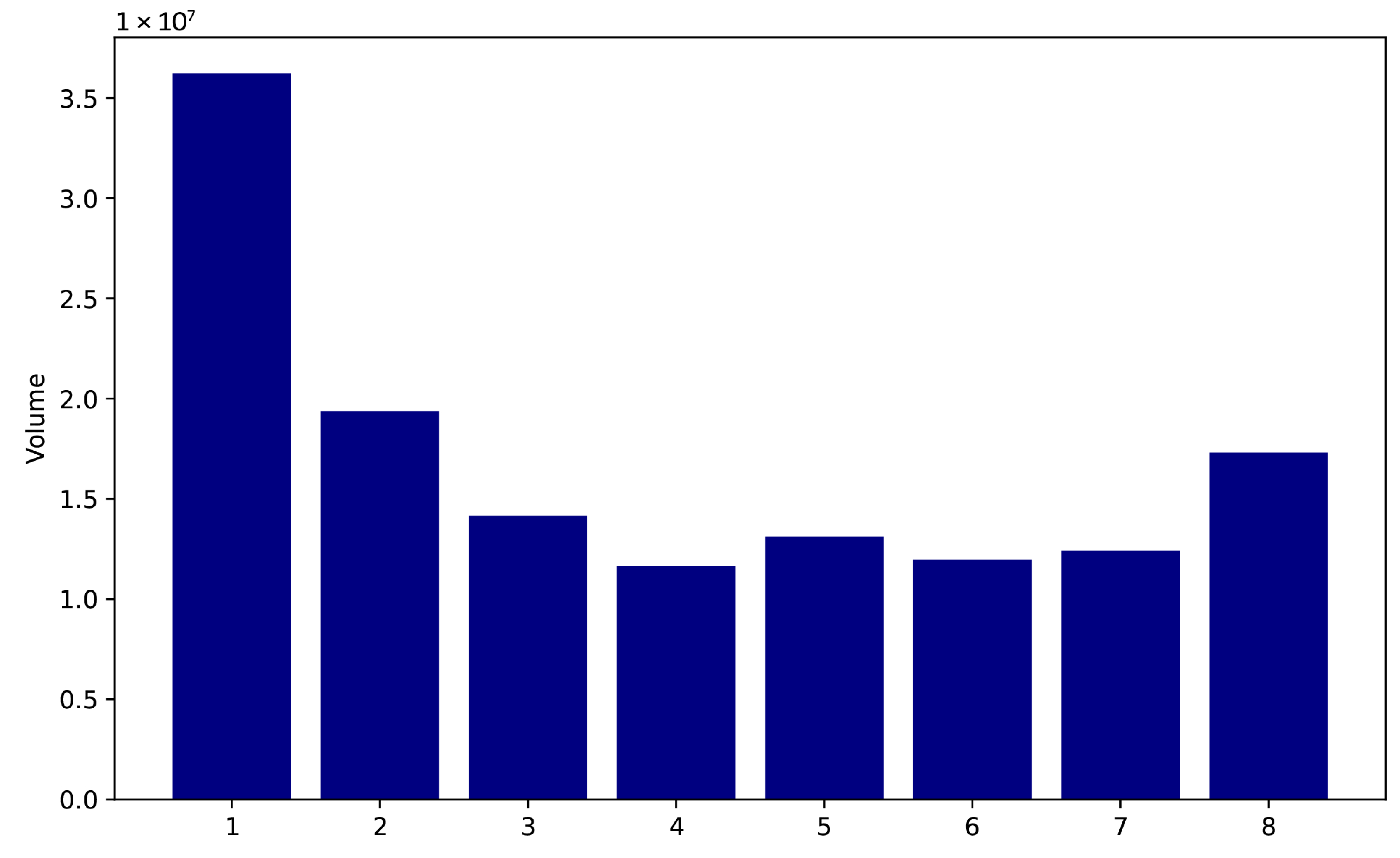
Bogousslavsky, 2016). Second, intraday volume exhibits a robust and predictable “U-shaped” pattern, peaking at the market open and close (
Heston et al., 2010;
Stephan & Whaley, 2012). This stable temporal structure facilitates the design of volume-linked directional strategies, as noted by
Heston et al. (
2010), who observed its alignment with cross-sectional return patterns. Third, volume’s additive nature allows for straightforward proportional analysis (e.g., comparing volume shares across intervals) without additional normalization, a feature leveraged in cross-country studies of volume-return relationships (
Kaniel et al., 2012).
However, a key empirical challenge persists: absolute opening volume or volatility alone cannot disentangle “high information importance” from “high information uncertainty,” as both can generate large opening surges (
Cushing & Madhavan, 2000). To isolate the uncertainty component, we propose a novel intraday volume-based uncertainty (IVU) proxy: the ratio of the first 30 min of trading volume to the total volume of the preceding seven intervals. This metric, grounded in distribution-based frameworks for quantifying uncertainty (
Higashi & Klir, 1993), aims to capture the “reaction vs. hesitation” dynamic by measuring the concentration of trading activity early in the session. A low IVU value signals high uncertainty and delayed price discovery, which we hypothesize strengthens the persistence of initial return trends.
Another limitation of current research is the predominant reliance on linear models (e.g., autoregressive models (
Zhang & Xue, 2017); linear probability models (
Sun et al., 2016)) for directional forecasting. These models often struggle to capture the complex, non-linear, and state-dependent interactions inherent in intraday markets. This limitation is particularly critical for volume-based predictors. The established financial econometrics literature demonstrates that volume-return dynamics are often governed by threshold-type nonlinearities and regime-switching behaviors (
Wang & Gerlach, 2023). To effectively model these complex dynamics, recent advancements have explored two complementary paths: sophisticated econometric frameworks and data-driven machine learning algorithms. On the econometric front, models incorporating threshold or regime-switching mechanisms have been developed to explicitly capture state-dependent market behaviors (
Wang & Gerlach, 2023). Concurrently, studies by
Fischer and Krauss (
2017) and
Ghosh et al. (
2021) have demonstrated the superiority of algorithms like LSTMs and tree-based ensembles in capturing intricate feature interactions and temporal dependencies for financial market prediction. Together, these approaches provide a more powerful toolkit for overcoming the limitations of traditional linear models in intraday forecasting.
The Chinese stock market, as one of the world’s largest and most dynamic, presents an ideal empirical setting. Its significant scale, concentrated retail investor base, and policy-driven sentiment swings likely amplify the effects of information uncertainty, providing a powerful context to test our proposed framework.
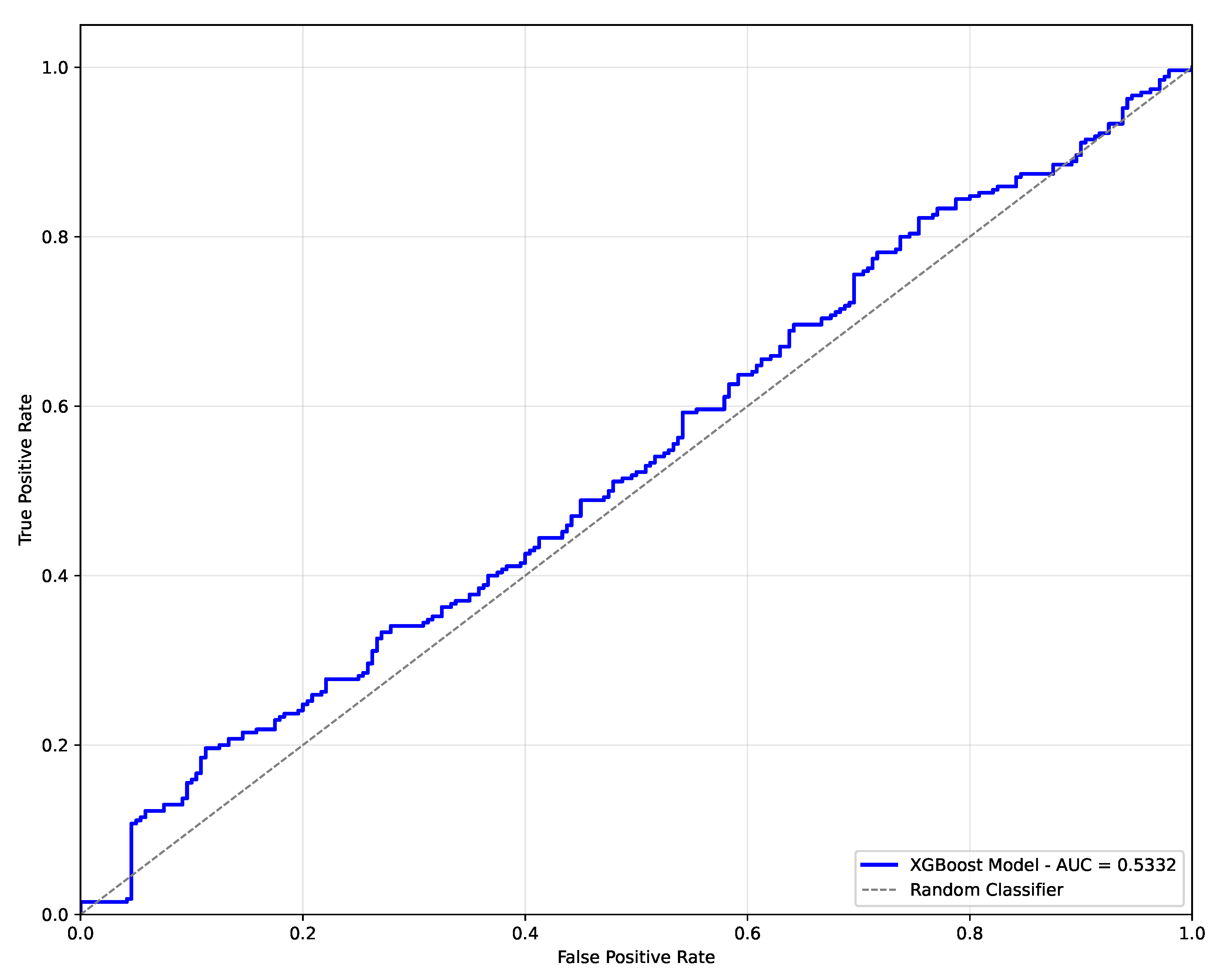
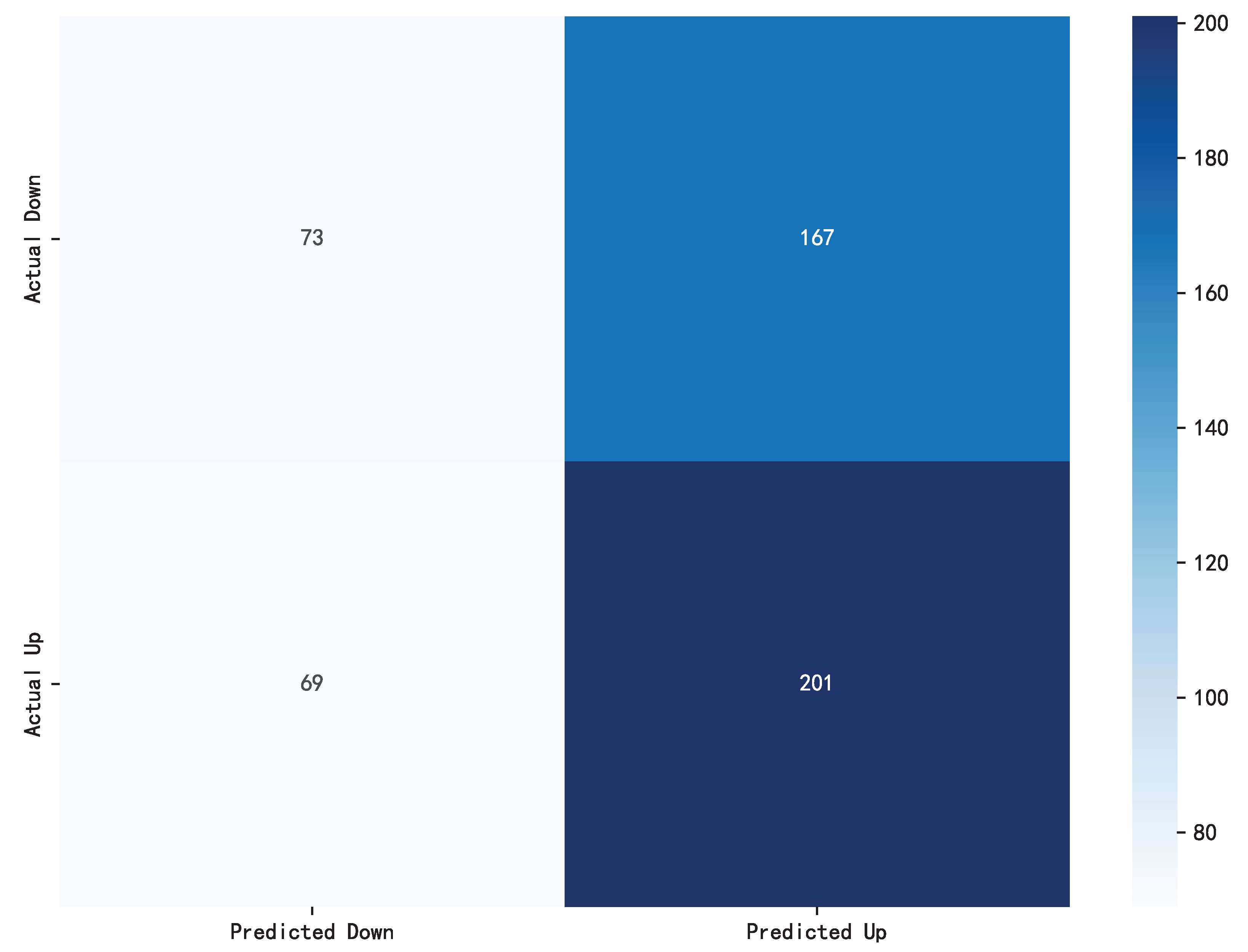
To address these gaps, this study adopts a dual-methodological approach: (1) employing threshold logistic regression to statistically validate the non-linear moderating role of our IVU proxy and identify regime-specific effects, and (2) utilizing the XGBoost algorithm to capture complex non-linear relationships and interactions among returns, volume, and uncertainty, thereby enhancing out-of-sample prediction accuracy. Finally, we evaluate the economic significance of our predictions through a simple intraday trading strategy.
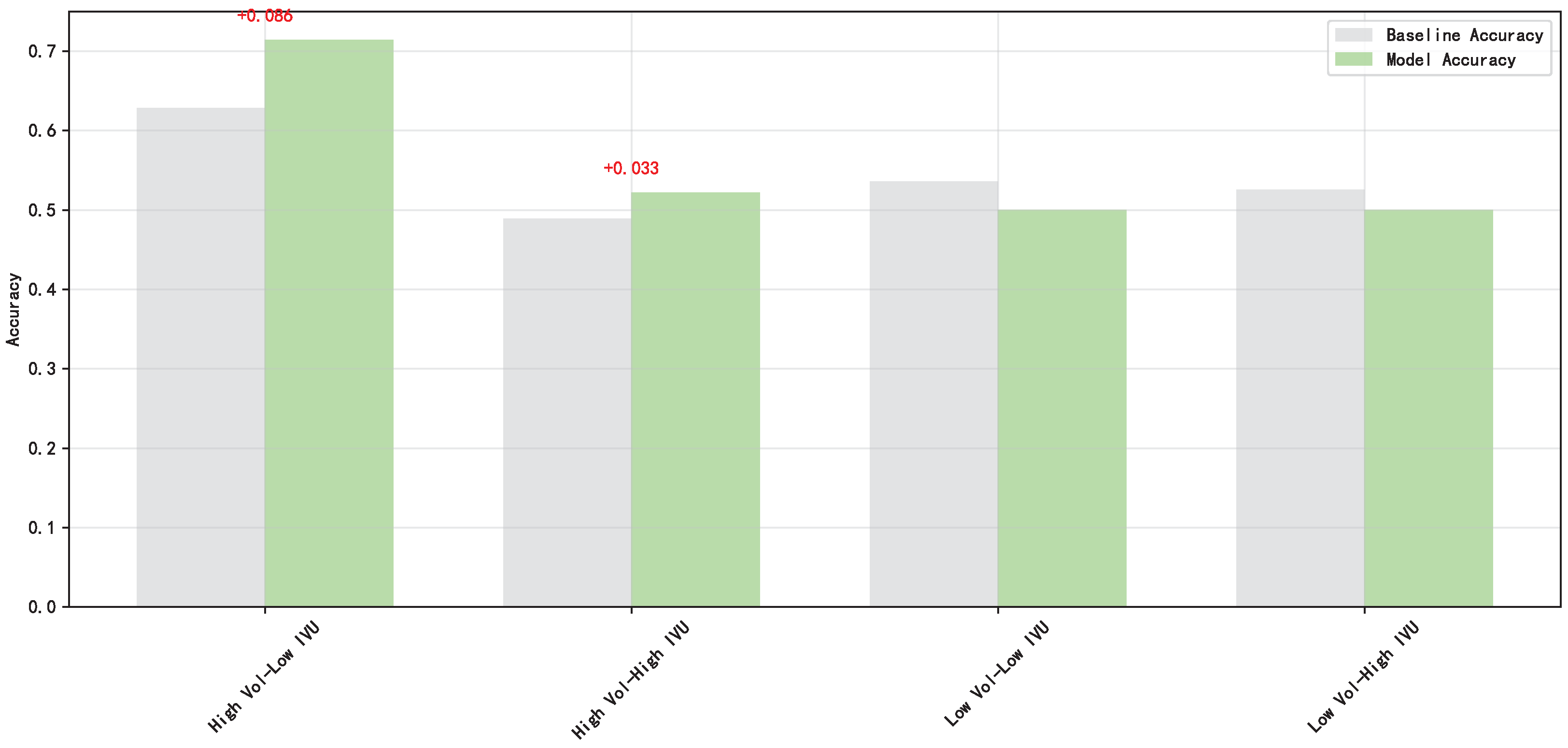
Our results robustly confirm the critical moderating role of information uncertainty. Threshold regression identifies a statistically significant IVU critical value of 0.476225 (p < 0.001), separating low and high uncertainty regimes. Cross-group analysis reveals that the predictive power of opening returns for the final half-hour direction is most potent under the joint condition of high opening volume and low IVU (high uncertainty), achieving 63.04% accuracy. XGBoost validates these findings, with IVU-related features ranking among the most important predictors and achieving 71.43% out-of-sample accuracy in high-uncertainty regimes. A trading strategy leveraging these predictions yields substantial risk-adjusted returns (117.99% total return, Sharpe ratio 3.02), underscoring the economic value of incorporating volume-based uncertainty signals into intraday momentum models.
The remainder of this paper is structured as follows:
Section 2 details the data, variable construction, and methodologies.
Section 3 presents the empirical results.
Section 4 evaluates the performance of a trading strategy based on our predictions.
Section 5 concludes the study.
5. Conclusions
5.1. Main Findings
This study introduces and validates a novel intraday volume-based uncertainty (IVU) proxy—the ratio of opening-half-hour volume to total volume of preceding intervals—to enhance momentum prediction in the Chinese stock market. Our multi-method analysis reveals that information uncertainty, captured by this volume-distribution metric, critically moderates intraday return predictability.
The empirical evidence robustly supports our theoretical framework. Threshold regression identifies a significant IVU critical value of 0.476225 (p < 0.001), separating distinct uncertainty regimes. In high-uncertainty conditions (low IVU) combined with high opening volume, predictive accuracy reaches 63.04% in logistic regression and 71.43% in XGBoost out-of-sample tests. The machine learning approach further validates the importance of IVU-related features, with interaction terms ranking among the most influential predictors.
Methodologically, this study demonstrates the value of integrating traditional econometric techniques (threshold regression) with modern machine learning (XGBoost) for financial market prediction. This hybrid approach successfully captures both the nonlinear threshold effects and complex feature interactions that characterize intraday dynamics.
The economic significance of these findings is substantiated by a trading strategy that generates a 117.99% total return with a Sharpe ratio of 3.02 over seven years, significantly outperforming benchmarks after realistic transaction costs. The strategy’s robustness to cost variations and parameter choices underscores the practical viability of incorporating IVU signals into intraday trading systems.
More broadly, this research contributes to understanding how information uncertainty shapes short-term price dynamics. By operationalizing the “reaction vs. hesitation” dynamic through volume distribution patterns, we provide both theoretical insights and actionable tools for quantitative finance practitioners.
5.2. Limitations and Future Research
This study verifies the predictive power of the IVU index on intraday momentum in the CSI 300 Index and the economic value of corresponding trading strategies, but it has certain objective limitations, and the follow-up research can be expanded in depth by drawing on the latest methodological achievements in the field. The specific research directions are as follows, with explicit reference to the key literature recommended for in-depth exploration:
First, drawing on the cumulative abnormal return (CAR) model proposed by
Ball and Brown (
1968), the semi-strong form market efficiency testing framework of
Fama (
1970), as well as the exogenous information identification method of
Agarwal and Agarwal (
2025), future research can further identify exogenous information release events (e.g., macro policy announcements, important financial data disclosure) in the Chinese A-share market, and construct an event study to test the causal linkage between the IVU index and the speed of market information absorption. This research can fill the current gap that the IVU index is only used for predictive analysis but not for causal identification of information uncertainty and verify the core connotation of the IVU index from the perspective of information release.
Second, based on the regime-dependent factor interaction and state instability analysis method of
Valadkhani (
2025), combined with the regime switching panel data model with interactive fixed effects proposed by
Bai and Ng (
2009), as well as the macroeconomic regime classification method of
Ang et al. (
2006), subsequent studies can extend the static threshold regression model in this paper to a dynamic panel framework, and introduce dummy variable cross-term interaction design to test the time-varying characteristics of the IVU-intraday momentum relationship under different macroeconomic regimes (e.g., high/low volatility, loose/tight monetary policy). This can make up for the current research’s lack of consideration of the dynamic change of the regulatory effect of IVU and improve the robustness of the research conclusion in different market states.
Third, referring to the trigonometric Gibbons-Ross-Shanken (GRS) portfolio efficiency test proposed by
Gibbons et al. (
1989) (the original developer of the GRS test), the triangular analysis framework of
Agarwal (
2023), as well as the comparison method of intraday momentum and classic momentum strategies by
Jegadeesh and Titman (
1993), future research can conduct a more rigorous mean-variance efficiency test on the IVU-based intraday trading strategy in this paper, and compare the efficiency of the strategy with other classic momentum strategies (e.g., price momentum, volume momentum). This can make up for the current research’s only focus on strategy return and Sharpe ratio and lack of formal portfolio efficiency verification and further highlight the academic and practical value of the IVU index in portfolio construction.
Fourth, in response to the seasonal characteristics of trading frictions and abnormal market effects in election years documented by
Waggle and Agarwal (
2018), combined with the trading friction measurement framework of
Amihud (
1986), future research can further refine the transaction cost calibration of the IVU strategy—on the basis of the conservative 10 bp cost scenario (including elevated slippage) set in this paper’s transaction cost sensitivity analysis, we can incorporate election-year-specific market liquidity, order flow pressure and transaction slippage data to conduct a more realistic out-of-sample backtest. At the same time, we can explore the asymmetric performance of the IVU strategy in election years and non-election years, which can further improve the practical applicability of the strategy in the context of time-varying trading frictions.
In addition to the above directions, future research can also expand the research sample to individual A-shares and stock index futures and integrate high-frequency order flow data to decompose the IVU index into informed trading and noise trading components to further explore the micro-mechanism of information uncertainty affecting intraday market dynamics.