1. Introduction
Environmental, Social, and Governance (ESG) factors have gained significant attention in recent years as investors increasingly recognize the importance of non-financial risks and opportunities in asset pricing (
Giese et al., 2019). A growing body of literature suggests that ESG performance can reduce firm-specific risk (
Aouadi & Marsat, 2018) and stock return volatility (
Alareeni & Hamdan, 2020;
Sassen et al., 2016), ultimately affecting stock valuation and portfolio stability. It is also of great importance to conduct research on ESG in the Chinese market. China is a key global ESG player. It is Asia’s major green finance region, the world’s second-largest green bond market, and contributes significantly to global sustainable investment, supporting UN Sustainable Development Goals (
Shen et al., 2023). Moreover, numerous studies have shown that ESG does play a role in guiding investors’ decisions in the Chinese market.
Chen et al. (
2023) indicated that in China’s A-share market, stocks with high ESG scores outperform those with low ESG scores.
To better understand ESG’s influence on asset pricing, researchers have developed models that incorporate investor heterogeneity in ESG preferences. Based on the framework by
Pedersen et al. (
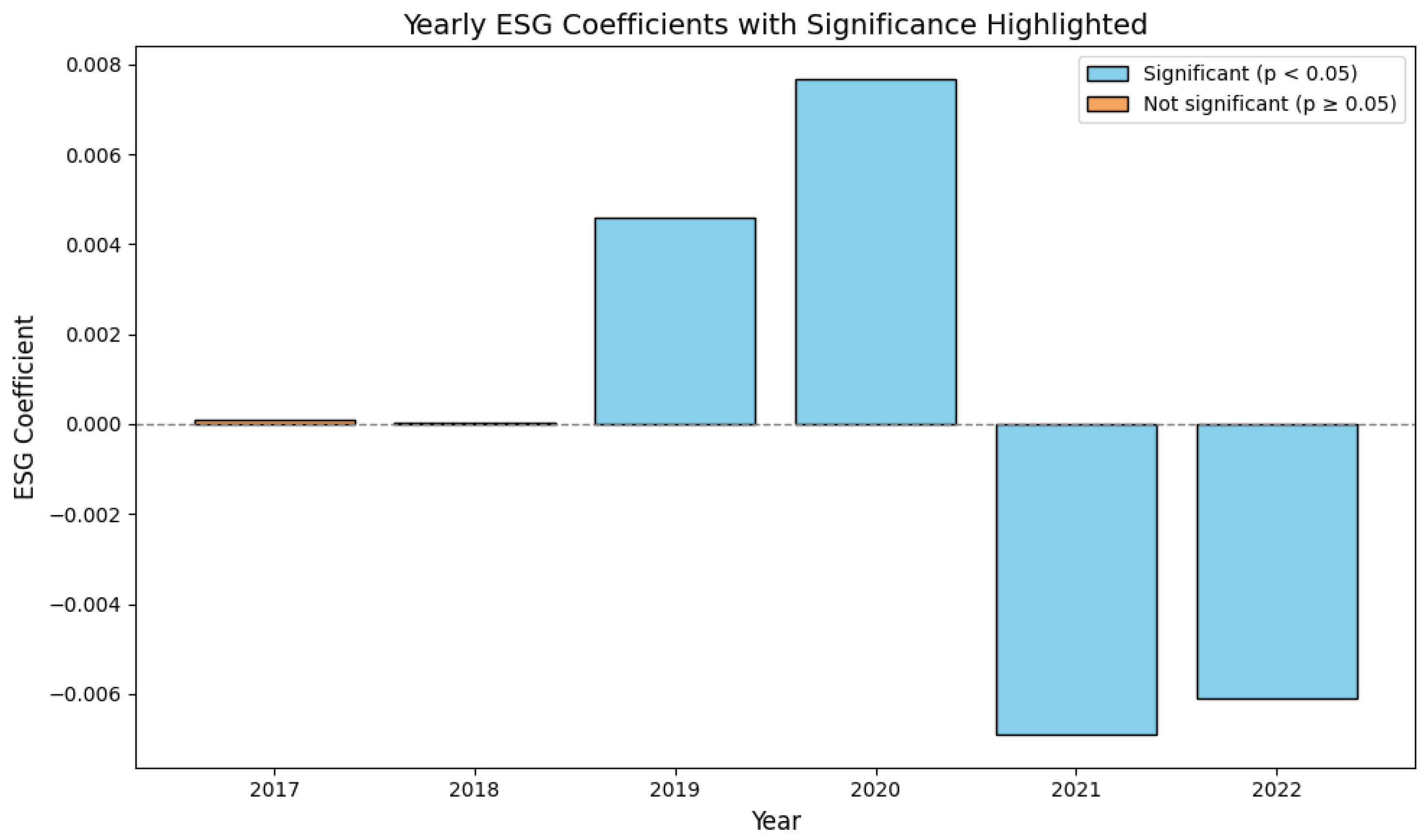
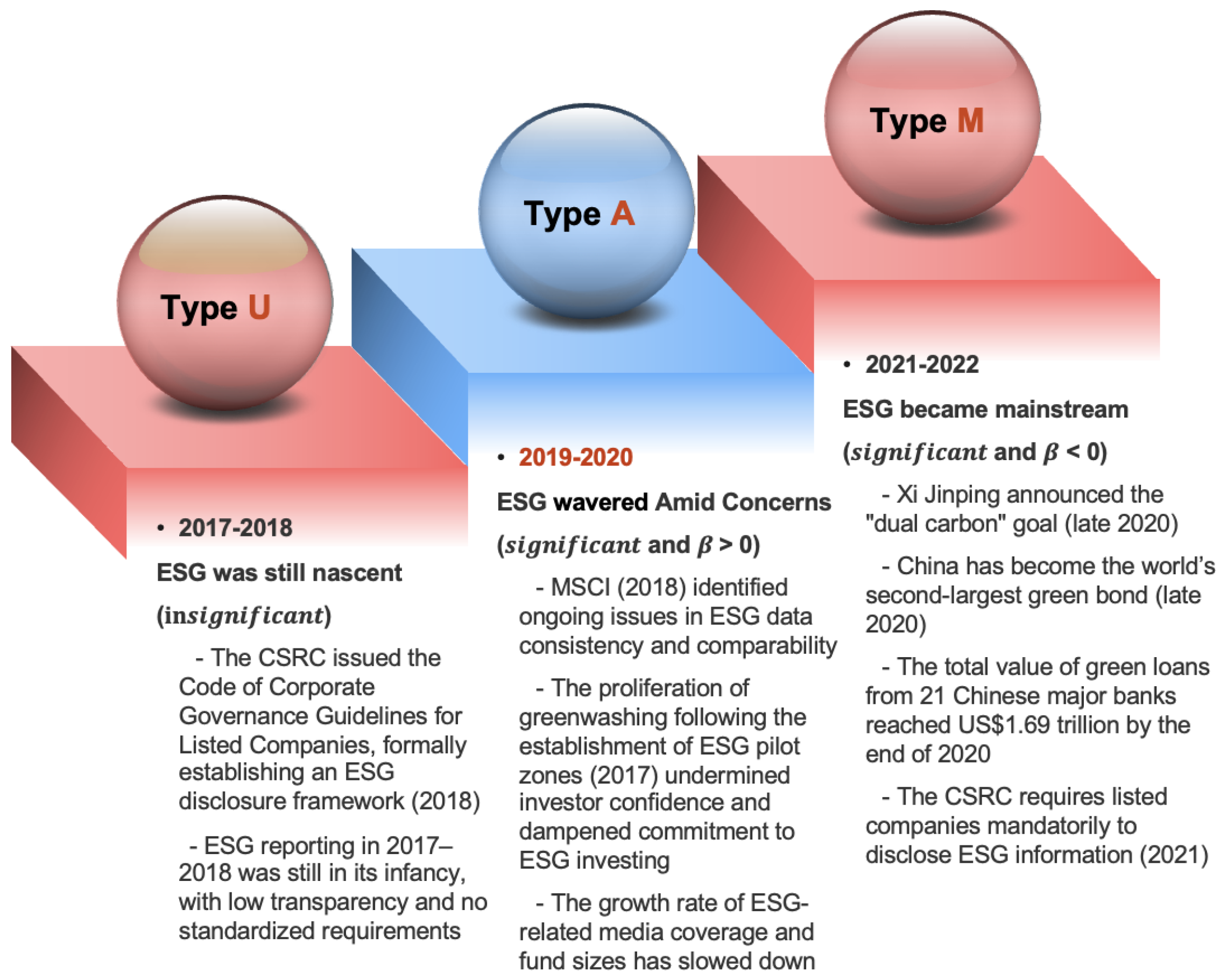
2021), investors can be categorized into three types: (i) Type-U (ESG-unaware), who ignore ESG information; (ii) Type-A (ESG-aware), who consider ESG risks but are primarily driven by financial returns; and (iii) Type-M (ESG-motivated), who actively optimize for both financial and ESG performance. These investor types collectively shape equilibrium returns and drive ESG integration in capital markets. The varying significance and signs of ESG coefficients reflect differences in investor preferences and market conditions across periods. Type-U denotes phases when ESG effects are insignificant, Type-A corresponds to periods with significantly positive effects as investors reward strong ESG performance, while Type-M captures significantly negative effects when ESG-motivated investors accept lower returns for ESG compliance. Together, these patterns highlight the time-varying nature of ESG’s impact and the heterogeneity of investor behavior in asset pricing.
The core research question of this study is to examine the role of ESG factors in asset pricing in China’s A-share market and their evolution over time. We seek to determine which type of ESG investor behavior best explains market dynamics by examining return patterns through a multifactor lens. Strong ESG performance can mitigate idiosyncratic risks (
Galicia-Sanguino & Lago-Balsalobre, 2025). Additionally, ESG disclosures enhance information transparency, reducing information asymmetry between firms and investors, which in turn affects the cost of capital by altering expectations of future cash flows and their uncertainty. Therefore, it is reasonable to introduce ESG scores into the model (
Khandelwal et al., 2023).
Therefore, we employ Ordinary Least Squares (OLS) regression to investigate the relationship between ESG performance and stock dynamics—specifically, returns, volatility, and the Sharpe ratio—among listed companies in the Chinese A-share market. Prior research has demonstrated that ESG factors are closely associated with corporate financial performance and market valuation (
Zhou et al., 2022). Building on this literature, our study extends the analysis by examining how ESG influences stock-specific outcomes and by exploring alternative modeling approaches to better capture these dynamics.
The rest of this paper is structured as follows.
Section 2 presents a literature review, focusing on the classification of investor types based on ESG preferences and noting mixed effects across regions and rising but uneven ESG adoption in China’s A-share market.
Section 3 elaborates on the methodology and data, running regressions with controls and builds ESG-motivated mean–variance portfolios to compare outcomes across ESG preferences.
Section 4 reports the empirical results, including multicollinearity checks and annual regressions from 2017 to 2022 to examine the time-varying effect of ESG.
Section 5 links ESG’s historical evolution, cross-industry differences, and portfolio outcomes, showing that moderate ESG alignment optimizes investment performance. Finally,
Section 6 concludes that ESG integration in China has evolved rapidly, with moderate ESG portfolios delivering the best risk-adjusted returns, highlighting the role of policy, disclosure, and investor behavior.
2. Literature Review
In recent years, investors have increasingly considered the impact of non-financial factors, in addition to companies’ financial fundamentals, when trading (
Giese et al., 2019). Investor demand unrelated to financial fundamentals influences stock prices, and sharp fluctuations in stock prices generate market risks. With the widespread adoption and deepening understanding of the ESG framework, ESG criteria have been integrated into investment portfolio construction as an important non-financial factor. Research has shown that better ESG performance has the potential to increase firm value through lower firm risk (
Aouadi & Marsat, 2018). For example,
Sassen et al. (
2016) suggest a significant negative correlation between ESG scores and stock return volatility in European markets, while
Alareeni and Hamdan (
2020) document a similar pattern in the U.S. market, attributing the lower volatility to enhanced corporate governance and environmental stewardship. Building on these studies, we initially employed both linear and quadratic models to examine the relationships between ESG factors and individual stock return volatility, returns, and the Sharpe ratio.
Empirical evidence, however, varies substantially across regions. In the Southeast Asian market, panel data from 225 listed firms in six countries between 2020 and 2022 reveal that ESG practices remain underdeveloped and heterogeneous, yet a one-year lagged ESG score exerts a significantly positive influence on financial performance (
Le, 2024). In contrast, evidence from the U.S. market, based on S&P 500 constituents from 2013 to 2023, indicates that ESG combined scores are negatively correlated with returns and liquidity but positively correlated with volatility, with low-ESG firms exhibiting greater ESG sensitivity (
S. Cheng & Huang, 2024). For Europe, an analysis of large-cap stocks in six countries from 2010 to 2020 shows that, except in Italy, investing in high-ESG firms does not reduce returns, though smaller firms with higher price-to-book ratios and Sharpe ratios may offer better performance (
Gavrilakis & Floros, 2023). Collectively, these findings highlight that the relationship between ESG scores and investment outcomes is highly context-dependent, shaped by market maturity and firm characteristics.
Recent studies have also examined ESG preferences in the Chinese A-share market. Institutional investors have demonstrated a clear preference for ESG, as reflected in a significant positive correlation between firms’ ESG performance and institutional ownership (
Li & Wu, 2024). Social media analysis further reveals that public sentiment toward ESG is generally positive, though concerns about greenwashing, rating inconsistency, and opacity remain prominent (
S. Wang et al., 2024). These findings highlight both rising ESG awareness and persistent doubts about ESG credibility in practice.
To better interpret how ESG preferences translate into pricing effects, we draw on the investor taxonomy proposed by
Pedersen et al. (
2021), who categorize investors into three types based on their awareness and valuation of ESG factors. Type-U (ESG-unaware) investors disregard ESG information entirely, focusing solely on financial returns. Type-A (ESG-aware) investors consider ESG scores as signals that may affect risk and expected return, incorporating them into their valuation. Type-M (ESG-motivated) investors not only recognize ESG-related risk-return implications but also directly value ESG performance itself, and are willing to sacrifice financial return for higher ESG standards.ratio.
5. Discussion
Although mainland China began promoting the disclosure of corporate social responsibility reports as early as 2008, ESG reporting was still in its infancy during 2017–2018, with limited transparency and no standardized disclosure requirements. During this period, investors paid relatively little attention to ESG factors. The main reasons were as follows: first, ESG information disclosed by listed companies was incomplete and fragmented, making it difficult for investors to access actionable data; second, the domestic ESG rating system was not yet mature and lacked uniform standards, reducing investor confidence in ESG metrics; and third, investor education and policy guidance were still limited, so most market participants relied primarily on traditional financial indicators for decision-making. Consequently, although the China Securities Regulatory Commission (CSRC) issued the Code of Corporate Governance Guidelines for Listed Companies in June 2018, formally establishing an ESG disclosure framework, the impact of ESG factors on investor decisions prior to this period remained limited, and many companies and investors had yet to fully consider ESG in their practices
Shen et al. (
2023).
Before the 2019–2020 period, the ESG concept gained rapid popularity in China, but the surge in ESG enthusiasm was not matched by equally robust regulatory oversight or reliable disclosure standards. This mismatch gave rise to widespread greenwashing, where firms exaggerated or misrepresented their ESG performance to attract capital. As a result, ESG scores became increasingly noisy and less credible indicators of firm quality. The proliferation of optimistic ESG narratives, coupled with limited transparency and inconsistent metrics, led many investors to initially overvalue high-ESG firms (
Lin et al., 2023). However, as awareness of greenwashing grew and the limitations of ESG data became apparent, investor sentiment cooled. Investors are unwilling to sacrifice returns for the new concept of ESG in the current environment where there is insufficient policy and regulatory support. This stage reflects the fragile foundation of ESG in emerging markets where policy frameworks lag behind market enthusiasm.
From late 2020 onward, ESG considerations in China’s A-share market shifted from a peripheral signal to a binding investment criterion, a transition reflected in our significantly negative ESG coefficients for 2021–2022. According to
Shen et al. (
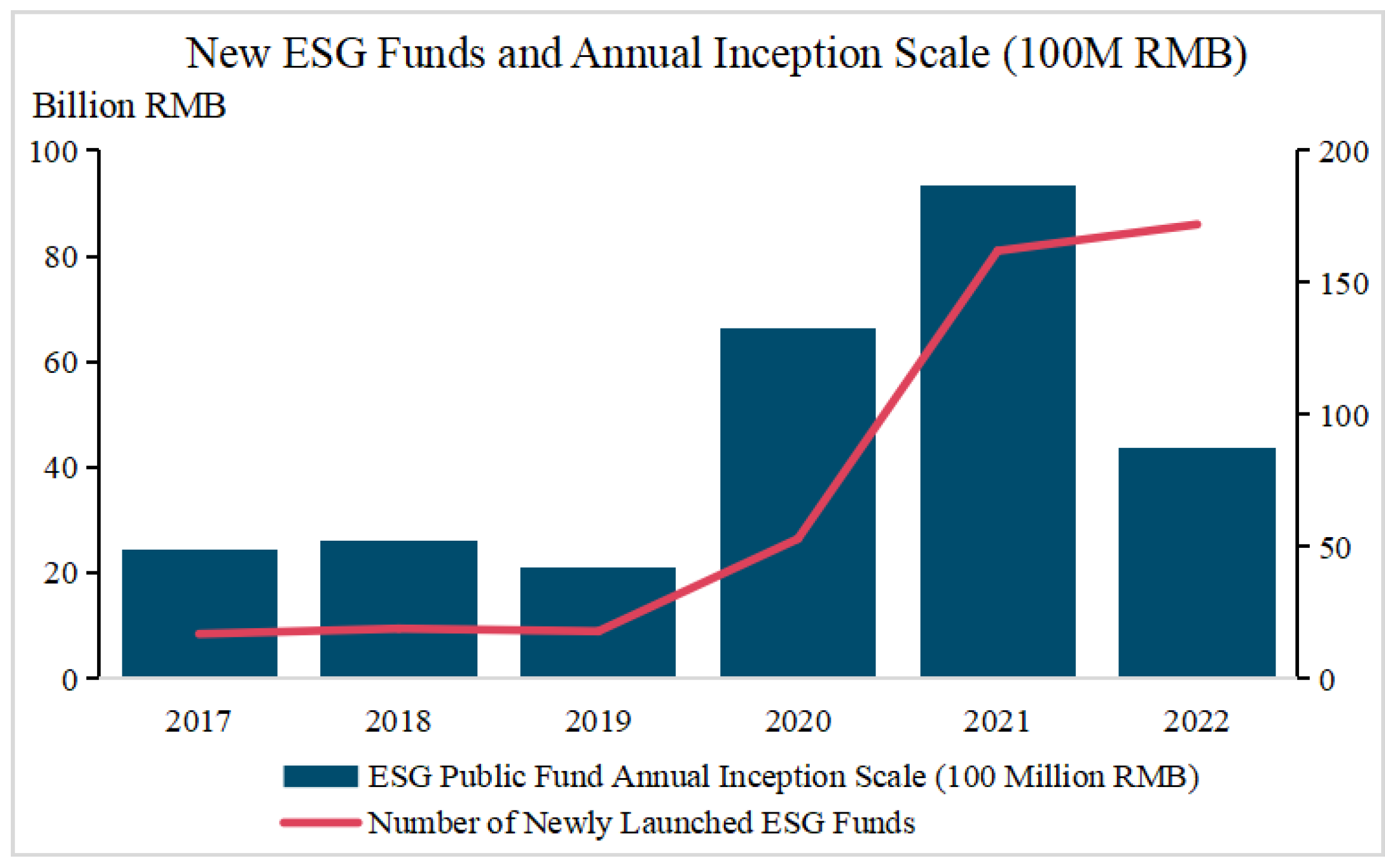
2023), in December 2020, President Xi Jinping’s “dual carbon” pledge (carbon peaking by 2030 and neutrality by 2060) catalyzed a surge in green finance: 21 major banks’ green loan balances swelled from RMB 895 billion in 2012 to RMB 11,899 billion by the end of 2020, and China became the world’s second-largest green bond market that same year. Besides, ever since 2020, the annual inception scale of ESG public funds and the number of new ESG funds have surged (see
Figure 3). Building on this momentum, the CSRC in 2021 mandated ESG disclosures in annual and semi-annual reports, a policy that has been empirically shown to significantly enhance firms’ ESG performance (
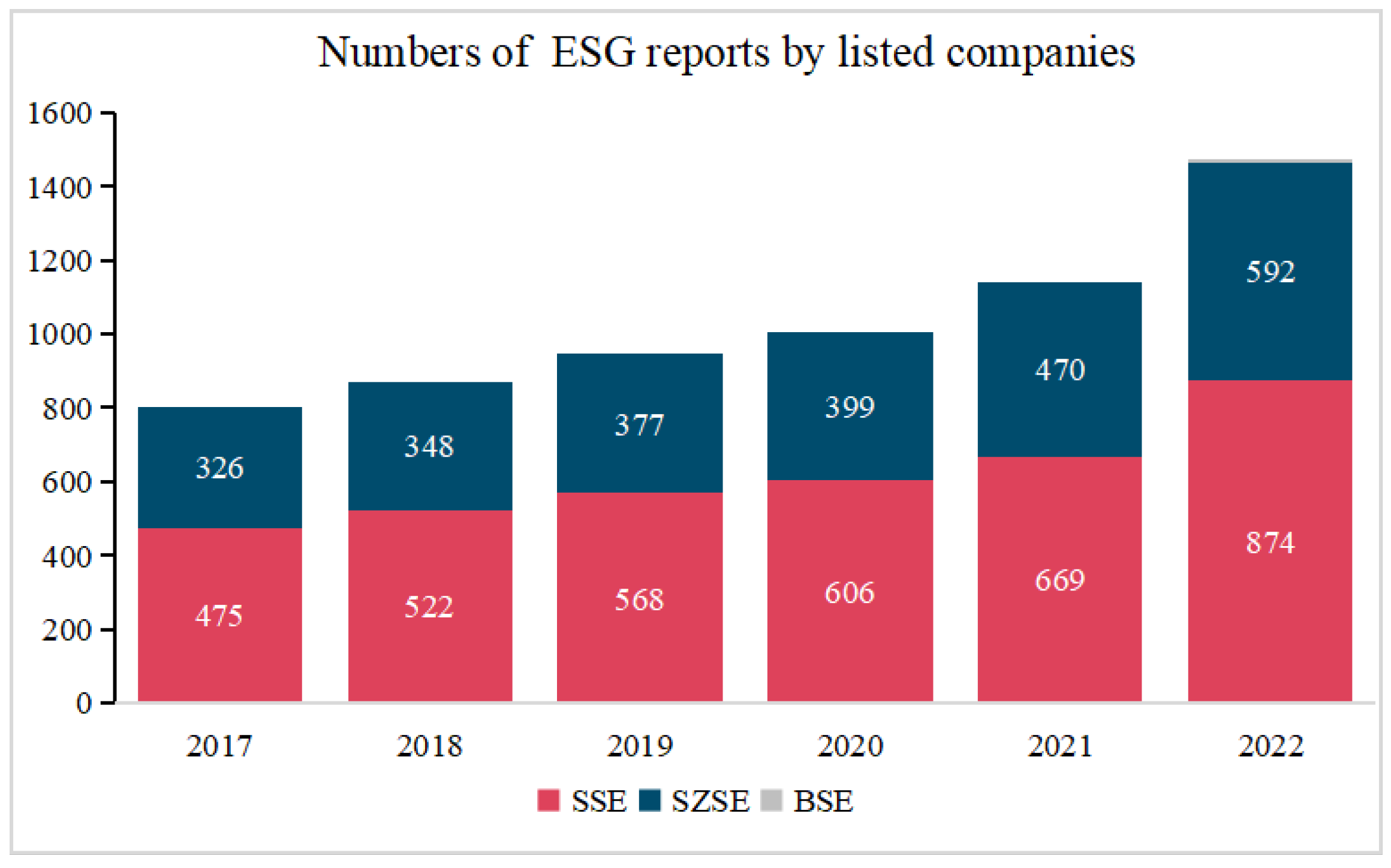
L. Wu et al., 2024). This regulatory push drove the number of A-share firms issuing ESG-related reports from 1005 in 2020 to 1840 in 2023 and increased voluntary GRI-standard adoption from 20% to 42% over the same period, as shown in
Figure 4. At the fund level, publicly-offered ESG products expanded to 374 by mid-2022, with net assets of RMB 392.5 billion, while academic studies overwhelmingly shifted to professional ESG ratings in over 77% of cases. Under these converging institutional and market developments, investors began to knowingly forgo part of the Sharpe ratio in exchange for higher ESG alignment—a hallmark of Type-M (ESG-motivated) behavior—thus producing the negative and significant ESG coefficients we observe for 2021–2022.
Figure 5 further highlights the pivotal policy interventions across the three stages and their influence on the evolution of investors’ ESG preference structures within the market. These findings emphasize that, for policymakers, there is a critical need to reinforce regulatory oversight to curb greenwashing practices, establish standardized ESG disclosure frameworks, and maintain consistent policy momentum (e.g., through green finance initiatives and mandatory reporting requirements). Such measures not only enhance the credibility and comparability of corporate ESG practices but also provide clearer guidance for investor decision-making, thereby contributing to effective ESG risk management and enabling the capture of emerging sustainable investment opportunities.
5.1. Heterogeneity Analysis
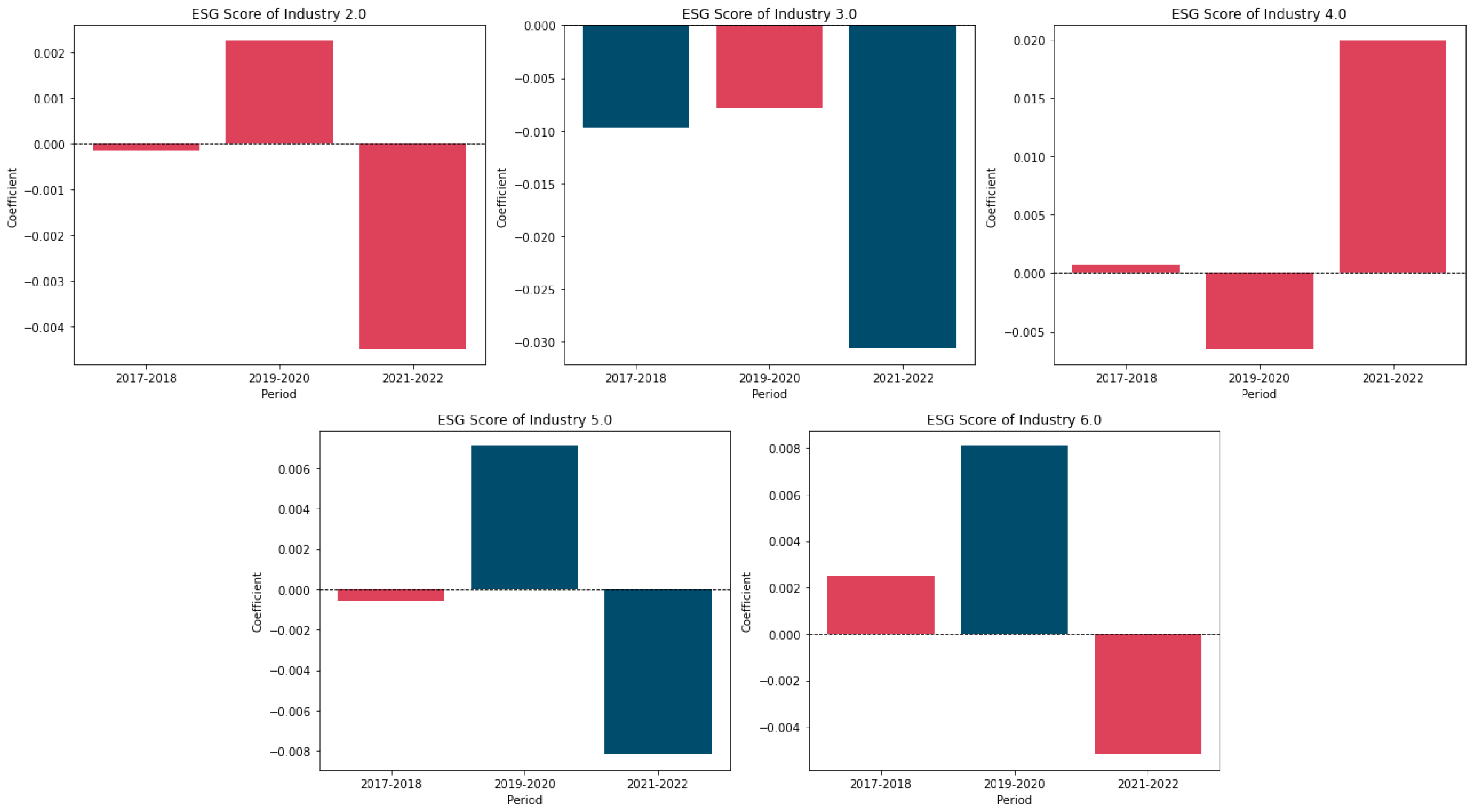
We classified the stocks in the A-share market into six categories based on the industry codes in the CSMAR database (Industry 1: Finance, Industry 2: Utilities, Industry 3: Properties, Industry 4: Conglomerates, Industry 5: Industrials, Industry 6: Commerce). Because the financial industry is primarily engaged in monetary and financial services, it differs substantially from real-economy sectors and cannot be readily assessed using general ESG standards. Moreover, as evaluation criteria in this sector focus mainly on corporate governance and the environmental impact of investment and financing, significant divergences exist across domestic and international rating agencies, and disclosure characteristics also differ from other industries. Including it in the analysis would therefore distort the results. Therefore, we exclude the financial industry. For each of the remaining industries, regressions are conducted over the specified time periods. The regression results are shown in
Figure 6 and
Table 6.
The results show the following:
The ESG indicators for the Utilities industry are insignificant throughout the period of 2017–2022.
The ESG indicators for the Properties industry are significantly negative from 2017 to 2018 and 2021 to 2022, with no significance in other periods.
The ESG indicators for the Conglomerates industry are insignificant throughout the period of 2017–2022.
The ESG indicators for the Industrials industry are significantly negative in 2021–2022, but significantly positive in 2019–2020.
The ESG indicators for the Commerce industry are significantly positive in 2019–2020, with no significance in other periods.
Overall, the relevance between the Utilities and Conglomerates industries and ESG indicators is relatively low.
From 2017 to 2022, the “Dual Carbon” goals had not been established. The Utilities industry, as a key sector with high energy consumption and high carbon emissions, had not yet faced mandatory requirements for low-carbon transformation. Stakeholders did not attach sufficient importance to ESG requirements in this industry, and enterprises lacked the motivation to carry out in-depth ESG practices, making it difficult for ESG factors to significantly impact aspects such as corporate performance, which led to insignificant ESG coefficients. On the other hand, after the “Dual Carbon” goals were established, although the industry began to face pressure for low-carbon transformation and stakeholders gradually paid attention to ESG requirements, enterprises found it difficult to complete the transformation quickly in the short term. The relationship between ESG input and output during the transformation process was relatively complex. For example, enterprises made a large number of equipment upgrades and technological transformations to achieve low-carbon goals, and these costs could not be directly converted into obvious performance improvements in the short term, making it difficult to show a significant correlation between ESG indicators and corporate performance.
Enterprises in the Conglomerates industry operate across multiple sectors with complex business portfolios. Different business segments exhibit significant variations in their sensitivity and relevance to ESG dimensions. For example, the manufacturing divisions within conglomerates are highly influenced by environmental indicators, while the trade segments follow different logical pathways for social and governance indicators. During overall regression analysis, the ESG impacts of these diverse business segments interweave and counteract each other, making it difficult for industry-level ESG indicators to show significant coefficients with corporate performance. Additionally, the diversified nature of their operations complicates the formulation and implementation of integrated ESG strategies, thereby obscuring the role of ESG factors.
In 2012, intensive green building policies were rolled out, with leading real estate firms like Vanke and Sino-Ocean prioritizing and investing heavily in ESG initiatives first. However, from 2017 to 2018, post the “housing is for living, not speculation” policy implementation, market demand cooled; despite ongoing ESG efforts (e.g., green buildings), ESG investments failed to drive sales growth or premiums amid slowing industry growth, instead raising short-term costs. The ESG coefficient was insignificant in 2019–2020: early mandatory ESG disclosure saw some enterprises inflate data or disconnect reports from operations (undermining ESG’s ability to reflect corporate value), while macroeconomic fluctuations and credit policy adjustments overshadowed ESG’s impact. During 2021–2022, the industry’s valuation fell due to some liquidity risks and the shift to the existing housing era. With the “Dual Carbon” goals advancing, ESG became a key non-financial indicator for capital, prompting investors to favor high-ESG leading firms and sacrifice short-term interests for these firms’ long-term value.
After the launch of the Central Environmental Inspection in 2017, industrial enterprises faced “rigid compliance” pressures: those with poor ESG performance were subject to production restrictions or shutdowns, while compliant firms gained scarce production capacity dividends. Institutional investors began to recognize ESG as both a risk mitigation tool and a catalyst for growth. The 2021 ‘Double Carbon’ goals mandated carbon peaking in the industrial sector by 2030, requiring massive technological transformations in industries such as steel and chemicals. Market concerns about industrial enterprises’ short-term performance overshadowed the long-term value of ESG, leading investors’ “sacrifice of interests” to be more of a passive response to policies.
In 2017, the “New Retail” concept emerged, with policies encouraging green consumption and smart logistics. Commerce industry enterprises achieved differentiated competition through ESG. Leading platforms (e.g., Tmall, JD) integrated ESG into their merchant rating systems, a series of measures that collectively improved corporate performance.
5.2. Portfolio Performance with Different ESG Preference
The evolution of investor behavior toward ESG across different industries and policy regimes in China has shaped the way ESG factors are perceived and incorporated into investment decisions. These shifts—from speculative ESG engagement in real estate during 2012–2014, to compliance-driven ESG strategies in Industrials post-2017, and strategic differentiation in Commerce—collectively reflect a maturing ESG investment landscape. To empirically test whether these changes have translated into tangible investment value, we proceed to construct ESG-based portfolios using recent market data. Specifically, we evaluate whether investors’ increasing attention to ESG factors—especially those adopting a balanced, non-extremist ESG view—can indeed result in better risk-adjusted returns, thereby validating the effectiveness of ESG-driven portfolio strategies in practice.
We divide stocks into eight equal-sized groups based on the quartiles of average ESG scores from 2021–2022. See
Table 7 for more details. Using the ESG-motivated mean-variance model (
4), we compute optimal portfolio weights for each group and apply them to a 2023 stock pool, also segmented into eight ESG groups, to evaluate the model’s effectiveness in portfolio construction. This grouping reflects investors’ varying ESG preferences and risk profiles, as they tend to select stocks from different ESG ranges. For comparison, we also apply global optimal weights derived from 2021–2022 data to 2023, allowing us to contrast the traditional and ESG-integrated models.
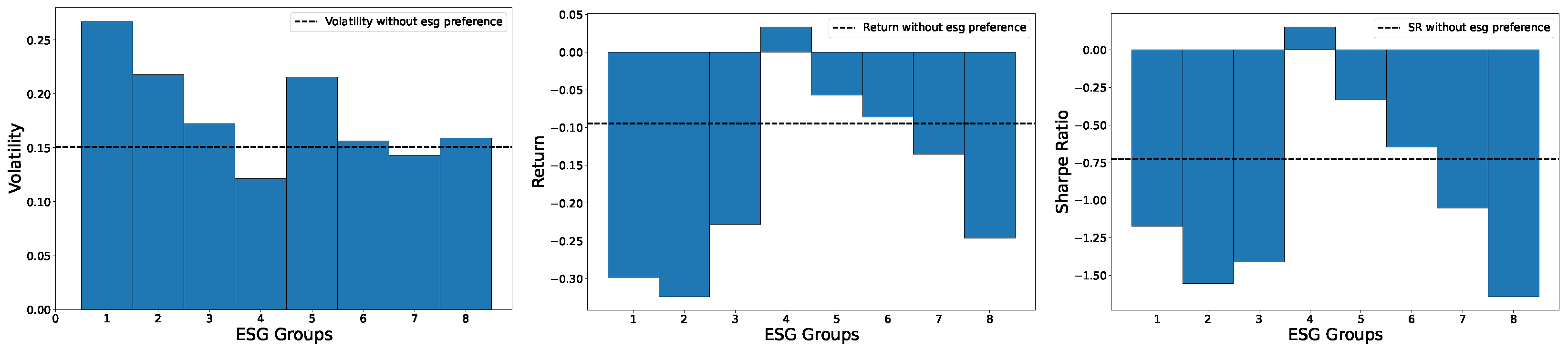
The dashed line in
Figure 7 represents the global optimal solution derived without considering ESG constraints. The volatility of the global optimal solution derived from the traditional model, which does not account for ESG constraints, is measured at 0.1509. This figure is comparable to the volatility observed in groups with medium ESG scores, and groups 4 and 7 exhibit lower volatility than the global optimal solution. This suggests that incorporating ESG score information can contribute to volatility reduction. However, the heightened volatility observed in Group 5 may be linked to inherent limitations within the ESG scoring system. This anomaly can be attributed to the relative immaturity of ESG scoring organizations, which often results in closely clustered scores among comparable firms. In
Table 8, we calculated the sum of the weights of the different sectors in the Group 5 portfolio and found that the sum of the weights of the stocks in the industrial sector is 0.5359554686410946, implying that more than half of the stocks in portfolio are in the industrial sector. Consequently, the lack of diversification within the portfolio under these conditions can lead to an increase in volatility.
The return and Sharpe ratio of the global optimal solution from the traditional model are recorded at −0.0946 and −0.7266, respectively. Notably, the return and Sharpe ratios of groups 4 to 6 exceed those of the traditional global optimal solution, indicating a superior performance of these groups in terms of risk-adjusted returns. The Sharpe ratio simultaneously incorporates both return and volatility information. Obviously, the Sharpe ratios of portfolios with mid-range ESG scores surpass those of the global optimal solution derived from the traditional model. This finding underscores the efficacy of ESG-driven portfolio construction. Furthermore, the improved model effectively balances return and volatility, striving to achieve optimal outcomes to the greatest extent possible.
In contrast to the CSI’s annual return of −0.037007 in 2023, the global mean-variance approach demonstrates weak predictive performance. Although it achieved an optimal portfolio return of 0.4504 during 2017–2022, its predicted return for 2023 dropped to −0.0964, underperforming the CSI benchmark. This highlights the inherent instability of the global mean-variance model in producing reliable forecasts. Conversely, grouping assets based on ESG criteria proves to be an effective method for enhancing predictive accuracy.
Our analysis indicates that historical data for portfolio weight forecasting remains applicable in 2023, with portfolios featuring intermediate ESG scores exhibiting the highest Sharpe ratio. This suggests that ESG metrics play a significant role in guiding investors toward constructing portfolios. For mean-variance investors, selecting stocks with intermediate ESG scores may effectively maximize the portfolio return.
In
Figure 7, the trend of Sharpe ratio closely correlates with that of returns. This correlation is attributed to the substantial influence of returns on the Sharpe ratio. The sign of returns fundamentally determines the sign of the Sharpe ratio, establishing returns as a critical determinant in this metric. Consequently, in contrast to volatility, returns are the primary factor influencing the Sharpe ratio’s outcome.
The analysis reveals that portfolios with medium ESG scores exhibit optimal performance. This phenomenon can be attributed to several factors. Firstly, stocks characterized by excessively low ESG scores often exhibit significant deficiencies in corporate governance, which may provoke adverse public scrutiny and media coverage, thereby undermining the company’s reputation. Conversely, companies with excessively high ESG scores may allocate an inordinate amount of resources to ESG initiatives in an effort to sustain their elevated ratings, potentially compromising short-term profitability. Consequently, a moderate ESG score typically signifies that a company demonstrates a balanced approach to Environmental, Social, and Governance issues, neither adopting an excessively aggressive stance nor completely disregarding these critical factors. This equilibrium is instrumental in mitigating potential financial and reputational risks.
ESG groups ranked between 4 and 6 are highly recommended due to their superior Sharpe ratios and returns, positioning them at the apex of the inverted U-curve. This combination effectively aligns with the interests of investors who prioritize both ESG considerations and the balance of profit and risk. These findings are consistent with previous analyses regarding the relationship between ESG factors and stock returns.
6. Conclusions
Although mainland China began promoting corporate social responsibility reporting as early as 2008, ESG disclosure was still in its infancy during 2017–2018, with limited transparency, no standardized requirements, and low investor attention. During this period, investors can be classified as Type-U, due to fragmented ESG information, immature domestic rating systems, and limited investor education and policy guidance. In 2019–2020, ESG gained rapid popularity, and investors shifted toward Type-A, beginning to recognize the importance of ESG in investment decisions. However, weak regulatory oversight and inconsistent disclosure standards led to widespread greenwashing, noisy ESG scores, and short-term overvaluation of high-ESG firms. As awareness of greenwashing and data limitations increased, investor sentiment cooled. From 2021–2022, ESG considerations in China’s A-share market evolved from peripheral signals to binding investment criteria, and investors entered the Type-M stage, willingly accepting lower returns in exchange for higher ESG alignment. Policy initiatives such as President Xi Jinping’s “Dual Carbon” pledge and the CSRC’s 2021 mandate for ESG disclosures, together with the rapid expansion of green finance and ESG-related reporting, reinforced ESG integration. These developments underscore the critical role of robust policy support, standardized disclosure, and regulatory oversight in fostering credible and actionable ESG practices and in shaping investor behavior toward sustainability-driven investment strategies.
To evaluate whether the shift in ESG-related investor behavior has led to tangible investment value, we divide stocks into eight equally sized groups based on their average ESG scores from 2021–2022 and apply a mean-variance model to construct optimal portfolios, tested using 2023 market data. Results show that portfolios with medium ESG scores (Groups 4–6) consistently outperform others in terms of return, volatility, and Sharpe ratio. While Group 5 exhibits higher volatility due to sectoral concentration, the overall trend supports the effectiveness of moderate ESG integration. Compared with the CSI 300’s negative return and the poor predictive performance of the traditional model, ESG-segmented portfolios yield more stable and superior outcomes. These findings suggest that firms with balanced ESG profiles—avoiding both poor governance and excessive non-financial investment—achieve a more effective trade-off between sustainability and profitability. Thus, moderate ESG preferences offer optimal risk-adjusted returns, highlighting the practical value of ESG integration and reflecting a broader shift among Chinese investors toward rational, balanced, and sustainability-aware strategies.
In summary, the results illustrate how policy shocks and institutional maturation can transform the market from ESG-unawareness to ESG-motivated behavior within a decade. By doing this, we make a substantive contribution to the enrichment of the ESG finance literature, with a particular salience for emerging markets. Through the integration of asset pricing theory, the modeling of investor behavior, and portfolio analysis, this study furnishes value to both academic research endeavors and professional practice.
7. Limitation and Further Study
While our study provides evidence from 2017 to 2022 that policy developments and institutional maturation may influence the pricing of ESG in China’s A-share market, several limitations remain. First, the comprehensiveness and consistency of ESG data during this period are still limited. China’s domestic rating protocols are evolving, and substantial revisions of scoring rules between years may introduce temporal discontinuities that our annual-rolling regressions cannot fully resolve. Second, our analysis relies exclusively on ESG ratings from Shanghai Huazheng Index Information Service Co., Ltd., chosen for their longest continuous coverage and methodological stability within the A-share universe. While practical, this single-source design prevents us from assessing how alternative rating philosophies might affect factor loadings and alpha estimates.
The inclusion of multiple industries in our study is intended solely to illustrate the sectoral diversity of our investment portfolios. However, we have not identified the literature that investigates ESG score characteristics within specific industries in depth, representing a potential gap for future research. Furthermore, although we treat overall ESG scores as a factor worthy of analysis, we do not examine investors’ distinct attitudes toward the individual E, S, and G dimensions—another avenue that future studies could explore.