1. Introduction
The staggering diversity of floral morphology represents a hallmark of angiosperm evolution. Central to our understanding of this process is the ABCDE model of floral organogenesis, which posits that the formation and identity of floral organs are orchestrated by MADS-box transcription factors—specifically the plant-specific, classical MIKC
c-type—functioning as pivotal regulators across multiple developmental stages [
1,
2,
3]. Research in the model organism
Arabidopsis thaliana has established that A-, B-, C-, D-, and E-class genes assemble into specific transcriptional complexes to dictate the identities of sepals, petals, stamens, and carpels [
4]. Within this framework, B-class genes (e.g.,
PI and
AP3) primarily control petal and stamen development; the C-class gene
AGAMOUS (
AG) works in tandem with B-class genes to specify stamens and independently governs carpel formation, while simultaneously antagonizing A-class gene expression to define organ boundaries [
5]. The
AG gene and its
AGAMOUS-Like (
AGL) relatives comprise essential components of the C-, D-, and E-class families [
6,
7,
8,
9,
10]. Current evidence highlights the
AGAMOUS-Like 6 (
AGL6) family as pivotal for floral meristem differentiation, organ specification, and ovule development across diverse angiosperms [
11,
12,
13,
14].
Beyond
Arabidopsis, investigations in various dicot species have further underscored the role of
AGL6 in organ identity. In
Petunia hybrida, analysis of
phagl6 and
fbp2 mutants demonstrated that
PhAGL6 functions redundantly with
AGL2 to drive petal and stamen development; their dual loss causes petals to revert to green sepaloid structures, emphasizing a tight functional link between these genes [
12,
15,
16]. Similarly, silencing the tomato (
Solanum lycopersicum)
SlAGL6 gene leads to sepal fusion and virescent petals by disrupting the expression of A-class (
MC) and B-class (
TM6) genes [
17]. More recently,
SlAGL6 has been identified as a key inhibitor of fertilization-independent fruit set (parthenocarpy) in tomato. It acts within the ovule integument to suppress cell proliferation regulators like
SlKLUH; its loss-of-function leads to enlarged ovules due to integument over-proliferation, uncoupling fruit development from fertilization [
18]. In the Mesangiosperms
Chimonanthus praecox,
CpAGL6 participates in organ identity determination, showing high expression levels in middle and inner tepals [
19]. Overexpression of
CpAGL6 in
Arabidopsis results in carpel abnormalities, stunted vegetative growth, and accelerated flowering—the latter driven by the downregulation of the floral repressor FLC and the upregulation of promoters
AP1 and
FT [
20]. Similarly, the orchid
AGL6 homolog
OMADS1 acts as a potent floral activator; its ectopic expression in heterologous systems promotes early flowering and causes a marked reduction in plant dimensions, reinforcing the conserved function of the
AGL6 lineage in orchestrating the transition to flowering and modulating overall plant architecture [
21]. In another basal angiosperm,
Nymphaea caerulea,
AGL6 acts as an A-class gene predominantly expressed in petals and sepals, whereas
FUL-like genes are mainly confined to the carpel [
22].
In monocots,
AGL6 orthologs are indispensable for specifying the identities of paleae, lodicules, stamens, and pistils; mutations in these genes typically trigger severe homeotic transformations or malformations [
23]. In rice (
Oryza sativa), the
OsMADS6 ortholog is essential for palea identity;
osmads6 mutants exhibit paleae transformed into lemma-like structures and lack the marginal reproductive area (MRP) [
10,
24,
25,
26]. These mutants also display lodicule and stamen defects, as well as pistil abnormalities such as supernumerary stigmas and fused carpels [
10,
24,
25,
26]. Similarly, the maize (
Zea mays)
AGL6 homolog
ZAG3 regulates floral meristem fate, with mutants showing excessive proliferation and the development of ectopic organs [
27]. In wheat (
Triticum aestivum),
TaAGL6 deficiency leads to the infinite proliferation of spikelet-like structures instead of pistils, indicating a complete loss of meristem determinacy [
28]; recent findings further confirm
AGL6 as a master regulator of palea morphogenesis in wheat [
29]. In barley (
Hordeum vulgare),
hvagl6 mutations cause paleae, lodicules, and stamens to transform into lemma-like organs, resulting in total sterility [
30].
Recent comparative functional analyses have revealed that the
AP1/SEP/AGL6 superclade exhibits highly divergent functional diversification patterns across angiosperms. For instance, while
AGL6 in petunia functions redundantly with
SEP genes to provide essential E-class functions, such roles appear less prominent or specialized in other lineages, suggesting that the functional trajectory of the
AGL6 lineage is contingent upon species-specific regulatory networks [
16].
Orchids represent one of the most morphologically specialized monocot lineages, possessing a unique floral architecture [
31,
32,
33]. A defining feature is the labellum (lip), a specialized petal essential for attracting specific pollinators and driving diversification. Based on genomic studies of
Phalaenopsis, a ‘P-code’ model was proposed to explain perianth development [
34,
35,
36]. This model posits that distinct B-class and AGL6-like proteins form two heterotetrameric complexes: the SP complex (
OAP3-1/OAGL6-1/OPI) controls sepal and petal development, while the L complex (
OAP3-2/OAGL6-2/OPI) specifically governs labellum formation. Silencing
OAGL6-2 causes the labellum to lose its identity and revert to a sepal/petal-like structure, with its characteristic conical epidermal cells becoming flattened. More broadly, recent work in
Phalaenopsis has shown that floral trait formation in orchids is governed by a complex regulatory network involving flowering-time pathways, MADS-box genes, floral symmetry regulators, and pigmentation- and size-related factors, highlighting the developmental complexity of orchid floral specialization [
37]. In addition to its role in specialized floral organ development, functional evidence from orchids also suggests a broader regulatory capacity of the
AGL6 lineage. In
Oncidium Gower Ramsey, ectopic expression of the
AGL6-like gene
OMADS1 in
Arabidopsis thaliana promoted early flowering by activating flowering-time genes, indicating that
AGL6 homologs may participate not only in floral organ development but also in the regulation of floral transition [
21].
Despite its established importance in other families, the role of
AGL6 in legumes remains poorly understood. In
Medicago sativa,
AGL6 modulates nodulation-related genes by interacting with
SPL12, and its silencing helps maintain nodulation under osmotic stress [
38]. Regarding floral development, previous work in soybean (
Glycine max) hypothesized that
GmAGL6 members might collaborate with key regulators like
GmAP1 or
GmFLC to facilitate developmental plasticity [
1]. Legume flowers possess a specialized papilionaceous structure composed of three distinct petal types: the standard, wings, and fused keels [
39]. While the keel is vital for pollination mechanisms, its genetic regulation is unclear. Although B-class genes are known to function in soybean floral development [
40], the role of E-class genes—specifically
AGL6 homologs—in constructing the papilionaceous flower has not been reported.
In the present study, orchid AGL6 sequences were employed to identify four homologs (GmAGL6a–d) in the soybean genome, which were subsequently characterized via phylogenetic, domain, and expression profiling. To investigate their regulatory roles in floral development, CRISPR/Cas9-mediated quadruple mutants were generated. Phenotypic characterization revealed that, unlike the homeotic transformations typical of AGL6 loss in monocots, the Gmagl6 quadruple mutants maintained a standard papilionaceous floral architecture with intact keel petals. However, loss of GmAGL6 function did not alter keel petal identity or significantly change floral height or width, but significantly increased the floral height-to-width ratio and reduced mature seed size. These findings indicate that GmAGL6 genes have undergone functional divergence in soybean, transitioning from ancestral organ identity determination to the regulation of reproductive organ proportion and seed development.
2. Results
2.1. Phylogenetic and Structural Characterization of the AGL6 Gene Family
As essential members of the Type II MADS-box transcription factor family,
AGL6 genes are master regulators of floral organ development. Prior studies in orchids (
Cymbidium ssp.) have demonstrated that the loss-of-function of the
OAGL6-2 gene results in the complete disappearance of the labellum [
35,
41], highlighting its central role in floral morphogenesis. To elucidate the evolutionary trajectory of this family and determine the phylogenetic status of soybean
AGL6 homologs, we utilized the orchid OAGL6-2 protein sequence as a query to perform homology screening across the genomes of 18 representative species using HMMER v3.3.2 (E-value ≤ 1 × 10
−4) [
42]. The selected species spanned a comprehensive evolutionary lineage from lower photosynthetic organisms to higher angiosperms, including algae (
Chlorella vulgaris), bryophytes (e.g.,
Marchantia polymorpha), gymnosperms (
Gnetum montanum,
Ginkgo biloba), basal angiosperms (
Amborella trichopoda,
Nymphaea tetragona,
Nymphaea thermarum), monocots (
Oryza sativa,
Zea mays,
Musa acuminata), and dicots (
Glycine max,
Arabidopsis thaliana,
Solanum lycopersicum).
Candidate sequences identified via HMMER were initially aligned using MAFFT 7.475 (L-INS-i algorithm) and subsequently refined with Muscle 3.8.425 to minimize gaps and mismatch interference. Given that
AGL6 is a hallmark of the MIKC
c-type MADS-box family, characterized by the dual presence of “MIKC
c-type” MADS-box and K-box domains, we employed the SMART database [
43] for rigorous domain architecture prediction. Only sequences concurrently harboring the MADS-box domain (InterPro ID: IPR033896) and the K-box domain (PFAM ID: PF00319) were designated as core members of the
AGL6 family for downstream analysis.
Based on the identified 98
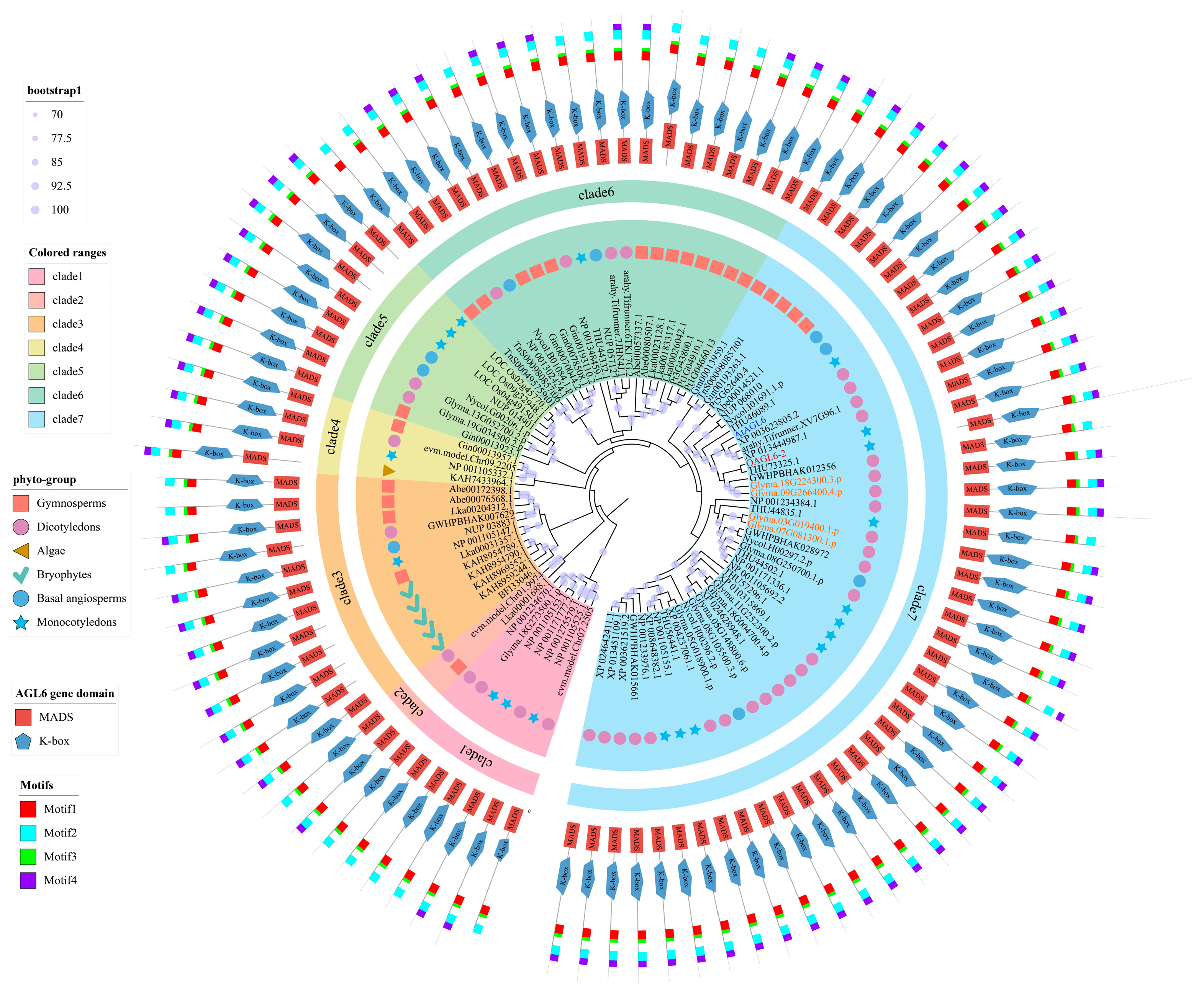
AGL6 homologs, a Maximum Likelihood (ML) phylogenetic tree was constructed using IQ-TREE 2.0. The ModelFinder module identified JTT + R7 as the optimal substitution model, and branch reliability was assessed via a 1000-replicate bootstrap test. The resulting phylogeny (
Figure 1) clearly partitioned all
AGL6 candidates into seven distinct evolutionary clades (Clades 1–7, indicated by colored regions). Most branches exhibited bootstrap support values ≥ 70%, confirming the robustness of the tree topology.
To further validate the classification of these clades, motif prediction was performed using MEME 5.5.3 (maximum motifs = 4). All identified AGL6 homologs were found to contain Motif 1 to Motif 4, which, upon annotation, were verified to correspond to the core functional regions of the MADS-box and K-box domains, respectively. These results are highly congruent with the domain predictions from SMART and PFAM, supporting the structural conservation of the family across lineages.
2.2. Identification and Phylogenetic Classification of Candidate GmAGL6 Genes
Based on the global multi-species phylogenetic tree constructed in
Section 2.1 (
Figure 1), we performed a targeted screening for soybean
AGL6 homologs. To facilitate a more precise observation of the evolutionary distances and branch supports among the core members, the lineage containing
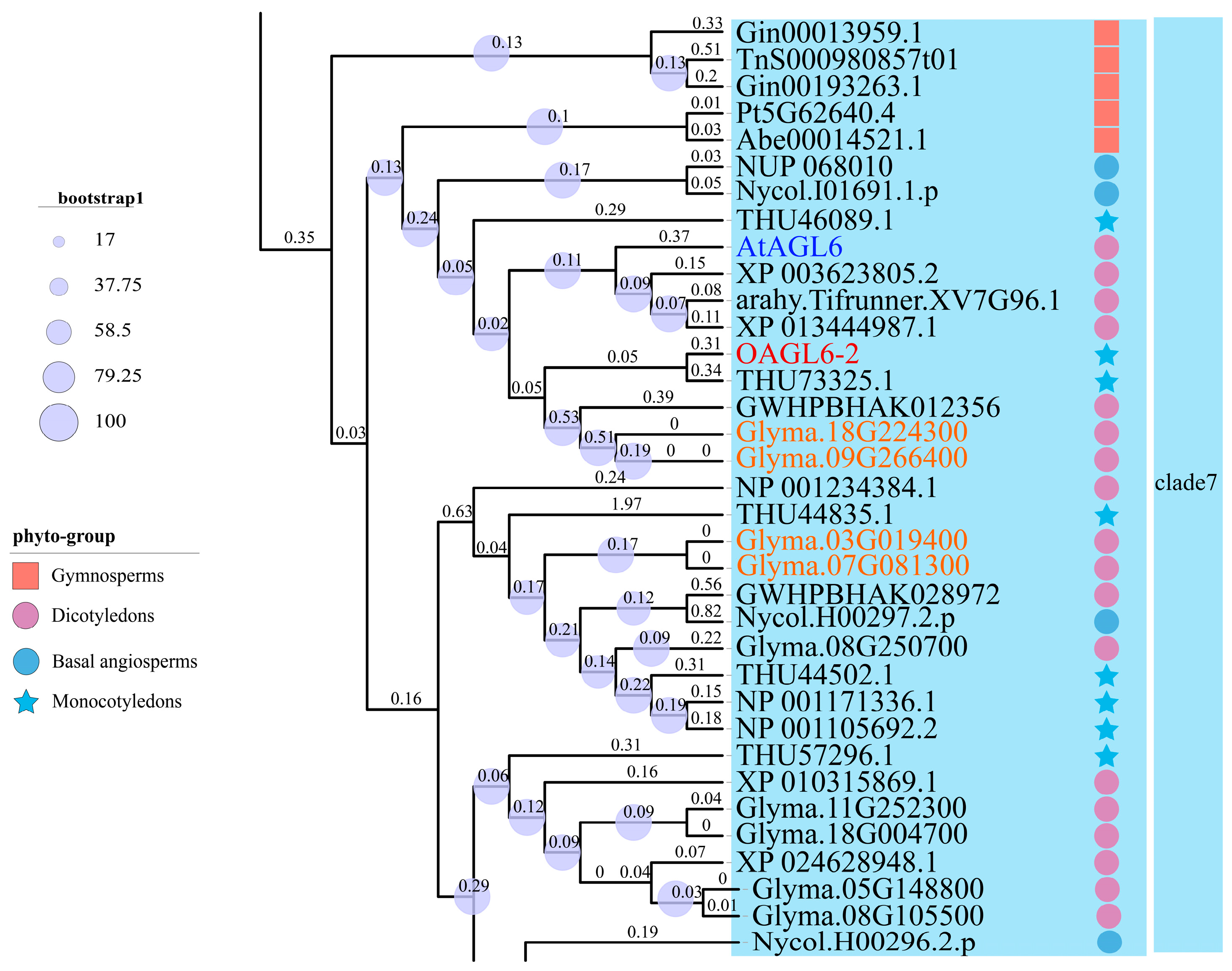
OAGL6-2 and its closest relatives (designated as Clade 7 in
Figure 1) was extracted and magnified to generate a detailed sub-tree (
Figure 2). This focused analysis revealed that four genes in the soybean genome (
Glyma.18G224300,
Glyma.09G266400,
Glyma.03G019400 and
Glyma.07G081300) clustered into a high-confidence monophyletic group with
OAGL6-2 (bootstrap support ≥ 89%). These results indicate that the aforementioned soybean genes share a close phylogenetic relationship and a highly conserved evolutionary origin with
OAGL6-2, suggesting that these four soybean genes are bona fide members of the
AGL6 subfamily and may participate in soybean floral development. Consequently, these four genes were tentatively designated as
GmAGL6a (
Glyma.09G266400),
GmAGL6b (
Glyma.18G224300),
GmAGL6c (
Glyma.03G019400), and
GmAGL6d (
Glyma.07G081300) as candidate members of the soybean
AGL6 gene family (
Table 1).
To further corroborate the functional relevance of the identified candidates, FPKM expression values for the four genes across diverse tissues and organs of the Williams 82 cultivar (W82.a4.v1 genome) were retrieved from the Soybean Omics Database (SoyOD) [
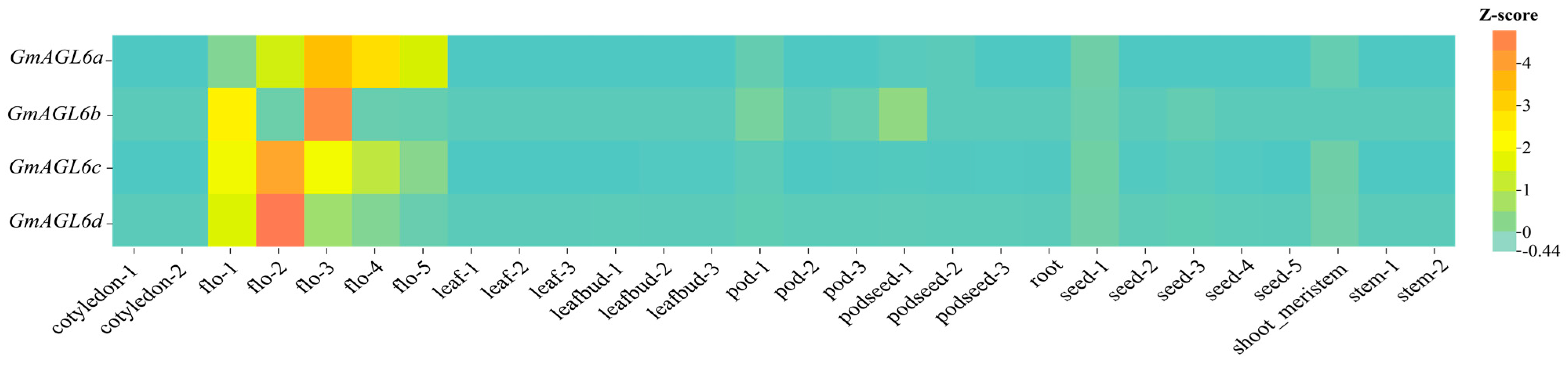
44]. Following Z-score normalization of the raw data from three biological replicates, a tissue-specific expression heatmap was generated (
Figure 3). The expression profiles indicated that all four
GmAGL6 genes are either minimally expressed or entirely silenced in vegetative organs, including roots (R1), stems (S1), and leaves (L1). In contrast, they exhibit significant transcript enrichment during key stages of floral organogenesis, representing a distinct floral-specific expression pattern. This characteristic aligns with the functionally conserved “floral-preferential expression” of
AGL6 orthologs reported in
Arabidopsis, tomato, and rice, which is consistent with previously reported floral-preferential expression patterns of
AGL6 orthologs in other angiosperms and supports their potential involvement in soybean floral development.
Furthermore, domain architecture analysis (
Section 2.1) confirmed that the four candidate genes harbor intact MADS-box (InterPro ID: IPR033896) and K-box (PFAM ID: PF00319) conserved domains, which serve as diagnostic structural signatures for the MIKC
c-type
AGL6 subfamily. To further resolve the sequence characteristics and evolutionary conservation of GmAGL6 proteins at the amino acid level, a comprehensive multiple sequence alignment was performed comparing the four soybean GmAGL6 proteins (
GmAGL6a–d) with the orchid
OAGL6-2. The alignment results (
Figure S1) revealed high amino acid sequence conservation among the four soybean AGL6 candidates, particularly within the regions defining the typical structural framework of MIKC
c-type MADS-box proteins.
This structural integrity, coupled with phylogenetic homology and tissue-specific expression trends, provides robust evidence for the classification of GmAGL6a–d as the core constituents of the soybean AGL6 gene family. Their evolutionary conservation and marked floral-specific expression strongly implicate these genes in the regulatory network of soybean floral development. Consequently, these four genes were prioritized for subsequent CRISPR/Cas9-mediated gene editing and functional validation experiments.
2.3. Generation and Characterization of CRISPR/Cas9-Mediated Soybean AGL6 Quadruple Mutants
To investigate the specific roles of the four candidate
GmAGL6 homologs in regulating soybean floral architecture and keel petal fusion, a CRISPR/Cas9-mediated gene editing strategy was employed. We designed two sgRNA target sites for each member, totaling eight targets across the four genes. Notably, the targets for
GmAGL6a and
GmAGL6b were localized within the MADS-box domain, whereas the targets for
GmAGL6c and
GmAGL6d were situated in the MADS-box and K-box domains, respectively (
Table 2). These target sequences were cloned into a linearized CRISPR/Cas9 vector to construct a recombinant multi-target editing system. Soybean genetic transformation was performed using
Agrobacterium tumefaciens strain
EHA105, following the methodology described in [
45].
Transformation yielded three independent T0 generation quadruple mutant lines (designated as
Gmagl6-1,
Gmagl6-2, and
Gmagl6-3). Sanger sequencing of the flanking genomic regions confirmed that all editing events occurred precisely upstream of the PAM sequences, validating the efficacy of the CRISPR/Cas9 system. Genotypic analysis revealed that in the
Gmagl6-1 line, deletions were introduced at the first target site for all four
GmAGL6 genes. In contrast, mutations were not detected at the first target sites for
GmAGL6c and
GmAGL6d in the
Gmagl6-2 and
Gmagl6-3 lines (
Figure S2).
Protein structure modeling and prediction using SWISS-MODEL indicated that the mutations in the
Gmagl6-1 line resulted in protein truncations, leading to the loss of functional MADS-box or K-box domains. In the
Gmagl6-2 and
Gmagl6-3 lines, mutations led to the truncation of the MADS-box domains in
GmAGL6a and
GmAGL6b, as well as the K-box domains in
GmAGL6c and
GmAGL6d (
Figure S3). These structural variations were predicted to cause abnormal protein conformations in the respective domains for all candidate proteins.
The three T0 quadruple mutant lines were allowed to self-pollinate to obtain T1 progeny. However, seeds harvested from the Gmagl6-1 line failed to germinate, precluding the acquisition of T1 plants. For the Gmagl6-2 and Gmagl6-3 lines, the editing status of the target sites in T1 plants was verified via sequencing. The results showed that the Sanger sequencing chromatograms for GmAGL6c and GmAGL6d in T1 plants of the Gmagl6-2 line were clean single peaks identical to the wild-type (Williams 82) sequence. This indicates that the CRISPR/Cas9 system failed to introduce stable mutations at these specific loci in the Gmagl6-2 line, which retained a wild-type (Williams 82) genotype. Consequently, the Gmagl6-2 line was not progressed to the T2 generation or used for phenotypic analysis.
Significant variations in seed germination capacity were observed among the three independent T0 mutant lines obtained in this study. Specifically, seeds from the Gmagl6-1 line exhibited a total lack of germination after harvest, suggesting that embryo development or seed viability may have been severely compromised. Sequence analysis identified Gmagl6-1 as the sole line harboring effective edits in the MADS-box domains (Target 1) of both GmAGL6c and GmAGL6d. In contrast, Gmagl6-2 retained the wild-type (Williams 82) genotype for GmAGL6c/d, while Gmagl6-3, despite being mutated at these loci, carried edits localized within the K-box domain (Target 2) rather than the MADS-box region. This correlation between genotype and phenotype provides a preliminary indication that the structural integrity of the GmAGL6c and GmAGL6d MADS-box domains may be essential for proper seed germination in soybean.
Therefore, all subsequent phenotypic characterizations of the AGL6 mutants were conducted using the T2 population derived from the Gmagl6-3 line.
2.4. Impact of Gmagl6 Quadruple Mutants on Soybean Floral Organ Morphology
To systematically evaluate the regulatory role of the GmAGL6 gene family on soybean floral phenotypes, the T2 homozygous population of the Gmagl6-3 mutant line was selected as the research material. All experimental materials were genotyped via Sanger sequencing of the target sites to ensure stable homozygous inheritance across the four homologous loci.
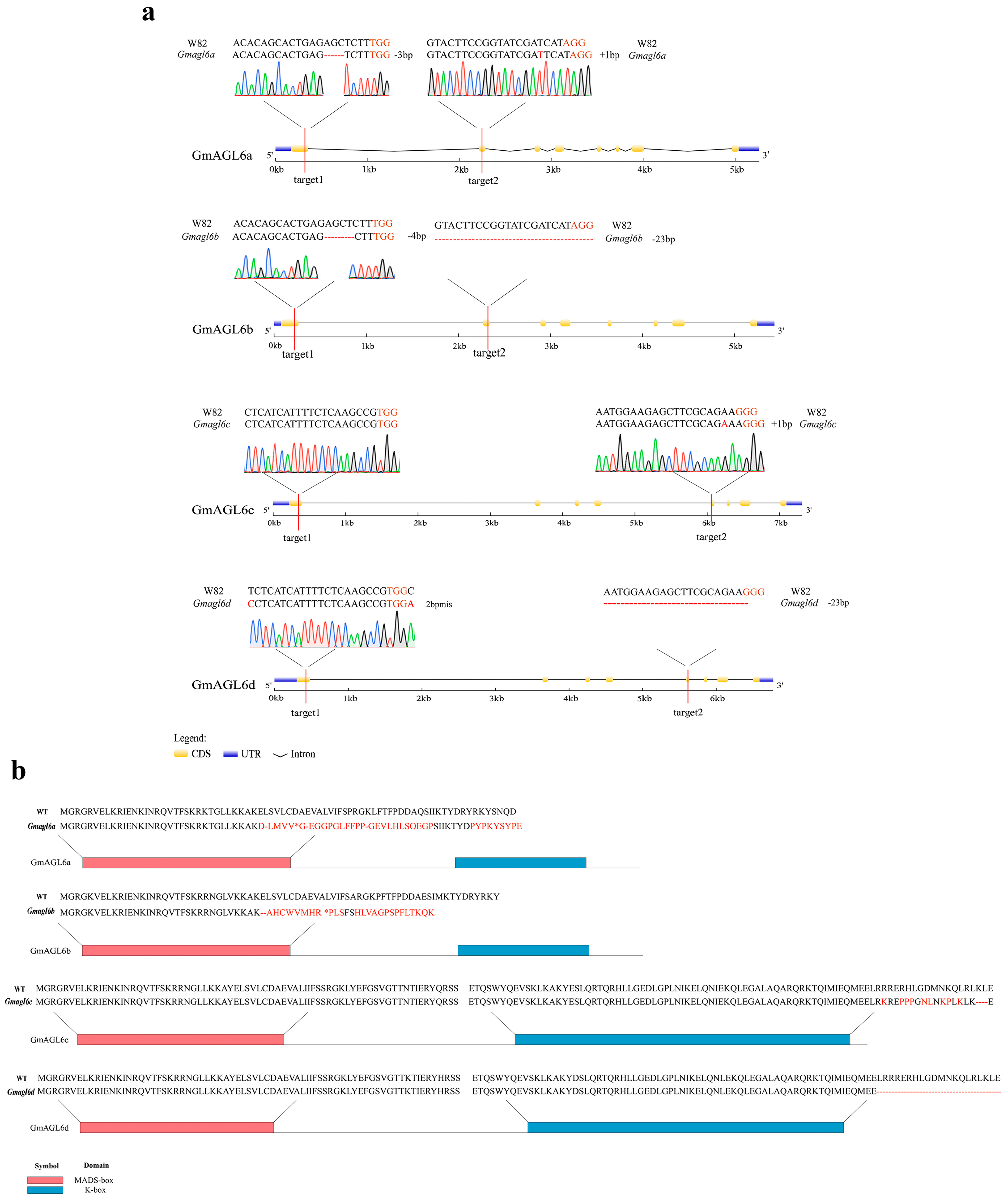
Genotypic analysis revealed specific allelic variations within this mutant line: in
GmAGL6a, the two target sites exhibited a 3-bp deletion and a 1-bp insertion, respectively;
GmAGL6b harbored a 4-bp deletion at the target site; in
GmAGL6c, the first target site remained unedited, while the second site introduced a 1-bp insertion;
GmAGL6d displayed a 2-bp mismatch at the first target site located 1-bp downstream of the PAM sequence, with a base deletion at its second target site. Aside from the first target of
GmAGL6d, all detected editing events were localized within the typical cleavage regions upstream of the PAM. The Sanger sequencing chromatograms for all target sites presented clean, symmetrical single-peak signals, indicating high genotypic consistency within the mutant population and excluding the possibility of interference from chimerism or multi-allelic editing (
Figure 4).
Furthermore, to exclude the interference of potential off-target effects on the experimental conclusions, we strictly validated the highest-scoring potential off-target site for the shared target 1 of
GmAGL6c and
GmAGL6d (located in the coding region of the
GLYMA16G03097 gene, with an off-score of 0.61). Utilizing the Sanger Sequencing Result Check tool in TBtools v2.458 [
46], we performed dual-strand sequence alignment and chromatogram analysis on the mutant population. The results confirmed that the
GLYMA16G03097 gene remained in a homozygous wild-type (Williams 82) state across all samples used for floral and phenotypic analysis, with no non-targeted editing events detected (
Figure S4). This evidence supports the conclusion that the observed phenotypes in the
Gmagl6 quadruple mutants were primarily caused by targeted editing of the intended genes rather than by the tested off-target effect.
Regarding floral morphology, the
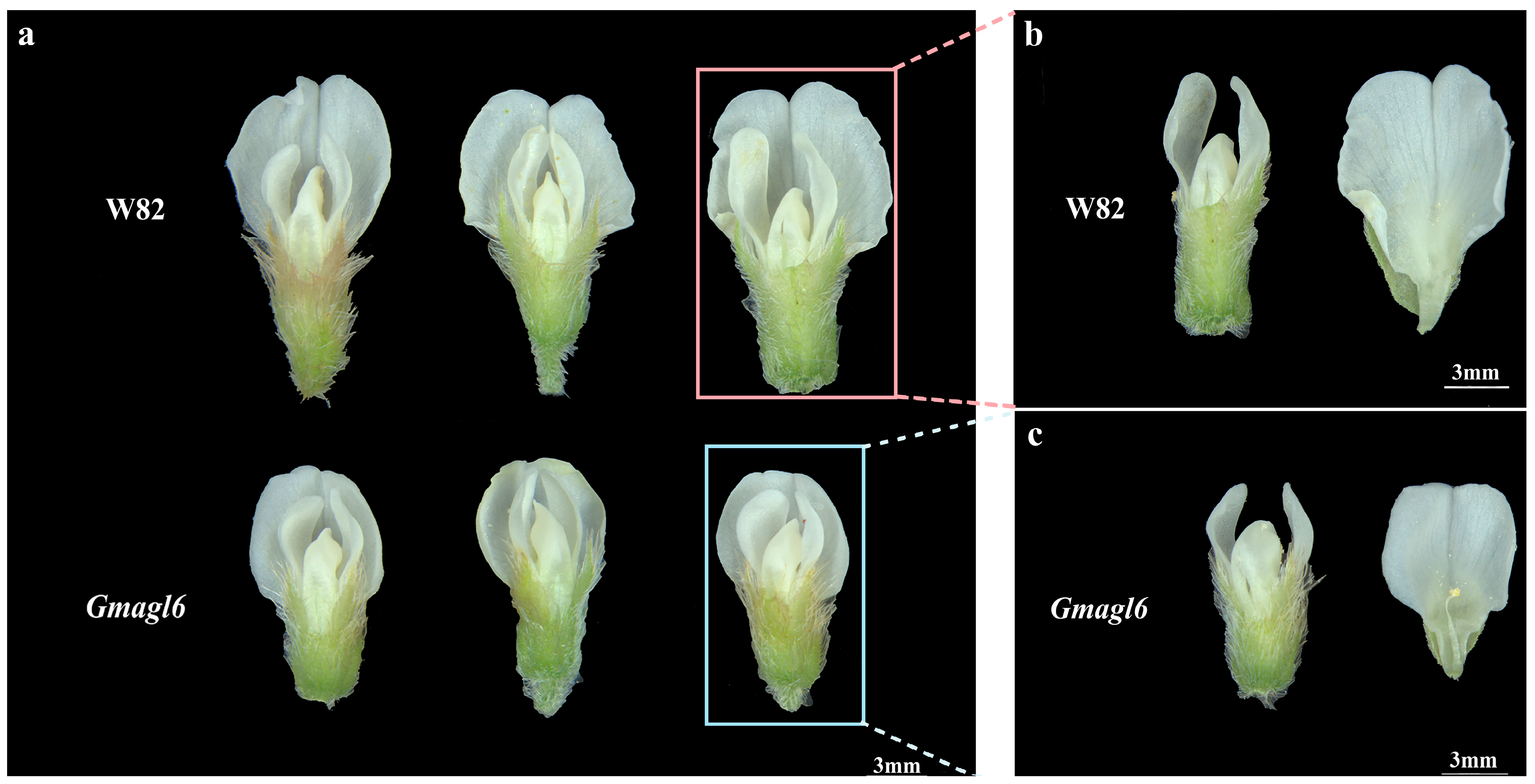
Gmagl6 quadruple mutants maintained overall structural consistency with the wild-type (Williams 82), exhibiting the typical papilionaceous floral structure of soybean, which includes one standard petal, two wing petals, and two fused keel petals. No organ loss or changes in organ number were observed in the mutant flowers, and the spatial arrangement of the floral organs remained unaltered (
Figure 5a).
Further observation indicated that the standard, wing, and keel petals of the mutants were morphologically similar to those of the wild-type (Williams 82) in their relative positions. The keel petals successfully enclosed the stamens and pistil, with their fusion zones and bilateral symmetry remaining intact (
Figure 5b,c). These findings suggest that mutations in the
AGL6 gene family do not disrupt the fundamental architecture of the floral organs.
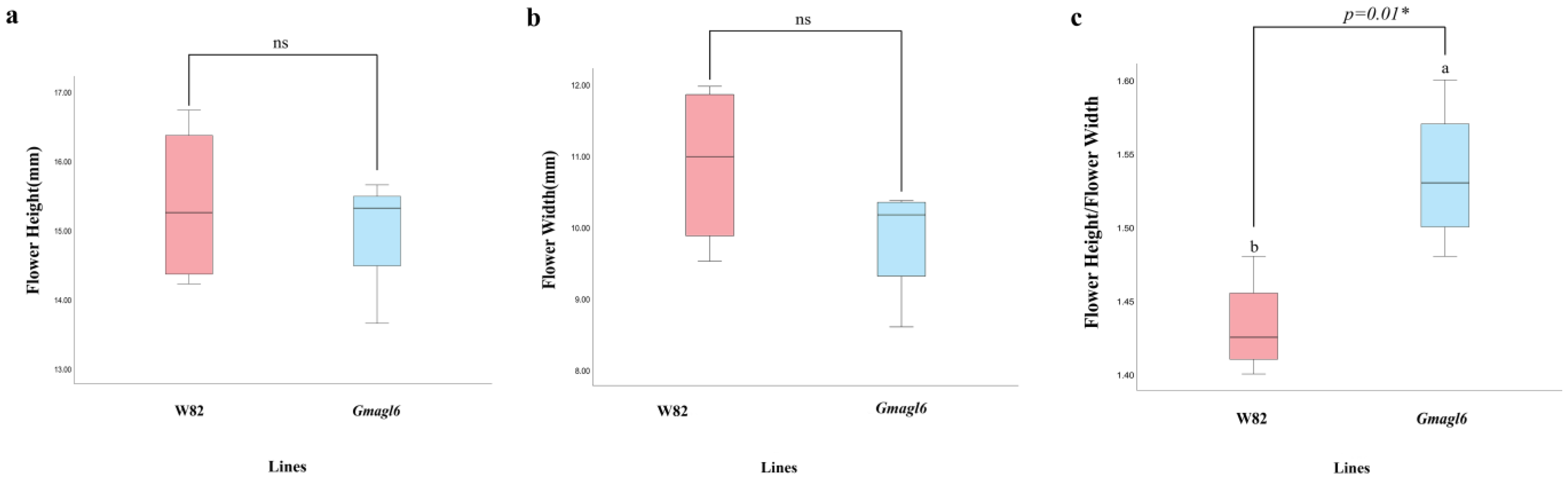
To further quantify floral morphology, we measured flower height, flower width, and the flower height-to-width ratio in wild-type (Williams 82) and
Gmagl6 quadruple mutants (
Figure 6,
Tables S5–S7). Statistical analysis showed that flower height and flower width did not differ significantly between the two genotypes. However, the flower height-to-width ratio was significantly higher in the
Gmagl6 mutants than in the wild type (
p = 0.01), indicating that
GmAGL6 mutation primarily affected floral proportion rather than overall floral size.
2.5. Effects of GmAGL6 Quadruple Mutants on Vegetative Growth, Podding, and Seed Traits
Following the floral phenotypic characterization, we further evaluated the vegetative and reproductive performance of the T2 population derived from the self-pollinated Gmagl6-3 quadruple mutant line in comparison with the wild-type (Williams 82).
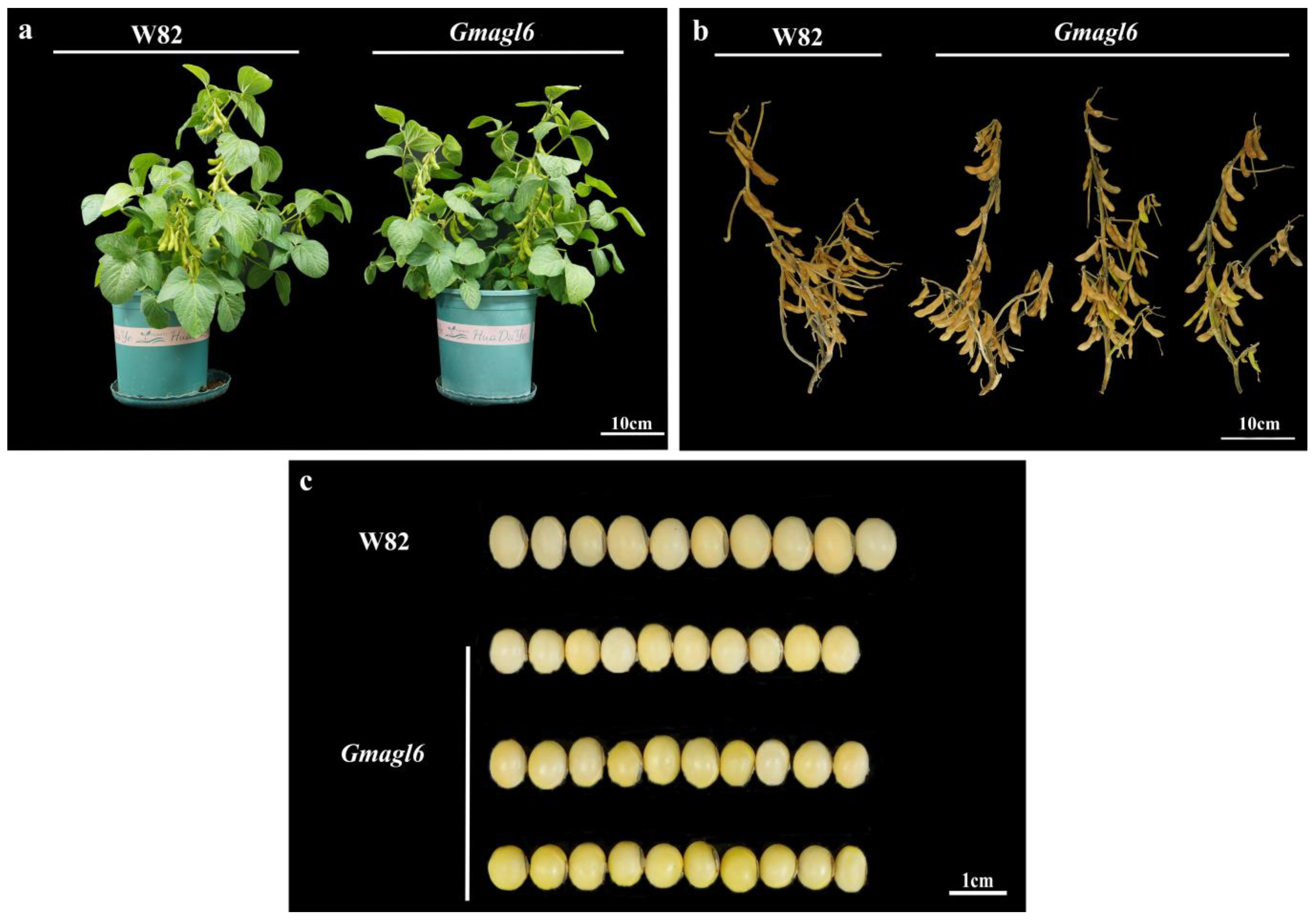
During the vegetative growth phase, no discernible differences were observed in the overall plant architecture between the
Gmagl6 quadruple mutants and the wild-type (Williams 82). Key traits, including plant height, branching patterns, and leaf morphology and coloration, remained consistent across both genotypes. The mutant plants exhibited normal growth without evidence of developmental stunting or significant aberrations (
Figure 7a). In the late stages of reproductive development, the
Gmagl6 quadruple mutants successfully completed flowering and pollination, ultimately forming normal pods. The pod morphology, length, and spatial arrangement in the mutants mirrored those of the wild-type (Williams 82), with no significant defects in podding capacity or pod development detected (
Figure 7b). Comparative analysis of mature seeds revealed that the seeds of the
Gmagl6 quadruple mutants were morphologically typical, with intact seed coats and no evident abortion or deformity. However, a significant reduction in overall seed size was observed in the mutants compared to wild-type (Williams 82) (
Figure 7c). This small-seed phenotype was reproducible across multiple T2 mutant individuals, manifesting as a collective reduction in seed dimensions rather than sporadic abnormalities in isolated individuals.
Collectively, these results demonstrate that while the AGL6 quadruple mutation does not substantially alter the overall vegetative growth or podding efficiency of soybean, it exerts a specific influence on seed development and final size.
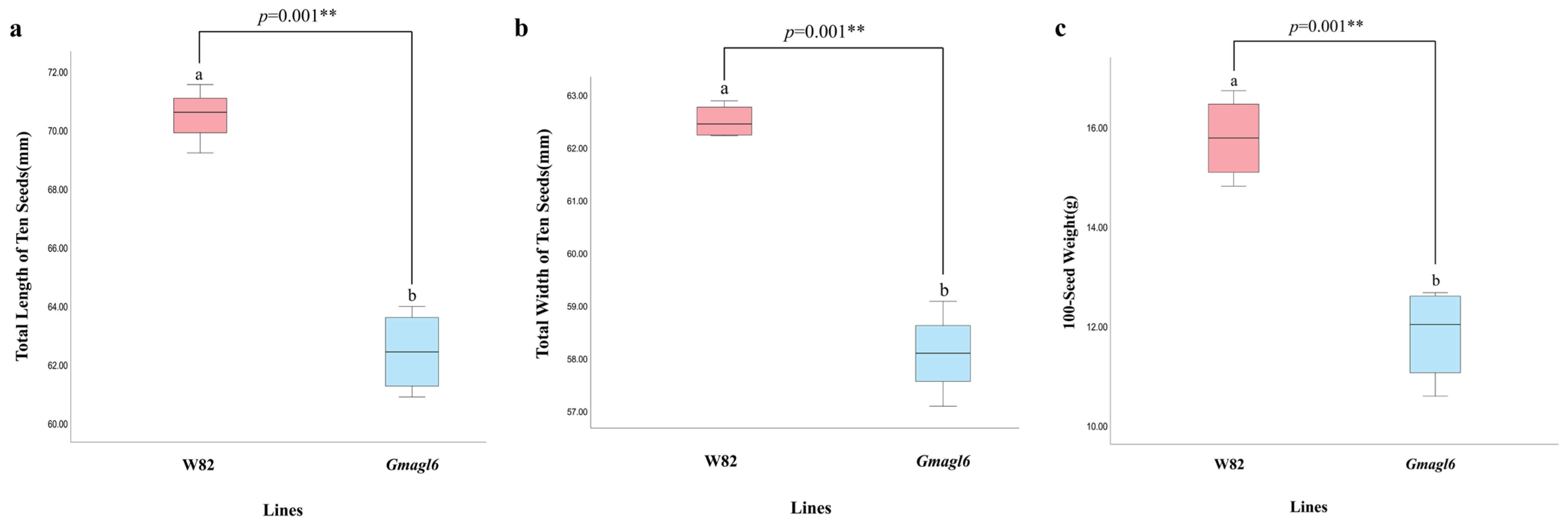
Quantitative assessment further corroborated the small-seed phenotype observed in the
Gmagl6 quadruple mutants (
Figure 8,
Tables S8–S10). Statistical comparisons revealed that both the total length and total width of ten seeds in the mutant lines were significantly reduced compared to those of the wild-type (Williams 82). Furthermore, a marked decrease in the 100-seed weight was observed in the
Gmagl6 mutants. These results demonstrate that the loss of
GmAGL6 function leads to a consistent and systemic reduction in seed scale and mass across multiple dimensions.
3. Discussion
3.1. Evolutionary and Structural Perspectives on GmAGL6 Genes in Soybean
The identification of four
GmAGL6 homologs (
GmAGL6a–d) in soybean, each characterized by the co-occurrence of the MADS-box and K-box domains, provides a modern genomic perspective on a lineage with deep evolutionary roots. Members of the AGL6 subfamily belong to the MIKC
c-type MADS-box transcription factors, which were historically considered to be specific to land plants. However, recent phylogenomic studies suggest that the structural framework of MIKC
c-type MADS-box proteins—and the emergence of the K-domain itself—predates the origin of land plants, extending back to early streptophyte lineages including
charophycean green algae [
47]. This evolutionary scenario implies that the ancestral molecular components underlying
AGL6-related regulatory mechanisms were already present prior to the terrestrialization of plants.
To place soybean
AGL6 genes within a broader evolutionary context, representative species from early-diverging plant lineages were included in the phylogenetic analysis, including the green alga
Chlorella and the bryophyte
Marchantia polymorpha. Although the sequences identified from these taxa do not belong to the
AGL6 clade, homologous genes retrieved through HMMER searches were retained in the phylogenetic tree. Domain and motif analyses further revealed that these proteins contain conserved MADS-box and K-box domains, as predicted by SMART v10 (Simple Modular Architecture Research Tool;
https://smart.embl.de/) and MEME analyses, consistent with previous findings that key structural components of MIKC
c-type MADS-box transcription factors were already present in early streptophyte lineages [
47]. These observations suggest that while the
AGL6 subfamily itself likely emerged later during the evolution of seed plants, the underlying MIKC
c-type structural framework had already undergone significant evolutionary establishment in earlier plant ancestors.
The structural conservation of
GmAGL6a–d is particularly noteworthy when viewed through the lens of protein architecture evolution. Previous studies indicate that ancestral MIKC
c-type MADS-box proteins (such as those identified in charophytes) often possess relatively long C-terminal regions, resulting in compact “sphere-like” conformations that may have limited their interaction capacity to simple dimers. A key evolutionary innovation in land plant MIKC
c-type MADS-box proteins was the shortening of the C-terminus, which exposed the K-domain and enabled the formation of higher-order tetrameric complexes—the structural basis of the well-established “floral quartet” model [
11,
47]. The conserved domain architecture observed in soybean
GmAGL6 proteins therefore suggests that they participate in the complex transcriptional regulatory networks characteristic of angiosperm floral development.
Consistent with this evolutionary framework, transcriptional profiling revealed strong enrichment of
GmAGL6 expression during flower bud differentiation and floral organ maturation, mirroring the floral-preferential expression patterns reported for AGL6 homologs in diverse angiosperms such as rice and orchids [
24,
40]. Interestingly, although the
Gmagl6 quadruple mutants in soybean retain the fundamental papilionaceous floral architecture without the homeotic transformations commonly observed in monocots, they exhibit altered floral proportion and reduced seed size. This phenotypic divergence suggests that the
AGL6 lineage in legumes may have undergone functional specialization, shifting from a primary role in floral organ identity determination toward the regulation of reproductive organ proportion and seed development. Such lineage-specific functional diversification likely reflects the broader evolutionary trajectory of MIKC
c-type MADS-box genes, in which ancient structural frameworks have been repeatedly co-opted and refined to regulate the complex floral morphologies observed across flowering plants.
3.2. Functional Redundancy and Divergence of GmAGL6 in Floral Organ Identity
Despite the high homology between GmAGL6 and orchid OAGL6-2, our CRISPR/Cas9-mediated quadruple mutants (Gmagl6) did not exhibit the anticipated loss of the keel or homeotic transformations. In addition, the likelihood that the phenotypes observed in Gmagl6 were caused by detectable off-target mutations appears to be low. Among the predicted candidate off-target loci, GLYMA16G03097 had the highest off-target score (0.61). Nevertheless, no mutation was detected at this site by targeted amplification and sequencing. Although the possibility of undetected extremely low-frequency off-target events cannot be completely excluded, these data support the view that the major phenotypes described here are mainly associated with disruption of the GmAGL6 genes. This result stands in stark contrast to monocot studies, where Osmads6 mutants in rice lose palea and lodicule identity, and silencing OAGL6-2 in orchids leads to the complete reversion of the labellum into sepal/petal-like structures.
Two primary factors may account for this phenotypic divergence. First is functional redundancy. As a paleopolyploid crop, the soybean genome contains a vast number of duplicated genes. Within the MADS-box framework, members of the
SEPALLATA (SEP) subfamily (E-class genes) frequently form heteromultimeric complexes with
AGL6 to coordinate floral development. In
Petunia, single
phagl6 mutants show no discernible defects in floral or ovule morphology; a complete sepaloid transformation of petals only occurs when both
PhAGL6 and
FBP2 (an E-class gene) are simultaneously mutated [
12,
15]. Thus, it is highly probable that other MADS-box genes in soybean, such as
GmSEP-like members, compensate for the loss of
GmAGL6 to maintain fundamental floral identity. Second is functional divergence. Despite sequence conservation, the core role of
AGL6 in dicots may have transitioned from “organ identity determination” to “fine-tuning” developmental processes. In
Arabidopsis,
AGL6 primarily acts as a regulator of flowering time and lateral organ development rather than a primary identity determinant [
14]. Notably, the
Cymbidium genome analysis further demonstrated the potent role of
AGL6-like genes in organ identity determination; their ectopic expression in leaves can even trigger perianth-like morphological transformations [
34]. Our results suggest that in the specialized papilionaceous flowers of soybean, suggesting that keel identity in soybean may depend more strongly on other floral regulatory pathways than on the
AGL6 lineage, reflecting divergent evolution in floral morphogenesis between legumes and orchids.
3.3. GmAGL6 Affects Floral Proportion and Seed Size
The most prominent phenotype observed in the
Gmagl6 quadruple mutants was a significant reduction in mature seed size, together with a significant increase in the floral height-to-width ratio. In contrast, flower height and width were not significantly different between the mutant and wild-type plants. These results suggest that
GmAGL6 may influence floral proportion rather than absolute floral size, while playing a more evident role in seed development. We hypothesize that
GmAGL6 genes may contribute to the regulation of reproductive organ proportion and seed development rather than directly specifying their organ type. This is consistent with earlier findings in
Arabidopsis and
Chimonanthus praecox, where
AGL6-like genes were shown to influence cell division, organ expansion, and flowering time [
14,
18]. In our study, the number and arrangement of floral organs remained normal in the quadruple mutants, whereas the floral height-to-width ratio was significantly increased. This suggests that
GmAGL6 may modulate floral proportion rather than overall floral size. Furthermore, unlike the maize and wheat
AGL6 homologs that affect meristem determinacy,
GmAGL6 in soybean appears to influence floral proportion and seed development without disrupting floral organ identity. Furthermore, while mutations in the maize
AGL6 homolog
ZAG3 and wheat
AGL6 impact meristem determinacy [
25,
26], our results in soybean showed an alteration in floral proportion rather than an overall reduction in floral size rather than meristematic proliferation. These results suggest that
GmAGL6 may be involved in the regulation of floral proportion and seed development in soybean. The reduction in seed size observed in the mutants further supports a role for
GmAGL6 in reproductive development, although the underlying molecular mechanisms remain to be clarified. This phenotypic pattern is consistent with the broader role of MADS-box transcription factors as regulators within complex developmental networks. It also agrees with previous reports that
AGL6 homologs are expressed in grass ovules and participate in their development [
23], indicating that the
AGL6 lineage may function in multiple reproductive developmental processes beyond classical floral homeotic regulation.
Besides, in our research, the lethal phenotype of the Gmagl6-1 line among the T0 generation of soybean GmAGL6 gene-edited lines provides a novel perspective for understanding the functional thresholds of this gene family. Structurally, the MADS-box domain is primarily responsible for sequence-specific DNA binding, while the K-box mediates essential protein–protein interactions. The inactivation of the MADS-box domains in GmAGL6c and GmAGL6d within the Gmagl6-1 line likely led to a complete disruption of transcriptional regulation for downstream targets vital for seed development; in contrast, the mutations in Gmagl6-3 involved only partial truncations of the K-box, which may have preserved sufficient basal transcriptional activity to support germination, albeit resulting in a reduced seed size phenotype. Since the Gmagl6-1 seeds failed to germinate, we were unable to perform repeated validation in subsequent generations. Consequently, it remains undetermined whether this phenomenon stems from the specific loss of GmAGL6c/d function or represents a “dosage accumulation effect” arising from the quadruple mutations. These preliminary observations highlight a potential role for GmAGL6 in seed germination, and it is necessary to develop more refined allelic series in the future to clarify the precise contribution of the MADS-box domain to this process.
3.4. GmAGL6 Functions as a Quantitative Regulator of Floral Proportion and Seed Size
Our quantitative data indicate that GmAGL6 primarily affects seed size and floral proportion in soybean. Although flower height and width were not significantly altered, the flower height-to-width ratio was significantly increased in the mutants. Together with the reduction in seed-related traits, these findings suggest that GmAGL6 functions in fine-tuning floral proportion and seed development rather than directly controlling floral organ identity or absolute floral size. This role differs from that reported in monocots. For example, in rice and orchids, loss of AGL6 orthologs typically causes homeotic transformations or the loss of specialized organs such as the palea or labellum. In contrast, in the papilionaceous flowers of soybean, the four petals (standard, wings, and keels) remained correctly positioned and morphologically typical in the quadruple mutants, despite the significant change in floral proportion. This divergence suggests that, during legume evolution, the AGL6 lineage may have been co-opted for the quantitative regulation of floral proportion and seed development, diverging from its ancestral role in organ specification. The altered floral proportion observed in the mutants further suggests that GmAGL6 may influence growth-related processes, potentially involving cell expansion or the regulation of developmental boundaries in reproductive tissues. Given that seed weight is a critical component of soybean yield, the significant reduction in 100-seed weight observed in our mutants further suggests that GmAGL6 may represent a potential target for genetic improvement of seed size and yield-related traits.
3.5. Limitations and Perspectives
This study demonstrates, via CRISPR/Cas9-mediated gene editing, the significant role of the GmAGL6 gene family in regulating the size of soybean flowers and seeds. However, its potential contribution to floral organ identity may be masked by functional redundancy. The construction of higher-order mutants combining AGL6 with other MADS-box genes (e.g., GmSEP) will be essential to further unravel the genetic networks governing soybean floral identity. Additionally, identifying protein interactors (such as GmSEP or GmAP1 homologs) and utilizing RNA-seq to identify differentially expressed genes in flower buds and young seeds between mutant and wild-type (Williams 82) plants, will help elucidate the downstream regulatory networks through which GmAGL6 coordinates cell growth and seed development.



 ,
,