Article

Genome-Wide Identification and Functional Analysis of DNA Methylation-Related Genes in Sophora Tonkinensis Under Cadmium and Drought Stress

1
Guangxi Key Laboratory of Medicinal Resources Protection and Genetic Improvement/Guangxi Engineering Research Center of TCM Resource Intelligent Creation, National Center for TCM Inheritance and Innovation, Guangxi Botanical Garden of Medicinal Plants, Nanning 530023, China
2
National Engineering Research Center for Southwest Endangered Medicinal Materials Resources Development, Guangxi Botanical Garden of Medicinal Plants, Nanning 530023, China
*
Author to whom correspondence should be addressed.
Plants 2026, 15(3), 396; https://doi.org/10.3390/plants15030396
Submission received: 23 December 2025 / Revised: 21 January 2026 / Accepted: 24 January 2026 / Published: 28 January 2026
(This article belongs to the Special Issue Abiotic Stress Responses in Plants—Second Edition)

Abstract

Sophora tonkinensis is a valuable medicinal plant whose cultivation is constrained by drought and cadmium (Cd) contamination. DNA methylation, mediated by cytosine-5 DNA methyltransferases (C5-MTases) and DNA demethylases (dMTases), contributes to plant stress response; however, these gene families have remained uncharacterized in S. tonkinensis. Here, we identified 12 methylation-related genes (four StC5-MTases and eight StdMTases) and analyzed their phylogeny, duplication, promoter cis-elements, and expression patterns under Cd exposure and drought/rehydration. Most duplicated pairs showed Ka/Ks < 1, consistent with purifying selection. StCMT1 and StMET2 were induced by both Cd and drought stress but declined after rehydration, whereas StROS1b and StROSlike3 responded rapidly to both stresses. Heterologous overexpression in Nicotiana benthamiana improved growth under Cd stress for StCMT1 lines and under PEG-induced osmotic stress for StROSlike3 lines, as reflected by plant height and whole-plant fresh weight. Together, these findings establish a genome-wide resource for DNA methylation machinery in S. tonkinensis and provide candidate genes for investigating epigenetic regulation of abiotic stress adaptation.

1. Introduction

DNA methylation is a key epigenetic mechanism that regulates plant growth and development by modulating gene expression, through either transcriptional repression or activation. It plays crucial roles in processes such as seed germination, vernalization, flowering, and endosperm development [1,2,3,4]. Beyond development, DNA methylation is also essential for plant responses to various abiotic stresses, including drought, salinity, heat, and heavy-metal exposure. Under stress, dynamic changes in methylation can reshape the expression of stress-responsive genes, supporting acclimation and survival [5,6]. Recent studies emphasize the role of epigenetic regulation, particularly DNA methylation, in plant adaptation to toxic metals like cadmium (Cd), with potential implications for stress memory and breeding for tolerance [7,8]. In recent years, genome-wide methylome profiling, such as whole-genome bisulfite sequencing (WGBS), combined with transcriptome analysis, has become a key method for investigating stress-responsive epigenetic regulation. Integrated methylome–transcriptome studies under drought have revealed differentially methylated regions linked to stress-responsive genes and pathways, potentially suggesting the involvement of DNA methylation in transcriptional reprogramming during stress acclimation [9,10].
The methylation landscape is dynamically maintained by two antagonistic enzyme groups: cytosine-5 DNA methyltransferases (C5-MTases), which add methyl groups to cytosines, and DNA demethylases (dMTases), which actively remove these marks. Plant C5-MTases are commonly classified into four subfamilies based on domain composition and biological function: MET1, which maintains CG methylation; CMT, which predominantly maintains CHG and CHH methylation; DRM, which catalyzes de novo methylation via RNA-directed DNA methylation (RdDM); and DNMT2-like enzymes, whose roles in plant DNA methylation remain less clear [11,12]. Active DNA demethylation is mainly mediated by DEMETER (DME)-family 5-methylcytosine DNA glycosylases, including ROS1 (Repressor of Silencing 1), DML2, and DML3, which initiate base-excision repair to remove methylated cytosines [13,14].
C5-MTase and dMTase gene families have been systematically cataloged in many plant species and often show lineage-specific patterns. Examples include the model Arabidopsis thaliana [15], and diverse crops or medicinal plants such as Arachis hypogaea [16], Solanum melongena [17,18], Camellia sinensis [19], Actinidia chinensis [20], Dendrobium officinale [21], Solanum tuberosum [22], Cyclocarya paliurus [23], Amaranthus cruentus [24], and Theobroma cacao [25].
Sophora tonkinensis Gagnep. is a woody medicinal plant native to the karst regions of Guangxi, Yunnan, and Guizhou province in southwestern China, a habitat characterized by periodic drought and heterogeneous rocky soils [26]. This environment has also been associated with naturally high background Cd levels and a significant risk of Cd pollution. In particular, drought and Cd contamination can severely reduce growth, yield, and medicinal quality of S. tonkinensis. Notably, these stresses may co-occur in the field, and water deficit can alter Cd mobility/bioavailability and plant uptake, thereby modulating Cd toxicity and plant performance under combined stress conditions [27,28].
Recent field evidence further supports that Cd-contaminated soils can compromise the productivity and quality of S. tonkinensis, whereas soil amendments (e.g., co-application of biochar and organic fertilizer) can reduce Cd accumulation in the rhizosphere and plant tissues and increase the contents of major bioactive alkaloids such as matrine and oxymatrine, likely through improving soil physicochemical properties and reshaping the rhizosphere bacterial community [29,30]. In addition, moderate drought stress has been reported to promote the accumulation of effective constituents in medicinal plants, whereas excessive drought can substantially inhibit the growth of S. tonkinensis, ultimately reducing yield and medicinal quality [31,32].
As a woody species adapted to such stress-prone environments, S. tonkinensis may possess intrinsic stress-buffering mechanisms distinct from those of more sensitive crops, including a robust antioxidant defense system, tight regulation of ion homeostasis, and potentially long-term epigenetic regulatory processes (e.g., DNA methylation). Although direct cross-species comparisons were not performed here, this ecological and agronomic background supports the rationale for using S. tonkinensis to investigate stress adaptation mechanisms in a perennial medicinal plant context.
Despite the recognized importance of DNA methylation in stress adaptation, the C5-MTase and dMTase repertoires of S. tonkinensis have not been characterized at the genome-wide level, and their transcriptional dynamics under drought and Cd stress remain unclear. To elucidate how DNA methylation may contribute to stress adaptation in S. tonkinensis, this study aimed to: (1) identify C5-MTase and dMTase genes in the S. tonkinensis genome; (2) infer their evolutionary relationships and potential functional conservation using phylogenetic analyses; (3) quantify the transcript levels of these genes in roots under controlled Cd exposure as well as drought and subsequent rehydration; and (4) functionally validate two key candidate genes (StCMT1 and StROSlike3) through heterologous overexpression in Nicotiana benthamiana and subsequent phenotypic analysis under Cd or drought stress. Overall, our results provide a molecular framework for understanding DNA methylation machinery in S. tonkinensis and support future epigenetics-informed breeding strategies.

2. Results

2.1. Genome-Wide Identification and Classification of C5-MTases and dMTases in S. tonkinensis

Based on analyses of conserved domains, motifs, gene structures, and phylogenetic relationships, four StC5-MTase genes and eight StdMTase genes were identified in the S. tonkinensis genome (Table 1). StC5-MTase proteins ranged from 384 amino acids (StDNMT2) to 1519 amino acids (StMET2), with an average length of 1057 amino acids. Their molecular weights ranged from 43.73 to 170.94 kDa (mean, 119.40 kDa), and their theoretical pI values ranged from 5.47 to 6.23. Subcellular localization prediction suggested that all StC5-MTases localize to the nucleus. StdMTases showed greater variation in protein size (280–976 amino acids) and biochemical properties, with pI values from 4.70 to 9.66 and molecular weights from 31.62 to 109.33 kDa. Subcellular localization prediction suggested that most StdMTases are nuclear, whereas WoLF PSORT predicted chloroplast targeting for StROS1a, StROSlike1, and StROSlike4, and Plant-mPLoc supported chloroplast localization only for StROSlike4 (Supplemental Table S1). These in silico predictions require experimental validation (e.g., GFP-fusion assays).
Sequence similarity analysis indicated that StMET1 and StMET2 were the most similar pair among StC5-MTases. Within StdMTases, StROSlike2/StROSlike3 and StROS1b/StROS1c showed notably higher similarity than other members (Figure S1). These patterns are consistent with duplication events contributing to the expansion of both gene families.

2.2. Evolutionary and Structural Features of StC5-MTases and StdMTases

2.2.1. Phylogenetic Relationships of C5-MTases and dMTases Across Representative Plant Species

To clarify the evolutionary relationships of C5-MTase genes in S. tonkinensis, an unrooted Neighbor-Joining (NJ) tree was constructed using 54 C5-MTase protein sequences from six plant species. Based on tree topology, C5-MTases clustered into four clades (MET, DNMT, CMT, and DRM) (Figure 1a). DRM and DNMT formed a closely related group, whereas MET and CMT formed separate clusters. The DRM clade contained the most members, while the DNMT clade was the smallest (three genes across three species). In S. tonkinensis, one gene was assigned to each of the CMT and DNMT clades, and two genes to the MET clade. Consistent with its taxonomic position, StC5-MTases were most similar to homologs from the legumes Glycine max and Arachis hypogaea. Moreover, C5-MTases from dicots (S. tonkinensis, A. hypogaea, G. max, and Arabidopsis thaliana) were clearly separated from those of monocots (Oryza sativa and Zea mays). To examine dMTase evolution, an unrooted NJ tree was built using 35 full-length dMTase proteins from the same six species. The dMTases separated into two major groups (Figure 1b). ROS and DML members showed closer relationships to each other than to the DME clade, resulting in a ROS/DML grouping distinct from DME. The DME subfamily proteins formed a compact cluster. Similar to C5-MTases, dMTases from monocots (O. sativa and Z. mays) formed a distinct branch relative to dicots. The Maximum Likelihood (ML) topology was largely consistent with the NJ results and supported the same subfamily classifications (Figure S2).

2.2.2. Conserved Domains and Motifs of StC5-MTases and StdMTases

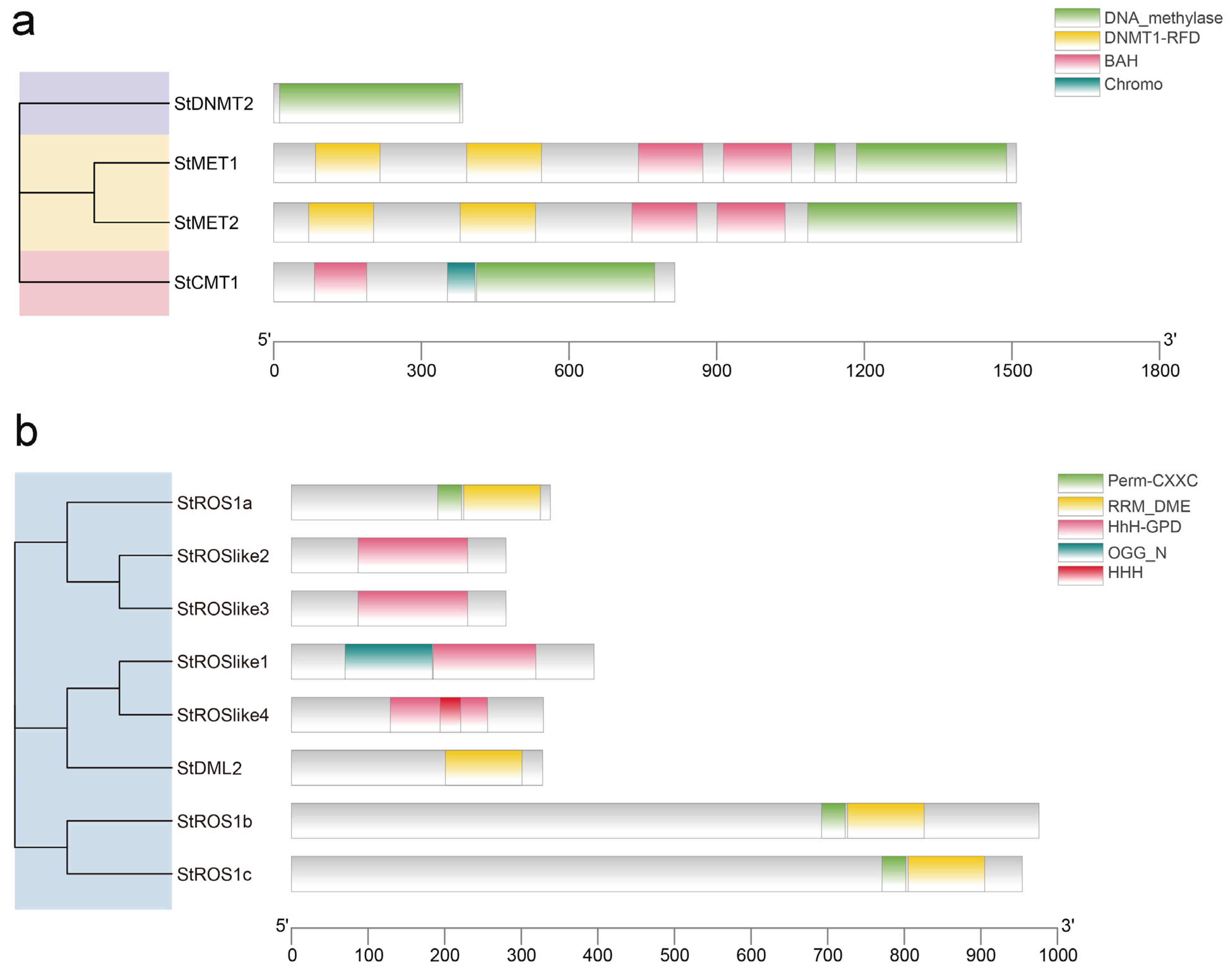
To characterize structural features of StC5-MTases and StdMTases, conserved domains and gene structures were analyzed. The two MET proteins contained two replication foci-targeting domains (DNMT1-RFD), two bromo-adjacent homology (BAH) domains, and one or two DNA methylase domains. StCMT1 (CMT subfamily) contained a chromo domain, a BAH domain, and a DNA methylase domain, whereas StDNMT2 contained only a DNA methylase domain (Figure 2a). For StdMTases, StROS1a/1b/1c (ROS subfamily) carried an N-terminal RRM_DME domain and a C-terminal Perm-CXXC domain. All StROSlike proteins contained an HhH-GPD domain; StROSlike1 and StROSlike4 additionally contained an OGG_N domain and an HHH domain, respectively. StDML2 (DML subfamily) contained only an N-terminal RRM_DME domain (Figure 2b).
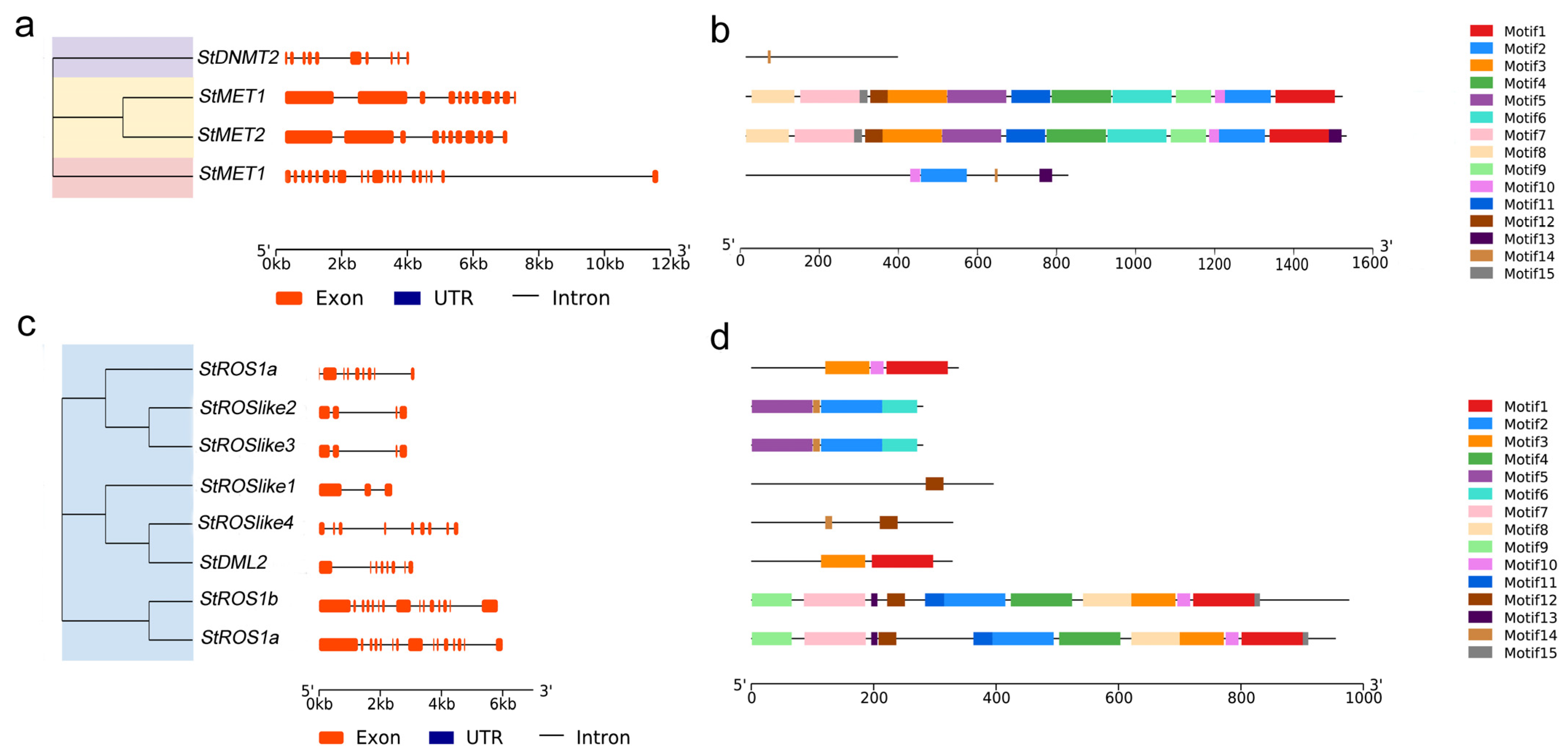
To further evaluate conservation and divergence within each family, conserved motifs were identified using Multiple Expectation Maximization for Motif Elicitation (MEME). Fifteen motifs were detected in each family. Motif lengths ranged from 7 to 150 amino acids in StC5-MTases and from 9 to 100 amino acids in StdMTases (Supplemental Table S2). StMET1 and StMET2 contained the largest number of motifs and included all motifs except motif 14, whereas StCMT1 contained four motifs (2, 10, 13, and 14) and StDNMT2 contained only motif 14 (Figure 3a). Among StdMTases, StROS1b and StROS1c contained all motifs except 5, 6, and 14, while StROSlike2 and StROSlike3 shared four motifs (2, 5, 6, and 14). StROSlike1, StROSlike4, StDML2, and StROS1a contained one (12), two (2 and 14), two (1 and 3), and three (1, 3, and 10) motifs, respectively (Figure 3b). Shared motif patterns likely reflect conserved functional modules within each subfamily.
Importantly, several motifs correspond to hallmark catalytic signatures reported for plant C5-MTases. For example, motif9 contains an FxGxG-like sequence consistent with SAM binding, motif10 includes the conserved PCQ catalytic signature, and motif2 contains the ENV motif, together supporting that StC5-MTases harbor the canonical cytosine-5 DNA methyltransferase catalytic core. For StdMTases, the conserved motif patterns are consistent with DEMETER/ROS1-type 5mC DNA glycosylases, in agreement with their characteristic domain composition (e.g., HhH-GPD and RRM_DME modules). However, motif-level functional assignments remain putative and require experimental validation.

2.2.3. Chromosomal Distribution and Exon–Intron Structures of Genes Encoding StC5-MTases and StdMTases

StC5-MTase coding sequences contained 9–27 introns, whereas StdMTase genes contained 2–14 introns. StMET1 had the most introns (27) and StDNMT2 the fewest (9); StMET2 and StCMT1 contained 10 and 19 introns, respectively. Among StdMTases, StROSlike2/StROSlike3, StROS1a/StROSlike4, and StROS1b/StROS1c had the same intron numbers (3, 8, and 14, respectively), whereas StROSlike1 and StDML2 contained 2 and 7 introns, respectively. Exon–intron structures are summarized in Table 1 and Figure 3.
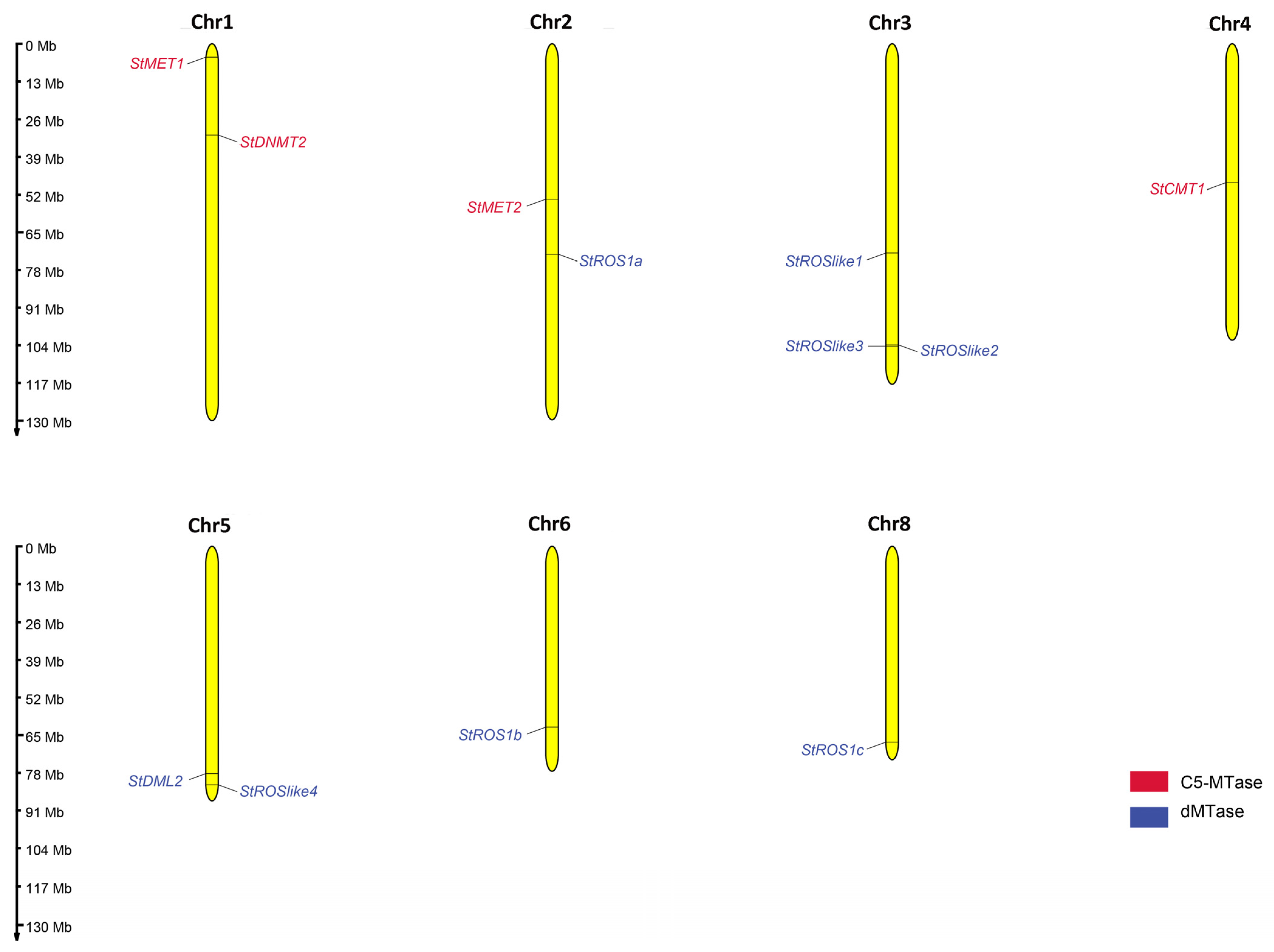
The four StC5-MTase genes were located on chromosomes 1 (StMET1 and StDNMT2), 2 (StMET2), and 4 (StCMT1). The eight StdMTase genes were distributed across chromosomes 2 (StROS1a), 3 (StROSlike1/2/3), 5 (StDML2 and StROSlike4), 6 (StROS1b), and 8 (StROS1c) (Figure 4).

2.2.4. Gene Duplication and Synteny Analysis of Genes Encoding StC5-MTases and StdMTases

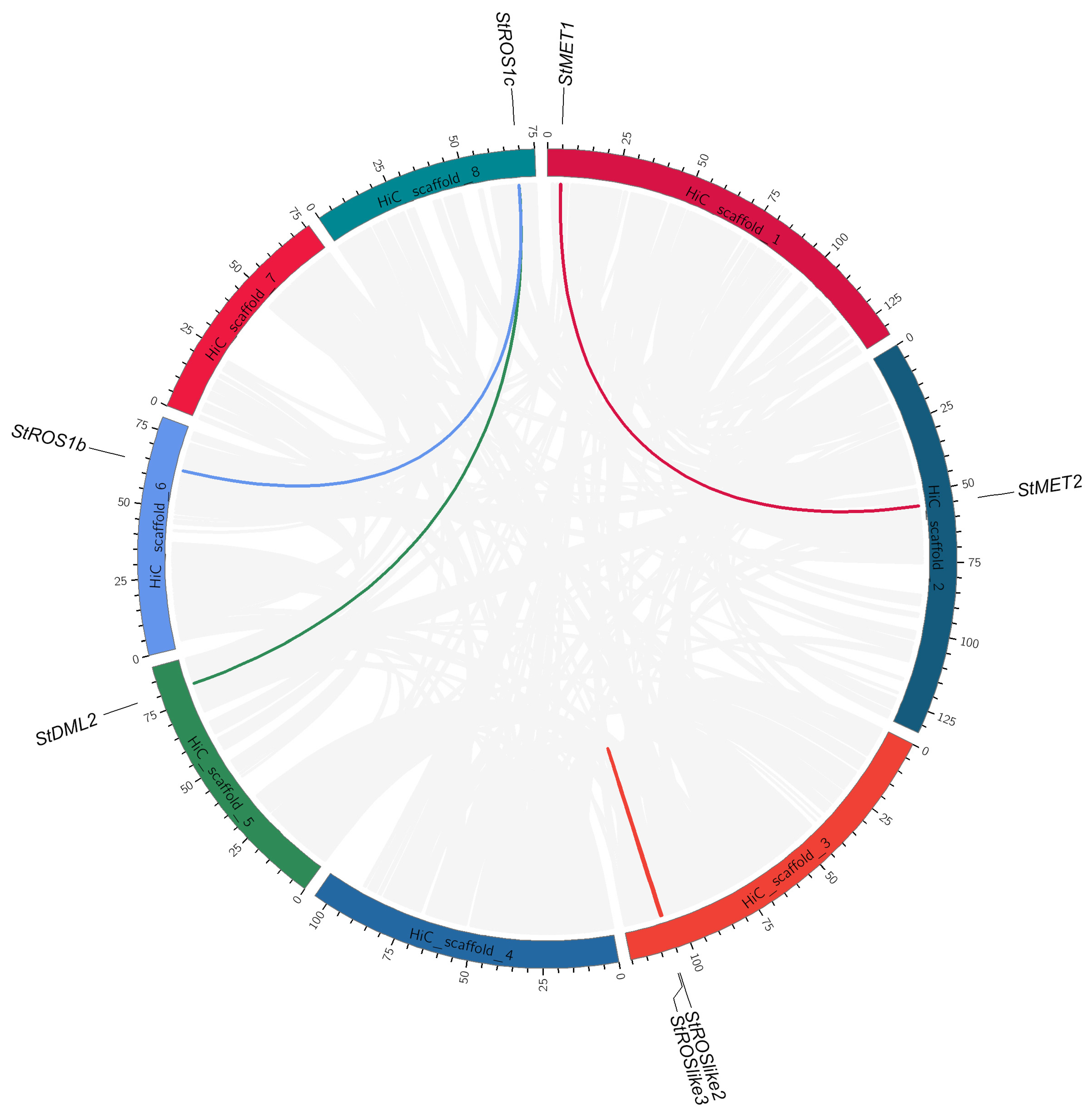
To explore the evolutionary mechanisms shaping C5-MTase and dMTase families in S. tonkinensis, intra- and inter-species synteny analyses were conducted using MCScanX. Four duplicated gene pairs showed collinearity: StMET1/StMET2, StROS1b/StROS1c, and StROS1c/StDML2, StROSlike2/StROSlike3 (Figure 5). The Ka/Ks ratios were <1.0 for three pairs, consistent with predominant purifying selection after duplication. Detailed Ka, Ks, and Ka/Ks values for all duplicated pairs are provided in Supplementary Table S3.
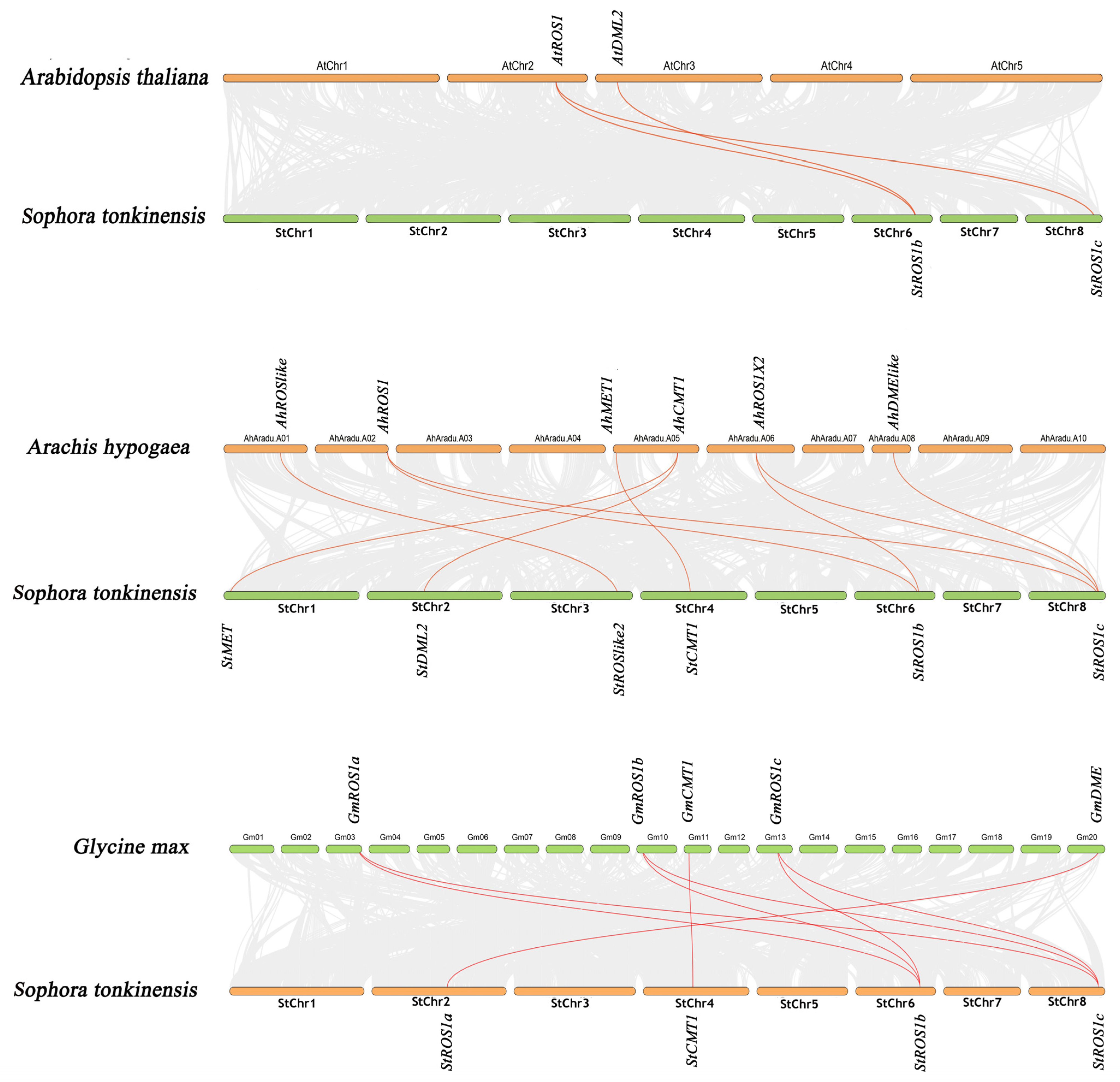
Inter-species synteny analyses indicated that StC5-MTases and StdMTases had the highest conservation with A. hypogaea (nine orthologous pairs), followed by G. max (eight pairs) and A. thaliana (three pairs) (Figure 6), consistent with their close phylogenetic relationships. In A. hypogaea, two and three gene copies were orthologous to StROS1b and StROS1c, respectively. In addition, StROS1b had two orthologs in A. thaliana and three in G. max, whereas StROS1c had one ortholog in A. thaliana and three in G. max.

2.3. Promoter Cis-Elements and Stress-Responsive Expression of C5-MTases and dMTases

2.3.1. Cis-Acting Regulatory Elements in the Promoter Regions of StC5-MTases and StdMTases

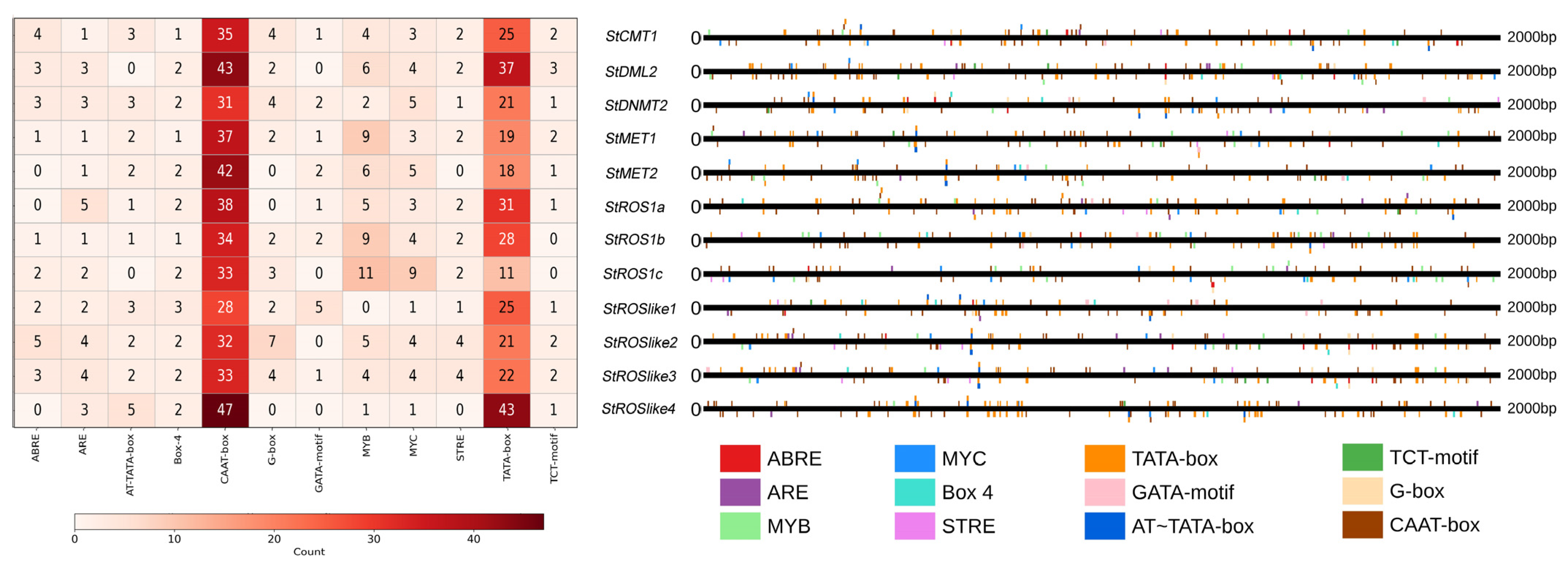
Cis-acting regulatory elements (CREs) within promoters are key determinants of transcriptional regulation. To infer potential regulatory inputs for StC5-MTase and StdMTase genes, CREs in the 2 kb upstream regions were predicted using PlantCARE. All promoters contained core promoter motifs (e.g., TATA-box and CAAT-box) and multiple regulatory elements. Ten major CRE types were detected and grouped into light-responsive, stress-related, and phytohormone-responsive categories (Figure 7). Stress- and hormone-related motifs were broadly distributed, including ABRE (ABA-responsive) and ARE (anaerobic-responsive) elements. Light-responsive motifs (e.g., Box 4, G-box, and TCT-motif) were also prevalent: Box 4 occurred in all promoters, while G-box was absent only from StMET1, StROS1a, and StROSlike4. The TCT-motif was present in all promoters except StROS1a and StROS1b. Overall, these results suggest that StC5-MTase and StdMTase genes may be regulated by multiple environmental and hormonal cues in S. tonkinensis.

2.3.2. Expression of C5-MTases and dMTases in S. tonkinensis Under Abiotic Stress

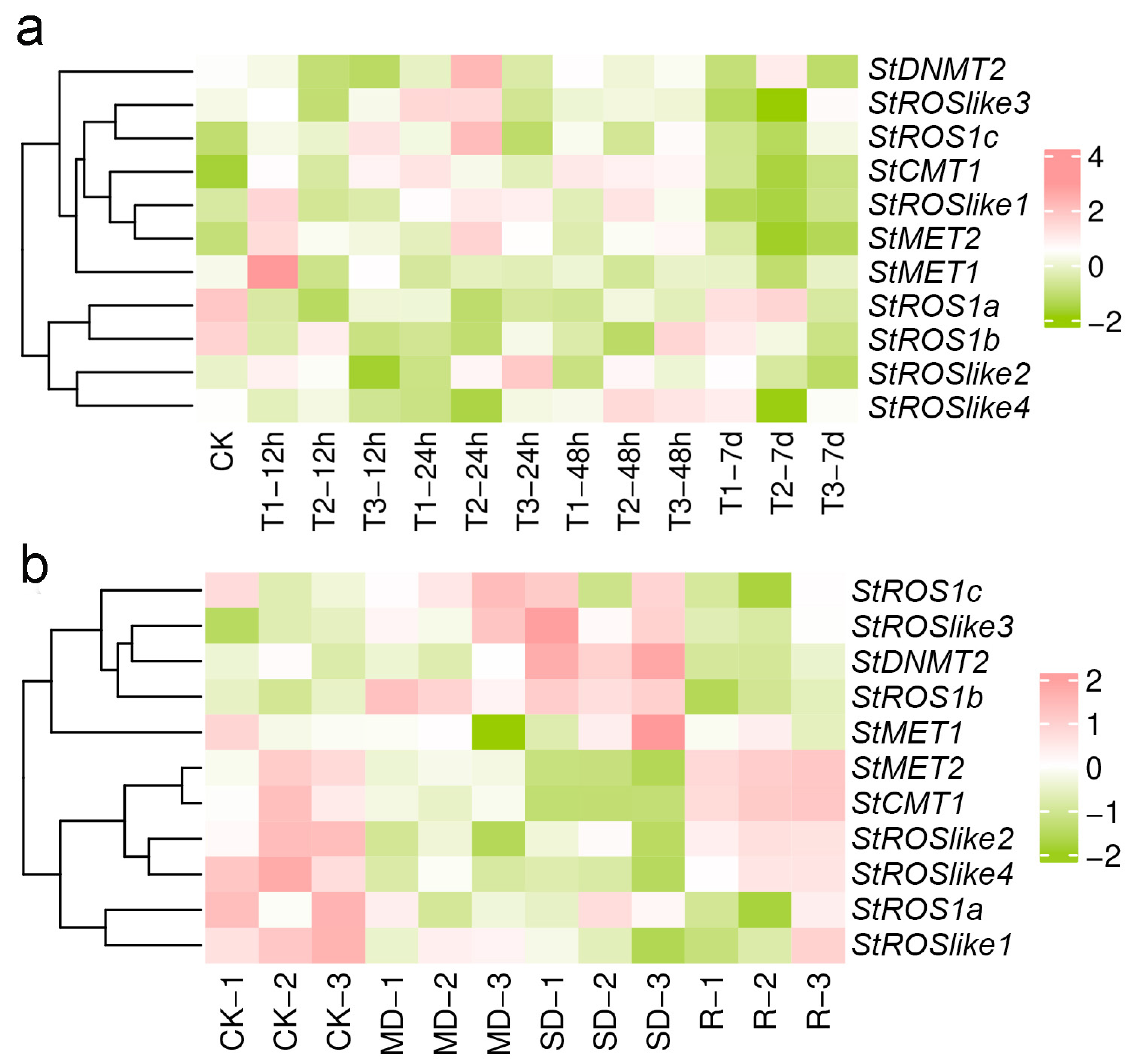
Under Cd stress, transcripts of C5-MTase and dMTase responded dynamically in a time- and concentration-dependent manner (Figure 8a). During the early phase (12–48 h), distinct induction patterns were observed across treatments. Under T1, StMET1 and StROSlike1 were induced at 12 h, followed by StROSlike3 at 24 h. Under T2, StROS1c and StROSlike3 were induced at 24 h, whereas StROSlike1 and StROSlike4 increased at 48 h. Under T3, StROS1c, StROSlike2, and StROS1b were sequentially induced at 12, 24, and 48 h, respectively. Across treatments, StCMT1 and StMET2 showed sustained induction during 12–48 h. By 7 days, many early-responsive genes declined, StROS1a under T1 and T2 partially recovered toward CK (remaining slightly lower), whereas StROS1b was suppressed under high Cd (T3). StDML2 was not detected, while StDNMT2 remained relatively stable. Overall, these results indicate broad transcriptional shift of methylation-related genes during Cd stress.
Under drought and rehydration, C5-MTases and dMTases displayed stress-dependent patterns (Figure 8b). StMET2 and StCMT1 were progressively downregulated with increasing drought severity and rebounded after rewatering. In contrast, StROS1b and StROSlike3 were induced by drought. StROSlike2 and StROSlike4 were strongly repressed under drought and recovered rapidly after rewatering, whereas StROS1a remained low after rewatering. StDML2 again showed no detectable expression, while StDNMT2 remained comparatively high across treatments. These results suggest coordinated yet gene-specific transcriptional response to water deficit and recovery.
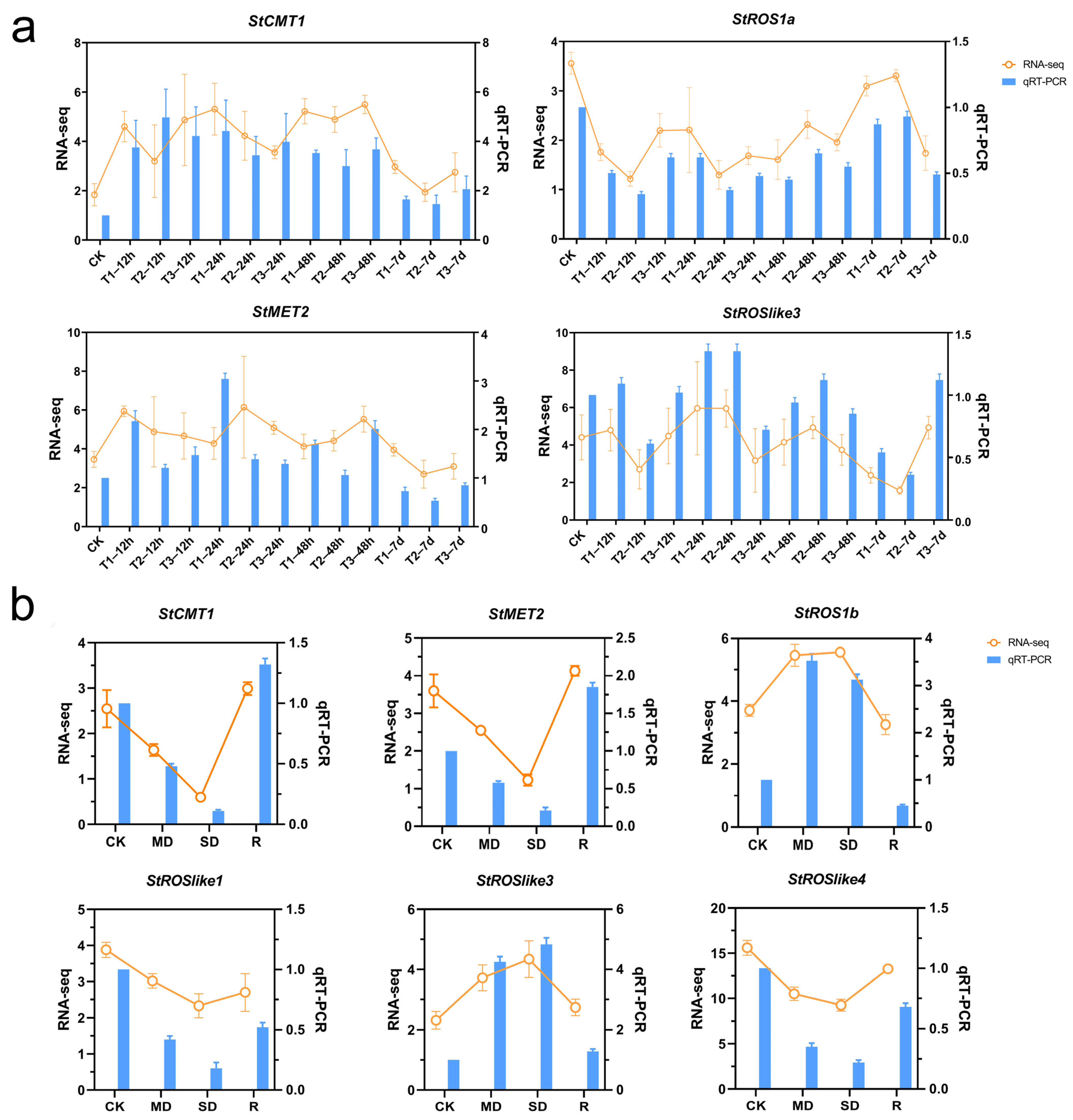
For qRT-PCR validation, genes were selected based on (i) strong and reproducible RNA-seq responses, (ii) representative expression patterns (early vs. sustained; methyltransferase vs. demethylase), and (iii) biological relevance from phylogenetic classification and promoter CRE annotations. Genes with low/undetectable expression were not prioritized. For most genes, qRT-PCR trends were consistent with the RNA-seq profiles, supporting the reliability of the transcriptome data (Figure 9).

2.4. Overexpression of StCMT1 and StROSlike3 Enhances Abiotic Stress Tolerance in Transgenic Nicotiana benthamiana

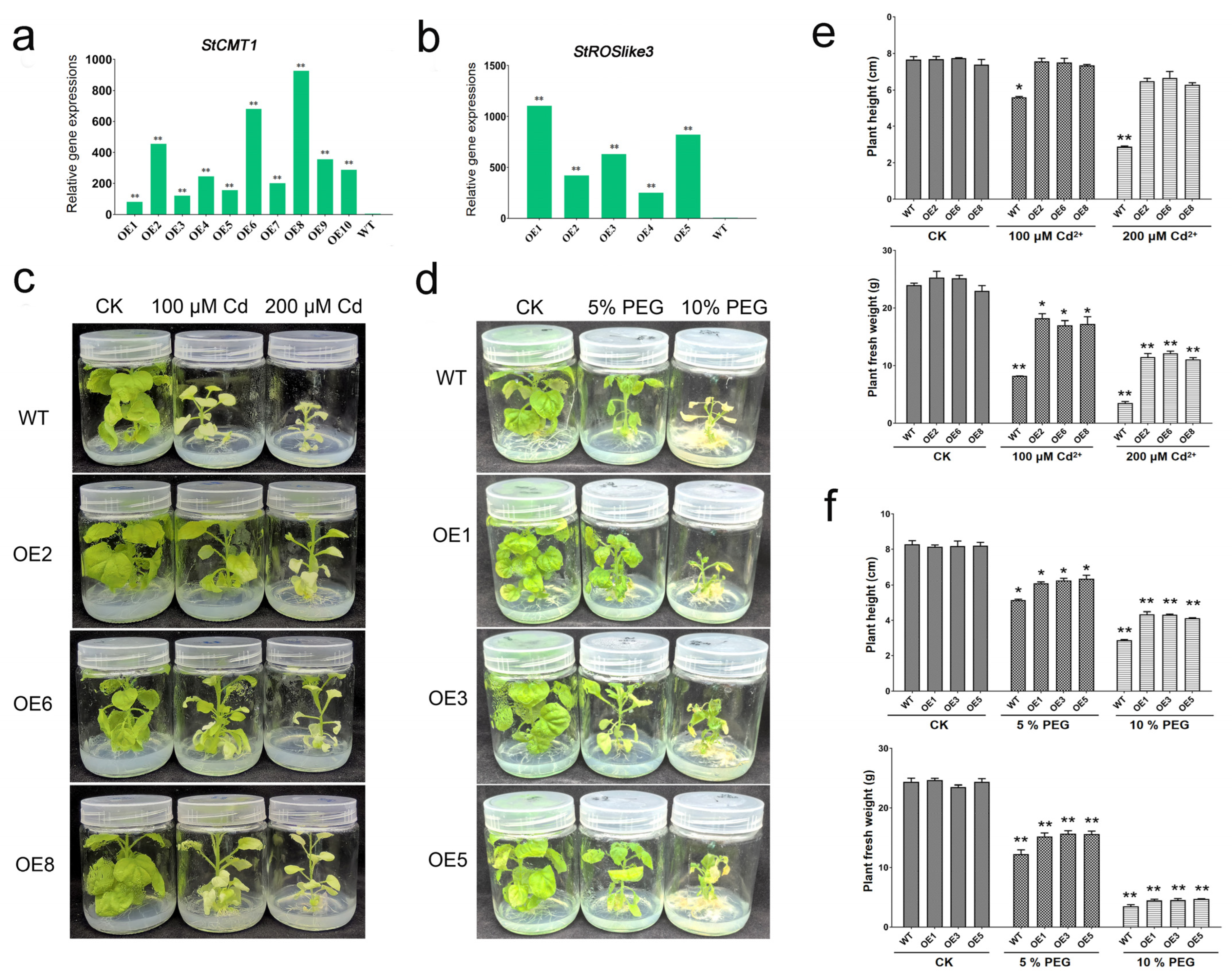
Based on the expression analyses (Figure 8 and Figure 9), StCMT1 was selected for functional validation because it showed consistently higher transcript levels than CK across all Cd concentrations and time points. StROSlike3 was prioritized because its expression increased progressively with drought severity and decreased after rehydration, indicating a clear water-status-dependent response pattern. Stable transgenic Nicotiana benthamiana lines constitutively expressing each gene were generated. Multiple independent lines were confirmed by PCR (Figure S3), and three lines with high transgene expression were selected by qRT-PCR for phenotyping (Figure 10a,b). In response to Cd exposure, the StCMT1-overexpression lines exhibited less growth inhibition than WT, maintaining higher plant height and whole-plant fresh weight at both 100 and 200 μM CdCl2 (Figure 10c,e). Likewise, under PEG-induced water deficit, StROSlike3-overexpressing lines sustained greater plant height and biomass than WT at both 5% and 10% PEG. Under the more severe 10% PEG treatment, WT plants showed pronounced leaf yellowing, whereas the transgenic lines retained partial leaf greenness and displayed milder chlorosis, consistent with enhanced drought tolerance (Figure 10d,f).

3. Discussion

DNA methylation provides mechanistic interface between environmental cues and the genome by enabling flexible regulation of gene expression during stress. Here, we present the first genome-wide characterization of C5-MTase and dMTase gene families in S. tonkinensis. We further show that these methylation-related enzymes display dynamic, stress-dependent transcriptional responses to Cd exposure and drought/rehydration, highlighting candidate regulators patterns that may contribute to stress acclimation.

3.1. Genomic and Bioinformatic Features of C5-MTase and dMTase Families in S. tonkinensis

We identified four C5-MTases in S. tonkinensis and assigned them to the MET, CMT, and DNMT subfamilies based on phylogeny and domain composition (Figure 1a and Figure 2a; Table 1). Their protein sizes were comparable to those reported in other plant species, including S. tuberosum [22]. The C5-MTase repertoire in S. tonkinensis is smaller than that reported for several other dicots (e.g., A. chinensis, S. tuberosum, A. thaliana, and A. hypogaea), suggesting a relatively compact family in this medicinal legume [15,16,20,22]. Notably, no DRM genes were detected, whereas DRM genes are present in multiple angiosperms, suggesting lineage-specific retention or loss. All StC5-MTases were predicted to localize to the nucleus, consistent with their expected roles in chromatin-associated methylation maintenance and establishment.
For dMTases, two subfamilies (DML and ROS) were represented in S. tonkinensis (Figure 1b and Figure 2b). Only one DML member was identified, whereas the ROS subfamily contained seven genes, indicating a relative expansion of ROS-like demethylases compared with some reference species [15,20,25]. Subcellular localization predictions suggested that most StdMTases are nuclear; however, WoLF PSORT predicted chloroplast targeting for StROS1a, StROSlike1, and StROSlike4, while Plant-mPLoc supported chloroplast localization only for StROSlike4 (Supplementary Table S1). Although these results are in silico and require experimental validation, the consensus candidate StROSlike4 (and other putative chloroplast-targeted proteins) may be linked to chloroplast-associated stress processes, given that chloroplasts are major sources of ROS under Cd stress and drought impairs photosynthesis. Consistently, these genes were transcriptionally responsive to Cd and drought/rehydration (Figure 8), supporting their potential involvement in stress responses.
Phylogenetic relationships revealed clear separation between dicots and monocots clades for both families (Figure 1), and S. tonkinensis genes were most closely related to homologs from the legume A. hypogaea, consistent with taxonomic affinity. Collinearity analysis identified four duplicated gene pairs (Figure 5), indicating that gene duplication has contributed to family diversification. Ka/Ks ratios were <1.0 for three duplicated pairs, consistent with predominant purifying selection after duplication. The StROSlike2/StROSlike3 pair exhibited an exceptionally low Ks, which can destabilize Ka/Ks estimates for very recent duplicates; thus, this pair was interpreted cautiously and not used as evidence for positive selection (Supplementary Table S3). While synonymous substitutions (Ks) can, in principle, be used to approximate divergence time (T = Ks/2r), reliable time estimates require a species-appropriate neutral substitution rate, which is currently unavailable for S. tonkinensis.
Promoter scanning identified multiple stress- and hormone-related CREs in StC5-MTase and StdMTase promoters (Figure 7), which is consistent with their stress-responsive transcription. For example, the sustained induction of StCMT1 and StMET2 under Cd and drought, together with their decline after rehydration, may be partly associated with the presence of ABRE and other stress-related CREs, suggesting potential responsiveness to ABA/stress signaling. However, this CRE survey is descriptive and does not by itself demonstrate statistical enrichment or functional activity; experimental promoter assays and/or genome-wide background comparisons will be required for further validation.

3.2. Transcriptional Responses of StC5-MTases and StdMTases Under Cd Stress

Cd contamination is a major constraint on S. tonkinensis growth and productivity [29,30]. In plants, Cd stress is frequently accompanied by ROS accumulation, hormonal reprogramming, and broad transcriptional remodeling, and methylation-related enzymes are often transcriptionally responsive under such conditions [33,34,35]. In our study, Cd exposure triggered rapid and concentration-dependent transcriptional changes in StC5-MTases and StdMTases (Figure 8a). Under high Cd (T3), StROS1c, StROSlike2, and StROS1b were induced sequentially at 12, 24, and 48 h, respectively, indicating temporally staged activation under severe stress. In parallel, StCMT1 and StMET2 were consistently upregulated across early to mid stages, suggesting that these methylation “writer” genes are transcriptionally responsive during Cd exposure. At 7 days, StROS1a was induced under T1 and T2 as many early-responsive genes declined, consistent with a transition from acute responses toward longer-term adjustment. Together, these results indicate coordinated transcriptional engagement of methylation-related genes during Cd stress, although transcript changes alone do not directly demonstrate corresponding changes in DNA methylation patterns.

3.3. Transcriptional Responses of StC5-MTases and StdMTases Under Drought and Rehydration

Drought is another major factor limiting S. tonkinensis growth and yield [31,32]. Drought responses involve interconnected physiological adjustments and large-scale transcriptional reprogramming, and DNA methylation has been implicated as one regulatory layer in multiple plant species [36,37,38,39]. In S. tonkinensis, drought elicited a multi-phase transcriptional pattern in methylation-related genes (Figure 8b). StCMT1 and StMET2 were progressively suppressed as drought severity increased and then rebounded after rewatering, consistent with stress- and recovery-associated transcriptional regulation of methylation “writer” genes. In contrast, dMTases such as StROS1b and StROSlike3 increased with drought severity, supporting their potential involvement in drought-responsive regulatory programs. StROSlike4 decreased progressively under drought and recovered after rewatering, suggesting sensitivity to water status. While these expression patterns are consistent with roles for methylation machinery in drought responses, direct methylation measurements will be required to determine whether they translate into locus-specific or genome-wide methylation changes.

3.4. Shared Versus Stress-Specific Responses and Implications of Functional Validation

Cadmium toxicity and drought trigger partially overlapping but largely distinct stress-response pathways in plants. Cd stress is typically associated with metal uptake and transport, thiol-based chelation and vacuolar sequestration (e.g., glutathione/phytochelatins), and pronounced oxidative stress that requires reinforced antioxidant capacity and redox homeostasis [40]. By contrast, drought responses are more tightly linked to ABA biosynthesis and signaling, stomatal regulation, osmotic adjustment, and protection of photosynthetic performance [41,42]. In addition, recent epigenomic studies increasingly integrate methylome profiling with transcriptomics to dissect stress-induced regulatory remodeling under drought and heavy-metal exposure [43,44]. Against this background, comparing C5-MTase and dMTase transcriptional responses under Cd versus drought/rehydration provides a useful first step to distinguish shared versus stress-preferential regulatory programs in S. tonkinensis.
Comparative analysis across Cd and drought/rehydration revealed both shared and stress-preferential expression patterns. StCMT1 and StMET2 displayed pronounced transcriptional plasticity, remaining elevated during Cd exposure while showing recovery-associated rebound after drought, indicating responsiveness to both stress and relief phases. Importantly, StROS1b and StROSlike3 were induced early under both stresses, consistent with roles in early stress-responsive regulatory programs. Several genes exhibited more stress-preferential behavior: StROSlike4 responded strongly to drought, whereas StROS1a was induced during longer-term Cd exposure but remained low after drought recovery, suggesting functional specialization. The relatively stable expression of StDNMT2 is consistent with a housekeeping-like role, while the consistently low/undetectable expression of StDML2 may reflect tissue specificity or restricted expression. Functional assays in transgenic N. benthamiana provide phenotypic evidence that manipulating StCMT1 or StROSlike3 can influence plant performance under Cd or PEG-simulated drought stress (Figure 10). Future work should quantify physiological indicators in the overexpression lines, such as H2O2/O2− accumulation, MDA content, electrolyte leakage, antioxidant enzyme activities (SOD, CAT, APX), proline content, chlorophyll level/photosynthetic performance, and Cd accumulation, to better connect the observed phenotypes with specific tolerance mechanisms [45,46]. Similar readouts are routinely used to substantiate improved Cd or drought tolerance in transgenic Nicotiana systems [47,48,49].
In addition, an in silico protein–protein interaction analysis predicted putative associations among StC5-MTase and StdMTase proteins, with StCMT1 showing potential links to StMET2, StMET1, and StDNMT2 (Figure S4). These predicted interactions provide testable hypotheses but require experimental validation. Finally, we emphasize that changes in the transcript levels of StC5-MTases and StdMTases do not directly demonstrate altered DNA methylation states at specific loci or genome-wide. Without methylome-level measurements (e.g., WGBS/BS-seq) or locus-specific methylation assays, causality between gene expression and methylation changes cannot be inferred. Future work integrating methylome profiling with transcriptome data will be required to test whether the observed transcriptional responses translate into stress-induced methylation remodeling. Moreover, transcript abundance does not necessarily translate into protein abundance or enzymatic activity, and post-transcriptional and post-translational regulation (e.g., alternative splicing, miRNA-mediated regulation, translational control, protein stability/modification) as well as indirect stress effects (growth inhibition, hormonal reprogramming, or tissue composition changes) may contribute to the observed patterns. Therefore, mechanistic interpretation should be made cautiously and will benefit from future analyses at the protein/activity level.

4. Materials and Methods

4.1. Identification of C5-MTase and dMTase Genes

Protein sequences of C5-MTase and dMTase family members from Arabidopsis thaliana and Arachis hypogaea were used as reference queries. To identify putative C5-MTase and dMTase genes in S. tonkinensis, hidden Markov models (HMMs) were built and searched using HMMER 3.0 [50] against all predicted S. tonkinensis protein sequences. In parallel, BLASTP (ncbi-blast-2.10.1+) searches were performed using A. thaliana and A. hypogaea C5-MTase and dMTase proteins as queries with an E-value cutoff of 1 × 10⁻⁵. Candidates from both approaches were merged and subjected to domain annotation with PfamScan (v1.6) against the Pfam-A database (v33.1) [51,52]. Sequences containing PF00145 were retained as candidate C5-MTase genes, whereas sequences containing PF00730 (HhH-GPD) and/or PF15628 (RRM_DME) were retained as candidate DEMETER-like DNA demethylase (dMTase) genes. Specifically, PF00145 corresponds to the conserved C5 cytosine-specific DNA methyltransferase catalytic domain, while PF00730 and PF15628 are characteristic domains of plant DEMETER-like DNA demethylases and were used to distinguish dMTase candidates.

4.2. Phylogenetic Analysis

Full-length amino-acid sequences of C5-MTases and dMTases from S. tonkinensis, A. hypogaea, A. thaliana, G. max, O. sativa, and Z. mays were aligned using MAFFT v7.427 with default parameters. These five species were chosen to represent well-annotated legumes (peanut and soybean), a dicot model (Arabidopsis), and two representative monocots (rice and maize), providing a broad evolutionary framework for subfamily classification. NJ phylogenetic trees were constructed in MEGA 11 [53], with 1000 bootstrap replicates. The p-distance model was used, and gaps were treated using partial deletion. Trees were visualized and annotated using the Interactive Tree of Life (iTOL v5) online tool [54]. To validate the NJ-based inference, an ML tree was additionally reconstructed using IQ-TREE 2 with 1000 bootstrap replicates under the best-fit substitution model selected by ModelFinder as implemented in IQ-TREE 2.

4.3. Analysis of Conserved Motifs, Subcellular Localization, and Physicochemical Properties

Conserved motifs in the StC5-MTase and StdMTase proteins were identified with the MEME suite (Multiple Expectation Maximization for Motif Elicitation; http://meme-suite.org/meme, accessed on 5 November 2025) [55]. Subcellular localization was predicted using WoLF PSORT (https://wolfpsort.hgc.jp/, accessed on 7 November 2025) and Plant-PLoc (http://www.csbio.sjtu.edu.cn/bioinf/plant/, accessed on 12 November 2025). Physicochemical properties, including molecular weight (MW), theoretical isoelectric point (pI), amino-acid composition, instability index (II), aliphatic index (AI), and grand average of hydropathicity (GRAVY), were computed using ProtParam (ExPASy) (http://web.expasy.org/protparam, accessed on 15 November 2025).

4.4. Analysis of Gene Structure and Chromosomal Location

Gene structures (exon–intron organization) and chromosomal coordinates of StC5-MTase and StdMTase genes were obtained from the S. tonkinensis genome annotation (GFF) (GSA, PRJCA053979). Gene-structure diagrams were generated using the Gene Structure Display Server (GSDS; http://gsds.gao-lab.org/, accessed on 17 November 2025) [56], and chromosomal distribution was visualized with MapGene2Chromosome v2.0 (MG2C, http://mg2c.iask.in/mg2c_v2.0/, accessed on 17 November 2025) [57].

4.5. Collinearity and Synteny Analysis

Intra- and inter-species collinearity analyses of C5-MTase and dMTase genes were performed using MCScanX (v2012), and results were visualized with TBtools (v2.096) [58,59]. Non-synonymous (Ka) and synonymous (Ks) substitution rates for duplicated gene pairs were calculated using KaKs_Calculator [60]. The Ka/Ks ratio was used as an indicator of selective pressure acting on the coding sequences.

4.6. Cis-Acting Element Analysis

For each StC5-MTase and StdMTase gene, the 2000 bp sequence upstream of the transcription start site was retrieved using TBtools [47]. Putative cis-acting regulatory elements within these promoter regions were identified using PlantCARE (https://bioinformatics.psb.ugent.be/webtools/plantcare/html/, accessed on 25 November 2025) [61].

4.7. Prediction of Protein Interaction Networks

Protein–protein interaction networks for the C5-MTase and dMTase families were predicted using the STRING database (https://cn.string-db.org/, accessed on 27 November 2025), with A. thaliana set as the reference organism and a minimum interaction confidence score of 0.40.

4.8. Expression Analysis of C5-MTase and dMTase Genes Under Cd and Drought Stress

Uniform S. tonkinensis seedlings (4-week-old) were used in this study. For each treatment, nine seedlings were used per replicate, and three independent biological replicates were performed. Cd stress was applied in a hydroponic system, whereas drought and subsequent rehydration treatments were conducted using soil-grown (potted) seedlings, as described below.
Seedlings of similar size were transferred to 1/2-strength Hoagland nutrient solution and acclimated for one week. Cd stress was then imposed by adding CdCl2 to the nutrient solution at final concentrations of 0, 40, 80, or 160 μM. Root tissues were chosen for transcriptomic analysis because they are the primary organs for Cd uptake. Root tissues were collected at 0, 12, 24, and 48 h, and at 7 days after treatment, immediately frozen in liquid nitrogen, and stored at −80 °C for subsequent RNA extraction.
For drought experiments, seedlings were grown in pots, and soil water status was controlled based on available soil water (ASW). Drought stress was imposed by controlling soil water availability. As with Cd treatment, roots were selected for analysis due to their primary role in perceiving drought stress and initiating early responses to water deficit. The target ASW ranges were maintained by soil moisture meter and watering to the required level throughout the treatment period. Control plants (CK) were maintained at 75–80% ASW for 15 days. Mild drought (MD) treatment was maintained at 55–60% ASW for 15 days, and severe drought (SD) treatment was maintained at 30–35% ASW for 15 days. For rehydration (R), SD-treated plants were rewatered to restore soil water content to 75–80% ASW and were sampled 7 days after rewatering. Roots were harvested at the corresponding stages, immediately frozen in liquid nitrogen, and stored at −80 °C until use.
Total RNA was extracted using TRIzol reagent (Invitrogen, Thermo Fisher Scientific, Waltham, MA, USA) according to the manufacturer’s instructions. RNA-seq libraries were prepared from 1 μg total RNA using the Illumina Stranded mRNA Prep, Ligation Kit (Illumina, San Diego, CA, USA) and sequenced on the NovaSeq X Plus platform (Illumina, San Diego, CA, USA) as 150 bp paired-end reads. Transcriptomic data were processed using the Omicsmart online platform (http://www.omicsmart.com, accessed on 3 November 2025). Expression levels of C5-MTase and dMTase genes were retrieved and normalized as transcripts per million (TPM) (Supplemental Tables S3 and S4). For clustering, log2(TPM + 1)-transformed values were subjected to hierarchical clustering in Cluster 3.0 and visualized in Java TreeView (v1.0).

4.9. qRT-PCR Validation of Gene Expression

For qRT-PCR validation, the total RNA samples described in Section 4.8 were used. First-strand cDNA was synthesized with the HiScript III RT SuperMix for qPCR (Vazyme, Nanjing, China). Gene-specific primers were designed using Primer Premier 5.0 (Supplemental Table S5). qRT-PCR was performed following the method of Liang et al. [62]. Reaction specificity was confirmed by melting-curve analysis, and relative gene expression was normalized to the reference gene Actin and calculated using the 2−ΔΔCT method. Data are presented as mean ± SD from at least three independent experiments.

4.10. Heterologous Overexpression and Stress Phenotyping in N. benthamiana

To functionally validate StCMT1 and StROSlike3, their full-length coding sequences were amplified from S. tonkinensis cDNA using gene-specific primers (Supplemental Table S6). The coding sequences of StCMT1 and StROSlike3 were cloned into the plant expression vector pHK-35S via Eco31I/BsaI sites, generating Pro35S:StCMT1 and Pro35S:StROSlike3 constructs, respectively. Each construct was introduced into Agrobacterium tumefaciens strain GV3101 and used to transform N. benthamiana via the leaf disc method [63]. Primary transformants (T0) were screened by PCR using primer pairs that spanned the transgene and the vector (Supplemental Table S6). Positive plants were grown to maturity, and T1 seeds were harvested. Transgenic T1 seedlings were selected on MS medium supplemented with 50 mg/L hygromycin B and confirmed by PCR. For each construct, three independent transgenic lines with high transgene expression levels (as determined by qRT-PCR) were selected for subsequent stress assays. Differences between two groups were assessed by Student’s t-test, while comparisons across multiple conditions were analyzed by one-way ANOVA. Statistical significance is defined as * p < 0.05 or ** p < 0.01. StCMT1-overexpressing lines were subjected to Cd stress on MS medium containing 100 or 200 μM CdCl2, while StROSlike3-overexpressing lines were subjected to osmotic stress on MS medium containing 5% or 10% (w/v) PEG 6000 to simulate drought. Wild-type plants were included as controls. All plants were grown under controlled conditions for 20 days and then photographed to record growth phenotypes.

5. Conclusions

In conclusion, this study presents the first comprehensive analysis of C5-MTase and dMTase gene families in S. tonkinensis, providing insights into their evolutionary dynamics and stress-responsive expression profiles. Through functional validation in N. benthamiana, we demonstrated that StCMT1 enhances Cd tolerance, while StROSlike3 improves drought resistance, linking these epigenetic regulators to distinct stress adaptation pathways. These findings lay the groundwork for further studies on DNA methylation in stress responses and offer potential targets for epigenetics-based breeding to enhance stress resilience in this important medicinal plant.

Supplementary Materials

The following supporting information can be downloaded at: https://www.mdpi.com/article/10.3390/plants15030396/s1. Figure S1. Sequence similarity of C5-MTases and dMTases in S. tonkinensis. The colored bar indicates the correlation of two proteins. Red represents a high correlation; yellow represents a low correlation; blue represents no correlation analysis on these proteins. Figure S2. Phylogenetic tree of S. tonkinensis inferred by Maximum Likelihood (ML) method. (a) ML tree of the StC5-MTases. (b) ML tree of the StdMTases. Numbers at nodes represent bootstrap support values from 1000 replicates. Figure S3. Potential protein–protein interaction network of StC5-MTases and StdMTases. Figure S4. Identification of positive transgenic lines via PCR. (a) PCR analysis for identifying StCMT1 transgenic plants. (b) PCR analysis for identifying StROSlike3 transgenic plants. Table S1. Subcellular localization prediction of C5-MTases and dMTases from S. tonkinensis. Table S2. Conserved Motif Composition in C5-MTases and dMTases from S. tonkinensis. Table S3. Ka, Ks, and Ka/Ks values for all duplicated pairs. Table S4. Expression levels (TPM values) of C5-MTases and dMTases in S. tonkinensis under drought and rewatering conditions. Table S5. Expression levels (TPM values) of C5-MTases and dMTases in S. tonkinensis under Cd stress. Table S6. Primers used for the qRT-PCR of C5-MTases and dMTases in S. tonkinensis. Table S7. Primers used for vector construction and transgenic plant detection.

Author Contributions

Conceptualization, F.W.; methodology, F.W.; software, Y.L. (Ying Liang); validation, F.W. and Y.L. (Ying Liang); formal analysis, F.W. and Y.L. (Ying Liang); investigation, F.W. and L.L.; resources, Y.L. (Yang Lin); data curation, G.W.; writing—original draft preparation, F.W.; writing—review and editing, F.W.; visualization, Z.Q.; supervision, S.Q. and Y.L. (Yang Lin); project administration, D.T.; funding acquisition, Y.L. (Ying Liang) All authors have read and agreed to the published version of the manuscript.

Funding

This work was funded by the National Natural Science Foundation of China (82260749), the Natural Science Foundation of Guangxi Zhuang Autonomous Region (2023GXNSFAA026487), Scientific Research Funding Project of Guangxi Botanical Garden of Medicinal Plants (GuiYaoJi202102), and Guangxi Qihuang Scholars Training Program (GXQH202402).

Data Availability Statement

All relevant data are within the manuscript and its Supplementary Files.

Conflicts of Interest

The authors declare no conflicts of interest.

References

  1. Zhang, X.; Yazaki, J.; Sundaresan, A.; Cokus, S.; Chan, S.W.L.; Chen, H.; Henderson, I.R.; Shinn, P.; Pellegrini, M.; Jacobsen, S.E.; et al. Genome-wide high-resolution mapping and functional analysis of DNA methylation in Arabidopsis. Cell 2006, 126, 1189–1201. [Google Scholar] [CrossRef]
  2. Luo, D.; Cao, S.; Li, Z.; Wang, C.; Lu, H.; Tang, M.; Zhang, L.; Zhang, S.; Cheng, Z.; Zhao, Y. Methyl-Sensitive Amplification Polymorphism (MSAP) Analysis Provides Insights into the DNA Methylation Underlying Heterosis in Kenaf (Hibiscus cannabinus L.) Drought Tolerance. J. Nat. Fibers 2022, 19, 13665–13680. [Google Scholar] [CrossRef]
  3. Attwood, J.T.; Yung, R.L.; Richardson, B.C. DNA methylation and the regulation of gene transcription. Cell. Mol. Life Sci. 2002, 59, 241–257. [Google Scholar] [CrossRef] [PubMed]
  4. Li, Z.; Tang, M.; Luo, D.; Wang, C.; Lu, H.; Cao, S.; Zhang, S.; Cheng, Z.; Zhao, Y. Integrated Methylome and Transcriptome Analyses Reveal the Molecular Mechanism by Which DNA Methylation Regulates Kenaf Flowering. Front. Plant Sci. 2021, 12, 709030. [Google Scholar] [CrossRef] [PubMed]
  5. Luo, D.; Lu, H.; Wang, C.; Tang, M.; Li, Z.; Cao, S.; Zhang, S.; Cheng, Z.; Zhao, Y. Physiological and DNA methylation analysis provides epigenetic insights into kenaf cadmium tolerance heterosis. Plant Sci. 2023, 331, 111663. [Google Scholar] [CrossRef] [PubMed]
  6. Tang, M.; Li, R.; Chen, P.; Luo, D.; Li, Z.; Cheng, Z. Exogenous glutathione can alleviate chromium toxicity in kenaf by activating antioxidant system and regulating DNA methylation. Chemosphere 2023, 337, 139305. [Google Scholar] [CrossRef]
  7. Greco, E.; Talarico, E.; Guarasci, F.; Camoli, M.; Palermo, A.M.; Zambelli, A.; Chiappetta, A.; Araniti, F.; Bruno, L. Epigenetic Mechanisms of Plant Adaptation to Cadmium and Heavy Metal Stress. Epigenomes 2025, 9, 43. [Google Scholar] [CrossRef]
  8. Gao, Y.; Wang, Z.; Zhao, C. Advances in epigenetic studies of plant cadmium stress. Front. Plant Sci. 2024, 15, 1489155. [Google Scholar] [CrossRef]
  9. Cao, Q.; Huang, L.; Li, J.; Zhao, Y.; Jiang, L.; Ma, Y.; Luo, Y.; Zhang, Y.; Wang, G.; Lin, Y. Integrated transcriptome and methylome analyses reveal the molecular regulation of drought stress in wild strawberry (Fragaria nilgerrensis). BMC Plant Biol. 2022, 22, 613. [Google Scholar] [CrossRef]
  10. Lyu, Z.; Zhang, G.; Song, Y.; Diao, S.; He, C.; Zhang, J. Transcriptome and DNA methylome provide insights into the molecular regulation of drought stress in sea buckthorn. Genomics 2022, 114, 110345. [Google Scholar] [CrossRef]
  11. Finnegan, E.J.; Kovac, K.A. Plant DNA methyltransferases. Plant Mol. Biol. 2000, 43, 189–201. [Google Scholar] [CrossRef] [PubMed]
  12. Cao, X.; Jacobsen, S.E. Role of the Arabidopsis DRM methyltransferases in de novo DNA methylation and gene silencing. Curr. Biol. 2002, 12, 1138–1144. [Google Scholar] [CrossRef]
  13. Zhu, J.; Kapoor, A.; Sridhar, V.V.; Agius, F.; Abbasi, F.; Zhu, J.K. The DNA glycosylase/lyase ROS1 functions in pruning DNA methylation patterns in Arabidopsis. Curr. Biol. 2007, 17, 54–59. [Google Scholar] [CrossRef]
  14. Ortega-Galisteo, A.P.; Morales-Ruiz, T.; Ariza, R.R.; Edwards, C.; Roldán-Arjona, T.; Ruiz-Albert, J. Arabidopsis DEMETER-LIKE proteins DML2 and DML3 are required for appropriate distribution of DNA methylation marks. Plant Mol. Biol. 2008, 67, 671–681. [Google Scholar] [CrossRef]
  15. Ogneva, Z.V.; Dubrovina, A.S.; Kiselev, K.V. Age-associated alterations in DNA methylation and expression of methyltransferase and demethylase genes in Arabidopsis thaliana. Biol. Plant. 2016, 60, 628–634. [Google Scholar] [CrossRef]
  16. Wang, P.; Gao, C.; Bian, X.; Zhao, S.; Zhao, C.; Xia, H.; Hou, L.; Li, C.; Wang, X. Genome-Wide Identification and Comparative Analysis of Cytosine-5 DNA Methyltransferase and Demethylase Families in Wild and Cultivated Peanut. Front. Plant Sci. 2016, 7, 7. [Google Scholar] [CrossRef]
  17. Moglia, A.; Gianoglio, S.; Acquadro, A.; Valentino, D.; Milani, A.M.; Lanteri, S.; Comino, C. Identification of DNA methyltransferases and demethylases in Solanum melongena L., and their transcription dynamics during fruit development and after salt and drought stresses. PLoS ONE 2019, 14, e0223581. [Google Scholar] [CrossRef]
  18. Garg, R.; Kumari, R.; Tiwari, S.; Jain, M. Genomic survey, gene expression analysis and structural modeling suggest diverse roles of DNA methyltransferases in legumes. PLoS ONE 2014, 9, e88947. [Google Scholar] [CrossRef] [PubMed]
  19. Zhu, C.; Zhang, S.; Zhou, C.; Wang, C.; Zhao, H.; Lin, J.; Sun, X. Genome-wide investigation and transcriptional analysis of cytosine-5 DNA methyltransferase and DNA demethylase gene families in tea plant (Camellia sinensis) under abiotic stress and withering processing. PeerJ 2020, 8, e8432. [Google Scholar] [CrossRef]
  20. Zhang, Y.; He, X.; Zhao, H.; Luo, S.; Zheng, X.; Nie, J.; Li, L.; Zhang, J.; Xie, Z. Genome-Wide Identification of DNA Methylases and Demethylases in Kiwifruit (Actinidia chinensis). Front. Plant Sci. 2020, 11, 514993. [Google Scholar] [CrossRef] [PubMed]
  21. Yu, Z.; Zhang, G.; Teixeira da Silva, J.A.; Zeng, J.; Hou, B.; Si, J. Genome-wide identification and analysis of DNA methyltransferase and demethylase gene families in Dendrobium officinale reveal their potential functions in polysaccharide accumulation. BMC Plant Biol. 2021, 21, 21. [Google Scholar] [CrossRef]
  22. Dutta, M.; Raturi, V.; Gahlaut, V.; Kumar, A.; Sharma, S.; Singh, S.; Kumar, M.; Tyagi, A.; Tiwari, J.K. The interplay of DNA methyltransferases and demethylases with tuberization genes in potato (Solanum tuberosum L.) genotypes under high temperature. Front. Plant Sci. 2022, 13, 933740. [Google Scholar] [CrossRef]
  23. Wang, Q.; Qu, Y.; Yu, Y.; Yang, H.; Wan, X.; Fan, X.; Shang, X.; Fu, G. Genome-wide identification and comparative analysis of DNA methyltransferase and demethylase gene families in two ploidy Cyclocarya paliurus and their potential function in heterodichogamy. BMC Genom. 2023, 24, 287. [Google Scholar] [CrossRef]
  24. Lancikova, V.; Kacirova, J.; Hricova, A. Identification and gene expression analysis of cytosine-5 DNA methyltransferase and demethylase genes in Amaranthus cruentus L. under heavy metal stress. Front. Plant Sci. 2023, 13, 1092067. [Google Scholar] [CrossRef] [PubMed]
  25. Wickramasuriya, A.M.; Sanahari, W.M.A.; Weeraman, J.W.J.K.; Sudarshana, P.; Premakumara, G.S. DNA-(cytosine-C5) methyltransferases and demethylases in Theobroma cacao: Insights into genomic features, phylogenetic relationships, and protein-protein interactions. Tree Genet. Genomes 2024, 20, 24. [Google Scholar] [CrossRef]
  26. Wei, F.; Tang, D.; Wei, K.; Qin, S.; Liang, Y.; Huang, S.; Chen, H.; Wang, L. The complete chloroplast genome sequence of the medicinal plant Sophora tonkinensis. Sci. Rep. 2020, 10, 12473. [Google Scholar] [CrossRef]
  27. Lan, Y.; Burca, G.; Yong, J.W.H.; Johansson, E.; Kuktaite, R. New Insights into the Bio-Chemical Changes in Wheat Induced by Cd and Drought: What Can We Learn on Cd Stress Using Neutron Imaging? Plants 2024, 13, 554. [Google Scholar] [CrossRef] [PubMed]
  28. Zhang, X.; Yang, M.; Yang, H.; Pian, R.; Wang, J.; Wu, A.-M. The Uptake, Transfer, and Detoxification of Cadmium in Plants and Its Exogenous Effects. Cells 2024, 13, 907. [Google Scholar] [CrossRef]
  29. Liu, H.; Li, C.; Lin, Y.; Hu, S.; Zheng, S. Biochar and organic fertilizer drive the bacterial community to improve the productivity and quality of Sophora tonkinensis in cadmium-contaminated soil. Front. Microbiol. 2023, 14, 1334338. [Google Scholar]
  30. Wei, F.; Chen, H.; Wei, G.; Qin, S.; Zhang, S.; Wang, X. Physiological and metabolic responses of Sophora tonkinensis to cadmium stress. Physiol. Mol. Biol. Plants 2024, 30, 1889–1907. [Google Scholar] [CrossRef]
  31. Liang, Y.; Wei, K.; Wei, F.; Huang, S.; Qin, S. Integrated transcriptome and small RNA sequencing analyses reveal a drought stress response network in Sophora tonkinensis. BMC Plant Biol. 2021, 21, 563. [Google Scholar] [CrossRef]
  32. Liang, Y.; Wei, F.; Qin, S.; Wei, G.; Zhan, R. Sophora tonkinensis: Response and adaptation of physiological characteristics, functional traits, and secondary metabolites to drought stress. Plant Biol. 2023, 25, 1109–1120. [Google Scholar] [CrossRef]
  33. Sun, Y.; Wang, X.; Di, Y.; Song, J.; Wang, C.; Sun, P.; Wang, X.; Lu, P. Systematic Analysis of DNA Demethylase Gene Families in Foxtail Millet (Setaria italica L.) and Their Expression Variations after Abiotic Stresses. Int. J. Mol. Sci. 2024, 25, 4464. [Google Scholar] [CrossRef]
  34. Sun, M.; Yang, Z.; Liu, L.; Xie, H. DNA Methylation in Plant Responses and Adaption to Abiotic Stresses. Int. J. Mol. Sci. 2022, 23, 6910. [Google Scholar] [CrossRef]
  35. Feng, S.J.; Liu, X.S.; Tao, H.; Tan, S.K.; Chu, S.S.; Oono, Y.; Zhang, G.; Chu, Z. Variation of DNA methylation patterns associated with gene expression in rice (Oryza sativa) exposed to cadmium. Plant Cell Environ. 2016, 39, 2629–2649. [Google Scholar] [CrossRef]
  36. Ding, H.; Gao, J.; Qin, C.; Ge, M.; Zhou, Y.; Pan, G.; Zhang, J.; Zhao, J.; Shen, Y. The dynamics of DNA methylation in maize roots under Pb stress. Int. J. Mol. Sci. 2014, 15, 23537–23554. [Google Scholar] [CrossRef]
  37. Mao, H.; Wang, H.; Liu, S.; Li, Z.; Yang, X.; Yan, J.; Li, J.; Tran, L.S.P.; Qin, F. A transposable element in a NAC gene is associated with drought tolerance in maize seedlings. Nat. Commun. 2015, 6, 8326. [Google Scholar] [CrossRef] [PubMed]
  38. Niu, C.; Jiang, L.; Cao, F.; Wang, C.; Cao, H.; Zhang, R.; Zhang, Z.; Chen, S.; Cui, B.; Zuo, J.; et al. Methylation of a MITE insertion in the MdRFNR1-1 promoter is positively associated with its allelic expression in apple in response to drought stress. Plant Cell 2022, 34, 3983–4006. [Google Scholar] [CrossRef]
  39. Victoria, D.; Aliki, K.; Venetia, K.; Filippos, A.; Athanasios, T. Spatial and temporal expression of cytosine-5 DNA methyltransferase and DNA demethylase gene families of the Ricinus communis during seed development and drought stress. Plant Growth Regul. 2018, 84, 81–94. [Google Scholar] [CrossRef]
  40. Vitelli, V.; Giamborino, A.; Bertolini, A.; Saba, A.; Andreucci, A. Cadmium Stress Signaling Pathways in Plants: Molecular Responses and Mechanisms. Curr. Issues Mol. Biol. 2024, 46, 6052–6068. [Google Scholar] [CrossRef] [PubMed]
  41. Zafar, S.; Hasnain, Z.; Aslam, N.; Mumtaz, S.; Jaafar, H.Z.E. Significance of ABA Biosynthesis in Plant Adaptation to Drought Stress. J. Plant Biol. 2024, 67, 175–184. [Google Scholar] [CrossRef]
  42. Singh, A.; Roychoudhury, A. Abscisic acid in plants under abiotic stress: Crosstalk with major phytohormones. Plant Cell Rep. 2023, 42, 961–974. [Google Scholar] [CrossRef] [PubMed]
  43. Li, X.; Chen, G.; Liu, Y.; Zhang, Q.; Zhang, Y.; Zhou, H.; Li, M. DNA Methylation Dynamics in Response to Drought Stress in Crops. Plants 2024, 13, 1977. [Google Scholar] [CrossRef] [PubMed]
  44. Fan, S.; Yang, H.; Hu, Y.; Zhang, L.; Huang, M. A review of the advances and perspectives in sequencing technologies for analysing plant epigenetic responses to abiotic stress. Plant Stress 2025, 19, 101144. [Google Scholar] [CrossRef]
  45. Zhuang, W.; Sun, L.; An, J.; Zhu, J.; Yan, T.; Wang, T.; Shu, X.; Wang, Z. Ectopic Expression of a Poplar Gene PtrMYB119 Confers Enhanced Tolerance to Drought Stress in Transgenic Nicotiana tabacum. Plants 2025, 14, 3251. [Google Scholar] [CrossRef] [PubMed]
  46. Guo, X.; Huang, C.; Jin, H.; Zhao, C.; Liu, N.; Hu, S.; Xie, J. NtRAV4 Negatively Regulates Drought Tolerance by Activating NtNCED1 in Nicotiana tabacum. Plant Cell Rep. 2022, 41, 747–760. [Google Scholar]
  47. Peng, X.; Ma, T.; Song, K.; Ji, X.; Xiang, L.; Chen, N.; Zu, R.; Xu, W.; Zhu, S.; Liu, W. Overexpression of NtGPX8a Improved Cadmium Accumulation and Tolerance in Tobacco (Nicotiana tabacum L.). Genes 2024, 15, 366. [Google Scholar] [CrossRef]
  48. Wang, H.; Li, N.; Li, H.; Zhang, S.; Zhang, X.; Yan, X.; Wang, Z.; Yang, Y.; Zhang, S. Overexpression of NtGCN2 Improves Drought Tolerance in Tobacco by Regulating Proline Accumulation, ROS Scavenging Ability, and Stomatal Closure. Plant Physiol. Biochem. 2023, 198, 107665. [Google Scholar] [CrossRef]
  49. Chen, Y.; Li, Z.; Sun, T.; Wang, D.; Wang, Z.; Zhang, C.; Que, Y.; Guo, J.; Xu, L.; Su, Y. Sugarcane ScDREB2B-1 Confers Drought Stress Tolerance in Transgenic Nicotiana benthamiana by Regulating the ABA Signal, ROS Level and Stress-Related Gene Expression. Int. J. Mol. Sci. 2022, 23, 9557. [Google Scholar] [CrossRef]
  50. Prakash, A.; Jeffryes, M.; Bateman, A.; Finn, R.D. The HMMER Web Server for Protein Sequence Similarity Search. Curr. Protoc. Bioinform. 2017, 60, e40. [Google Scholar] [CrossRef]
  51. Finn, R.D.; Mistry, J.; Tate, J.; Coggill, P.; Heger, A.; Pollington, J.E.; Gavin, O.L.; Gunasekaran, P.; Ceric, G.; Forslund, K.; et al. The Pfam protein families database. Nucleic Acids Res. 2010, 38, D211–D222. [Google Scholar] [CrossRef]
  52. Finn, R.D.; Bateman, A.; Clements, J.; Coggill, P.; Eberhardt, R.Y.; Eddy, S.R.; Heger, A.; Hetherington, K.; Holm, L.; Mistry, J.; et al. Pfam: The protein families database. Nucleic Acids Res. 2014, 42, D222–D230. [Google Scholar] [CrossRef] [PubMed]
  53. Tamura, K.; Stecher, G.; Kumar, S. MEGA11: Molecular Evolutionary Genetics Analysis Version 11. Mol. Biol. Evol. 2021, 38, 3022–3027. [Google Scholar] [CrossRef]
  54. Letunic, I.; Bork, P. Interactive Tree Of Life (iTOL) v5: An online tool for phylogenetic tree display and annotation. Nucleic Acids Res. 2021, 49, W293–W296. [Google Scholar] [CrossRef]
  55. Bailey, T.L.; Johnson, J.; Grant, C.E.; Noble, W.S. The MEME Suite. Nucleic Acids Res. 2015, 43, W39–W49. [Google Scholar] [CrossRef]
  56. Hu, B.; Jin, J.; Guo, A.Y.; Zhang, H.; Luo, J.; Gao, G. GSDS 2.0: An upgraded gene feature visualization server. Bioinformatics 2015, 31, 1296–1297. [Google Scholar] [CrossRef]
  57. Chao, J.; Li, Z.; Sun, Y.; Aluko, O.O.; Wu, X.; Wang, Q.; Liu, G.; Cao, P. MG2C: A user-friendly online tool for drawing genetic maps. Mol. Hortic. 2021, 1, 16. [Google Scholar] [CrossRef] [PubMed]
  58. Wang, Y.; Tang, H.; DeBarry, J.D.; Tan, X.; Li, J.; Wang, X.; Paterson, A.H. MCScanX: A toolkit for detection and evolutionary analysis of gene synteny and collinearity. Nucleic Acids Res. 2012, 40, e49. [Google Scholar] [CrossRef]
  59. Chen, C.; Chen, H.; Zhang, Y.; Thomas, H.R.; Frank, M.H.; He, Y.; Xia, R. TBtools: An Integrative Toolkit Developed for Interactive Analyses of Big Biological Data. Mol. Plant 2020, 13, 1194–1202. [Google Scholar] [CrossRef] [PubMed]
  60. Zhang, Z.; Li, J.; Zhao, X.Q.; Wang, J.; Wong, G.K.S.; Yu, J. KaKs_Calculator: Calculating Ka and Ks Through Model Selection and Model Averaging. Genom. Proteom. Bioinform. 2006, 4, 259–263. [Google Scholar] [CrossRef]
  61. Lescot, M. PlantCARE, a database of plant cis-acting regulatory elements and a portal to tools for in silico analysis of promoter sequences. Nucleic Acids Res. 2002, 30, 325–327. [Google Scholar] [CrossRef] [PubMed]
  62. Liang, X.; Qin, S.; Wei, G.; Wei, F.; Zhan, R. Comprehensive analysis of the NAC transcription factor gene family in Sophora tonkinensis Gagnep. BMC Plant Biol. 2025, 25, 23. [Google Scholar] [CrossRef] [PubMed]
  63. He, Y.; Hao, Q.; Chen, P.; Ding, G.; Feng, S.; Li, J. Cloning of PmMYB6 in Pinus massoniana and an Analysis of Its Function. Int. J. Mol. Sci. 2023, 24, 13766. [Google Scholar] [CrossRef] [PubMed]
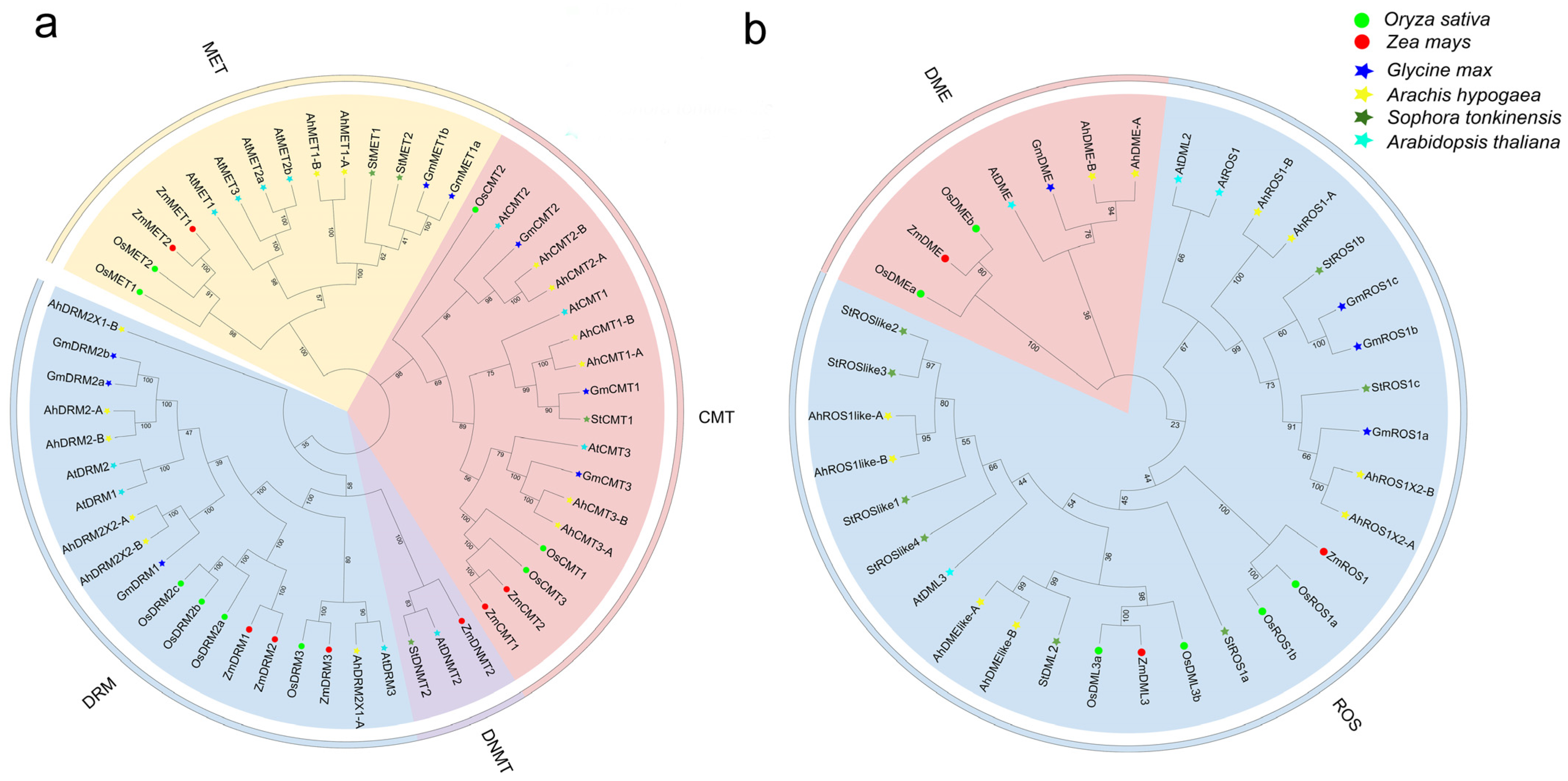
Figure 1. Phylogenetic analysis of the StC5-MTases and StdMTases. (a) Neighbor-Joining (NJ) tree of the StC5-MTases. (b) NJ tree of the StdMTases. Os, Oryza sativa; Zm, Zea mays; Gm, Glycine max; Ah, Arachis hypogaea; At, Arabidopsis thaliana.
Plants 15 00396 g001
Figure 2. Conserved domain analysis of StC5-MTases and StdMTases. (a) Conserved domain of StC5-MTases. (b) Conserved domain of StdMTases.
Plants 15 00396 g002
Figure 3. Phylogenetic relationships, gene structures, conserved motifs of StC5-MTases and StdMTases. (a) Phylogenetic relationships and gene structures of StC5-MTases. (b) Conserved motifs of StC5-MTases. (c) Phylogenetic relationships and gene structures of StdMTases. (d) Conserved motifs of StdMTases.
Plants 15 00396 g003
Figure 4. Chromosomal distribution of C5-MTase- and dMTase-encoding genes in S. tonkinensis genome.
Plants 15 00396 g004
Figure 5. Collinearity analysis of the C5-MTase and dMTase genes in the S. tonkinensis genome. Gray lines indicate syntenic blocks across the genome. Segmental duplicated StC5-MTase and StdMTase gene pairs on different chromosomes highlighted and labeled in color.
Plants 15 00396 g005
Figure 6. Collinearity synteny relationships of C5-MTase and dMTase genes between S. tonkinensis and three plant species (G. max, A. hypogaea, A. thaliana). The gray lines in the background indicate the collinear blocks within S. tonkinensis and other plant genomes.
Plants 15 00396 g006
Figure 7. Cis-element analysis of C5-MTase and dMTase genes in S. tonkinensis.
Plants 15 00396 g007
Figure 8. Heat map showing the expression patterns of StC5-MTase and StdMTase genes under abiotic stress. (a) Cd stress. (b) Drought and rewatering. Expression levels (Log2(TPM + 1)) are indicated by the color scale. CK, control; MD, moderate drought; SD, severe drought; R, rewatering. T1, 40 μM CdCl2; T2, 80 μM CdCl2; T3, 160 μM CdCl2.
Plants 15 00396 g008
Figure 9. Validation of C5-MTase and dMTase gene expression patterns under abiotic stress. (a) C5-MTase and dMTase gene expression patterns under Cd stress. (b) C5-MTase and dMTase gene expression patterns under drought and rewatering conditions. Data from RNA-seq (TPM, left Y-axis) and qRT-PCR (2−ΔΔCT, right Y-axis) are shown for four genes in response to Cd and six genes in response to drought/rewatering.
Plants 15 00396 g009
Figure 10. Phenotypic analysis of Nicotiana benthamiana overexpressing StCMT1 or StROSlike3. (a,b) qRT-PCR analysis of gene expression. (c,e) Growth comparison between wild type and the three selected StCMT1 transgenic lines under Cd stress. (d,f) Growth comparison between wild type and the three selected StROSlike3 transgenic lines under PEG-induced drought stress. OE, overexpression line; WT, wild type. * p < 0.05, ** p < 0.01.
Plants 15 00396 g010
Table 1. Basic information of cytosine-5 DNA methyltransferases (C5-MTase) and DNA demethylases (dMTase) genes in S. tonkinensis.
Gene NameGene IDCDS
Length (bp)
Protein
Exon
Number
Intron
Number
Number of
aa
MW
(kDa)
pIIIAIGRAVY
C5-MTases
CMT1evm.TU.HiC_scaffold_4.28362448201981592.045.4739.476.980.052
MET1evm.TU.HiC_scaffold_1.250453028271509170.905.7846.2276.130.503
MET2evm.TU.HiC_scaffold_2.4148456011101519170.945.7441.8575.370.502
DNMT2evm.TU.HiC_scaffold_1.2492115510938443.736.2350.1178.750.366
dMTases
DML2evm.TU.HiC_scaffold_5.29159878732837.024.7051.1671.040.577
ROS1aevm.TU.HiC_scaffold_2.491710179833838.595.2349.2673.580.667
ROS1bevm.TU.HiC_scaffold_6.162529311514976109.335.6348.9870.450.735
ROS1cevm.TU.HiC_scaffold_8.226328651514954107.455.4849.4776.290.584
ROSlike1evm.TU.HiC_scaffold_3.242011883239543.379.6645.8486.960.258
ROSlike2evm.TU.HiC_scaffold_3.51158434328031.679.1537.7883.570.620
ROSlike3evm.TU.HiC_scaffold_3.51748764329133.629.2439.3983.570.595
ROSlike4evm.TU.HiC_scaffold_5.32209909832936.619.3244.888.60.301
MW, molecular weight; pI, isoelectric point; aa, amino acid; II, instability index; AI, Aliphatic index; GRAVY, grand average of hydrophobicity.
Disclaimer/Publisher’s Note: The statements, opinions and data contained in all publications are solely those of the individual author(s) and contributor(s) and not of MDPI and/or the editor(s). MDPI and/or the editor(s) disclaim responsibility for any injury to people or property resulting from any ideas, methods, instructions or products referred to in the content.