The Influence of Transgenic Insect-Resistance and Herbicide-Tolerance Soybean KM2208-23 on the Rhizosphere Micro-Biome

 , and
, and
Abstract
1. Introduction
2. Materials and Methods
2.1. Genetically Modified Soybean
2.2. Determination of Physical and Chemical Properties of Rhizosphere Soil
2.3. DNA Extraction and Amplicon Sequencing
2.4. Bioinformatic Analysis of Amplicon Sequencing Data
3. Results
3.1. The Influence of GMO on Physical and Chemical Properties of Soil
3.2. The Basic Information of Amplicon Sequencing Data
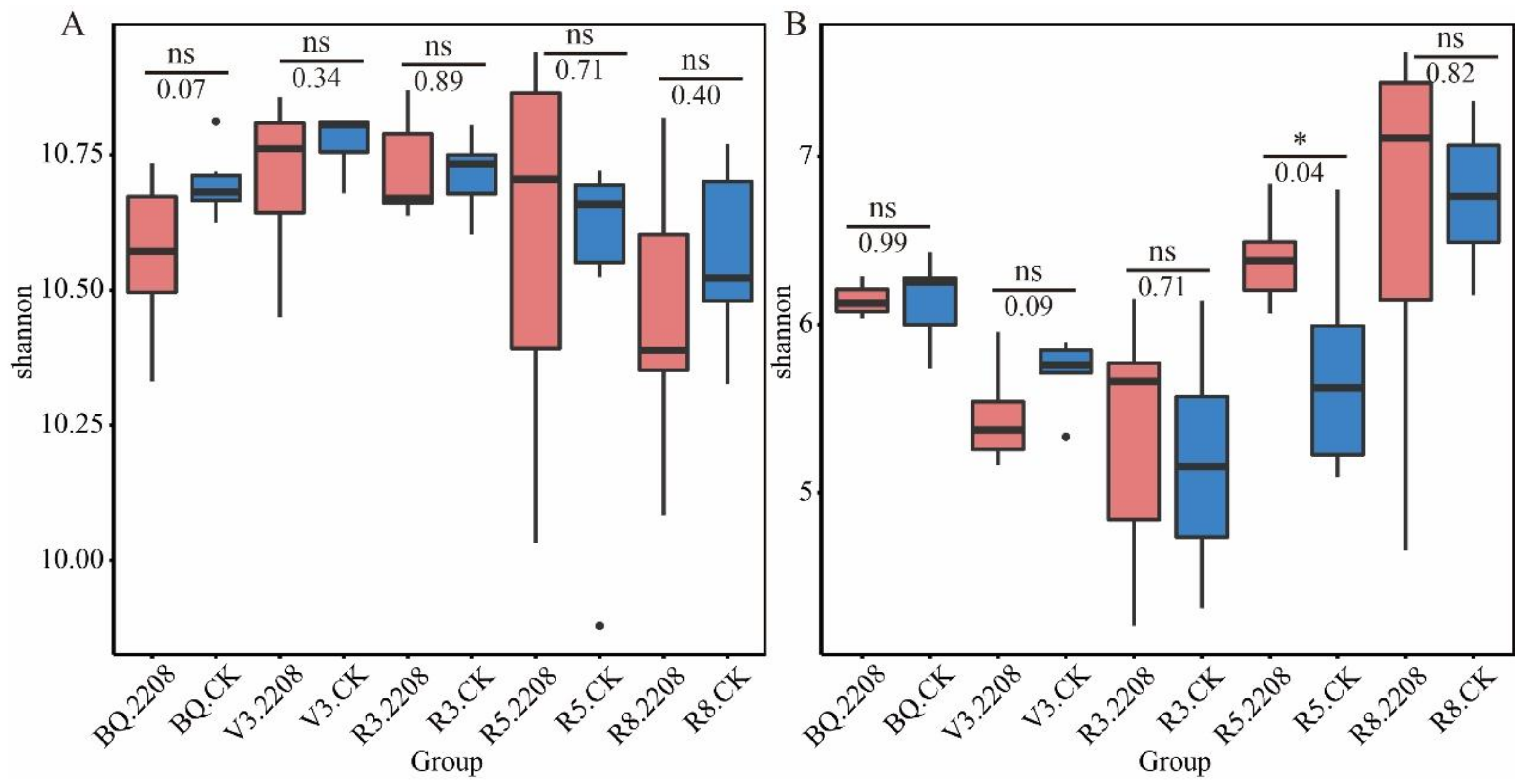
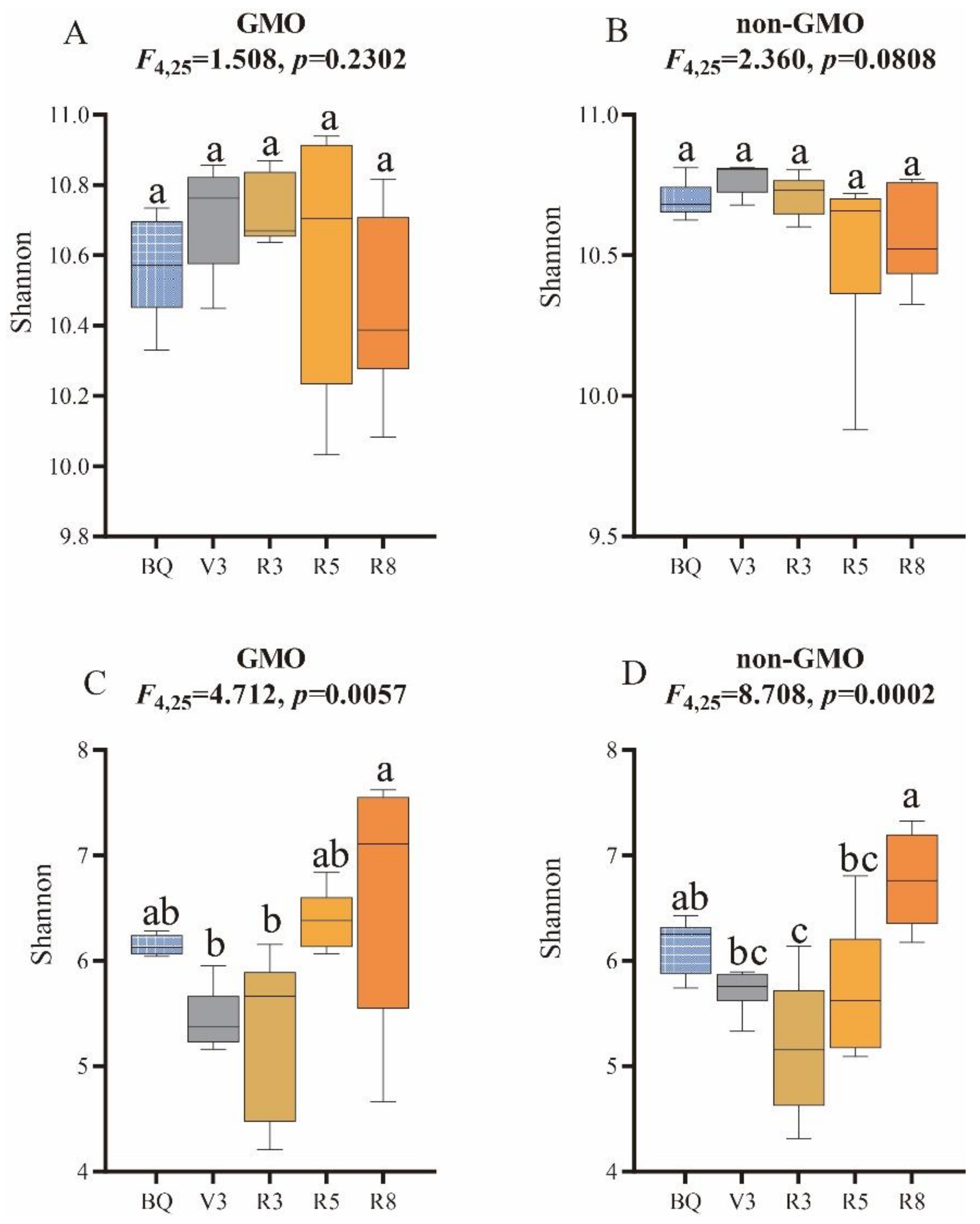
3.3. The Influence of GMO on Microbial Alpha Diversity of Soybean
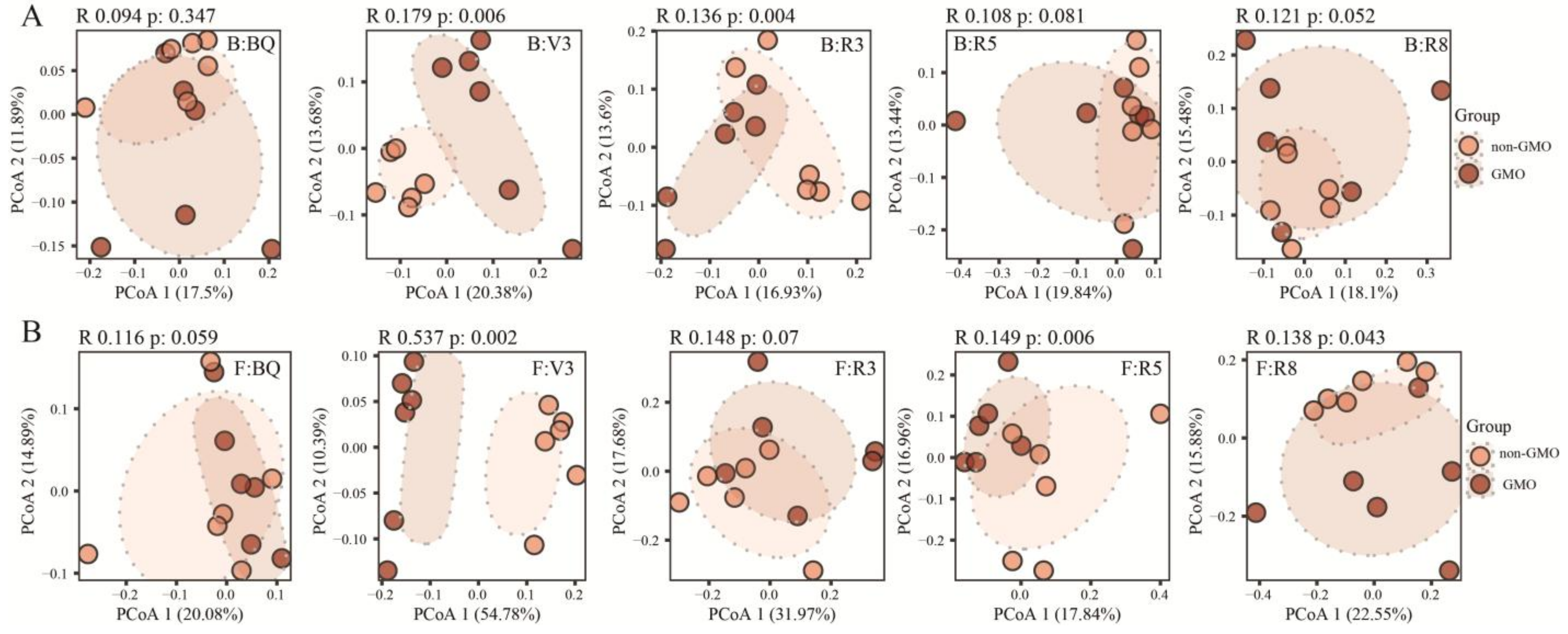
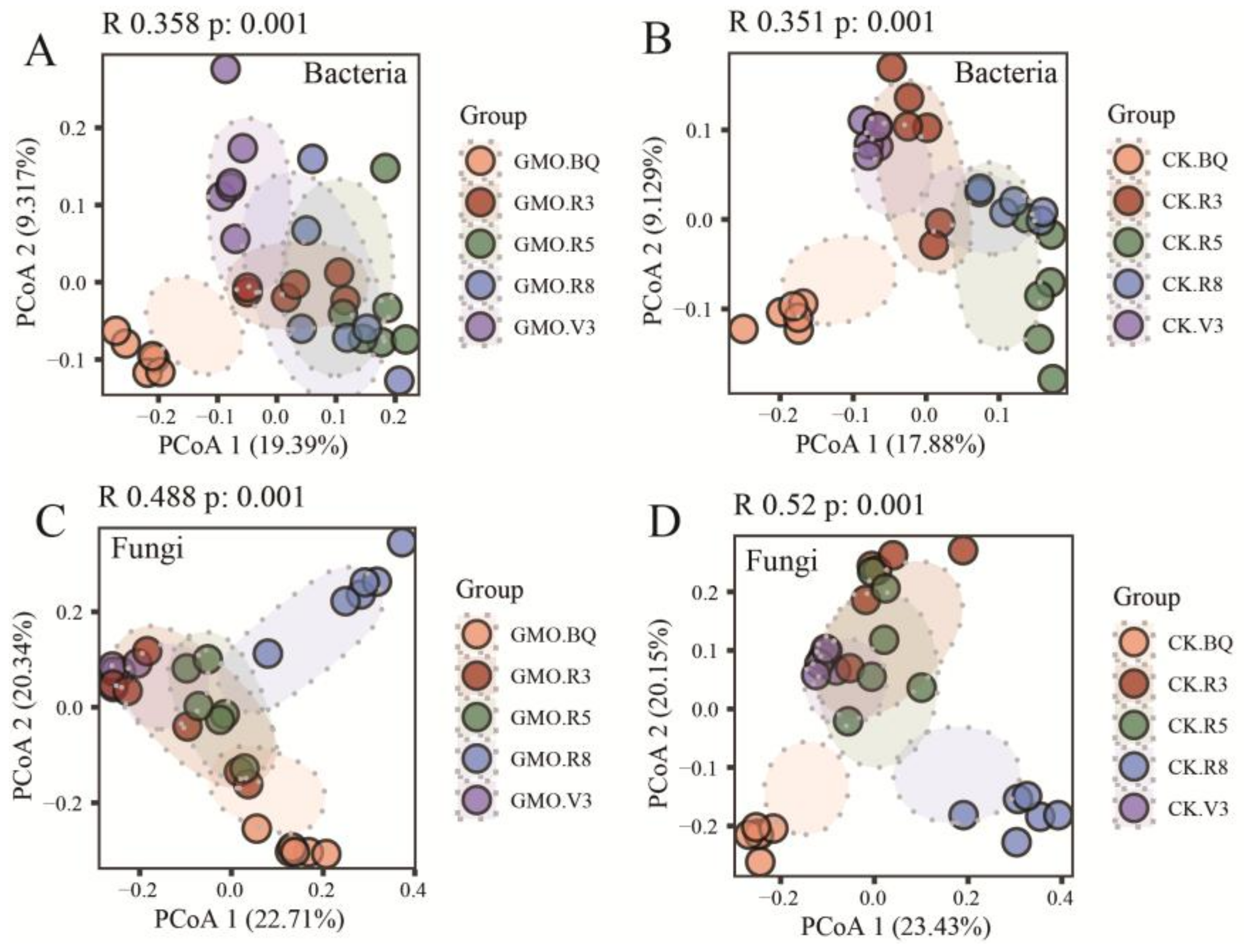
3.4. The Influence of GMO on Microbial Beta Diversity of Soybean
3.5. The Influence of GMO on Microbial Community Structure of Soybean
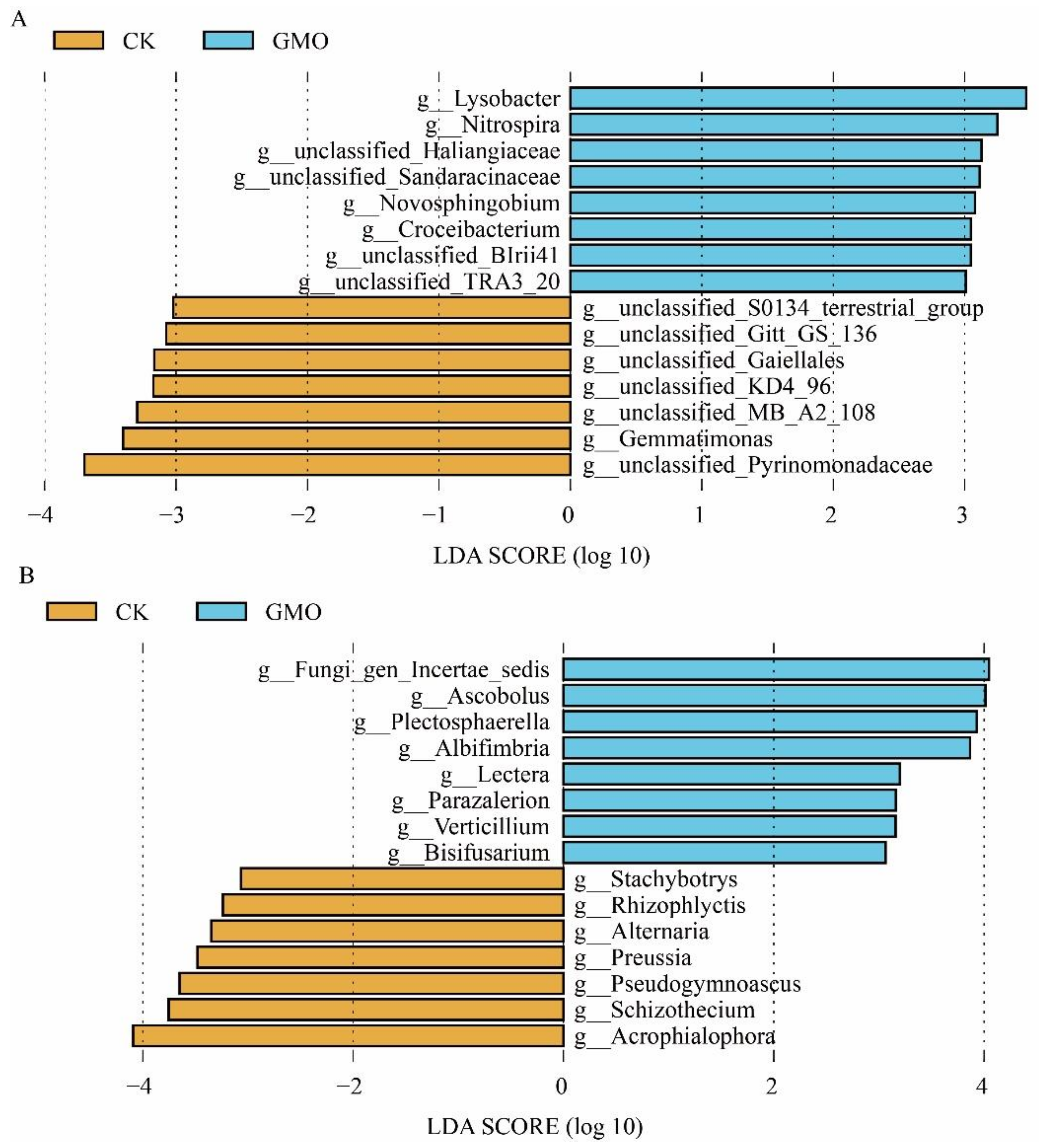
3.6. The Influence of GMO on Microbial Biomarkers of Soybean
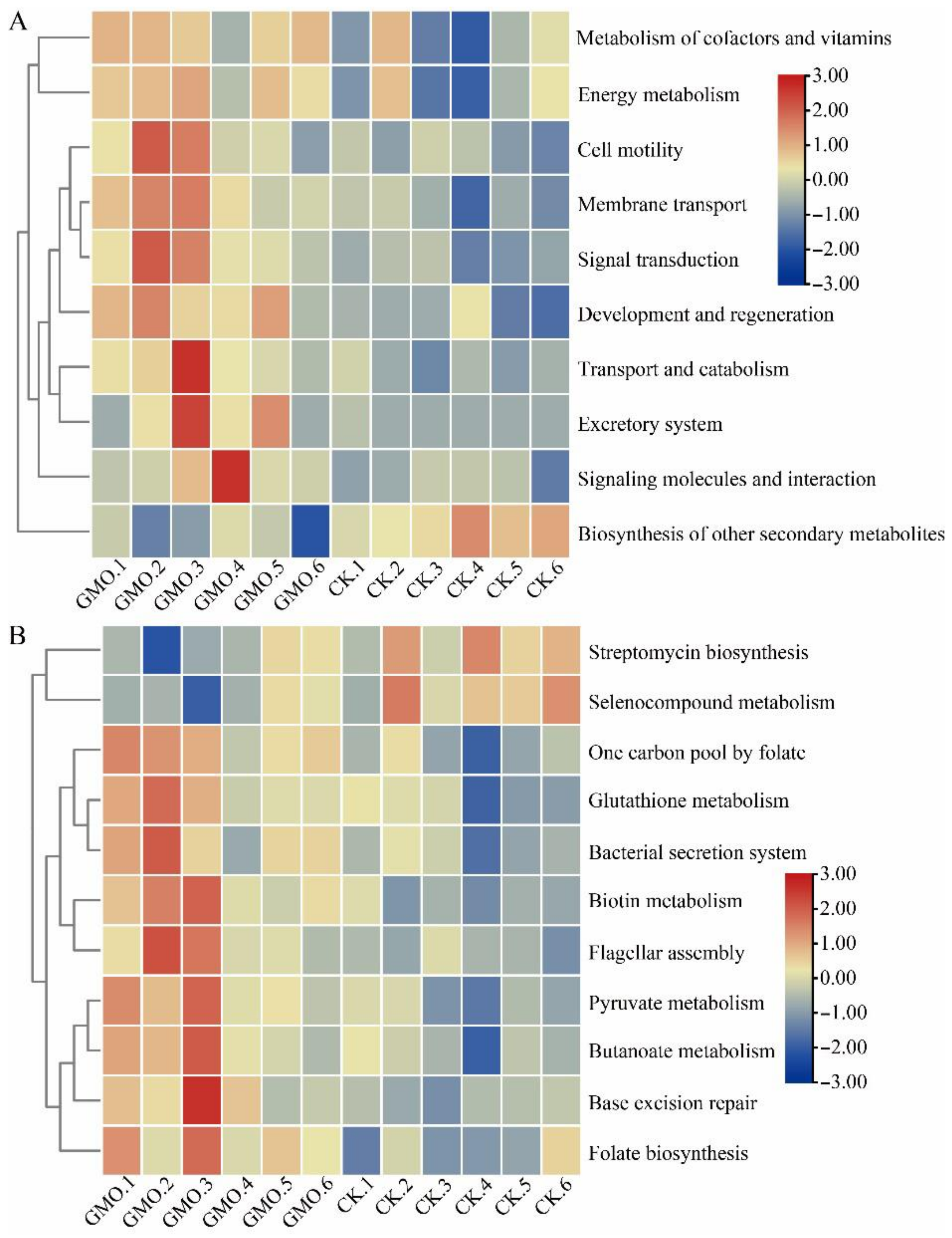
3.7. The Influence of GMO on Microbial Function of Soybean
4. Discussion
4.1. Stage-Specific Modulation of Rhizosphere Environment and Microbiome
4.2. Functional Implications of Microbial Community Shifts
4.3. Ecological Significance and Biosafety Perspective
5. Conclusions
Supplementary Materials
Author Contributions
Funding
Data Availability Statement
Conflicts of Interest
Correction Statement
References
- National Research Council (US) Committee on Genetically Modified Pest-Protected Plants. Plants, Genetically Modified Pest-Protected Plants: Science and Regulation; National Academies Press: Washington, DC, USA, 2000. [Google Scholar]
- Yang, X.; Chen, S.; Liu, D.; Zhao, S.; Kang, G.; Song, C.; Tian, Z.; Li, H.; Chen, J.; Li, X.; et al. Insect resistant and glyphosate tolerant maize, Bt11 × MIR162 × GA21, can enhance management of fall armyworm and weeds in tropical Asia. Entomol. Gen. 2024, 44, 853–863. [Google Scholar] [CrossRef] [Scilit]
- Ricroch, A.E.; Martin-Laffon, J.; Rault, B.; Pallares, V.C.; Kuntz, M. Next biotechnological plants for addressing global challenges: The contribution of transgenesis and new breeding techniques. N. Biotechnol. 2022, 66, 25–35. [Google Scholar] [CrossRef] [Scilit] [PubMed]
- Chen, Q.; Song, Y.; An, Y.; Lu, Y.; Zhong, G. Soil microorganisms: Their role in enhancing crop nutrition and health. Diversity 2024, 16, 734. [Google Scholar] [CrossRef] [Scilit]
- Snelders, N.C.; Rovenich, H.; Thomma, B.P.H.J. Microbiota manipulation through the secretion of effector proteins is fundamental to the wealth of lifestyles in the fungal kingdom. FEMS Microbiol. Rev. 2022, 46, fuac022. [Google Scholar] [CrossRef] [Scilit] [PubMed]
- Sun, K.; Niu, Z.; Xiao, S.; Qi, X.; Li, S.; Chen, M.; Dai, L.; Si, Y. Artificially regulated humification in creating humic-like biostimulators. npj Clean Water 2024, 7, 47. [Google Scholar] [CrossRef] [Scilit]
- Bano, S.; Wu, X.; Zhang, X. Towards sustainable agriculture: Rhizosphere microbiome engineering. Appl. Microbiol. Biotechnol. 2021, 105, 7141–7160. [Google Scholar] [CrossRef] [Scilit]
- Yang, Z.; Duan, Y.; Wei, R.; Yuan, Y.; Yan, H.; Tang, T.; Shang, H. Rhizosphere Microbiome and Nutrient Fluxes Reveal Subtle Biosafety Signals in Transgenic Cotton. Microorganisms 2025, 13, 2702. [Google Scholar] [CrossRef] [Scilit]
- Sharma, B.; Sharma, K.; Sharma, P.; Gupta, I.; Kour, J.; Kour, K. Genetically modified maize. In Genetically Modified Crops and Food Security; Routledge: London, UK, 2022; pp. 85–96. [Google Scholar]
- Lynch, J.; Benedetti, A.; Insam, H.; Nuti, M.; Smalla, K.; Torsvik, V.; Nannipieri, P. Microbial diversity in soil: Ecological theories, the contribution of molecular techniques and the impact of transgenic plants and transgenic microorganisms. Biol. Fertil. Soils 2004, 40, 363–385. [Google Scholar] [CrossRef] [Scilit]
- Dehorter, N.; Del Pino, I. Shifting developmental trajectories during critical periods of brain formation. Front. Cell. Neurosci. 2020, 14, 283. [Google Scholar] [CrossRef] [Scilit]
- Barna, B. Manipulation of senescence of plants to improve biotic stress resistance. Life 2022, 12, 1496. [Google Scholar] [CrossRef] [Scilit]
- Caporaso, J.G.; Kuczynski, J.; Stombaugh, J.; Bittinger, K.; Bushman, F.D.; Costello, E.K.; Fierer, N.; Peña, A.G.; Goodrich, J.K.; Gordon, J.I.; et al. QIIME allows analysis of high-throughput community sequencing data. Nat. Methods 2010, 7, 335–336. [Google Scholar] [CrossRef] [Scilit]
- Zhou, Y.; Liu, Y.-X.; Li, X. USEARCH 12: Open-source software for sequencing analysis in bioinformatics and microbiome. iMeta 2024, 3, e236. [Google Scholar] [CrossRef] [Scilit]
- Wingett, S.W.; Andrews, S. FastQ Screen: A tool for multi-genome mapping and quality control. F1000Research 2018, 7, 1338. [Google Scholar] [CrossRef] [Scilit] [PubMed]
- Bolger, A.M.; Lohse, M.; Usadel, B. Trimmomatic: A flexible trimmer for Illumina sequence data. Bioinformatics 2014, 30, 2114–2120. [Google Scholar] [CrossRef] [Scilit] [PubMed]
- Quast, C.; Pruesse, E.; Yilmaz, P.; Gerken, J.; Schweer, T.; Yarza, P.; Peplies, J.; Glöckner, F.O. The SILVA ribosomal RNA gene database project: Improved data processing and web-based tools. Nucleic Acids Res. 2012, 41, D590–D596. [Google Scholar] [CrossRef] [Scilit] [PubMed]
- Kõljalg, U.; Larsson, K.H.; Abarenkov, K.; Nilsson, R.H.; Alexander, I.J.; Eberhardt, U.; Erland, S.; Høiland, K.; Kjøller, R.; Larsson, E.; et al. UNITE: A database providing web-based methods for the molecular identification of ectomycorrhizal fungi. N. Phytol. 2005, 166, 1063–1068. [Google Scholar] [CrossRef] [Scilit]
- de Micheaux, P.L.; Drouilhet, R.; Liquet, B. The R Software, Fundamentals of Programming and Statistical Analysis; Springer: Berlin/Heidelberg, Germany, 2013; pp. 971–978. [Google Scholar]
- Dixon, P. VEGAN, a package of R functions for community ecology. J. Veg. Sci. 2003, 14, 927–930. [Google Scholar] [CrossRef]
- Wickham, H.; RStudio. Package Tidyverse, Easily Install and Load the ‘Tidyverse’; RStudio: Boston, MA, USA, 2017. [Google Scholar]
- Douglas, G.M.; Maffei, V.J.; Zaneveld, J.R.; Yurgel, S.N.; Brown, J.R.; Taylor, C.M.; Huttenhower, C.; Langille, M.G.I. PICRUSt2 for prediction of metagenome functions. Nat. Biotechnol. 2020, 38, 685–688. [Google Scholar] [CrossRef] [Scilit]
- Nguyen, N.H.; Song, Z.; Bates, S.T.; Branco, S.; Tedersoo, L.; Menke, J.; Schilling, J.S.; Kennedy, P.G. FUNGuild: An open annotation tool for parsing fungal community datasets by ecological guild. Fungal Ecol. 2016, 20, 241–248. [Google Scholar] [CrossRef] [Scilit]
- Lehman, R.M.; Cambardella, C.A.; Stott, D.E.; Acosta-Martinez, V.; Manter, D.K.; Buyer, J.S.; Maul, J.E.; Smith, J.L.; Collins, H.P.; Halvorson, J.J.; et al. Understanding and enhancing soil biological health: The solution for reversing soil degradation. Sustainability 2015, 7, 988–1027. [Google Scholar] [CrossRef] [Scilit]
- Khan, N. Decoding the Long-Term Impacts of Genetic Modifications in Hormone Pathways on Plant Physiology and Ecosystem Stability. Environ. Rev. 2025, 33, 1–20. [Google Scholar] [CrossRef] [Scilit]
- Zhalnina, K.; Louie, K.B.; Hao, Z.; Mansoori, N.; Da Rocha, U.N.; Shi, S.; Cho, H.; Karaoz, U.; Loqué, D.; Bowen, B.P.; et al. Dynamic root exudate chemistry and microbial substrate preferences drive patterns in rhizosphere microbial community assembly. Nat. Microbiol. 2018, 3, 470–480. [Google Scholar] [CrossRef] [Scilit] [PubMed]
- Daims, H.; Lücker, S.; Le Paslier, D.; Wagner, M. Diversity, environmental genomics, and ecophysiology of nitrite-oxidizing bacteria. In Nitrification; ASM Press: Washington, DC, USA, 2011; pp. 295–322. [Google Scholar]
- Friedrich, M.W. Trophic interactions in microbial communities and food webs traced by stable isotope probing of nucleic acids. In Stable Isotope Probing and Related Technologies; Wiley: Hoboken, NJ, USA, 2010; pp. 203–232. [Google Scholar]
- Ajilogba, C.F.; Olanrewaju, O.S.; Babalola, O.O. Plant growth stage drives the temporal and spatial dynamics of the bacterial microbiome in the rhizosphere of Vigna subterranea. Front. Microbiol. 2022, 13, 825377. [Google Scholar] [CrossRef] [Scilit] [PubMed]
- Finn, D.R.; Bergk-Pinto, B.; Hazard, C.; Nicol, G.W.; Tebbe, C.C.; Vogel, T.M. Functional trait relationships demonstrate life strategies in terrestrial prokaryotes. FEMS Microbiol. Ecol. 2021, 97, fiab068. [Google Scholar] [CrossRef] [Scilit]
- Trivedi, P.; Leach, J.E.; Tringe, S.G.; Sa, T.; Singh, B.K. Plant–microbiome interactions: From community assembly to plant health. Nat. Rev. Microbiol. 2020, 18, 607–621. [Google Scholar] [CrossRef] [Scilit]
- Zhao, C.; Onyino, J.; Gao, X. Current advances in the functional diversity and mechanisms underlying endophyte–plant interactions. Microorganisms 2024, 12, 779. [Google Scholar] [CrossRef] [Scilit]
- Baetz, U.; Martinoia, E. Root exudates: The hidden part of plant defense. Trends Plant Sci. 2014, 19, 90–98. [Google Scholar] [CrossRef] [Scilit]
- Icoz, I.; Stotzky, G. Fate and effects of insect-resistant Bt crops in soil ecosystems. Soil Biol. Biochem. 2008, 40, 559–586. [Google Scholar] [CrossRef] [Scilit]
- Dyer, A.R.; Knapp, E.E.; Rice, K.J. Unintentional selection and genetic changes in native perennial grass populations during commercial seed production. Ecol. Restor. 2016, 34, 39–48. [Google Scholar] [CrossRef] [Scilit]



| Indexes | Groups | BQ | V3 | R3 | R5 | R8 |
|---|---|---|---|---|---|---|
| TK (g/Kg) | GMO | 22.70 ± 1.68 a | 19.27 ± 0.54 a | 19.77 ± 0.70 a | 19.82 ± 1.07 a | 19.68 ± 0.26 a |
| CK | 20.08 ± 0.67 b | 20.05 ± 0.64 a | 20.43 ± 0.63 a | 20.20 ± 0.76 a | 19.87 ± 0.58 a | |
| AK (mg/Kg) | GMO | 914.00 ± 52.29 a | 1012.50 ± 51.72 a | 1055.83 ± 58.37 a | 1002.00 ± 100.73 a | 1013.00 ± 36.3 a |
| CK | 946.67 ± 41.97 a | 1024.83 ± 62.23 a | 1056.00 ± 48.43 a | 1064.00 ± 55.17 a | 996.17 ± 38.97 a | |
| EN (mg/Kg) | GMO | 162.00 ± 42.09 a | 128.43 ± 21.92 a | 95.03 ± 9.29 a | 103.33 ± 22.82 a | 92.77 ± 16.81 a |
| CK | 182.33 ± 43.28 a | 111.90 ± 15.8 b | 114.15 ± 16.8 b | 100.75 ± 23.48 a | 100.35 ± 18.05 a | |
| pH | GMO | 7.35 ± 0.14 a | 6.97 ± 0.19 a | 7.37 ± 0.27 a | 7.00 ± 0.18 b | 7.12 ± 0.08 b |
| CK | 7.42 ± 0.04 a | 7.38 ± 0.26 a | 7.62 ± 0.15 a | 7.62 ± 0.33 a | 7.68 ± 0.19 a | |
| OM (g/Kg) | GMO | 19.98 ± 0.71 a | 17.77 ± 0.69 b | 16.85 ± 0.78 b | 18.38 ± 0.83 a | 20.33 ± 1.66 a |
| CK | 19.88 ± 0.53 a | 18.95 ± 0.32 a | 20.28 ± 2.36 a | 19.47 ± 1.34 a | 19.18 ± 1.99 a | |
| TP (g/Kg) | GMO | 0.72 ± 0.31 a | 1.32 ± 0.02 a | 1.29 ± 0.06 a | 1.32 ± 0.1 a | 1.33 ± 0.07 a |
| CK | 1.31 ± 0.04 a | 1.26 ± 0.07 a | 1.38 ± 0.06 a | 1.24 ± 0.11 a | 1.26 ± 0.15 a | |
| AP (mg/Kg) | GMO | 152.67 ± 7.34 a | 150.83 ± 11.63 a | 125.00 ± 9.14 b | 125.17 ± 14.11 a | 130.83 ± 15.16 a |
| CK | 144.5 ± 11.84 a | 137.83 ± 14.41 a | 136.17 ± 5.64 a | 115.83 ± 17.99 a | 118.33 ± 12.27 a | |
| TN (%) | GMO | 0.15 ± 0.00 a | 0.13 ± 0.00 b | 0.12 ± 0.00 b | 0.13 ± 0.00 a | 0.14 ± 0.01 a |
| CK | 0.15 ± 0.00 a | 0.14 ± 0.00 a | 0.14 ± 0.01 a | 0.14 ± 0.01 a | 0.14 ± 0.01 a |
Disclaimer/Publisher’s Note: The statements, opinions and data contained in all publications are solely those of the individual author(s) and contributor(s) and not of MDPI and/or the editor(s). MDPI and/or the editor(s) disclaim responsibility for any injury to people or property resulting from any ideas, methods, instructions or products referred to in the content. |
© 2026 by the authors. Licensee MDPI, Basel, Switzerland. This article is an open access article distributed under the terms and conditions of the Creative Commons Attribution (CC BY) license.
Share and Cite
Song, X.; Xia, X.; Yang, S.; Hao, C.; Sun, H.; Li, F.; Xu, X.; Zhang, H.; Lu, X. The Influence of Transgenic Insect-Resistance and Herbicide-Tolerance Soybean KM2208-23 on the Rhizosphere Micro-Biome. Plants 2026, 15, 329. https://doi.org/10.3390/plants15020329
Song X, Xia X, Yang S, Hao C, Sun H, Li F, Xu X, Zhang H, Lu X. The Influence of Transgenic Insect-Resistance and Herbicide-Tolerance Soybean KM2208-23 on the Rhizosphere Micro-Biome. Plants. 2026; 15(2):329. https://doi.org/10.3390/plants15020329
Chicago/Turabian StyleSong, Xue, Xinyao Xia, Shuke Yang, Chaofeng Hao, Hongwei Sun, Fan Li, Xiaohui Xu, Hongxia Zhang, and Xingbo Lu. 2026. "The Influence of Transgenic Insect-Resistance and Herbicide-Tolerance Soybean KM2208-23 on the Rhizosphere Micro-Biome" Plants 15, no. 2: 329. https://doi.org/10.3390/plants15020329
APA StyleSong, X., Xia, X., Yang, S., Hao, C., Sun, H., Li, F., Xu, X., Zhang, H., & Lu, X. (2026). The Influence of Transgenic Insect-Resistance and Herbicide-Tolerance Soybean KM2208-23 on the Rhizosphere Micro-Biome. Plants, 15(2), 329. https://doi.org/10.3390/plants15020329