
Biogenic Approaches to Metal Nanoparticle Synthesis and Their Application in Biotechnology


Abstract
1. Introduction
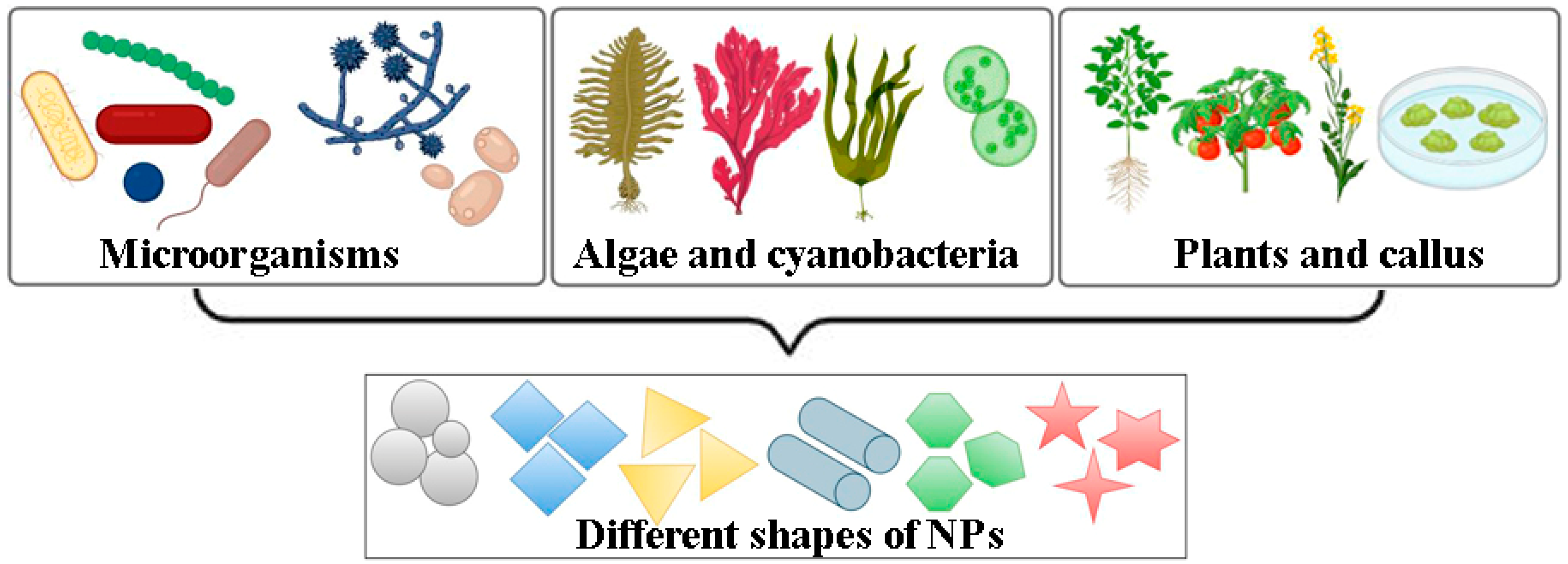
2. Biological Methods for Metal NP Synthesis
3. Bacteria-Mediated NP Synthesis
4. Fungi-Mediated NP Synthesis

| Organism | Metal | Size (nm), Shape | References |
|---|---|---|---|
| Trichoderma harzianum | Ag | 1–30, spherical | [60,61,62] |
| Aspergillus niger | Ag | 10–100, spherical | [64] |
| Penicillium duclauxii | Ag | 3–32, spherical | [65] |
| Guignardia mangiferae | Ag | 5–30, spherical | [66] |
| Aspergillus versicolor | Ag | 5–39, spherical | [67] |
| Pleurotus ostreatus | Au | 10–30, spherical | [68] |
| Trichoderma harzianum | Au | 32–44, spherical | [63] |
| Yarrowia lipolytica NCIM 3589 | Au | 9–27, polymorphic | [69] |
| Aspergillus niger | ZnO | 53–69, spherical | [70] |
| Saccharomyces cerevisiae | ZnO | 50–70, hexagonal | [71] |
| Rhodotorula mucilaginosa | CuO | 10–50, spherical | [72] |
| Candida albicans | Fe2O3 | 80, spherical | [73] |
| Saccharomyces cerevisiae | MnO2 | 15–70, hexagonal and spherical | [74] |
5. Algae- and Cyanobacteria-Mediated NP Synthesis
| Organism | Metal | Size (nm), Shape | References |
|---|---|---|---|
| Spyridia fusiformis | Ag | 5–50, spherical | [82] |
| Enteromorpha compressa | Ag | 4–24, spherical | [83] |
| Padina pavonia | Ag | 40–80, polymorphic | [84] |
| Botryococcus braunii | Ag, CuO, Cu2O | 10–40, spherical | [85] |
| Cystoseira baccata | Au | 8–40, spherical | [86] |
| Stephanopyxis turris | Au | 10–30, spherical | [87] |
| Galaxaura elongata | Au | 3–77, polymorphic | [88] |
| Chlorella vulgaris | Pd | 5–20, spherical | [79] |
| Sargassum ilicifolium | Al2O3 | 10–30, spherical | [89] |
| Sargassum wightii | ZrO2 | 5–20, spherical | [76] |
6. Plant-Mediated NP Synthesis
| Organism | Metal | Size (nm), Shape | References |
|---|---|---|---|
| Piper nigrum | Ag | 9–30, crystalline | [102] |
| Phyllanthus emblica | Ag | 20–93, spherical | [103] |
| Abelmoschus esculentus | Au | 45–75, spherical | [104] |
| Syzygium aromaticum | Cu | 15, spherical | [105] |
| Parthenium hysterophorus | ZnO | 28–84, spherical and hexagonal | [96] |
| Olea europaea | ZnO | 41–124, crystalline | [106] |
| Lycopersicon esculentum | ZnO | 66–133, crystalline | [107] |
| Citrus limon | ZnO, TiO2 | 20–200, polymorphic | [108] |
| Phyllanthus amarus | MnO2 | 40–50, rod-like nano-architectures | [109] |
| Matricaria chamomilla | MgO, MnO2 | 9–112, spherical | [110] |
| Rosmarinus officinalis | MgO | 20–68, star-shaped | [111] |
| Withania coagulans | Fe2O3 | 16, nanorods | [112] |
7. Plant Cell Culture-Mediated NP Synthesis
8. Bioengineering of Reductive Capacity
9. Application of NPs in Plant Tissue Culture
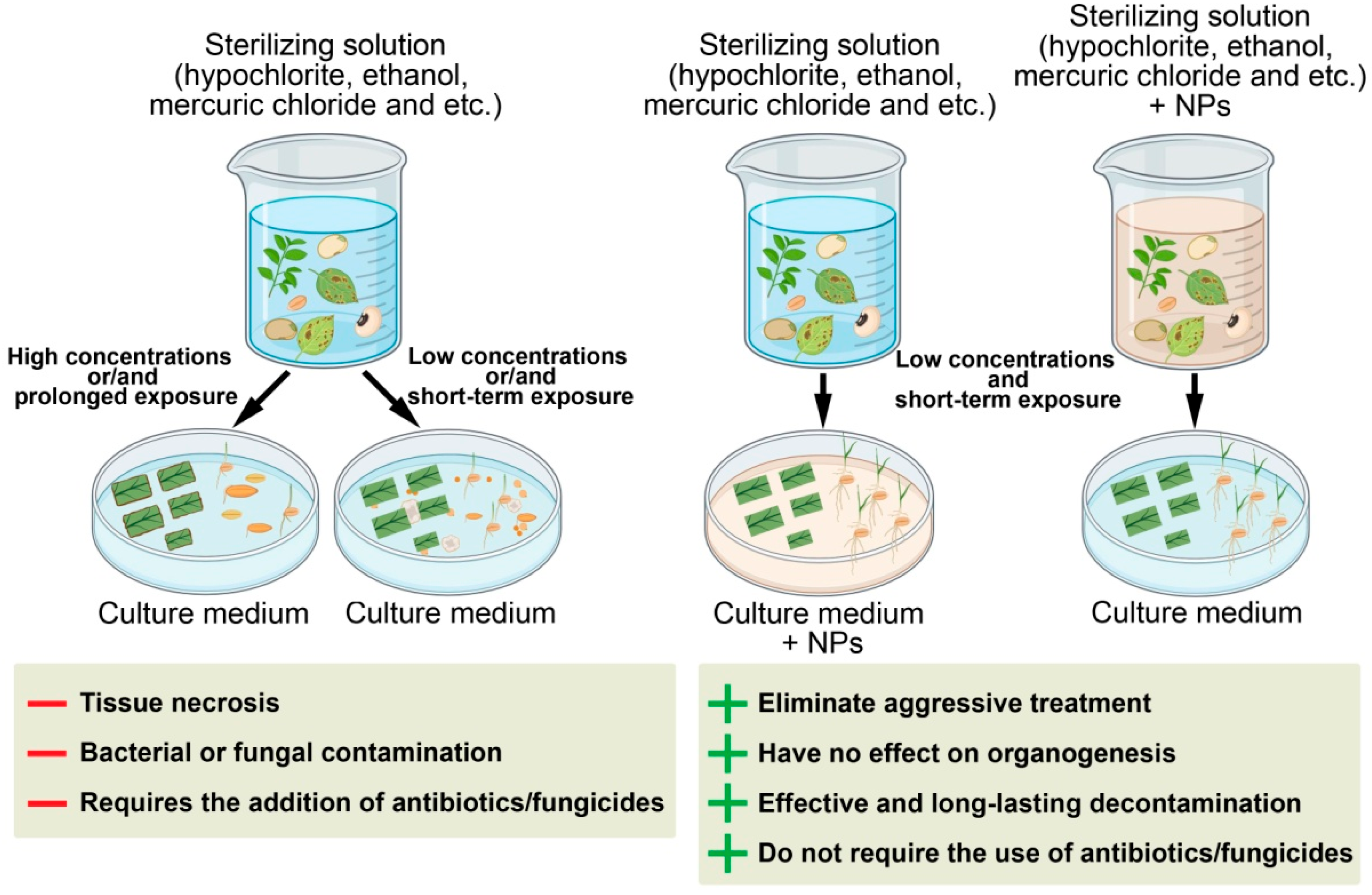
Explant Disinfection
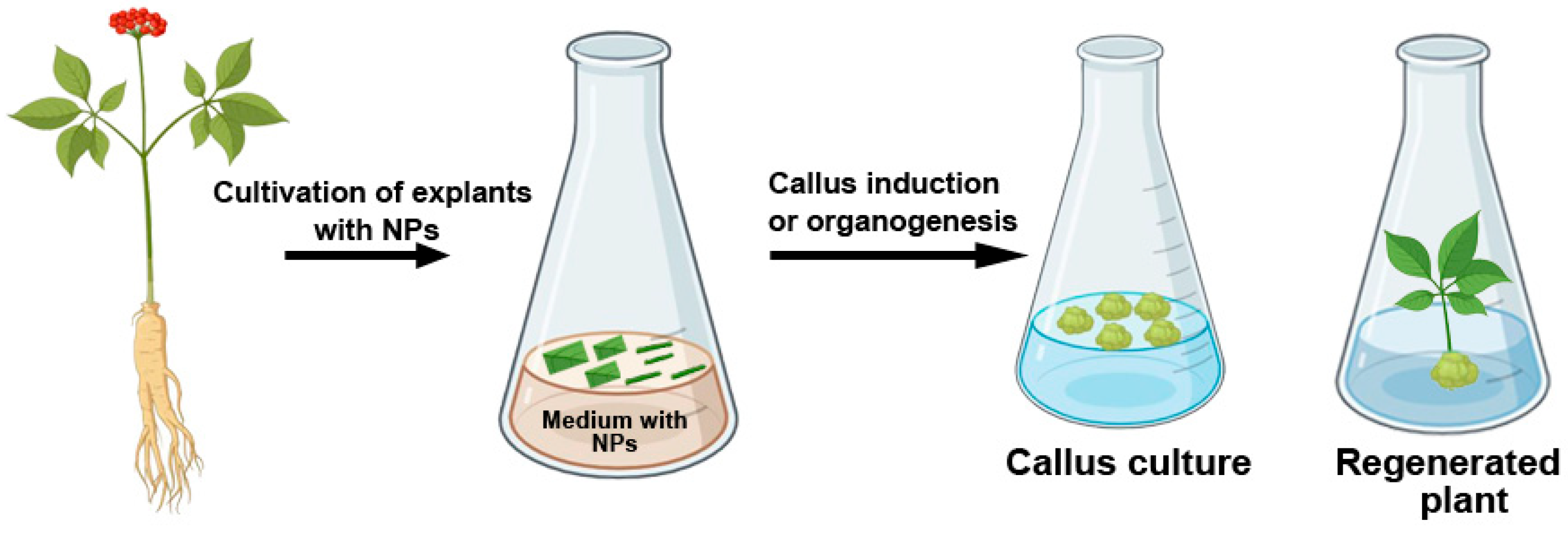
10. Effects of NPs on Callus Formation and Organogenesis
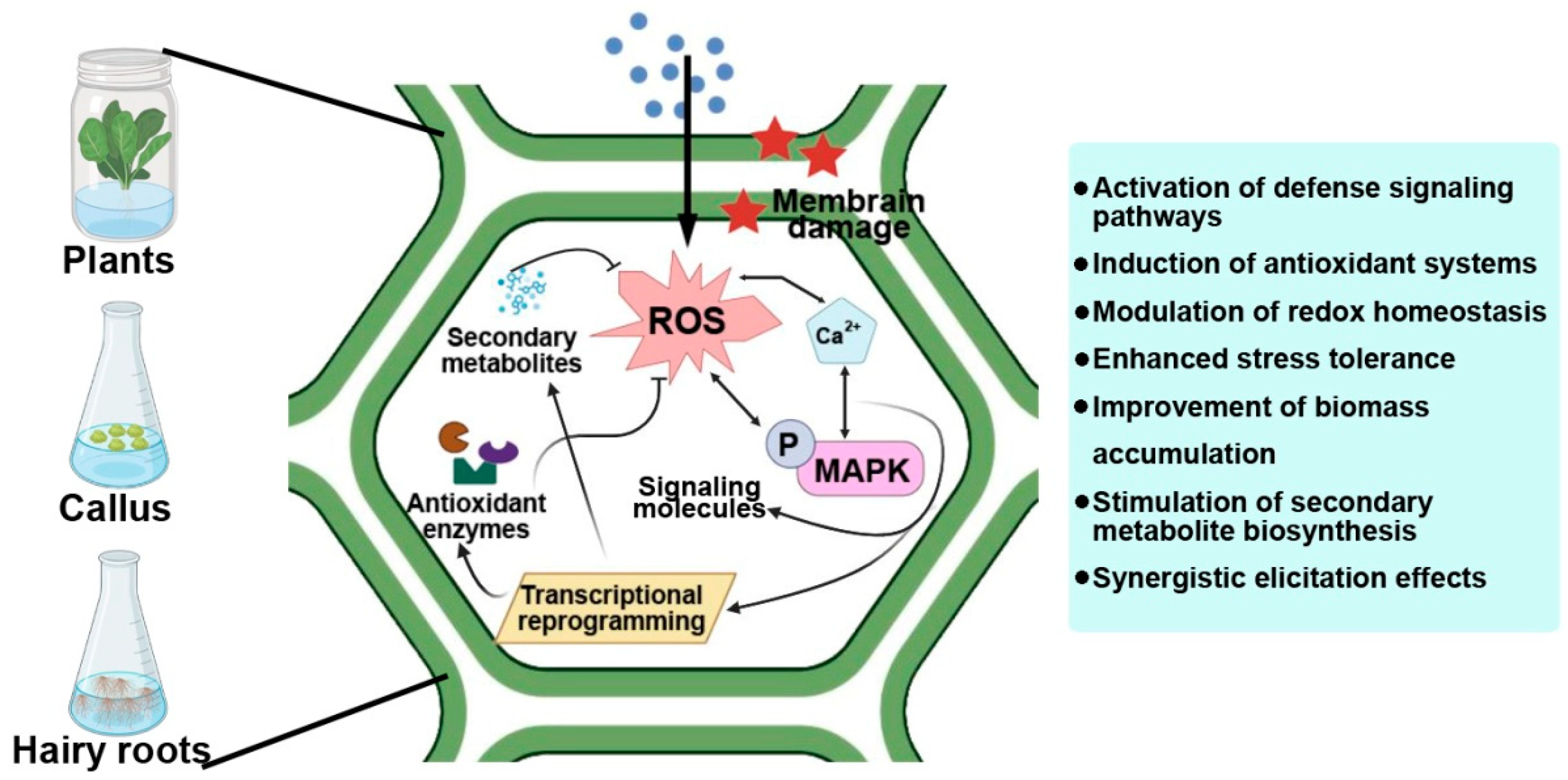
11. Metal NPs as Elicitors
12. Limitations and Future Prospects
13. Conclusions
Author Contributions
Funding
Data Availability Statement
Conflicts of Interest
References
- Leifert, C.; Cassells, A.C. Microbial hazards in plant tissue and cell cultures. Vitr. Cell. Dev. Biol.—Plant 2001, 37, 133–138. [Google Scholar] [CrossRef]
- Nikaido, H. Multidrug resistance in bacteria. Annu. Rev. Biochem. 2009, 78, 119–146. [Google Scholar] [CrossRef]
- Alavi, M.; Karimi, N.; Valadbeigi, T. Antibacterial, antibiofilm, antiquorum sensing, antimotility, and antioxidant activities of green fabricated Ag, Cu, TiO2, ZnO, and Fe3O4 nanoparticles via Protoparmeliopsis muralis lichen aqueous extract against multi-drug-resistant bacteria. ACS Biomater. Sci. Eng. 2019, 5, 4228–4243. [Google Scholar] [CrossRef] [PubMed]
- Smita, S.; Gupta, S.K.; Bartonová, A.; Dusinska, M.; Gutleb, A.C.; Rahman, Q. Nanoparticles in the environment: Assessment using the causal diagram approach. Environ. Health 2012, 11, S3. [Google Scholar] [CrossRef] [PubMed]
- Cho, E.J.; Holback, H.; Liu, K.C.; Abouelmagd, S.A.; Park, J.; Yeo, Y. Nanoparticle characterization: State of the art, challenges, and emerging technologies. Mol. Pharm. 2013, 10, 2093–2110. [Google Scholar] [CrossRef]
- Wang, L.; Li, J.; Pan, J.; Jiang, X.; Ji, Y.; Li, Y.; Qu, Y.; Zhao, Y.; Wu, X.; Chen, C. The Density of surface coating can contribute to different antibacterial activities of gold nanoparticles. Nano Lett. 2020, 20, 5036–5042. [Google Scholar] [CrossRef] [PubMed]
- Rajendra, R.; Balakumar, C.; Ahammed, H.A.M.; Jayakumar, S.; Vaideki, K.; Rajesh, E.M. Use of zinc oxide nanoparticles for production of antimicrobial textiles. Int. J. Eng. Sci. Technol. 2010, 2, 202–208. [Google Scholar] [CrossRef]
- Asmathunisha, N.; Kathiresan, K. A Review on biosynthesis of nanoparticles by marine organisms. Colloids Surf. B Biointerfaces 2013, 103, 283–287. [Google Scholar] [CrossRef]
- Kumar, A.S.; Ansary, A.A.; Ahmad, A.; Khan, M.I. nitrate reductase-mediated synthesis of silver nanoparticles from AgNO3. Biotechnol. Lett. 2007, 29, 439–445. [Google Scholar] [CrossRef]
- Bhargava, A.; Jain, N.; Khan, M.A.; Pareek, V.; Dilip, R.V.; Panwar, J. Utilizing metal tolerance potential of soil fungus for efficient synthesis of gold nanoparticles with superior catalytic activity for degradation of rhodamine B. J. Environ. Manag. 2016, 183, 22–32. [Google Scholar] [CrossRef]
- Sharma, A.; Sharma, S.; Arora, A.; Singh, P.; Nain, L.; Kundu, B. Algae as crucial organisms in advancing nanotechnology: A systematic review. J. Appl. Phycol. 2016, 28, 1759–1774. [Google Scholar] [CrossRef]
- Brayner, R.; Barberousse, H.; Hernadi, M.; Djedjat, C.; Yéprémian, C.; Coradin, T.; Livage, J.; Fiévet, F.; Couté, A. Cyanobacteria as bioreactors for the synthesis of Au, Ag, Pd, and Pt nanoparticles via an enzyme-mediated route. J. Nanosci. Nanotechnol. 2007, 7, 2696–2708. [Google Scholar] [CrossRef]
- Hamida, R.S.; Ali, M.A.; Abdelmeguid, N.E.; Al-Zaban, M.I.; Baz, L.; Bin-Meferij, M.M. Cyanobacteria–a promising platform in green nanotechnology: A review on nanoparticles fabrication and their prospective applications. Int. J. Nanomed. 2020, 15, 6033–6066. [Google Scholar] [CrossRef]
- Mude, N.; Ingle, A.; Gade, A.; Rai, M. Synthesis of silver nanoparticles using callus extract of Carica papaya—A first report. J. Plant Biochem. Biotechnol. 2009, 18, 83–86. [Google Scholar] [CrossRef]
- Anjum, S.; Abbasi, B.H. Thidiazuron-enhanced biosynthesis and antimicrobial efficacy of silver nanoparticles via improving phytochemical reducing potential in callus culture of Linum usitatissimum L. Int. J. Nanomed. 2016, 11, 715–728. [Google Scholar] [CrossRef]
- Shkryl, Y.; Rusapetova, T.; Yugay, Y.; Egorova, A.; Silant’ev, V.; Grigorchuk, V.; Karabtsov, A.; Timofeeva, Y.; Vasyutkina, E.; Kudinova, O.; et al. Biosynthesis and cytotoxic properties of Ag, Au, and bimetallic nanoparticles synthesized using Lithospermum erythrorhizon callus culture extract. Int. J. Mol. Sci. 2021, 22, 9305. [Google Scholar] [CrossRef] [PubMed]
- Abdi, G.; Salehi, H.; Khosh-Khui, M. Nano silver: A novel nanomaterial for removal of bacterial contaminants in valerian (Valeriana officinalis L.) tissue culture. Acta Physiol. Plant. 2008, 30, 709–714. [Google Scholar] [CrossRef]
- Fakhrfeshani, M.; Bagheri, A.; Sharifi, A. Disinfecting effects of nano silver fluids in gerbera (Gerbera jamesonii) capitulum tissue culture. J. Biol. Environ. Sci. 2012, 6, 121–127. [Google Scholar]
- Sharma, P.; Bhatt, D.; Zaidi, M.G.H.; Saradhi, P.P.; Khanna, P.K.; Arora, S. Silver nanoparticle-mediated enhancement in growth and antioxidant status of Brassica juncea. Appl. Biochem. Biotechnol. 2012, 167, 2225–2233. [Google Scholar] [CrossRef]
- Aghdaei, M.; Salehi, H.; Sarmast, M.K. Effects of silver nanoparticles on Tecomella undulata (Roxb.) seem. micropropagation. Adv. Hortic. Sci. 2012, 26, 21–24. [Google Scholar]
- Naing, A.H.; Soe, M.T.; Kyu, S.Y.; Kim, C.K. Nano-silver controls transcriptional regulation of ethylene- and senescence-associated genes during senescence in cut carnations. Sci. Hortic. 2021, 287, 110280. [Google Scholar] [CrossRef]
- Marslin, G.; Sheeba, C.J.; Franklin, G. Nanoparticles Alter secondary metabolism in plants via ROS burst. Front. Plant Sci. 2017, 8, 832. [Google Scholar] [CrossRef]
- Kruszka, D.; Zienkiewicz, M.; Rymaszewski, W.; Bocianowski, J.; Kowal, J.; Lenartowicz, M.; Kurczyńska, E.; Zienkiewicz, A. Silver nanoparticles affect phenolic and phytoalexin composition of Arabidopsis thaliana. Sci. Total Environ. 2019, 700, 135361. [Google Scholar] [CrossRef] [PubMed]
- Fatima, K.; Mujib, A.; Gulzar, B.; Siddiqui, Z.H.; Sharma, M.P. Induction of Secondary Metabolites on Nanoparticle stress in callus culture of Artemisia annua L. Braz. Arch. Biol. Technol. 2020, 63, e20190598. [Google Scholar] [CrossRef]
- Liu, K.; Catchmark, J.M. Enhanced mechanical properties of bacterial cellulose nanocomposites produced by co-culturing Gluconacetobacter hansenii and Escherichia coli under static conditions. Carbohydr. Polym. 2019, 219, 12–20. [Google Scholar] [CrossRef]
- Dwivedi, P.; Malik, A.; Fatima Hussain, H.Z.; Jatrana, I.; Imtiyaz, K.; Rizvi, M.M.A.; Mushtaque, M.; Khan, A.U.; Alam, M.; Rafatullah, M. Eco-friendly CuO/Fe3O4 nanocomposite synthesis, characterization, and cytotoxicity study. Heliyon 2024, 10, e27787. [Google Scholar] [CrossRef]
- Pérez-Hernández, H.; Pérez-Moreno, A.Y.; Méndez-López, A.; Fuentes-Ramírez, L.E.; González-Mendoza, D.; Valdez-Aguilar, L.A.; Díaz-Moreno, R.; González-Cervantes, G.; Prieto-García, F. Effect of ZnO nanoparticles during the process of phytoremediation of soil contaminated with As and Pb cultivated with sunflower (Helianthus annuus L.). Int. J. Environ. Res. 2024, 18, 7. [Google Scholar] [CrossRef]
- Schröfel, A.; Kratošová, G.; Šafařík, I.; Šafaříková, M.; Raška, I.; Shor, L.M. Applications of biosynthesized metallic nanoparticles—A review. Acta Biomater. 2014, 10, 4023–4042. [Google Scholar] [CrossRef]
- Chopra, H.; Bibi, S.; Singh, I.; Hasan, M.M.; Khan, M.S.; Yousafi, Q.; Baig, A.A.; Rahman, M.M.; Islam, F.; Emran, T.B.; et al. Green metallic nanoparticles: Biosynthesis to applications. Front. Bioeng. Biotechnol. 2022, 10, 874742. [Google Scholar] [CrossRef]
- Deka, K.; Nongbet, R.D.; Das, K.; Saikia, P.; Kaur, S.; Talukder, A.; Thakuria, B. Understanding the mechanism underlying the green synthesis of metallic nanoparticles using plant extract(s) with special reference to silver, gold, copper, and zinc oxide nanoparticles. Hybrid Adv. 2025, 9, 100399. [Google Scholar] [CrossRef]
- Bogachikhin, D.A.; Abramkina, M.A.; Dzuba, A.K.; Karlinskii, B.Y.; Arlyapov, V.A. Biochemical Reduction of Metal Salts as a Prominent Approach for Biohybrid Nanomaterials Production: A Review. Nanomaterials 2025, 15, 1899. [Google Scholar] [CrossRef] [PubMed]
- Marslin, G.; Siram, K.; Maqbool, Q.; Selvakesavan, R.K.; Kruszka, D.; Kachlicki, P.; Franklin, G. Secondary metabolites in the green synthesis of metallic nanoparticles. Materials 2018, 11, 940. [Google Scholar] [CrossRef]
- Muthukrishnan, S.; Bhakya, S.; Ramalingam, V. Metal nanoparticles synthesis: An overview of different synthesis methods, mode of action and their biomedical application. Discov. Appl. Sci. 2025, 7, 1079. [Google Scholar] [CrossRef]
- Xiang, L.; Li, Y.; Zhu, Y.; Bian, C.; Yang, Z.; Zhang, S.; Li, M.; Ma, Q.; Wu, Z.; Li, Y. Purified and sterilized magnetosomes from Magnetospirillum gryphiswaldense MSR-1 were not toxic to mouse fibroblasts in vitro. Lett. Appl. Microbiol. 2007, 45, 75–81. [Google Scholar] [CrossRef]
- Roda, A.; Guardigli, M.; Michelini, E.; Mirasoli, M.; Pasini, P.; Ferrari, R.P. Bioengineered bioluminescent magnetotactic bacteria as a powerful tool for chip-based whole-cell biosensors. Lab Chip 2013, 13, 4881–4889. [Google Scholar] [CrossRef] [PubMed]
- Tsekhmistrenko, S.I.; Bityutskyy, V.S.; Tsekhmistrenko, O.S.; Yanchuk, I.P.; Boiko, O.V.; Horalskyi, L.P.; Melnichuk, S.D. Bacterial Synthesis of nanoparticles: A green approach. Biosyst. Divers. 2020, 28, 9–17. [Google Scholar] [CrossRef]
- Hossain, A.; Islam, M.R.; Das, A.K.; Hasan, M.M.; Rahman, M.M.; Rahman, M.A.; Islam, M.T. Green synthesis of silver nanoparticles with culture supernatant of a bacterium Pseudomonas rhodesiae and their antibacterial activity against soft rot pathogen Dickeya dadantii. Molecules 2019, 24, 2303. [Google Scholar] [CrossRef]
- Ibrahim, E.; Fouad, H.; Zhang, M.; Zhang, Y.; Qiu, W.; Yan, C.; Li, B.; Mo, J.; Chen, J. Biosynthesis of silver nanoparticles using endophytic bacteria and their role in inhibition of rice pathogenic bacteria and plant growth promotion. RSC Adv. 2019, 9, 29293–29299. [Google Scholar] [CrossRef]
- Ahmed, T.; Noman, M.; Manzoor, N.; Shahid, M.; Abdullah, M.; Ali, L.; Hashem, A.; Abd Allah, E.F.; Khan, M.I.; Khan, K.A.; et al. Silver nanoparticles synthesized by using Bacillus cereus SZT1 ameliorated the damage of bacterial leaf blight pathogen in rice. Pathogens 2020, 9, 160. [Google Scholar] [CrossRef] [PubMed]
- Ibrahim, E.; Zhang, M.; Zhang, Y.; Hossain, A.; Li, B.; Sun, G.; Li, H. Green-synthesization of silver nanoparticles using endophytic bacteria isolated from garlic and its antifungal activity against wheat Fusarium head blight pathogen Fusarium graminearum. Nanomaterials 2020, 10, 219. [Google Scholar] [CrossRef]
- Gopinath, V.; Velusamy, P. Extracellular Biosynthesis of silver nanoparticles using Bacillus sp. GP-23 and evaluation of their antifungal activity towards Fusarium oxysporum. Spectrochim. Acta A Mol. Biomol. Spectrosc. 2013, 106, 170–174. [Google Scholar] [CrossRef]
- Mishra, S.; Singh, B.R.; Naqvi, A.H.; Singh, H.B. Biofabricated silver nanoparticles act as a strong fungicide against Bipolaris sorokiniana causing spot blotch disease in wheat. PLoS ONE 2014, 9, e97881. [Google Scholar] [CrossRef]
- Mishra, S.; Singh, B.R.; Singh, A.; Keswani, C.; Naqvi, A.H.; Singh, H.B. Potential of biosynthesized silver nanoparticles using Stenotrophomonas sp. BHU-S7 (MTCC 5978) for management of soil-borne and foliar phytopathogens. Sci. Rep. 2017, 7, 45154. [Google Scholar] [CrossRef] [PubMed]
- Kaur, P.; Thakur, R.; Chaudhury, A. Management of wilt disease of chickpea in vivo by silver nanoparticles biosynthesized by rhizospheric microflora of chickpea (Cicer arietinum). J. Chem. Technol. Biotechnol. 2018, 93, 3233–3243. [Google Scholar] [CrossRef]
- Hamed, M.; Shawky, L. Biosynthesis of gold nanoparticles using marine Streptomyces griseus isolate (M8) and evaluating its antimicrobial and anticancer activity. Egypt. J. Aquat. Biol. Fish. 2019, 23, 173–184. [Google Scholar] [CrossRef]
- Ahmady, I.M.; Parambath, J.B.M.; Elsheikh, E.A.E.; Kim, G.; Han, C.; Pérez-García, A.; Mohamed, A.A. Bacterial synthesis of anisotropic gold nanoparticles. Appl. Microbiol. Biotechnol. 2025, 109, 62. [Google Scholar] [CrossRef] [PubMed]
- Mortazavi, S.M.; Khatami, M.; Sharifi, I.; Heli, H.; Kaykavousi, K.; Poor, M.H.S.; Kharazi, S.; Nobre, M.A.L. Bacterial biosynthesis of gold nanoparticles using Salmonella enterica subsp. enterica serovar Typhi isolated from blood and stool specimens of patients. J. Clust. Sci. 2017, 28, 2997–3007. [Google Scholar] [CrossRef]
- Balraj, B.; Senthilkumar, N.; Siva, C.; Krithikadevi, R.; Julie, A.; Potheher, I.V.; Arulmozhi, M. Synthesis and characterization of zinc oxide nanoparticles using marine Streptomyces sp. with its investigations on anticancer and antibacterial activity. Res. Chem. Intermed. 2017, 43, 2367–2376. [Google Scholar] [CrossRef]
- Ogunyemi, S.O.; Zhang, M.; Abdallah, Y.; Ahmed, T.; Qiu, W.; Ali, M.A.; Yan, C.; Yang, Y.; Chen, J.; Li, B. The bio-synthesis of three metal oxide nanoparticles (ZnO, MnO2, and MgO) and their antibacterial activity against the bacterial leaf blight pathogen. Front. Microbiol. 2020, 11, 588326. [Google Scholar] [CrossRef]
- Jayaseelan, C.; Rahuman, A.A.; Kirthi, A.V.; Marimuthu, S.; Santhoshkumar, T.; Bagavan, A.; Gaurav, K.; Karthik, L.; Rao, K.V.B. Novel microbial route to synthesize ZnO nanoparticles using Aeromonas hydrophila and their activity against pathogenic bacteria and fungi. Spectrochim. Acta A Mol. Biomol. Spectrosc. 2012, 90, 78–84. [Google Scholar] [CrossRef]
- Hassan, S.E.; Fouda, A.; Radwan, A.A.; Salem, S.S.; Barghoth, M.G.; Awad, M.A.; Abdo, A.M.; El-Gamal, M.S. Endophytic actinomycetes Streptomyces spp. mediated biosynthesis of copper oxide nanoparticles as a promising tool for biotechnological applications. J. Biol. Inorg. Chem. 2019, 24, 377–393. [Google Scholar] [CrossRef]
- Hassan, S.E.; Fouda, A.; Abdel-Tawab, A.A.; Eid, A.M.; Rhim, S.A.; Salem, S.S.; Awad, M.A. New approach for antimicrobial activity and bio-control of various pathogens by biosynthesized copper nanoparticles using endophytic actinomycetes. J. Radiat. Res. Appl. Sci. 2018, 11, 262–270. [Google Scholar] [CrossRef]
- Abd El-Ghany, M.N.; Hamdi, S.A.; Korany, S.M.; Elbaz, R.M.; Farahat, M.G. Biosynthesis of novel tellurium nanorods by Gayadomonas sp. TNPM15 isolated from mangrove sediments and assessment of their impact on spore germination and ultrastructure of phytopathogenic fungi. Microorganisms 2023, 11, 558. [Google Scholar] [CrossRef]
- Syed, A.; Ahmad, A. Extracellular Biosynthesis of platinum nanoparticles using the fungus Fusarium oxysporum. Colloids Surf. B Biointerfaces 2012, 97, 27–31. [Google Scholar] [CrossRef] [PubMed]
- Chatterjee, S.; Mahanty, S.; Das, P.; Das, S.; Manna, S.; Basu, S. Biofabrication of iron oxide nanoparticles using manglicolous fungus Aspergillus niger BSC-1 and removal of Cr(VI) from aqueous solution. Chem. Eng. J. 2020, 385, 123790. [Google Scholar] [CrossRef]
- Crane, R.A.; Scott, T.B. Magnetite and zero-valent iron nanoparticles for the remediation of uranium contaminated environmental water. Water Res. 2011, 45, 2931–2942. [Google Scholar] [CrossRef]
- Peigneux, A.; Girbal, L.; Soucé, M.; Garcia, D.; Byrne, J.M.; Pósfai, M.; Pignol, D.; Lefèvre, C.T. Learning from magnetotactic bacteria: A review on the synthesis of biomimetic nanoparticles mediated by magnetosome-associated proteins. J. Struct. Biol. 2016, 196, 75–84. [Google Scholar] [CrossRef]
- Lotfy, W.A.; Alkersh, B.M.; Sabry, S.A.; Ghozlan, H.A. Biosynthesis of silver nanoparticles by Aspergillus terreus: Characterization, optimization, and biological activities. Front. Bioeng. Biotechnol. 2021, 9, 633468. [Google Scholar] [CrossRef]
- Mosley, O.; Catherall, T.; Kalantar-Zadeh, K.; Duan, W. Sample introduction interface for on-chip nucleic acid-based analysis of Helicobacter pylori from stool samples. Lab Chip 2016, 16, 2108–2115. [Google Scholar] [CrossRef]
- El-Moslamy, S.H.; Atef, A.; El-Hakim, A.; El-Khateeb, A.Y.; Hussein, M.A. applying taguchi design and large-scale strategy for mycosynthesis of nano-silver from endophytic Trichoderma harzianum SYA.F4 and its application against phytopathogens. Sci. Rep. 2017, 7, 45297. [Google Scholar] [CrossRef]
- Elamawi, R.M.; Al-Harbi, R.E.; Hendi, A.A. Biosynthesis and characterization of silver nanoparticles using Trichoderma longibrachiatum and their effect on phytopathogenic fungi. Egypt. J. Biol. Pest Control 2018, 28, 31. [Google Scholar] [CrossRef]
- Guilger, M.; Pasquoto-Stigliani, T.; Bilesky-José, N.; Grillo, R.; Abhilash, P.C.; Fraceto, L.F.; Lima, R. Biogenic silver nanoparticles based on Trichoderma harzianum: Synthesis, characterization, toxicity evaluation and biological activity. Sci. Rep. 2017, 7, 44421. [Google Scholar] [CrossRef]
- Tripathi, R.M.; Shrivastav, B.R.; Shrivastav, A. Antibacterial and catalytic activity of biogenic gold nanoparticles synthesised by Trichoderma harzianum. IET Nanobiotechnol. 2018, 12, 509–513. [Google Scholar] [CrossRef]
- Al-Zubaidi, S.; Alayafi, A.A.; Abdelkader, H.S. Biosynthesis, characterization and antifungal activity of silver nanoparticles by Aspergillus niger isolate. J. Nanotechnol. Res. 2019, 1, 23–36. [Google Scholar] [CrossRef]
- Almaary, K.S.; Alabboud, M.A.; Alghuthaymi, M.A.; Alwathnani, H.A.; Alharbi, S.A.; Oves, M. Complete green synthesis of silver nanoparticles applying seed-borne Penicillium duclauxii. Saudi J. Biol. Sci. 2020, 27, 1340–1349. [Google Scholar] [CrossRef] [PubMed]
- Balakumaran, M.D.; Ramachandran, R.; Kalaichelvan, P.T. Exploitation of endophytic fungus, Guignardia mangiferae, for extracellular synthesis of silver nanoparticles and their in vitro biological activities. Microbiol. Res. 2015, 178, 9–17. [Google Scholar] [CrossRef] [PubMed]
- Elgorban, A.M.; Al-Rahmah, A.N.; Sayed, S.R.; Hirad, A.; Mostafa, A.A.; Bahkali, A.H. Extracellular synthesis of silver nanoparticles using Aspergillus versicolor and evaluation of their activity on plant pathogenic fungi. Mycosphere 2016, 7, 844–852. [Google Scholar] [CrossRef]
- El Domany, E.B.; Abou-Dobara, M.I.; Abdelhameed, N.A.; El-Badan, D.E. Biosynthesis and physico-chemical optimization of gold nanoparticles as anti-cancer and synergetic antimicrobial agents using Pleurotus ostreatus fungus. J. Appl. Pharm. Sci. 2018, 8, 119–128. [Google Scholar] [CrossRef]
- Pimprikar, P.S.; Joshi, S.S.; Kumar, A.R.; Zinjarde, S.S.; Kulkarni, S.K. Influence of biomass and gold salt concentration on nanoparticle synthesis by the tropical marine yeast Yarrowia lipolytica NCIM 3589. Colloids Surf. B Biointerfaces 2009, 74, 309–316. [Google Scholar] [CrossRef]
- Kalpana, V.N.; Kataru, B.A.S.; Sravani, N.; Vigneshwari, T.; Panneerselvam, A.; Rajeswari, V.D. Biosynthesis of zinc oxide nanoparticles using culture filtrates of Aspergillus niger: Antimicrobial textiles and dye degradation studies. OpenNano 2018, 3, 48–55. [Google Scholar] [CrossRef]
- El-Khawaga, A.M.; Elsayed, M.A.; Gobara, M.; Suliman, A.A.; Hashem, A.H.; Zaher, A.A.; Mohsen, M.; Salem, S.S. Green synthesized ZnO nanoparticles by Saccharomyces cerevisiae and their antibacterial activity and photocatalytic degradation. Biomass Convers. Biorefin. 2025, 15, 2673–2684. [Google Scholar] [CrossRef]
- Salvadori, M.R.; Ando, R.A.; do Nascimento, C.A.O.; Corrêa, B. Intracellular biosynthesis and removal of copper nanoparticles by dead biomass of yeast isolated from the wastewater of a mine in the Brazilian Amazonia. PLoS ONE 2014, 9, e87968. [Google Scholar] [CrossRef]
- Hassan, A.A. Antimicrobial potential of iron oxide nanoparticles in control of some causes of microbial skin affection in cattle. Eur. J. Acad. Essays 2015, 2, 20–31. [Google Scholar]
- Salunke, B.K.; Sawant, S.S.; Lee, S.I.; Kim, B.S. Comparative study of MnO2 nanoparticle synthesis by marine bacterium Saccharophagus degradans and yeast Saccharomyces cerevisiae. Appl. Microbiol. Biotechnol. 2015, 99, 5419–5427. [Google Scholar] [CrossRef] [PubMed]
- Apte, M.; Girme, G.; Bankar, A.; Ravikumar, A.; Zinjarde, S. Psychrotrophic yeast Yarrowia lipolytica NCYC 789 mediates the synthesis of antimicrobial silver nanoparticles via cell-associated melanin. AMB Express 2013, 3, 32. [Google Scholar] [CrossRef] [PubMed]
- Kumaresan, M.; Arul, V.; Mahadevan, A.; Balasubramanian, S. Seaweed Sargassum wightii mediated preparation of zirconia (ZrO2) nanoparticles and their antibacterial activity against gram positive and gram negative bacteria. Microb. Pathog. 2018, 124, 311–315. [Google Scholar] [CrossRef]
- Yugay, Y.A.; Usoltseva, R.V.; Silant’ev, V.E.; Egorova, A.E.; Karabtsov, A.A.; Kumeiko, V.V.; Ermakova, S.P.; Bulgakov, V.P.; Shkryl, Y.N. Synthesis of bioactive silver nanoparticles using alginate, fucoidan and laminaran from brown algae as a reducing and stabilizing agent. Carbohydr. Polym. 2020, 245, 116547. [Google Scholar] [CrossRef]
- Jacob, J.M.; Ravindran, R.; Narayanan, M.; Samuel, S.M.; Pugazhendhi, A.; Kumar, G. Microalgae: A prospective low cost green alternative for nanoparticle synthesis. Curr. Opin. Environ. Sci. Health 2020, 20, 100163. [Google Scholar] [CrossRef]
- Arsiya, F.; Sayadi, M.H.; Sobhani, S. Green synthesis of palladium nanoparticles using Chlorella vulgaris. Mater. Lett. 2017, 186, 113–115. [Google Scholar] [CrossRef]
- Soleimani, M.; Habibi-Pirkoohi, M. Biosynthesis of silver nanoparticles using Chlorella vulgaris and evaluation of the antibacterial efficacy against Staphylococcus aureus. Avicenna J. Med. Biotechnol. 2017, 9, 120–125. [Google Scholar] [PubMed]
- Mahdieh, M.; Zolanvari, A.; Azimee, A.S.; Mahdieh, M. Green biosynthesis of silver nanoparticles by Spirulina platensis. Sci. Iran. 2012, 19, 926–929. [Google Scholar] [CrossRef]
- Murugesan, S.; Bhuvaneswari, S.; Sivamurugan, V. green synthesis and characterization of silver nanoparticles of a marine red alga Spyridia fusiformis and their antibacterial activity. Int. J. Pharm. Pharm. Sci. 2017, 9, 192–197. [Google Scholar] [CrossRef]
- Ramkumar, V.S.; Pugazhendhi, A.; Gopalakrishnan, K.; Sivagurunathan, P.; Saratale, R.G.; Dung, T.N.B.; Kannapiran, E. Biofabrication and characterization of silver nanoparticles using aqueous extract of seaweed Enteromorpha compressa and its biomedical properties. Biotechnol. Rep. 2017, 14, 1–7. [Google Scholar] [CrossRef]
- Abdel-Raouf, N.; Al-Enazi, N.M.; Ibraheem, I.B.M. Biosynthesis of silver nanoparticles by using the marine brown alga Padina pavonia and their characterization. Saudi J. Biol. Sci. 2019, 26, 1207–1215. [Google Scholar] [CrossRef]
- Arya, A.; Gupta, K.; Chundawat, T.S.; Vaya, D. Biogenic synthesis of copper and silver nanoparticles using green alga Botryococcus braunii and its antimicrobial activity. Bioinorg. Chem. Appl. 2018, 2018, 7879403. [Google Scholar] [CrossRef]
- González-Ballesteros, N.; Prado-López, S.; Rodríguez-González, J.B.; Lastra-Valdor, A.; Rodríguez-Argüelles, M.C. Green synthesis of gold nanoparticles using brown algae Cystoseira baccata: Its activity in colon cancer cells. Colloids Surf. B Biointerfaces 2017, 153, 190–198. [Google Scholar] [CrossRef]
- Pytlik, N.; Kaden, J.; Finger, M.; Naumann, J.; Wanke, S.; Machill, S.; Brunner, E. Biological synthesis of gold nanoparticles by the diatom Stephanopyxis turris and in vivo SERS analyses. Algal Res. 2017, 28, 9–15. [Google Scholar] [CrossRef]
- Abdel-Raouf, N.; Al-Enazi, N.M.; Ibraheem, I.B.M. green biosynthesis of gold nanoparticles using Galaxaura elongata and characterization of their antibacterial activity. Arab. J. Chem. 2017, 10, S3029–S3039. [Google Scholar] [CrossRef]
- Koopi, H.; Buazar, F. A Novel one-pot biosynthesis of pure alpha aluminum oxide nanoparticles using the macroalgae Sargassum ilicifolium: A green marine approach. Ceram. Int. 2018, 44, 8940–8945. [Google Scholar] [CrossRef]
- Gardea-Torresdey, J.L.; Parsons, J.G.; Gomez, E.; Peralta-Videa, J.; Troiani, H.E.; Santiago, P.; Yacaman, M.J. Gold nanoparticles obtained by bio-precipitation from gold (III) solutions. J. Nanopart. Res. 1999, 1, 397–404. [Google Scholar] [CrossRef]
- Gardea-Torresdey, J.L.; Gomez, E.; Peralta-Videa, J.; Parsons, J.G.; Troiani, H.; Yacaman, M.J. Formation and growth of Au nanoparticles inside live alfalfa plants. Nano Lett. 2002, 2, 397–401. [Google Scholar] [CrossRef]
- Gardea-Torresdey, J.L.; Gomez, E.; Peralta-Videa, J.R.; Parsons, J.G.; Troiani, H.; Jose-Yacaman, M. Alfalfa sprouts: A natural source for the synthesis of silver nanoparticles. Langmuir 2003, 19, 1357–1361. [Google Scholar] [CrossRef]
- Shankar, S.S.; Ahmad, A.; Sastry, M. Rapid synthesis of Au, Ag, and bimetallic Au core–Ag shell nanoparticles using neem (Azadirachta indica) leaf broth. Colloids Surf. B Biointerfaces 2004, 38, 241–246. [Google Scholar] [CrossRef]
- Jain, S.; Mehata, M.S. Medicinal plant leaf extract and pure flavonoid mediated green synthesis of silver nanoparticles and their enhanced antibacterial property. Sci. Rep. 2017, 7, 15867. [Google Scholar] [CrossRef]
- Huang, J.; Li, Q.; Sun, D.; Lu, Y.; Su, Y.; Yang, X.; Wang, H.; Wang, Y.; Shao, W.; He, N.; et al. Biosynthesis of silver and gold nanoparticles by novel sundried Cinnamomum camphora leaf. Nanotechnology 2007, 18, 105104. [Google Scholar] [CrossRef]
- Rajiv, P.; Rajeshwari, S.; Venckatesh, R. Bio-fabrication of zinc oxide nanoparticles using leaf extract of Parthenium hysterophorus L. and its size-dependent antifungal activity against plant fungal pathogens. Spectrochim. Acta A Mol. Biomol. Spectrosc. 2013, 112, 384–387. [Google Scholar] [CrossRef]
- Brooks, R.R.; Lee, J.; Reeves, R.D.; Jaffré, T. Phytomining. Trends Plant Sci. 1998, 3, 359–362. [Google Scholar] [CrossRef]
- Philip, D. Green synthesis of gold and silver nanoparticles using Hibiscus rosasinensis. Phys. E Low-Dimens. Syst. Nanostruct. 2010, 42, 1417–1424. [Google Scholar] [CrossRef]
- Begum, N.A.; Mondal, S.; Basu, S.; Laskar, R.A.; Mandal, D. Biogenic synthesis of Au and Ag nanoparticles using aqueous solutions of black tea leaf extracts. Colloids Surf. B Biointerfaces 2009, 71, 113–118. [Google Scholar] [CrossRef]
- Ankamwar, B.; Damle, C.; Ahmad, A.; Sastry, M. Biosynthesis of gold and silver nanoparticles using Emblica officinalis fruit extract, their phase transfer and transmetallation in an organic solution. J. Nanosci. Nanotechnol. 2005, 5, 1665–1671. [Google Scholar] [CrossRef]
- Nadagouda, M.N.; Varma, R.S. Green synthesis of silver and palladium nanoparticles at room temperature using coffee and tea extract. Green Chem. 2008, 10, 859–862. [Google Scholar] [CrossRef]
- Paulkumar, K.; Gnanajobitha, G.; Vanaja, M.; Rajeshkumar, S.; Malarkodi, C.; Pandian, K.; Annadurai, G. Piper nigrum leaf and stem assisted green synthesis of silver nanoparticles and evaluation of its antibacterial activity against agricultural plant pathogens. Sci. World J. 2014, 2014, 829894. [Google Scholar] [CrossRef]
- Masum, M.M.I.; Siddiqa, M.M.; Ali, K.A.; Zhang, Y.; Abdallah, Y.; Ibrahim, E.; Li, B.; Yan, C.; Sun, G.; Li, H. Biogenic synthesis of silver nanoparticles using Phyllanthus emblica fruit extract and its inhibitory action against the pathogen Acidovorax oryzae strain RS-2 of rice bacterial brown stripe. Front. Microbiol. 2019, 10, 820. [Google Scholar] [CrossRef]
- Jayaseelan, C.; Rahuman, A.A.; Kirthi, A.V.; Marimuthu, S.; Santhoshkumar, T.; Bagavan, A.; Karthik, L.; Rao, K.V.B. Green synthesis of gold nanoparticles using seed aqueous extract of Abelmoschus esculentus and its antifungal activity. Ind. Crops Prod. 2013, 45, 423–429. [Google Scholar] [CrossRef]
- Rajesh, K.M.; Ajitha, B.; Reddy, Y.A.K.; Suneetha, Y.; Reddy, P.S. Assisted green synthesis of copper nanoparticles using Syzygium aromaticum bud extract: Physical, cal and antimicrobial properties. Optik 2018, 154, 593–600. [Google Scholar] [CrossRef]
- Hashemi, S.; Asrar, Z.; Pourseyedi, S.; Nadernejad, N. Green synthesis of ZnO nanoparticles by olive (Olea europaea). IET Nanobiotechnol. 2016, 10, 400–404. [Google Scholar] [CrossRef] [PubMed]
- Vijayakumar, S.; Vaseeharan, B.; Sudhakaran, R.; Jeyakandan, J.; Ramasamy, P.; Sonawane, A.; Padhi, A.; Velusamy, P.; Anbu, P.; Faggio, C. Bioinspired zinc oxide nanoparticles using Lycopersicon esculentum for antimicrobial and anticancer applications. J. Clust. Sci. 2019, 30, 1465–1479. [Google Scholar] [CrossRef]
- Hossain, A.; Abdallah, Y.; Ali, M.A.; Masum, M.M.I.; Li, B.; Sun, G.; Meng, Y.; Wang, Y.; An, Q. Lemon-fruit-based green synthesis of zinc oxide nanoparticles and titanium dioxide nanoparticles against soft rot bacterial pathogen Dickeya dadantii. Biomolecules 2019, 9, 863. [Google Scholar] [CrossRef]
- Prasad, K.S.; Patra, A. Green synthesis of MnO2 nanorods using Phyllanthus amarus plant extract and their fluorescence studies. Green Process. Synth. 2017, 6, 549–554. [Google Scholar] [CrossRef]
- Ogunyemi, S.O.; Abdallah, Y.; Zhang, M.; Fouda, A.; Hong, X.; Ibrahim, E.; Masum, M.M.I.; Hossain, A.; Mo, J.; Li, B. Biosynthesis and characterization of magnesium oxide and manganese dioxide nanoparticles using Matricaria chamomilla L. extract and its inhibitory effect on Acidovorax oryzae strain RS-2. Artif. Cells Nanomed. Biotechnol. 2019, 47, 2230–2239. [Google Scholar] [CrossRef]
- Abdallah, Y.; Ogunyemi, S.O.; Abdelazez, A.; Zhang, M.; Hong, X.; Ibrahim, E.; Hossain, A.; Fouda, A.; Khamis, G.; Chen, J.; et al. Green synthesis of MgO nano-flowers using Rosmarinus officinalis L. (Rosemary) and the antibacterial activities against Xanthomonas oryzae pv. Oryzae. Biomed Res. Int. 2019, 2019, 5620989. [Google Scholar] [CrossRef] [PubMed]
- Qasim, S.; Zafar, A.; Saif, M.S.; Ali, Z.; Nazar, M.; Waqas, M.; Haq, A.U.; Tariq, T.; Hassan, S.G.; Iqbal, F.; et al. Green synthesis of iron oxide nanorods using Withania coagulans extract: Improved photocatalytic degradation and antimicrobial activity. J. Photochem. Photobiol. B 2020, 204, 111784. [Google Scholar] [CrossRef]
- Singh, J.; Dutta, T.; Kim, K.H.; Rawat, M.; Samddar, P.; Kumar, P. ‘Green’ synthesis of metals and their oxide nanoparticles: Applications for environmental remediation. J. Nanobiotechnol. 2018, 16, 84. [Google Scholar] [CrossRef]
- Bai, H.J.; Zhang, Z.M.; Guo, Y.; Yang, G.E. Biosynthesis of cadmium sulfide nanoparticles by photosynthetic bacterium Rhodopseudomonas palustris. Colloids Surf. B Biointerfaces 2009, 70, 142–146. [Google Scholar] [CrossRef] [PubMed]
- Li, S.; Shen, Y.; Xie, A.; Yu, X.; Qiu, L.; Zhang, L.; Zhang, Q. Green synthesis of silver nanoparticles using Capsicum annuum L. extract. Green Chem. 2007, 9, 852–858. [Google Scholar] [CrossRef]
- Li, J.; Rong, K.; Zhao, H.; Li, F.; Lu, Z.; Chen, R. Biosynthesis of Au, Ag and Au–Ag bimetallic nanoparticles using protein extracts of Deinococcus radiodurans and evaluation of their cytotoxicity. Int. J. Nanomed. 2018, 13, 1411–1424. [Google Scholar] [CrossRef]
- Kobylinska, N.; Linnik, O.; Bilous, O.; Avdeeva, L.; Kyselov, O.; Ostapchenko, L.; Yemets, A.; Blume, Y. Hairy’ root extracts as source for ‘green’ synthesis of silver nanoparticles and medical applications. RSC Adv. 2020, 10, 39434–39446. [Google Scholar] [CrossRef]
- Sarwar, A.; Fessi, H.; Agusti, G.; Vllasaliu, D.; Grabchev, I.; Khodadadi, E.; Akhter, S. Regioselective sequential modification of chitosan via azide–alkyne click reaction: Synthesis, characterization, and antimicrobial activity of chitosan derivatives and nanoparticles. PLoS ONE 2015, 10, e0123084. [Google Scholar] [CrossRef]
- Wang, C.; Zhao, J.; Zhao, X.; Wang, S.; Zhao, K. Preparation, Characterization and Application of polysaccharide-based metallic nanoparticles: A review. Polymers 2017, 9, 689. [Google Scholar] [CrossRef]
- Fu, Y.; Li, J.; Li, J. Metal/semiconductor nanocomposites for photocatalysis: Fundamentals, structures, applications and properties. Nanomaterials 2019, 9, 359. [Google Scholar] [CrossRef]
- Dubey, S.P.; Lahtinen, M.; Sillanpää, M. Bioprospective of Sorbus aucuparia leaf extract in development of silver and gold nanocolloids. Colloids Surf. B Biointerfaces 2010, 80, 26–33. [Google Scholar] [CrossRef] [PubMed]
- Chandran, S.P.; Chaudhary, M.; Pasricha, R.; Ahmad, A.; Sastry, M. Synthesis of gold nanotriangles and silver nanoparticles using Aloe vera plant extract. Biotechnol. Prog. 2006, 22, 577–583. [Google Scholar] [CrossRef] [PubMed]
- Khajuria, A.K.; Bisht, N.S.; Manhas, R.K.; Kumar, G. Callus mediated biosynthesis and antibacterial activities of zinc oxide nanoparticles from Viola canescens: An important Himalayan medicinal herb. SN Appl. Sci. 2019, 1, 455. [Google Scholar] [CrossRef]
- Xia, Q.H.; Ma, Y.J.; Wang, J.W. Biosynthesis of silver nanoparticles using Taxus yunnanensis callus and their antibacterial activity and cytotoxicity in human cancer cells. Nanomaterials 2016, 6, 160. [Google Scholar] [CrossRef]
- Botcha, S.; Prattipati, S.D. Callus extract mediated green synthesis of silver nanoparticles, their characterization and cytotoxicity evaluation against MDA-MB-231 and PC-3 cells. BioNanoScience 2020, 10, 11–22. [Google Scholar] [CrossRef]
- Nabikhan, A.; Kandasamy, K.; Raj, A.; Alikunhi, N.M. Synthesis of antimicrobial silver nanoparticles by callus and leaf extracts from saltmarsh plant, Sesuvium portulacastrum L. Colloids Surf. B Biointerfaces 2010, 79, 488–493. [Google Scholar] [CrossRef]
- Lashin, I.; Matar, H.; Abdel-Aziz, M.S.; El-Sherbiny, I.M.; El-Sayed, E.R. Antimicrobial and in vitro cytotoxic efficacy of biogenic silver nanoparticles (Ag-NPs) fabricated by callus extract of Solanum incanum L. Biomolecules 2021, 11, 341. [Google Scholar] [CrossRef]
- Iyer, R.I.; Panda, T. Biosynthesis of gold and silver nanoparticles with antimicrobial activity by callus cultures of Michelia champaca L. J. Nanosci. Nanotechnol. 2016, 16, 7345–7357. [Google Scholar] [CrossRef]
- Shkryl, Y.N.; Veremeichik, G.N.; Kamenev, D.G.; Gorpenchenko, T.Y.; Yugay, Y.A.; Mashtalyar, D.V.; Nepomnyaschiy, A.V.; Avramenko, T.V.; Karabtsov, A.A.; Ivanov, V.V.; et al. Green synthesis of silver nanoparticles using transgenic Nicotiana tabacum callus culture expressing silicatein gene from marine sponge Latrunculia oparinae. Artif. Cells Nanomed. Biotechnol. 2018, 46, 1646–1658. [Google Scholar] [CrossRef] [PubMed]
- Yugay, Y.A.; Sorokina, M.R.; Grigorchuk, V.P.; Rusapetova, T.V.; Silant’ev, V.E.; Egorova, A.E.; Adedibu, P.A.; Kudinova, O.D.; Vasyutkina, E.A.; Ivanov, V.V.; et al. Biosynthesis of functional silver nanoparticles using callus and hairy root cultures of Aristolochia manshuriensis. J. Funct. Biomater. 2023, 14, 451. [Google Scholar] [CrossRef]
- Tarroum, M.; Alfarraj, N.S.; Al-Qurainy, F.; Al-Hashimi, A.; Khan, S.; Nadeem, M.; Salih, A.M.; Shaikhaldein, H.O. Improving the production of secondary metabolites via the application of biogenic zinc oxide nanoparticles in the calli of Delonix elata: A potential medicinal plant. Metabolites 2023, 13, 905. [Google Scholar] [CrossRef] [PubMed]
- Chung, I.M.; Rajakumar, G.; Subramanian, U.; Venkidasamy, B.; Thiruvengadam, M. Impact of copper oxide nanoparticles on enhancement of bioactive compounds using cell suspension cultures of Gymnema sylvestre (Retz.) R. Br. Appl. Sci. 2019, 9, 2165. [Google Scholar] [CrossRef]
- Guru, G.R.; Ramteke, P.W.; Veres, C.; Vágvölgyi, C. Potential impacts of nanoparticles integration on micropropagation efficiency: Current achievements and prospects. Front. Plant Sci. 2025, 16, 1629548. [Google Scholar] [CrossRef] [PubMed]
- Rastogi, A.; Zivcak, M.; Sytar, O.; Kalaji, H.M.; He, X.; Mbarki, S.; Brestic, M. Impact of metal and metal oxide nanoparticles on plants: A critical review. Front. Chem. 2017, 5, 78. [Google Scholar] [CrossRef]
- Zafar, H.; Ali, A.; Ali, J.S.; Haq, I.U.; Zia, M. Effect of ZnO nnoparticles on Brassica nigra seedlings and stem explants: Growth dynamics and antioxidative response. Front. Plant Sci. 2016, 7, 535. [Google Scholar] [CrossRef] [PubMed]
- Kumar, V.; Guleria, P.; Kumar, V.; Yadav, S.K. Gold nanoparticle exposure induces growth and yield enhancement in Arab. thaliana. Sci. Total Environ. 2013, 461–462, 462–468. [Google Scholar] [CrossRef]
- Kokina, I.; Kibilds, J.; Plaksenkova, I.; Jermalonoka, M.; Gerbreders, V.; Sledevskis, E.; Gerbreders, A.; Bulanovs, A.; Vikmane, M.; Vikele, L. Penetration of nanoparticles in Flax (Linum usitatissimum L.) calli and regenerants. J. Biotechnol. 2013, 165, 127–132. [Google Scholar] [CrossRef]
- Fazal, H.; Abbasi, B.H.; Ahmad, N.; Ali, M.; Akbar, F. Elicitation of medicinally important antioxidant secondary metabolites with silver and gold nanoparticles in callus cultures of Prunella vulgaris L. Appl. Biochem. Biotechnol. 2016, 180, 1076–1092. [Google Scholar] [CrossRef]
- Inam, M.; Attique, I.; Zahra, M.; Khan, A.K.; Rahim, M.; Hano, C.; Anjum, S. metal oxide nanoparticles and plant secondary metabolism: Unraveling the game-changer nano-elicitors. Plant Cell Tissue Organ Cult. 2023, 155, 327–344. [Google Scholar] [CrossRef]
- Singh, K.M.; Jha, A.B.; Dubey, R.S.; Sharma, P. Nanoparticle-mediated mitigation of salt stress-induced oxidative damage in plants: Insights into signaling, gene expression, and antioxidant mechanisms. Environ. Sci. Nano 2025, 12, 2983–3017. [Google Scholar] [CrossRef]
- Fouad, A.; Hegazy, A.E.; Azab, E.; Khojah, E.; Kapiel, T. Boosting of antioxidants and alkaloids in Catharanthus roseus suspension cultures using silver nanoparticles with expression of CrMPK3 and STR genes. Plants 2021, 10, 2202. [Google Scholar] [CrossRef]
- Jiang, Y.Y.; Balasubramanian, B.; Park, S.; Anand, A.; Meyyazhagan, A.; Pappusamy, M.; Paari, K.A.; Kamyab, H.; Chelliapan, S. Green nanoparticles in agriculture: Enhancing crop growth and stress tolerance. Plant Stress 2025, 18, 101017. [Google Scholar] [CrossRef]
- Kajla, M.; Roy, A.; Singh, I.K.; Singh, A. Regulation of the regulators: Transcription factors controlling biosynthesis of plant secondary metabolites during biotic stresses and their regulation by miRNAs. Front. Plant Sci. 2023, 14, 1126567. [Google Scholar] [CrossRef]
- Rizwan, H.M.; Shafqat, U.; Ishfaq, A.; Batool, F.; Mahmood, F.; Su, Q.; Yaseen, N.; Raza, T.; Altihani, F.A. Identifying the phytotoxicity of biosynthesized metal oxide nanoparticles and their impact on antioxidative enzymatic activity in maize under drought stress. Plants 2025, 14, 1075. [Google Scholar] [CrossRef] [PubMed]
- Kumari, M.; Checker, V.G.; Kathpalia, R.; Srivastava, V.; Singh, I.K.; Singh, A. Metabolic engineering for enhanced terpenoid production: Leveraging new horizons with an old technique. Plant Physiol. Biochem. 2024, 210, 108511. [Google Scholar] [CrossRef]
- Mattiello, A.; Filippi, A.; Pošćić, F.; Musetti, R.; Salvatici, M.C.; Giordano, C.; Vischi, M.; Bertolini, A.; Marchiol, L. Evidence of phytotoxicity and genotoxicity in Hordeum vulgare L. exposed to CeO2 and TiO2 nanoparticles. Front. Plant Sci. 2015, 6, 1043. [Google Scholar] [CrossRef]
- AlQuraidi, A.O.; Mosa, K.A.; Ramamoorthy, K. Phytotoxic and genotoxic effects of copper nanoparticles in coriander (Coriandrum sativum—Apiaceae). Plants 2019, 8, 19. [Google Scholar] [CrossRef]
- Shukla, R.K.; Badiye, A.; Vajpayee, K.; Kapoor, N. Genotoxic potential of nanoparticles: Structural and functional modifications in DNA. Front. Genet. 2021, 12, 728250. [Google Scholar] [CrossRef]
- Khan, H.; Khan, T.; Ahmad, N.; Zaman, G.; Khan, T.; Ahmad, W.; Batool, S.; Hussain, Z.; Drouet, S.; Hano, C.; et al. Chemical elicitors-induced variation in cellular biomass, biosynthesis of secondary cell products, and antioxidant system in callus cultures of Fagonia indica. Molecules 2021, 26, 6340. [Google Scholar] [CrossRef]
- Iqbal, M.; Javed, M.; Aslam, Z.; Akbar, H.; Hussain, T.; Bukhari, S.A.; Ahmad, M. Effect of semiarid environment on some nutritional and antinutritional attributes of calendula (Calendula officinalis). J. Chem. 2015, 2015, 318506. [Google Scholar] [CrossRef]
- Shakeran, Z.; Keyhanfar, M.; Asghari-Zakaria, R.; Ghanati, F. Improvement of atropine production by different biotic and abiotic elicitors in hairy root cultures of Datura metel. Turk. J. Biol. 2015, 39, 111–118. [Google Scholar] [CrossRef]
- Ashraf, M.A.E.; El Naim, A.M.; El Hussein, A.A.; Mohamed, E.A.; Salih, A.A. Assessment of genetic variability and yield stability in chickpea (Cicer arietinum L.) cultivars in river Nile state, sudan. J. Plant Breed. Crop Sci. 2015, 7, 219–225. [Google Scholar] [CrossRef]
- Kruszka, D.; Selvakesavan, R.K.; Kachlicki, P.; Franklin, G. Untargeted metabolomics analysis reveals the elicitation of important secondary metabolites upon treatment with various metal and metal oxide nanoparticles in Hypericum perforatum L. cell suspension cultures. Ind. Crops Prod. 2022, 178, 114561. [Google Scholar] [CrossRef]
- Ghasemi, B.; Hosseini, R.; Nayeri, D.F. Effects of cobalt nanoparticles on artemisinin production and gene expression in Artemisia annua. Turk. J. Bot. 2015, 39, 769–777. [Google Scholar] [CrossRef]
- Al Nooh, K.M.; Salim, A.M.; Faizy, W.S.; Al-Mahmoud, S.A.; Rauf, A.; Khan, A.U.; Khan, R.A. Synergistic effects of plant growth regulators and Fe3O4 nanoparticles on in vitro organogenesis and bioactive compound production in Hypericum perforatum. BMC Plant Biol. 2025, 25, 1335. [Google Scholar] [CrossRef]
- Wu, H.; Li, Z. Nano-enabled agriculture: How do nanoparticles cross barriers in plants? Plant Commun. 2022, 3, 100346. [Google Scholar] [CrossRef] [PubMed]
- Sembada, A.A.; Lenggoro, I.W. Transport of nanoparticles into plants and their detection methods. Nanomaterials 2024, 14, 131. [Google Scholar] [CrossRef] [PubMed]
- Khan, M.R.; Adam, V.; Rizvi, T.F.; Zhang, B.; Ahamad, F.; Jośko, I.; Zhu, Y.; Yang, M.; Mao, C. Nanoparticle–plant interactions: Two-way traffic. Small 2019, 15, e1901794. [Google Scholar] [CrossRef]
- Su, Y.; Ashworth, V.; Kim, C.; Adeleye, A.S.; Rolshausen, P.; Roper, C.; White, J.; Jassby, D. Delivery, uptake, fate, and transport of engineered nanoparticles in plants: A critical review and data analysis. Environ. Sci. Nano 2019, 6, 2311–2331. [Google Scholar] [CrossRef]
- Zhang, H.; Goh, N.S.; Wang, J.W.; Pinals, R.L.; González-Grandío, E.; Demirer, G.S.; Butrus, S.; Fakra, S.C.; Del Rio Flores, A.; Zhai, R.; et al. Nanoparticle cellular internalization is not required for RNA delivery to mature plant leaves. Nat. Nanotechnol. 2022, 17, 197–205. [Google Scholar] [CrossRef]
- Abideen, Z.; Hanif, M.; Munir, N.; Nielsen, B.L. Impact of nanomaterials on the regulation of gene expression and metabolomics of plants under salt stress. Plants 2022, 11, 691. [Google Scholar] [CrossRef] [PubMed]
- Mustafa, H.S.; Oraibi, A.G.; Ibrahim, K.M.; Ibrahim, N.K. Influence of silver and copper nanoparticles on physiological characteristics of Phaseolus vulgaris L. in vitro and in vivo. Int. J. Curr. Microbiol. App. Sci. 2017, 6, 834–843. [Google Scholar] [CrossRef]
- Ahmad, N.; Ali, S.; Abbas, M.; Fazal, H.; Saqib, S.; Ali, A.; Ullah, Z.; Zaman, S.; Sawati, L.; Zada, A.; et al. Antimicrobial efficacy of Mentha piperata-derived biogenic zinc oxide nanoparticles against UTI-resistant pathogens. Sci. Rep. 2023, 13, 14972. [Google Scholar] [CrossRef] [PubMed]
- Qaeed, M.A.; Hendi, A.; Obaid, A.S.; Thahe, A.A.; Osman, A.M.; Ismail, A.; Mindil, A.; Eid, A.A.; Aqlan, F.; Osman, N.M.A.; et al. The effect of different aqueous solution ratios of Ocimum basilicum utilized in AgNPs synthesis on the inhibition of bacterial growth. Sci. Rep. 2023, 13, 5866. [Google Scholar] [CrossRef]
- Orfei, B.; Scian, A.; Del Buono, D.; Paglialunga, M.; Tolisano, C.; Priolo, D.; Moretti, C.; Buonaurio, R. Biogenic zinc oxide nanoparticles protect tomato plants against Pseudomonas syringae pv. tomato. Horticulturae 2025, 11, 431. [Google Scholar] [CrossRef]
- Liu, X.; Li, T.; Cui, X.; Tao, R.; Gao, Z. Antifungal mechanism of nanosilver biosynthesized with Trichoderma longibrachiatum and its potential to control muskmelon Fusarium wilt. Sci. Rep. 2024, 14, 20242. [Google Scholar] [CrossRef]
- Yuan, Z.; Li, Y.; He, Y.; Qian, K.; Zhang, Y. Differential Analysis of Three Copper-Based Nanomaterials with Different Morphologies to Suppress Alternaria alternata and safety evaluation. Int. J. Mol. Sci. 2023, 24, 9673. [Google Scholar] [CrossRef]
- Semenova, N.A.; Burmistrov, D.E.; Shumeyko, S.A.; Gudkov, S.V. Fertilizers based on nanoparticles as sources of macro- and microelements for plant crop growth: A review. Agronomy 2024, 14, 1646. [Google Scholar] [CrossRef]
- Tian, H.; Kah, M.; Kariman, K. Are nanoparticles a threat to mycorrhizal and rhizobial symbioses? A critical review. Front. Microbiol. 2019, 10, 1660. [Google Scholar] [CrossRef]
- Bouhadi, M.; Javed, Q.; Jakubus, M.; Elkouali, M.; Fougrach, H.; Ansar, A.; Ban, S.G.; Ban, D.; Heath, D.; Černe, M. Nanoparticles for sustainable agriculture: Assessment of benefits and risks. Agronomy 2025, 15, 1131. [Google Scholar] [CrossRef]
- Abu-Qdais, H.A.; Kurbatova, A.I. Environmental and health risks of nanowaste as an emerging contaminant: A systematic review. Clean. Waste Syst. 2025, 12, 100385. [Google Scholar] [CrossRef]
- Islam, S. Toxicity and Transport of nanoparticles in agriculture: Effects of size, coating, and aging. Front. Nanotechnol. 2025, 7, 154321. [Google Scholar] [CrossRef]
- Atanda, S.A.; Shaibu, R.O.; Agunbiade, F.O. Nanoparticles in agriculture: Balancing food security and environmental sustainability. Discov. Agric. 2025, 3, 26. [Google Scholar] [CrossRef]


| Criteria | Biogenic Methods | Physico-Chemical Methods |
|---|---|---|
| Reducing and stabilizing agents | Natural biomolecules (enzymes, polysaccharides, proteins, flavonoids, etc.) | Synthetic reagents (NaBH4, hydrazine, citrate, etc.) |
| Reaction conditions | Mild temperature and pressure, aqueous media | High temperature/pressure, often organic solvents |
| Environmental impact | Eco-friendly, minimal waste, low toxicity | Generation of chemical waste, use of hazardous substances |
| Energy requirements | Low | High |
| Biocompatibility of NPs | High (suitable for biomedical and agricultural use) | Often requires post-synthesis surface modification |
| Size and shape control | Moderate, depends on biological system | High precision, but often less biocompatible |
| Scalability and reproducibility | Limited, dependent on biological variability | Highly scalable and reproducible |
| Example applications | Plant biotechnology, green catalysis, eco-friendly pesticides | Electronics, photonics, industrial catalysts |
| Organism | Metal | Size (nm), Shape | References |
|---|---|---|---|
| Pseudomonas rhodesiae | Ag | 20–100, spherical | [37] |
| Bacillus siamensis | Ag | 25–50, spherical | [38] |
| Bacillus cereus | Ag | 18–39, spherical | [39] |
| Pseudomonas poae | Ag | 20–45, spherical | [40] |
| Bacillus sp. | Ag | 7–21, spherical | [41] |
| Serratia sp. | Ag | 10–20, spherical | [42] |
| Stenotrophomonas sp. | Ag | 12, spherical | [43] |
| Pseudomonas sp. and Achromobacter sp. | Ag | 20–50, spherical | [44] |
| Streptomyces griseus | Au | 19–28, hexagonal | [45] |
| Pseudomonas aeruginosa | Au | 7–39, spherical, triangular | [46] |
| Salmonella enterica | Au | 42, spherical, crystalline | [47] |
| Streptomyces sp. | ZnO | 20–50, hexagonal | [48] |
| Paenibacillus polymyxa | ZnO | 56–110, cubic | [49] |
| Aeromonas hydrophila | ZnO | 57–72, crystalline | [50] |
| Streptomyces spp. | CuO | 78–80, spherical | [51] |
| Streptomyces capillispiralis | CuO | 4–59, spherical | [52] |
| Streptomyces pseudogriseolus | CuO | 78–80, spherical, crystalline | [51] |
| Paenibacillus polymyxa | MgO | 10–19, spherical | [49] |
| Paenibacillus polymyxa | MnO2 | 20–64, spherical | [49] |
| Gayadomonas sp. | Te | 15–23, rod-shaped nanostructures | [53] |
| Organism | Metal | Size (nm), Shape | References |
|---|---|---|---|
| Taxus yunnanensis | Ag | 6–27, spherical | [124] |
| Hyptis suaveolens | Ag | 12–25, spherical | [125] |
| Sesuvium portulacastrum | Ag | 5–20, spherical | [126] |
| Linum usitatissimum | Ag | 19–54, spherical | [15] |
| Solanum incanum | Ag | 15–60, spherical, | [127] |
| Michelia champaca | Ag, Au | 5–9, spherical, triangular, oval | [128] |
| Nicotiana tabacum | Ag | 20–80, spherical | [129] |
| Lithospermum erythrorhizon | Ag, Au, Ag/Au | 10–45, spherical, triangular, oval | [16] |
| Aristolochia manshuriensis | Ag | 10–40, spherical, oval | [130] |
| Viola canescens | ZnO | 9–2, hexagonal | [123] |
Disclaimer/Publisher’s Note: The statements, opinions and data contained in all publications are solely those of the individual author(s) and contributor(s) and not of MDPI and/or the editor(s). MDPI and/or the editor(s) disclaim responsibility for any injury to people or property resulting from any ideas, methods, instructions or products referred to in the content. |
© 2026 by the authors. Licensee MDPI, Basel, Switzerland. This article is an open access article distributed under the terms and conditions of the Creative Commons Attribution (CC BY) license.
Share and Cite
Yugay, Y.; Shkryl, Y. Biogenic Approaches to Metal Nanoparticle Synthesis and Their Application in Biotechnology. Plants 2026, 15, 183. https://doi.org/10.3390/plants15020183
Yugay Y, Shkryl Y. Biogenic Approaches to Metal Nanoparticle Synthesis and Their Application in Biotechnology. Plants. 2026; 15(2):183. https://doi.org/10.3390/plants15020183
Chicago/Turabian StyleYugay, Yulia, and Yury Shkryl. 2026. "Biogenic Approaches to Metal Nanoparticle Synthesis and Their Application in Biotechnology" Plants 15, no. 2: 183. https://doi.org/10.3390/plants15020183
APA StyleYugay, Y., & Shkryl, Y. (2026). Biogenic Approaches to Metal Nanoparticle Synthesis and Their Application in Biotechnology. Plants, 15(2), 183. https://doi.org/10.3390/plants15020183