Article

Evaluation of Root Films with Bacillus subtilis for Establishment and Growth Promotion in Tomato


by
Guadalupe Oyoque-Salcedo
1,2,
Oscar Giovanni Gutiérrez-Cárdenas
3,
Omar Fabián Hernández-Zepeda
3,
Juan Carlos Raya-Pérez
2,
Jorge Covarrubias-Prieto
2,
Glenda Margarita Gutiérrez-Benicio
2,
María Valentina Angoa-Pérez
1,
Ernesto Oregel-Zamudio
1,* and
César Leobardo Aguirre-Mancilla
2,*
1
Instituto Politécnico Nacional, Centro Interdisciplinario de Investigación para el Desarrollo Integral Regional (CIIDIR), Unidad Michoacán, Justo Sierra 28, Col. Centro, Jiquilpan 59510, Michoacán, Mexico
2
Tecnológico Nacional de México/Instituto Tecnológico de Roque, Carretera Celaya–Juventino Rosas km 8, Celaya 38110, Guanajuato, Mexico
3
Genómica Alimentaria, Universidad de La Ciénega del Estado de Michoacán de Ocampo, Sahuayo 59103, Michoacán, Mexico
*
Authors to whom correspondence should be addressed.
Plants 2025, 14(24), 3716; https://doi.org/10.3390/plants14243716
Submission received: 2 October 2025 / Revised: 13 November 2025 / Accepted: 15 November 2025 / Published: 5 December 2025
(This article belongs to the Special Issue Translating Ecological Research into Biological Control Strategies)

Abstract

The presence of Bacillus subtilis on tomato roots contributes to plant growth promotion, which depends on its ability to establish in the roots. Edible-film formulations have emerged as effective carriers for beneficial bacteria. In this study, we evaluated film formulations based on guar gum, glycerol, and candelilla wax incorporating B. subtilis for root application in tomato seedlings to stimulate plant development. Sixteen film formulations were prepared and applied to seedling by dipping root; plants were grown under a 16/8 h photoperiod. At 60 days, growth parameters (plant height, leaf number, chlorophyll content, fresh and dry weights) were measured, along with B. subtilis on roots, and the soil degradation of the selected film. Treatments were: seedlings with B. subtilis at two doses (106,12 CFU/mL (B6, B12), film without bacteria (P), films with B. subtilis (P1–P16), and untreated (TST). Among the films, formulation 9 (guar gum 0.6%, candelilla wax 0.15%, glycerol 0.15% and B. subtilis 20%, 1 × 10¹²) significantly increased shoot and root biomass and supported higher root colonization of B. subtilis (2.3 × 10⁷ CFU/g). The film degraded in soil within 15 days, while the inoculant maintained high viability (6.3 × 10⁸ CFU/mL) after 8 months at 4 °C. These results highlight film formulation 9 as a promising bioinoculant for tomato cultivation.

1. Introduction

Plant-growth-promoting rhizobacteria (PGPR) are key components of biofertilizers due to their ability to enhance soil health and crop productivity. In tomato (Solanum lycopersicum), inoculation with strains such as Bacillus subtilis promotes phytohormone synthesis, nutrient solubilization, and overall yield improvement [1,2]. Their use also reduces reliance on chemical fertilizers, contributing to more sustainable production systems.
Bacillus subtilis (Ehrenberg 1835) Cohn 1872 is one of the most studied microbial inoculants as a pathogen control agent, plant growth promoter, and soil improver [3,4,5]. For example, the B. subtilis strain Pn1 inhibited Fusarium solani growth by 72.08% in vitro. In Panax notoginseng (Burkill) coinoculated (108 CFU/mL and 1 × 10⁷ spores/mL), it reduced disease caused by F. solani to 35% compared with 85% in plants without the bacterium, and it stimulated plant development under field conditions. In roots, Pn1 activated biosynthetic pathways of phytohormones (cytokinins, auxins, gibberellins), phenylpropanoids, and flavonoids, contributing both to protection and growth promotion [6].
The bacterium is commonly applied to soil or roots, individually or in combination with other strains, to improve plant protection. For instance, individual or mixed (1:1 v/v) applications of B. subtilis PTB185 and B. pumilus PTB180 (1 × 10⁷ CFU/mL) were sprayed (15 mL per plant, repeated after 2 days) on 4-week-old tomato (Solanum lycopersicum L.) plants. Plants were later inoculated with Botrytis cinerea Pers., 1801 (20 mL, 1 × 10⁶ conidia/mL). B. subtilis PTB185 reduced disease incidence by ≈52% and severity by ∼20%, while the mixture showed reductions of ∼55% and ∼25%, respectively, compared with the control (∼83% and ∼42%). PTB185 produced fengycins, surfactins, and iturins [7].
Adjuvants in formulations have also been implemented to favor bacterial retention at the desired site. [1] formulated B. subtilis (9 × 10⁸ CFU/mL) with carboxymethylcellulose and talc as adherent. Tomato seeds (var. S22) were soaked for 24 h in water with talc (4 g/kg seed). At 30 days, seedlings were transplanted, and the product was applied to soil (2.5 kg/ha), with subsequent sprays (0.1%) at 30, 60, and 90 days after transplanting. This treatment reduced fungal diseases caused by Fusarium oxysporum (Schltdl., 1824), Pythium aphanidermatum (Edson) (Fitzp., 1923), Colletotrichum capsici (Syd.) (E.J. Butler & Bisby 1931), and Sclerotium rolfsii (Sacc., 1911) and maintained a yield of 11.73 t/ha, equivalent to chemical control (11.8 t/ha).
Among recent strategies, Wang et al., 2025 [8] evaluated chitosan microspheres loaded with B. subtilis ACCC1089 to promote growth of Lactuca sativa L. var. ramosa and shoot and root biomass increased by 88% and 47%, respectively. In the rhizosphere, fractions of Firmicutes (0.7%), Bacteroidetes (0.7%), and Proteobacteria (0.8%) were identified.
Similarly, Saberi et al., 2020 [9] evaluated B. subtilis Vru1 (1 × 10¹⁰ CFU g−1) nanoencapsulated in sodium alginate (1.5%), bentonite (4%), starch (3%), and TiO2 (10 ppm), applying 20 mL/kg of soil in pots under greenhouse conditions. The nanoencapsulated population showed a lower initial release (~5 log CFU g−1) versus the free bacterium (~9.5 log CFU g−1); however, it reached ~9 log CFU g−1 on roots by 45 days, whereas the free bacterium declined to ~4 log CFU g−1. Plants treated with the nanoencapsulated formulation had higher fresh/dry weights of shoots and roots, as well as greater height, even under challenge with Rhizoctonia solani (J.G. Kühn, 1858).
Despite advances in different application modes for B. subtilis, long-term toxicity of formulations and their interaction with soil components still need evaluation so that efficacy and availability are not compromised. Seed coating is considered a method that reduces inoculant use and significantly increases shoot biomass, favors early contact of bacteria with roots, and enables establishment [10,11]. However, some studies note limitations. [12], for example, evaluated the effect of applying Pantoea spp. (ITSI10, BTRH79) and Pseudomonas sp. (MIXRI75) individually or combined, either on seeds or soil, to promote growth of Italian ryegrass (Lolium multiflorum var. Taurus). The combination significantly increased shoot and root biomass, correlating with higher bacterial density in the rhizosphere, roots, and shoots, compared with seed imbibition, which showed lower biomass, colonization, and degradation.
Commercial and research products also face limitations: short shelf life, low efficacy under variable cultivation conditions, limited competitiveness against native microbiota, and functionality dependent on farmer expertise [13,14,15]. Plant growth promoting rhizobacteria (PGPR) efficacy depends largely on their ability to colonize the rhizosphere or establish on roots at densities sufficient to promote growth [16,17] though resident microbiota and abiotic factors challenge this process [18,19,20].
Therefore, formulations should ensure inoculant viability long enough to establish in the rhizosphere and exert beneficial effects [21,22]. In this context, films incorporating microorganisms have been developed for phytopathogen control or to increase survival. Examples include an Aloe vera (100%) film with glycerol (10 g/L) and glucose (0.1 M) containing Lactobacillus paracasei (Coollin et al. 1989) (10.4 log CFU g−1) that maintained viability (10.9 log CFU g−1) and controlled Colletotrichum gloeosporioides in vitro (Penz.) (Penz. & Sacc., 1884) in vitro [23]; a sodium alginate (2% w/v) and glycerol (0.24 g/g alginate) biofilm with Wickerhamomyces anomalus (E.C. Hansen, 1889) and Pichia membranifaciens (E.C. Hansen, 1904) (≈6 log CFU/cm2) that maintained 75% and 60% viability, respectively, and controlled B. cinerea and Penicillium italicum (Wehmer, 1894) on apples [24] and a carboxymethylcellulose (1% w/v) and glycerol (50% w/w) film with Lactobacillus acidophilus (Johnson et al. 1980), L. casei (Orla-Jensen 1916), L. rhamnosus (Hansen 1968), and Bifidobacterium bifidum (Tissier 1900) (109 CFU/g) that maintained ≈107 CFU g−1 at 4 °C for 42 days, with greater loss at 25 °C [25].
The capacity of B. subtilis to control fungi on tomato roots and other crops is widely recognized [26], in some cases with efficacy similar to chemical fungicides—as with B. subtilis BI600 controlling F. oxysporum f. sp. radicis cucumerinum in cucumber (80%), comparable to chemical control (90%) [27]. Its role as a growth promoter in tomato has also been documented [28]. The strain B. subtilis PTS-394 colonized tomato roots 7 days after inoculation, increasing plant height by 8.9% and root weight by 18.3% relative to control. This effect on the rhizosphere microbiota was transient; by 14 days no significant differences with control were recorded [29].
Despite advances, the challenge remains to identify carriers that maintain inoculant viability, facilitate host colonization, and preserve activity throughout the crop cycle. One strategy is encapsulation in sodium alginate crosslinked with CaCl2, which maintained high bacterial viability (5.3 × 10⁸ CFU/mL) for five months in the lyophilized product. In lettuce seedlings, it promoted increases in root (~76%) and shoot (~64%) length and favored rhizoplane colonization (107 CFU/cm) versus free cells (2 × 10³ CFU/cm), with gradual bacterial release [30].
Although laboratory adaptive evolution can yield B. subtilis strains with higher PGPR and biocontrol potential, the real test is field validation, where variable rhizosphere conditions determine success [31]. Moreover, the delivery method conditions establishment: in sorghum, seed coating favored Gram-positive bacteria, whereas root soaking or drench worked better for Gram-negative bacteria, indicating the need to match application method to the inoculant to optimize colonization and performance [32].
Under gnotobiotic conditions, soaking tomato seedlings for 10 min in a B. subtilis suspension (1 × 10⁶ CFU/mL) enabled pre-colonization of root tips at early stages. The bacterial population in the matrix reached ~1 × 10⁹ CFU/g at 15 days, and sporulation was rapid (~55% on day 2 and ~88% on day 15), suggesting inoculant persistence albeit with lower metabolic activity at later stages [33] These findings support that early application of inoculants facilitates establishment and persistence in the rhizosphere.
Therefore, it is necessary to keep exploring strategies that ensure direct and immediate contact of bacteria with roots, favoring rapid, stable, and functional colonization throughout crop development. In this context, films formulated with microorganisms are an effective alternative for root inoculant application. In previous studies, a film composed of guar gum, candelilla wax, and glycerol with B. subtilis controlled Rhizopus stolonifer on strawberries and extended shelf life [34]. Building on these results, and considering the innocuity of the formulation’s ingredients, new films were designed as vehicles to favor B. subtilis establishment and promote growth of tomato plants.

2. Results

2.1. Evaluation of Root Films for the Promotion of Tomato Growth

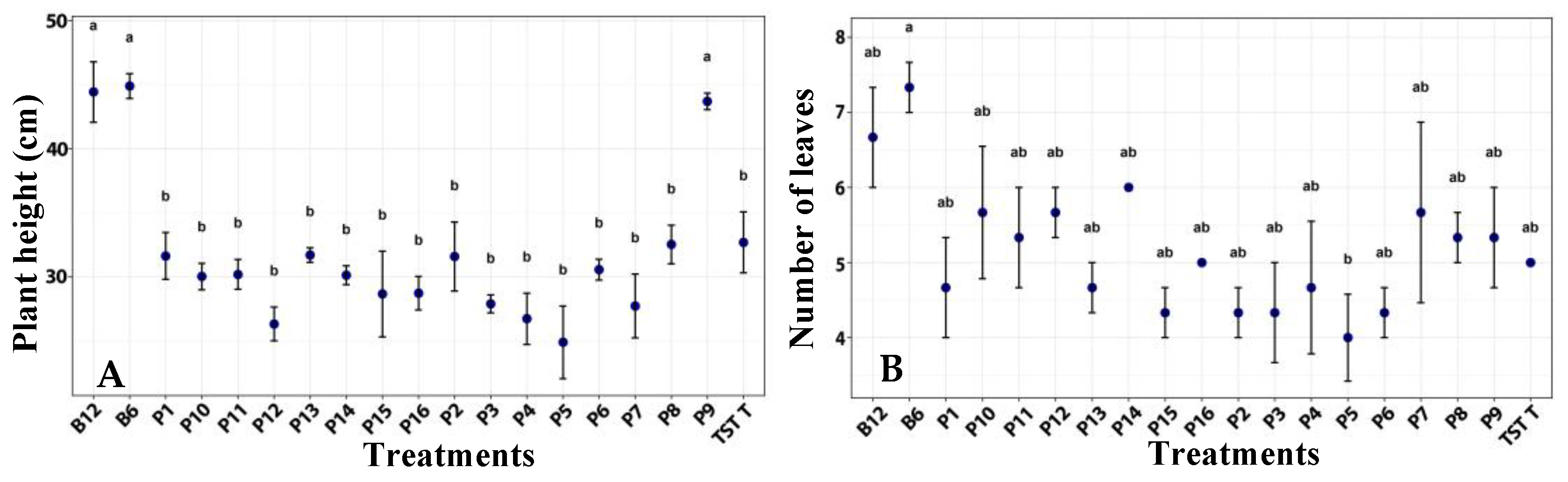
Significant differences were observed in plant height. Plants treated with film 9, as well as those treated with both B. subtilis concentrations (B12, B6), showed greater height compared with the other treatments. Leaf number did not differ significantly among treatments (Figure 1).
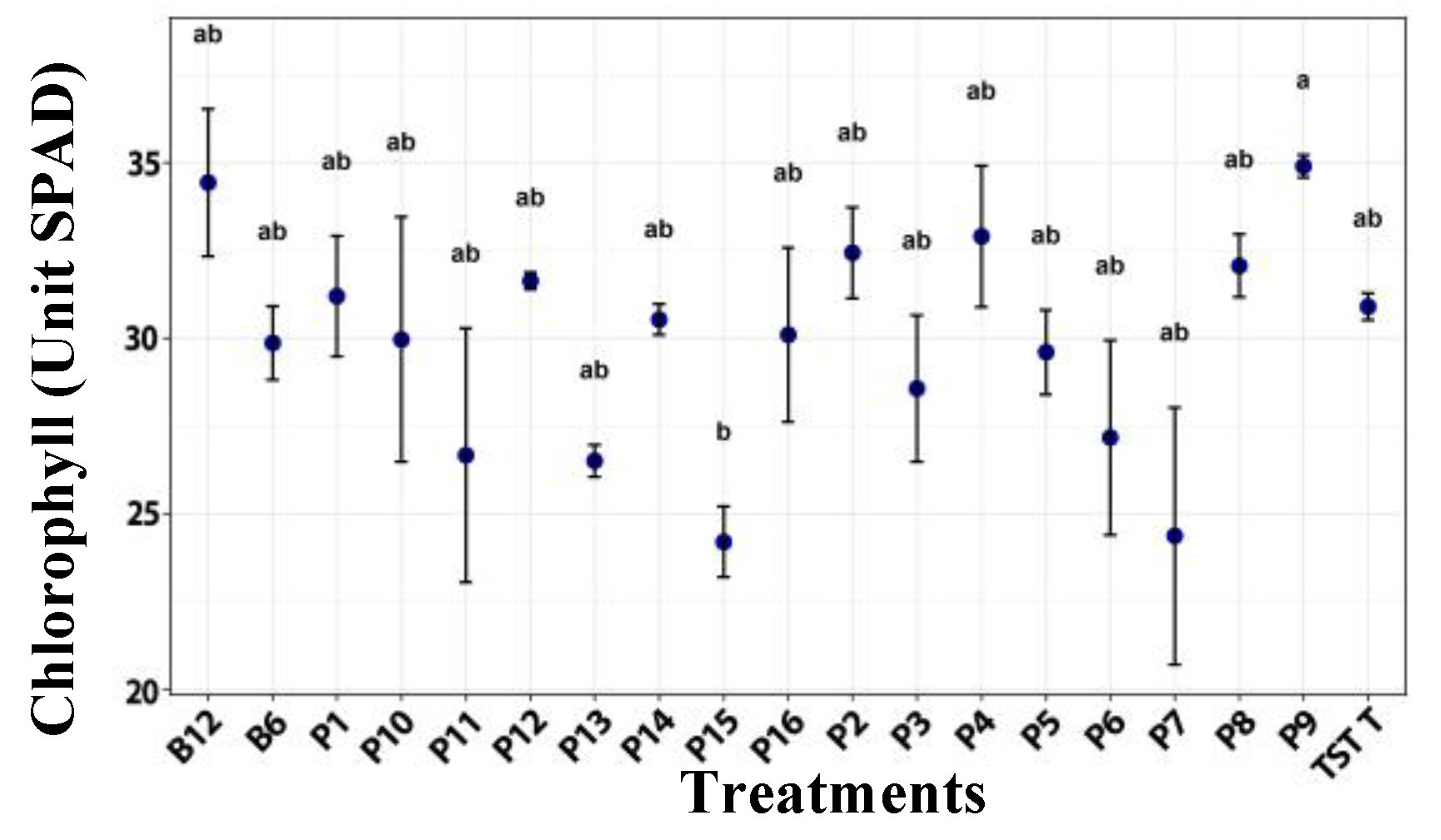
For chlorophyll, no significant statistical differences were detected among treatments; however, plants treated with film 9 tended to show higher chlorophyll content (Figure 2).
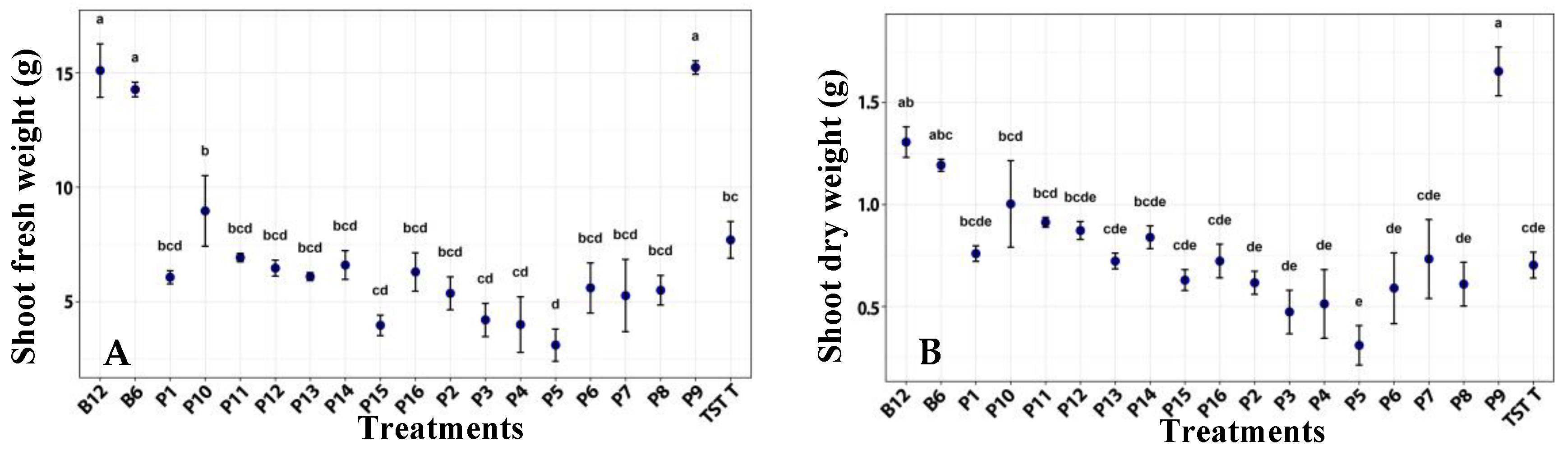
Shoot fresh weight in plants treated with film 9 and with both bacterial suspensions (B6, B12) was significantly higher than in the other treatments. Plants treated with film 9 also showed higher shoot dry weight than plants receiving the other films and the control (Figure 3).
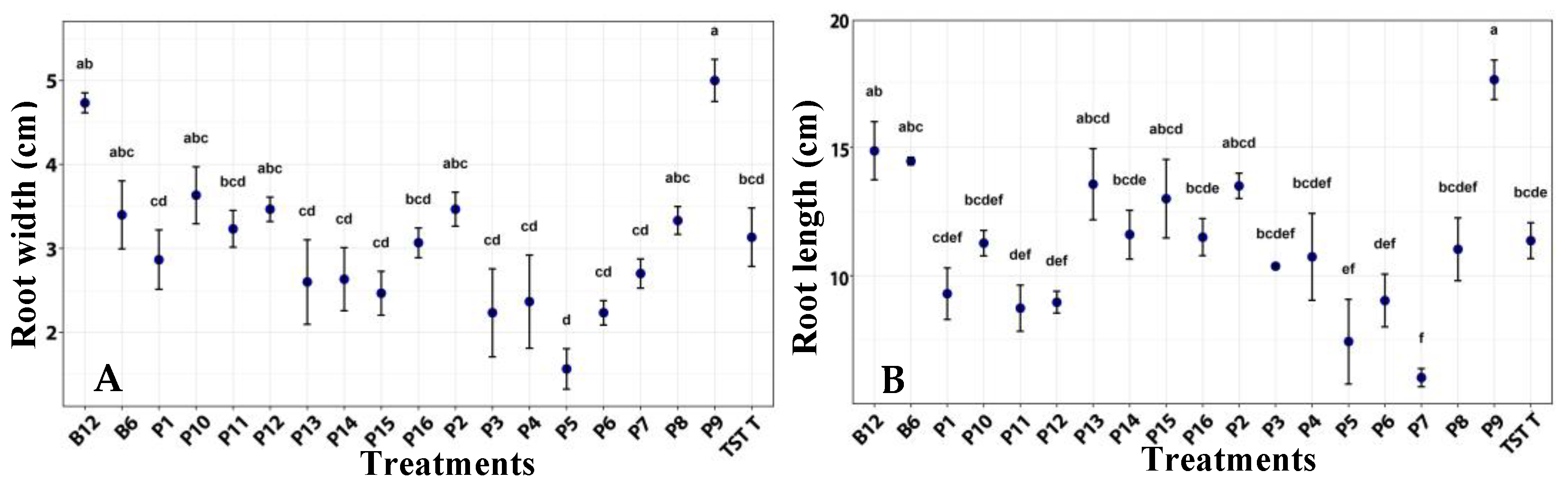
Plants treated with film 9 developed roots significantly longer and wider than untreated plants. The same treatment tended to produce larger roots compared with the other formulations and with plants treated with both bacterial concentrations (Figure 4).
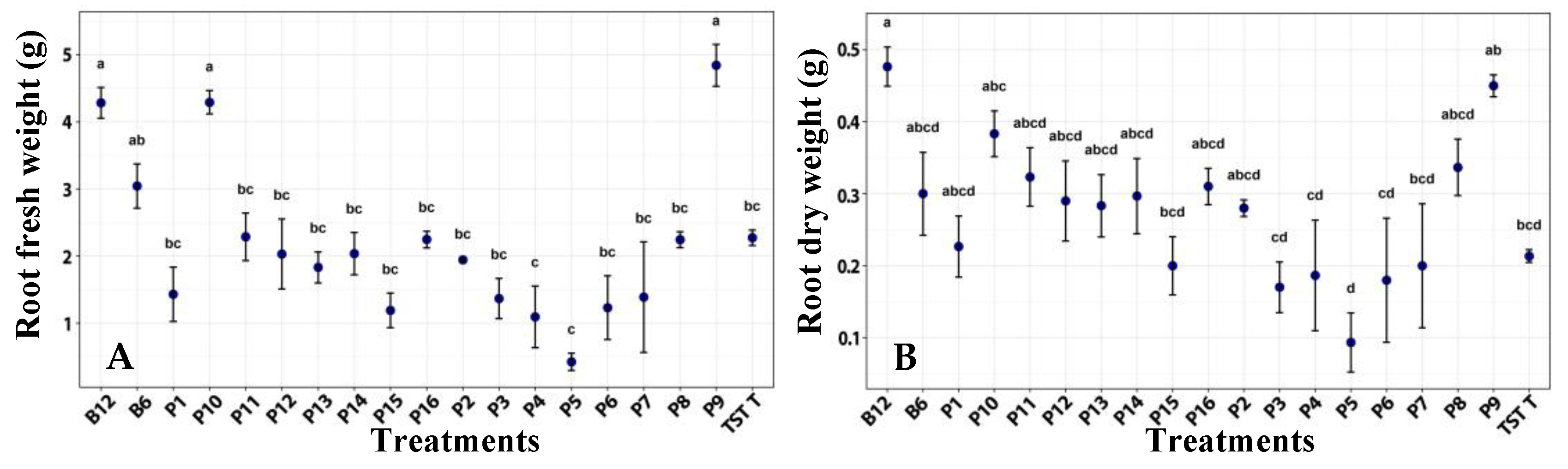
Root fresh and dry weights were significantly higher in plants treated with film 9 than in untreated plants. Film 9 also tended to increase root fresh and dry weights compared with plants treated with other films (Figure 5).

2.2. Evaluation of Root Films for the B. subtilis Establishment on Tomato Roots

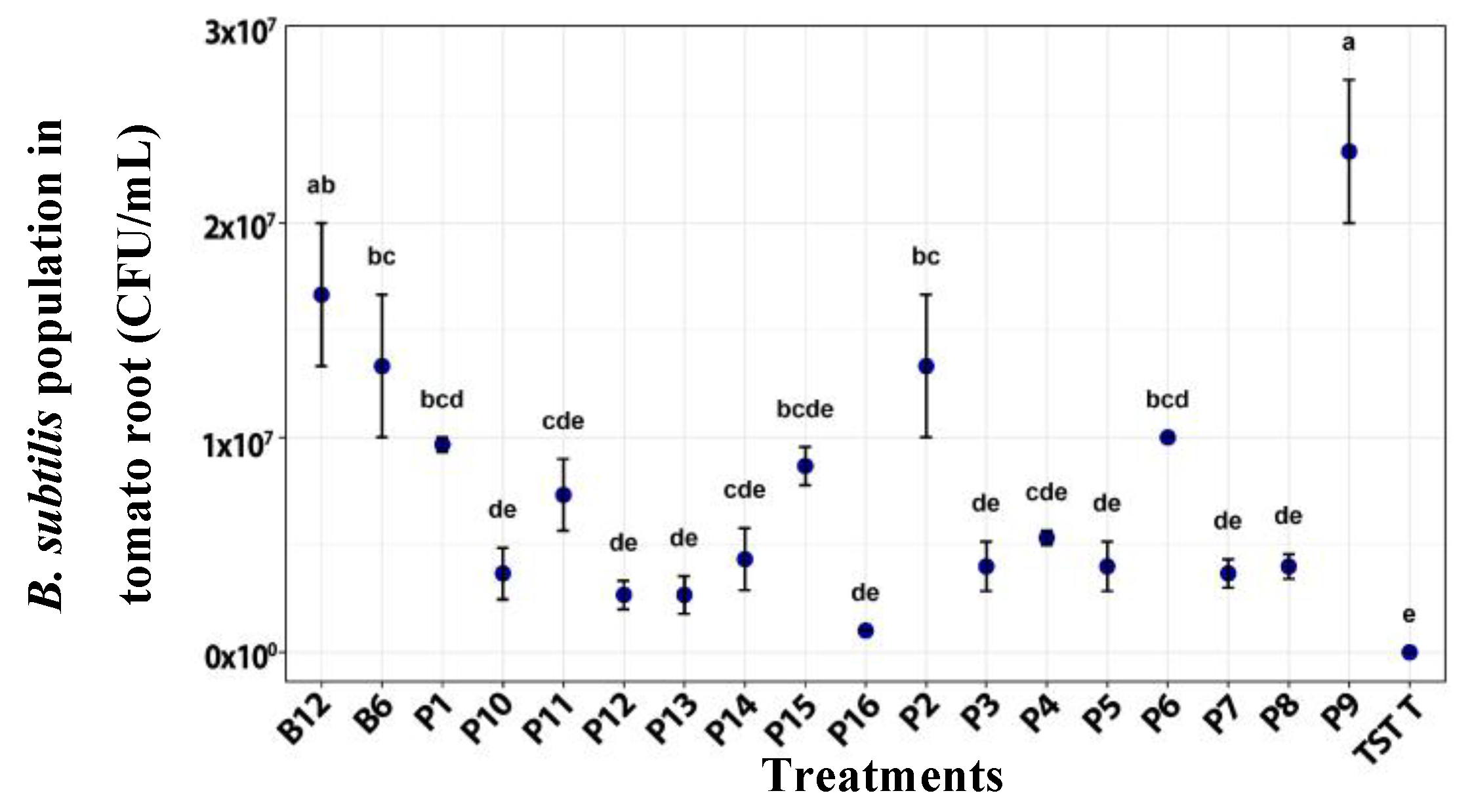
Plants treated with film 9 showed the highest B. subtilis concentration on roots, followed by B12, compared with the other treatments; both share the same bacterial concentration used (1 × 10¹² CFU/mL) (Figure 6).

2.3. Use of Film 9 as a Culture Medium for B. subtilis

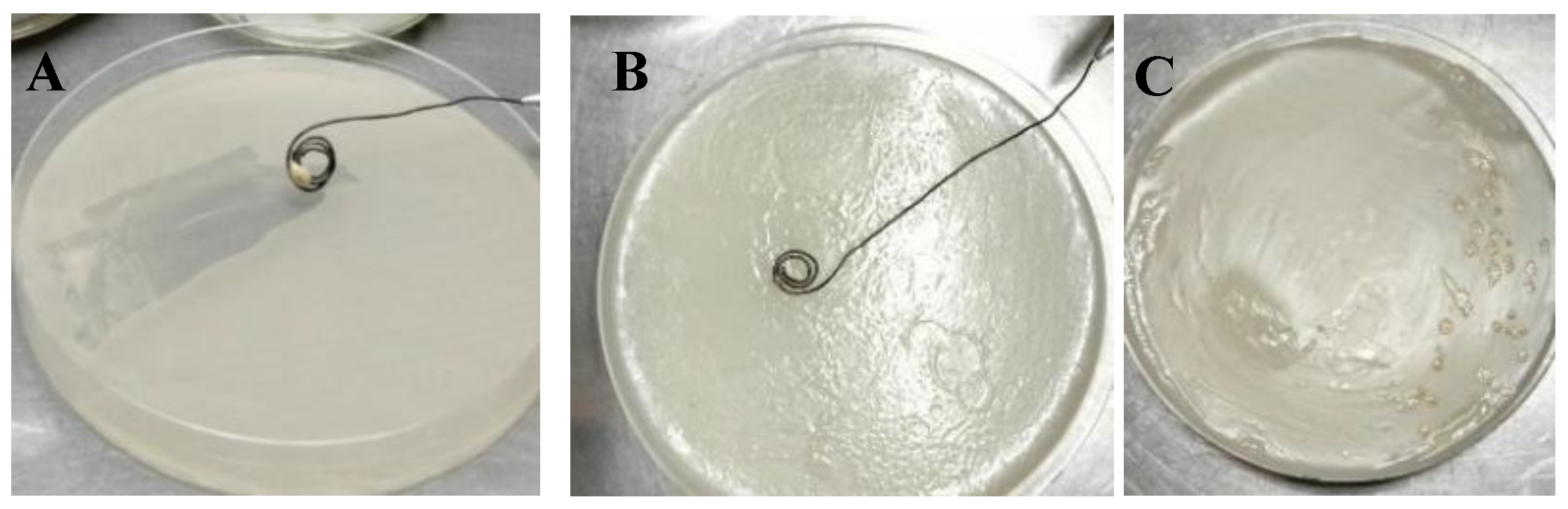
B. subtilis grew in 100% of plates on both the film-based medium and PDA. Although growth was more abundant on PDA, it was evident on the base film 9 medium as well, as shown in panels B and C (Figure 7).

2.4. Film Degradation in Soil

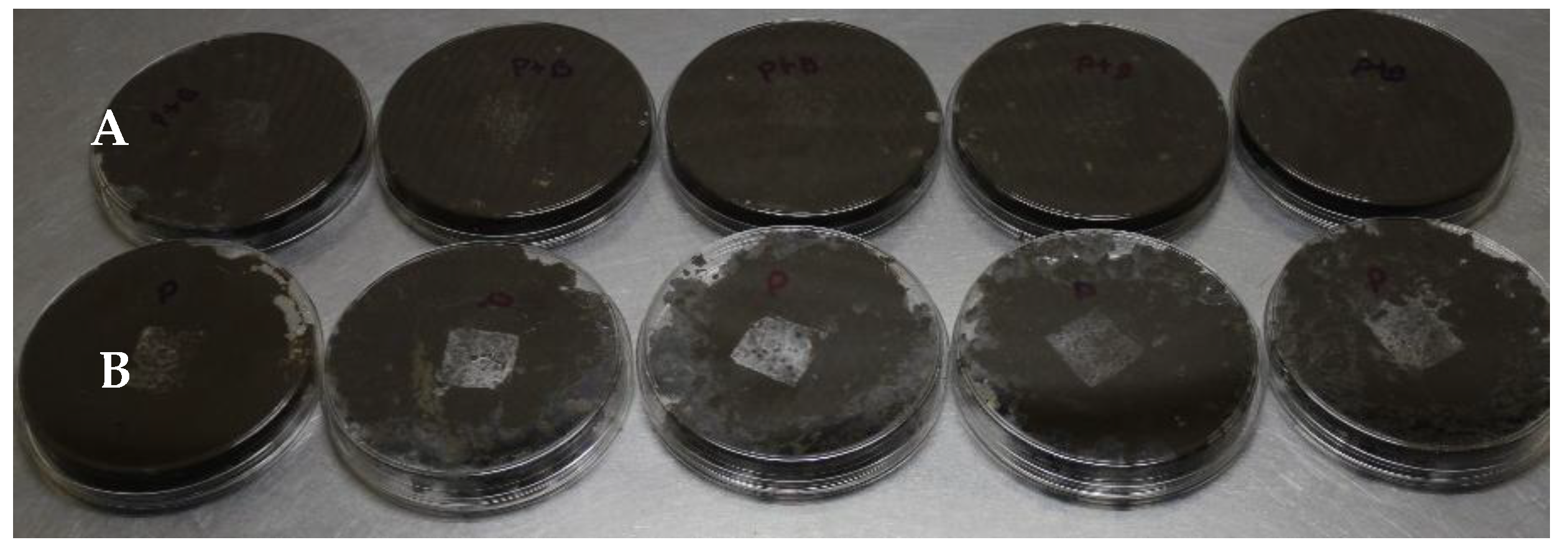
After 15 days of placing the film pieces in the soil, the piece the film 9 containing B. subtilis GOS 01 B-67748 showed evident degradation and was barely visible compared with the film without bacteria (Figure 8).

2.5. Viability of B. subtilis in the Film Formulation

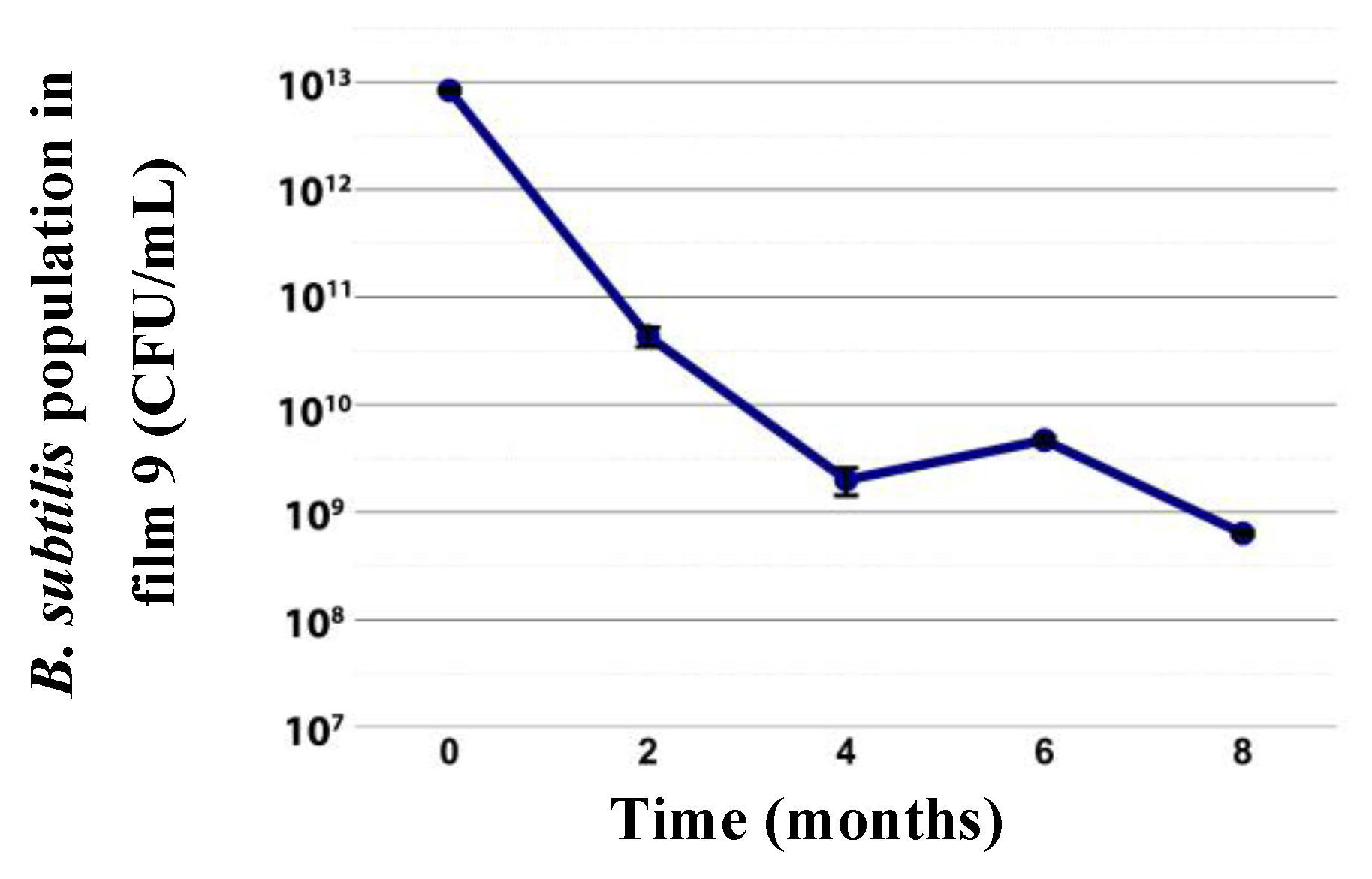
Over 8 months of storage of film 9, bacterial viability was maintained, though it decreased gradually. Initially at ~1012 CFU/mL, it decreased to ~1010 CFU/mL by month 2; at months 6 and 8 the decline was more gradual (~109 to ~108 CFU/mL) (Figure 9).

2.6. Molecular and Phylogenetic Analysis of B. subtilis Isolated from Tomato Root

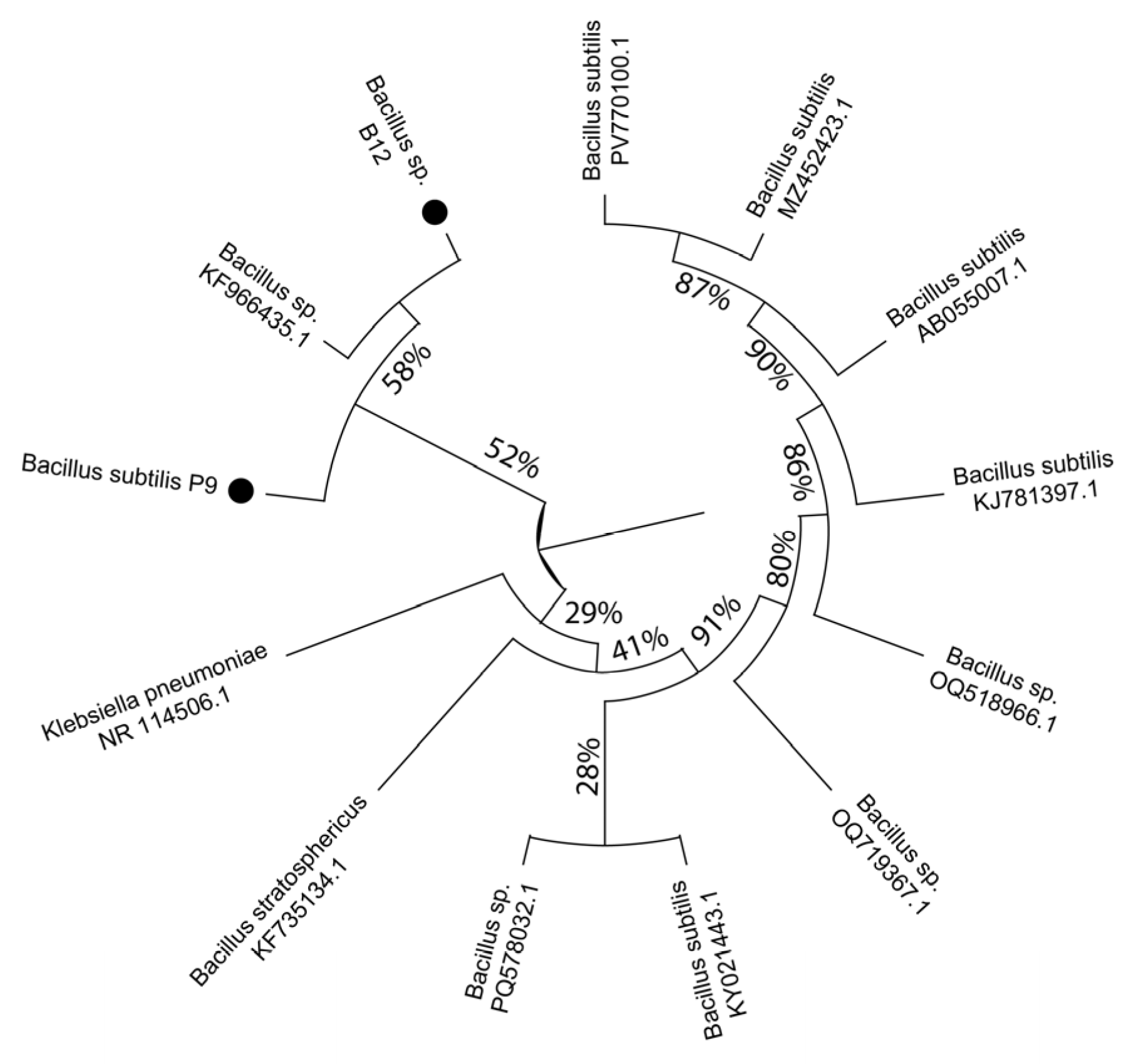
Reference Bacillus spp. isolated from roots treated with film 9 and B12 taxa showed a significant evolutionary distance from the isolates, with the closest taxon being Bacillus sp. KF966435.1 (bootstrap ≥ 58%). Both isolates show a phylogenetic relationship with B. subtilis, although on independent branches with bootstrap values of 52% and 58%, respectively. While these values can be interpreted as moderate, they confirm a reliable proximity to the B. subtilis clade and suggest a distinct evolutionary trajectory relative to GenBank sequences consulted (Figure 10).

3. Discussion

Edible-film formulations have incorporated microorganisms for diverse functionalities—maintaining viability, serving as carriers of phytopathogen control agents, among others. In this study, film formulation 9, composed of 0.6% guar gum, 0.15% candelilla wax, 0.15% glycerol, and 20% B. subtilis (1012 CFU/mL), was applied to tomato seedling root balls prior to transplanting. After 60 days, the film increased total dry weight (shoot + root) by 249% relative to the control. These results exceed those reported by [35] who used B. subtilis EA-CB0575 inoculated on tomato roots (108 CFU/mL, 1-h root soak) in commercial soil under greenhouse conditions, achieving an 82.4% increase in total dry weight at 60 days after inoculation. The bacterium was predominantly localized in the upper and lower root zones, correlating with growth promotion.
Previous studies with Bacillus amyloliquefaciens (ex Fukomoto 1943) MBI 600 also showed positive effects in tomato. The bacterium was applied (1010 CFU/mL) by drench to pots (80 cm3) with peat:perlite (5:1), followed by a 10-day post-sowing application (107 CFU/mL). This approach increased plant height (20.91%), root length (13.63%), and shoot fresh weight (115.32%), but reduced root fresh weight (−21%) compared with controls [36]. In contrast, with film 9 applied to the root ball and plants grown in loam soil, increases were greater for plant height (33.64%), root length (55%), shoot fresh weight (97.8%), and root fresh weight (113.36%) relative to controls. In tomato inoculated with B. subtilis NCD-2 at transplant (3 mL at 109 CFU/mL) in pots with soil:vermiculite:peat (2:2:1 v/v/v) under a 16/8 h photoperiod, the bacterium promoted growth: at 35 days post-inoculation, plant height increased 19%, shoot fresh weight 27.25%, shoot dry weight 20.06%, root fresh weight 72.31%, and root dry weight 14.39% compared with controls; B. subtilis NCD-2 in rhizospheric soil reached 6.98 pg/g, evidencing establishment [17]. With film 9 applied once to the root ball and plants grown in loam, more pronounced effects on shoot and root biomass were observed at 60 days: plant height rose 33.64%; shoot fresh and dry weights increased 97.8% and 135.7%, respectively; root fresh and dry weights increased 113.3% and 114%, respectively, versus controls. de O Nunes et al., 2023 [28] evaluated B. subtilis FMCH002 (1 × 10⁸ CFU/mL), inoculating the growth substrate (2.5 mL), transplanting to rhizotrons (soil:commercial substrate 3:1 v/v) with additional bacterial applications (10 mL) at 10 and 20 days after transplant. After 32 days, FMCH002 increased plant height by 17.3%, shoot fresh weight 26.9%, shoot dry weight 36.4%, root dry weight 177.2%, and root length 37.1%, although root fresh weight decreased by 25%. In contrast, in the present work, a single root-ball application of film 9 with B. subtilis GOS 01 B-67748 increased height by 33.6%, shoot fresh weight by 97.8%, shoot dry weight by 135.7%, root fresh weight by 113.3%, root dry weight by 114%, and root length by 55%.
Regarding root bacterial load, B. subtilis MBI600 declined rapidly after inoculation across substrates. Initially at 2 × 10¹⁰ CFU/cm root, after 5 days it dropped to 2 × 10⁵ CFU under gnotobiotic conditions, 3.2 × 10⁵ CFU/cm in commercial peat, 4 × 10⁴ CFU/cm in garden soil, and 3 × 10⁵ CFU/cm in hydroponic cubes; by 20 days, concentrations declined markedly in each system (3 × 10², 2.5 × 10², 1.7 × 10², and 4 × 10² CFU/cm, respectively) [37]. With film 9 applied to tomato roots grown in loam soil, B. subtilis remained at 2.3 × 10⁷ CFU/g root at 60 days.
Similarly, under gnotobiotic conditions (20 cm3 Perloflor® + 30 g pure sea sand + 10% v/v nutrient solution in a 220 × 25 mm glass tube), 2 mL of B. amyloliquefaciens MBI600 (2 × 10¹⁰ CFU/mL) were added at planting. At 15 days, roots reached 13 × 103 CFU/mL [36]. In contrast, in this work, roots treated with film 9 carrying B. subtilis presented 2.3 × 10⁷ CFU/g at 60 days, evidencing higher concentration, persistence, and establishment.
Combinations of B. subtilis with other Bacillus species have also been evaluated. For example, B. subtilis + B. licheniformis [28] yielded root Bacillus concentrations up to 8.35 × 10⁹ CFU/g a few days after transplant, albeit with high variability among treatments (103–107 CFU/g). Here, although B. subtilis populations were lower (2.33 × 10⁷ CFU/g), they remained stable at 60 days, indicating that the film favored long-term persistence an advantage over short-lived conventional inoculations.
Encapsulation of B. subtilis CC-pg104 in sodium alginate crosslinked with CaCl2 (1.5%) prepared with glycerol (30%), humic acids (10%), and alginate (2%), followed by addition of a pellet from 250 mL of B. subtilis (2 × 10¹⁰ CFU/mL) to form beads and lyophilization, was applied (100 mg) to lettuce seedlings under gnotobiotic conditions. Treatments included free cells (1 mL, 1 × 10⁸ CFU) and empty capsules. Encapsulation increased lettuce root length (~76%) and shoot (~64%) relative to the no-bacteria control, while compared with free cells only shoot increased (~28%) after 21 days. Rhizosphere counts were 2 × 10³ CFU/cm for free cells and 4 × 10⁷ CFU/cm for encapsulated bacteria; product viability remained at 5.3 × 10⁸ CFU/mL for 5 months [30]. In tomato roots at 60 days, concentrations were similar; moreover, over a longer period (8 months) B. subtilis concentration in film 9 stored at 4 °C remained at 6.3 × 10⁸ CFU/mL. In another study, B. subtilis PTS-394 (~5 × 10⁷ CFU/mL; 20 mL) was added to substrate (paddy soil:vermiculite:organic fertilizer 1:2:1, w/w) of tomato with 4 true leaves. Thirty days after transplant, plant height increased 8.9% and root fresh weight 18.30% versus controls, and at 21 days root counts reached 2 × 10⁶ CFU/g [29]. With film 9, greater increases were achieved (height 33.6%; root fresh weight 113.3%) and rhizoplane counts reached 2.3 × 10⁷ CFU/g at 60 days.
Regarding shelf life of film formulations, a preformed cassava starch film (4%) with glycerol (1.5%) and CMC (2%) plus B. amyloliquefaciens Y11 or B. velezensis Y12 (3%) maintained bacteria within 106–107 CFU/g when analyzed every 5 days up to day 30 [38]. Although here bacterial concentration in film 9 was assessed in liquid, after a longer storage period (8 months) a high concentration (6.3 × 10⁸ CFU/mL) was preserved.
Some film formulations maintain viability of incorporated strains; for example, a 100% Aloe vera (L.) Burm.f., 1768 film with 1.0 g·L−1 glycerol and 0.1 M glucose increased viability of L. paracasei TEP6 (10.9 log CFU·g−1) [23]. On the base formulation of film 9, B. subtilis GOS 01 B-67748 showed limited growth; however, this suggests it may have used one or more ingredients as carbon and energy sources. B. subtilis P2-5 produces β-mannanase that hydrolyzes mannan present in guar gum [39]. Likewise, B. subtilis subsp. inaquosorum CSB31 produces an extremely alkaline mannanase (MnB31), NaCl-tolerant (10%), urea-stable (3 M), and protease-resistant [40]. These features reflect enzyme adaptation to common soil conditions, demonstrating bacterial metabolic tolerance. Similarly, Streptomyces sp. CS428 synthesizes β-mannanase that hydrolyzes carob galactomannan, releasing mannobiose, mannotriose, mannose, and various manno-oligosaccharides [41]. Such mono- and oligosaccharides can be utilized by microbial metabolism [42], indicating that B. subtilis likely used these compounds as energy sources in the guar-gum medium of film 9. Guar gum is also recognized as a gelling agent in media for fungal and bacterial growth, evidencing compatibility with beneficial microorganisms [43].
Regarding degradability, after 15 days film 9 was scarcely perceptible in soil compared with film without bacteria. A similar behavior was observed with cassava starch (4%), glycerol (1.5%), and CMC (2%) films containing B. amyloliquefaciens Y11 or B. velezensis Y12 (3%): 2 × 2 cm pieces became undetectable by day 15 in soil [38].

4. Materials and Methods

4.1. Biological Material and Raw Materials

The B. subtilis strain GOS 01 B-67748, registered with the Northern Regional Research Laboratory, was used for its ability to promote tomato growth and control fungi such as F. oxysporum, R. stolonifer, R. solani, among others. This strain is part of the microorganism collection of the Phytopathology Laboratory, Instituto Politécnico Nacional, CIIDIR Michoacán Unit, Mexico. Tomato seeds were the Rio Grande variety (KristenSeed®, Jalisco, Mexico). Guar gum (Diquítra®, Mumbai, India), glycerol (≥99.5% purity, J.T. Baker®, Phillipsburg, NJ, USA), and food-grade refined candelilla wax (Abreiko, Jalisco, Mexico) were used for the biofilm formulations.

4.2. Design and Preparation of Film Formulations

Film formulations were designed with guar gum, candelilla wax, glycerol, and B. subtilis using a 24 factorial design in Design-Expert® (version 12, Stat-Ease, Minneapolis, MN, USA), where the ingredients were the factors, each at two levels (high and low) (Table 1).
Bacillus subtilis suspensions were prepared by mass culturing on sterile Potato Dextrose Agar (PDA) plates and incubation at 37 °C (Thermo Scientific®, Langenselbold, Hesse, Germany) for 48 h. Biomass was collected with a sterile loop and suspended in sterile distilled water to 1 × 10⁶ or 1 × 10¹² CFU/mL, verified by absorbance of 0.50 or 1.00 at 520 nm, previously calibrated with serial dilutions and optical density analyses on a UV-Vis spectrophotometer Lambda 2 (PerkinElmer®, Überlingen, Baden-Württemberg, Germany). Suspensions were prepared immediately before incorporation into the films.
Films were prepared by melting candelilla wax in distilled water at 80 °C in a 1-L blender glass jar; once melted, glycerol and guar gum were added, followed by high-speed homogenization for 3 min in a blender (Oster Classic®, Atlanta, GA, USA) to form an emulsion. This mixture was sterilized at 121 °C for 15 min and, after cooling to 30 °C, the bacterial suspensions were added.

4.3. Evaluation of Root Films for the Promotion of Tomato Growth

Tomato seeds were disinfected with 3% sodium hypochlorite for 5 min and rinsed four times with sterile distilled water. Seeds were sown in loam substrate, sterilized at 121 °C for 1 h over three consecutive days, in a 200-cell germination tray (54.5 cm × 28.8 cm × 3.5 cm; 23 mL per cell), and maintained under a photoperiod (6 h light/8 h dark). When seedlings developed 4 true leaves, their root balls were dipped for 5 s in the film formulations and then transplanted to sterile 1-L pots containing 500 g of sterile loam substrate as above. Ten seedlings per treatment were maintained under a 16 h light/8 h dark photoperiod. Treatments were the 16 formulations (P1–P16); controls were plants treated with B. subtilis suspensions (1 × 10⁶ and 1 × 10¹² CFU/mL) and untreated plants (TST). After 60 days, plant height; root growth (length and width measured with a 5-m tape, Cadena®, MGA 5020, Taipei, Taiwan); number of well-developed leaves; and chlorophyll content (measured with a SPAD 502 meter, Konica Minolta, Marunouchi, Chiyoda-ku, Tokyo, Japan). Shoot and root fresh weights were determined using an analytical balance (Electronic Balance Kyoto, Japan). Shoot and root dry weights were determined using an analytical balance after drying at 105 °C for five days in a forced convection oven, (Terlab®, Zapopan, Jalisco, Mexico). A total of ten plants per treatment were considered.

4.4. Evaluation of Root Films for the B. subtilis Establishment on Tomato Roots

The establishment of B. subtilis on roots was also assessed 60 days after treatment application. For each treatment, 1 g of root was serially diluted in 20-mL tubes with 9 mL sterile distilled water. Then, 1 mL of sample was inoculated onto PDA, spread evenly, air-dried in a laminar-flow hood for 30 min, and incubated at 37 °C for 48 h. Plating for each treatment was performed in triplicate. Colonies with growth characteristics consistent with B. subtilis were selected following according to [44], smeared onto slides, and examined under a compound microscope at 100× magnification (Carl Zeiss® Oberkochen, Bande-Württember, Germany) for morphological identification following the criteria described in [44].

4.5. Use of Film 9 as a Culture Medium for B. subtilis

The film formulation that was most effective at promoting growth and maintaining a higher B. subtilis concentration on tomato roots was selected for evaluation on plants placed at experimental and commercial greenhouse level, and as a culture medium for the bacterium.
Formulation 9 was prepared as a culture medium with the previously described ingredients and concentrations, plus 15 g/L bacteriological agar. Agar was dissolved by microwave heating for 3 min at power level 10 (≈100 °C), sterilized at 121 °C for 15 min, poured (20 mL) into sterile plastic Petri dishes (90 × 15 mm), and allowed to solidify. Then, 1 mL of B. subtilis suspension (1 × 10¹² CFU/mL) was spread and air-dried in a laminar-flow hood for 30 min. Plates were incubated at 37 °C for 72 h. As a control, the bacterium was cultured on PDA. Five replicates per medium (P9 and PDA) were included, and bacterial growth was recorded.

4.6. Degradation Film 9 in Soil

Degradation of the preformed film in sterile soil was determined using formulation P9 due to its capacity to promote tomato plant growth. Twenty milliliters of formulation 9 were poured into sterile Petri dishes (90 × 15 mm) within a laminar-flow hood; covered plates were placed in a convection oven at 37 °C to form a uniform sheet. In the hood, 2-cm2 pieces were cut with a sterile scalpel and placed at the bottom of sterile Petri dishes. Twenty grams of sterile loam soil (121 °C, 1 h, on three consecutive days; pH 7.0) were added on top, and samples were maintained at 60% moisture and 25 ± 2 °C until degradation was observed. Treatments were soil with film 9 (P9) and soil with base film (P). Five replicates per treatment were included.

4.7. Viability of B. subtilis in the Film Formulation

The emulsion corresponding to film 9 was prepared and stored at 4 °C for eight months. Each month, the viability of B. subtilis in the formulation was determined by serial dilutions. For this proposer, 1 mL the emulsion was taken, serially diluted, and plate on PDA medium as previously described. Three replicates were considered for each evaluation.

4.8. Molecular Analysis of B. subtilis Isolated from Tomato Root

To identify B. subtilis on tomato roots, colonies with morphological characteristics per [44] were selected from the plates used to determine B. subtilis concentration. A single colony was transferred to PDA and incubated at 37 °C for 48 h; the resulting growth was used for molecular identification. Colonies were from roots treated with film 9 and 1 × 10¹² CFU/mL.
DNA was extracted using the Quick-DNA™ Fungal/Bacterial Miniprep Kit (Zymo Research®, Irvine, CA, USA) following the manufacturer’s instructions. DNA presence was verified by electrophoresis on 1% (w/v) agarose gels. The presence of DNA was verified by electrophoresis on 1% (w/v) agarose gels prepared in 1× TAE buffer and run at 90 V for 30 min. DNA bands were visualized under UV light using a BIORAD Universal Hood II (USA) photodocumenter after staining with GelRed™ nucleic acid stain (Biotium, Fremont, CA, USA).
The 16S gene was amplified by PCR using universal primers 16S-F (AGAGTTTGATCCTGGCTCAG, 23.24 nmol) and 16S-R (ACGGCTACCTTGTTACGACTT, 25.14 nmol) (T4 OLIGO®, Irapuato Gto, Mexico). The 25-µL reaction mixture contained 10 µL PCR Master Mix (Thermo Scientific®), 10 µL DNA, 2 µL Forward, 2 µL Reverse, and 10 µL sterile ultrapure water.
PCR was performed in a thermocycler (BIO-RAD T100™ Thermal Cycler, Singapore) with the following conditions: an initial denaturation at 95 °C for 3 min, followed by 35 cycles of denaturation at 95 °C for 30 s, annealing at 55 °C for 30 s, and extension at 72 °C for 1 min, with a final extension at 72 °C for 10 min. To confirm amplicons, 2 µL of PCR product were run on 1% agarose gels at 90 V and 100 mA for 30 min and visualized in a photodocumenter (BIO-RAD® Universal Hood II, Hercules, CA, USA).

4.9. Phylogenetic Analysis of B. subtilis Isolated from Tomato Root

After amplification was verified on 1.1% agarose gels, samples were sent to Macrogen® (Seoul, Republic of Korea) for Sanger sequencing using an ABI 3730-xl DNA Analyzer (Applied Biosystems, Foster City, CA, USA; www.appliedbiosystems.com). Sequences of B. subtilis amplicons were identified by BLASTN against databases (GenBank, EMBL, DDBJ and UNITE for environmental sequences; http://unite.ut.ee/). All sequences were compared with GenBank using BLAST; the best match with maximum identity and E-value was recorded. A B. subtilis subspecies sequence was used as a reference group.
Sequences were processed to remove low-quality regions from forward and reverse reads and assembled into contigs using BioEdit (version 7.0.5.2). Assembled contigs were subjected to a BLAST search in NCBI (BLASST version 2.13.0) to corroborate identity and determine similarity with published sequences, selecting those with at least 98% identity. Amplicon sequences were compared with five similar sequences each, selected from public databases (NCBI) and represented by their GenBank IDs. Phylogenetic analysis of B. subtilis sequences was performed with MEGA 11 [45,46]. The consensus phylogram was constructed with the PHYLIP 3.6 package (consensus program) using the maximum-likelihood method on 16S sequences from 10 taxa. Klebsiella pneumoniae (NR 114506.1) was used as the outgroup. Numbers on branches correspond to bootstrap values. Branch lengths are measured as substitutions per site. Bootstrap values ≥ 70% are displayed. The sequences of the bacterial species obtained in this study are marked by a black circle (Bacillus subtilis BF 16S and Bacillus sp. CB 16S).

4.10. Statistical Analysis

Data were analyzed using ANOVA to detect significant differences. Mean separation was performed with Tukey’s test (p ≤ 0.05) using R (version 4.1.1) within RStudio for Windows 10.

5. Conclusions

The B. subtilis root film (formulation 9) composed of 0.6% guar gum, 0.15% candelilla wax, 0.15% glycerol, and 20% B. subtilis suspension at 1 × 10¹² CFU/mL, produced the greatest effect on plant growth promotion, increasing shoot and root biomass in tomato. It also enabled higher B. subtilis colonization on roots than treatment with bacteria alone. These results indicate that the biofilm not only enhances bacterial colonization but also favors plant development, demonstrating its potential as a bioinoculant in tomato cultivation.
Within the formulation 9 matrix, B. subtilis remained at high concentration over a prolonged period (8 months) and grew when cultured on a medium prepared from the same film. Rapid degradation of the root film in soil was observed, suggesting that the bacterium can utilize some ingredients as carbon and energy sources. This capacity to degrade an innocuous material is a useful strategy to potentiate beneficial functions and represents a reliable agroecological alternative for large-scale application in tomato crops.
This section is not mandatory but can be added to the manuscript if the discussion is unusually long or complex.

Author Contributions

Conceptualization, G.O.-S. and C.L.A.-M.; methodology, G.O.-S.; software, O.F.H.-Z. and O.G.G.-C.; validation, M.V.A.-P., and E.O.-Z.; formal analysis, G.O.-S. and C.L.A.-M.; investigation, O.G.G.-C., J.C.R.-P. and G.M.G.-B.; resources, G.O.-S. and E.O.-Z.; data curation, J.C.-P. and J.C.R.-P.; writing—original draft preparation, G.O.-S. and C.L.A.-M.; writing—review and editing, O.F.H.-Z., O.G.G.-C., J.C.R.-P., M.V.A.-P. and G.M.G.-B.; visualization, G.O.-S. and C.L.A.-M.; supervision, G.O.-S. and C.L.A.-M.; project administration, G.O.-S.; funding acquisition, G.O.-S. and E.O.-Z. All authors have read and agreed to the published version of the manuscript.

Funding

This research was funded by Secretaría de Investigación y Posgrado of Instituto Politécnico Nacional (IPN), funding number SIP 20240448, Mexico.

Data Availability Statement

The original contributions presented in the study are included in the article, further inquiries can be directed to the corresponding authors.

Acknowledgments

We express our acknowledgments the Secretaría de Investigación y Posgrado of Instituto Politécnico Nacional for financial support of this research, as well as the Instituto Tecnológico Nacional de México/Roque and the Universidad de La Ciénega del Estado de Michoacán de Ocampo for providing equipment and facilities.

Conflicts of Interest

The authors declare no conflicts of interest.

References

  1. Chandrasekaran, M.; Chun, S.C.; Oh, J.W.; Paramasivan, M.; Saini, R.K.; Sahayarayan, J.J. Bacillus subtilis CBR05 para frutos de tomate (Solanum lycopersicum) en Corea del Sur como una nueva bacteria probiótica vegetal (BPP): Implicaciones del contenido total de fenoles, flavonoides y carotenoides para la calidad del fruto. Agronomía 2019, 9, 838. [Google Scholar] [CrossRef]
  2. Gashash, E.A.; Osman, N.A.; Alsahli, A.A.; Hewait, H.M.; Ashmawi, A.E.; Alshallash, K.S.; El-Taher, A.M.; Azab, E.S.; Abd El-Raouf, H.S.; Ibrahim, M.F.M. Effects of Plant-Growth-Promoting Rhizobacteria (PGPR) and Cyanobacteria on Botanical Characteristics of Tomato (Solanum lycopersicon L.) Plants. Plants 2022, 11, 2732. [Google Scholar] [CrossRef] [PubMed]
  3. Amaresan, N.; Jayakumar, V.; Kumar, K.; Thajuddin, N. Biocontrol and plant growth-promoting ability of plant-associated bacteria from tomato (Lycopersicum esculentum) under field condition. Microb. Pathog. 2019, 136, 103713. [Google Scholar] [CrossRef] [PubMed]
  4. Mazzuchelli, L.R.d.C.; Mazzuchelli, L.E.H.; de Araujo, F.F. Efficiency of Bacillus subtilis for root-knot and lesion nematodes management in sugarcane. Biological Control. 2020, 143, 104185. [Google Scholar] [CrossRef]
  5. Xia, H.; Liu, H.; Gong, P.; Li, P.; Xu, Q.; Zhang, Q.; Sun, M.; Meng, Q.; Ye, F.; Yin, W. Study of the mechanism by which Bacillus subtilis improves the soil bacterial community environment in severely saline-alkali cotton fields. Sci. Total Environ. 2025, 958, 178000. [Google Scholar] [CrossRef]
  6. Gan, K.; Meng, C.; Liang, T.; Li, X.; Li, G.; Liu, D. Biocontrol effects and underlying mechanism of Bacillus subtilis Pn1 on Panax notoginseng root rot caused by Fusarium solani. Ind. Crops Prod. 2025, 229, 120963. [Google Scholar] [CrossRef]
  7. Bouchard-Rochette, M.; Younes, M.; Cossus, L.; Nguyen, T.T.A.; Antoun, H.; Droit, A.; Tweddell, R.J. Bacillus pumilus PTB180 and Bacillus subtilis PTB185: Production of lipopeptides, antifungal activity, and biocontrol ability against Botrytis cinerea. Biol. Control 2022, 170, 104925. [Google Scholar] [CrossRef]
  8. Wang, X.; Yang, Z.; Zeng, Q.; Wang, X.; Liu, S.; Wang, E.; Wu, Y.; Zeng, Y.; He, M.; Wang, Y.; et al. Chitosan hydrogel microspheres loaded with Bacillus subtilis promote plant growth and reduce chromium uptake. Int. J. Biol. Macromol. 2025, 286, 138401. [Google Scholar] [CrossRef]
  9. Saberi, R.R.; Hassanisaadi, M.; Vatankhah, M.; Soroush, F.; Varma, R.S. Nano/microencapsulation of plant biocontrol agents by chitosan, alginate, and other biopolymers as a novel strategy for alleviating plant biotic stresses. Int. J. Biol. Macromol. 2020, 222 Pt A, 786–805. [Google Scholar] [CrossRef]
  10. Rubin, R.L.; van Groenigen, K.J.; Hungate, B.A. Plant growth promoting rhizobacteria are more cost effective under drought: A meta-analysis. Plant Soil 2017, 416, 309–323. [Google Scholar] [CrossRef]
  11. Rocha, I.R.; Ma, Y.; Souza-Alonso, P.; Vosatka, M.; Freitas, H.; Oliveira, R.S. Seed coating: A tool for delivering beneficial microbes to agricultural crops. Front. Plant Sci. 2019, 10, 1357. [Google Scholar] [CrossRef] [PubMed]
  12. Afzal, M.; Yousaf, S.; Reichenauer, T.G.; Sessitsch, A. The inoculation method affects colonization and performance of bacterial inoculant strains in the phytoremediation of soil contaminated with diesel oil. Int. J. Phytoremediation 2012, 14, 35–47. [Google Scholar] [CrossRef] [PubMed]
  13. Basu, A.; Prasad, P.; Das, S.N.; Kalam, S.; Sayyed, R.Z.; Reddy, M.S.; El Enshasy, H. Plant growth promoting rhizobacteria (PGPR) as green bioinoculants: Recent developments, constraints, and prospects. Sustainability 2021, 13, 1140. [Google Scholar] [CrossRef]
  14. Adeniji, A.; Fadiji, A.E.; Li, S.; Guo, R. From lab bench to farmers’ fields: Co-creating microbial inoculants with farmers input. Rhizosphere 2024, 31, 100920. [Google Scholar] [CrossRef]
  15. Fadiji, A.E.; Xiong, C.; Egidi, E.; Singh, B.K. Formulation challenges associated with microbial biofertilizers in sustainable agriculture and paths forward. J. Sustain. Agric. Environ. 2024, 3, e70006. [Google Scholar] [CrossRef]
  16. Dutta, S.; Podile, A.R. Plant growth promoting rhizobacteria (PGPR): The bugs to debug the root zone. Crit. Rev. Microbiol. 2010, 36, 232–244. [Google Scholar] [CrossRef]
  17. Zhao, W.; Yiyun, B.; Su, Z.; Li, S.; Liu, X.; Guo, Q.; Ma, P. Colonization ability of Bacillus subtilis NCD-2 in different crops and its effect on rhizosphere microorganisms. Microorganisms 2023, 11, 776. [Google Scholar] [CrossRef]
  18. Kaminsky, L.M.; Trexler, V.R.; Malik, R.J.; Hockett, K.L.; Bell, T.H. The inherent conflicts in developing soil microbial inoculants. Trends Biotechnol. 2019, 37, 140–151. [Google Scholar] [CrossRef]
  19. O’Callaghan, M.; Ballard, R.A.; Wright, D. Soil microbial inoculants for sustainable agriculture: Limitations and opportunities. Soil Use Manag. 2022, 38, 1340–1369. [Google Scholar] [CrossRef]
  20. Poppeliers, S.W.; Sánchez-Gil, J.J.; de Jonge, R. Microbes to support plant health: Understanding bioinoculant success in complex conditions. Curr. Opin. Microbiol. 2023, 73, 102286. [Google Scholar] [CrossRef]
  21. Bashan, Y.; de Bashan, L.E.; Prabhu, S.R.; Hernandez, J.-P. Advances in plant growth-promoting bacterial inoculant technology: Formulations and practical perspectives (1998–2013). Plant Soil 2014, 378, 1–33. [Google Scholar] [CrossRef]
  22. Cardarelli, M.; Woo, S.L.; Rouphael, Y.; Colla, G. Seed treatments with microorganisms can have a biostimulant effect by influencing germination and seedling growth of crops. Plants 2022, 11, 259. [Google Scholar] [CrossRef] [PubMed]
  23. Barragán-Menéndez, C.; Gálvez-López, D.; Rosas-Quijano, R.; Salvador-Figueroa, M.; Ovando-Medina, I.; Vázquez-Ovando, A. Films of chitosan and Aloe vera for maintaining the viability and antifungal activity of Lactobacillus paracasei TEP6. Coatings 2020, 10, 259. [Google Scholar] [CrossRef]
  24. Błaszczyk, U.; Wyrzykowska, S.; Gąstoł, M. Application of bioactive coatings with killer yeasts to control post-harvest apple decay caused by Botrytis cinerea and Penicillium italicum. Foods 2022, 11, 1868. [Google Scholar] [CrossRef]
  25. Ebrahimi, B.; Mohammadi, R.; Rouhi, M.; Mortazavian, A.M.; Shojaee-Aliabadi, S.; Koushki, M.R. Survival of probiotic bacteria in carboxymethyl cellulose-based edible film and assessment of quality parameters. LWT 2018, 87, 54–60. [Google Scholar] [CrossRef]
  26. Anđelković, J.; Mihajilov Krstev, T.; Dimkić, I.; Unković, N.; Stanković, D.; Joković, N. Growth-promoting effects of ten soil bacterial strains on maize, tomato, cucumber, and pepper under greenhouse conditions. Plants 2025, 14, 1874. [Google Scholar] [CrossRef]
  27. Samaras, A.; Nikolaidis, M.; Gomez, M.L.A.; Almiron, J.S.; Romero, D.F.; Moschakis, T.; Amoutzias, G.; Karaoglanidis, G. Whole genome sequencing and root colonization studies by a protoplast-transformed strain reveal insights in the biocontrol potential and growth promotion by Bacillus subtilis MBI600 on cucumber. Front. Microbiol. 2021, 11, 600393. [Google Scholar] [CrossRef]
  28. De O Nunes, P.S.; de Medeiros, F.H.V.; de Oliveira, T.S.; de Almeida Zago, J.R.; Bettiol, W. Bacillus subtilis and Bacillus licheniformis promote tomato growth. Braz. J. Microbiol. 2023, 54, 397–406. [Google Scholar] [CrossRef]
  29. Qiao, J.; Yu, X.; Liang, X.; Liu, Y.; Borriss, R.; Liu, Y. Addition of plant-growth-promoting Bacillus subtilis PTS-394 on tomato rhizosphere has no durable impact on composition of root microbiome. BMC Microbiol. 2017, 17, 131. [Google Scholar] [CrossRef]
  30. Young, C.C.; Rekha, P.D.; Lai, W.A.; Arun, A.B. Encapsulation of plant growth-promoting bacteria in alginate beads enriched with humic acid. Biotechnol. Bioeng. 2006, 95, 76–83. [Google Scholar] [CrossRef]
  31. Charron-Lamoureux, V.; Lebel-Beaucage, S.; Pomerleau, M.; Beauregard, P. Rooting for success: Evolutionary enhancement of Bacillus for superior plant colonization. Microb. Biotechnol. 2024, 17, e70001. [Google Scholar] [CrossRef] [PubMed]
  32. Chai, Y.N.; Futrell, S.; Schachtman, D.P. Assessment of Bacterial Inoculant Delivery Methods for Cereal Crops. Front. Microbiol. 2022, 13, 791110. [Google Scholar] [CrossRef] [PubMed]
  33. Lozano-Andrade, C.N.; Nogueira, C.G.; Henriksen, N.N.S.E.; Wibowo, M.; Jarmusch, S.A.; Kovács, Á.T. Establishment of a transparent soil system to study Bacillus subtilis chemical ecology. ISME Commun. 2023, 3, 110. [Google Scholar] [CrossRef] [PubMed]
  34. Torres-García, J.R.; Leonardo-Elias, A.; Angoa-Pérez, M.V.; Villar-Luna, E.; Arias-Martínez, S.; Oyoque-Salcedo, G.; Oregel-Zamudio, E. Bacillus subtilis edible films for strawberry preservation: Antifungal efficacy and quality at varied temperatures. Foods 2024, 13, 980. [Google Scholar] [CrossRef]
  35. Posada, L.F.; Álvarez, J.C.; Romero-Tabarez, M.; de Bashan, L.; Villegas-Escobar, V. Enhanced molecular visualization of root colonization and growth promotion by Bacillus subtilis EA-CB0575 in different growth systems. Microbiol. Res. 2018, 217, 69–80. [Google Scholar] [CrossRef]
  36. Samaras, A.; Efthimiou, K.; Roumeliotis, E.; Karaoglanidis, G.S. Biocontrol potential and plant-growth-promoting effects of Bacillus amyloliquefaciens MBI600 against Fusarium oxysporum f. sp. radicis-lycopersici on tomato. Acta Hortic. 2018, 1207, 139–145. [Google Scholar] [CrossRef]
  37. Samaras, A.; Roumeliotis, E.; Ntasiou, P.; Karaoglanidis, G. Bacillus subtilis MBI600 promotes growth of tomato plants and induces systemic resistance contributing to the control of soilborne pathogens. Plants 2021, 10, 1113. [Google Scholar] [CrossRef]
  38. Tan, X.; Sun, A.; Cui, F.; Li, Q.; Wang, D.; Li, X.; Li, J. The physicochemical properties of cassava starch/carboxymethyl cellulose sodium edible film incorporated of Bacillus and its application in salmon fillet packaging. Food Chem. X 2024, 23, 101537. [Google Scholar] [CrossRef]
  39. Pangsri, P.; Pangsri, P. Mannanase enzyme from Bacillus subtilis P2-5 with waste management. Energy Procedia 2017, 138, 343–347. [Google Scholar] [CrossRef]
  40. Regmi, S.; Yoo, H.; Choi, Y.; Choi, Y.; Yoo, J.; Kim, S. Prospects for bio-industrial application of an extremely alkaline mannanase from Bacillus subtilis subsp. inaquosorum CSB31. Biotechnol. J. 2017, 12, 1700113. [Google Scholar] [CrossRef]
  41. Pradeep, G.C.; Cho, S.S.; Choi, Y.H.; Choi, Y.S.; Jee, J.P.; Seong, C.N.; Yoo, J.C. An extremely alkaline mannanase from Streptomyces sp. CS428 hydrolyzes galactomannan producing series of mannooligosaccharides. World J. Microbiol. Biotechnol. 2016, 32, 84. [Google Scholar] [CrossRef]
  42. Dawood, A.; Ma, K. Applications of microbial β-mannanases. Front. Bioeng. Biotechnol. 2020, 8, 598630. [Google Scholar] [CrossRef]
  43. Jain, R.; Anjaiah, V.; Babbar, S.B. Guar gum: A cheap substitute for agar in microbial culture media. Lett. Appl. Microbiol. 2005, 41, 345–349. [Google Scholar] [CrossRef]
  44. Vos, P.; Garrity, G.; Jones, D.; Krieg, N.R.; Ludwig, W.; Rainey, F.A.; Schleifer, K.-H.; Whitman, W.B. Bergey’s Manual of Systematic Bacteriology; The Firmicutes; Springer: Dordrecht, The Netherlands, 2011; Volume 3. [Google Scholar]
  45. Tamura, K.; Stecher, G.; Kumar, S. MEGA11: Molecular Evolutionary Genetics Analysis Version 11. Mol. Biol. Evol. 2021, 38, 3022–3027. [Google Scholar] [CrossRef]
  46. Kumar, S.; Stecher, G.; Li, M.; Knyaz, C.; Tamura, K. MEGA X: Molecular Evolutionary Genetics Analysis across Computing Platforms. Mol. Biol. Evol. 2018, 35, 1547–1549. [Google Scholar] [CrossRef]
Figure 1. Height (A) and leaves of number (B) of tomato plants under a photoperiod, after the application of treatments. B12 (B. subtilis 1 × 10¹² CFU/mL), B6 (B. subtilis 1 × 10⁶ CFU/mL), TST T (untreated plants), P1–P16 (film formulation 1–16). Values are mean ± SE (n = 10). Different letters indicate significant difference among treatments (Tukey’s test, p ≤ 0.05).
Plants 14 03716 g001
Figure 2. Chlorophyll in tomato plants under a photoperiod, after the application of treatments. B12 (B. subtilis 1 × 10¹² CFU/mL), B6 (B. subtilis 1 × 10⁶ CFU/mL), TST T (untreated plants), P1–P16 (film formulation 1–16). Values are mean ± SE (n = 10). Different letters indicate significant difference among treatments (Tukey’s test, p ≤ 0.05).
Plants 14 03716 g002
Figure 3. Shoot fresh weight (A) and dry weight (B) of tomato plants under a photoperiod, after the application of treatments. B12 (B. subtilis 1 × 10¹² CFU/mL), B6 (B. subtilis 1 × 10⁶ CFU/mL), TST T (untreated plants), P1–P16 (film formulation 1–16). Values are mean ± SE (n = 10). Different letters indicate significant difference among treatments (Tukey’s test, p ≤ 0.05).
Plants 14 03716 g003
Figure 4. Root width (A) and length (B) of tomato plants under a photoperiod, after the application of treatments. B12 (B. subtilis 1 × 10¹² CFU/mL), B6 (B. subtilis 1 × 10⁶ CFU/mL), TST T (untreated plants), P1–P16 (film formulation 1–16). Values are mean ± SE (n = 10). Different letters indicate significant difference among treatments (Tukey’s test, p ≤ 0.05).
Plants 14 03716 g004
Figure 5. Root fresh weight (A) and dry weight (B) of tomato plants under a photoperiod, after the application of treatments. B12 (B. subtilis 1 × 10¹² CFU/mL), B6 (B. subtilis 1 × 10⁶ CFU/mL), TST T (untreated plants), P1–P16 (film formulation 1–16). Values are mean ± SE (n = 10). Different letters indicate significant difference among treatments (Tukey’s test, p ≤ 0.05).
Plants 14 03716 g005
Figure 6. B. subtilis population on roots of tomato plants after the application of treatments. B12 (B. subtilis 1 × 10¹² CFU/mL), B6 (B. subtilis 1 × 10⁶ CFU/mL), TST T (untreated plants), P1–P16 (film formulation 1–16). Values are mean ± SE (n = 10). Different letters indicate significant difference among treatments (Tukey’s test, p ≤ 0.05).
Plants 14 03716 g006
Figure 7. Growth of B. subtilis: (A) mass streak inoculation on PDA medium; (B) mass streak inoculation on medium containing the base film formulation; and (C) streak inoculation on medium containing base the film formulation.
Plants 14 03716 g007
Figure 8. Film degradation in soil: (A) film without B. subtilis; (B) film with B. subtilis.
Plants 14 03716 g008
Figure 9. B. subtilis concentration (CFU/mL) in film formulation 9 during storage at 4 °C.
Plants 14 03716 g009
Figure 10. Phylogram of B. subtilis isolates. The phylogram was obtained by maximum-likelihood analysis of 16S sequences from 13 taxa. Klebsiella pneumoniae (Schroeter 1886) (NR 114506.1) was used as an outgroup. Numbers on branches are bootstrap values. Branch length is measured as substitutions per site. Bootstrap values ≥ 70% are shown. The sequence obtained in this study is indicated by a black circle.
Plants 14 03716 g010
Table 1. Design of film formulations. Each formulation (P1–P16) contains the indicated percentages of guar gum, candelilla wax, and glycerol, plus B. subtilis suspension at 20% (v/v) with the stated concentration.
FilmGuar Gum
(%, w/v)
Candelilla Wax
(%, w/v)
Glycerol
(%, w/v)
B. subtilis
(20% v/v, CFU/mL)
10.300.300.301 × 1012
20.600.150.151 × 106
30.300.150.301 × 1012
40.600.300.151 × 106
50.600.150.301 × 106
60.300.300.151 × 1012
70.300.150.151 × 1012
80.600.300.301 × 106
90.600.150.151 × 1012
100.300.300.301 × 106
110.600.300.151 × 1012
120.300.150.301 × 106
130.600.150.301 × 1012
140.300.300.151 × 106
150.600.300.301 × 1012
160.300.150.151 × 106
Disclaimer/Publisher’s Note: The statements, opinions and data contained in all publications are solely those of the individual author(s) and contributor(s) and not of MDPI and/or the editor(s). MDPI and/or the editor(s) disclaim responsibility for any injury to people or property resulting from any ideas, methods, instructions or products referred to in the content.